




Abstract
New practices, such as virus transmission-prevention practices during the COVID-19 pandemic, often originate in specific environments and fail to transcend in environments that are different from the original one. This was the case in Indigenous communities in Colombia, who perceived them as an extension of colonial practices. In this article, we discuss the impact of co-development of a gamified poster as a medium for decolonizing management research. We conceptualize the poster as a boundary object and demonstrate how gamification becomes a methodological innovation that affords new practices to be negotiated by using the framework of Carlile. Our analysis of the process of co-developing the poster with Indigenous representatives and introducing it in the communities shows that in extreme contexts with little shared knowledge, boundary spanning undergoes several cycles. Each cycle builds and expands shared context and knowledge base and deepens the engagement. We enable better understanding of how boundary objects work in extreme contexts and how the sociomateriality of practice manifested in the gamified boundary object mediates the negotiation of new practices. Furthermore, we propose a novel method within Indigenous research methodologies of using gamification for development in overcoming linguistic challenges and more equitable participation.
Introduction
Despite having a good understanding of how to protect citizens during the COVID-19 pandemic, as captured in the World Health Organization’s guidelines (WHO, 2020), multiple accounts have emerged of resistance to changes to established practices such as interpersonal interactions and distrust of official guidelines for a variety of reasons. Brazil is an extreme example of a country with poor dissemination of guidelines combined with deliberate misinformation propagated in the interests of the extreme right during the pandemic. This led to confusion and distrust among more disadvantaged communities (Ricard & Medeiros, 2020). Alongside different material arrangements, such as poor transportation infrastructure, access to water, and so on, this factor has contributed to death rates four times higher in impoverished communities than in wealthier neighborhoods. Countries attempted to localize specialist knowledge, for example, by using analogies and reference points for two-meter distancing rules that were more relatable to the local population. Such analogies were boundary-spanning objects that helped to develop shared understanding. Nevertheless, many communities found such practices alien and failed to embed them in their everyday practices.
New practices were resisted by the Indigenous communities of the Choco region of Colombia, on which this study focuses. Although the national government attempted to make its pandemic recommendations more “appealing” to Indigenous communities, for example, by adding a photo of an Indigenous person at the background (Figure 1), its efforts had little impact. The recommendations failed to recognize existing contexts of situated social practices, such as community responses to disease and the material arrangements (underlying infrastructure) mediating existing practices and proposed changes (Nicolini, 2012; Schatzki, 2005). However, in the area of medicine, multicultural medical practices and, more specifically, intercultural communication and translations have been widely researched (Ji et al., 2019; Martín, 2018; Taylor et al., 2012), and this approach is still prevalent in public domain and characteristic of broader colonial practices, where Western frameworks are imposed on “others” without due consideration.
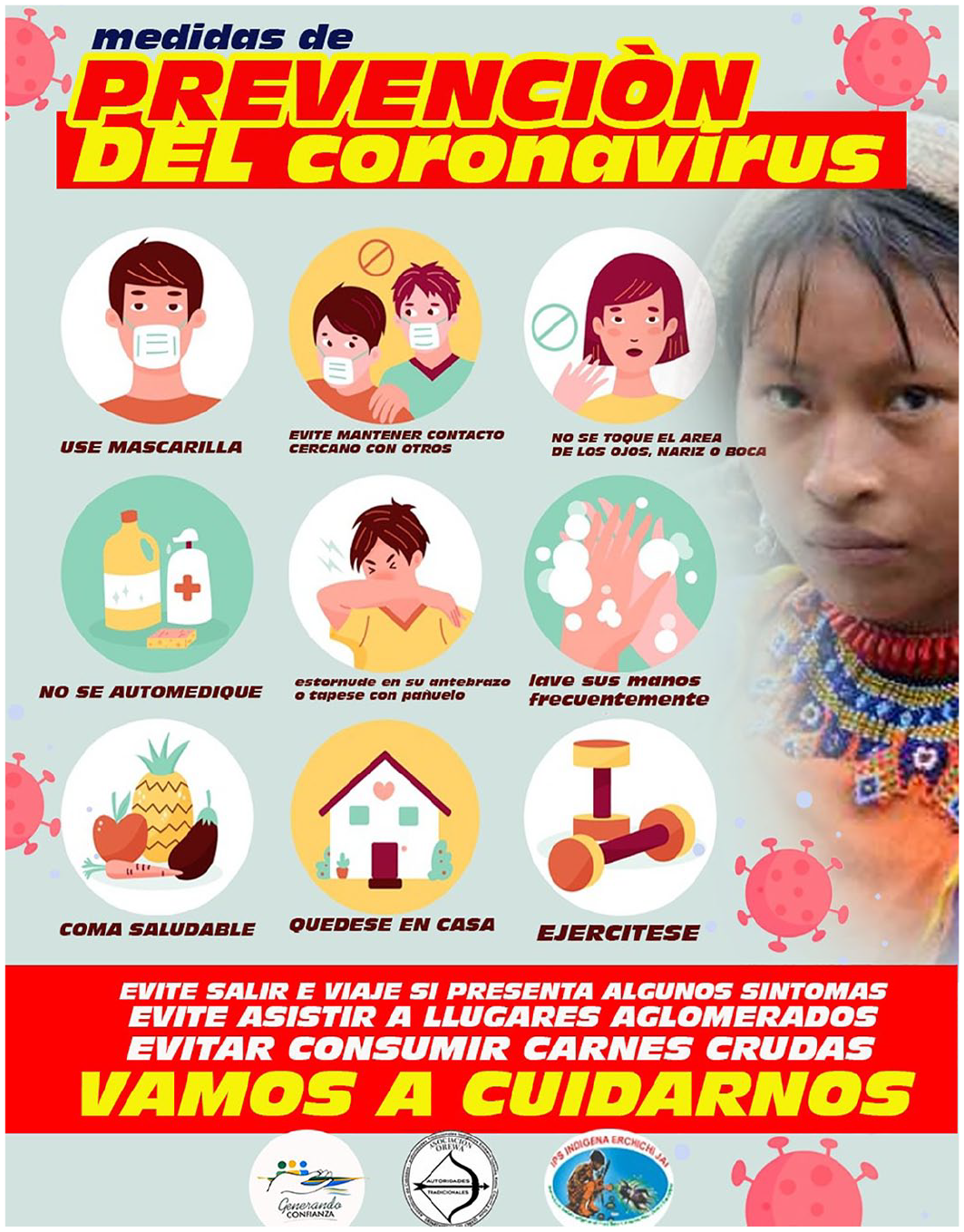
An example of leaflets distributed by the national government.
Conversation around decolonization of management research gained momentum around 2014 (Jammulamadaka, 2020). Following decolonization debates in other areas, such as cultural studies, the appropriateness of Western management theories (Jammulamadaka et al., 2021; Jaya, 2001), the hegemony of ways of doing and presenting research (Barros and Alcadipani, 2023), and the suitability of established research methods when engaging with “the others” began to be questioned (Manning, 2018; Scobie et al., 2021). Methodological considerations are a central topic of discussions of decolonization in management research (Henry and Pene, 2001), and in research in Indigenous contexts more broadly (Smith, 2012). Core to these are linguistic concerns underpinning the process of conducting and representing research (Barros and Alcadipani, 2023; González y González and Lincoln, 2006; Smith, 2012). Such concerns include what is “lost in translation” and the tension between cultural sensitivity and research rigor as understood in the Western research tradition, relating to the design of and appropriate questions for research (González y González and Lincoln, 2006; Henry and Pene, 2001).
In this study, we introduce gamification as a methodological innovation for co-creating recommendations for new practices with Indigenous communities and negotiating and translating new practices that will help co-create practices with the community so that they can protect themselves against the transmission of the virus. In the case study, a gamified object, that is, a poster that contains gamification affordances, became a boundary object (Carlile, 2002), that is, that helped develop mutual understandings of the pandemic in “Western” and Indigenous traditions and belief systems, while providing a medium for decolonizing knowledge and “bridging” the two traditions of medicine, Indigenous and Western. In other words, the developed boundary object, that is, the poster containing gamification affordances, facilitated knowledge boundary processes, that is, supported the traveling of knowledge across the boundaries, involving people from significantly different cultural, social, and material domains. The process of creating the gamified boundary object enabled the identification and creation of value for the community, while gamification affordances reduced reliance on words, and thus the need for linguistic translation. In the gamified environment that these communities helped to create, practices were negotiated and further imagined with regard to their adoption.
This study addresses the question of how gamified boundary objects can be used as a methodological innovation to translate the practices of an international organization across knowledge boundaries. It makes two key contributions. First, we contribute to decolonization of the management research literature by conceptualizing how co-creation of a gamified object becomes a co-creation methodological design in building a collaborative relationship with Indigenous communities. As an implication of this study, we suggest that gamification can offer a new approach to decolonizing education that reconnects people to land, knowledge, and language. Second, we contribute to the boundary objects literature by extending the framework of Carlile (2004), which conceptualizes how boundary objects enable the traveling of knowledge across the boundaries, that is, by transcending knowledge through syntactic, semantic, and pragmatic boundary levels. We demonstrate how gamification becomes a boundary object for transcending practices in environments that are different from the original one.
In the remainder of this article, we begin by providing an overview of boundaries and boundary work. We then discuss the research context and present our chosen methodological approach, before describing the case and presenting the development and implementation of gamified recommendations in the Indigenous communities. Finally, we discuss how gamification can be used as a medium for decolonizing management research and offer a framework for using gamification as an enabling environment in which knowledge can be transformed (Carlile, 2002), with gamification affordances acting as boundary objects.
Theoretical grounding: gamifying boundary objects
Knowledge boundaries
Research on knowledge boundaries (Brown and Duguid, 2001) stems from the problematization of knowledge transferability, for example, across functions, domains, and practices. Such issues are particularly evident and critical in the development of novel ideas and products that draw specialist knowledge from different domains and create new knowledge at the boundary of these domains (Carlile, 2004; Leonard-Barton, 1995). Recent research acknowledges that knowledge transfer across boundaries is problematic, mainly, but not entirely, owing to differences in task predictability, traditionally associated with the quality of information exchange and the development of shared syntax (Allen, 1971). Such differences may also lie in qualities and interpretations, and thus boundary spanning can be achieved by learning about sources (Dougherty, 1992) and translating knowledge (Carlile, 2004). Carlile (2002) extends this approach by suggesting the essential need to recognize potential dependencies and consequences, such as the high cost of changing knowledge and skills. Knowledge, by its nature, is invested in practice, and thus, trying to change it incurs a cost.
When dependencies are recognized, boundary spanning may occur by transforming or creating new knowledge that is then validated collectively (Carlile, 2002) or negotiated (Brown and Duguid, 2001). In this process, knowledge is inseparable from the individuals involved in the practice (Cook and Brown, 1999), and for knowledge to be transformed, individuals must be able to localize it around a problem (Carlile, 2002). They must also accept the cost of changing knowledge that has previously been used to demonstrate their competencies. The effectiveness of this process relies heavily on the existence of common knowledge, which is used to access and assess specialist knowledge from other domains (Carlile, 2004). An example of such a process is role-play in innovation (Agogué et al., 2015). In this process, the game becomes shared knowledge, enabling the development of shared understanding and access to and assessment of specialist knowledge by adapting and exploring different roles in the game.
In such a setting, boundary spanning is enabled by boundary-spanning objects that give a problem a new meaning or enable work at the boundaries (Kellogg et al., 2006). The object becomes shareable, located at the boundary without reinforcing it, and can create a shared context (Star, 1989; Star and Griesemer, 1989). It helps to create a shared language, enabling individuals to represent their contextual knowledge and engage in a co-creation dialogue. This process is well illustrated in Carlile’s (2002) ethnographic case of a manufacturing company involved in developing a new product. The team was only able to reach agreement about a sub-assembly process after they had been shown a CAD drawing that reflected the up-to-date design and its technical requirements. The drawing was a boundary object that created a shared language and allowed individuals to recognize interdependencies and learn about the contextual and cultural differences across the boundaries. However, boundary-spanning objects are not always used for the common good. Other studies have demonstrated that they may alternatively be used to exercise the power (Contu, 2014; Hawkins et al., 2017) and blur (Langley et al., 2019) or contest boundaries (Bechky, 2003) in settings characterized by more competitive rather than collaborative boundary work. This is particularly noticeable among groups with lower power status (Langley et al., 2019).
Use of boundary objects may be problematic when features that make them work are hard to sustain as problems develop. Boundary objects also vary in their capacity to provide a common syntax to transfer knowledge, develop shared meaning at the semantic level to translate knowledge, and negotiate knowledge at the pragmatic level to transform knowledge. An effective boundary object will enable knowledge to travel across boundaries at all three levels, as shown in Carlile’s (2004) integrative framework. A less frequently discussed characteristic of boundary objects is their sociomaterial nature, which is essential for understanding the interdependencies that boundary objects may create.
Sociomateriality of boundary objects
Social and material aspects are inherently inseparable, and recognizing the material characteristics of boundary objects may help us to better understand their role on the boundaries. Material objects can be considered equivalent participants, and agency to act emerges from interactions with these material objects (Orlikowski and Scott, 2008). In such settings, material objects may cause an action, or may be influenced by previous actions (Callon, 1986). For instance, Google indexing defines human search outputs and is influenced by previous search actions, and thus, the outputs will differ at different points in time (Orlikowski, 2007).
Many practices are mediated by multiple interdependent technologies and material objects (Orlikowski, 2002, 2007). In some contexts, the materiality of technology may reconfigure established boundaries and make human actors reconsider the practice itself. For example, Barrett et al. (2012) describe how the introduction of surgical robots changed surgeons’ practices and redefined the boundaries of work between surgeons and radiologists. In their case, the new boundaries were established with the help of a new material object, “method cards.” Similarly, in our study, a gamified poster is proposed as a material object enabling the “reshaping” of practices for disease prevention in an Indigenous community.
Although boundary objects can produce new ways of working together, this concept has been criticized as a concept from the North that can also reproduce established practices (Dar, 2018). Particularly, although Carlile’s (2002, 2004) framework conceptualizes boundary work at the syntactic level, the focus of attention is on the shared lexicon rather than the linguistic component. In multicultural contexts, language has not been considered as a significant factor (Barrett and Oborn, 2010; Merminod and Rowe, 2012), suggesting that particularly in those boundary objects that rely heavily on text, such as reports (Dar, 2018), the use of colonial language tends to reproduce established inequalities perpetuated by the language use (Nee, 2021). As a possible way to overcome this structural barrier, some studies attempted to use more visual boundary objects, such as co-created documentaries that would give more agency to all the participants (Ryan and Staton, 2022). Gamification is another example that has the potential to become a more visual boundary object.
Gamification is broadly defined as use of game affordances for creating gameful experiences in a non-gaming environment (Deterding et al., 2011; Huotari and Hamari, 2017; Werbach, 2014). The technical definition of affordances refers to “actionable properties” between an object and an actor (Gibson, 1977; Greeno, 1994) in an environment where the actor is free to choose whether to act upon the object and how to interpret it (Huotari and Hamari, 2017). It is different from other interactive objects in an environment because the actor engaged with the affordance intentionally rather than “automatically,” in pursuit of their own intentions (Zhang, 2008). Thus, affordances are possibilities for action that emerge from the reciprocity between the properties and/or goals of the actor and those of the environment. It is the relationship that affords an action.
By blending with practices, gamification is sociomaterial in nature (Spanellis et al., 2022). Its affordances are forms of materiality that may, for example, help to create common ground in creative multidisciplinary teams (Parjanen and Hyypiä, 2019) or lead to investment in identity in situated learning (Spanellis and Pyrko, 2021). Thus, gamification can create an environment for amending and creating new interactions at work, which often take place at the boundaries (Spanellis et al., 2022). The gamified environment is a manifestation of the physical, sociomaterial site of knowing (Nicolini, 2011), a space in which colleagues invest themselves in gamified stories and perceive them as real within the gamified environment.
In this study, Indigenous communities chose to rely on their Indigenous knowledge in developing new practices to adapt to the virus at the start of the COVID-19 pandemic. Our empirical context is an extreme context with very little shared knowledge or practices, comparable with contexts illustrating enactment of Carlile’s (2002, 2004) framework. Through the process of co-creating a gamified poster (a methodological design), the communities and researchers negotiated and shaped new practices in the gamified environment (Spanellis et al., 2022), in which practices were visualized by creating representations of the site of the social (Schatzki, 2005).
Contextualization of Choco region and field engagement
Contextualization of Choco region
Our study was conducted with Indigenous communities in the Choco region of Colombia, situated in the rainforest between the Pacific coast and the Andes. The study was initiated at the start of the pandemic, in April 2020, when one of the researchers, who had been in regular contact with Indigenous communities in this region, saw that the communities resisted the adoption of WHO practices. Thus, an interdisciplinary group of researchers came together to study how they/we could develop a mutual understanding of the pandemic so that the communities could protect themselves from the new virus.
Choco region is home to six Indigenous peoples in 120 native territories, speaking six different languages. The region lacks transportation infrastructure. Except for the regional centers of Quibdó and Nuquí, most villages are accessible only by river. These logistical challenges, along with persistent threats from various criminal and paramilitary groups in the area and lack of information and communication technologies, complicate the provision of national healthcare services and access to facilities.
The national government’s perceived neglect of these communities contributes to a sense of distrust shaped by centuries of colonial oppression. For example, at the start of the project, only two deaths from COVID-19 had been registered, both of which had occurred in health centers. No seroprevalence or other types of survey had been conducted to determine the spread of the virus in the region. Even when the national government had attempted to engage with the communities, for example, by distributing leaflets detailing proposed practices to reduce virus transmission (Figure 1), the communities were reluctant to adopt the new practices and had instead chosen to make sense of the pandemic on their own and rely on their Indigenous knowledge to deal with this new threat.
Our engagement with the communities was enabled by previous research projects by one of the researchers, who had developed trusting relationships with the communities over the course of 10 years and had gained some understanding of their culture and the form of engagement they would find acceptable. This researcher conducted the initial stage of the study investigation. The researcher was then joined by other researchers in the subsequent stages of the fieldwork.
Over 68,000 people live in the Indigenous territories, 628 of whom participated in conversations with the field researcher. Details are provided in Table 1. The first researcher who conducted the first stage of the fieldwork stayed in Quibdó for 2 weeks meeting with groups of representatives. The open discussions were conducted in a large, ventilated hall that can fit up to 100 people. The researcher was wearing personal protective equipment (face mask and gloves) to prevent any possibility of the further spread of the virus.
Background analysis group interviews (DANE, 2019, 2021).
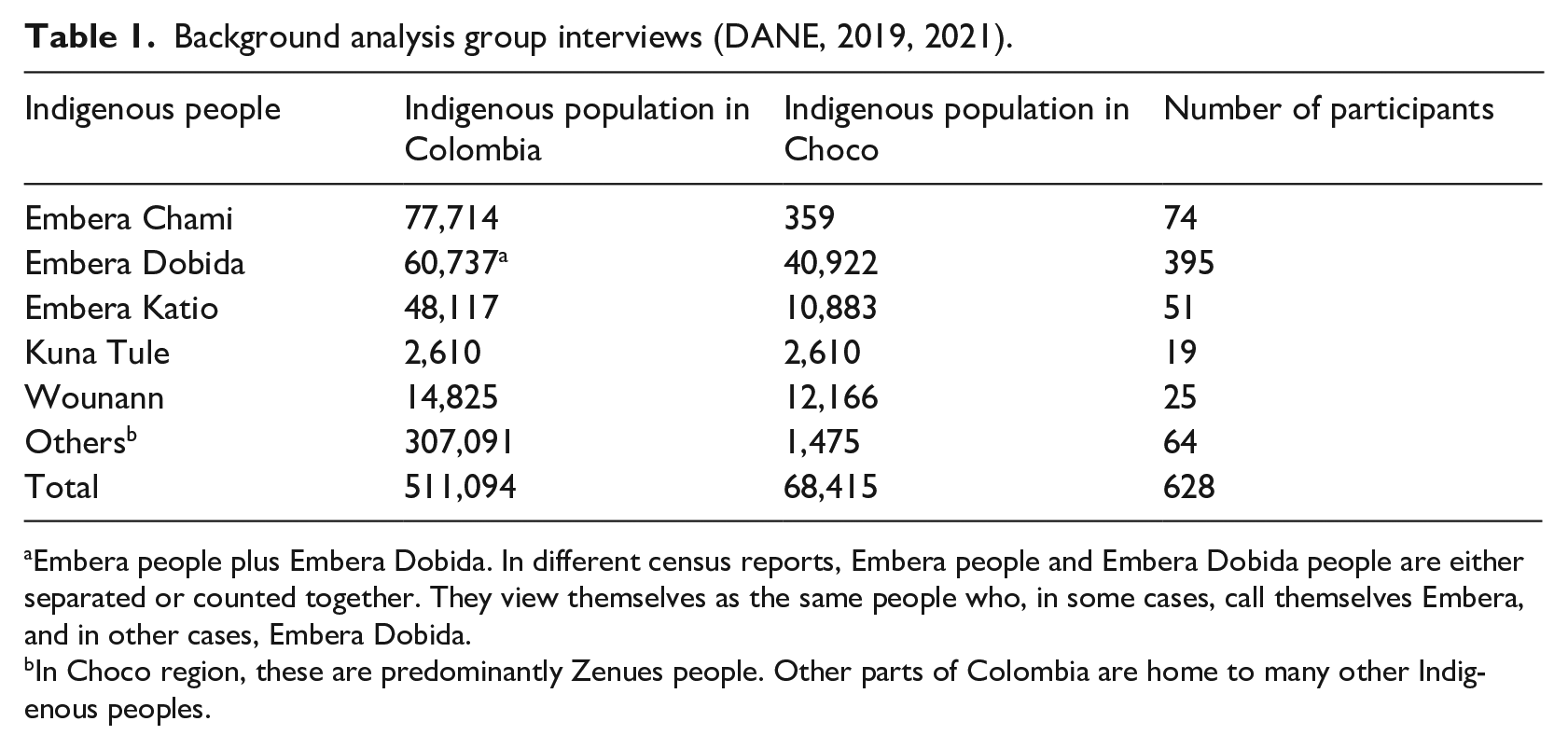
Embera people plus Embera Dobida. In different census reports, Embera people and Embera Dobida people are either separated or counted together. They view themselves as the same people who, in some cases, call themselves Embera, and in other cases, Embera Dobida.
In Choco region, these are predominantly Zenues people. Other parts of Colombia are home to many other Indigenous peoples.
The discussions were conducted in Spanish. Each discussion started with the introduction of the project followed by questions and discussions from both researcher and the Indigenous representatives. Given the large number of participants and in line with the participatory nature of the project, the process was largely organized and led by the indigenous leaders as a series of group discussions over the course of 2 weeks. They decided who was going to participate in each discussion and how long the discussions were going to last. The researcher had a group interview protocol (key themes are included in Appendix 1), but it was loosely followed, allowing for the Indigenous representatives to lead the conversation. These discussions aimed to gain a better understanding of communities’ perceptions of the pandemic, co-develop expectations of the value that this project would bring to the communities, and explore the context in which support would be provided to them. The research team also relied on photographic records of the places from previous research projects to better understand material aspects of the sociomaterial context of the study.
Conducting research in Indigenous contexts
When conducting research in Indigenous contexts, bringing in Western perceptions of research validity and rigor may be seen as a continuation of colonial practices. Non-Western knowledge is contrasted with accepted Western knowledge, and principles and approaches to ensure research validity are imposed on Indigenous communities. It is therefore crucial to adopt a methodological approach that respects and aligns with Indigenous knowledge systems, cultures, and protocols (McNicholas and Barrett, 2005). Decolonizing research methods involves challenging and transforming traditional research practices that may reproduce colonial perspectives, power dynamics, and knowledge hierarchies. Research inquiry should be participatory in nature and should prioritize equity and the values of Indigenous peoples (Pio and Waddock, 2021).
Among the most debated aspects of research methodology in Indigenous contexts are linguistic concerns (Steyaert and Janssens, 2013). In addition to issues of research representation in languages other than English and challenging conformity with the expectations of top management journals, particularly for Indigenous scholars and those from the “periphery” (Barros and Alcadipani, 2023), there is a question of whether non-native speakers should conduct research in Indigenous communities in the first place (González y González and Lincoln, 2006). If researchers are not proficient in the language of the community, they must rely on translation and interpretation, and important meanings and cultural nuances may be lost or misunderstood (Jammulamadaka, 2020). For this reason, some scholars argue that the data should be interpreted in the original language (González y González and Lincoln, 2006). In our study, gamification was a medium that helped to partially overcome the language barrier by reducing reliance on words during this stage of the research project, and instead using visual language to share concepts and ideas.
In line with the principles for conducting respectful and ethical research in Indigenous contexts, our study was participatory in nature. Researchers and Indigenous community members co-created a gamified environment in a poster that aimed to help the communities to protect themselves from the virus. We had to be sensitive to the methods used in the research design. In particular, due to ethical considerations, we could not conduct formal semi-structured interviews to understand community members’ perceptions of the pandemic, nor could we record informal conversations or take field notes while engaging with them. Instead, the first field researcher engaged in discussion with local Indigenous leaders and representatives, wrote field notes after each conversation, and took photographs of the places.
While exploring the context, we reflexively questioned our relationships with the participants and the politics of knowledge production (Jack and Westwood, 2006; Manning, 2018). Following a protocol for self-reflexive practice (Girei, 2017) that formed part of the ethics approval process reviewed by the ethics committee, we actively and intentionally questioned our subjective understanding of reality, underlying assumptions and interpretations of the discussions, in order to be critical about the impact of our assumptions on others (Cunliffe, 2002, 2016), and that we were mindful to ensure that Indigenous knowledge and voices were not silenced. We started with defining What is our responsibility to the communities? Based on that, we questioned, Why might we disagree with communities’ understanding of the situation? Why do we understand the impact of their actions the way we do? and Do our suggestions align with our responsibility? For instance, local community leaders were quite critical of the national response to the pandemic, questioning the disproportionate resources dedicated to it while other, more dangerous but curable diseases continued untreated in the region. We then questioned our own strong focus on COVID-19 and recognized the need to acknowledge other disease spread in the region and search for ways to find commonalities in prevention practices.
The gamified poster was designed through three iterations of design participation by the communities. The three iterations started after the first stage of the fieldwork. They span over 2 months and formed the first iterative cycle of engagement described in more detail in the Discussion section. They involved representatives of communities from each Indigenous group who volunteered to participate in this project. Three representatives who had mediated some of the interactions with the first field researcher in the past and had access to Internet engaged via email, receiving photos of the design or text documents with text components of the poster. This was due to travel restrictions imposed on the research group over the pandemic. They coordinated meetings with communities to discuss the designs, facilitate translations, and share comments (appx. 30 email exchanges). In the first iteration, the participants provided feedback on different concepts on how the poster would be structured. In the second iteration, the participants provided input on the detailed design of the poster, specific elements of how the Indigenous world has been depicted, such as costume designs specific to different Indigenous groups, and what practices have been proposed. In the third iteration, they refined the wording and translated the poster into their Indigenous languages. The resulting poster was produced in six versions specific to six Indigenous groups. The poster’s design relied heavily on visual representations of the local context, which reduced reliance on words and helped establish more direct dialogue between researchers and community members. When the poster was put up in community centers, the researchers observed and took photos of how the community members interacted with it and actively discussed community members’ perceptions of it.
Overall, the analysis was based on the initial observations that lasted for a day in each community visited over a 2-week period, and 95 photographs were analyzed using visual methods (Boxenbaum et al., 2018). This approach was deemed suitable because it aligns with the visual nature of the poster and the material embodiment of practices (Schatzki et al., 2001). The photos were used as visual “field notes” in ethnographic studies (Hassard et al., 2018; Larsen and Schultz, 1992), capturing and providing material for analyzing interactions of the participants with the poster, which the researchers might have missed during the field observations. For example, Figure 3 shows how a community leader interacts with an affordance of the poster, which was not verbally expressed by the community members during the field visit.
Co-creation of the gamified environment
Background exploration
When the pandemic reached the Indigenous territories, different communities observed changes in the environment and made sense of the new virus in their own ways. We recognize that the below account does not pay due attention to the nuances in responses between different Indigenous groups; however, the constraints of a paper do not allow for a detailed account of each group, and therefore, the reflections below are aggregated. Through observations, some communities were able to trace the virus back to the first cases brought into their villages. Many communities saw that it led to respiratory disease, and that the elderly were more seriously affected by it, from which they concluded that it was designed to destroy Indigenous knowledge possessed by the elderly. They also deduced that the virus must be traveling a meter above the ground, sparing the children. Many communities believed that the virus was man-made because they lived in harmony with nature, including animals, and had not observed such a virus before.
To respond to the new disease, local spiritual leaders (Jaibanas) and herbal healers (Hierbateros) developed a type of herbal tea to make the blood bitter, which would repel the virus. This tea was also used in a new ritual ceremony aimed at protecting the community from the virus, during which a Jaibana would spit the tea onto the participants. Discussions of these and other practices gave the research team a better understanding of the communities’ newly formed perceptions, which helped to create ground for developing shared understandings of the problem, while working at the boundaries between the two cultures.
Gamified poster co-design
The poster’s design was conceptualized in terms of Carlile’s (2004) integrative framework, comprising three levels of knowledge management across boundaries: syntactic, semantic, and pragmatic. Local leaders and artists participated in every stage of the design process, discussing inputs and reviewing the poster at different stages, and translating the poster into Indigenous languages. In essence, they were engaged in the process of negotiating the changes to practices to be introduced to the communities, and local leaders became equal research participants, rather than research subjects, as commonly unfolds in more traditional colonial settings (Manning, 2018).
At the syntactic level, the team had to create a common lexicon. This was achieved by translating the final poster into six languages spoken in the Indigenous territories. Although all communities spoke Spanish, using Indigenous languages supported more productive sharing of knowledge. Another aspect that required “translation” was non-verbal/visual communications on the poster. Below are the exerts from the iteration notes that exemplify the decision process.
Focus on the visual rather than verbal medium in the prepared material. Divide poster to “outside” and “inside” according to the communities’ vision. Recommend distancing from the outside world and follow the recommendations of the outside world when members of the communities get in contact with it, for example in the bigger cities.
Having considered various options for the poster composition, we agreed that using the gamification affordances referred to in gamification literature as a “virtual” world with affordances of mini-storytelling would be most appropriate to the context. The so-called “virtual” world (Jackson et al., 2008) represented the Indigenous world, composed of an assemblage of material objects, amid which scenes from the Indigenous communities’ everyday lives and underpinning practices unfolded (Schatzki, 2006). This world symbolically depicted an Indigenous village with a green flowery environment representing nature, tall mountains separating the village from the rest of the world, traditional houses, and clothes traditionally worn by the Indigenous people. This was an idealistic rather than realistic representation of the village. Specifically, in photographic representations of the villages, nature is more likely to look like a green jungle than a flowery green valley, ever fewer houses are built in the traditional style, and Indigenous communities tend to wear traditional clothes only for special ceremonies. However, the idealized version of their world was how the Indigenous people wanted to see their world depicted, and it became a space that they could relate to and identify with.
The “virtual” world represents an example of a gamified environment in which readers could dwell in some of their communities’ everyday practices and associate themselves with the material arrangements of the Indigenous life captured in the poster. Although the term “virtual world” normally refers to a digital environment, it was considered appropriate to use in this article as a recognizable term in the gamification literature and a conceptualization of the gamification affordance because it served the same purpose. It depicted traditional huts, Indigenous people wearing traditional clothes and with traditional body tattoos, and other artifacts such as traditional tableware. Thus, the “virtual” world provided a space with which Indigenous communities could identify (Bartle, 2005), and in which they could dwell to explore and make sense of the changes to practices situated in the local context. The term “virtual” was not used in the discussions with the community representatives.
At the semantic level, the team engaged in dialogue, as required for participative research in Indigenous contexts (Manning, 2018; Pio and Waddock, 2021). Mediated through co-creation of the poster, this dialogue supported development of shared meaning and understanding of the crisis at hand (Dougherty, 1992) and negotiation of differences between the two worlds (Brown and Duguid, 2001; Wenger, 1998), as well as addressing the situated challenges of moving knowledge across boundaries (Spender, 1996). To negotiate differences in perceptions of the pandemic, in the “virtual” world, the Indigenous land was separated from the rest of the world by a mountain range, which was a place for other people and the source of the virus. In an attempt to reconcile differing perceptions, a short story was added about the virus originating from animals that were treated with disrespect. A further addition to the design was the gamification affordance of an avatar of an Indigenous leader impersonating a storyteller on the poster who was “telling” the mini-stories that suggested changes in practices or the story of the virus origins. The status of this individual was signaled materially with the circular-shaped tattoos typically worn only by the leaders (Ulloa, 1992). Introducing an avatar in the identity of an Indigenous leader aimed to contextually situate the changes to practices (McGonigal, 2011) and helped to bring together new practices that had emerged during the pandemic in both worlds.
At the pragmatic level, the team engaged in negotiating changes to practices (Brown and Duguid, 2001) and improving the capacity to transform knowledge (Carlile, 2002). The material order of the local context captured in the “virtual” world created a site in which manifold spatial-temporal actions could be negotiated, resulting in omissions from or inclusions in the poster. The research team was respectful of the Indigenous knowledge created at the start of the pandemic based on centuries of Indigenous wisdom, while being mindful that not all “Western” knowledge (WHO recommendations) might be appropriate or acceptable in the local context (Pio and Waddock, 2021). For instance, recommendations on wearing masks were omitted because the communities did not find this practice suitable for them, and they lived in open, well-ventilated huts, which lowered virus-transmission risks. The herbal tea developed by local healers to protect from the disease was included in recognition of Indigenous medical practices, but emphasis was given to not sharing tableware. The material objects representing the tea included depictions of ingredients and Indigenous cups (totumo). Washing hands was feasible, although the practice had to be adapted to the local context, since the villages had no plumbing, and all water was carried in plastic tanks from the river. Referring critically ill people to local health centers was considered impractical because the latter were poorly equipped and could not provide adequate support and treatment for COVID patients.
The final gamified poster presented a repertoire of practices, combining elements of both Western and Indigenous medicine. In essence, it recognized the plurality of knowledge (Henry and Pene, 2001; Scobie et al., 2021) and Indigenous wisdom and values (Pio and Waddock, 2021).
Moving this knowledge across boundaries was afforded by the gamification affordance of mini-storytelling (Deterding, 2016; Kapp et al., 2014), which further contextualized (Toda et al., 2020) the WHO recommendations to the local environment. This was achieved largely by formulating the recommendations as mini-stories, rather than taking the dogmatic stance of written recommendations, inviting the reader into dialogue. The mini-stories were “told” by the avatar.
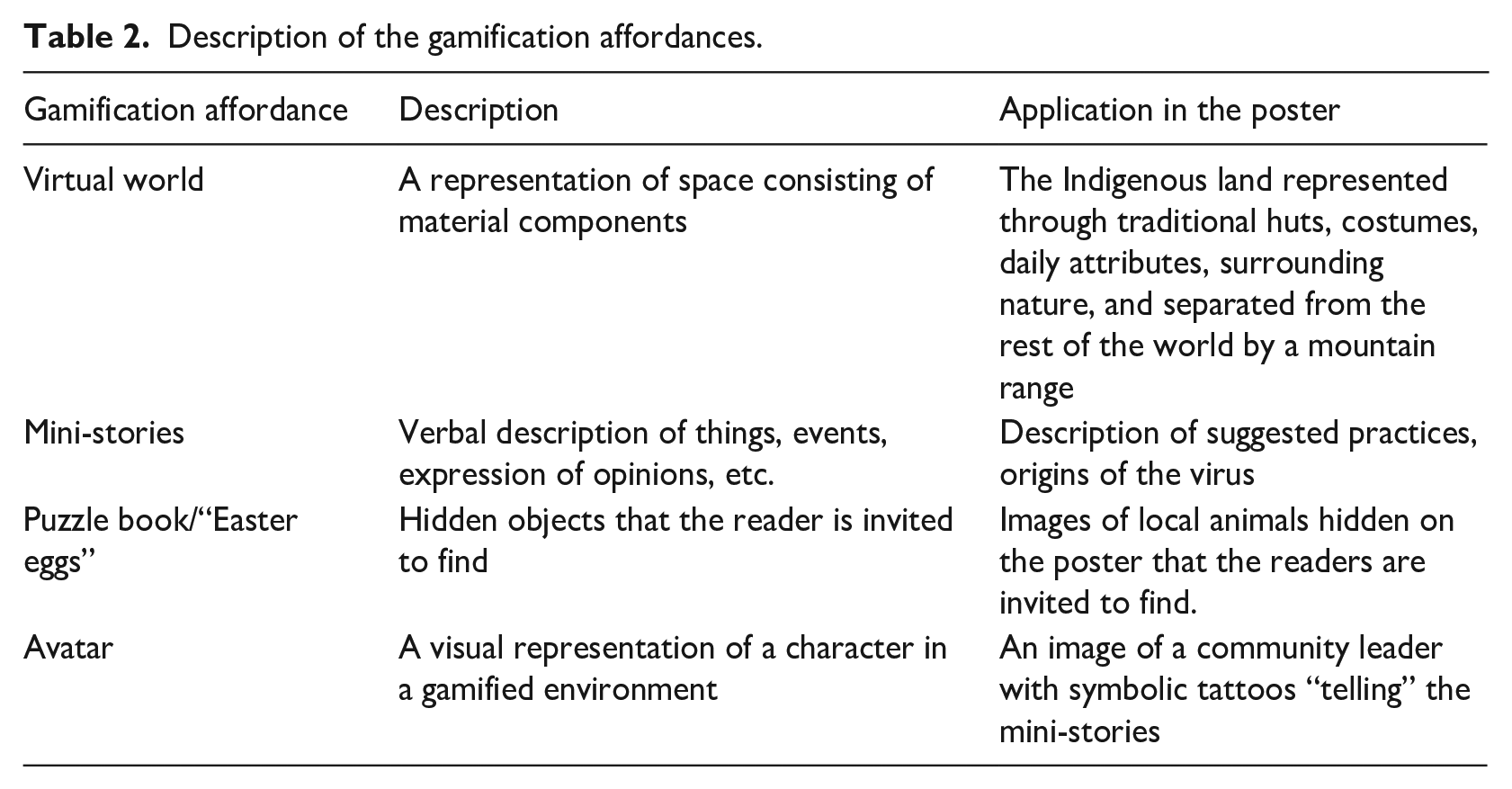
Finally, to increase engagement with the poster and afford transformation of knowledge, we employed the “Easter eggs” technique (Eyal, 2014), in the form of local animals hidden in the poster and instructions at the bottom of the poster inviting the participants to find them. The animals were positioned to draw attention to the mini-stories. This affordance supported repeated re-engagement with the poster and discussion and negotiation of practices, by drawing adults to the poster in order to explain the meaning of the message to their highly animated children engaged in the game of finding the animals. Description of the four affordances is included in Table 2.
Description of the gamification affordances.
The final poster was delivered to 120 Indigenous territories and placed in local community centers (Figure 2). Three researchers were able to stay in some of the communities during the second field trip. As previously explained, in order to evaluate the results of the study, the team observed reactions and changes in behavior, engaged in informal discussions with community members, and took field notes and photographic evidence. When the co-designed poster was placed in the community centers, community members viewed it with interest, initially admiring its beauty and how the people on the poster looked like them. Of the four gamification affordances, “virtual” world, mini-stories, puzzle book/“Easter eggs,” and avatar, the first three were noted in informal conversations between the community members and the field research team. Exerts from the field notes are included below.
at the beginning it was a lot of curiosity . . . particularly kids. They were really attracted to the colorful poster and the animals hidden in the different actions . . . the parents started to have a look more carefully in order to explain to the kids what was the message behind of the animals . . . the aesthetic of the poster . . . they love it. They can really identify themselves . . . we realized that their lockdown themselves in their cabildos in their communities.”
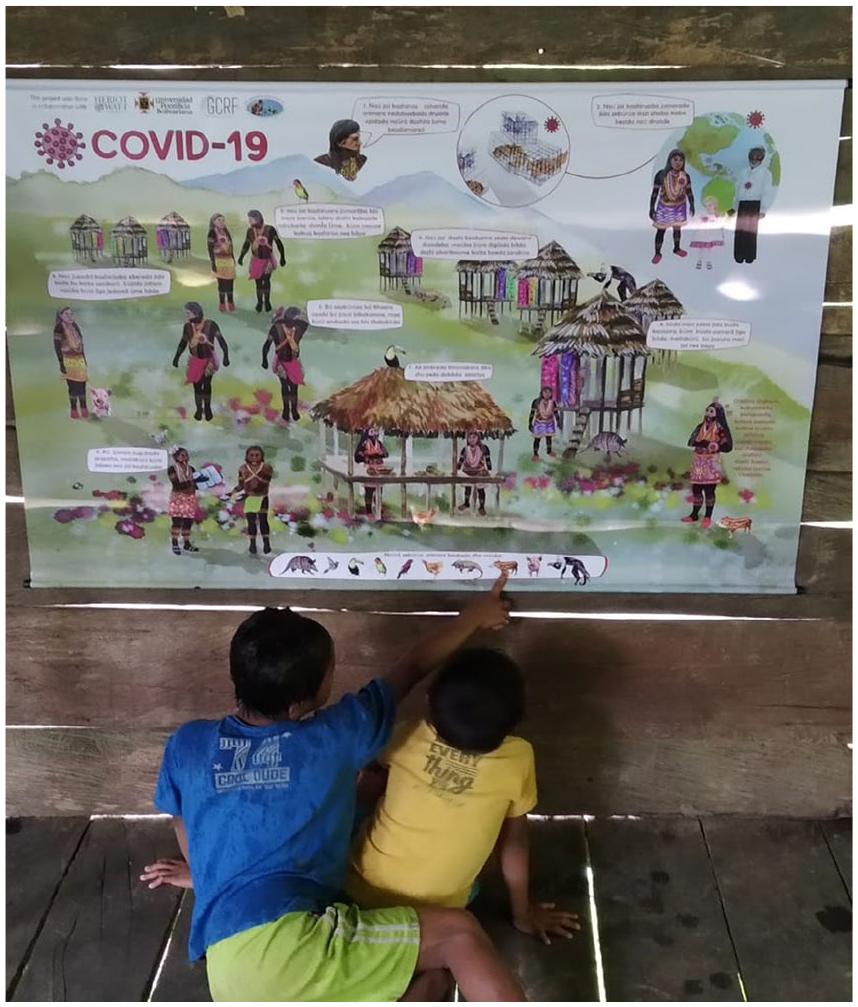
Poster placement in the community center of an Indigenous village.
The “virtual” world represented different parts of the real world, with the Indigenous world to the left and the rest of the world to the right, separated by mountains. It became a boundary space that mobilized interactions across different contexts, and in which the boundaries were blurred and practices could be negotiated. Thus, the “virtual” world created a gamified environment, whereby knowledge was validated collectively and uneven power relationships were reduced.
The hidden animals engaged and facilitated knowledge interpretation by drawing the Indigenous community to the poster and focusing attention on the mini-stories in which they were strategically hidden. They became boundary-spanning objects to reconfigure interactions by making people engage with the poster, thus manifesting human–material agency. The hidden animals initially attracted children, as shown in Figure 2. Having found all the animals, they would ask adults to tell them what the mini-stories on the poster said. The adults would then once again engage with the poster and explain to the children what the mini-stories were about.
Although the avatar’s impact was less obvious and its influence was not acknowledged verbally during the interviews, some of our photos capture people pointing at it as a focus of attention (Figure 3). Using an avatar, in the form of an Indigenous leader distinguished by the circular-shaped tattoos that represent local leaders, speaking from the poster changed views on power and interdependencies.
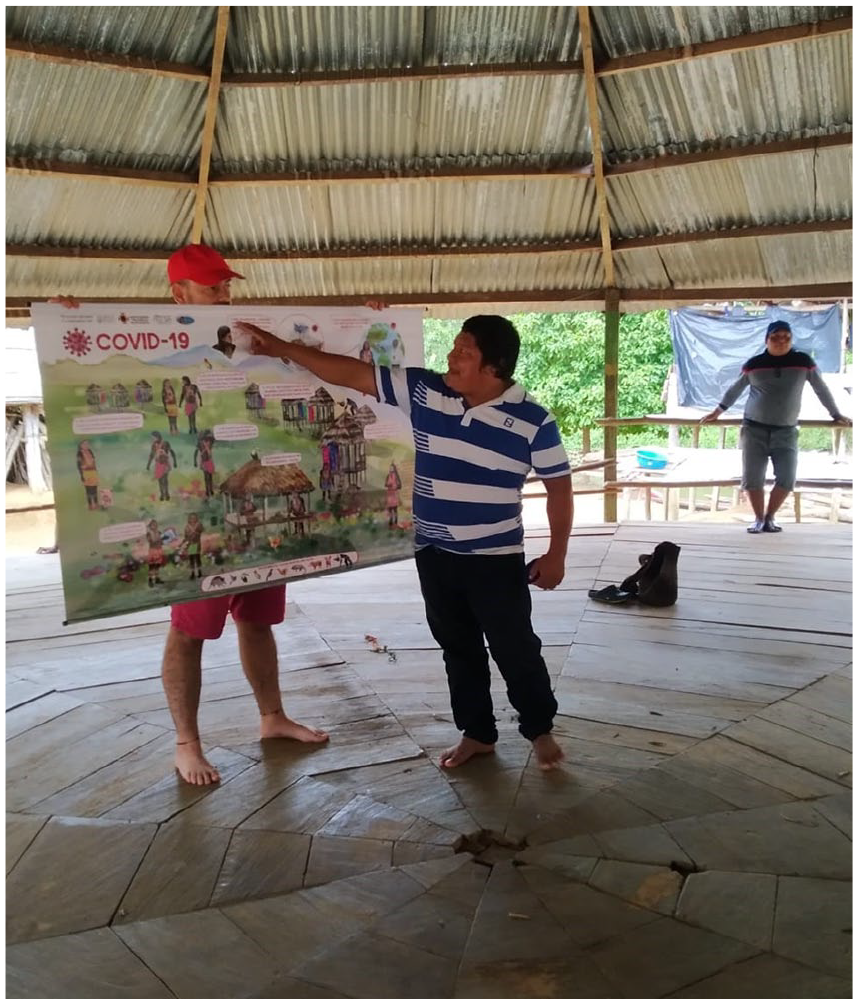
Loselinio Velazquez (Embera Dobida indigenous leader) pointing to the avatar on the poster, and Analio Palacios Ortega (Mojaudo indigenous leader) standing at the back.
In recognition of the value of this project to the communities, their leaders collectively wrote and signed a letter of gratitude saying, for instance, that we “put a soul in their community.” The communities also appreciated that the poster had been translated into their languages, and mothers in some communities asked for printouts of the poster to use as educational materials, as they normally received materials only in Spanish.
Discussion
Decolonizing Indigenous research
Power dynamics between researchers and study participants may reproduce colonial dispositions in representing Indigenous people and their knowledge and practices (Busza, 2004; Manning, 2018; Smith, 2012). The epistemological authority that such relationships create implies that the researchers represent the participants to the Western academic community through their own data-interpretation lens and choices made in “depicting” the participants (Said, 2012). While trying to remain aware of our biases, in the process of co-designing the gamified poster and its sociomaterial characteristics, we found a space where we could reflect on the vulnerability of the Indigenous communities in the research partnership, as well as challenging our underlying assumptions. Thus, the co-creation of a gamified environment as a boundary object became a methodological innovation in decolonization literature.
In this process, the dominance of certain practices and values was challenged against reality and by asking ourselves the reflexive questions outlined in the study design section. During informal conversations, community leaders questioned why so much was being spent on finding a cure for an unknown disease, while the communities did not receive enough medication to treat serious but curable diseases ravaging the region. This challenging of our ontological assumptions about the pressing needs created by the spread of the new virus made us rethink the value of the project and our responsibility to the community and whether our suggestions align with our responsibility, not only from the research perspective but also from the communities’ viewpoint (Girei, 2017). These discussions shaped the co-created recommendations. For example, the medical researchers suggested that the single most important practice that would help the community to protect not only from COVID-19 but also from many other viruses spread in the region, was washing hands. Thus, among others, we focused on finding a way to incorporate this practice into the poster within the constraints of material arrangements of the Indigenous communities, as explained in the previous section.
Our perceptions and underlying assumptions were challenged during the design of the poster, through the cycles of co-creating the communities’ representation on the poster. The sociomaterial characteristics of gamification (Spanellis et al., 2022) afforded this process. For example, in the first iteration, although we tried to draw “virtual” world characters looking like the Indigenous people, we subconsciously aligned them with Western standards of beauty, whereas the participants commented that they preferred “less skinny” women. In subsequent iterations, we drew landscape elements as they were captured in our photographic evidence of the field. However, these designs were not how Indigenous people wanted to see themselves depicted. Through the iterative cycles, we brought the representation of their world closer to an idealized version of the material arrangements of everyday practices.
The findings in this study placed in a broader context of decolonization literature have several implications for practice in management learning. Gamification can offer a new approach to decolonizing management education (Jack et al., 2024) that has historically suffered from imported mental models, pedagogic frameworks, and individualistic, competition-driven values imposed through US-inspired business schools (Abreu-Pederzini, Suárez-Barraza, 2020; Liang and Wang, 2004). Gamification approach can support the reversal of postcolonial processes by helping to reconnect people to land, knowledge, and language (Wildcat et al., 2014; Woods et al., 2022) through co-development of and/or engagement with a gamified environment as a transitional boundary object. Gamification provides the multitude of mediums to afford knowledge traveling across the boundaries, for example, for representation of land through a virtual world and contextualizing of indigenous knowledge through visual storytelling, thus supporting the need for contextual relevance of management education (Nkomo, 2015). This approach complements other visual methods that have been employed in an attempt to decolonize management education, such as participatory mapping (Schreyer et al., 2014) and storytelling (Van Camp, 2014). Furthermore, gamification co-development can create pathways for an indigenizing journey of education in the business schools (Woods et al., 2022), whereby the process of co-development can create opportunities for reflexivity and for challenging the dominant values and mental models, as well as conformity to these values and models (Vakkayil and Chatterjee, 2017).
Negotiating Indigenous and Western practices
In this study, we focused on practices that would help prevent transmission of the virus during the pandemic. As we observed, some practices may change quickly (Schatzki, 2019), facilitated by the crisis (Seidl and Whittington, 2021) or in response to an intervention (Shove and Walker, 2010). When offered an opportunity to explore the potential for change, new practices may be readily adopted, changing the natural order of things. For example, we saw that the community members were willing to self-isolate and wear masks after they have explored new practices to protect the community from the virus in the gamified environment. However, other practices may persist (Seidl and Whittington, 2021). A practice may be embedded in a larger constellation of practices (Schatzki, 2019), and such interdependencies may prevent effective change. Some practices are more fundamental (Schatzki, 2002) in such constellations, and in our study, we observed how the gamified environment created a space for exploring and negotiating which practices might be more central, which practices could be adopted, and how existing practices could be changed.
Finally, practices are carried out in settings formed of material arrangements (Schatzki, 2005). In essence, a gamified environment is a representation of the site of the social. Practices impacting transmission of the virus are situated within bundles of material arrangements that enable or constrain actions associated with each practice. This study helps to explain why attempts to change practices may fail in some contexts. For example, the conventional “Western” practice of washing hands with running water from the tap depended on the material arrangement that determined how the community obtained and utilized water and organized washing, so this practice of washing hands could not be adopted and had to be modified instead, as explained in the previous section. However, it is important to note that sanitation and hygiene system is more complex and spans beyond only water use (Jiménez et al., 2014). For example, while Indigenous groups in Brazil used pure water for personal hygiene in contrast with Portuguese colonizers (Rezende and Heller, 2008), Indigenous groups in Peru built elevated houses, which allowed them to have a significantly lower level of soil-transmitted parasites comparing with settlers (Kroeger et al., 1992). In relation to this study, we have not observed the changes in the practice of washing hands, which was considered as one of the most important practices in the co-created recommendations. One of the several explanations might be that we have not stayed in each community long enough to observe the change due to the constraints imposed by the pandemic.
To explore further why we observed changes in some practices (self-isolation) soon after the intervention was introduced, while others remained unchanged (washing hands), we might also need to look at differences between Indigenous and Western prevention practices. The approach to disease prevention prevalent in Colombia’s Indigenous communities combines shamanic rituals with herbal prevention practices (herbal teas with specific properties). The modern “Western” approach to the prevention of virus transmission focuses on personal hygiene practices, first and foremost washing hands, but this only emerged in Western society fairly recently, as opposed to broader attention to personal hygiene in Indigenous communities mentioned above. During the 1918 Spanish flu pandemic, although it was recommended that people should wash their hands several times a day rather than after every interaction (Franchini et al., 2020), this practice was still not prevalent, which may have led to much higher transmission rates. The uptake of this practice required specific material arrangements to become prevalent, such as plumbing that allowed easier access to running water.
In a similar context, Shove and Walker (2010) analyze the emergence of the practice of daily showering, which replaced the practice of bathing, as an example of sociotechnical transition, and explore the new material arrangements that supported this practice. Although they acknowledge the importance of a reliable water supply, the transition in practice did not distinguish between enabling and other types of material arrangements. We suggest that, as with practices, certain material arrangements may be more central to a specific practice than others, helping to explain why some practices are adopted while others are not or might take longer to change. Specifically, bringing water in plastic containers from the river is laborsome and may thus make immediate adoption of this practice more difficult. Thus, this practice is not easy to change “overnight.” However, in contrast to conventional static communication materials, gamification provides an interactive space to create continuous engagement with the proposed change. And therefore, it is possible that this practice might be adopted with time. Exploratory in nature, a gamified environment becomes an alternative to dogmatic colonial imposition of practice on the community. The sociomaterial characteristics of gamification blend learning and doing in practices (Spanellis et al., 2022), and thus mirror the material arrangements of the site of the social, where both Indigenous and Western practices can be represented and explored. In future research, a longitudinal study would help understand whether continuous engagement with such spaces might bring about changes to practices.
Gamified environment as a boundary object
In this study, we used Carlile’s (2004) framework for managing knowledge across boundaries to demonstrate how gamification helps to enact complex processes of accessing domain-specific knowledge (virus transmission prevention) by different actors and thus becomes a methodological innovation. Earlier, we described how gamification was conceptualized through three design iterations to afford co-transfer, co-translation, and co-transformation of knowledge and practices from Indigenous and Western medicine. In line with the participatory nature of this project, we propose that gamification facilitated co-transfer, co-translation, and co-transformation of the practice, and that the knowledge boundary process went through two cycles. In the first cycle, we engaged with key community members to develop a common knowledge base in the process of developing the poster and co-transferring, co-translating, and co-transforming the practice (three design iterations described in the study design section). In the second cycle, when the poster was placed in the community centers, broader community members engaged with the boundary object and different levels of boundary spanning to imagine new practices and continuously make sense of the cascading set of interdependent practices characterizing the two worlds.
The first cycle was critical for the second because the social, cultural, and material arrangements of the two worlds were very different, and therefore, there was little shared knowledge or practice. The first cycle allowed the researchers to unpack the social, cultural, and material arrangements. Certain choices that did not work well in the first cycle were changed and worked well in the second (quadrant I of Figure 4). For example, the Western representation of beauty in women had to be changed. Thus, development of shared knowledge based on the first cycle impacted on boundary crossing in the second. However, other choices that seemed to work well in the first cycle were unsuccessful during the second cycle (quadrant II of Figure 4). Finally, some choices were successful in both the first and second cycles (quadrant III of Figure 4). Therefore, we can view the impact of the first cycle on the second as a matrix of breakdowns and successes at each level, enabling a process of reflection on our engagement with the community (Figure 4). In this research case, we have not had examples of breakdowns in cycle 1 that have been unsuccessfully addressed; however, it can happen in other cases (quadrant IV of Figure 4).
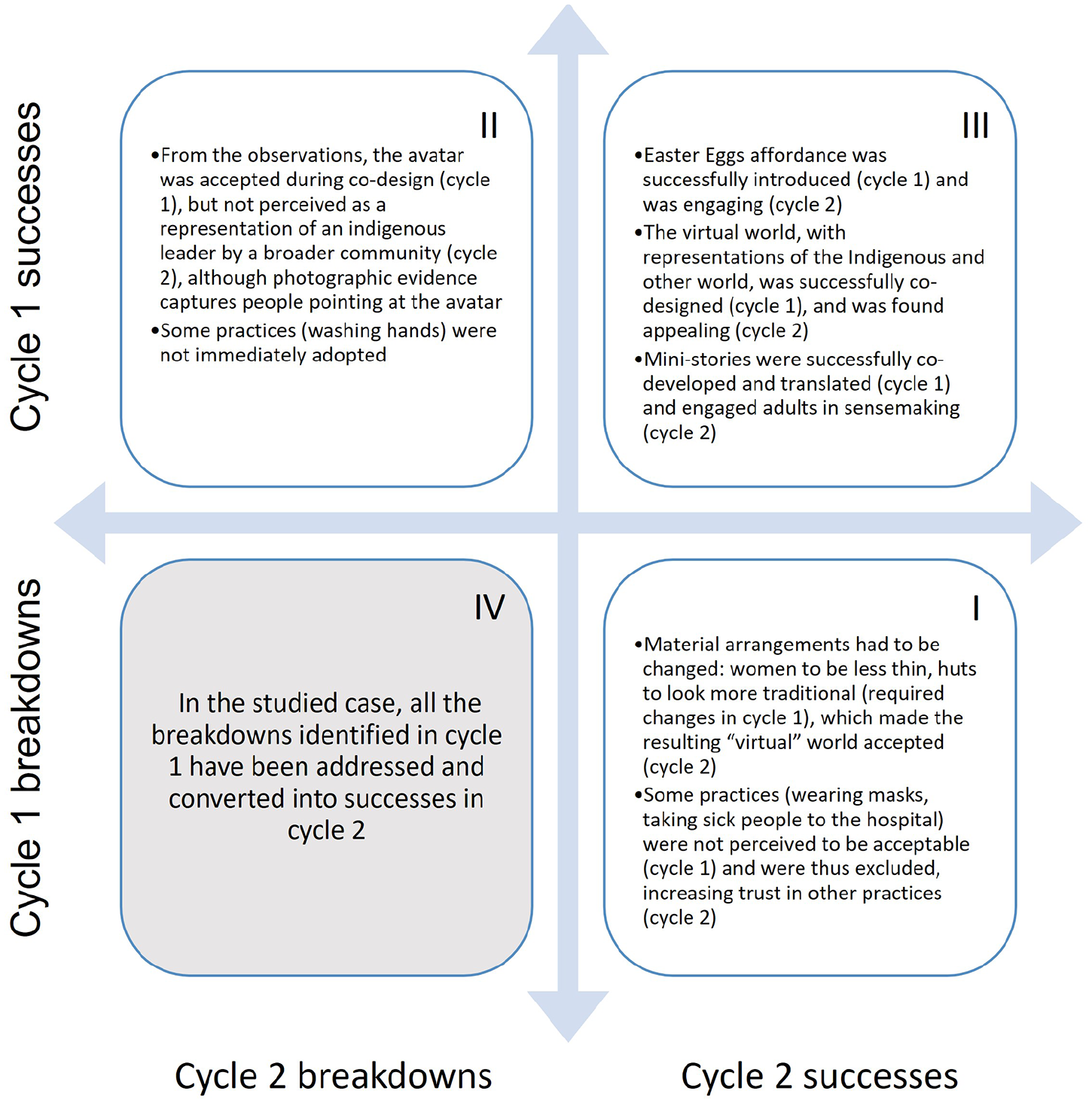
Breakdowns and successes in the two boundary knowledge process cycles.
Figure 5 illustrates how, in the final gamified poster, gamification affordances worked at different levels of this framework. At the syntactic level, a common lexicon was created not only by co-translating recommendations into Indigenous languages but also by creating a non-verbal lexicon in the form of an idealized version of the village depicted in the “virtual” world. It became a representation of the material assemblage within which the practices were situated, which was afforded through gamification. At the semantic level, the co-translation happened through the development of shared meaning, which was facilitated by the short stories that accompanied representations of different practices. Finally, at the pragmatic level, in addition to the negotiation of practices that occurred during the co-design phase, gamification affordances facilitated re-engagement with the poster (through hidden animals), and ultimately co-transformation of knowledge and practices. These affordances engaged parents in telling stories to their kids and then reiterating, or imagining, the practices represented on the poster.
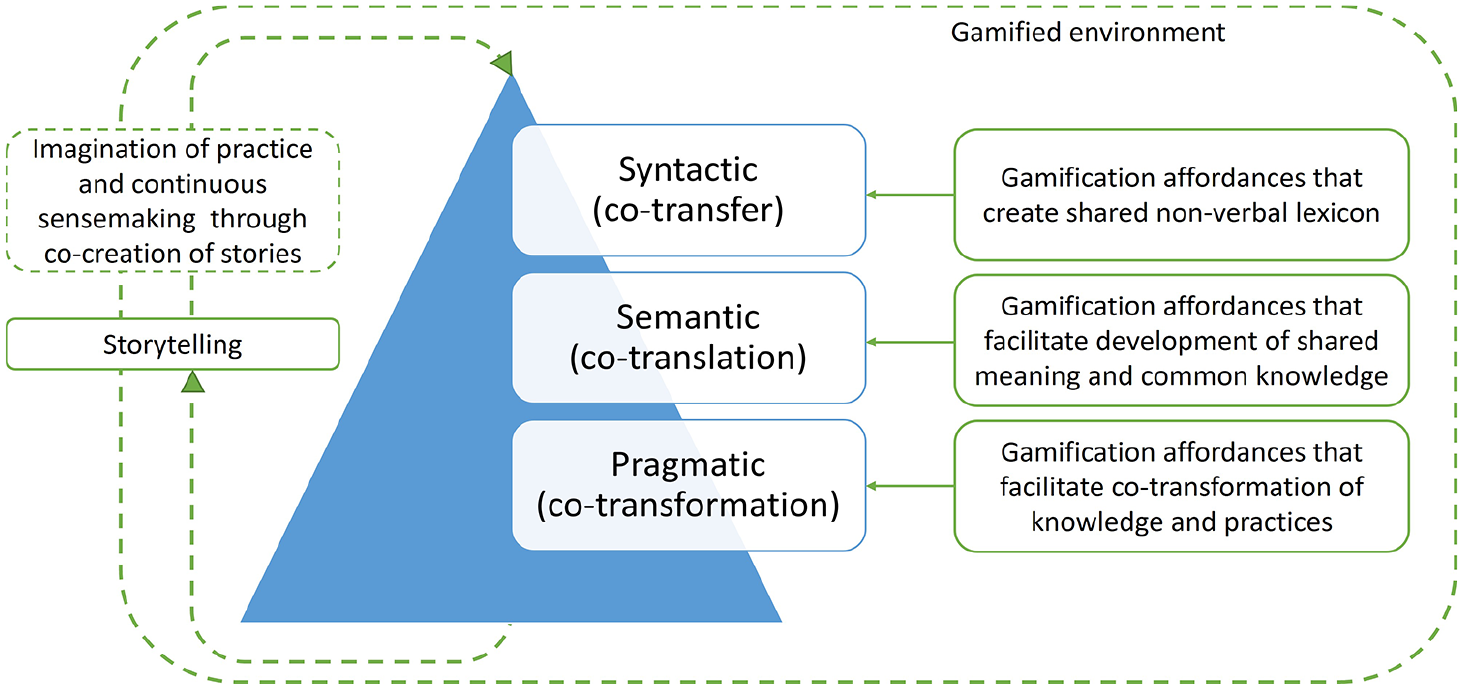
Gamification as a boundary object.
In essence, the gamified environment became a boundary object providing an environment for exploring different practices. It was neither a local place, nor a place of outsiders. It was commonly accepted as a “third” space in which practices could be explored and negotiated on equal terms. Different actors chose to embed certain new practices in their everyday lives, and changes to preventive practices emerged from exploration of the gamified environment.
Already at the syntactic level (through representations of material arrangements) and more vividly at the semantic and pragmatic levels, we can see that communities engage in storytelling, facilitating imagination of practice, which is essential for participating in practice (Carlsen, 2006). Storytelling is a powerful approach that can either reinforce or redefine colonial ideologies (Paludi, 2023). Found in most cultures as a form of knowledge sharing, storytelling is also widely used by organizations in pursuit of their own interests. For example, in the study of corporate archives of Pan American Airways, Paludi et al. (2021) demonstrate how the corporate narratives perpetuate coloniality through a selective stereotyping of the colonial past and how the locals are depicted in Latin America (darker-skin “simple” natives). This study attempts to create an approach of breaking away from this pattern. Dialogic in nature, the gamified environment presents the past as well as the future in the site of the social, through construction of stories that create shared meaning and engagement. The dialogic nature of the gamified environment also becomes a representation of a “hybrid forum” (Garud and Gehman, 2012) as a coordination device for sensemaking (Weick, 1995) and translating culturally embedded practices across communities and contexts (Tsoukas, 2009).
Conclusion
In this article, we explore the co-development of a gamified poster with Indigenous communities in Choco, Colombia, and discuss its impact as a methodological innovation for decolonizing management research. We conceptualize the poster as a boundary object that affords practices (in this study, to prevent virus transmission) to be negotiated.
The decolonization literature highlights the power dynamics that may exist between researchers and Indigenous study participants (Manning, 2018; Smith, 2012), even in participatory studies. These may perpetuate colonial biases, whereby researchers often hold epistemological authority in representing Indigenous people and their knowledge and practices to the Western academic community (Said, 2012). These patterns were illuminated in the process of co-developing the gamified poster, and the poster provided a medium for researchers to reflect on these biases and to discuss the values from the perspectives of the “two worlds,” as well as situated practices. Our contribution lies in the process of co-developing a gamified object that affords engagement with Indigenous communities in a collaborative relationship and allows us to deconstruct our own biases underpinning our research.
In addition, we discuss how the gamified poster acted as a boundary object, creating a space or a gamified environment in which practices could be negotiated. In this environment, practices could be imagined (Carlsen, 2006) before they were transferred to the communities’ reality, and the participants engaged in continuous sensemaking through co-creation of the stories captured on the poster (Garud and Gehman, 2012; Weick, 1995). The sociomaterial nature of the gamification affordances on the poster further illuminates that practices are influenced by material arrangements, and that some material arrangements may be central to specific practices.
Furthermore, we conceptualize the mechanisms through which the gamified poster becomes a boundary object, expanding on Carlile’s (2004) framework, and thus, it becomes a methodological design for co-creating. We discuss how managing knowledge across boundaries may need to occur in at least two cycles in extreme contexts in which the shared knowledge base is very small. The first cycle affords a shared knowledge base to be built and reveals breakdowns, which can then be changed before the second cycle of engagement, and thus turned into success. At each level of managing knowledge across boundaries, gamification affordances co-transfer, co-translate, or co-transform knowledge and practices from Indigenous and Western medicine. Some gamification affordances helped to create a common lexicon and shared meaning, while others allowed for the repeated re-engagement. Most notably, the “Easter eggs” technique afforded continuous re-engagement, as adults were brought back by the kids after they had found all the animals to explain the meaning of the poster.
This research advances relevant ideas and contributes to several ongoing conversations in the management learning community. Much research has scrutinized management knowledge driven by Western values and paradigms, in many forms, including the necessities of knowledge translation at different levels for underrepresented voices to be heard (Barros and Alcadipani, 2023) and the dominance of colonial methodologies and research practices (Girei, 2017; Manning, 2018). The findings in this article offer a new approach for the community to explore, whereby gamification affordances provide an opportunity for reducing colonial biases in research practices and aid the translation of knowledge at different levels. Furthermore, the process of co-development, with indigenous communities, of a gamification artifact creates opportunities for research ethics and reflexivity (Cunliffe, 2002; Cunliffe and Ivaldi, 2021), whereby further research can explore a gamification artifact as a visual and arts medium that affords reflexivity (Sutherland, 2013). Finally, this research offers new ideas in the area of boundary work (Contu, 2014) and power relations at the boundaries (Engstrand and Enberg, 2020; Hawkins et al., 2017). Further studies can explore the reshaping of power relations in the context of boundary work when gamification is introduced.
Our argument aims to establish a solid conceptual grounding to reinvigorate discussions within academic and practitioner communities in the decolonization literature, gamification area, and boundary work. The proposed framework of gamification as a boundary object provides insights into processes within gamified environments. It also suggests that co-development of such an object can be effective at creating a participatory environment facilitating boundary work in cycles. Further research endeavors might delve deeper into the insights we present in our investigation, for example, to examine the intricate interplay of gamification, sociomateriality, and spatial considerations in moving knowledge across boundaries. Further exploration might focus on how gamified affordances are bundled together to facilitate negotiation of practices. In addition, future studies might examine the role of gamification in Indigenous research as a means of decolonizing management research. Finally, there is an opportunity to explore gamified environments as hyper-realities from an ontological perspective. It is essential to note that this article concentrates primarily on presenting successful instances of applying gamification in the context of a boundary object. Specific examples of boundary objects, such as the poster in this study, only work for particular contexts, and when introduced in different contexts, they may break down owing to different relational interdependencies. We propose an extended framework of gamified boundary objects; however, further research is needed to determine the extent to which it might be applicable in diverse contexts.
Footnotes
Appendix 1
Questions related to an attempt to understand how the community responded to the new virus and what behaviors emerged from this response, for example:
Questions related to comparing this pandemic with other outbreaks of other viruses in the region and the differences/similarities in the response, for example:
Questions related to how the communities make sense of the new virus, for example:
Questions related to understanding engagement of the communities with WHO recommendations and their perception of these recommendations, for example:
Questions related to the link between perception and spread of the virus, for example:
Funding
The author(s) received no financial support for the research, authorship, and/or publication of this article.
