



Abstract
Desray Armstrong is one of the most prolific producers working in the Aotearoa New Zealand screen industry. As a wahine (woman/female) Māori, Armstrong's presence counters the traditional domination of white male screen professionals, yet her aim is to support writers and directors from all backgrounds who have a story to tell. Beginning as a production manager, she worked her way up over a career spanning twenty years, and in December 2021 the New Zealand Film Commission (NZFC) awarded her the Māori Screen Excellence Award. However, Armstrong gained her first producer credit only after employing a non-traditional financing model for the artistically ambitious Stray, which was considered outside the remit of the more commercially minded NZFC. Since Stray, and with the support of the NZFC, she has produced films that are challenging and topical, including the noir thriller Coming Home in the Dark, the family saga Juniper and the social media satire Millie Lies Low. This article demonstrates how the onerous public film funding model in New Zealand and the wider market can affect the ability of filmmakers to tell stories that sit outside the narratives acceptable to New Zealand's pākehā-dominated culture. It exposes the mismatch between Armstrong's view that her work is seen by some, as pākehā focussed and the NZFC's idea of the ‘Māori screen industry’. It concludes that despite the drive toward a more accessible industry, led by the NZFC, filmmakers like Armstrong challenge traditional views about how New Zealand should be represented on screen, choosing to position the story and the storyteller as the chief focus, and not where the story originates from.
Keywords
Introduction
In December 2021, the independent New Zealand film producer Desray Armstrong was awarded the Te Aupounamu Māori Screen Excellence Award by the New Zealand Film Commission (NZFC) for ‘significant contribution to the Māori screen industry’ (NZFC – TA, n.d.). Fellow producer and long-term collaborator Chelsea Winstanley said of Armstrong's win, ‘Our film industry is in safe hands because of this incredible wahine Māori armed with decades of knowledge, championing our stories’ (NZFC – TA, n.d.). In that same year Armstrong oversaw the theatrical release of three New Zealand feature films: Coming Home in the Dark (James Ashcroft, 2021), an intense, Hitchcockian thriller influenced by the abuse in state care scandal and destined to play well with the international Netflix audience; Juniper (Matthew J. Saville, 2021), an insular end-of-life drama about an alcoholic Englishwoman sparring with the New Zealand grandson she has only just met, and featuring a sublime performance from UK actress Charlotte Rampling; and Millie Lies Low (Michelle Savill, 2021), a comedy-drama about a young Wellingtonian student who misses her flight to New York for a prestigious internship, and to avoid retribution creates a fake online identity becoming a ghost in her own life. Each film is distinctly different, linked only by an existential theme of identity in modern New Zealand, yet they each contribute a different textural layer to the country's contemporary national cinema.
Armstrong gained her first producer credit 10 years after she began developing feature projects, for the feature film Stray (Dustin Feneley, 2018), having worked in the industry for 15 years as a line producer, production manager and production coordinator on projects as a diverse as The Light Between Oceans (Derek Cianfrance, 2016), What We Do in the Shadows (Clement/Waititi, 2014), and Celebrity Survivor (dir. var., 2006). Stray won multiple awards, including best director at the Australian Directors Guild Awards in 2019, and played on the international art-house festival circuit throughout 2018 and 2019. However, were it not for the tenacity of its writer/director and producer, the film would not have been made at all. In 2015, the project was turned down for production funding by the NZFC, and the entirety of its micro-budget was raised via patronage from individuals of high net worth from around the world, and a network of arts patrons corralled via the crowd-funding platform Boosted. Ironically, the film's success paved the way for each of Armstrong's subsequent feature projects to be funded by the NZFC.
Stray's example questions the very role of the NZFC in supporting local stories and storytellers, and it is an apt manifestation of a much wider issue around the nature of control the agency has over the industry and its aim of creating a space for a Māori screen industry with large scale funds such as 2018's Te Rautaki Māori, the Māori Responsiveness Strategy. Armstrong's case study exposes that although the agency has a vital role in supporting and promoting the local screen industry in New Zealand, a rigidity of funding focus limits the ability of filmmakers to tell any stories that may run counter to New Zealand's pākehā-dominated culture, which still dominates the NZFC. This article demonstrates that Armstrong's example suggests the importance of a funding agency in offering producers financial support with few (or no) stipulations or restrictions, thus allowing them to develop the filmmaking voices of directors and writers that accurately capture and reflect the experiences of modern New Zealanders. In addition, major funding strategies such as the 2015 gender policy (revised in 2017), and Te Rautaki Māori, expose the desire the agency has of driving toward a more accessible local industry, yet Armstrong's proclivity to support stories (and filmmakers) on the periphery of contemporary society made her unsuitable for either of these major funding strategies at the time, thus challenging traditional views about how New Zealand should be represented on screen.
The developmental years
Like most of her contemporaries, Armstrong's access point into the industry was through an entry-level position and she slowly worked her way up through the various production roles. She explained that only in 2022 was she finally able to rely exclusively on producing to support herself. Years of supporting production roles may have detracted her from being able to develop her own projects, but they helped Armstrong create the network of contacts that would help her forge her later success as an independent producer (Armstrong, 2022).
She first entered the industry in 2002 as the television administrator at Te Māngai Pāho (Māori Broadcasting Funding Agency), employed to oversee the funding of commissioned Māori programmes for all New Zealand networks, including Māori Television, ahead of its launch in 2004. In 2005 the Auckland-based producer Mandy Harris invited her to work at Flirt Media and Kiwa Productions, initially working on documentaries and factual series. It was here that she met Chelsea Winstanley, with whom she would soon form her first production company. In 2008 the producer Angela Littlejohn hired her as the production coordinator on the $100,000 short film Patu Ihu (Summer Agnew, 2008) and she has worked almost exclusively in drama production ever since. These initial formative years highlight the importance of both an access point into the industry, to gain that vital first step on the ladder, and of a mentor figure in helping once on the ladder. A mentor is particularly important owing to the fragile nature of the film industry in a small country like New Zealand, which is unable to offer much consistency of employment. Contracts are usually of inconsistent length, no more than a few months, there is little professional development, and jobs are procured near exclusively on a word-of-mouth basis. Attending film schools can help aspiring filmmakers learn the art of making a film, and The New Zealand Film & Television School's production courses teach students the art of scheduling, crewing, and creating a call sheet alongside camera movement and directing actors, but no film school can teach one how to be hired in the film industry. And, at an indicative cost of $16,880 for a one-year production course (NZFTVS), film school attendance is an opportunity mostly only for the elite.
In Armstrong's case, the importance of these early roles was vital in learning production skills, and perhaps more importantly, in helping build the filmmaking network which would become so important when she and Fineley were making Stray in 2016/17 (Armstrong, 2022). In 2020, Armstrong invited Littlejohn to co-produce Juniper, and in 2021, Millie Lies Low, considering that she would bring to the projects a level of experience and sensibility that would complement Armstrong's own. Littlejohn worked in the UK film industry for 15 years, so was able to reach Charlotte Rampling via a UK casting agent, but it was Armstrong and Saville that travelled to meet the British actress in person. In returning Littlejohn's support early in her career, Armstrong revealed the importance she places on loyalty and displayed the tenacity which is so important to succeed in film.
Once Armstrong had established herself in the industry, she took the first major step toward producing her own stories, and she and Winstanley set up their production company StanStrong in 2005. Between 2007 and 2011 the company produced documentary and drama programming, and in 2009 they experienced their first taste of success when Sam Holst's short film Meathead played in competition at the Cannes Film Festival. Armstrong considers the invitation by Winstanley to make their first documentary short together in 2005 to be the catalyst for much of her early development as a producer. As she said, ‘The thing about Māori women is we don't necessarily put ourselves forward. We don’t see our skills or talents for their full merits, so need to be invited’ (Armstrong, 2022). Again, the importance of different types of access points into the industry is highlighted by this example, and StanStrong's success encouraged Armstrong to begin developing features and apply for development funding at the NZFC. Between 2009 and 2022 Armstrong learnt the art of writing a strong funding application and has been financially supported by the agency 41 times as a producer (NZFC – DA, n.d.). This support includes short film funding, film festival travel, professional development, project development funding, and since 2019, feature production funding, and He Ara Development Funding, always working on projects on her own terms, but in collaboration with the NZFC's development team. Despite being Māori, she still considers the external view of her work to be Pākehā (white New Zealander) focused (Armstrong, 2022), although she works with filmmakers from a range of backgrounds, and until more recently, she has not felt like she possesses the level of power within the industry to control her terms with the funding body for fear of missing out on funding, a perineal issue for many filmmakers from cultural and ethnic groups underrepresented in the New Zealand screen industry who are near exclusively beholden to the Film Commission and the level of dominance it holds within the local film industry. The NZFC's monopoly means there is one clear message being relayed to the industry about what the films of the country should look like, and focused funding that aims to reach into underrepresented cultural and ethnic groups helps create wider access points into the industry, but the level of restrictions can also preclude filmmakers that do not necessarily fit directly into the boxes being created. Armstrong's example manages to straddle both camps.
The public funding purse
The film industry still exists as a meritocracy and the loudest voices are often those most listened to, which is counterintuitive to the cultural tendencies of Māori and women (and particularly Māori women), not experienced or comfortable with self-promotion (Armstrong, 2022). Recent funding strategies such as the Māori Responsiveness Strategy may have shown the NZFC to be more sympathetic to cultural issues than at any time in its past (20 years ago it is unlikely a feature in Te Reo would have been funded), but by positioning as its centrepiece the $2.5 million He Pounamu Te Reo Māori Feature Film Initiative, aimed at films produced predominantly in Te Reo Māori, such focused funding strategies limit the types of films that Māori filmmakers are able to make. Armstrong has worked with Māori filmmakers, but she also works with non-Māori too and finds the best way to develop scripts is to allow writers the freedom to express their stories their own way.
Originally founded in 1978 with the simple defining principle that ‘New Zealanders have a right to see films … related to what is important to New Zealanders’ (Waller 3), the NZFC is the country's lead body for film and is key to the existence of the local film industry. The size of New Zealand means that only one public funding agency for the film is possible, so the NZFC controls a near monopoly on public film funding and very few independent, locally produced films are made without its support. This level of control also means the NZFC plays a major part in shaping New Zealand's national cinema, in most cases deciding what does and does not get made, which means the country's cinema is subject to the arbitrary nature of decision-making by the small number of agency staff (and the non-executive board who ultimately make funding decisions) and the fragility of public funding during times of economic uncertainty. The agency cannot offer production funding to all the projects submitted to it, but the number of films the agency was unable to support was exacerbated post the Global Financial Crisis of 2008 when direct government funding was reduced, most dramatically from $11 million in 2007/08 to $5.6 million in 2008/09 (NZFC – AR07/08 & 08/09). Similarly, the introduction of stronger broadband saw the rise of streaming content throughout 2007–10 (culminating in the introduction of Netflix in 2014) causing a notable drop in cinema admissions, which reduced the agency's income from films. The NZFC annual report for the FY 2007/08 states that the six NZFC-funded features released theatrically that year collectively drew an audience of 416,000 (average of 69,000 per film), whilst the audience for ten features in 2011/12 was 400,000 (average of 40,000 per film); for ten features in 2012/13, the total was 290,000 (average of 29,000 per film) (NZFC – AR07/08, 11/12 & 12/13). Annabelle Sheehan, CEO between 2018 and 2021, suggested that some projects were turned down for production funding because of a lack of available funds at the agency, rather than because decision-makers felt a project was not strong enough for support, thus impacting negatively upon the national cinema of the country (Sheehan, 2022). As a result, in the wake of financial instability, the agency's funding strategy was shifted more toward a Hollywood-style meritocracy, where success is rewarded and second chances are few, and away from supporting filmmakers aiming to explore idiosyncratic aspects of New Zealand culture. The release of Taika Waititi's Hunt for the Wilderpeople in 2016 bucked the downward trend of cinema attendance, becoming the most successful local film at the domestic box office, and the NZFC's cut of its $12.2 million box office total in New Zealand alone, helped support the development and production of more New Zealand films throughout 2017 and 2018. The agency can therefore not be wholly blamed for attempting to find another title or filmmaker as popular as Wilderpeople and Waititi, forgoing the support of filmmakers considered to have a less broad appeal in the process. In the six years since the film's release though, there have been no local films that have achieved close to Wilderpeople's box office success, and Waititi's ambitions have seen him leave New Zealand to make Hollywood studio pictures such as Thor: Ragnarok (2017) and Thor: Love and Thunder (2022). The result is that the agency has become less inclined to support projects it deems artistically ambitious, particularly those that do not fit into New Zealand's pākehā-dominated culture, despite four of the country's five most successful films, Hunt for the Wilderpeople, Boy (Taika Waititi, 2010), Once Were Warriors (Lee Tamahori, 1994) and Whale Rider (Niki Caro, 2003), directed by non-white, or female filmmakers 1 (NZFC – BO, n.d.).
Ultimately, the desire to create an industry that is at least in part self-sustaining has seen the agency aim to mix its role in growing and nurturing talent with the often incompatible commercially minded model that is focused on audience size and anticipates a return on investment, and the latter is one that fits more directly with New Zealand's pākehā-dominated culture. Stories that originated from tangata whenua (the Māori people) or the multiculturalism that is a defining feature of 21st-century New Zealand are certainly significant to local audiences, but female filmmakers and those from minority cultural or ethnic backgrounds still find it harder to bring their films to the screen than their white male contemporaries. Throughout its history, pressure groups, often led by renowned filmmakers, have lobbied the NZFC appealing for changes to how it supports filmmakers from diverse backgrounds. Filmmakers Merata Mita and Barry Barclay, for example, were vocal about appealing for change to the representation of and by Māori in New Zealand films, and in 2017 Jane Campion publicly announced that ‘women should be given 50% of the films to make’ (Evans 301). By 2015 the NZFC had already undertaken its own data analysis which exposed that just 22% of features funded in the financial year (FY) 2014/15 were directed by women, 28% were produced by women, and 21% were written by women (NZFC – 5YRS, n.d.). With an all-female development team at the NZFC in 2015, it was unlikely that women filmmakers were being knocked back for funding due to bias (whether unconscious or not), women were simply not applying through a combination of unwillingness to put themselves forward, and a lack of direct opportunities to enter the industry. Armstrong's involvement in the industry at this juncture was therefore all the more pertinent, and her diligence gave weight and substance to the development of NZFC's subsequent gender policy. Therefore, when Armstrong reached out to the NZFC for support for her first feature film in 2015, the project was caught in a perfect storm that partly explains why it was turned down for funding. The film was too artistically ambitious to meet CEO Dave Gibson's more commercially minded approach to film funding, and the project also became ineligible for inclusion during the relaunched gender policy in 2017 because the director was white and male, and so ran counter to the ambitious target of 50% of feature film investment being awarded to female directors by FY 2022/21.
Stray's example is discussed in more detail below, but the NZFC's gender policy target was reached two years earlier than anticipated 2 because of producers such as Armstrong, despite her most production-ready feature being rejected for production funding. She worked tirelessly to counter the dispiriting trends for women filmmakers, and without her work, the NZFC's targets would be baseless. By 2014, Armstrong and Millie Lies Low's writer/director Michelle Savill had been awarded two bouts of script development funding totalling $35,000 (NZFC – MLL, n.d.). With no further rounds of development funding available the project lay dormant for several years until Armstrong managed to rescue it after she had produced Stray, juggling further script development with Savill along with at least two other projects. Armstrong's resilience meant the film finally went into production in 2020 and after a brief but costly closure owing to COVID-19 restrictions that same year it was theatrically released in September 2022, ten years after development first began.
In 2023 Armstrong ensures that Māori and/or women writers and directors make up at least 50% of her slate of projects. Telling stories drawn from he rown cultural background has always been a passion for her, but only recently have her peers become ready to tell “our stories” (Armstrong 2022). “The stakes are much higher when telling indigenous stories,” she says, “so need to be carefully developed and strategised” (Armstrong 2022). She is all too aware of the continued need for stories from underrepresented groups and is conscious that her example promotes the message to less experienced filmmakers from similar cultural backgrounds that they too can tell stories from their community. (Armstrong, 2022). Such an aim was never an intended aspect of her development strategy, but she considers it necessary considering the greater level of experience she now holds within the local industry. Similarly, by chance rather than design, she has always worked with first-time directors, because, she explained, she is drawn to voices that fit her proclivity for stories by and about outsiders, for those yearning for a sense of belonging. As discussed, this tendency has led to a complicated relationship with the NZFC, which is most notable in the example of her first film as a producer, Stray.
The film that defied expectations – Stray
Stray was in an advanced stage of script development when writer/director Dustin Feneley approached Armstrong proposing she board the project as producer in 2015. Armstrong was already developing Millie Lies Low but decided to join Stray as the sole producer, and the team applied for production funding in 2015. The NZFC had supported the project with both Early Development Funding (EDF) and Advanced Development Funding (ADF) to a total of $45,000 (NZFC – ST, n.d.), so production funding was anticipated, but the project was turned down. Armstrong explained that the lack of adequate communication throughout the application process, despite the hands-on nature offered during the script development, meant that the decision was a shock to a production that had already crossed a certain threshold of preparedness, and ultimately caused significant delays to the production schedule (Figure 1).
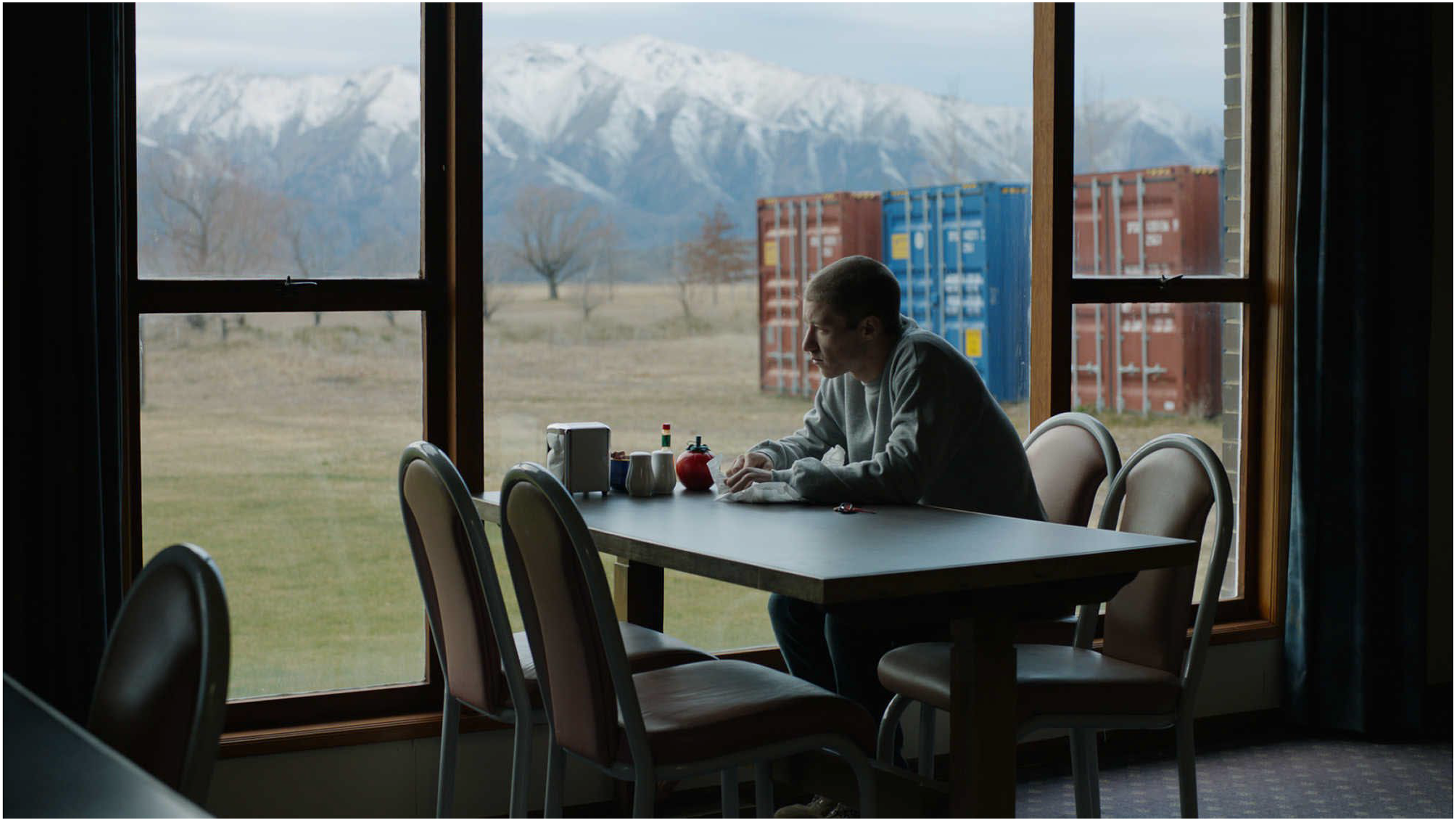
Kieran Charnock in Dustin Feneley's Stray (2018).
The Stray team had requested $700,000 for this debut feature film, much lower than the $1 million considered a low-budget film by the NZFC's standards (NZFC – KH, n.d.). Armstrong suspects that the NZFC turned the project down because the agency was driving toward a more commercial film standard. Gibson countered this with examples of films released during his tenure that can be used to show similar films to Stray were funded to fit a more niche audience mould, such as 100 Men (Paul Oremland, 2017), a documentary about a homosexual filmmaker tracking down the 100 men he has slept with, and Vermillion (Dorthe Scheffmann, 2018), an experimental feature about a woman who sees music as colour. Armstrong believes that to grow storytelling capacity in Aotearoa New Zealand the NZFC needs to support a diverse range of voices amongst the emerging talent by investing in their careers, not just individual projects. At times this might involve funding debut features that may not be commercially successful but help build the filmmaker's voice. A key learning from this case study is how fragile and arbitrary the process of film funding can be, and how funding agencies struggle to weigh a project's value both artistically and commercially. Stray was an artistic success but were it not for the resilience of the filmmakers the film may have never been made at all.
Rather than giving up, Armstrong and Feneley decided to try financing the film independently. They secured enough funding to produce the film by convincing patrons they were playing a key part in launching new talent and they further bolstered the production budget through a campaign on the online arts funding platform Boosted. Through a network of 472 arts patrons, they raised $125,000 and built a community and an audience for the film. They discovered that some patrons who turned them down initially, because they were not confident in the unfamiliar film funding environment, were more agreeable to commit to the online campaign, and be labelled as arts patrons, rather than as film funders. Armstrong considers the psychology behind this key to the online campaign's success. ‘It's really interesting that once people see other names involved, they don't want to miss out … [and] they're part of the underdog story of Stray’ (Armstrong, 2022). The tax rebate also helped incentivise patrons: anyone who donates to a successful campaign on Boosted is entitled to claim a 33% tax credit on the donation from the Inland Revenue Department (BOOST – TAX, n.d.).
The final production budget for Stray was still well below the $700,000 they had originally applied for, despite raising the largest single amount in Boosted's history (they raised 166% of their initial ask) (BOS, n.d.). This meant that both producer and director needed to draw on the extensive filmmaking networks they had spent 11 years creating and invited a cast and crew to work for below their standard rate. There were also several industry vendors who provided camera and lighting equipment and in-kind post-production services, which supported the reduced cash budget. Ultimately, Feneley and Armstrong's tireless work to ensure the film's production provided the cast and crew with feature film credits that helped their professional development.
The final film was screened at 18 international film festivals, winning many awards, including Best Actor for Kieran Charnock at the 2018 Moscow International Film Festival. The slow meditative pace of the film is explored through the grand sweeping cinematography of the stark New Zealand countryside by the director of photography Ari Wegner (who went on to be nominated for an Academy Award for shooting Power of the Dog [Jane Campion, 2021]), is reminiscent of the films of the contemporary Russian director Andrey Zvyagintse, such as Leviathan (2014) and Loveless (2017). Similarly, the familiarity of the landscape and filmic style suggests the international appeal of the film in countries such as Russia, England, Scotland, and Hungary (all countries the film screened in). In New Zealand, the film sold out screenings at the New Zealand International Film Festival (NZIFF) and subsequently ran for four weeks on local cinema screens. Although the film may not have succeeded commercially, this is not necessarily important for a debut feature, and because the film was a notable achievement on the art house festival circuit, Stray should ultimately be considered a success.
The year of three releases
Armstrong noticed an improvement in her relationship with the NZFC after Stray was released. She had at least three feature projects supported by development grants at this stage (including Millie Lies Low and Juniper), but the improved relations were likely influenced by Stray's success and her new status as a credited feature producer. Dave Gibson's departure as CEO in 2018 also meant the development of focus at the agency; as Armstrong noted, a change in the CEO ‘definitely shakes the industry’, and with new CEO Annabelle Sheehan it quickly became clear what her key priorities were. As Armstrong added, Sheehan ‘was focused on diversity, inclusion and representation’ (Armstrong, 2022). This soon began to show in the types of films that were funded, and for her next project as a producer, the relatively low-budget feature Coming Home in the Dark, Armstrong (alongside her co-producers Mike Minogue and Catherine Fitzgerald) felt she was able to offer a level of control over the representation of race, ethnicity and gender in the film. Writer/director, Māori filmmaker James Ashcroft, and co-writer Eli Kent designed the psychological thriller to fit its limited $1.4 million budget, 90% of which was funded by the NZFC (NZFC – CH, n.d.; SHB, 2021) (Figure 2).
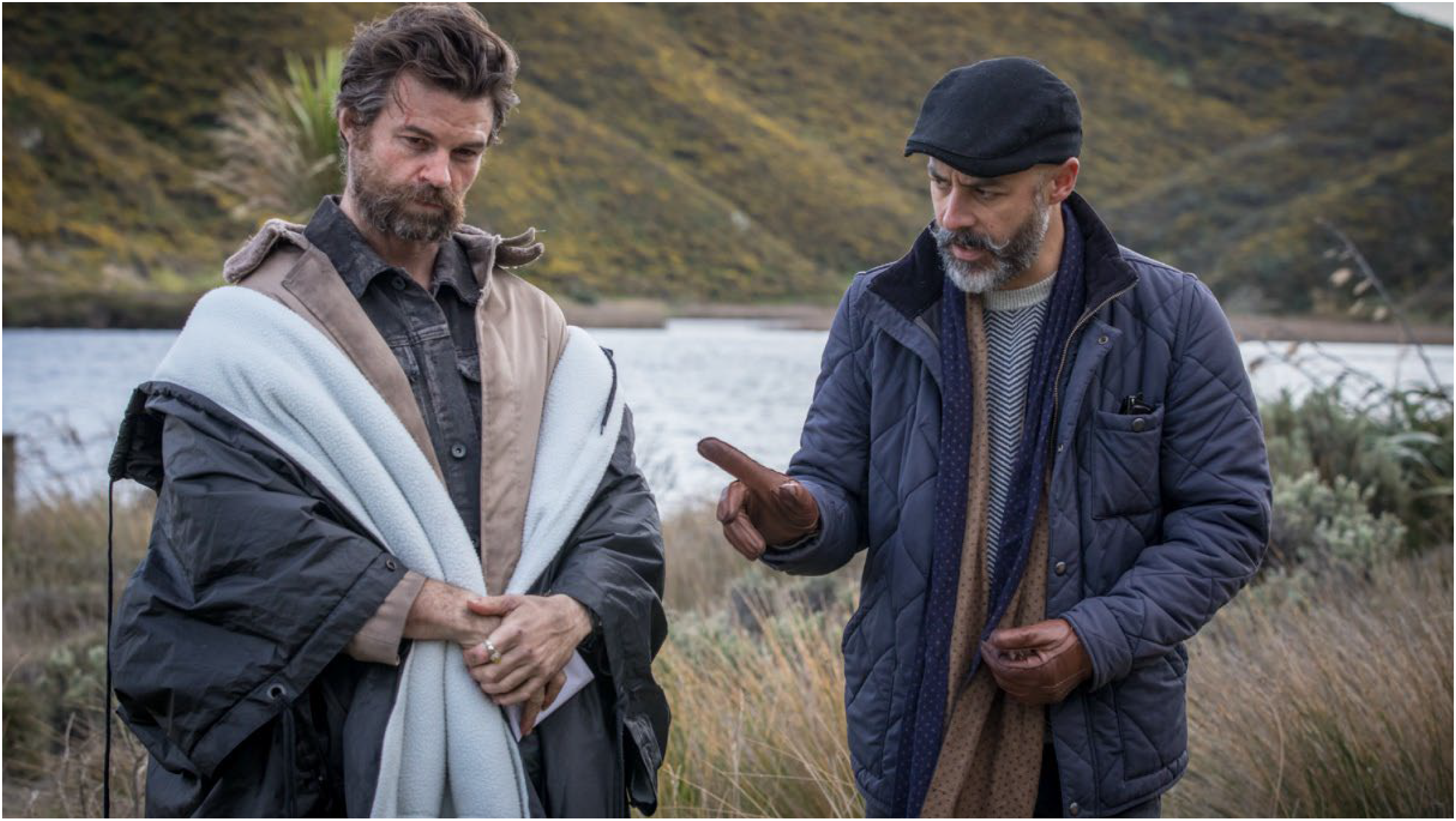
Actor Daniel Gillies and writer/director James Ashcroft on the set for Coming Home in the Dark (2021).
Like other New Zealand titles released contemporarily, such as The Breaker Upperers (Madeleine Sami/Jackie van Beek, 2018) Coming Home in the Dark aimed to normalise the diversity of both crew and cast through a lack of direct reference to it (Armstrong, 2022). Two of the four producers were Māori and two were women, whilst the terrorised family at the centre of the film are both Māori and Pākehā. Historical abuse in state care provides much of the thematic weight to the film, but in casting a Pākehā as the chief antagonist (Daniel Gillies) and his partner of Samoan descent (Matthias Luafutu) the filmmakers aimed to ensure ‘that this isn’t specifically [seen as] a Māori issue but affected New Zealand kids from a range of backgrounds’ (Armstrong, 2022). Therefore, the cultural representation on screen showed that this horrific abuse affected children from diverse cultures across all of Aotearoa New Zealand. The final film is universal enough in its employment of thriller genre tropes to appeal to an international audience (it premiered at the Sundance Film Festival in 2021 and sold to Netflix) but is also culturally specific to New Zealand. As Ashcroft said, the film allowed him ‘to unpack some tricky material about New Zealand and some of the historical failings we need to face’ (SHB, 2021), just as Cousins did in the same year, but with a decidedly different tone (Figure 3).
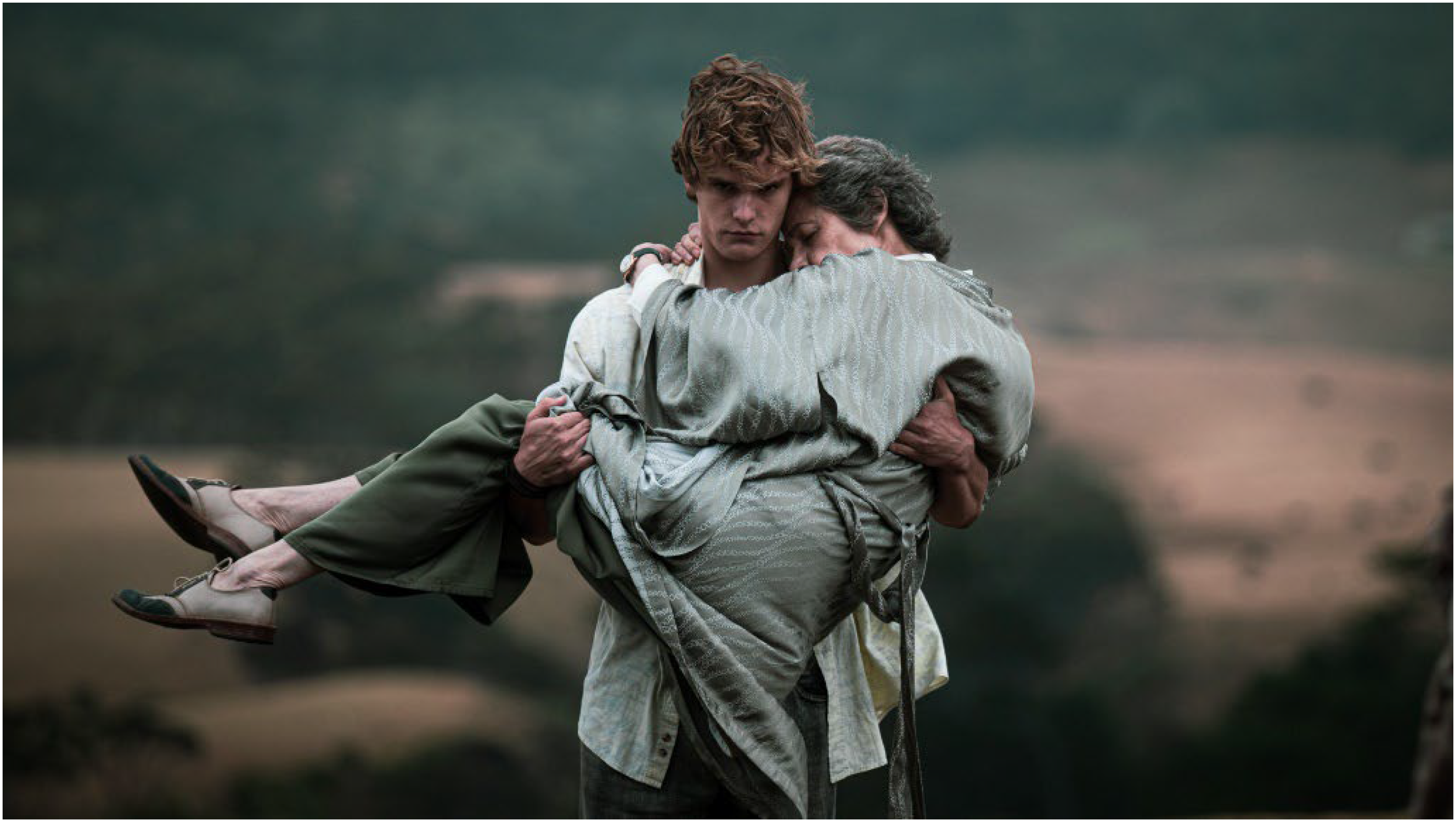
George Ferrier and Charlotte Rampling in Matthew J. Saville's Juniper (2021).
Tonally Juniper is very different to Coming Home in the Dark, yet the films share the same sense of insular New Zealand claustrophobia, influenced by the traditional ‘man alone against the environment’ trend of early New Zealand features such as Roger Donaldson's Sleeping Dogs (1977). Where Coming Home in the Dark is an immediate, intense thriller, Juniper is careful and considered in its portrayal of a cantankerous English woman choosing to end her days on the other side of the world, so she is with her son and grandson. The main story focuses on the generational clash between George Ferrier's impetuous schoolboy Sam and the grandmother he is only now meeting for the first time owing to some unnamed decade-long family disagreement. It is though Charlotte Rampling that dominates as the unsettled matriarch, and her appearance in the film was a major draw for funders and viewers alike. Armstrong and director Matt Saville took the audacious (and expensive) step of travelling to the renowned actress’ French home to meet and discuss the project in depth in the hopes she would take on the role and to show their commitment to the project. Another sign of Armstrong's tenacity paying dividends.
Millie Lies Low again changes the tone whilst remaining honourable in its commitment to the idiosyncratic nature of New Zealand cinema (Figure 4). The script first began its development life in 2012, but the finished film manages to tap so poignantly into the hopelessness of post-COVID-19 contemporary life for Generation Z (those born between 1997 and 2012, defined mostly by having grown up with the internet) that it could have been written in 2020. New Zealand Māori actress Ana Scotney plays a 21-year-old architectural student who disembarks her plane to New York after a panic attack, and whilst attempting to raise the funds for another flight creates an online persona loving life in the Big Apple, and becomes a ghost in her old life, uncovering truths about friends and family she did not realise she had been hiding from. The film taps into the contemporary paranoia young adults experience that the life they are presenting to the world, both online and in person, is really a façade, constructed to give the impression they are happy when the truth is much more complex. For a generation reeling from a year spent interacting predominantly with a screen, the film connects with the zeitgeist so perfectly that the ten years Savill and Armstrong spent developing the project meant it was released at just the right moment.
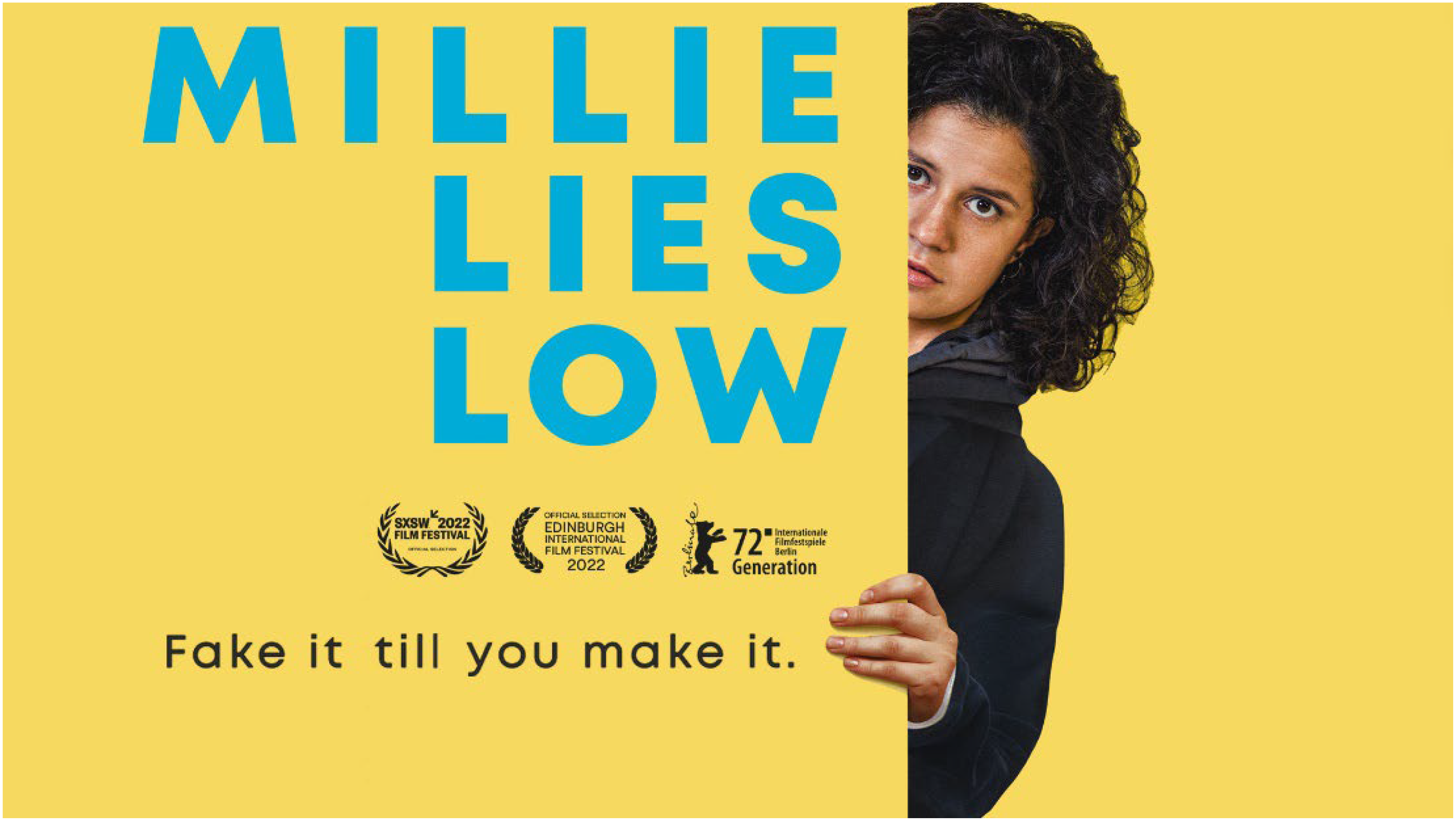
Michelle Savill's Millie Lies Low (2021), starring Ana Scotney.
What's next?
Armstrong continues to work to make access routes into the industry for the next generation of filmmakers, not just Māori or women (her primary focus) but all the communities in New Zealand. It took her ten years from first being funded as a short film producer to make her first feature film and she considers this too long. She acknowledges that the NZFC is making a concerted effort in the talent development space, but this raises two key issues. Firstly, even if industry access points are equal for people from all backgrounds and communities, new voices develop the authenticity required to tell stories by earning trust from the community itself, from whānau and iwi. Concurrently, new voices must develop confidence in their own abilities. All of this takes time. Despite any previous contentions around the production of Stray, Armstrong has a strong relationship with the NZFC, and sees their role in the development of new voices as pivotal, particularly in supporting tangata whenua in seeing and hearing themselves on the big screen.
Secondly, the different departments at the NZFC work in silos with little cross-pollination or communication. ‘You're with Talent Development for a short film’, she said. ‘And then the feature space is completely different. Once the film is nearing completion, you're working with Marketing as well, so there are different parts of the organisation that often don't cross over, and therefore no holistic view of a producer's slate or the levels of engagement with the organisation' (Armstrong 2022). Therefore, if the institution perpetuates existing limiting practices such as working in silos, the impact of a new CEO will be limited even if they intend to create a new policy. Major structural changes need to be made to ensure a change in working practices.
Armstrong's next feature as a producer is her most ambitious to date, with a cast comprised of local talents such as Ana Scotney, Marlon Williams and Robbie Magasiva and the international stars Jennifer Connelly and Ben Whishaw. Like Millie, Bad Behaviour is a comedy-drama, and the feature debut from Australian/New Zealand actress Alice Englert, who has starred in international films and TV shows such as Sally Potter's 2012 British film Ginger and Rosa, and Jane Campion's New Zealand set TV series Top of the Lake in 2017. For Armstrong, having acting talent on par with Connelly and Whishaw attached not only meant she was able to raise the film's budget locally (the NZFC committed $1.8 million, the largest for any of Armstrong's films to date) and through the US as well, but it also means that New Zealand talent will be brought to the eyes of a global audience. Although fully aware of the strength of local actors, Armstrong also considers that New Zealand filmmakers need to be more ambitious with attracting international acting talent, although the country's isolation geographically and the classic New Zealand inferiority complex are counterintuitive to the forthright dynamism required to sell films to the world. Traditionally, successful actors from New Zealand have travelled overseas after gaining some early attention to achieve their greatest level of success: Sam Neill, Anna Paquin, Karl Urban, Melanie Lynskey, and Keisha Castle-Hughes all made their names internationally after memorable performances in New Zealand productions, but Armstrong believes that not all productions need to be on the scale of the Lord of the Rings to attract talent to New Zealand (Armstrong, 2022). Major stars like Jennifer Connelly will help producers raise funding for their films, whilst stand-out performances from local actors like Scotney and Beulah Koale in films like Bad Behaviour will bring them to the attention of an international audience, which will, in turn, mean their names will help to raise finance for future productions, and therefore help to grow a sustainable local industry.
Conclusions
Armstrong continues to try and create a production process that is more conducive to the work/life balance that has been almost non-existent in the New Zealand film industry, and her feature productions provide more entry-level points for young practitioners. Job shares and part-time roles are offered to accommodate those with families, whilst Bad Behaviour created three different paid internships (funded by the NZFC), for director, producer and hair and make-up. The aim is to reduce the decade it took Armstrong to produce her first feature and such roles are pivotal in helping create access points into the industry for filmmakers who may not fit into the boxes created by the NZFC's major strategies. Although Armstrong now aims to keep at least 50% of her slate for projects by Māori and/or women, her development strategy is and has always been project dependant, and she chooses to support films that speak to her on a story level; however, as a wahine Māori, she is still guided by cultural practices (Armstrong, 2022). A defining feature of the films she has produced is the intersectionality of on-screen and behind-the-camera ethnic and cultural representation, which is not necessarily in line with the NZFC's view of the Māori screen industry that it aims to shape with Te Rautaki Māori, but is just as important in the development of the national cinema in offering an accurate representation of modern New Zealand culture. The image of a multicultural New Zealand promoted in Millie Lies Low, for example, is just as important at exposing the cultural make up the country as a film such as Muru (Tearepa Kahi, 2022), the first recipient of the He Pounamu Te Reo Māori Feature Film Initiative, a film that explores tangata whenua on-screen, and promotes the use of Te Reo Māori Armstrong's current slate is now very Māori-led, because she has built enough experience to feel comfortable working to support Māori filmmakers who are ready to embark on sharing their stories with the world. As she says, “It has been a long time coming but all the previous experience had led me to this point and Te Rautaki Māori [italics] is crucial to supporting this work” (Armstrong, 2022).
Enigmatically, considering her lack of direct involvement with the NZFC's funding strategies, Armstrong's example as a successful wahine Māori filmmaker helps influence the development of official policy, hence the agency awarding her the Te Aupounamu Māori Screen Excellence Award. With the advent of the gender policy and Te Rautaki Māori, the NZFC is engaging directly with groups they consider underrepresented both in front of and behind the camera because filmmakers such as Armstrong have proved that there are voices to be heard from all aspects of New Zealand society if they can just be supported in the right way. The NZFC's engagement with Māori film through Te Rautaki Māori shows its ongoing commitment to Te Tiriti o Waitangi (the Treaty of Waitangi), and it is also because of the tireless work of producers such as Desray Armstrong, and her contemporary colleagues: Ainsley Gardiner, Georgina Condor, Chelsea Winstanley, Catherine Fitzgerald, and Philippa Campbell, that New Zealand national cinema has been able to develop to the stage of properly reflecting the multicultural population of the country in the 21st century.
Footnotes
Acknowledgements
The author thanks Dr Alfio Leotta and Dr Missy Molloy from Victoria University of Wellington for their supervisory support on the MA dissertation that this article lifts partly from, and of course to the subject, Desray Armstrong, kia ora for all your hard work at helping shape New Zealand's filmmaking landscape.
Declaration of conflicting interests
The author(s) declared no potential conflicts of interest with respect to the research, authorship, and/or publication of this article.
Funding
The author(s) received no financial support for the research, authorship, and/or publication of this article.
