



Abstract
The skyrocketing number and severity of issues in Australian aged care led to the establishment of the Royal Commission into Aged Care Quality and Safety in 2018. Yet, compared to other Royal Commissions, media coverage has been relatively muted, and public awareness and engagement with aged care issues has been uneven. Journalists bear a significant responsibility for shaping the national conversation about aged care, and ensuring this demographic is reflected in the news Australians consume. Due to their unique properties, images are especially important in giving visibility to this historically marginalised topic, and to emotionally engaging an often apathetic public. As such, this study focuses on the aged care visuals accompanying Australian news coverage during the period of the Royal Commission's announcement through to four weeks after the government's response. Drawing on the lens of symbolic annihilation, it does this through a visual analysis that examines who or what is represented and the role of news values in shaping the selection of images included with news reports over this period.
Keywords
Introduction
Journalistic representation matters. And journalism organisations have ethical, moral, and, in some cases, legal responsibilities, to provide it. For example, the Society of Professional Journalists encourages its members to ‘Boldly tell the story of the diversity and magnitude of the human experience’ and to ‘Seek sources whose voices we seldom hear’ (SPJ, 2014). The Australian Broadcasting Corporation, too, under its charter, has an obligation to create content that ‘reflect[s] the cultural diversity of the Australian community’. Yet journalism organisations have been critiqued for how little (or poorly) they cover identity groups on society's margins. This includes disparities related to gender, disability, and race and ethnicity (Ewart & Beard, 2017; Romano, 2021). These disparities sadly extend to age, too, and are reflected in the lower proportion of stories on aged care and ageing compared to other topics (Gilbert, 2021).
Ultimately, the news media tell us important messages about ageing and aged care, such as how older people should behave, should be treated, and should view themselves. They also provide a window for younger audiences into what to expect or hope for when they themselves become older. Acknowledging this, the present study focuses on the visuals accompanying Australian news coverage of ageing and aged care during a key event ‘frame’, the calling of the Royal Commission into Aged Care Quality and Safety (the RC) in 2018 through to four weeks after the government's response in May 2021. It seeks to identify who or what is made visible or rendered invisible. Beyond this, it also seeks to identify the nuances of how those visibilities operate in daily news coverage. Drawing on the lens of symbolic annihilation and visual news values, it does this through a qualitative representational and visual analysis of nationwide news coverage over this nearly three-year period. The results inform media practice and can guide news workers seeking to represent this demographic with dignity, nuance, and depth.
This study is specifically interested in the visual dimensions of news coverage of older Australians for three reasons. First, photojournalists have been one of the hardest-hit roles within the news workforce over the past two decades (Caple, 2019) but the news and broader digital media environment remain profoundly visual. This means that, with fewer professionals making news visuals, news organisations are increasingly turning to generic stock photography banks, recycling file photos, or integrating amateur-made images into their reporting. Each of these has its potential drawbacks, as will be discussed in more depth in the literature review section. Second, visual news has unique properties compared to other storytelling modes that makes it a highly efficient, emotive, and impactful carrier of meaning (Joffe, 2008). Third, due to the effects of logocentrism or due to methodological challenges, the visual dimensions of news coverage are often ignored (Bock, 2020). Indeed, other studies that focus on Australian news reporting on aged care during this same period (see Lichtenstein, 2021, for example), focus exclusively on written reporting at the expense of considering the visual dimensions of coverage.
Literature review
The literature review that follows begins by outlining the process of news image creation and acknowledges the importance in this process of news values and gatekeeping forces. Next, it introduces the symbolic annihilation lens that helps guide the study's analysis. After this, it provides an overview of how older people and ageing are covered in the news before narrowing down specifically to the RC.
The process of news image creation
The visual news ecosystem is a complex assemblage of messages created by an increasingly diverse array of people with different intents, motivations, practices, and approaches. It includes work created by professional journalists operating under institutional pressures and routines (such as deadlines and resourcing concerns) as well as ethical concerns and responsibilities (Lester, 2015). Professional visual journalism has been defined as ‘the visual pursuit of objective reality as we know it—the most accurate recording of life events a human being can make’ (Newton, 2013, p 50). Despite this quest for accuracy, photojournalism is a highly subjective endeavour and scholars have suggested that the domains of environment, interaction, and identities are particularly influential in shaping the reality that is constructed and presented to a larger audience (Thomson, 2019).
However, the professionalisation of news photography has been intensely disrupted in the past two decades and, as a result, fewer full-time roles for visual journalists exist (Thomson, 2018). This has led to an increase in freelance or casual labour where ‘parachute journalism’ is encouraged and where interactions are often brief and shallow (ibid). Non-professional journalists, too, are making images that are increasingly finding their way into news reports. In the case of stock photography, the producer is a professional but likely works without the ethical and institutional forces that shape the production of professional news photography. As such, taboo practices within contemporary photojournalism, such as re-enactments or direct manipulations of the scene through repositioning people or objects, can happen and can be presented as reality without transparency about the circumstances in which the image was produced (Kobré, 2016). Such stock images can also lack concrete context and rely on stereotypes in order to be widely usable (Thurlow et al., 2020). And, in some cases, the person making the images isn’t a professional at all and potentially lacks a cultivated aesthetic sense as well as ethical responsibilities. These so-called ‘citizen journalists’ or amateur photographers are published—frequently through social media embeds in news stories—often without any sense of the person behind the lens, their identity, or their motivations and intentions. This raises important questions about provenance, accuracy, and values (Mortensen & Keshelashvili, 2013).
In addition to in-the-field dynamics influenced by environments and identities, the news image creation process is also influenced by various news values, as will be detailed in the next section, which influences which assignments are made, which events are covered, and how those assignments or events are covered (as well as the specific photos that end up being published and come to represent the event's ‘reality’).
News values and gatekeeping forces
For a journalist or editor, deciding what to write and publish depends on organisational and practical concerns (e.g. economic, format) as well as, importantly, news values (Caple, 2019). Entertainment, surprise, magnitude and relevance (Harcup & O’Neill, 2017) are examples of ‘traditional’ news values, but these values have also been argued to shift with the medium (Brighton and Foy 2007). Eleven visual constructs have been proposed to construct newsworthiness in Western journalism (Caple 2019, pp. 109–113). These include aesthetic appeal, consonance, eliteness, impact, negativity, positivity, personalisation, proximity, superlativeness, timeliness, and unexpectedness. When examining how news outlets choose to engage audiences with stories about aged care, particularly within the highly visual digital media environment, interrogating the news values underlying the images they publish is critically important. Critical, too, is an understanding and acknowledgement of gatekeeping forces, from those that occur in the field to those that influence the content that is shared and seen on social media platforms, as the next section discusses.
Gatekeeping forces start in the field when physical access has to be negotiated in order to access spaces where newsworthy events, people, or scenes reside (Bock, et al., 2018). These continue implicitly when the journalist decides which subjects, angles, and activities to document and which to ignore (Lough & Mortensen, 2022). The journalist then acts as a gatekeeper themselves in deciding which visuals to send to his or her editor (an opportunity that is usually not present during breaking news situations) (Thomson, 2021). Next, the journalist's editor assumes the gatekeeping mantle as they further refine and hone the vision they receive from the journalist before publishing it. Lastly, algorithmic gatekeeping forces exist on social media platforms that influence the content one sees and interacts with (Wallace, 2018).
Symbolic annihilation
Symbolic annihilation describes the absence of representation or the underrepresentation of an identity category in media depictions (Gerbner, 1972). It is a concept that has most frequently been applied to the categories of gender and sexuality (Schneider & Hannem, 2019) and is one that is also well-suited to matters of visibility, invisibility, and the nature of visibility that this paper concerns itself with. Scholars who have developed this line of thinking include Tuchman (2000) who identified three aspects of symbolic annihilation, including omission or under-representation, trivialisation, and condemnation. The first of these, omission, is a dichotomy where someone or something is present or absent without the possibility of an intermediate state while under-representation refers to insufficient or inadequate visibility. The second, trivialisation, occurs when someone or something is present (i.e. visible) but the nature of that visibility is lacking in nuance or is rendered in stereotypical ways. The third, condemnation, exists when implicit or explicit disapproval accompanies the representation. To the extent that news and media representations influence behaviour and attitudes, the prevalence of such themes seeks to keep marginalised attributes, older age, in this case, in a peripheral and less powerful position. It also, by reflecting the dominant values of a culture, ensures that such values are transmitted to future generations and maintained.
News media coverage of older people and aged care
Past research has shown that the news media rarely tend to depict older people (Torben-Nielsen and Russ-Mohl, 2012) and, when they are represented, they are often shown through the lenses of dependency, frailty, cognitive decline, and loneliness (Köttl et al., 2021). This stereotypical and negative coverage can influence how older people think of themselves, as well as influencing expectations of broader society and accompanying public policies. Ageist stereotypes in media discourse contribute to an ‘us versus them’ framing and, potentially, mentality for those who are exposed to such messages (Cruikshank, 2013). Additionally, older people are often physically separated from the rest of society and thus ‘othered’. This ‘othering’ can extend into media depictions depending on the various semiotic resources that journalists draw upon when making or selecting photos to accompany the news.
Within Australia, a 2021 study (Imran) of 49 articles related to aged care and published from 2011–13 in eight outlets found that more than half these outlets discussed the financial implications of aged-care reform more than any other topic. This was followed by political and, in third and last place, social issues. The same study, which primarily focused on written text, noted that ‘images are not a central pillar of this project’ but considered some key images ‘because of their significant contribution to storytelling’ (p. 50).
The present study responds to calls by scholars (Köttl, et al., 2021) to analyse other types of media (eg, online media), as well as pictures. It recognises that ‘the type of representation of older people in media is more difficult to examine than the simple amount of representation’ (Martin, Williams, & O'Neill, 2009) and, as such, seeks to go beyond simple frequencies of who is depicted to explore in a more nuanced way how these people are depicted and with what implications. A visual analysis, informed by the lens of symbolic annihilation and the role of news values, is one such way that a more nuanced view can be achieved.
Royal Commission into Aged Care Quality and Safety
The RC revealed that one-third of people living in residential aged care facilities are experiencing substandard care (Royal Commission, 2021). In addition, the Commission also highlighted a significant and lasting public stigma confronting older people. Regarding media coverage of the RC, a recent ABC investigation found that initial news media coverage related to it went largely underreported in comparison to other Royal Commissions (Connolly, 2019). It revealed that the banking royal commission, for example, received triple the coverage of the aged care RC. Additionally, when the aged care sector does receive coverage, it is important to evaluate the quality and nature of that coverage. For example, considering that two out of three people living in aged care settings are women (Royal Commission, 2021), do news media depictions reflect this gender disparity and focus more heavily on the experiences of women over men?
The news media's role in our democracy, and their impact on public perception and funding for aged care, form a critical and urgent context for investigating the sector's visual representation in the media. As such, this study's first research question seeks to explore who or what was rendered visible or invisible during the RC and asks:
The study also seeks to understand how to address this lack of visibility and reduce the stigma attached to discussing aged care. For the news media, this can be done by 1) humanising individuals, 2) challenging the affected individuals’ out-group (marginalised) classification, and 3) cultivating empathy and compassion (Groot, et al., 2020). Therefore the study also investigates the degree to which a news media depiction relied on generic or stock visuals over localised and unique imagery. Specifically, the second and third research questions ask:
Methods
Data collection procedures
In order to determine how best to analyse how journalists report on the story of aged care in Australia, the research team first considered the broad history of policy developments that have shaped the aged care sector in concert with the (decreasing) quality of care provided that led to the establishment of the RC in October 2018. This milestone was selected as the beginning of the study's timeline. The Commission's final report was tabled on 1 March, 2021, and the government provided its response to it on 11 May. The study's end timeline was selected as 11 June, 2021, approximately four weeks after the government's response, in order to capture any additional news coverage that followed the government's response.
Sampling considerations
The study employed a purposive sampling strategy (Etikan, Musa, & Alkassim, 2016) that compared both national and regional news coverage on the topic of aged care in Australia during this timeline. Specifically, it selected 13 outlets overall, including three national news outlets (the ABC, the Australian, and the Guardian Australia) and 10 regional news outlets (the Sydney Morning Herald, the Daily Telegraph, the Canberra Times, The Age, the West Australian, the Brisbane Times, the Courier Mail, The Advertiser, The Mercury, and The Northern Territory News). In this way, the study achieved representation from each Australian state/territory, and a diversity of media ownership models.
Regarding media ownership, the sample includes six outlets owned by News Corp (the most dominant of Australia's media players), three outlets owned by Nine, one outlet owned by Seven West Media, one outlet owned by Australian Community Media, one outlet owned by the Guardian Media Group, and one outlet that is publicly owned.
Articles were selected based on a keyword search that consisted of the following three sets of keywords: ‘Royal Commission’ and ‘aged care’, ‘home care’, and ‘elder abuse’ 1 . The lead author consulted a nationally leading Australian aged care advocate to determine these keywords and to ensure that the coverage would be inclusive of both residential care (which accounts for about two-thirds of the sector) and home care settings and would include all coverage related to the RC and related issues.
The databases used to compile these articles (Factiva and ProQuest) only provided text results and not any accompanying images so the lead author individually looked up each article and downloaded the lead image (if any was present) that appeared in it. The rationale for this is the lead image is often the one that is shown when article links are shared on social media (though editors and social media managers can, if time and resources allow, select alternate images to be displayed as ‘social media cards’ when the article is shared on platforms like Facebook or Twitter). When the article's lead image matches the image shown on the social media ‘card’, they are the ones that are most likely to be seen and that represent the story of aged care in Australia—even if viewers don’t click through to read the linked article. The following attributes were also collected for each image in the sample: the headline accompanying the article with the image, the name or names of the journalists who wrote the articles, the place of publication, the publication date, the publishing outlet, and the image caption and any byline that was present.
Analysis
Analysis took place over a five-month period and began by the study's first author with a close reading of the images to explore the breadth and depth of representations present. It continued with a qualitative representation analysis (in the style of Kress and van Leeuwen, 2006) of each photograph so that a systematic understanding of who was photographed, by whom, and in which settings, could be achieved. Specifically, each image was first coded for its source (stock photo or non-stock photo). Image captions and by-lines were consulted to assist with this and, when by-lines weren’t present, the study's first author ran the image in question through a reverse image search to explore its provenance and discover if it was available elsewhere online (e.g. on stock photography websites) or if it appeared to be unique to the publishing outlet. Next, each image was coded for the type of person, object, or setting it depicted and captions were once again consulted, when needed, to resolve potential ambiguity. During this part of the analysis, the lead author systematically noted the ‘visual devices’ (Caple, 2019), including the represented people, attributes, activity sequences, technical affordances, and/or settings, that discursively construct certain news values. For example, the eliteness news value can include recognisable public figures, such as the prime minister or a celebrity; the presence of costumes (such as academic regalia) or uniforms (such as police uniforms); the presence of self-reflexive elements like microphones or press scrums; the use of specialist equipment (e.g. a geneticist using a pipette); and settings that show context associated with elite professions or activities, such as a medical laboratory or a research library. For the images with people in them, it was noted whether the people were identifiable and, if so, their level of identifiability. The proportion of stock to non-stock photos, the framing of captions, and the prevalence of certain people types, in addition to their identifiability, were used to assess news values and symbolic annihilation along the dimensions of omission or under-representation, trivialisation, and condemnation.
Findings
Isolated and marginalised
The first research question investigated who or what was shown in Australian news media depictions of aged care-related coverage across 13 news outlets between October 2018 and June 2021. From a pool of 583 images, non-generic images of people comprised 71.8 percent, with stock photographs comprising approximately 19 percent. Photographs of places without people (4.8 percent) and of objects (4.2 percent) rounded out the representations in the sample. The top five sub-categories within the ‘people’ umbrella category, which accounted for nearly 75 percent of all images in this category, included: depictions of older people by themselves (29.8 percent), politicians (23.6 percent), public servants (7.3 percent), business people (6.6 percent), and older people with family members (6.4 percent), who were most often their children. A full breakdown of these categories is available in Table 1.
Representations by type.
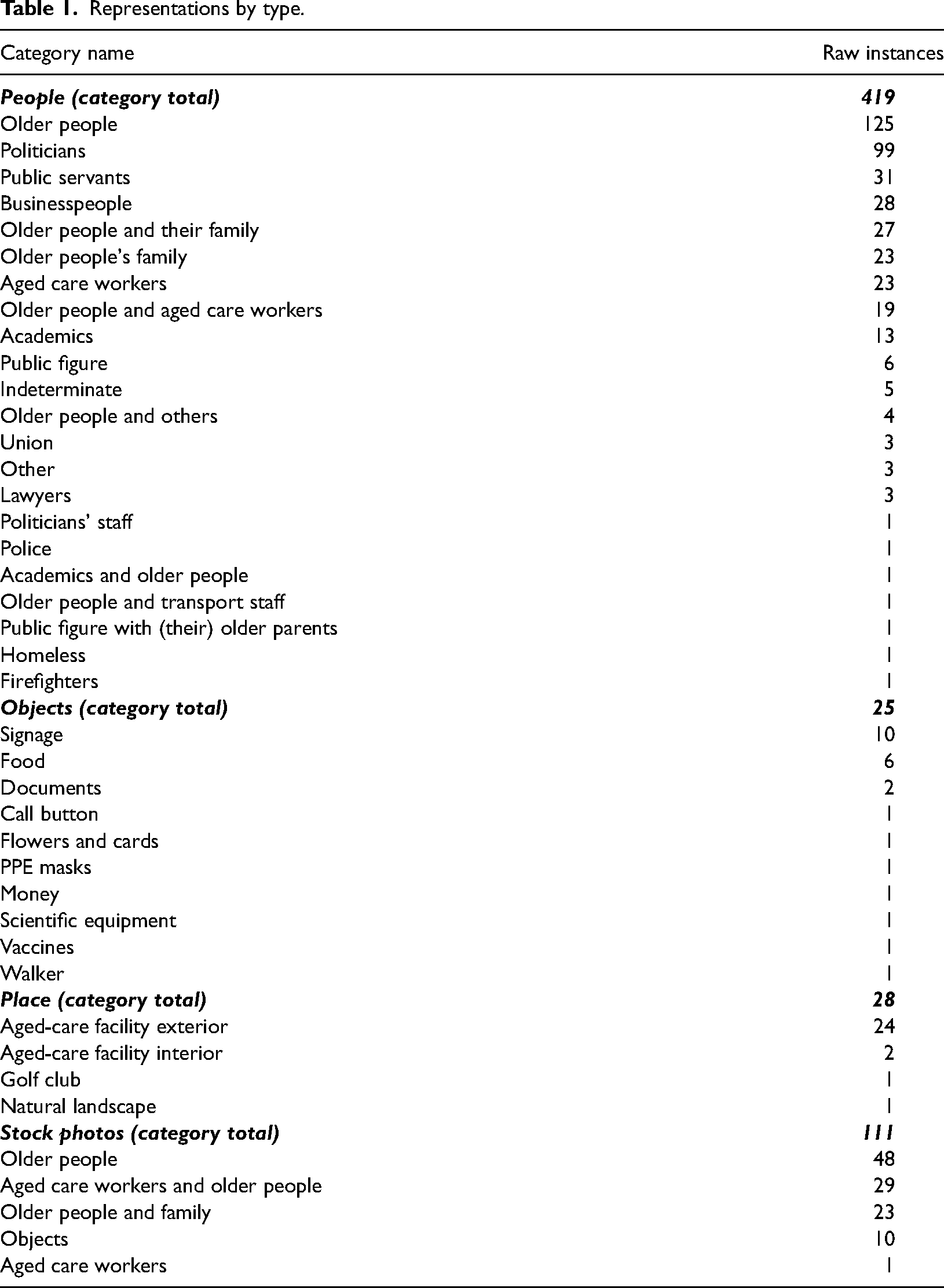
While images of people dominated the sample and were the most popular of any coding category, the types of people featured weren’t uniform. Older people, the principal figures of the RC, only featured in fewer than half (42.4 percent) of the news photos, either alone (29.8 percent) or with others (12.6 percent). Politicians and public figures occupied nearly a third (31 percent) of the news photos sample.
The Australian government's interim report into aged care quality and safety, filed roughly a year after the Royal Commission began, was titled simply ‘Neglect’ and this title is also a fitting summary of the visual news coverage of aged care over this time period. The low numbers of depictions featuring older people with others—either with their family members (6.4 percent) or with aged care workers (4.5 percent)—underscores how isolated and marginalised this group is, both physically and socially from the mainstream of Australian society and from the carers on whom they depend for their everyday needs (see Figure 1). Likewise, the importance journalists placed on showing politicians, public servants, and public figures illustrates their dependence on the eliteness news value.
Gender of the older people depicted
Recalling that two-thirds of people living in aged care settings are women, the study's first research question was also interested in whether the images in the sample reflect this gender disparity and focus more heavily on the experiences of women over men. The analysis revealed that the genders of the older people depicted in the sample largely mirrored the on-the-ground reality of those living in aged-care settings. Older men occupied 36.7 of the visual news coverage while older women occupied the remaining 63.3 percent. However, these figures are skewed somewhat by the reliance on stock photos, which significantly over-represent older women and show them in 82.9 percent of representations. The non-stock photos showed more older women (58.3%) than men (41.7%) but didn’t fully reflect the two-thirds gender split that is seen in aged-care settings.
Omissions and under-representations
As has been noted previously, aged care receives less news attention compared to other topics, such as finance and banking. Yet even with news coverage devoted exclusively to this topic, older people are still featured in a minority of cases as they represent fewer than half of all people shown in the sample over this nearly three-year timeframe. And when it comes to the ‘caring’ part of aged care, the people who are principally involved with this—aged care workers—were shown in only 10 percent of cases (either alone or with older people) compared to politicians who occupied nearly a third (31 percent) of the sample. This omission or under-representation form of symbolic annihilation extended also to Aboriginal and Torres Strait Islanders and Queer people. In the case of self-identified Indigenous Australians, news outlets showed them in only 1.1 percent of cases, which is lower than the 3.3 percent of the overall population these groups comprise. In the case of self-identified Queer individuals, news outlets showed them in 0.4 percent of cases. Thus, based on this sample, it can be said the Australian news media privileges the eliteness news value and engages in symbolic annihilation of older people; lower-status people, such as aged care workers, who are chronically underpaid; Indigenous Australians; and Queer individuals.
Generic and vague
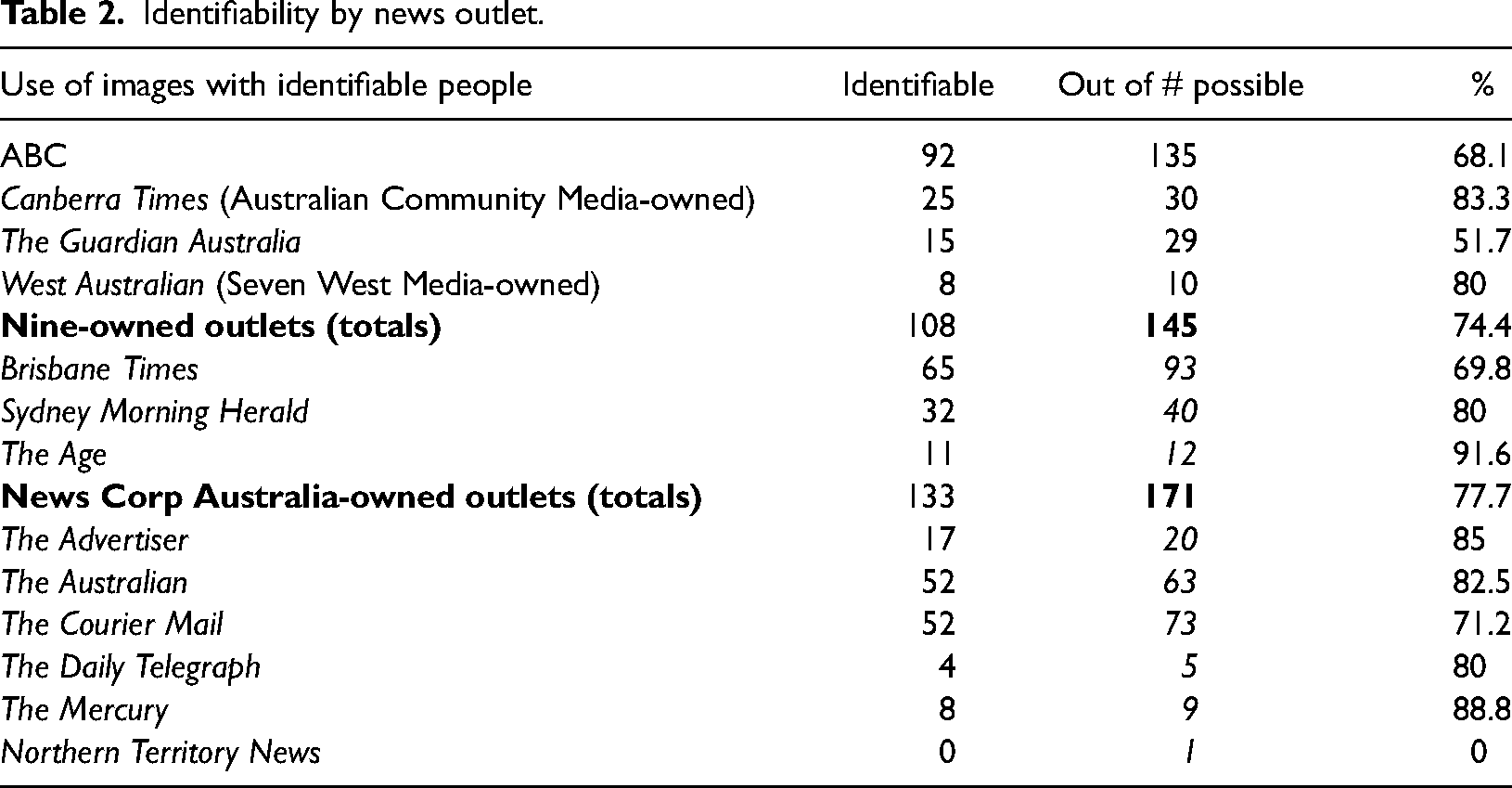
The second research question concerned itself with journalists’ reliance on stock photography. Of the 583 images in the sample, 111 (19 percent) were stock photos and 472 (81 percent) were news outlet-produced images. News Corp Australia-owned outlets led with more than a quarter (n = 25.6 percent) of articles being accompanied by stock photos. Australian Community Media-owned the Canberra Times followed with 20.5 percent of its articles featuring stock photos. Next was Seven West Media-owned the West Australian with 18.1 percent of its articles being accompanied by stock photos. The ABC's articles had stock photos accompanying them in 17.1 percent of cases and was followed by the Nine-owned outlets with 14.6 percent of their articles accompanied by stock photos. The Guardian Australia, with 9.6 percent of its articles being accompanied by stock photos, used the fewest number of stock images.
When using stock photography, the news outlets in the sample selected a much higher proportion of images featuring older people compared to when journalists created their own imagery. Stock photographs used in the sample depicted older people in 90 percent of cases (compared to only 42.2 percent in journalist-produced photographs). In addition, the stock photos showed older people with others in a much higher proportion (52 percent) compared to the journalist-produced images, which showed older people with others in only 29.7 percent of cases. The stock photographs were also more likely to draw on the consonance news value and to depict older people in stereotypical ways, as will be further explored in the ‘disembodied and personalised’ section.
In privileging the consonance news value, journalists largely ignored the impact one. Indeed, Australians were only treated five times over this nearly three-year period to photos that showed abuse of older people either directly while it was occurring or highlighting its effects in the case of injuries, bruises, and the like (see Figure 2). None of these five photos was stock photography, which attests to the power and potential of localised, personalised imagery.
Condemnation
The ‘condemnation’ aspect of symbolic annihilation manifested most frequently in the captions that accompanied the images. An example of this is Figure 3, which was accompanied by a caption that read, ‘An ageing population will drain the nation's finances, new figures show’. This image's caption positions older Australians as a threat and a danger to the larger (and younger) society. Another example, this one also money-related, comes from the Courier Mail, which published a stock photo of an elderly person accompanied by a nurse. Its caption read, ‘Australians don’t plan early enough for their aged care costs’. This places the blame on older Australians and argues that the cost of care is an individual responsibility that, with proper discipline and sacrifice, can be successfully navigated.
Disembodied and de-personalised
The study's third and final research question was concerned with the level of personalisation found in the images. This was assessed by the proportion of images with identifiable people in them and also by a more granular analysis of the level and type of identifiability in the same images.
Identifiability
Of the 520 images with people in them, only about three-quarters (n = 381, 73.2 percent) were partially or fully identifiable. The range was from 0 percent (in the Northern Territory News) to 91.6 percent (in The Age). When grouped by ownership classification, the Australian Community Media-owned outlet in the sample, the Canberra Times, featured the highest percentage (83.3 percent) of images with identifiable people. It was followed by the Seven West Media-owned outlet, the West Australian, with 80 percent, News Corp Australia-owned outlets (with 77.7 percent), Nine-owned outlets (with 74.4 percent), the ABC (with 68.1 percent), and The Guardian Australia (with 51.7 percent). Full results are provided in Table 2.
Identifiability by news outlet.
Level of identifiability
An older person could be shown in an image but if they are shown by just the back of their head, their silhouette, or their hands, for example, the level of identifiability is lower compared to if the person's face is shown. The older people in the sample were shown as ‘disembodied’ or de-personalised in 67.5 percent (n = 120) of cases. A focus on close-up photos of hands and wrinkled skin (n = 72, 60 percent) was the most dominant of the visual tropes within these images (see Figure 4). Such images showed these hands frequently clinging to mobility aids, such as canes or walkers, connecting with another pair of hands (especially prevalent within the stock photos in the sample) or simply resting. This was followed by from-behind shots that obscured identifiable features or reduced the person's specificity to only silhouette (n = 36, 30 percent) and mid-length shots of older people with their heads cut off (n = 12, 10 percent). These last images most often focused on the lower body and assistive technology, such as walkers or wheelchairs. The prevalence of such tropes reinforces journalists’ use of the consonance news value in that the news outlets in the sample overwhelmingly continued to portray the older people in the sample in stereotypical ways. For example, only two images featured older people actively engaged with digital technology, which reinforces the stereotype that older people ‘aren’t good with’ digital technology. One of these, a stock photo, showed an older woman using a digital tablet, and the other, a journalist-produced image, showed an older man who is an amateur photographer using a DSLR camera.
The second part of the analysis was concerned with whether certain types of people enjoyed a greater level of identifiability and, thus, personalisation, than that which was afforded to other types of people. There were 20 types of people coded in the sample: academics, business people, lawyers, ordinary people, politician's staff, public figures, public figure's older family, public servants, union representatives, youth, transport workers, others (a group of rally attendees and a CEO of a non-profit), politicians, older people's family members, aged care workers, older people by themselves, people whose role was indeterminate, firefighters, the homeless, and police.
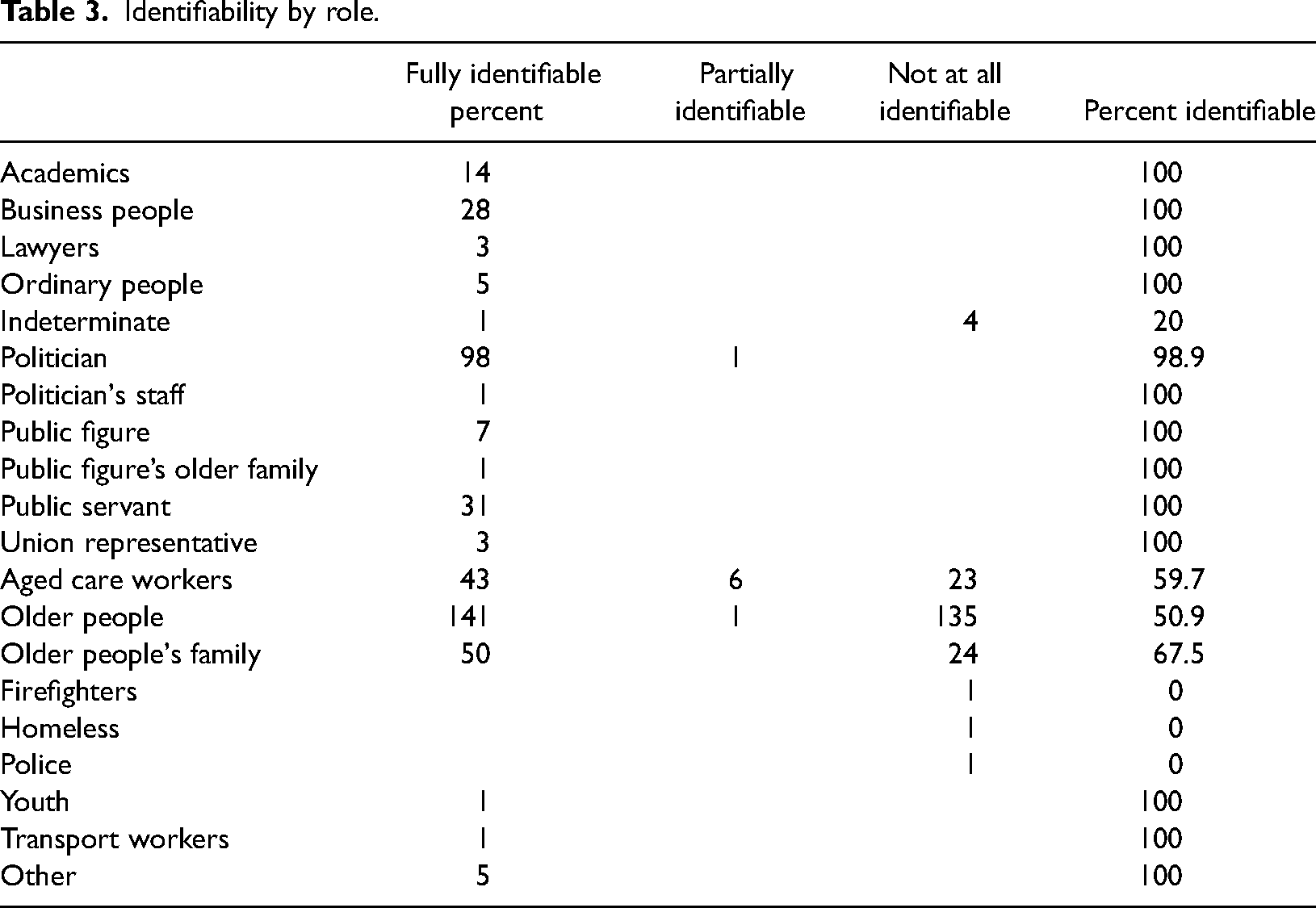
Journalists drew more on the personalisation news values with some people more than others. For example, all but one of the politicians shown (98 out of 99) was identifiable. All of the academics, business people, lawyers, politicians’ staff, public figures, public servants, and union representatives in the sample were fully identifiable. When it came to older people's family and aged care workers, however, they were only identifiable in 67.5 and 59.7 percent of cases, respectively. Older people were less likely to be identifiable again: they were identifiable in just over half (50.9 percent) of cases. Three categories of people (firefighters, the homeless, and the police) were not identifiable at all. A full breakdown of identifiability by role can be seen in Table 3.
Identifiability by role.
Trivialisation
Using stock photography to illustrate aged care coverage is an act of trivialisation that comprises the third component of symbolic annihilation. Without concrete context and specificity, such stock images make ageing and aged care appear less important or serious than it is. Rather than learn about a specific individual, with a name, a history, and a face that we can gaze into and emotionally connect with, the stock photography in the sample was replete with disembodied imagery that lacked this nuance and, therefore, allowed the audience to take comfort in (or absolve personal responsibility because of) its depersonalised nature. This allows the audience to see the dire state of aged care not as an issue that is personally relevant but rather as a far removed and unimportant topic that affects ‘others’. The contrast between those who were worthy of being afforded identifiability (such as politicians with 98.9 percent of instances being identifiable) compared to older Australians (who were identifiable in only 50.9 percent of cases) is stark. Thus, their lives and experiences are symbolically rendered as more important and less trivial than those of older Australians.
Discussion
In reviewing the use of images to report on the RC, it becomes clear that news values played a significant role. With politicians, public servants, and public figures featuring in the coverage more than any other type of person—even more than the older people who are ostensibly the focus of the Commission's inquiry—the Australian news media can be seen to have drawn heavily on the eliteness value while at the same time contributing to the symbolic annihilation of older people by omitting or under-representing them. Instead of highlighting the politicians or public figures who make or enforce policy, journalists should instead focus on the effects of those policies on the ordinary Australians—including older people and their families, and aged care workers, in this case—whose lives are shaped by them. It should also ensure it is representative of other identities within aged care, such as those that are Indigenous and Queer, to ensure the representation of these groups is at least proportionate to the prevalence of these groups within the wider society.
An opportunity thus exists to de-prioritise the eliteness news value and to instead embrace the personalisation news value both in terms of identifiability and also in terms of a focus on ordinary individuals with a local connection to the community at hand. The relatively high prevalence (roughly 20 percent, overall and as high as 25 percent for News Corp-owned outlets) of images in the sample that came from stock photography websites challenge the Australian public's ability to relate to the realities of aged care and to empathise with the plight of those who receive it. Therefore, relying less on eliteness and more on personalisation would prevent news representations from trivialising the people and issues experienced within the context of aged care and would combat the effects of symbolic annihilation in this regard. But this would require an investment by news outlets both in terms of its staffing profile and also in the time it invests in the local communities where these journalists work. As noted previously, staff photojournalists have been among the hardest-hit of news worker contractions in the past two decades and the increasing reliance on stock photography to cover the gap is an unfortunate result. In addition to ensuring that one's visual coverage can be done in-house, journalists need to invest time in building trust with their local communities to improve the access that is afforded to them and allow them to cover difficult and hard-to-reach populations, such as those in aged care settings.
This focus on personalisation should extend not just to the visuals themselves but also to the captions that accompany these. Such captions can convey more concrete history, specificity, and relevance compared to stock images that have seemingly no history and are often transplanted from other social and geographic contexts, including as far away as Lima, Peru, in this sample. And with these captions, care should be taken to avoid symbolically annihilating those depicted by condemning them and their circumstances as a product of their own doing.
Regarding the second, journalists relied heavily on the ‘consonance’ news value, which focuses on stereotypical depictions. Images of wrinkled hands and hands on walkers, for example, abounded in the sample. Instead of portraying older people in these well-worn ways, highlighting surprising stories of connection, engagement, and interaction would serve the outlets’ audiences better. An example of this can be seen in this photo of 105-year-old dancer Eileen Kramer (see Figure 5). She is not shown passively sitting and staring out a window; rather, she is actively engaged in her passions even at an advanced age.
The low numbers of depictions featuring older people with others—either with their family members (6.4 percent) or with aged care workers (4.5 percent)—raises the question of whether journalism should show things as they are currently (and aim for representativeness) or whether it should focus on the outlier examples of how the future of aged care might be (and aim for aspiration) (see Figure 6). Accuracy is a core tenet of journalism and we do not suggest that it should stage or pose a more palatable version of reality. But by choosing which types of representations to focus on, journalism can either reproduce the status quo or seek to upend it by offering more possibilities of what a more inclusive future can look like.
Conclusion
As this analysis has shown, the Australian public has been presented with a distant, often de-contexualised or trivialised, and non-representative understanding of what aged care in this country is like. Instead, journalists and news organisations trying to tell the story of aged care in a nuanced and resonant fashion should consider deprioritising the eliteness and consonance news values and bolstering the personalisation and impact ones if they desire to portray the present and future of aged care in a more representative, relatable, and humane way. At the same time, they should take care to avoid omission or under-representation, trivialisation, or unwarranted condemnation in their coverage of aged care. Together, these changes would not only increase the accuracy of the representation, but also create opportunities for a more positive vision of the future of aged care and ageing, potentially addressing stigma around older people in care, and working towards greater social valuing of older Australians. The role of journalism in gatekeeping information and setting the public and policy agenda is a powerful one, with potential impact to improve quality of life for all Australians—now and in our aged future.
Limitations
Coding can be a subjective activity, especially for more nebulous concepts like ‘condemnation’ compared to ‘identifiability’. The potential subjectivity was increased somewhat by having mutually exclusive categories, as this required the author who handled the coding to determine (often through examining relative size in the frame) what the ‘primary’ or ‘dominant’ focus of the image was. However, we contend that the parsimony afforded by fewer coding categories allows better understanding at the expense of a slightly less nuanced (but more unwieldy) presentation of results. This study provides a national perspective on how journalists at print and digital outlets visually tell the story of aged care; however, it does not tell a comprehensive story across all media and types of journalism. Television news, opinion columns and commentaries, magazines and blogs, or radio might tell a different story.
Contributions and future directions
This study contributes to our understanding of vulnerable populations in the news not only during an isolated crisis event but, due to its nearly three-year timeframe, during day-to-day representations in routine news cycles. It is the first to analyse visual news coverage related to the aged care RC. It also sheds light on how symbolic annihilation operates within the context of age and the degree to which certain identities within this group, such as Indigenous or Queer Australians, are also symbolically annihilated or are presented in more context-rich and humanising ways. In addition to confirming past research that found that older people are often shown through the lens of loneliness, it also suggests new dimensions, such as genericness, de-personalisation, and disembodiment that seem to be more unique to visual coverage. Going forward, scholars interested in how aged care in Australia is represented in the news should compare these results with those found in other media, such as radio or television, and should examine the degree to which these findings are unique to still images or if they also extend to moving images.
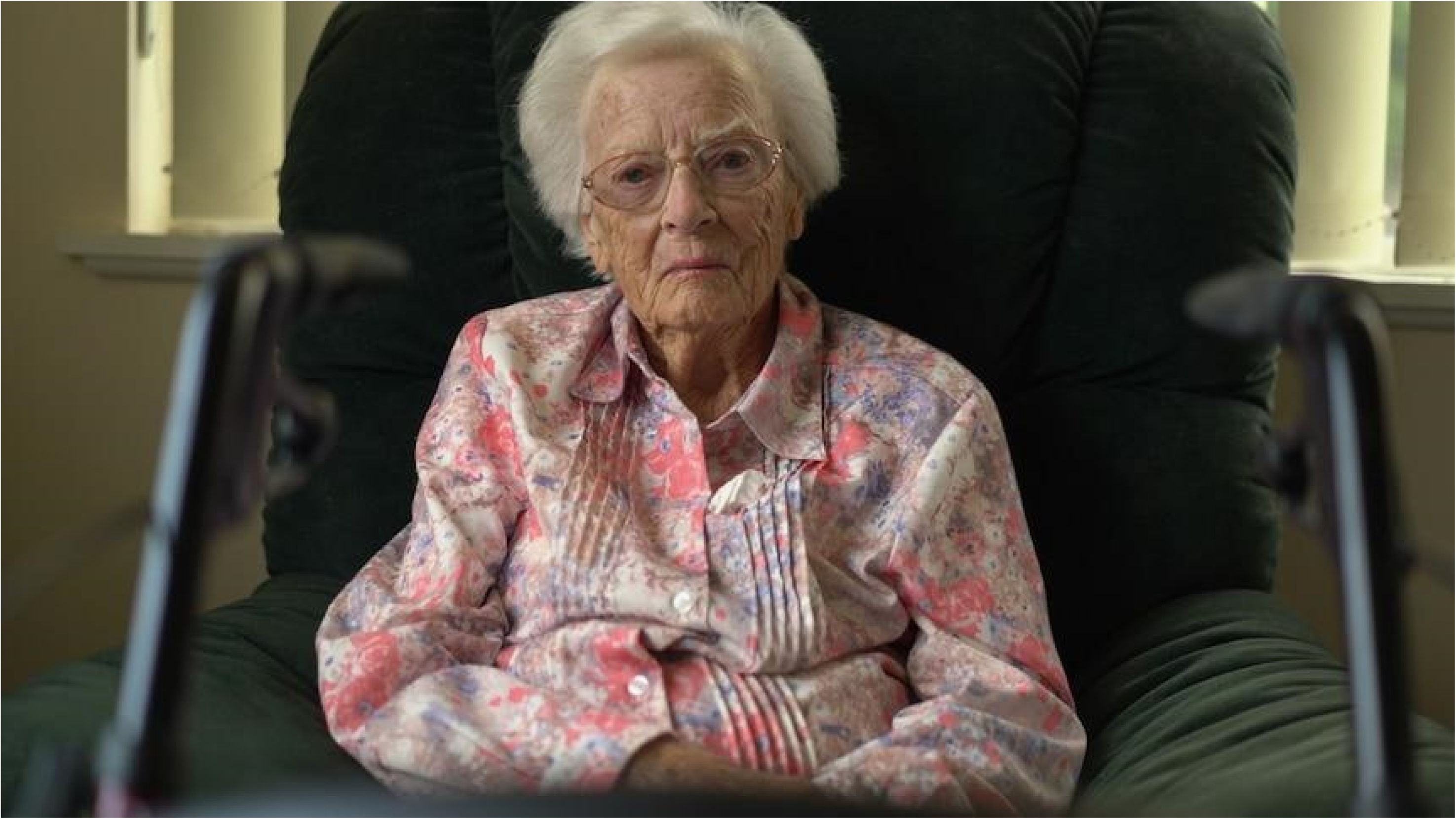
This photo depicting Nancy Bulmer is typical of the way older Australians are portrayed in the country's news media: alone and isolated. Of the news photos that depict older Australians, only about half of them are identifiable like this one. (Photo by Shaun Kingma/ABC News, 2021).
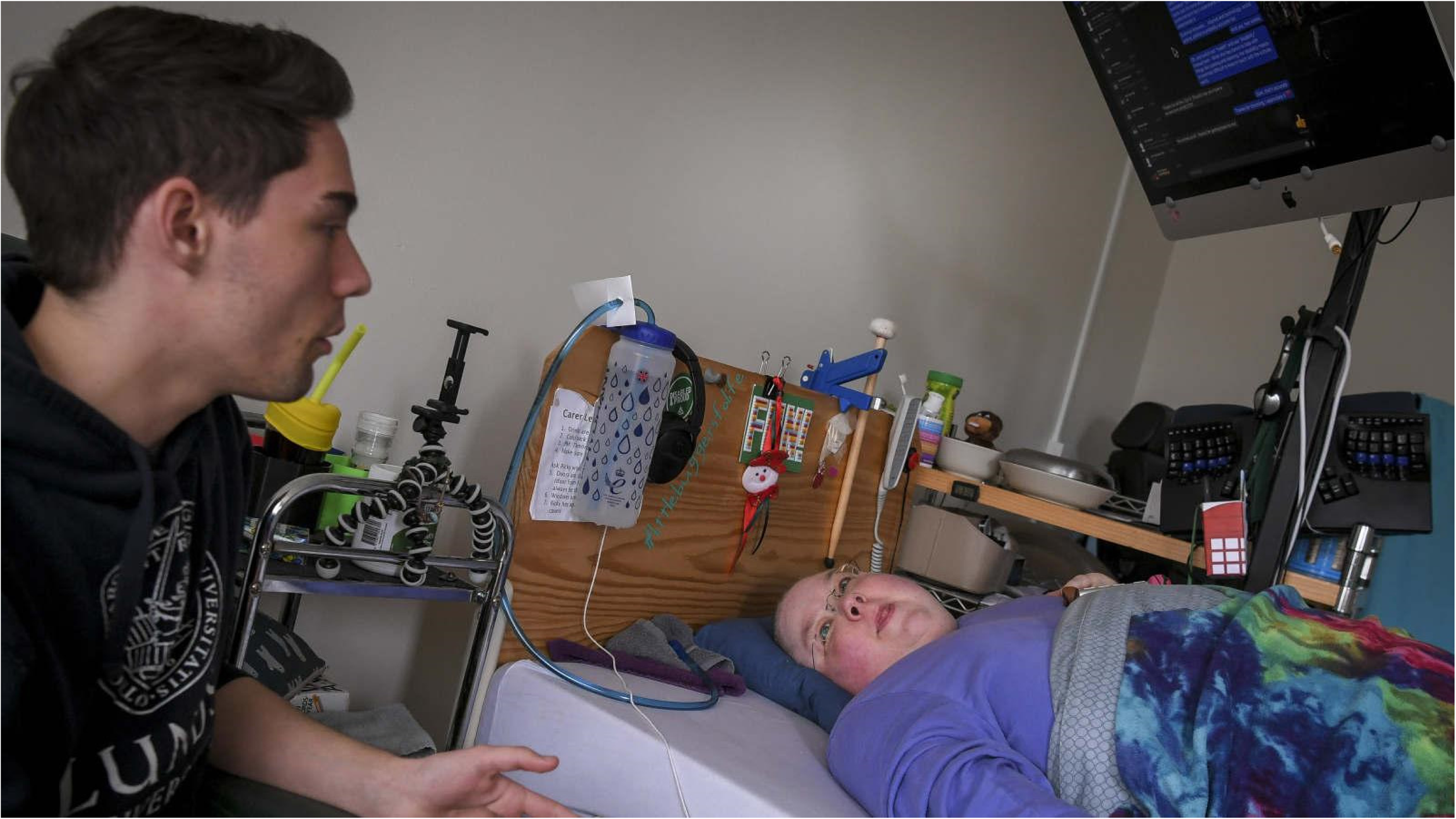
This photo is indicative of how aged care could be shown in a more inclusive way. It features Ricky Buchanan, right, who is bedridden with a severe form of chronic fatigue syndrome, and university student Josh Van Dijk, who began living in Buchanan's home, rent-free, in exchange for spending time with her. (Photo by Eddie Jim/The Age, 2019).
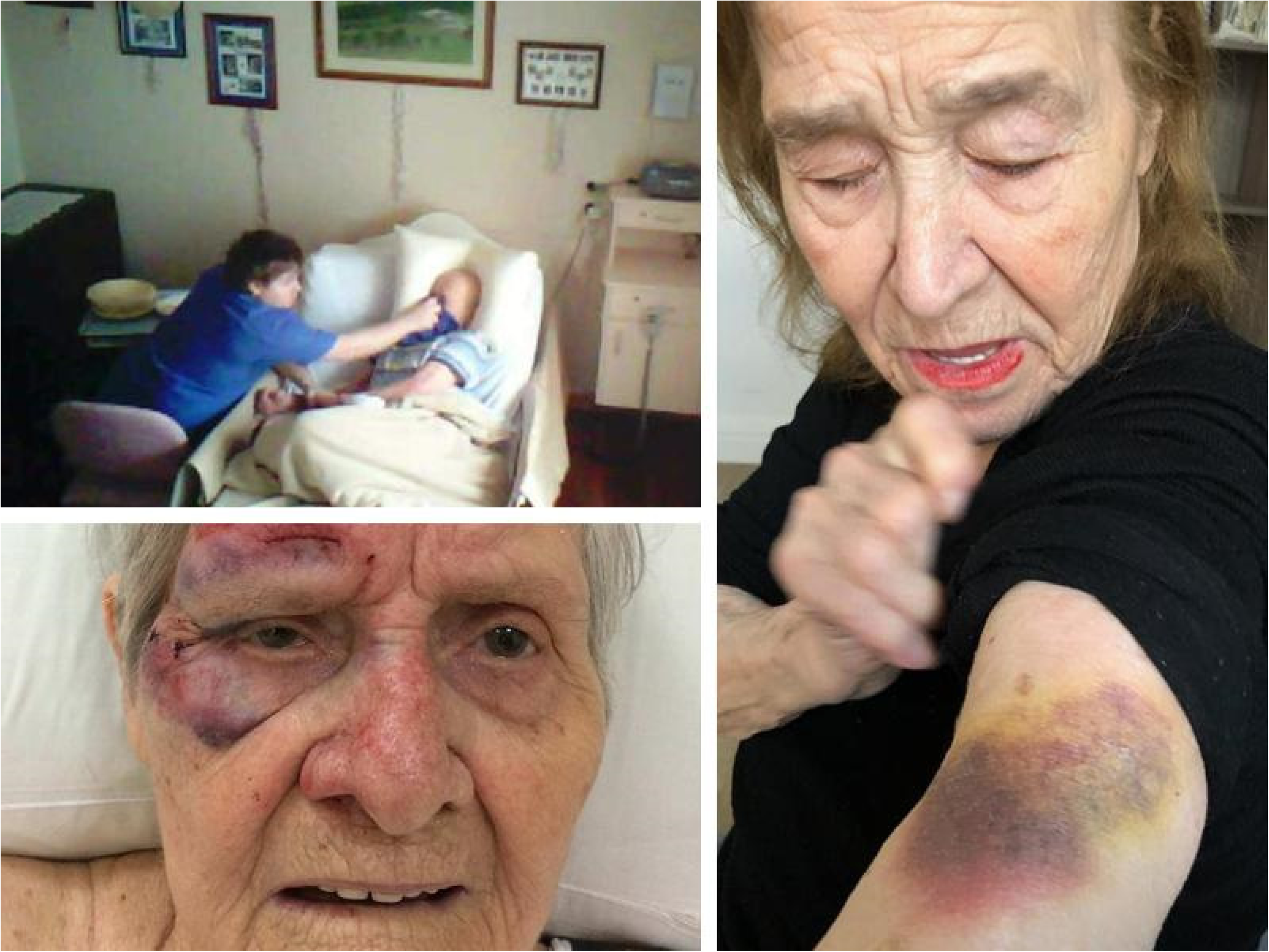
These are three of the five images in the sample that show abuse or its effects and, in doing so, draw on the ‘impact’ news value. Clockwise, from top-left: Hidden camera footage shows a man appearing to attempt to suffocate a resident with a napkin. (Screenshot published by the ABC in 2019.) Georgia Tzintzions, 80, was allegedly assaulted by another patient at Bupa Seaforth aged care home (Photograph published by The Daily Telegraph in 2018). Christine Weightman suffered injuries after a fall and was allegedly left alone on the floor for 45 minutes after it happened (Photo published by the ABC in 2019).

About 20 percent of the images in the sample were stock photos, like this one, which tended to show the aged more often with a positive valence and in the company of others. (Photo published by The Australian in 2019).
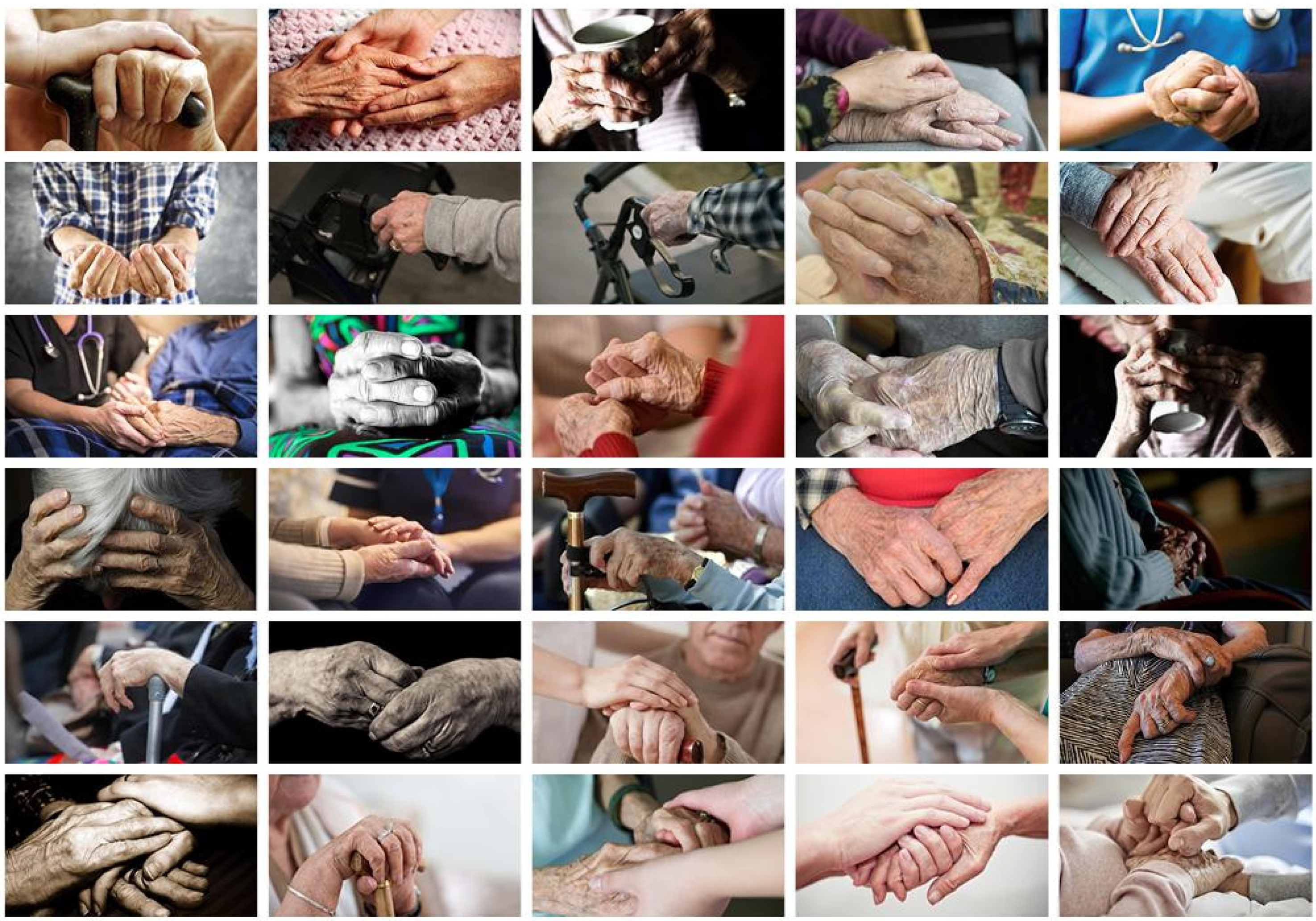
The most dominant of the ‘disembodied’ visual tropes was a focus on aged hands and wrinkled skin. (Composite image made by the lead author).
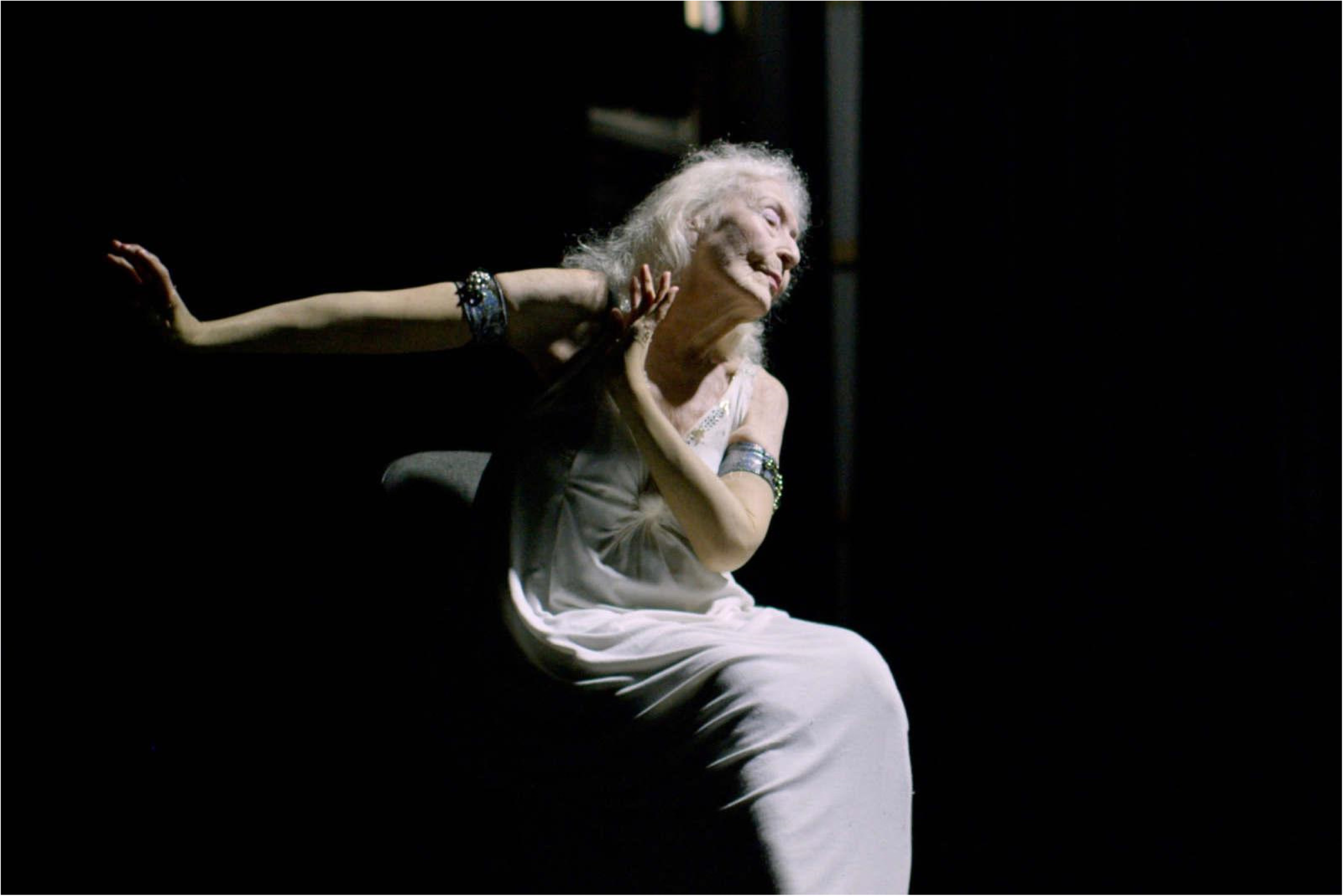
One-hundred-and-two-year-old Eileen Kramer performs in a dance project in 2017. (Photo by Sue Healey, published by The Sydney Morning Herald in 2020).
Footnotes
Declaration of conflicting interests
The author(s) declared no potential conflicts of interest with respect to the research, authorship, and/or publication of this article.
Funding
The author(s) disclosed receipt of the following financial support for the research, authorship, and/or publication of this article: This work was supported by the Australian Research Council, (grant number DP210100859).
