



Abstract
This study explores the contextual and dispositional factors influencing student teachers’ intended use of singing in their future classroom practice. Utilising a national survey of 466 final-year student teachers in Norway, we examined the impact of early experiences, teacher education, and attitudes towards singing using regression analysis. Drawing on Blömeke and Kaiser’s and Kunter et al.’s models of teacher professional competence, we investigated how contextual and dispositional factors contribute to student teachers’ self-perceived competence and motivation to incorporate singing into classroom activities. The results indicate significant differences between music-specialist (MUS) and generalist (PSE) student teachers, with MUS students reporting stronger intentions to include singing than PSE peers. Across both groups, two predictors were consistently associated with higher intentions: the personal relevance of singing during primary schooling and beliefs about the value of singing. The findings emphasise the importance of both formal and informal educational experiences in shaping the readiness of future teachers to integrate singing into their practice.
Keywords
Introduction
Singing has long held a central place in the Norwegian education system, as reflected in curricula and timetables (Balsnes, 2024). In recent decades, however, its formal presence in compulsory education has declined, with reduced emphasis in curricular documents (Balsnes et al., 2025). Still, singing remains explicitly mandated in the current national curriculum, where pupils are expected to engage in vocal performance alongside other musical activities (Ministry of Education and Research, 2020b). The core curriculum (Ministry of Education and Research, 2020a) also highlights aesthetic and cultural expression across subjects and interdisciplinary themes such as public health and life skills, positioning singing as both a music-specific and cross-curricular learning activity.
Two teacher-education pathways are central to this study: (a) generalist primary and lower-secondary programmes (GLU 1–7 and GLU 5–10), where music is not compulsory and most student teachers graduate without formal music credits, and (b) specialist routes in music, where music is a major field. In primary schools, no statutory requirement exists for music credits, so usually generalists teach the subject, while some schools employ specialists. Lower-secondary education generally requires subject-qualified teachers. Surveys show that fewer than half of Norwegian music teachers have a background in music education, with even lower proportions among those under 30 (Statistics Norway [SSB], 2019). Historically, singing has lost ground within general teacher education, shifting from a compulsory to an optional component (Jørgensen, 2001), and the transition to a 5-year master’s model has coincided with a decline in the number of music specialists (Database for Statistics on Higher Education [DBH], 2025). These developments have weakened institutional support for singing and therefore render individual dispositions and experiences especially influential.
Against this background, the present study examines which contextual and dispositional factors predict whether student teachers intend to use singing in future teaching. Adopting a life-course perspective, we analyse experiences with singing from early childhood through schooling and teacher education, along with attitudes towards singing and self-perceived competence, to identify factors shaping future classroom use.
Theoretical framework
To trace the development from early experiences to graduation as a teacher, this study draws on perspectives from teacher professionalisation theory. Existing models guided the identification of relevant research, the design of the questionnaire, and the analytical framework.
Blömeke and Kaiser (2017, p. 3; see Figure 1) conceptualise teachers’ professional competence as personally, situationally, and socially determined within a multidimensional framework. The model comprises three domains: dispositions, situation-specific skills, and performance. As our research concerned whether student teachers intend to use singing in future teaching—an aspect of performance—we focused on the dispositions and skills that underpin such behaviour. Dispositions encompass professional knowledge (acquired before and during education) and affect-motivational traits such as beliefs and attitudes. Blömeke and Kaiser (2017) argue that professional competence involves not only cognitive knowledge but also interests, motivation, values, and beliefs that transform knowledge into action. Two central affective-motivational dispositions are self-efficacy, the belief in one’s ability, and anxiety, which can inhibit action by prompting avoidance of challenging situations. They also highlight a research gap concerning these affective-motivational characteristics.
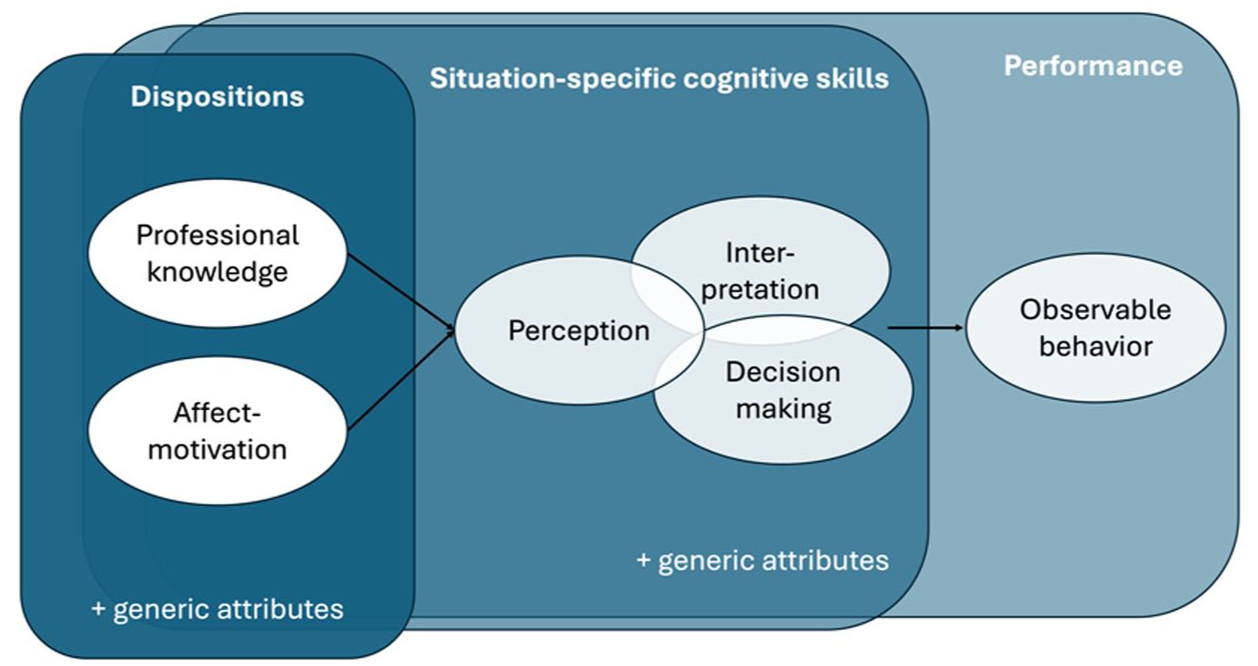
Blömeke and Kaiser’s (2017, p. 3) Multi-Dimensional Conceptual Framework of Teacher Competencies (Illustration by the Authors).
To address how experiences from early life influence attitudes and self-perceived competence, we also draw on Kunter et al.’s (2013, p. 67; see Figure 2) model of the “determinants and consequences of teachers’ professional competence.”
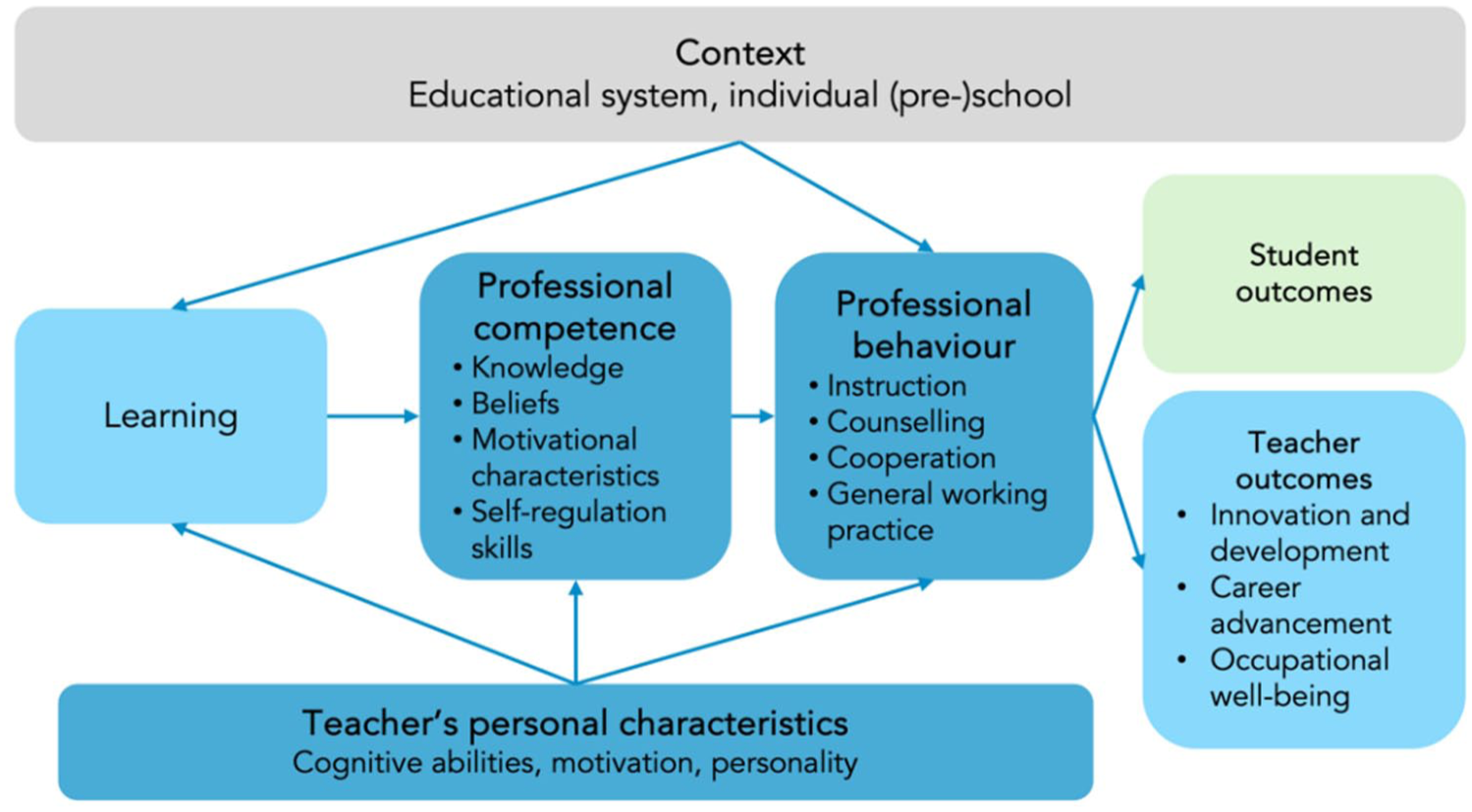
Kunter et al.’s (2013, p. 67) Model of the Determinants and Consequences of Teachers’ Professional Competence (Illustration by the Authors).
This model introduces context, defined as the educational system encompassing both the schools students attended and their teacher-education institutions. Context shapes learning opportunities, while personal characteristics—cognitive ability, motivation, personality—affect whether these opportunities are used. Through these interactions, professional competence develops and subsequently informs behaviour, here the use of singing in professional practice.
Although Kunter et al. emphasise individual dispositions, our focus extends to how contextual experiences—family, schooling, leisure, and higher education—shape attitudes and perceived singing competence. Blömeke and Kaiser (2017, p. 10; see Figure 3) further outline a social-context model describing how social, educational, and policy environments influence competence development.
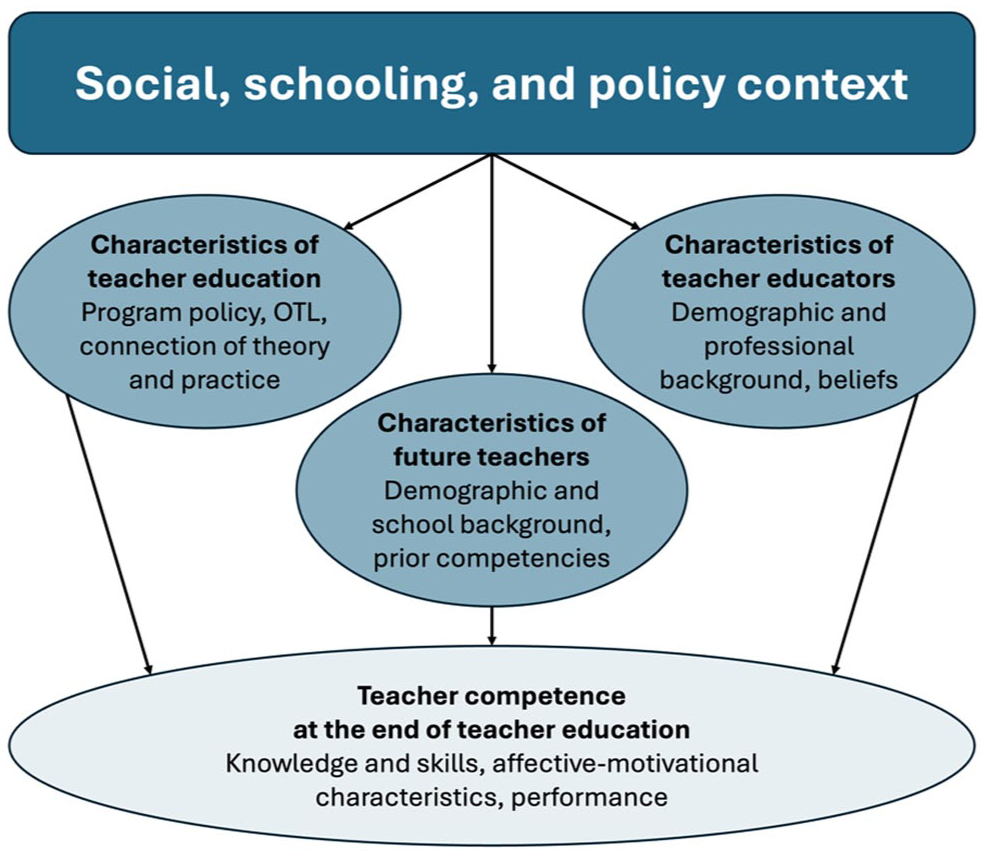
Blömeke and Kaiser’s (2017, p. 10, fig. 45.3) Conceptual Model of the Social Context and the Development of Professional Competencies (Illustration by the Authors.)
In this model, social, schooling, and policy contexts are crucial in shaping teacher education, teacher educators (depending on demographic and professional background, as well as beliefs), and future teachers themselves (relating to demographic background, school history, and previous competencies—acquired, for example, through extracurricular activities). Collectively, these factors influence the competencies of student teachers upon graduation (their knowledge, skills, and affective-motivational characteristics, ultimately culminating in “performance”). Blömeke and Kaiser (2017) define the social context as the various teacher education programmes students attend, the schools that employ them, their colleagues, and national policies related to the teaching profession.
Previous research
Beliefs and attitudes around music and singing
Studies show that both qualified and student teachers, regardless of musical background, generally hold positive attitudes towards singing and music (Hennessy, 2000; Thorn & Brasche, 2015; Welch & Henley, 2014; Wicks, 2014). Teachers’ attitudes strongly influence the extent and manner in which music education occurs in preschool and school settings (Battersby & Cave, 2014; Ehrlin & Tivenius, 2018; Lowe et al., 2017; Richards, 1999), making them a key focus of this study.
Musical abilities and singing competence
Research on teachers’ and student teachers’ self-perceived musicality reveals similar findings: many feel musically limited, citing lack of confidence and low self-efficacy (Battersby & Cave, 2014; Boyack, 1999; Hennessy, 2000; Holden & Button, 2006; Pascale, 2002; Poulter & Cook, 2020; Stunell, 2010; Welch & Henley, 2014). While much of the literature highlights perceived inadequacy and the need for stronger training in both initial and continuing education (Holden & Button, 2006; Mäkinen & Juvonen, 2017), some studies suggest that insufficient formal competence leads teachers to rely mainly on singing while neglecting other areas such as instrumental work or composition (Christophersen, 2016; de Vries, 2013; Espeland et al., 2013; Nielsen & Karlsen, 2021; Sætre, 2018; Sætre et al., 2016). Singing competence correlates with frequency of classroom singing—teachers with higher competence sing more often (Balsnes et al., 2022)—yet many still report fear of singing (Balsnes et al., 2022; Wicks, 2014). Possessing formal music education does not necessarily guarantee comfort with singing (Balsnes & Jansson, 2022; Wicks, 2014). This study therefore examines attitudes and self-perceived competence rather than measured ability, aligning conceptually with Bandura’s (1977) notion of self-efficacy and self-concept research (Spychiger, 2017).
Previous musical and singing-related experiences: Family, school, and leisure activities
Early experiences shape relationships with singing (Ballantyne, 2006; Ballantyne & Zhukov, 2017; Battersby & Cave, 2014; Hash, 2010; Russell-Bowie, 2010; Welch, 2017). Such experiences influence perceived musicality and singing competence, both positively and negatively. Hash (2010) argues that these attitudes form long before teacher education and are resistant to change. Boyack (1999) identified family, teacher, and peer feedback—especially between ages 8 and 12—as key in shaping self-efficacy. Lowe et al. (2017) likewise found that positive preservice experiences enhance music-teacher self-efficacy. Family background, schooling, and extracurricular activity further affect attitudes: family participation in music predicts continued engagement (Demorest et al., 2017). Hennessy (2000) shows a complex interaction among experience, belief, and school quality, while Wicks (2014) and Ruismäki and Tereska (2008) link student teachers’ current attitudes to earlier positive or negative school experiences. Music-related hobbies also correlate with more positive attitudes towards teaching music (Hallam et al., 2009; Henley, 2017; Mäkinen et al., 2020; Mäkinen & Juvonen, 2017; Sætre et al., 2016). Thovsen Nysæther et al. (2021) show that students with musical backgrounds are more likely to choose a music specialisation, and Boyack (1999) found that prior choir experience supports success in classroom singing and instrumental teaching.
Music and singing in teacher education
Research on music in teacher education (e.g., Russell-Bowie, 2010; Wicks, 2014) reports too little emphasis on singing. Limited mastery fosters uncertainty and avoidance of teaching music (Fredriksen, 2018; Hennessy, 2017; Mäkinen & Juvonen, 2017). Recent findings confirm that student teachers receive little practical training in singing, reducing their confidence (Sirek & Sefton, 2023).
Aims and objectives
Building upon theoretical frameworks of teacher competence development and previous research, we focus on the following dimensions in our study: (1) Performance—the central question of our study revolves around whether student teachers will engage in singing activities with their pupils in their subsequent professional practice and the factors influencing this “professional behaviour.” Drawing on the models proposed by Blömeke and Kaiser (2017) and Kunter et al. (2013), the following dimensions can be specified, with a significant influence assumed: (2) the student teachers’ affective-motivational and professional knowledge dispositions, (3) professional competencies (encompassing singing-specific knowledge and skills), and (4) the (formal and nonformal) education system within which a student has grown up and pursued their studies.
Methods
Questionnaire, data collection, and analysis
We used a questionnaire to explore the current situation regarding singing in Norwegian teacher education. The questions can be categorised into five groups: (1) student characteristics: gender, age, work experience as a teacher, and programme of study; (2) students’ music-related competencies and background: music course credits, music-related family background and leisure activities, and musical competence (including singing-related competency); (3) students’ perspectives on and experience of singing in Norwegian kindergarten or school, including the relevance, frequency, appreciation, function of, and justification for singing; (4) students’ perspectives on and experience of singing in teacher education, including learning outcomes, singing in internships, the relevance of singing in teacher education, and university teachers’ and mentors’ singing-related competence; and (5) the future use or nonuse of singing in each student’s own professional practice.
To measure the students’ musical competencies, we used two factors from the Goldsmiths Musical Sophistication Index (Gold-MSI; Müllensiefen et al., 2014): singing abilities (seven items; example, “After hearing a new song two or three times, I can usually sing it by myself”) and the general musical sophistication factor (18 items; example, “I spend a lot of my free time doing music-related activities”). The Gold-MSI usually shows good to very good reliability, including in the version translated by us into Norwegian, which we have already used and psychometrically tested several times in previous studies (Knigge et al., 2021; Balsnes et al., 2022).
To measure the students’ justification and reasons for singing in schools, we used a scale developed by Knigge et al. (2021; see also Balsnes et al., 2022). The scale consists of nine items (examples: “Singing makes students love music” and “Singing increases the concentration of students”), which can be differentiated into three subscales. The overall scale and the individual subscales showed good reliability in previous studies (Balsnes et al., 2022).
To measure the students’ families’ interest in music we translated a scale with five items (examples: “My family is interested in music,” “My family considers music to be very important”) developed by Jordan (2014). The Norwegian version yielded very good reliability values in previous studies (e.g., Balsnes et al., 2022).
The remaining questions were newly developed for the present study, tested in a pretest, and checked for their psychometric quality (including distribution, reliability, etc.) as part of the statistical analysis.
The questionnaire was distributed via an internet platform (https://nettskjema.no) and took an average of 15 min to complete. All participants received an invitation letter with information about the project in advance and data were only collected from students who explicitly gave their consent. The ethics approval was granted by the Norwegian Agency for Shared Services in Education and Research (Sikt; reference number 906836).
After data collection was completed in 2021, all data were prepared for use with statistical analysis software (SPSS 28, JASP 0.18.3). The statistical analyses conducted for this article encompass both descriptive (frequency and correlation analysis) and inferential statistical methods (t-test, analysis of variance [ANOVA], and multiple linear regression).
Sample
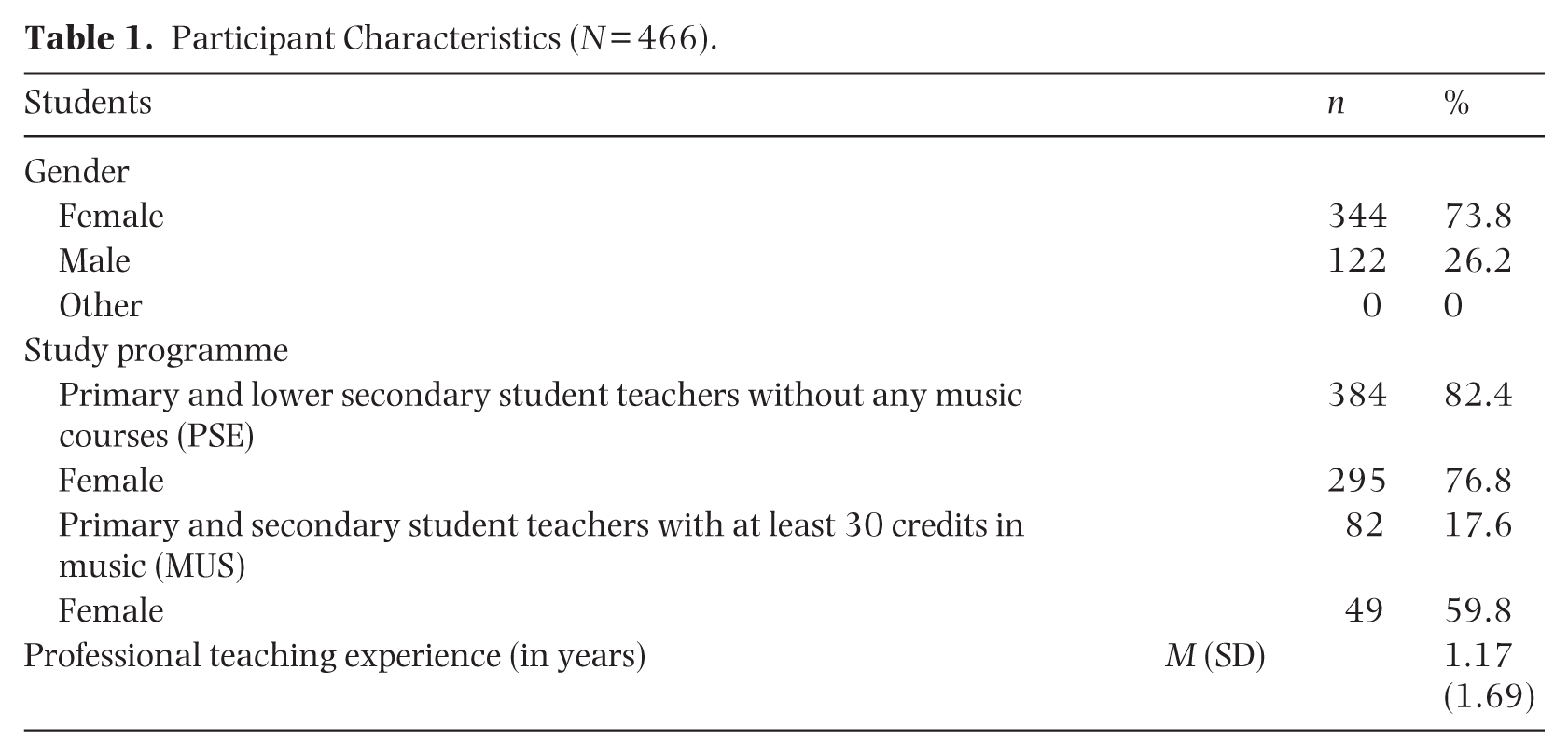
The study population consisted of all colleges and universities offering teacher education in Norway in the academic year 2020/2021 (N = 14 institutions, N = 11,622 students; Direktoratet for høyere utdanning og kompetanse [HK-dir], 2024). Given this population size, the required sample size was calculated to be 372 students (calculation assumptions: confidence level = 95%; margin of error = 5%). We contacted 11 of these 14 colleges and universities, which distributed our questionnaire to 972 final-year student teachers. The final sample consisted of a total of N = 466 (response rate: 47.9%) final-year students. Table 1 provides an overview of the participants’ characteristics.
Participant Characteristics (N = 466).
Study programmes and gender
We distinguished two analytically relevant groups: (1) generalist primary and lower-secondary student teachers (GLU 1–7 and GLU 5–10) without formal music credits (PSE); and (2) student teachers with at least 30 ECTS in music, including those enrolled in specialist routes where music constitutes a major field (up to 180 ECTS) (MUS). In our sample, PSE accounted for 82.4% and MUS for 17.6%. 1
Regarding gender, 73.8% of the respondents identified themselves as female and 26.2% as male. Statistics from the Norwegian Directorate for Higher Education and Skills (HK-dir, 2022) show that in 2020, 67.7% of students in Norwegian teacher education for primary and lower secondary school were female, though they make up 76.8% of our survey respondents. In the music teacher education programme, there is, however, an overrepresentation of females of 59.8%—but unfortunately, there are no national gender-specific statistics available for this group of students with at least 30 study credits in music. 2
Results
Student teachers’ (future) singing-related professional behaviour: Do they plan to sing with their pupils in their future teaching profession?
In accordance with the theoretical framework underpinning this study, we were particularly interested in whether students intended to incorporate singing into their future teaching practices. Thus, we aimed to investigate the “performance” (Blömeke & Kaiser, 2017) and “professional behaviour” (Kunter et al., 2013) dimensions of the presented theoretical models. As the students were in their final year of study at the time of our research—relatively close to the start of their careers as teachers in a school—we needed to enquire about their assumptions about their future professional behaviour regarding singing. Therefore, we asked students, “Do you anticipate using singing in your own professional practice?” The response categories ranged from “very unlikely” (1) to “very likely” (5). The majority of MUS students (M = 4.54, SD = 0.88) said that it was “likely” or even “very likely” that they will use singing in the future. In contrast, PSE students (M = 3.52, SD = 1.18) assumed a significantly lower probability (Welch’s t-test: t(435) = 7.74, p < .001; effect size: d = 1.07). The standard deviations showed a considerable variance within the groups, and it was precisely this variance that we wanted to explain when we asked which factors had an influence on students’ future professional behaviour.
Identifying relevant factors: What experiences, attitudes and self-perceived competencies regarding singing do student teachers have?
In this section, we analyse the students’ experiences of singing from early childhood, leisure time, and school education, as well as from their time in teacher training. We also explore their attitudes and self-perceived competence regarding singing.
Students’ experience of singing from upbringing, leisure time, and school education
Students’ families’ interest in music
We inquired about the relevance of music in students’ families. Respondents were asked to rate several statements related to music and their family on a scale from 1 (totally disagree) to 4 (totally agree). This scale, originally developed by Jordan (2014) and translated by us into Norwegian, shows good reliability (Cronbach’s α = .91).
The analysis showed that MUS students scored highest and above the scale’s midpoint, indicating that they came from more music-interested families, while PSE students scored much lower (see Figure 4).
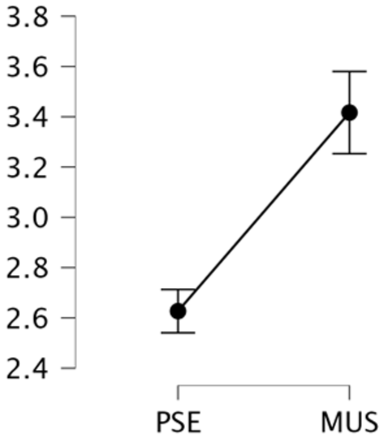
Relevance of Music in Students’ Families (Confidence Interval = 95%).
Music-related leisure activities
Students were asked about their experiences of music-related leisure activities, such as instrumental lessons, singing lessons, conducting (choirs, bands, orchestras, etc.), participation in choirs, bands, or orchestras, and involvement in DJing or music production (detailed statistics are provided in Appendix 1). Again, MUS students stood out. They had much more experience with music-related leisure activities than the other student group. MUS students had, on average, been involved in the mentioned activities for two to four years, while among PSE students, only a few had engaged in music-related activities, primarily for approximately one year. Students choosing music, therefore, not only came from families with a strong interest in music, but had also been much more involved in leisure-time music-related activities.
Personal school experiences with singing and music
To investigate the students’ experiences with singing and music from their earlier years, they were asked to report on their own school days, first in primary school (Grades 1–7) and then in lower secondary school (Grades 8–10). They were asked about the importance of the subject of music for them personally, whether the subject was valued in their primary school, how important singing was for them personally, and whether singing was valued by their primary school. Responses were given on a scale from 1 to 10, where 1 indicated not important or to a small extent, and 10 indicated very important or to a high extent. Finally, they were asked about the frequency of school music when they were pupils, with the question: “On a typical school week, how often did you sing with the class?” There were four different response options ranging from 1 (very rarely) to 4 (very often).
The results for primary schools showed that MUS students perceived music education in primary school as much more personally relevant (M = 7.94; SD = 2.53) than the PSE students (M = 5.44, SD = 2.59). They also perceived that the subject of music was more highly valued than did PSE students (details can be found in Appendix 2).
For singing and its personal relevance and appreciation at school, the same pattern repeated (see Appendix 2): singing in primary school was more relevant for MUS students, and they perceived that singing was more highly valued than the PSE students did. Curiously, MUS students stood out even when they attended the same primary schools as the other students, and even though the frequency of singing was not higher in the schools these students attended—both student groups reported the frequency of singing as somewhere between rare and often). Hence, already in primary school, MUS students experienced singing and music as more personally relevant.
Moving to the same questions related to lower secondary school, most numbers dropped with a few exceptions (see Appendix 2): both singing and the subject of music were perceived by the students as less valued in lower secondary school. The personal relevance of singing and the subject of music also decreased, especially for PSE students. The only numbers that remained more or less consistent were the personal relevance of singing and the subject of music for MUS students. Students in all groups agreed on singing frequency: singing was very rarely done in lower secondary school across all students’ schools.
Study experiences and related learning outcomes
The role and relevance of singing in teacher education
Students were asked, “How significant a role has singing or singing-related topics played in your education as a whole?” Here, they were asked to indicate their experience on a scale from 1 to 7 (1 = no role, 7 = very significant role). Furthermore, they were asked, “How relevant do you think singing or singing-related topics have been in your education as a whole?” (1 = not relevant, 7 = very relevant).
MUS students scored the highest on these questions (M = 4.9 and 4.3; SD = 1.75 and 1.78), while PSE students were at the lower end of the scale (M = 2.1 and 1.6; SD = .80 and 1.34).
Singing during school placements
Students were asked if they had observed singing-related activities during school placements (1 = never, 6 = several times daily). In addition, they were asked if they themselves had used singing during their teaching (1 = never, 6 = several times daily).
MUS students observed (M = 3.8; SD = 1,08) and used (M = 4.3; SD = 1,02) singing “often” in classes, while PSE students observed (M = 2.7; SD = 1,12) and used (M = 2.2; SD = 1,31) singing only “rarely” and “very rarely.”
Learning outcomes in studies
We asked students about their singing-related learning outcomes (α = .94). They were asked to mark the following statements on a five-point scale from “strongly disagree” (1) to “agree” (5): I feel that the study programme “has made me more confident in my own singing and voice,” “has made me more confident in leading singing with children / young people,” “has given me an understanding of singing with children / young people,” “has given me insight into singing repertoire for children / young people,” “has given me knowledge about how to initiate and organise singing in kindergarten or school,” “has given me knowledge about how to use song as a didactic method.”
MUS students generally agreed with these statements (Mscale = 3.87; SDscale = .91) while PSE students somewhat disagreed with the statements (Mscale = 1.93; SDscale = .92).
Attitudes
The relevance of singing in Norwegian schools and kindergartens. Students were asked to indicate how important they perceived singing to be in Norwegian schools today and how important they believed it should be, on a scale from 1 (completely unimportant) to 7 (very important). These questions aimed to elucidate students’ attitudes towards singing.
Interestingly, both student groups believed that singing should be more important than they perceived it to be in today’s kindergartens and schools—MUS students scored several scale points higher (M = 6.2 compared to M = 4.0), and PSE students also agreed that singing should be more important (M = 5.0 compared to M = 3.9).
The singing-related beliefs of student teachers
Students were asked about their singing-related beliefs on a scale from 1 (strongly disagree) to 5 (fully agree) (α = .843). The three subscales covered beliefs regarding the intrinsic value of singing, the transfer value of singing, and the belief that singing is important because of its musical learning outcomes and curricular relevance. Both student groups believed more in the transfer value than the intrinsic value (see Appendix 3). Also, both groups believed that musical learning outcomes and curriculum were by far the least important reasons for singing with pupils. Overall, MUS students had stronger beliefs (3.5 ⩽ M ⩽ 4.5) across all subscales than the PSE students (2.9 ⩽ M ⩽ 4.1).
Musical competence
To gain insight into students’ perceptions of their own musical competence, the Gold-MSI (Müllensiefen et al., 2014) was employed. We measured the Gold-MSI’s “singing abilities” dimension and the “general musical sophistication factor” on a scale from 1 to 7 (αsinging = .914, αgeneral = .814).
General musical competence
In terms of general self-perceived musical competence (Gold-MSI’s general factor; α = .84), MUS students scored relatively highly (M = 5.5). However, it was surprising that PSE students (M = 3.5) scored significantly below the average self-perception in the population compared to norm data from Müllensiefen et al. (2014). 3
Singing competence
Seven statements in the survey were related to singing abilities (Gold-MSI’s singing abilities factor; α = .87). Again, MUS students scored the highest, with a mean score of 5.7 (SD = 1.1), while PSE students (M = 4.0; SD = 1.2) rated their singing abilities significantly lower. 4 However, it is worth noting that the numbers for both groups regarding singing competence were slightly higher than those for self-perceived general musical competence.
Which factors predict student teachers’ use of singing in their future practice?
We conducted multiple linear regression analyses (Miksza & Elpus, 2018, pp. 142–152) to identify the factors that predicted student teachers’ use of singing in their future practice as a teacher. Student teachers’ answers to the “future use of singing” question were the dependent variable, while all potentially relevant factors served as the independent variables and were grouped on the basis of the dimensions of the theoretical framework (see Table 2). We ran the analyses for the PES and MUS students separately to create two regression models, because the results presented previously already indicated strong differences between the two student groups. Accordingly, a different structure and strength of the influencing factors could also be assumed, which would not become visible in a joint analysis in which both student groups were included simultaneously.
Independent Variables Used in the Regression Analyses and Their Relation to the Theoretical Framework.
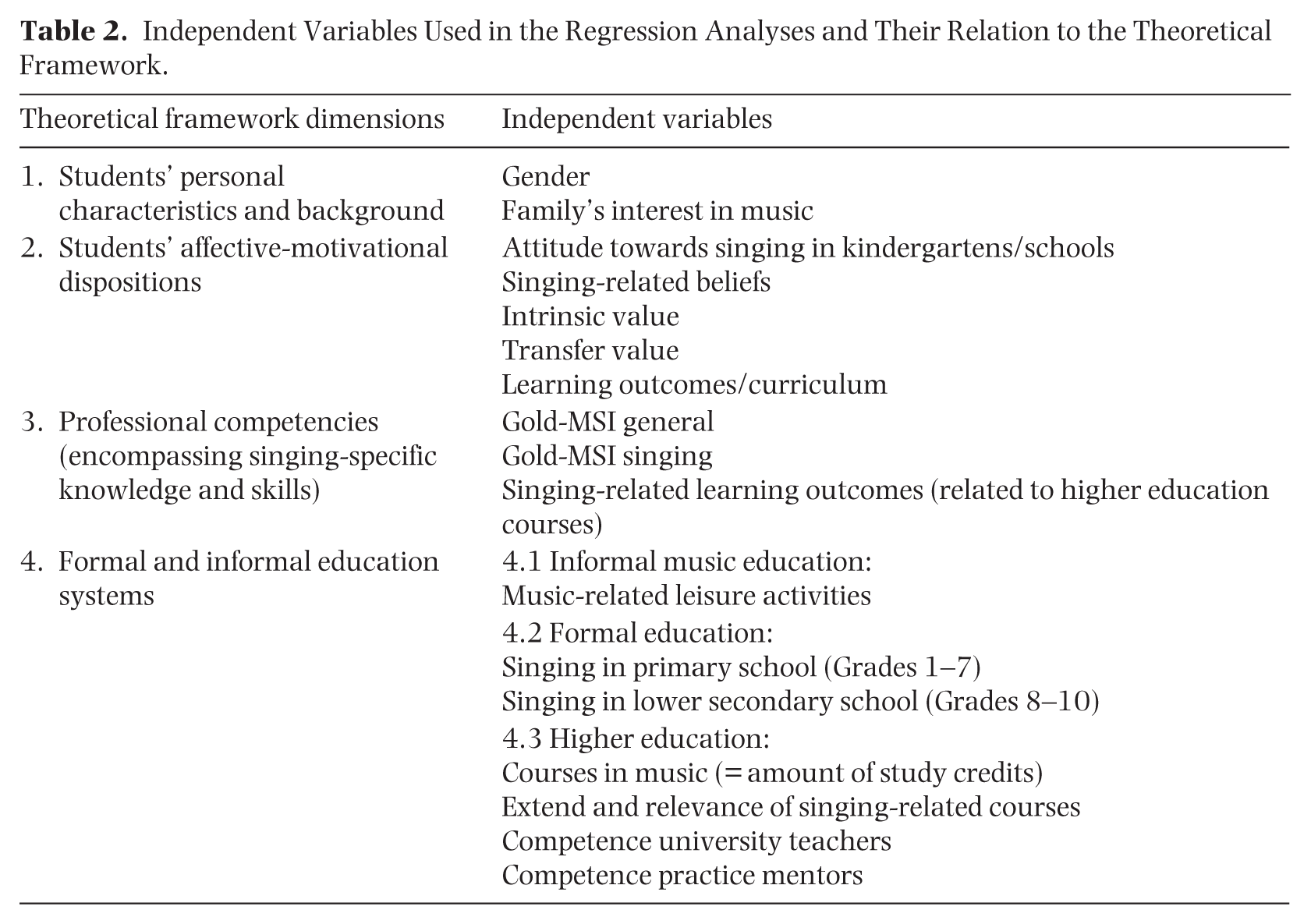
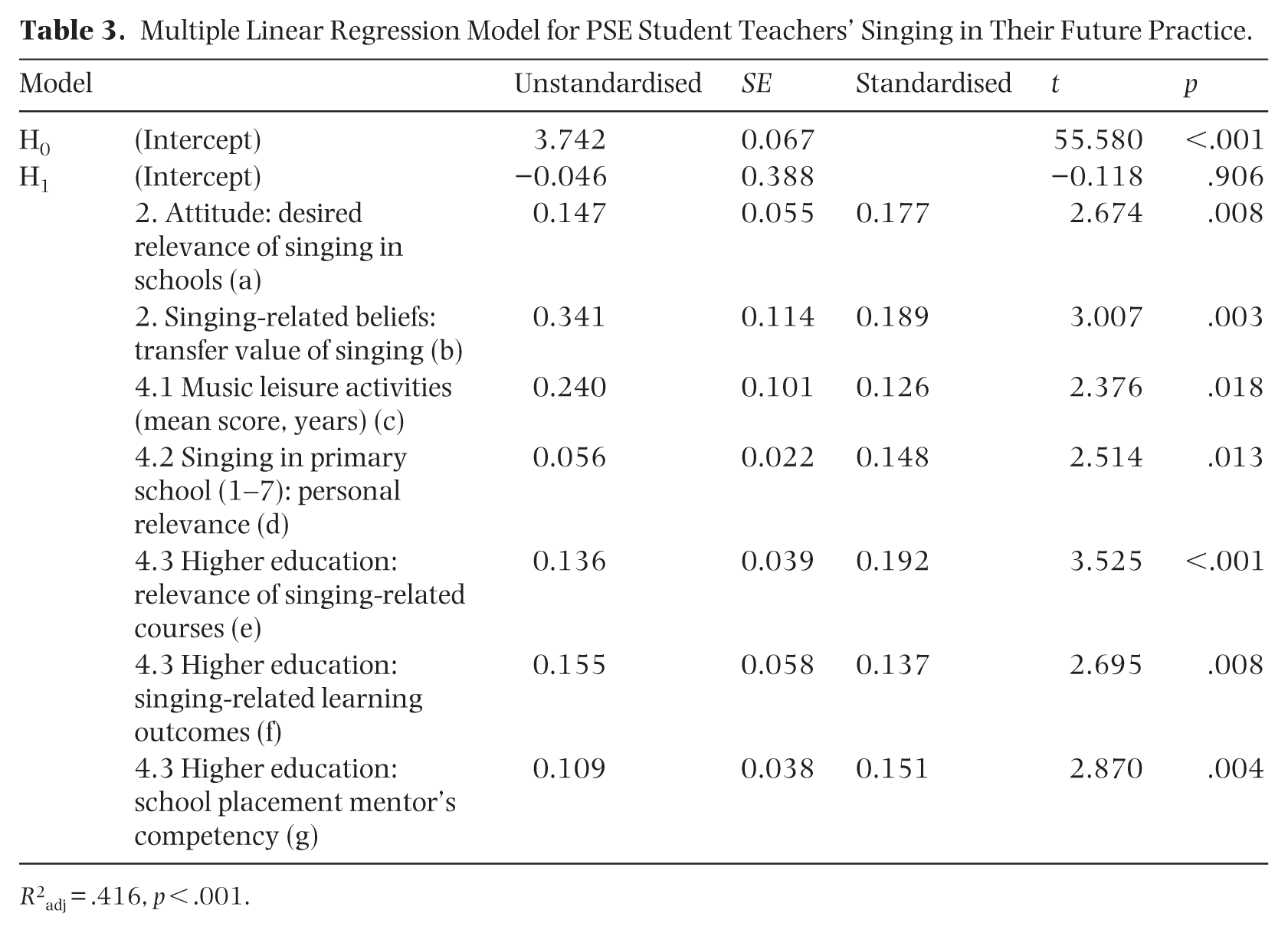
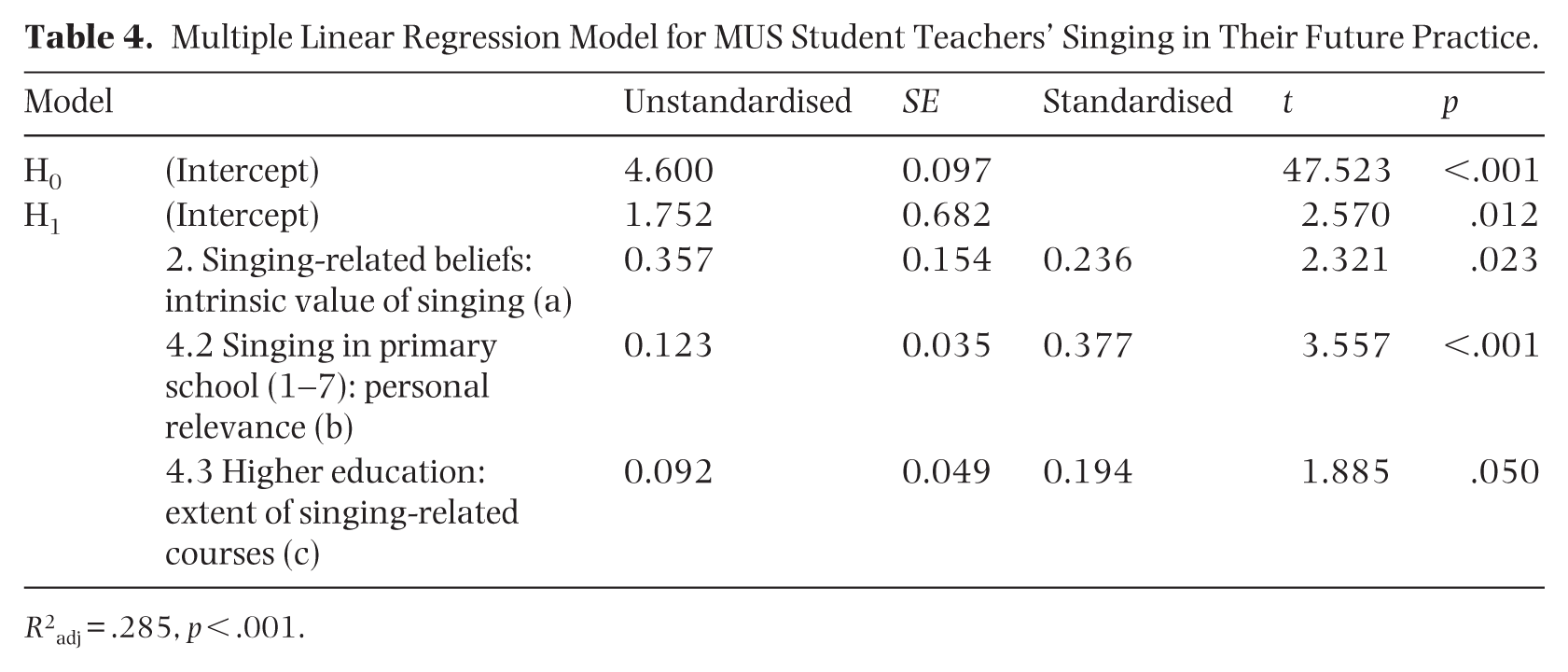
We first conducted a regression analysis for each of the theoretical dimensions and the corresponding variables (see Table 2). We used standard criteria to decide which variables to exclude from a model (e.g., Bühner & Ziegler, 2009, p. 638). Applying these criteria, we had to exclude several variables, which meant that they had no specific influence over and above the remaining variables. The remaining variables were then included in a further regression analysis so that the influence of variables from all dimensions could be analysed simultaneously. All statistical parameters were inspected again and variables without significant influence were excluded, resulting in a final regression model for each of the two student groups (Tables 3 and 4).
Multiple Linear Regression Model for PSE Student Teachers’ Singing in Their Future Practice.
R2adj = .416, p < .001.
Multiple Linear Regression Model for MUS Student Teachers’ Singing in Their Future Practice.
R2adj = .285, p < .001.
Table 3 shows that a high proportion (41.6%) of the variance in the frequency of PSE student teachers’ future singing practice could be explained by the regression model. Seven variables (a–g, all from Dimensions 2 and 4) had a significant impact on the student teachers’ future frequency of singing in school: in Dimension 2, an important factor was (a) the students’ singing-related attitude—whether they believed singing should be important in Norwegian schools. An even more important factor in this dimension was (b) the students’ singing-related beliefs: the more a student believed that the value of singing lay primarily in its transfer effects on other areas (e.g., language learning), the more likely it was that they would sing with their pupils in the future. In Dimension 4, it was interesting to note that several areas of education had a significant influence. Both formal and informal places of education were represented, as well as different life phases of formal education. Specifically, this meant that how intensively students engaged with (c) music in their free time (informal activities such as singing in a choir or learning an instrument) had an influence. However, what the student reported about (d) the time when they attended primary school was also important. The more relevant singing was for the student at that time, the more likely the student was to use singing in their professional practice. The remaining variables of Dimension 4 all belonged to the area of higher education: this had a positive influence if the students (e) perceived singing as relevant within their studies, as well as if the students (f) recognised an increase in singing-related competencies as a result of their studies. The last variable was linked to the students’ school placements during their studies: (g) the greater the perceived singing competence of a teaching mentor in a placement school, the higher the probability that the students would later sing with their pupils themselves.
Finally, some variables of Dimensions 1 and 3 were not included in the final regression model, namely gender, family interest in music, and self-reported musical competence (Gold-MSI). Although significant correlations were found for all of these variables when only one dimension was considered, when the variables of the other dimensions were controlled for at the same time, other factors appeared to be statistically more important.
Table 4 shows the final regression model for the MUS teachers. Again, the analysis yielded a significant regression model that explained a high portion (28.5%) of the variance in the frequency of MUS student teachers’ future singing practice. For MUS students, only three variables had a significant impact on their future singing practice in schools. In Dimension 2, singing-related beliefs were again relevant—this time, however, we found a strong correlation with a different subscale: the more students attributed an intrinsic value to singing (e.g., singing is important because children enjoy it), the more likely they were to sing with their pupils later on. Regarding the relevance of students’ own time as primary school pupils, we found the same result as in the PES regression analyses: the more relevant singing was for the student at that time, the more likely the student was to use singing in their professional practice. Finally, their own study programme was relevant also to MUS students; this time, however, it is was the extent to which courses with singing content were offered within the study programme that was decisive.
Discussion
Our survey showed that MUS students were far more inclined than PSE students to include singing in their future teaching. Considerable variation also existed within both groups, prompting further analysis of which contextual and dispositional factors predicted these differences.
For PSE students, several predictors emerged. Consistent with prior research (e.g., Hennessy, 2000; Lowe et al., 2017; Richards, 1999; Thorn & Brasche, 2015; Welch & Henley, 2014; Wicks, 2014), attitudes proved central: beliefs about the relevance of singing in schools and its transfer value for learning strongly influenced intentions to sing. Informal education also mattered. Participation in choirs (Boyack, 1999), instrumental learning, or other music-related hobbies (Hallam et al., 2009; Henley, 2017; Lowe et al., 2017; Mäkinen et al., 2020; Mäkinen & Juvonen, 2017; Sætre et al., 2016) predicted greater intention, supporting Mäkinen and Juvonen’s (2017) argument that declining arts provision increases the importance of musical leisure. Formal experiences were likewise significant: the perceived relevance of singing during primary education and of singing-related courses in higher education predicted future use.
Furthermore, the competency of mentors during school placements significantly affected students likelihood to engage in singing activities with their pupils, indicating the influence of mentorship on professional readiness. For PSE students, music and singing are not compulsory elements of school placement, whereas for MUS students they are, with mentors responsible for teaching music. As noted earlier, many primary school music teachers lack formal music education, and singing competence is not required to serve as a mentor. This is unfortunate in light of our findings indicating that the mentor’s perceived singing competence shapes students’ future use of singing.
In contrast, the regression analyses for MUS students highlighted different aspects. The intrinsic value of singing, reflecting a belief in the enjoyment and engagement that singing brings to children, was a strong predictor. The personal relevance of singing during their primary school years again surfaced as a significant factor, similar to the PSE model, underscoring the lasting impact of early educational experiences. In addition, the extent of singing-related courses offered in their study programmes was a notable predictor, emphasising the importance of formal education structures in shaping professional intentions.
Both models highlight the combined role of formal and informal educational experiences in shaping intentions to integrate singing into teaching. Although beliefs are important for both groups, their nature differs: PSE students emphasise singing’s transfer value, while MUS students focus on intrinsic enjoyment. PSE students are further affected by mentorship, whereas MUS students respond most to curricular opportunities within their programmes.
Theoretical implications
The results of the regression analyses can be discussed in the context of the theoretical models (Blömeke & Kaiser, 2017; Kunter et al., 2013) outlined in Figures 1–3, which emphasise the interplay between contextual and dispositional factors and professional behaviour.
The theoretical models suggest that personal dispositions, which include professional knowledge and affective-motivational characteristics, are foundational in the development of professional competencies. The significant role of beliefs about the value of singing found in both PSE and MUS student groups aligns with these theoretical expectations. For PSE students, the transfer value of singing highlights the motivational aspect whereby singing is seen as a tool to enhance broader educational goals. For MUS students, intrinsic values associated with singing underscore the affective component, emphasising personal and student enjoyment, which directly impacts their motivation to incorporate singing into their teaching.
According to Blömeke and Kaiser’s (2017) framework, situational-specific skills are developed through interactions with the educational environment and are crucial for the translation of knowledge and dispositions into observable professional behaviours. The findings that MUS students’ intentions are influenced by the extent of singing-related courses offered in their programmes underscore the importance of structured educational experiences that enhance these situational-specific skills. In contrast, PSE students benefit from the influence of mentorship during placements, which aligns with the model’s emphasis on the role of educational and social context in skill development.
The models propose that professional behaviour—the actual implementation of professional competencies in practice—is the culmination of the interplay between dispositions, contextual factors, and situational-specific skills. The regression models’ identification of early educational experiences, educational structure, and broader educational and attitudinal factors as predictors of future singing behaviour illustrate how these foundational elements can forecast the practical application of singing in teaching contexts.
The distinct predictors for PSE and MUS students highlight how different pathways in teacher education (music-specialist vs general) cultivate unique sets of dispositions and skills, leading to variations in behaviour outcomes. This differentiation is particularly relevant for teacher education programmes, suggesting that curricula might need to be adapted to foster the specific dispositions and skills that encourage the use of singing in the classroom.
Limitations
Our study extensively utilised regression models to interpret the influence of various factors on student teachers’ intentions to use singing in their teaching practices. However, these models explain only a limited portion of the variance, indicating the presence of other significant, unmeasured factors that may impact outcomes. Notably, our approach did not encompass all dimensions and facets suggested by the theoretical frameworks, such as self-regulation skills and motivation, which were not directly measured.
Some constructs also require more precise operationalisation. Future studies should measure skills and knowledge through dedicated competence tests rather than relying solely on self-reports such as the Gold-MSI. Professional behaviour would ideally be observed directly or captured soon after graduation to verify whether teachers actually integrate singing into practice.
The cross-sectional design further limits causal inference. Our findings describe associations at a single point rather than developmental change. Longitudinal research could trace how intentions evolve into classroom behaviour and how professional experience modifies these intentions over time. Such designs would test the developmental trajectories proposed by existing competence models and deepen understanding of the factors shaping teachers’ use of singing.
Footnotes
Appendix
Author contributions
Declaration of conflicting interests
The authors declared no potential conflicts of interest with respect to the research, authorship, and/or publication of this article.
Funding
The authors disclosed receipt of the following financial support for the research, authorship, and/or publication of this article: This work was supported by Agder University’s “R&D funding in teacher education 2020” grant.
Ethical approval and informed consent statements
All participants received an invitation letter with information about the project in advance and data were only collected from students who explicitly gave their consent. The ethics approval was done by the Norwegian Agency for Shared Services in Education and Research (Sikt; reference number 906836).

Data availability statement
The data set associated with the article is available on request from the corresponding author.