



Abstract
This systematic literature review aims to identify and critically examine the prevailing general trends of music education research that addresses issues of improvisation from 1985 to 2015. The study examined the main features of studies with impact that focus on musical improvisation and have been published in peer-reviewed music education journals. Data were organised on the basis of the following: 1) General publication features; 2) Topic; 3) Methodological approach; 4) Participant features; 5) Type of improvisation; 6) Definition of improvisation; 7) Findings; 8) Suggestions for practice. The study also takes a close look at the construction of the discourses through which improvisation has been framed in the field of music education, providing insights on how such discourses create particular pedagogical visions of improvisation. To this end, we have created a map of the different visions of improvisation pedagogy that the studied works point towards. These visions have been clustered in the following five categories: (i) from rupture of certainties to creative problematisation; (ii) return to the “natural” beginning—in search of humanness; (iii) improvisation as a learning tool; (iv) conserving and enlivening traditions; (v) improvisation as an impetus for creativity. The map proposed in this study is meant as a possible representation of the general trends that underpin music education research focusing on improvisation. This map can also be seen as a “tool” through which music educators can situate their practice and reflect on their particular ways of working with improvisation, possibly envisioning alternative ways forward.
Keywords
Introduction
That improvisation should be part of music education is now rather commonplace. We frequently hear that “[i]mprovisation is an important part of the young child’s life” (Brophy, 2001, p. 36) and therefore should be part of her/his education in music because it “is an essential feature of the art of making music” (Campbell, 2009, p. 140). At the same time, criticisms over the ways in which improvisation can and has been incorporated into education have sometimes led to rather aphoristic positions: “what we claim to be ‘teaching’ as improvisation in schools is not true improvisation. True improvisation cannot be taught – it is a disposition to be enabled and nurtured” (Hickey, 2009, p. 286). Although such concerns may not be unjustified, we nevertheless believe that, as researchers, we should refrain from normative claims that frame improvisation in any singular way. This study, therefore, explores the ways in which music improvisation has been approached in studies published in peer-reviewed music education research journals from 1985 to 2015. Our broader goal is to provide a map of visions of improvisation pedagogy that emerge through these studies.
While being aware of the contingency of our thinking, we aim to resist oversimplifications that create barriers to a critical approach of the educational relevance of improvisation. As Blum (1998) argues, improvisation has advanced through modernity as a “marked” term, that is, as a term always defined and construed in relation to a set of relevant “unmarked” terms, i.e. composition and performance. As Wegman (1996) suggests: the concept of “the composer” emerged in direct conjunction with a perceived opposition between “composition” and “improvisation.” It was in the decades around 1500 that new ideas began to be articulated, not only about musical authorship and the distinct professional identity of composers, but also about the difference between the composition as object, on the one hand, and improvisation as a practice, on the other. (p. 477)
As a result, improvisation has often been understood as the opposite of careful performance preparation (“on the spur of the moment”), unforeseeable, (“ex-improviso”), random (“fortuita”), an act deprived of reflection, an act that ignores any notion of adherence to rules (“sine meditatione”, “sans régle ni dessein”) (Blum, 1998). These conceptualisations, however, have advanced side by side with a perception of improvisation as a window towards unmediated freedom, as an act of transcending boundaries, imposed logics, and calculated modes of conduct (Blum, 1998; Kanellopoulos, 2013; Kramer, 2008; Landgraf, 2011; Piotrowska, 2012; Woodring-Goertzen, 1998).
It could be argued that this ambivalent perception of improvisation is a manifestation of the irreconcilable struggle that is the result of core modernist dualities: originality vs. stylistic meticulousness, immediacy vs. thorough planning of large forms, breaking away from habits and memory vs. creating perfection that endures in the form of complete musical works in accordance with the Werktreue (Goehr, 1992) ideals. Landgraf (2011) suggests that improvisation has played a central role “in the articulation of what summarily we might want to call ‘modern subjectivity’”, serving “as a model to elicit the complex relations and interdependencies between oppositional poles, such as those between freedom and constraint, between the personal and the societal, and more generally between the particular and the general” (p. 18). More specifically, as Kanellopoulos (2013) has argued, inherited conceptual representations of the improvisation phenomenon within modernity have often construed it as a moment of rupture: This largely modern sense of improvisation is built around a core antinomy: improvisation is recognized as a process that makes inroads towards musical, personal and sociopolitical freedom, and at the same time it is cast as a “pre-artistic”, fatally incomplete and largely marginal creative process. (p. 42)
The view of improvisation as an always-incomplete glimpse into unchartered freedom, and at the same time as a dangerous pathway to triviality and a threat to disciplined musical conduct might partly account for the—until recently—characteristic neglect of improvisation in musicology and philosophy of music (Bertinetto, 2013) and also for the rather defensive and resistant approach to improvisation that many music educators often adopt. We feel, nevertheless, that the ways in which this general condition has influenced music education requires a nuanced and systematic look at the ways in which music education practice and research have approached improvisation. This research is but a small step in this direction.
Research questions
This systematic literature review aims to identify and critically examine prevailing general trends of music education research that addresses issues of improvisation. 1 As an indicator that an article has had some impact in our field, we have used the 10-citation rule. Furthermore, this study takes a close look at the construction of discourses through which improvisation has been framed in the field of music education, providing insights on how such discourses create particular pedagogical visions of improvisation. In this sense, it comes close to Mantie’s (2013) critical examination of discourses constructed through “popular music pedagogy” scholarly studies.
This aim has led to the formulation of the following research questions:
(1) What are the main features of studies that address issues of musical improvisation and have been published in peer-reviewed music education journals?
(2) What visions of improvisation pedagogy emerge through the approaches to improvisation that these studies take?
The contribution of our study to knowledge advancement may be seen as twofold. First, we aim at identifying general features of music education studies that address issues of improvisation. This has been the result of an extensive content analysis and the descriptive statistics it yielded. In this sense, this study complements review studies such as those of Running (2008), Henry (1996), Rohwer (1997), and more recently Chandler (2018), who have focused on creativity, composition, creativity assessment, and improvisation in elementary general music respectively. Secondly, and on a more interpretative level, we aim at understanding how the notion of improvisation, its role and value for musical practice, and its educative potential have been construed through these studies. To this end, we will propose a conceptual map that dynamically represents (a) the different approaches to the notion of improvisation that these studies adopt, and (b) the visions of improvisation pedagogy that these studies point towards.
Research design
In this study, our ambition has been to go beyond summarising research findings in the area of improvisation pedagogy. This research can be seen as an instrumental and collective case study (Stake, 1994b). Stake defines an instrumental case study as one where “a particular case is examined to provide insight into an issue or refinement of theory” (Stake, 1994b, p. 237). In collective case studies, “researchers may study a number of cases jointly in order to inquire into the phenomenon, population or general condition” (Stake, 1994b, p. 237). In this sense, music education studies that address issues of improvisation are our constellation of “cases”; these are examined with the aim of shedding light on the larger issue of how music education research constructs particular framings of (a) the notion of improvisation, and (b) improvisation pedagogy, thus offering music educators various possibilities through which they could situate, but also shape, their teaching practice. Treating the corpus of music education studies that focus on, or address issues of, improvisation as our case, our study might be seen as an “instrumental literature analysis” (Onwuegbuzie, Houston, Leech, & Collins, 2012, p. 5), insofar as data are examined in order to answer a larger question, leading to the proposition of a map that captures the prevailing visions of improvisation pedagogy that emerge through music education peer-reviewed articles.
Method
Our study focuses on improvisation studies published in music education scholarly journals between 1985 and 2015. We have included studies from the mid-1980s onwards since it was during that time that music education research began to exercise an increasing and considerable influence on the content and rationale of music education curricula on an international scale. From the mid-1980s onwards, scholarly research journals began to give voice to research developments that reflected the lessons learned from the radical initiatives that had been growing since the 1960s (Finney, 2011; Paynter & Salaman, 2008). It was during that time that music education steadily advanced towards acknowledging the need for a sustained and critical dialogue between (a) psychologically informed research traditions, (b) radical teaching initiatives stemming from the creative music in education movement, and (c) everyday multilevel actual teaching concerns (Grashel & LeBlanc, 1998; Roulston, 2006; Swanwick 2008; Welch et al., 2004; Yarbrough, 1984, 1996). 2 These advancements gave rise to the publication of a variety of music education research journals in the 1990s and the 2000s; moreover, numerous music education research methods textbooks began to appear internationally, acknowledging the need both for more diverse methodologies and for studying a greater variety of music education practices (Colwell, 1992; Kemp, 1988, 1992; Phelps, 1980; Phillips, 2008). 3
Sample selection
The sample of our study consists of papers published in leading music education journals. The journals were drawn from the Finnish Publication Forum (JUFO). 4 Eighteen music education journals were identified by this system, out of which twelve are ranked by JUFO as level 1, five as level 2, and one as level 3, the highest level of the ranking. Online search engines such as Jstor, Sage, ProQuest, Cambridge, Taylor&Francis, and Informit as well as the journals’ own web pages were used. In those cases where online access was not available, searches were performed manually. When possible, multiple sources were used in order to crosscheck findings. The headword used was improvis* in the abstract or title of the article, in order to include all inflections of the word improvisation. In those cases where abstracts were not available (common in philosophical articles and publications prior to the 1990s), articles with improvis* on the first page were included. 5 Only peer-reviewed studies were included, excluding editorials, forums, and book reviews. Articles that used the word improvis* in their main text but not in the title or abstract were also excluded from the study. On the basis of these criteria, a total of 185 articles were identified.
Our decision to study works with some impact on the field of music education led us to use the 10-citations rule, meaning that articles with less than 10 citations at the time of conducting this study (academic year 2015–2016) were excluded from our analysis. To discover the citation count for each article, we used Google Scholar. 6 Citation analysis has previously been used in journal content analysis as a tool for identifying journal prestige in music education research (Hamann & Lucas, 1998), and influential studies and prominent trends of music education research (Diaz & Silveira, 2014; Rutkowski, Thompson, & Huang, 2011; C. P. Schmidt & Zdzinski, 1993). Although not unproblematic (Bornmann & Daniel, 2008; van Raan, 2004; Woolgar, 1991), citation count is considered to be a fairly reliable indicator of research impact (Bornmann, Mutz, Neuhaus, & Daniel, 2008): “Citation-based bibliometric analysis provides indicators of international impact, influence” (van Raan, 2004, p. 27).
The use of this tool allows us to create a representative picture of prevailing trends in music education research that addresses issues of improvisation, leaning on studies that can be seen as having a strong impact in our field. However, the use of the 10-citations rule induces a limitation: as citation frequency increases gradually over time (Hancock, 2015), post-2011 papers had less than 10 citations, and had to be excluded from our analysis. This selection process decreased the number of studies included from 185 (published in 17 research journals) to 77 (in 11 journals). Table 1 7 shows the music education journals we looked at based on JUFO; it also shows frequency and relevant frequency of (a) articles per journal published between 1985 and 2015 (articles with improvis* in the title or abstract) and (b) articles that remained after applying the 10-citations-rule. This led to the exclusion of relevant articles published in journals that come from countries beyond the US and the UK (Australian Journal of Music Education, Nordic Research in Music Education Yearbook, Finnish Journal of Music Education, The Changing Face of Music and Art Education, Problems in Music Pedagogy) and from Update: Applications of Research in Music Education, a US journal that focuses on practice-oriented research articles. All those journals, with the exception of FJME (whose web accessibility was very limited until recently, something that might partly explain why none of the improvisation studies published in it have more citations), contained a relatively small numbers of relevant articles. One journal (Musikpedagogik), with no online access or hard copies available in any of the libraries of our universities, was excluded from the study.
List of music education journals (n = 18) in Finnish Publication Forum (in 2015), country and ranking in JUFO, frequency and relative frequency of articles ascertained based on search criteria and articles included in the study.
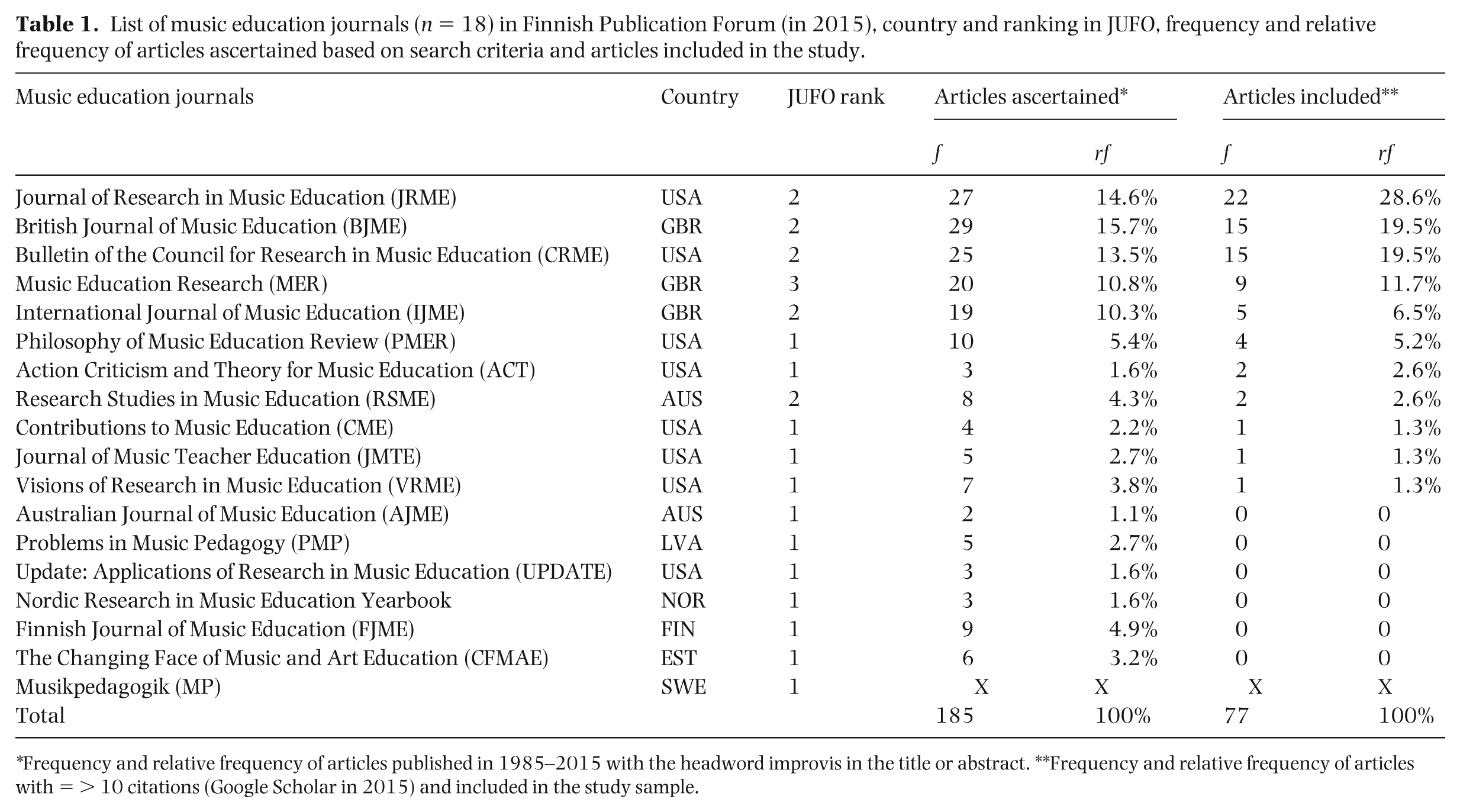
Frequency and relative frequency of articles published in 1985–2015 with the headword improvis in the title or abstract. **Frequency and relative frequency of articles with = > 10 citations (Google Scholar in 2015) and included in the study sample.
Analysis procedures
The analysis began with reading each of the 77 articles a minimum of three times. Data were organised on the basis of a rubric used to record each article. This rubric included the following: 1) General publication features, 2) Topic, 3) Methodological approach, 4) Participant features, 5) Type of improvisation, 6) Definition of improvisation, 7) Findings, 8) Suggestions for practice.
The methodological approach used in each study (no. 3 in the list above) was further categorised as follows: quantitative, qualitative, mixed methods, practice-driven descriptive essays, philosophical, or literature review. Type of improvisation (no. 5 in the list above) included instrumental improvisation, vocal improvisation, solo improvisation formats, group improvisation, and improvisation genre. The latter was further categorised as: western art music; popular; jazz/blues; world musics; children’s songs/singing games; tonal, non-genre-specific; “free” 8 music; not specified. For studies that focused on more than one genre, a mark was placed in all relevant categories.
In studies with empirical data, participant features (no. 4 in the list above) were categorised as follows: 9 1) level of education, 2) gender, 3) ethnicity, 4) marginality, 10 and 5) music involvement. In addition, we recorded the country where the data were collected. In order to refrain from making assumptions, only specific information regarding gender, ethnicity, and marginality was used. If no details were given, data were classified as “not specified”, aligning with Ebie (2002). If the information aligned with more than one category, a mark was placed in all relevant categories. Level of education was categorised in the following way: birth to kindergarten (ages 0–6), primary (ages 6–12), secondary (intermediate, high school, ages 12–18), tertiary (college/university, 18–), and professional (teachers, musicians).
Participants’ music involvement was coded as systematic (instrumental tutoring of more than 1 year, music teachers, or further education in music) or casual (general teachers, non-music majors, no or less than 1 year of experience in learning a musical instrument). For studies that had participants with a variety of music involvement and/or main instruments a mark was placed in each relevant category. The categories used in our rubric were decided on the basis of a brief review of content analysis studies (Ebie, 2002; Kratus, 1995; Rutkowski et al., 2011; Silveira & Diaz, 2014; Tirovolas, & Levitin, 2011; Yarbrough, 1984). The first stage of the analysis resulted in condensed descriptions of each of the 77 articles. To answer the first research question, descriptive statistics were elicited on the basis of the rubric presented above.
The second stage aimed at identifying the visions of improvisation pedagogy that emerged (research question 2). We first created a list of possible approaches to improvisation inspired by interdisciplinary literature on improvisation (including historical and cultural musicology, ethnomusicology, theatre studies, literary theory, music education, and music therapy). The list served as an abductive hypothesis, enabling the researchers to “enter the field with the deepest and broadest theoretical base possible and develop their theoretical repertoires throughout the research process” (Timmermans & Tavory, 2012, p. 180; Agar, 1999). Thus, our study borrows the logic of instrumental case studies, where abductive reasoning can be employed using already developed “instruments and preconceived coding schemes” (Stake, 1994b, p. 243) in the process of analysis.
Supplementary visits to the original articles were made in order to crosscheck and crystallise our interpretation of the approaches that prevailed in each study. The emerging characterisations of the approaches were compared against and parallel to each other, ensuring comprehensiveness and accuracy of interpretation. As Timmermans and Tavory (2012) have argued, “abduction reflects the process of creatively inferencing and double-checking these inferences with more data” (p. 168), with the aim of looking for plausible “new concepts” that might meaningfully account for new data. This process of analysis (see Figure 1) led to the identification of 11 approaches to improvisation. Exploring the pedagogical implications of these 11 approaches, and the ways in which they were related to each other in the data, in pairs or groups, led to the proposition of five overarching themes that describe the visions of improvisation pedagogy in these studies.
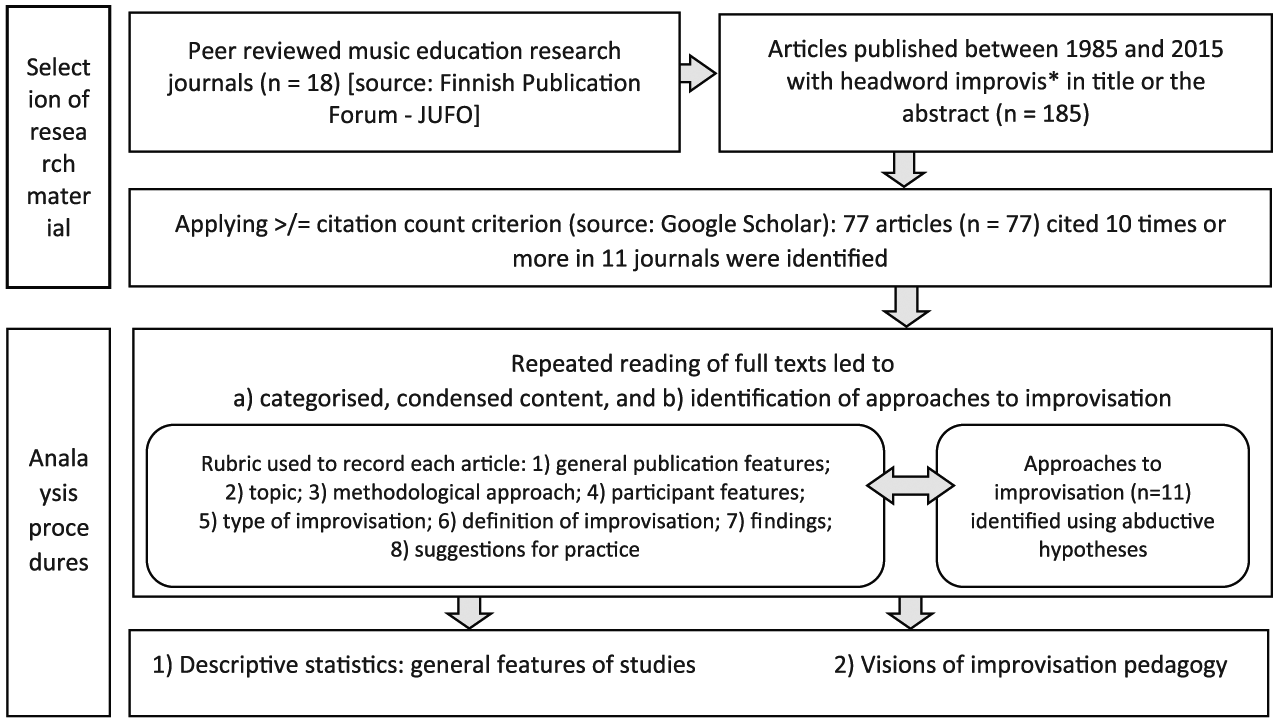
Selection of research material and process of analysis.
Results – Research Question 1: What are the main features of studies that address issues of musical improvisation and have been published in peer-reviewed music education journals?
Τopics studied
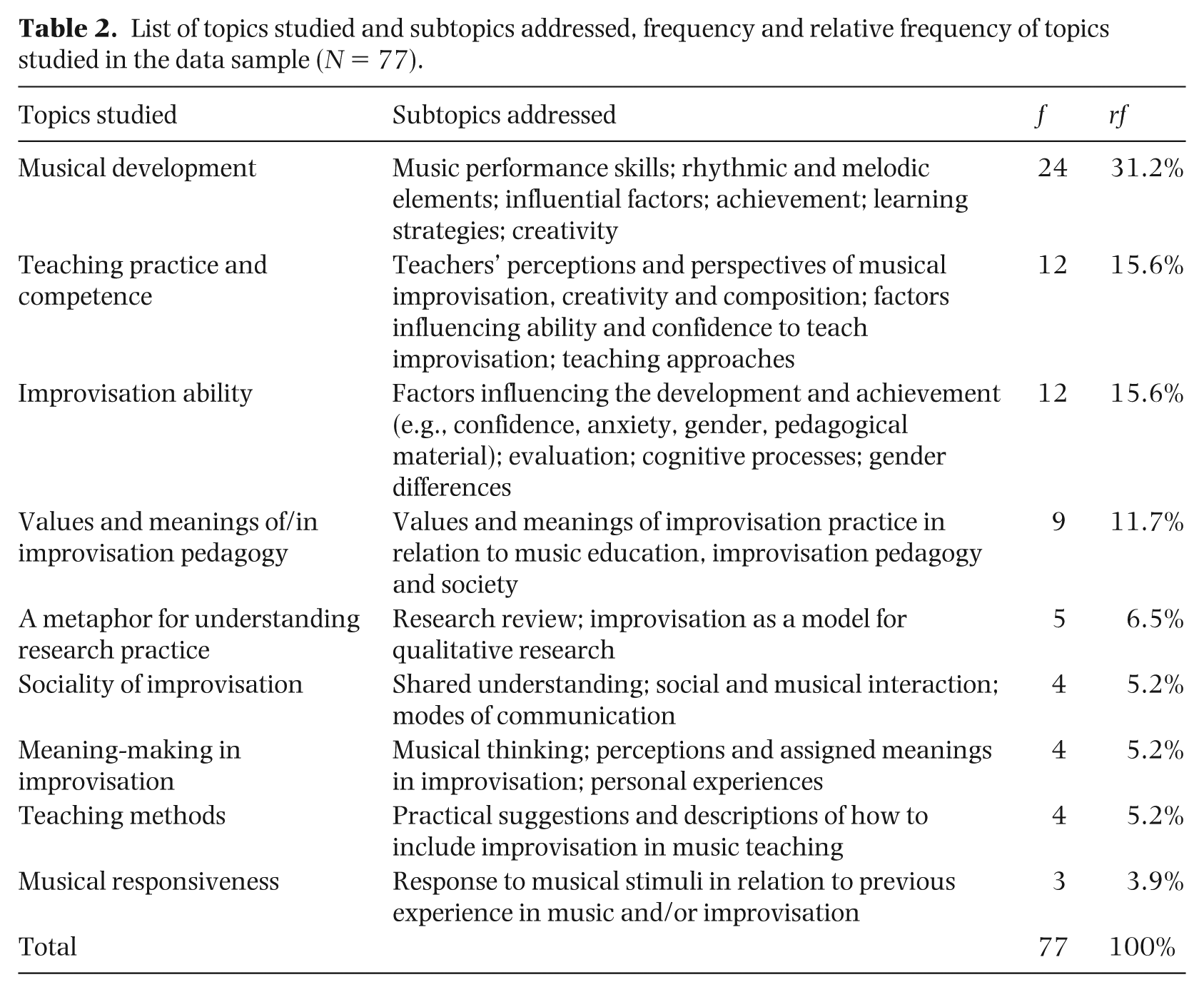
The scope of the studies proved to be broad, employing a number of theoretical and methodological perspectives informed by a variety of disciplines. In order to present an overall view of the studied topics, we compared and grouped all relevant information, ending up with nine headings that include subtopics addressed (see Table 2). Each article was placed under one particular heading. Topics related to musical development were the most frequent (31.2%), steadily attracting music education researchers (for an overview of changes in topics studied across time see Figure 2).
List of topics studied and subtopics addressed, frequency and relative frequency of topics studied in the data sample (N = 77).
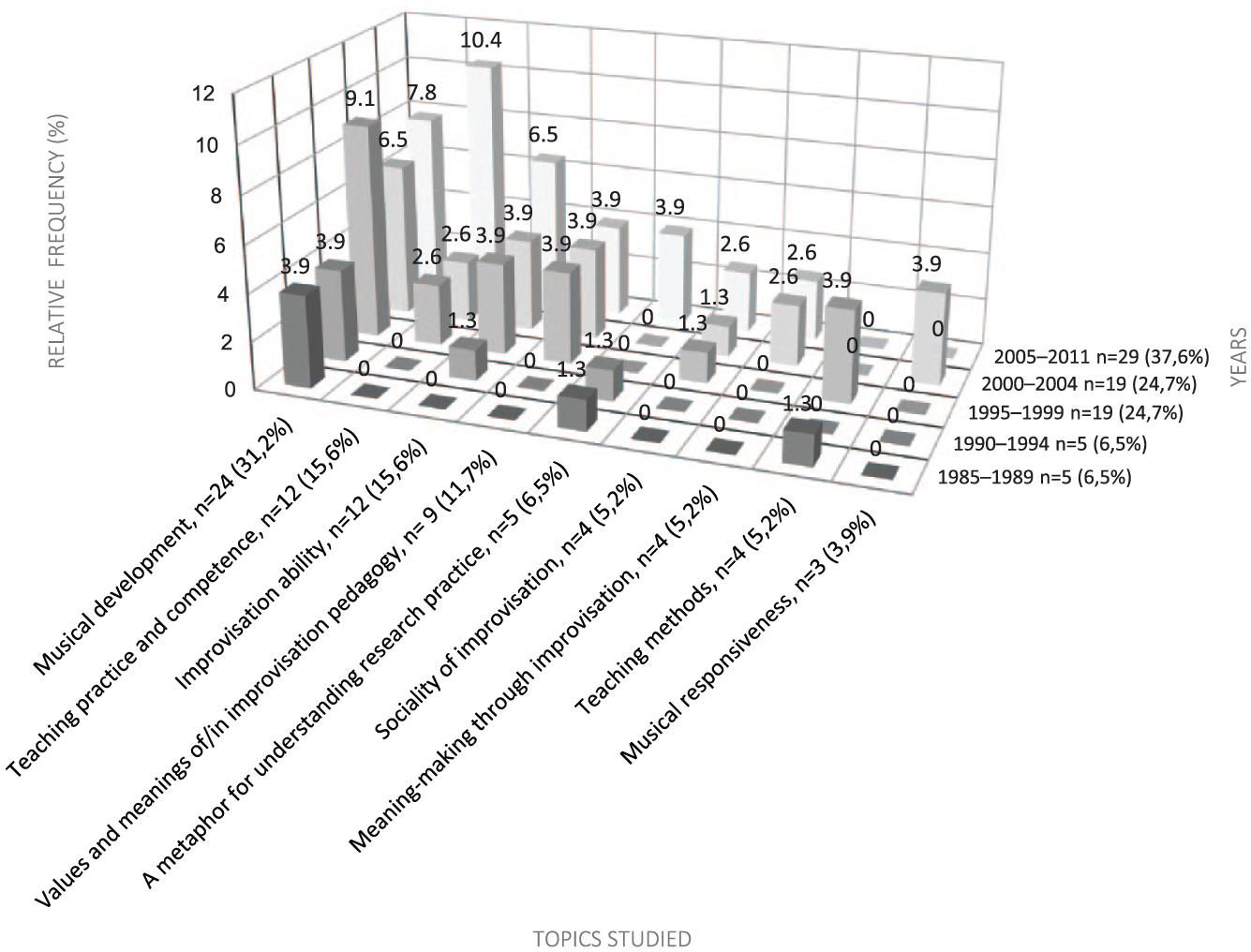
Relative frequency of topics studied in the data sample (n =77, 1985–2011).
More articles dealing with practical teaching methods seem to have been published at the beginning of the period under study, while studies dealing with how teachers feel about teaching have been more frequent in recent times. A focus on issues of meaning-making in improvisation and musical responsiveness has also been a rather recent development. Also, four studies, three by a prominent scholar in music education (Bresler, 2005, 2006, 2009) and one by an important theorist of qualitative research (Stake, 1994a), draw on music improvisation as a metaphor and model for understanding the creative fluidity that inheres in the process of carrying out qualitative research.
Methodological approaches
Quantitative methods had the highest representation (36.4%), followed by qualitative approaches (24.7%) (Figure 3). Prior to the year 2000 only three studies (3.9%) employed qualitative methods. However, after 2000 employment of qualitative methods began to rise significantly. Qualitative research approaches include ethnography, grounded theory, action research, case study, naturalistic inquiry, and narrative inquiry. Practice-driven descriptive essays (19.5%) reached a peak prior to the year 2000, gradually decreasing afterwards, possibly due to the rise in qualitative studies as well as to an increasing interest in the pursuit of philosophical approaches to improvisation (11.7%). Studies with empirical data (n = 52, 67.5% of the studied sample) employed quantitative (53.8%, n = 28), qualitative (36.5%, n = 19), and mixed methods (9.6%, n = 5).
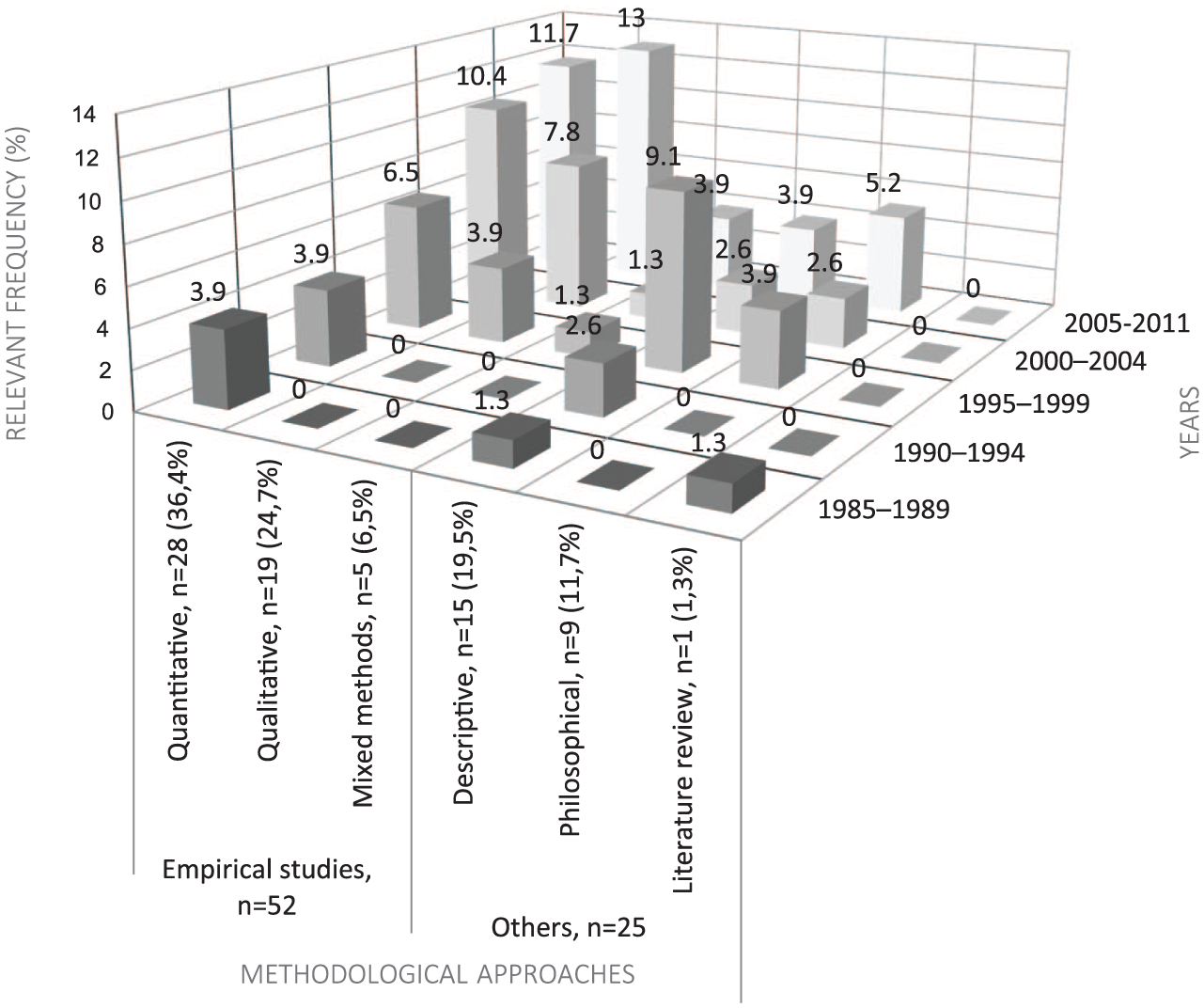
Relative frequency of methodological approaches in the study sample (n =77, 1985–2011).
Features of the empirical studies
Data generation techniques
Solo improvisation tasks were the most popular data generation technique, measuring individual effort with or without an accompaniment. This was used in 40.4% (n = 21) of the studies—only one of which was qualitative (that of Norgaard, 2011). Survey techniques were used in 21.2% of the studies, in the context of both mixed and quantitative methods. Most of the qualitative studies employed ethnographic data collection methods, such as various interview techniques, including stimulated recall (see Rowe, 2009; Tobias, 2014), collection of field notes, participant journals, and observation techniques. Observation was mostly conducted in naturalistic settings. Most empirical studies of jazz improvisation (30.8%, n = 16 of the total amount of empirical studies we looked at) employ quantitative methods (n = 13). Interestingly, group improvisation (which was the focus of 17.3%, n = 9, of the studies) has been studied exclusively with qualitative methods (ethnographic, grounded, naturalistic, and narrative methods).
Participants
School students (primary and secondary) were the focus of 44.2% (n = 23) of studies, and tertiary students were the focus in 30.8% (n = 16) of the studies (Figure 4). It is notable that in 54% of the studies, gender was not specified. Looking at those studies where participants’ gender was mentioned, we found that 54% were male and 47% female. None of the studies focused on participants that could be identified as belonging to marginalised or at-risk youth groups.
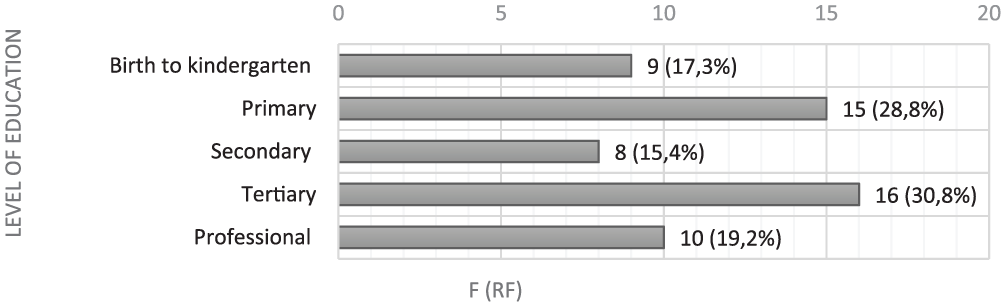
Frequency and relative frequency of participants’ level of education in empirical studies (n =52).
A total of 61.5% of the studies focused on participants with systematic music involvement (Table 3), with a prevalence of wind instruments (31.3%). Instruments were not specified in 53.1% of studies with empirical data, particularly in studies with music teachers or tertiary music education students. Only four studies (Burnard, 2000a, 2000b, 2002; Mang, 2005) provided a detailed description of the participants’ ethnic background. Most studies (53.8%) were conducted in North America (Figure 5), 30.8% took place in Europe, while one study employed distribution of questionnaires in North and South America, as well as in Australia (that of Madura Ward-Steinman, 2007).
Frequency* and relative frequency of level of music involvement in empirical studies (n = 52) and main instrument of participants in empirical studies with systematic music involvement (n = 32).
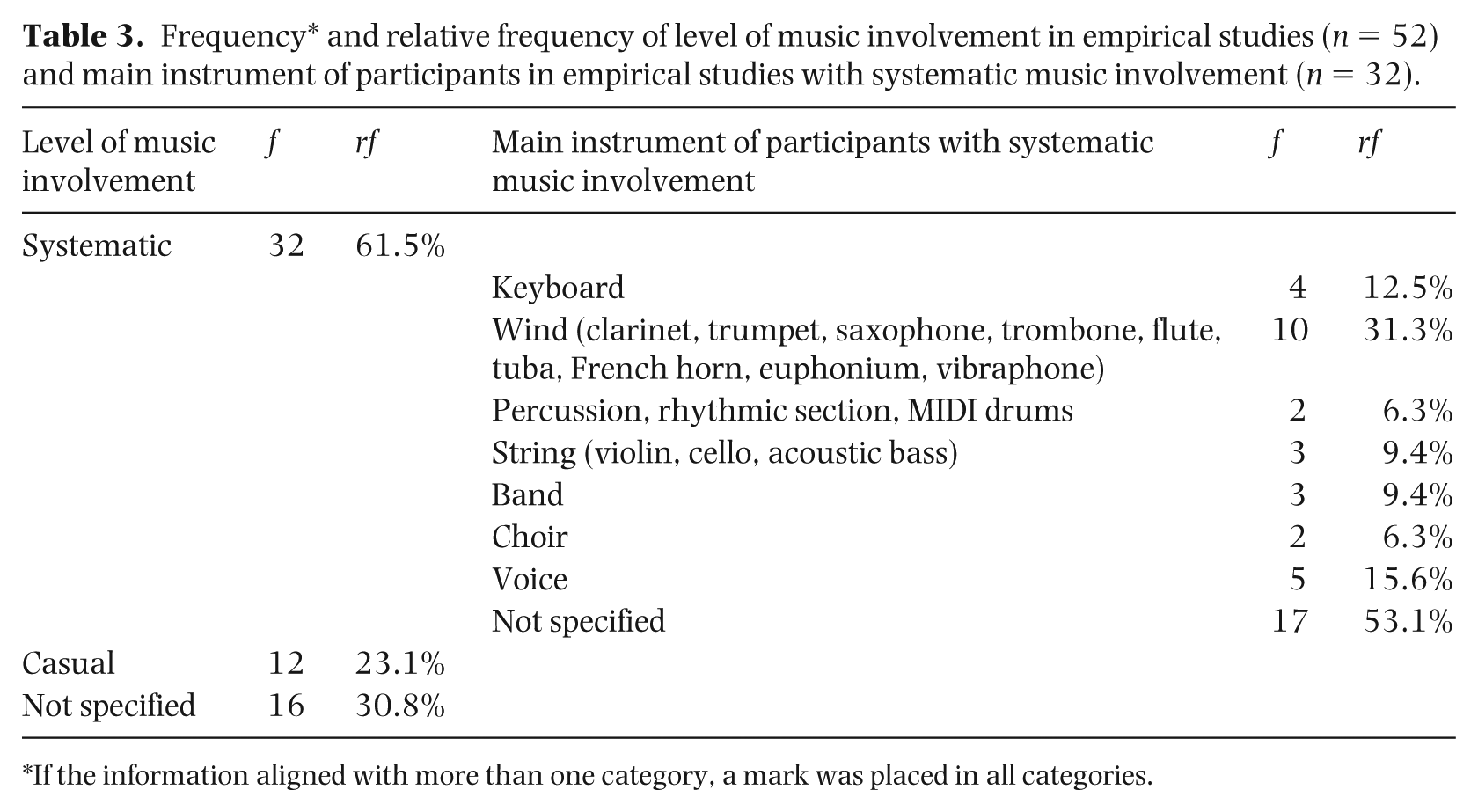
If the information aligned with more than one category, a mark was placed in all categories.
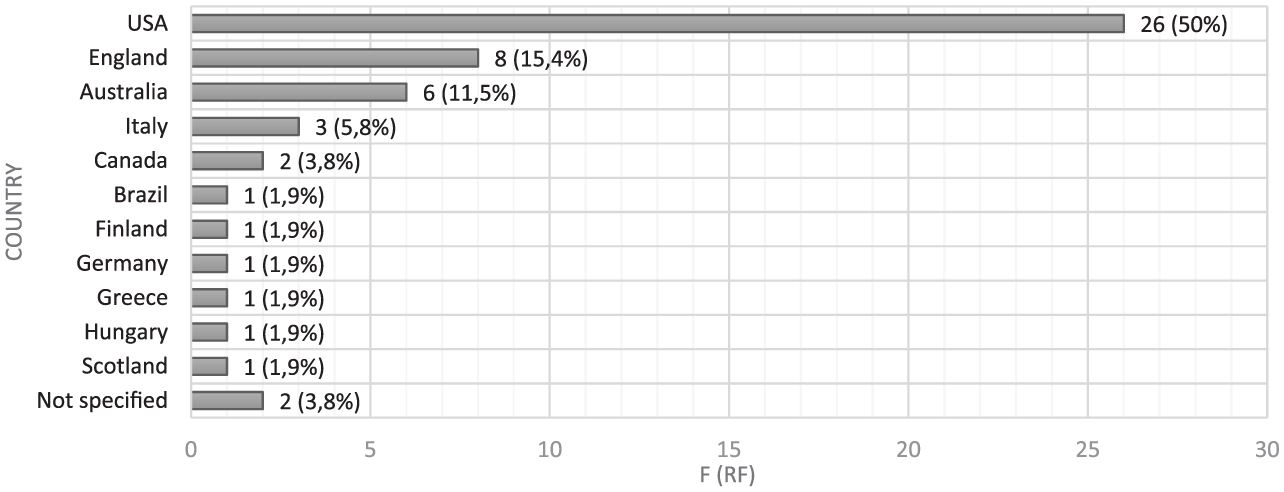
Frequency and relative frequency of country where data were collected in empirical studies (n=52).
Type of improvisation
Instrumental improvisation was the focus in 40.4% (n = 21) of the articles; 23.1% (n = 12) examined vocal improvisation. In many cases, improvisation activities involved both instrumental and vocal aspects. Solo improvisation formats with or without accompaniment were used in 55.8% (n = 29) of the studies, mostly in task-related activities.
Most studies (38.5%) focused on tonal but non-genre-specific music (Figure 6); 30.8% of the studies focused on jazz and blues improvisation genres. This was followed by “free” music (19.2%). An explicit focus on western art music, world musics, and popular musics was particularly rare.
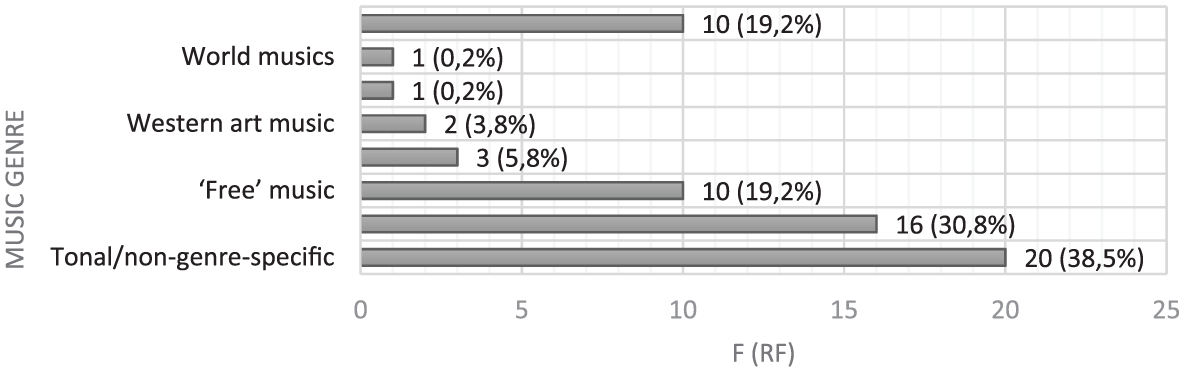
Frequency and relative frequency of music genre in empirical studies (n=52).
Results – Research Question 2: What visions of improvisation pedagogy emerge through the approaches to improvisation that these studies take?
Visions of improvisation pedagogy in music education research
Our analysis yielded a set of five visions of improvisation pedagogy, which manifest themselves through eleven ways of approaching improvisation and improvising. In this paper we argue that particular visions of improvisation pedagogy lead to concrete pedagogical actions that take place in the pedagogical moment of improvisation. The latter is an abstraction based on van Manen (1991), and refers to “that situation in which the pedagogue does something appropriate to learning” (van Manen, 1991, p. 515) on the basis of immediate pedagogical decisions that are based on perceived ideas about the educational value of improvisation. These visions are, in turn, based on particular constellations of approaches to improvisation (Figure 7). The proposed map is not, obviously, a representation of “real life”, but a conceptual lens through which we can frame and situate particular music education creative practices on the basis of possibilities opened to us through music education studies that address improvisation. Pedagogical moments are moments of educators’ “active encounter” (van Manen, 1991, p. 510) with the question of creating educationally valuable contributions through immediate and appropriate modes of response. At those moments, one is concurrently—consciously or not—being pulled towards a variety of ways of approaching improvisation and improvising. The choices made at each pedagogical moment between different approaches to improvisation inform one’s vision of improvisation pedagogy.
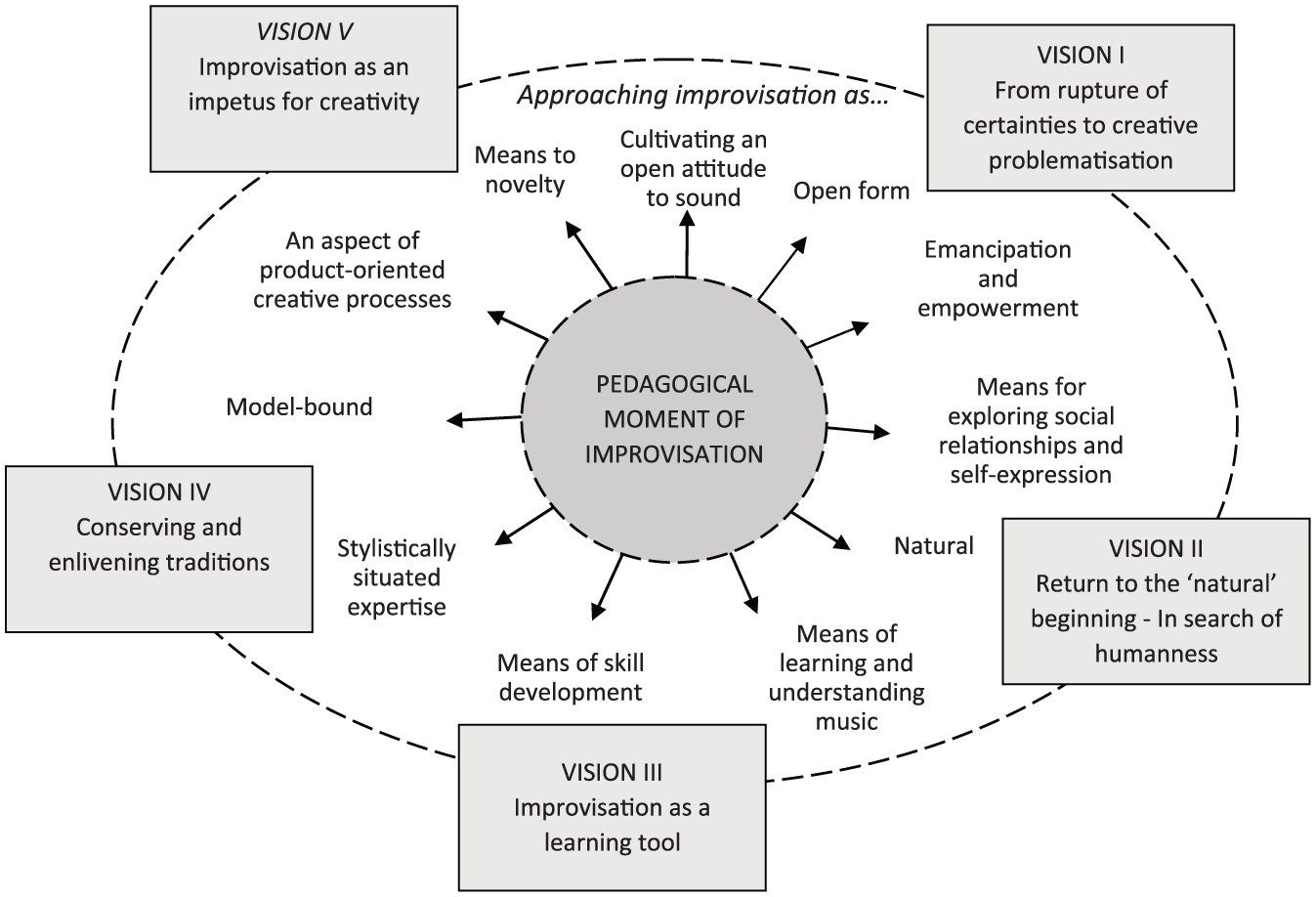
A map of prevailing visions of improvisation pedagogy as they emerge through the approaches to improvisation that music education research studies address.
Below, we present the five visions of improvisation pedagogy and the approaches to improvisation in a non-hierarchical order.
Vision I: From rupture of certainties to creative problematisation
This vision of improvisation pedagogy sees improvisation as a means for cultivating a more open attitude to sound through free instrumental exploration (Koutsoupidou, 2005). It encourages teaching practices that open up “the question of what counts as musical material and the relationship between intentionality and creation of shared conceptions of what sounds can be heard as music” (Kanellopoulos, 2007b, p. 129). Approaching improvisation as an open attitude to sound leads to improvisational practices that are not bound by culturally and educationally framed “adult” criteria, rejecting adherence to preconceived forms and placing less emphasis on inherited style-derived criteria (Burnard, 2002; Kanellopoulos, 2007b; Koutsoupidou, 2005). Thus, by encouraging rupture, this vision is at the same time emphasising the need to search for the child’s authentic “voice”, thus casting school as “a site for cultural reconstruction as much as a site for cultural reproduction” (Kennedy, 2006, p. 166).
The roots of this vision can be traced back to the experimental music practices of the post-war era (Kutschke, 1999; Nyman, 1999; Reynolds, 1965). Envisioning improvisation in education as a means of creative becoming is closely connected to approaching improvisation as an open form, as a particular way of approaching time and musical material in improvisation, an attitude that figures prominently in non-idiomatic, free improvisation contexts (Ford, 1995; Hickey, 2009; Wright & Kanellopoulos, 2010). It understands improvisation as a disposition that needs to be nurtured and enabled, and therefore can be facilitated but not taught in a traditional sense (Addison, 1988; Hickey, 2009; Wright & Kanellopoulos, 2010).
An emphasis on rupture entails an approach to improvisation as a mode of music making that poses and problematises issues of how we live together, addressing issues of personal freedom and socio-musical inequalities: emancipation and empowerment. It becomes a pathway towards liberating oneself and others from oppressive structures and habits, as well as overcoming personal inhibitions (Mawer, 1999; McMillan, 1999). Improvisation thus becomes a way of conscientisation, of recognising oppressive musical and social structures, thus casting music education as a form of critical pedagogy (Abrahams, 2005; Allsup, 2003; Freire, 1965; P. Schmidt, 2005). This vision sees improvisation as leading towards authentic learning, based on the belief that all students “are capable of the pursuit of freedom, regardless of the forces that oppress them” (Allsup, 1997, p. 84). The pedagogue’s task is seen as giving students personal responsibility in an atmosphere of trust, empathy, and dialogue (Burnard, 2002; Hickey, 2009). This pedagogical vision highlights the potential political significance of improvisation, and its relevance to exploring and enacting notions of democracy (Kanellopoulos, 2007a).
Vision II: Return to the “natural” beginning—in search of humanness
This vision rests on a more psychologically-oriented stance, paying particular attention to a student’s personality and its moulding. It is shaped by an understanding of improvisation as a means for exploring and developing social relationships, and as a means for cultivating free self-expression that reshapes personal identities and ways of understanding musical selves (Addison, 1988; Allsup, 1997). This approach understands improvisation as a means for balancing the process of life (Boyce-Tillman, 2000), actualising a kind of collectively-shaped sense of unity where individual and collective freedom co-exist, resulting in a “union of minds in music” (Ford, 1995, p. 106) where communication can override technique. This approach shares important commonalities with literature that links improvisation with self-exploration, the exploration of one’s relationships to others, as well as community building (Doffman, 2013; MacDonald, Hargreaves & Miell, 2002; Magee, 2002; Pavlicevic, 1995; see also Peters, 2009). This understanding of improvisation as a mode of elementary creativity, as a primordial creative practice, can be seen as part of a long tradition of literature that considers improvisation as a central element of the human disposition to living and creating, as a natural springboard for individual artistic development, but also “as a slow process through which particular musical practices are being born and crystallised” (Kanellopoulos, 2013, p. 42).
This vision adopts a broader view of improvisation as a natural human predisposition that can lead to immediate forms of musical communication. It encourages music teachers to employ improvisation in their everyday work as a means of countering the feeling of alienation that is produced in learning theory and notation. This view rests on the belief that music learning shares important similarities with language learning, where use comes first while grammatical explanation follows later (Harrison & Pound, 1996). Therefore, by acknowledging improvisation as a natural ability (Addison, 1988; Burnard, 2000b), it calls for modes of teaching that remain close to what is believed to be a “natural” mode of learning. The pioneering work of Coleman (1922), Moorhead and Pond (1941), and Doig (1941) might be regarded as precursors of this vision of improvisation pedagogy.
Vision III: Improvisation as a learning tool
This vision approaches improvisation as a means of learning and understanding music. Campbell (2009) refers to this vision as “improvising to learn music” (p. 120; see also Elliott, 1995; Martin, 2005; and more recently, Wall, 2018). Here, improvisation is understood as a pathway that leads to a deeper understanding of syntactic and expressive qualities of music, as “the meaningful manipulation of tonal and rhythm music content created in ongoing musical thought” (Azzara, 1993, p. 330). One could trace the roots of this vision to the classic efforts of Dalcroze (1932; also Anderson, 2012) to bring to music education that “aura” of musicality and musical sense that resides in a hands-on approach to music. Intuitive work on the employment of musical codes is seen as leading to the situated development of musically satisfying ways of enculturation through the gradual internalisation of musical-cultural codes, which is itself the result of a constant interchange between memorisation and transformation.
Studies that adopt this vision value improvisation as a means of skill development. They stress its usefulness as a way of developing accuracy in the instrumental performance of notated music, enhancing parts of the brain in ways that technique-oriented learning does not. What is more, they see improvisation as fostering the development of performance skills in ways that result in greater learning motivation (Azzara, 1993; McPherson, 1997; McPherson, Bailey, & Sinclair 1997; McPherson & McCormick, 1999). Furthermore, improvisation is seen as a means of cultivating an enhanced ability to communicate feelings to the audience (Chappell, 1999).
Adherence to this vision leads to pedagogical work that uses improvisation as a means for deepening and expanding learned skills (Addison, 1988), focusing on technical and psychological skills that are integral to music-making (Addison, 1988; Beegle, 2010), leading to musical development (Harrison & Pound, 1996) as well as contributing to an enhanced appreciation of music (Parisi, 2004). Furthermore, this vision has significantly contributed to the development of a body of research that uses improvisation as a tool for assessing aspects of musicianship, or for determining the level of musical or skill development (e.g., Beegle, 2010; Guilbault, 2004; Paananen, 2006); this has also contributed to a body of literature that relates to the content and the structure of aural skills curricula (Azzara & Grunow, 2003; Spiegelberg; 2008). It must be noted, however, that concerns have been raised as to whether music educators’ employment of improvisation as a learning strategy does justice to the complexities of improvisation practice (see, e.g., Hickey, 2009).
Vision IV: Conserving and enlivening traditions
As a result of the intersections between ethnomusicology, jazz studies and music education (Berliner, 1994; Elliott, 1995; Nettl, 2012; Sudnow, 1993), a growing body of music education studies seem to acknowledge the various roles that improvisation plays in a variety of musical traditions. Thus, they approach improvisation as a stylistically situated form of expertise, and therefore construct a vision of improvisation pedagogy that aims at conserving particular musical traditions and the role that improvisation plays therein. Improvisation is understood as a particular discipline with its own hierarchies and standards of excellence, emphasising professionalism and instrumental virtuosity (Naqvi, 2012; Peters, 2009; Prouty, 2006; Racy, 2009). In order to be faithful to established improvising traditions, a player must learn to observe every minute stylistic convention while creatively moulding it in nuanced and flexible ways. Through such a conceptual lens, the development of the ability to observe stylistic conventions (Madura Ward, 1996; Madura Ward-Steinman, 2008) and to achieve stylistic nuance in a purposeful but effortless manner (Kratus, 1995) is seen as a crucial task of improvisation pedagogy. This pedagogic vision rests on an approach to improvisation as model-bound, as a mode of musical behaviour that relies on stylistically determined rules (Kratus, 1995; McPherson, 1993) and culturally framed musical structures (Kratus, 1995). It therefore emphasises internalisation of style-specific building blocks and formulaic patterns (Bent, 2002; Elliott, 1995; Nettl, 2009; Rice, 1994; Tirro, 1974). Students learn how to be faithful to the tradition specifically through the development of a creative relationship with its rules: in the words of Early Harp virtuoso Andrew Lawrence-King, “to be faithful to the spirit of the music one must be prepared to alter the written notes” (Sherman, 1997, p. 165).
Vision V: Improvisation as an impetus for creativity
This vision values improvisation for its contribution to the generation of ideas, and as a tool for eliciting novel responses. Here, adherence to stylistic norms and instrumental virtuosity are of lesser importance. Emphasis is placed on improvisation as a process of discovery. As such, it is thought of as sharing the same skill-set as composing, in effect being a compositional process that occurs in “real time” (e.g., Addison, 1988; Strand, 2006). This vision emphasises the educational value of enabling students to arrive at new—for them—ideas, freeing the mind from linear processes, thus allowing for the unexpected to occur (see, e.g., Webster, 2012). It thus values improvisation as a source of creativity (Hargreaves, 1999), a means of invention. Approaches that rest on such views have been central to school music projects that encourage product-oriented creative processes, paying significant attention to hands-on composing, reserving for improvisation the role of experimenting in the search for musical ideas (see, e.g., Bunting, 1987; Odena, Plummeridge, & Welch, 2005; Swanwick & Jarvis, 1990).
Discussion
A call for broadening the scope of research
In this article we have explored some general features of studies with impact that address music improvisation and were published in peer-reviewed music education journals between 1985 and 2015. Our study shows that research that addresses improvisation in secondary school and community music contexts, as well as studies that focus on participants with varied musical backgrounds and experiences are still far from becoming a widely acknowledged and discussed subfield. Important inroads might also need to be paved by future studies on improvisation in world musics (including western art music) and popular music genres, traditions where improvisation has in many respects played a stronger role than is usually assumed (see Berkowitz, 2010; Borio & Carone, 2018; Gooley, 2018; Solis & Nettl, 2009). This might lead to a greater emphasis on connecting creative pedagogical work to the wealth of extant musical traditions. In addition, it would also take us beyond restrictive views of improvisation in music education as leading to “tonal, non-genre-specific”, or “classroom music” (Finney, 2011; Swanwick, 1994).
Furthermore, future research might need to pursue more closely intermedia improvisation practices in education, as well to develop “practice as research” perspectives (Cook, 2015, p. 12). Moreover, in the sample of studies investigated in this research, we show that although the sociality of improvisation has been widely recognised, studies that focus on the collaborative aspects of improvisation were still limited. Further, the results of this study raise the question of unequal representation and dissemination of research carried out in different countries, and the effects of this imbalance on music education research at large.
Our study demonstrates that the role of improvisation in inclusive practices, and its potential contribution to social cohesion through empowering students who can be described as socially, economically, or culturally marginalised, has not achieved the prominence we feel it deserves. To argue for more research in that direction does not of course imply that improvisation should be seen merely as a remedy to issues of community building. There is a need for critical approaches to improvisation and its relation to notions of power, and to how improvisation creates its own (hidden or explicit) hierarchies. To that we should add the value of researching improvisation as a mode of creative practice in the face of contemporary educational contexts, which have imposed dramatic changes in the role of creativity in education (Kalin, 2018; Kanellopoulos, 2015).
Moreover, it seems to us that future music education research might need to develop stronger links with the burgeoning field of improvisation studies, with experiments with improvisation and radical problematisations that come from the fields of critical musicology (e.g., Stefanou, Ragkou, Peki, Pazarloglou, & Papoutsi, 2016; Székely, 2008), historical musicology (e.g., Wegman, 1996), and philosophy of music (e.g., Goehr, 2016). It is noteworthy that, with one exception (MacGlone & MacDonald, 2017), none of the important edited volumes that focus on improvisation and were published after 2015 contain a single essay on its educative dimensions (Born, Lewis, & Straw 2017; Caines & Heble, 2015; Lewis & Piekut, 2016a, 2016b; Siddall & Waterman, 2016). 11
A tool for further reflection
In response to our second research question, this paper has also proposed a map of different visions of improvisation pedagogy that the investigated studies point towards. The proposed five visions of improvisation pedagogy, with the 11 different approaches to improvisation towards which they point, illustrate the plurality that exists in how improvisation has been understood in the literature reviewed in this study. One important conclusion that can be drawn is that music education studies have moved beyond the mysticism that used to surround past approaches to improvisation, a mysticism that denied any sort of role for improvisation in the process of education (see Watson, 2010).
Our data show a strong preference for model-bound approaches, while approaches to improvisation as an open form were the least common (see Figure 8). The relation between the studied topics and the 11 approaches to improvisation shows that when the pedagogic focus is on musical development model-bound definitions seem to dominate, emphasising the need for skill development and the development of musical understanding (Figure 9). On the basis of such comparisons, it is possible to conclude that issues of value and meaning-making in improvisation, as well as its collaborative, social aspects, are in need of further attention by future studies. Also, research on improvisation as an ability, as well as on teaching practice and teaching competence, might need to pay more attention to free improvisation aesthetics, as well as to the emancipatory and collaborative aspects of improvisation. It is encouraging that more recent studies in music education are already beginning to tackle some of these issues (e.g., Hickey, 2015; Hickey, Ankney, Healy, & Gallo, 2016).
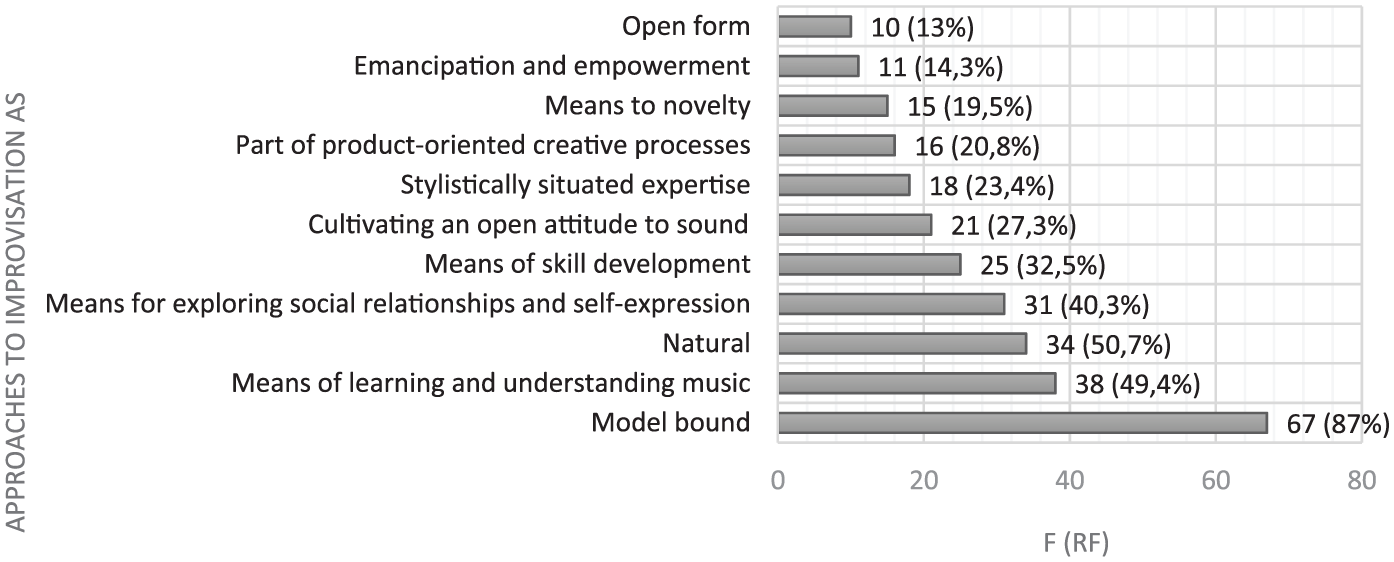
Frequency and relative frequency of approaches to improvisation adopted in the study sample (n=77).
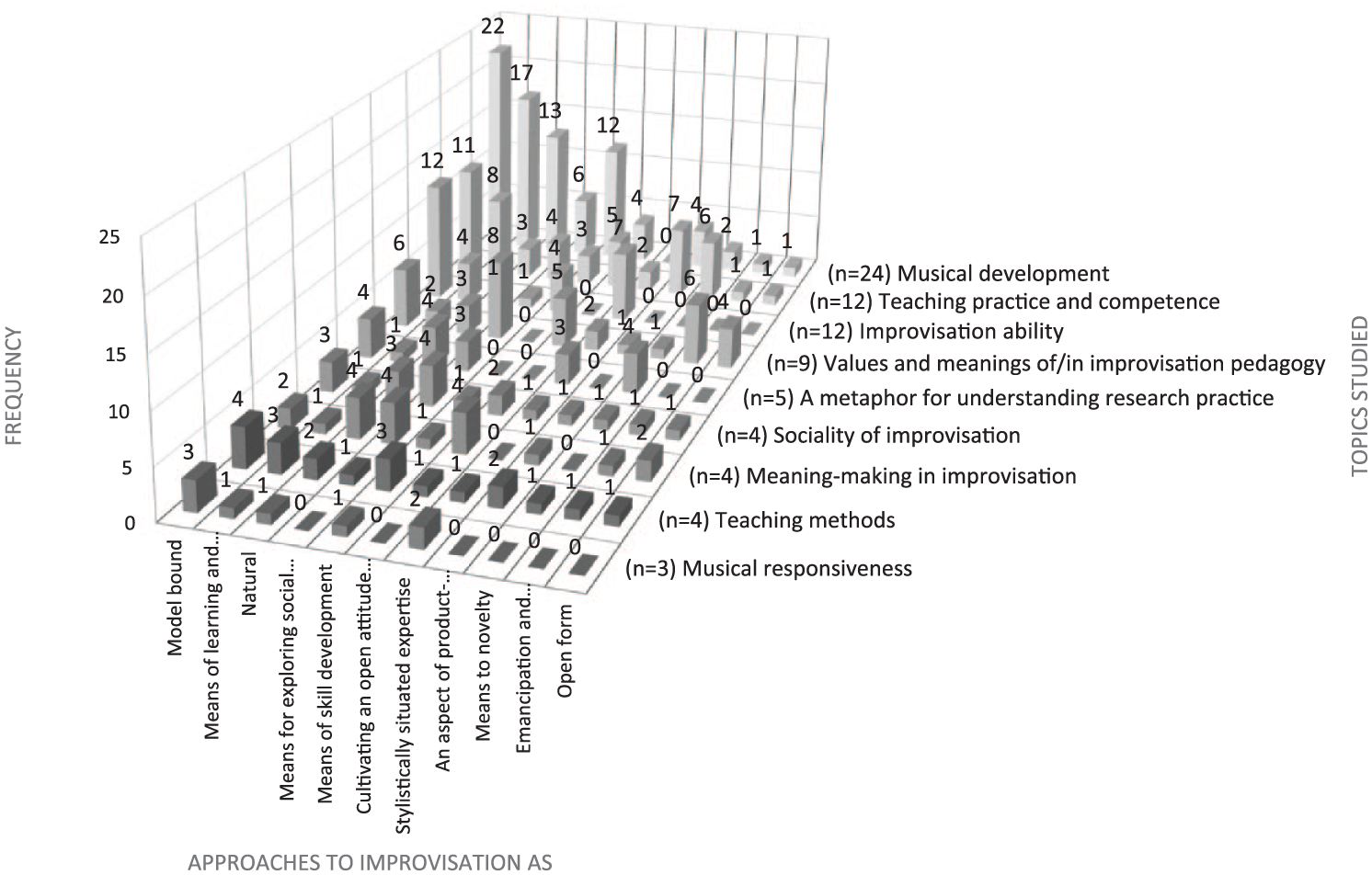
Frequency of approaches to improvisation in studied topics.
Our data confirm that, far from being a marginal and peripheral mode of musical practice in music education, improvisation has become a way of addressing, highlighting, and cultivating qualities that are of core importance to music and its role in human lives. It can therefore be said that music education studies that address issues of musical improvisation have indeed tried to inquire into improvisation’s links to core aspects of what it means to be musically educated, and the sometimes irreconcilable struggle between conflicting forces that this process induces: how to enable students to delve into extant modes of musical practice without impeding their spontaneity; how to enable critical reasoning while fostering community building; how to develop modes of study that are close to students’ natural learning processes while advancing technical mastery; how to allow for innovative thinking while preserving long-cherished traditions “authentically”. Thus, music education’s apprehension of improvisation seems to have gone beyond the freedom vs. triviality polarity mentioned at the start of this article.
The map proposed in this study is meant as a possible representation of general trends that underpin music education research that addresses improvisation. In addition, we suggest that this map may also function as a way of conceptualising the tensions that arise in different music education situations where improvisation plays a part. Thus, it can be used as a framework for situating our particular ways of working with improvisation in our everyday teaching practice. In this sense, the visions of improvisation pedagogy proposed in this paper might work as a map that assists our reflection on the pedagogical moment of improvisation (based on van Manen, 1991). Whenever teachers and students come together to work on the basis of improvisation, their practice lives in the midst of tensions that arise as a result of the different approaches to and beliefs about improvisation on which their educational work may be based.
In this sense, in her/his everyday engagement with improvisation, every music teacher “produces” a new version of the map. However, as van Manen (1991) aptly states, “[a]s I reflect pedagogically on my daily living with children I discover my pedagogical nature, its present limits and possibilities” (p. 532). Thus, every version of the map may be subject to change, as one reflects upon and experiments with different approaches to the question of what role improvisation should play in our everyday teaching practice. Different answers to the question of the educational value of improvisation produce different visions of improvisation pedagogies, thus creating distinctive “pedagogical moments” of improvisation. Our map can be seen as a tool through which music educators can situate their practice and reflect upon it, possibly envisioning alternative ways forward. As such, it is an example of how theory might inform practice.
Footnotes
Acknowledgements
Sincere thanks are due to the community of researchers at the Music Education doctoral seminar of the Sibelius Academy, University of the Arts Helsinki; also to Danae Stefanou, Eleftheria Tseliou, Heidi Westerlund and Christopher TenWolde for their constructive comments at various stages of this project. We would also like to thank the anonymous reviewers of RSME for their sharp comments and critical observations.
Funding
The author(s) disclosed receipt of the following financial support for the research, authorship, and/or publication of this article: This research is part of the ArtsEqual project (project no. 293199) funded by the Academy of Finland’s Strategic Research Council and its Equality in Society program.
Notes
Author biographies
