




Abstract
In this article, the ways murals can become symbols of both heritage and divisive gentrification processes are analyzed in the context of the contemporary media city. Taking the case of Detroit, USA, how is the urban imaginary of the “music city” mediated through street art, and its meaning reconstituted and reframed in the contemporary networked mediasphere? Applying a cultural justice perspective, a selection of Detroit music murals, their Instagram lives, and the public debates surrounding three specific street art projects are analyzed along (1) the symbologies of place the murals represent, (2) the historiographies of space attached to the murals, (3) the social ties and community networks that keep the murals in place or protest their presence. This study shows that the proposed cultural justice framework offers an opportunity to more fully understand how cultural materialities such as murals shape mediated public space in areas of gentrification.
Introduction
Who has the right to the city? This question is at the heart of recent debates about the politics of public space (De Backer et al., 2019). Ranging from DIY and guerilla urbanism (Hou, 2010; Iveson, 2013) to the dangers of surveillance, privatization, and sanitation of public space (Jansson, 2018), public spaces in the city are increasingly recognized, explored, and critiqued as spaces for political action and social justice (Lofland & Lofland, 1998; Low & Smith, 2006; Mitchell, 2012; Zukin, 2010).
The politics of public space are specifically pronounced in the context of gentrification: tensions come to the fore when neighborhoods start to change under the economic and social pressures of development, when newcomers enter and other residents are forced to leave. These tensions become visible and are expressed in public space through, for example, political protest, the aforementioned guerilla actions, but also in phenomena such as street art.
While there is an abundant body of work on gentrification, little attention is paid to the role of the media in urban displacement processes. This is surprising, given that the question of the right of the city takes on special salience in times of rapid mediatization (Falkheimer & Jansson, 2006). Mediatization—the process by which contemporary society is being “permeated by the media to an extent that (they) may no longer be conceived of as being separate from cultural and other social institutions” (Hjarvard, 2013, p. 105)—changes public space: boundaries between public and private, between control and agency, and between the material and immaterial places of everyday life become blurred.
This development has led to a recent interest in and writing on the “media city” (McQuire, 2008, 2016), meaning that cities have become open or networked social spaces, connecting the global and virtual with the local and material (McQuire, 2016). The continuous access to the global mediasphere has increased the agency of city dwellers through the self-organization and expression afforded by social media and geomedia, while the idea of what constitutes the identity of a local neighborhood, so frequently under pressure when gentrification is at play, is opened up: the neighborhood is no longer a material space, but part of a networked urban imaginary, in constant contact and dialogue with the mediasphere that surrounds it (Appadurai, 1990; McQuire, 2016).
As one of the ways in which circulating and contested urban identities are expressed, negotiated, and taken to task, street art such as graffiti and murals offers ways to explore issues of social justice in mediated public space. Murals form a political expression of heritage, identity, and culture through their visual presence and expressivity in public space (Skinner & Jolliffe, 2017). Moreover, the content and meaning of murals are increasingly shaped and changed by digital media (MacDowall & de Souza, 2018), offering a prime way to analyze the politics of public space in the context of mediatization. Finally, as will be argued in this article, street art refocuses attention on the symbolic dimensions of gentrification and public space, connecting with research that highlights the multiple kinds of ways urban development processes are valued, beyond the economic (see, for example, Birdsall et al., 2021; Van der Hoeven & Hitters, 2019).
This project focuses specifically on the analysis of music murals in Detroit, USA, since music takes on specific salience in the context of gentrification. Music is an especially potent catalyst of local place identity (Connell & Gibson, 2003) and place attachment (Bolderman, 2020; Bolderman & Reijnders, 2021), and can play a key role in the negotiation of social inequalities, specifically in an urban context (Ballico & Watson, 2020; Cantillon et al., 2020). While music and murals are a rich fit for studying the symbolic potential of public space in the media city, in the urban imaginary of Detroit, music plays a central role. Moreover, Detroit is a city famous for its ruins and decline, social segregation, and a current drive toward gentrification of certain neighborhoods. These aspects are captured in the research question: How is the urban imaginary of the “music city” mediated through street art, and its meaning reconstituted and reframed through the platform vernaculars of the mediasphere?
The analysis consists of two parts: a content analysis of Detroit music murals and their reposting on Instagram, and a discourse analysis of public debates surrounding three specific street art projects through news coverage and interviews with stakeholders involved. Applying a cultural justice perspective (Cantillon et al., 2020), the murals are analyzed along three lines: (1) the symbologies of place the murals represent, (2) the historiographies of space attached to the murals, and (3) the social ties and community networks that keep the murals in place or protest their presence.
This cultural justice perspective contributes to “a critical reading of urban renewal processes” (Granzow, 2017, p. 345), which is crucial in the context of continued deindustrialization, gentrification, and mediatization of modern cities (Falkheimer & Jansson, 2006; Harvey, 2013; McQuire, 2016). In conclusion, I argue that a critical cultural justice perspective means that murals can resist but also reinforce existing power relations, present in the everyday microcosmos of murals and their mediated circulation in the mediasphere.
Murals and the Media City
Experiences and interactions with urban space are shifting in the age of the “media city” (Falkheimer & Jansson, 2006; McQuire, 2008). McQuire argues that cities are relational spaces, where the pervasive presence of media causes “a fluid, non-bounded and always becoming social space” that connects, in various ways and at various speeds, the global with the face-to-face (McQuire, 2008, p. 33). In the context of the contemporary media city, street art plays a particular role. Street art, such as murals and graffiti, is a form of public art in the sense that these images and texts are accessible to all who walk by: “nothing that takes place in the public sphere remains a private gesture, with no political or cultural meanings” (Chmielewska, 2007, p. 148). Street art derives much of its meaning and critical power from its interaction with people, urban contexts, and expectations about the mechanics of public space (Riggle, 2010). This means that with their expressive presence in public space, both graffiti and murals have political dimensions. Whereas the act of making graffiti is often illegal, defying law and order, murals are most often—but not necessarily so—commissioned works of public art, often reflecting upon or communicating aspects of the heritage, politics, and/or identity of a place (MacDowall & de Souza, 2018; Skinner & Jolliffe, 2017). Indeed, murals can become landmarks of belonging, texts to be read for their expressed social values, political stances, or emotional responses to certain events (Flores, 2016, p. 20). At the same time, street art can be used to create place identity and enhance place branding, contributing to economic and social development goals (Chakravarty & Hwee-Hwa Chan, 2016; Oh, 2020; Pugh, 2015).
Street art does not stand on its own but is intertwined with the development of social media; digital media are shaping and changing contemporary street art through their “platform vernaculars” (Gibbs et al., 2015 257): the specific characteristics of the social medium involved, influence and shape what street art looks like, but also how it is produced and consumed, and thereby shape and change the content and meaning of street art (MacDowall & de Souza, 2018). This can work in a democratizing way, offering wider audiences and producers’ opportunities to develop and express alternative narratives of identity, of ethnicity, and of place. At the same time, street art can show a discrepancy between what it represents and what the lived reality is of the community that harbors it.
This process is exacerbated specifically by the platform vernacular of the social media platform Instagram, with its emphasis on instantaneous visual impact, and consolidating specific and particular place meanings. For example (Oh, 2020), has shown how murals produced for tourism development in Ihwa Mural Village in South Korea indeed draw in tourists who like to take Instagram pictures with the murals and spread the image of a clean and orderly, colorful and artful neighborhood. At the same time, this practice obscures the issues in the neighborhood related to poverty and social decline, erasing these issues from the urban imaginary. This leads MacDowall and de Souza (2018) to conclude that “the reshaping of graffiti and street art by digital media requires that notions of the street be also expanded to include the now complex interplay between the users and architecture of urban spaces and digital platforms” (p. 7).
This becomes especially salient when looking at the politics of the public space in which both graffiti and street art operate. The question remains how exactly this process works: In what ways are urban imaginaries mediated through street art, and how are the various meanings of pieces of street art reconstituted and reframed through the platform vernaculars of the mediasphere? In this article, I propose to frame this question in the context of the politics of public space, using the cultural justice toolkit as proposed by Cantillon et al. (2020) as a frame of analysis.
Music Heritage and Gentrification: A Cultural Justice Perspective
A central concern in discussions on the notion of the “right to the city” is how exactly the complex urban interplay of power relations and socio-economic inequalities can be analyzed, with regard to which groups of people and in what specific spatial contexts (see also Iveson, 2013; Marcuse, 2009; Soja, 2011). Moreover, as pointed out by Birdsall, Halauniova, and Van de Kamp, the emphasis in much research on urban development is on the socioeconomic value of (re-)development, while issues of social and spatial justice revolve around “multiple valuations of spaces—not only economic but also symbolic” (Birdsall et al., 2021). Contributing to the challenge of an analysis tool that includes attention to this symbolical dimension, for this project I adapted the cultural justice toolkit as developed by Cantillon et al. (2020).
Cantillon et al. (2020) make a distinction between cultural and social justice. Cultural justice blurs with the notion of social justice when culture is defined broadly, encompassing processes of representation and meaning-making—when all social practice is deemed to be cultural. However, cultural justice can also be conceptualized more narrowly, referring to the ways in which cultural and creative practices and materialities are part and parcel of social tension, power, and inequalities (Cantillon et al., 2020, p. 5). The focus in this more limited conceptualization is on culture as cultural goods and the processes and institutions through which culture is produced (Cantillon et al., 2020, p. 3). With respect to music, this notion of cultural justice has been applied, for example, to explore the role of music and nightlife in cities of postindustrial decline (Cantillon et al., 2020), and in the context of music cities as a policy concept, emphasizing “music’s civic or social value in improving well-being and contributing to social cohesion” (T. Bennett, 2020, p. 20). Another application is in DIY heritagization (Baker, 2015) and archiving (Long et al., 2017). DIY popular music archives, for example, form a counterforce to remembering and preserving contested popular music heritage.
Cantillon et al. (2020) offer a useful tool to analyze cultural justice in practice, which puts the symbolic dimensions of urban development into full focus. The tool consists of three interlocking planes of analysis, which I have adapted for the context of the contemporary media city:
Case Study—Music Murals in Detroit
Detroit is the city of Motown, techno, and hip-hop, with famous artists such as J Dilla, Aretha Franklin, The Supremes, Stevie Wonder, Derrick May, and Eminem, to name just a few. However, Detroit’s urban imaginary is heavily contested. Once called “the Paris of Northern America” (Galster, 2014), the city has become a chimera of its former self through steady de-industrialization and white flight, to the extent it is currently called “a metonym for urban failure” (Doucet, 2017). Its number of inhabitants plummeted from 2 million in the 1950s to roughly 670.000 today (www.census.gov, 2021), an abandonment that has resulted in widespread blight and poverty within the city limits, exacerbated by governmental corruption and scandal, resulting in municipal bankruptcy in 2013 (Doucet, 2017).
However, the city is slowly turning a corner, with gentrification processes present in certain areas: Downtown, Midtown, the Eastern Market District, Corktown, and Mexicantown, each at different times in the past few years, have seen an influx of young, predominantly White, professionals—a development that is expected to continue with the development of the iconic Michigan Central Station into a Ford Motor Company research and development campus (Zebracki et al., 2019).
The city is a canvas for many unsanctioned murals and graffiti, while murals have been commissioned by private and government parties as an anti-blight tool (Bolderman, in press). Therefore, in this article, I explore the changing potential of the politics of public space through the ways Detroit’s music heritage is produced in the material and symbolic practices of mural production, mediated distribution, and consumption.
The murals analyzed for this study were gathered in three ways. First, the murals were analyzed that were painted in the context of the yearly Murals in the Market festival, organized since 2015 by 1XRun, a Detroit-based online auction house, and its fine arts counterpart, Inner State Gallery. It is a street art festival in which selected artists create murals around the Eastern Market District, and in recent years, other parts of the city as well. According to the website, “Murals in the Market is more than an international mural festival, it’s a creative platform that inspires and encourages community engagement using public art as a vessel,” with the aim of increasing traffic, economic development, and safety in the Eastern Market Area (Murals in the Market, n.d.). This resulted in a corpus of 187 murals currently featured on the festival website, of which 11 had music themes.
Second, the corpus of music murals contains murals commissioned by the municipal City Walls project, started in 2017 (City of Detroit, n.d.). The goals of the program are to highlight the values and the identity of the communities where art work is being created, empower Detroit artists, and “to provide a positive cost benefit to the public via art versus the cost of blight remediation” (City of Detroit, n.d.). Of the 61 murals currently on the program website, 7 include music-related imagery.
The third and final noncommissioned murals were documented during repeated trips to the city by the author over the 3-year period in which they lived in one of the Detroit suburbs. These murals were photographed during an ethnographic driving tour of Detroit in July 2020, based on the repeated visitation of the city and on a more focused, repeated Instagram and internet search over the period March 2020–July 2020. This resulted in a further 13 murals with explicit music themes, bringing the total corpus of music murals studied to 31.
The analysis of this corpus of music murals consisted of two parts. First, a content analysis of the music murals and their circulation on Instagram was conducted, identifying recurrent themes and imagery. The choice was made to focus on Instagram given the close connection and preference for this social medium by mural makers (MacDowall & de Souza, 2018). Second, a discourse analysis was conducted of public debates surrounding three specific murals that surfaced during the first phase of content analysis as specifically salient with regard to issues of public space and cultural justice: the MC5 mural on the wall of the former Grande Ballroom; the two murals on the walls of the Detroit Music Hall in downtown Detroit; and the Cinco de Mayo mural by Elton Monroy Duran on the E&L Supermercado parking lot in Mexicantown. For this discourse analysis, project websites, Instagram comments on the murals, and local newspaper coverage of the creation of the murals and the subsequent debates were analyzed. Subsequently, six interviews were conducted with various stakeholders involved with the murals, including artists, project managers, and community project volunteers. The aim of the interviews was to provide information about the murals, their location, and the social context in which they were created and functioned (cf. Granzow, 2017).
Structuring the analysis along the three aspects of a cultural justice perspective on music heritage, in the following, the murals are analyzed for (1) the symbologies of place they represent, (2) the historiographies of space attached to the murals, and (3) the social ties and community networks that keep the murals in place or protest their presence.
Music Murals as Symbologies of Place
Symbologies of place can be analyzed through the study of “physical and digital remnants of popular music’s past” (Cantillon et al 2020, p. 13), which includes artifacts in archives and museums, built heritage, and in this study, murals as “material heritage markers” (Skinner & Jolliffe, 2017). The music murals that are part of the Murals in the Market festival include very well-known ones locally, such as the Aretha Franklin mosaic, and one of the first edition murals, the record-spinning figure called The Soundtrack (To My Life). The murals predominantly focus on Detroit’s Motown and hip-hop history, such as the large Jose Felix Perez/Michael Vasquez mural painted on Bert’s Warehouse, depicting legends of Detroit hip-hop such as J Dilla and Eminem (Figure 1). There are also murals with a more explicit social message. For example, referring to Detroit’s marching band culture, Pat Parry’s marching band (Figure 2) depicts the march of what Perry sees as a declining civilization making music out of the end of the oil age, “a civilization unsure of how to secure sustainable energy sources in the future” (Murals in the Market, .n.d.). This way, Perry connects with an explicit political stance on environmental justice.
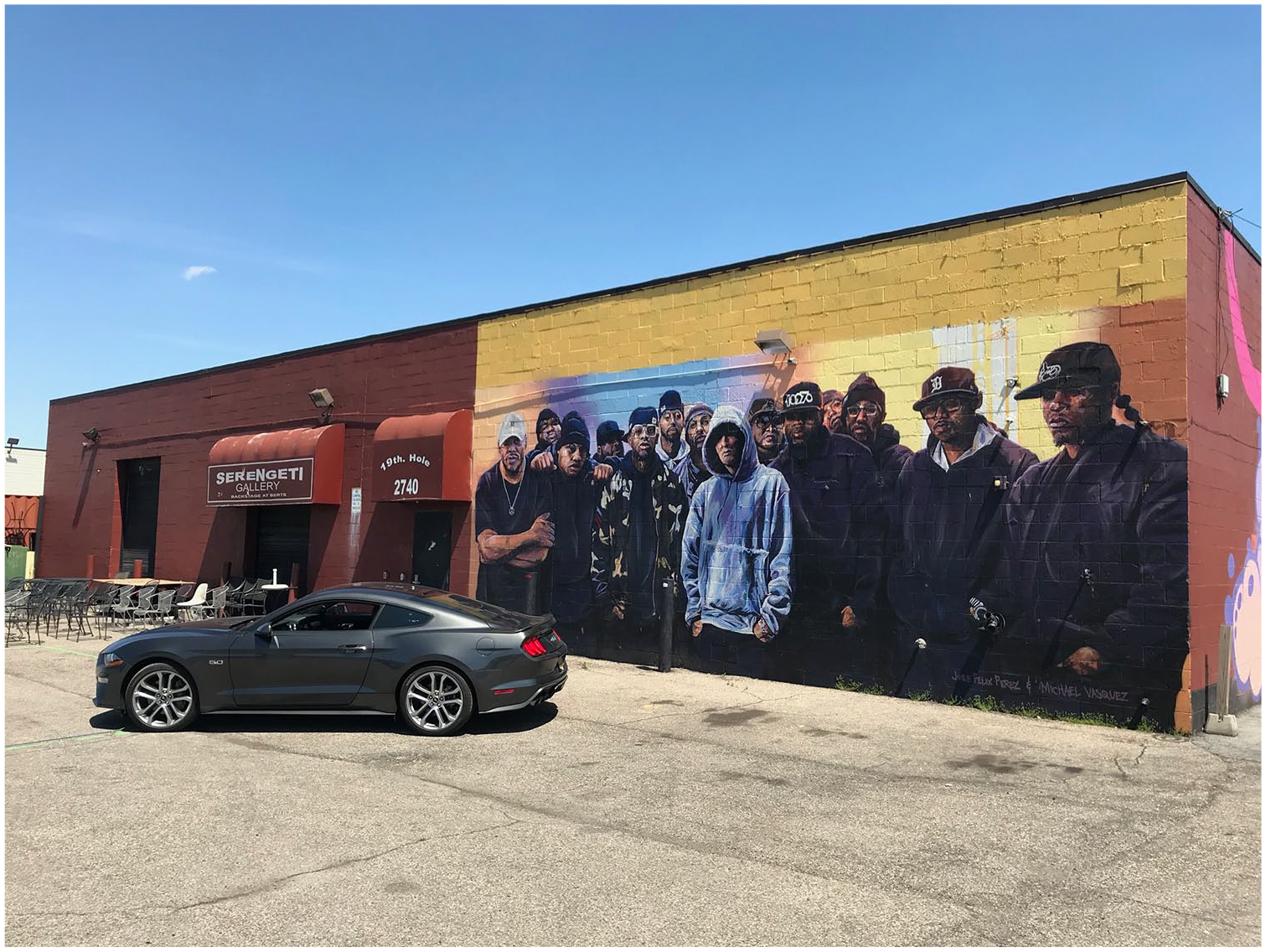
Rap God (2017), Jose Felix Perez x Michael Vasquez ((c) Arno Van Weert).
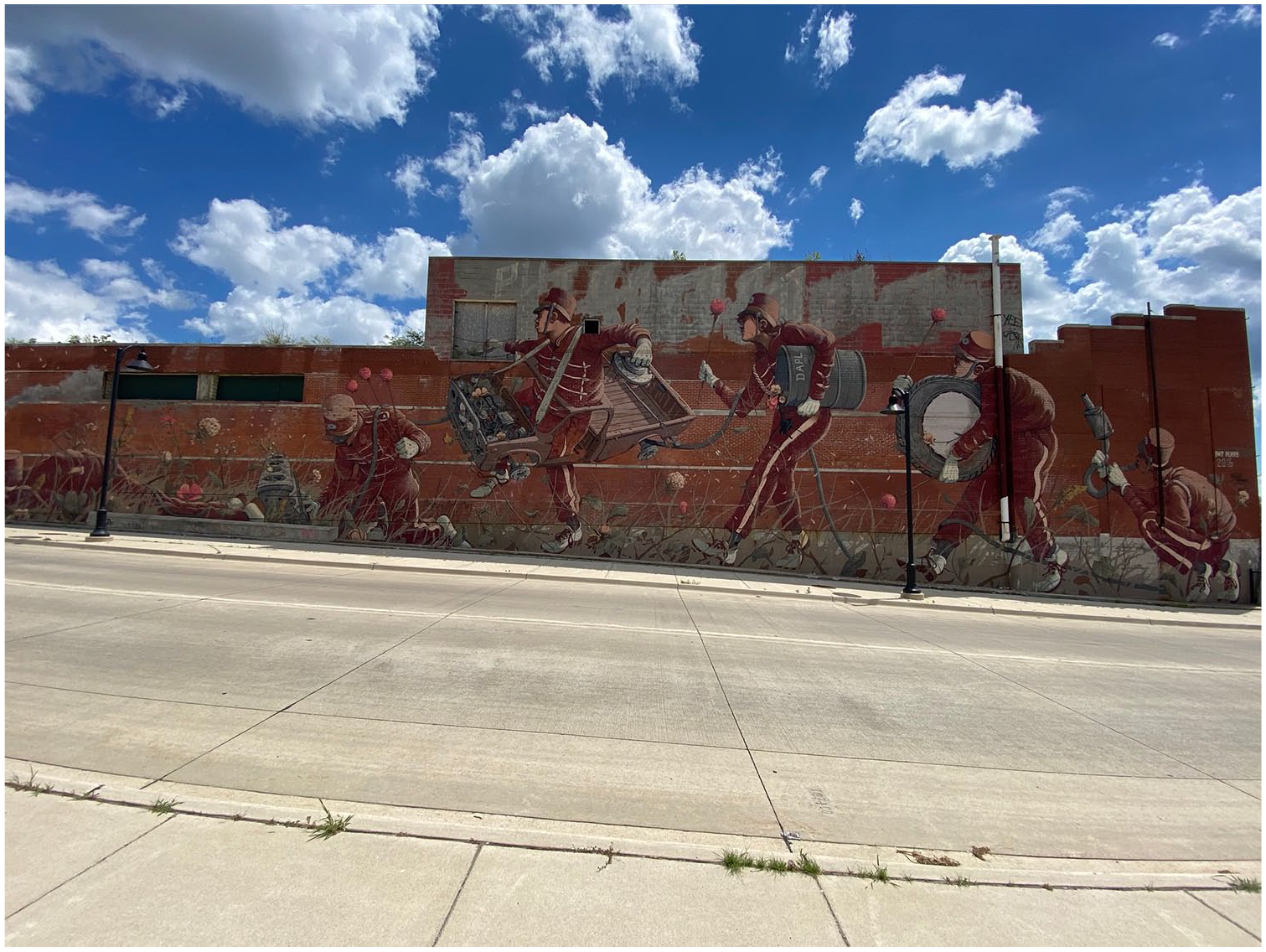
Marching Band (2016), Pat Perry ((c) Arno Van Weert).
In her portraits of famous Detroit jazz singers, Nicole MacDonald connects Detroit’s music history with social critique. Location is essential to understanding the symbolism of murals (Chakravarty & Hwee-Hwa Chan, 2016), which certainly is the case with these murals, as they have been painted in the location where the segregated neighborhoods of Paradise Valley and Black Bottom used to be (Murals in the Market, n.d.). This highlights the politics of mural making; murals are layered and reveal tensions “between the ideal of democratic expression and managed strategic programs” (Chakravarty & Hwee-Hwa Chan, 2016, p. 408). The neighborhoods that MacDonald’s murals refer to are the only neighborhoods where black automobile factory workers could live in the city during the boom days of Detroit (Galster, 2014). They were demolished to make room for two freeways, displacing many black people who had nowhere else to go due to redlining practices (Sugrue, 2014). The murals remember the cultural vibrancy of these neighborhoods while remembering their demise and processes of displacement.
In the current context of a new wave of displacement due to gentrification, the murals can be read as both memorial and protest. Memorials such as music murals can conceal the past as much as they cause remembrance, permitting some aspects of a places’ history to be remembered while, by exclusion, causing others to be forgotten (Connerton, 2009). As has been pointed out by Cantillon et al. (2020) in the context of postindustrial urban decline, the rich histories and contemporary practices of popular music can provide “alternative narratives to imagining deindustrializing cities in terms of pollution, ruin and despair” (p. 7), as the narratives around popular music practices can show the vibrancy present in these places as a counternarrative (Cantillon et al., 2020, p. 7). Moreover, as Chakravarty and Hwee-Hwa Chan have shown in a study on murals (not specifically music-related), murals can also memorialize the racial, ethnic, class, and economic divisions shaping the city at the same time (Chakravarty & Hwee-Hwa Chan, 2016). The music murals that have been studied for this project, and what the Paradise Valley portrait murals by MacDonald show par excellence, is this dual function of music heritage.
A second popular theme in the murals studied is Mexican heritage. Detroit’s Mexicantown is a neighborhood south-west of the rapidly gentrifying Corktown, separated by a railway and the famous Michigan Train Station (Zebracki et al., 2019). Since the announcement of the redevelopment of the train station by the Ford Motor Company into a high-tech campus, Mexicantown has seen the start of a gentrification process too. This has spurred two local muralists to create murals that commemorate Mexican identity and place attachment. Muralist Elton Monroy Duran has painted numerous murals in the neighborhood, with the explicit intention of reminding the locals about their Mexican identity—necessary, according to him, due to increasing gentrification: Painting images of Mexican culture all over the neighborhood is a way to hopefully slow displacement. That’s why I wanted to paint these murals—to help provide an identity to this community that is visible. Not only for people to just eat their tacos, but also see their faces. (Mondry, 2020)
What becomes clear from this quote is that these music murals refer to the cities’ racial and ethnic makeup, offering a complication to the assertion by Reitsamer—later echoed in Cantillon et al., 2020—that top-down popular music heritage initiatives offer whitewashed versions of popular music history (Cantillon et al., 2020; Reitsamer, 2018). In this case, the murals seem to offer space to the vibrancy and local community that gentrification erases, while at the same time, the murals can be read as memorializing the ethnic divisions that shape the city.
Transmedia Historiographies of Place: Networked Music Murals
The second axis of analysis is formed by a focus on music mural storytelling: the historiographies of place and identity that circulate around the music murals. This storytelling can take place through mural tours, “telling the stories of music’s past within and in relation to a city’s broader social and historical shifts, and highlighting the intangible heritage value of a site which may not be readily observable” (Cantillon et al., 2020, p. 8). According to Banerjee and Steinberg, historiographies of space allow communities to contest “official” spatial narratives through alternative narratives, reconstructing their attachment to place and heritage (Banerjee & Steinberg, 2015, p. 42). Detroit music murals afford several kinds of storytelling, with a particular role for Instagram reproduction. In this research project, those historiographies are present in (1) the mural tours that can be taken, offered by organizations such as Preservation Detroit and other private initiatives; (2) the news and media coverage of the murals, especially around the festivals and unveilings of new murals; and (3) the Instagram life of the murals.
Murals in the Market, in particular, sees an explicit role for Instagram, posting making-of videos of the murals, and of other murals created in the city that are not related to their project, and by stimulating hashtagging of the murals by tourists, also asking users about their experiences and reposting and responding to posts that feature Detroit murals. According to the organization, the reason for this is to stimulate engagement and community development, indirectly contributing to increasing awareness of Detroit as an attractive place to visit, commensurate with the role of murals as stimulants of area redevelopment (Chakravarty & Hwee-Hwa Chan, 2016).
One of the murals that is promoted and followed by Murals in the Market is the Stevie Wonder mural, painted by British muralist Robert Wilson, on what was formerly known as the Wilson Theater (currently the Detroit Music Hall). Wilson has also painted murals for the festival, but the Stevie Wonder mural is his gift to the city, developed and painted on his own initiative. The mural gets many comments and recognition on Instagram, and Murals in the Market contributes to this as well by frequently reposting the making-of video. What is celebrated in the mural is not only Stevie Wonder but also the wider Detroit music history, with references to Motown, techno, and the White Stripes (Figures 3 and 4). This seems to suggest a wider recognition of Detroit music culture from an outsider than local muralists depict. The mural is not alone: on the reverse side of the music hall, Wilson has painted a second big mural, depicting the inside of the theater, with two small children, one Black and one White, carrying books. According to the artist, this is a social comment on the situation in Detroit; that children need arts education for their development (Murals in the Market, n.d.). Through the comments and (re)circulation of mural images on Instagram, this mural is becoming what Zebracki et al. (2019) call a “networked monument”: an iconic building connected to widely mediated depictions of Detroit (Zebracki et al., 2019, p. 497). In this case, part of the building is being taken up and endlessly reproduced in a global transmedial circulation—the mural has become a transmedial networked mural, its imagery reinforced, commented upon, and negotiated in both offline and online space.
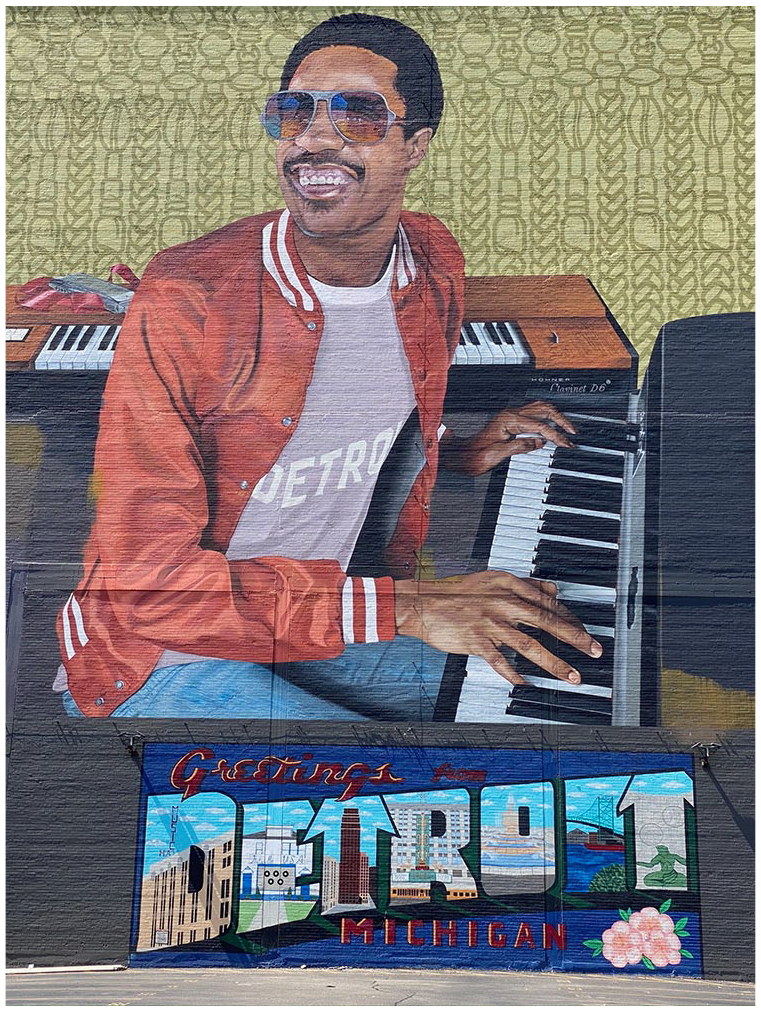
Stevie Wonder (2019), Robert Wilson ((c) author).
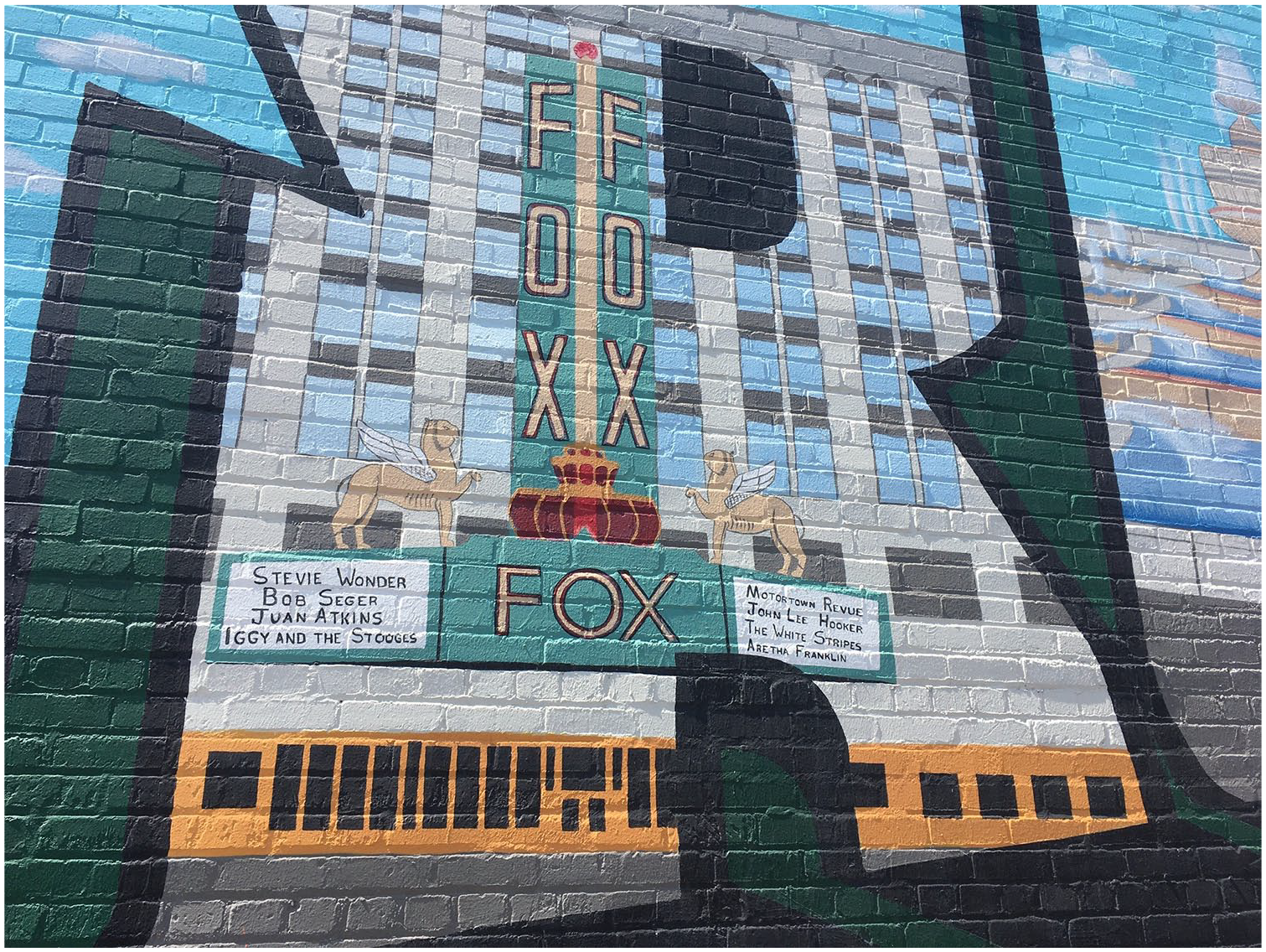
Detail of Stevie Wonder (2019), Robert Wilson ((c)author).
Social Ties and Community Networks: Community Involvement in Murals
The third axis of analysis involves social ties and community networks: how do these murals become part of local communities and what role do they play in the network of social ties in the area? One example of this is the work of the above discussed Monroy Duran, showing how the three modes of analysis intertwine and overlap. His murals in Mexicantown were supported by a private fund grant on the condition that he collected the same amount in matching funds from local businesses and individuals (Culturesource, 2020). He has succeeded in acquiring the funds and, moreover, has incorporated the faces of local inhabitants and of the people who supported the creation of the murals into the murals themselves. In an interview about his favorite murals in Detroit, he talks about his Cinco de Mayo mural (Figures 5–7): this is one of my own murals that I’m especially proud of. It is inspired by the yearly Cinco de Mayo parades in Southwest Detroit. Everyone comes out and celebrates together along Vernor Street. It depicts some of the popular characters you can see in the parades, from folklorico dancers to lowrider cars and bikes, mariachis, and even some specific well-known mariachis in Southwest Detroit ride on the back of a bright red vintage Ford, driven by the original founder of E&L Meats—the grandfather of the current owners. (Culturesource, 2020; Figure 7)
Monroy Duran expands on including the community in his work: “I wanted to paint these popular Mexican icons—actors and actresses,” explains Monroy-Duran.
Everybody knows them, so I wanted to use them as a bridge, you know, to connect people to my art, to the murals. (. . .) I started adding people from the community, along with the popular icons, and it is kind of like giving them the same level of respect and appreciation. (Culturesource, 2020)
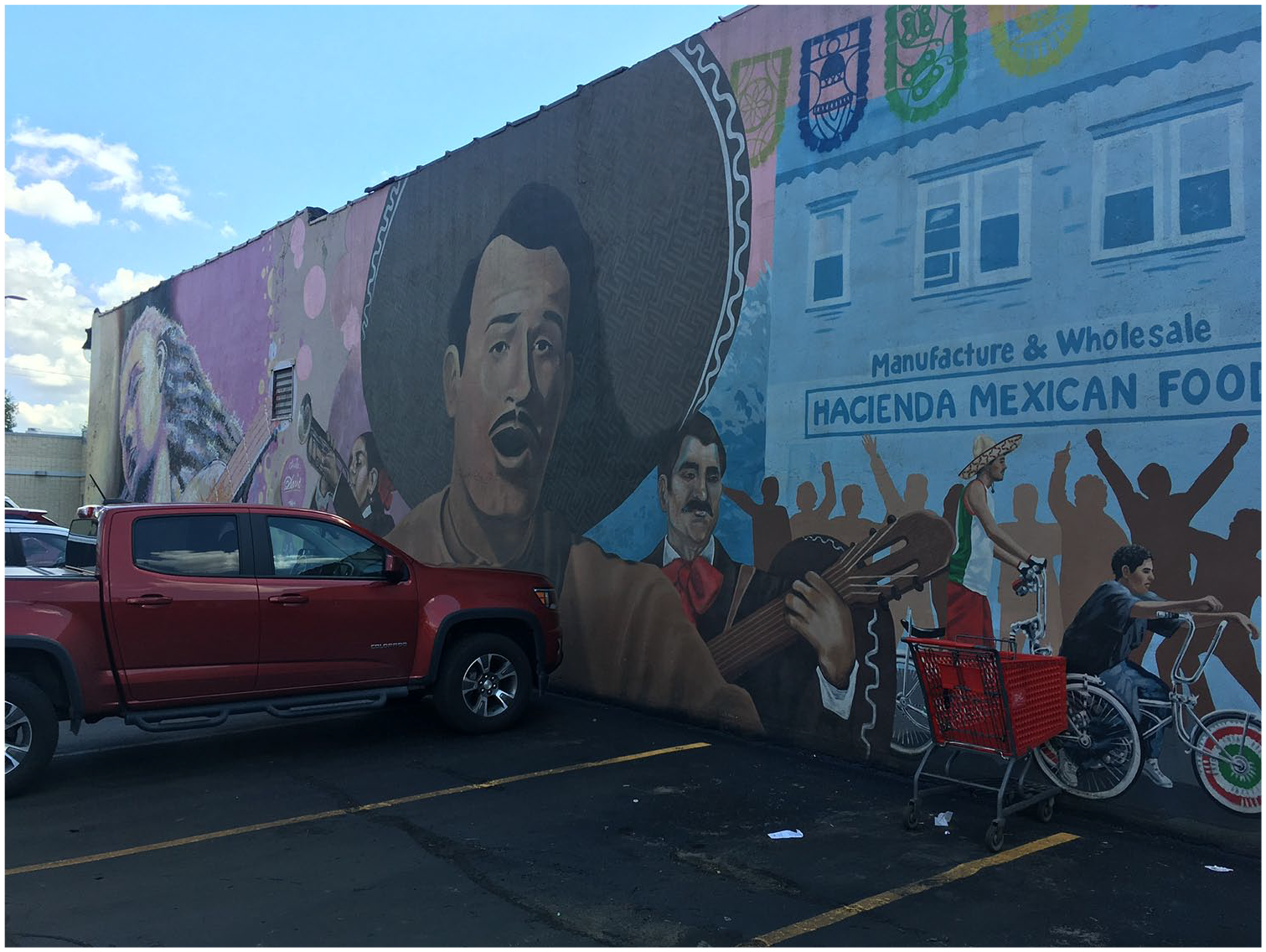
Detail of Cinco de Mayo, Elton Monroy Duran ((c) author).
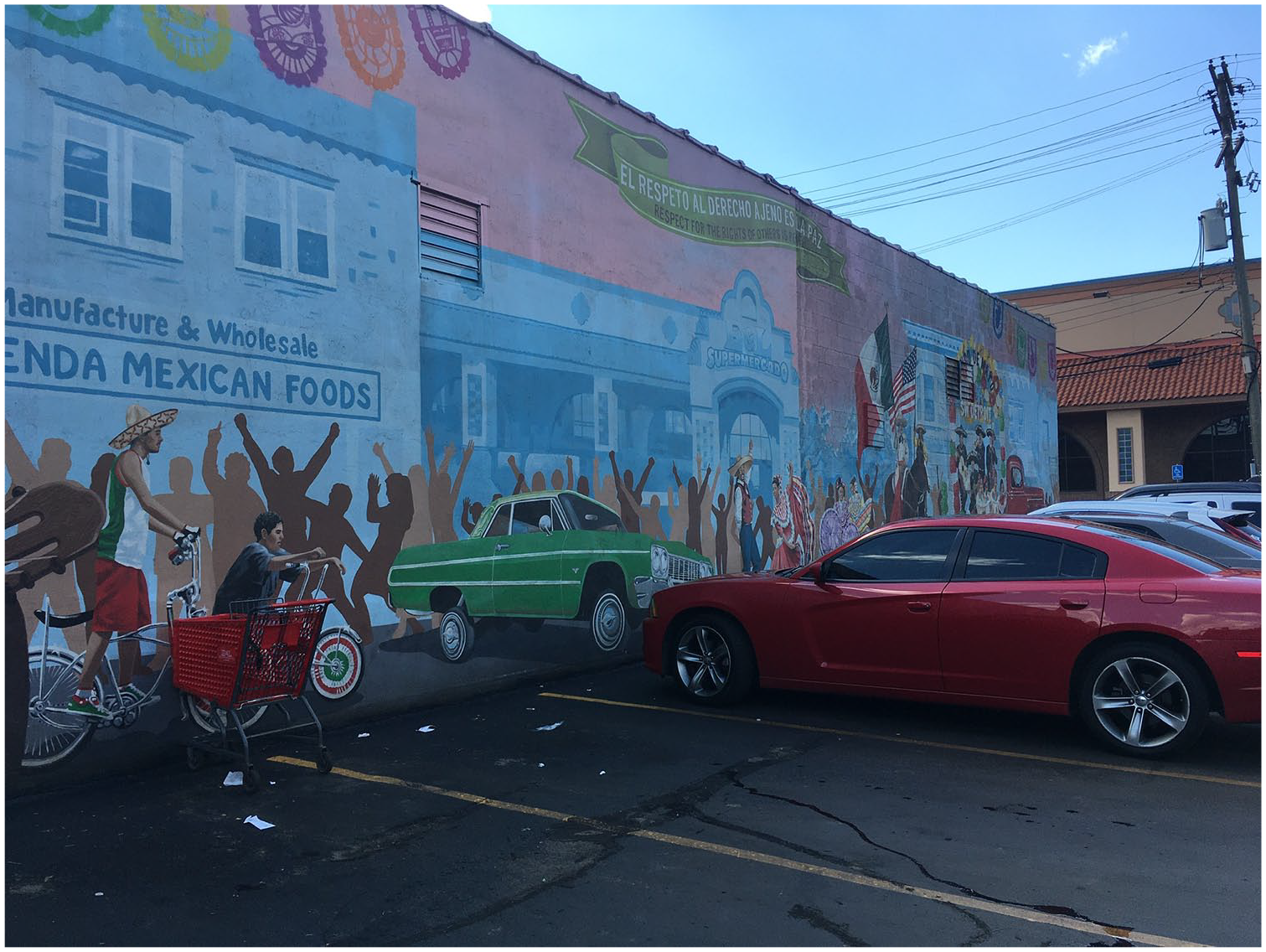
Detail of Cinco de Mayo, Elton Monroy Duran ((c) author).
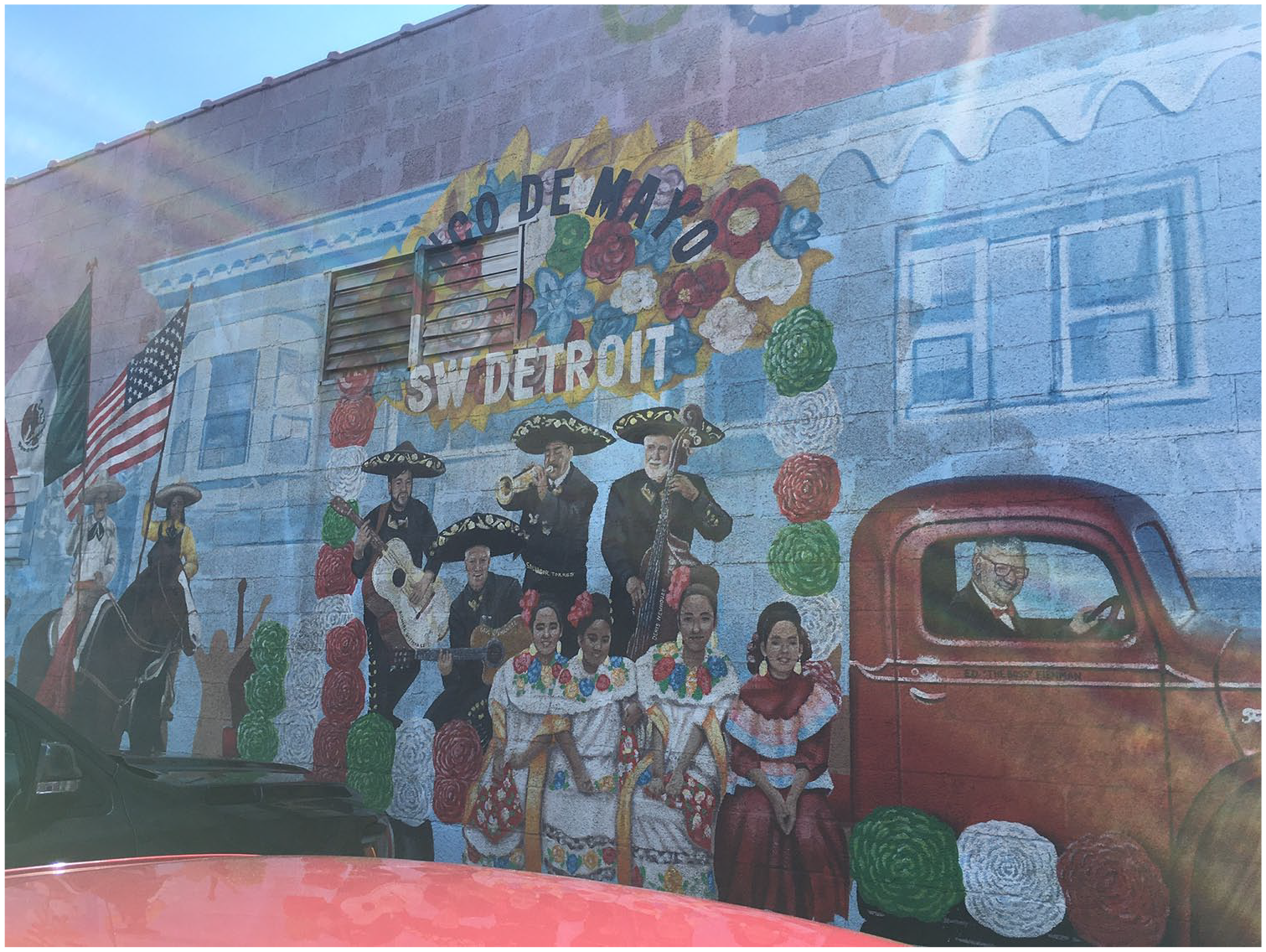
Detail of Cinco de Mayo, Elton Monroy Duran ((c) author).
Besides visually incorporating the community into the murals, the practice of mural making is especially conducive to including local communities (Chakravarty & Hwee-Hwa Chan, 2016). Monroy Duran organizes special “painting parties” to color in his murals, showing another way in which the murals become embedded in community networks. The example of the work of Monroy Duran shows how murals can become a beloved part of community pride and cohesion, contributing to what Chakravarty and Hwee-Hwa Chan (2016) call the “identity politics of multicultural neighborhoods.” In this case, a neighborhood in transition, in which these processes play out in public space. The way the mural was funded by both private funding and neighborhood support contributes to showing how the politics of mural making does not have to be a process of tension per se.
An example of a music mural in which “notions of identity and belonging become more layered” (Chakravarty & Hwee-Hwa Chan, 2016, p. 408) is the MC5 mural on the walls of the former Grande Ballroom (Figure 8). In this example, an online community is involved in realizing the mural, causing an interesting dynamic between offline and online social networks whose members all have ties to the mural and its meaning. The mural was commissioned by The Friends of the Grande Ballroom, a group united in a Facebook community that supports the preservation efforts of this iconic music venue, led by local historian Leo Early. This community, together with former MC5 band member Wayne Kramer, has come together to try to revive the now dilapidated building, which is currently owned by a church congregation. One of their most visible projects is the financing and realization of the mural that covers two sides of the building. The mural depicts Wayne Kramer as an MC5 member during the height of the band’s career, a short career that played mainly in this venue (Early & Gibb, 2016). The mural depicts Kramer playing his guitar, shooting stars, stripes, and flowers across the wall, leading to a pouncing white panther painted on the other side of the mural. Looking at what the mural symbolizes, the mural references both the music and legend of the band and the hall it is painted on. The mural also refers to the charity of the Kramers’ called Jail Guitar Doors USA, which provides music instruments and music programming for prisons. Moreover, the mural references the bands’ involvement in the white panther movement. The white panther movement was started by MC5 manager John Sinclair in support of the black panther movement (Early & Gibb, 2016). Through these various references, the mural could be read to support the struggle for recognition and change in racial inequalities.
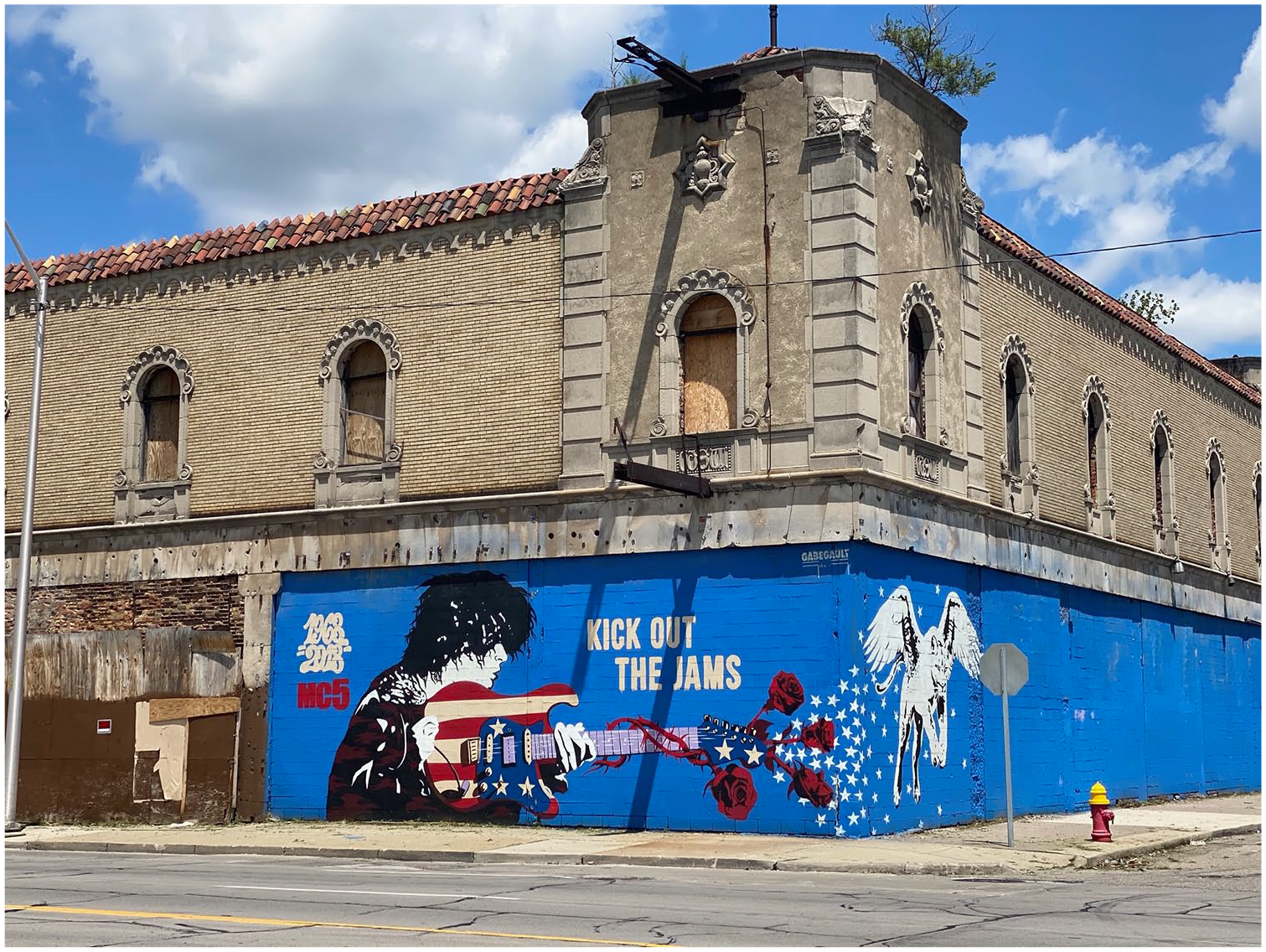
MC5 (2018), Gabriel Gault, Diego Mendoza-Ramos and Zak Warmann ((c) Arno Van Weert).
At the same time, the mural on the walls of the Grande Ballroom in this particular location has a contentious position. The church congregation that owns the building does not have the resources to invest in the redevelopment of the blighted property. In that sense, Early comments that the church is actually happy with the mural since it has kept the church from receiving blight and graffiti tickets: The church is relieved they are not getting graffiti incitements anymore, which in this part of Detroit can be a large financial burden. Moreover, the mural is not attracting new graffiti either, and in this way has solved a major issue for the church. I think they are happy with us because of that. (Personal communication, June 20, 2019)
In this sense, the mural contributes to the beautification of the area.
However, from the interviews, a narrative arose in which the mural is the topic of local tension. Historically, the ballroom itself did not meet with favor from the local area at the time it was successful, since its patrons came from the wealthy white suburbs, and the area of Detroit the ballroom was located in was predominantly black and less prosperous. The neighborhood experienced considerable noise pollution and traffic issues due to the popular venue, which has colored the memory of the venue for many local people who still live in the area today. The tension that the regeneration efforts produce carries over to today. The Friends of the Ballroom is a community of people, of which the majority live in the Detroit suburbs. This has created tension in the relationship with the locally based congregation, delaying several planned projects such as the historical designation for the building (personal communication, January 19, 2020). The tension carried over to this research, as it was not possible to get access to the congregation, despite several attempts. Analyzing this mural not only through its symbolism but also including the analysis of the way it relates to local communities and wider social ties shows the politics of murals in public space in practice.
Conclusion
This study shows that the proposed cultural justice framework for analyzing the murals and their mediated existence and its application offers an opportunity to more fully understand how cultural tools such as murals shape mediated public space in areas of gentrification. As the intertwined sections of the analysis have shown, the symbologies of place, mural historiographies, and the social ties and communities in which they exist do not constitute separate spheres of analysis but form an intertwined set of processes of meaning making and place attachment, involving on- and offline, material and virtual networked imaginaries.
What the analysis of music murals in Detroit presented here has shown is how murals can be a source of political potential as a source of agency for local artists and communities, building local identity through referencing music heritage and by representing and shaping ethnic communities’ identity and heritage. At the same time, murals and their photographic and hashtagged life on Instagram can direct the public gaze, representing certain aspects of a place while concealing others. This plays into the ways murals are commissioned and used by local governments, private sources of funding, and businesses alike, complicating the role of murals in public space.
A local example of the continued urgency of networked urban imaginaries and the symbolic influence of the connection between murals, media, and public space is the pushback and contentious role of the Detroit City Walls program. In 2020, program directors announced a call for artists to paint the walls of the new Fiat Chrysler Automobiles factory in Detroit (City of Detroit, n.d.). This has received pushback in the media by a group of locals, who feel that beautifying the wall with murals obscures the issues in the area and is not done in accordance with community wishes (Ikonomova, 2020; Mondry, 2020). A group of local muralists have supported this protest with an online petition, although the City Walls program directors claimed applications by other muralists were still coming in (Ikonomova, 2020; Mondry, 2020). Of course, it is not clear yet whether these murals will be music murals, but the ongoing contentious and difficult relationship between murals, gentrification, beautification, and online and offline community involvement is clear.
Therefore, murals function between the “paradigm of public art as resistance” (Chakravarty & Hwee-Hwa Chan, 2016, p. 418) and a more recent development of public art as a tool in gentrification, utilizing public space as an opportunity for economic and social development (MacDowall & de Souza, 2018; Pugh, 2015; Riggle, 2010; Skinner & Jolliffe, 2017). This is especially visible in, for example, creative city strategies, which potentially offer chances of urban revitalization (Florida, 2017) but which have also been shown to increase the marginalization and displacement of specific communities. Here, the importance of paying attention to the symbolical dimensions of gentrification comes to the fore since, as Cantillon et al. point out, “this risk is heightened when economic imperatives are given considerably more attention than social and cultural vitality” (Cantillon et al., 2020, p. 13). With this discussion of Detroit music murals, an analytical tool has been offered to explore the networked symbolic dimensions of urban development processes.
Footnotes
Acknowledgements
The author would like to thank the anonymous reviewers for their valuable feedback, and Arno Van Weert for his research assistance in chauffeuring and photography.
Declaration of Conflicting Interests
The author(s) declared no potential conflicts of interest with respect to the research, authorship, and/or publication of this article.
Funding
The author(s) received no financial support for the research, authorship, and/or publication of this article.
