




Abstract
Background:
In the current era of modern technology, the development of smart devices such as the flash glucose monitoring (FGM) systems helps patients with diabetes to effortlessly monitor their glucose levels more frequently. In this study, we determine the user acceptability of FGM among young patients with type 1 diabetes (T1D).
Methods:
A cross-sectional study was performed among 67 young patients with T1D in the age group of 13 to 19 years and who were managed on the FGM method for self-testing the glucose levels for a minimum of 6 months. The participants acceptability measures that were collected with a standard questionnaire and where they rated their experience with the system on a scale of 1 (strongly agree/painless) to 5 (strongly disagree/severe pain). In addition to the demographic and clinical parameters, a closed/structured questionnaire was administered, in order to record the prior and present skin issues, over a 6-month period.
Results:
From the patient statements regarding sensor application, 95.5% of the study population strongly agreed that the sensor application caused less pain than the routine finger-stick. Similarly, 85% of the users strongly agreed that using the sensor was comfortable, while 94% strongly agreed that they found the small size of the FGM made it easy to wear, 47.8% strongly agreed that wearing the sensor did not attract attention, 70.1% reported no discomfort under the skin, 80.6% stated that the sensor could be scanned without anyone noticing it, 89.6% felt that the sensor did not affect their daily activities, 91% strongly agreed that the sensor was very compatible with their lifestyle, 79.1% reported ease with taking a glucose reading with the scan, 89.6% reported that taking glucose readings with this system would not disrupt their daily activities, and 76.1% participants were excited to share with other individuals their experiences with this system. A comparison of the self-monitoring of blood glucose and freestyle techniques demonstrated that 83.6% participants strongly agreed that it was less painful to get glucose readings from the freestyle sensor, and that it was a more discreet (83.6%), more comfortable (85.1%), easier (95.5%), faster (82.1%), simpler (79.1%), more private (88.1%), and less stressful (77.6%) method, with minimal hassle (74.6%). It is notable here that 86.6% of the participants reported absolutely no pain when the freestyle sensor was applied; also, the majority of the participants (91%) reported no pain symptoms when scanning the sensor.
Conclusion:
The findings of this study clearly showed that the study population had a high level of acceptability of the FGM.
Keywords
Introduction
Type 1 diabetes (T1D) is an autoimmune disease, supposedly affected by environmental factors, which presumably instigate the autoimmune breakdown of the pancreatic β-cells in genetically predisposed individuals.1-3 This disease is globally widespread, affecting 1 in every 300 persons, with a steadily increasing frequency of incidence of approximately 3% every year.4,5 There is sufficient proof to show that glycemic control greatly minimizes the risk of microvascular and macrovascular complications, as evident from long-term follow-up investigations.6,7 Although intensive glycemic control provides great advantages, a wide gap continues to exist between evidence and practice in which a large percentage of patients fail to achieve the goal by neglecting self-monitoring through finger pricks (self-monitoring of blood glucose [SMBG]). 8 However, reports from several studies revealed that children or adolescent patients with T1D, who are expected to maintain their own glycemic control, decline the self-monitoring option because of the fear of needles involved in self-monitoring 4 times a day or more. 9
As scientific technologies rapidly progress, great strides have been made to promote appropriate and easy self-testing processes in diabetes through the use of modern technology.10,11 Over recent years, the new FreeStyle Libre technology (FSL-CGM Abbott Diabetes Care, Alameda, California, USA) has been developed. This is a wireless technique involving a sensor that monitors the interstitial fluid glucose to assist the type 1 and type 2 diabetes patients improve their glucose control.12-16 Great endeavors have been made to develop precise and viable devices to ensure continuous glucose monitoring; The FreeStyle Libre 14-day Flash Glucose Monitoring (FGM) system, currently the longest lasting self-applied continuous glucose monitor (CGM) in the market, has gained the approval of the US Food and Drug Administration. This system differs from the others, as it avoids finger prick calibration, having this functionality embedded into its core technology. The FGM circumvents several concerns that affect the adherence to CGM. It also gives comprehensive glucose data (similar to the CGM systems), has a longer duration of sensor wear (up to 14 days, thus lengthening the period between sensor applications), and avoids finger prick calibrations.17,18 The FGM system can mechanically read and continuously measure the glucose concentration in the interstitial fluid glucose gathered from the cells just beneath the skin and give the corresponding ambulatory glucose profile (AGP) by downloading the glucose measurements from the sensor to the reader; thus, the limitations of frequent and painful finger pricks now used to monitor glucose levels are circumvented.10,12
Some articles published in recent times have directed their attention on different objectives related to FGM, like the influence FGM exerts on the hemoglobin A1c (HbA1c) levels, hypoglycemia, quality of life (QoL), and the fear of hypoglycemia (FOH).12,16,19-21 However, limited research has been done on the user acceptability of the FGM among children or adolescents having T1D. Therefore, the aim of the present study was to determine the user acceptability of FGM among young persons with T1D.
Methods
Patients and methods
A cross-sectional study was performed at the Diabetes Treatment Center, Prince Sultan Military Medical City (PSMMC), Riyadh, Saudi Arabia, between November 2018 and January 2019. The study included 67 registered patients with T1D (confirmed by electronic medical record) in the age group of 13 to 19 years and who were managed on the FGM method for self-testing the glucose levels for a minimum of 6 months.
Participants had to fulfill the following eligibility criteria: diagnosis of T1D, managed by the diabetes center clinic, reimbursed finger-stick blood glucose monitoring with FGM. Patients diagnosed with severe or unstable medical conditions were excluded. All the FGM users in our center as a routine practice received the instruction to confirm their blood glucose level with a capillary measurement in case of imminent and/or suspected hypoglycemia, rapidly changing glucose levels, or when the symptoms did not match the system’s reading using the blood glucose meter built-in the reader according to the manufacture instruction at the time of commencing the FGM.
The demographic data, clinical characteristics, and treatment history (administration of multiple daily injections and insulin pump) were collected from each participant using a pre-specified clinical data case record. The study protocol was granted approval by the Research Ethics Committee of the PSMMC in accordance with the Helsinki Declaration of 1964 (as revised in 2013).
Acceptability measures
The participants acceptability measures were assessed with a standard questionnaire (after signing the inform consent form) and where they rated their experience with the system on a scale of 1 (strongly agree/painless) to 5 (strongly disagree/severe pain). 22 The total score was calculated as the mean of all 22 questions.
For rating the response to each acceptability measures questions, a 5-point Likert-type-type scale ranging from 100 strongly agree (painless), 75 agree (almost painless), 50 neither agree or disagree (slight pain), 25 disagree (moderate pain), and 0 for strongly disagree (severe pain) were used for calculation. Higher scores indicate more acceptability.
Adverse skin events
In light of the findings that the whole cohort of the patients in this study exhibited skin reactions on using the FGM in terms of local itching, scarring, local erythema, bruising, local bleeding, local pain, and skin discoloration at the insertion site of the FGM sensor and adhesive patches, reviews were done at every participant contact. A closed/structured questionnaire was administered, in order to record the prior and present skin issues, over a 6-month period.
Clinical parameters
A less than 7% HbA1c value is indicative of good blood glucose control.23-25 A confirmed blood glucose value of ⩽ 70 mg/dL (⩽3.9 mmol/L) is defined as hypoglycemia.23,24 The present work studied the HbA1c levels employing the COBAS INTEGRA 400 plus/800 analyzers in the PSMMC central laboratory.
Statistical analysis
The data were analyzed employing Microsoft Excel 2013 (Microsoft Corporation, Seattle, WA, USA) and the Statistical Package for Social Sciences (version 22; SPSS Inc, Chicago, IL, USA). In addition to the descriptive analysis, an independent t test was also performed to find out the acceptability differences between the groups. A linear regression analysis was done to understand the variables associated with total user acceptability score.
Results
The characteristics of the study group are shown in Table 1. The majority of the participants in the study group is male (55.2%), belonging to the <15 yrs (52.2%), having body mass index < 25 kg/m2 (61.2%), diabetes for <5 years (58.2%), HbA1c > 7(61.1%), and multiple dose injection (MDI) treated (65.7%). The mean age of the study population is 15.04 ± 0.90, duration of diabetes 4.76 ± 1.77 years, duration of FSL use 2.1 ± 0.24 years, and HbA1c level 8.2 ± 0.76%.
Clinical and sociodemographic characteristics of the study population.

Abbreviations: BMI, body mass index; HbA1c, hemoglobin A1c; IP, Insulin pump; MDI, Multiple dose injection.
Table 2 lists the general dermatological conditions observed in the population under study. The commonest complications appeared to be skin discoloration, after which were ranked local itching, insertion site scarring, bruising, local pain, and local bleeding post sensor insertion.
Skin adverse events for FreeStyle Libre sensor adhesive.

Table 3 includes the results of the participants who completed a questionnaire and expressed their experiences with this system on a 1 to 5 scale (strongly agree/painless to strongly disagree/severe pain). From their statements regarding sensor application, 95.5% of the study population strongly agreed that the sensor application caused less pain than the routine finger-stick. Similarly, 85% of the users strongly agreed that using the sensor was comfortable, while 94% strongly agreed that they found the small size of the FGM made it easy to wear, 47% strongly agreed that wearing the sensor did not attract attention, 70% reported no discomfort under the skin, 80.6% stated that the sensor could be scanned without anyone noticing it, 89.6% felt that the sensor did not affect their daily activities, 91% strongly agreed that the sensor was very compatible with their lifestyle, 79.1% reported ease with taking a glucose reading with the scan, 89.6% reported that taking glucose readings with this system would not disrupt their daily activities, and 76.1% participants were excited to share with other individuals their experiences with this system.
The overall user acceptability response of the study population.

Abbreviations: FGM, flash glucose monitoring; SMBG, self-monitoring of blood glucose.
A comparison of the SMBG and freestyle techniques demonstrated that 83.6% participants strongly agreed that it was less painful to get glucose readings from the freestyle sensor, and that it was a more discreet (83.6%), more comfortable (85.1%), easier (95.5%), faster (82.1%), simpler (79.1%), more private (88.1%), and less stressful (77.6%) method, with minimal hassle (74.6%). It is noteworthy here that 86.6% of the participants reported absolutely no pain when the freestyle sensor was applied; also, majority of the participant (91%) reported no pain symptoms when scanning the sensor. Among the participants screened, the duration of the incomplete sensor placement reported was identified as premature accidental sensor removal, which occurred in 27 patients (42.2%) who mentioned sensor application and robustness problems. Further, a total of 6 participants complained of pain, which caused Figure 1 indicates the total user acceptability score of the study population.

Total user acceptability score of the study population. BMI indicates body mass index; FSL, FreeStyle Libre.
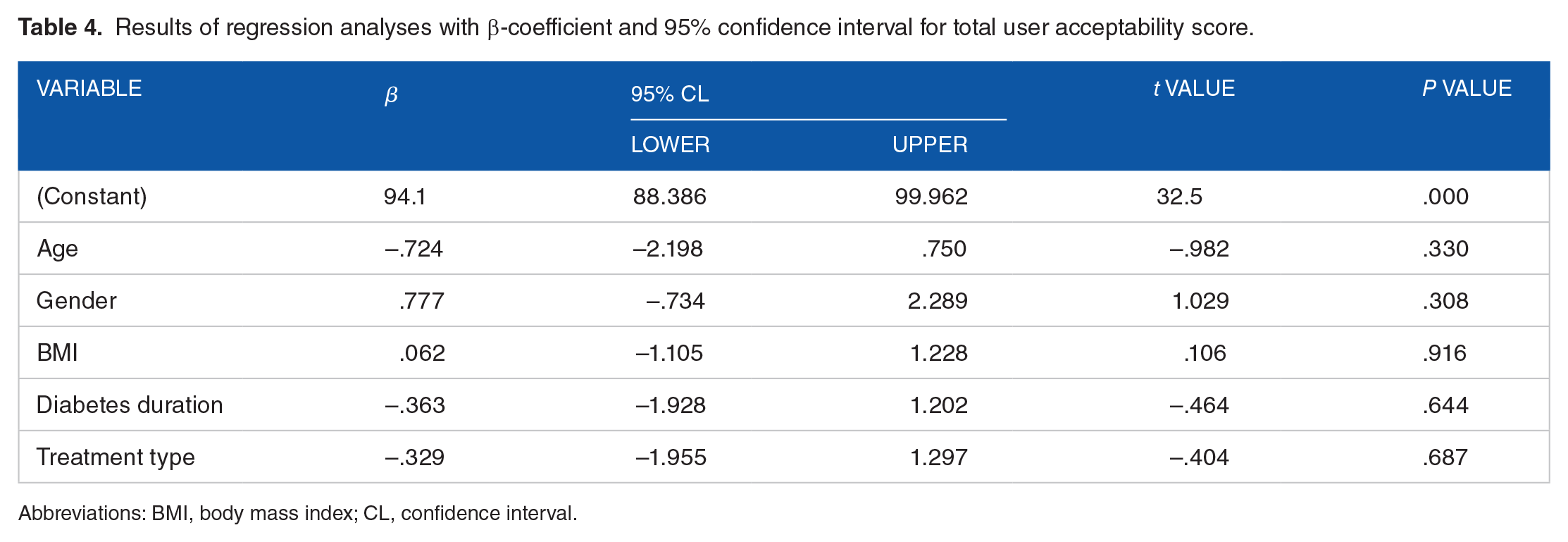
Table 4 indicates that from the regression analysis no significant difference was noted among the independent variables.
Results of regression analyses with β-coefficient and 95% confidence interval for total user acceptability score.
Abbreviations: BMI, body mass index; CL, confidence interval.
Discussion
The FreeStyle Libre is a disc that the individual must wear for 14 days on the upper arm. This design was adopted mainly to replace the daily 4 to 10 painful finger-stick blood glucose tests normally recommended in the self-management of diabetes. 26 In the randomized trials, FGM usage was linked to reduced hypoglycemia and, in the observational studies, it showed improved HbA1c levels. However, only limited studies are available on user acceptability for T1D patients. This study aimed at estimating the user acceptability of the FGM among children and young adults having T1D.
Regarding sensor application, 95.5% of the study population reported less pain with the use of the sensor than with doing the routine finger-stick. One study reported that the FreeStyle gave accurate measurements of the glucose concentration in 300-nL volume of capillary blood, which was drawn with significantly less pain from the forearm where the capillary density is more reduced than in the fingertips. 27 In terms of sensor wear and use, this study showed that 85% of the users reported it was comfortable to use, while 94% reported its small size made it easy to wear. Prior studies stated that the usage of the commercially available CGM for diabetes management necessitated sensor calibrations, which until very recent times needed to be done exclusively by the patient. However, the FreeStyle factory calibration for subcutaneous glucose sensors circumvent the necessity for user calibrations and the associated blood glucose tests, which increase the comfort and ease for the patients to use the FreeStyle. 28 However, from a recent study done on 347 T1D patients 85.9% of them reported being motivated to initiate FGM monitoring mainly to avoid pain due to finger pricks. 29 Conversely, nearly two-thirds of the respondents reported some difficulties, the main being the tendency for the sensor to fall off (47.6%). The study also showed that about two-thirds (67.1%) expressed satisfaction with the device, 29 findings similar to the results of the present study. Another study demonstrated that 35% of the children experienced sensor detachment, or premature removal caused by pain due to incomplete sensor placement. 30 One of the most recent studies reported that the FGM was most often discontinued by those patients who faced adverse events and those having a longer duration of diabetes. 31
From few previously published studies, it was evident that the FGM raises the level of treatment satisfaction, decreases some hypo- and hyperglycemic values, and exerts serious adverse effects similar to SMBG.20,32,33 The present study showed that 47% of patients reported that wearing the sensor was almost unnoticeable, 70.1% reported no discomfort under their skin, 80.6% stated that scanning the sensor did not draw attention, 89.6% reported that the sensor did not impede their daily activities. Earlier studies had demonstrated that the small size of the sensor facilitated hiding it easily under one’s clothing, and its water resistant feature was beneficial to those who indulged in water-related activities. 22 The current study reported that 91% strongly agreed that the sensor was well adapted to their lifestyles, 79.1% reported ease with getting a glucose reading with the scan, and 89.6% reported that this system provided glucose readings without disrupting their daily activities, and 76.1% participants expressed excitement over sharing with others their experiences with this system. It is noteworthy that a recent finding revealed that the FGM was effective in reducing diabetes-related distress. 34
On comparing the SMBG and FreeStyle method used in the present study, it became clear that 83.6% of the participants reported less pain when getting the glucose readings from the FreeStyle sensor; it was more discreet (83.6%), more comfortable (85.1%), easier (95.5%), faster (82.1%), simpler (79.1%), more private (88.1%), and less stressful (77.6%), and involved less hassle (74.6%). It is notable that in 86.6% of the participants no pain was experienced when the FreeStyle sensor was applied and the majority of the study population (91%) reported reported no pain from scanning the sensor. An earlier study revealed that the SMBG levels necessitated intermittent sampling of the capillary blood using a blood glucose measurement device. However, many patients encountered several impediments to frequent testing, such as the pain and discomfort related to the finger-stick blood sampling, besides cumulative trauma to the fingers. In addition, intermittent blood glucose monitoring via intermittent capillary blood sampling gives only snapshots of the glucose levels. 35
Contrary to the amazing benefits, allergic contact dermatitis induced by the isobornyl acrylate present in the adhesive part of the FreeStyle Libre ranks among the potential adverse effects. 36 However, from a few studies, issues have been reported for the FGM users in some common dermatologic conditions.37,38 This study identified the dermatology conditions expressed by the participants in the study. One of the commonest complications observed in the study group is skin discoloration, followed by local itching, insertion site scarring, bruising, local pain, and local bleeding. Scarring or skin irritation at the site of the sensor may necessitate consideration as alternative sites of wearing the sensor were required.
Although limitations were evident in the current investigation, like (1) small sample size, (2) included only 13 to 19 age group, (3) a single study center, (4) not reasonable number distributed in BMI category, (5) lack of blinded FGM data prior to the use of the FGM and the absence of a control group, the current study provides valuable data on the acceptability of the FGM system, besides giving useful knowledge about the skin issues experienced by the FGM users. Conclusively, the findings of this study clearly showed that the study population had a high level of acceptability of the FGM. However, further studies are necessary in order to ascertain whether the prolonged and consistent use of the FGM system will provide improved results.
Footnotes
Funding:
The author(s) received no financial support for the research, authorship, and/or publication of this article.
Declaration of Conflicting Interests:
The author(s) declared no potential conflicts of interest with respect to the research, authorship, and/or publication of this article.
Author Contributions
All authors contributed equally to this manuscript.
Ethical approval
The study protocol was approved by the Research and Ethics Committee of Prince Sultan Military Medical City, Riyadh, Saudi Arabia.
Informed consent statement
During the informed consent process, study participants are assured that data collected will be used only for stated purposes and will not be disclosed or released to others without the consent of the participants.
