



Abstract

Flash glucose monitoring (FGM) is a novel continuous glucose monitoring system 1 and we started using its professional version, FreeStyle Libre Pro (FSLP), in March 2015. Several salient features available with the device (14-day sensor wear time, requires no patient interaction or finger-prick calibration, captures 1344 glucose results, gives a comprehensive glucose data, etc1-3) makes it highly distinct from conventional CGM devices 4 (which require finger stick calibrations, expertise to insert the sensor, and can measure glycemic patterns only for a short duration). Most unique feature, the ambulatory glucose profile (AGP) generated by FSLP provides a collated report that represents several days of glucose data as a 24-hour modal day format, reveals glycemic variability, and highlights areas which require immediate attention. Here we share our experience regarding the clinical utility and user-friendliness of FSLP from the initial phases of its application.
For all our patients, HbA1c targets are customized as per the ADA/EASD guidelines. Treatment targets and strategies are individualized, with an emphasis on patient-centered care and shared decision-making. 5 Eligible patients were deployed with FSLP as per the discretion of the attending clinician by giving due priority to indications and relative contraindications adopted at our clinic for recommending FSLP. Our diabetes care team analyzed the AGP reports using standardized guidelines and patients were provided with necessary therapeutic and lifestyle advices.
To assess the clinical utility of FSLP among our T2DM patients, the outcomes at 6 months of undergoing FGM (n = 500) were compared to a matched control group who received routine treatment care and advice. Mean FSLP sensor wear time of 12.75 ± 2.49 days was achieved. Patients subjected to FSLP showed improved clinical profile at 6 months as seen from the baseline changes in mean HbA1c (–0.38%, P < .0001), mean FBS (–14.13 mg/dL, P < .0001), mean PPBS (–4.53 mg/dL, P = .0375), and BMI (–0.23 kg/m2, P = .0019). Meanwhile, no significant changes were noted in the control group in any of the clinical parameters assessed.
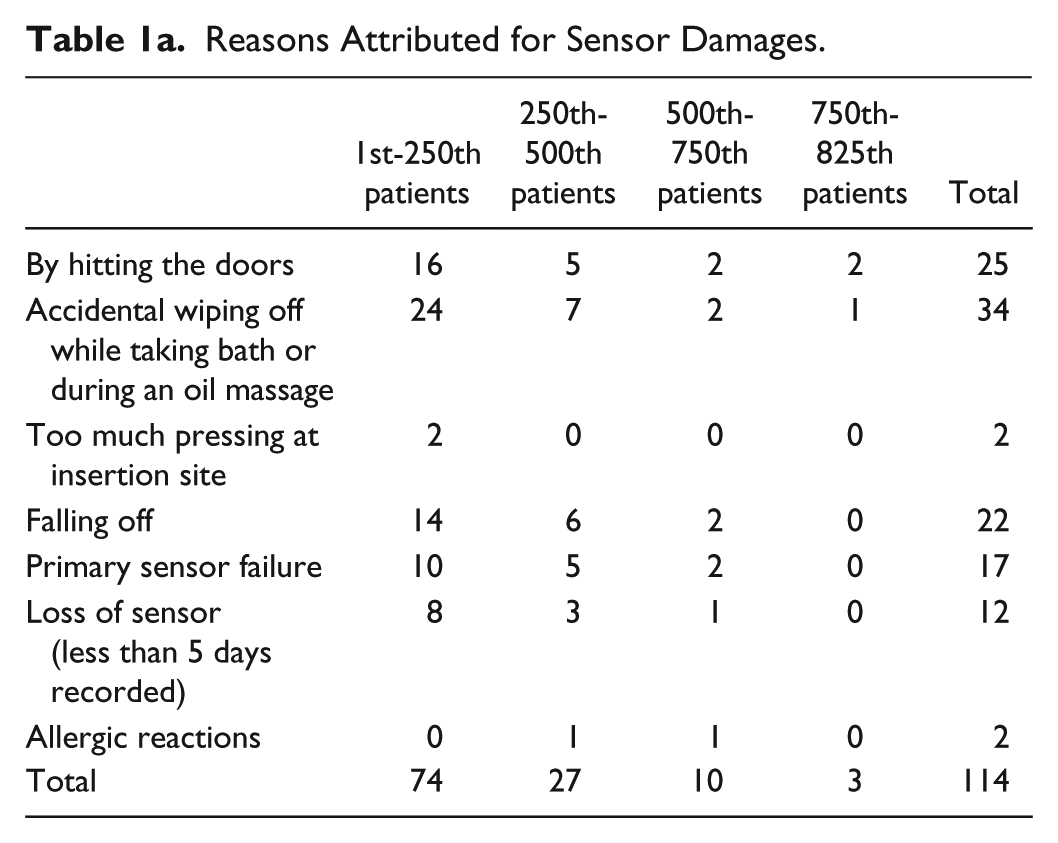
A brief informal survey was conducted among our first 825 FSLP deployed patients and our clinicians to evaluate the user-friendliness and acceptability of this technology. The majority of the patients reported sensor insertion to be a painless procedure and recounted positive experiences with FSLP. Reasons identified toward sensor damages (which were prominent particularly during the initial phase) were also documented (Tables 1a and 1b) and every effort was made to minimize such future events.
Reasons Attributed for Sensor Damages.
Positive Experiences Recounted by the Patients.
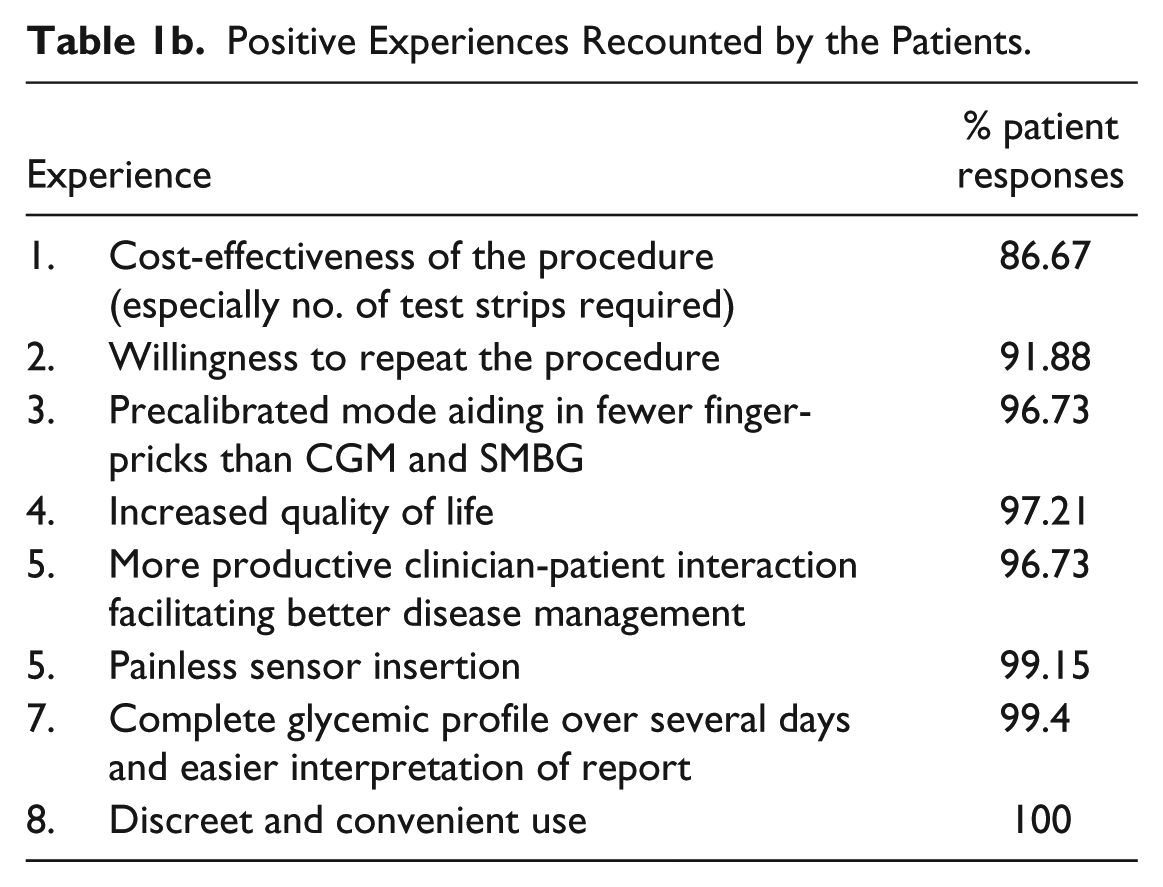
In contrast to other modes of glucose monitoring, the main advantage of FSLP is that data obtained are dependent on neither the accuracy of glucose meters nor the techniques adopted. Our patients were willing to repeat the procedure due to perceived simplicity, painless nature, increase in quality of life, lower cost, and so on achievable with the device. FSLP also gained much appreciation among our clinicians in terms of its clinical utility as well as its impact on improving the patient compliance. Favorable outcomes achievable with this technology can only be reaped, if the reports obtained are thoroughly analyzed and appropriate treatment management measures are undertaken.
Footnotes
Abbreviations
AGP, ambulatory glucose profile; CGM, continuous glucose monitoring; FBS, fasting blood sugar; FGM, flash glucose monitoring; FSLP, FreeStyle Libre Pro; HbA1c, hemoglobin A1c; PPBS, postprandial blood sugar; T2DM, type 2 diabetes mellitus.
Declaration of Conflicting Interests
The author(s) declared no potential conflicts of interest with respect to the research, authorship, and/or publication of this article.
Funding
The author(s) received no financial support for the research, authorship, and/or publication of this article.