



Abstract
Acrylamide is a contaminant prevalent in many commonly consumed foods, contributing to unavoidable human exposure. It is recognized as likely to be carcinogenic to humans as well, provoking global concerns. Numerous studies have investigated the impacts of acrylamide formation on food and drink, nutrition, and health. The intent of this analysis is to quantify global acrylamide research, evaluate recent developments, and recognize emerging trends, along with assessing research dynamics as an indicator of innovation among the scientific community. The Scopus database was used to perform an in-depth investigation of scientific publications on acrylamide from 1949 to 2023. Exploring prominent topics and the knowledge network related to the topic was conducted via VOSviewer version 1.6.20. Additionally, using SciMAT software, intellectual analysis was conducted to identify both driving and emerging themes in acrylamide-related research. A total of 11 880 publications on acrylamide were identified, with 10 720 (90.24%) being original articles. The leading contributors in terms of publication output were China (n = 2452; 20.64%), followed by the USA (n = 1564; 13.16%), and India (n = 952; 8.01%). The predominant themes were associated with (a) the functionalization of acrylamide polymers and (b) the formation and mitigation of acrylamide in food and drinks. Driving themes that will continue to shape the future of acrylamide research involve unraveling the synthesis of acrylamide; deploying acrylamide in nanocomposites to increase contaminant removal; investigating the genotoxicity of acrylamide, as well as its carcinogenic, reproductive, and neurotoxic effects; and researching the adsorption characteristics of acrylamide in aqueous solutions. In particular, an increased focus has been placed on understanding the formation and mitigation of acrylamide in recent years, signifying increased attention and alignment with the latest scientific advancements in this field. The creation of research plans in this way is significant, particularly in shaping future health policies.
Introduction
Over the course of millennia, people have employed heat to manipulate their food. Thermal processing plays a critical role in ensuring microbiological safety; nutritional quality; and desirable sensory attributes, such as color, texture, and flavor.1,2 However, the use of various food processing methods has introduced challenges in the form of unintended chemical substances.3,4 One such compound is acrylamide, which can be developed in carbohydrate-rich food items when exposed to high-temperature cooking techniques such as grilling, baking, frying, and roasting.5 -8 Acrylamide has raised global concern and significant scientific attention because of its potential as a human carcinogen.9 -14 Research indicates a potential correlation between high levels of acrylamide exposure and an increased risk of cancer development.10,15 -18 Acrylamide is commonly found in baked goods, cereals, potato products (including French fries and potato chips), and coffee.9,14,18 -20 It is also used as an industrial chemical in various processes, including the production of paper, glues, and plastics, and as a component in wastewater and sewage treatment.3,21 In addition, specific adhesives, caulking agents, and food packaging agents were found to contain acrylamide. 22
Extensive research is ongoing to fully understand the general health risks linked to exposure to acrylamide. Scholars are currently working to understand the potential health consequences of exposure and develop strategies to reduce it.13,18,23,24 The current state of research trends and patterns regarding acrylamide is unknown and has not been addressed in the literature. Therefore, gaining insight into the evolution and structure of knowledge related to these topics would be beneficial for academic and scientific communities, practitioners, and policymakers. Using bibliometric analysis can help individuals recognize the progression of research, identify gaps, understand collaborative networks, and predict future research trends within a specific field. 25 Although not a recent development, 26 bibliometric methodology has gained popularity, especially with the advent of online databases such as the Web of Science and Scopus.27 -29
Bibliometrics and evaluation of research performance have been conducted on a diverse spectrum of health-related topics,30 -34 with numerous studies undertaken in the fields of environmental studies,35 -37 toxicology,38 -43 and nutrition.44 -48 However, to our knowledge, only a limited number of bibliometric investigations have recently been conducted in the domain of food contamination,49 -56 and studies that present a comprehensive overview of acrylamide research are lacking. Consequently, it becomes imperative to conduct a thorough assessment and categorization of the literature, considering various aspects such as countries/regions of origin, journals, authors, institutes, citations, and content analysis. This approach aims to uncover emerging or trending topics via an inclusive database. The objective of this study was to assess the global scientific output of acrylamide research through the application of bibliometric techniques and to highlight areas of concern. An in-depth analysis of the corpus of knowledge concerning acrylamide research was performed that dealt with factors such as characteristics, trends, and the global state of research in this field. Identifying the most productive and influential research in this field could be instrumental for working professionals engaged in acrylamide-related endeavors. The use of these insights may enhance our understanding of the historical progress in acrylamide research over time, providing guidance to researchers and policymakers on the best scientific and publishing practices for future health-related studies in this scientific domain.
Methods
Study Design
A retrospective, descriptive, and bibliometric analysis of scientific publications centered on acrylamide was performed utilizing data from the Scopus database. The search took place on 14 July 2024. Since the beginning of acrylamide-related publications dates to 1949, the study’s timeframe was set from 1949 to 2023. Deliberately excluding the final year (2024) from the study was a strategic decision, as some publications from that year may not have been integrated into databases during the data collection period. Moreover, the data for 2024 do not offer a comprehensive representation of the entire year’s publications in the field. To cover the entire range of acrylamide research—from early detection and understanding to recent developments in mitigation techniques and health implications—we decided to examine articles from 1949 to 2023. We focused on papers up to 2023 to ensure the study reflected the latest trends and hotspots in the field, although significant advances have been made since then. The most important body of work that laid the foundations for contemporary research on acrylamide and its worldwide ramifications is included in this timeline.
Database Used
The Scopus database excels in its coverage of journals, surpassing both PubMed and the Web of Science.29,57 Notably, it encompasses a greater number of non-English scientific journals than does the Web of Science, a significant consideration, as the current research did not impose any language restrictions. We selected Scopus for its comprehensive coverage of global scientific literature across multiple disciplines, including health, toxicology, environmental sciences, and food safety. Scopus provides a broad and diverse range of publications, which allows us to capture relevant acrylamide research from multiple fields, including chemistry, environmental health, and food sciences. As a crucial data source for bibliometric analysis, the Scopus database provides extensive and multidisciplinary citation data.28,57 -63 The robust search functions of the Scopus database are extremely advantageous, facilitating the design of comprehensive and complex queries for searching. Furthermore, data retrieved from the Scopus database can be easily exported to Microsoft Excel or third-party software, such as VOSviewer, for subsequent analysis and mapping.
Search Strategy
Throughout the entire preceding year, until December 31, 2023, the term “acrylamide” was used as a search term in the Scopus database. The choice of the keyword acrylamide was motivated by our specific focus on acrylamide per se, as opposed to associated terminology. The search approach for identifying publications relevant to acrylamide was restricted solely to the title, a decision made to increase the precision of the findings, especially compared with broadening search fields such as abstracts and keywords. The analyses did not encompass errata or retracted documents.
Validation of the Search Query
In the present investigation, the validation of the search query involved 2 criteria. The initial criterion involved the evaluation of 2 external colleagues specializing in health sciences and experts in bibliometric studies (WS and SA). These evaluators reviewed the 100 most cited documents and those with even-numbered positions (eg, 110, 120, 130, 140, etc.) within the retrieved document list, which were presented to them as an Excel spreadsheet. Their judgment focused on identifying false-positive results (ie, false-positive results were defined as documents that were retrieved by the search query but did not actually pertain to the subject of acrylamide research), and in cases of disagreement, the principal investigator acted as the final arbiter. The presence of false positive results served as an indicator of validity. The second validation criterion involved comparing the research output of the top 20 active authors on acrylamide within the retrieved documents with the list of documents on acrylamide for the same authors, as identified in their Scopus database profiles. This comparison was made by manual review. The application of a Pearson correlation test between the retrieved numbers and the 20 actual numbers of the selected authors revealed a significant, positive and strong correlation (P < .001, r = 0.958), indicating the absence of false-negative results and underscoring the high validity of the search strategy. In particular, this validation method was previously employed by Karasneh 64 and Sweileh.65,66
Data Export and Analysis
The data collected were tabulated in Microsoft Excel. This dataset included document types, annual publication counts, journals with their impact factors, countries, institutions, funding agencies, and citation numbers with their respective h-indexes. Only the top 20 active entities in each category—countries, journals, institutions, funding agencies, and cited articles—were included. An annual publication growth graph was created via Microsoft Office Excel 2016. The graph’s trend was analyzed via both linear and quadratic models to detect substantial variations in publication counts across different time periods. 67 Additionally, a network visualization map was generated via the VOSviewer program version 1.6.20. This map illustrates the most frequently mentioned countries and visualizes common terms found in the titles and abstracts of the retrieved documents, helping to identify research hotspots in the field. The size of the node on the map corresponds to the frequency of occurrence, whereas the distance between the terms indicates the strength of their relationship; shorter distances suggest stronger associations. The findings of the keyword co-occurrence analysis of the works analyzed highlight current research trends in the subject under investigation, as most occurring terms demonstrate topics of great concern and interest among scholars. The co-occurrence analysis utilized the value of a relevance score. This score omits general terms and considers only terms that have higher relevance scores, which consistently underscores significant topics. Delving into the specific terms within each cluster can provide deeper insights into subtopics and emerging trends within these prominent research areas. Additionally, exploring the evolution of these research areas over time and identifying any new clusters that have emerged in recent years would be particularly interesting.
Intellectual Analysis of Data via a Strategic Diagram
The SciMAT software, an open-source software for science mapping analysis developed by the Soft Computing and Intelligent Information Systems research group at the University of Granada in Spain, was employed to analyze research works on acrylamide.68 -70 Coword analysis was performed via advanced text mining tools to delve into the intellectual, social, and conceptual structures of the documents. 71 The results were visualized through a strategic diagram that highlighted the main themes of interest. 71 The methodology followed 4 steps as outlined by Cobo et al 68 :
Step 1: Collection of raw data and extraction of relevant details, including keyword co-occurrence.
Step 2: Assessment of similarity rates between elements using an equivalent index to measure association strength.
Step 3: Utilize clustering techniques to identify subclusters of correlated keywords, unveil significant research themes, and employ the simple center algorithm.
Step 4: Mapping the output onto a 2D space, known as a strategic diagram (Figure 1).
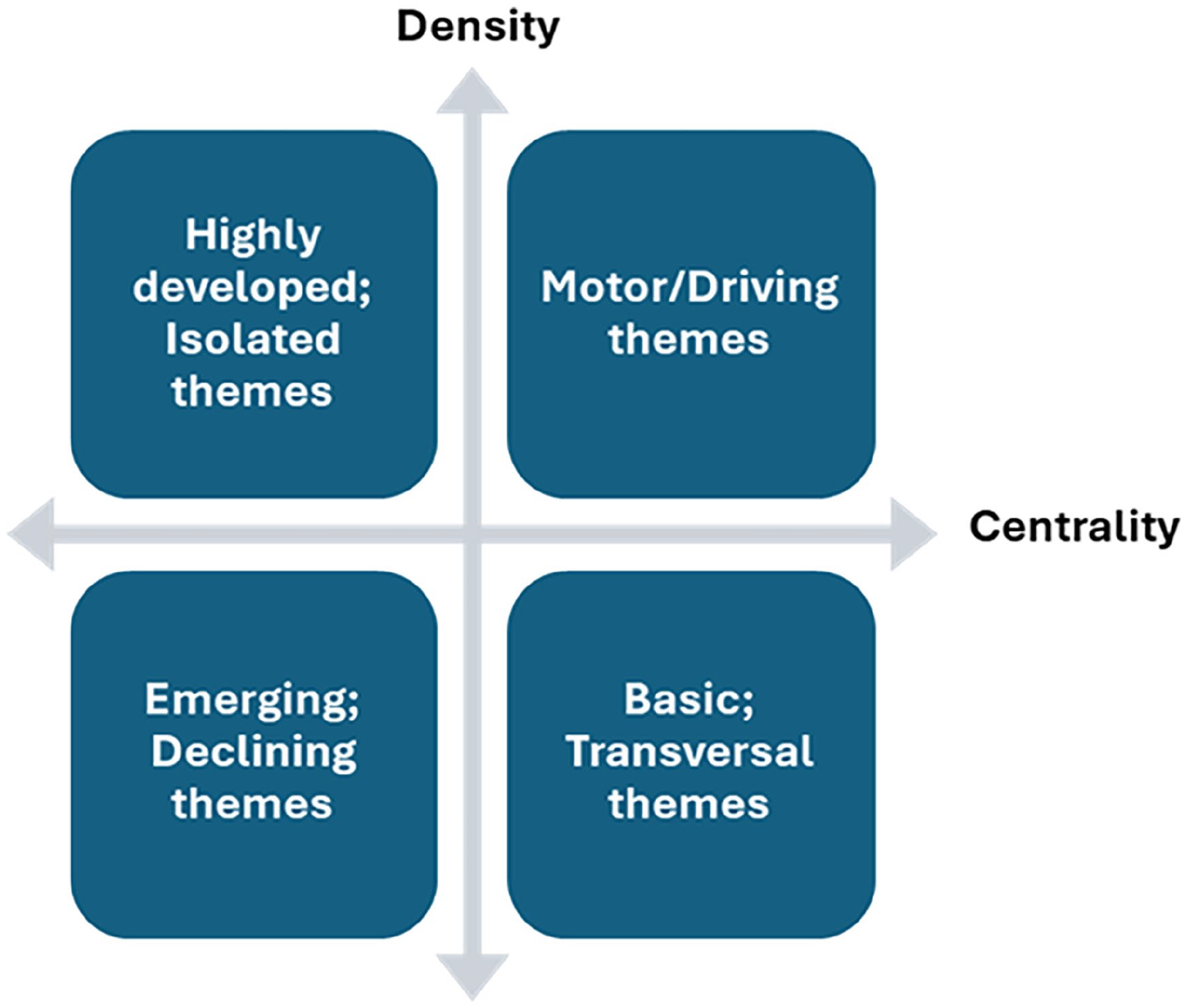
The strategic diagram displays the various types of themes based on their centrality and density.
The diagram organized major themes on the basis of centrality and density criteria, identifying 4 zones: upper right for well-developed driving themes with strong centrality and high density, upper left for specialized secondary topics, lower right for fundamental topics under development, and lower left for emerging or disappearing themes with weak development and marginality.
Results
Growth and Productivity Trends
The search engine of the Scopus database identified 11 880 documents published in the field of acrylamide from 1949 to 2023. The first publications surfaced in 1949. 72 Among these documents, 10 720 were articles (90.24%), 593 (4.99%) were conference papers, 246 (2.07%) were reviews, and 321 were other document types, such as letters, end notes, and editorials. Figure 2 illustrates the trends in the number of acrylamide publications published from 1949 to 2023. The initial phase, spanning from 1949 to 1962, represents a plateau in the field’s development, marked by the publication of 46 papers. In the subsequent stage, from 1962 to 2001, the number of publications gradually increased each year with little fluctuation, averaging approximately 85 publications annually. The third stage, from 2002 to 2023, signifies rapid development, with an annual publication count of approximately 383, which constitutes more than 71.0% of the total included studies. The growth of publications over time follows an exponential trend, with a coefficient of determination factor (R2) of approximately 0.91. Statistical analysis via linear regression confirmed this trend, revealing a strong positive correlation (P < .001) between the annual publication count and the corresponding publication year.

Growth trends of publications on acrylamide from 1949 to 2023.
Contributed Regions/Countries
Figure 3 shows a detailed visualization of the global output of acrylamide research, with participation from 113 countries of various capacities. The Asiatic region is the most prolific region at the regional level, yielding 5074 documents (42.71% of the total). This region is followed by Western Europe (2687 documents; 22.61%), North America (1800 documents; 15.15%), the Middle East (1352 documents; 11.8%), Eastern Europe (1097 documents; 9.23%), Africa (534 documents; 4.49%), Latin America (399 documents; 3.36%), and the Pacific region (172 documents; 1.44%). The Asiatic region has the most contributing countries at 23. Western Europe is second with 21 countries. Eastern Europe features 20, Africa (16), the Middle East (15), and Latin America (14). Finally, both North America and the Pacific region feature 2 contributing countries.

Research on acrylamide at the global level. The size of the black circles represents the output of each country (ie, the larger the circle is, the greater the performance of the country/territory/region with respect to the number of publications). The global map was created via Statplanet Interactive Mapping and Visualization Software, www.statsilk.com, free license. The classification of countries, regions and territories is based on SJR: Scimago Journal and Country Rank, https://www.scimagojr.com/countryrank.php.
The top 20 countries in terms of their research productivity at the country level are displayed in Table 1. The primary focus of the investigation resulted in the collective publication of 9665 articles by the top 20 contributing countries, representing 81.35% of the total contributions in this scientific domain. The most productive countries were China (n = 2452; 20.64%), followed by the United States (n = 1564; 13.16%), India (n = 952; 8.01%), and Japan (n = 803; 6.76%). Figure 4 displays a visual representation of the international research collaborations related to acrylamide that span from 1949 to 2023. This figure presents a network mapping chart that illustrates connections among key participating countries, highlighting connections with a minimum of 100 publications per country. Among the 113 active countries, 28 exceeded this threshold, with the size of the node reflecting the number of publications. Notable trends in international collaboration were observed, particularly in the United States, Germany, Italy, China, France, Spain, Belgium, and the United Kingdom, which presented the greatest number of collaboration links with other countries (Figure 3). These countries demonstrated the highest level of involvement in collaborative research involving scholars from diverse geographical locations.
List of the top 20 countries/territories/regions publishing research on acrylamide from 1949 to 2023.


Mapping International Research Collaborations on Acrylamide from 1949 to 2023. Full counting is employed, where each coauthorship link is assigned equal weight. Connections are highlighted with a minimum of 100 publications per country. Among the 113 active countries, 28 exceeded this threshold, with the node size reflecting the number of publications. For each of the 28 countries, the total strength of the coauthorship links with other countries was calculated. The countries with the greatest total link strength were selected. The map categorized the most frequently collaborated countries into 5 clusters with distinctive colors: Cluster 1, in red, involves 10 countries, primarily from the Western European region. In this cluster, Italy acquired the strongest link strength: 256 out of 1753. Moreover, both Germany and Italy acquired the greatest number of links, with 26 out of 254 each. Cluster 2 is green (7 countries, primarily from the Asiatic region). The United States, from Cluster 2, acquired the strongest link strength: 446 out of 1753, and the greatest number of links with other countries: 27 out of 254. Cluster 3, in blue, involves 5 countries; Australia acquired the strongest link strength: 115 out of 1753 and, along with Canada, recorded the greatest number of links: 21 out of 245. Cluster 4, in yellow, includes 4 countries, primarily from Eastern Europe. Turkey, in Cluster 4, acquired the strongest link strength: 67 out of 1753, and the greatest number of links with other countries: 18 out of 254. The last cluster, Cluster 5, in purple, includes 2 major Arab countries. Saudi Arabia, from Cluster 5, acquired the strongest link strength: 164 out of 1753, and the greatest number of links with other countries: 17 out of 254. The coauthorship links between the United States and China, as well as Saudi Arabia and Egypt, each with a link strength of 92, were the highest globally and were marked by the thickest connection lines on the map. The map was created via VOSviewer software version 1.6.20.
Table 2 displays the top 20 countries sorted by their research productivity from 2003 to 2023, following the landmark year 2002, when acrylamide was first detected in food. This period included an extension of research domains focused on identifying measures to reduce the presence of acrylamide in food and drinks. The results reveal a significant alignment between countries listed among the top producers of acrylamide research from 1949 to 2023 and those leading in acrylamide research from 2003 to 2023, with 18 out of the top 20 countries appearing on both lists, reflecting a concentrated focus on acrylamide formation in food and drinks and extensive research aimed at suggesting regulations and techniques to mitigate its harmful effects on public health.
List of the top 20 countries/territories/regions publishing research on acrylamide from 2003 to 2023.

The percentage for each country was calculated on the basis of its productivity from 2003 to 2023 relative to the total number of global published works on acrylamide during the same period (8182 documents).
Contributed Institutions
Table 3 provides a comprehensive list of the 20 most productive institutions involved in acrylamide research from 1949 to 2023. These prominent academic and research organizations collectively made significant contributions, representing 15.88% of the total number of published articles (n = 1887) in this field.
The top 20 most productive institutions for acrylamide publications from 1949 to 2023.

The Ministry of Education of the People’s Republic of China demonstrated its prominence as the leading contributor, producing 267 articles (2.25%). The Chinese Academy of Sciences in China contributed 178 articles (1.50%), and Hacettepe Üniversitesi in Turkey produced 170 articles (1.43%). China had a strong presence, with 9 institutions on the list; Turkey had 3; and the Russian Federation and Egypt each had two. Spain, France, the United States, Japan, and Saudi Arabia each had 1 institution in the top-ranking group.
Contributions of Funding Agencies
Table 4 outlines the primary contributors in terms of funding for acrylamide research spanning the years 1949 to 2023. These top 20 funding agencies collectively played a crucial role, contributing 14.0% (n = 1669) of the entire body of published articles. The National Natural Science Foundation of China, located in China, emerged as the most prominent funding agency, supporting 749 articles (6.30%). This agency was followed by the National Institutes of Health in the United States (n = 106 documents; 0.89%) and the National Key Research and Development Program of China, with 106 articles (0.0.89%). China and the United States had a strong presence on the list, with 5 funding agencies each. The European Union and India had 3 each; Japan and Brazil each had 2, while Germany had 1 funding agency.
Top 20 related funding agencies for acrylamide publications from 1949 to 2023.

Active Journals
The top 20 active journals collectively published 2460 articles on acrylamide, representing 20.71% of the total 11 880 publications (as shown in Table 5). The Journal of Applied Polymer Science emerged as the leading contributor, publishing the highest number of papers (534), representing 4.49% of the overall publications. The polymer secured the second position with 180 papers (1.52% of publications), followed by Food Chemistry with 171 papers (1.44% of publications) and the Journal of Agricultural and Food Chemistry with 163 papers (1.37% of publications).
Top 20 journals in the field of acrylamide research ranked by publication number.

Journal citation reports from Clarivate, 2024.
Highly Cited Publications
Through citation analysis, it was determined that the retrieved publications received an average of 24.72 citations. This resulted in an h-index of 165 and a total cumulative citation count of 293 610. Among these articles, 1514 did not receive any citations, whereas 440 obtained more than 100 citations each. The citation counts for these articles ranged from 0 to 10 703. Table 6 outlines the top 20 publications associated with acrylamide. The citation range for these publications ranges from 457 to 10 703.4,8,14,73 -89
List of the top 20 highly cited papers related to acrylamide from 1949 to 2023.

Hot Spots of Acrylamide Research
Upon examination of the title and abstract sections of the documents within the acrylamide literature, a thorough mapping endeavor was undertaken to discern the prevalent terms. This analytical process, which considered at least 150 recurring terms, identified a total of 263 terms. Adopting a relevance score of 60.0% to prioritize the most relevant terms and omitting general terms resulted in the identification of 158 terms. These terms are categorized into 2 discrete groups, each emblematic of a prominent research theme (Figure 5). The first cluster (illustrated in red) comprised 83 terms and was centered around the functionalization of acrylamide polymers. This pertains to investigations involving the modification of acrylamide polymers to incorporate specific functional groups, thereby increasing their efficacy in diverse applications, such as water treatment or enhanced oil recovery. The second cluster (emphasized in green) encompassed 75 terms and was oriented toward the formation and mitigation of acrylamide. Ongoing research efforts are dedicated to comprehending the mechanisms leading to the formation of acrylamide in various food categories during cooking processes, including frying, baking, and roasting. Additionally, active exploration of strategies aimed at mitigating acrylamide formation in food is underway.

Mapping of acrylamide-related terms: A network visualization of publications from 1949 to 2023. This network visualization map explores the connections among terms in the titles and abstracts of publications. Generated via VOSviewer software version 1.6.20, the map highlights 263 terms identified with a minimum-term occurrence threshold of 150 out of a total of 136 536 terms in the acrylamide domain. A total of 158 terms out of 263 terms met the set threshold, considering a relevance score of 60%. The terms are organized into 2 distinct clusters, each represented by a unique color, and the node size reflects the frequency of term usage across various publications.
Scientific Landscapes of Research Trends
In Figure 6, VOSviewer employs a unique color-coding scheme for individual terms, which is based on the mean frequency of each term in all the publications retrieved. The assigned colors delineate the temporal distribution of occurrences of each term, wherein the color spectrum ranges from blue, indicative of earlier instances, to green and yellow, representative of more contemporary occurrences. Scholarly attention in earlier periods focused predominantly on the “functionalization of acrylamide polymers.” However, a discernible shift has been observed in research focus, with the emergence of the topic concerning the “formation and mitigation of acrylamide,” thereby elucidating the current trajectory of scholarly inquiry.
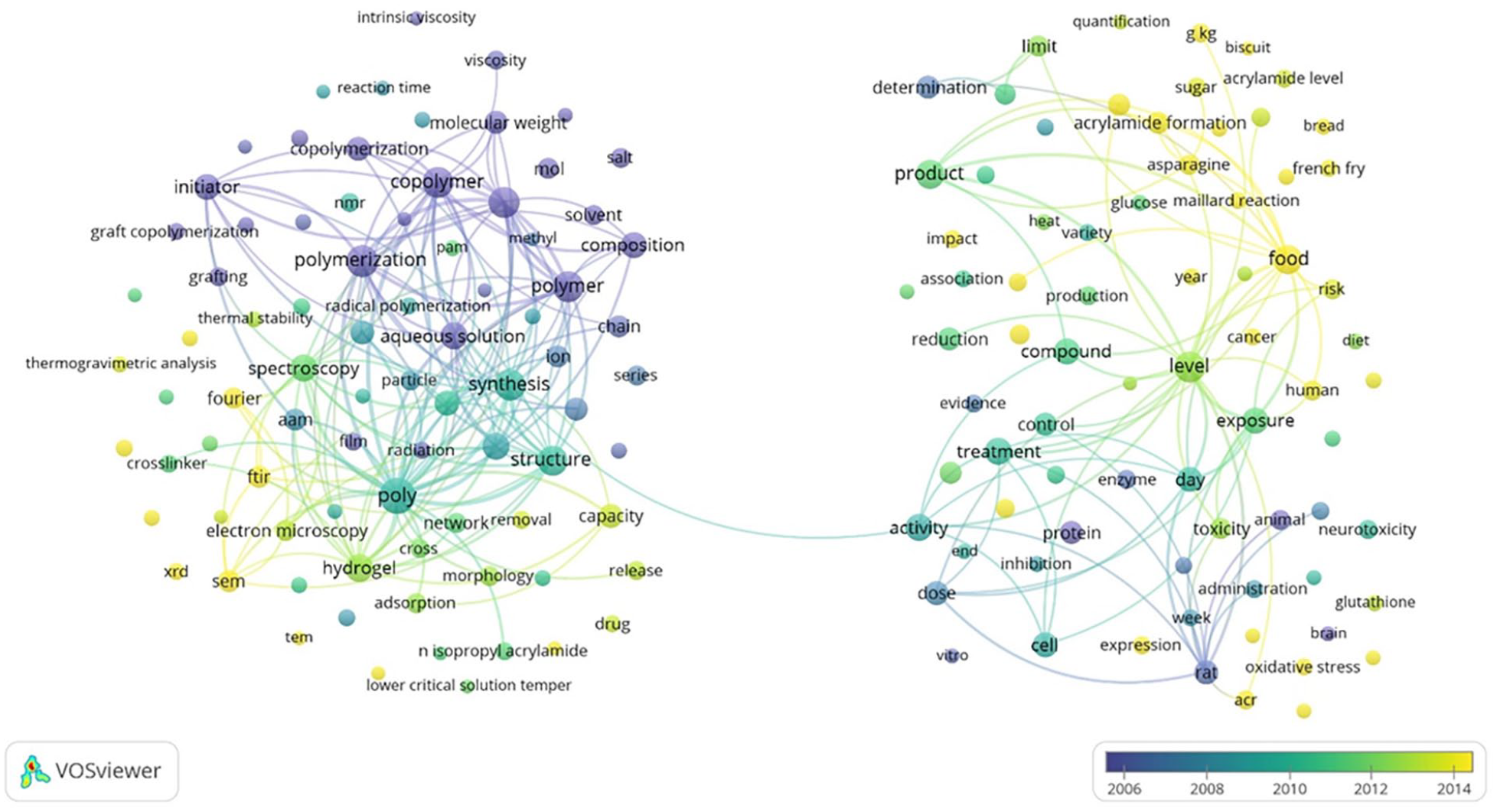
Exploring Acrylamide Research Trends (1949-2023): Network Visualization of Terms Analysis in Publications. This network visualization map provides a comprehensive examination of terms derived from the titles and abstracts of publications centered on acrylamide. The map shows the frequency of term usage, with earlier instances represented in blue and later occurrences in yellow. The visualization was generated via VOSviewer software version 1.6.20.
Strategic Diagram Analysis
In Figure 7, the strategic diagram illustrates the major themes of acrylamide research activities on a global scale, with the size of each circle representing the number of documents that incorporate the respective theme (Figure 7A) or the number of citations associated with the themes (Figure 7B). Among the driving themes, substantial emphasis remains on unraveling the synthesis of acrylamide, which frequently emerges from acrylic acid, the simplest unsaturated carboxylic acid. The use of acrylamide in nanocomposites to enhance contaminant removal (eg, dye sorption and removal from aqueous solution) is another motor theme of high interest. The genotoxicity of acrylamide, along with its carcinogenic, reproductive, and neurotoxic effects, remains a major focus of research, especially in terms of potential human harm and impacts on biomarkers, including hemoglobin. Finally, the adsorption characteristics of acrylamide in aqueous solutions, which are determined by its chemical structure, tend to be a prominent research theme owing to their importance in an array of applications, including environmental remediation and industrial processes.
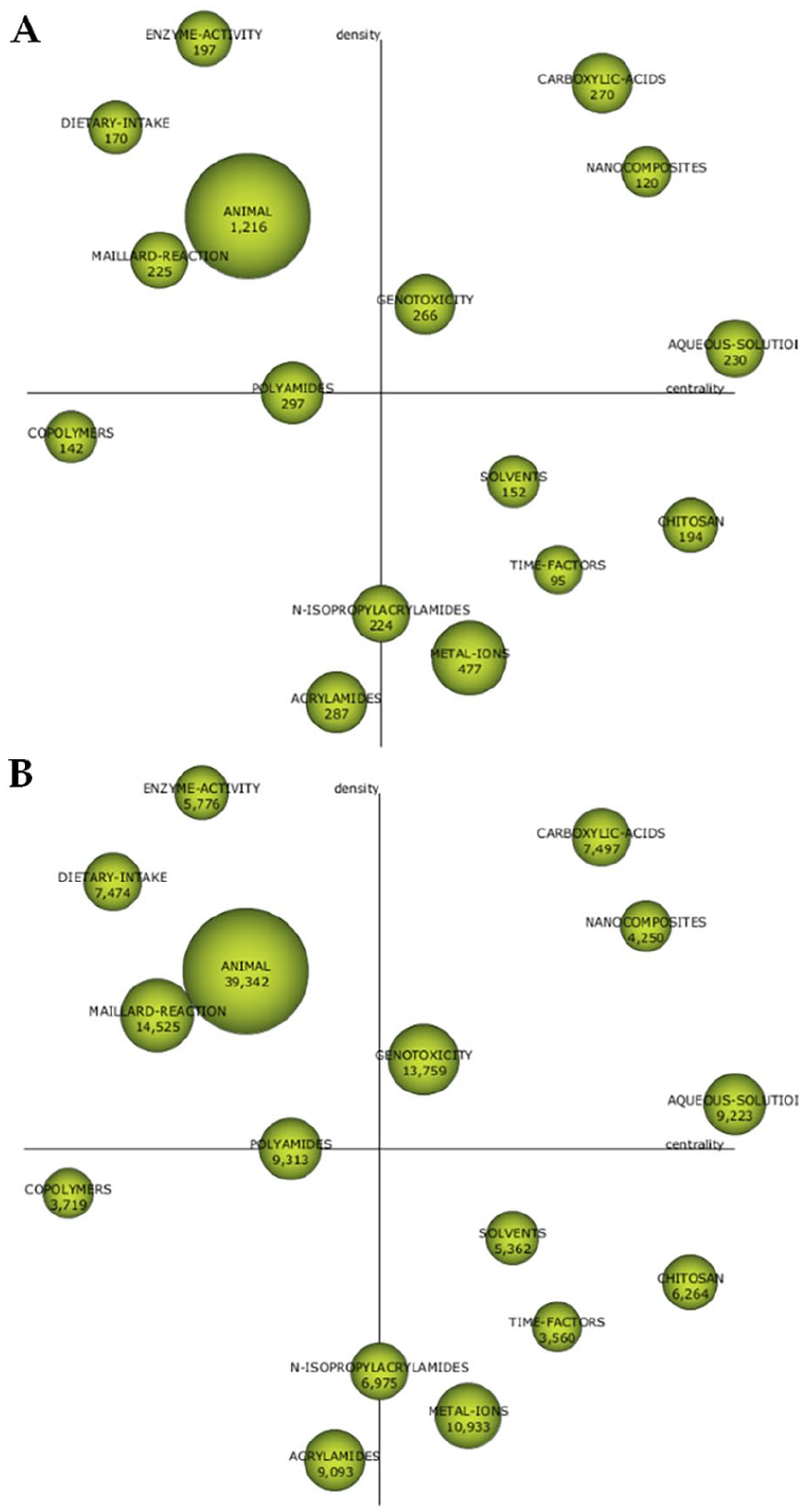
Strategic diagram: (A) based on the number of documents and (B) on the number of citations.
Highly specialized issues are depicted in the upper left zone (Figure 7A and B). These include exploring the impacts of acrylamide on enzyme activity, protein expression, and oxidative stress pathways involving glutathione and antioxidants; understanding the impacts of dietary habits on acrylamide exposure in adults; assessing human exposure to acrylamide via human biomonitoring tools and analytical techniques to determine biomarker exposure; using animals (eg, rats as common animal models) to examine the reproductive toxicity of acrylamide; assessing the Maillard reaction between amino acid asparagine and a reactive carbonyl, which describes the formation of acrylamide; and studying the different acrylamide polymers.
The fundamental matters in the lower right zone include the following: insights into the field of poly(N-isopropylacrylamide) that benefits the chemical, pharmaceutical, textile, and biotech industries; understanding acrylamide behavior in different solvents; studying the impacts of combining acrylamide with chitosan with the goal of enhancing acrylamide properties; investigating the way time factors during cooking impact acrylamide formation in food; and polymerizing acrylamide initiated by redox systems, including metal ions. Emerging research in the lower left zone addresses advancements in copolymers comprising acrylamide and polyacrylates and the vital role of surface-active agents and polyelectrolytes in enhancing the functionality of acrylamide-based materials.
Discussion
This research represents the first quantitative bibliometric analysis of acrylamide, revealing a significant increase in the overall volume of literature related to acrylamide over the past 2 decades. This increased activity can be attributed to various factors, including the pervasive publish-or-perish mindset,90,91 the widespread adoption of the internet, which facilitates the rapid dissemination of medical information, and the increasing interest in evaluating the safety of acrylamide.9,78,92 In particular, most international publications on acrylamide research emerged after 2000.
The growing awareness of the potential health risks of acrylamide, particularly its carcinogenic and neurotoxic effects, 93 has significantly contributed to the rise in global research on this substance. This increase in research is likely associated with the increasing global morbidity and mortality linked to acrylamide exposure, 94 particularly as acrylamide formation in food products is influenced by cooking methods such as baking, frying, and roasting.95,96 In parallel, there has been a surge in funding and research initiatives aimed at understanding acrylamide formation and developing mitigation strategies in food processing. These efforts are further spurred by the establishment of international regulations and guidelines, especially by the EU and WHO, which have prompted more rigorous investigations into acrylamide levels in food.9,97 Additionally, growing concerns about the link between acrylamide exposure and cancer have led to extensive research, which has led to the classification of acrylamide as a potential human carcinogen by the International Agency for Research on Cancer (IARC) on the basis of findings from animal studies. 98 This expanding body of work underscores the increasing importance of acrylamide-related health hazards, further emphasizing the need for continued research and regulatory oversight.
The increased involvement of China in acrylamide research can be attributed to several main reasons6,99 -106: China emphasizes scientific progress, especially in the fields of pharmaceuticals and food safety. Acrylamide and other potential contaminants have been extensively researched to ensure food safety and strict regulatory compliance. This requires a thorough understanding of acrylamide-related risks and effective strategies if mitigation measures are taken to ensure that strict standards are met. China’s industrial and demographic characteristics provide a wealth of resources for examining the occurrence of acrylamide in a variety of foods. The uniqueness of this research setting allows the formulation of focused strategies to mitigate its impact. Chinese researchers are actively cooperating with their international counterparts to facilitate the exchange of knowledge and the development of the latest advances and techniques in acrylamide research. This collaborative approach has accelerated scientific progress. Food safety is a public health sector in which the Chinese government actively promotes scientific innovation and development through financial support, grants, and support programs. This provides a favorable environment for the development of acrylamide research.
International collaborations have significantly enhanced the impact and creativity of acrylamide research.80,107 In particular, major epidemiological studies and the development of mitigation technologies have benefited from these partnerships, which have facilitated the sharing of data, resources, and knowledge. Strict regulators, such as the EU, have collaborated with international institutions to establish standardized acrylamide food standards and testing procedures, thereby promoting research and effective remedies. 108 We highlighted that studies on acrylamide have led regulatory bodies, such as the World Health Organization (WHO) and the European Food Safety Authority (EFSA), to establish maximum permitted acrylamide levels in food and implement policies. To increase awareness and reduce dietary exposure, countries have also launched public health campaigns. We also highlighted how this study has resulted in food safety criteria and legislative measures aimed at reducing exposure to processed foods, especially in vulnerable groups such as children and pregnant individuals.
Term clustering and co-occurrence analysis are frequently employed to pinpoint significant areas of study. In the network visualization of terms that span the past 74 years, 2 distinct clusters emerged, highlighting domains of intense research activity on the basis of the frequency of phrase occurrences. A comprehensive examination of the terms used reveals a predominant focus on 2 specific characteristics. The first issue revolves around the functionalization of acrylamide polymers, with the aim of modifying their traits for specific applications.106,109 -111 This involves employing diverse methodologies, such as the addition of additional chemical moieties to alter electrical, optical, or mechanical characteristics; crafting composites through the amalgamation of acrylamide with other substances, such as nanoparticles or fibers, to achieve particular functionalities; creating innovative structures, such as dendrimers or star polymers, for precise control over arrangement and attributes; and understanding the mechanisms of functionalization and their consequential impact on polymer properties, crucial aspects within this field. A developing field of research is the use of acrylamide in nanocomposites for the removal of pollutants. 112 As acrylamide-based nanocomposites can offer large surface areas and adsorption reaction sites, their potential benefits include the development of highly efficient materials for the elimination of pollutants from water and soil. However, the possible contamination of acrylamide from composites in the environment, which could jeopardize ecosystems and human health, also presents challenges. Further research into the environmental impact and safety of acrylamide in such applications is crucial.
The second aspect concerns the formation and mitigation of acrylamide. Researchers are studying the mechanisms of acrylamide production to optimize the production and minimize undesirable byproducts.113 -122 An understanding of the factors that can cause harmful impurities in acrylamide and the development of strategies to reduce the impacts of these impurities on the environment and health are needed. Another important aspect of this field is the search for alternatives to acrylamide for specific applications. Scientists are actively researching alternatives to monomers and materials that offer similar functions but with fewer drawbacks. 123 These ongoing efforts highlight the dynamic nature and continuous evolution of acrylamide polymers. The continuous improvement of its functionality and the resolution of potential challenges remain the driving forces behind this industry. As researchers expand, more nuanced and detailed insights into the current state and future directions of acrylamide polymers will emerge.
Earlier studies on acrylamide focused on understanding its chemical properties and synthesis methods, particularly in relation to high-temperature cooking.124,125 Recent research has shifted toward developing strategies to reduce acrylamide levels in food because of growing concerns about its carcinogenic and neurotoxic properties.24,126 Genetic, pharmacological, and technological interventions have been explored.127,128 Chemical treatments, such as the use of asparaginase enzymes, target the precursors of acrylamide, whereas genetic modifications aim to alter the enzymes involved in its synthesis.108,129 Technological advances have focused on improving food processing techniques, such as temperature and moisture control, to reduce acrylamide formation. This multidisciplinary approach integrates basic chemistry with innovative solutions to address public health concerns related to acrylamide in food. The progress of acrylamide research and mitigation efforts depends heavily on emerging technologies. Genomic technology and advances in automated chemical screening can help identify food additives or enzymes that reduce the production of acrylamide during processing. As previously noted, nanocomposites could be further studied and new approaches for reducing acrylamide exposure in food preparation could be presented.
Strengths and Limitations
This study employs a bibliometric approach to examine the current status and developmental trends in acrylamide research. This study has certain limitations, similar to those of previous studies. First, the analysis is restricted to articles indexed in the Scopus database, potentially excluding relevant articles not indexed there. Despite this, the impact of such omissions should be minimal, given the Scopus database’s extensive coverage (>30 000 peer-reviewed journals), the inclusion of all Medline-indexed journals, the use of a larger document repository than the Web of Science core collection, and the higher precision of the former compared with Google Scholar.57,61,130 Second, the study is constrained by the use of the search term “acrylamide” in title searches only, possibly overlooking publications where “acrylamide” is used in abstracts, as keywords, or within documents. However, any false-negative results are expected to have a negligible effect on the overall findings. Third, the lists of active key players were retrieved directly from the Scopus database, potentially underestimating the research output of certain countries or institutions owing to variations in names or spellings. Fourth, a key limitation of this study is the absence of detailed data on acrylamide levels in specific food categories (eg, cereals, bakery products, coffee, potato-based foods) and dietary exposure across countries or food matrices. Unfortunately, the scope of our bibliometric approach does not allow for a deep dive into such specific data. We recommend that future research explore these gaps by focusing on country-wide and food matrix-wide data for acrylamide levels and assess recent advancements in mitigation strategies, particularly for high-risk foods. This study provides valuable insights into global efforts to reduce acrylamide exposure and inform public health strategies. Despite these limitations, the study offers a relatively robust global perspective on acrylamide research, guiding future research and funding toward evidence-based practices. The main strengths of this study are its comprehensive research strategy, which does not have language or subject restrictions, and the thorough analysis of the data obtained, which makes it a valuable reference for researchers in the field of acrylamide research.
Conclusions
The comprehensive acrylamide research presented includes various bibliometric indicators, such as research trends, countries, industries, hot topics, cited books, journals, and organizations, and the results of this bibliometric research provide valuable insights for future research in this area. In recent decades (2003-2023), acrylamide research has grown tremendously. In particular, in recent years, more emphasis has been placed on understanding the formation and reduction of acrylamide, which requires more attention, in line with the latest scientific developments; therefore, the development of research projects is important, as it plays an important role in shaping future health care. This analysis offers a comprehensive visualization analysis of global research advancements on acrylamide. The outcomes highlight key fields of acrylamide research, including its synthesis, application in nanocomposites, and broad toxicological repercussions (eg, carcinogenicity, genotoxicity, reproductive, and neurotoxic impacts). This investigation highlights the importance of researching the adsorption capacity of acrylamide to better comprehend its behavior and potential risks in environmental and biological contexts. In summary, these results indicate that acrylamide polymers are an active and dynamic research topic that is constantly working to improve their performance and solve potential challenges. To increase innovation in acrylamide research, more funding and cooperation with global experts are essential because of the underrepresentation of developing regions. Crucial actions include applying food safety regulations, matching global standards to local contexts, and increasing health risk awareness via educational programs and community involvement. Further research and investigations can provide a more sophisticated perspective on the status and future directions of this area of research. Future research could focus on compiling and analyzing more specific data on acrylamide levels across various food categories (eg, cereals, bakery products, coffee, and potato-based processed foods). This would provide greater clarity on dietary exposure levels to acrylamide in different regions and help identify high-risk food items that require urgent mitigation strategies. While this study highlights trends in acrylamide research, there is an increasing need for research on mitigation strategies specific to different food matrices. Further studies should investigate the application of recent advances in reducing acrylamide formation, particularly in high-risk categories such as coffee, potato-based foods, and cereals. More specifically, country-specific and population-specific exposure data are needed to better understand dietary risks and mitigate exposure, especially in low- and middle-income countries. To reduce the health risks associated with acrylamide exposure, we urge policymakers to take the following actions: tightening regulatory limits and monitoring acrylamide in commonly consumed foods, particularly for vulnerable populations; initiating public health campaigns to raise awareness and offer guidance on safer food processing practices; promoting research into low-acrylamide products and alternative processing technologies; enhancing international cooperation to standardize testing procedures and facilitate data exchange; and supporting the food industry by promoting best practices and providing guidelines to improve food safety.
Footnotes
Acknowledgements
The authors would like to thank Prof. Waleed Sweileh, and Prof. Samah W Al-Jabi from An-Najah National University for their assistance in reviewing the dataset for its validity. The authors would also like to thank Palestine Technical University (Kadoorie) and An-Najah National University for all administrative assistance during the project’s implementation. In addition, the authors thank Drs. WS and SA for helping and validating the research strategy. The English language of some sentences in this manuscript was edited by American Journal Experts (AJE) AI for digital editing.