




Abstract
Meat handling is a crucial aspect of public health as it forms complex interactions among humans, animals, and the environment. African meat handlers continue to face various challenges in slaughterhouses that significantly impact their lives and the general public during meat processing. This paper reviews the challenges meat handlers encounter and the associated risks of improper meat handling in various African slaughterhouses. A comprehensive literature search was performed on Science Direct, Web of Science, PubMed, Scopus and Google Scholar. Articles published to investigate the challenges and health risks of meat handling practices in Africa from 1961 to 2022 were included in this review. African meat handlers face socio-economic difficulties, including inadequate returns, unpredictable working environment, market, security, and limited healthcare access. Many meat handlers work informally in unregistered facilities and are not trained by experts on proper meat handling. This results in improper meat handling, raising the possibility of meat contamination by foodborne pathogens like Salmonella sp. and E. coli on slaughter and contact surfaces, hence posing a threat to meat safety and public health. We recommended that governmental, institutional and community-level actions should be used to address the health challenges associated with improper meat handling in Africa. Government and institutional bodies play an important role in supporting and upholding the laws that guide proper meat handling and processing. Meat handlers must be educated on meat safety, handling and storage to ensure meat is safe for consumption.
Introduction
Raising livestock is a significant economic activity with great public health importance. Meat consumption is rising and is expected to continue as many countries get richer and family incomes rise in Africa. 1 Meat is an animal flesh eaten by humans as food. It is an important source of protein. Humans have been farming, hunting, and scavenging for meat from diverse animals since the beginning of life. The meat-producing species are primarily herbivores, crustaceans, reptiles, molluscs, amphibians, fish, and bird species.2,3 Between 1961 and 2021, on average, a person in Africa consumed 15 kg of beef and 5.75 kg of chicken (the most popularly consumed bird species on the continent) per year (Figure 1). 4 The lowest meat intake per person was also documented on the continent, and by 2030, demand is expected to rise to approximately 12.7 kg per person. 4 Compared to the other meats mentioned, fewer people eat bush meats, such as antelope, rats, snakes, monkeys, and other animals. The diverse populations and cultures of the African continent enjoy meat as a source of protein, a way to gain respect, and a measure of social standing in society. 5 The type of meat consumed in Africa depends on individual financial capability, preference, culture, religion, and environment.

Total meat consumption per person in Africa from 1961 to 2021. 14
Meat is processed in different forms depending on the type of animal (meat source), location (region or country), and purpose (long-term or short-term use) in slaughterhouses. How meat handlers process meat plays an important role in minimising or maximising meat contamination. Microorganisms can contaminate raw meat at different processing phases, such as scalding, dressing, evisceration, cutting, distributing, and storing.6,7 The zoonotic pathogenic bacteria implicated in the meat-related foodborne illness outbreak include Salmonella sp, Staphylococcus aureus, E. coli, Bacillus cereus, Clostridium perfringens, and Moraxella sp. These bacteria are associated with meat products and have the potential to cause significant economic losses that could impact both domestic and international trade. 8 Furthermore, eating meat contaminated by bacteria impacts public health, leading to serious diseases or mortality. 9 However, immunocompromised people, as well as children, are more likely to contract foodborne infections. 10 These bacteria do not only cause disease; they also carry and horizontally transfer antibiotic resistance genes to humans, preventing the available antibiotics from working and contributing to the global silent pandemic. Fresh meat is considered a very perishable food due to its composition. Food safety is an important concern despite the fact that naturally occurring pathogenic microbes contaminate food, as everyone in the world has a fundamental right to safe food. 11
African meat handlers face many challenges in slaughterhouses that significantly impact them, from processing the meat to meeting the Food and Agriculture Organisation (FAO) standard. Several hazards that pose a threat to the safety of workers in the slaughterhouse have been identified, with zoonoses, chemical injury, psychosocial damage, and lack of first-aid services topping the list. 12 Zoonotic pathogens account for half of the threat to public health in Africa, and between 2012 and 2022, there was a 63% increase in the number of zoonotic epidemics in Africa. 13 In 2022, approximately 2.9 million cattle and buffalo, poultry, and pigs were slaughtered in Africa (Table 1). 14 Yet, only South Africa has a good number of slaughterhouses, while some countries still need an official slaughterhouse, which poses another challenge to meat processing in Africa (Figure 2). In this review, we aim to highlight challenges encountered by meat handlers and the risks associated with improper meat handling and processing in Africa and provide plausible recommendations that can influence policies on meat safety.
Trends in animal and meat production in Africa from 1961 to 2022. 14

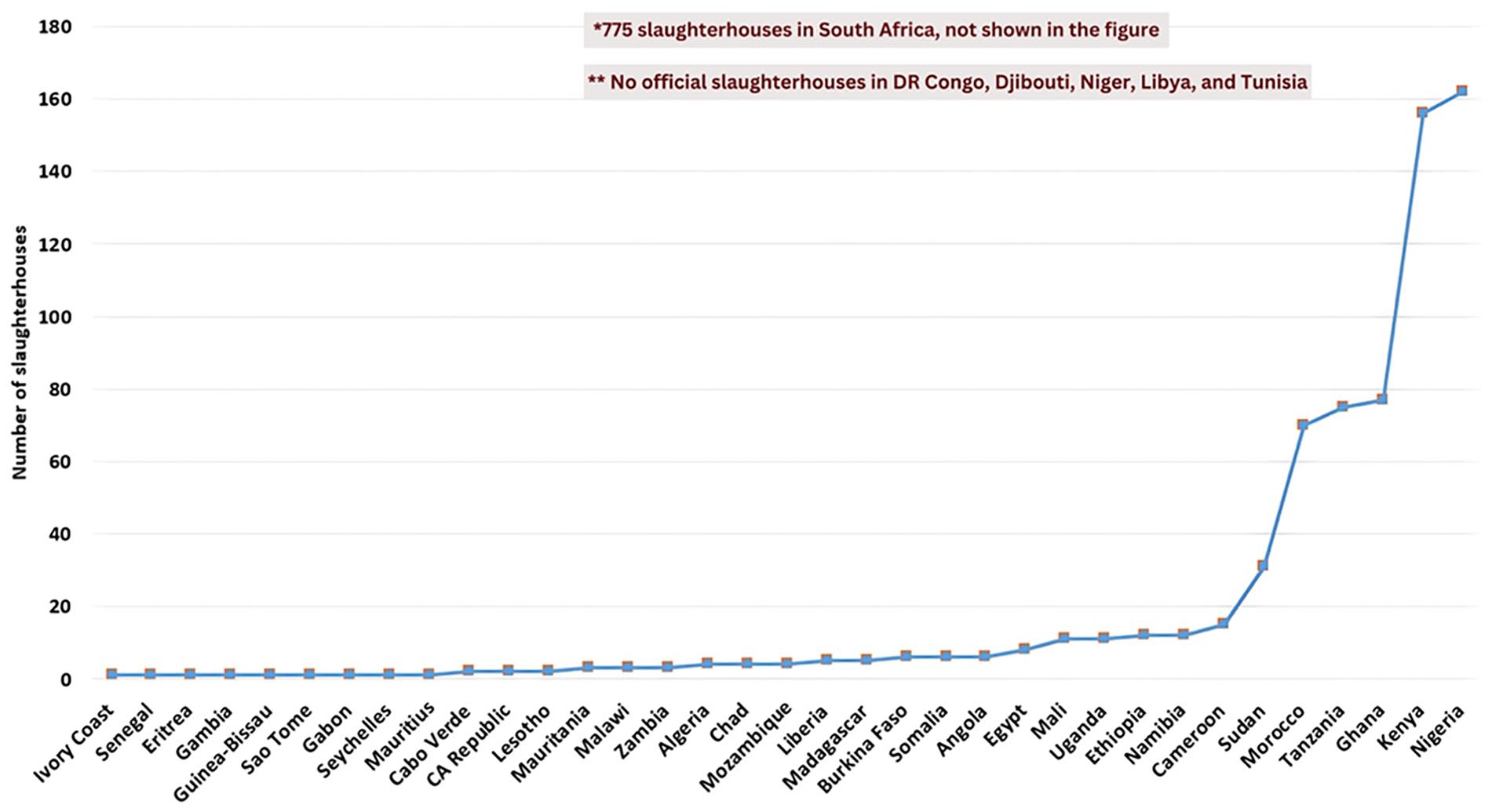
Number of slaughterhouses owned by government and private individuals in different African countries.
Methods
Literature search strategy
A comprehensive literature search was performed on Science Direct, Web of Science, PubMed, Scopus and Google Scholar to investigate the challenges and health risks of meat handling practices in Africa. We used a collection of pertinent terms such as ‘meat handling’, ‘meat handling practices’, ‘meat’, ‘health risks’, ‘challenges’, ‘recommendations’, ‘abattoir’, ‘slaughterhouse’, ‘Africa’ and ‘African countries’. Two authors searched separately, screening papers based on titles and abstracts and then reviewing the full text. The papers were screened based on the objectives of our study. Only English publications published from 1961 to 2022 were considered for inclusion in this review. Original, review, case reports, and retrospective articles were included. Studies outside Africa were excluded. Extraneous and redundant papers were eliminated, and the reference lists of complete publications were evaluated for potentially valuable citations that were not discovered during the database search. The article screening and references management process was carried out using Mendeley Reference Manager.
Meat production and consumption in Africa
In 2022, Africa produced 22 million tonnes of meat (Table 1 and Figure 3). The top 5 African countries that produce meat from livestock are South Africa, Egypt, Nigeria, Morocco and Sudan. 15 They supply around 50% of the total meat production on the continent in terms of volume.

Total meat production in Africa from 1961 to 2022. 14
The demand for animal products has been rising in Africa for a long time, mainly due to urbanisation, which has had an immense effect on the continent’s diet generally and the need for meat in particular. For instance, it is predicted that by 2050, beef and poultry consumption in sub-Saharan Africa will rise 10-fold from current levels to 13.5 and 11.8 million tonnes, respectively. 14
Cattle are the primary source of meat for most Africans. However, small ruminants play a significant role in the dry and semi-arid regions of East and Sahel, where small landowners keep flocks of ruminants to diversify their income during poor crop harvests. In Africa, pork is consumed in small amounts overall, and in certain nations (Kenya and Tanzania), the business primarily depends on tourism. Religious prohibition is the primary cause of the decline in pig farming or consumption. Chickens are the most common bird species, but other species, such as turkeys, ducks, geese, pigeons, and guinea fowls, are common in some places. With almost 8.2 million tonnes produced in 2022 (Table 1), the top 7 chicken meat producers are South Africa, Egypt, Morocco, Nigeria, Algeria, Libya and Tunisia; together, they account for nearly 80% of global production. 14 Throughout the continent, families grow a lot of poultry, greatly boosting family income. The small-scale, substantial, or semi-extensive farming is typically done by women and children.
Over 90 local chicken breeds are farmed throughout Africa, according to FAO. 14 Kenya’s Molo Mushunu and Egypt’s Bigawi have 2 of the most well-known local breeds; South Africa’s Boschveld is a hybrid of the native Venda, Matabele, and Ovambo breeds. In urban areas, the sale of chickens is typically done informally in public markets, where animals are killed at request and frequently in unsanitary circumstances. In rural regions, chickens are generally sold alive. This approach streamlines the supply chain for sales and consumption because it does not need to be processed immediately or refrigerated. The animals are killed as required and in accordance with the customer’s religious beliefs (such as the ‘halal’ rite).
In Africa, salting and sun-drying meat is a standard method of preservation. In the Maghreb (Morocco, Algeria and Tunisia), Gueddid-a dry meat product most noted for its dried meat, is made using lamb or veal; however, camel and goat meat are also utilised in the more arid regions. 5 Today, Gueddid is regarded as a luxury good and is ingrained in the cultural legacy of North Africa. Khlii, from Morocco, is a dish formerly cooked mostly with camel meat. The traditional preparation of Cameroonian Kilishi involves using beef. In Nigeria, Tinko, Kilishi and Kundi are dried meat that is popular in the northern part of the country. In contrast, other regions refer to dried foods prepared from the meat of donkeys, horses, camels, buffalo, or game as Ndariko, Jiorge, and Banda. The most well-known dried meat product in Africa is Biltong, which is popular in South Africa but is also available in Botswana and Nigeria. It is made from strips or fillets of beef, ostrich, and game. The most well-known fresh meat products are Tehal, Mkila, Merguez and several varieties of Sujuk. In certain places, such as Algeria and Tunisia, couscous often contains Meringuez, an uncooked sausage typical of the Maghreb region with a diameter of approximately 2 cm, currently made on a semi-industrial scale. Ground beef mixed with spleen and a variety of spices is called Tehal (sometimes called Tehane) and baked in the oven. Traditionally, lamb rumen is wrapped in small cubes of lamb meat, spiced, and knotted with a thread before being hung to dry and fermented slowly. This is known as Bubanita (Boubanita). Pastirma and some varieties of Naqaneq are semi-fresh meat products. Popular in Egypt, pastirma (also known as Basterma, Basturma, or Pastrami) is made with seasoned strips of beef or lamb (sometimes goat, buffalo, or camel) that have been matured with a mixture of spices, fenugreek and garlic. Arabic sausages, whether cooked or raw, formed from ground beef, lamb, buffalo, or fowl and placed inside a natural casing that has been soaked in boiling water beforehand are collectively called Naqaneq. These sausages’ origin, ageing, combination, drying and maturing circumstances significantly impact their flavour, composition, and taste. Meat and other animal products are staples of the African diet and are deeply ingrained in many traditional religious ceremonies and occasions.
An overview of meat handling practice in Africa
Meat and meat products pass several stages before being ready for human consumption. These stages involve farm-level production, slaughter, processing, distribution, and preparation for human consumption so that meat and meat products are safe. Meat slaughtering, processing, and distribution are poorly regulated in African countries. Improper handling at any production stage leads to meat contamination, resulting in meat-borne infection or intoxication, which is still a significant source of human diseases. 16 Effective and efficient handling of meat in the slaughterhouse, distribution, processing and preservation is very crucial in preventing meat-borne infections, and it is essential in avoiding adverse economic consequences.
Meat handling, sanitation procedures, and hygiene practices determine the types and extent of microbial contamination. In most African countries, animals are butchered at home rather than taken to slaughterhouses, which could lead to inappropriate management of the meat and exposure to microbiological and environmental contamination. As meat contains a high concentration of nutrients, it can promote the growth of harmful meat-borne pathogens, endangering public health and causing foodborne diseases. 17 Meat can become contaminated with various pathogens throughout the slaughter, flaying, evisceration, distribution, processing and preservation processes.
Traditional food processing and preservation are internationally known phenomena used for many years by populations of Africa. They take many different forms and are practiced in many other locations to improve flavour and texture or extend the shelf life of food. 18 The meat is dried in the sun or over a fire to prevent it from spoiling, allowing it to be kept in the pot for as long as required. 19 Meat can also be preserved by being cut into thin strips and dried over a fire. 20 The traditional knowledge of handling, processing and conserving meat is in jeopardy because, like in many other rural civilisations, modernisation has led to abandoning conventional methods in favour of modern practices. As a result, younger generations are less interested in learning about meat processing locally. 21 Due to the social changes caused by modernisation, the perception of younger generations has been altered. 22
Modernisation and urbanisation in Africa have resulted in a significant rise in food safety and hygiene standards and a decline in meat-borne illnesses. They include using standard meat storage, preservation methods and slaughterhouses for accurate meat inspection. Some modern techniques used in meat preservation include canning, freezing, refrigeration (low-temperature preservation), and organic and inorganic preservatives. 23 These techniques are effective in preventing meat contamination and preserving meat for an extended period.
Maintaining meat safety involves many challenges, including handling fresh meat tainted by meat-borne pathogens and microbial degradation. 24 Preserving meat and meat products becomes difficult for food handlers since meat is a perishable natural commodity and is particularly sensitive to quality loss during meat processing and storage. 25 Due to the rising demand for meat, the meat industry also struggles to produce safe meat with minimal contamination.26,27 Poor slaughterhouse infrastructure, subpar meat inspection, shortage of meat safety inspection personnel and an unclean environment for processing meat are additional challenges in maintaining safe meat handling practices. 28
Challenges associated with improper meat handling in Africa
Challenges associated with meat handling in Africa are multifaceted. Some challenges come directly from the slaughterhouse workers, the government, and the consumers. In most African countries, slaughterhouse workers and butchers involved in meat handling have unsatisfactory knowledge of meat safety and hygiene; therefore, meat is prone to contamination.28,29 This is a significant challenge for the meat industry as it will decrease the meat production trend (Figure 3) and public health. Some of these slaughterhouse workers handle meat without any measure to prevent contamination, such as using protective clothing. There is hesitation from the slaughterhouse workers and the meat owners, who only allow the meat inspectors to carry out their duties partially, especially when there is a presumed total or partial condemnation of the carcas.
The government needs to establish more slaughterhouses, considering the number of animals slaughtered in Africa. Some countries, such as the Democratic Republic of Congo, Niger, Libya, Djibouti and Tunisia do not have slaughterhouses (Figure 2). Modern slaughterhouses are safer and have a high level of hygiene compared to the old slaughterhouse settings, but they are limited in Africa. Carcasses are slaughtered, flayed, and cut on the floor, exposing the meat to contamination. Slaughterhouses have inadequate water supply, which is an essential facility. In some slaughterhouses, the clean and dirty operation sections need to be well-demarcated. Waste should be channelled out and disposed in a long distance away from meat processing sections.
Meat consumers also need to learn about meat hygiene, especially meat preservation methods. These challenges mentioned above are critical, and urgent attention is required to prevent meat-borne infection and intoxication.
Health risks associated with poor meat handling
Health risks associated with poor handling of meat can stem directly from the animal and equipment used in the preparation and processing of the meat, the meat handlers, and poor preservation methods. The health risk from animals is particularly zoonotic diseases—naturally occurring infectious diseases that spread from animals to people. They usually affect humans through food, drink, environment, or direct contact. It can be bacterial, viral, or parasitic, which might affect the slaughterhouse workers following contact or other means of transmission. 30 This occurs due to poor inspection techniques during antemortem or post-mortem examination procedures or working without effective personal protective equipment. Other health risks associated with equipment, handling, and preservation primarily affect the consumers following microbial contamination by any of the 3, leading to food poisoning. Zoonotic diseases can be transmitted directly to the consumer due to an inadequate inspection of the carcas or passing of a diseased animal at antemortem or post-mortem examination.
Meat handlers play a critical role in contaminating meat and spreading infections to consumers, which results in food poisoning and zoonotic diseases. During post-mortem meat inspection in the abattoir, carcasses are exposed to numerous harmful agents, which could be chemical, biological or physical. Several risk factors are associated with meat contamination by veterinarians, slaughterhouse workers, meat handlers, or marketplaces. Marketplaces are characterised by a need for more cleanliness, waste disposal, potable water, and electricity. 31 Informal rather than formal meat markets in Nigeria had a significantly higher level of meat contamination with significant foodborne pathogens. 32 This finding emphasises the importance of unrestricted, informal marketing in Nigeria’s food safety issue. A lack of official certification requirements or restrictions to work in the slaughterhouses is one of the factors that lead to overcrowding of the slaughterhouses with unprofessional meat handlers. Meat handlers can decrease the potential contamination of meat by proper handling, as they serve as a significant source of meat contamination. 33 Most meat handlers need to gain fundamental knowledge of meat safety and hygiene, such as meat transportation, meat storage, pest control, waste disposal, and sanitation, as they do not strictly adhere to the criteria of Hazard Analysis and Critical Control Points (HACCPs). 34
Food poisoning occurs when a person consumes food contaminated by a microorganism or its toxins. This contamination can come from inadequate protection measures, improper handling procedures, cross-contamination from the surface that comes into contact with food, or people who are carriers of microbes. 35 Findings in Ethiopia showed that slaughterhouse personnel are the primary source of meat contamination during movement from the slaughterhouse to the butcher shops. 36 Escherichia (E.) coli and Staphylococcus (S.) aureus were also found on the hands of food workers. 37 Multidrug-resistant S. aureus was isolated in meat supplied for human consumption. 38 Though most slaughterhouses try to abide by the rules established to protect consumer health, the meat safety and hygiene issues due to the handling and processing still need to be improved. 24 Access to knowledge and meat safety practices in Ghana revealed that meat sellers had satisfactory knowledge of whether meat can be contaminated by poor handling and cause illnesses. 39 They also have a basic understanding of personal hygiene but need more training on safe meat handling and information concerning issues related to meat safety. 39
Several infectious diseases occur due to poor handling of meat and meat products during inspection, transportation, distribution, processing, or storage. Below are some bacteria, viruses, parasites, and fungi associated with the foodborne infection in Africa;
Bacteria
Bacteria are one of the most prevalent microorganisms associated with food spoilage and are abundant in slaughterhouses. Any improper meat handling processing will expose the meat to these bacteria. Salmonella sp., Campylobacter sp., E. coli, Mycobacterium sp., Yersinia sp., Brucella sp., Listeria sp., Bacillus sp., Staphylococcus sp., Streptococcus sp., Vibro cholerae, Yersinia sp., and Clostridium sp., etc., have been identified in contaminated meat.40 -49 Salmonella is one of the most commonly encountered bacterial infections in meat due to poor meat handling, which causes typhoid and paratyphoid fever. In Ethiopia, Salmonella has a prevalence of 43.81%, 9.01%, 8.41% and 7.07% in slaughtered pigs, goats, sheep, and cattle, respectively. 50 They are the primary infectious illnesses caused by different Salmonella sp. in humans. Another is Campylobacter sp., which causes several gastrointestinal disorders, such as inflammatory bowel diseases. In isolated occurrences and limited patient cohorts, they have been implicated in extra gastrointestinal symptoms such as bacteraemia and lung infection. 51 E. coli is also associated with diarrhoea and gastroenteritis, which are transmitted through contaminated food and water. Its disease severity effect is more in immunocompromised people such as pregnant women, children, and people with other debilitating diseases, like malnutrition 52 ). These bacteria are part of the animal microbiota and are transferred to humans via improper processing of the animal after slaughter. Apart from the organisms causing pathogenic diseases in humans, they are implicated in transferring antimicrobial resistance (AMR) genes from animals and the environment, which prevents antibiotics from working in humans.53,54 Apart from the AMR genes carried by the bacteria, meat handlers and workers contribute to AMR development in meat due to drug residues. Some meat handlers and workers inject sick animals brought to the slaughterhouses with antibiotics a few days before slaughter in order for them to pass the inspection of veterinarians. The antibiotics will build up in the meat and be eaten by humans. Humans will only be exposed to minimal doses of the drugs, making bacteria develop resistance against the antibiotics. The threat of antimicrobial resistance in Africa is higher compared to other continents, and it has claimed the lives of many people. People can be prevented from getting exposed to AMR genes or drug residue from animals through proper meat processing that involves monitoring of the bacteria organisms and drug residue.
Viruses
Foodborne viruses such as rotavirus, norovirus, astrovirus, and adenovirus have been found to be transmitted through contaminated meat.55,56 Norovirus infection is the most frequently connected to meat-borne. Infected slaughterhouse workers are repeatedly involved in the spread of these viruses if they do not practice good hygiene. 57 They may contaminate food directly or surfaces that come in contact with it. 58 Recently, H5N1 has been identified in food animals in the United States. 59 Although no case has been recorded in Africa, proper precautions should be taken while processing meat and milk of animal food to prevent an ecological bridge between humans and animals. In 2021, a metagenomics study in Africa discovered the African swine fever virus (ASFV) in meat and meat products. 44 ASFV is not harmful to humans but causes tremendous economic damage to the continent. The development of point-of-care diagnosis assays 60 to assess meat quality in African slaughterhouses will help identify these viruses before they are transferred to humans and prevent their outbreak in the continent.
Parasites
Parasites also cause meat-borne diseases in humans.61,62 The most common parasites are Trichinella sp., Taenia sp., Toxoplasma sp., Giardia sp., Cryptosporidium sp., Fasciola sp., Sarcocystis sp., Echinococcus sp. and Linguatula serrata.63,64 They are transmitted by ingesting undercooked, raw, or contaminated meat with the parasites’ infective stage(s). 65 The prevalence of Cysticercus bovis in cattle in Africa is high and varies across different countries: Nigeria (26%), Egypt (0.23%-20%), Zambia (6.1%), Ethiopia (4.24%), South Africa (0.98%) and Sudan (0.42%).66 -72 Food handlers have also been shown to harbour about 0.3% Taenia saginata in Sudan, 73 indicating the need for proper meat processing to prevent the spread of parasitic diseases. Good biosecurity measures such as hygienic practices of meat handlers and thorough meat inspections in slaughterhouses can help reduce the risk of human infections. Because of the limited laws to uphold a good biosecurity practice in slaughterhouses, these parasites can be prevented by thoroughly cooking the meat before consumption.
Fungi
Foodborne pathogens are not limited to bacteria, viruses, or parasites; fungi also contribute to foodborne diseases by releasing their toxins in food, especially Aspergillus sp.74,75 Ismail et al 76 found out that meat and meat products in Egypt harbour fungi, such as Candida sp., Aspergillus sp., Cladosporium sp., Eurotium sp., Eupenicillium sp., Mucor sp., Geotrichum sp., Rhototorula sp. and Penicillium sp. Meat is exposed to these fungi through improper meat processing, meat handlers’ and equipment contamination, and animal harbour. The presence of these fungi in meat raises a great public health issue for consumers. It is very important to monitor the microbial load of each fungus during slaughtering to prevent human exposure to fungi diseases.
Environmental risks posed by improper meat handling
Improper waste disposal from the slaughterhouse exposes humans around the slaughterhouses to specific hazards and health risks. There are negative impacts of slaughterhouse operations on the air, water, and environment of nearby habitats, particularly in the case of Africa, where there is a lack of unique or efficient waste disposal systems. 61 Residents who live close to a slaughterhouse have been found to have poorer health because of the pollutants that are produced by nearby slaughterhouses. 77 Poor waste management is to blame for the environmental and health risks connected to slaughterhouses based on studies done in Nigeria, Ghana and other developing countries. 78 These risks have indirectly harmed human health and the environment at large. Animal waste, such as blood, bones and intestinal and rumen contents, can support the growth of pathogens, leading to the outbreak of disease in the human population when it gets into the environment, primarily through water channels.
Policy and health regulation of meat handling in Africa
Meat handling in Africa, as it has been described, is an important area of public health that calls for stringent policies and regulations to ensure food safety and prevent disease transmission. These regulations comprise guidelines on the hygienic standards for meat processing facilities, the health and safety of meat handlers, and the transportation and sale of meat products. 79 There have been concerted efforts in many African countries to forestall a total decline in the slaughterhouse industry. The National Agency for Food and Drug Administration and Control (NAFDAC) is the main regulatory body overseeing food safety in Nigeria. However, NAFDAC, in conjunction with other agencies, operates under the NAFDAC Act (2004) and Animal Diseases (Control) Act (amended in 2022). 80 Ghana’s Public Health Act of 2012 (Act 851) includes provisions for food safety and is implemented by the Directorate of Veterinary Services under the Ministry of Food and Agriculture. 81
For Northern Africa, meat safety in Egypt, for example, is regulated by the Ministry of Agriculture and Land Reclamation under Egyptian Law No. 70 of 2009 on Food Safety, which enforces slaughterhouse hygienic standards through the Department of Veterinary Services. Office National de Sécurité Sanitaire des Produits Alimentaires (ONSSA) in Morocco enforces food safety regulations, including meat handling, through Law No. 25-08. Southern Africa commonly uses the Public Health Act, which is tailored to the peculiarities of different countries in the region. For instance, in Zambia, the Public Health Act and the Food and Drugs Act provide the regulatory framework for meat safety, monitored by the Ministry of Health and Agriculture and Livestock. Meat handling and other slaughterhouse activities in Zimbabwe are handled under the Meat Control Act [Chapter 18:02] and the Public Health Act, which the Veterinary Services Department enforces. In addition, food safety regulations in Madagascar are based on different legislative decrees on hygiene and public health and are monitored by the Ministry of Agriculture, Livestock, and Fisheries.
However, adherence and compliance to these interventions, presented as meat mandates, laws, regulations, and acts, have been a major issue in Africa. 82 This has been linked to limited resources, a total lack of or inadequate training of inspectors, and a lack of political will. Corruption and weak governance systems further contribute to these challenges, leading to lapses in compliance and increased public health risks.83,84 In South Africa, the implementation of the Hygiene Management System (HMS) and the Hygiene Assessment System (HAS) at slaughterhouses has been effective in ensuring safe meat. 85 However, poor meat handling practices persist in the informal sector, where regulations are only sometimes followed, and in the distribution stage, where meat safety can be compromised. 24 In Nigeria, unhygienic conditions during slaughtering and handling contribute largely to microbial contamination of meat, which has placed an embargo on the trade potential of meat and meat products from the country to other regions of the world. 86
Furthermore, the neglect of these guiding regulations can lead to a range of public health issues, including foodborne illnesses (such as Salmonella sp., E. coli, and Listeria sp. food poisoning and other gastrointestinal diseases) and zoonotic diseases (such as Rift Valley fever, Brucellosis, Tuberculosis, etc.).87 -89 The regulation of meat handling in Africa requires coordinated efforts at various levels. Strengthening regulatory frameworks, enhancing infrastructure, promoting public awareness, and investing in research and surveillance are germane to improved meat handling practices in Africa.
Recommendation and Conclusion
This review shows the importance of revolutionising the food industry in Africa. The health challenges associated with improper meat handling found in African slaughterhouses should be tackled through governmental, institutional, and community-level actions.
Governmental and institutional action
The government plays an important role in providing support and upholding the laws to guide meat handling. There is a need for the government to improve the slaughterhouses and slaughterhouse facilities by supplying enough water, managing waste properly, strictly monitoring meat handling laws, and installing a standard cold room to ensure adequate and effective meat storage. Both public and private slaughterhouses should be registered under government institutional bodies in order to monitor the various activities going on in each of the slaughterhouses. All workers should be provided with personal protective equipment to protect themselves from zoonoses and also to protect the meat from getting contaminated by human activities. There should be routine equipment sterilisation in slaughterhouses to prevent meat contamination from environmental pathogens. Hazard Analysis and Critical Control Points (HACCPs) are essential tools for ensuring the safe production of food for public consumption. Establishing HACCPs at every critical point of the meat supply is vital to reducing the risk of meat contamination. The government should monitor all the meat that goes into the supply chain system and prevent the meat from unauthorised slaughterhouses from being sold to the public. The Ministry of Health of each country should prioritise the vaccination of meat handlers for preventable foodborne diseases. The vaccines should be made available for free and available for meat handlers. The government should collaborate with international bodies such as FAO to invest in the African meat industry through capacity building. This will enable international food experts to look into our meat production system and provide long-term solutions to solve the current challenges in the African food industry.
Community-level action
Many of the meat handlers do not have adequate knowledge about meat handling, there is a need for intervention to increase their understanding of meat safety and hygiene through seminars and training. The meat handlers should be taught how to follow all the HCCPs methods. The public should be educated on the merits of inspection and inspection of meat slaughterhouses. They should be enlightened on the consequences of the home slaughter of animals and the dangers associated with meat-borne zoonosis and intoxication. They should also be shown how to recognise contaminated meat and meat products. The community should be encouraged to report meat processing misconduct in slaughterhouses. These actions have been arranged based on the level of urgency and need. We believe they will help keep the populations healthier and disease-free, reduce food wastage and ensure food security.
Footnotes
Funding:
The author(s) received no financial support for the research, authorship, and/or publication of this article.
Declaration of Conflicting Interests:
The author(s) declared no potential conflicts of interest with respect to the research, authorship, and/or publication of this article.
Author Contributions
Research conceptualisation and design: DEL; Methodology: ROA, II, DH, BHG, AH; Data acquisition: ROA, II, DH, BHG; Draft manuscript preparation and revision: II, BHG, ROA, DH, AH, AAB, OAO, OGB; Supervision: DEL. All the authors read and approved the final draft before submission.
Ethics Approval and Consent to Participate
Not available.
Consent for Publication
Not applicable.
Availability of Data and Material
The corresponding author has the right to share the data available in the manuscript.