




Abstract
Background:
Mycetoma is a distinct body tissue destructive and neglected tropical disease. It is endemic in many tropical and subtropical countries. Mycetoma is caused by bacterial infections (actinomycetoma) such as Streptomyces somaliensis and Nocardiae or true fungi (eumycetoma) such as Madurella mycetomatis. To date, treatments fail to cure the infection and the available marketed drugs are expensive and toxic upon prolonged usage. Moreover, no vaccine was prepared yet against mycetoma.
Aim:
The aim of this study is to predict effective epitope-based vaccine against fructose-bisphosphate aldolase enzymes of M. mycetomatis using immunoinformatics approaches.
Methods and materials:
Fructose-bisphosphate aldolase of M. mycetomatis sequence was retrieved from NCBI. Different prediction tools were used to analyze the nominee’s epitopes in Immune Epitope Database for B-cell, T-cell MHC class II and class I. Then the proposed peptides were docked using Autodock 4.0 software program.
Results and conclusions:
The proposed and promising peptides KYLQ show a potent binding affinity to B-cell, FEYARKHAF with a very strong binding affinity to MHC I alleles and FFKEHGVPL that shows a very strong binding affinity to MHC II and MHC I alleles. This indicates a strong potential to formulate a new vaccine, especially with the peptide FFKEHGVPL which is likely to be the first proposed epitope-based vaccine against fructose-bisphosphate aldolase of M. mycetomatis. This study recommends an in vivo assessment for the most promising peptides especially FFKEHGVPL.
Introduction
Mycetoma is a distinct destructive neglected tropical disease, caused by bacterial infections (actinomycetoma) such as Streptomyces somaliensis and Nocardiae or true fungi (eumycetoma) such as Madurella mycetomatis.1,2 Mycetoma is endemic in many tropical and subtropical countries; these regions are referred to as the “mycetoma belt” that lies between 15° S and 30° N of the equator.3–6 Sudan is considered as one of the most affected regions by this disease; furthermore, 70% of the prevalent causes of mycetoma is related to M. mycetomatis.2,5,6 The disease characterized by chronic subcutaneous masses, large tumor-like swellings, multiple draining sinuses, discharge grains, blood, and pus; while the recurrent infection may lead to amputation.7–11 The infection is mainly located in the lower extremities, but could also affect other parts of the body.5,6 Mycetoma can affect all age groups (20-50 years) and is more common in males than females with a ratio 3:1. It is widely spread within people who had lived in rural areas and had worked in the farms due to their frequent contact to/with organisms, which have saprobiotic life in soil. On other hand, man-to-man infection does not occur. 4 There are no ideal diagnostic tools available to identify mycetoma and the identification of the etiological agent is a very challenging issue that reflects directly on the treatment, especially in non-endemic areas.8,9 The laboratory-based diagnostic tools and techniques of mycetoma detection include direct microscopy and cytological, histopathological, classical grain culture and immunohistochemical, molecular-based methods recently have joined the mycetoma diagnostic armamentarium.2,5,7,12 On the other hand, treatment is not affordable, not effective, toxic for patients and requires a long period (18-24 months or more).8,9 No vaccine was prepared yet against mycetoma; therefore, vaccination is highly recommended. 13 Epitope-based vaccines have notable privilege over the conventional ones seeing that they are specific, capable to keep away from undesirable immune responses, reasonably cheaper, easy to produce, less time-consuming and also safe. 14 The Understanding of epitope/antibody interaction is that the key to constructing potent vaccines and effective diagnostics. The host defense mechanisms against fungi generally vary from germline-encoded immunity, which present early in the evolution of microorganisms to activation and induction of specific adaptive immune responses by the production of Th-1 and Th-2 cytokines. 15 B-cells recognize antigens via membrane-bound antibodies using B-cell receptors (BCRs), resulting in the secretion of antibodies that bind to the antigen and deactivate or remove it. Processing and presentation of peptide epitopes are essential steps in cell-mediated immunity. 16 In a previous study, two antigenic proteins, fructose-bisphosphate aldolase (FBA) and pyruvate kinase (PK) of M. mycetomatis, had shown the ability to induce an antibody response in human implied that they might be useful as vaccine candidates in the prevention of mycetoma. 10 FBA was detected as a novel immunogens of M. mycetomatis using a serum pool from patients with active mycetoma; they screened an M. mycetomatis-specific λgt11 cDNA library, which was shown to contain 8% of cDNA inserts encoding proteins involved in glycolysis. Two of these enzymes, FBA and PK, were produced in vitro and their antigenicity was studied with bead-based flow cytometry. 10
The aim of the study is to predict effective epitope-based vaccine against FBA enzymes of M. mycetomatis. Development of immunogenetics will enhance apprehension of the impact of genetic factors on the interindividual and interpopulation variations in immune responses to vaccines that could be helpful to progress new vaccine strategies. 17 In silico/reverse vaccinology had replaced conventional culture-based vaccine because it reduces the cost required for laboratory investigation of pathogen, also speeds up the time needed to achieve the results. 18 In a previous study, an epitope of antibodies elicited by HIV-1 infection, through immunization with fusion peptide coupled carriers and prefusion stabilized envelope trimers, induces cross-clade neutralizing responses. These immunogens elicited monoclonal antibodies capable of neutralizing up to 31% of a cross-clade panel of 208 HIV-1 strains in mice. Overall, there results provide proof of principle for the ability of epitope-based vaccine design to induce FP-directed antibodies with neutralization breadth and indicate that the exposed N terminus of FP is a site of exceptional HIV-1 vaccine promise. 19 Therefore, using immunoinformatics approaches to predict this new kind of vaccines could be a magnificently additive in the way forward of preventing mycetoma. Normally, the investigation of the binding affinity of antigenic peptides to the MHC molecules is the main goal when predicting epitopes. Using such tools and information leads to the development of new vaccines.18,20 While these approaches permit the optimization of a vaccine for a specific population, the problem can also be reformulated to design a “universal vaccine”: a vaccine that provides maximum coverage for the whole worlds’ population. 21 In this study, we focused on both MHC class II and class I with performing of molecular docked in HLA-A0201.
Materials and Methods
The sequence of FBA was retrieved from NCBI Database (https://www.ncbi.nlm.nih.gov/protein) 22 in a FASTA format as of September 2017 for further analysis and then the candidate epitopes were analyzed using different prediction tools of the Immune Epitope Database (IEDB) analysis resource (http://www.iedb.org/). 23
B-cell epitope prediction
The candidate epitopes were analyzed by IEDB B-cell prediction (http://tools.iedb.org/bcell/) with several methods that determine the antigenicity, hydrophilicity, flexibility, and surface accessibility. The predicted linear epitopes were obtained using Bepipred Linear Epitope Prediction method 24 threshold value of 0.149 and a window size of 6.
Furthermore, surface accessible epitopes were predicted with a threshold value of 1.0 and a window size of 6.0 using the Emini Surface Accessibility Prediction method. 25 The Antigenicity methods of Kolaskar and Tongaonkar (http://webcache.googleusercontent.com/search?q=cache:http://tools.iedb.org/bcell/help/) were proposed to determine the sites of antigenic epitopes with a default threshold value of 1.030 and a window size of 6.0. 26
MHC class I binding predictions
Analysis of peptide binding to MHC I molecules was assessed by the IEDB MHC I prediction tool at http://tools.iedb.org/mhci/. The attachment of cleaved peptides to MHC molecules was predicted using artificial neural network (ANN) method. MHC I alleles at score equal or less than 100 half-maximal inhibitory concentrations (IC50) were selected for further analysis.27,28
MHC class II binding predictions
Analysis of peptide binding to MHC II molecules was assessed by the IEDB MHC II prediction tool at http://tools.iedb.org/mhcii/.27–29 For MHC II binding prediction, human allele references set were used. MHC II groove has the ability to bind different lengths peptides that makes prediction more difficult and less accurate. We used ANNs to identify both the binding affinity and MHC II binding core epitopes. All epitopes that bind to many alleles at score equal or less than 1000 half-maximal inhibitory concentration (IC50) were selected for further analysis.
Population coverage calculation
All potential MHC I and MHC II binders of FBA were assessed for population coverage against the whole world, North Africa and Sudan population with the selected MHC I and MHC II interacted alleles by the IEDB population coverage calculation tool at http://tools.iedb.org/tools/population/iedb_input. 30
The physicochemical properties
The physicochemical properties of FBA protein were assessed using BioEdit sequence alignment editor software Version 7.2.5. 31
Homology modeling
The reference sequence of FBA of M. mycetomatis was submitted to Raptor X web portal (http://raptorx.uchicago.edu/) 32 in September 19, 2017, the 3D structure of it was received in September 20, 2017 and then treated with UCSF Chimera version 1.10.2, UCSF ChimeraX version 0.1 software to show the position of proposed peptides.33,34
Protein structure retrieval and preparation
The HLA-A0201 was selected for docking and the 3D structure of 4UQ3 was retrieved from the RCSB Protein Data Bank (http://www.rcsb.org/pdb/home/home.do). The structure 4UQ3 of this database was the crystal structure of HLA-A0201 in complex with an azobenzene-containing peptide. 35 The protein files were prepared by removal of all water molecules and hetero groups.
In silico molecular docking
Molecular docking was performed using Autodock 4.0 software, 36 based on Lamarckian Genetic Algorithm, which combines energy evaluation through grids of affinity potential to find the suitable binding position for a ligand on a given protein. 37 Polar hydrogen atoms were added to the protein targets and Kollman united atomic charges were computed. All hydrogen atoms were added to the ligands before the Gasteiger partial charges were assigned, then a co-crystal ligand was removed, and the bond orders were checked. The target’s grid map was calculated and set to 60 × 60 × 60 points with grid spacing of 0.375 Ǻ. The grid box was then allocated properly in the target to include the active residue in the center. The default docking algorithms were set in accordance with standard docking protocol. Finally, 10 independent docking runs were carried out for each ligand Peptide and results were retrieved as binding energies. Poses that showed lowest binding energies were visualized using UCSF chimera. 33
Results
B-cell epitope prediction
The sequence of M. mycetomatis FBA was subjected to Bepipred Linear Epitope Prediction, Emini Surface Accessibility Prediction, and Kolaskar and Tongaonkar Antigenicity methods in IEDB, to determine the epitopes binding to B-cell, being on the surface and to test the immunogenicity. The results were shown in Table 1 and Figures 1 to 4.
List of peptides with their surface accessibility score and antigenicity score.
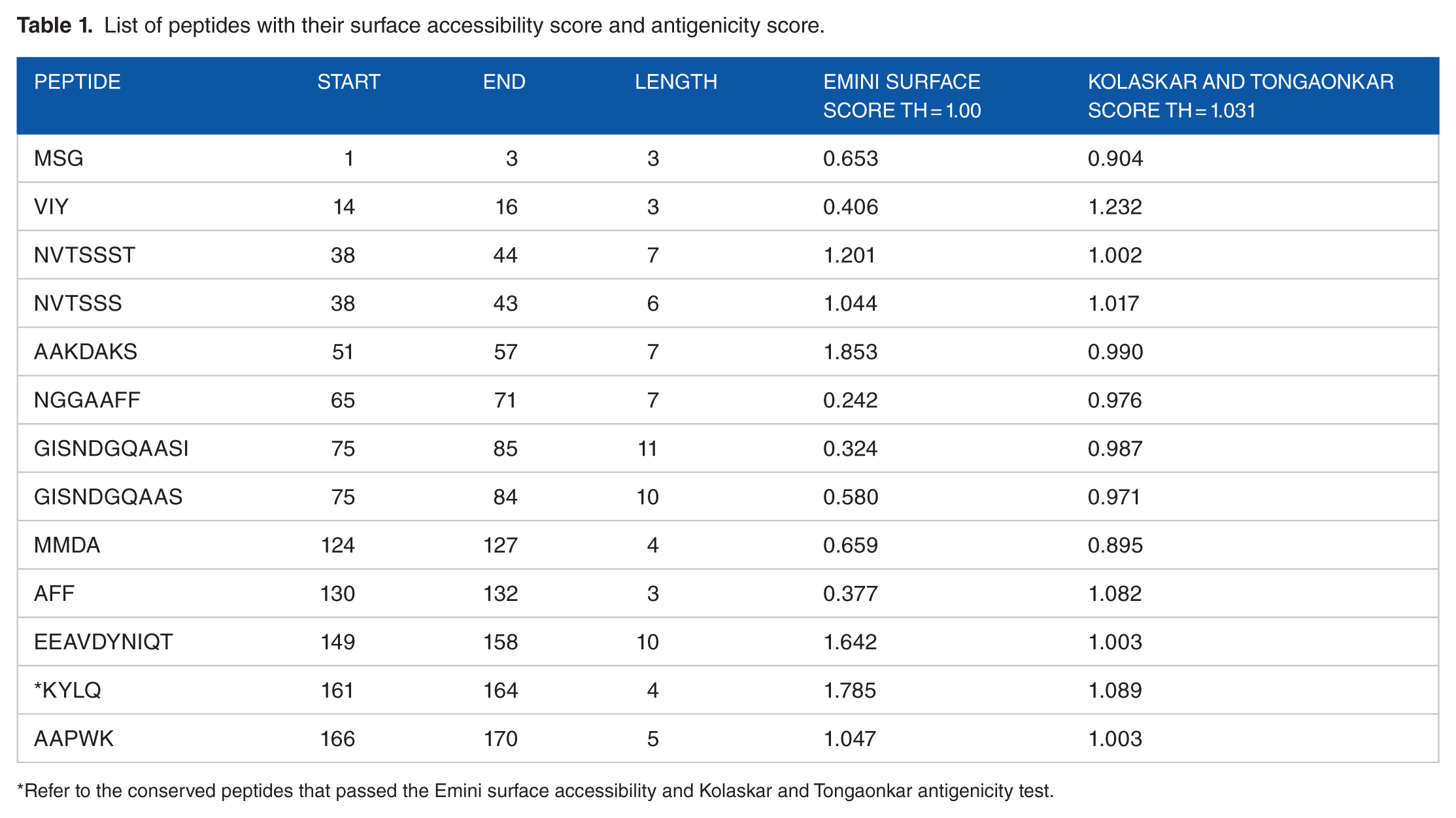
Refer to the conserved peptides that passed the Emini surface accessibility and Kolaskar and Tongaonkar antigenicity test.
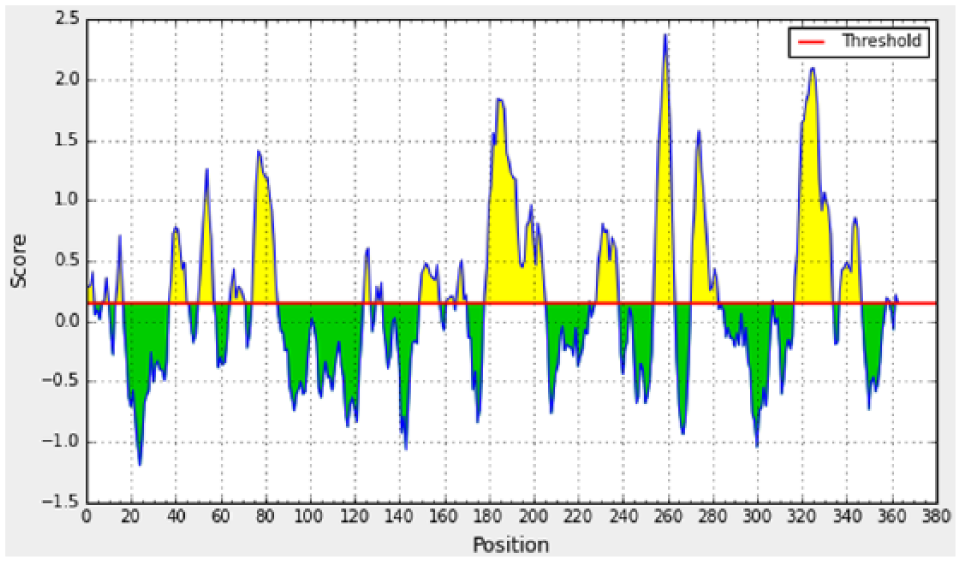
Present Bepipred Linear Epitope Prediction, the yellow space above threshold (red line) is proposed to be a part of B-cell epitopes and the green space is not a part.

Present Kolaskar and Tongaonkar antigenicity prediction, yellow areas above threshold (red line) are proposed to be a part of B-cell epitope while green areas are not a part.

Present Emini surface accessibility prediction, the yellow space above threshold (red line) is proposed to be a part of B-cell epitopes and the green space is not a part.

Present the structural position of the most promising B-cell epitope peptides KYLQ, FEYARKHAF of MHC I, and FFKEHGVPL of MHC I and MHC II of Madurella mycetomatis FBA using UCSF Chimera version 1.10.2.
Prediction of T helper cell epitopes and interaction with MHC I alleles
M. mycetomatis FBA sequence was analyzed using IEDB MHC I binding prediction tool based on ANN-align with half-maximal inhibitory concentration (IC50) ⩽100; the list of the most promising epitopes that had binding affinity with the Class I alleles along with their positions in the M. mycetomatis FBA is shown in Table 2.
List of the most promising epitopes that had binding affinity with MHC I alleles along with their positions in the M. mycetomatis FBA, IC50, and percentile.

Prediction of T helper cell epitopes and interaction with MHC II alleles
M. mycetomatis FBA sequence was analyzed using IEDB MHC II binding prediction tool based on NN-align with half-maximal inhibitory concentration (IC50) ⩽1000; the list of the most promising epitopes and their correspondent binding MHC II alleles along with their positions in the M. mycetomatis FBA is shown in Supplementary Table 1 while the list of the most promising epitopes that had a strongly binding affinity with the Class II alleles and the number of their binding alleles is shown in Table 3.
List of the most promising epitopes (core sequence) that had binding affinity with MHC II alleles and the number of their binding alleles.

FBA physical and chemical parameters
The physicochemical properties of M. mycetomatis FBA protein were assessed using BioEdit software version 7.0.9.0. The protein length was found to be 363 amino acids and the molecular weight was 39 675.83 Da. The amino acid that formed FBA protein and their number along with their molar percentage (Mol%) were shown in Table 4 and Figure 5.
Present the list of amino acid that formed FBA protein with their number and Mol% using BioEdit software Version 7.2.5.
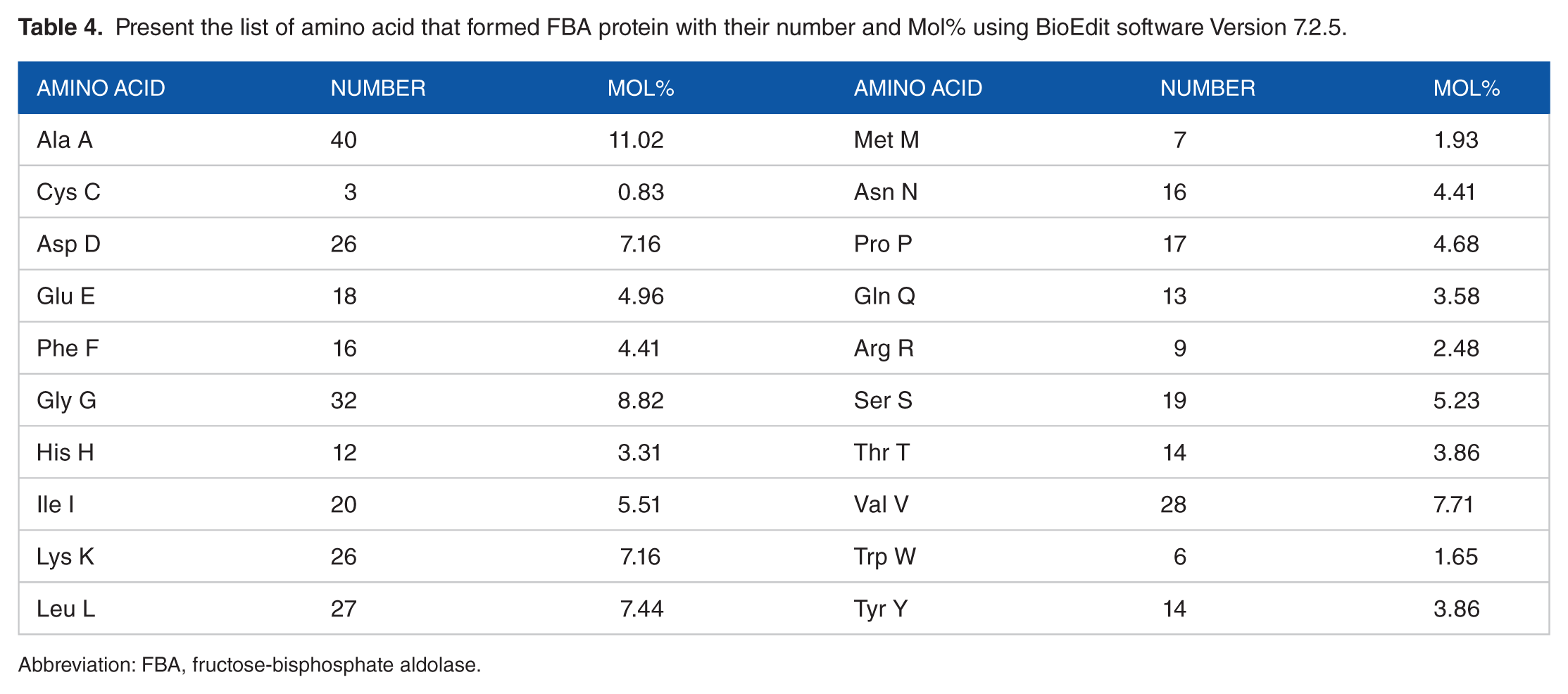
Abbreviation: FBA, fructose-bisphosphate aldolase.

The graph shows the amino acid composition in Mol% of M. mycetomatis FBA.
Population coverage analysis
Population coverage test was performed to detect all epitopes binds to MHC I alleles, MHC II alleles for Sudan and North Africa (Tables 5 to 10).
Population coverage average for all epitopes binding to MHC I alleles in World.

Projected population coverage.
Average number of epitope hits/HLA combinations recognized by the population.
Minimum number of epitope hits/HLA combinations recognized by 90% of the population.
Population coverage average for all epitopes binding to MHC I alleles in North Africa.
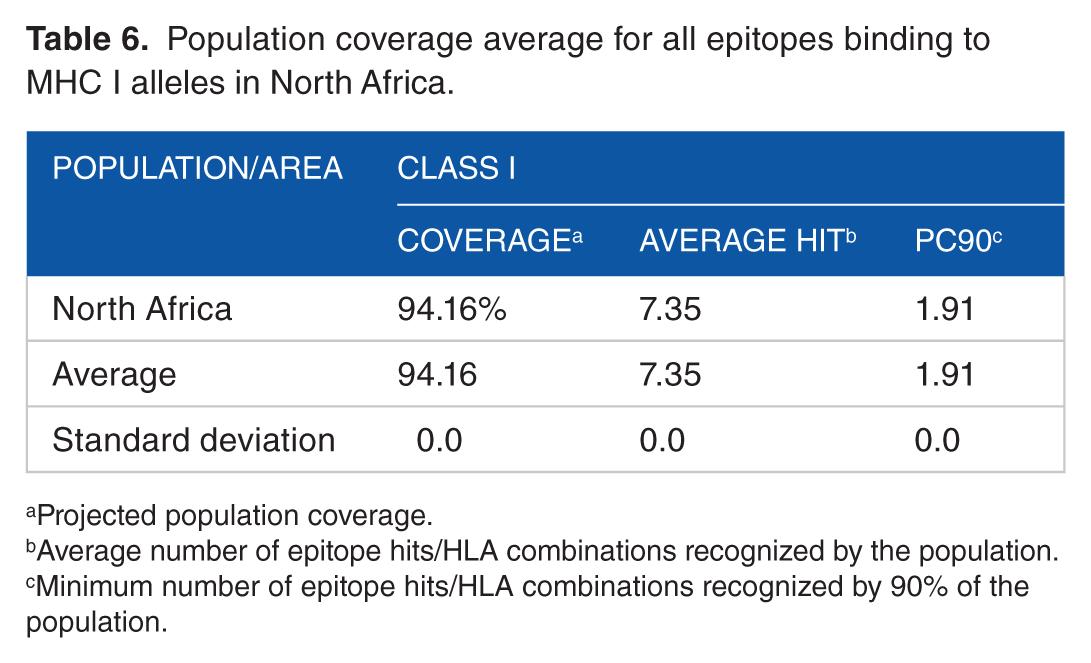
Projected population coverage.
Average number of epitope hits/HLA combinations recognized by the population.
Minimum number of epitope hits/HLA combinations recognized by 90% of the population.
Population coverage average for all epitopes binding to MHC I alleles in Sudan.
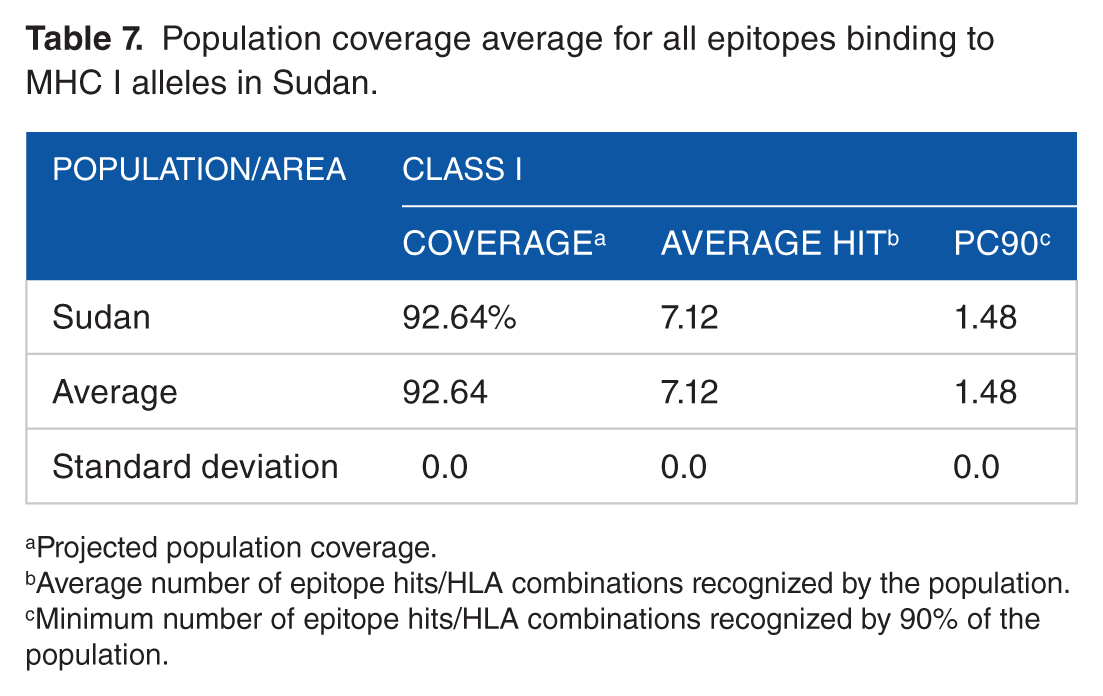
Projected population coverage.
Average number of epitope hits/HLA combinations recognized by the population.
Minimum number of epitope hits/HLA combinations recognized by 90% of the population.
Population coverage average for all epitopes binding to MHC II alleles in World.

Projected population coverage.
Average number of epitope hits/HLA combinations recognized by the population.
Minimum number of epitope hits/HLA combinations recognized by 90% of the population.
Population coverage average for all epitopes binding to MHC II alleles in North Africa.

Projected population coverage.
Average number of epitope hits/HLA combinations recognized by the population.
Minimum number of epitope hits/HLA combinations recognized by 90% of the population.
Population coverage average for all epitopes binding to MHC II alleles in Sudan.

Projected population coverage.
Average number of epitope hits/HLA combinations recognized by the population.
Minimum number of epitope hits/HLA combinations recognized by 90% of the population.
Molecular docking
Discussion
The current study revealed three promising peptides that could be the first vaccine against M. mycetomatis FBA worldwide. The peptide KYLQ is the only one peptide that passed all B-cell prediction tests in this study and shows high binding affinity in docking. In MHC I analysis, 71 conserved peptides were predicted using ANN method with IC50 = 100. Three peptides were suggested and thought to be a possible epitope-based peptide vaccine against M. mycetomatis FBA. The peptide FEYARKHAF interacts with the highest number of MHC I alleles and the other two, YIRAVAPIY and FFKEHGVPL, are highly MHC I-binding peptides. The selection was done according to the binding with the highest numbers of alleles. The peptide FEYARKHAF interacts with seven alleles (HLA-B*15:02, HLA-B*18:01, HLA-B*40:02, HLA-B*44:02, HLA-C*03:03, HLA-C*12:03, HLA-C*14:02) while the other two peptides, YIRAVAPIY and FFKEHGVPL, interact with three alleles (HLA-A*29:02, HLA-B*15:01, HLA-B*35:01) and four alleles (HLA-B*08:01, HLA-C*03:03, HLA-C*12:03, HLA-C*14:02), respectively. The reference FBA was analyzed using IEDB MHC II binding prediction tool based on NN-align with half-maximal inhibitory concentration (IC50) ⩽ 1000; there were 240 predicted peptides found to interact with MHC II alleles. We proposed the peptides FFKEHGVPL, IYQALSKIS and YIRAVAPIY that had the affinity to bind the highest number of MHC II alleles. The peptide FFKEHGVPL exhibits exceptional population coverage results for both MHC I and MHC II alleles with total binding to 15 different alleles in MHC II and 4 alleles in MHC I, This finding shows a very strong potential to formulate an epitope-based peptide vaccine against M. mycetomatis and make the peptide FFKEHGVPL highly proposed. The population coverage analysis using IEDB analysis resource predicted both MHC class I and class II based coverage of the selected peptides for Sudan, North Africa, and world population to assess the feasibility of being potential vaccine candidate in those endemic aeries. The peptide FEYARKHAF population coverage was found to be 30.3% for Sudan, 24.38% for North Africa, and the world population coverage was found to be 36.63%. Furthermore, the peptide FFKEHGVPL population coverage was found to be 26.59% for Sudan, 20.37% for North Africa, and the world population coverage was found to be 29.11% (Figures 6 to 8).
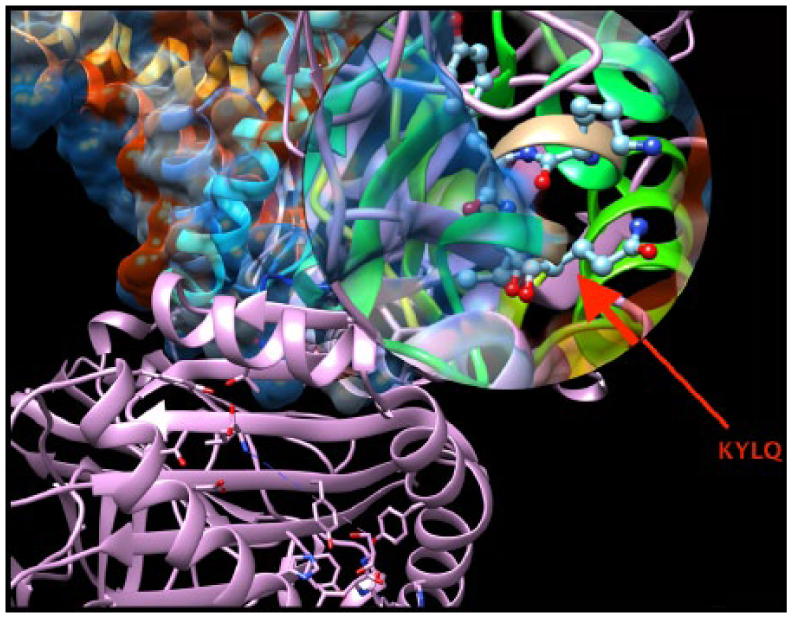
Molecular docking of KYLQ peptide of M. mycetomatis FBA that binds B-cell and docked in HLA-A0201 using UCSF Chimera version 1.10.2.

Molecular docking of the most promising peptide FEYARKHAF of M. mycetomatis FBA that binds MHC I alleles and docked in HLA-A0201 using UCSF ChimeraX version 0.1.
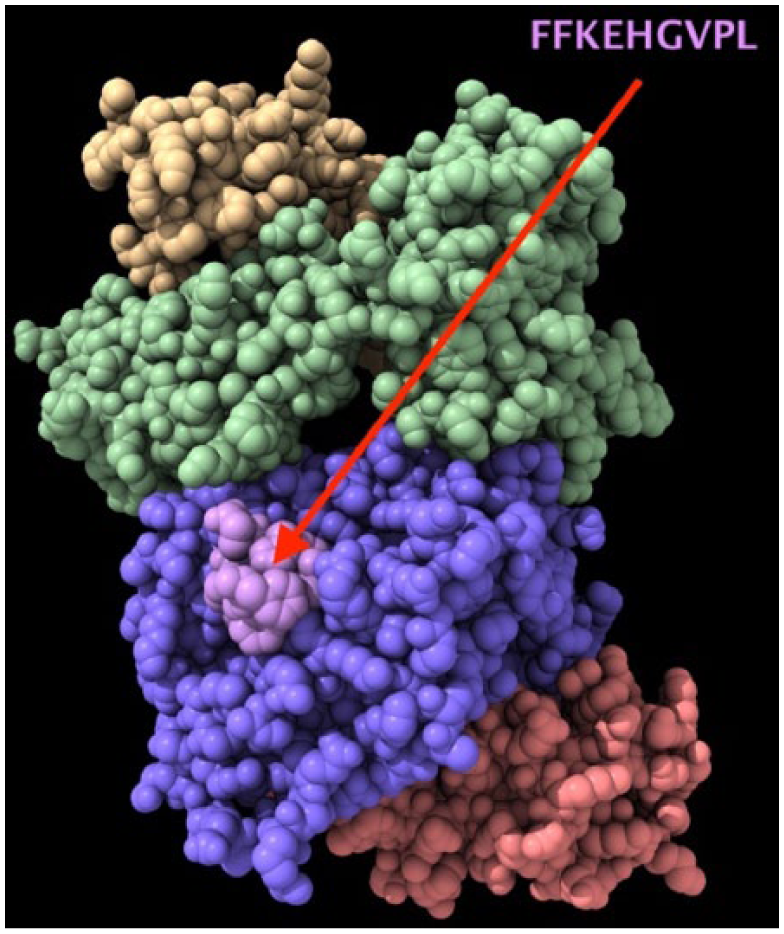
Molecular docking of the most promising peptide FFKEHGVPL of M. mycetomatis FBA that binds MHC II alleles and MHC I and docked in HLA-A0201 using UCSF ChimeraX version 0.1.
Population coverage results for total peptides binding to MHC I alleles with IC50 ⩽ 100 shows 97.57% projected population coverage for the world, 94.16% in North Africa, and 92.64% in Sudan while the population coverage results for total peptides binding to MHC II alleles shows 81.94% projected population coverage for the world, 75.2% in North Africa, and 59.3%in Sudan. Finally, the three peptides KYLQ, FEYARKHAF, and FFKEHGVPL were proposed as potential candidates to be devolved into a vaccine. Herein, in silico molecular docking was done to explore the binding affinity between the aforementioned peptides and the target HLA-A0201. The target HLA-A0201 has been selected for docking pertained with its involvement in several immunological and pathological diseases hence, although numerous studies have demonstrated an association between HLA alleles and disease susceptibility, Defining protective HLA allelic associations potentially allows the identification of pathogen epitopes that are restricted by the specific HLA alleles. These epitopes may then be incorporated into vaccine design in the expectation that the natural resistance can be replicated by immunization.38–40 The binding energies between the peptides and HLA-A0201 molecule were calculated and ranked. Peptide FFKEHGVPL shows the best Docking result, this indicates a strong potential to formulate a vaccine using the peptide FFKEHGVPL that is highly promising to be the first proposed epitope-based peptide vaccines against M. mycetomatis FBA. Based on our previous studies on Mokola Rabies Virus and Lagos Rabies Virus, a computational analysis was made and the most immunogenic epitopes for T- and B-cells involved in the cell-mediated immunity were analyzed.41,42 In this study, the same techniques were used, to design the epitope-based peptide vaccine against FBA enzymes of M. mycetomatis as an immunogenic part to stimulate a protective immune response.
One of the limitations of this study was the number of FBA sequences; there was only one sequence of FBA that retrieved from NCBI Database: This sequence collected from Sudan. On the other hand, the new version of IEDB population coverage calculation tool does not illustrate the ability to know the population coverage results for every peptide binding to MHC II like as previously was, it illustrates only the average percentage of all peptides. Recently, two other studies were going along parallel with our study to predict new epitope-based peptide vaccines against M. mycetomatis. They used PK of M. mycetomatis and translationally controlled tumor protein (TCTP) as target proteins.43,44 But we believe that FBA enzymes could be the best target protein due to its high ability to induce an antibody response in a human. In de Klerk et al’s study, they found that both FBA and PK IgG antibodies were present in eumycetoma patients’ sera. However, only FBA antibody levels were found to be significantly higher in eumycetoma patients’ sera when compared with healthy controls. 10
Conclusions
To the best of our knowledge, this study is considered to be the first to propose epitope-based peptide vaccine against M. mycetomatis FBA, which is expected to be highly antigenic with a minimum allergic effect. Furthermore, this study proposed promising peptides those peptides were (KYLQ) that show a very strong binding affinity to B cell, (FEYARKHAF) with a very strong binding affinity to (MHC I) alleles and (FFKEHGVPL) that show a very strong binding affinity to (MHC II) and (MHC I) alleles. In vitro and in vivo assessment for the most promising peptides, namely, (KYLQ), (FEYARKHAF), and (FFKEHGVPL) are recommended to be explored and find out more on their ability to be developed into vaccines against M. mycetomatis.
Supplemental Material
Supplementary_table_1 – Supplemental material for Epitope-Based Peptide Vaccine Against Fructose-Bisphosphate Aldolase of Madurella mycetomatis Using Immunoinformatics Approaches
Supplemental material, Supplementary_table_1 for Epitope-Based Peptide Vaccine Against Fructose-Bisphosphate Aldolase of Madurella mycetomatis Using Immunoinformatics Approaches by Arwa A Mohammed, Ayman MH ALnaby, Solima M Sabeel, Fagr M AbdElmarouf, Amina I Dirar, Mostafa M Ali, Mustafa A Khandgawi, Abdelhameed M Yousif, Eman M Abdulgadir, Magdi A Sabahalkhair, Ayman E Abbas and Mohammed A Hassan in Bioinformatics and Biology Insights
Footnotes
Declaration of conflicting interests:
The author(s) declared no potential conflicts of interest with respect to the research, authorship, and/or publication of this article.
Funding:
The author(s) received no financial support for the research, authorship, and/or publication of this article.
Author Contributions
Conceptualization: AAM, MAH;
Data Curation: AMHA, SMS;
Formal Analysis: AMHA, SMS, FMA, MMA, MAK, AMY, EMA, MAS, AEA;
Methodology: AID, MMA, MAK;
Project: AAM, MAH;
Resources: AMY, EMA, MAS, AEA;
Software: AID, AAM;
Supervision: MAH;
Validation: AMHA, SMS, FMA;
Visualization: AID, AAM;
Writing - Original Draft Preparation: AAM, AMHA, SMS, FMA, AID, MMA, MAK, AMY, EMA, MAS, AEA;
Writing - Review & Editing: AAM.

References
Supplementary Material
Please find the following supplemental material available below.
For Open Access articles published under a Creative Commons License, all supplemental material carries the same license as the article it is associated with.
For non-Open Access articles published, all supplemental material carries a non-exclusive license, and permission requests for re-use of supplemental material or any part of supplemental material shall be sent directly to the copyright owner as specified in the copyright notice associated with the article.
