



Abstract
This article shares the process and product of a community research project in Te Tairāwhiti, an East Coast region of the North Island of Aotearoa, New Zealand, heavily impacted by Cyclone Gabrielle and repeated flooding events. We begin by sharing insights into our collaborative journey, doing research in, with and for our community in the context of post-disaster. Then we present five key findings from interviews and focus groups with 40 Māori living in the region, including: (1) the impacts on Māori health and wellbeing, (2) the critical role of marae (sacred place of Māori culture), (3) the impacts on rural and coastal communities, (4) the response from Iwi (tribal group) health providers and (5) Māori leadership. We conclude with key reflections and considerations for research about climate change and extreme weather events by, with and for Indigenous communities.
Ko ngā tai o mihi o Te Tairāwhiti e tau nei. Mai i Pōtaka, ki te Toka a Taiau, ki ngā wai o Waikohu, whakawhiti atu ki Te Kuri a Pāoa, ka huri, ka huri i Te Tairāwhiti e!
The eastern tides greet and settle from Pōtaka, to the rock of Taiau, to the inland waters of Waikohu, flowing outward to Te Kurī a Pāoa. We turn, we return – to the tides of the rising sun!
Research has revealed the disproportionate impacts climate change is having on Indigenous communities around the world (Abate & Kronk, 2013; Reyes-García et al., 2024), with calls for research by, with and for Indigenous communities already experiencing the effects of more frequent extreme weather events (David-Chavez & Gavin, 2018; Pearce et al., 2019; Smith & Sharp, 2012). In this article, we share the process and products of our community research project by, with and for Te Tairāwhiti (East Coast region of the North Island of Aotearoa New Zealand) following Cyclone Gabrielle. We begin by sharing insights into our collaborative Māori-led journey of conducting research with and for our own community in the context of post-disaster. We offer reflections on the process of doing trauma-informed, relational, culturally responsive and care-full research with those who have lived through repeated flooding. We explain how our approach as ‘Analysis Aunties’ ensured our process was grounded in local relationships, often with whānau and friends. Rather than compromising our ‘objectivity’, we consider such approaches to be critical in post-disaster research where trust concerns and vulnerabilities are higher than ever. We turn to findings from interviews and focus groups with 40 Māori living in the region, including the critical role of marae (sacred place of Māori culture), impacts on rural, isolated coastal Indigenous communities, the responsive approaches by iwi-based (tribal-based) health providers, and impacts on Māori health and wellbeing. We conclude with key learnings, reflections and considerations for research about climate change and extreme weather by, with and for Indigenous communities.
Literature
Climate change-related disasters and weather events exacerbate existing inequities, including gender, disability, ethnicity and socio-economic disparities (Smith et al., 2022; Thorpe et al., 2025; Zahnow et al., 2025), with Indigenous communities disproportionately impacted (Abate & Kronk, 2013). Research is increasingly evidencing the impact of climate change-related disasters on Indigenous communities around the world, as well as community responses. Many are calling for research and policy that are led by Indigenous values and conducted in partnership with local Indigenous communities. In a recent issue of Kotuitui: New Zealand Journal of Social Sciences Online, the editors call for Aotearoa-specific approaches that ‘confront the scale, urgency and complexity of our crises’ (Matthewman et al., 2025, p. 138). Matthewman and Lambert (2024) ask ‘How might disaster studies in Aotearoa be both enhanced and decolonised?’ Uekusa et al. (2024) call for a shift in standard approaches in disaster studies research, reorienting to questions of social justice and advocating the value of Indigenous Knowledge for disaster response and mitigation. Other papers are more specific, calling for Māori-led research and policies addressing the impact of climate change on Māori (see, for example, King et al., 2010; Masters-Awatere et al., 2023; Moyle, 2025, Moyle et al., 2025) and the centring of mātauranga Māori (Māori knowledge) in climate adaptation.
Māori researchers have identified how intersecting health inequities exacerbate climate-related stressors, including disparities in housing, chronic disease, and access to food and healthcare (Andersen, 2024; Jones et al., 2020; Masters-Awatere et al., 2022). In addition, Tangata whaikaha (people with disabilities) and caregivers face layered exclusion during emergencies (Kaiwai & Allport, 2023), while health risks for wāhine Māori are intensified by factors such as caregiving responsibilities and marginalisation in recovery governance (Johnson et al., 2024; Masters-Awatere et al., 2022, 2023). Research has also highlighted how climate trauma compounds vulnerabilities related to addiction within Māori communities. For example, Blake et al. (2024) explain how stress, displacement and isolation lead to heightened drug-related harms. Already vulnerable groups, including disabled Māori, whānau carers and substance-affected communities, experience disproportionate impacts from climate disruptions, thus highlighting the urgent need for holistic and place-based interventions to support them (Blake et al., 2024; Kaiwai & Allport, 2023).
Importantly, housing precarity, transport disruptions and infrastructure breakdown are mutually reinforcing conditions. Moyle (2025) offers powerful insight into the heightened vulnerabilities in Hauraki Māori communities in response to the housing crisis that was exacerbated by Cyclone Gabrielle (also see Moyle et al., 2025). Continuing, they also reveal Māori practices of resilience and care, examining how Hauraki Māori mobilised to support whānau during the cyclone, and illustrating the importance of kāinga (home, settlement) for community resilience, connection and support before, during and after disaster. Such work highlights the need for integrating Māori ecological wisdom into emergency response and Civil Defence practices.
Research clearly evidences the importance of tikanga-based infrastructure (whānau, Marae), deeply rooted in whakapapa and care. As various scholars have argued, such frameworks are not supplementary, but rather fundamental to resilience, reflecting principles of manaakitanga and decentralised governance (Hyslop et al., 2023; Kenney & Phibbs, 2021; Rout et al., 2024). Masters-Awatere et al (2023) call for institutional transformation by embedding mātauranga Māori in public health systems and emergency preparedness to create culturally aligned and resilient responses. In this article, we take inspiration from this important literature with a place-based Indigenous community-led project in and with Māori in Te Tairāwhiti following repeated extreme weather events, including Cyclone Gabrielle.
Flooding and health research
Disaster studies researchers have long examined the health impacts of floods, including risk of death and injury, disease, for example gastroenteritis, and water quality issues (Alderman et al., 2012). Beyond physical health, researchers also reveal mental wellbeing impacts on flood-affected communities. Floods are ‘a deeply traumatic experience for those affected’ (Walker-Springett et al., 2017, p. 66), with higher occurrences of mental health issues - such as anxiety, depression and post-traumatic stress disorder - in communities that experienced flooding (Ahern et al., 2005; Alderman et al., 2012; Carroll et al., 2009; Fernandez et al., 2015; Stanke et al., 2012). While much literature focuses on those most severely affected by floods - particularly those whose homes are flooded or experience traumatic evacuation - others reveal more widespread impacts on community mental wellbeing. For example, in their research on flooded communities in the UK, Tapsell et al. (2002) reveal how people who experienced flooding speak about regularly checking river levels and report anxiety whenever it rains. Others documented how flooding changes residents’ sense of place, and place attachments, in relation to home and community. Places of safety, comfort, connection and joy can be disrupted and damaged, becoming places of fear, sadness and loss (Carroll et al., 2009; Sims et al., 2009; Tapsell & Tunstall, 2008).
Scholarship has also focused on impacts of flooding on Indigenous peoples, the effects of settler colonialism on risk, vulnerability and environmental injustices, and Indigenous Knowledge systems in flood risk reduction and local adaptation strategies (Danladi et al., 2018; Mavhura et al., 2013; Parsons & Fisher, 2022). From empirical research with Indigenous communities in Bangladesh (Barua & Rahman, 2019), Canada (Khalafzai et al., 2021), Ghana (Cudjoe & Alorvor, 2021), Namibia (Hooli, 2016), Nigeria (Fabiyi & Oloukoi, 2013), Vietnam (Sinh et al., 2009) and Zimbabwe (Mavhura et al., 2013), scholars have called for greater recognition and value for Indigenous Knowledge in flooding prevention, coping and adaptation. Some research has focused on health impacts, revealing how flooding exacerbates pre-existing community health and wellbeing inequities – long produced through systems of oppression, including colonisation, capitalism and patriarchy, and extractive land use.
In Aotearoa New Zealand, a growing body of literature has focused on the ways Māori understand and respond to flooding. For example, in their study examining community efforts to provide support for those affected by flooding in the Southern Rangitīkei area of New Zealand, McLachlan and Waitoki’s (2022) Kaupapa Māori case study included interviews with 10 Indigenous community leaders and 22 health and social service community practitioners. One of their findings was how Indigenous values informed responses to the traumatic flooding event. Māori cultural values of family and extended family wellbeing were evident during financial hardship, caused by loss of the primary income due to industry closure, or families not receiving income during strike actions, including protesting for better working conditions. They explain how Māori community leaders formed committees to ‘identify families experiencing financial hardship, to coordinate food parcels, and to raise funds to pay the mortgage, rent and power. The shared cultural values held by community members ensured that responses were fast, and targeted’ (p. 20). They identified the ways ‘tribal infrastructures being used as shelters, kitchens, and coordination hubs for psycho-social responses’ revealed the ‘ability of local tribes to respond more quickly than civil defence or other aid organisations’ (p. 21; Hudson & Hughes, 2007). Collective action during and following flooding events ‘relied on Indigenous leadership models of rangatiratanga (chieftain-ship), responsible caring (manaakitanga) and holistic concepts of wellbeing’ (p. 21). Similarly, in research with a small Māori community in Northland, Proctor (2013/2014) found ‘Aroha [love] and whanaungatanga [relationships] were the underlying values demonstrated through their actions’ during and following severe flooding events.
In another contribution to this literature, Parsons and Fisher (2022) draw on archival sources and oral histories of Māori and Pākehā (European) individuals living in a single catchment – the Waipā River – to trace how Pākehā actions to remove native vegetation, drain wetlands, introduce exotic biota and re-engineer waterways contributed to increasing the incidence of floods. The authors found that while Pākehā narrated floods as disaster events, Māori ‘viewed colonisation as the true disaster, with floods and fires merely products of settlers’ mistreatment of the environment’ (p. 1). This article highlights how colonial flood control efforts further alienated Māori from their rohe (ancestral lands and waters) and led to the destruction of their taonga (treasured lands, forests, wetlands and sacred sites protected under Te Tiriti o Waitangi). For Māori of the Waipā catchment, ‘flood risk management regimes were far more destructive - socially, economically and spiritually - than flood events’ (Parsons and Fisher, 2022, p. 1). As our analysis similarly reveals, it is impossible to understand health and wellbeing impacts of Cyclone Gabrielle on Māori without contextualising within histories of colonisation and capitalism, Māori understandings of health and wellbeing as relational, spiritual and holistic (hauora) (Kenney & Phibbs, 2021; Rout et al., 2024), and Indigenous ways of knowing whenua (land), awa (rivers), moana (ocean), and connections to people and places of past, present and future.
The ‘Analysis Aunties’: a place-based methodology of care
Since our rangahau (research) is focused on experiences of those living in Te Tairāwhiti during and following Cyclone Gabrielle, it is important to locate the study within this context. During the 2023 census the population of Te Tairāwhiti was 51,134, with the nation’s youngest median age of 36.7 years (Stats New Zealand, 2024). According to the 2023 Census, the region has the highest proportion (56%) of residents of Māori descent in all Aotearoa, with 16.9% speaking Te Reo. The region includes four Iwi – Ngāi Tāmanuhiri, Ngāti Porou, Rongowhakaata and Te Aitanga ā Māhaki – with over 80 marae across the region. In December 2024, the region had an unemployment rate of 5.1% (with approximately 7.3% unemployment rate for Māori). Two-thirds of the population of Te Tairāwhiti live in the highest levels of deprivation (Deciles 8–10), the most of any Te Whatu Ora [health] district. Te Tairāwhiti also report the highest rates of overall morbidity and mortality, high rates of ambulatory sensitive hospitalisations - technically avoidable with community care - and the highest unmet need for health care such as cardiac and renal services (Te Whatu Ora Health New Zealand, 2024).
Te Tairāwhiti was severely impacted by Cyclone Gabrielle on 13 to 14 February 2023. Lives were lost and thousands of people were displaced and isolated. Many homes were damaged, and after frustrating months of assessments, 9 homes were red-stickered and 149 yellow-stickered. In a housing crisis, many families are yet to be permanently rehomed. Productive lands were ruined, over 74 of the 422 bridges in the region were lost or damaged and 80% of the roading network was lost. Communications, water and power were interrupted, and there were food and fuel shortages. The cyclone revealed interconnected risks across sectors, such as housing, water, transport and care systems, highlighting significant infrastructural inequities. These challenges were exacerbated by the Crown’s inability to incorporate Māori-led systems into emergency planning (Johnson et al., 2023; Jones et al., 2020). For example, water supply disruptions highlight the interconnectedness of infrastructure failures, particularly affecting Māori communities that often face resource limitations. These communities experienced extended periods of isolation and increased risks to sanitation (Johnson et al., 2024). The region’s largest economies – horticulture, farming, forestry and tourism – have all been significantly impacted, with job losses and business closures, with disproportionate effects on Māori. The cyclone’s impacts were compounded by additional severe weather events in the years prior to and following. In 2023, Te Tairāwhiti experienced nine extreme rainfall events, with five States of Emergency declared.
Over the past century, the impacts of extreme weather such as Cyclone Gabrielle have been significantly worsened by problematic land-use practices rooted in colonial and economic imperatives (Smale, 2024). Tairāwhiti, a region once cloaked in dense Indigenous forests, has been cleared for pasture, monoculture forestry and carbon farming. When Māori first settled the land, they practised a reciprocal relationship with nature, imposing rāhui (restrictions) to allow ecosystems to regenerate. However, with European colonisation came a largely exploitative approach that viewed land as a commodity to be tamed and profited from. The push for ‘productive’ land led to widespread clear-cutting of forests, which destabilised the soil and increased erosion. Later, industrial-scale pine plantations replaced Indigenous forests, creating further problems as clear-fell harvesting left landscapes vulnerable to landslides, flooding and debris flows. Cyclone Gabrielle exposed the consequences of this mismanagement, as rivers choked with forestry waste, bridges collapsed and communities were devastated. Calls for Indigenous reforestation and sustainable land use have grown in response, asserting that climate resilience requires working with the land rather than against it. The history of land use in Aotearoa shows that ignoring ecological balance has dire consequences – ones now being reckoned with on region-wide scales.
Our research kaupapa
This local study is part of a larger project in collaboration with academic partners in Auckland and community researchers in Hawkes Bay (Laking et al., 2024; Thorpe et al., 2025). Herein, we focus on research processes and insights specific to Tairāwhiti. With ethical approval from the University of Auckland Health Research Ethics Committee (approval AH26632) and locality approval from Te Whatu Ora Tairāwhiti and Ngāti Porou Oranga, this study set out to understand how extreme weather events had impacted community health and wellbeing. The qualitative study included focus groups and individual interviews between October and December 2023. Participants were selected using purposive sampling with the aim of capturing a diversity of experiences. They were approached using email, telephone or personal community connection. Sampling involved collaborative mapping, where all research team members contributed to identifying key participants and ensuring diverse representation, as shown in Figures 1 and 2. We worked with our project kaumātua (respected Māori elder) to help direct and prioritise who to include as participants, and to support new connections.
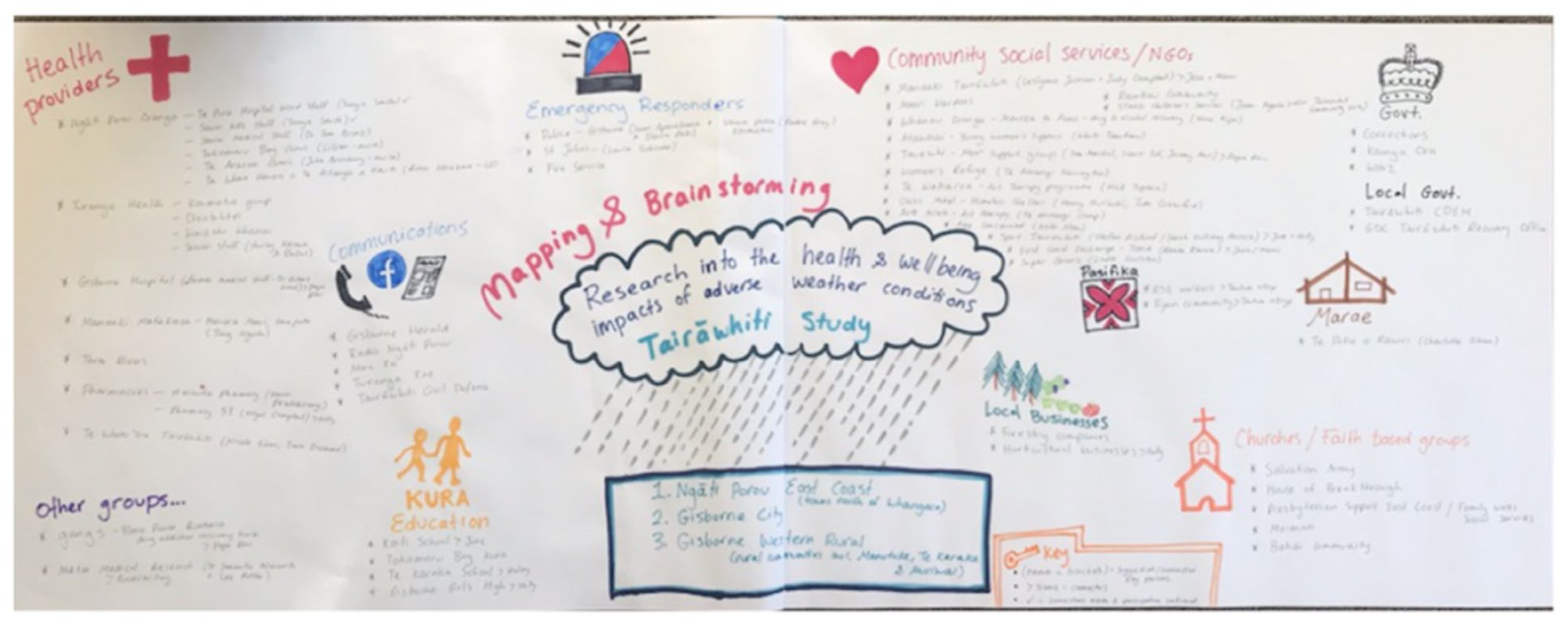
Our collaborative sampling mapping activity.
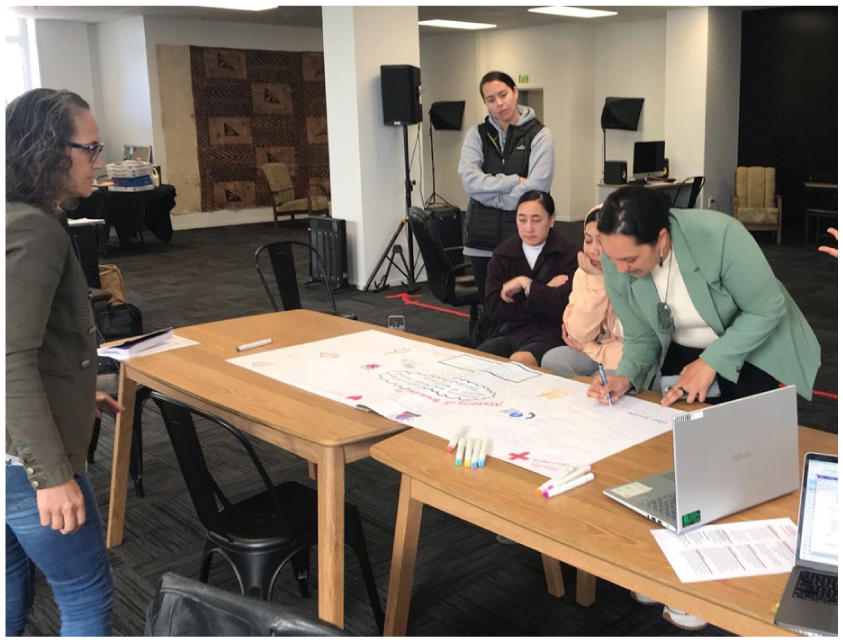
Some members of the research team engaging in the collaborative sampling mapping activity.
Our total sample included 77 participants from across the district, including East Coast (Makorori, Ūawa, Tokomaru Bay, Ruatōrea), Gisborne City and Gisborne Western Rural (Te Karaka, Whātātūtū, Ormond, Matawai). The sample included 53 women, 23 men and 1 non-binary participant, and represented community cultural diversity with 40 Māori, 24 Pākehā, 11 Pacific and 2 recent immigrants. Participants ranged in age from 16 to 85 years and represented diverse social and cultural backgrounds, including NZ European or Pākehā, Māori, Pacific peoples and recent immigrants; volunteers; farmers; forestry and horticultural workers, among them Recognised Seasonal Employees (RSE); health sector workers such as nurses, doctors and pharmacists; educators including teachers and principals; local governance such as Council workers and leaders; first responders including Police, Civil Defence and social services, non-profit organisations and religious groups. In this article, we focus on findings specific to the 40 Māori participants, particularly the impacts on individual and communal health and wellbeing of Cyclone Gabrielle and repeated adverse weather events.
Interviews and focus groups were conducted in locations of convenience to participants, including work settings, Marae, homes, Police station, schools and community organisations. Interviews and focus groups followed the same semi-structured guide, with discussions ranging from 30 to 90 min. Participants were offered a $50 voucher as koha (gift) in acknowledgement of their time and for sharing their experiences. The focus groups and interviews were recorded and professionally transcribed.
The team included four local wāhine with many iwi affiliations, all of whom are also Ngāti Porou wāhine - Barbara, McClutchie, Maxwell, and Raroa - with academic guidance and support from a senior Pākehā woman researcher who had grown up in and was living in the community - Thorpe. The wider research leadership team included two tāne Māori - Caddie, Ngāti Pūkenga, Waitaha-ā-Hei, Ngāi Te Rangi, Ngāti Hauā; and Laking, Te Whakatōhea - who gained funding for and supported local research processes throughout. At the community level, our Kaupapa (principles and ideas that act as a foundation for action) was shaped by the values and relationships of the women doing the focus groups, coding and analysis. Knowledge sharing and building local researcher capacity were integral to the kaupapa of the entire project, including designing the sampling strategy, collecting data, coding the transcripts, contributing to the analysis and presenting to the community. At all stages, the local team was central to the process, with their knowledge and relationships critical to project success. Throughout the project, we worked together to find respectful and appropriate ways to do research in, with and for our communities.
Recognising that many in the community continued to be emotionally, financially and physically impacted by repeated weather events, we adopted what has been called a ‘trauma-informed approach’, with an ethic of care in all interactions with participants (Edelman, 2023; Rosenberg et al., 2022). We find that Māori cultural practices naturally align with academic trauma-informed approaches. Te Ao Māori (the Māori world) brings its own methodologies, grounded in tikanga (Māori practices and principles), that reflect these same principles. Sensitivity, respect and care for safety are embedded in how we engage with whānau and communities. Although the four wāhine Māori community researchers had not conducted academic research prior to this project, they navigated the process confidently, weaving together tikanga, their extensive experience working across community-based kaupapa, and academic support and guidance.
Our methods were place-based and responsive to and relational with communities. Some members of our communities were hesitant, sceptical or resistant to participate in the project for a range of reasons. For some, it was the association with an academic institution that raised concerns, for others the research topic was too emotionally sensitive given that it was only six months or so after Cyclone Gabrielle, and many were still grieving, recovering socially and financially, and with some continuing to work through fraught relations within communities, or with Council and insurance companies. A great deal of effort was involved in carefully navigating stressed and stretched communities, and ensuring our sampling process was not causing any additional stress to potential participants.
All five of the wāhine researchers conducted interviews with members of their respective whānau, including parents, siblings and grandparents, and community members with whom we have close social and cultural relationships. We adhered to tikanga (Māori cultural protocols and practices) in all interactions. For example, karakia (cultural prayer) were offered at the beginning and end of all interviews and focus groups, and kai (food) was shared. At times, when participants became emotional, we paused recordings and offered comfort for example, tissues, a cup of tea. As all interviewers were local wahine, we believe our gender and close connections encouraged participants to be vulnerable and to speak openly about their experiences. While our research was not primarily therapeutic, many participants described the experience as such. We most often conducted focus groups in pairs, one of us maintaining the dialogue, the other collecting paperwork and providing food and comfort as needed. We found this collaborative approach to focus groups particularly effective for mentoring and supporting each other and ensuring the research team could be responsive to emotional reactions from all in a group interview setting. At times we felt the weight of kōrero shared with us, so it was important we supported each other to process the emotions that can arise when doing research in, with and for your own community that experienced traumatic events.
Rather than collecting data and sending it away for analysis, we negotiated to conduct analysis of transcripts – as taonga – locally. It was important to us that transcripts were managed with respect and that the voices of our community participants were always contextualised within place-based and local knowledge. We broadly followed Braun and Clarke’s (2022) thematic analysis, with our local team collaboratively developing a three-part coding framework that aligned broadly with key threads of the overall project aims (Community Voice; Health Systems; Non-Health Related Systems). Training was provided for the community research team on how to code transcripts and curate the coding framework. Figure 3 shows research team members at a coding workshop; the initial workshop was followed by bi-weekly drop-in sessions. In most cases, the interviewer also led the coding of their transcript(s). In this way, the cultural and emotional context of the kōrero could best be respected and understood. Final synthesis of codes and analysis was conducted by the local academic lead, with input from the local project manager and wider research team.
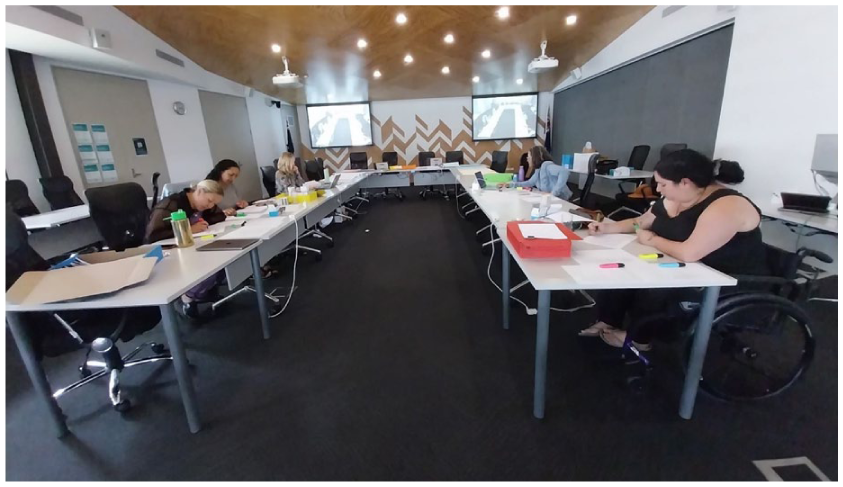
Photo of research team coding workshop.
We presented our findings back to the community via three local hui. Each of these events provided us with valuable opportunities for the community to share their feedback. As well as contributing to the wider project report for the Ministry of Health (Laking et al., 2024), we created a local resource specifically to share our findings with the community (Thorpe et al., 2024). Working with a local Māori designer, the local report became a taonga filled with the stories of residents, and place-based research insights. It is being used widely across community organisations. All participants received a digital report copy, with key stakeholders - including Iwi health providers, Marae leads - receiving a hard copy.
Analysis: Kua huri te tai, kua pari te tai aroha (The waters have receded, inflowing a tide of love): Impacts of Extreme Weather on the Health and Wellbeing of Māori Communities
In the remainder of this article, we share findings from our interviews and focus groups with 40 Māori living in Tairāwhiti during and following Cyclone Gabrielle. While our analysis does not include all the richness of kōrero with our participants, we share five insights that reveal some of the depth and complexity of impact of repeated extreme weather on Māori in the region: (1) Impacts on Māori wellbeing, (2) The role of Marae, (3) Rural and coastal communities, (4) Iwi health providers and (5) Leading with aroha. In pursuit of the transferability of findings beyond their immediate place of origin, we make connections to relevant global literature. While some quotations have been edited for clarity and/or length, we have tried to maintain the authenticity of participant voices.
Impacts on Māori wellbeing
Some of the most impacted communities, including Te Karaka and the East Coast, were predominantly Māori. Those in the most affected communities experienced high levels of stress, grief and trauma during and after emergencies and evacuations:
I vividly remember just seeing water, just mud everywhere. And people walking around like zombies . . . I think there was just a period we were going through, like waiting for someone to turn up. Because we were just in a state of mourning, you know, like what the heck’s just happened to us? It was like you know, i hoki ki te pō, engari ka toru rā whā rā pea ka puta ki te ao mārama mā tātou anō, tātou e hiki! [we returned to the darkness, however it took three to four days and we were back in the light again, we ensured we looked after ourselves]. (wahine, western rural)
A strong theme across the community was chronic mental health effects of repeated extreme weather events, with rain continuing to cause distress, often referred to as ‘rain anxiety’:
We’ve got lots of whānau who experience panic attacks and anxiety every time there’s a sniff of rain. (wahine Māori, East Coast) When it rains, I stay awake all night because I am close to the river . . . if the river meets this one tree that’s by my house, that’s a getaway . . . just get in your car and drive to the closest place you can go to. (wahine Māori, East Coast) Some people . . . when they know a big storm’s coming, they’re already packing themselves and heading into town. It’s affecting them mentally. It’s affecting them. They’re scared. (tāne Māori, rural)
Such effects were felt across whānau, with some parents speaking of efforts to support their tamariki (children) during this time:
My kids are scared of the rain. They don’t like the sound of it. So I ended up moving them all into my room, we just put mattresses on the floor, we all slept together. They’re also scared of the dark and the power going out . . . it freaks them right out. As soon as it pours, she blocks her ears. Or she’s finding headphones and turning whatever she’s watching up. She has anxiety . . . we just awhi her and say it’s going to be alright, it will stop soon. (wahine Māori, city)
Reflecting on the widespread emotional impacts on her community, one kuia recalled: ‘I saw confusion. I saw pouritanga [deep sadness], I saw mamae [hurt / pain], I saw rawakore [impoverished], I saw panipani [great loss] . . . I saw all of those happening’ (Marae leader).
Māori participants also spoke of the power of cultural practices (karakia, pūrākau [storytelling], waiata [song]) to support their own and whānau healing from stress and anxiety following flooding and repeated adverse weather events:
I was not good, because it was seeing the impact on how it was for your own community whānau. I think it hit me quite a bit later on. I fell into depression. . . . It just built up over time. I’m still in healing therapy and all that sort of stuff, for the last probably 6-7 months now, since Gabrielle. I’m just trying to get my wairua [spirit] and my tinana [body] and everything back on place so I can start focusing. (tāne Māori, volunteer lead, western rural) You know what you do . . . when you come from great leaders, as in your whakapapa [genealogy] who are great leaders, obviously that’s filtered down to you. I always go back to karakia. It’s karakia. So important and it helps. It helps us with our days. (tāne Māori, rural) The strength was always there. In the background, it was always a strong community. I think this sort of shocked everybody, put everyone on the backstep. There was lots of confusions, a lot of upsets, a lot of things going on. But they all started gathering around at afternoons at the main school. Being able to sit and share kai with each other and talk. That kōrero . . . was what the community needed to do . . . bring the humour out and start having a bit of a laugh together. But at the same time, still aware in the back of their minds that it wasn’t safe at all . . . it was terrible. (tāne Māori, rural) We realized very quickly . . . day three, that it was becoming overwhelming . . . taku tirohanga ki te tangata (my observation of the people). . . . Just when people walk in the door . . . and then you see the te taumahatanga e pēhi nei ngā tāngata (the heaviness on people). So, they would say ‘come and have a coffee’ . . . just talk to them. People would have a big fat tangi (cry), but it was okay, no-one was looking at them. (wahine Māori, Marae leader)
Although whānau often found ways to grieve and support one another during these times, some expressed a need for additional mental health support. As a kaumātua explained:
A major issue is the people who are most traumatised . . . sometimes don’t know how to access the support that’s available. You wanna try working with ACC or some of these other government agencies. Many of our Māori people have great difficulty dealing with those agencies. I think we need more kaitiaki support for our people.
While we found ‘rain anxiety’ to be widespread across the community, Māori participants spoke of grief over damage and destruction to natural environments, highlighting the importance of whenua to Hauora (holistic understandings of health and wellbeing):
You could see how high it had gone and then just how much it had affected the houses, the papakāinga (housing on ancestral Māori land), not just houses. These are homes that have been passed down through generations where people’s whenua [placentas] are buried. (wahine Māori, Kaitī)
Our research findings align with those of Parsons and Fisher (2022), who revealed the trauma carried by Māori of the Waipā catchment who witnessed the destruction of their taonga forests, wetlands and sacred sites:
The land is not the same as what it used to be when I was young. I could just go diving and I could go get a crayfish . . . Now I just see logs jammed in there, pinecones. (tāne Māori, East Coast) Our rivers are full of silt. The oxygen that feeds our species in the awa is not there for them anymore. It’s covered, it’s smothered. The numbers are down. The eels are getting ugly, the colours are changing. No swimming holes for whānau anymore. (tāne Māori, rural)
Similarly, we heard how the destruction of, and damage to, marae and urupā continues to cause distress and sadness for whānau:
You think about all the urupā that were affected . . . that emotionally hurts us when we can’t go and visit our tīpuna anymore. Or we don’t know where they are anymore. That’s probably one of the big grievances . . . knowing that a lot of urupā, or graveyards, had been swallowed up by the cyclone. (wahine Māori, Kaitī)
Others spoke of the sadness of seeing culturally significant objects, such as waka, damaged and destroyed by the floods:
I saw broken wakas, I saw them just stuck in mud. . . . Waka tend to be named after our ancestors . . . they are very, very important to us. We love them as if they’re part of a whānau . . . so this was huge. (wahine Māori, Kaitī)
We also heard of how damage to roading was limiting access to places of cultural significance to Māori which also impacts their health and wellbeing:
Because of the roading, I haven’t even been home in so long. I’m someone who tries to get home at least like two or three times a year. We go to our marae, we do a working bee, we clean our whare [house], we look after our urupā [burial grounds]. We go and care for our whenua and we care about it so deeply, it is part of us. . . . ’Cause that’s our whenua [land] . . . I’m one of many who can’t get home, and it just hurts, like it actually just breaks your heart. It’s so painful, it’s like grieving a place that you can’t go to. And I think that’s been like the biggest impact I have seen with my little community, it’s just not being able to go home and put your feet on the land and get ngā hau o Tāwhirimātea (Return to your mountain to be cleansed by the winds of Tāwhirimātea / Māori god who controls the winds). (wahine Māori, city)
As highlighted, the health impacts of extreme weather events on Māori cannot be understood simply as ‘individual’ physical health, but require more relational, holistic approaches to hauora as connected to people and places of significance (Johnson et al., 2024; Masters-Awatere et al., 2023; Reweti et al., 2023). ‘Whenua is a determinant of health in Aotearoa’ (Moewaka Barnes & McCreanor, 2019) and in a context of climate change, where the land, rivers and oceans are being destroyed by extreme weather and problematic land use, Māori health and wellbeing are significantly harmed. As one wahine from the East Coast articulated, ‘If I am the whenua and the whenua is I, then how are we treating that?’
The critical role of Marae
Many Marae were damaged, and some were destroyed, during Cyclone Gabrielle. For marae that were not significantly damaged, several became critical resources for communities (tāngata whenua [Indigenous people of the land], tāngata tiriti [people of the treaty/all non-Māori citizens and residents], and tauiwi [foreigner/immigrant]), very well-functioning and well prepared. Our research aligns with findings from Hudson and Hughes (2007) that revealed the important roles of marae and Māori communities in disaster recovery, and Bailey-Winiata and colleagues’ (2022) research that reveals Marae as examples of ‘Mātauranga [Māori knowledge] in action’, including how best to ‘protect and shelter people from hazards and following disasters’ (p. 43). Through our interviews, we consistently heard of marae demonstrating cultural leadership, manaakitanga, hospitality and knowledge during States of Emergency, and offering support across communities, including Pacific. For example, Te Poho o Rāwiri, which serves serving a community of 12,000 with high deprivation and social needs in Kaitī, was praised highly as an innovative and responsive pā where residents could come for support, including information from Police and other agencies, medical, kai, water, showers, psycho-social, and advice from WINZ Work and Income New Zealand:
You wanna get something done in a community you go to the local marae and ask them first. Then you go to the church groups, right, they’re the other ones who, you know you can go and talk to. Then you go to the community spaces, that’s how you get into a community, and that’s how you get to the community. And I think a lot of our big organisations forget that. (wahine, Kaitī) One thing about marae support in a situation like this, it that it’s no big deal with Māori to respond to that. Because Manaaki hosting is one of the most important facets of being Māori. (kaumātua, Kaitī) People have a strong connection to the pā, and to the marae in general. You get people volunteering . . . like nurses who will go and help at the pā [fortified village] when they can. The pā is so amazing for that . . . (wahine, Kaitī)
However, such manaakitanga was often at the own expense of Marae (human and financial), exhausting their reserves, including kai, fuel, water, finances, without adequate or established systems for reimbursement:
I feel Marae [are] taken advantage of. Hey, we’ll do it anyway. But given that they are such an important resource, I feel that it should be the responsibility of central government to make sure that those resources are kept up to standard. And are supported, and being able to be provided, you know they’re lifesavers in many cases. And, you know we hear lots of, it’s not just for, as a sanctuary during a weather thing. A marae is a place where Māori can grieve, where Māori can celebrate, where Māori can learn, and Māori can share. (Kaumātua, City)
Our research highlights marae as vital in community support during extreme weather events. Importantly, tikanga-based infrastructure such as Marae cannot be viewed as supplementary or voluntary support, but central to community resilience and thus must be funded as such. It is also important that external organisations respect marae leadership in how they present and what they do in these spaces during and after extreme weather.
Rural and coastal communities
With extensive damage to roading, some remote, rural and isolated coastal - predominantly Māori - communities felt vulnerable and exposed. The isolation added significantly to stress of whānau:
It was so stressful cause we couldn’t get out. Yeah and just like the destruction of the land . . . everyone was freaking out . . . we’d been through like all those other [weather events] before, but this one we’d been isolated . . . we were cut off from everybody for ages. (wahine, East Coast)
Transporting medical staff into rural and isolated communities often required creative approaches for example ATV over farmlands when roads damaged; helicopters into remote areas; hiking through bush and over farmland. Prescriptions were a major concern and required coordinated efforts to get medication to isolated and rural communities. Helicopters were critical in getting medical supplies and patients in and out of remote areas, but not everyone who needed it received attention:
Our whānau up the coast needed medicine. Prescriptions. Getting access from the helicopter to the home was a challenge. So the Police leant in and helped out. We got a side-by-side from Honda, it got to places where our four-wheel-drives could never go. We used that side-by-side to get to places and spaces to get medicine in. Getting the basic necessities to whānau, for their health and wellbeing was important. (Pacific male, first responder, city)
Underinvestment in rural health in Tairāwhiti exposed remote and rural communities - predominantly Māori communities - to heightened risk and stress and anxiety, particularly among those with complex or high health needs. Some participants spoke with frustration about emergency, evacuation and health systems that they perceived as failing to meet the needs of isolated, rural and coastal Māori communities. Investment is required to build a more robust and resilient rural health system that can meet the needs of those living in areas that increasingly become disconnected.
Some Māori in coastal communities also expressed frustration in processes in which they were alienated from and losing access to their rohe (Parsons & Fisher, 2022). Some refused to accept Council decisions and remained committed to caring for their whenua:
. . . We don’t want to move. We don’t believe we should move. So we sit amongst where we’re all from and we don’t want to move. And we’re adamant to stay on our farm and work that. The holistic values of why we are Māori and why we are uri ki te whenua [descendants of the land]. Holding our pao [song]. It feels like we’re the last . . . (wahine Māori, East Coast)
Through such experiences, many have become more involved in land and water-use initiatives, including native seed collection, planting waterways, clearing beaches and waterways, and protesting problematic land use, particularly forestry practices.
Iwi health providers
While not unanimous, many participants shared positive feedback about Māori health provider support for Māori communities during the aftermath of Cyclone Gabrielle and repeated weather events. With community knowledge, trust and relationships, Māori providers went ‘above and beyond’ to support their communities during and after the State of Emergency. Māori providers collaborated with marae and social agencies, sharing essential infrastructure, to provide health needs to the most vulnerable in communities. Māori providers are proactively investing in sustainable and resilient systems, such as generators, solar power, communication systems and health campervans:
. . .there’s so much learning. I mean if we had a cyclone right now we’ve got Starlinks on every clinic. We have a generator at every clinic, we have radios that we’ve purchased. I’m just waiting for the install on full radio comms, you know ’cause you cannot rely on a mobile network, or internet, And we’re still scoping out some solar opportunities. So there’s a few things we’re doing to keep building resilience and the lessons learnt . . . There are lots of learnings. I think it’s constantly in the back of your mind when you’re planning now. (wahine Māori)
Much can be learned from Māori health providers in the innovative and responsive approaches during extreme weather events, and proactive approaches towards a more robust and resilient health infrastructure that meets the health needs of Tairāwhiti communities.
Leading with aroha
Throughout our research, we heard of Iwi or hapū (tribe or sub-tribe) demonstrating leadership and innovation in community recovery, for example health, housing, kai and social support (Cram, 2021). While many tāne played vital roles in protecting and supporting their communities during evacuations and the prolonged recovery period, we also learned about the often less visible but equally critical leadership from wāhine Māori. We noted numerous examples of wāhine Māori leading community hubs - such as marae and school - and organisations, for example Council, drawing upon their cultural values of manaakitanga, aroha and tautoko (to support) communities in a time of need. Sometimes this came at a cost to their own health and wellbeing; fatigue, exhaustion, loss of income and ‘heaviness’ of carrying the weight of others’ mamae (suffering).
Our research resonates with Australian research that shows the roles of women, often with less public visibility and recognition, contributing to community recovery after floods (Foote et al., 2024). Beyond this, our research reveals intersections of gendered and cultural labour of Indigenous women working in, with and for their communities during and after flooding. While this mahi was led with a deep aroha for their communities, we also heard that some of these courageous wāhine leaders faced heightened public scrutiny, even abuse - from the wider public - for their efforts. In Tairāwhiti, wāhine Māori played a vital role in cyclone recovery, demonstrating leadership and voluntary labour that highlight gendered patterns of adaptation. Our findings here align with recent research by Johnson and colleagues (2024) and Masters-Awatere and collaborators (2023), and we join them in advocating for the recognition of wāhine-led resilience and similarly emphasise the importance of frameworks that address relational and spiritual losses.
Witnessing extreme weather events inspired some rangatahi (youth) to take action, motivating them to support their whānau and communities in preparing for and mitigating the effects of future disasters:
From my perspective it’s just, all I can do is just help all the aunties. Yeah, that’s what I can do ’cause I can just see that they’re hurt aye. All the aunties, you can just see them smiling but they’re hiding stuff, you know. . . . I just want more bros like me just to come and help all the families aye. That’s why I sorta jumped on this contract with . . . just to help out the aunties and that with the smashed houses. . . . all I just wanna do is just give back to the community ’cause everyone helped me around here. ’Cause I was whangai’d (fostered) to all the houses, yeah, and now it’s just giving back. (tāne Māori, rangatahi, East Coast)
Some family members told us of the impacts of such mahi on their rangatahi, and how witnessing the devastation to their communities activated them in new ways, including community recovery initiatives and taiao (environment) work to help recovery of the whenua, awa and moana, the land, rivers and ocean.
Final thoughts and future directions
The devastation wrought by Cyclone Gabrielle on Tairāwhiti has underscored both environmental vulnerabilities caused by colonial land use and the enduring strength of Māori cultural frameworks in response to crises. Destruction of forests, rivers and whenua has had profound ecological, psychological and health impacts, with local communities experiencing grief not just for lost homes, but for damaged urupā, polluted awa and severed ancestral connections. The weather’s impacts have been exacerbated by extractive land use models that prioritise short-term gain over sustainability, yet another manifestation of the impacts of colonisation. However, within this crisis lies an opportunity to reassert Indigenous solutions rooted in kaitiakitanga and holistic environmental and health management. Leadership of marae, hapū collectives, iwi health providers, first responders and local authorities has demonstrated the power of collective action and ancestral knowledge in disaster response.
Moving forward, the urgent need for Indigenous reforestation, sustainable land management and resourcing of Māori-led health initiatives cannot be ignored. Our study participants articulated the many ways that climate change, and the increasing frequency of extreme weather events, are impacting their hauora. They also highlighted the importance of improving rural infrastructure, investing in cultural spaces, practices and knowledge, and recognising Māori land rights and governance. Through such efforts Tairāwhiti, and Aotearoa as a whole, can build a future where environmental resilience is interwoven with cultural restoration and community health and wellbeing. Cyclone Gabrielle has made it clear the path to recovery must be led by those who have the deepest connection to the land and the most at stake in its survival. Our research also reveals the need for climate change-related disaster research to be conducted in, with and for communities most impacted. A key challenge now lies with policymakers and broader society to meaningfully support and invest in Indigenous-led efforts, ensuring future generations inherit a landscape not only restored but thriving.
In conclusion, we join other Indigenous researchers in calling for co-designed policies that consider the complex and intersecting health inequities of Māori (Masters-Awatere et al., 2023), and the centring of mātauranga Māori in climate adaptation. Cyclone Gabrielle’s impacts highlight the urgent necessity for Treaty-based transformation that prioritises mana motuhake. Māori-led systems must be adequately resourced and integrated into statutory climate governance to recognise the principles of mana motuhake and localised care (Blackett et al., 2024; Ministry for the Environment [MFE], 2023; Rout et al., 2024). The inadequate Crown response to emergencies highlights a deeper structural exclusion of Māori from disaster governance, with the expertise of whānau, hapū and iwi frequently overlooked (Awatere et al., 2021; Hyslop et al., 2023; Jones et al., 2020; Rout et al., 2024). Moreover, marae responses should be recognised not merely as reactive coping mechanisms but as infrastructure essential for shelter, coordination and care (Rout et al., 2024). As evidenced by our research and previous scholarship, health impacts are exacerbated by interconnected risks related to housing deprivation, infrastructural failures, substance harm and exclusion from health care and emergency planning (Blake et al., 2023; Johnson et al., 2024; Jones et al., 2020; Kaiwai & Allport, 2023). The research supports calls for a Treaty-based redesign of systems that prioritise Māori authority in planning, governance and retreat design (Blackett et al., 2024; Masters-Awatere et al., 2023; MFE, 2023). Finally, this rangahau contributes to a national movement of Māori-led climate responses focused on whenua-based planning, mātauranga indicators and intergenerational resilience (Harcourt & Awatere, 2022; Maxwell et al., 2020; Rout et al., 2024).
Footnotes
Acknowledgements
The authors are grateful to those who helped guide us, including local kaumātua, Ralph Walker, Pāpā Rau. We are deeply grateful to all participants for their willingness to participate, and their generosity of time and knowledge. We also acknowledge the many individuals and organisations within our communities who supported this project, providing contacts, input and feedback at various stages. Finally, we thank the reviewers for their highly constructive feedback on an earlier draft of this manuscript, and our whānau for supporting us during this mahi.
Authors’ note

Ethical considerations
This study was approved by University of Auckland Health Research Ethics Committee (approval no. AH26632). Locality approval was obtained from Te Whatu Ora Tairāwhiti. Ngāti Porou Oranga also gave approval. All participants provided written informed consent prior to enrolment in the study.
Consent to participate
All participants gave their consent to participate in this research.
Consent for publication
All participants gave their consent for their anonymous data to be included in academic publications.
Author contributions
All authors made a substantial contribution to the design of the work and have revised it for important intellectual content. McClutchie and Thorpe co-led the analysis, and Thorpe led the writing of this manuscript with important contributions from all. Maxwell led the usage of Te Reo Māori, with input from Barbara. McClutchie, Thorpe, Raroa, Maxwell and Barbara all contributed significantly to collection of data and early phases of coding and analysis. Laking and Caddie acquired funding and managed the overall project, and contributed to the analysis. All authors have approved the submitted version to be published.
Funding
The authors disclosed receipt of the following financial support for the research, authorship and publication of this article: This project was funded by the New Zealand Ministry of Health.
Declaration of conflicting interests
The authors declared no potential conflicts of interest with respect to the research, authorship and publication of this article.
Glossary
aroha love
awa river
hapū sub-tribe
hauora health and wellbeing
iwi tribal group
kai food
kāinga home, residence, village, settlement
karakia cultural prayer
kaumātua respected Māori elder
kaupapa principles and ideas that act as a foundation for action
koha gift
kōrero to talk, conversation
Kua huri te tai, kua pari te tai aroha
mamae hurt, pain, suffering
manaakitanga responsible caring
marae sacred place of Māori culture
mātauranga Māori Māori knowledge
moana ocean
Ngāi Tāmanuhiri Iwi from Gisborne District
Ngāti Hauā Iwi of the eastern Waikato, part of the Tainui confederation
Ngāti Pūkenga Iwi in Tauranga
Ngāti Porou Iwi located in the East Cape and Gisborne regions
Ngāi Te Rangi Iwi in Tauranga, part of the Tauranga Moana iwi group
pā fortified village [also see Marae]
pao song
Pākehā New Zealand European
panipani great loss
papakāinga housing on ancestral Māori land
pouritanga deep sadness
pūrākau storytelling, stories
rangahau research
rangatahi young people
rangatiratanga chieftain-ship
rawakore impoverished
rohe ancestral lands and waters
Rongowhakaata Iwi of the Gisborne region
taiao environment
taku tirohanga ki te tangata my observation of the people
tamariki children
tāne man
tangata tiriti people of the treaty, all non-Māori citizens and residents of Aotearoa
tangata whaikaha people with disabilities
tangata whenua people of the land, Indigenous to Aotearoa
tangi to cry [also can refer to funeral]
taonga treasured lands, forests, wetlands and sacred sites protected under Te Tiriti o Waitangi [Treaty of Waitangi], also culturally valuable objects, resources, phenomenon, ideas and techniques
tauiwi foreigner, immigrant to Aotearoa
tautoko to support
Tāwhirimātea Māori god who controls the winds
Te Aitanga ā Māhaki Iwi of the Gisborne region
Te Ao Māori the Māori world
te taumahatanga e pēhi nei te tāngata
Te Whakatōhea Iwi in the eastern Bay of Plenty
tikanga Māori practices and principles
tinana body
uri ki te whenua descendants of the land
urupā Māori burial grounds
wahine woman
wāhine women
waiata song, singing
wairua spirit
Waitaha-ā-Hei Iwi of the Bay of Plenty region
waka canoe
whakapapa genealogy
whānau extended family and friends
whanaungatanga relationships
whangai foster, adopt, to nourish
whare house
whenua land, placenta