



Abstract
Based on a critical rapid review, this article examines the developments and limitations of implementing An Act Respecting First Nations, Inuit and Métis Children, Youth and Families, S.C. 2019 (CAN) (Bill C-92) in Canada and among Indigenous communities in Ontario. Despite progress made by First Nations communities reclaiming sovereignty over child and family services since Bill C-92 became law on January 1, 2020, many challenges related to national standards, jurisdiction, funding, accountability, and data collection remain. Findings related to the history of child welfare services for Indigenous Peoples in Ontario, the context of legislation and implementation of Bill C-92, and the principal limitations of implementing Bill C-92 are presented. This review revealed limited results of studies completed in the province of Ontario. While Bill C-92 is a step towards addressing the systemic discrimination of Indigenous Peoples, there are still significant challenges to be addressed that ensure its effective implementation.
Keywords
Introduction
Based on a critical rapid review of scientific work, grey literature and qualitative analysis, this article examines the state of implementation of An Act respecting First Nations, Inuit and Métis Children, Youth and Families S.C. 2019 (CAN) (Bill C-92) in Canada, and more specifically among Indigenous communities in Ontario. In Canada, the Federal government and legislation recognize three Indigenous groups: First Nations—original inhabitants across Canada, representing over 630 distinct peoples, Inuit (Indigenous Peoples originating primarily from Inuit Nunangat, Canada) and Métis (Indigenous Peoples of mixed European and Indigenous ancestry, originating from the Red River Settlement in Manitoba, Canada). Respecting diverse and unique histories, customs and traditions, experiences of colonial violence, discrimination and inequitable access to social and economic benefit, well-being and security, have impacted all Indigenous Peoples across Canada. For well over a century, colonial policies have attempted to culturally annihilate Indigenous family systems, community supports, parenting modelling, intergenerational transmissions, and ways of living (Croteau, 2019; Indian Act, RSC 1985 [CAN]; Johnston, 1983). To this day, the devastating effects of the Indian Residential School System (Bombay et al., 2014; Truth and Reconciliation Commission of Canada [TRCC], 2015) and child welfare, including the Sixties Scoop (Sinclair, 2016), are well documented, and continue to impact Indigenous children, families, and communities across Canada. The last Indian Residential School closed in 1998 (Thomson, 2021), yet in 2024, the practice of removing Indigenous children from their families, communities and cultures through the current child welfare system, continues to cause severe disruption, marginalization and harm.
In Canada, the term child welfare generally describes a set of government and private services designed to protect children and encourage family stability. The main aim of these services is to safeguard children from abuse and neglect. Child welfare agencies will typically investigate allegations of abuse and neglect, these activities are called child protection services, supervise foster care and arrange adoptions. They also offer services aimed to support families so that they can stay intact and raise children successfully (Canadian Child Welfare Research Portal, n.d.).
According to the Canadian Census 2021, 53.8% of children in foster care are Indigenous, yet they account for only 7.7% of all children 14 years of age and younger (Statistics Canada, 2022). For decades, many Indigenous communities have worked tirelessly by taking actions to reclaim inherent rights to self-determination and restore self-governance over child and family services to not only reduce these numbers, but to ensure connection to culture, knowledge and ways of living for their children.
Cindy Blackstock, a prominent scholar, activist for children, and member of Gitxsan First Nation—People of the River Mist, who live along the Skeena River of northwestern British Columbia, Canada, has led several successful human rights challenges related to equality for Indigenous children in Canada. One of these challenges resulted in 2016 in the ruling by the Canadian Human Rights Tribunal (First Nations Child and Family Caring Society of Canada et al., 2016) that Canada wilfully and recklessly discriminated against First Nations children by failing to provide equitable funding for child and family services on-reserve (Goldner et al., 2022). The term reserve refers to land set aside by our federal government for the use and occupancy of a First Nation group. Reserves were created as part of the treaty making process with First Nations peoples. If a First Nation did not sign a treaty they were relocated to reserves anyway . . .. In most cases our federal government located First Nations reserves in remote locations. Over 80% of the reserves in Canada are considered remote because of the extreme distances from service centres where basic goods can be obtained. The Indian Act [1985] governs all reserves in Canada. The Act outlines that First Nations peoples cannot own title to land on reserve, and the Crown can use reserve land for any reason. (Indigenous Awareness Canada, n.d., para. 1)
After a long legal battle for equitable funding and opportunities for Indigenous children, Bill C-92 received Royal Assent on June 21, 2019 (Government of Canada, 2019), and became law on January 1, 2020 (Bill C-92, 2019).
Bill C-92 represents a step forward in addressing the systemic challenges faced by Indigenous communities. It affirms Indigenous Peoples’ inherent right to self-determination, self-governance, and sovereignty over child welfare. This Bill acknowledges unique cultural characteristics and seeks to address the disproportionately high rates of child welfare involvement among Indigenous Peoples, as well as the negative impacts of the Canadian child welfare system on Indigenous communities noted decades ago by Johnston (1983).
The specific purpose of Bill C-92, presented in section 8, is to
(a) Affirm the inherent right of self-government, which includes jurisdiction in relation to child and family services;
(b) Set out principles applicable, on a national level, to the provision of child and family services in relation to Indigenous children; and
(c) Contribute to the implementation of the United Nations Declaration on the Rights of Indigenous Peoples (Bill C-92, 2019).
Bill C-92 sets forth the following three principles: (1) the best interests of the child; (2) cultural continuity; and (3) substantive equality.
Nonetheless, following an analysis by Metallic et al. (2019a) that examined the potential effects of Bill C-92 on the well-being of Indigenous families’ children, the short-comings became evident. As Cindy Blackstock (2019) states, “Bill C-92 offers Indigenous children a colonial Faustian bargain: Accept the flawed bill in its current state or get nothing” (para. 11). This quote underscores the dilemma that Indigenous communities confront when grappling with the inadequacies of Bill C-92, as well as the ongoing challenge of the government to genuinely uphold Indigenous Peoples’ inherent rights and self-determination in the face of colonial legacies and imperfect legislation (Blackstock, 2019). It appears critical to document the challenges encountered with the implementation of Bill C-92 since 2020 given its purpose of serving Indigenous families and children, supporting cultural identity and promoting the inherent right to self-governance of Indigenous communities (Choate et al., 2021; Friedland et al., 2022).
To shed light on the state of implementation of Bill C-92, its progress and limitations, one author of Ojibway (Indigenous people in Canada and the USA who are part of a larger cultural group known as the Anishinaabeg (a group of First Nations Peoples that originate from around the Great Lakes, Canada and the USA; also known as Algonquin) and settler Irish ancestry, and three authors, descendants of settler French, Irish and Polish identity, have completed a critical rapid review on the current landscape and many challenges related to Bill C-92, with a focus on the province of Ontario. For this review, the authors first describe the methodology. Thereafter, they present the findings along three main axes of analyses: historical and current overview of child welfare services in Ontario, the context of legislation and implementation of Bill C-92, and persistent inconsistencies, inadequacies, and litigations regarding its implementation, followed by a discussion and conclusion.
Methodology
The purpose of this article is to examine the challenges related to the implementation of Bill C-92 in Canada, with a particular interest in Ontario. Findings indicate that research on this topic has been conducted mostly in the western provinces of Canada and in Quebec, demonstrating that few empirical studies and scientific publications are related to Ontario. This limitation illustrates the need for documentation to generate more knowledge focusing on the province of Ontario.
The work and analysis build on ongoing research collaborations between Croteau, Quinn and De La Sablonnière-Griffin with Indigenous partners in the provinces of Quebec and Ontario on the topic of youth protection and child and family services. To support the analysis, during her research assistantship, Jablonska, third author, completed a literature review and an annotated bibliography (Supplementary Material 1).
The work presented also stems from decolonization initiatives and publications with the Kinistòtàdimin Circle at the School of Social Work, University of Ottawa, named by Gilbert W. Whiteduck, from Kitigan Zibi, an Anishinaabe (a First Nation member or community that originate from around the Great Lakes, Canada and the USA; also known as Algonquin) community formally established in 1851 and located in the municipality of Vallée-de-la-Gatineau, Québec, Canada.
In conducting this critical rapid review, examining the state of implementation of Bill C-92, its progress and limitations, the researchers aimed to consider a breadth of perspectives, including those of Indigenous communities, government representatives, and researchers. The data analysis and discussion in this article are based on a qualitative, inductive, and thematic coding analysis (Maguire & Delahunt, 2017; Paillé & Mucchielli, 2021) of scientific and grey literature collected over 4 months in fall 2022. The decision to use a critical rapid review methodology was based on its ability to provide a comprehensive overview of existing research while also highlighting areas where further investigation is needed.
With the guidance of Patrick Labelle, a librarian in social sciences at the University of Ottawa, the search strategy involved using two research engines, Google Scholar and ProQuest, One Academic, with the following key words and combinations: “Bill C-92 AND Ontario,” “First Nations AND Inuit OR Métis AND Child Welfare and Family services AND Canada AND Ontario AND Bill C-92,” “First Nations AND Child Welfare and Family servic* AND Ontari* AND Social Servic*.” This approach included English data only, from 2019 to 2022, and identified a total of 260 scientific articles.
Next, a screening was conducted to ensure the selected articles included the key search terms which led to the exclusion of 211 articles, yielding 49 articles. Duplicates were then filtered out and excluded, resulting in a final count of 25 sources. These articles were carefully read, summarized and annotated (Supplemental Material 1) in the fall of 2022 providing the foundation for the study’s findings. Among the 25 sources, laws and court decisions were also included in the annotated bibliography.
While this approach allowed for a critical analysis of the available literature, it is important to note that this critical rapid review is not without limitations. This review revealed limited results of studies completed in the province of Ontario. In addition, the methodology did not allow for a deeper analysis of empirical work and is ultimately limited to the perspectives and assumptions of the literature included in this review. Nonetheless, this approach provides a valuable starting point for understanding the developments and challenges associated with implementing Bill C-92 in Canada, primarily in Ontario, and can serve as a foundation for legal amendments or international research.
History of child welfare services for Indigenous Peoples in Ontario
Based on the critical rapid review and thematic analysis (Maguire & Delahunt, 2017; Paillé & Mucchielli, 2021), this section provides a historical overview of child welfare services in Ontario to better situate our findings. Previous research work is also presented for better contextualisation. The history of child welfare services and the overrepresentation of Indigenous children in the Canadian child welfare system reflects the continuation of government policies that have separated Indigenous families for many generations (Caldwell & Sinha, 2020), such as the Indian Residential School System enforced from the 1870s until 1998 (TRCC, 2015). Established by the Canadian government as a means of assimilating Indigenous children into Euro-Canadian culture, the Indian Residential School System was “a systematic, government-sponsored attempt to destroy Aboriginal cultures and languages and to assimilate Aboriginal peoples so that they no longer existed as distinct peoples” (National Centre for Truth and Reconciliation, 2024, para. 3). The TRCC (2015) characterized this intent as cultural genocide. The impact of Residential Schools, such as trauma, poverty, and substance abuse, has profoundly affected Indigenous families and communities to this day (Hedges, 2022). This is evident with the overrepresentation of Indigenous children and youth in the Canadian child welfare system.
In 1947, the Canadian Welfare Council on Social Development and the Canadian Association of Social Workers (1947) submitted a proposal to the Senate Committee and the House of Commons arguing for the assimilation of Indigenous Peoples and requesting the consideration of changes to the Indian Act 1985 that the provision of provincial social services be extended to federally registered status-Indians living on-reserve because they were observed to be receiving inferior quality of services compared with non-Indigenous Canadians (Johnston, 1983). In 1951, the Indian Act 1985 was amended to include section 88, transferring the Federal government’s responsibility for on-reserve child welfare services to the provinces; however, there was no funding to support the expansion of these preventive services. Indigenous community members were not consulted in this process, and the 1951 amendment had detrimental consequences that are well known today (TRCC, 2015).
Following the 1951 amendment to the Indian Act 1985, provincial child protection legislation started to be enforced on-reserves, without the necessary funding. While the Federal government agreed to pay for child-in-care costs, Federal and provincial governments showed significant resistance to support preventive services (TRCC, 2015). As a result, beginning in the 1960s, a decade historically known as the Sixties Scoop, thousands of Indigenous children were removed from their families and communities by provincial child welfare workers and were placed in foster care, or adopted by non-Indigenous families, intentionally disrupting connection to identity and a sense of belonging (Blackstock, 2009a, 2009b; Hedges, 2022; Sinclair, 2016). This ensued in ongoing efforts of Indigenous children and families to maintain their cultural connections, and to heal from the trauma of Residential Schools (Blackstock, 2009a, 2009b; Bombay et al., 2014; Hedges, 2022; Sheridan, 2021).
In 1965, the government of Ontario and Indian and Northern Affairs Canada (INAC) signed the Indian Welfare Agreement, which outlined INAC’s fiduciary responsibility to reimburse Ontario with 93 cents for every dollar used for on-reserve child welfare services (First Nations Child and Family Caring Society of Canada, 2024b; Indian Welfare Services Act, R.S.O. 1990 [CAN]). Many First Nation communities viewed the Ontario government’s provision of child welfare services as problematic, became increasingly frustrated, and publicly expressed their demands for the return of their children and self-governance over child welfare matters. At the same time, several First Nations championed greater control over child welfare services by developing federally funded on-reserve child welfare services (Office of the Auditor General of Canada, 2008). The leadership of First Nation advocates promoting the rights of First Nations children in child welfare care was recognized in the Child and Family Services Act 1984 (CFSA 1984) that affirmed the inherent rights of First Nations to develop child welfare agencies and to opt out of CFSA 1984 (Mandell et al., 2006).
The Child and Family Services Act 1990 (CFSA 1990) outlined the province’s requirements and standards for child protection services of all children and families in Ontario, including Indigenous children and families (Kozlowski et al., 2012; Petrella & Trocmé, 2022). The CFSA 1990 provided a legal framework for child and family services in Ontario, including the rights and responsibilities of children and families, the roles and responsibilities of child welfare workers, and the processes and procedures for child protection investigations and interventions. The CFSA 1990 included specific provisions that recognized the unique needs and experiences of Indigenous children and families and the importance of incorporating Indigenous perspectives and approaches into child protection services (Kozlowski et al., 2012; Petrella & Trocmé, 2022). For example, child welfare workers were required to consult with Indigenous communities and organizations when developing plans for the protection and care of Indigenous children and to consider the historical, cultural, and spiritual connections of Indigenous children to their communities and lands.
Overall, while the CFSA 1990 played a crucial role in shaping the child welfare system in Ontario and recognizing the rights and needs of Indigenous children and families (Stagg-Peterson et al., 2021), there was still much work to be done to address the ongoing impact of oppressive and discriminatory laws and policies; such as the Indian Act 1985, Indian Residential School System and the Sixties Scoop, and also, to provide culturally safe and trauma-informed child protection services for Indigenous children and families.
The Association of Native Child and Family Services Agencies of Ontario (ANCFSAO) was founded in 1994 with a mission “to ensure every Indigenous child and family on and off reserve has access to culturally appropriate services that help them grow up safe, healthy and spiritually strong” and its Indigenous child and family service agency members provide services to 90% of all First Nation communities in Ontario (ANCFSAO, n.d.). Similar to many Indigenous communities across Canada, First Nation communities in Ontario have long sought and participated in reclaiming control over child welfare practices involving their children and families.
To this day, research has shown that First Nations children are placed in child welfare care at higher rates than non-Indigenous children (Crowe et al., 2021) and are less likely to be reunified with their families. Indigenous children are often removed from their families and communities reflecting systemic discrimination and bias within the child welfare system (McQuaid et al., 2022). Placing Indigenous children outside of Indigenous families and communities can have a detrimental impact on well-being, leading to a persistent search for connection to heritage (Quinn, 2020) and an increased risk of physical and emotional harm (Carey, 2021). This can lead to a cycle of intergenerational trauma, as children who have been removed from their families are at an increased risk of being involved with the child and family services as adults (Carey, 2021). Accordingly, it is essential to prioritize preserving Indigenous family connections and cultural heritage to support the well-being of Indigenous children. In this matter, the first five of 96 Calls to Action of the TRCC (2015) are specific to child welfare’s responsibilities to Indigenous families. Children and family services and CASs in Ontario have committed to engage in reducing the number of Indigenous children in child welfare care.
In 2018, the CFSA 1990 was replaced by the Child, Youth, and Family Services Act 2017 (CYFSA). In addition to updated language and terminology, the CYFSA gives particular attention to children’s rights, well-being, cultural context, and services provided to First Nations, Inuit, and Métis children and families. Specifically, the CYFSA promotes the preservation of connection to the child’s community and culture by emphasizing customary care and that Indigenous foster home placements be given precedence over non-Indigenous placements for Indigenous children and youth, especially when foster families share similar cultural and community relations (CYFSA, 2017). The CYFSA complements recognition of Jordan’s Principle (First Nations Child and Family Caring Society of Canada, 2020) and the United Nations Declaration on the Rights of Indigenous Peoples (United Nations Declaration on the Rights of Indigenous Peoples Act S.C. 2021 [CAN]).
According to Petrella and Trocmé (2022), the Minister of Children, Community, and Social Services has designated a total of 38 CASs and 13 Indigenous Child and Family Wellbeing Agencies in Ontario to investigate cases of child abuse and neglect and provide care for children in need of protection. The legislative and child welfare standards governing Ontario’s provincially run child welfare agencies also recognize the importance of community, heritage, and cultural ties for Indigenous children. If a child requires protection following an investigation, the family will continue to receive services either voluntarily or through a court mandate. The CYFSA mandates that decisions regarding protection services consider the child’s best interests and prioritize the least disruptive alternatives to placing a child in care.
Given to studies, although 97% of all CAS investigations in Ontario in 2008 resulted in the child remaining at home with their family (Fallon et al., 2020; Quinn et al., 2022), in 2013 and 2018, First Nations children were two times more likely to be placed in out-of-home child welfare care, compared with placement outcomes of investigations involving non-Indigenous children.
Crowe et al., (2021) also provide insight into the issue of maltreatment investigations in Ontario by comparing the situation between First Nations and non-Indigenous children. First Nations children are significantly more likely to be involved in these investigations, as the rates per 1000 children are always higher than for non-Indigenous children. Investigations regarding risk of future maltreatment were more common among First Nations children, accounting for 43% of these investigations, compared with 37% among non-Indigenous children. Investigations of reported incidents of child abuse or neglect accounted for 57% of the cases involving First Nations children (Crowe et al., 2021). Nevertheless, and most importantly, these numbers must be analysed in consideration of colonial policies such as the Millennial Scoop, from the early 1980s to today, underfunding of preventive services, intergenerational traumas, and the fact that there are more Indigenous children in care now than there was during the height of the Residential Schools in the 1940s (Blackstock & Trocmé, 2005).
Overall, the distinction showed that the high numbers of First Nations children in care today compared to non-Indigenous children, and the primary category of investigation involving First Nations and non-Indigenous children in Ontario 2018 (Figure 1), highlights the need for continued efforts to address historical and contemporary socio-political discrimination and to reduce the disparities in child welfare services experienced by First Nations communities in Ontario.
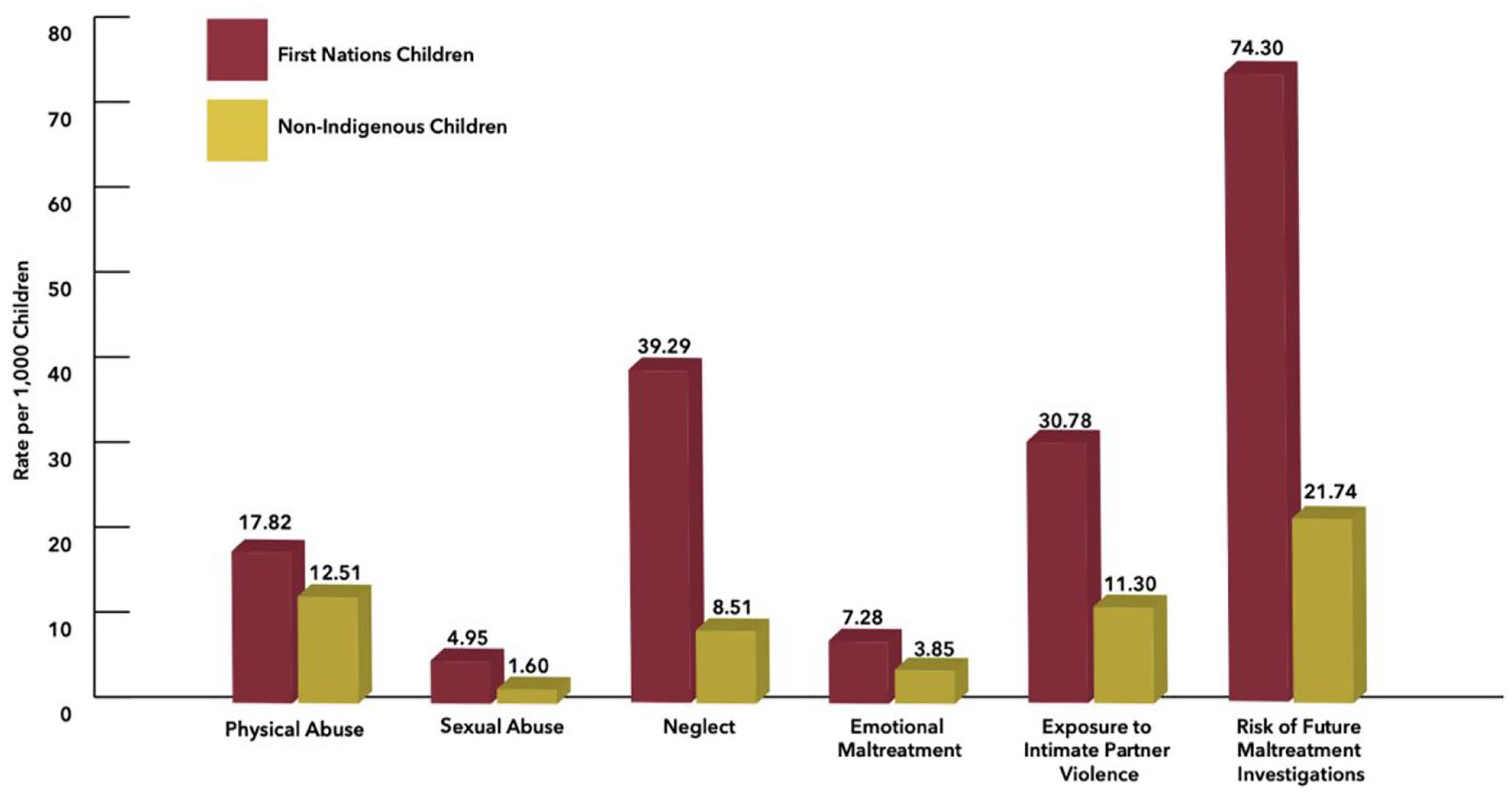
Primary category of investigation involving First Nations and non-Indigenous children in Ontario in 2018 (Crowe et al., 2021, p. iv).
Finally, the intentional disruption of family systems and parenting practices within Indigenous communities across Canada (Choate & Lindstrom, 2018), through the Indian Residential School System and child welfare systems (Toombs et al., 2021), clearly indicate the need for culturally safe family and parenting support (TRCC, 2015). Undeniably, the Canadian government has a central role to play in the reparation of historical and ongoing harms to Indigenous communities. In this sense, Bill C-92 represents a legislative step towards restoring sovereignty to Indigenous communities.
Context of legislation and implementation of Bill C-92
Partly modelled on the Indian Child Welfare Act 1978 (ICWA) in the USA, Bill C-92, passed by the Canadian government, aims to support and improve the well-being of Indigenous children, youth, and families. Aligned with section 35(1) of the Constitution Act (The Constitution Act, 1867, 1982), that ratifies the existing treaty rights of Indigenous Peoples across Canada, Bill C-92 affirms Indigenous Peoples’ sovereignty, self-governance, and self-determination over child welfare services (Bill C-92, 2019). This legislation seeks to address systemic discrimination, such as the overrepresentation of Indigenous children in care and lack of culturally safe services received by Indigenous families and communities (Matarieh, 2020).
However, Bill C-92 builds on previous legislation, such as the Indian Act 1985, that has significant and lasting negative impacts on Indigenous communities in Canada (Montambault et al., 2021). The Indian Act 1985, often considered one of the most polarizing and damaging pieces of Canadian legislation, has long been criticized for its oppressive policies and discriminatory treatment of Indigenous peoples (Baskin, 2006). With the introduction of Bill C-92, there is an opportunity to redress some of the historical and contemporary injustices and short-comings of other existing legislation.
Another key aspect of Bill C-92 that will be discussed further is the recognition of Indigenous jurisdiction over child welfare services. On this matter, it is relevant to indicate that 2 weeks before Bill C-92 became law, on December 19, 2019, the province of Quebec challenged the constitutional validity of Bill C-92 in the Quebec Court of Appeal (Gillbride & Bundock, 2024). In the February 10, 2022, judgement, the Quebec Court of Appeal declared that the Federal government overstepped its authority in granting First Nations, Inuit, and Métis a right to pass laws that could override provincial laws with respect to child welfare (Bill C-92, S21, 22(3)). Both the provincial government of Quebec and the Federal government appealed to the Supreme Court of Canada, to determine whether Bill C-92 was constitutional (Gillbride & Bundock, 2024). This demonstrated lack of support for Bill C-92 and has been a significant concern that could hinder its effectiveness in achieving autonomy and self-governance of Indigenous Peoples over child and family services. On February 9, 2024, the Supreme Court of Canada upheld the constitutionality of the Bill C-92, affirming Indigenous sovereignty and legislative control over child and family services across Canada (Supreme Court of Canada, 2024). According to this ruling, Bill C-92 acknowledged and reinforced Indigenous Peoples’ inherent right to govern child welfare services based on their traditional laws, knowledge and values (Matarieh, 2020).
In response to the 2016 Canadian Human Rights Tribunal ruling that the government of Canada was guilty of discrimination against First Nations children, two agreements-in-principle were announced in 2022. The first one was related to compensation to address the harms that were imposed on First Nations children, families, and communities when these children were removed from their homes and placed with a non-family member, negotiated between the Federal government, plaintiffs, and the Assembly of First Nations. The second one was associated with long-term reform of First Nations child and family services and Jordan’s Principle, negotiated between the Federal government, the Assembly of First Nations, the Chiefs of Ontario and the Nishnawbe Aski Nation—a political organization representing 51 First Nation communities of Northern Ontario. The goal was ensuring that this type of discrimination never happens again (Indigenous Services Canada, 2024a).
The agreement-in-principle for long-term reform of First Nations child and family services and Jordan’s Principle consisted of approximately $20 billion allotted for long-term reform over 5 years, including a focus on prevention and household support (King, 2024). This focus on prevention is imperative to disrupting the overrepresentation of First Nations children in child welfare care and the ongoing cycle of First Nations children coming into child welfare care for reasons that are known to be preventable.
It is well documented that First Nations children and families primarily become involved with child welfare services for reasons driven by poverty, such as poor housing (Crowe et al., 2021; Quinn et al., 2022; Trocmé et al., 2013). This means that many of these child apprehensions for neglect can be prevented by providing the necessary socio-economic support and resources to their families. However, the current model reflects child welfare agencies’ policies to remove these children and instead provide these funds and resources to foster parents. For example, funding under this agreement-in-principle can be provided to First Nations to “purchase, construct, and renovate housing units in their communities in relation to the needs of First Nations children” (Indigenous Services Canada, 2024a, para. 4) and prevent the removal of children because of overcrowded homes, lack of insulation, heat, broken windows, or unclean drinking water. Bill C-92, section 11, specifically emphasizes the need for the system to shift from apprehension to prevention, with priority given to services that promote preventive care to support families. It gives priority to services like prenatal care and support to parents. The act also clearly indicates that no Indigenous child should be apprehended solely on the basis or as a result of his or her socio-economic conditions, including poverty, lack of housing or related infrastructure, or state of health of the child’s parent or care provider. (Bill C-92, 2019)
Most recently, on October 17, 2024, the First Nations-in-Assembly voted to reject the CAD $47.8 billion agreement, “instructing the Assembly to take a new approach to negotiate a different final agreement” (Indigenous Services Canada, 2024b, para. 1). The agreement-in-principle has been criticized for several reasons, including arbitrary Federal government oversight, annual reviews, and limitations related to governance and accountability (Blackstock & Trocmé, 2024; First Nations Child and Family Caring Society of Canada, 2024a). King (2024) also notes the absence of commitment to funding beyond 10 years is a major shortcoming that may result in a temporary solution to the long-term reform of the First Nations child and family services programme. Researchers note that “systemic re-structuring of Ontario child welfare is required to address this overrepresentation, and the existing forensic investigation model needs to be replaced with a more supportive, community-based, and prevention-focused model” (Quinn et al., 2022, p. 1).
The following section examines three pivotal themes that emerged from the analysis of the corpus collected for this critical rapid review: the lack of support, the notion of the best interests of the child, and insufficient funding.
Implementation of Bill C-92: persistent inconsistencies, inadequacies, and litigations
Before colonization, and prior to being disrupted through contact with the settler population, Indigenous traditional systems of culture, law, and knowledge ultimately provided a safe and nurturing environment for their child and youth community members. This guided cultural identity development and a healthy way of life for Indigenous families and communities. In this context, self-governance refers to the ability of a community to manage its own affairs and make decisions that affect its members (Blackstock et al., 2020).
Bill C-92 aims to restore Indigenous Peoples’ self-governance by outlining the process of exercising jurisdiction over child welfare services. In doing so, it seeks to support culturally safe and community-based approaches that uphold the principles of self-governance. However, despite 40 First Nations communities at various stages of implementing Bill C-92 in their own communities (Clark et al., 2023), many challenges remain. For instance, in their report examining Bill C-92 and its potential impact on Indigenous children, youth, and families, Metallic et al. (2019a) describe those concerns. To enhance the lives of Indigenous children and families significantly, Metallic et al. (2019a) identify the main legislative issues that need to be resolved, to this day. These issues include the lack of recognition and support from government and institutions; the best interests of the child linked to the second principle of Bill C-92 in conflict with national standards of child and family services; and insufficient funding, resources and support. Supported by the analysis of various authors and court cases, these challenges will be discussed in the next three sections.
Lack of recognition and support from government and institutions
The TRCC (2015) has called for Canada to reconcile with Indigenous Peoples, including addressing the disproportionate involvement of Indigenous children in the child welfare system. According to Choate et al. (2021), this involves challenging Eurocentric legal precedents, and the types of evidence presented in child welfare cases as well as considering new approaches, such as the Federal legislation Bill C-92. However, this critical rapid review showed that there are different analyses and understandings of Bill C-92 and its provisions across different jurisdictions are leading to variations in how child welfare services are provided. This creates challenges and conflicts between governments, Indigenous communities and organizations, and other stakeholders, as they may have different priorities and perspectives on the best ways to support the well-being of children and families.
Choate et al. (2021) point out the inconsistency between Bill C-92’s purpose and principles (presented in introduction), the national standards in child welfare services, the Court’s understanding and execution of the law, as well as the Court’s regard to Indigenous culture within its judgement. For example, Choate et al. (2021) argued that the Courts continue to have a role in extending colonial understandings of family and caring for a child but also in questioning evidence that does so. In addition, there is the recognition that the Courts offer venues for change as well as compensation. (p. 13)
To illustrate this argument, the authors cite Ontario’s decision on the Sixties Scoop in regard to Brown v Canada (Attorney General) [2017], “which has detailed the harm inflicted when colonial focused assimilation is at the heart of child welfare practice” (Choate et al., 2021, p. 1).
Another chronic and well-documented dispute in the implementation of Bill C-92 is the matter of Indigenous self-governance. Although Bill C-92 does recognize the right of Indigenous communities to self-governance in the context of child welfare services, it is still undetermined how self-governance will be implemented and how legal disputes will be resolved. The struggle for self-governance has been fraught with challenges, as Indigenous communities have faced opposition and a lack of support from various levels of government and institutions, such as the Quebec Court of Appeal (Gillbride & Bundock, 2024) described earlier in this article. Non-Indigenous groups, such as settler social workers working in the mainstream child welfare system, have often engaged in misguided and oppressive forms of allyship work, primarily through their interactions with Indigenous communities (Gaumond, 2020). This lack of understanding and support has hindered the resurgence of self-governance and the full realization of Indigenous Peoples’ human rights (United Nations Declaration on the Rights of Indigenous Peoples Act S.C. 2021 [CAN]).
Overall, the overrepresentation of First Nations children in the Canadian child welfare system is a complex issue, that draws from years of colonial policies affecting families and communities, and that requires a multifaceted response (Crowe et al., 2021). Efforts by all stakeholders, provincial and Federal governments, social and legal entities, non-Indigenous organizations, and policy analysts, to address the continuing systemic discrimination must include a recognition of the historical and ongoing impacts of colonization, a commitment to self-governance and cultural revitalization, and a willingness to challenge entrenched Eurocentric legal frameworks. The implementation of Bill C-92 represents a step in this direction, but there is still much work to be done to ensure that Indigenous children and families receive the social and legal support necessary to implement culturally safe models of service.
The best interests of the child in conflict with standard child and family services
In this critical rapid review and analysis, a second limitation concerning the implementation of Bill C-92 was emphasized. The focus turned to the notion of the best interest of the child. Under section 10(1) of Bill C-92, the “best interests of the child” is described as follows: must be a primary consideration in the making of decisions or the taking of actions in the context of the provision of child and family services in relation to an Indigenous child and, in the case of decisions or actions related to child apprehension, the best interests of the child must be the paramount consideration (Bill C-92, 2019, S10(1)).
Under section 10(3) of Bill C-92, “to determine the best interests of an Indigenous child, all factors related to the circumstances of the child must be considered, including”:
(a) The child’s cultural, linguistic, religious, and spiritual upbringing and heritage;
(b) The child’s needs, given the child’s age and stage of development, such as the child’s need for stability;
(c) The nature and strength of the child’s relationship with his or her parent, the care provider, and any member of his or her family who plays an important role in his or her life;
(d) The importance to the child of preserving the child’s cultural identity and connections to the language and territory of the Indigenous group, community, or people to which the child belongs;
(e) The child’s views and preferences, giving due weight to the child’s age and maturity, unless they cannot be ascertained;
(f) Any plans for the child’s care, including care in accordance with the customs or traditions of the Indigenous group, community, or people to which the child belongs;
(g) Any family violence and its impact on the child, including whether the child is directly or indirectly exposed to the family violence as well as the physical, emotional and psychological harm or risk of harm to the child; and
(h) Any civil or criminal proceeding, order, condition, or measure that is relevant to the safety, security and well-being of the child (Bill C-92, 2019, S10(3)).
This critical rapid review reveals that Indigenous communities often face conflicts with child welfare systems that are based on mainstream, non-Indigenous values and priorities. These conflicts arise when child welfare agencies intervene in cases involving Indigenous children to protect their safety and well-being. Indigenous communities often perceive these interventions as violating their rights to sovereignty, and as a matter, generally resist, sometimes challenge them, and others legitimately demand access to culturally based and respectful services (Bill C-92; First Nations Child and Family Caring Society of Canada et al., 2016).
The legal principle of the best interests of the child (Bill C-92), according to Johnston (1983), can often be interpreted arbitrarily and sometimes cause harm, bias and prejudice to Indigenous children and families. Choate et al.’s (2021) research also highlights these challenges and the importance of considering a child’s cultural background and connections when determining their best interests. In the British Columbia (Child, Family and Community Service) v S.H. [2020] court case, the authors’ point out that the court saw the best interests of the child in relation to placements as including continuity of care within an existing placement that was not with a biological parent, although the father had become available. According to Choate et al. (2021), part of the decision rested on the child’s very significant connection to her Klahoose [a group of First Nations Peoples among the most northern Coast Salish communities in British Columbia, Canada] and Homalco [a group of First Nations Peoples known as the people of fast running waters, living in British Columbia, Canada] Indigenous cultures from 13 months of age. The child was able to speak the language and was competent in traditional songs and dances. (p. 2)
She had a strong relationship with her grandfather, who also taught her culturally. As the child’s strong bond with her Indigenous culture and family played a significant role in her development, the court’s decision emphasized the need for a more nuanced understanding of the best interests of the child concept in the context of Indigenous children and families.
Matarieh (2020) provides another example and discusses the policy failures of Bill C-92 from a judicial perspective. The analysis focuses on the case of Algonquins of Pikwakanagan v Children’s Aid Society of the County of Renfrew [2014], in which a grandmother fought for custody of her Indigenous granddaughters but was unsuccessful. The judge in the case disregarded Bill C-92 and focused on the Ontario CFSA 1990, stating that cultural considerations are only one factor among many (2014 ONCA 646 [Algonquins], paras. 55–57, 67). Matarieh (2020) argues that the judge’s reasoning does not align with Bill C-92, which states that cultural considerations are integral to an Indigenous child’s well-being. The conclusions highlight the need for a greater emphasis on cultural considerations in judicial decisions involving Indigenous children. Furthermore, Choate et al. (2021) insist and point out the court’s Eurocentric, rather than Indigenous, definition of the family, which creates a bias in judgement. According to them, this positioning conflicts with Bill C-92, and it is crucial to address these inconsistencies to ensure culturally safe and equitable child welfare decisions that truly respect and uphold the purpose and principles of this legislation (Bill C-92, 2019). Ultimately, according to Goldner et al. (2022), Blackstock has also challenged Bill C-92 due to the lack of accountability mechanisms and unclear definition of the best interests of a child, which allows for much discretion and has been problematic in its interpretation by non-Indigenous decision-makers.
Insufficient funding, resources and support
Among pivotal issues regarding the implementation of Bill C-92, this article discusses a third and recurring concern: the lack of funding, insufficient resources, and unclear support for Indigenous child welfare services. In 2022, Indigenous Services Canada announced three types of funding to support Indigenous communities: “(i) funding to meet immediate need; (ii) capacity funding and (iii) coordination agreement funding” (Clark et al., 2023, para. 7). However, in 2024, there is still uncertainty about how much funding will be provided and how it will be distributed among various Indigenous communities. Leaving such an important piece out of Bill C-92 will most likely lead to conflicts and disputes over who is responsible for paying for specific services; provinces or Federal government (Metallic et al., 2019a).
Moreover, another significant concern regarding Bill C-92 is the insufficient resources and unclear funding support for child and family services on-reserve (Metallic et al., 2019a, 2019b). The lack of funding for prevention services (King, 2024) still amounts today to the over apprehension of Indigenous children by child welfare authorities. In this sense, and according to Blackstock (2019), colonial policies, including the imperfect Bill C-92, are oftentimes perceived as a perpetuation of systemic and racial discrimination which undermine Indigenous traditions by uprooting Indigenous children from their communities.
Four years have passed since Bill C-92 was first implemented. During those years, the lack of resources and funding by governments and organizations has limited the ability to successfully support Indigenous communities transitioning their jurisdiction over child welfare matters under Bill C-92. Discursively, authors suggest that governments and institutions may perpetuate colonial conceptions of family and child-rearing by using language, policies, and rhetoric that reflect colonial values and undermine Indigenous traditions (Friedland et al., 2022). This can result in the marginalization and misrepresentation of Indigenous perspectives in policy-making and public discourse. Materially, the imposition of these colonial conceptions may manifest in the form of funding allocation, infrastructure development, and the design and delivery of social services that discriminate (King, 2024) or do not respect Indigenous customs and practices (Friedland et al., 2022). This further disrupts traditional family structures and perpetuates the marginalization and oppression of Indigenous communities.
Metallic et al. (2019a) raise concerns about the inclusion of provinces and territories in Bill C-92 legislation, citing issues with unclear roles and responsibilities such as assisting First Nations communities wishing to re-gain control over child welfare. Metallic et al. (2019a) argue that the Federal government has historically funded First Nations child and family services on-reserve without provincial involvement, and therefore involving the provinces is not constitutionally required. However, off-reserve Indigenous children and families are typically included in provincial budgets without any distinction from non-Indigenous children and families, creating a potential disparity (Metallic et al., 2019a). While the report was written shortly after the passing of Bill C-92 in 2019, it remains relevant as it highlights ongoing issues with the implementation of the legislation.
The lack of clarity surrounding the involvement of provinces and territories in response to Bill C-92 creates obstacles for achieving Bill C-92’s purpose. Bill C-92 advocates for expedient and cost-efficient transfers, yet this is dependent on community resources and if a plan for child welfare laws is already in place. This lack of coherence can lead to confusion and result in the courts having to navigate a wide range of possibilities when making their decisions. As Choate et al. (2021) point out, “That bias [against Indigenous Peoples as suitable caregivers] extends further into the question of who is an acceptable alternative caregiver with most children being placed out of culture. This is inconsistent with Bill C-92” (p. 13). This observation emphasizes the need for the Federal government to consider new amendments to Bill C-92 to ensure that, among children who must be placed, a higher proportion are placed within their culture.
The absence of clear guidance and direction for the provincial and territorial governments makes it difficult to support Indigenous communities in fully exercising their jurisdiction and autonomy over child welfare. Moreover, the fact that Indigenous children and families living off-reserve or in urban settings are included in provincial budgets without distinction from non-Indigenous children and families, suggests that Bill C-92 may not go far enough in addressing the systemic discrimination facing Indigenous communities in Canada’s child welfare system (First Nations Child and Family Caring Society of Canada et al., 2016). As such, there is a need for further efforts to support Indigenous sovereignty and ensure that the unique needs and rights of Indigenous children and families are recognized and respected, including in urban and other off-reserve locations where Indigenous children and families reside.
To ensure the implementation of Bill C-92, it is crucial to allocate adequate resources and funding to support the sovereignty of Indigenous communities over child welfare services (Metallic et al., 2019a, 2019b). Failure to do so would undermine the progress made towards reconciliation and perpetuate the colonial discrimination and systemic injustices that Indigenous Peoples continue to experience across Canada.
Discussion and conclusion
Resulting from this critical rapid review, the discussion examines the progress and major challenges of implementing Bill C-92 in Ontario and Canada and concludes by noting a partnership created between an Anishinaabe community, the Kinistòtàdimin Circle and the School of Social Work at the University of Ottawa. This partnership aims to bring a concrete contribution to the challenges faced around the implementation of Bill C-92.
Bill C-92’s recognition of Indigenous control over child welfare and family services is one of its greatest assets. This acknowledges that Indigenous Peoples have the inherent right to govern their own child welfare; however, funding, which has not yet been allocated, is required for the development and implementation of Indigenous approaches to child and family services. Under Bill C-92, some Indigenous communities have reclaimed their inherent right and self-determination over laws and practices impacting children and families within their communities, and this will ultimately strengthen and preserve cultural continuity among Indigenous children and their families.
While Bill C-92 is a step towards addressing the systemic discrimination of Indigenous Peoples, there are still significant challenges to be addressed that ensure its effective implementation. Criticisms of Bill C-92’s implementation elucidate the need to address the lack of recognition and support from government and institutions, the best interests of the child in conflict with standard child and family services, and insufficient resources and support to improve the well-being of Indigenous communities.
Other concerns regarding Bill C-92 are, for example, the inconsistency in the implementation across different jurisdictions, leading to variations in how child and family services are provided, as well as the challenge of its constitutionality by provinces. As put forward, the Supreme Court of Canada’s decision now provides a positive step for First Nations in self-governance and jurisdiction over child welfare; all of which provide a step-closer to achieving reconciliation and the well-being of Indigenous children.
Nonetheless, these tensions and inconsistencies illustrate the scale of the task ahead. To address these types of challenges and conflicts caused by litigations and different interpretations of Bill C-92, and its provisions across different jurisdictions, some recommendations include ensuring that child and family services are administered in a consistent and equitable manner throughout all jurisdictions. To do so, it is important to develop and implement clear guidelines and protocols for interpreting and applying Bill C-92 and its provisions. To identify and resolve any issues or disputes that may occur, transparent communication and collaboration between governments, Indigenous communities, and organizations is necessary.
Furthermore, re-examining the concept of what constitutes a child’s best interests and paying greater consideration to the child’s cultural identity and values are significant recommendations made in response to legal disputes over the phrase. For Indigenous children, family preservation and reunification efforts should be prioritized to maintain their well-being and cultural heritage.
In terms of funding, the government should enhance subsidy and extend the prevention funding recently approved until 2034 to facilitate Bill C-92’s implementation and the long-term reform of First Nations child and family services. The Federal government could also collaborate with the provinces to establish cost-sharing arrangements to guarantee the availability of all essential services and supports, as well as to define clear duties and responsibilities for each party’s participation in the legislation. Ultimately, for government representatives and Indigenous communities and organizations to be able to effectively collaborate for and support the well-being of children and families, it is necessary to provide evidence-based research, data collection, training, and education for all of these groups. This is thus where academic institutions could stand up and contribute by playing an important role towards achieving reconciliation.
A partnership between Anishinaabeg leaders of Kitigan Zibi, the Kinistòtàdimin Circle and the School of Social Work at the University of Ottawa, can be considered a contribution to the implementation of Bill C-92. At the request of Anishinaabeg leaders, in September 2024, the School of Social Work launched a new microprogram of 9 credits in Mizimizide nanda kikenindjigani pagidinigewin ondje Wìyagi iji Anishinàbe Odeg Abinòdjìnshi Wìdòkàzowin (Development of Indigenous family-childhood services, foundations for practice), offered by, for and with Indigenous Peoples, focusing on Indigenous child and family services. The objective of the microprogram is to accompany and deliver Indigenous and community-based training, and support Indigenous learners, professionals and leaders, in their achievement and implementation of culturally safe child and family services models. This minor contribution represents one more step forward in supporting a positive implementation of Bill C-92 and supporting Indigenous communities in their self-determination and self-governance over child and family services.
Supplemental Material
sj-docx-1-aln-10.1177_11771801251356077 – Supplemental material for Developments and challenges implementing Bill C-92 in Canada: a critical rapid review
Supplemental material, sj-docx-1-aln-10.1177_11771801251356077 for Developments and challenges implementing Bill C-92 in Canada: a critical rapid review by Karine Croteau, Ashley Quinn, Barbara Jablonska and Mireille De La Sablonnière-Griffin in AlterNative: An International Journal of Indigenous Peoples
Footnotes
Acknowledgements
The authors acknowledge all First Nations, Inuit and Metis individuals, families and communities across Canada that have been impacted by the child welfare system and Bill C-92.
Authors’ note

Funding
The authors received no financial support for the research, authorship, and publication of this article.
Declaration of conflicting interests
The authors declared no potential conflicts of interest with respect to the research, authorship, and publication of this article.
Supplemental material
Supplemental material for this article is available online.
Glossary
Anishinaabe a First Nation member or community that originate from around the Great Lakes, Canada and the USA; also known as Algonquin
Anishinaabeg a group of First Nations Peoples that originate from around the Great Lakes, Canada, and the USA; also known as Algonquin
Homalco a group of First Nations Peoples known as the people of fast running waters, living in British Columbia, Canada
Inuit Indigenous Peoples originating primarily from Inuit Nunangat, Canada
Klahoose a group of First Nations Peoples among the most northern Coast Salish communities in British Columbia, Canada
Métis Indigenous Peoples of mixed European and Indigenous ancestry, originating from the Red River Settlement in Manitoba, Canada
Mizimizide nanda kikenindjigani pagidinigewin ondje Wìyagi iji Anishinàbe Odeg Abinòdjìnshi Wìdòkàzowin Development of Indigenous family-childhood services, foundations for practice
Ojibway Indigenous people in Canada and the USA who are part of a larger cultural group known as the Anishinaabeg
References
Supplementary Material
Please find the following supplemental material available below.
For Open Access articles published under a Creative Commons License, all supplemental material carries the same license as the article it is associated with.
For non-Open Access articles published, all supplemental material carries a non-exclusive license, and permission requests for re-use of supplemental material or any part of supplemental material shall be sent directly to the copyright owner as specified in the copyright notice associated with the article.
