



Abstract
This study explored intercultural communication from the perspectives of partners from different cultural and linguistic backgrounds. We used a culturally responsive form of video-reflexive ethnography to study intercultural communication processes between Yolŋu, pronounced Yolngu (First Nations people from the region that is now called North-East Arnhem Land, Northern Territory, Australia) and Balanda (non-Indigenous people). Yolŋu and Balanda researchers worked collaboratively throughout the study (2017–2021). In a very remote Yolŋu community in northern Australia, five early childhood assessment interactions were recorded and analysed by the 40 Yolŋu and Balanda participants. Researchers analysed data collaboratively using an approach aligned with constructivist grounded theory. We connected key research findings about intercultural communication processes to a place-based metaphor which foregrounds Yolŋu cultural knowledge and encourages reflection on deeper ways of thinking about how we connect, collaborate and communicate interculturally.
Keywords
Introduction
Intercultural communication happens when partners from different cultural backgrounds interact at a cultural interface—a complex “multi-layered and multi-dimensional space of dynamic relations” (Nakata, 2007, p. 323). As a co-constructed process (United Nations Educational, Scientific and Cultural Organization, 2013), intercultural communication needs to be examined and understood from multiple perspectives. Communication can be particularly complex and challenging when there is a “vast cultural and linguistic distance” between partners (Cass et al., 2002, p. 469), such as between First Nations Australians and Balanda (non-Indigenous people) interacting in remote community contexts. First Nations Australians are diverse Aboriginal and Torres Strait Islander peoples in what is now called Australia.
Australia is a colonised country in which First Nations peoples maintain unceded sovereignty over lands and waters while also being governed by colonial structures, systems and policies (National Constitutional Convention, 2017). Around Australia, colonising practices are deeply embedded in institutions, policies and systems which are dominated by ethnocentric Euro-western thought, English language and Balanda control in fields such as: children’s education and care (Fasoli et al., 2019; Miller, 2015); health (Bond, 2015; Kerrigan et al., 2021b; Lowell et al., 2003; Trudgen, 2000); law (Aboriginal Resource and Development Services, 2008; Grimes, 2012); employment (Trudgen, 2000); and government and decision making (Marika et al., 2009; Watego, 2017).
First Nations Australian peoples have strong cultural, linguistic and political identities, and are frequently expected to interact with Balanda systems and English-speaking staff from different cultural backgrounds. Communication partners from Euro-western cultures often lack awareness of the cultural specificity of their knowledge and skills, and of how colonial discourses shape their systems of service provision (Christie, 2009; Furlong & Wight, 2011; Kitson & Bowes, 2010; Lowell et al., 2005, 2015; Miller, 2015). Collaborative, sustained partnerships, encompassing reciprocal and effective intercultural communication, are pivotal in these contexts but, in practice, there are often many barriers to developing these partnerships (Grimes, 2012; Guenther & Osborne, 2018; Kerrigan et al., 2021b; Lowell et al., 2003, 2015; Miller, 2015; Trudgen, 2000; van Gelderen & Guthadjaka, 2021).
Study context
Our study was conducted in a very remote Yolŋu community in the Northern Territory of Australia. Yolŋu, pronounced Yolngu, are First Nations Australian people from the region that is now called North-East Arnhem Land. Yolŋu have a long history of interacting with people from other cultural backgrounds while also maintaining strong Yolŋu identities, cultures, law and languages (Christie, 2009; van Gelderen & Guthadjaka, 2021). The communication knowledges and practices that Yolŋu have developed are valuable and may have theoretical and practical relevance for intercultural communicators from other cultural backgrounds (Marika-Mununggiritj, 1991).
Yolŋu use intercultural communication skills to interact with Balanda who speak English and who provide many government, business and not-for-profit services in remote Yolŋu community contexts. Yolŋu use the word Balanda as a proper noun to refer to all non-Indigenous people. Our research focuses on children’s health, education and care contexts, particularly intercultural communication between Balanda staff and Yolŋu families and staff during the assessment of young (0–6 years old) Yolŋu children’s development. It is well recognised that “culturally sensitive, inclusive and reciprocal” interactions (Rouse, 2012, p. 20) are fundamental to effective, collaborative, intercultural partnerships in early childhood contexts. However, there is evidence that such communication can be difficult to achieve between families and early childhood service providers (Fasoli et al., 2019) and between First Nations Australian and Balanda staff (Lowell et al., 2015; Miller, 2015).
Given Australia’s history and ongoing practices of colonisation, dispossession and disruption to First Nations Australian child-rearing practices (Kitson & Bowes, 2010; Sinclair, 2019b), many First Nations Australian people are particularly wary of introduced programmes that target young children and families. Yolŋu practise culturally specific ways of understanding and supporting children’s development (Garŋgulkpuy & Christie, 2010; Lowell et al., 2019; Marika, 2000) and have raised concerns that their Yolŋu knowledges and skills have been neither recognised nor respected by many programmes and staff who have come to their communities (Fasoli et al., 2019; Marika, 2000; Yalu Marŋgithinyaraw, 2012b).
Study purpose
While intercultural communication is recognised as pivotal, concepts and processes that influence the success of intercultural partnerships between First Nations Australian peoples and Balanda require ongoing collaborative investigation and there is a paucity of training and resources to support intercultural communication skills (Cass et al., 2002; Kerrigan et al., 2020; Lowell et al., 2015; Miller, 2015; Sydenham et al., 2013). Therefore, we designed Phase 1 of this research to explore intercultural communication by listening to the different analyses of communication partners from different cultural and linguistic backgrounds. Then we used Phase 1 findings to inform Phase 2 of this research: co-creation of accessible resources to facilitate intercultural communication in the participating community (Armstrong et al., 2022). This article reports on the findings of Phase 1, exploring concepts and processes to facilitate intercultural communication.
Yolŋu authors chose a metaphor to support others to understand and explore our findings because “the role of metaphor in mediation between knowledge systems is recognized and celebrated” by Yolŋu (Marika-Mununggiritj et al., 1992, p. 28). Other First Nations Australian authors have also described the ways that cultural metaphors of connectedness “can express, structure and inspire thinking and learning” (Yunkaporta & Shillingsworth, 2020, p. 7). The metaphor shared in this article holds many layers of connection to places and people and is shared by Yolŋu authors following cultural protocols. This article brings to the surface some key concepts underpinning this metaphor and aims to support readers to deepen relationships, build connections and develop shared understandings to facilitate intercultural communication practices.
Methods
This qualitative, exploratory study of intercultural communication in early childhood assessment interactions was conducted between 2017 and 2021. A collaborative team of Yolŋu and Balanda researchers worked together throughout all stages. The project was overseen by an advisory group called the Ŋaraka-ḏälkunhamirr Mala made up of senior members of the local Yolŋu community and Yolŋu leaders in early childhood services. The study followed culturally responsive research methods (Lowell et al., 2003; Yalu Marŋgithinyaraw, 2012a). The project was approved by Charles Darwin University Human Research Ethics Committee (H18063), the Northern Territory Government Department of Education Research Subcommittee (Ref 14505) and the Galiwin’ku Regional Council Local Authority.
We conducted this study in Galiwin’ku, a very remote community on Elcho Island in the Arafura Sea, North-East Arnhem Land, Northern Territory, Australia. Of the 2,200 residents in this community, 94% are Aboriginal and Torres Strait Islander people and 95% speak a language other than English at home, with Djambarrpuyŋu (a Yolŋu language) being the most common (Australian Bureau of Statistics, 2016). Yolŋu traditional custodians own and control the land and sea in this area and the community functions as a service provision hub.
Forty people participated in data collection in Galiwin’ku: 7 Yolŋu children aged 0–6 years old; 10 of their family members including mothers, grandmothers, father, grandfather, aunt, kinship carer; 10 Yolŋu service providers; 1 non-Yolŋu First Nations Australian service provider; 6 Balanda Australian service providers; 5 Yolŋu researchers and interpreters; and 1 Balanda Australian researcher. All researchers and most participants were female with the exception of four male children, one father and one grandfather. Participants’ preferred languages were used to explain the project for informed consent processes.
Five early childhood assessment interactions in education, health, allied health and family support services were video (n = 4) or audio (n = 1) recorded by participants, each using their own different routine assessment processes, tools and contexts. Participants talked with researchers before the recording and then, using a culturally responsive form of video-reflexive ethnography (Lowell et al., 1996, 2005), participants reviewed and analysed the intercultural communication in the recording of their own assessment interaction. We used a Yolŋu form of back and forth discussion, waŋanhamirr bala-räliyunmirr, to conduct and record in-depth discussions (range: 25 min–1 hr 34 min; mode: approximately 1 hr). Only seven of the 40 participants (17.5%) spoke English as a first language and a large proportion of the data was recorded in Yolŋu languages, mainly Djambarrpuyŋu.
Working together, Yolŋu and Balanda researchers interpreted data recorded in Yolŋu languages into English using meaning-based interpretation (Lyons et al., 2022) but retained key words, phrases and concepts in Yolŋu languages, particularly when it was difficult to achieve equivalent meaning in English. Researchers analysed data collaboratively and iteratively using an approach aligned with constructivist grounded theory (Charmaz, 2014): creating codes from participants’ words; grouping codes into conceptual categories using constant comparative analysis; recording memos about the meanings of concepts; and refining and confirming codes and categories with available participants. QSR Nvivo12 (QSR International, 2018) software was used to organise data. From conceptual categories, the research team built a theory of intercultural communication and connected it to a metaphor for sharing findings. This metaphor foregrounds Yolŋu cultural knowledge and has been reviewed and authorised following Yolŋu cultural protocols.
Findings
Choosing the gapu (water) metaphor to share our findings
We use a multi-layered metaphor to reflect the interconnection, complexity and richness of our findings about intercultural communication. We chose a dynamic metaphor because communication is dynamic. The gapu metaphor has many currents that move and change with the moon, the sun, the tides and the land it flows through. There are also many currents flowing together in intercultural communication and they move and change with communicators’ thinking, feeling, connections, relationships, experiences, behaviour and contexts.
We found that intercultural communication is about identifying ourselves and understanding each other. It’s about feeling the deeper stories that come from different people through their own languages. We found that the message can flow easily when the connection is strong between the story, the person who is sharing it, and the place they come from. We wanted the metaphor to be strongly connected to the place where we conducted this research. We wanted it to be easy to connect to for both Yolŋu and Balanda. The water metaphor is a Yolŋu representation of complex knowledge and connections and there are important cultural guidelines about what is appropriate for us as individual researchers to tell in this context: We [Ḻäwurrpa and Yuŋgirrŋa] have been talking for our own water, not talking for someone else’s water. The water has travelled from Ritharrŋu [a Yolŋu clan nation] country and it was carrying Yolŋu identities, languages and cultures with it. . . . Where the fresh water meets the salt water is Warramiri [a Yolŋu clan nation] wäŋa [land] and Warramiri gapu. So that’s why Warramiri can tell this story and they can sing it. . . . Ḻäwurrpa and I are Warramiri and Warramiri have this knowledge and this story. That’s why Ḻäwurrpa chose this story to tell, at a surface level, for this research metaphor. (Yuŋgirrŋa Bukulatjpi, Senior female Yolŋu researcher)
We chose this gapu dhäwu (water story) for this research because it’s a Yolŋu way of explaining how we can work together and approach each other to communicate. There can be gentle and calm waters where we feel at peace; there can be rough seas, water churning and water that carries a lot of rubbish that we need to sort out. The ways the water moves can reflect people’s feelings about how they want to connect and work together. The water currents represent our research findings about how people from different cultures can communicate.
Spring water comes from under the ground and flows down a river to meet with the sea. The fresh water and salt water meeting can be like two different cultures meeting together in a place. If they communicate well with each other at the mouth of the river then, on the other side in the sea, the water keeps still and calm and crystal clear and they recognise each other and make a strong connection. Below, we will share the three layers of this metaphor connected to some of our key findings about intercultural communication.
Dhärra dhu djalkiri ḏälkum (standing in a strong foundation)
The first layer of this research metaphor is about rock with water held deep inside, gapu maŋutji (spring water), that represents the foundations from which we all communicate. When we communicate, we all bring our identities, cultures, knowledges, values and relationships to our communication behaviours. Our foundations are like the water that is there for the long term and never runs dry—rarranhdharrwirri gapu (permanent water). When the water is bubbling up from the underground spring, that is our knowledge coming out through our communication (Figure 1). Then, when it flows, it is called riyala waṉḏirr (flowing water).
The way I interpret this is that the rock with the water deep inside represents our strong foundation for all of us. . . . The water is always running, it has been for years and years. . . . Balanda are bringing their knowledge and Yolŋu are bringing our Law and system of teaching Yolŋu children. And that’s where we are going to stand firm on our own two feet and be strong. That’s how we will teach and give our ŋayaŋu [inner being] in knowledge for children. (Ḻäwurrpa Maypilama, Senior female Yolŋu research supervisor)
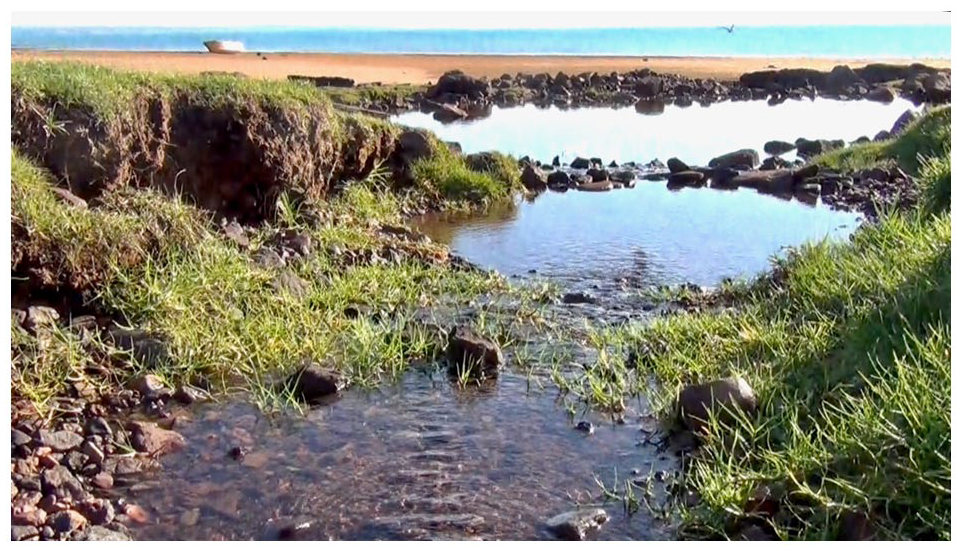
Fresh water spring at Guḻmanŋur, Northern Territory, Australia (Photo by Emily Armstrong).
We found that when people are standing in their own foundations they feel grounded and more confident in identifying themselves. From there, people are able to build new connections and relationships at the cultural interface. We found that intercultural communication in a Yolŋu context requires all partners to (1) recognise their own foundations and learn how to stand in them well; and (2) recognise and value their intercultural partners’ foundations. These practices of recognition and respect are fundamental to connecting and communicating interculturally: Recognise each other before you start. Try not to be shy but express who you are and be recognised. Show what you are really hoping for inside. We all need to show who we are so that we can recognise each other and collaborate. (Dorothy Gapany, Senior female Yolŋu researcher)
While participants from different backgrounds all discussed the influences of culture on how people interact, Yolŋu participants talked very directly about their own cultural foundations and identities and most Balanda participants did not. Balanda participants in our study talked more generally and conceptually, and less personally, about the influences of culture on communication: Obviously the other level, too, is the importance of respecting different ways of doing things based on cultural upbringing and cultural knowledge. You know, I grew up in a very different place to somebody else and would do things differently but that might not be the right way for a child who’s grown up in a context that I might be working in. (Female Balanda teacher)
All Yolŋu participants talked about gurruṯu (kinship) connections and how gurruṯu is a foundation for relationships and communication in a Yolŋu community. The Yolŋu gurruṯu system is complex and cycles over four generations. Gurruṯu is inter-related to other connections and systems which Yolŋu hold. In our study, Yolŋu participants discussed their own, and their children’s, connections to other people, connections to fathers’ side and mothers’ side of families, connections to the land and environment, connections to clan, connections to songlines, connections to Dhuwa (one of two Yolŋu patrilineal moieties) and Yirrtja (one of two Yolŋu patrilineal moieties), and expressing connections through language choice and the meanings of names.
Everyone in a Yolŋu community is connected through gurruṯu and these connections are extended to include Balanda who spend time in this remote community by gumurrkum Balandany (adopting non-Indigenous people into the Yolŋu kinship system). Yolŋu participants in our research explained why Balanda are adopted into gurruṯu and how connecting Balanda to gurruṯu changes relationships and intercultural communication, for example: If the Balanda was adopted to her, then she could understand the child. If she’s not, the child doesn’t listen . . . and feels shy or doesn’t talk. They won’t communicate. If the person is adopted by Yolŋu, the Yolŋu child will straight away understand them or know them . . . the child will think “Now she’s in our family. . . . She’s part of us.” (Yolŋu mother of a six year old child)
Most Balanda participants talked in depth about the professional knowledge they bring to working in this context but few demonstrated awareness about the cultural-specificity of their professional knowledge. Instead of discussing their own cultural foundations, Balanda participants talked more about respecting Yolŋu teachings and processes and showing what we value from their intercultural partners’ foundations. For example: The gurruṯu relationships and identity in relation to bäpurru [clan], ḻikan [ancestral connection and alliance], mälk [skin name]—I think that’s really the starting point for every class in the school. And we do a lot of talk about that, in terms of our relationships, working with others, other teachers . . . I suppose in all that you do is celebrating that and recognising it as important and valued. Hopefully it breaks down what can sometimes be a new and unfamiliar place for people. You know, if we were not to recognise it, or celebrate it, then it might make school an even more foreign place for some families I suppose. (Female Balanda teacher)
Instead of talking directly about their own cultural foundations or connections, Balanda participants tended to refer to their knowledge foundations indirectly using phrases such as we know for sure that, for example, in describing safe ways for women to give birth or talking about the concept that human beings develop in a universal way. Yolŋu participants pointed out that this assuredness does not leave space for communication about other ways of understanding the world: “we are on the Yolŋu side, we are always trying to adapt to your system” (Yuŋgirrŋa Bukulatjpi, Senior female Yolŋu researcher).
Gakal manapanmirr ga ḏarrtjalkum marrtji (identity connected and shaped by experiences)
The middle layer of our metaphor is about complex processes of lifelong learning interwoven with intercultural communication skills. This layer of our findings is represented by the natural objects found at the tideline on the beach (Figure 2). Like driftwood, shells, stones and coral that wash ashore, we have all travelled down rivers and through seas and been carried on tides. We are still the same people, made of the same substance, but our identities are shaped by our journeys, our experiences and the contexts in which we live: these influence how we behave and are key to how we communicate.
How I see and feel, we are in an experience level. We are experiencing what is thrown at us. What is given to us; what is poured to us; what is offered to us. . . . So we are in that position. But behind us, there is a destiny in us. . . . We’re tasting of all this exchange. Cross-cultural things that are offered, that are given, that are taken. . . . Ups and downs through this rough sea. (Gaylene Yenhu, Female Yolŋu Ŋaraka-ḏälkunhamirr Mala member)
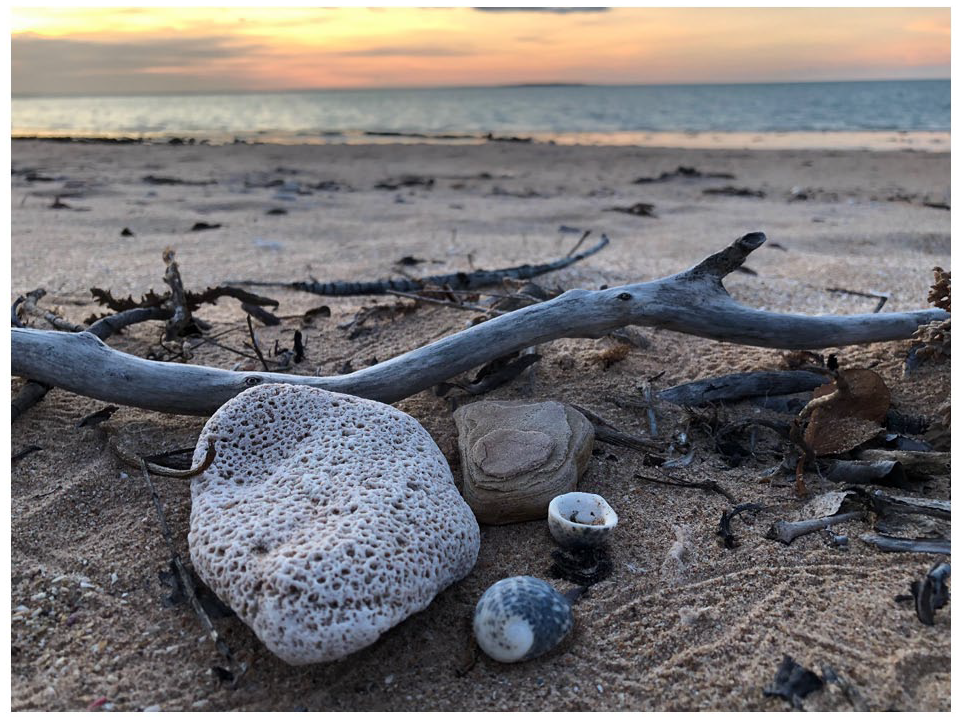
Nhä limurr dhu maḻŋ’maram raŋiŋur (things we find on the beach) at Galiwin’ku, Northern Territory, Australia (Photo by Emily Armstrong).
Gakal was discussed in all our case studies as a key concept that relates both to children’s development and to adults’ behaviour. Gakal is key to how people communicate and is difficult to define in English. Researchers and members of the Ŋaraka-ḏälkunhamirr Mala compiled a list of English words that are related to gakal: identity, character, skills, knowledge, behaviour, talent, gift, roots, purpose, direction, ancestral style, attitude, how they play their role, responsibilities, temperament, manner, intelligence, cleverness.
Gakal is the way a person presents themselves, or the way they bring themselves as a person. Also, there’s gakal in ceremonies—when you are looking at them, observing the way they do the dancing, the way they present themselves, the way they sing. It’s not just the skill—there’s a whole lot of things happening that you are observing. It’s the flow of everything—it’s there but it’s hard to explain it in English. . . . Some can mean it specifically for a skill—a reduced version. But some can use it to describe a lot of things, all in one. We need to be aware of those things, otherwise their message can’t be passed on in English. (Rachel Dikul Baker, Female Yolŋu researcher and interpreter)
Each person’s gakal is connected and shaped by their experiences, their gatjpuyun (hopes and aspirations) and märr (strengths, nature, passions) and these things together influence intercultural communication. Participants perceived cultural differences in gakal, gatjpuyun and märr. Participants emphasised that, in this community context, learning languages and learning through oral mediums, including stories and songs, are powerful ways to build relationships, develop knowledge and strengthen identity: Coming here and seeing the difference with the Yolŋu culture here compared with the Aboriginal culture back home. Well, coming here they speak their language. I’ve heard them speak their language and they sing and they have ceremonies. We’ve found it very interesting. I’ve always wanted to experience that! . . . I find it’s really full on. (Female non-Yolŋu First Nations Australian teacher)
Many participants discussed the influences of going through training in both Balanda and Yolŋu training systems and how this training influenced their practice frameworks, roles and skills to communicate in intercultural contexts. We found that, in early childhood contexts, intercultural communication is influenced by the different frameworks and systems that each partner understands and applies, for example: learning through mother’s family line; learning through father’s family line; government programme guidelines; holistic family centred practice; Yolŋu ways of supporting and understanding children’s development; traditional healing; western medicine; primary health care; wellness models of care.
We found that the balance of power in workplaces and the ways that people interacted and communicated about their different knowledges were interrelated. Some Yolŋu service provider participants expressed feeling disempowered, discouraged, frustrated and angry that, although they tried hard and invested up to 48 years of work and training, “we still can’t make the decisions . . . it should be Yolŋu working beside Balanda” (Yolŋu service provider). Participants explained that their communication was impacted and some said they were losing passion for their work, had begun to disengage and were not seeing the outcomes they wanted for children.
The experienced, multilingual Yolŋu staff who participated in our study demonstrated high-level Yolŋu knowledge and sophisticated intercultural communication skills but were all employed at lower levels than their Balanda colleagues. Some Yolŋu participants aim to become the leaders and managers of services for Yolŋu children but have gained vocational education and training certificates and remained employed at the same lower level while Balanda have come and gone from the community gaining higher education qualifications, gaining recognition and being paid more money. “Balanda are pumping themselves up to make themselves bigger—the bosses. . . . If they were working together really, alongside each other, then the Yolŋu will become a manager” (Ḻäwurrpa Maypilama, Senior female Yolŋu research supervisor).
When asked about what is needed to change this imbalance of power, participants talked about creating systems that lift up Yolŋu knowledge, are more flexible for Yolŋu staff, and recognise Yolŋu contributions through equal pay, equivalent status and sharing of work. Several participants suggested that, instead of always requiring Yolŋu to adapt to Balanda systems, Balanda should learn how to communicate in Yolŋu ways: [They can help me] by learning Yolŋu ways. So Balanda needs to learn how Yolŋu are living. And how Balanda people should keep communication with Yolŋu people so that it can be easier. Because a lot of Balanda people comes, and they have to learn first with Yolŋu people—how to communicate with Yolŋu people. Yes. That’s why they can build up good relationships with Yolŋu people. (Young Yolŋu mother of a newborn baby)
A flow that comes when we are talking: dharrada ga gurrum’ (steady and gentle)
The final layer of our metaphor is a story of the water’s journey as raypiny gapu (fresh water) flows from the spring to meet the moṉuk gapu (salt water) of the sea. We identified nine processes in the water’s journey aligned with nine key features of effective intercultural communication processes, the details of which will be published in another article (Armstrong et al., in press). Here, we provide an overview of concepts and approaches that support intercultural communication to flow well.
Raypiny ga moṉuk gapu ga gumurrbunanhamirr (fresh and salt water meet together) (Figure 3), like cultures, knowledges and languages meeting when people communicate—Dhuwa and Yirritja meeting, and Yolŋu and Balanda meeting. Like when a river flows into the smooth water of the sea on a calm day, people from different cultures can come together then come to an understanding.
We sit together at the mouth of the sea—families, Yolŋu workers and Balanda workers. We bring ideas and we sort them out in a quiet way. . . . When the fresh water meets the salt water, it swirls around and makes bubbles and white froth. Yolŋu have a dance for this process. . . . We are feeling what each other are sharing. We work hard to make it taste good. (Ḻäwurrpa Maypilama, Senior female Yolŋu research supervisor)
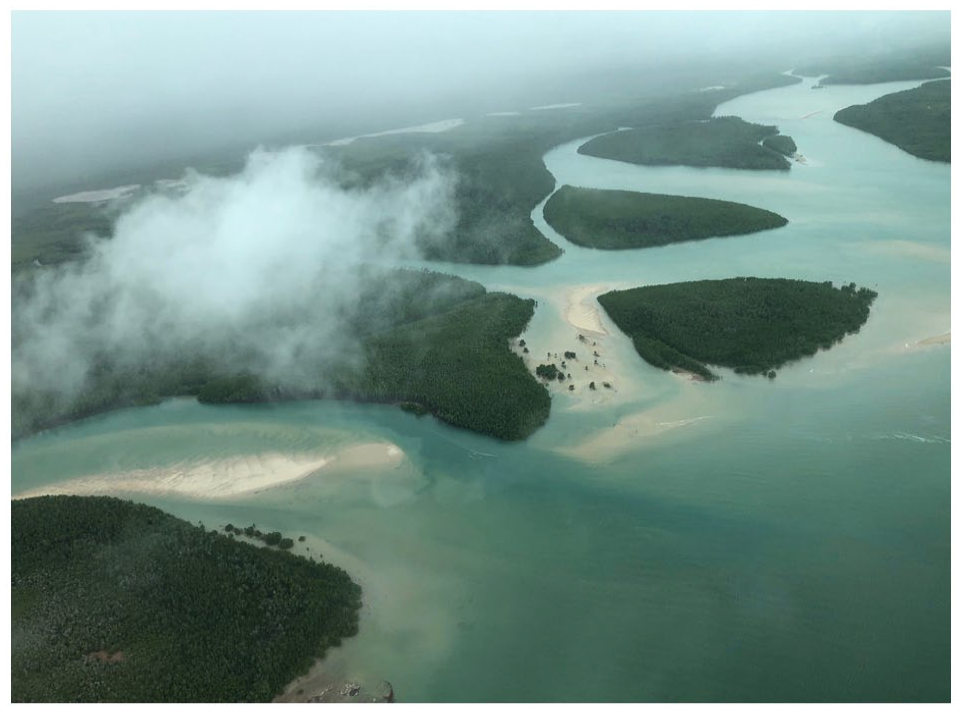
Fresh water meeting salt water in North-East Arnhem Land, Northern Territory, Australia (Photo by Emily Armstrong).
Participants talked about ways of finding a flow in reference to intercultural communication. This concept resonated with participants from different cultural backgrounds, both families and service providers. For example: [The Balanda family support worker] is willing and open to hear what I’m sharing with her and she communicates back with me, sharing. Yeah. So I feel comfortable with her and it was just an easy flow thing, I think, for us both. (Non-Yolŋu First Nations Australian mother of a three month old Yolŋu child) It’s more just a flowing thing that comes in. . . . like, incorporating [things] like postnatal depression. . . . So you’re not asking “Did you wake up happy this morning?”; “How many times have you laughed?” You know, that sort of thing—Serious?! I’m not going to put myself through that, or them most of all. . . . I suppose you just look at it and get it in your head—how will I weave it into my conversation . . . being in one place and building those relationships up, I think it helps for things to flow a bit easier and to be a bit more open and sharing. (Senior female Balanda health care provider)
All participants shared insights into communication approaches that work well to support an easy flow of communication in this intercultural context. Participants commented on the value of being dharrada (steady) and unhurried in how they approach intercultural connection and communication. Some Yolŋu service providers talked about determining whether a Balanda partner was showing good character by feeling what’s in their ŋayaŋu. Yolŋu participants preferred to communicate with people who are gurrum’ and calm like gentle water flowing quietly: That’s the other thing I like about [the Balanda family support provider]—her voice, the tone. Because I can tell in tones that if you’re good, you’re relaxed and that. But I was comfortable with it because the voice, the tone in her voice was gentle. . . . Gentle, relaxed, and something that I can go along with. . . . Not in a hurry. (Non-Yolŋu First Nations Australian mother of a three month old Yolŋu child)
While many participants discussed the importance of being steady and unhurried in their communication, many also discussed the challenges of working in this way within the time and workload pressures of workplace systems: I always feel that I’m always under an enormous amount of pressure. . . . But inside of me I felt that, and thought “no, no, no—steady—what’s going on here?” So it made me step back . . . I started to put two and two together and realise that they both weren’t ready. (Senior female Balanda health care provider)
Many factors contributed to the pressure felt by participants, for example: pressure to demonstrate measurable outcomes; responsibility to support family and community members; heavy administrative burdens; short-term contracts and funding arrangements; large workloads and few staff; time-consuming processes of interpreting between languages; and a perceived personal responsibility to fix urgent problems.
Participants valued opportunities to discuss reflections with intercultural partners, listen and talk in-depth, and receive feedback from people from different cultural backgrounds. Participating in this research, using video-reflexive ethnography methods, was one such opportunity: Yeah, it’d be a great thing if everyone who came to community had to do something like this where they had to reflect back with a Yolŋu person there saying “that was good” or “these are some ideas to do it differently.” (Female Balanda allied health provider)
These reflective, intercultural discussions helped partners to realise what they were learning and to shape their skills and processes to achieve a better flow of intercultural communication: We are sitting down in the shade together, where we feel comfortable to talk about things and to see the ocean. When we look at the reflection of our work in the clear water, it brings the ŋayaŋu from inside to out—a reflection to help each other understand the process of working together. (Ḻäwurrpa Maypilama, Senior female Yolŋu research supervisor)
Discussion
This water metaphor aims to encourage intercultural partners to reflect on, and discuss, deeper ways of thinking about how we connect, communicate and collaborate interculturally. Different lands and waters, and the different people who live there, will hold different stories, different metaphors, different connections and different practices for communicating interculturally. We hope the metaphor shared here might stimulate discussion about deep connections, concepts and processes that influence, shape and support intercultural communication in different contexts.
The metaphor is not new but we have applied it in new ways to provide insights into contemporary intercultural communication practices. In a subsequent phase of this research, we found that this water metaphor resonates with both Yolŋu and Balanda audiences (Armstrong et al., 2022). Metaphors based in First Nations Australian knowledges are culturally meaningful and accessible ways to communicate complex concepts and processes. New connections can be explored through cultural metaphors if used appropriately by First Nations Australian people following a relationally responsive approach—that is, “seeking dialogue, synergy and innovation in the respectful interaction of diverse systems” (Yunkaporta & Shillingsworth, 2020, p. 10).
Yolŋu water knowledges and metaphors have previously been documented, particularly in relation to connecting people, sharing knowledge, negotiating, teaching and learning, creating new understandings, making agreements, creating harmony and balance and restoring law and order. An example that is closely connected to the metaphor shared in this article is Ŋurruwutthun et al. (1997). Other examples include: Buthimaŋ et al. (2008), Marika (1999), Marika-Mununggiritj et al. (1992) and Robinson and Munungguritj (2001). These gapu dhäwu all hold foundational connections between peoples, places, the environment and cultural practices and systems.
As intercultural communicators, we are all on lifelong journeys of learning transformative “ways of knowing, being and doing cultural competence” (Sinclair, 2019a, p. 203) because we are constantly being shaped by: our contexts, represented in the metaphor by rivers and seas; and our relationships and experiences, represented in the metaphor by currents and tides. Our findings show that, as we journey, it is critically important to engage reflexively in thinking and talking about our own cultural foundations and the broader cultural and systemic structures in which we each stand. Intercultural communication is collaborative by nature so, rather than practitioners reflecting by themselves, talking and listening with people from different cultural perspectives is key to strengthening collaborative practice of intercultural communication (Darug Ngurra et al., 2021; Kerrigan et al., 2020; Sinclair, 2019a; Walmsley et al., 2022).
Strengthening intercultural communication in practice requires sustained systemic support, ongoing skill development and long-term collaborative relationships. Short-term professional development can bring new insights and stimulate further enquiry but applying knowledge to practice requires longer-term commitment to ongoing reflection, discussion and re-conceptualisation with those who hold different perspectives (Kerrigan et al., 2020; Sinclair, 2019a; Walmsley et al., 2022). We advocate that, like slow research (Adams et al., 2014; Christie, 2009), slow practice of intercultural communication will “ultimately be more satisfying and more helpful” (Adams et al., 2014, p. 180). Slow communication requires that both partners spend time deepening their understandings, adapting to different cultural systems and learning new ways of communicating and interacting.
Our findings demonstrate the central importance of communicators recognising and standing in their own cultural foundations. All communicators bring cultural lenses to interactions but we found that Balanda rarely talk about their own cultural foundations. Learning to recognise and stand in your own cultural foundations has implications for research and practice. For example, it is common practice for First Nations researchers and authors to identify their cultural background and be explicit about their own identities but it is less common for Balanda authors to do the same. This practice carries normative assumptions about who researchers are—that is, Balanda unless stated otherwise—and fails to recognise the diversity within the Balanda group. Our research may prompt and support communicators to reflect on what their own specific cultural identity is, and on how their culture influences their practice.
If partners do not recognise and interrogate the cultural specificity of knowledges and practices, intercultural communication is vulnerable to damaging impacts of: unconscious bias (Furlong & Wight, 2011; Kerrigan et al., 2020); an absence of mutual respect (Aboriginal Resource and Development Services, 2008); policies and cultures of externally-controlled organisations (Lowell et al., 2003; Trudgen, 2000); systemic racism and power imbalances (Bond, 2015; Kerrigan et al., 2021a; Miller, 2015). Our study demonstrates that, to facilitate communication in collaborative workplaces, systems need to change to adequately recognise and reward Yolŋu team members’ knowledges and skills. In many institutions, systemic constraints, unequal power relationships and normalised but ineffective practices inhibit people’s intercultural work while perpetuating the status quo; intentional, collaborative disruption and re-conceptualisation of these discourses and practices is required (Sinclair, 2019a, 2019b).
The metaphor shared in this article is intended to prompt reflection, discussion and facilitation of intercultural communication processes: this intention has implications for how our intercultural communication theory is represented and communicated. Yolŋu participants and researchers consistently broadened two-dimensional representations of our theory in order to maintain multi-dimensional connections to story, place, people and context. We want to represent our theory in a way that supports Yolŋu audiences to connect it with deeper layers of Yolŋu knowledge. We also want non-Yolŋu to be able to understand our theory of intercultural communication through publications. We decided the most appropriate way to share findings with diverse audiences was through photographs, explanations and examples of concepts in practice as provided in this article. In a subsequent phase of this project we also created multi-media resources to share our findings (Armstrong et al., 2022). Representing intercultural communication theory in these ways is intended to keep it open to further exploration and development by and for different audiences. This is an area for further research. We hope that the metaphor we have shared here might help others to find a gentle and steady flow of communication in places where people from different cultures meet.
Conclusion
Intercultural communication enables collaborative partnerships. While effective, respectful and reciprocal intercultural communication is difficult to achieve in practice, there is much to learn from people who navigate complex cultural interfaces together. Using an innovative, collaborative research process, our study explored the communication experiences of Yolŋu and Balanda who are working together in early childhood contexts in one very remote First Nations Australian community. Our methods and findings can be used to stimulate reflection and discussion about collaborative partnerships and intercultural communication in different contexts with respect for the diversity within and between communities. Exploring how these concepts and processes might be represented and enacted to facilitate intercultural communication in different contexts is an area for future research.
The water metaphor we have shared encourages reflection on deeper ways of thinking about how intercultural partners can connect, collaborate and find a flow when they communicate. To find this flow, all partners need to: recognise how their own cultural foundations and experiences impact their communication; recognise and value the knowledges and skills of people who come from different cultural backgrounds to their own; invest time in the slow work required to genuinely connect; advocate for systemic change by actively disrupting unequal power structures, restrictive processes and time-related barriers; and re-imagine intercultural communication processes by engaging in ongoing critical reflection and intercultural discussion.
Footnotes
Acknowledgements
We acknowledge the participants who contributed to this collaborative work and remained engaged and supportive throughout the long process. We also acknowledge the support of Yalu Aboriginal Corporation, Galiwin’ku, through sharing work space with members of our team when needed.
Authors’ note
Declaration of conflicting interests
The authors declared no potential conflicts of interest with respect to the research, authorship and publication of this article.
Funding
The authors disclosed receipt of the following financial support for the research, authorship and publication of this article: a Speech Pathology Australia New Researcher Grant (2018–2020), the Charles Darwin University (College of Indigenous Futures, Arts and Society) Indigenous Participants Fund, and an Australian Government Research Training Program (RTP) scholarship.

Glossary
Balanda non-Indigenous people
bäpurru clan
dharaŋan understand
dhärra dhu djalkiri ḏälkum standing in a strong foundation
dharrada steady
dharrada ga gurrum’ steady and gentle
dhäwu story
dhuḏi-dhäwu deep-story, root of the story
Dhuwa one of two Yolŋu patrilineal moieties
Djambarrpuyŋu a Yolŋu clan-nation and their Yolŋu, Dhuwal language
gakal the way a person presents themselves or expresses themselves through their skills and behaviour
gakal manapanmirr ga ḏarrtjalkum marrtji identity connected and shaped by experiences
gapu water
gapu dhäwu water story
gapu maŋutji spring water
gatjpuyun hopes and aspirations
gumurrbunanhamirr meeting together in a common space
gumurrkum Balandany adopting non-Indigenous people into the Yolŋu kinship system
Gupapuyŋu–Daygurrgurr a Yolŋu clan-nation and language group
gurrum’ gentle
gurruṯu kinship
ḻarrum search for, explore
ḻikan ancestral connection and alliance
mälk skin name
märr strengths, nature, passions
moṉuk gapu salt water
nhä limurr dhu things we find on the beach
maḻŋ’maram raŋiŋur
nhaltjan dhu ḻarrum ga dharaŋan dhuḏi-dhäwuw how we explore and understand the root of the story
Ŋaraka-ḏälkunhamirr Mala a backbone committee; name of the advisory group that oversaw the research—made up of senior members of the local Yolŋu community and Yolŋu leaders in early childhood services
ŋayaŋu inner being
ŋunhi limurr dhu gumurrbunanhamirr ga waŋanhamirr when we come together and discuss
rarranhdharrwirri gapu permanent water
raypiny ga moṉuk gapu ga gumurrbunanhamirr fresh and salt water meet together
raypiny gapu fresh water
Ritharrŋu a Yolŋu clan-nation and language group
riyala waṉḏirr flowing water
wäŋa land
waŋanhamirr bala-räliyunmirr back and forth discussion
Warramiri a Yolŋu clan-nation and language group
Yirritja one of two Yolŋu patrilineal moieties
Yolŋu First Nations people from the region that is now called North-East Arnhem Land, Northern Territory, Australia; pronounced Yolngu