



Abstract
In the distressing midst of global extinction and environmental crises, changes to the ways that places are managed and cared for are vital and urgent. We offer here an Indigenous-led model of cross-cultural collaboration based on lessons shared by Darug custodians in Sydney, Australia, embedded in the making of buran nalgarra (stringybark rope). The Buran Nalgarra model of collaboration is not a simple cut-and-paste model nor panacea for effective collaboration. Rather, embedded deeply in Darug Ngurra (Darug Country), we share what we have learnt and value through our Caring-as-Darug-Ngurra project in the hope that others will find our guiding principles and processes useful, and perhaps adapt our learning to their own places. We strive for strength and learning through togetherness.
Keywords
Introduction
Australia, like the rest of the world, is in the shameful midst of a mass biodiversity extinction crisis (Houston, 2021). Fuelled by deforestation, mass habitat loss, unsustainable development pathways, climatic changes and intense environmental mismanagement (Intergovernmental Science-Policy Platform on Biodiversity and Ecosystem Services [IPBES], 2019)—something is very wrong. The evidence unmistakeably shows that current environmental management systems are not taking care of Country and “critical and urgent” responses are required (Williams et al., 2020, p. 411).
In places deeply impacted by colonising processes, learning and working together as Indigenous and non-Indigenous peoples can be fundamental for healing broken systems and nurturing more sustainable relationships with Country (see Austin et al., 2019; Burarrwanga et al., 2019; Neale et al., 2019; Russell et al., 2020; Sloane et al., 2019; Smith et al., 2020; Woodward et al., 2020). Indigenous peoples have always taken care, and continue to take care, of Country (Gammage, 2011; Pascoe, 2014; Woodward et al., 2020; Yunkaporta, 2019), despite the ravages and deep destructions of colonialism and capitalism (Darug Ngurra et al., 2019; Johnson et al., 2016; Rubis & Theriault, 2020). Indeed, Indigenous peoples globally are custodians of an estimated 38 million km2 of territories of immense ecological and socio-cultural significance (Garnett et al., 2018) and are collectively acknowledged by IPBES as successful land managers trying to stem the widespread adverse human alterations of the environment (IPBES, 2019).
We acknowledge what Indigenous peoples have always known: there is much to learn about environmental care and management from and with Indigenous custodians, even where these ways of knowing and being have been deeply impacted by colonial and post-colonial violences. Yet how might this work together be done respectfully, carefully and sustainably? How might people and places learn together across seemingly enormous divides of knowing, seeing and doing? How can this work actively recognise and challenge deep-colonising structures, processes and institutions? The answers can be difficult and the methods even harder. To walk with good spirit and navigate these violences wrought by colonialism, our cross-cultural research collaboration finds strength and guidance in the lessons and practices of making buran nalgarra (stringybark rope).
Our Buran Nalgarra Darug-led model of cross-cultural collaboration shows how we work together as Darug and non-Darug collaborators on and as Darug Ngurra (Darug Country) in Western Sydney, Australia. We write in good faith but offer neither a simple cut-and-paste model for ways of working together nor a panacea for addressing oft-times tricky questions of collaboration. Rather, deeply embedded in Darug Ngurra, and in our work and relationships together, we present our model in the hope of inspiring and further nourishing those important conversations on how we might all learn through togetherness (Austin et al., 2019; Burarrwanga et al., 2019; Neale et al., 2019; Russell et al., 2020; Sloane et al., 2019; Smith et al., 2020; Woodward et al., 2020).
We, the authors of this article, are the Darug and non-Darug Yanama Budyari Gumada research collective. Shaped and enabled by Darug Ngurra, our collective was initiated by senior Darug custodian Uncle Lex Dadd, and is supported by a 3-year New South Wales (NSW) Government Environmental Trust grant (2018–2020). The aim of our project is to bring Darug knowledges and ways of knowing, being and doing to the conservation management of Yellomundee Regional Park—also referred to as Yarramundi Regional Park (Figure 1), and to inspire environmental stewardship of the park by learning to Care-as-Darug-Ngurra. Here, we reflect on our work together and draw on our experiences, values, practices and lessons learned. To lay the groundwork of the Buran Nalgarra model, we begin by discussing what it means to Care as Country on Darug Ngurra.
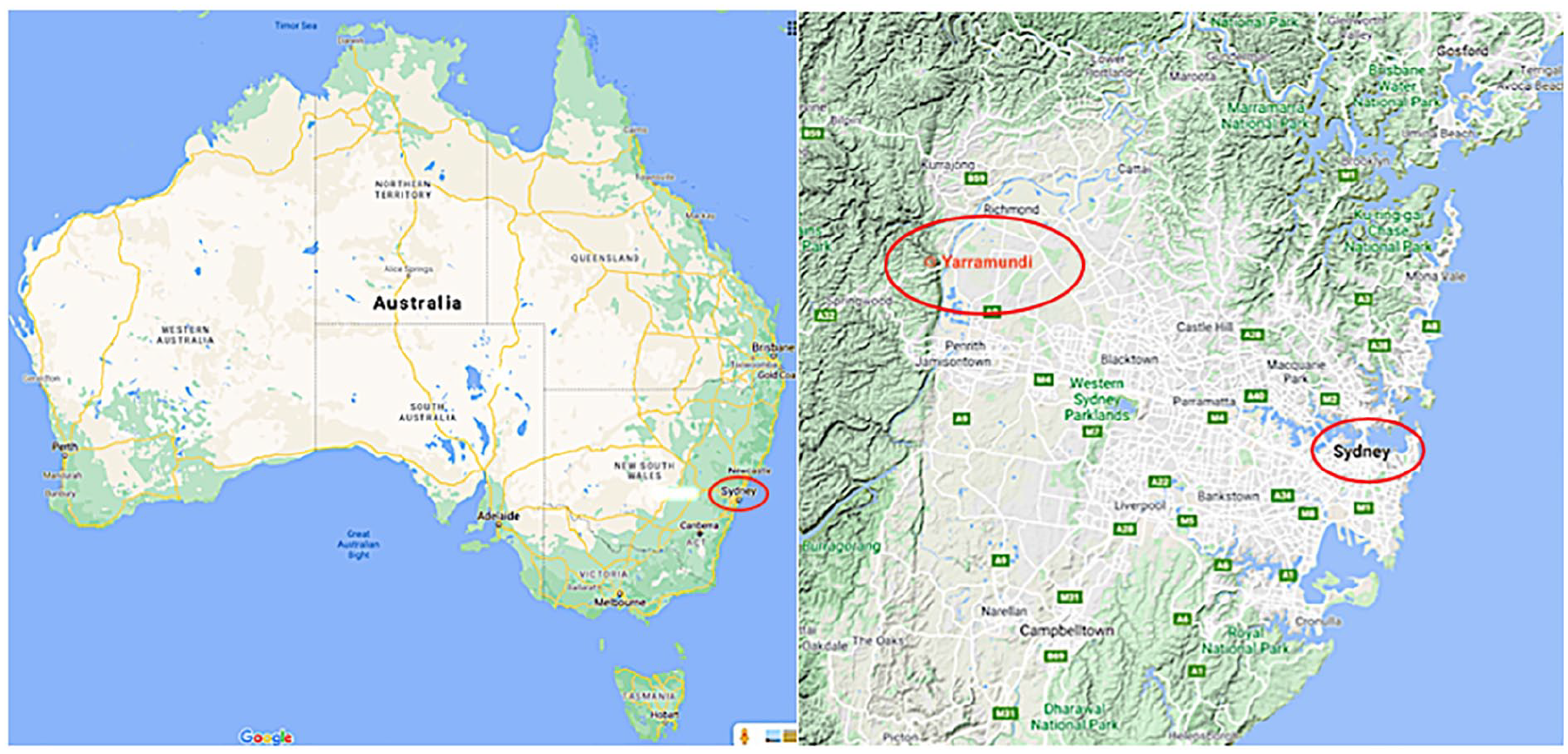
Map of Australia (left) shows Sydney on the east coast of the country. Yarramundi Regional Park (Right) lies on Darug Ngurra (Darug Country in Western Sydney), at the base of the Blue Mountains World Heritage Area (Google Maps, n.d.).
Caring as country
All of Australia is Indigenous Country (Rose, 1996). In Australian Aboriginal English, Country is an everyday word, the meaning of which Rose (1996, p. 7) beautifully articulates: Country in Aboriginal English is not only a common noun but also a proper noun. People talk about country in the same way that they would talk about a person: they speak to country, sing to country, visit country, worry about country, feel sorry for country, and long for country. People say that country knows, hears, smells, takes notice, takes care, is sorry or happy. Country is . . . a living entity with a yesterday, today and tomorrow, with a consciousness, and a will toward life.
Although Australia is a heavily colonised place, urban and peri-urban places such as Yarramundi, on the outskirts of Sydney, are very much Country. As Porter (2018, p. 2) writes, Every inch of glass, steel, concrete and tarmac is dug into and bolted onto Country. Every place that is the subject of analysis and urban intervention is knitted into the fabric of Indigenous law and sociality.
For millennia, forever, Darug people have walked and lived and loved Darug Ngurra, surviving the brutalities of colonialism in all its manifestations. This survival is particularly remarkable since, located in Western Sydney, Darug Ngurra is a primary site of colonial devastation in what is now called Australia.
Yanama Budyari Gumada, the name of our research collective, means to go or walk with good spirit in Darug language. To yanama budyari gumada means to take care of Country and each other with kindness, patience, humility and respect. This good spirited walking is what we try to do through our project, which brings together Darug and non-Darug people to Care as Country (Darug Ngurra et al., 2019, 2020). Our collective includes Darug Ngurra; senior Indigenous Darug custodians Uncle Lex Dadd and Aunty Corina Norman-Dadd; Community Development Coordinator at the Blue Mountains Aboriginal Culture and Resource Centre Paul Glass, an Indigenous Kamilaroi man and formerly NSW National Parks & Wildlife Service Ranger at Yarramundi; Newcastle University PhD students Jessica Lemire and Rebecca Scott; Macquarie University researchers Sandie Suchet-Pearson and Marnie Graham; and PhD student Harriet Narwal. We use the collective we throughout this article because we sit around a fire—or due to COVID-19, connect through Zoom—and discuss at length our visions, how we collaborate, how we work as mudjin (family), not as individuals but collectively. Within this collective, each of us are uniquely situated in terms of our careers, ages, heritages, identities, life journeys, interests, expertise, responsibilities and obligations, and we recognise and respect these differences. And within and through these differences, we always work to find ways to yanama budyari gumada. Yanama budyari gumada is a way of life. It is an ongoing reminder to walk softly, and listen deeply, Uncle Lex reminds us. Whether we are in a bush setting, in a lecture room, on Zoom, in a high-rise building or working together on and as Yarramundi, walking softly and listening deeply is a practice we have come to honour.
Yarramundi (Figure 2) is an incredibly important historical and contemporary place for Darug custodians, and for our collective. The ecologically rich area was, and still is, a key meeting and trading place for Aboriginal groups from around Australia, especially given the important knapping stones—stones that are able to shape other stones into implements such as axe-heads—that are found there. The area is also important to Darug custodians due to its pre- and post-European contact histories (Darug Ngurra et al., 2019).
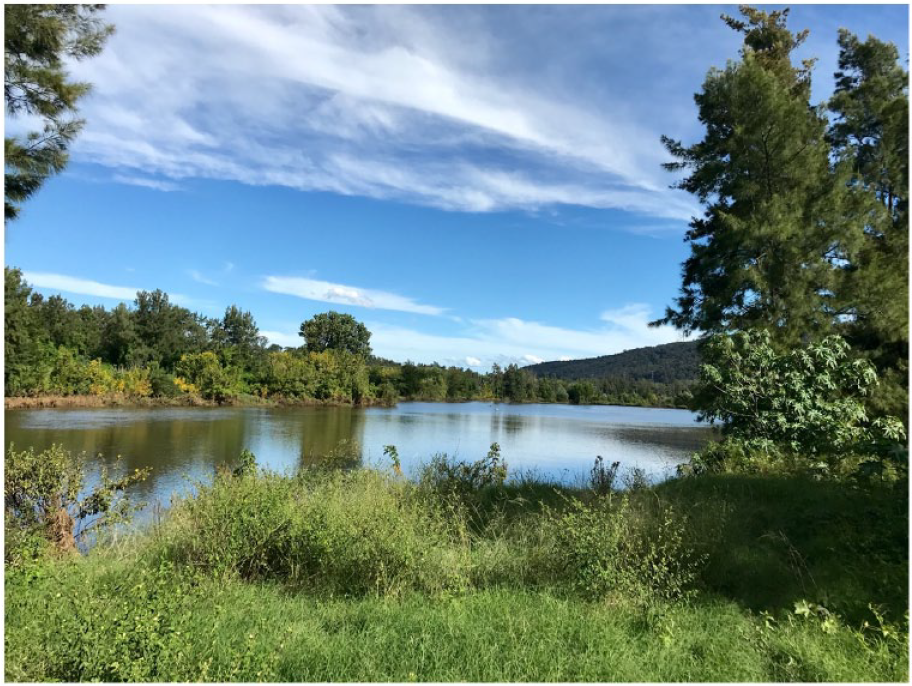
The Dyarubbin (Hawkesbury-Nepean River) running through Darug Ngurra (Darug Country, West Sydney, New South Wales) at Yarramundi (Yellomundee Regional Park), where the Yanama Budyari Gumada research collective focuses our efforts. (Photo credit: Marnie Graham).
Our project aims to enhance environmental stewardship of this important place by inviting individuals and groups to come to Yarramundi and camp with us on Ngurra (Country), to learn about Darug knowledges and culture from Darug custodians. We have facilitated more than 700 attendees in over 16 cultural camps, and intend to see many more faces in the future. We also create and support initiatives that attend to and heal Ngurra by bringing together Darug, non-Indigenous and scientific knowledges. We work together with influxes of introduced plant species and with those plant species that support the health of Darug Ngurra; we attend to issues of water pollution and to the care and maintenance of animal species such as flying foxes; and we support the reinstatement of Darug cultural burning practices (Darug Ngurra et al., 2019) (Figure 3). All of these activities we understand are part of Caring as Country. Three short films that show some of our caring work in action were produced: Yanama budjari gumada/walking with good spirit at Yarramundi (Eriksson, 2018); Healing Fire: Cultural Burn July 2019 Yellomundee Regional Park (Eriksson, 2020b); Common Ground: The Power of Coming Together, Sapmi to Darug Ngurra (Eriksson, 2020a).
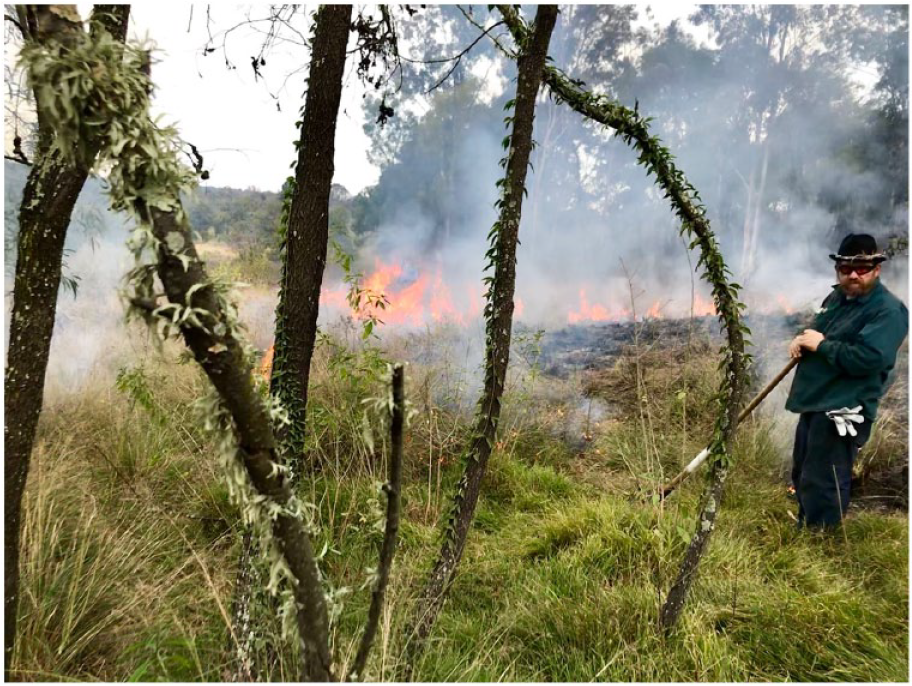
Uncle Lex in July 2019 at what is understood to be the second-only cultural burn of Yarramundi (Yellomundee Regional Park, New South Wales) since colonisation. The burn was led by Uncle Lex and Uncle Den Barber of Koori Country Firesticks Aboriginal Corporation, New South Wales National Parks & Wildlife Service, and New South Wales Local Land Services, and supported by the Yanama Budyari Gumada research collective. (Photo credit: Marnie Graham).
As an environmental management concept, Caring as Country found precedent in Caring for Country, an important conceptual idea deeply integrated into the practices and discourses of Indigenous land management in Australia over the previous three decades (Bawaka Country et al., 2013). Caring for Country is understood as a bridging concept that alerts non-Indigenous land managers to alternative worldviews and practices that Indigenous groups undertake to look after their special places (Bawaka Country et al., 2013). Caring for Country is a deeply politicised concept, which Indigenous groups use and navigate to talk into the field of environmental management (Bawaka Country et al., 2013). Bawaka Country et al. (2013, p. 185) in their collaborative work in Yolngu Country, reframe the concept of Caring for Country to Caring as Country, to better reflect the complexity, more-than-human and relational nature of Yolngu relationships with Country: “This requires engagement with the ways Country also cares and acknowledgement that humans are part of Country and not separate from it.”
Caring as Country informed how our collective framed our Caring-as-Darug-Ngurra project, and how we work in everyday practice at Yarramundi. In the following section, we outline how we came together on Darug Ngurra as the Yanama Budyari Gumada collective, and preface our Buran Nalgarra Indigenous-led model for cross-cultural collaboration.
Caring-as-Darug-Ngurra
It is no coincidence that our research collective is embedded in a Caring as Country framework. Bawaka Country et al. (2013) includes Sandie Suchet-Pearson, who is part of our Yanama Budyari Gumada collective. Sandie brings learnings and insights from her collaborative work in Bawaka Country with her into Yarramundi. We are thankful for the work that is emergent with the Yolngu elders and Bawaka Country, indicating the important ways that Country can learn from Country, becoming connected in new ways. We built on this connection to show how Caring as Country is equally important in urbanised and semi-urbanised places such as Yarramundi, as it is in those places often labelled remote by those centred in major cities (Darug Ngurra et al., 2019).
In addition to Country learning from Country, there are strong connections tying the humans in our collective to each other. Although we have been working together to care as Darug Ngurra since 2016, many of us have known each other in varying capacities for many years, and for all of us, our collaboration has been transformative (Darug Ngurra et al., 2020). We also acknowledge with great respect, and build on their amazing energy, commitment and knowledges, Aboriginal custodians and other local groups that have worked on Darug Ngurra for many years, laying the groundwork of our collaboration. Certainly, our work has built on the enormous efforts of Indigenous groups and local custodians who have fought and worked so hard to keep Darug voices alive in taking care of Ngurra, and we pay our respects to these organisations, including the Yellomundee Firesticks, Yellomundee Bushcare, Merana Aboriginal Association for the Hawkesbury, as well as non-Indigenous groups such as Willow Warriors, and keep connected with them through regular updates and invitations to culture camps. Drawing on our experiences, successes, failures and continual learning, we share some of our good spirit, energy and learning through the Buran Nulgarra model.
On Darug Ngurra, the buran or stringybark tree has been used for millennia by Darug people to make nalgarra (string and rope), from the tree’s bark. Uncle Lex explains, once stripped from the tree the stringybark strands are not very strong, they break easily. But when we twist two strands together, twining the rough bark, we create a strong rope – buran nalgarra (Figure 4). The vital lesson of this prickly buran nalgarra is that “[w]hen we work together, entwined, we have strength” (Uncle Lex Dadd in Darug Ngurra et al., 2019, p. 3). This lesson of strength through (sometimes uncomfortable) togetherness embodies the practices of our Buran Nalgarra model.
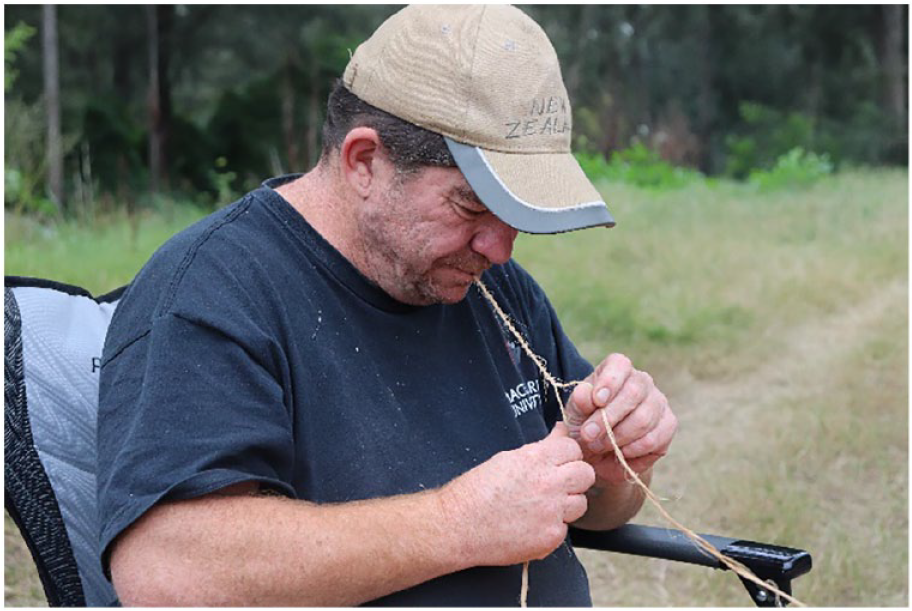
Uncle Lex twining two stringybark strands together to make buran nalgarra (stringybark rope).
Buran Nalgarra is a living model that changes over time, as we do—as we learn about and from each other, experience new things, changes, challenges, difficulties and differences. We acknowledge that this is our specific way of working together, based on and as Darug Ngurra, and recognise that partnerships developed on-Country are deeply embedded in place, thus generating context-specific methods for collaboration (Harrison et al., 2013). Guided by this, we share the Buran Nalgarra model in the hope that the ideas shared might open conversations and nurture places elsewhere, enabling meaningful dialogues (Rose, 1999) where we can learn from each other as we respond to colonising practices and environmental crises in and as our particular places. We write Buran Nalgarra carefully and thoughtfully to be truthful about our learning experiences, including the challenges and tricky bits, while also sharing some of the hope that we have gained through our collaboration.
The Buran Nalgarra Indigenous-led model for cross-cultural collaboration
Darug-led collaboration
Our collaboration is Darug-led. This means that while we come together in good faith, each bringing our own diverse knowledges and understandings, our project is led by Darug Ngurra, including Darug custodians. We work and write on and as a part of Darug Ngurra and acknowledge Darug peoples as the custodians and knowledge-keepers of Ngurra. Together we are committed to healing Ngurra by learning from Darug Country, custodians, culture, and knowledges.
In practice, this means our collective’s actions and priorities are always generated by the ideas and priorities that Uncle Lex and Aunty Corina bring to our collaboration as project leaders, based on their interactions with and membership of the Darug community, and on their intimate relationships with Darug Ngurra. The non-Darug collective members are always checking in with them regarding due process and key decisions, making sure to listen carefully to what Darug custodians want to share and do. This is critical as Uncle Lex and Aunty Corina are Darug custodians and speak for place. But they also have to ensure they speak with the right people and negotiate local responsibilities and obligations with great sensitivity and care. Only they can do this; the non-Darug members of our collective can support them, but are not positioned to be able to do this work.
Uncle Lex clearly and humbly says that he doesn’t know everything, such that we are also being led collectively, particularly by Ngurra. We check in with each other on a continuous basis, making sure we are not reading Ngurra’s signs through ego, but reading them with yanama budyari gumada. As a collective we know we are doing something right when Ngurra responds to us. For example, after dancing on the dance circle that we helped emerge from a lantana thicket at Yarramundi, we remember how light rain fell, a sea eagle circled overhead, and a double rainbow graced the skies – we all felt Ngurra telling us that she sees what we are doing, that we are trying to Care-as-Darug Ngurra.
Ongoing colonising processes and persistent ecological destruction provide pressing imperatives for our work. Since European invasion and colonisation of Australia in 1788, scientific and Western knowledges have been prioritised within environmental management and formal Australian education, at the expense of recognition and respect for Indigenous presences, practices and knowledges (Howitt, 2001; Howitt & Suchet-Pearson, 2006). Collectively, we need to learn from the old ways to do something new, to work and heal together. This means listening deeply to, and responding as, Country—acknowledging that we are Country (Bawaka Country et al., 2013). As Country, we have responsibilities and relations of care and reciprocity on which we are obliged to act. Dancing on the dance circle at Yarramundi embodies these responsibilities and care relations.
Enacting our responsibilities involves learning and healing with all kinds of people, with all kinds of relationships to Country. We might not always agree with each other, or with the way different people know and use Country, but we can always learn something from our interactions, and try to share and learn from our various points of view. We therefore invite many people and diverse groups to come and see what we do and work with us—invite them to be one of the strands that strengthen our buran nalgarra.
Sometimes we require specific knowledges and expertise that we don’t hold within our group (Austin et al., 2019; Ens et al., 2012). We therefore scope out, for example, ecologists, cultural burn specialists, water quality specialists, dance teachers and cultural leaders who may be able to help. However, not all collaborations work out. When particular partnerships are not working, or individual relationships do not develop, we work hard to enable a respectful parting of ways. We try to think carefully about how to interact with different groups and individuals and in what ways, so that we can learn from each other on some level, even if it is to realise that this is not the right time or place to be together and that Darug Ngurra has other things in store for all involved.
Leading with love, becoming mudjin, and practicing ceremony
We are diverse people from diverse backgrounds with different relationships to Country. While Darug custodians and Paul Glass (ex-NSW NPWS Ranger at Yarramund) have connected and fought hard for the care of Yarramundi for a long time, for the university researchers and students, Yarramundi has come to their attention through meeting Uncle Lex, and they are relatively new to it. The way we meet together, work and share our knowledges is with openness, patience, respect, humility, trying to always keep our ego-in-check, and, ultimately, leading with love. Leading with love is powerful and generative (Bawaka Country et al., 2018; tebrakunna country & Lee, 2017). For us, to lead with love means leading with kindness, reciprocity, generosity and sharing; taking the good and the bad, the joy and the hurt, and everything in between; being there when times and relations are difficult and fraught, and existing with the knowledge that we want to stay working together forever. Through our work and our collective commitment to leading with love, we have become mudjin, with all the respective obligations and responsibilities that mudjin entails.
This is not a light commitment; becoming family can be deeply challenging (Mahood, 2012). Becoming mudjin is not about using or abusing or exploiting our relationships as family. To be mudjin means actively supporting each other not just in our work but in life. We have supported each other through the birthing of new life, through death and grief, difficult personal times, the intensities and joys of raising children, and disagreements. When one of us feels low or overwhelmed, we call to see how they are, give them space where they need it, take on their workload where we can, bring food, and let them know we are there for whatever they need. As mudjin, we continually make our own family. We bring our blood families together often and all connect through Ngurra, connecting with place and with the Old People (Darug ancestors, the elders and custodians who came before us, forever), and who remain connected at and as Yarramundi. We are walking in the footsteps of those Old People who gathered for thousands of years, in the same gathering places, and that makes it so much more poignant for us.
As mudjin, we walk in two worlds. The one that emerged from the Industrial Revolution taught us to be competitive, selfish, cynical; but when we work and learn from the old ways, with love, there is a far bigger connectedness. As mudjin, we don’t have to compete—we all have different levels of knowledge, and we come together with that sharing spirit. This spirit has been particularly important as our work is impacted by COVID-19. We all felt a profound sense of loss at not being able to meet on-Ngurra at Yarramundi. We were yearning for connection. We started weekly Zoom meetings to keep connected. These meetings are relaxed and flexible and when people are busy and can’t attend, no one judges. This unconditional love carries through to our camps—if one of us can’t make it, there’s no sense of our being neglectful. Our love doesn’t have strings attached. We also try and spread the love. Indeed, regular evening family cultural get-togethers at Yarramundi have emerged from our mudjin’s work, connecting more Darug and Aboriginal people on a weekly basis.
Because family is integral to our work, mudjin includes our gulyangarri, our children, who are always with us when we Care-as-Darug-Ngurra. Having our gulyangarri with us informs and inspires our work, and we want them there with us—to learn from and with, to play, to be with and as Country. Our children and their children in perpetuity need to know how to care for and as Country, and how to care for each other. Still, having our children with us, especially our very young ones, can be exhausting and sometimes distracting. When we see that one of us is getting fed-up with running after kids, we try to take over and give them a break (Figure 5).
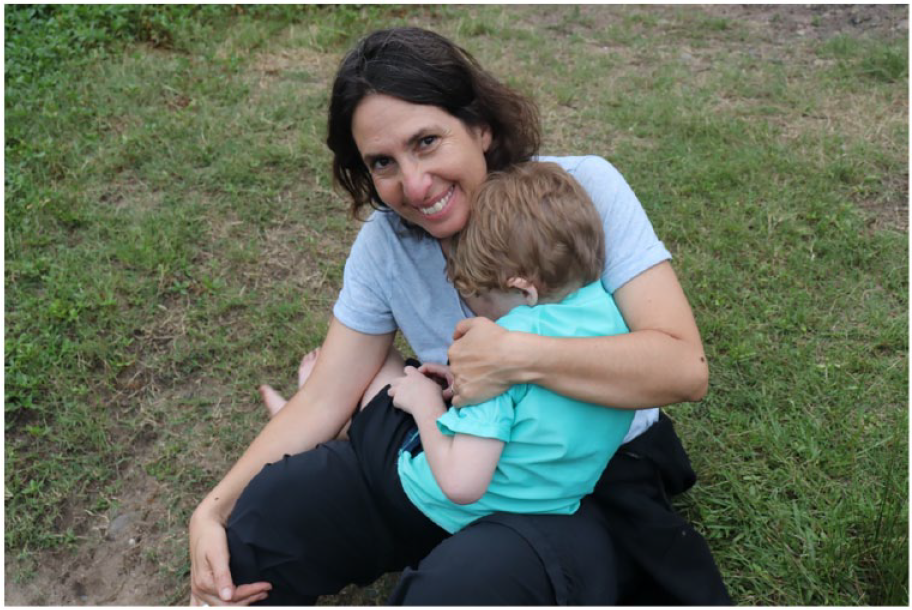
Sandie taking care of Uncle Lex’s and Aunty Corina’s son, Malakai. (Photo credit: Marnie Graham).
Our older kids are also great at looking after the younger ones and teaching them too. We love it when we see this happening; we know they are leading with love (Figure 6).
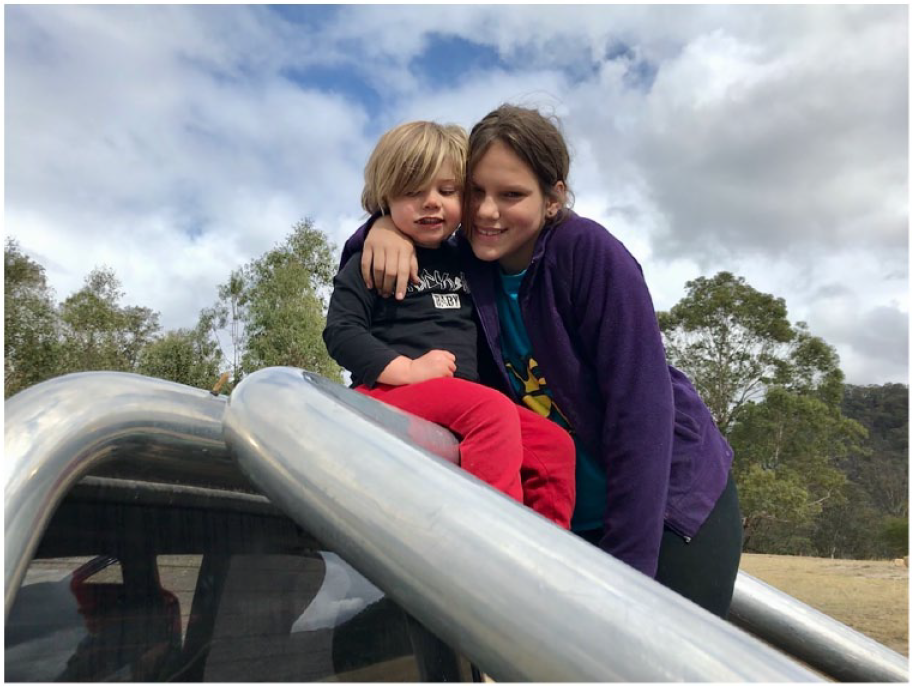
Sandie’s daughter, Rhian, taking care of Marnie’s son, Emile. (Photo credit: Marnie Graham).
We also practice ceremonies that lay the groundwork for leading with love. Uncle Lex leads regular smoking ceremonies on Darug Ngurra, in which everyone is invited to participate. A Darug smoking ceremony involves standing in a circle around a small pile of smouldering green eucalyptus leaves, and each of us taking our time to douse our bodies in the thick, aromatic smoke while Darug custodians lead a beautiful song of welcome (Figure 7). By bathing in the smoke, feeling it curl around our bodies, up our noses and through our hair, feeling our bare feet on Mother Earth, we pay respect to Ngurra and the Old People, and leave everything at the door—let go of any bad feelings or thoughts, and come together as mudjin to Care as Country.
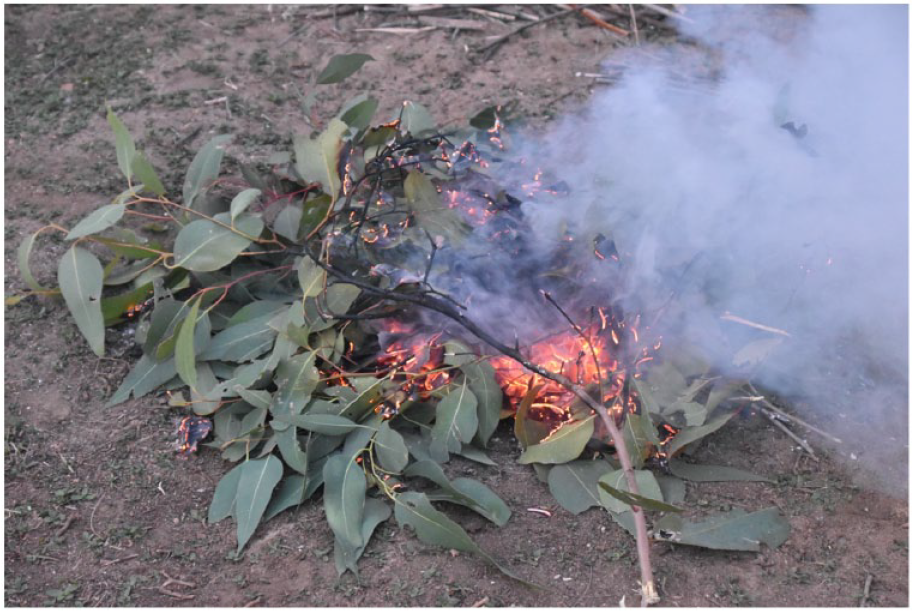
Gum leaves smouldering in preparation for a smoking ceremony. (Photo credit: Sandie Suchet-Pearson).
Uncle Lex also invites everyone to sign-in to Country. Signing-in on Darug Ngurra means coming into relationship with a guman (casuarina tree), filling our mouths with ochre that we have crushed and made into a paste, and leaving our ochre-sprayed handprint on the tree (Figure 8). To sign-in means to leave a little bit of yourself on Darug Ngurra, just as the Old People did, and to make a commitment to this important place, building reciprocal care relations as we Care as Darug Ngurra. We know from our own and other visitors’ experiences that the process of signing-in to Country is felt deeply.
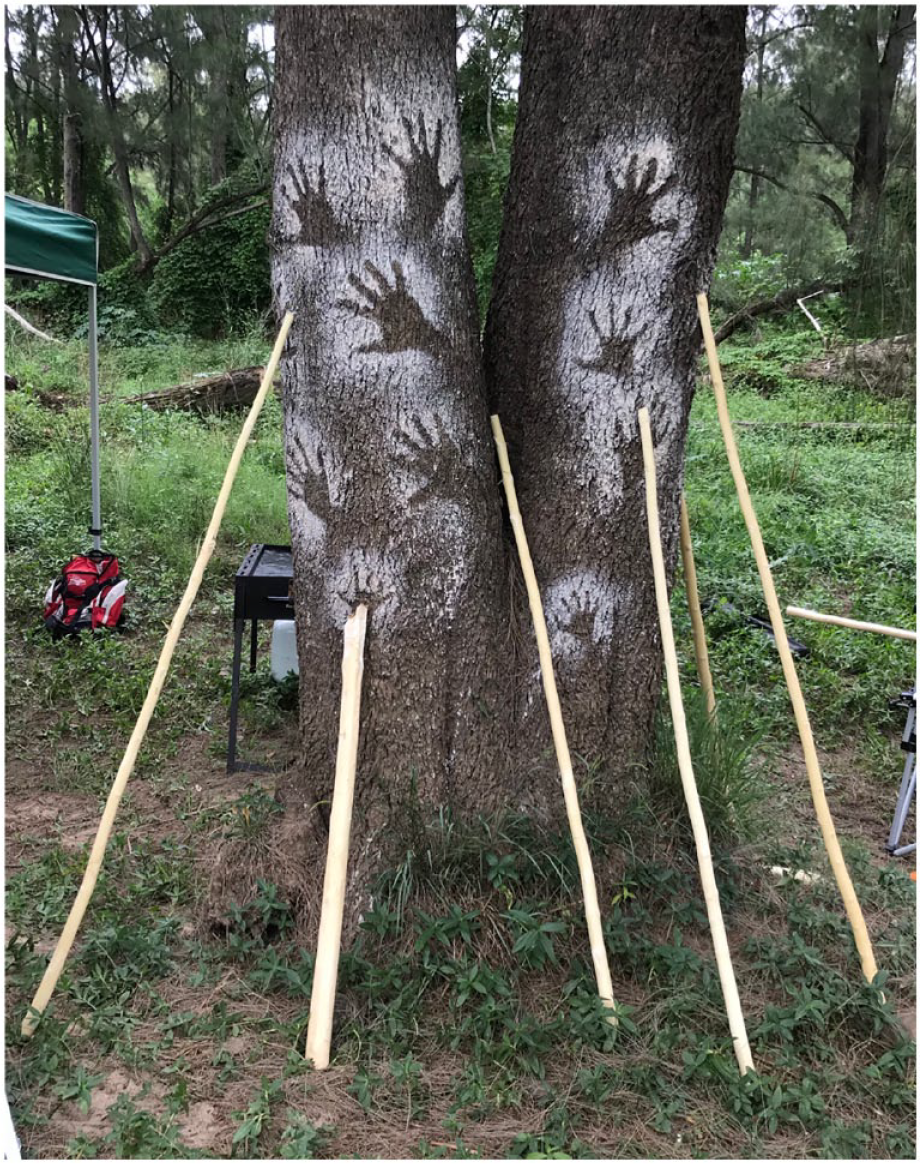
Guman (casuarina tree) on which visitors were invited to sign-in to Darug Ngurra (Darug Country, Western Sydney, New South Wales). The wooden sticks are from acer trees that were removed, and the timber shaped into digging sticks. (Photo credit: Marnie Graham).
Yarning, listening deeply and following protocol
We learn from and about each other and about Ngurra by yarning (Figure 9). To yarn entails sitting and talking together, usually on Ngurra at Yarramundi, to check in, to understand, to sort out our differences and anything that requires our attention. Yarning enables connection. Yarning also requires us to listen deeply. We try to listen to our gut instincts, to Ngurra, and to share what we feel, hear and think with each other (Darug Ngurra et al., 2020). Sharing boldly and listening deeply can be tricky work, which is why we lead with love. Because yarning also requires the hard grit of difficult conversations—saying things that need to be said, explaining our problems, pulling each other up when needs be, and trying to work out a path forward. This sometimes involves raising concerns when something doesn’t feel right—the prickliness of the buran nalgarra. What is important is that the yarning space offers a place to voice concerns, with love and guided by Ngurra.
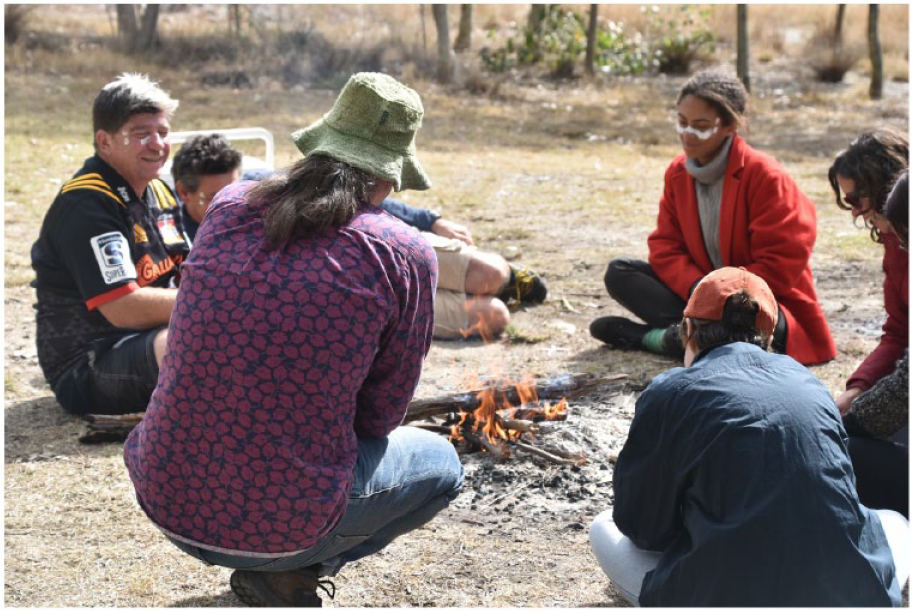
Yarning on Darug Ngurra (Darug Country, Western Sydney, New South Wales). (Photo credit: Sandie Suchet-Pearson).
Coming together to yarn is how we came to co-create a set of living protocols developed at the outset of our project, which we use to guide how we relate to each other, to our project, and to Ngurra. Our protocols include things like ensuring that visitors to Ngurra are aware of their obligations and the processes we and they must follow to keep people and place safe. These living protocols are iterative and change over time as we are confronted with new information and new challenges.
Acknowledging colonisation and resisting deep-colonisation
During the colonisation of Sydney, many Darug people were decimated due to dispossession, disease and outright violence; language was suppressed, culture and ceremony were interrupted, and Darug people were almost erased from existence in colonial-settler and political narratives. Darug Ngurra, including Darug people, suffered immeasurably, despite the best efforts of Darug ancestors under terrible circumstances. Rose’s concept of deep-colonising is used to show how even though formal colonisation may have ended, colonising processes often continue (Rose, 1999). As Indigenous and non-Indigenous collaborators working together to Care-as-Darug-Ngurra in the very birthplace of colonial Australia, we acknowledge the persistent effects of devastating colonisation processes on Darug Ngurra, and try always to be attentive to the ways that deep-colonising processes (Rose, 1999) persist for Darug people and culture. Central to this is celebrating the amazing efforts of Darug custodians to rejuvenate culture and language, and to connect with and heal Ngurra.
As a product of the traumatising colonising processes and relations which sought to divide and conquer Indigenous groups, research shows that lateral violence is unfortunately rife within many Australian Indigenous communities (Atkinson, 2002). We always talk through issues of lateral violence faced by Darug participants and, to a lesser extent, by our project. Uncle Lex also regularly demonstrates the buran nalgarra lesson of strength through togetherness. Yet standing our ground with good spirit is not easy. The prickly stringybark can dig deep into our skin as we try and engage positively with ongoing violences. For the non-Darug participants, this has been a sobering lesson in Indigenous community politics, and in truth, Uncle Lex and Aunty Corina try to shield the non-Darug participants from bearing the brunt of lateral violence, because Uncle Lex and Aunty Corina see this violence as unfair, fundamentally damaging and not in any way useful to Aboriginal people or community relations.
As best we can, we try to minimise and mitigate these instances. We maintain an open dialogue with Darug custodians and with other Indigenous groups in the area, by engaging with Darug representative bodies and by openly communicating our work, so that we might form and maintain positive connections. This includes co-ordinating an independent Project Reference Group, consisting of senior Indigenous custodians of the area, senior academics, NSW NPWS management and members of the local community, as a sounding-board and feedback mechanism for our project. Our trust in them and their independence from our project mean that they can challenge our work and we can work to respectfully move forward together.
We also try always to be attentive to our own situatedness. At the time of invasion in 1788, Darug Country consisted of 29 Darug clans. While Uncle Lex and Aunty Corina are not direct descendants of the Boorooberongal Darug whose clanal country encompasses Yarramundi, they work there with Boorooberongal Darug consent. They always tread carefully and with great respect, constantly ensuring they follow the correct protocols and get the right permissions—consulting, listening, going down the right channels with Boorooberongal custodians. Over-stepping puts pressure on relationships, on trust built over time. We all need to be constantly working on relationships.
Resisting deep-colonisation also means rethinking the way Darug Ngurra is managed, used and valued. Darug Ngurra and Yarramundi in particular face multiple threats. Many introduced species, some native species and also pollutants have overtaken the area; some recreators, perhaps unknowingly, do not take care of Country. There is also constant degradation of Ngurra by residential, commercial and infrastructure development. The significance of this place still evades many park users and those living in its surroundings, but things are changing. As part of our commitment to walk with good spirit together, we conduct environmental projects on Darug Ngurra to heal Country. We recognise that to Care as Country requires rethinking what is meant by conventional terms like “environmental management,” to include Darug ways of knowing Ngurra, and to recognise that all parts of Ngurra are sentient. This includes working with introduced plants which are often denigrated as weeds needing removal, rather than acknowledged as sentient beings requiring respect.
The Buran Nalgarra prioritises practicing culture, because Caring-as-Darug-Ngurra and keeping culture alive and strong are fundamentally intertwined and imperative to healing Country. We, Darug and non-Darug alike, take the time to learn story, lore, dance and song from elders, perform appropriate ceremony, and practice dancing- and singing-up Country. We practice weaving (Figure 10), clapstick making and grinding ochre. As Darug language is revitalised by custodians such as Aunty Corina, all of us try to learn Darug language when we can. Learning and practicing culture and language are an important part of connecting to Ngurra, and we are all thankful to the generous and patient Ngurra and custodians who teach us these deep connections.
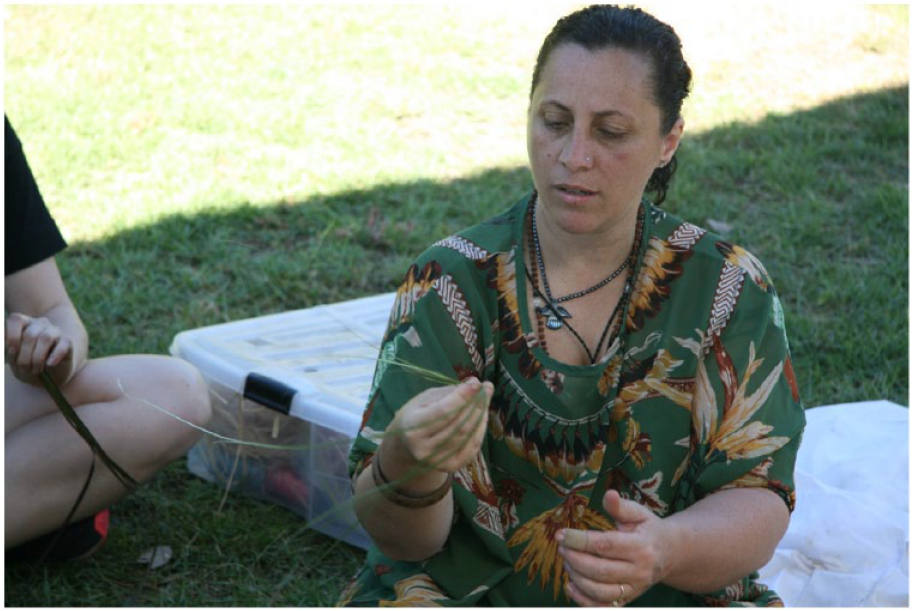
Aunty Corina teaching visitors to weave on Darug Ngurra. (Photo credit: Sandie Suchet-Pearson).
Navigating individual and institutional responsibilities and concerns
Darug custodians and other Indigenous collaborators have many expectations and obligations within their respective communities, and we need to be attentive to these. This requires working flexibly, not getting upset when plans change, and being sensitive to the pressures that each of us face. Similarly, we are all employed by different institutions who have differing expectations and responsibilities. Sometimes, individuals within different organisations work hard to be our allies. However, securing wider institutional commitment can be difficult given short political and funding cycles, and frequently changing government and organisational priorities. We try to carefully navigate these situations so that we can continue our work on Ngurra. This can be exhausting work, which takes away from time together healing Ngurra, but it is necessary. We also make sure to push back on expectations where necessary, and invite managers and senior people in to see what we are doing, how we do it and why it is important.
Still, we experience situations where efforts are made to block Darug concerns and priorities. These situations are difficult and hurtful—a reminder that the buran nalgarra can be prickly, and that Darug custodians are often forced to manage their relationships within the confines of non-Indigenous laws and regulations. Rather than immediately responding to these situations with hurt and defensiveness, we respond when we are ready. Sometimes this involves making compromises with what we are doing, sometimes we make mistakes, but always it involves yanama budyari gumada. We realise that we can’t please everybody all the time, but we can try to show them the good work that we are doing. We remember that these challenging times are good learning tools for developing patience.
What is fundamental to effective cross-cultural collaborations is the building of relationships of trust. A key component of trust and partnership building in our Caring-as-Darug-Ngurra project is ensuring Indigenous custodians, who give so much of their time, knowledge and skills, receive appropriate and timely payments through our NSW Environmental Trust grant. Still, sustainability is an ever-present concern as we navigate the waters past the funding end-date. Planning for this eventuation is key, and Uncle Lex has taken this question of sustainability seriously by starting to think through what a non-profit foundation might entail and how this structure could support ongoing initiatives in ways that mean that Ngurra will be cared for, and care for everyone in return.
By the same token, sometimes institutions want us to move fast, to create knowledge, to produce results. These things are important but are not our sole focus. We know that taking the time to know each other, to be together on Darug Ngurra is both necessary and generative. It is through taking the time, learning slowly together that we are able to create strong bonds, generate new knowledges, and produce beneficial outcomes. In summary, organisations working together with Indigenous and non-Indigenous peoples to Care as Country must be committed for the long-haul, must take the time and afford the effort to become deeply entwined within the buran nalgarra.
Conclusion: the politics of caring as Country and speaking back
The NSW Government institutionally manages Yarramundi as part of the NSW national parks estate and funds our Caring-as-Darug-Ngurra project. These roles are significant since, in agreeing both to independently fund our project as well as to participate as active stakeholders in it, we are sent the signal that Caring as Country mechanisms and the engagement of Indigenous custodians are recognised as important concerns within institutionalised environmental management in NSW. This is a huge milestone in the context of environmental management policy and praxis in Australia, which has historically seen Indigenous peoples and their rights, knowledges and cultures ignored, devalued or, at best, given lip-service within a system that conventionally views Country as resources for exploitation and requiring management by bureaucrats and scientists (Howitt, 2001; Howitt & Suchet-Pearson, 2006).
The significance of this recognition is not lost on Darug peoples who have always taken care of Ngurra. In our Buran Nalgarra model of collaboration, we advocate for Indigenous-led modes of collaboration on Indigenous Country. This isn’t lip-service, this means prioritising the roles of Indigenous custodians and Indigenous knowledges, worldviews, practices, and aspirations, and working together to learn from the old ways and perhaps create something new. Given that all of Australia is Indigenous Country (Porter, 2018), we therefore advocate for Indigenous-led Caring as Country collaborations including where Indigenous custodianship and ownership claims are not formally recognised by the state, and/or where formalised practices for joint or co-management are stalled for political or other reasons.
The Buran Nalgarra model is important because it enables us to share and learn with other people and groups interested in Caring as Country together. But it is also important because Buran Nalgarra provides an opportunity to speak back to governments and government agencies. In this way, we understand that, much like the Caring for Country concept that preceded it (Bawaka Country et al., 2013), Caring as Country, and our Buran Nalgarra model specifically, are deeply political. We practice and advocate Buran Nalgarra to engender a politics of empowerment for Indigenous peoples and communities in taking the lead in mechanisms that foster Caring for and as Country in environmental management. Importantly, our model also empowers non-Indigenous peoples and communities to listen, learn and attend to Country in ways that are culturally appropriate.
For us, speaking back is to also prioritise learning to listen, appropriately and respectfully learning those parts of Darug culture, story, ceremony and dance that we are allowed to know, given our different positionalities. We see these learnings as fundamental for re-imagining environmental management and for Caring as Country collaborations in Australia and elsewhere. Re-imagining and restoring these relations, laws, and protocols is imperative not only for healing Country but also for establishing trust (tebrakunna country & Lee, 2017). Such restoration is particularly pertinent given histories of mistrust and resentment through which Indigenous/non-Indigenous research and planning processes within environmental management are embroiled (Watkin Lui et al., 2016). By making explicit the guiding sentiments, practices and experiences that underpin our work, we embody our story of walking with good spirit as part of repairing relations. The story that we tell is the re-imagining as we work to uphold protocols prioritising Darug knowledges, worldviews, practices and aspirations.
This re-imagining has its challenges. Uncle Lex reminds us the discomfort and initial prickliness of the buran nalgarra is necessary; it is part and parcel of the coming together. There is a strength in trying, even failing, together. Over time though, the prickles soften as the rope binds together and rubs against the other parts of the rope. The rope becomes smoother as the togetherness binds the string tighter. The buran nalgarra gives us the lessons, gifts us the guidance, to keep us strong. And we offer our Buran Nalgarra model here in the hope of providing further nourishment to those important conversations on how Indigenous and non-Indigenous people might come together with love and determination, looking to find strength through togetherness.
Footnotes
Glossary
Boorooberongal
One of 29 Darug clans, whose clanal Country encompasses Yarramundi Regional Park
buran
stringybark tree
buran nalgarra
stringybark rope
Buran Nalgarra
a dynamic Darug-led model of collaboration, incorporating a practicable framework guided by lessons from the making of stringybark rope
Darug
Indigenous custodians of Western Sydney, New South Wales
Darug Ngurra
Darug Country
Dyarubbin
Hawkesbury-Nepean River, New South Wales; also spelt Deerubbin.
gulyangarri
children
guman
casuarina tree
Kamilaroi
Indigenous peoples from northern New South Wales and southern Queensland; also spelt Gamilaroi and Gamilaraay
mudjin
family
yanama budyari gumada
to go or walk with good spirit; to take care of Country and each other with kindness, patience, humility and respect
Yanama Budyari Gumada
the name of our research collective, in which we try to go or walk with good spirit, and take care of Country and each other with kindness, patience, humility and respect; the collective consists of Darug and non-Darug researchers
Yarramundi
Yarramundi Regional Park, New South Wales; officially Yellomundee Regional Park; also, an important Darug custodian and knowledge-holder, and namesake for Yarramundi Regional Park; also spelled Yellomundee.
Declaration of conflicting interests
The author(s) declared no potential conflicts of interest with respect to the research, authorship, and/or publication of this article.
Funding
The author(s) disclosed receipt of the following financial support for the research, authorship, and/or publication of this article: The Darug Caring-as-Country Project and the Yanama Budyari Gumada research collective have been assisted by the New South Wales Government through its Environmental Trust. Marnie Graham is funded by Formas, the Swedish Research Council for Sustainable Development, under project 2015-781.
