




Abstract
Child abuse in sports is a significant threat to the well-being of young athletes. The aim of this study was to create in-depth knowledge of children’s perspectives and relational situations regarding the manifestation and effects of emotional abuse towards athletes in children’s sports. Based on interviews with 15 children aged 12–18 and five coaches, five themes of emotionally abusive interactions were identified: (a) scolding by coaches; (b) negative criticism from coaches and children; (c) expression of aggression and disappointment by coaches; (d) teasing and joking by children; and (e) denial of attention and support from coaches. These interactions lead to emotionally harmful effects for some of the children, which were not always recognized by coaches and were sometimes downplayed. The findings have implications for identifying situations and behaviours that may constitute emotional abuse in children’s sports, paving the way for proactive measures aimed at preventing emotional abuse.
Keywords
Introduction
Sport participation has many positive outcomes for children and young people. However, it is important to acknowledge the aspects that damage children’s positive experiences in sports. Emotional abuse in sports, which is the focus of this article, is a major form of abuse experienced by athletes (Alexander et al., 2011; Parent & Vaillancourt-Morel, 2021; Willson et al., 2022), although it is still under-recognized in research compared with the problem of sexual abuse (Bjørnseth & Szabo, 2018; Brackenridge, 1997, 2001; Brackenridge & Kirby, 1997; Hartill, 2014; Parent, 2011; Parent & Vaillancourt-Morel, 2021). There is a particular lack of research on children’s sports with young sport-active participants. Vertommen et al. (2022) state that violence against children and youths in sports ‘can no longer be ignored’ (p. 2).
An eye-opening study demonstrating the high prevalence of emotional abuse among young athletes was conducted by Alexander et al. (2011) with more than 6,000 ex-athletes in the United Kingdom aged 18–22; 75% of the participants reported that they had experienced emotional abuse during their sporting careers. In comparison, sexual harassment was reported by 29% of the participants, physical abuse by 24% and sexual abuse by 3%. These distributions have been confirmed by recent studies, showing that emotional abuse still occurs on a large scale (Parent & Vaillancourt-Morel, 2021; Parent et al., 2023; Vertommen et al., 2016, 2022; Willson et al., 2022).
In the 1990s, only a few sports organizations and researchers addressed child abuse in sports (Brackenridge et al., 2005; Donnelly, 1997). However, since then, following Celia Brackenridge’s important research and commitment to child protection and abuse in sports (Brackenridge et al., 2005; Brackenridge et al., 2010), the research field has been developed by several scholars’ studies in countries such as the United Kingdom, Canada, the Netherlands, Belgium, Australia and Germany. However, research in other countries, such as Sweden, is still lacking.
While research has progressed, the definitions of abuse and maltreatment in sports are still not well established. This poses a significant challenge to the evaluation and synthesis of research on abuse in sports due to the variety of terminology used by scholars to name and define violence against athletes. For instance, terms used include maltreatment (Kerr & Stirling, 2019), interpersonal violence (Parent & Vaillancourt-Morel, 2021; Parent et al., 2023; Vertommen et al., 2016), non-accidental violence (Mountjoy et al., 2016; Roberts et al., 2020), verbal abuse, emotional assault, psychological abuse, neglect (Vertommen et al., 2016), emotional abuse (Stirling & Kerr, 2008a) and more. While several of these concepts are interrelated, they are not fully equivalent, as they may encompass different forms of abuse at different levels of categorization. Consequently, this study focuses on emotional abuse, representing a pattern of deliberate, non-contact behaviours within a critical relationship that can potentially be harmful (Stirling & Kerr, 2008a). Examples of such behaviours include belittling, shouting, humiliating, threatening and more.
Furthermore, it is essential to recognize that emotional abuse may be just as detrimental as other forms of abuse in sports, with severe negative effects on young people’s mental and physical health (Kerr et al., 2020; Parent et al., 2022; Stirling & Kerr, 2013; Wilinsky & McCabe, 2020). An increasing number of studies have shown that experiences of interpersonal violence in sports at a young age are associated with adverse mental health outcomes later in life. Despite a growing interest in exploring various forms of interpersonal abuse (Jacobs et al., 2017; Kavanagh et al., 2017; Kerr & Stirling, 2012; Mountjoy et al., 2016; Ohlert et al., 2021; Pinheiro et al., 2014), there is a need for more in-depth research into the phenomenon of emotional abuse in children’s sports.
Scholars studying abuse in sports have predominantly directed their attention towards the elite sports environment, encompassing both adults and children in their investigations. This body of research indicates a heightened risk of abusive behaviour in sport activities framed as elite in terms of athletes competing at national or international levels, as opposed to non-elite sports (Donnelly, 1997; Gervis & Dunn, 2004; Stirling & Kerr, 2013; Wilinsky & McCabe, 2020). However, emerging evidence suggests that violence against children in sports is not specific to particular levels of competition or sports but occurs across various levels of competition and in different sports (Pankowiak et al., 2023; Parent & Vaillancourt-Morel, 2021; Stafford et al., 2015; Vertommen et al., 2016).
Scholars have further expanded our understanding by conducting studies on the perpetrators of abuse (Mountjoy et al., 2015). While judgements about who tends to perpetrate abuse remain somewhat inconclusive, multiple studies suggest that adults, particularly coaches, are significant sources of emotionally harmful behaviour towards young athletes (Wilinsky & McCabe, 2020). With coaches exerting evident power and control over young athletes (Eliasson, 2015; Stirling & Kerr, 2009), the potential risk of abuse may increase. Based on quantitative data from more than 1,800 adolescents aged 14 and older, Parent et al. (2023) found that most reported perpetrators were coaches (41%), though closely followed by peers (38%) and then parents (25%). However, recent studies highlight the importance of also examining the role of peers as perpetrators of abuse. The study by Pankowiak et al. (2023) showed that peers perpetrated the highest prevalence of any type of violence (73%), followed by coaches (60%) and parents (35%). Likewise, Stafford et al. (2015) found in their study that 81% of perpetrators of emotional abuse were peers or teammates, while coaches increasingly became a source of emotionally harmful behaviour as children advanced through competitive ranks, reaching 56%.
It also appears to be a significant lack of knowledge about the United Nations Convention on the Rights of the Child (UNCRC) among young athletes and coaches in children’s sports, which poses a challenge to the effective implementation of children’s rights (Eliasson, 2017; McMahon et al., 2022). Eliasson (2017) argues that there is a significant gap between the formalized children’s rights outlined in the UNCRC (1989) and the actual experiences of children in Swedish sports clubs. As a result, the right to be protected from all forms of abuse and negligent treatment, as set out in Article 19 of the UNCRC, may not be adequately upheld in sports clubs. Given the absence of an easy solution to bridge this gap, ongoing scrutiny of child abuse within sports becomes imperative.
This article adds to the existing knowledge by exploring the experiences and effects of emotional abuse directed towards non-elite, sport-active children in Sweden. It highlights the potential risks of insufficient protection from abuse for children involved in sports. The objective of this study was to qualitatively investigate emotionally abusive interactions in children’s non-elite sports club practices in Sweden. The aim was to create in-depth knowledge of children’s perspectives and relational situations regarding the manifestation and effects of emotional abuse towards athletes in children’s sports. To achieve this aim, the author conducted an analysis of sport-active children’s descriptions of social interactions in sports contexts leading to negative experiences, comparing them with some coaches’ beliefs about children’s situations. The research questions were twofold: First, how does emotional abuse manifest in athlete-to-athlete and coach-to-athlete interactions, according to children, and what negative effects may it have for children? Second, what are coaches’ beliefs about children’s negative experiences, and what may this mean in terms of perpetuating emotional abuse in children’s sports?
The following section illuminates the research gap that has formed the design of this study. This is followed by an account of the theoretical and conceptual framework for the research, alongside a method section describing the study’s implementation and the ethical stances taken. Furthermore, the results of the data analysis are presented, focusing on the children’s accounts and comparing them with coaches’ views. The article then proceeds with a discussion and ends with conclusions and final remarks on limitations and future research.
The Research Gap Guiding the Design of This Study
Following the introduction, this paragraph aims to elucidate a gap within the literature that warrants further exploration. In essence, the research landscape is characterized by prevalence studies that encompass various, and at times disparate, forms of interpersonal violence or abuse. Many studies have also relied on retrospective designs involving adult participants reflecting on their (elite) sport careers and childhood experiences. This reliance on adult recollections introduces potential biases, as data may be recollected many years after the abuse occurred (Stirling & Kerr, 2008b; Stirling & Kerr, 2014; Vertommen et al., 2017). Furthermore, much of the research is based on data collected from adults attempting to recall abusive interactions experienced in sports during their childhood. According to Colombo et al. (2020), people are often inaccurate when recalling past emotional experiences. This phenomenon of recall bias can lead to either overestimation or underestimation of past positive or negative emotional experiences.
That being said, there is a lack of studies specifically designed to focus on emotional abuse as a primary object of knowledge, delving into its intricacies with qualitative depth. Notably, there exists a gap in the exploration of emotional abuse within the context of non-elite children’s sports, particularly with young, active athletes as participants—a gap that this study seeks to address. To the author’s knowledge, this study represents the first exploration of emotional abuse within the context of Swedish children’s non-elite sports. Given the dominance of research in the elite sport context and the reliance on adult perspectives in retrospective research designs, it is crucial to draw attention to the contexts of non-elite sports and to sport-active children up to 18 years old. Moreover, there is a need to place the everyday lives of sport-active children during their childhood at the centre of research, recognizing them as worthy subjects of study in their own right, a core aspect within the new sociology of childhood.
Theoretical and Conceptual Framework
This study is grounded in interpretive ontology and phenomenological epistemology, drawing on the tradition of qualitative research (Bryman, 2018; Jones, 2015; Kvale & Brinkmann, 2015). In this approach, knowledge is perceived as the participants’ subjective experiences, constructed at an individual level in a social context, rather than something fixed and objective that can be measured (Jones, 2015). Instead, the focus lies on the complexity and multiple realities experienced by the subjects.
Moreover, the research questions on emotional abuse are framed within the theoretical perspective of the sociology of childhood (Mayall, 2000, 2015) and its development into the relational sociology of childhood (Alanen, 2012; Raittila & Vuorisalo, 2021). The sociology of childhood emphasizes the child as a social agent who is actively involved in the social construction of childhood and relational processes across generations (Mayall, 2015). According to Mayall (2015), ‘Children are dealing with systems, services, policies, and practices established by adults, in many cases sedimented over time and aimed at outcomes that may give low priority to children’s lived experiences’ (p. 315). Mayall calls for studies that explore the actual experience of childhood from children’s perspectives.
The relational approach of sociology of childhood, advocated by Alanen (2012) and Raittila and Vuorisalo (2021), represents a theoretical shift that considers relations, rather than the dualism of structure and agency, as fundamentally shaping the social environment. In relational sociology, social phenomena are understood as processes constituted by the flow of relational actions, wherein human beings always become social actors through interactions. A central assumption of relational sociology is that social action can only be understood as interdependent action (Raittila & Vuorisalo, 2021). According to Raittila and Vuorisalo (2021), another assumption is that communication processes take centre stage in establishing, reproducing and modifying social relationships. Communication can be defined as ‘micro-events, entwined with meaning, that occur between actors’ (p. 359). A third assumption relates to an emphasis on the peculiarities of social relationships varying with settings. The sport institution is composed of relations, referring here to reciprocal actions and communication between actors of child athletes and adult coaches in everyday practices.
Conceptually, this study adopts the definition of emotional abuse provided by Stirling and Kerr (2008a): ‘A pattern of deliberate noncontact behaviours by a person within a critical relationship role that has the potential to be harmful’ (p. 178). This implies that harm need not be intended for a behaviour to be classified as emotionally harmful, but it must occur multiple times (more than once and repeatedly over time) to create a pattern of emotionally abusive behaviour. Thus, a behaviour can be emotionally abusive even without evidence of a negative impact on the individual. However, by analysing children’s descriptions, the effects of emotionally abusive interactions are examined and considered in relation to their experiences. Stirling and Kerr (2008a) exemplify acts of emotional abuse in terms of physical behaviour (i.e., hitting or throwing objects), verbal behaviour (i.e., yelling, belittling, humiliation and so on) and denial of attention and support (i.e., ignoring or excluding). This definition is intended to be operational by encompassing both criteria for identifying emotionally abusive behaviour and the ‘syndrome of abuse’ (Stirling & Kerr, 2008a, p.178). The critical relationships examined in this study are those between children and between children and coaches participating in an organized sports group or team at the non-elite level of competition.
Method
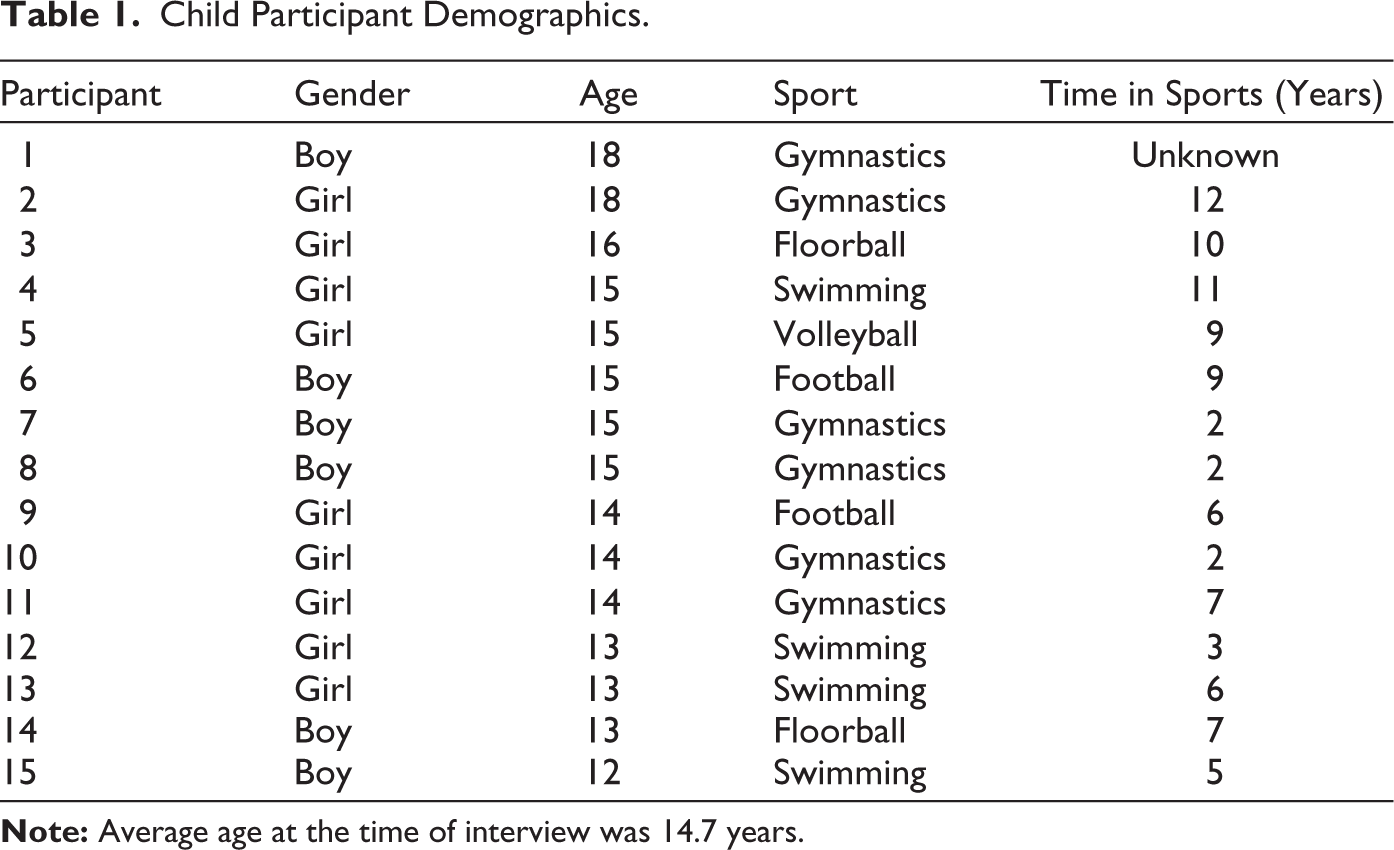
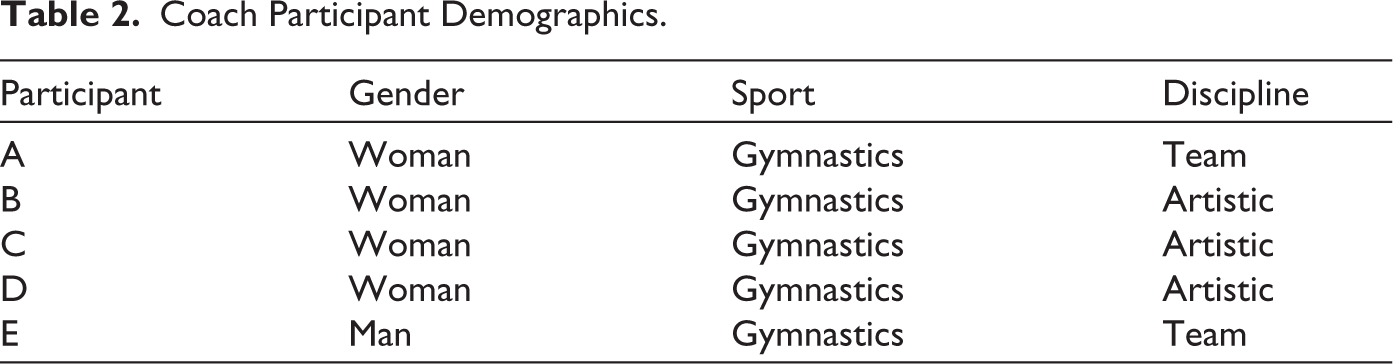
The methodological approach used in this study is qualitative, with findings derived from semi-structured interviews with 15 children and 5 coaches (see Tables 1 and 2).
Child Participant Demographics.
Coach Participant Demographics.
Research Design
The primary aim was to develop in-depth knowledge of emotional abuse in sport by exploring children’s experiences through real-time accounts (Gioia et al., 2012). Therefore, most of the participants were children actively engaged in organized sports to minimize bias associated with years of retrospective recall. In addition, some adult coaches were included in the study to explore emotional abuse in children’s relationship situations and how these interactions are perceived within critical relationships in sports. Children’s first-hand descriptions of experiences leading to negative feelings are compared with coaches’ views of the children’s situations in order to gain new qualitative insights into emotionally abusive interactions between children and adults, as well as the manifestation of emotional abuse in children’s sports.
The research design was carefully developed to reduce the risk of negative consequences for child athletes and coaches while ensuring a rigorous and reliable study (Tracy, 2010). One important part of the procedure was to consider the ways emotional abuse could be examined. Given the complexity of the definition of emotional abuse, it was not feasible to ask children, or adults, for that matter, directly about experiences of emotional abuse. Therefore, participants were verbally informed that the study was about behaviour and interactions among young athletes and their coaches that are experienced in ways that result in negative and positive feelings for children.
To enhance the trustworthiness of the data and to create an interview situation that was sound and constructive, with minimal influence by the researcher (Tracy, 2010), the interview questions were initially open-ended. This approach aimed to capture various aspects contributing to children’s negative feelings and whether these feelings were related to interactions between children or between children and adults. As the interviews progressed, children were asked more directly about specific behaviour if they had not already talked about such experiences (e.g., whether they had been criticized, scolded, humiliated, threatened or ignored).
The author of this article, who has over 15 years of experience researching children in sports, was responsible for the design and the research process. The interpretation of the data was carried out by the author in line with the chosen definition of emotional abuse and the specified research questions. To strengthen the credibility and plausibility of the research, the preliminary results have been presented and discussed at national and international social science conferences, as well as at meetings of the Nordic research network on children’s rights (Tracy, 2010). In this way, the preliminary findings have been discussed and evaluated with the help of research experts in the research field.
Ethical Considerations
Given the potentially sensitive nature of the study, ethical considerations were of paramount importance throughout the research process. Prior to the recruitment of participants, an ethical review of the project was conducted by the Regional Ethical Review Authority in Umeå/Sweden (2017/129–31), and approval was granted. The study was deemed to comply with the ethical guidelines provided by the Swedish Research Council for Social Sciences (2017). A written information sheet with study and ethical information was emailed to the sports clubs and coaches or handed out in printed form to children and coaches at a pre-meeting at the sports club or school. All children were also given the information sheet and a printed consent form to take home to inform their parents about the study before any interviews were conducted. All participants provided informed written consent. Additionally, the seven children under the age of 15 brought back the form with the signatures of both parents/legal guardians; for example, both the mother and father were asked to give their consent separately.
Before the interviews began, participants were given a verbal explanation of ethical principles, emphasizing their right to withdraw their participation at any time or to choose not to answer a question if they did not wish to do so. Throughout the research process, careful methodological considerations were made to alleviate distress and minimize potential harm. To ensure participants’ well-being, they were approached in a sensitive manner, and questions were asked in a positive and curious way. This means that the interviewer maintained a positive and interested demeanour throughout the interviews, showing enthusiasm for everything the participants were talking about. Another aspect of ensuring participants’ comfort in talking about negative interactions with an unknown adult was the inclusion of questions at the beginning of the interviews about participants’ positive experiences with their sport practice. This also served as a warm-up question before moving on to discussing interactions that led to negative feelings. However, Finkelhor et al. (2014) found that asking young people about childhood victimization, even sensitive ones, is unlikely to provoke serious distress in children, especially when asked in a carefully designed procedure under conditions of confidentiality and with well-trained interviewers. The author, who has over 15 years of experience conducting research interviews with children in sports clubs, applied these principles to the study.
In answering questions about what led to positive feelings, all the children engaged in the sports of gymnastics, football, floorball, volleyball and swimming described their sport participation as enjoyable and rewarding. They expressed that a positive atmosphere, cohesion and positive group interactions were decisive factors for the positive experiences in sports. Additionally, children reported positive feelings when they performed well in sports and when training involved enjoyable exercises that coaches tailored to the children’s level and wishes. The coaches’ responses indicated an understanding of what contributes to children experiencing positive emotions in sports. For instance, the coaches mentioned that children thrive when they can influence the training sessions, choose activities, receive positive feedback from coaches, perform well and have opportunities to try new things.
Furthermore, all participants were assured that their personal information would be kept confidential from other participants, parents or club representatives. The interviewer had no prior relationship with the participants. All participants granted permission for the interviews to be digitally recorded for later verbatim transcription.
Participants
A purposeful criterion sampling technique was used in combination with the convenience sampling technique to recruit participants (Bryman, 2018). The purpose of criterion sampling was to ensure that the children met the following criteria: 12–18 years old, a member of a non-elite sports club, active in the sport at the time of the research and voluntarily willing to participate. Both individual and team sports common among children in Sweden were considered. The purposeful sampling meant that the participants were selected by first contacting the administrative managers of nearby sport clubs by e-mail to ensure acceptance of the study, and then identifying relevant children and coaches as potential candidates. Sports club representatives were asked to suggest relevant sport groups or teams to be contacted in line with the selection criteria and to provide contact details for the responsible coaches. Suggested coaches were then contacted by phone, and they were asked to send the study information to parents and children via e-mail or the group sports club web page. Some coaches were contacted directly through information on the sports club web page after the sport club representative had been informed. Some coaches were contacted by a research assistant who followed the same procedures. In this way, none of the children were contacted directly without the involvement of their coaches or parents. The children’s coaches were the ones who arranged for most of the interviews and suggested suitable times for the interviews. However, in one case, a teacher helped arrange an interview at school, while most were conducted either after or before a training session. When meeting the children, the information about the study was repeated, and written informed consent from the children had to be obtained before the interviews took place.
In this study, sports club representatives and participants defined their sport practices as non-elite. In this context, elite sport refers to sport where athletes compete at the national or international level (e.g., Gervis & Dunn, 2004; Kavanagh et al., 2017; Wilinsky & McCabe, 2020), while non-elite refers to competitions below the national level/international level.
The selection procedure resulted in 15 children aged 12–18 years (9 girls and 6 boys born between 1999 and 2005, each participating in Swedish sport clubs at the time of the interviews in 2017–2018 [Table 1]). The child participants were active in five sports, and the coaches in one sport, in voluntary sport clubs in a city of 150,000 inhabitants in the northern part of Sweden. The number of participants was restricted due to the time and resources available for this study, but during the analysis, the sample was considered sufficient to answer the research questions.
Table 1 shows the child participants’ age, gender and years of experience in each sport. The number of children in each sport was as follows: gymnastics (n = 6), swimming (n = 4), floorball (n = 2), football (n = 2) and volleyball (n = 1). To gain a deeper understanding of how children’s views and interactions are understood by adults, the study involved five coaches from one sports club. This comparison helped to highlight the alignment or disparity between children’s perspectives on emotionally abusive behaviour and the views of their coaches in children’s sports. Table 2 shows the gender, sport and discipline of the participating coaches.
The coaches who participated in the study were four women and one man, all of whom coached children in gymnastics, which means they were solely associated with the children who were active in gymnastics. Their coaching experience ranged from 2 to 5 years.
Interview Procedures and Analysis
In line with the interpretative phenomenological design, semi-structured interviews were used to obtain data to answer the research questions. The aim was to obtain ‘descriptions of the lifeworld of the interviewees’, including their experiences of the sport practices in which they participated (Kvale & Brinkmann, 2015, p. 6). All participants were interviewed individually, except for two children in gymnastics, who were interviewed together at their request. Children and coaches were asked a series of questions developed around the following themes: (a) background information; (b) behaviours and interactions that result in positive emotions for children; (c) behaviours and interactions between athletes or between athletes and coaches that result in negative emotions; (d) effects and influences of behaviours and interactions that result in negative emotions, and questions about specific behaviours. The interview guide for coaches followed the same themes, but they were asked about their beliefs regarding situations that might lead children to experience negative feelings and the effects they thought these situations might have on children.
The analysis process carried out by the author followed the inductive thematic analysis offered by Braun and Clark (2006), according to which thematic analysis is appropriate when the aim is to ‘report experiences, meanings, and the reality of participants’ (p. 86). The first phase was to read the complete interview transcripts carefully to acquire a sense of the entire content and of important details within the participants’ stories. During the second phase, initial codes were generated by assessing the natural meaning units of each sentence, which were systematically noted to the right of the page. The interview transcripts were reread several times, focusing on the child data and the coach data separately, followed by an overall reading of all the data. In the third phase, the coding was used to identify patterns of shared meaning across the data set in relation to the research question, thus generating potential themes. During the fourth phase, these themes were reviewed to check whether they worked in relation to the coded extracts and to the central concept of emotional abuse. The fifth phase involved clarifying the definitions of each of the children’s data themes and relating them to the coaches’ data. Final themes were constructed, and representative quotes were selected. The sixth phase included drawing a deeper interpretation to establish the meaning of the units in terms of a theoretical framework and the broader context of child abuse, as well as in response to the previous research on emotional abuse. Moreover, the analysis has been a reflective process, questioning and querying the assumptions made by the interpretation (Braun & Clarke, 2019).
Results: Emotionally Abusive Interactions and Effects
Using Stirling and Kerr’s (2008a) definition of emotional abuse provided as a ‘pattern of deliberate non-contact behaviours by a person within a critical relationship role that has the potential to be harmful’, the author outlines the findings of the analysis. The author assumed that the children’s relationships with other children and with coaches in sports clubs would be critical. To determine themes, it was important in the actual analysis of the data to focus on repeated occurrences of the interactions that formed a pattern of the described experiences of deliberate non-contact behaviour leading to negative feelings for the children.
The results show that social interactions between children and coaches, as well as between the children themselves, in the context of Swedish non-elite sport practices result in emotionally negative experiences that have the potential to be harmful to children in youth sport. The analysis indicated that all children experienced deliberate non-contact behaviours that led to negative feelings. However, the children’s accounts varied in terms of recurrence or the extent to which the behaviours had negative, harmful consequences (Stirling & Kerr, 2008a). According to the author’s interpretation of the data, all the children were subjected to some of the emotionally abusive behaviours found in this study. However, three children (Child 2, 13 and 15) did not report any negative effects and expressed predominantly positive experiences. Although Child 2 mentioned accepting certain interactions within the group or sports culture that could be disturbing for her, she did not report any specific negative effects, even though there is a possibility of such effects in the future. She said, ‘But sport is all about receiving criticism and doing better. Everyone gets that all the time, so I do not count that. Although I can find it “disturbing”.’ Additionally, she described the experience of being consistently ignored in all the sports clubs where she had trained. This represents a pattern of emotionally abusive actions. Meanwhile, 12 children explicitly described repeated occurrences of social interactions that had negative effects to varying degrees.
In this section, the author begins elaborating on the findings by answering the question of how emotional abuse manifests in athlete-to-athlete and coach-to-athlete interactions from the children’s perspective. At the end of each section, the themes are related to coaches’ accounts to answer the question of coaches’ beliefs about children’s emotionally negative experiences.
The analysis of the children’s data revealed five themes of emotionally abusive social interactions within the critical relationships between children and coaches: (a) scolding by coaches, (b) negative criticism from coaches and children, (c) expression of aggression and disappointment by coaches, (d) teasing and joking by children and (e) denial of attention and support from coaches. These themes are derived from the author’s interpretation in relation to the definition of emotional abuse used in this research, indicating significant interactions of emotionally abusive behaviour leading to negative impacts on children that are interpreted as potentially harmful. Excluded from this categorization were situations involving ‘boring exercises’, or when there were ‘few children at the training sessions’. These were not considered as emotional abuse because they were not repeated in a manner with the potential to be emotionally harmful, nor were they social interactions directed towards a child.
Scolding by Coaches
When analysing the children’s descriptions of behaviours and interactions leading to negative feelings, the first theme of behaviour interpreted as emotional abuse is scolding by coaches, directed towards one child or a group of children. For instance, it may be that a coach scolds, yells or raises their voice towards an athlete in front of the other children. One girl playing floorball (Child 3) said, ‘My coach stopped the game completely and I got a scolding because I made a mistake. At first, I became terribly angry, and I told him, “You don’t do that!”.’ In this statement, she also expressed how she reacted with anger due to the coach’s behaviour. She went on to explain what the scolding was about: ‘When you make a bad pass and people sigh or give you a look or say “How could you make that pass, it was so bad.” This kind of negative spirit type.’ These quotes show that the child knew this behaviour was unacceptable. It is also obvious that she was put in an emotionally negative situation.
Similarly, a boy playing football (Child 6) mentioned scolding from coaches when the children do not do what the coaches say, or if their performance does not turn out as expected: ‘It’s if you have a bad [day] and then you hear worse things, so then it won’t be good in the end.’ When he was asked to explain what the interactions could be about, he said, ‘Yes, the performance on the field’. This quote also indicates that how children build up negative emotions during the day can influence how much they are affected by negative experiences of scolding or yelling coaches later in sports.
When children disobey coaches’ instructions, scolding may be followed by punishment, which may increase negative emotions, as one boy in floorball explained (Child 14):
I did not want to play defence in a game, so I played forward anyway. Then they [the coaches] said ‘You can leave now; you can’t take part in the game if you are going to continue like this…’. So I was not allowed to play in that game anymore.
These kinds of scolding or yelling towards children in coach–child interactions, followed by punishment, seem to be the same in team and individual sports. A boy in gymnastics (Child 7) described instances of scolding by coaches like this: ‘Yeah, when you do it wrong…when he says you can’t jump in the pit, like that, and you do it anyway.’ When asked to describe what the coach says and does in this situation, he continued: ‘Yeah, either that we have to run a lap around the hall or we just get a lot of shit, like…. But usually, the scolding type.’ Although this boy said that he experienced mostly positive interactions, he also said he was criticized in this way ‘pretty often’. This suggests a possible downplaying of emotionally abusive interactions due to the prevalence of positive interactions.
Interestingly, when the gymnastic coaches were asked about scolding, their perspectives differed. Coach A said, ‘No scolding. I don’t know. It is more about raising the voice a bit. We do not yell; we do not yell.’ Another coach attributed such situations to communication problems.
When they are standing in a line and they are supposed to run and make a jump, and I have told them what to do, and then’ there’s someone who keeps asking, ‘What should we do now? What should we do now?’… then I can say, ‘Well, in that case, you can stand at the back and watch the others to see what exercise we are doing because I have told you ten times what to do’. So, they might get a bit annoyed, ‘I don’t know’.
This divergence of views between young athletes and coaches underlines the subjective nature of emotionally abusive interactions in children’s sports. From the children’s point of view, such interactions may elicit negative feelings and, consequently, be perceived as potentially harmful. In contrast, from the coach’s point of view, it may be seen as a communication problem that, at most, causes irritation among the children. This difference in perception highlights the complex and subjective nature of emotionally abusive interactions in children’s sports, where the same incident may be interpreted as having different impacts based on individual viewpoints.
Negative Criticism by Coaches and Children
The second theme of emotionally abusive behaviour leading to negative feelings is what the author terms ‘negative criticism’, which may arise from interactions with coaches and children. Negative criticism is when coaches or children in the interaction complain, for instance, about a child’s behaviour or sport performance, which can be real or made up. It also includes feedback that is negative and not constructive.
A girl in gymnastics (Child 10) described how she feels when she does not want to go to training: ‘When you have received a lot of negative criticism…when a coach may have said something nasty, or like, bad criticism, simply. That we are doing something wrong, but not saying what to improve.’ This statement shows that behaviour was experienced negatively when the children received negative feedback about their sports performance, which was especially significant when coaches did not give any constructive suggestions on how to improve their performance. Negative criticism also came from children; however, children did not seem to express it as directly as the coaches. A girl (Child 3) in floorball said, ‘It is completely negative when someone says, “That wasn’t good,” or “That pass you made was truly useless,” which is perhaps not the best critique.’ When she was asked how she feels when someone says that, she described how she reacts and how she wishes the coach would act instead:
Well, maybe I know it wasn’t a good pass, absolutely not, but then you [the coach] can say, ‘Next time, I know you hit that pass, there is a lot of space on the other side, so try to pass it there and look up because that’s a much better pass.’ But I don’t think it’s okay either, absolutely not. I think the coaches should have a greater responsibility.
This quote highlights that she has no objection to receiving feedback on her sports performance but to the way it is communicated. She prefers constructive feedback without the negative connotation. The boy (Child 14) explained his experiences of negative criticism:
When I miss when I shoot, for example, they go like this… ‘oh it’s always you who misses’ even though I’m not even the one who takes most of the shots, they blame me. It’s not that’ funny. I’m the one who has to live with it.
The latter part of this sentence suggests that this criticism, albeit unfair, continuously affects him, potentially causing harm in the long run. One boy (Child 6) admitted that he makes negative complaints about other children: ‘It is also what I say to the other player… if I complain [often about the performance], the other can say the same to me.’ This illustrates how children actively participate in the construction of interactions that may lead to negative emotions. Another way of communicating negative criticism is through non-verbal communication. One girl (Child 3) said, ‘If I have performed three wrong passes in a row … then I hear that people get annoyed, that they sigh or that they give me looks.’
This negative criticism, encompassing a lack of constructive criticism, contributes to interactions that result in a pattern of negative emotions that may be harmful to child athletes. Most children did not seem to appreciate negative feedback from coaches or athletes, even if they were active contributors to the negative interactions themselves. Most expressed a preference for constructive and positive interactions. At an aggregated level, children appear to be caught in a web of interactions in which emotionally abusive interactions are to some extent legitimized and accepted, despite their potentially harmful influence on children. ‘Of course, I want it to change, it can obviously be better, but it will always be there’ (Child 6). By the age of 15, after 9 years as an active football player, he was rather pessimistic about the possibilities of change.
The analysis of the coaches’ statements suggests that this kind of criticism may be normalized in sports coaching from the coach’s perspective. When asked if they thought that children experienced criticism, Coach C agreed, saying, ‘Yes, but they are constantly criticised. After all, it is an assessment, sports, you criticise them to make them better.’ The coach also admitted that it can become very negative when he gets frustrated and impatient with the children. In this theme, coaches and young athletes seem to share the same view on how coaches behave but disagree on how they should behave.
Expression of Aggression and Disappointment by Coaches
The third theme of behaviour leading to negative feelings for children is coaches behaving with aggression or disappointment towards children. This occurs when coaches communicate in ways that children perceive as aggressive or in ways that children interpret as showing disappointment.
One girl (Child 3) explained, ‘When you play … they often get angry because we play badly. It has happened many times that they [coaches] get angry because they think we are bad [performers].’ Another girl (Child 5) experienced angry coaches while playing volleyball: ‘My coach and other coaches have been generally angry.’ She explained that they may adopt an angry tone if, for example, the children complain or refuse to do an exercise. She also talked about how children may suffer from angry coaches in a bad mood: ‘When the coaches “got up on the wrong side of the bed,” then you can feel a bit … not exposed, but that you can easily get “shit for nothing”.’ This indicates how vulnerable a child may be in their relationship with coaches, as they seem unable to defend themselves. A girl in gymnastics (Child 11) said, ‘If we maybe stretch slowly or something like this, they can be like this: “But come on now, faster, faster, faster,” get angry like this.’ Another boy in gymnastics (Child 1) explained that coaches can be ‘angry for anything’, even if this does not seem to bother him that much, and a girl (Child 11) said they ‘just can have an angry voice’. Children also experience negative emotions due to coaches showing disappointment. Child 3 said, ‘I think they [coaches] are disappointed because we don’t do what they think we should do. Then I think they become disappointed and angry.’
Contrasting children’s descriptions with those of the coaches’, it became clear that anger and disappointment are conscious, intentional and legitimized behaviours from the view of Coach C, who said,
Everyone should have performed at 100%, not 60 or 70%. They made small errors, they did not stretch properly when they should have done, and I was pissed at them, sort of. So, you somehow try to explain to them that, when we get mad at them and we get disappointed with them, it’s because we know they can do so much more.
When the interviewer asked Coach D if she thought coaches do something that leads to children becoming sad or angry, she answered, ‘Uh, sure. Every day, for sure. It’s because we know they can do so much more’. The quotes demonstrate that coaches react negatively if children are not performing at their best in sports.
Teasing and Joking by Children
The fourth theme of experiences indicating emotional abuse is situations related to teasing, joking and laughter in interactions among children that lead to negative feelings. For instance, children might be teased for their sports equipment or appearance. One boy playing floorball (Child 14) explained that other children may say, ‘“That stick you have, it’s cheap and useless,” but it can also be about your appearance, “how you look” or something, like it usually is these days.’ The athletes understand from the interactions that they are being teased, but they do not always understand what they have done wrong. Laughing and teasing seem to create both positive and negative feelings, which makes it complex to recognize potentially harmful behaviour. A boy (Child 1) said, ‘Of course you tease each other a little, but it is not to hurt [someone]; it is very funny.’ However, another statement came from a girl in gymnastics (Child 10), who explained, ‘It’s not fun when someone laughs at you, then you feel, “Well, what did I do wrong now?” Pretty bad when you laugh … and it won’t be so fun.’ These quotes also indicate that children may act and react differently due to jokes, laughter and teasing interactions.
Social interactions are complex, as teasing is also seen as fun due to children’s perspectives. Teasing may be mediated by jokes, which should not be overlooked when dealing with negative feelings and the phenomenon of emotional abuse. A girl in gymnastics (Child 11) was aware of potential harmful effects of joking: ‘Sometimes you can have such a sense of humour that you kind of tease each other … a little … as jokes, but afterwards you might think, “Oh, maybe it was not so good or smart, a little stupid”.’ In individual sports such as swimming, a girl (Child 12) gave examples of how young athletes can be teased by the other children in the group, for example, when they compete against each other: ‘I got annoyed because the person said, like, “Ha-ha, I swam faster than you, yes, I won over you”,’ When paired with positive connotations, laughter and smiles, this behaviour can be thought of as more positive than it really is, contributing to silencing the problem of potentially harmful interactions.
From the coaches’ viewpoints, it was obvious that they were either unaware of or did not pay attention to the children’s negative interactions. One coach explained, ‘I don’t think I perceive when something negative happens between them. I often stand at a station’ (Coach A). Coaches in gymnastics are sometimes too far away from the children to recognize what they are talking, teasing or joking about. Coach C argued that children are trusted to deal with problems among themselves: ‘We must trust them, that they will take care of themselves.’
Denial of Attention and Support by Coaches
The fifth theme of emotionally abusive behaviour identified is when children experience a denial of attention and support from coaches. This can occur when coaches do not give equal attention to all children or when some children are ignored. A girl (Child 4) in swimming expressed,
Some [coaches] can give more attention [to some of the athletes] if you are better at something. It feels somewhat negative… if you want to get better yourself, if you aren’t good, then maybe you want attention and not just that those who are already high performance should get it.
This kind of emotional unresponsiveness may be harmful to children when coaches ignore the child’s attempts or needs to be involved. One girl (Child 10) said,
It is easy for them to focus on those who are much better. It happens quite often, maybe once a week, that those who are ahead in development [get more attention] and then they do not think about the others as much.
This behaviour of omission may be perceived as unfair and favouring certain children. A girl (Child 5) playing volleyball said, ‘If the coaches start focusing only on those who want to reach very high or whatever, then it will be like favouritism.’ From the children’s viewpoint, denial of attention and support by coaches creates negative feelings that other children are being favoured.
When the coaches were asked if they thought children might feel ignored, the coaches’ answers indicated both unawareness and awareness of potential situations of denial of attention and support. Coach A stated, ‘But ignored … I don’t know. I don’t really think so’. Coach C, however, admitted that the focus is often on the best athletes and that this may lead to a lack of attention of other athletes:
I am one of those; I think this is fun. I put energy into the gymnast who is on a high-performance level. I spend time on the gymnasts who are close to passing the exercise or are, like, high up in difficulty. It can get to the point that I forget those who may seem to lag a little behind.
This indicates that coaches may hold different beliefs about children’s experiences and needs. Some seem to be unaware that a lack of attention and support can be part of an emotionally abusive sport practice, and others regard it as deliberate and normal behaviour while also admitting that it can make them forget a child entirely.
Effects of Emotional Abuse on Children
To understand whether the described emotional abusive experiences can be interpreted as potentially harmful, the author asked the children how their described experiences have affected them and whether they wanted the sport practice to change. The author’s analysis of children’s descriptions of the effects of situations leading to negative feelings indicated that these interactions result in many potential harmful effects.
For example, children said that their experiences have led to feelings of disappointment, insecurity, irritation, sadness, outrage, anger, discomfort, low self-confidence, inadequacy, unfair treatment and so on. These experiences have clearly influenced how the children feel about themselves in terms of being unsuccessful, disliked, ignored, excluded, unwanted, a failure, not valuable or sick. One girl (Child 3) explained,
In one word, I would say failure. You do not feel sufficient, not needed either. It makes you feel insecure in the team, that you do not dare to be yourself. It has really happened that I have gained much less self-confidence.
The pervasive sentiment among children was that they were not deemed good enough, particularly concerning sports performance and the performance-oriented expectations set by coaches and peers. For instance, Child 5 conveyed her feelings about negative criticism: ‘When there are such comments, then you can feel, “Oh my God, I’m not good enough, maybe someone else should do this instead”.’ Similarly, another girl (Child 11) expressed her sentiments about coaches getting angry: ‘Oh, you feel a little unwanted, maybe. You can take it home with you and you are sad and feel sick’. The child feeling sick due to an interaction is a strong indication of behaviours that are really potentially harmful. A boy (Child 6) shed light on the complexity of deciding, based on children’s views, whether a behaviour could be interpreted as emotional abuse. When asked if he had ever been criticized at training, he explained how the repetition of a behaviour is crucial for the consequences:
Yes, absolutely [I have been criticised]; that is part of it. But you need to make demands of each other…that is how you get better [at sports]. So, I do not see it as negative, but it can be negative if it happens repeatedly.
The boy indicated that a few isolated negative actions might not be harmful; on the contrary, he suggested they might be seen as a good thing. This way of seeing a behaviour as both positive and negative is a way of normalizing those behaviours, which, in turn, may be a factor in silencing the negative parts, which hinders preventing emotional abuse. Another interpretation is that this normalization is a way for the child to cope with the many interactions with negative criticism in sports.
These effects may have long-term consequences, as one girl (Child 3) said, ‘They have kind of made me [feel] … “you are not worth anything”. And now it is stuck in my brain…that I may not be.’ Even if the problem has been discussed, the impact persisted, leaving a lasting imprint: ‘There is still something that is always left back in my mind…sort of.’
When comparing the children’s views of the effects with those of the coaches, a pattern of differences continues to appear—in this case, in the degree of perceived seriousness of the effects of behaviour resulting in negative emotions for children. Coaches described how they think children feel and are affected when they experience negative feelings in a sports context in much less serious terms, attributing negative feelings to boredom, frustration or low self-confidence. Coaches did not acknowledge children feeling sad, ignored, unwanted, angry or sick. This disconnect highlights coaches’ potential unawareness of the seriousness of emotional abuse in children’s sports, risking trivializing and silencing harmful behaviours enacted among children and coaches. Children expressed a desire for change, emphasizing the need to address favouritism and emotionally abusive behaviour and underlining the importance of attentively listening to each child’s experiences. When asked if children think it is important to change the behaviour, one girl (Child 5) said, ‘Yes, I don’t know how to stop that…I hope that ends.’ Similarly, another girl (Child 10) explained here her wish for change: ‘I think favouritism might be a good thing to change.’
Recognizing that children and coaches often hold disparate perceptions regarding priorities and what is most valuable in children’s sports and that this influences their behaviour, it becomes imperative to give prominence to children’s perspectives (Eliasson, 2015).
Discussion and Conclusion
This study contributes new knowledge about how emotional abuse manifests in athlete-to-athlete and coach-to-athlete interactions in non-elite children’s sports. The findings have implications for identifying specific situations and behaviours that may constitute emotional abuse of children in sports, paving the way for proactive measures aimed at prevention. The research was designed to contribute unique new insights into children’s experiences and views of what interactions of emotional abuse result in negative feelings for the child, how those interactions evolve, what they are about, how they are noticed, understood and created by children and adults and not least, about how seemingly harmless (or funny) situations might lead to serious negative effects for one child but not for another. Furthermore, this research adds to the current understanding of the intricate complexity of relational interactions, highlighting the disparities in perceptions of reality between adults’ and children’s regarding the existence and consequences of emotionally harmful behaviour.
Active Involvement of Coaches and Children in Emotional Abuse
While adult coaches emerge as a significant source of negative feelings for children being involved in four themes of emotionally abusive interactions (scolding, negative criticism, expressions of aggression and disappointment, denial of attention and support), it is important to recognize that children are not passive but are actively involved in two themes (negative criticism, teasing and joking). This is not entirely consistent with previous research. For example, Stafford et al. (2015) showed that peers or teammates were the most reported perpetrators of emotionally harmful behaviours (81%), regardless of competitive level. However, while peer-to-peer abuse decreased with competitive level, the involvement of coaches in emotional abuse increased. This study reveals that children react and are influenced differently when exposed to potentially emotionally harmful interactions. Some cope with emotional abuse by rationalizing the behaviour, while others express objectivity and argue that such behaviour must cease. However, it appears that children lack the power to effect change in all forms of abuse, particularly in the context of abusive communication between coaches and athletes. From the perspective of the sociology of relational childhood, this highlights how children navigate practices rooted in adults’ perspectives and the sports environment primarily shaped by adults (Alanen, 2012; Mayall, 2015; Raittila & Vuorisalo, 2021). It also underscores the concept that if children do not align with the sporting logic of the coach’s expectations or fail to perform optimally (Eliasson, 2015; Stirling & Kerr, 2014), the risk of emotionally abusive interactions that may harm the child increases, even in non-elite sports. From this study, the author draws the conclusion that the relationships between children and coaches contribute to legitimizing abuse between children, as coaches may remain unaware or refrain from intervening in children’s negative interactions. This highlights how relationships fundamentally shape the social dynamics (Raittila & Vuorisalo, 2021) in children’s sports.
Effects of Emotional Abuse and Impact on Children’s Well-Being
There is no doubt that relationships within non-elite children’s sports may have severe, long-lasting negative effects, similar to those described by Kerr et al. (2020) in relation to anxiety and depression. According to children’s accounts, the behaviours contributing to negative experiences dimmish their motivation to participate in sports, impair their concentration and undermine their self-confidence during participation. Emotional abuse also adversely impacts group cohesion and the overall atmosphere, potentially leading to children discontinuing sports participation when the activity ceases to be enjoyable or positive (Eliasson & Johansson, 2020). Instances of teasing by children or scolding from coaches may harm children’s well-being, aligning with prior evidence (Stirling et al., 2011; Stirling & Kerr, 2013). Children expressed feelings of being unsuccessful, disliked, ignored, excluded, unwanted, a failure or not valuable. This study implies that these children, actively engaged in non-elite children’s sports, feel valuable only insofar as they meet another person’s sport performance expectations or needs.
Children in this study talked about feelings of sickness, as if emotionally negative experiences were ‘stuck in the brain’, impacting other aspects of their lives beyond sports. This could be an indication of mental health outcomes in line with Parent et al. (2022), who showed how all types of violence of young people in sports resulted in psychological distress. This provides compelling evidence that the identified behavioural themes in this study may be harmful and can be understood as emotional abusive behaviour, especially when repeated. It is crucial to consider these findings in relation to each child and the context (Gervis et al., 2016; North, 2019). These insights extend the current literature on elite sports and offer novel insights into the manifestations of emotionally abusive interactions. The study sheds light on the potential harmful effects that children participating in various non-elite sports contexts in Sweden may have.
Recognizing Abuse and Modes of Expression
Emotional abuse is clearly manifested and displayed not only by verbal language, but also in more silent modes in terms of non-verbal and bodily language. To effectively identify and prevent emotional abuse, it is crucial to recognize the various forms in which potentially harmful social interactions are communicated and mediated. Based on the data, this study shows three modes of expression of abusive behaviour: (a) negative verbal communication, (b) negative non-verbal communication and (c) denial of attention and support. First, negative verbal communication refers to coaches or children expressing something verbally that children perceive negatively. This includes negative criticism of children either one-on-one or in front of the group or scolding with an aggressive or disappointed tone. However, it also encompasses verbal jokes and teasing in a playful tone, as demonstrated in the above quotes. The second mode of expression is negative non-verbal communication, which may be expressed through body language, glances or sounds such as sighs or laughter. The third mode of expression is denial of attention and support, manifested not only by ignoring someone, a lack of interaction with coaches or unfair treatment, but also by coaches ignoring teasing between children, for example. This demonstrates that both action and lack of action may result in potentially harmful experiences among children if repeated. Consistent with Kavanagh et al. (2017), this study also documents the actions of non-verbal language as a mediator of emotionally abusive behaviour in children’s sports. Additionally, the author has elucidated, from the perspective of children actively involved in sports, what is communicated, who is involved and children’s stances and involvement in utilizing these modes of communication. However, in the author’s study, physical behaviour, such as throwing objects, is not a behaviour experienced among the children. This finding differs from the results shown by Stirling and Kerr (2008a), who identified physical behaviour, verbal behaviour and acts of denying attention and support as actions of emotional abuse.
Gervis (2010) highlighted that emotional abuse is not always easily observed, and its detrimental effect may become apparent much later, adding complexity and making it easier to trivialize this non-contact negative behaviour and overlook its significance for children. North (2019) discussed ‘assessing for bruises on the soul’ (p. 302), underscoring the difficulties in recognizing emotional abuse and predicting the effects. It is helpful to refer to Stirling and Kerr’s (2008a) definition for guidance. First, emotional abuse refers to behaviour that has the potential to be harmful, and second, it is about a pattern of those behaviours within a critical relationship role.
Challenges in Breaking the Silence of Emotional Abuse
Another factor contributing to the silent acceptance of emotional abuse of children in non-elite sports is that the behaviours that lead to children’s negative experiences are sometimes perceived as positive and are normalized within sport practices, leading individuals to overlook emotionally abusive behaviour. This aligns with prior studies suggesting that emotionally abusive behaviour in sports may be normalized as a part of physical training, development and competition (Stafford et al., 2015). Thus, these potentially harmful actions may be further trivialized when perceived as common behaviour. Derogatory comments and yelling from coaches are often accepted in sports, and instead of intervening, carers and parents become silent bystanders (Kerr & Stirling, 2012). Emotional abuse may also be downplayed by coaches, as highlighted by this study, and abuse can continue and become normalized over time, accepted by all involved. Similar patterns are observed with coaches in other contexts and athletes or parents within the cultural practice of sport, often justified by the argument that it contributes to successful sporting performances (Kavanagh et al., 2017; Kerr & Stirling, 2012; McMahon et al., 2022; Stirling & Kerr, 2014). At the competitive level of elite sports, there is a well-documented prevalence of high levels of psychological and emotional abuse cases among children (Ohlert et al., 2021; Pinheiro et al., 2014; Wilinsky & McCabe, 2020), particularly with coaches identified as perpetrators (Kerr et al., 2020; Wilinsky & McCabe, 2020). One argument for the extent of abuse in elite sports is the significant amount of time spent in the context of sport. Vertommen et al. (2022) highlighted that the most significant predictor of increased interpersonal violence was the number of weekly training hours, suggesting that increased training frequency in elite sports contributes to a higher risk of abuse. However, this study provides novel insights into emotional abuse from the perspective of children who participated in non-elite sports, where children are likely to spend fewer hours training.
On the other hand, there may be an increased risk that emotionally potentially harmful actions are trivialized even further and that any negative effects on a child may go unnoticed if the practice is perceived as non-elite. Adults may not even recognize the serious negative impact of sporting experiences on children in non-elite children’s sports due to the normalized and silenced nature of abusive interactions, thereby reinforcing a lack of interest in changing sporting practices (Kerr et al., 2020). This perpetuates the likelihood of continued abuse, as children are forced to adapt to the competitive norms and the power of coaches (Eliasson, 2015), even in non-elite settings managed by volunteer coaches in local sports clubs. These Swedish findings are in line with the emerging international evidence that indicates that violence against child athletes occurs across a range of competitive levels and sports (Pankowiak et al., 2023; Parent & Vaillancourt-Morel, 2021; Stafford et al., 2015; Vertommen et al., 2016). However, it is still unclear whether emotional abuse differs in severity at different levels. There is a need for studies such as Ohlert et al. (2021), who assessed the levels of severity of interpersonal violence in terms of mild, moderate and severe. Their study showed that 18% of the psychological violence was classified as severe. However, taken together, this suggests that, notwithstanding these challenges, we need to be vigilant and seriously consider potentially harmful abuse in our everyday interactions in non-elite sports.
Another challenge lies in the limited knowledge of UNCRC and the children’s right to protection from all forms of abuse in sports in sport clubs (Eliasson, 2017). McMahon et al. (2022) argue that it is imperative that coaches, parents and administrators have the necessary knowledge and skills to recognize emotional abuse and understand its potential harmful effects on a child. Mountjoy et al. (2022) emphasize that preventing abuse and harassment in youth sports is a collective responsibility and call for collaborative efforts to cultivate safe sporting environments and to prevent the negative impact of abuse on the long-term health and well-being of athletes. However, an atmosphere of denial within sports remains a challenge. Some deny that abuse is an issue at all, and suggestions of emotional abuse can be interpreted as an affront (Brackenridge et al., 2005). Proactive measures are needed to ensure the safety and well-being of children participating in sports. Taking children’s views into account in relation to adults is a crucial step, aligning with the principles of Article 12 of the UNCRC. The UNCRC states that children have the right to express their views on matters that affect them and that these views should be given due weight in accordance with their age and maturity. This includes seeking their input on training and competitions, addressing concerns about their childhood welfare and ensuring that they feel comfortable reporting any problems they may encounter. This not only upholds their rights but also improves the overall quality and safety of the sports experience for children. While adults have the power and responsibility to mitigate emotionally abusive behaviour towards children in sport, it is equally important to involve children in the process and empower them to take responsibility for their actions as they are actively socialized into the culture of sport. In addition, there is a lack of evidence-based education about abuse in sports (McMahon et al. 2022). Therefore, questioning one’s own sporting practices, communication and behavioural norms, while implementing comprehensive UNCRC-based child rights education for all those involved in children’s sports, may be essential in supporting effective approaches to reducing emotionally abusive interactions.
Conclusions, Limitations and Future Research
In conclusion, this study has revealed the following key findings:
Children describe a pattern of experiencing emotional abuse in Swedish non-elite sport club practices, which may lead to harmful effects. Emotionally abusive behaviour is manifested by coaches and children, covers several themes and is expressed through different modes of communication. Coaches tend to downplay the seriousness of the potentially harmful existence and effects of emotional abuse compared to children’s perspectives. A strong performance-oriented culture appears to increase the risk of emotional abuse for children in non-elite sports.
While this study provides deeper insights into emotionally abusive interactions and their effects from the children’s perspectives, it is essential to acknowledge certain limitations that could be addressed in future research. One limitation is the relatively small sample size of children involved in different sports. Future research could adopt a design that focuses on fewer sports with a larger sample within each, aiming to better understand whether abuse correlates with sport-specific cultures. In addition, the observed differences between children’s and coaches’ views should be interpreted with caution, given the limited sample of five coaches from a single sport. For future research, a longitudinal approach, following children and their coaches in their natural environment over time, would allow for a more in-depth exploration of actual interactions. This method would facilitate discussions with both children and coaches, capturing their views on potentially emotionally abusive interactions with increased validity.
Footnotes
Declaration of Conflicting Interests
The author declared no potential conflicts of interest with respect to the research, authorship and/or publication of this article.
Funding
The author received funding from the Swedish Research Council for Sport Science (Grant No. P2016-0131) and support from Umeå School of Sport Sciences.