



Abstract
The aim of this study was to contribute to the research field of children’s rights in sports by synthesizing the scientific approaches applied and topics addressed in previous social science research focused on children’s rights per se. A scoping literature review was conducted via database searches (Scopus, Web of Science, SPORTDiscus). The search strategy yielded 44 articles eligible for inclusion. The analysis showed that the articles covered 17 identified topics in total, most frequently abuse. Fewer than half had a direct focus on children’s rights in sports. The research was mostly descriptive, non-theoretical and encompassed few countries, sports and ages. The sample of empirical studies generally encompassed child participants or international policy and regulations. In conclusion, studies with more explanatory and theoretical designs and a clearer, direct focus on children’s rights would be beneficial for enhancing general and theoretical understanding of children’s rights and explaining associated problems.
Keywords
Introduction
The concept of children’s rights lacks a universally accepted definition. For the purposes of this review, children’s rights are understood as fundamental claims for the realization of social justice and human dignity for children (Reynaert et al., 2015). Although this definition serves the explicit purpose of our research, we acknowledge that there are variations in meanings of children’s rights associated with contextual differences within and between different societies.
Throughout the extensive history of childhood as a construct (e.g., Ariès, 1962), several steps were taken towards identifying children as rightsholders and conceptualizing childhood as a unique period. This was a process to shift children’s status from property to person status and children’s rights from protection to self-determination rights (Hart, 1991). The change emerged at different times in different social and geographical contexts.
In the early 20th century, industrialized countries lacked standards of protection for children. However, over the last century, growing attention to children’s rights led to the formulation of such standards, beginning with the 1924 Geneva Declaration of the Rights of the Child drafted by Eglantyne Jebb (Kerber-Ganse, 2015; UNICEF, 2023). The declaration was finalized by the UN General Assembly and entered into force in 1989 as the United Nations Convention on the Rights of the Child (UNCRC). The UNCRC, defining a child as anyone under 18 years old, consists of 54 articles specifying children’s rights and provisions designed to protect them (United Nations, 1989). Since 1990, almost every country, except the USA, has ratified the UNCRC (United Nations, 2023).
Although the UNCRC is the most widely ratified international human rights treaty, children’s rights are also defined in other international human rights instruments, for example, the European Convention on Human Rights (ECHR; Council of Europe, 2023). Relevant instruments in the USA, where the UNCRC is not ratified, include the Child Abuse Prevention and Treatment Act, the Bill of Rights for Young People, Title IX, and the Fair Labor Standards Act. International sport organizations have created their own guidelines, such as the International Olympic Committee’s guidelines to safeguard athletes from harassment and abuse (International Olympic Committee [IOC], 2021). Regarding sports, UNICEF together with the Japan Committee for UNICEF developed the Children’s Rights in Sport Principles 2018 (Japan Committee for UNICEF, 2018). To exemplify how children’s rights, as stated in UNCRC, can be realized and mainstreamed in sports, UNICEF recently provided guidelines with examples from the global football industry (UNICEF, 2020). Finally, several national sports confederations (e.g., England, Norway and Sweden) have included the UNCRC in their sports policies.
Within research, previous literature reviews have focused on various topics related to children’s rights, mostly connected to abuse. For example, McPherson et al. (2016) reviewed research on the nature of child abuse and harm in sports based solely on direct experiences among young people (17 articles published in 1990–2014), and Wilinsky and McCabe (2020) reviewed studies of elite child athletes who had been sexually and emotionally abused by their coaches (20 peer-reviewed articles published in 2001–2018). Additionally, Bjørnseth and Szabo (2018) reviewed studies of sexual violence against children participating in sports (seven articles published in 2013–2017).
Although existing reviews have enhanced our understanding of violations of children’s rights (e.g., abuse), we know much less about the extent of research with an explicit focus on children’s rights and what topics it has covered. Drawing on Munn’s et al. (2018) definition of a scoping review, this review explores the scope of studies on children’s rights per se in sports, that is, studies that explicitly mention child/youth rights in their titles, abstracts, or keywords. Furthermore, as the scientific approaches related to studies on sexual abuse and harassment influence how the topic is understood and how it can be countered (Brackenridge & Rhind, 2014), it is of interest to explore what scientific approaches have been used in research on children’s rights in sports. In this article, we explore those scientific approaches, meaning how researchers focus on children’s rights in their studies (directly or indirectly), and the research designs applied in terms of aims, theories, methods, participants and study contexts.
We review studies specifically focused on children’s rights per se, identified as those that explicitly mention child/youth rights in their title, abstract, or keywords. Our goal is to explore existing knowledge about children’s rights in sports and discuss the contribution of the research to understanding how children’s rights constructs can be seen as a solution to the challenges and problems that children encounter in sport contexts. In this article, we aim to contribute to the research field of children’s rights in sports by synthesizing the scientific approaches applied and topics addressed in previous social science research about children’s rights per se as well as to discuss gaps in and potentially fruitful ways to approach the field that can inform future research (see Munn et al., 2018 on main objectives of a scoping review). To fulfil these aims, we address the following research questions:
To what extent and in what ways has research focused on children’s rights directly (including the term in title, aim, or research questions) or indirectly (including the term only in abstract or keywords)? What topics associated with children’s rights have been addressed in research? What research designs have been used to investigate children’s rights issues in sports in terms of methods, samples, contexts and theoretical frameworks?
Method
Search Strategy
A systematic search of peer-reviewed published literature was conducted on 3 May 2023 in three different databases (Web of Science, Scopus, SPORTDiscus) using the Boolean string ‘child* OR youth* AND right* AND sport*’ (see Figure 1 inspired by PRISMA; Page et al., 2021). Scopus and Web of Science were chosen because they offer the best coverage at journal, article and cited reference level in social sciences (Norris & Oppenheim, 2007) and SPORTDiscus because, according to several university libraries (e.g., Newcastle University, 2023; Swansea University, 2023), it is the most comprehensive source of published articles for sports. These searches returned 2,368 documents from Scopus, 1,629 from Web of Science, and 924 from SPORTDiscus (4,921 in total). However, most documents were within research fields not relevant to this study, such as Medicine (n = 1,802) and Health Professions (n = 489) (in Scopus). Limitation to Social Sciences entries yielded 392 documents from Scopus, 162 from Web of Science, and 245 from SPORTDiscus (799 in total).
PRISMA Inspired Flow Diagram.
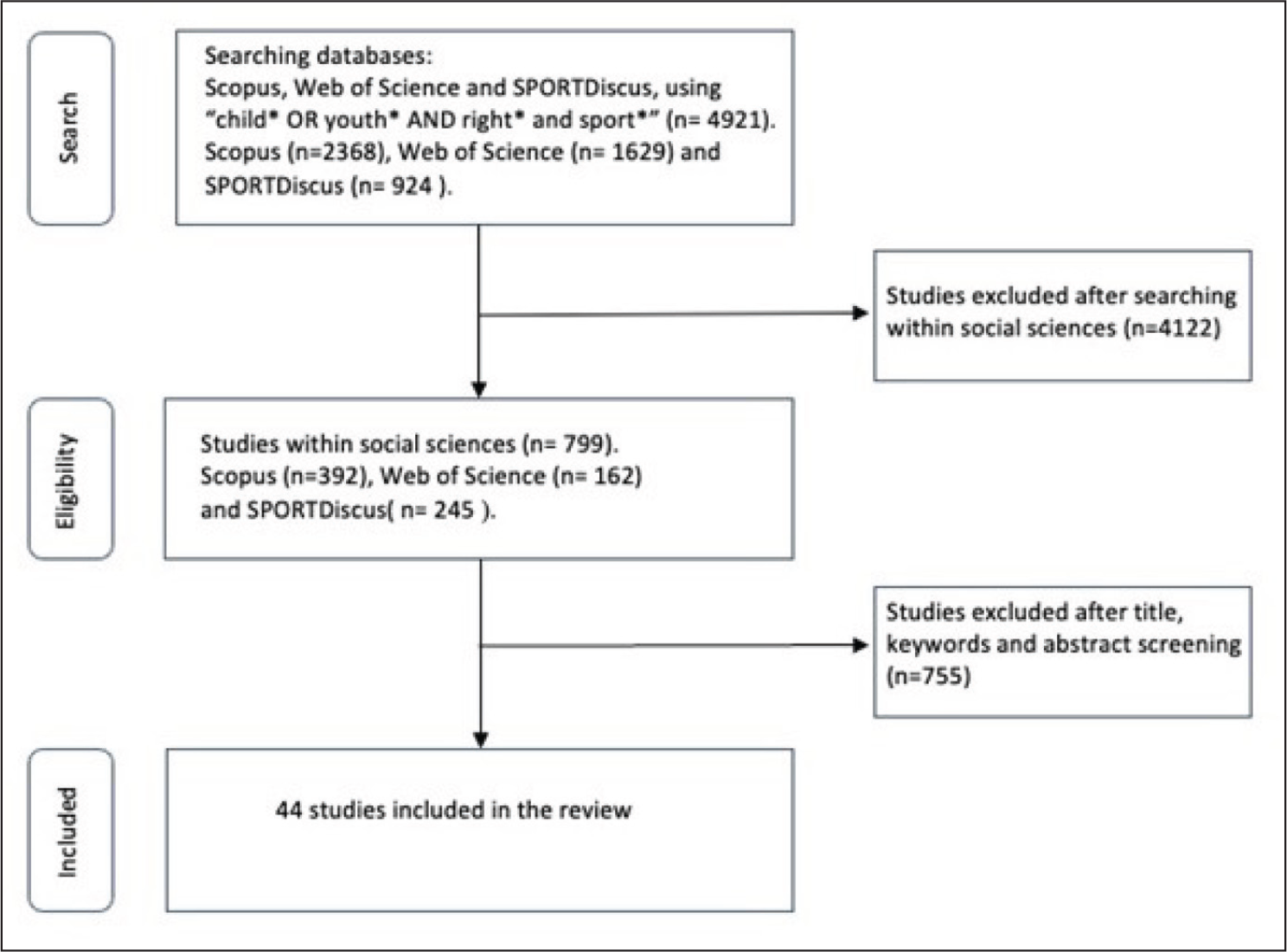
The 799 identified articles were screened based on the inclusion criteria listed below, which left 44 articles included.
Inclusion Criteria
Documents included in the review had to meet specific criteria. First, they had to be peer-reviewed empirical or non-empirical articles and include the search terms in the title, abstract or keywords. The empirical articles were classified into studies with data from human participants and studies with textual content (e.g., documents) only. In line with the arguments of Rocco et al. (2022) about the core difference between conceptual (focusing on one or more concepts) and theoretical studies (focusing on a theory), the non-empirical studies were classified as conceptual, as no theoretical studies were identified. In conceptual articles, literature is used ‘[…] to explain a relationship, provide insight on a problem, or assume a position on an issue’ (Rocco et al., 2022, p. 118). They connect theories and/or disciplines to tackle an area in need of attention (Gilson & Goldberg, 2015). Second, the participants in empirical studies had to be human athletes under 18 years old, older athletes addressing retrospectively their youth and/or adults engaged in youth sporting activities, such as coaches and parents involved in decision-making about young athletes. Third, only documents published in English and categorized as Social Sciences entries were included in the review.
The first author conducted all the searches and screening of titles, abstracts and keywords of the 799 documents. Then, all authors accessed full-text studies and discussed their inclusion in the review to ensure that the included documents met the inclusion criteria.
Data Extraction Strategy
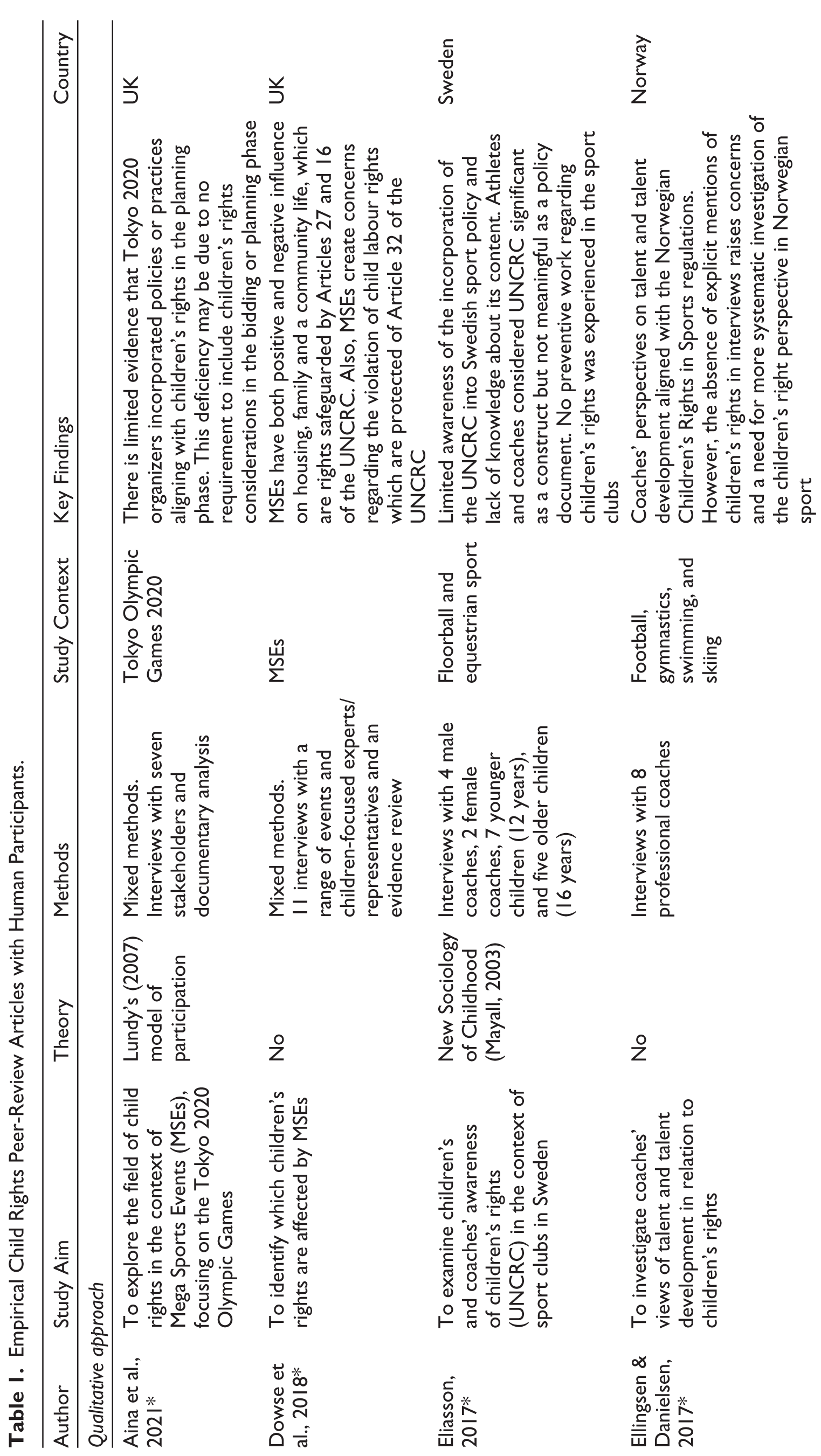
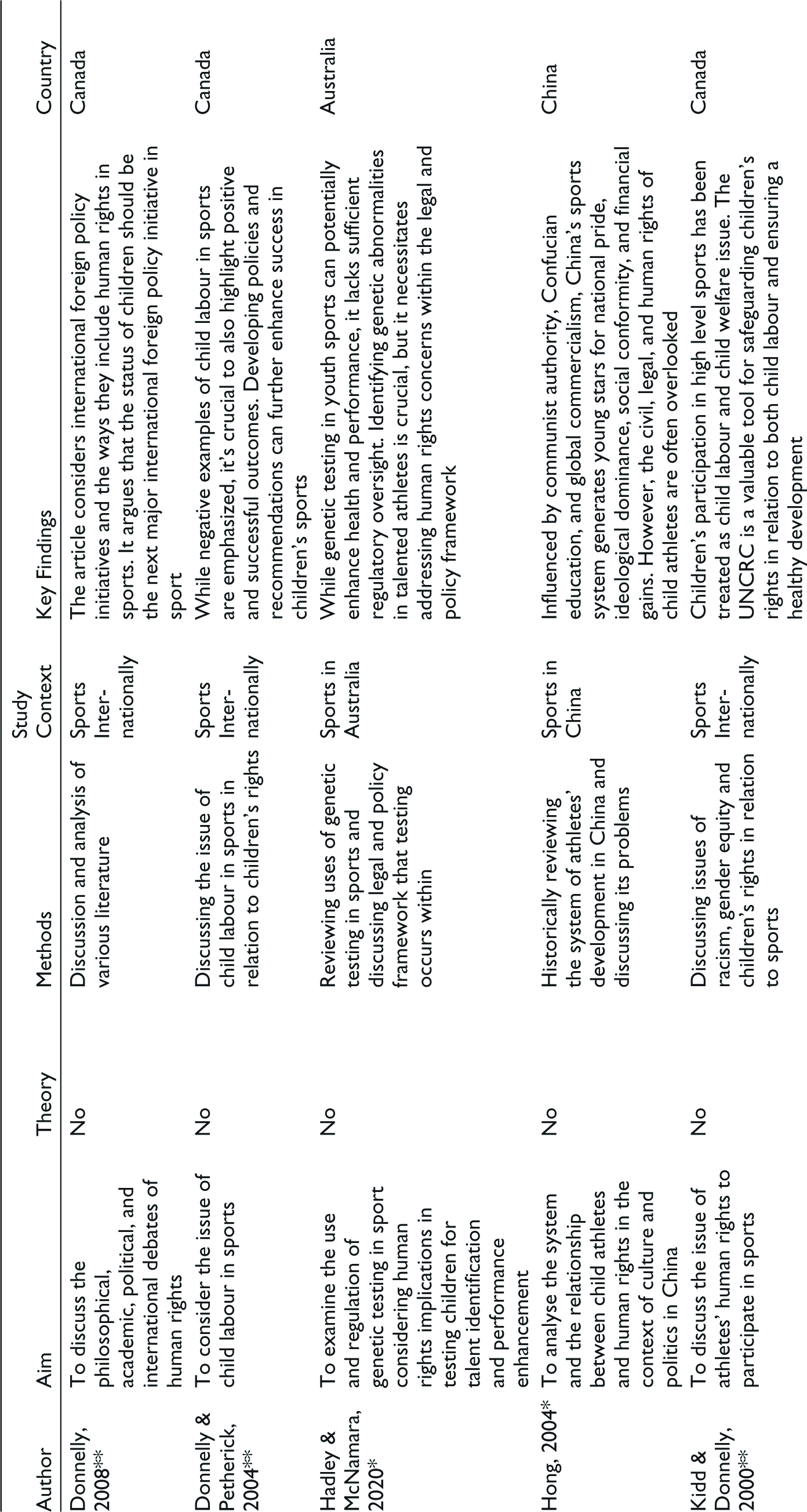
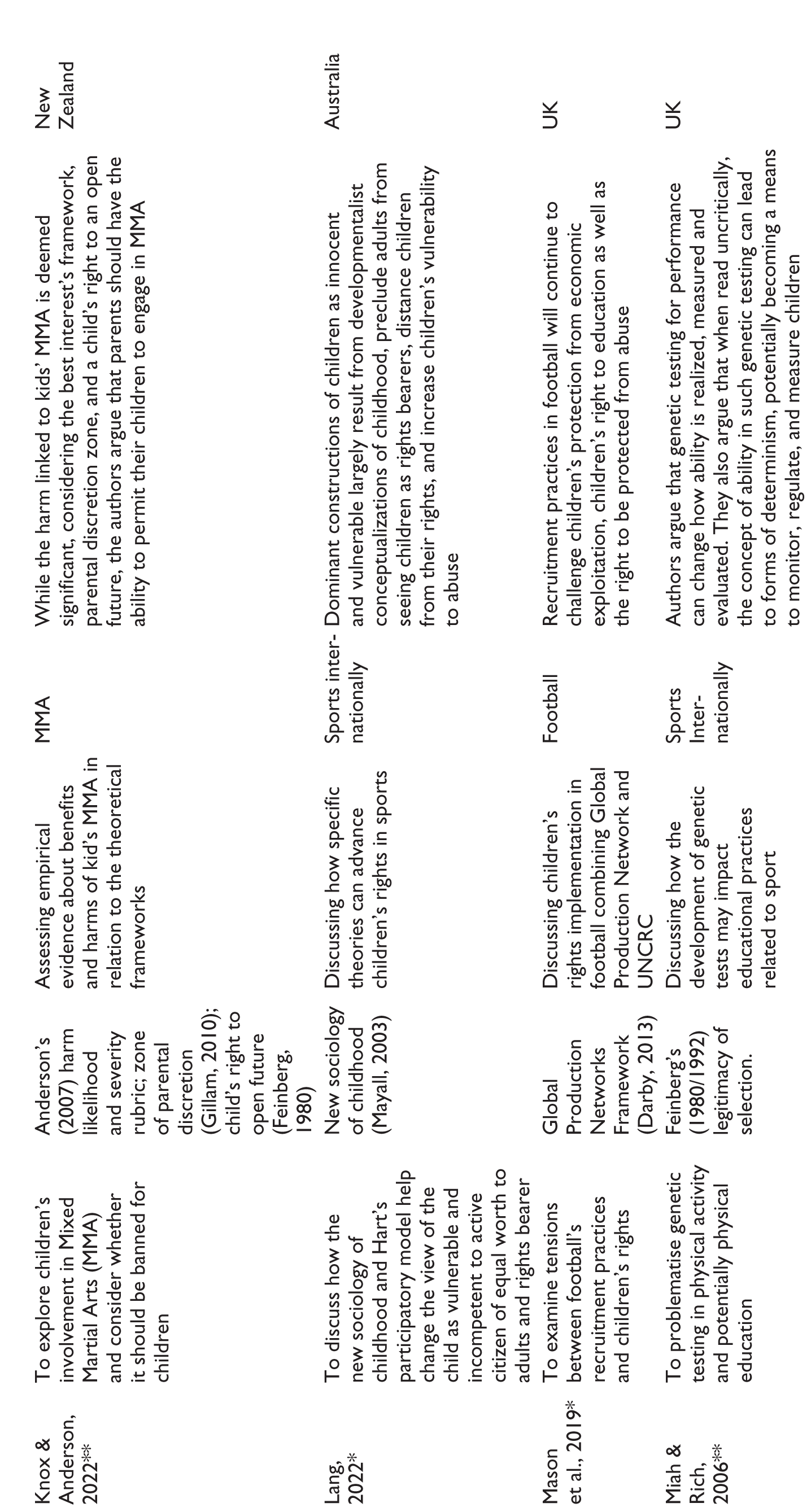
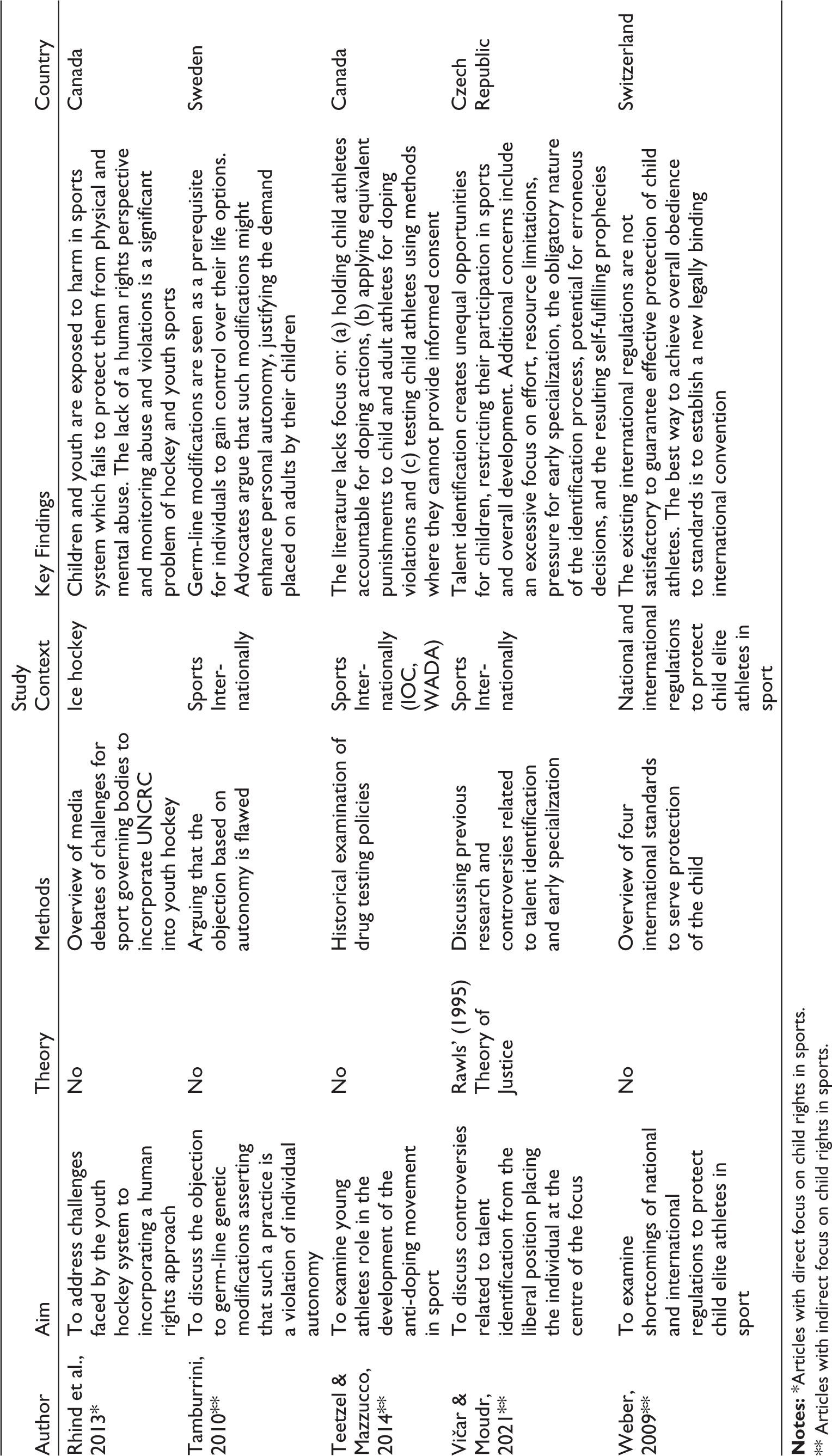
A form was developed to extract key information about each included study (cf., Moulds et al., 2022), encompassing the authors’ names, year of publication, aim, theory, methods, context, key findings and country of study (Tables 1–3). The studies were classified as either empirical (Tables 1 and 2) or conceptual (Table 3) (cf., Stödberg, 2012). Empirical studies with human participants were classified in relation to a qualitative, quantitative or mixed-method research approach (Table 1).
Empirical Child Rights Peer-Review Articles with Human Participants.
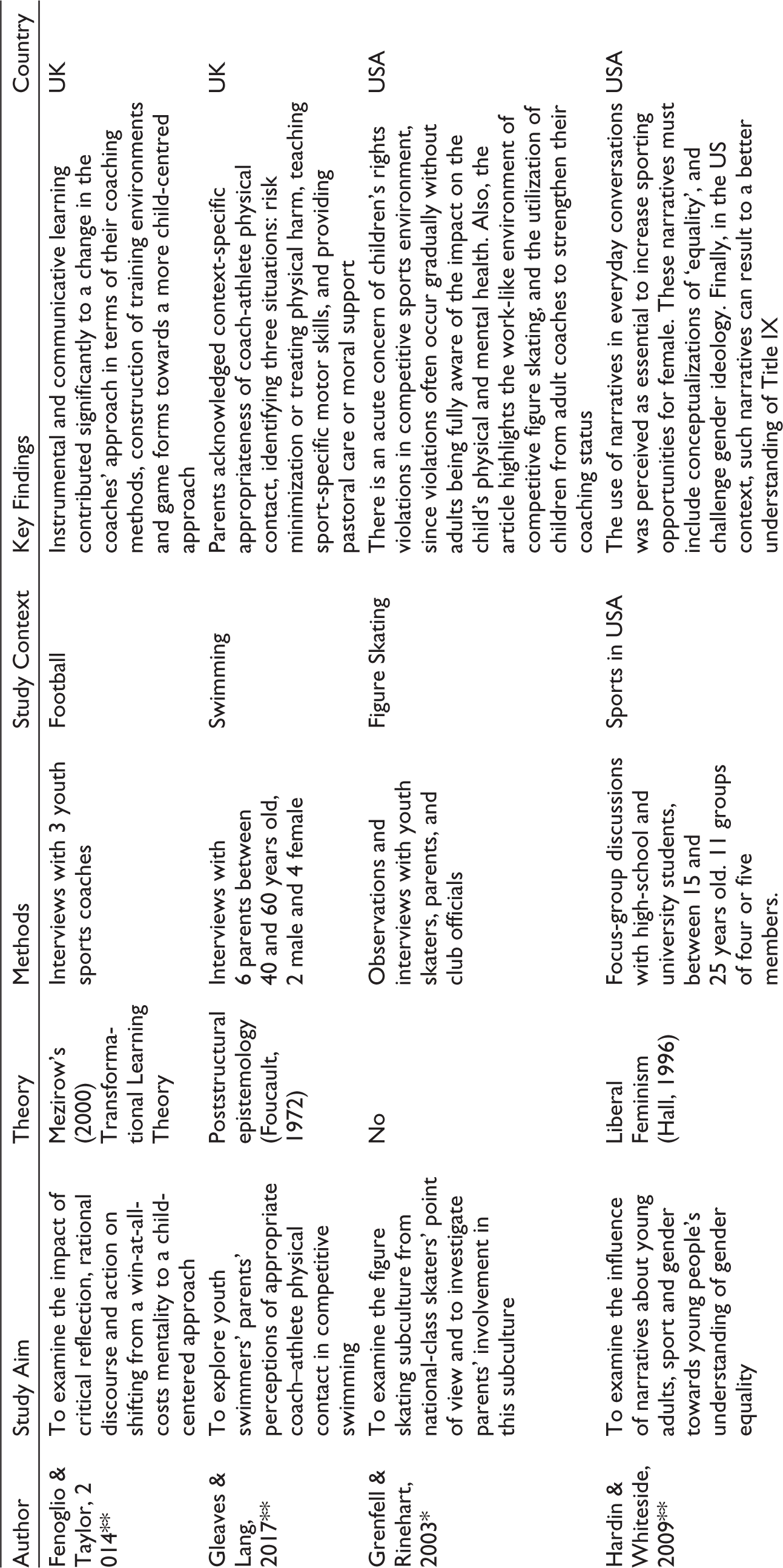
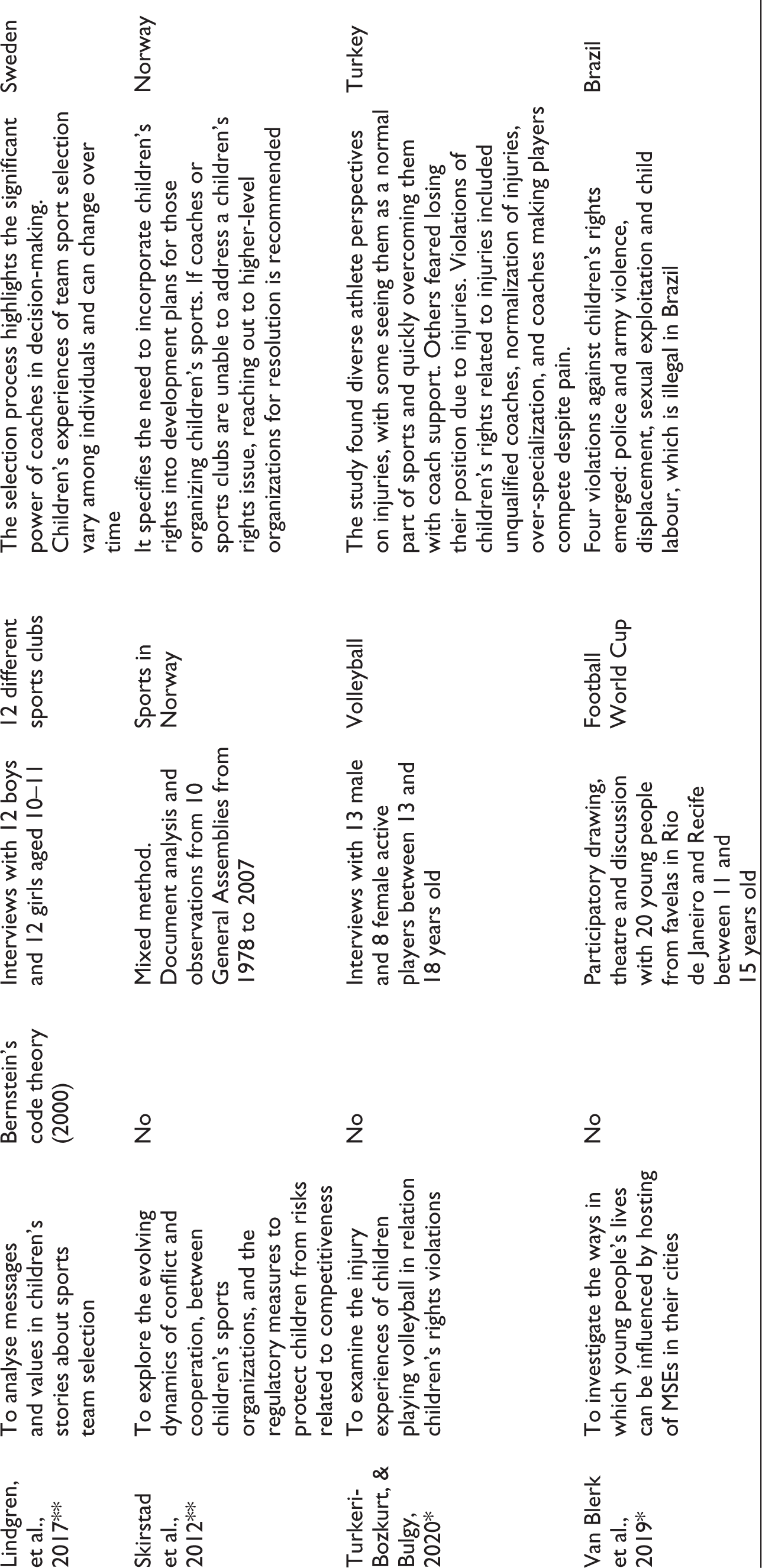
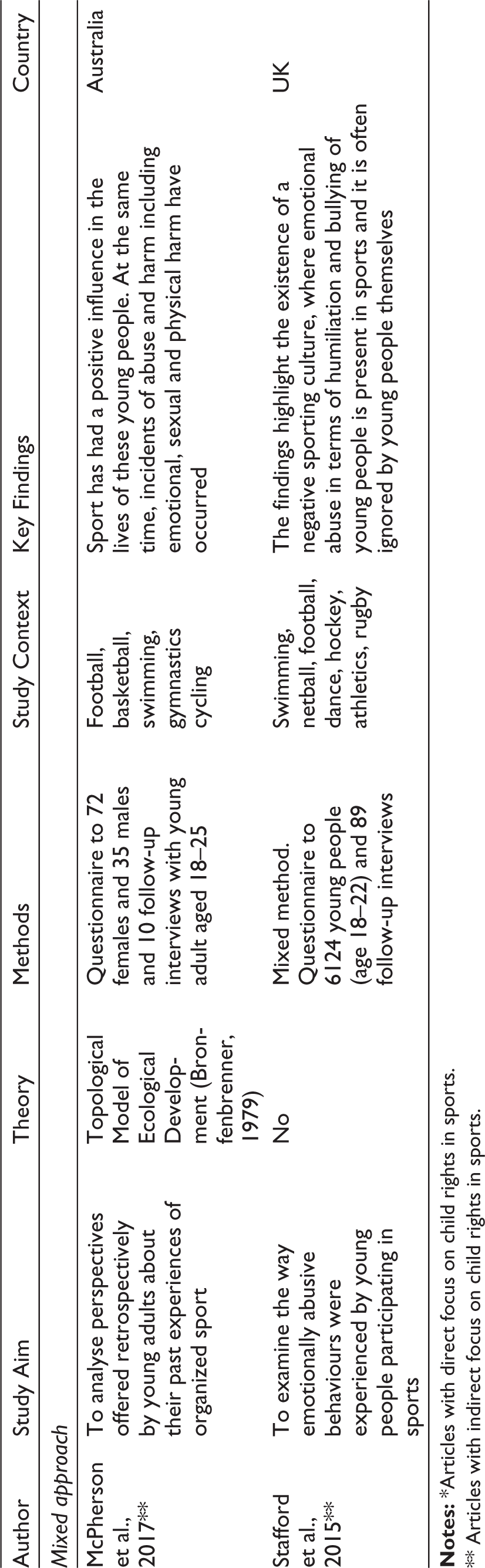
** Articles with indirect focus on child rights in sports.
Empirical Child Rights Peer-Review Articles with Textual Analysis as Method.
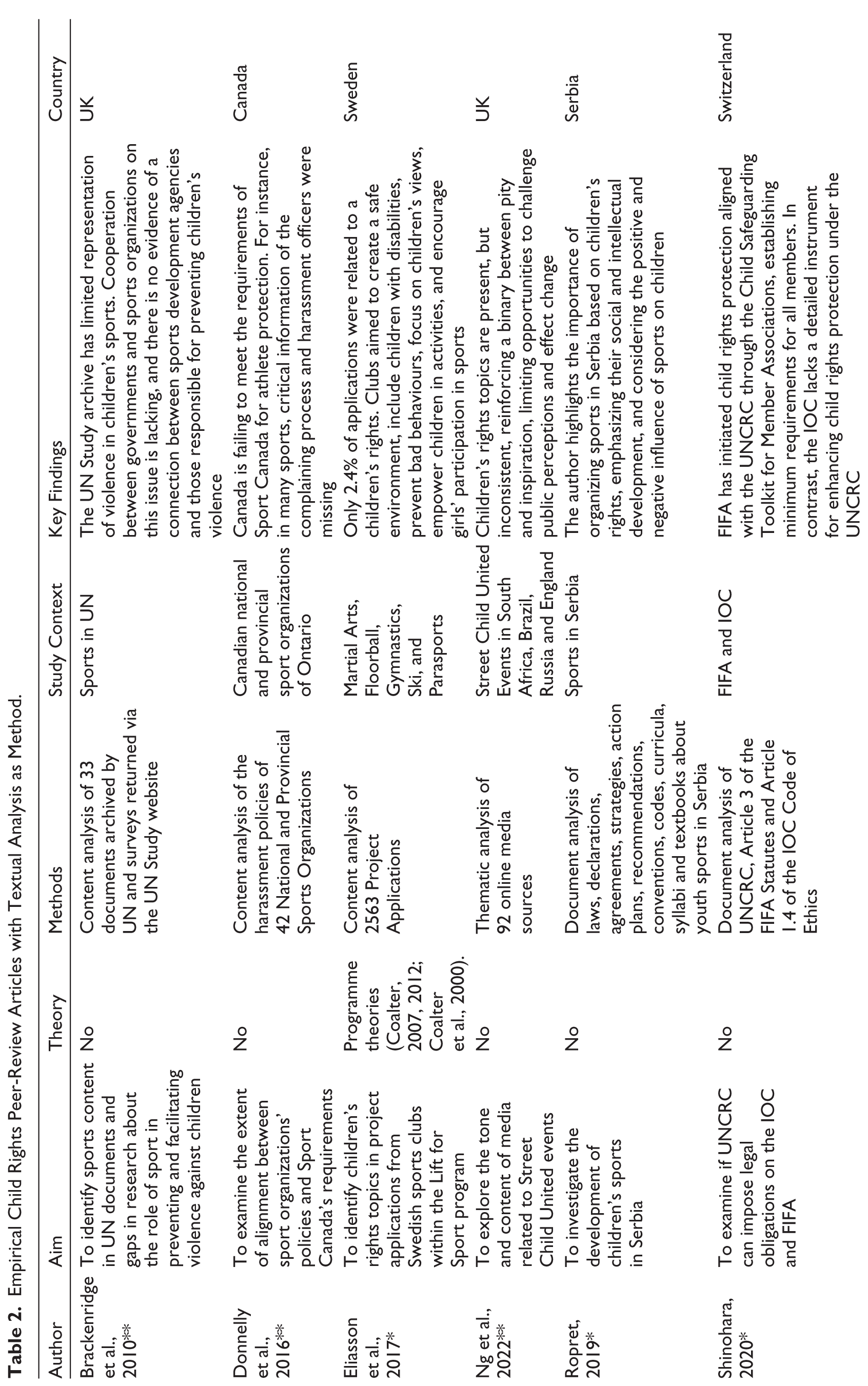
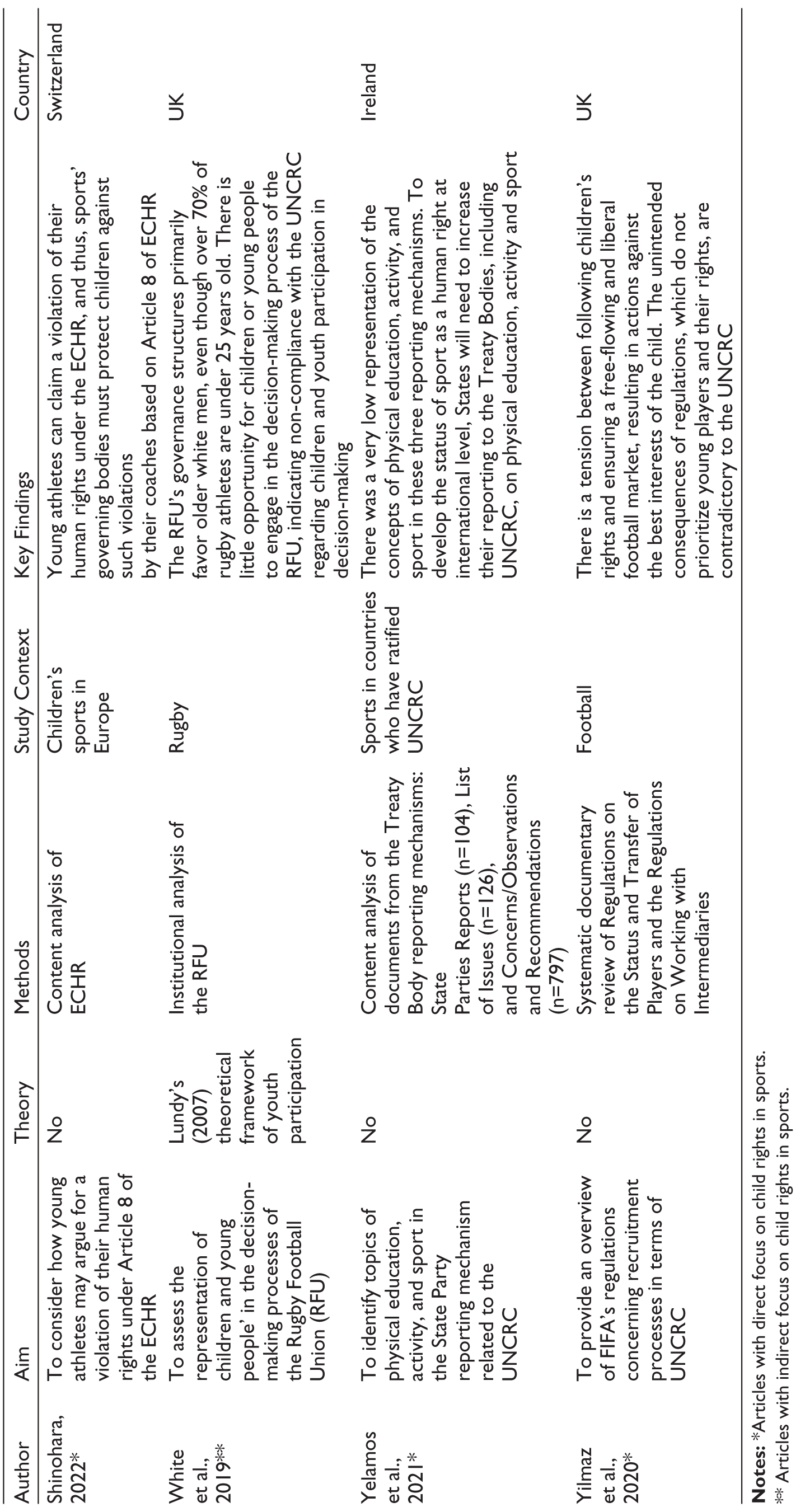
** Articles with indirect focus on child rights in sports.
Results
Among the 44 included studies, 14 were classified as empirical with human participants (Table 1), 10 as empirical based on textual analysis (Table 2) and 20 as conceptual (Table 3). Further analysis indicated that 21 of the 44 articles had a direct focus on children’s rights in sports (i.e., included ‘children’s rights’ in their title, aims or research questions). The other 23 articles were interpreted as having an indirect focus on children’s rights in sports (i.e., included ‘children’s rights’ only in abstract or keywords). In the following, the analysis of the included articles will be presented in relation to those two categories, that is, direct focus and indirect focus.
Conceptual Child Rights Peer-Review Articles.
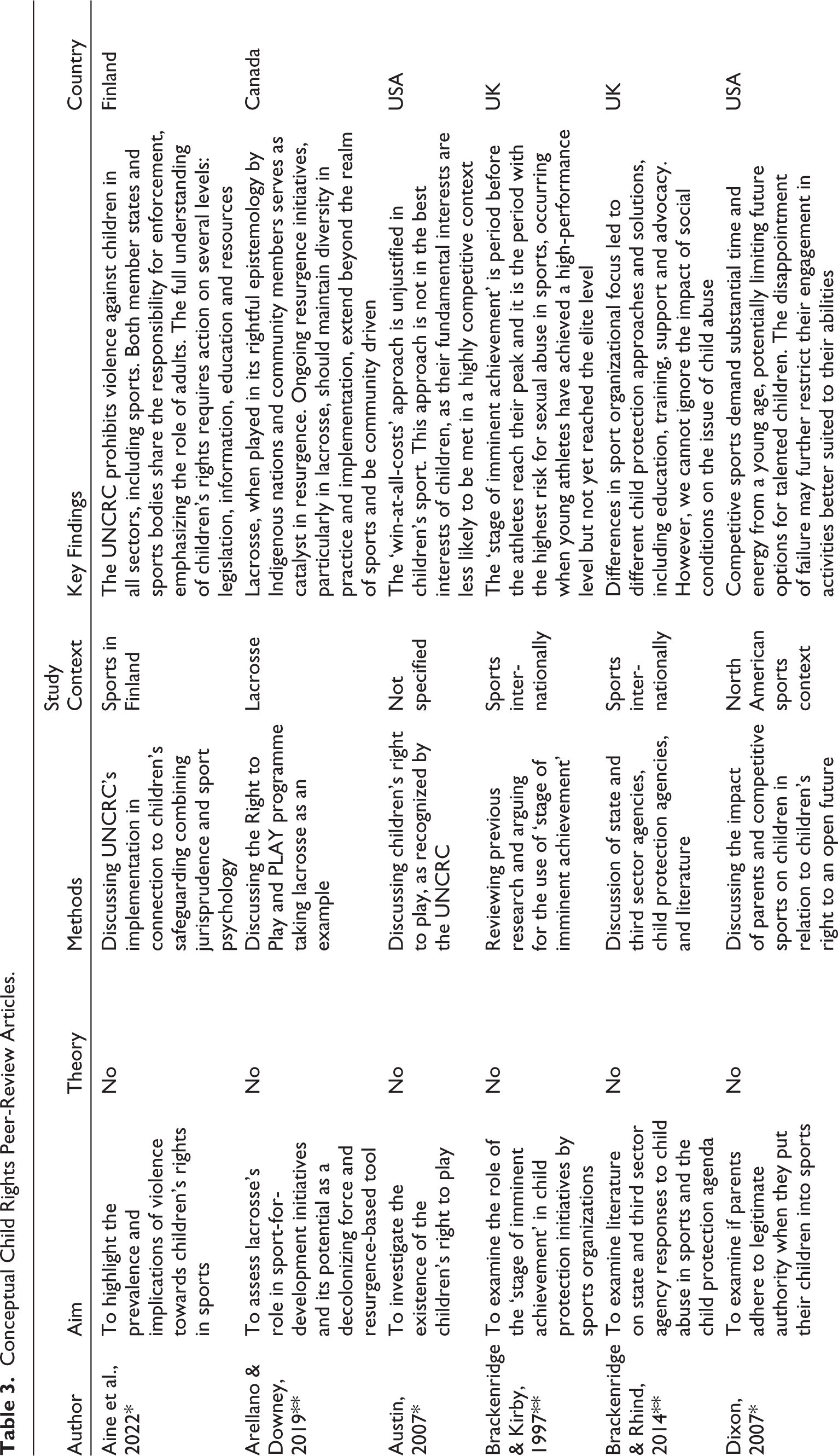
** Articles with indirect focus on child rights in sports.
Empirical Studies with Human Participants
According to our interpretation and our criteria for direct–indirect focus, seven empirical studies with human participants had a direct focus on children’s rights in sports, while the remaining seven approached the topic indirectly (Table 1).
Topics Addressed in Studies with a Direct Focus on Children’s Rights
These empirical articles addressed Mega Sports Events (MSEs) (n = 3), talent (n = 1), sports injury (n = 1), children’s rights’ awareness (n = 1) and win-at-all-costs mentality/competitiveness (n = 1). More specifically, Aina et al. (2021) addressed the implementation of children’s rights in MSEs, whereas Dowse et al. (2018) and Van Blerk et al. (2019) addressed the influence of MSEs on children’s lives in relation to the UNCRC. Ellingsen and Danielsen (2017) examined Norwegian coaches’ perspectives on talent concerning children’s rights. Eliasson (2017) addressed Swedish children’s and coaches’ awareness and knowledge of children’s rights and their experiences of sport practices regarding specific articles of the UNCRC (3, 12, and 19). Turkeri-Bozkurt and Bulgy (2020) assessed children’s injury experiences in relation to their rights. Finally, Grenfell and Rinehart (2003) addressed the work-like and competitive environment of figure skating in the USA.
Research Design of Studies with a Direct Focus on Children’s Rights
These seven empirical studies were conducted by researchers based in the UK (n = 2), Sweden (n = 1), Norway (n = 1), USA (n = 1), Brazil (n = 1) and Turkey (n = 1).
All seven studies employed a qualitative approach, predominantly utilizing interviews for data collection. Three of these studies included only adults (Aina et al., 2021; Dowse et al., 2018; Ellingsen & Danielsen, 2017), two included only young people (Turkeri-Bozkurt & Bulgy, 2020; Van Blerk et al., 2019), and two included both adults and children (Eliasson, 2017; Grenfell & Rinehart, 2003). Athletes from both team sports (n = 4) and individual sports (n = 4) were included in the samples. One study included children between 10 and 12 years old (Van Blerk et al., 2019) and four included athletes between 12 and 18 years old (Eliasson, 2017; Grenfell & Rinehart, 2003; Turkeri-Bozkurt & Bulgy, 2020; Van Blerk et al., 2019). Regarding adult participants, two studies included MSE stakeholders and children’s rights advocates in sports organizations (Aina et al., 2021; Dowse et al., 2018), two included coaches (Eliasson, 2017; Ellingsen & Danielsen, 2017), and one included parents and club officials (Grenfell & Rinehart, 2003). Two studies were designed with a theoretical perspective (Aina et al., 2021; Eliasson, 2017).
Topics Addressed in Studies with an Indirect Focus on Children’s Rights
These empirical articles addressed abuse (n = 3), win-at-all-costs mentality/competitiveness (n = 2), selection (n = 1) and gender equity (n = 1). More specifically, Gleaves and Lang (2017), McPherson et al. (2017), and Stafford et al. (2015) addressed the topics of physical contact and abuse in sports. Fenoglio and Taylor (2014) and Skirstad et al. (2012) addressed coaches’ win-at-all-costs mentality and the competitive pressures of sports. Lindgren et al. (2017) focused on Swedish children’s experiences of selection processes in sports and Hardin and Whiteside (2009) examined the use of positive narratives about gender equity in public discourse to increase sporting opportunities for female athletes.
Research Design of Studies with an Indirect Focus on Children’s Rights
These seven empirical studies were conducted in the UK (n = 3), Sweden (n = 1), Norway (n = 1), USA (n = 1) and Australia (n = 1). In five studies, a qualitative approach was applied with interviews as the main data source, and in the other two a mixed-method approach was applied with both questionnaires and interviews. Three studies included only adults (Fenoglio & Taylor, 2014; Gleaves & Lang, 2017; Skirstad et al., 2012) and four included children and youths (Hardin & Whiteside, 2009; Lindgren et al., 2017; McPherson et al., 2017; Stafford et al., 2015). Athletes from both team sports (n = 5) and individual sports (n = 5) were included in the samples. One study included children between 10 and 12 years old (Lindgren et al., 2017) and three included youths or young adults speaking retrospectively about their youth (Hardin & Whiteside, 2009; McPherson et al., 2017; Stafford et al., 2015). Of the three studies with adult participants, one included coaches (Fenoglio & Taylor, 2014), one included parents (Gleaves & Lang, 2017) and one included members of the Norwegian Olympic and Paralympic Committee and Confederation of Sports (Skirstad et al., 2012). Five studies were based on a theoretical perspective (Fenoglio & Taylor, 2014; Gleaves & Lang, 2017; Hardin & Whiteside, 2009; Lindgren et al., 2017; McPherson et al., 2017).
Synthesis
The results indicate that direct and indirect studies were similar in terms of roles and ages of participants as well as representation of team and individual sports. Their main difference seemed to be that studies with direct focus were all qualitative, while two studies with an indirect focus had a mixed-method approach, including questionnaires. Further, the studies with an indirect focus were more often designed based on a theoretical framework. The addressed topics varied, with children’s rights implementation in MSEs being the most common in the studies with a direct focus and abuse being the most common in the studies with an indirect focus.
Empirical Studies Based on Textual Analysis
According to our interpretation and our criteria for direct–indirect focus, six studies utilizing textual analysis had a direct focus on children’s rights in sports, while the remaining four approached the topic indirectly (Table 2).
Topics Addressed in Studies with a Direct Focus on Children’s Rights
These articles addressed children’s rights’ awareness (n = 2), legal issues (n = 2), economic exploitation/child labour (n = 1) and national sports systems (n = 1). More specifically, Eliasson et al. (2017) assessed children’s rights awareness in sport clubs’ funding applications from sports federations, to develop children’s sports in Sweden. Yelamos et al. (2021) examined the representation of sports-related topics in UN documents related to children’s rights. Yilmaz et al. (2020) addressed children’s representation in recruitment processes and the issue of economic exploitation in football by analysing FIFA regulations. Ropret (2019) addressed the necessity to organize the Serbian sports system around children’s rights. Shinohara addressed legal issues of children’s rights in two articles (Shinohara, 2020; Shinohara, 2022).
Research Design of Studies with a Direct Focus on Children’s Rights
The studies were conducted by researchers from Switzerland (n = 2), the UK (n = 1), Ireland (n = 1), Sweden (n = 1) and Serbia (n = 1). However, only two studies referred to the sports context of the researchers’ countries, Serbia (Ropret, 2019) and Sweden (Eliasson et al., 2017). The remaining studies referred to wider contexts, such as countries that have ratified the UNCRC (Yelamos et al., 2021), member countries of FIFA (Shinohara, 2020; Yilmaz et al., 2020), and countries that have ratified the ECHR (Shinohara, 2022).
The six studies analysed texts from three levels: Global (Shinohara, 2020; Yelamos et al., 2021; Yilmaz et al., 2020), European (Shinohara, 2022) and national (Eliasson et al., 2017; Ropret, 2019). Moreover, three analysed them in relation to specific sports: Football (n = 2) and martial arts, floorball, gymnastics, skiing and parasports (n = 1). The other three considered children’s sports in general. Only one of those studies used a theoretical framework to analyse the documents (Eliasson et al., 2017).
Topics Addressed in Studies with an Indirect Focus on Children’s Rights
These articles addressed abuse (n = 2), children’s rights’ awareness (n = 1) and decision-making (n = 1). More specifically, Brackenridge et al. (2010) and Donnelly et al. (2016) addressed topics related to child harassment and abuse. Ng et al. (2022) examined children’s rights awareness in online media and White et al. (2019) addressed children’s participation in decision-making in the English Rugby Football Union.
Research Design of Studies with an Indirect Focus on Children’s Rights
These four studies were conducted by researchers from the UK (n = 3) and Canada (n = 1). Only two referred to the sports context of the researchers’ country, Canada (Donnelly et al., 2016) and the UK (White et al., 2019). The other two referred to wider contexts: Countries that have ratified the UNCRC (Brackenridge et al., 2010) and events in Brazil, England, Russia and South Africa (Ng et al., 2022).
The texts analysed in these studies were from international sources (Brackenridge et al., 2010), national sources (Donnelly et al., 2016; White et al., 2019) and online media sources (Ng et al., 2022). The study by White et al. (2019) was the only one that focused on a specific sport and the only one in which a theoretical framework was used in the analysis.
Synthesis
The results indicate that direct and indirect studies were similar in terms of design, that is, context, representation of international, European and national sources, representation of specific sports and use of theoretical frameworks. Their main difference was related to the topics addressed, with most studies with a direct focus addressing children’s rights’ awareness and legal issues and most indirect studies focusing on the topic of abuse.
Conceptual Studies
According to our interpretation and our criteria for direct-indirect focus, eight conceptual studies had a direct focus on children’s rights in sports, while the remaining 12 approached the topic indirectly (Table 3).
Topics Addressed in Studies with a Direct Focus on Children’s Rights
These articles addressed legal issues (n = 2), abuse (n = 1), economic exploitation/child labour (n = 1), win-at-all-costs mentality (n = 1), genetic testing/modifications (n = 1), national sports system (n = 1) and construction of children as the concept (n = 1). More specifically, Aine et al. (2022) addressed legal issues related to children’s rights and Dixon (2007) considered the bounds of legitimate parental authority. Mason et al. (2019) focused on children’s recruitment processes in football in relation to economic exploitation. Austin (2007) addressed the win-at-all-costs mentality in sports and Rhind et al. (2013) focused on the UNCRC’s incorporation in hockey to prevent abusive behaviours. Hadley and McNamara (2020) addressed human rights concerns associated with genetic testing in youth and children’s sports. Hong (2004) explored the Chinese sports system in relation to child athletes’ civil, legal and human rights. Lang (2022) focused on the dominant constructions of children as vulnerable and innocent.
Research Design of Studies with a Direct Focus on Children’s Rights
These eight studies were conducted in the USA (n = 2), Australia (n = 2), Canada (n = 1), the UK (n = 1), Finland (n = 1) and China (n = 1). Two studies addressed issues in specific sports, football (Mason et al., 2019) and ice hockey (Rhind et al., 2013) and the rest referred to youth and children’s sports generally. A theoretical approach was explicitly applied in only two studies (Lang, 2022; Mason et al., 2019).
Regarding conceptual methods, five articles were considered as discussion/argument papers (Aine et al., 2022; Austin, 2007; Dixon, 2007; Lang, 2022; Mason et al., 2019), two articles as historical reviews of given topics (Hadley & McNamara, 2020; Hong, 2004) and one study as media debates overview (Rhind et al., 2013).
Topics Addressed in Studies with an Indirect Focus on Children’s Rights
These articles addressed abuse (n = 3), genetic testing/modifications (n = 2), human rights (n = 2), child labour (n = 1), talent (n = 1), decolonizing/resurgence (n = 1), doping (n = 1) and sports injury/harm (n = 1). More specifically, Brackenridge and Rhind (2014), Weber (2009), and Brackenridge and Kirby (1997) addressed topics related to child protection and abuse in sports. Donnelly (2008) and Kidd and Donnelly (2000) considered human rights in sports and finally, Donnelly and Petherick (2004) addressed the topic of child labour in sports. Miah and Rich (2006) addressed the topic of genetic testing for performance, whereas Tamburrini (2010) focused on germ-line modifications in sports. Vičar and Moudr (2021) addressed talent identification and Teetzel and Mazzucco (2014) focused on drug testing policies in relation to doping. Arellano and Downey (2019) addressed the possible role of lacrosse in the resurgence of indigenous nations and community members in Canada, whereas Knox and Andersson (2022) examined possible sports-related harms to children and parents’ rights to allow their children to participate in Mixed Martial Arts (MMA).
Research Design of Studies with an Indirect Focus on Children’s Rights
These 12 studies were conducted in Canada (n = 5), the UK (n = 3), Czech Republic (n = 1), New Zealand (n = 1), Sweden (n = 1) and Switzerland (n = 1). However, all but one study (Arellano & Downey, 2019) had an international perspective, discussing relevant global issues.
Two of these studies focused on specific sports, lacrosse (Arellano & Downey, 2019) and MMA (Knox & Anderson, 2022), and the rest referred generally to youth and children’s sports. Moreover, a theoretical framework was applied in only three studies (Knox & Anderson, 2022; Miah & Rich, 2006; Vičar & Moudr, 2021).
Regarding conceptual methods, five articles were considered as discussion/argument papers (Arellano & Downey, 2019; Donnelly & Petherick, 2004; Kidd & Donnelly, 2000; Miah & Rich, 2006; Tamburrini, 2010), six combined an argument with a review of previous research (Brackenridge & Kirby, 1997; Brackenridge & Rhind, 2014; Donnelly, 2008; Knox & Anderson, 2022; Vičar & Moudr, 2021; Weber, 2009) and one as a historical review (Teetzel & Mazzucco, 2014).
Synthesis
The results indicate that direct and indirect studies were similar in terms of methods to analyse concepts and the use of theoretical frameworks. One difference was that most direct studies focused on the context of a specific country, whereas most indirect studies had an international perspective. The topics addressed were varied, with legal issues of children’s rights being the most common in the studies with a direct focus and abuse being the most common in the studies with an indirect focus.
Discussion
Our scoping literature review on children’s rights in sports, synthesizing identified topics and scientific approaches, revealed patterns within the included studies that will be discussed further in relation to the three research questions.
Regarding the first question, to what extent research has focused on children’s rights directly and indirectly, the findings showed that few scholars included in this review have designed research with a direct aim to investigate children’s rights. Compared with indirect studies, studies with a direct focus (‘children’s rights’ in titles, aims or research questions) covered more varied topics beyond violations of the rights. They focused on children’s rights constructs and, for example, their implementation in MSEs (n = 3) or national sports systems (n = 2), as well as on the awareness and knowledge of such constructs (n = 3). Therefore, although indirect studies reflected on topics related to children’s rights in sport, especially abuse (n = 8), greater prioritization of children’s rights research with a direct focus would be beneficial for the field. This indicates that research addressing children’s rights directly needs to consider how to formulate titles, aims and research questions, to improve the logic and transparency of studies, as the main ideas of a study should be included in its title, aim and research questions (cf., Newman & Covrig, 2013).
The findings indicated that both the direct and indirect studies were largely descriptive. The included research has provided knowledge on people’s understandings and views of children’s rights and how children’s rights are embedded in legal and sports systems as well as in children’s sports practices (direct studies), or on abuse, regulations of children, talent and selection in relation to children’s rights (indirect studies). However, this suggests that there is a need for more analytically oriented research to gain increased insights into the underlying mechanisms that affect, for example, people’s actions relating to children’s rights.
In conclusion, the included research on children’s rights suggests that few scholars have designed research with a direct aim to investigate children’s rights, although children’s rights are part of the sports research discourse, often appearing in the introduction or discussion section of articles. Considerations could be given to the need for research on how children’s rights per se are embedded, given meaning and implemented in children’s sports, to possibly enhance understanding of effective ways to safeguard them and for understanding the impact of a formalized children’s rights constructs such as the UCNRC in sports.
Findings regarding the second and third research questions about topics and research designs revealed patterns within the included studies in relation to what has been investigated and how which will be discussed further.
What has been investigated? On the question of what has been investigated, the results showed that 17 different topics appeared in the 44 included articles (see Table 4).
The Number of Times (N) that Specific Topics of Child Rights Appeared in the Included Articles.
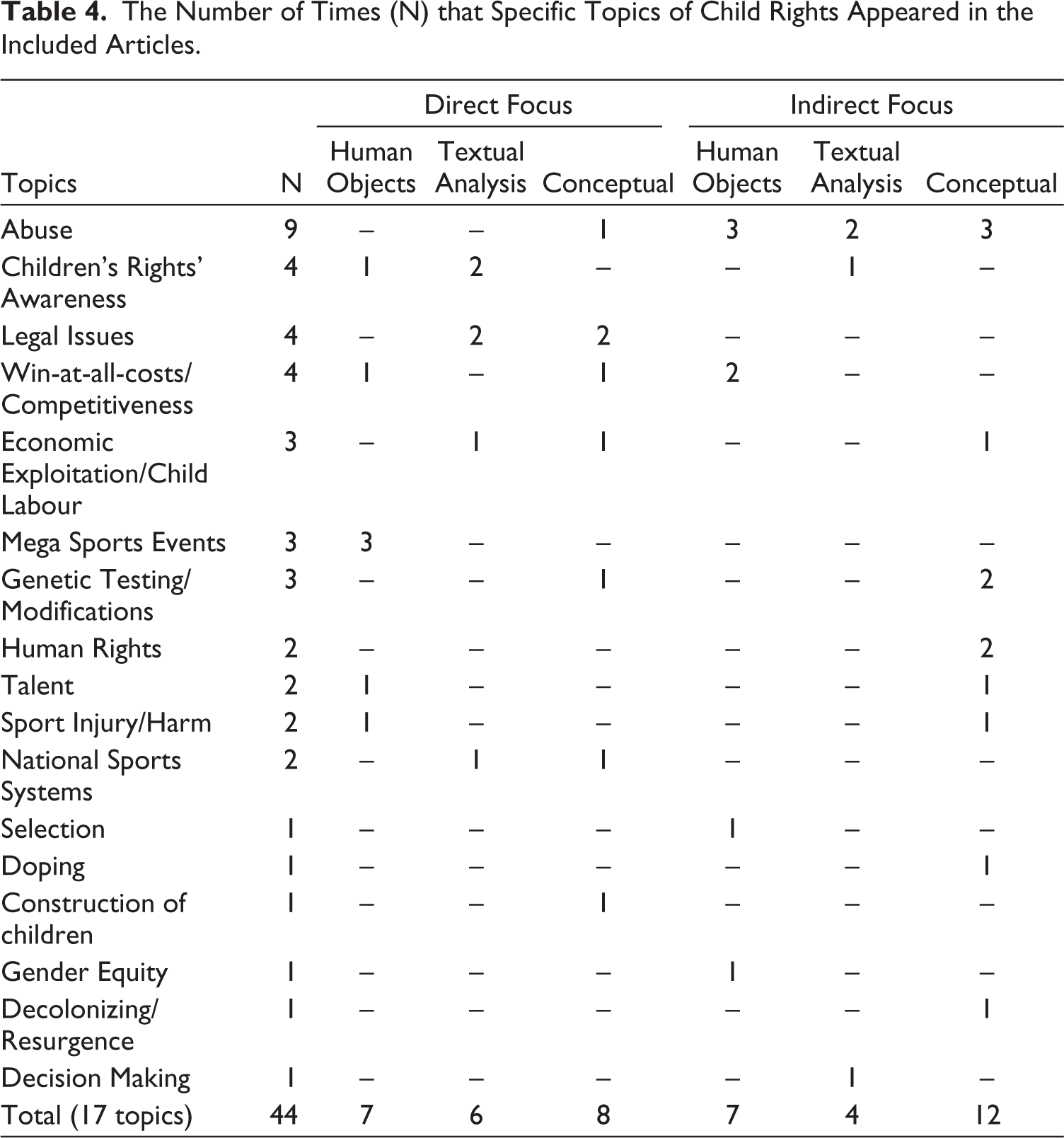
As already mentioned, the most frequent topic in the analysed studies was abuse (n = 9), followed by an awareness of children’s rights (n = 4), legal issues associated with rights (n = 4) and win-at-all-costs mentality (n = 4). Although studies on abuse and other violations of rights have been important for highlighting problems and their complexity, future studies on children’s rights per se as a construct could be helpful for advancing the knowledge on, for example, how policies concerning children’s rights are implemented in practice and how rights are understood and applied in efforts to enhance social justice and the human dignity of children engaged in sports. Within these investigated topics, frames (laws, guidelines, regulations, resources) and contextual ideologies (values and goals) have been a central interest (see Nilsson, 1988 on components in frame factor theory). Nine of ten textual analysis studies were about frames, and both conceptual studies and interview studies focused strongly on people’s views and values regarding children’s rights. This review suggests that sports practices have been scarcely investigated in relation to children’s rights. Accordingly, we propose that more studies on patterns related to the realities of everyday life in children’s sports practices (e.g., observations) would be beneficial.
Turning to who has been at the centre of interest in the empirical studies with human participants, adults were notably underrepresented within the included studies, comprising only 41 out of 6,358 participants. Stafford et al. (2015) contributed a significant share of athletes (6,124), while the remaining studies included 234 athletes and 41 adults. The studies considering adults’ perspectives included coaches (n = 3), parents (n = 2) and officials (n = 1), leaving out perspectives from representatives of national sports federations, team managers or governmental employees in key positions for children’s sports. A broadening of whom to investigate, that is, capturing the voices of adults in different decision-making roles, could enhance understanding of the mechanisms surrounding children’s rights in sports, which would be helpful in working towards caring for the children’s right perspective. Investigating adults’ perspectives on policy implementation, their needs for support and the roles of coaching education and sports federations in that process could shed light on why the children’s rights perspective is not optimally applied, as indicated by previous studies.
Within such a broadening attempt, that is, including adults’ voices, as suggested by Gleaves and Lang (2017), exploring effects of differences in sociocultural backgrounds (e.g., in terms of age, ethnicity, gender or educational level) in both adults, such as coaches, and athletes may help to develop the research field. Only two of the included studies highlighted the importance of contextuality, by highlighting how children’s rights are viewed and valued by different people in different contexts (Eliasson, 2017; Lang, 2022). Greater emphasis on the effects of contextual factors and associated variations among groups on views of children’s rights, related values, and their implementation in different contexts could therefore be beneficial.
How has research been carried out? Regarding methods of data collection, our analysis suggested a prevalence of qualitative approaches within the included studies, with only two empirical studies with human participants utilizing quantitative methodology as part of a mixed-method approach (McPherson et al., 2017; Stafford et al., 2015). These studies offered larger participant numbers and potentially more generalized results than the qualitative studies. Both quantitative studies focused on the sensitive topic of abuse, but quantitative approaches could be valuable for obtaining information on how widespread other sensitive aspects of children’s rights in sports are thanks to large samples and anonymity. They also have the possibility to capture needs addressed by researchers such as sociocultural and contextual factors and associated variations between groups. For example, quantitative research can contribute to a mapping of the different cultures created in relation to children’s rights in different sports contexts, such as different age groups, genders and types of sports. A greater use of quantitative methods, together with continued in-depth qualitative investigations, could advance research in the field.
Only one of the included studies used observations regarding coach–athlete relationships, offering possibilities to acquire insights into the real-life implementation of children’s rights rather than relying solely on people’s articulated opinions. However, observing children, deemed a vulnerable group, raises significant ethical concerns and necessitates ethical approval. Ethical considerations might contribute to the limited participation of children under 12 years old in the included studies. Nevertheless, to provide new insights and generate new pertinent knowledge, it would be beneficial to develop solutions to overcome ethical challenges linked to specific research methods or participants.
Finally, regarding the role of theory in the carried-out research, the findings indicated that 30 of the 44 studies were not rooted in any clear theoretical framework. Theory in social science research is well-understood and may have been implicitly used by the authors of those studies, but only 14 made explicit use of a theory to design the study’s aim and research questions and/or analyse the collected data.
The use of theoretical models enhanced the understanding of important concepts directly related to children’s rights, such as the nature of ‘touch’ in sports based on post-cultural epistemology (Gleaves & Lang, 2017), gender equity based on liberal feminism (Hardin & Whiteside, 2009), the role of children as agents and rightsholders based on the (new) sociology of childhood (Eliasson, 2017; Lang, 2022) and development of children’s rights in sports using programme theories (Eliasson et al., 2017). Moreover, theories provided possible explanations for topics related to children’s rights, such as children’s participation in sports based on Lundy’s model of participation (Aina et al., 2021; White et al., 2019), the power of decision-making in sports based on Bernstein’s code theory (Lindgren et al., 2017), and the process of recruiting children into sports based on the global production networks framework (Mason et al., 2019).
The non-theoretical studies discussed concepts and presented results descriptively, which is valuable when there is a lack of knowledge, but at best provides limited explanations of identified problems. A comparison of the non-theoretical study of Yilmaz et al. (2020) and the theoretical study of Mason et al. (2019) on children’s recruitment in sports provides a clear example. The former presented an overview of relevant regulations and described tensions between implementing children’s rights and ensuring a free-flowing, liberal market. The latter provided an explanation, based on a global production networks framework, of the recruitment process into sports and potential risk factors for harm, such as early exposure to a sport or moving away from the family at a young age. Thus, we suggest that the research field appears sufficiently mature to contribute to the development of theories or apply theoretical frameworks more explicitly in studies of children’s rights in sports in order to enhance understanding of the issues and effective strategies to address associated challenges.
Limitations
The use of specific keywords and databases, the exclusion of grey literature and the use of only one search strategy inevitably influenced the sample of documents included in this review. We screened entries in three of the biggest pertinent databases, Scopus and Web of Science, which offer the best coverage at journal, article and cited reference level in social sciences (Norris & Oppenheim, 2007) and SPORTDiscus, the premier source of sports-related research (e.g., Newcastle University, 2023; Swansea University, 2023). Nevertheless, we certainly cannot exclude the possibility that searches of other databases and/or with other keywords (e.g., abuse, harassment, specialization, discrimination, overtraining, participation, selection and synonyms of child such as kid and adolescent) might have identified articles related to children’s rights in sports. However, such a review would not be directly focused on children’s rights, since keywords, as Uddin and Khan (2016) put forth, communicate information about the content of an article. Moreover, searches for, extraction of data from, and analysis of all articles related to all those keywords would exceed typical space and time constraints and require unavailable resources. Although the number of the included studies and their heterogeneity make the generalizability of the patterns difficult, we are optimistic that the results of the full-text analysis of the 44 included articles strongly related to children’s rights offer valuable insights into the field and suggest potentially fruitful avenues for further research.
Conclusion
Following De Vaus (2001), who divides research into descriptive, explanatory and explorative, this review indicates that research on children’s rights has been mostly descriptive and somewhat explorative. The studies examined were mostly non-theoretical, primarily including children’s voices and analysing international policy. As discussed, this scoping review suggests that the children’s rights in the sports research field will benefit from more varied scientific approaches that enhance possibilities to explain the phenomena and relationships seen. This is no critique of previous research, as good descriptive studies typically raise ‘Why?’ questions (De Vaus, 2001). Thus, as what we can call a first wave of research, has described and highlighted the lack of a rights-based perspective, this scoping review proposes a second wave of more explanatory research into children’s rights in sports, rooted in relevant theories aiming to understand why violations of children’s rights occur and why a children’s rights-based perspective has not yet been established fully in the sports contexts.
Moreover, this review indicates a deficiency in social science knowledge about how children’s rights as constructs contribute to prevent challenges or solve problems faced by children in various sports contexts. This gap appears clearly in this review where only 21 articles with a direct focus on children’s rights in sports were identified. There is also limited knowledge regarding how specific aspects of children’s rights constructs (e.g., UNCRC) are implemented in sports, including the four basic principles; that all children have the same rights and equal value (Article 2 UNCRC), that the best interests of the child shall be a primary consideration (Article 3 UNCRC), that every child has the inherent right to life and development (Article 6 UNCRC), and that all children have the right to express their opinion and have it respected (Article 12 UNCRC). This applies to all the other sports-relevant articles of the UNCRC. Thus, we suggest more studies with a direct focus on children’s rights constructs, exploring how they are understood, embedded and respected at various levels of sports systems to enhance children’s sense of dignity and worth.
One finding not previously discussed is that out of 44 articles, 35 came from four specific parts of the world (13 from the UK, 11 from Canada/USA, 7 from Scandinavia and 4 from Australia/New Zealand). Thus, entire continents (Africa, South America and Asia) and large regions, including southern Europe, were underrepresented (or not represented at all) in research about children’s rights in sports. This raises concerns and indicates a need for more studies from those parts, especially as the UNCRC has been ratified by every country except the USA (United Nations, 2023). Notably, countries that had embedded the UNCRC in their sports policies or even in their legal system (e.g., England, Norway and Sweden) produced most research related to children’s rights. Hypothetically, ratifying the UNCRC may not be enough. It is possible that the amount of research in these countries reflects the topic’s societal embeddedness and therefore the interest in financing such research among research councils. This is something for future research to follow up.
Footnotes
Declaration of Conflicting Interests
The authors declared no potential conflicts of interest with respect to the research, authorship and/or publication of this article.
Funding
The authors received no financial support for the research, authorship and/or publication of this article.