



Abstract
Precarity has been consolidated as a central concept in theoretical and political discussions around labour market(s) and labour relations and conditions. Moreover, it has strongly been linked with specific sociodemographic groups, prominently with youth. Both theory and empirical evidence have suggested that precarity functions as a necessary step towards integration in the labour market, as a kind of indispensable rite of passage to labour adulthood.
Nevertheless, despite its resonance, precarity remains a fuzzy buzzword that needs to be further problematized and evidenced. Focusing on a specific case study, that of Greece, we try to unfold a two-fold approach: to define and measure precarious forms of labour at the level/scale of the labour market as a whole and to detect and disentangle the role of age in specific sectors of economic activity where precarious labour is more prominent than in others.
Introduction
This article attempts to contribute to the critical debates around precarious labour and precarity that have risen during the last decades, encompassing several aspects of transformations in the labour regimes within advanced capitalist economies. The main objective of this article is to underpin the theoretical discussions on precarity by providing empirical evidence from a specific socioeconomic context. More precisely, we try to define, explore and measure precarity within the living labour 1 in the specific context of Greece, a country situated in the midst of a long financial crisis and the recent pandemic crisis, both of which have a strong impact on labour.
It is widely accepted, also from researchers and scholars who do not share the premises of theoretical and empirical production on precarity, that for some sociodemographic groups, diverse forms of precarious labour are essential parts of their professional experiences, at different stages of their trajectories. One of these groups is young people, for whom job insecurity and labour precarity might be considered by some, particularly in some sectors, as a necessary stepping stone to labour stability earned through the accumulation of professional skills and experience.
In order to test and measure precarity among young workers, it is necessary to define and measure precarity in a more complicated and composite way than the existing ones. To give two examples, among others: Eurostat, in a communication on 9 February 2018, measures precarious jobs among EU employees taking only one variable into account: the duration of contract. So, precarious employment in the EU was estimated to be 2.3% in 2016, since this was the share of employees who had a work contract that did not exceed 3 months duration. 2 ILO, in contrast, seems to define precarious employment in a more comprehensive way, including ‘casual workers’, that is, short-term workers that according to national legislations can be classified either as ‘employees’ or as ‘own-account workers/self-employed’; short-term workers, that is, holding a temporary employment-duration contract, seasonal workers or workers whose contract of employment allows employing enterprise or person to terminate the contract at short notice. 3
In this article, we attempt to provide a comprehensive methodology for measuring precarity using raw data drawn from the European Union Labour Force Survey (EU-LFS). We test the methodology on the Greek data following a twofold analysis: on one hand, we attempt to map precarity among sectors in the (Greek) labour market; on the other hand, we test the significance of age, examining whether (young) age can or is rightfully considered as a variable that signals increasing probabilities of being employed in a precarious job. For the latter, we distinguish two categories, those between 18 and 29 and those over 30 years old, in order to investigate whether precarious labour is indeed a stepping stone occurring during the initial stages of professional life or whether it takes—according to sectors—a more durable, if not permanent, character. The identification of ‘young workers’ within the age category 18–29, or more precisely the extension of the upper limit from 25 to 29 years, has been made in order to encompass sectors with different requirements regarding education and qualification and consequently different temporalities of labour market insertion.
Our analysis proceeds in the following steps: first, we attempt to approach precarity as a theoretical and political problem following the discussion that has emerged since the early 1990s within critical and mainstream social and political theory; second, we outline our plan to tackle precarity as a methodological problem in the sense of an attempt to detect and select plausible, productive and comparable indicators of precariousness that could help us measure precarity within a specific context, that is, the labour market. Then, we analyze our findings based on raw data coming from the 2018 Greek LFS, focusing on two basic dimensions: (a) the distribution of precariousness among sectors of economic activity and (b) the comparison between young workers (18–29) and older ones in terms of precarious conditions. Finally, we are discussing our results in relation to the main points highlighted within relevant literature, and we are suggesting potential avenues of research that could further enrich this already fertile field of research.
Precarity as a Theoretical and Political Problem
Job and employment insecurity, where the former focuses on keeping a current position with one employer whereas the latter entails the lack of potential for secure and continuous employment in general (Chung & van Oorschot, 2011), have been identified as the main characteristics of youth employment requiring research and policy attention (Hvinden et al., 2019a, 2019b). Moreover, they can be approached as a subjective experience and/or as an objective phenomenon (Karamessini et al., 2019). A main component of both the subjective and objective dimensions of insecurity is the precarious character of work, which entails internal and external properties of labour relations and conditions, that is, the overall labour regime.
If precarity involves non-standard employment, one could argue that it has been a reality for growing parts of living labour already since the 1980s, when diverse forms of precarious work—informal, non-standard, atypical, non-declared, flexible, alternative, irregular, freelance concealing dependent work, etc.—appeared and continued to gain importance in all capitalist economies (Hussmanns, 2003). As Carnoy and Castells (2001, p. 7) pointed out, already in the mid-1990s, non-standard employment was reaching 37% in the UK, 30% in France, almost 40% in Italy, more than 40% in the Netherlands and almost 50% in Japan and Australia.
In this framework, in an effort to combine growing economic performance with a minimum of social protection and security, the concept of ‘flexicurity’ was coined initially by the Danish social-democratic government in the early 1990s and expanded as a policy objective and method to the other Nordic countries and the European Union as a whole. In fact, ‘flexicurity’ was adopted by the European Commission as a leitmotiv of the European Employment Strategy and the revised Lisbon Strategy for Growth and Jobs, calling on Member States to ‘promote flexibility combined with employment security and reduce labour market segmentation, having due regard to the role of the social partners’ (European Commission, 2005, p. 5). However, this ‘shift’ in labour conditions was the target of critiques and mobilizations across Europe. European social movements started to coin those (re)emergent labour conditions as precarity. Thus, what in English would be called flexible, casualized or contingent labour (without any kind of necessary critical connotation) is being politicized in several European countries as ‘precarious labour’ denouncing its fragile and exploitative character and promoting it as a new identity of struggle’ (Casas-Cortes & Cobarrubias, 2007, p. 115). In this context, what is described as ‘flexicurity’ by some is interpreted as ‘flexploitation’ by others (Burroni & Keune, 2011; Dean, 2008; Keune & Serrano, 2014).
In this sense, precarity becomes a particularly significant concept in the current conditions of labour markets. In the first place, precariousness is a descriptive notion that encounters broadly expanded realities mainly in specific social contexts, remarkably enough not only in those affected by the crisis since precarious labour is not automatically linked to high unemployment rates. Second, precarity as a socio-political concept can offer valuable insights for the new forms of (precarious) workers’ organization that go beyond current forms of collective agency and representativity (Neilson & Rossiter, 2005).
Research and discourses on precarity have offered fruitful insights for the reconceptualization and re-theorization of both work time and workspace. The blending of the domestic, virtual and actual workspaces of precarious labour and the virtualization of the workspace ‘made possible by technoscientific innovations, principally information networks, global media cultures and new management and organizational structures’ (Papadopoulos et al., 2008, p. 228), as they have been examined in the sociological and anthropological accounts on immaterial and precarious labour, have reshaped our perceptions of work time and workspace. Precarity escapes time and space barriers either as an intruder in the space of leisure since it erodes any distinction between work and non-work time or as a total eclipse of the plateaus of struggle for workers’ rights. The system of wage labour and corresponding welfare system produced a space-fixated work subjectivity (i.e., normal, full-time, wage employment) measured according to working time. Precarious labour implodes this subjectivity on various levels: it is not space-fixated, the precarious worker works in a multiplicity of locales; his/her work cannot be quantified and remunerated according to the system of wage labour measurement.
Looking at these points, one can recognize the reality and the prospects of numerous workers who oscillate between employment and unemployment or between different jobs and working arrangements. In the case of the young, where particularly from the outbreak of the financial crisis in 2008 onwards, unemployment has become a recurrent if not a common situation, precarity seems ironically enough to be the stable pathway from unemployment to employment and backwards. The possible impact of the COVID-19 crisis also cannot be neglected, where according to the OECD (2021), the return of OECD countries to pre-pandemic employment rates, that is, the Q4 2019 level, is expected to take from 1.5 years in Australia to 5.25 years in Iceland and Israel, while for the Euro area it is expected to take in 2.75 years (Q3 2022).
Precarity as a Methodological Problem
Despite the relatively rich theoretical production on precarity and its resonance in new forms of labour struggles emerging in different sectors, from creative industries to domestic work and from platform work to gig economy at large, there is still a need to better define precarious work, particularly in quantitative terms. Especially since the ‘precarious subject’ is considered by many as the dominant form of contemporary (post-Fordist) working class:
The precariat is to postfordism what proletariat was to fordism: flexible, temporary, part-time, and self-employed workers are the new social group which is required and reproduced by the neoliberal and post-industrial economic transformation. It is the critical mass that emerges from globalization, while demolished factories and neighborhoods are being substituted by offices and commercial areas. They are service workers in supermarkets and chains, cognitive workers operating in the information industry (Precarias a la Deriva, 2004, p. 48, translated and cited in Parsanoglou & Philipp, 2018, p. 151).
In order to identify this ‘critical mass’ of workers who operate in different sectors and industries, we have to decide which variables indicate or lead to precarious forms of labour. Guy Standing, in his seminal work on the ‘precariat’, classifies as precarious those workers who lack seven forms of labour-related security, ‘that social democrats, labour parties and trades unions pursued as their “industrial citizenship” agenda after the Second World War, for the working class or industrial proletariat’ (Standing, 2011, pp. 10–11): labour market security, employment security, job security, work security, skill reproduction security, income security and representation security.
Taking those dimensions into account, we tried to distinguish specific indicators that demonstrate or signal the probability of precarious conditions, whether they are perceived as such by individuals themselves or not. The most relevant dataset that could provide such evidence is the LFS, which remains despite its limitations, is the most reliable and comprehensive dataset regarding labour market conditions and labour force’s situation. Moreover, as we will show below, it includes several variables that cover most forms of insecurity that are linked to what is defined as precarious labour.
In the present analysis, we focus on one specific example, that of Greece, a country facing, as mentioned above, multiple crises since 2008. One of the main repercussions of the economic crisis was the sharp increase in unemployment in general and youth unemployment in particular. The asymmetrical effect of the crisis on the Greek labour market (Karamessini et al., 2019), as well as structural difficulties that arise from a sub-protective labour regime (Hora et al., 2019) and the extended volume of undeclared work (Medina & Schneider, 2018) render Greece an interesting case in terms of precarious labour. What makes the Greek case even more interesting is the contradiction between a widespread assumption of increasing deregulation of the labour market and workers’ persistent resistance to flexible forms of labour, such as part-time or temporary employment (Papadakis et al., 2020).
Our analysis is based on raw data drawn from the 2018 Greek LFS, carried out by the Hellenic Statistical Authority (ELSTAT). According to ELSTAT, the LFS is a cross-sectional household sample survey, ‘designed to estimate the distribution of the working age population (15 years and above) into three mutually exclusive and exhaustive groups: the employed, the unemployed and the economically inactive’. 4 Conducted since 1981, the LFS is the main source that provides monthly, quarterly and annual data on the participation of individuals in the Greek labour market, their working conditions and their job characteristics. At the same time, it is the basis for the estimation of unemployment rate and other structural indicators, such as inactivity or NEET rates, participation in life-long learning and so on. The data, which are collected every month from a representative sample, are aligned with Eurostat’s definitions and methodology, while common classifications ensure comparability between the member countries.
One of the main limitations of the survey arises from its cross-sectional nature and lack of longitudinal data, as it is unable to track the individuals’ job histories and detect changes in labour market outcomes over time. In contrast, the necessary breakdowns for the purposes of this analysis, namely by economic sectors and age groups, in some cases result in sample sizes that are insufficient to produce reliable results, especially for the young cohort. Finally, although it has a rich dataset, LFS does not collect information on basic subjective indicators of precarity, such as perceived job security or the perception of likelihood of losing a present job or objective indicators, for example, the transition rate from temporary to permanent employment or access to labour rights, etc.
This is done by other surveys, such as the Eurofound’s European Working Conditions Survey (EWCS), that include questions on job insecurity and prospects in general, for example, the perceived probability of losing one’s job. Using the EWCS, it is possible to derive supplementary information about job quality in Greece. Apparently, the necessity of increasing employment rates somehow surpasses issues concerning precarity or job quality improvement. The 2015 data shows that especially for younger individuals (age <35 years old), the figures need actions for improvement:
36% of those individuals state that they do not have a fixed starting and finishing time for their work; 24% say that they have neither a fixed nor an indefinite contract; Only 37% agree that their job offers good prospects for career advancement; 27% work usually less than 35 hours per week in their job; 24% fear that they might lose their job in the next 6 months; 57% disagree with the statement, ‘If I were to lose/quit my job, it would be easy for me to find a similar job’; 15% state that they always and 27% that they sometimes worry about their work when they are not working during the last 12 months; 37% agree that their household makes ends meet with some difficulty, and 38% with great difficulty.
It must be noted, however, that both the sizes of the samples, the methodology and the questionnaires used do not allow for comparability between the findings of the LFS and the EWCS.
In our attempt to measure precarity in Greece, we distinguished two age categories: young people, aged 18–29 years old who go through the first stage of their career and an older cohort aged 30 years old and over, who are considered to be more established workers. This uneven distribution of the working population was made in order to see whether precarity in a broad sense affects people in their early stages of professional life or whether it can persist in the long run. The demarcation line of 30-years-old was selected in order to also include those who have spent some years on tertiary education and therefore started their professional life relatively late. The target population of the analysis is adult individuals who are working at least one hour in the reference week (as employee, self-employed or family worker), while the sample size is 79,277 cases.
The basic and complementary variables that show different facets of insecure, atypical and precarious employment are examined, and a range of indicators are included in the analysis. In particular, focusing on the type of contract that the individuals have signed with their employer, we take results on the share of employed people that have
The incidence of
Another dimension of precarity is that of vulnerability.
The lack of medical insurance (
Based on income criteria, we also calculate the percentage of
In order to measure precarity in a more complex way, we estimate the above-mentioned indices for all the economic sectors separately and proceed with a score-based analysis. In particular, we derive the median of each indicator from all sectors under survey and use it as a threshold level in order to build our score scale system. Then, we mark the number of indicators in each sector that exceed the overall median values mentioned above. Therefore, a sector that scores highly on this scale is assumed to be more precarious, since more indices would appear to have a greater value than the overall median of the sample. In contrast, a sector that presents lower values than the sample median in the majority of the indicators is defined as less precarious.
In order to study the significance of age in our results, we go one step beyond and calculate an index based on the distances from the total sample median of each indicator for both age cohorts. The index can take both negative and positive values. The negative sign indicates that a value is lower than the overall median, while on the contrary, the positive sign points out a value greater than the median. The closer to zero the index is, the smaller the distance from the overall median of sectors. The index takes its highest value, when the relevant indicator equals 0 or 1. This methodology allows us to have a more detailed view on the precarity for each sector and render the differences between the two age groups, more demonstrative.
Findings: O Precarity, Where Art Thou?
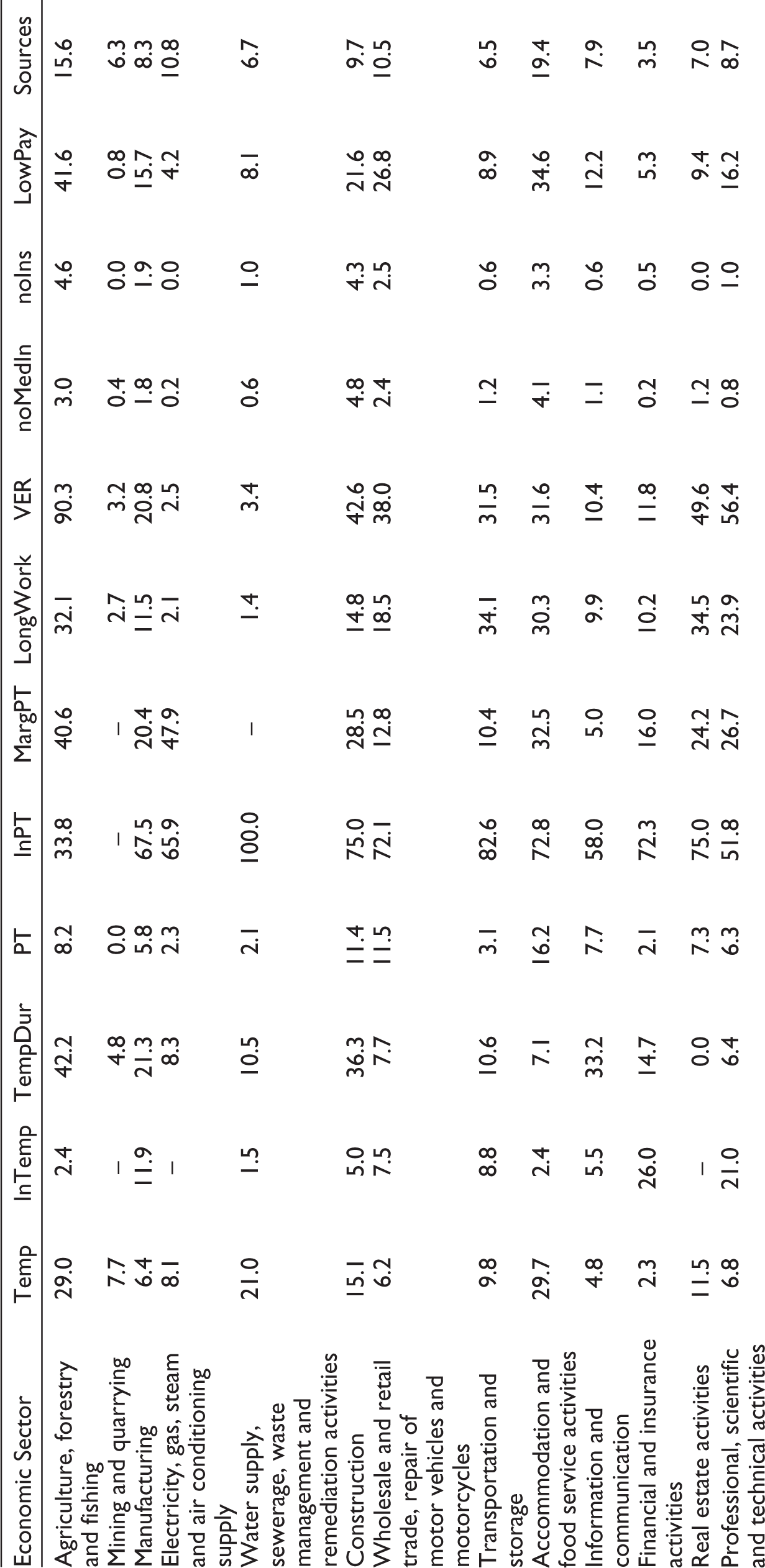
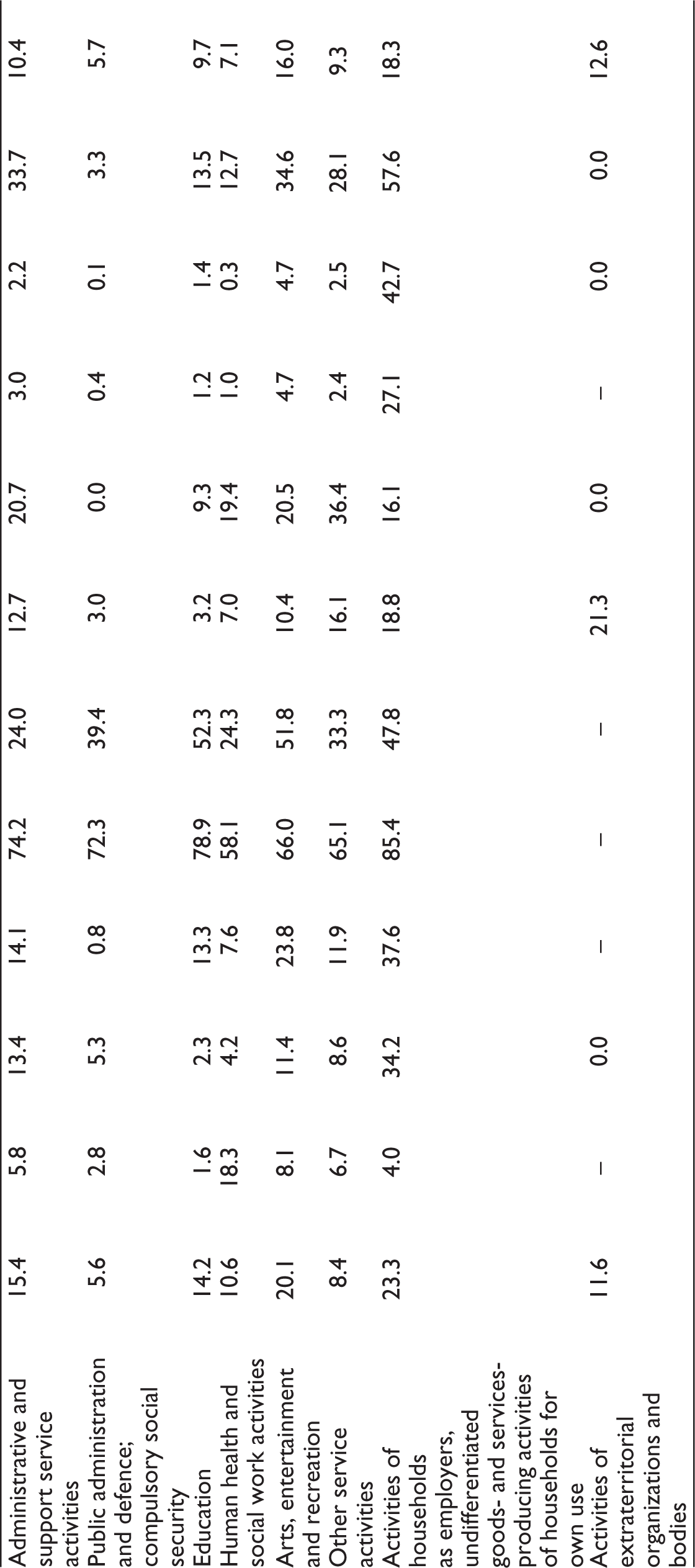
The 12 indicators of precariousness selected for our analysis are presented by sector for the total sample of the survey in Table 1. The table can offer an overview of the incidence of different indicators of precariousness in different economic sectors, while some generalizations can also be extracted, that is, the significance of involuntary part-time employment among part-time workers in almost all sectors.
The Indicators of Precariousness by Sector for the Total Sample of the Survey, %.
However, an overall and comparative idea of the prevalence of precarity in each sector can be provided from the score-based analysis. The results from the latter, as explained in the methodology, are given in Table 2 for each sector and by indicator. The plus sign (+) represents the cases where the indicators are above the overall median, while the minus sign (−) indicates those below the median.
Precarious Sectors Based on the Total Median of Each Indicator.
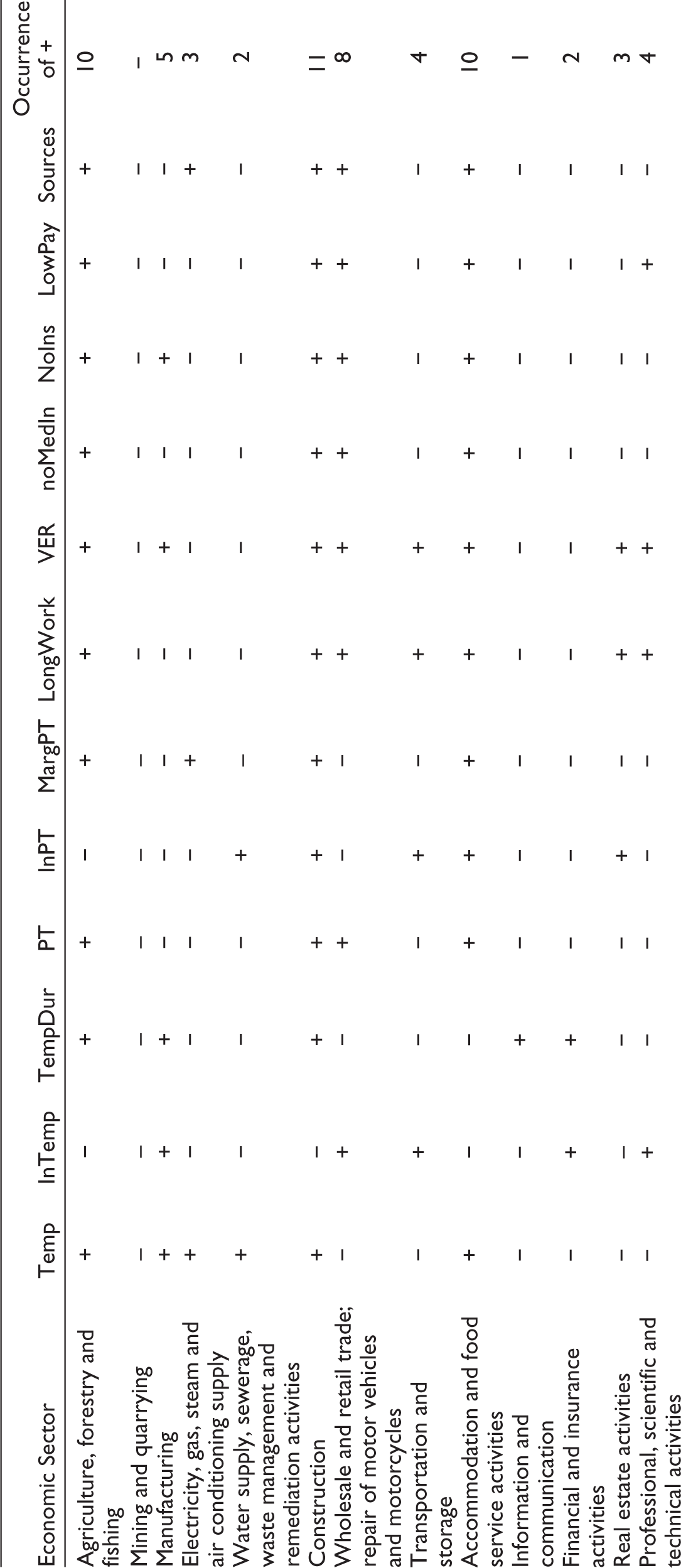
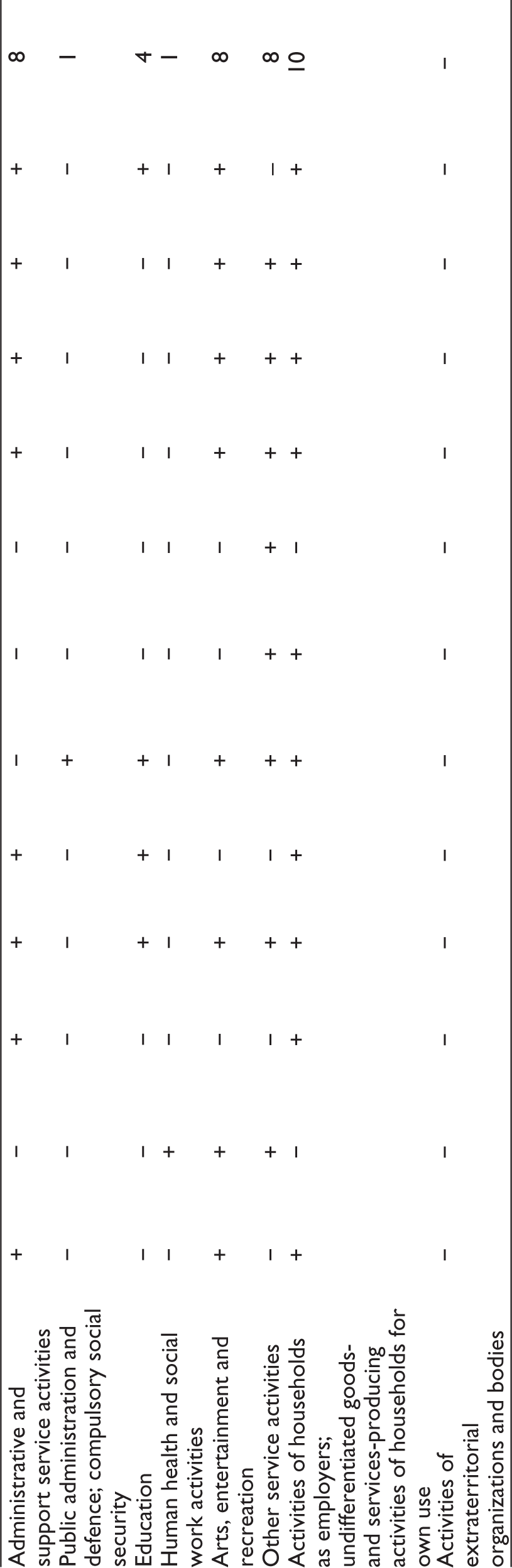
Thus, we can see that the sector of construction seems to be the most precarious, since all indicators are positive, that is, exceed the overall median, except for the involuntary temporary employment rate. One could explain the latter by the ‘nature’ of the work or more accurately by the organization of construction activities, which in most cases are project-based and have a strong seasonal nuance that cannot necessarily assure continuous employment. Similar results are noted for two other sectors that encompass strong elements of seasonality and temporality: the sector of agriculture, forestry and fishing and that of accommodation and food service activities. Another sector that scores extremely high in our scale system, verifying theoretical discussions around precarity but also qualitative empirical findings, is that of domestic work. Moreover, domestic work is not only ranked among the sectors with the highest scores but also the distances from the median are the highest in the whole sample for the majority of the indicators.
So far, everything seems obvious to anyone who has some experience with labour market characteristics as they are specified in the above-mentioned industries; characteristics that seem to be common or similar in most advanced economies and function as diachronic features of employment, particularly in low-skilled and low-status jobs, in specific areas of all three sectors of the economy. What we can see, however, in the middle of our scale, that is, in sectors that gather 8 out of 12 indices of precariousness above the threshold level, is the prevalence of precarious forms of labour in a wide variety within the tertiary sector of the economy: these are the trade, administrative and support service activities, arts, entertainment and recreation, as well as other service activities. On the contrary, the least precarious sectors are those of information and communication, public administration and defence and human health and social work activities, which we can see on the lower part of our scale spectrum.
Findings: Does Age Matter?
Having discerned differentiations among sectors as far as precariousness is concerned, we will now present the indicators according to age cohorts, in order to see whether age matters, when it comes to precarious forms and conditions of labour. In Table 3 below, all the computed indicators are listed for both cohorts (i.e., 18–29 and 30+) and for the total sample in order to present an overall picture of the labour market conditions in Greece.
The Indicators of Precariousness by Age Groups, %.
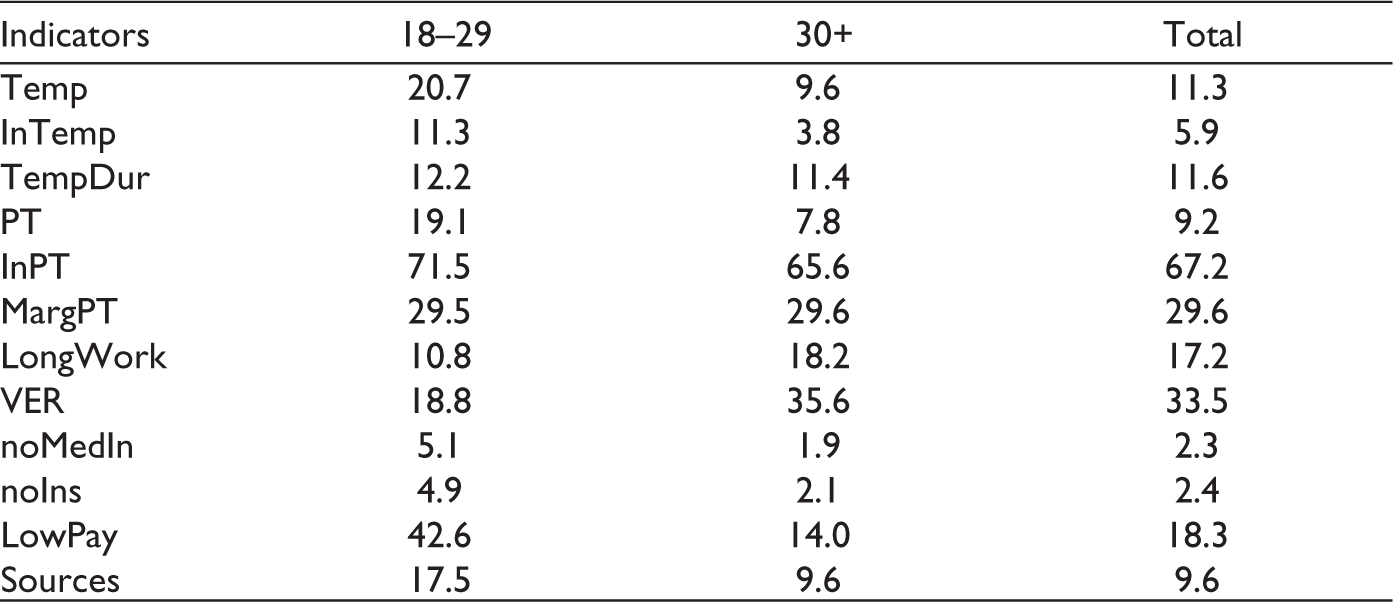
It is apparent from the majority of the estimated rates that the young cohort demonstrates a more unfavourable position in the labour market, and they face greater job insecurity and precarity compared to the older age cohort. In particular, the rate of temporary employment, as well as that of involuntary temporary jobs, is considerably higher for employed people aged 18–29 years old. At the same time, they seem to enter more easily into a part-time contract, involuntarily or not. The financial situation of young workers appears to be worse since wage inequality is observed between workers of different ages. In fact, over 40% of young people are earning less than two-thirds of the median gross monthly earnings (against 9.6% of the older ones), facing economic hardship. Moreover, 17.5% of them have supplementary sources of income, besides their main job, that mainly originate from persons inside or outside their household. Finally, focusing on the state-provided job benefits (supportive entitlements), younger people are in a more precarious position, since 5% of employed individuals do not have access to social security or health funds. On the contrary, 18% of persons aged above 30 years old work over 49 hours per week, in contrast to 10% of the young people. Finally, almost one-third of employed persons are working either as self-employed or family workers, with the older cohort showing a considerably higher value of vulnerable employment rate.
In Table 4, we present the distances from the median for both cohorts for all sectors under survey. As expected, significant variations between cohorts are obvious in the majority of the sectors. In particular, if we first read the table vertically and focus on the indicators individually, we notice that the long working hours indicator as well as the Vulnerable Employment Rate show greater precarity for the older cohort compared to the younger one. Indeed, people aged above 30 score higher than the overall median in both indicators, while in many sectors the distances of their values are far away from the median level. On the contrary, other indicators take higher values above the median if we examine the young cohort. In particular, young workers have more positive results regarding temporary and part-time employment, while they are more vulnerable in jobs without medical or social insurance in most cases. Big gaps between the two cohorts are also noted regarding their gross monthly earnings, as young people are proven to have lower income from their main job.
The Distances from the Overall Median of the Sectors by Age Groups.
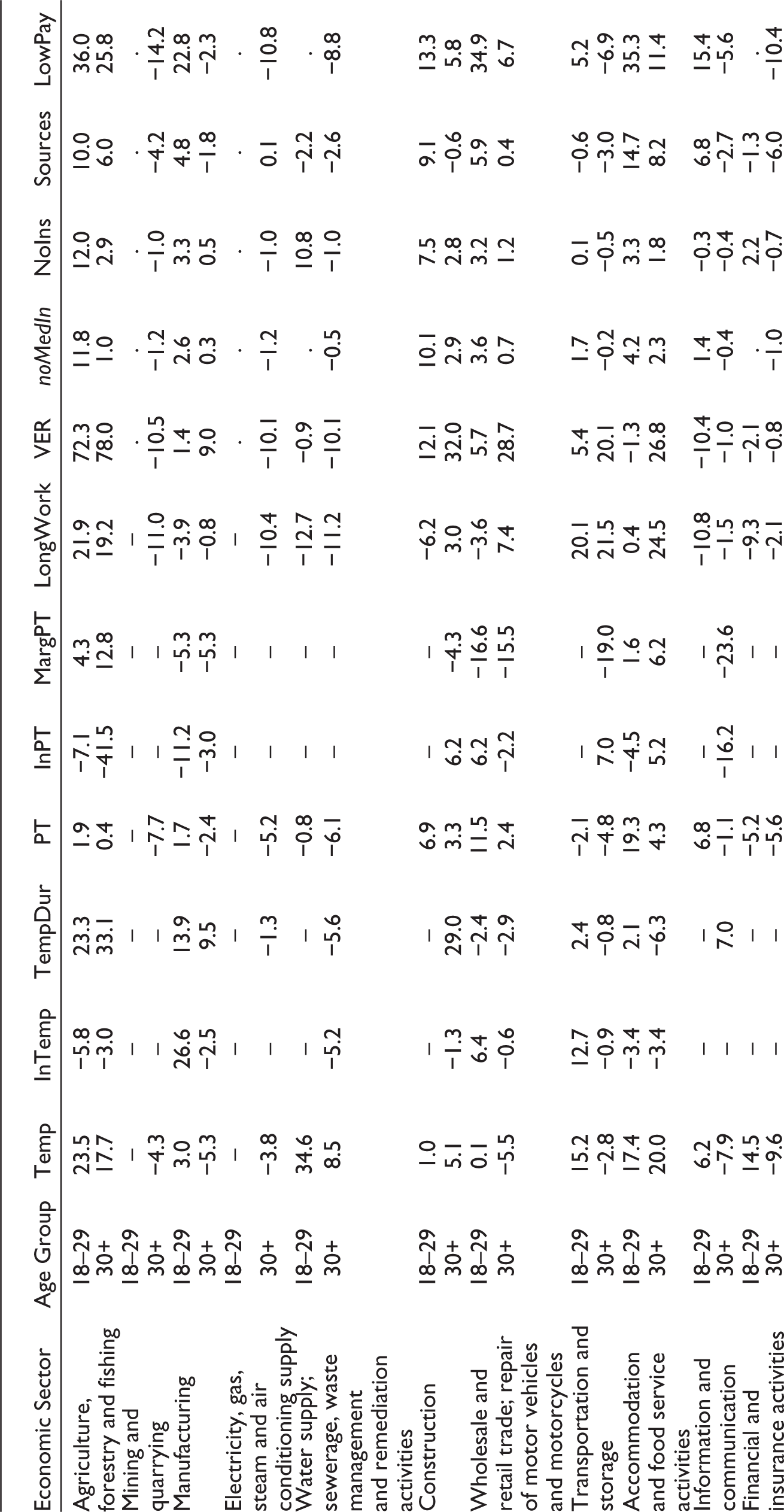
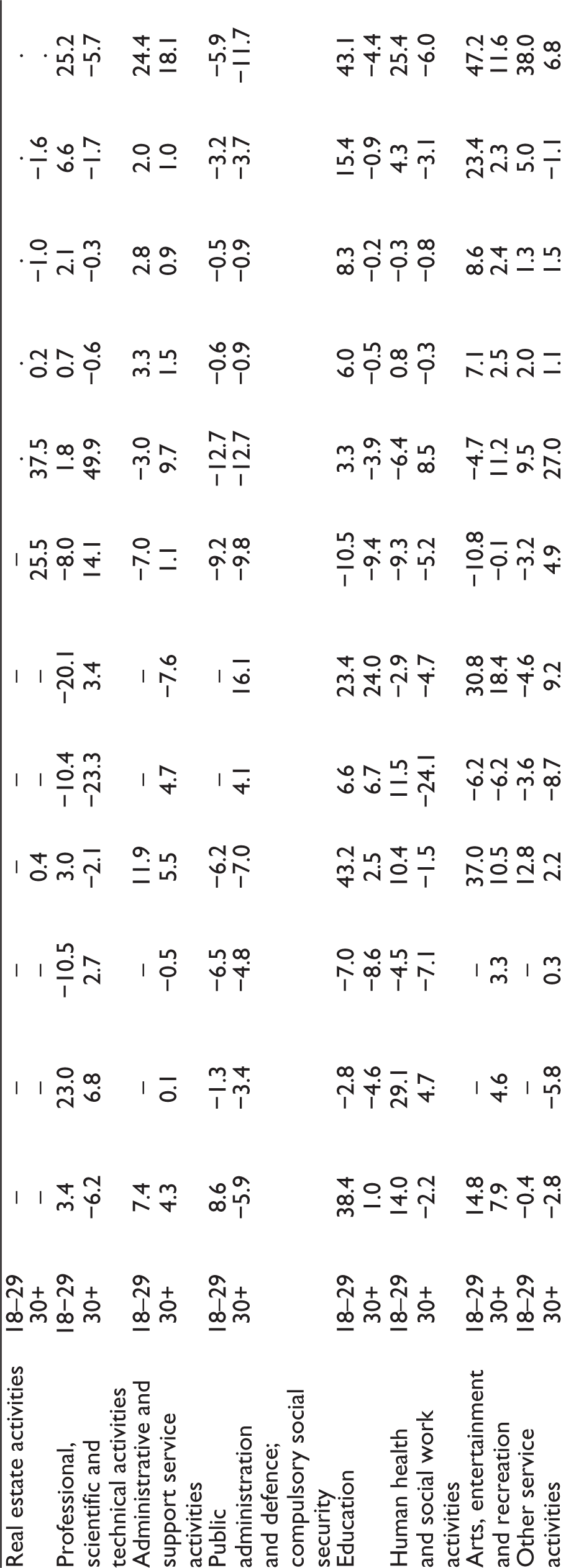
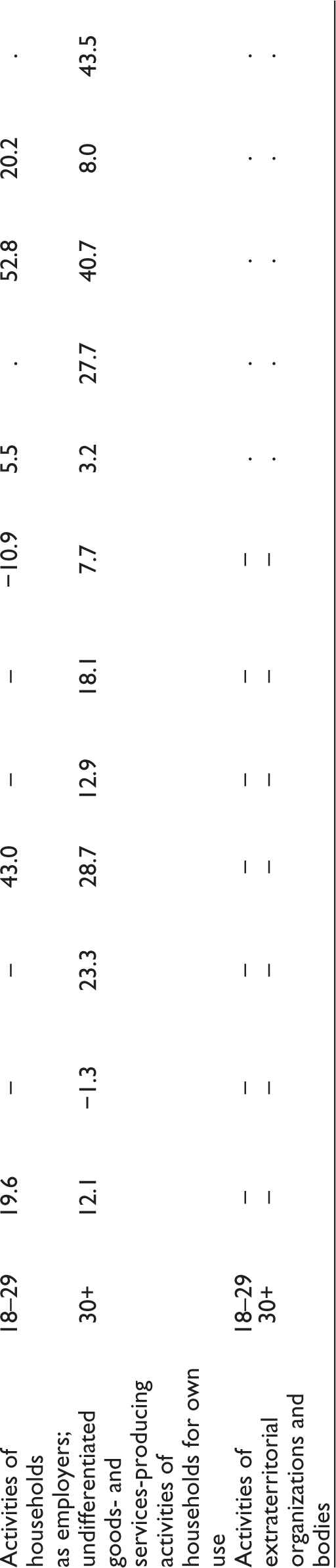
If we now concentrate on each sector separately, we also have some interesting findings, although the small size of the sample in some cases does not allow for reliable results for the young cohort. Thus, for the young people, one of the most precarious sectors is that of agriculture, forestry and fishing, where the majority of the indicators are much higher above the median or slightly below the threshold level, indicating also great variations between the two age groups. A similar pattern is noticeable in the sector of education, where the majority of indicators show precarity for young workers while the differences between the two cohorts are really remarkable. Additionally, in the sector of construction, arts and entertainment as well as domestic work, the young people score positively higher than the median values. Finally, the sectors of manufacturing, wholesale and retail trade and accommodation and food service activities gather many indicators above the overall median, although they are near zero.
If we look at the older cohort, that is, those aged above 30, we can see both similarities and differences in the results. Again, the sectors of agriculture, forestry and fishing and that of construction are of higher precarity, as they gather a lot of indicators that are relatively high above the median, whereas the indicators in the sector of domestic work are even higher above the median. Moreover, the older workers in the sector of accommodation and food service activities face job insecurity and precarity, especially regarding the rates of temporary and involuntary part-time employment, indicating also higher levels of self-employment and longer working time in comparison with the young workers. Finally, similar results but to a lesser extent with the young cohort are noted in the arts and entertainment sector.
Discussion
As mentioned in the introductory chapters of this article, precarity has become one of the influential concepts among theoretical debates and literature around the transformations that occurred in labour and labour markets since the 1990s, to a lesser or greater extent in all advanced capitalist economies. From accounts that bring ‘precariat’ to the fore of global economic antagonisms (Standing, 2011) to more locally anchored sociological analyzes of social stratification, such as the one on the ‘new social class model in Britain’ by Savage et al. (2013), precariousness as a descriptive notion and precarity as a social (and political) concept cannot be neglected when it comes to disentangling contemporary transformations of labour.
However, and despite its resonance, precarity has not yet gained sufficient empirical background, particularly in quantitative terms. Or, when such attempts occur (Broughton et al., 2016; Olsthoorn, 2014; Savage et al., 2013), precarity is defined in extremely narrow terms or as a simple synonym for insecurity or vulnerability. Moreover, in most cases, the focus remains on specific sectors, traditionally labour-intensive and/or on specific socio-demographic groups, such as women, young, old workers and migrants (McKay et al., 2012; Simms, 2015). Sector-wise, however, as it has already been pointed out in the theoretical discussion in this article, significant part of the theoretical contributions belongs to the Italian autonomy tradition, where the emphasis is—sometimes exclusively—put on the ‘immaterial labour’ living and performing mostly in the cultural/creative industries (Gill & Pratt, 2008). Finally, significant nuances have been produced by researchers and scholars who insist on the organizational and political aspects of growing precarization within or even beyond existing forms of labour representativity (Graham & Papadopoulos, 2021; Milkman & Ott, 2014; Waterman et al., 2012).
Our endeavour here is neither to argue for or against previous accounts on precarity nor to suggest an all-embracing definition of it. Our endeavour is about providing an empirical backbone to a concept that—if essentially evidenced—can comprehensively describe the fundamental transformations that occurred in labour forms, conditions and relations in the last decades; more precisely, in the framework of core transitions that emerged since the downfall of Fordism or even the industrial societies. Our findings are based on a specific case study that has, however, attracted growing research interest since 2008 and the December youth riots—sometimes explicitly linked to growing precarity among young people (Papadopoulos et al., 2011; Tsianos & Parsanoglou, 2012)—throughout the whole decade of crises (economic and ‘refugee’) in the 2010s. Nevertheless, they can serve as a starting point for comparative analyzes between different contexts/labour markets.
Our findings do provide evidence of a differentiated significance of precarity among sectors. On one hand, this differentiation can be explained by the structural characteristics of some crucial Greek economy sectors, where temporary/seasonal, low-skilled and low-paid positions prevail, for example, constructions, agriculture, domestic work, etc. On the other hand, we cannot neglect the importance that indicators of precariousness hold in other sectors that are not necessarily structured on the basis of labour-intensive techniques and methods and are not necessarily dominated by low-skilled jobs, for example, trade, administration, arts and entertainment. It must be noted here that since the early 1980s and the restructuring of the Greek economy due to the accession of the country to the European Economic Community, the path that was followed was rather that of a reduction in labour costs than investing in new technologies. This reduction was achieved by increasing labour-intensive activities, particularly in agriculture and manufacturing, mainly through the use of migrant labour and by increasing informal economy wherever this was possible (Vaiou & Hadjimichalis, 2003).
The extended presence of precarious conditions in diverse sectors of the economy, including primary, secondary and tertiary economic activities, undermines assessments that stem from exclusive approaches that emphasize in their definitions of precarity either elements of job insecurity or (new) forms of labour performed within the rise and development of cognitive capitalism, referring primarily to the tertiary sector. In addition, the extension of precariousness to diverse sectors where the composition of labour in itself is diverse invites us to rethink the strong association between precarity and only specific sociodemographic groups; it is certain that agriculture and construction are migrant-dominated, while domestic services are both migrant- and female-dominated, but this is not the case for other sectors, where labour is more diverse and involves more if not all sociodemographic groups.
The latter brings us to the main question we are attempting to tackle here. This is the significance of age in the distribution of precariousness among the workforces. In other words, through our analysis, we want to answer the question whether precarious employment is a temporary condition or it persists throughout one’s professional life: whether it is a stepping stone or a trap (Scherer, 2004). In this vein, our findings are consonant with the implicit or explicit focus on young people when referring to precarious employment that seems to be the norm in many theoretical, empirical and political accounts. It is true that both horizontally and vertically, both in terms of conditions/indicators and sectors of economic activity, younger workers seem to show a higher propensity to precarity, with the significant exception of Vulnerable Employment Rate and long working hours. However, there are sectors, such as domestic services, agriculture, construction and also the tourism industry, where indicators of precariousness persist further longer than the initial stages of one’s professional life. In this sense, one could argue that age indeed matters, but structural constraints within specific sectors seem to matter even more.
Therefore, the answer to the question raised in the title of this article could be that precarity can be both a stepping stone and a trap at the same time. Depending on the structural characteristics of specific sectors within the macroeconomic context of a labour market as well as the composition of labour, for example, prevalence of young, female or migrant workers, precarity can be an initial step towards more secure employment or an enduring condition throughout one’s professional life or even both. In this sense, we suggest that in order to better understand precarity, we might need to turn our gaze from precarious workers themselves to labour market conditions that underpin precarious forms of labour. This would provide a more comprehensive and contextualized idea of what it means to be precarious in a certain time and space.
Conclusion
This article had a two-fold objective: on one hand, to contextualize precarity in a specific case study; on the other hand, to test whether age can be considered a prominent variable in measuring precariousness among workers. To this end, we used row data coming from the most comprehensive dataset on European labour markets, that is the EU-LFS and more precisely, the Greek version. In the previous sections, we have analyzed our findings and we have discussed their relevance within theoretical debates and previous research on precarious labour and precarity in general.
One additional aspect that could not be covered by our analysis, yet seems to be acknowledged in large parts of the relevant literature as crucial, is that of the impact that growing precariousness in certain sectors and settings has or can have on the ways that living labour is perceiving themselves and organizing their actions. In other terms, the question of social stratification, both in objective and subjective terms, is raised: apart from the position in the overall social hierarchy that precarious workers are occupying or the ways they might be horizontally and vertically segregated, there is the question of how (new) individual and collective socio-professional identities are constructed, how specific interests are represented and how specific rights are claimed.
These questions become more relevant when we see the genealogy of the term ‘precarity’. It was from the beginning linked to emerging forms of collective action by precarious workers, either as one-off mobilizations or more systematic and enduring ones, highlighted by social theory and research. These issues, however, cannot but be investigated through primary research and particularly through qualitative methods, that could enrich our present findings. The analysis we are presenting here is a contextualization of precarity within the structural settings of a specific labour market; further qualitative research can add to this contextualization we are proposing and maybe enrich it with further questions.
Finally, the selection of specific indicators of precariousness and the analysis we are suggesting can serve as a vector of relevant cross-country comparisons, particularly for those countries that participate in the EU-LFS. This kind of comparison could lead to fruitful dialogues that could shed light on different forms of precarity; they could also provide insights as to why in some contexts the concept gains much more importance and triggers much more discussion than in others, as well as what forms of agency are produced within precarious conditions. Either way, precarity is one of the key concepts in the analysis of contemporary developments in work and working conditions.
Footnotes
Declaration of Conflicting Interests
The authors declared no potential conflicts of interest with respect to the research, authorship and/or publication of this article.
Funding
The authors disclosed receipt of the following financial support for the research, authorship, and/or publication of this article: Operational Programme ‘Human Resources Development, Education and Lifelong Learning 2014–2020’, co-financed by Greece and the European Union (European Social Fund—ESF); project ‘Investigating patterns of job insecurity and precarity in Greece’ (MIS 5049097—ID: 50854(2020/1).