




Abstract
The Spanish labour market is notorious for its high unemployment rate and its exceptionally high youth unemployment rate, job insecurity, impermanence and underemployment. This article presents a systematic analysis of the Spanish labour market’s deterioration process, in particular focusing on the youth labour market. It combines historic reviews with statistical analyses of data from official sources, like the Continuous Sample of Working Lives (CSWL), through different econometric models. The procedure consists of three steps: (a) first, a historical estimation to facilitate the systematic selection of the statistics, in this case contracts taken from a large sample of the Spanish workforce over the period 1985–2015; (b) econometric modelling of relevant indicators, in this case the average annual income, daily working hours and average length of contract; and (c) an analysis of the identified trends and conjuncture regarding precarious work and gender inequality.
Introduction
In Spain, as of 2015, macroeconomic data show a certain degree of economic recovery, as indicated by international organizations. However, as a result of the deep economic crisis that began in 2008, inclusive growth is threatened by many factors: high rates of unemployment, poverty and inequality (OECD, 2017). The situation of young people is of particular concern. Many are immersed in a model of unstable employment which began in the 1980s and has become worse in recent years. This model is characterized by seasonal, involuntary part-time positions, over-qualification, low wages and a non-existent welfare state (Cabasés et al., 2016). Young women are one of the most vulnerable groups and are therefore exposed to the risk of social exclusion and poverty to a greater extent. 1 As recent studies have shown, job insecurity has a significant weight in many European countries (Chung & van Oorschot, 2010; O’Reilly et al., 2019; Symeonaki et al., 2019), but it affects to a greater extent countries with structural problems and productive sectors of low added value, such as Spain.
Many studies have highlighted young people as one of the groups most affected by this change. The precarity of youth employment has been characterized through continuing high unemployment, instability in the workplace, forced temporary employment and low wages (García, 2011; González, 2013; Medina et al., 2011; Moreno, 2012a, 2012b; O’Reilly et al., 2019; Recio, 2007). Precarious work seems to have become the norm of employment and an element accepted and internalized by many young people (Úbeda & Sánchez, 2018).
Spain finds itself needing to resolve the severe problem of labour precarity endured by young people, representing 8.1 per cent of the European youth population. In order to comply with principle number 5 of the European Pillar of Social Rights—secure and adaptable employment—ratified by Spain in 2017, the Spanish population under 30 years of age depart from a worse situation compared to their EU counterparts: 27.5 per cent youth unemployment rate (14.1 percentage points above the EU average), 56.1 per cent temporary contracts (20 percentage points above the EU average), 15.3 per cent of young people in a NEET situation (2.4 percentage points above the EU average), 6.9 per cent long-term youth unemployment (3.3 percentage points above the EU average) and 26.5 per cent part-time contracts (of which 52.5% involuntary, twice the EU average). The crisis has hit young people especially hard, some increasingly excluded from civic and social participation, placing them at risk of detachment, marginalization and even radicalization. Resolving this situation at the earliest possible time has direct consequences on the European labour market.
In this article, ‘precarity’ is when lack of occupation, flexibility, temporariness, contingency, low wages and lack of control in the workplace do not allow for the consolidation of a sufficient level of income and stability to articulate a future and a dignified life.
In this sense, precarity should not be considered as a temporary circumstance, or as a product of market imbalances, but as a product of the transformations of welfare states and forms of economic rationality (Neilson & Rossiter, 2008; Standing, 2011; Taylor-Gooby, 2004)—a social conflict that should not be understood only as market imbalances, but as forms of government (Lorey, 2011).
Within the framework of the European Union, a series of reforms have resulted in a reconfiguration of the Welfare State, reducing corporate guarantees to forms of economic rationality, and a progressive disintegration of those legal securities and political consensus offered by the Welfare State (Antonucci et al., 2014). The Fordist model prevailing in Europe and in Western democracies until the 1970s has been replaced by an economic logic based on profitability, monetization, profit and dissolution of communities, especially affecting vulnerable groups such as young people, women and racialized and migrated people.
The fragmentation and disintegration of the Spanish labour market was brought about following the subsequent measures designed to contain the economic crisis of the 1970s. For that matter, since the passing of the Moncloa Pact 2 (1977), new forms of economic and business organization have been introduced which have allowed for the improper use of involuntary temporary contracts, more flexible job markets, wage restraint and low redundancy costs as a basic rationale of labour force management (Antón, 2009; Etxezarreta, 1991).
As a result, a model of precarious employment was established, and through a reduction in wages, it has contributed to a growing dispossession of employees. At the same time, there has been a large process of financialization that has affect especially domestic economies through bank loans and private property purchasing (López & Rodríguez, 2011). Financialization has meant an adjustment to globalization processes—a change in the method of accumulation of capital where goods and services and financial products have become useful. High levels of debt have been brought about in domestic economies because of the property sector and the sale of financial products (Lapavitsas, 2013; Massó & Pérez-Yruela, 2017; Palomera, 2018).
In order to gain a better understanding of the factors which have fostered the collapse of the youth labour market in Spain, we obtained econometric models that quantify the precarization processes. Other works have allowed us to analyse this fact from a European perspective (Gallie et al., 2017). The key values used for these models were identified through historical analyses. This article focuses, in particular, on Spain’s youth labour market developments from the 1980s to 2015, using the CSWL for its statistics.
This study perceives that quality employment cannot exist if certain indicators of youth employment precarity present worrying values. On this basis, the behaviour of three indicators of employment precarity is modelled to determine how these factors affected people under 30 over a period of 30 years, from 1985 to 2015: income received, the temporary nature of employment and the length of contracts. The aim is to establish a dialogue between statistics and recent Spanish history in order to promote a complete and in-depth analysis of the situation of young people in the labour market.
The proposed methodology has the potential to facilitate a better understanding of the causes and consequences of the current status quo through historical developments. Specifically, the aim is to answer three research questions: what has been the general trend in youth employment between 1985 and 2015, what does it mean in terms of social costs for young people and how has the gender gap in youth employment evolved over the years analysed. In order to answer these questions, three phases of analysis are proposed: (a) a historical approach to the Spanish labour market, with special emphasis on the employment of people under 30, ending with a definition of the indicators of precarity and the years under study; (b) a statistical analysis of the CSWL data and the development of mathematical models that describe any changes observed in the chosen indicators, differentiating between men and women, especially from 2008; and (c) a study of the results obtained in the second phase.
Historical Overview: Forty Years of Precarity in Spain
Over the last 40 years, the capital–labour relationship has undergone a great transformation process. This needs to be put into context, taking into account the main relationships generated in the labour market during the period from the Spanish Transition (1975–1982) to the start of the economic crisis that began in 2008. 3
During what is known as the ‘developmental phase’ of the Franco dictatorship, between 1959 and 1975, 4 employment remained stable. In addition, the years prior to the outbreak of the global energy crisis in 1973 were characterized by an upward trend in real wages per person, a predominance of fixed-term contracts, an increase in productivity and, ultimately, low but steady rates of economic growth. 5 Between 1974 and 1975, the expansive growth dynamics stopped and reached a phase of stagnation, the result of the instability of the international market (Carreras & Tafunell, 2003; Herrero, 1991).
In 1976, as a consequence of these changes, unemployment became a mass phenomenon for the first time, 6 and a period characterized by the increase of precarity, especially among the young people, was inaugurated. At first, the government reacted with the first macroeconomic reforms—the Moncloa Pact (1977), where the Union of Democratic Centre’s conservative government (UCD) brought in what was known as flexibility (tax) wedges—which lasted from 1977 to 1980. These included the implementation of a stabilization programme, the devaluation of the currency and the increase in tax rates, in addition to curbing wage increases—that is to say, complete incorporation of the rationale of flexibility and, consequently, of precarity and impermanence (Gálvez, 2017; González, 1991).
However, the most significant regulations from this first period were the approval of the Workers’ Statute (1980), its subsequent reform (1984) and the Reconversion and Reindustrialisation Act (1984). The first laid the foundations for a new labour framework based on the liberalization of the economy, flexibility of the employment market, wage containment and competitiveness (Antón, 2009; Garrido & González, 2008).
The reform was first implemented by the UCD conservative government; however, 2 years later, it was blocked by the arrival of the new socialist government. Following Gálvez (2017), at first, the new government did not want to continue with the flexibility drive and put some restrictions on temporary contracts, but a few months later it continued with the policies to liberalize the employment market. This initiated a change in income distribution and a deterioration of the situation of workers, laying the foundations for the ‘culture of precarity’ and temporary employment in Spain (Gálvez, 2017).
As for the Reconversion and Reindustrialisation Act, approved in 1984, it had as a pretext the reorientation of investment towards business modernization and the transfer of employment towards the most profitable sectors with greater future prospects, thus producing a transfer of capital to more intensive sectors. Despite good results in quantitative terms, the general level of industrialization declined due to specialization in sectors of low or medium demand and with low long-term profitability. In this way, the lack of capacity for innovation from Spanish industry was aggravated, while technological dependence on foreign countries was perpetuated (Herrero, 1991; López & Rodríguez, 2011).
At this time, deindustrialization affected large areas of the Spanish territory. These regions, where unemployment, social problems and inequality increased considerably, would come to be known as ‘regions without a future’. 7 At the same time, investment in intensive agriculture was promoted, reducing the amount of individual household production and increasing unemployment levels 8 (López & Rodríguez, 2011; Naredo, 2001). From 1985, the consequences of reforms for the reorganization of productive relations in Spain and the shrinking of the labour market began to materialize in the social sector, so this year was identified as a good starting point for the statistical analysis.
Between 1985 and 1992, the economic cycle reversed, constituting the prelude to the dynamics of the property bubble of 1997–2007. This was characterized by a strategy of accumulation based on financial income, together with an unstable employment market and the tourism sector as one of the engines driving the economy. The growth phase, the result of the international expansion, a decrease in energy prices and, in short, the dynamics of financialization, coincided with the initial years of European integration. Entry into the European Economic Community (EEC) allowed Spain to join the international economy; it forced Spain to implement a series of measures that focused on increased competitiveness, increased efficiency in terms of production and reduction of public spending. The real wage recovered moderately and, along with an improvement in employment levels, boosted the rise in consumption. On the other hand, temporary contracts shot up in this period, reaching 28.1 per cent of the salaried population at the end of 1989 (Herrero, 1991).
In short, this first cycle meant, according to experts, a lost opportunity to organize a coherent industrial model; it discouraged industrial investment and led to a notable loss of political autonomy. These negative consequences were not sufficiently compensated with the benefits of financing and internationalization of the economy that entering the EEC entailed (Etxezarreta, 1991). Instead, certain dynamics were encouraged that would become typical features of the Spanish economy: (a) specialization in tourism and, in relation to this, the property and construction market; and (b) a commitment to a general model of employment precarity which mainly affected young people.
The most important political action that the socialist government designed in terms of youth employment was the employment insertion program, also known as Youth Employment Plan (YEP) of 1988, which was not implemented due to the reluctance of the trade unions and the collective struggle of the workers. Together with the aforementioned Reform of Workers’ Statute, the YEP intended to extend open-ended temporary contracts and provide benefits to employers in order to encourage casual employment. This time, the rhetoric focused specifically on young people (Gálvez, 2017). Despite its withdrawal, the YEP served as a framework for all future policy actions in the area of youth employment, which, under the pretext of job placement programmes—and later on, that of employability—would make young people responsible for their own insecure situation without taking into account the structural reasons (Keune & Serrano, 2014).
During the period of stagnation in 1993–1994, the remodelling of the Spanish labour market faced its structural deficiencies. From mid-1991 onward, unemployment levels began to rise, reaching 24.5 per cent in 1994. In September and November 1992, there were major devaluations of the Spanish currency which were followed by a subsequent devaluation in 1993. The signing of the Maastricht Treaty in 1992, which forced convergence criteria (reduction of inflation, fiscal consolidation, reduction of the public deficit), boosted a series of flexibility measures in the following years, among others the successive reductions of unemployment benefits, and in 1994, the legalization of temporary work agencies. This led to a loss of competitiveness in the Spanish economy and highlighted the ineffectiveness of public economies, which had failed to take into account the financial-bubble dynamics acquired during the period of recovery (Gálvez, 2017; López & Rodríguez, 2011).
According to the Active Population Survey (EPA), from 1995, unemployment began to fall. An annual employment growth of 3 per cent was observed up to 2007, while large losses were recorded in the agricultural and energy sectors. The upward phase was based on equity factors, the revaluation of financial and real estate assets, as well as an ironclad control of public spending through the privatization of public companies (Malo, 2005).
Economic growth and increased business profits did not translate into higher wages, rather, during the period 1995–2007, wages decreased and became more disparate; at the same time, the process of financialization of household economies led to household debt (López & Rodríguez, 2011). The creation of the real estate bubble in this phase was due, on the one hand, to the success of the policies that promoted the precariousness of the workforce, and on the other hand, the reduced capacity of workers to fight for their own interests through trade union organization and collective struggle. Moreover, the massive migratory flow from transnational origins allowed the availability of abundant labour, which covered a multitude of low-paid and highly precarious positions.
The economic and financial crisis that erupted in September 2008 in the United States expanded globally, particularly affecting the productivity of countries with serious internal imbalances. Since 2010, European countries have been prioritizing reducing the public deficit in order to calm the financial markets, thus abandoning any strategy to create and improve employment.
The Spanish labour reform of 2012 was clearly an ideological and political reform, because ever since, workers’ rights (individual and collective) are even more at the mercy of business needs and demands. The reform exacerbated existing segmentation in the Spanish labour market between workers with permanent contracts and workers with temporary contracts, with full-time and part-time working hours or with flexible working hours, that is to say, part-time workers available to the company. This perpetuated, especially for young people, a model of labour relations based on seasonality, job insecurity and precarity.
There has been a paradigm shift in employment, with an increase in atypical employment and in which obtaining stable employment becomes an unattainable challenge, particularly for young people. This has led to the emergence of vulnerable groups and the displacement of certain groups towards social exclusion. Thus, the phenomenon of employment precarity becomes standardized as a social conflict which is framed within the fragmentation of the economy and the regulations of the post-Fordist disciplinary cycle (Lorey, 2011; Neilson & Rossiter, 2008).
Following this historical analysis, an adequate source, indicators and the time period to be studied in the second phase of analysis were defined, considering as well the statistical data available for Spain. Due to the relevance of indicators such as salaries, average contract length and part-time work, the CSWL was considered the most indicated source of data, as it offers very rich data about the entire active Spanish population. With the information provided by this database, we want to confirm how youth precariousness has deepened since 1985, with a gender vision.
As set out above, 1985 marked the beginning of a new era regarding employment types and job precarity. In the wake of the effects of the Workers’ Statute, the Labour Reform and the Reconversion and Reindustrialisation Act, 1985 was deemed the ideal time to start the statistical analysis.
Methodology
This study employs the dataset CSWL 2015 extracted from Social Security records, 9 which contain a great amount of information, not only from the point of view of employment during the active periods but also in relation to social benefits received. In particular, it provides the electronic work history of a representative sample of more than 1 million people. However, the data are limited to certain variables, and the anonymization prevents their combination with data from additional sources, setting limits to the intersectional approach. It contains information from social security, the census and tax agency, which makes this source an excellent resource for the study of the situation of the labour market and young people’s career paths.
This study analysed the employment relationships of 156,660 people under 30 years of age residing in Spain in 2015. Due to the large amount of information provided by this database, it has been used in various studies—some using econometric tools—to describe characteristics of the Spanish labour market. Among the most recent are those carried out by García et al. (2010), evaluating wage differences between men and women. A study by Martínez et al. (2011) analyses the professional careers of women in positions where their actions influence the activity of Spanish companies. A study by Cappellari et al. (2012) analyses the impact of labour market reforms on the employment market. In addition, a study by García and Arranz (2013) looks at the evolution of wage inequality in Spain during the period 2004–2010. Puente and Galán (2014) study aggregate wage trends, while Rebollo-Sanz and García-Pérez (2015) analyse employment stability. Arranz et al. (2016) construct a method to measure employment quality, whilst García (2016) analyses the transition between unemployment and employment. In this study, we use the CSWL 2015 to study contracts taken from a large sample of the Spanish workforce during the period 1985–2015. We look at their annual income by year and daily working hours compared to a full-time contract and average length of the contract. For this purpose, two econometric techniques that allow data modelling were used—an autoregression model and an exponential model.
To perform the analysis, the following variables have been considered: birth date, gender, year of contribution, amount contributed, start and end date of the contract and working time, bearing in mind that the bases of employed contribution correspond with the real monthly average remuneration, without overtime hours. These variables have been analysed for the workers in the sample for the period 1985–2015, showing the behaviour of the proposed variables when these people were under 30.
A self-regressive model and an exponential model have been developed. 10 The models aim to describe the behaviour of three indicators of precarious work for young adults (16–29 years of age) over time: the average annual income, the daily working hours (to assess part-time jobs) and the average duration of contracts (to assess temporary work). The income has been weighted using the GDP deflator. With these data, the econometric models that best explain the behaviour of the proposed variables: average annual income, daily working hours (to assess part-time jobs) and the average duration of the contracts (to assess temporary work) have been explored in a sample of workers whose work trajectories are known. These self-regressive and exponential models developed describe in an efficient manner how the behaviour of the mechanisms that generate data change over time (according to socio-economic conditions).
Results
Once the general trajectory of Spanish employment is contextualized, it remains to be seen how the young population has suffered from these changes. In the following section we present the results of the models divided into three significant points for the analysis of the youth labour market: average annual income, working hours and average contract length. Different figures have been developed to allow a clear interpretation of the data through the 1985–2015 historical series.
Average Annual Income
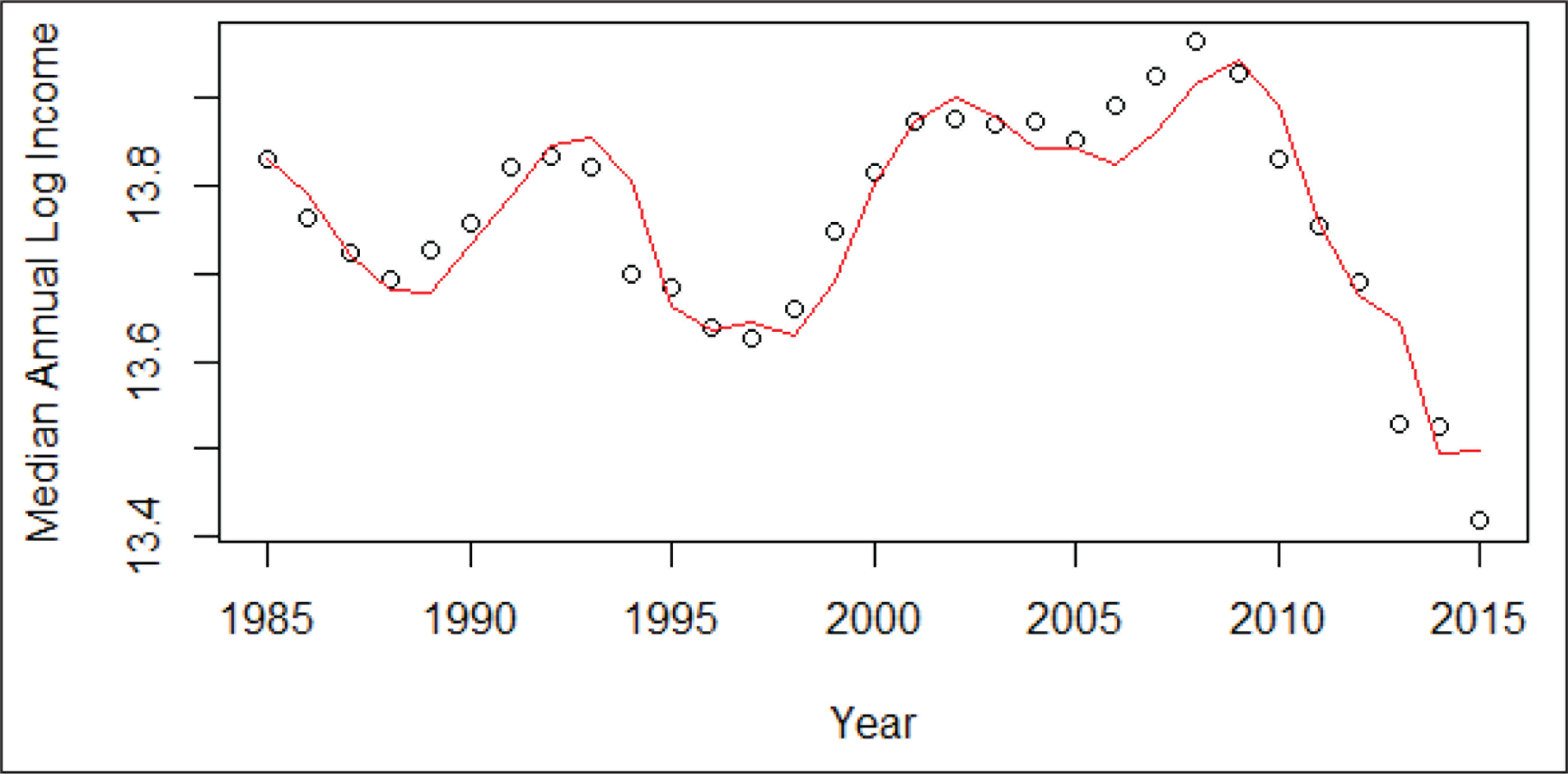
The average of the total annual income for each person under 30 has been considered every year from 1985 to 2015 under a longitudinal view. These results can be seen in the fitted model in Figure 1. Observing this graphic, the periods in which wages have decreased can be observed, and as of the 2008 crisis, the decreasing trend is very clear, showing how young people under 30 in this economic cycle do not recover wages.
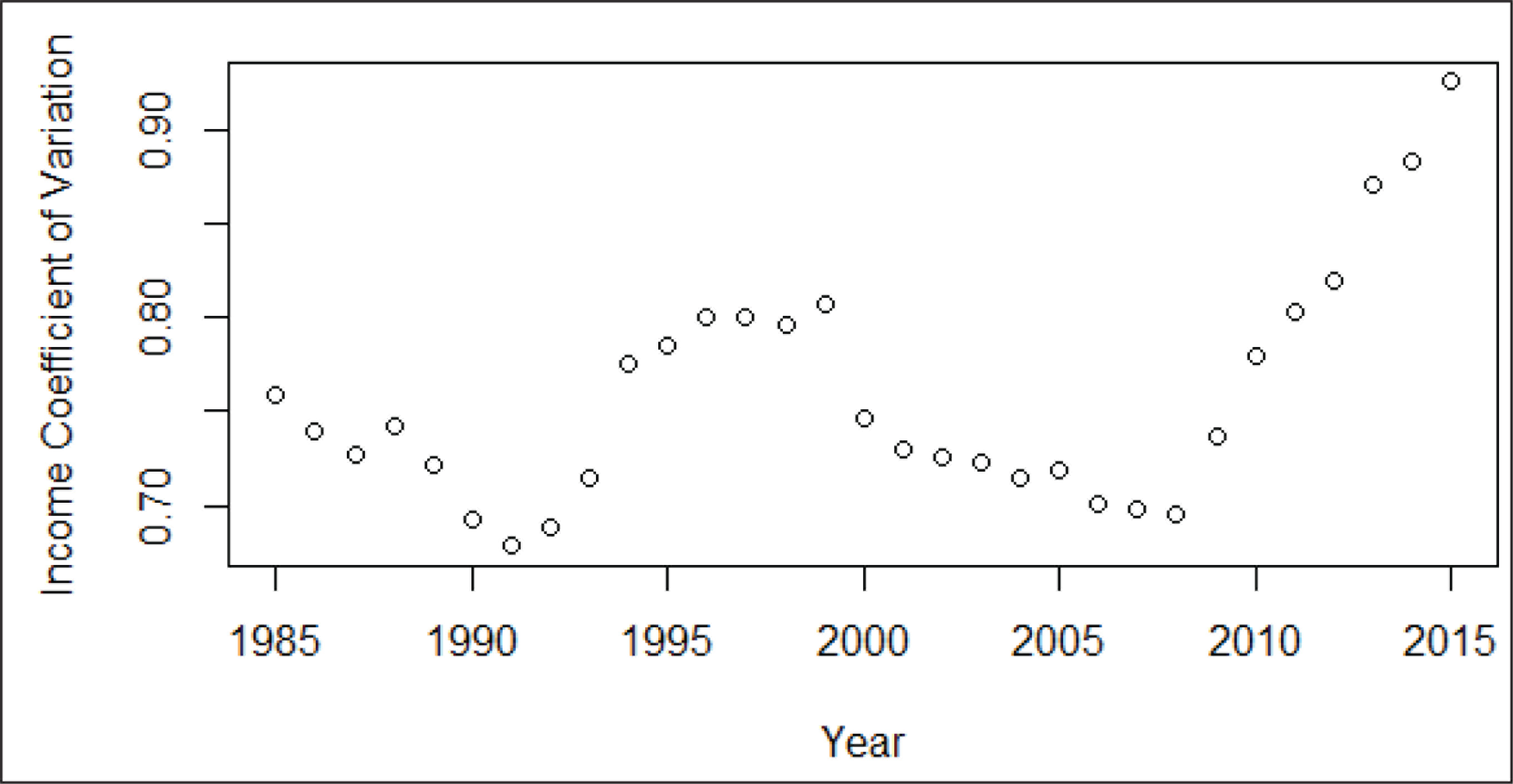
For a more in-depth analysis we chose to show the spread of the data over the years. A good indicator for this is the analysis of the variance. As can be seen in Figure 2, the trend points towards a decrease in the income of young people in two clearly identified waves that cover the years 1994–2000 and the outbreak of the crisis in 2008–2015.
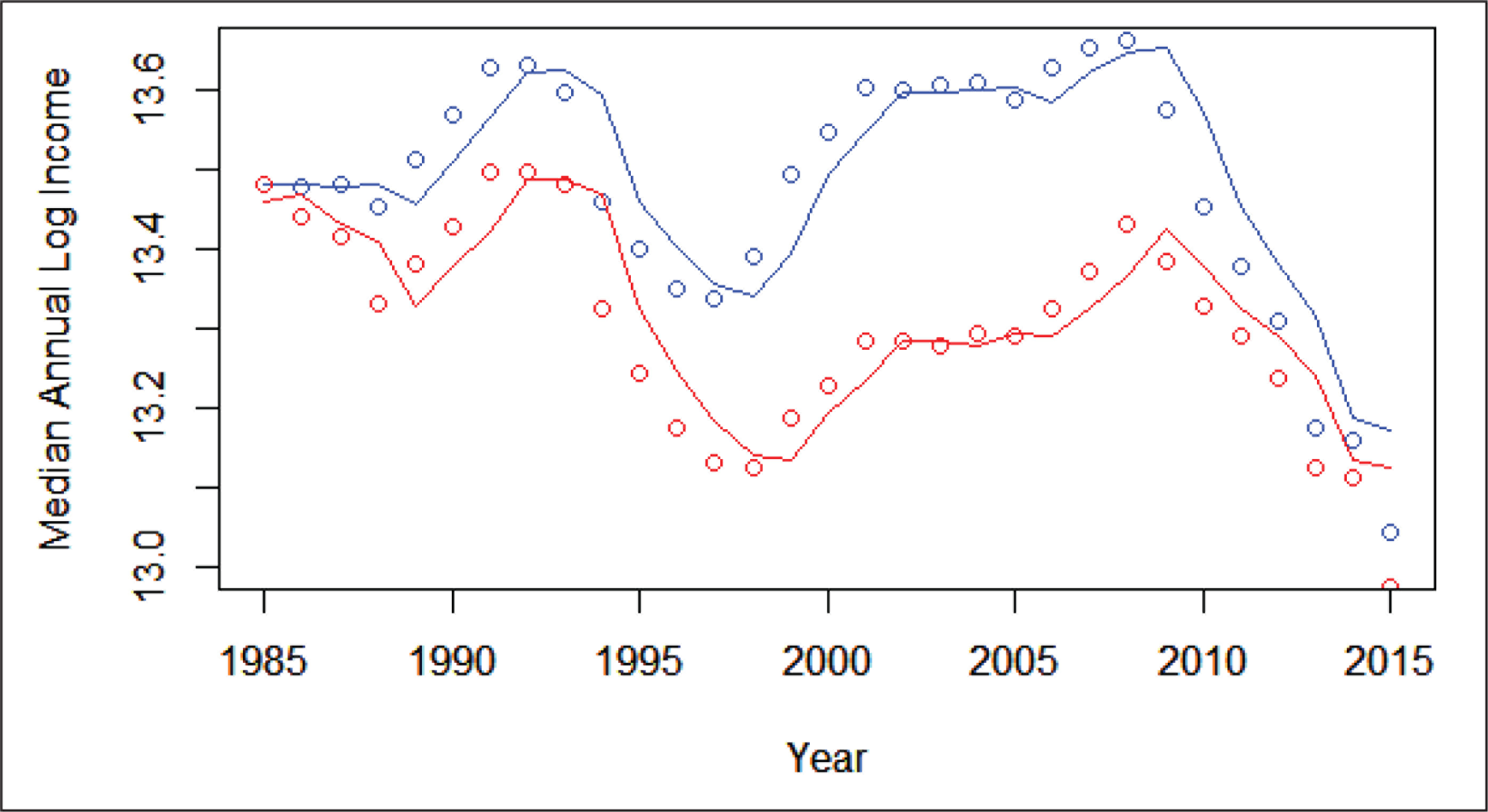
As we can see in Figure 3, the model has been fitted by sex in order to analyse the different evolution between young men and women. We clearly observe an inequality regarding the income that needs to be analysed.
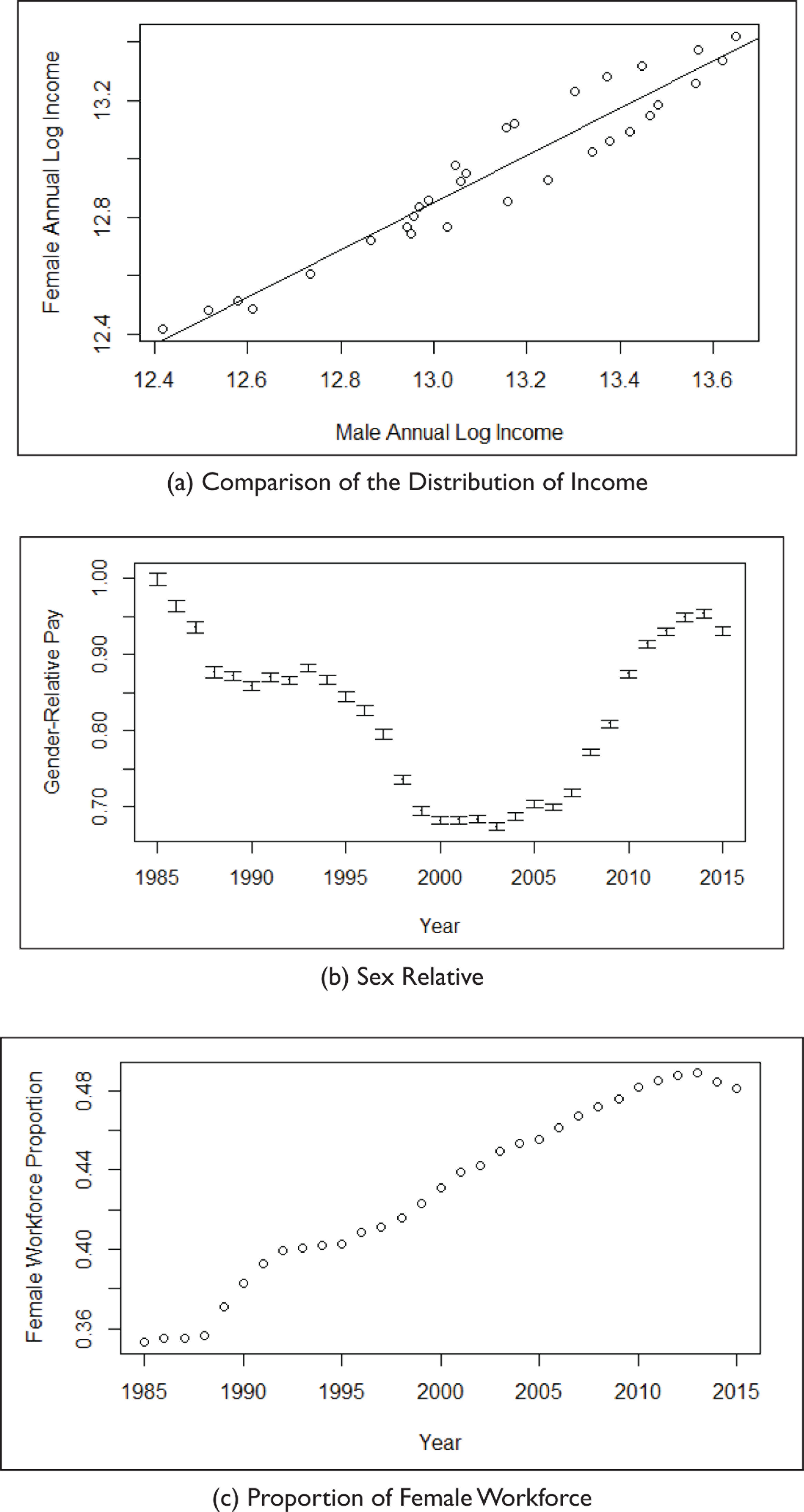
For a more detailed analysis of this aspect, the results shown in Figure 4 are analysed. In Figure 4(a), we see a fairly good linear relationship between the mean log incomes of each gender in a year, while the relative pay between sexes shows a more complicated history in Figure 4(b). Finally, Figure 4(c) shows how the number of female contributors with respect to the number of male contributors has increased until reaching equality in 2015.
As data show, in general we can observe strong variations in income over the years studied and inequality between young men and women.
Working Hours
Once the variation in income has been analysed, the models provide information on changes in the number of hours worked by young people.
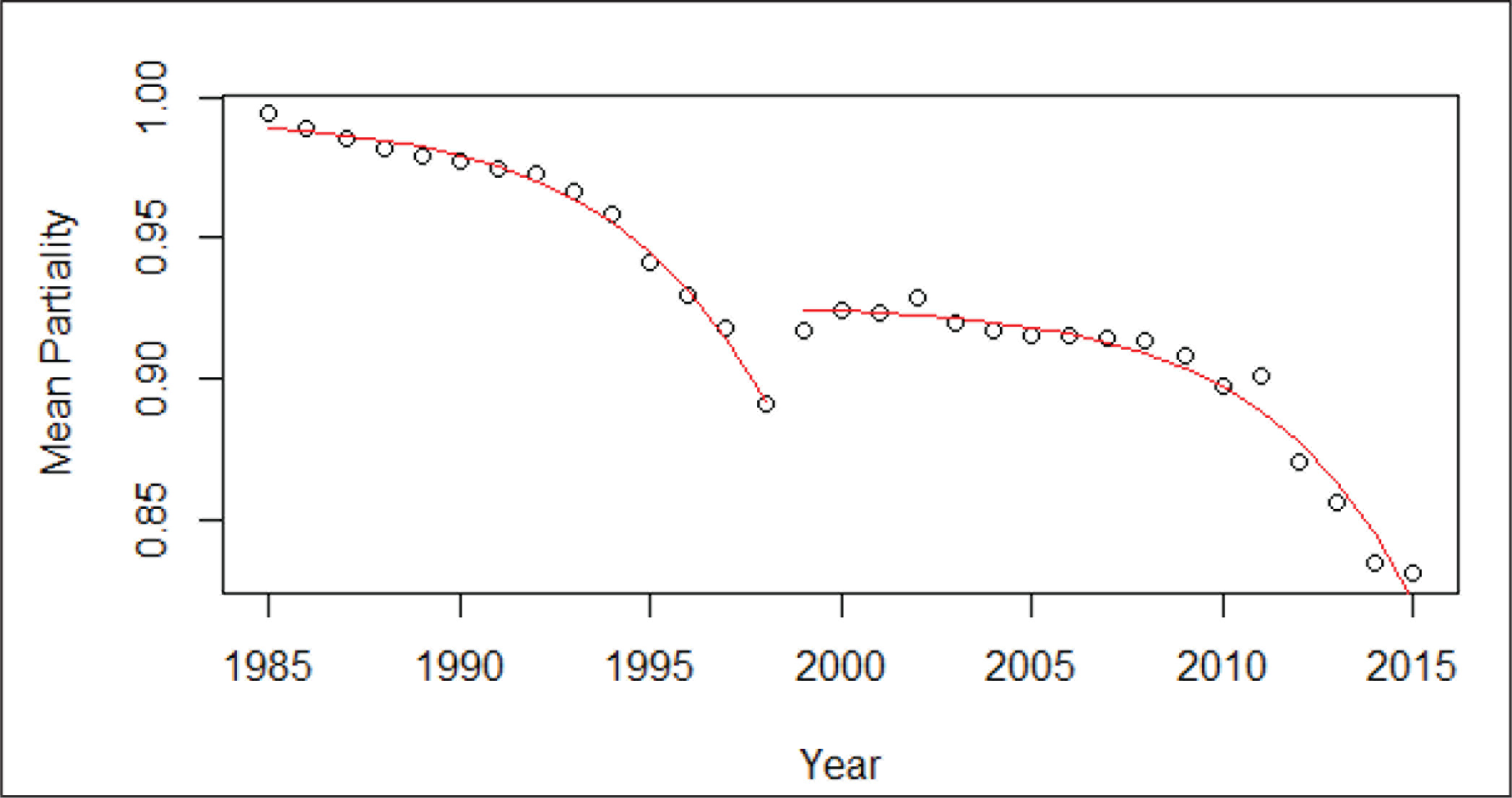
Figure 5 shows the percentage of daily working hours compared to a full-time contract, as well as the fitted exponential model, where the two differentiated areas of behaviour in the data have been treated separately.
The first section shows the fall from 1985 to 1998, the second from 1999 to 2015. In this case, a drop of 9.783 per cent for section 1, and a drop of 11.163 per cent for section 2 can be observed.
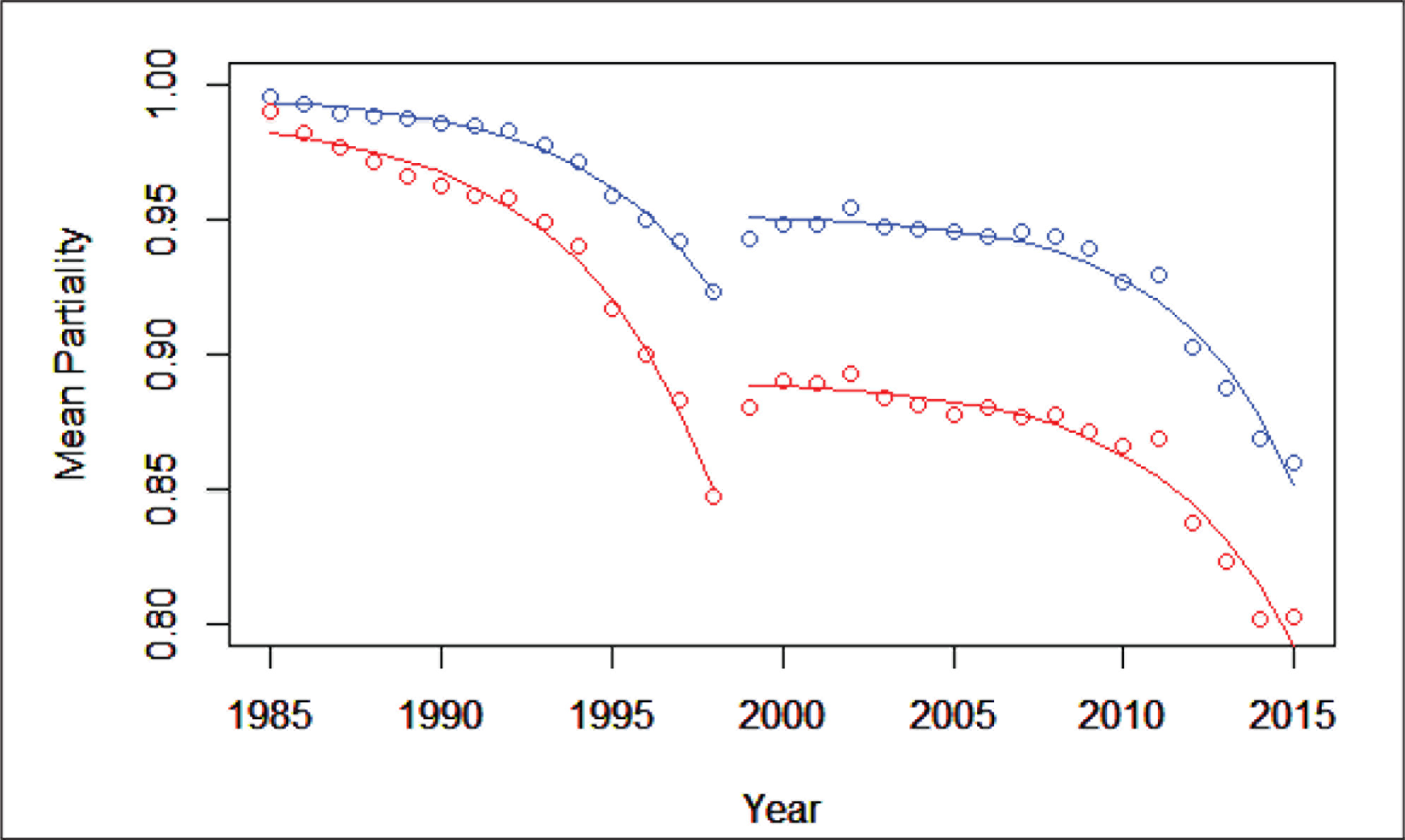
If we consider how this has affected men and women differently, we see in Figure 6 how, once again, it affects women more than men. Regarding full-time contracts, women have been the subject of more bias over the years. In addition, it is striking how falls have been more pronounced among young women than among young men.
Average Contract Length
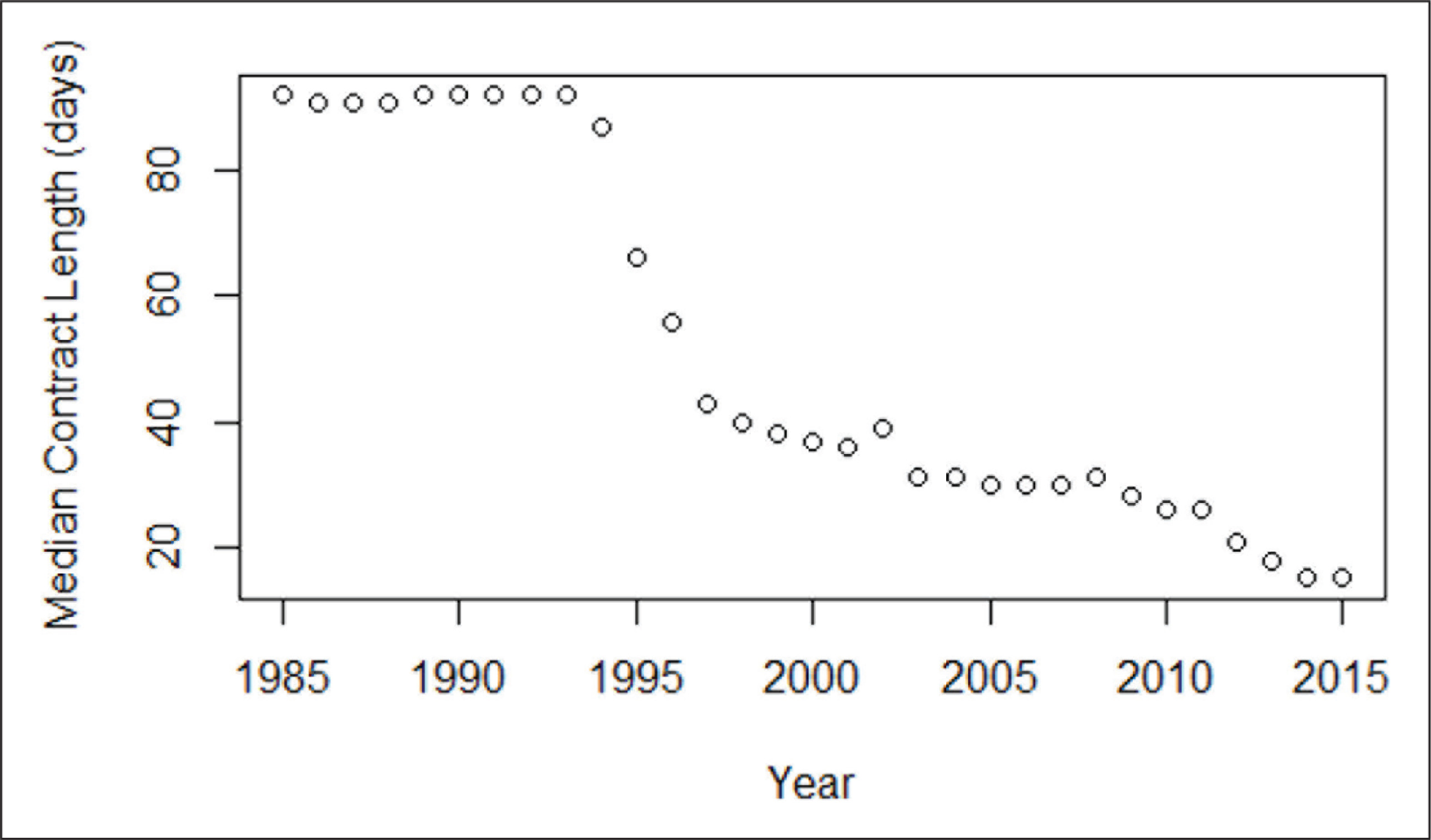
The last of the factors analysed through the models is the average length contract, which allows determining how contracts have a shorter duration in days. The analysis of the average contract length has been performed though some preliminary studies on the data. Figure 7 shows that most of the decline occurred around 1996.
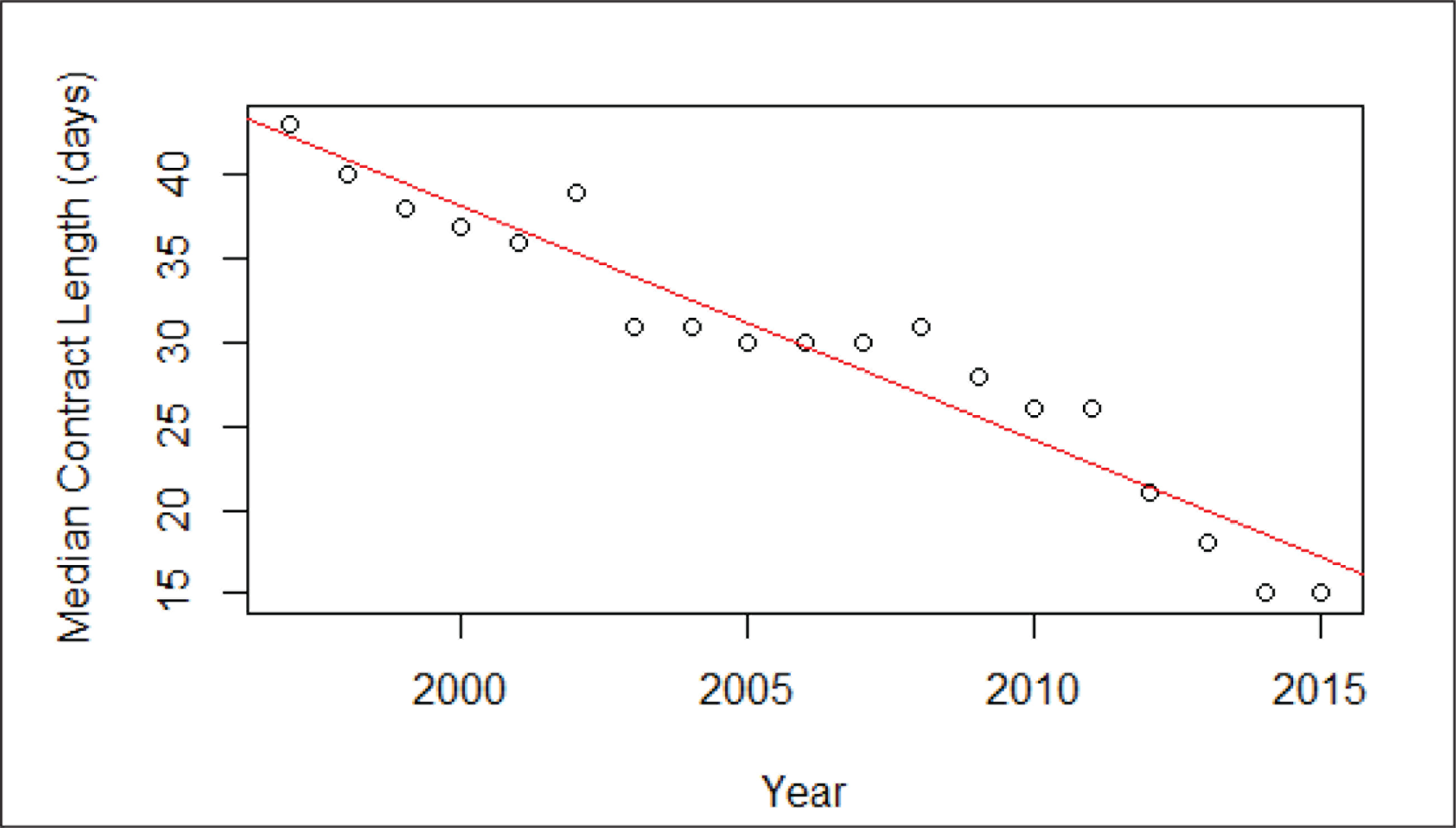
Therefore, based on the analysis above, the decision is to analyse the last linear trend from 1996 to 2015 in Figure 8. This has allowed us to see in more detail how from 1996 to 2015 contracts have been severely reduced.
Discussion: Causes and Determinants of the Collapse of the Youth Employment Market in Spain
We analyse the results, focusing on two elements that we find interesting: the increase in part-time work and impermanence in the labour market and a gender-specific analysis. The models constitute a valuable source of information to analyse how the precarization process has evolved in Spain and in Europe and complement other works of a historical and statistical nature such as Chung and van Oorschot (2010), Cappellari et al. (2012), García and Arranz (2013), Arranz et al. (2016) and Gallie et al. (2017).
From 2008 onwards, a substantial decrease in the weighted annual income is observed, reaching the lowest values of the last 30 years according to the most recent data point. At the same time, the inequalities between those incomes have also substantially increased. In addition, the number of part-time contracts has increased monotonically, creating a turning point in 1998 due to Royal Decree-Law 15/1998, 27th November, of urgent measures to improve the labour market, related to part-time work and in support of stability, which fostered the use of part-time contracts. This is clearly reflected in Figure 5 in the analysis. In the same way, contract length has been decreasing over the last 20 years. The analysis of these data gives, in summary, statistical evidence of a significant deterioration in the quality of the employment of the young adult population in Spain.
Part-time Work and Impermanence
According to the models, the tendency towards part-time work becomes evident as of 1985 when, as previously pointed out, the consequences of the Workers’ Statute of 1984 came to light (Gálvez, 2017; López & Rodriguez, 2011).
As can be seen in Figure 5, there are two phases of growth of partial integration among young people: 1985–1998 and 1999–2015. When looking at the number of part-time and temporary contracts, the first phase begins in 1985 and lasts until 1998. The second phase begins in 1999 and remains stable until 2009, the year in which a generalized reduction phase begins. The growth of domestic demand would explain the development of new activities focused on the services sector and the construction sector. At the same time, the intensive use of low-skilled, low-paid labour in labour-intensive, flexible jobs is evident. The data obtained in the model showed how the temporary contracts period reached its height in 1995, the year in which there was a trend towards investment that coincided with a time of major expansion in the Spanish economy, in the period analysed. In addition, we must consider the political promotion of temporary contracts as one of the elements that has had a greater impact on young people.
The labour reform of 1997 marks a difference with respect to previous ones. Unlike the reform of 1984, it was a stabilizing labour reform driven by the need to lower unemployment levels and stabilize wages. This would explain why until 2009 temporary hiring remained stable. In any case, the effects of the reform can be seen from the year 2000 reversing the trend of rising unemployment, although it still rose by more than 2 million people. This change also coincided with a spike in the arrival of people of foreign nationality, but it is not a sufficient factor to explain the trend of investment mentioned, since they worked with very precarious contracts and often without a contract.
In addition, the situation of young people is aggravated by a cut in their income. The analysis of Figures 1–3 allows us to affirm that the purchasing power of young people has decreased while inequalities have increased. Throughout the model, it can be observed that as of 2000, there is an upward trend in income but with a ceiling that does not allow the complete emancipation and autonomy of young people. There is a marked decrease in income as a consequence of the last crisis. The group most affected in the first years of the crisis were young men with a low educational level (Cabasés et al., 2018). The models permit identifying that many of these low-paid contracts would be occupied by young people. While unemployment figures fall, the precariousness of young people increases. It is an element that can be determined if we consider a wide range of data.
The models make it possible to observe the situation of continuous degradation of the youth employment market. In this sense, Figure 8 shows the duration of contracts in days, showing how from 1996 to 2015 the duration of contracts plummets. The trend, which stabilized between the years of economic expansion (2003–2007), declined again from 2008 onwards and reached its lowest level by the end of 2014.
One of the effects has been the reduction in the size of the informal economy that became structural to the Spanish labour market at the beginning of the period analysed, absorbing a large part of the working population. Once temporary contracts became the new standard of employment, some of the undeclared work moved into the regular economy. The agriculture, hotel and catering, tourism, retail and service sectors, as well as some manufacturing industries, are those that have mainly used temporary contract workers and have employed workers with lower professional requirements. These are also sectors which employ high numbers of females and young people. However, since the 2012 employment reform, qualified personnel have also experienced the effects of temporary employment. Hence, there is a relationship between the number of hours worked and the duration of a contract, as outlined in the model in Figures 5 and 7.
Along with the reforms in the contract types that allow partial integration to become a fact, another aspect of the precarity of the youth labour market is also observed: a declining wage ratio. Figure 5 shows the inequality in the distribution of salary income, that is, the difference between the highest and lowest salaries among people under 30 years of age. After a few years of slight recovery of the lowest salaries between 1999 and 2007, from 2008, this inequality shoots up. From that moment on, without ever having ceased to be effective, wage restraint policies are tightened. In addition to this, there is more temporary work and part-time employment for young people.
Growing Gender Gaps
Gender-disaggregated data indicate that young women in all indicators fall below men, with a larger wage gap between 1996 and 2010, despite a significant increase in the proportion of women in the labour market since the late 1980s (Figure 4). Nonetheless, data show that the upward trend in the incorporation of women under the age of 25 began to decline slightly in 2011, as shown in Figure 4(c), especially after the beginning of the economic crisis.
The gender-adjusted model shows that women’s wages have been lower than men’s throughout the historical series and that the wage gap has narrowed during periods of labour market contraction (Figure 3), while at times of expansion it has widened. That is, the variations in the salary received by women (Figure 4[b]) are more unequal during the peak years of the housing bubble (1999–2007). It may seem at first glance that in times of economic stability women receive lower salaries than men, while salaries tend to equalize when labour market conditions worsen. However, it should be noted that this reduction in the gap is mainly due to a reduction in men’s wages, while women in employment suffer smaller reductions, given that their wages were already low. At the beginning of the last economic crisis, the difference in wages is reduced due to job losses, especially from the male-dominated construction sector, greater job competitiveness and the temporary nature of contracts. Finally, gender-disaggregated bias indicates that women are more likely to be in part-time jobs. In Figure 6, two structures are observed as previously disaggregated (1998), at a time of economic instability, while the rate of temporary contracts is decreasing.
In addition, based on the data provided by Eurostat, in Spain, between 2008 and 2015, public spending was reduced on items such as pre-school and primary education, family and housing, as well the sectors of culture and care in the community—two highly feminized sectors. This has directly affected many women through redundancies or an increase in precarious roles, as well as an increase in unpaid working hours. The cutbacks in care for the elderly (Dependency Act) may have provoked families to care for their elderly relatives themselves, as their incomes do not allow them to seek care in long-term care facilities. In particular, women, already affected by lower wages and temporary and part-time contracts, may then become the caregivers of their relatives, withdrawing from the labour market. Such attrition may, therefore, explain why women were less affected by the worsening of the labour market.
In recent years, Spain has fallen back on equality issues, considering the systematic breaches of the 2007 Equality Act, the abolition of the Ministry of Equality in 2008, the reduction of the budget for gender equality policies by more than half from 2008 to 2013, the disappearance of gender parity at government level and the privatization and reduction of public services.
At this point, it is important to remember that, as feminist economics has studied widely, precarization increases gender inequalities and reinforces heteropatriarchal control over women’s lives, which in turn favours the maintenance of the traditional gender-based division of labour (Pérez Orózco, 2014). Young women are more likely to have complicated beginnings and, in particular, to occupy doubly fragile positions in which temporary work is combined with part-time work. Temporary jobs can be a springboard for permanent employment, but their prevalence at such high levels poses economic and social problems and is an indicator that labour markets do not function properly. Women, and young women in particular, are, once again, in a worse position than their male peers, and with the cutbacks in gender equality policies, plus the current rise of right-wing parties that openly argue against gender equality and deny the existence of gender violence, it seems possible that this trend may worsen, affecting the life opportunities of young women in Spain even further in the future.
Conclusions
This article analyses the evolution of the Spanish youth labour market over the last 30 years using econometric modelling, together with historical reviews and alternating a historical perspective with an in-depth statistical analysis. This interdisciplinary methodology has provided a broad perspective and comprehensive analysis of the youth labour market. The findings presented regarding the Spanish case may be applicable in other contexts with similar conditions and trends and could be used to envision the possible effects of applying certain policies.
It has become clear that the process of precarization has affected young people under 30 to a greater extent, and women especially, causing their impoverishment in the present and a lack of prospects for the future. Beyond the problem of the unemployment rates shown by the different official statistics, the proposed methodology allows us to observe a lack of quality in employment, understood as the temporary nature of contracts, part-time work, low salaries and consequently low social protection. The models have particularly illustrated that from 2008 onwards, a large decrease can be observed in the weighted annual income, which reaches the lowest values in the last 30 years at the last data points. At the same time, the inequalities between salaries have also massively increased. In addition, the number of partial contracts has monotonically increased, even if there is a big change point in 1998 due to an external factor, that is, the regulatory changes with regard to part-time contracts. In the same fashion, the length of the contracts has been decreasing over the last 20 years. Female workers have been consistently earning less money while being susceptible to the same time trends as male workers. Nevertheless, the difference between them has been decreasing over the last 15 years. Moreover, the female workforce proportion has also increased and it is close to 50 per cent already. On the other hand, female workers tend to have more partial contracts, and this difference has been maintained over time.
This situation makes it difficult for young people to establish solid and coherent life itineraries, forcing them to develop uncertain lifestyles and strategies to adapt to precarity. Impermanence at work becomes impermanence as a way of life. In this way, only young people with special resources—economic and social capital—that is, young people of middle-high and high social class, can follow successful trajectories, in the sense of obtaining a decent job early on, and not be marked by precarity (Úbeda, 2019; Úbeda & Sánchez, 2018).
The analysis of the most critical moments identified in the statistical study places the focus on political decisions which, through the labour and economic reforms implemented, have fostered job insecurity and weakened the organizational capacity of workers to defend their rights. The social costs of understanding work and economic processes as forms of rationality detached from the social environment in which they operate have worsened, affecting the younger generation to a greater extent.
In this context, the goal of quality employment must prevail over the precarious work model imposed on young people, and by extension on the entire active population. Through the econometric models presented, it is observed that the 2008 post crisis has deepened precarity for the current generation, when it is compared with the predecessors.
There is a need for a sustainable link with the employment market, that is, avoiding temporary contracts and/or a return to unemployment or inactivity. In Spain, achieving quality in employment continues to be a challenge, and there is an urgent need to standardize the minimum quality criteria in order to tackle sustainability in the employment market.
Footnotes
Declaration of Conflicting Interests
The authors declared no potential conflicts of interest with respect to the research, authorship and/or publication of this article.
Funding
The authors disclosed receipt of the following financial support for the research, authorship and/or publication of this article: Study funded by the Ministry of Economy and Competitiveness, by the Consolidated research Group on Youth, Society and Comunication (