




Abstract
Empirical research on the relationship between political trust and political participation has rarely focused on adolescents. By acknowledging the important role of young people for the sustainability of representative democracies, this study considers a two-dimensional conceptualization of political trust—that is, distinguishing between trust in order institutions (e.g., the police) and trust in representative institutions (e.g., the parliament)—to examine how it relates to several intended acts of legal and illegal political participation among Flemish eight-grade adolescents. Using structural equation modelling on data from the International Civic and Citizenship Education Study (ICCS) 2016 (n = 2,829), we find that Flemish adolescents with lower levels of trust in representative institutions are more likely to withdraw from political life as adults. Those with lower levels of trust in order institutions, however, have a stronger inclination to use a range of political participation modes, including illegal means.
Keywords
Introduction
Citizens who trust their state’s institutions and who actively participate in political life are often considered an essential resource for democratic sustainability. Yet, whether high levels of political trust relate to high levels of political participation is less obvious and has been a topic of substantive theoretical debate (Almond & Verba, 1963; Hibbing & Theiss-Morse, 2001; Putnam, 1993). Based on recent empirical work in adults, there is a general agreement that at least a basic level of trust in political institutions is a correlate (and perhaps a prerequisite) of institutionalized modes of political participation (e.g., voting or party membership), whereas those with low levels of political trust do not necessarily refrain from participating but just opt for other, non-institutionalized, participatory modes (e.g., demonstrating or social movement membership) (Hooghe & Marien, 2013). Moreover, this relationship becomes even more complex when entering other meso- and macro-level factors (e.g., political mobilization efforts, level of democratic development, and level of public sector corruption) and individual-level characteristics (e.g., socio-economic status and political efficacy and literacy) into the equation (Gabriel, 2017; Kostadinova & Power, 2007).
Notably, relatively little is known about the links between political trust and political participation intentions among adolescents—even though early adolescence is considered a critical age for the development of democratic attitudes and skills (Flanagan, 2013). The present study aims to contribute to the state-of-the art in three ways. First, by acknowledging the important role of young people for the sustainable future of representative democracies, it investigates the relationship between political trust and intended political participation among eight-grade students (14 years old, on average), who are about 4 years away from being eligible to vote, in the context of Flanders (Belgium). Second, it includes an empirical test of the distinction between trust in two different types of institutions: trust in order institutions (e.g., the police and the courts of justice) and trust in representative institutions (e.g., political parties and parliaments). To our knowledge, theoretical and empirical explorations of this distinction in youth populations are limited: the majority of studies use additive or averaged indices of survey items tapping into trust in a multitude of state institutions without verifying empirically the validity of the construct or doing this in an exploratory fashion (e.g., Dahl & Stattin, 2014; Hooghe & Marien, 2013). Third, informed by current theoretical discussions regarding a variety of adolescent participatory repertoires (Miranda et al., 2020; Theocharis & Van Deth, 2018; Weiss, 2020), we link trust in order institutions and trust in representative institutions to different forms of legal and illegal political participation intentions (i.e., electoral institutionalized, non-electoral institutionalized, legal non-institutionalized and illegal non-institutionalized political participation). We argue that these distinctions in types of political trust and modes of intended political participation, as well as how they relate to each other, will deepen our understanding on which attitudes are beneficial and which may be detrimental to the quality of representative democracies.
The research is situated in Flanders (Belgium), as research from 2016 showed that Flemish adolescents harbour significantly lower political—institutionalized as well as non-institutionalized—participation intentions than peers from other European countries, despite indicating higher levels of political trust and political knowledge (Schulz et al., 2018a). Between 2016 and 2019, these findings, together with overall strong public demands for educational reforms in citizenship education, have put the latter high on the Flemish education policy agenda (Claes & Stals, 2021). The results of the present study may, therefore, generate valuable insights to inform future civic education practices in Flanders (Biseth et al., 2021). To this end, the study draws on data of eight-grade students from the 2016 International Civic and Citizenship Education Study (ICCS) collected in Flanders. Given the latent nature of political trust and political participation intentions, the analyses are performed in a structural equation modelling (SEM) framework. The rest of this manuscript continues by introducing existing theoretical and empirical research on political participation and political trust in adolescence and by substantiating the research hypotheses. Next, data and methods are discussed, after which empirical results are presented. Finally, we provide a critical discussion of our findings and indicate potential avenues for future research.
Political Participation
Political participation is considered a key element in healthy and functioning democratic systems. It generates social capital and a sense of community, enhances the equal representation of citizens’ interests, and fosters cognitive, social and moral development in individuals (Finkel, 1985; Putnam, 1993; Verba et al., 1995). Through early engagement in political life, young people can gain a critical understanding of politics and society, along with how to organize themselves in the adult world (Eden & Roker, 2002). While the definition of political participation has changed little over time, the range of activities that it covers has widened (Weiss, 2020). Consequently, the term has become a study of ‘almost everything’ (van Deth, 2014, p. 353), rendering empirical measurement more difficult. Trying to put ‘political’ and ‘participation’ back in his operational definition on political participation, van Deth (2014) distinguished between four defining elements: political activities are (1) voluntary, (2) manifest and observable actions (3) undertaken by an actor within his/her role as non-professional, (4) that are aimed at influencing political decision-making. Traditionally, two forms of political participation are distinguished (Barnes & Kaase, 1979, p. 444). First, conventional participation is defined as manifestations of ‘support for the political order’, comprising archetypal actions such as voting or party membership. Conversely, ‘the presence of dissent in democratic societies’ can be indicated by unconventional participation, such as political protest or national strikes. As most unconventional actions have become generally accepted in mature democracies, a newer distinction separates institutionalized from non-institutionalized political participation (Garcia-Albacete, 2014). While institutionalized actions directly relate to the electoral process and are organized by political institutions (e.g., voting or campaigning), non-institutionalized actions generally have no direct relation with the institutional framework, rather trying to circumvent or challenge it (e.g., protesting, boycotting and political consumerism). In democratic countries, while most of these non-institutionalized actions are legal, some are considered illegal. Examples include many kinds of civil disobedience activities and political violence, such as participating in unlawful demonstrations or riots, destruction of property, spraying of political graffiti, the freeing of animals by animal rights activists, or the occupying of coalmines by environmental activists. Although one could argue that non-compliance with state laws does not fit the idea of a healthy functioning democracy, these illegal activities can be considered ‘political’ in the sense that they encompass a common objective of political participation: holding governments accountable. This can, therefore, be considered an important impulse for democratic innovation. Moreover, as activists who participate illegally tend to be involved in legal actions prior to the adoption of illegal means (Dahl & Stattin, 2014), both types of non-institutionalized participation may be more closely related than is commonly acknowledged. While empirical work from the 90s showed that the younger generations of ‘post-materialist’ and ‘critical’ citizens rather deviated from old party political structures (Inglehart, 1997; Norris, 1999), also recent studies confirmed that young citizens still disproportionally prefer non- institutionalized political activities (Cammaerts et al., 2014; Garcia-Albacete, 2014; O’Toole, 2015). As the recent waves of both legal and illegal activist demonstrations by movements such as Black Lives Matter and Youth for Climate also suggest. Therefore, when studying adolescent political participation, considering this broad range of non-institutionalized political activities is necessary to get a complete picture of the political involvement of youth.
Looking into how political participation in adolescence is operationalized in empirical studies, we can distinguish two types of measurements, either by asking about actual participation (reported behaviour) or by asking about the willingness to participate (intended behaviour) (Miranda et al., 2020). Because of young adolescents formal status as political participants-to-be, their opportunities to become politically active are limited. In most democratic countries, citizens only gain voting rights at the age of 16 (e.g., Austria) or 18 (e.g., Belgium), while most youth political parties set their age limit to 16. Besides legal restrictions, adolescents often also lack resources (e.g., time and money) or skills (e.g., public speaking or specific knowledge of political processes). Empirical work on young people has, therefore, tended to focus more on intentions to participate (Schulz et al., 2018a). Although intentions do not necessarily imply that adolescents will go on to exhibit this behaviour in adulthood, previous studies have shown that intentions are generally reliable predictors for engagement in adulthood (Eckstein et al., 2013) and can be considered valid measurements of political participation. Following these findings, this study investigates both institutionalized and non-institutionalized political participation intentions. In line with previous work (Hooghe & Marien, 2013; Torney-Purta et al., 2004), we further differentiate electoral (e.g., voting) from non-electoral participation (e.g., campaign activity) within institutionalized participation. Within non-institutionalized participation, we further differentiate legal (e.g., collect signatures for a petition) from illegal participation according to Belgian state law (e.g., stage a protest by blocking traffic).
Political Trust: A One-dimensional or Multi-dimensional Concept?
As with political participation, political trust is considered a complex latent construct, the dimensionality of which is debated about by scholars. Hetherington (1998, p. 791) defined political trust as ‘a basic evaluative orientation toward the government founded on how well the government is operating according to people’s normative expectations’. Therefore, it carries normative and subjective information about what citizens consider constitutes a trustworthy institution, with these subjective evaluations likely to prove context dependent (Zmerli & Hooghe, 2013). Moreover, this definition suggests that, in practice, citizens may come to different trust decisions for different state institutions (i.e., political trustees), even when encompassed by the same context (e.g., in our case, the Belgian political system). Therefore, different forms of political trust may exist, depending on the political trustee. In his seminal work A Systems Analysis of Political Life, Easton (1965) distinguished between specific support (i.e., approval of elected representatives, presidents or party leaders) and diffuse support (i.e., support for more abstract political institutions and the political regime itself, often translated by other scholars as trust in institutions). 1 Diffuse support is considered more fundamental for system stability, as it ‘taps deep political sentiments and is not easily depleted through disappointment with outputs’ (Easton, 1965, p. 274), whereas specific support is ‘a quid pro quo for the fulfilment of demands’, therefore rendering it more variable (Easton, 1965, p. 268). The concept of diffuse support has been revisited by authors such as Warren (2018) and Rothstein and Stolle (2008), who make a distinction between a state’s more impartial ‘order’ or implementing institutions (e.g., the judiciary, the police and the civil service) and the partisan ‘representative’ institutions of a democratic political system (e.g., the government, parliaments and political parties). The former are responsible for implementing and securing agreed public goods, such as education, health care and security; the latter are often viewed as the actual ‘political’ institutions, since they represent some ‘partial collection of interests’ and not the interests of all citizens (Warren, 2018, p. 89). As a result, the representative institutions do not generally enjoy the same levels of public trust as the order institutions do, with political parties being the least trusted across Western societies (Hooghe et al., 2011; Van De Walle et al., 2008).
Aside from the debate on political trust’s dimensional nature, its meaning for adolescents adds further complexity. Although it seems evident that adults develop attitudes towards the government and other institutions through frequent interaction (e.g., voting and paying taxes), political participation opportunities are limited for adolescents. This raises the question of whether it is even possible for adolescents to harbour particular attitudes towards a political system they have little or no daily contact with. However, political socialization studies assert that one’s level of political trust develops during childhood and adolescence through different socialization agents and that these levels can be validly measured (Flanagan, 2013; Uslaner, 2002; Van Deth, 2017). Furthermore, the political attitudes of young people do not seem to differ very much from those of adults. Quintelier (2007), for example, found that Belgian 15- and 16-year-olds have similar levels of trust in parliament and political parties (though lower levels of trust in the police) and political interest as compared to Belgian adults. This implies that young people also can carry certain attitudes towards the political system, even without having similar experiences with it as adults have (Sherrod et al., 2010).
Relationship Between Political Trust and Political Participation in Adolescents
In the literature, high levels of political trust have been considered as both a resource and a restriction for political participation. Almond and Verba (1963) were one of the first to claim that citizens require political trust to participate in politics and that negative attitudes towards the political system would lead to short-term political alienation and democratic instability over time. Conversely, others have argued that, as a whole, low levels of trust in political institutions and decision-makers should foster political mobilization (Gamson, 1968; Hibbing & Theiss-Morse, 2001), as ‘to keep a democracy in good shape we also need critical and questioning mistrust’ (van der Meer & Dekker, 2011, p. 95). To bring more insight into this debate, this article argues that the relationship between political trust and political participation among adolescents may depend on both the object of political trust (i.e., political trustee) and the mode of political participation. Building on the literature on diffuse support (Easton, 1965; Warren, 2017, 2018), we expect political trust to comprise two dimensions, that is, trust in order institutions and trust in representative institutions, 2 which may each relate differently to institutionalized and non-institutionalized (legal and illegal) participation. In the following section, we discuss the role of political participation and subsequently that of political trust. We conclude by substantiating our hypotheses.
When Barnes and Kaase (1979) introduced the distinction between conventional and unconventional participation, they claimed that low levels of political trust would not yield a complete withdrawal from political life, rather that it would lead to a change in political participation repertoires. Based on their work, it was argued that distrusting citizens are more likely to engage in non-institutionalized activities, to circumvent the traditional mechanisms and institutions they distrust as much as possible, while high political trust is associated with higher institutionalized participation (Kaase, 1999; Norris, 2002). Indeed, when citizens exhibit low levels of trust in political parties, it seems rather unlikely that they would donate money or become involved in their campaign work. On the other hand, this does not necessarily mean that they would not choose other ways to voice their political demands. For example, they may join a social movement that not only represents their interests but also challenges the traditional party structures at the same time. While Hooghe and Marien (2013) reaffirmed this assertion using a sample of European adults, empirical support in adolescence is usually lacking. Using data of 14-year-olds from six countries, Torney-Purta et al. (2004) found that, in general, political trust is a positive, albeit modest, predictor for voting, non-electoral participation and community participation intentions. Drawing upon ICCS 2009 European student data, Hooghe and Dassonneville (2013) found that political trust positively correlates with intentions to vote and other institutionalized forms of participation. Yet, using the same data, but also including the non-European countries that participated, Quintelier and Hooghe (2013) found positive coefficients for both institutionalized and non-institutionalized political activities. Although the latter study only included legal activities in their measure of non-institutionalized participation, it is likely that citizens who cross the border to illegal participation are also less trusting of state institutions, arguing that breaking the law to achieve political goals is sometimes justified (e.g., when legal mechanisms are not deemed effective enough) (Dalton, 2004; Marien & Hooghe, 2011). Indeed, using exploratory cluster analysis on data from the IEA Civic Education Study (CIVED), Torney-Purta (2009) found that alienated students, that is, those who held negative attitudes on the trustworthiness of their government, the rights of immigrants, minorities and women, and who did not believe in norms of citizen participation were most inclined to participate in illegal protest activities. In line with this, Dahl and Stattin (2014) found that Swedish adolescents involved in illegal political activities primarily differed from legal activists in their reluctance to accept authority and their approval of violent means, while also exhibiting significantly lower levels of trust in political institutions when compared with legal activists and students indicated as not being politically active. These findings seem to suggest that low political trust is not the characteristic of non-politically active adolescents, but rather of illegal activists.
Looking at these findings, it is important to note that these studies have all relied on averaged or sum scores of items measuring trust in a variety of state institutions, often without confirming the construct validity first or doing this in an exploratory manner (e.g., Dahl & Stattin, 2014; Hooghe & Marien, 2013). Hooghe and Marien (2013) included five institutions (i.e., the parliament, politicians, political parties, the legal system and the police); Dahl and Stattin (2014) obtained an index of trust in the parliament, the government and the courts; and Torney-Purta et al. (2004) and Hooghe and Dassonneville (2013) used an Item Response Theory (IRT) scale measuring trust in five and six institutions, respectively. Therefore, based on their findings, we may merely expect that political trust—as a one-dimensional attitude, measured by both trust in order and representative institutions—will correlate positively with institutionalized participation, yet negatively with legal and illegal non-institutionalized participation.
However, just as the ways in which citizens can participate in political life are diverse, so are the objects within the political system to which citizens may develop trust judgements. To better understand the complex interplay between political trust and political participation, one should also consider that trust in order and representative institutions may each relate differently to institutionalized and non-institutionalized legal or illegal participation. To further specify this argument, we primarily build on the work of Warren (2017, 2018). He argued, in line with the traditional ‘checks and balances’ rationale (Dalton, 2004; Rosanvallon, 2008), that citizens should always be sceptical of and monitor the political branches, notably the legislative branch and its elected representatives. These actors may not necessarily represent the interests or values of all citizens and hence do not satisfy ‘the general requirements for trust’ (Warren, 2018, p. 78). Furthermore, citizens should channel this distrust into political participation, using the democratic (i.e., legal) means of voting, talking or protesting—a notion that Warren (2018, p. 80) calls ‘engaged distrust’. However, this ‘distrust-mobilizing’ relationship is dependent on the key precondition that the means and mechanisms through which citizens may participate are trustworthy and perceived as such (i.e., ‘second-order institutional trust’) (Warren, 2018, p. 89). For instance, because of the possibility for removal and replacement of political elites, competitive elections may empower citizens to channel their distrust into voting. Yet, citizens also need to know that the rules of the electoral system will be respected, that votes will be counted correctly and transparently, and that politicians will not try to secure their position by exploiting loopholes in the legal system. Otherwise, people may still refrain from participating. Based on these arguments and previously discussed empirical findings (e.g., Hooghe & Marien, 2013), this article argues that low trust in representative institutions may only function as a mobilizing factor for non-institutionalized activities and not for institutionalized forms. This leads to the following hypothesis:
Warren (2018, p. 78) continued by arguing that low levels of trust in representative institutions should not prove worrying as ‘democracies affirm distrust by acknowledging conflicting interests and providing them spaces for expression’ (i.e., political participation). However, when this distrust in representative institutions is not properly contained in this way, it may spread to the order institutions, that is, governmental actors, such as the civil service, judges and the police, that require ‘public trust’ to implement and secure agreed public services and laws. When the level of trust in the order institutions is low, Warren (2018, p. 78) warned that ‘a society will not have the collective action capacities necessary to provide for itself’. Furthermore, according to his view, basic trust in order institutions also serves as a necessary precondition for citizens’ political participation—that is, when citizens distrust these institutions ‘who in fact have their best interests in view’ (Warren, 2018, p. 80), they may withdraw from politics altogether. Moreover, in such instances, some citizens may even argue that breaking the law proves necessary, resulting in more illegal political participation. Based on these arguments, we hypothesize that:
Data, Variables and Methods
Data and Variables
The data used in this research come from the 2016 ICCS, conducted by the International Association for the Evaluation of Educational Achievement (IEA) (Schulz et al., 2018a). The ICCS 2016 study was conducted in 24 countries with a sample of roughly 90,000 eighth-grade students (14 years old, on average). The data were gathered using a stratified two-stage probability sample design. During the first stage, schools were sampled with a probability proportional to their size. During the second stage, one class of the target grade was randomly selected, with all students in that class participating in the study. The current study analysed Flemish (Belgium) data, comprising 2,829 students clustered in 156 schools. The conceptual framework is shown in Figure 1.
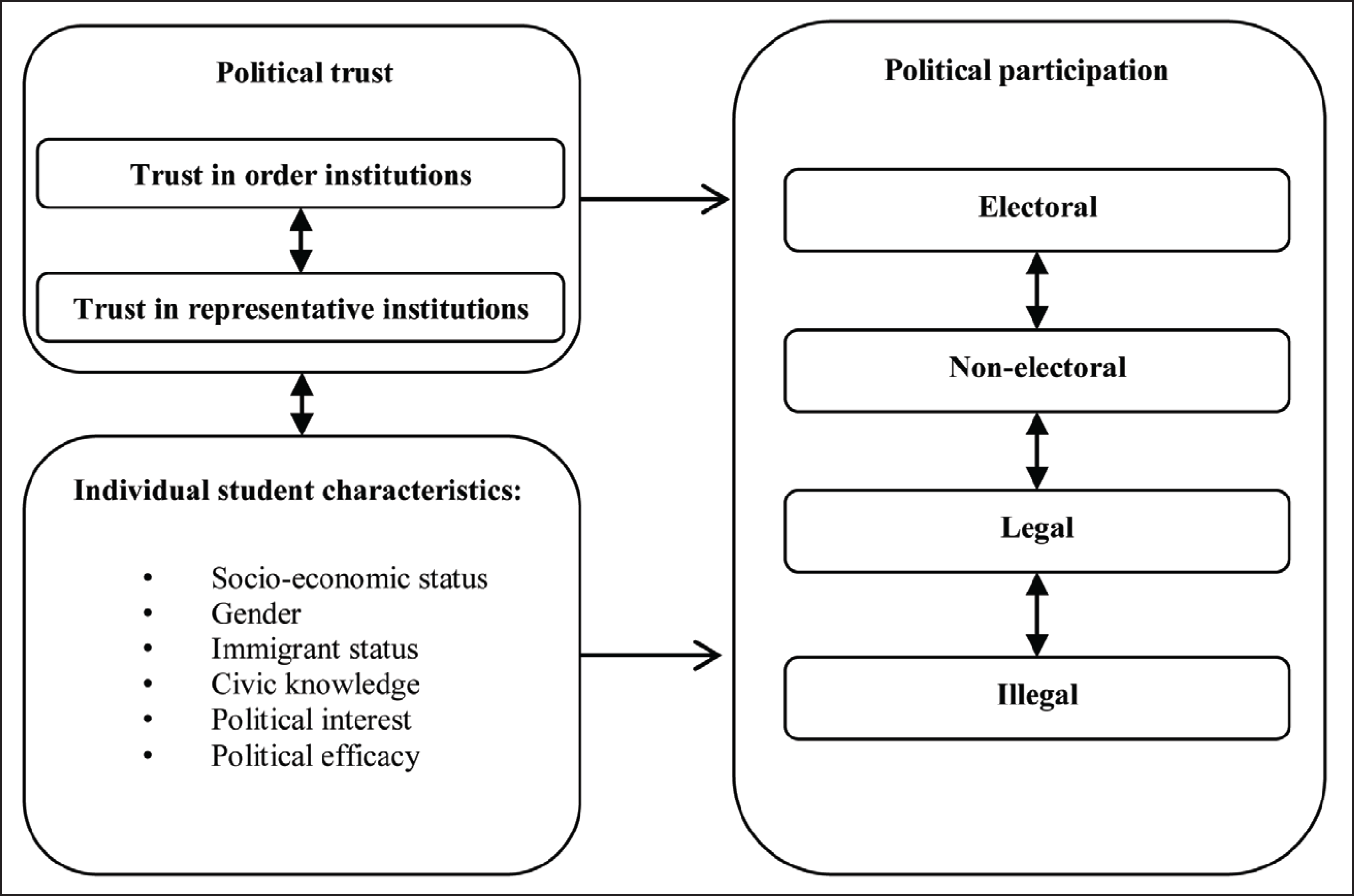
Descriptive information of all variables used in the analyses are presented in Table 1. This study’s dependent variable is political participation. In line with the theory reviewed here, political participation is described by four interrelated constructs: (a) electoral institutionalized political participation, (b) non-electoral institutionalized political participation, (c) legal non-institutionalized political participation and (d) illegal non-institutionalized political participation (further referred to in the manuscript as: electoral participation, non-electoral participation, legal participation, and illegal participation, respectively). Based on existing operational frameworks (Ekman & Amnå, 2012; van Deth, 2014), each of these four constructs is captured by a set of indicators tapping into students’ intentions of taking part in a series of political activities in the future. These indicators are measured on a four-point Likert scale, ranging from ‘I will certainly not do this’ (=1) to ‘I will certainly do this’ (=4). As the main predictor in this study, political trust is captured using two interrelated constructs (i.e., trust in order and representative institutions) and their corresponding indicators tapping into students’ reported degree of trust in several state institutions. Items are rated on a four-point Likert scale, ranging from ‘Not at all’ (=1) to ‘Completely’ (=4). Table 1 presents all factors describing political participation and political trust, their indicators and descriptive statistics. Because of their latent nature, factor scores were estimated using confirmatory factor analysis (CFA) (see ‘Results’ section for further details).
Summary Statistics Dependent Variable: Political Participation (latent construct)
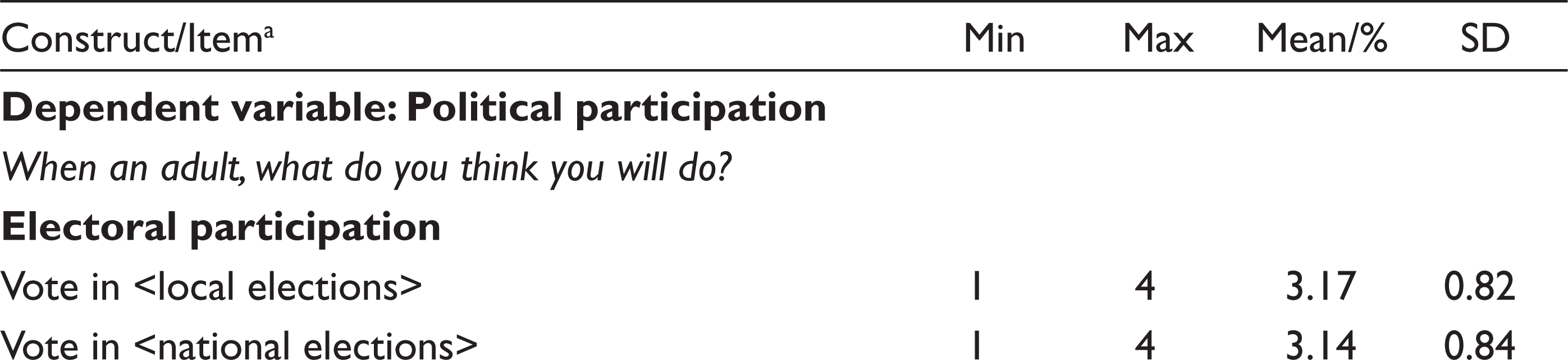
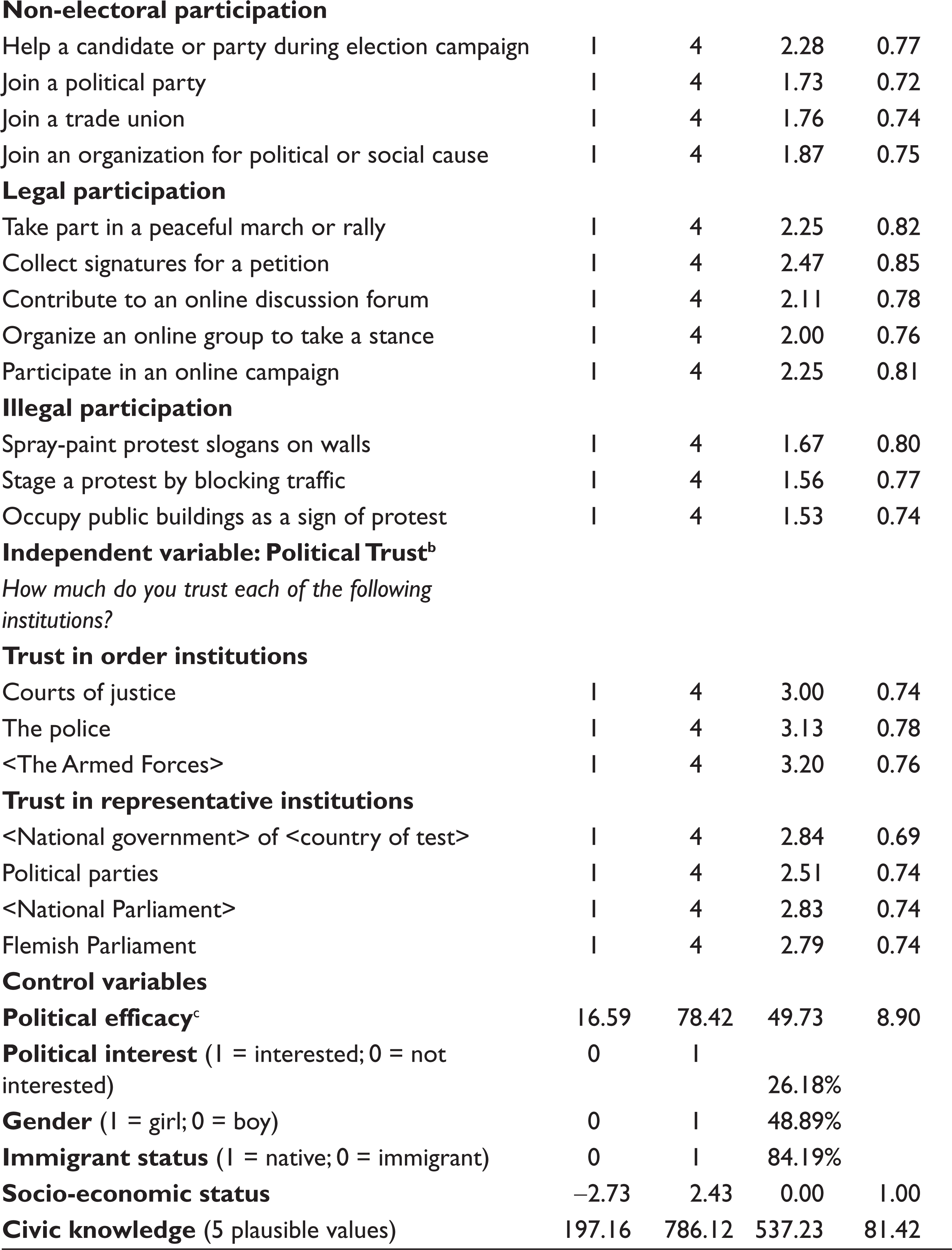
All descriptive statistics are estimated using SPSS and the IEA IDB analyzer.
The covariates used in this research include political efficacy, political interest, gender, immigrant status, socio-economic status and civic knowledge. Political efficacy is measured using the ‘citizenship self-efficacy’ scale of ICCS 2016. This scale is derived from six indicators of students’ reported confidence in performing several tasks related to political participation (e.g., stand as a candidate in a school election, argue your point of view about a controversial political or social issue) (see Table 1 for full list of items). Items are rated on a 4-point Likert scale, ranging from ‘not at all’ (=1) to ‘very well’ (=4). Based on IRT, scores were estimated for each student. These scores have an international average set at 50 and a standard deviation of 10. Political interest is measured by a single item, asking students how much interest they have in political and social issues. The responses were binary coded as to indicate interest (=1) or lack of interest (=0) in political and social issues. Gender is also measured by a single binary indicator distinguishing between girls (=1) and boys (=0). The variable describing immigrant status separates students with an immigrant background (first and second generations) (=0) from native students (=1). Socio-economic status corresponds to the ICCS 2016 national index of students’ socio-economic background, derived from the following three indices: highest parental occupational status, highest parental educational level and number of books at home. The final scores consist of standardized factor scores, with a national average of 0 and a national standard deviation of 1. Students’ civic knowledge captures students’ performance on the ICCS 2016 civic knowledge test (88 items). The rotated booklet design was applied in the test’s administration (i.e., each student received only one subset of items) and, as a result, plausible values methodology was used to estimate individual student scores (Köhler et al., 2018; Schulz et al., 2018b). Based on IRT, five plausible values were estimated for each student. These scores have an international average set at 500, with a standard deviation of 100. All five plausible values were analysed in the current study.
Methods
A series of analytical approaches were applied. Data compilation and recoding, along with descriptive statistics (Table 1), were conducted using the IEA IDB analyser (IEA, 2017) and IBM SPSS (IBM Corp., 2021). The main analyses were performed in an SEM framework using Mplus version 7.4 (Muthén & Muthén, 2017). The estimation took into account the ICCS 2016 survey’s complex sample and assessment design (Köhler et al., 2018). Specifically, Taylor Series Linearization (Stapleton, 2013) was used for sampling variance estimation, including school clustering and stratification of observations, and the five plausible values for civic knowledge were treated as imputation data (Rutkowski et al., 2010). To handle missing data, we used the full information maximum likelihood (FIML) method implemented in Mplus version 7.4. This method uses all available information for any variable, excluding only cases with missing data on all variables.
The first set of analyses (i.e., measurement models) involved the evaluation of the construct validity for each of the two latent constructs and their corresponding factors: political participation (electoral, non-electoral, legal and illegal) and political trust (trust in order institutions and trust in representative institutions). To that end, CFA (Brown, 2014) was applied to investigate how well the data fitted in with our theoretical approach. Given the data’s categorical nature, the weighted least squares mean and variance estimator (WLSMV) with theta parameterization was used. The following goodness-of-fit indices (relevant for the categorical CFA approach with large sample sizes) were applied: the root mean square error of approximation (RMSEA), the comparative fit index (CFI) and the Tucker–Lewis index (TLI) (Brown, 2014). These fit indices indicate an acceptable model fit when RMSEA is 0.08 or less and CFI and TLI values are above 0.90 (Brown, 2014; Wang & Wang, 2012). Further examination of model fit was directed at the evaluation of the interpretability, size and statistical significance of the parameter estimates (e.g., factor correlations and item loadings).
The second set of analyses (i.e., structural models) involved the estimation of the relationship between political trust and political participation as represented in Figure 1. In a first model, we analysed the relationship between the two dimensions of political trust (trust in order and representative institutions) and the different aspects of political participation (electoral, non-electoral, legal and illegal). In a subsequent step, we extended this model to incorporate the relationship between the other individual (control) variables and the different modes of political participation. The same goodness-of-fit indicators were used.
Results
In this section, we first present the results of the measurement models (CFA) of political participation and political trust and subsequently the results of the two estimated structural models to describe the relationships between different dimensions of political trust and political participation.
Measurement Models: Political Participation and Political Trust
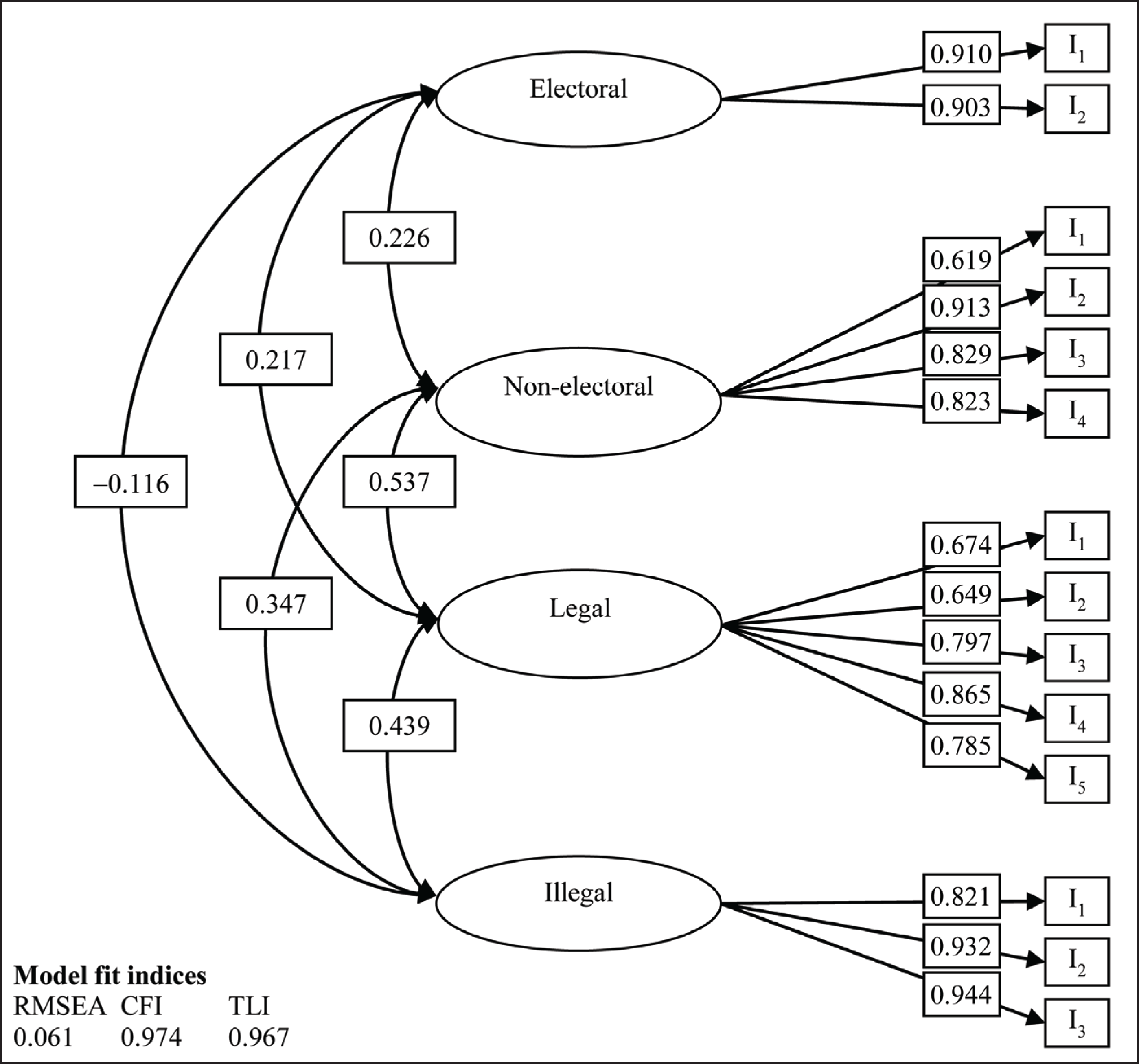
Figure 2 presents the results of the CFA for political participation. In line with the literature, we tested a four-factor first-order CFA model including the following interrelated latent constructs: (a) electoral participation (2 items), (b) non-electoral participation (4 items), (c) legal participation (5 items) and (d) illegal participation (3 items) (see Table 1 for item text). This factor structure was confirmed with model fit indices indicating an adequate model fit (RMSEA = 0.061; CFI = 0.974; TLI = 0.967). Moreover, the adequate model fit was also supported by the results yielded for the parameter estimates (Figure 2). All these parameters are statistically significant at p < 0.001. Factor correlations indicate that the four factors are moderately interrelated. In line with the literature, most factors correlate positively with each other and a small negative (expected) correlation was found between electoral and illegal participation. Moreover, item loadings were well above 0.600 in all scales ranging from 0.619 to 0.944. We, therefore, retained the four-factor model of political participation for further analyses.
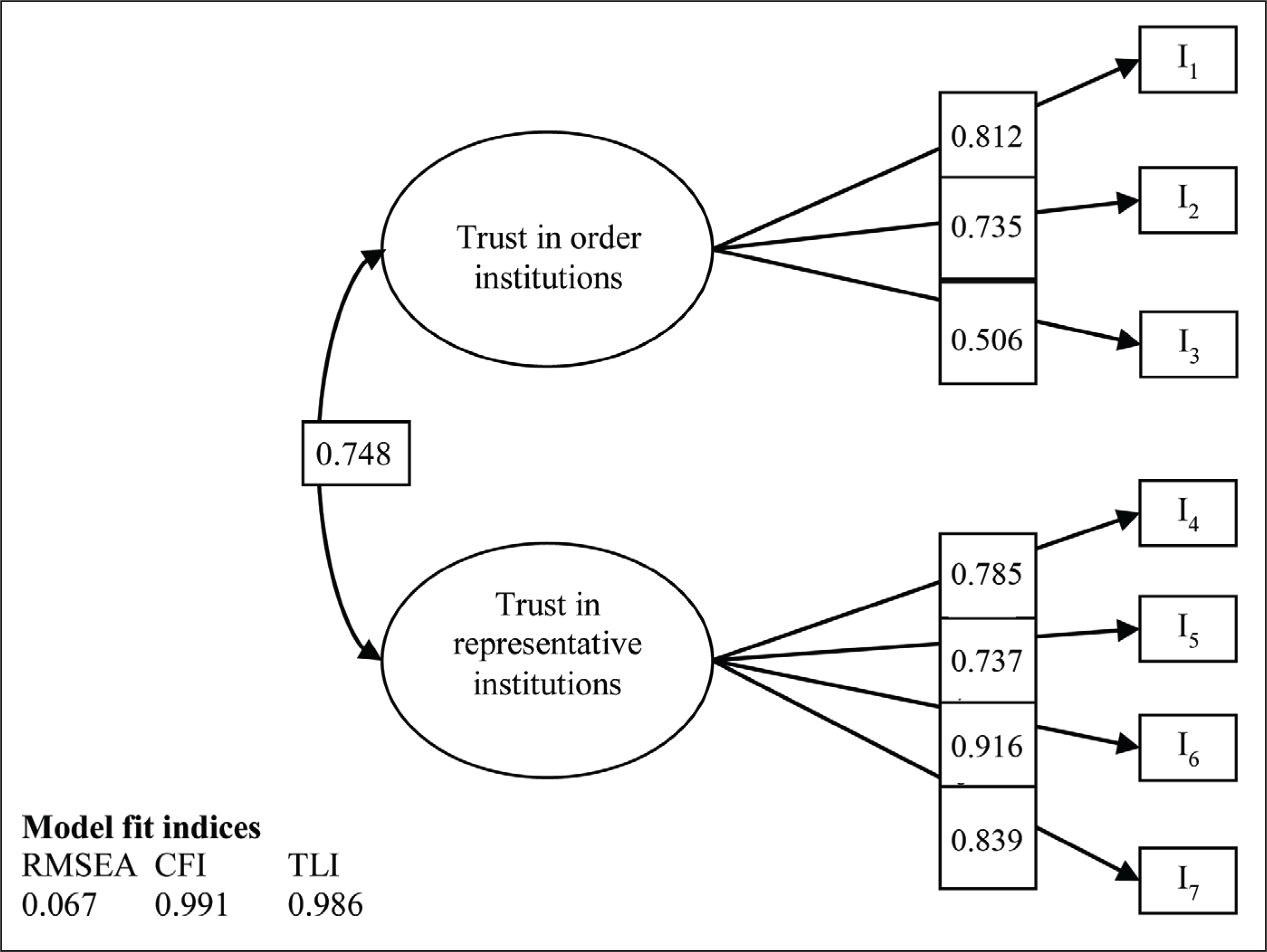
Our review of the literature points to a debate among scholars concerning the factorial structure of political trust. Therefore, in a first step, we estimated and compared two CFA models for political trust. The first model tested a one-dimensional model with seven items describing the construct (see Table 1 for item text). The second model tested a two-dimensional model described by two interrelated latent constructs: trust in order institutions (3 items) and trust in representative institutions (4 items). Model fit indices indicated a superior model fit for the two-dimensional model of political trust (RMSEA = 0.067; CFI = 0.991; TLI = 0.986) as compared to the one-dimensional model (RMSEA = 0.143; CFI = 0.957; TLI = 0.935). Moreover, the adequate fit of the two-dimensional model is further supported by the interpretability, size and statistical significance of the parameter estimates (Figure 3). The sets of items were found to be strong indicators of their corresponding factors, with item loadings ranging from 0.506 to 0.916. We, therefore, retained the two-dimensional model of political trust for further analyses. Furthermore, in line with the theory, the two factors are strongly related (r = 0.748). This indicates that there is a strong interdependency between both types of trust, though their meaning does not overlap completely. Hence, in the structural models, we treat both types of trust as distinct constructs, though still accounting for their high positive association.
Structural Models: The Relationship Between Political Trust and Political Participation
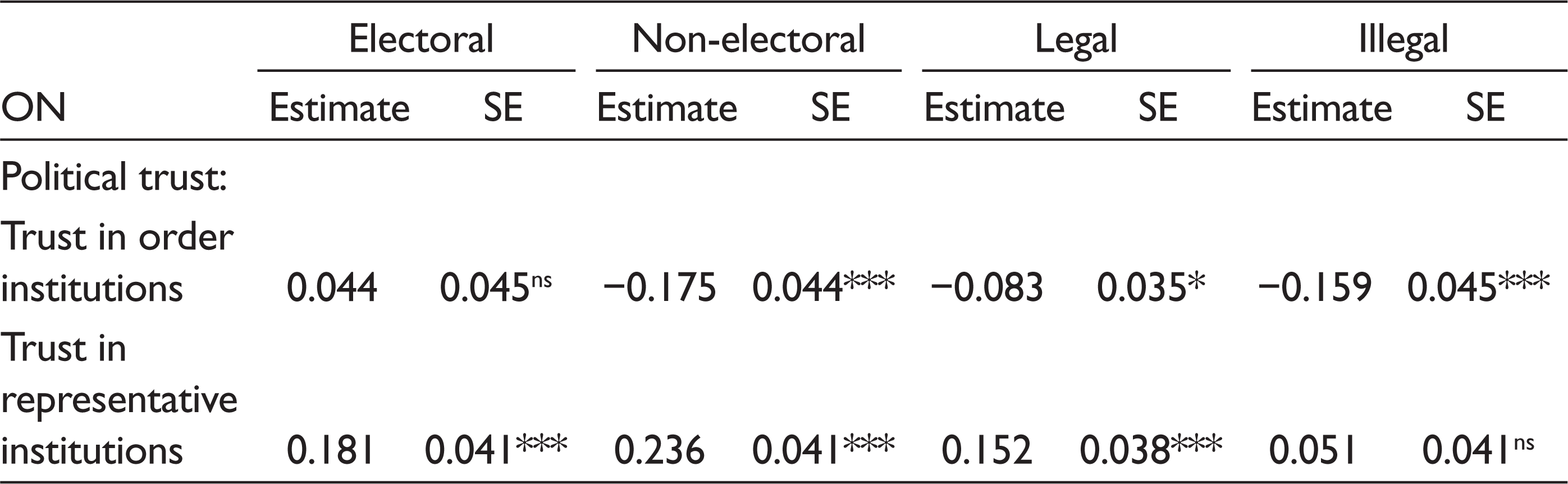
Having examined and confirmed the construct validity of political participation and political trust, our next step was to examine this study’s main research question in estimating the role of political trust in adolescents’ political participation intentions. Building on the literature, we acknowledge that intended political participation among adolescents in Flanders can be related not only to their level of trust but also to other factors (Quintelier & Van Deth, 2014; Torney-Purta et al., 2004). Therefore, these results stem from two sets of analyses. The first comprises a structural model evaluating the relationship between the two dimensions of political trust (trust in order and representative institutions) and the different aspects of political participation (electoral, non-electoral, legal and illegal) without controlling for other individual characteristics (Table 2). The second comprises a structural model in which we incorporate the control variables: political efficacy, political interest, gender, immigrant status, socio-economic status and civic knowledge (Table 3).
Relationship between political trust and political participation
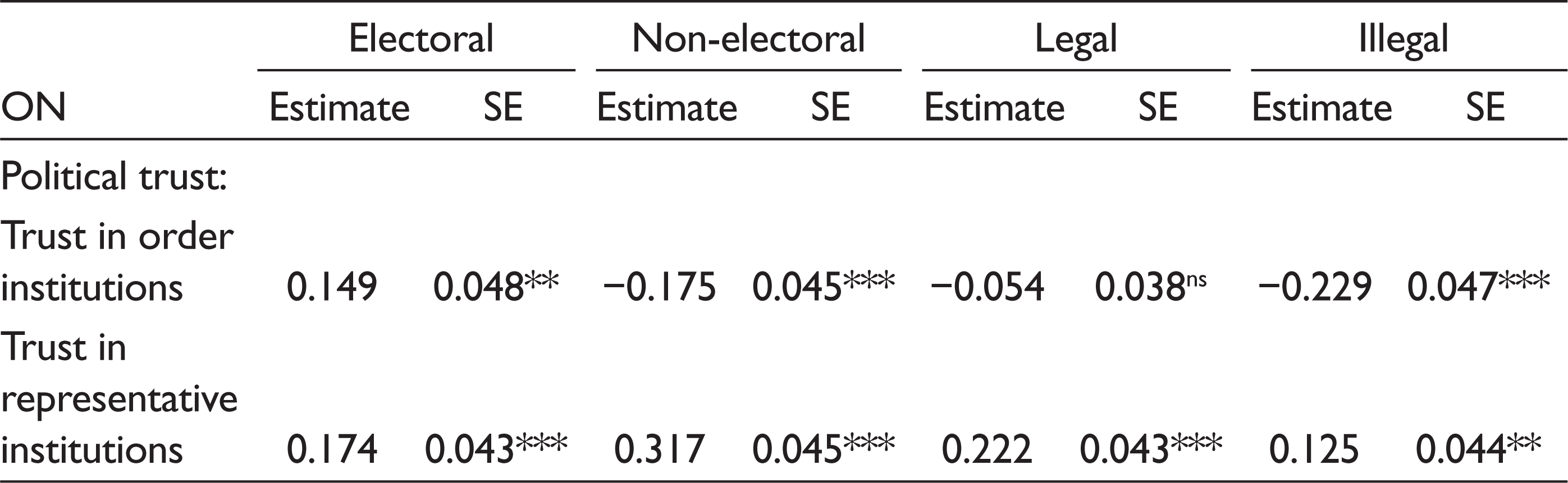
Table 2 illustrates the results of the first model. The results indicate a good model fit (RMSEA = 0.040; CFI = 0.976; TLI = 0.972). More specifically, when in simultaneous examination (i.e., taking into account that the two dimensions of trust are positively related), the parameter estimates show a statistically significant relationship between trust in order institutions and trust in representative institutions, on the one hand, and the four types of political participation, on the other hand. However, the patterns are not the same for all types of trust and political participation. Specifically, in a partial rejection of our theoretical assumptions, while trust in order institutions significantly predicts higher levels of electoral participation, it relates negatively with non-electoral and illegal participation. The strongest negative statistically significant relationship is observed between trust in order institutions and illegal participation. On the other hand, trust in representative institutions positively predicts all forms of political participation.
Table 3 illustrates the results of the second model where control variables are considered. Model fit indices (RMSEA = 0.033; CFI = 0.968; TLI = 0.961) indicate an improvement in model fit as compared with the previous model. The direction of the parameter estimates tapping into the relationships between the two types of trust and the four types of political participation is similar to that observed in the previous model. Nevertheless, some of the parameters are no longer statistically significant. More specifically, trust in order institutions negatively predicts non-electoral, legal and illegal participation. The positive relationship between trust in order institutions and electoral participation is no longer statistically significant. Trust in representative institutions relates positively to electoral, non-electoral and legal participation. The relationship between trust in representative institutions and illegal participation is not statistically significant. Overall, these results show that, all else equal, Flemish adolescents with lower trust in representative institutions are less inclined to participate in institutionalized and legal non-institutionalized political activities as adults, whereas those with lower trust in order institutions show higher intentions to participate in non-electoral institutionalized, and legal and illegal non-institutionalized political activities.
Relationship between political trust and political participation. Model controlled for individual student characteristics
Discussion
Despite their crucial role in the advancement of representative democracies, adolescents remain an overlooked group of citizens in studies on political behaviour. The present study aimed to further understand the role of political trust in explaining different types of legal and illegal political participation intentions among adolescents in the context of Flanders (Belgium). Do adolescents with low levels of political trust intend to withdraw from political life, even before reaching voter eligibility? Or are they more motivated to use a different set of political participation repertoires, potentially including illegal political means?
Our analyses established three key findings. First, aiming to expand upon existing literature on the conceptualization and measurement of political trust, our results confirm the theoretical assumption (Rothstein & Stolle, 2008; Warren, 2017) and recent empirical evidence in adults (Breustedt, 2018) that political trust among (Flemish) adolescents is best represented as a two-dimensional construct (as opposed to a one-dimensional), distinguishing two separate though interdependent dimensions: trust in order institutions and trust in representative institutions. This finding suggests that, instead of relying on averaged or sum scores of several ‘political trust’ items, and in this way a priori assuming that political trust represents a single comprehensive attitude, differentiating between institutions based on their nature may more accurately represent how young citizens determine their levels of trust in state institutions. Therefore, we propose two points of consideration for future studies on political trust. First, we suggest that researchers further examine—both theoretically and empirically—how different types of state institutions and decision-makers may yield distinct (trust) evaluations among both adult and adolescent citizens, and in this way may have different political consequences (e.g., looking at political participation as done in the present study). Second, given our finding that different types of political trust may exist among adolescents, researchers should also justify the combination of items used to measure political trust more thoroughly, while also verifying the construct validity in more theoretically grounded measurement models (e.g., by using CFA).
Second, we aimed to deepen our understanding on the complex relationship between political trust and political participation by considering not only different types of political trust but also different modes of political participation (Weiss, 2020). To this end, we distinguished between electoral and non-electoral institutionalized political actions, on the one hand, and between legal and illegal non-institutionalized political actions, on the other hand. The second distinction, in particular, has only rarely been included in studies on youth political participation (e.g., Hooghe & Dassonneville, 2013; Torney-Purta et al., 2004), despite its current societal relevance. For example, looking at the high number of school strikes for climate across Europe which started in 2019—and which were particularly lively in Flanders—it seems that the boundaries between legal (authorized demonstrations) and illegal (school absenteeism) political actions among youth have become more blurred and may become even more so in the coming years. Furthermore, although our CFA results showed that all four modes of political participation should be treated as distinct constructs, their inter-correlations indicate some conceptual overlap. Notably, the strongest positive association was found to be between non-electoral (e.g., campaign work) and legal participation (e.g., protesting) (r = 0.537), despite the literature considering both forms as different in nature (i.e., institutionalized and non-institutionalized, respectively). This finding may signal that the new generations of political participants-to-be, who grew up in contexts where protesting was seen as ‘elite-challenging’ behaviour, are now starting to recognize such legal non-institutionalized political actions as a guaranteed right, hence bringing it closer to the institutional context of democracy. Given this finding, in conjunction with the continuous emergence of new forms of political participation (e.g., political consumerism and digitally networked action) (Theocharis & Van Deth, 2018; Weiss, 2020), there may be a need for further research looking into new taxonomies of youth political participation, as well as their measurement and cross-national comparability.
Lastly, we turn to our two main hypotheses linking trust in order and representative institutions to intended participation in electoral, non-electoral, legal and illegal political activities. To begin, we find that adolescents with high levels of trust in representative institutions are more likely to engage in electoral, non-electoral, and legal participation as adults. The positive association with illegal participation became statistically non-significant when individual-level control variables were considered. Therefore, we can clearly confirm hypothesis 1a though not hypothesis 1b: trust in representative institutions seems to boost not only institutionalized participation (as expected) but also non-institutionalized, albeit legal, participation. This finding contradicts theoretical contributions on the checks and balances argument that low levels of trust in the electorate mobilizes adult citizens to vote and engage more frequently in public discourse (Warren, 2018). On the contrary, as argued by other authors (e.g., Almond & Verba, 1963; Torney-Purta et al., 2004, p. 39), a ‘threshold level’ of trust in the representative institutions may be a necessary precondition for adolescents to see themselves as political participants later in life.
Turning to our second hypothesis, the results suggest that trust in the order institutions is not the major basis for several modes of political participation among Flemish adolescents (Warren, 2018). On the contrary, adolescents with lower levels of trust in order institutions are more motivated to participate in non-electoral, legal and illegal (as expected) political activities. The only positive association with trust in order institutions was observed with electoral participation intentions, although this failed to reach standard levels of statistical significance. 3 Therefore, although hypothesis 2b is clearly confirmed, hypothesis 2a is not. The finding that trust in order institutions relates negatively to illegal participation intentions is not surprising, as previous research shows that challenging state laws and authority is characteristic of citizens with low levels of political trust (Marien & Hooghe, 2011) and that activists start employing illegal means when legal actions are no longer regarded as effective in exerting political influence (Cameron & Nickerson, 2009; Inglehart & Catterberg, 2002). However, Flemish adolescents with low levels of trust in the order institutions, which are assumed to have all citizens’ best interests at heart (Warren, 2018), are also more motivated to channel this attitude into a range of institutionalized (excluding voting) and legal non-institutionalized political activities. We may relate this finding to Easton’s (1965) work on ‘diffuse support’ being more essential towards maintaining system stability. More specifically, when trust in the fundamental institutions protecting the rule of law is low, this may particularly mobilize citizens to voice their concerns through any available democratic mechanisms—and when these do not suffice, through illegal means. Looking at the numerous Black Lives Matter protests and riots that began in 2014 in the USA and spread throughout the world following incidents of police brutality against black people, it may be possible that expressions of this trend are being manifested today.
This study holds certain limitations. First, in using only a Flemish adolescent sample, we are cautious of generalizing our findings to other contexts, particularly to countries with lower levels of political stability (van der Meer & Hakhverdian, 2017). Next, although it has been theorized as a particularly strong mobilizer for political participation (Norris, 1999; Warren, 2017), we were unable to examine the effect of low levels of trust in politicians on political participation intentions, as this trust item was not included in the ICCS 2016 survey. In the literature, the nature of this attitude is considered specific, hence more variable, whereas trust in state institutions is considered to constitute diffuse support, thus more stable (Easton, 1965). Future studies may disentangle the role of specific versus diffuse attitudes in explaining varying political participation repertoires. Following this, we believe that including items on trust in politicians in general or trust in particular office-holders (e.g., prime ministers or party leaders), for instance, in the ICCS studies, may improve the measurement of political trust in adolescence, thereby better representing all possible dimensions of political trust. Lastly, although several variables known to influence both political trust and political participation (intentions) were considered, many other plausible third variables may yield unaccounted spurious correlations. Future research may consider how personality traits or prosocial values influence the determined relationships, especially for illegal participation (Cawvey et al., 2018; Mondak, 2010). Studying how civic education at school (Treviño et al., 2019) or classroom environments (Maurissen, 2020) would affect our findings may prove a fruitful research avenue for informing civic education practices.
We conclude with this study’s strengths. First, the findings confirm the theoretical assumption that political trust among Flemish adolescents is best represented by a two-dimensional theoretical construct. This may guide further research within Belgium and across countries looking into this conceptualization’s validity in a comparative context and how it may explain various old and newly emerging modes of political participation among adolescents. Second, we find evidence that Flemish adolescents with low levels of trust in representative institutions are more likely to withdraw from political life as adults. Those with low levels of trust in order institutions, however, seem to be more motivated to use a range of institutionalized (excluding voting) and non-institutionalized political participation modes, including illegal political means.
Footnotes
Acknowledgements
An earlier version of this article was presented at the Annual Political Science Workshops of the Low Countries (Online, 3-4 June 2021) and at an interuniversity workshop on youth political participation organized by the Centre for Political Science Research (KU Leuven) in association with the University of Bath and UC Chile (Online, 1 April 2021). We are grateful to all panel participants for their valuable comments. In addition, we would like to thank the two anonymous reviewers for their critical remarks and suggestions.
Declaration of Conflicting Interests
The authors declared no potential conflicts of interest with respect to the research, authorship and/or publication of this article.
Funding
The authors disclosed receipt of the following financial support for the research, authorship, and/or publication of this article: Maria Magdalena Isac’s participation to this research was supported by a Spencer Postdoctoral Fellowship awarded by the National Academy of Education, Washington, DC, USA with generous support from the Spencer Foundation. The authors received no further financial support for the research, authorship and/or publication of this article.