




Abstract
Prior studies revealed that low levels of youth political activity are not necessarily indicative of complete disengagement from societal affairs but could be accompanied by interest and latent involvement stemming from a standby or monitorial attitude. However, no prior study has investigated patterns of citizenship orientations including both manifest and latent engagement defined by one’s position towards institutional politics, according to different forms of participation. A questionnaire was filled out by 1,732 late adolescents and young adults in Italy (15–30 years old, M = 19.73, 60.7% female). Cluster analysis identified six profiles of citizenship orientations across different types of participatory activities (political, activist, political online and civic): active trustful, active distrustful, standby trustful, standby distrustful, unengaged trustful and unengaged distrustful. The results showed that each level of engagement—active, standby and unengaged—could be further differentiated between trustful and distrustful based on their attitude towards institutions and the electoral process.
Introduction
The study and conceptualization of youth participation have evolved to avoid pessimistic and deficit-based approaches. Specifically, new ways of engagement that youth practise in everyday life have been acknowledged (Harris et al., 2010; Zukin et al., 2006), and youth participation has been conceptualized as a multifaceted and complex phenomenon, which includes different forms of unengagement (Amnå & Ekman, 2014; Ekman & Amnå, 2012).
Drawing on previous literature suggesting more complex and varied ways of intending democratic citizenship (Amnå & Ekman, 2014; Geissel, 2008; Norris, 1999), the present study seeks to investigate youth citizenship orientations characterized by both manifest and latent participation differentiated by one’s position towards institutional politics, as well as to compare these patterns in relation to different forms of participation.
Passivity and Disengagement
Citizens’ relationship with the public sphere has evolved towards more non-institutionalized and individualized forms of engagement (Dalton, 2004; Hooghe & Dejaeghere, 2007). Several authors have argued that low levels of civic and political activity are not necessarily indicative of complete disengagement but could be accompanied by interest and involvement in societal affairs stemming from a standby or monitorial attitude (Amnå & Ekman, 2014; Ekman & Amnå, 2012). Amnå and Ekman (2014) have underlined the existence of different forms of passivity and proposed to investigate a standby latent involvement, characterized by interest in civic and political matters and readiness for participation. The authors empirically examined the different orientations passivity can assume among youth and identified four groups: active, who score high on both political participation and political interest; standby, who score average on participation and high on political interest; unengaged, who score low on both participation and interest; and disillusioned, who score the lowest on both participation and interest. As this study demonstrates, youth may often be relatively engaged and interested in politics and citizenship, but they may not be willing to enact an ‘engaged’ identity, which can be seen as demanding (Sveningsson, 2015). This type of latent engagement is assumed to derive from the trust put in institutions and their representatives to do their work.
Political Trust and Engagement
Other authors, however, point out that political trust can play a different role in the relationship of the attentive citizen with politics. Distrust in politicians and institutions may be accompanied by critical supervision of the political process and, possibly, an urge to take action to improve it (Hibbing & Theiss-Morse, 2002; Norris, 1999). Critical citizens are seen as a resource for democracy and even an indicator of its health, as they are assumed to also be motivated to monitor and control the political process (Dalton, 2004). Previous studies have shown ambiguous results regarding the relationships between participation, political satisfaction, interest and democratic political attitudes (Klingemann, 2014; Hooghe et al., 2017). The perception of unresponsive, opaque and elite-driven governance may be a factor in alienating youth from the political sphere or, conversely, a motivation for a critical engagement in the face of system injustice. A study conducted by Geissel (2008) suggests that an attentive orientation is crucial in determining democracy-promoting attitudes, participation and internal political efficacy. Exploring the distinction of democratic citizens on dimensions of political attentiveness and satisfaction, Geissel identified both attentive-satisfied and attentive-dissatisfied groups, as well as inattentive-satisfied and inattentive-dissatisfied groups. Attentive citizens are equally likely to uphold democracy-promoting attitudes and to participate, regardless of whether they are satisfied with the political state of affairs or not.
Types of Participation
Research on youth participation has focused on the decline of electoral and formal political engagement particularly among youth and its possible negative effects for democracy and communal life (Maggini, 2016; Pharr & Putnam, 2000). In such conceptions, political participation has been linked to the aim of influencing governmental decisions ‘either directly by affecting the making or implementation of public policy or indirectly by influencing the selection of individuals who make those policies’ (Verba et al., 1995, p. 38).
However, literature on the topic has generally distinguished between conventional or institutionalized forms of activity related to the electoral process and the support of representative democracy (for example, voting, party membership and election campaigning), and unconventional or non-institutionalized forms beyond the electoral sphere, including activism and consumer behaviour (for example, protesting, involvement in social movements, signing petitions, political consumption and boycotting; Barrett & Zani, 2015; Marien et al., 2010). Non-institutionalized engagement may also take advantage of online opportunities in addition to offline means, as research has evidenced the popularity of online participation, especially among young people (Oser et al., 2013; Šerek & Machackova, 2014).
Participation can also be distinguished between political and civic forms. Civic participation, in particular, refers to voluntary activity focused on helping others, achieving a public good or participating in the life of a community, including work undertaken alone or in cooperation with others in order to effect change. This form of engagement is one of the most diffused among young people, especially in adolescence, when opportunities for political participation are relatively less available and attractive with respect to civic forms (Barrett & Zani, 2015; Nygård et al., 2015; Zukin et al., 2006).
Broadening the spectrum of relevant involvement activities seeks to reflect the possible expansions of younger generations’ repertoires in what can be defined a blended taste pattern, typical of the modern civic omnivore (Hustinx et al., 2012). Political and cause-related consumption, online and ad-hoc actions widen the participatory sphere for action available for young people (Gotlieb & Thorson, 2017; Nonomura, 2017).
Several studies have sought to analyse patterns of participation through a person-centred approach in order to identify the characteristics of young people who share similar styles of engagement (Chow & Kennedy, 2015; Pancer et al., 2007). Overall, the analyses of individual patterns of youth participation indicate the existence of repertoires that vary in terms of breadth and intensity of the involvement by identifying at least three types of profiles: youth who are active in a wide variety of engagement forms, youth who are active in specific forms of action and youth who are unengaged. Such findings emphasize the need to consider the ways in which young people can combine different ways of getting involved or prefer determinate actions when analysing their orientations towards the civic and political sphere.
The Present Study
The present research will seek to contribute to the debate by looking at the complexities of young people’s relationship to the public sphere through citizenship orientations that are characterized by more than activity/passivity in different forms of participation.
The study addresses gaps in youth participation literature in a twofold manner. First, we investigate patterns of citizenship orientations by means of a person-centred analysis (i.e., cluster analysis), demonstrating the combinations of levels of involvement and positions towards institutional politics that can be identified among a population of late adolescents and young adults in Italy. We argue that young citizens can be defined not only as active, unengaged or standby, but they can also be distinguished between trustful and critical in their orientations towards civic and political engagement (Tzankova, 2018; Tzankova et al., 2020). As emphasized by Amnå and Ekman (2014), political interest is considered crucial in characterizing youth who are involved in a standby mode, while unengaged youth citizens score low on both participation and interest. In addition, consistent behaviours of participation and high levels of political interest characterize active citizens (Amnå & Ekman, 2014). However, in order to capture critically oriented involvement and alienation, we also seek to distinguish on every level of activity between those who are trustful in political institutions (i.e., satisfied) and those who are distrustful (i.e., dissatisfied), as previously suggested by Geissel (2008).
The analysis is based on data collected in Italy. Social characteristics and political culture in the national context may constitute an environment that shapes norms and opportunities for participation, as well as the perceptions of institutions and of the political process (Gaiser et al., 2010; Vráblíková & Císar, 2015). The Italian state of democracy has been ranked among the last in Western Europe by the Economist Intelligence Unit (EIU) Democracy Index 2019, based on a relatively disappointing performance in terms of government functioning, political culture and civil liberties (Economist Intelligence Unit, 2019). Such a political context may influence the amount of dissatisfaction and participation in different forms of political activities. However, the overall distinctions between types of citizen orientations based on activity, interest and trust have been examined in a cross-national sample, indicating the possibility of assessing these orientations in current democratic societies (Tzankova et al., 2020).
The aim of analysing the existence of distinguished citizenship orientations among young people entails a person-centred approach (e.g., cluster-based techniques) as opposed to a variable-centred approach (e.g., correlational techniques); for example, youth may report low levels of participation in civic and political activities, but nonetheless exhibit trust in institutions and a standby attitude by being interested in political and social issues. On the contrary, other young people might also avoid participation and still be interested in politics, while feeling critical towards the capacity of institutions to defend their interests. These would represent descriptions of naturally occurring homogeneous subgroups of youth characterized by common patterns of response on indicators related to their relationship with the civic and political sphere.
The patterns of youth involvement in our cluster analysis are identified by three indicators: (a) activity in different types of participation, which is expected to distinguish between active and unengaged youth; (b) political and social interest, which is expected to distinguish between standby and unengaged youth; and (c) trust in institutions and in the political process, which is expected to differentiate between trustful and distrustful attitude towards the political process. Overall, we expect to identify up to six groups of participants with different levels of engagement—active, standby or unengaged—each characterized by either trustful or distrustful position.
Second, our analysis seeks to identify and compare the patterns of citizenship orientations in relation to different forms of participation that youth undertake. Specifically, we explore the clusters of involvement within distinct activities in the conventional political sphere, the non-institutionalized political sphere and the civic sphere. Previous research suggests that active youth may be more numerous in civic and non-institutionalized online and informal forms of participation (Barrett & Zani, 2015; Zukin et al., 2006). Moreover, as political trust has been linked to conventional forms of engagement (Lee & Schachter, 2018), we expect that these forms would present a greater number of trustful youth, while non-institutionalized protesting activities would be more popular among distrustful youth.
Method
Participants
Data collection was completed between November 2016 and January 2017. The study was a part of the CATCH-EyoU research project funded by the European Union within the H2020 framework programme. It was approved by the Bioethics Committee of the University of Bologna. Participants of two age groups—adolescents and young adults—filled out a self-administered online (64.3%) or pencil-and-paper (35.7%) questionnaire.
Adolescents, from 15 to 19 years old, were approached in six upper secondary schools with different tracks (vocational, technical or academic) in a region in North Italy. All contacted schools were public, and they were selected in order to guarantee an adequate variability between tracks and municipal contexts typical of Italy (large and small cities, rural settings). Further information on the schools’ municipality, track, class size, student enrolment and student performance is available in the Appendix (Table A1). The institutions’ rate of student enrolment ranged from high to very high (687–1,573 students per school) in comparison to regional (560 students per school) and national rates (486 students per school; ISTAT, 2019). Overall, student performance in standardized tests was in line with regional and national benchmarks according to the evaluation reports by the schools. Including lower school tracks (vocational institutes) is crucial, since student enrolment in vocational programmes in Italy is one of the highest among countries and economies participating in PISA 2018 assessment: 49.8%, rank 9/77 (OECD, 2020). The choice of school track in Italy is often related to socio-economic background and a vertical hierarchy of prestige and quality (Contini & Scagni, 2011; Triventi, 2014); for example, in 2015, 28.8% of students in higher school tracks had at least one parent with a university degree, while this rate decreased to 4.6% in vocational institutes (ISTAT, 2017). Indeed, in our sample, students from a lower track, that is, vocational, reported lower parents’ educational level (M = 2.43, SD = 0.60) in comparison to students from higher tracks, that is, academic or technical (M = 2.81, SD = 0.63), t (775) = –5.69, p < 0.001.
The first contact was made with the headmaster and reference teachers. After a formal agreement, the participation in the study was proposed to students. Questionnaires were completed, either on paper or online, under the supervision of a researcher and/or a teacher during a class hour. Participation consent forms were collected prior to distribution from all students and, in the case of underage participants, also from parents.
The sample of young adults, from 20 to 30 years old, included university students contacted through the office of an Italian university (92.7%) and youth workers (7.3%) contacted through youth organizations. The pool of university students included individuals attending different courses and coming from different parts of Italy. The students were contacted by e-mail with an invitation to participate in the online survey. All participants approved consent forms before filling the questionnaire.
The final sample consisted of 1,732 participants (60.7% were female and 39.1% were male). Questionnaires with missing basic information (age, gender, or entire sections) and incomplete responses (10%) were excluded. Only participants between 15 and 30 years old were considered. The average age was 19.73 (SD = 3.59). Our sample represents the gender distribution among the younger age group (49.8% female, 50.2% male), but overrepresents women in the age group 20–30 years (70.9% female, 29.1% male). For many years, women have represented the majority of university students (from 54% to 65% according to level of degree; ISTAT, 2018a), and the prevalence of female participants in the adult sample can be related partially to the high presence of university students. As a whole, the sample overrepresents university students with respect to employed and unemployed youth (20–30 years old youth enrolled in university were 20.5% in 2015–2016 academic year; Ministry of Education University and Research, 2017). Moreover, the sample is based on a larger proportion of non-migrant Italians (94.4%) with respect to the current population in the same age group (in 2016, foreigners in the 18–39 age group were 14.4%; ISTAT, 2018a).
Measures
The following self-report measures were used in the analyses.
Participation
Participation in different civic and political activities in the last 12 months was measured on a 5-point scale (1 = no to 5 = very often) with items from the Civic and Political Participation scale (Enchikova et al., 2019; Noack & Macek, 2017). The items measured four forms of participation (Cicognani et al., 2017, p. 57): conventional political participation (e.g., ‘Worked for a political party or a political candidate’), activist participation (e.g., ‘Taken part in an occupation of a building or a public space’), political online participation (e.g., ‘Discussed social or political issues on the internet’) and civic participation (e.g., ‘Volunteered or worked for a social cause’).
Political and Social Interest
Political and social interest was operationalized through a mean score of four items measured on a 5-point Likert scale (1 = not at all to 5 = extremely). The scale measured interest in politics, in societal issues, in European-related topics and in national politics, for example, ‘How interested are you in politics?’. The reliability of the scale was very good (α = 0.88).
Political Trust
Considering the close relation between constructs of political trust, trustworthiness and alienation (for a review, see Levi & Stoker, 2000), and in line with previous research (Dahl et al., 2018; Kabashima et al., 2000), we used items measuring both institutional trust and sense of powerlessness as proxies for the attitude towards institutions and the political process. A composite mean score was obtained calculating the mean of two items measuring trust in European institutions and national government (e.g., ‘I trust the national government’) and two items, adapted from Fischer and Kohr (2002), measuring political alienation related to Italy and to the EU (reversed scores, e.g., ‘It does not matter who wins the European elections, the interests of ordinary people do not matter’). All items were measured on a 5-point Likert scale (1 = strongly disagree to 5 = strongly agree). Higher scores on the measure correspond to higher political trust. Preliminary exploratory factor analysis confirmed the unidimensionality of the measure. The reliability was good (α = 0.75).
Analysis
We performed cluster analysis at two levels as the central analysis of this article. The interest of identifying the existence of types of young citizens is the sort of question cluster-based techniques of analysis are well suited for. The benefit of such an approach is that it allows to explore both commonalities and differences between previously unobserved groups of respondents.
First, the scores for all indicator variables were standardized and a first cluster analysis was performed separately on each form of participation following a two-stage approach (Gore, 2000). Specifically, we conducted a hierarchical cluster analysis using Ward’s method and based on squared Euclidean distances. The stopping rule Calinski–Harabasz pseudo-F was used to determine the optimal number of clusters (Milligan & Cooper, 1985). The solutions were also examined according to theoretical meaningfulness of each cluster and parsimony. Once the number of clusters was determined, initial cluster centres obtained from the hierarchical cluster analysis were used as non-random starting points in iterative k-means clustering. In this way, we obtained clusters of citizenship orientations in the sample.
Second, using a second-level cluster analysis, we further examined whether second-order clusters of profiles among the different forms of participation (i.e., civic, political, activist and consumer and online participation) could be identified. We conducted a two-step cluster analysis because of its ability to segment categorical data (Norusis, 2011). The two-step cluster analysis proceeds in two phases. The first phase involves pre-clustering of participants into small subclasses. The second phase involves the final clustering of subclasses formed in Step 1 into either an appropriate number of classes using a criterion or a predetermined number. To determine how the similarity between two clusters was computed, we used the log-likelihood measure. The number of clusters could not be determined in advance in this exploratory study; therefore, we allowed two-step cluster analysis to automatically determine the best number of clusters based on Schwarz’s Bayesian information criterion. The two-step cluster analysis provides a silhouette measure of cluster cohesion and separation that enables a researcher to quickly check the quality of the results based on the work of Kaufman and Rousseeuw (1990).
Results
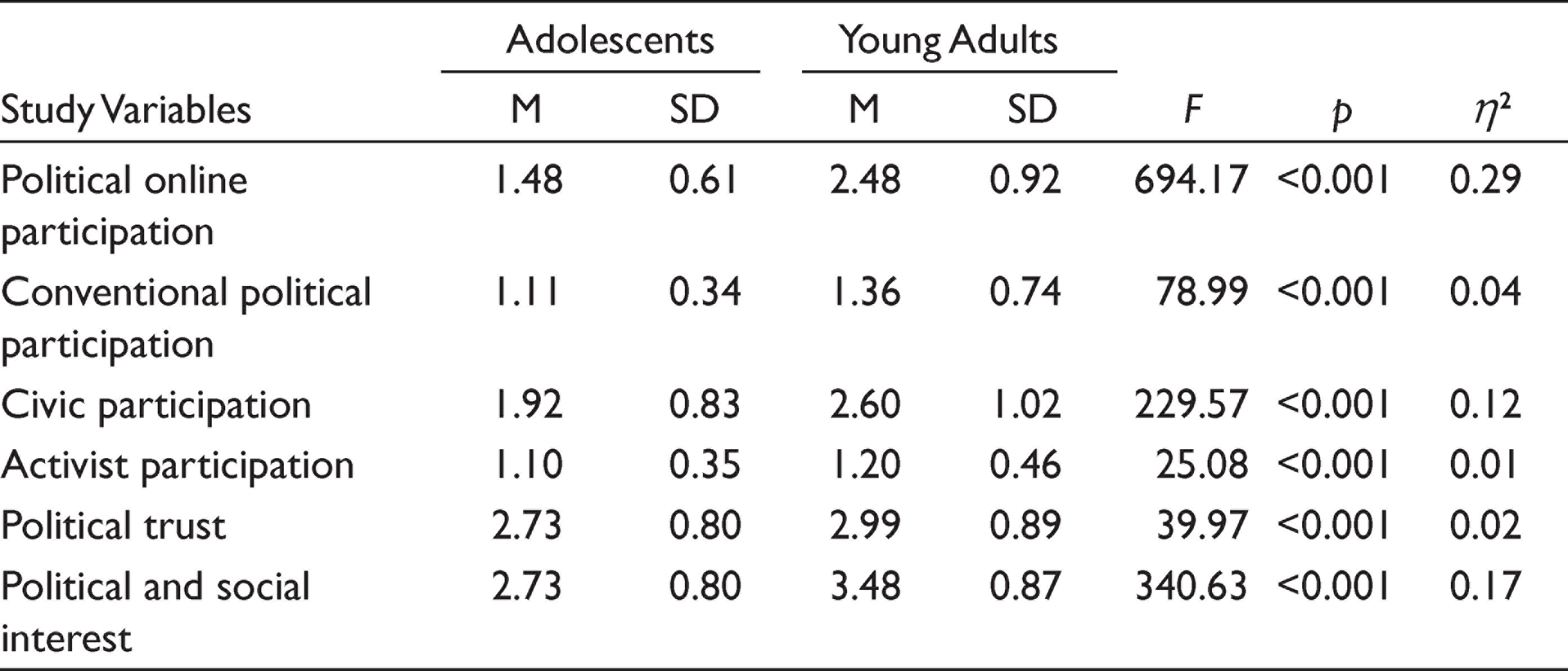
Table 1 reports sample descriptive statistics for study measures and differences between adolescents and young adults. Compared to adolescents, young adults reported higher scores on all study variables. Such differences are in line with previous literature documenting differences in political development from adolescence to adulthood (Schulz et al., 2010).
Means, Standard Deviations and ANOVA for Study Variables for Differences Between Adolescents and Young Adults (F, p and η2 squared values)
Patterns of Citizenship Orientations
We performed cluster analysis separately on the four forms of participation: conventional political, activist, political online and civic. On the basis of the stopping rule Calinski–Harabasz, a five-cluster solution was retained as the most acceptable for each type of participation. Overall, six citizenship orientations were identified across the forms, with some differences in the emerging groups in each solution. Table 2 summarizes the sizes of the identified clusters from each analysis in each type of participation.
Citizenship Orientations Across Types of Participation
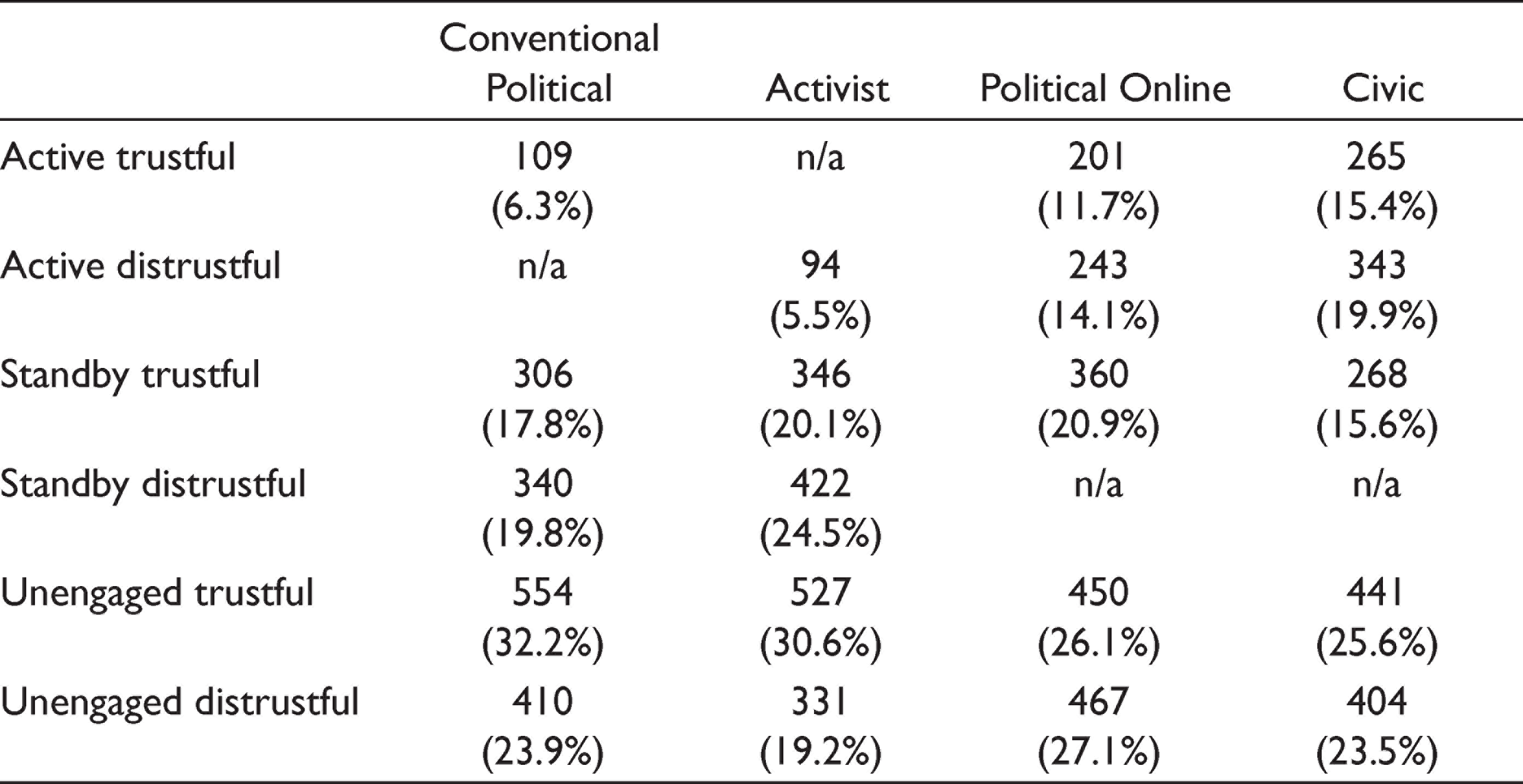
Across all types of participation, the most numerous clusters were the unengaged ones, with a prevalence of trustful unengaged youth. Active youth were more numerous when the relevant form of participation was civic or political online, while standby engagement was more popular in relation to political and activist forms. Young people who were characterized as active were, indeed, very few within political and activist forms. However, the small clusters of actively participating youth in these two forms had opposing orientations—in political forms, they were trustful, and in activist forms, they were distrustful. We examine in detail the emerging cluster solutions in the following paragraphs.
Citizenship Orientations: Conventional Political Participation
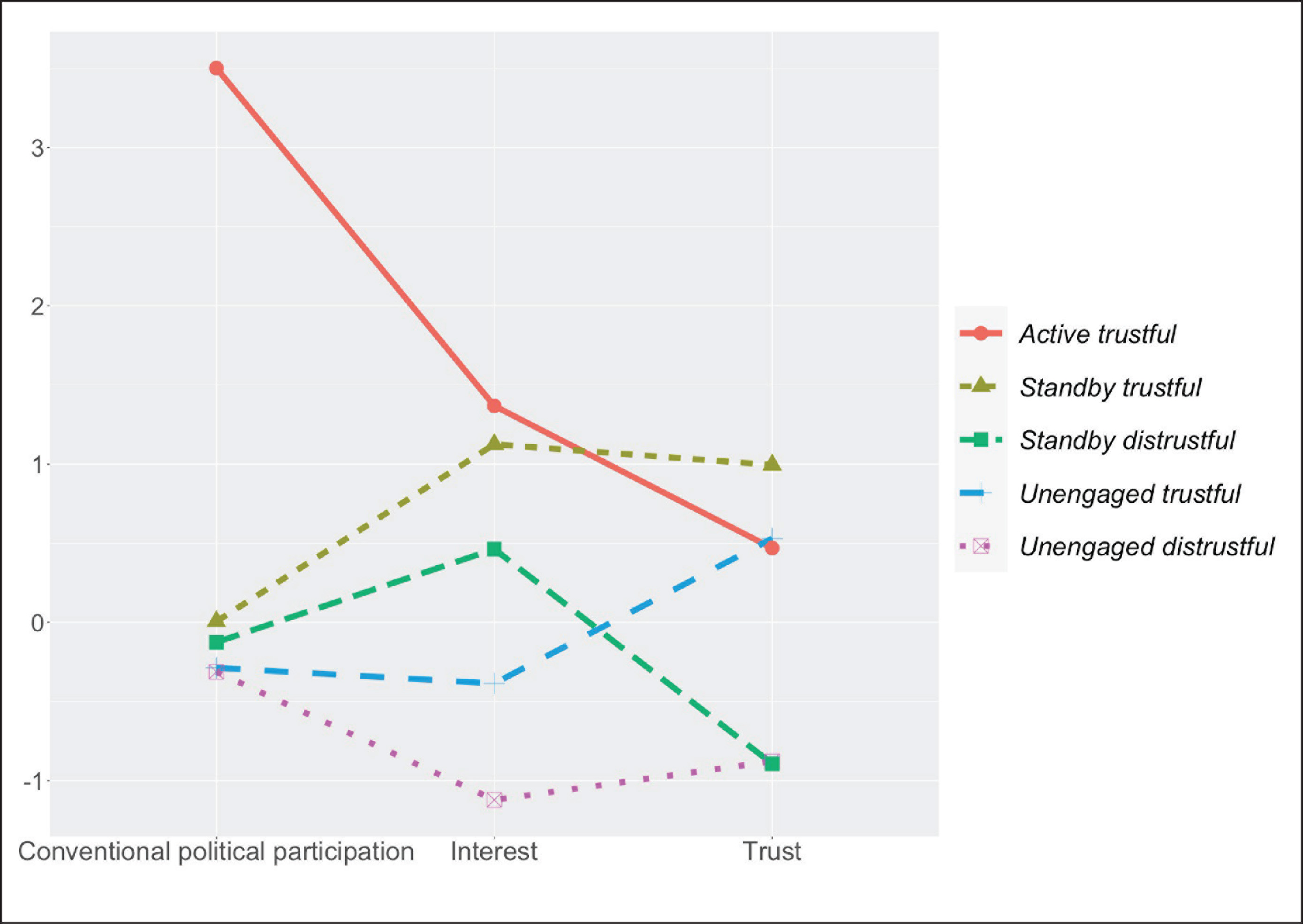
The z-scores for conventional political participation, sociopolitical interest and political trust for the five identified clusters are shown in Figure 1. The analysis identified one small active group who showed very high participation in political activities, the highest interest in social and political issues and political trust above the mean—the active trustful youth (n = 109; 6.3% of the sample). Another group also exhibited very high interest and the highest political trust, but lower levels of participation—the standby trustful cluster (n = 306; 17.8%). The similarly sized standby distrustful group (n = 340; 19.8%) also had lower levels of participation and sociopolitical interest above the mean but very low political trust. The largest cluster was the unengaged trustful group (n = 554; 32.2%) who showed low participation, low interest and high political trust. Finally, the unengaged distrustful cluster (n = 410; 23.9%) was characterized by low levels of participation, the lowest level of interest in social and political issues and very low political trust.
Citizenship Orientations: Activist Participation
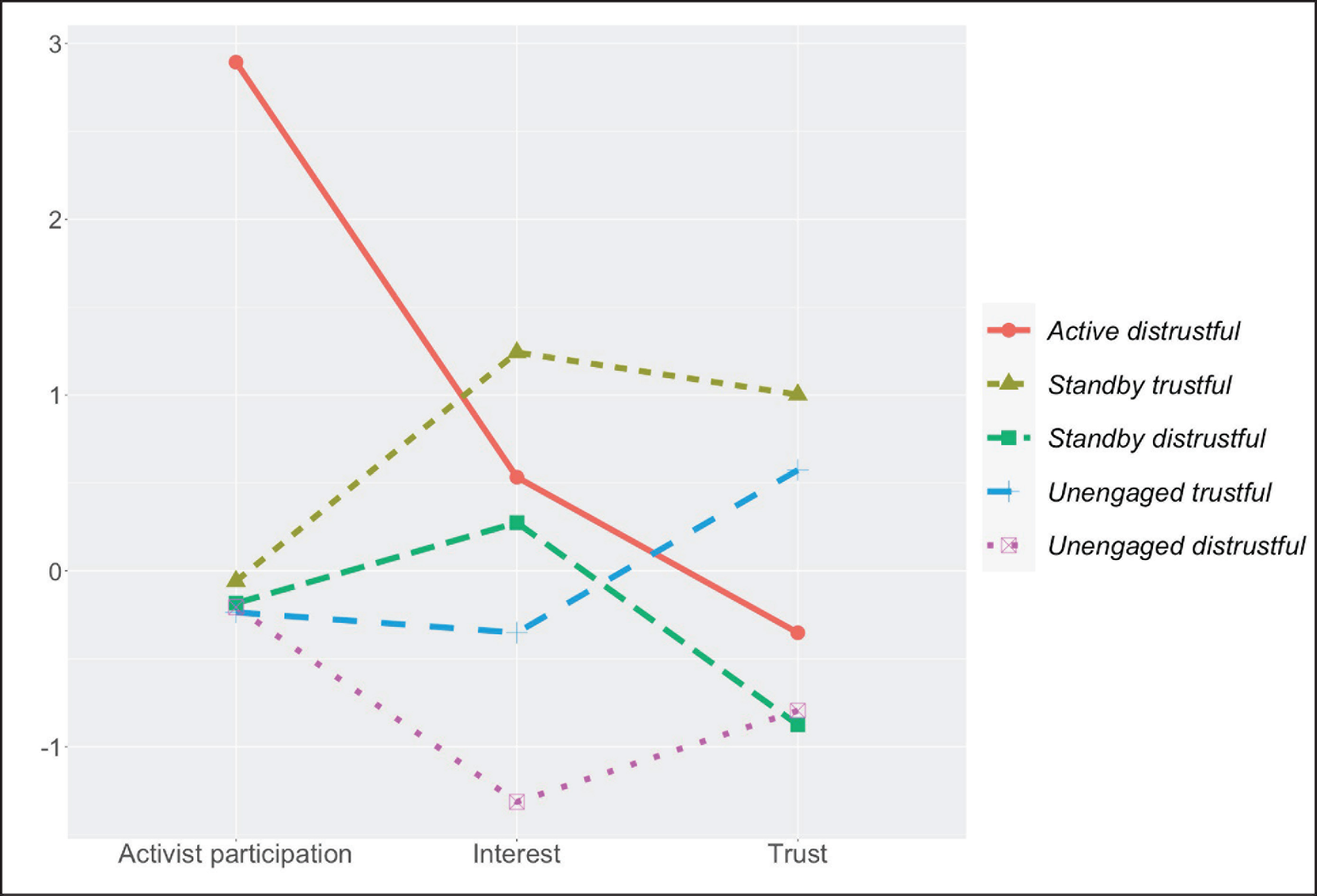
The z-scores for activist participation, sociopolitical interest and political trust for the five identified clusters are shown in Figure 2. A small active group—the active distrustful youth (n = 94; 5.5%)—scored very high on participation in activist behaviour, high on interest in social and political issues and low on political trust. The standby trustful cluster (n = 346; 20.1%) showed very high interest and the highest political trust but lower levels of participation. The standby distrustful group (n = 422; 24.5%) also had lower levels of participation and sociopolitical interest above the mean but very low political trust. The largest cluster was the unengaged trustful group (n = 527; 30.6%) who showed low participation, low interest and high political trust. Finally, the unengaged distrustful cluster (n = 331; 19.2%) was characterized by low levels of participation, the lowest level of interest in social and political issues and very low political trust.
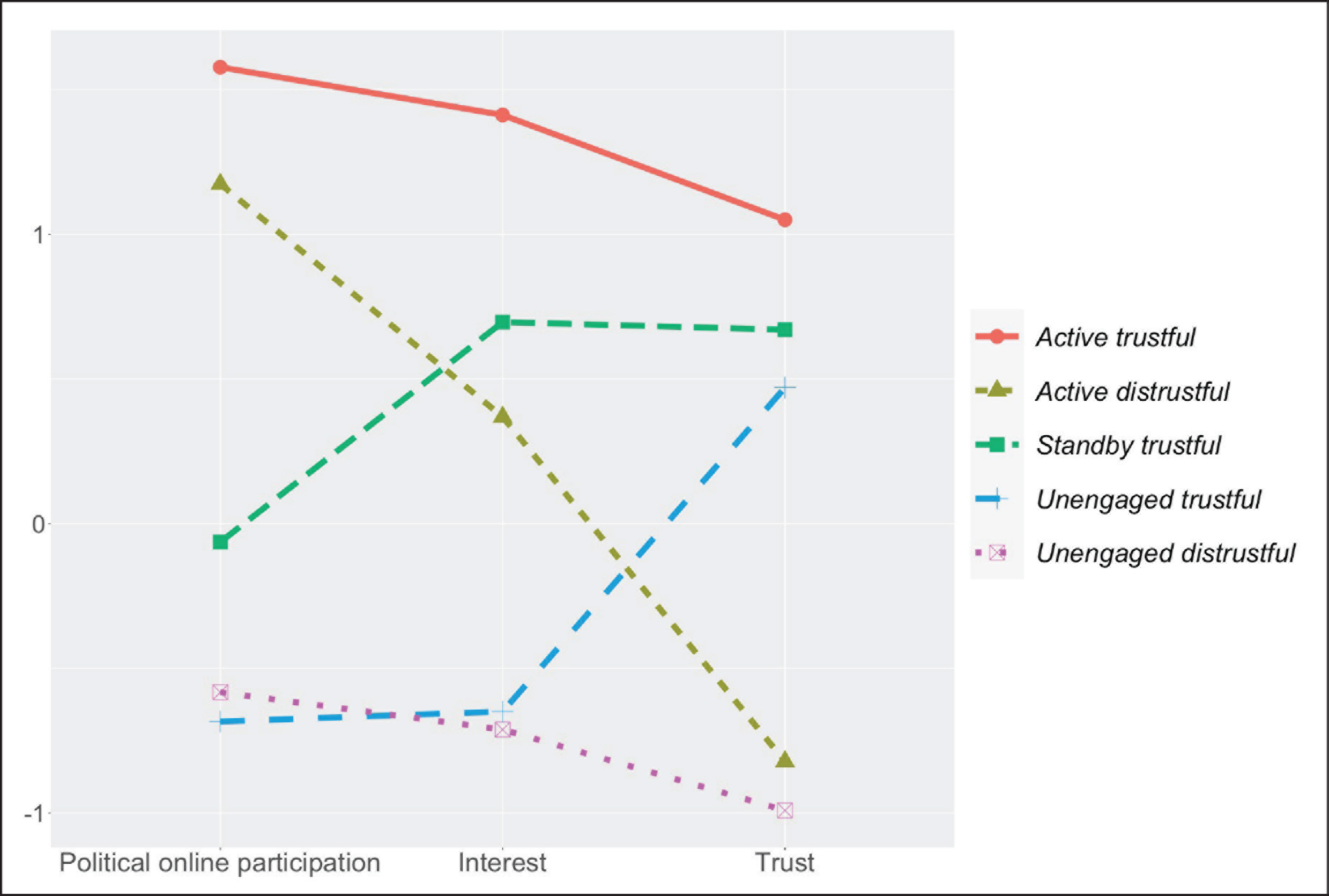
Citizenship Orientations: Political Online Participation
The z-scores for political online participation, sociopolitical interest and political trust for the five identified clusters are shown in Figure 3. The analysis identified two active groups. The active trustful youth (n = 201; 11.7%) scored very high on all three indicators, while the active distrustful group (n = 243; 14.1%) scored high on political online participation, as well as on sociopolitical interest, but very low on political trust. The standby trustful cluster (n = 360; 20.9%) showed high interest and political trust, but lower levels of participation. The unengaged trustful group (n = 450; 26.1%) exhibited low participation, low interest and high political trust. Finally, the unengaged distrustful cluster (n = 467; 27.1%) was characterized by low levels of participation, low interest in social and political issues and very low political trust.
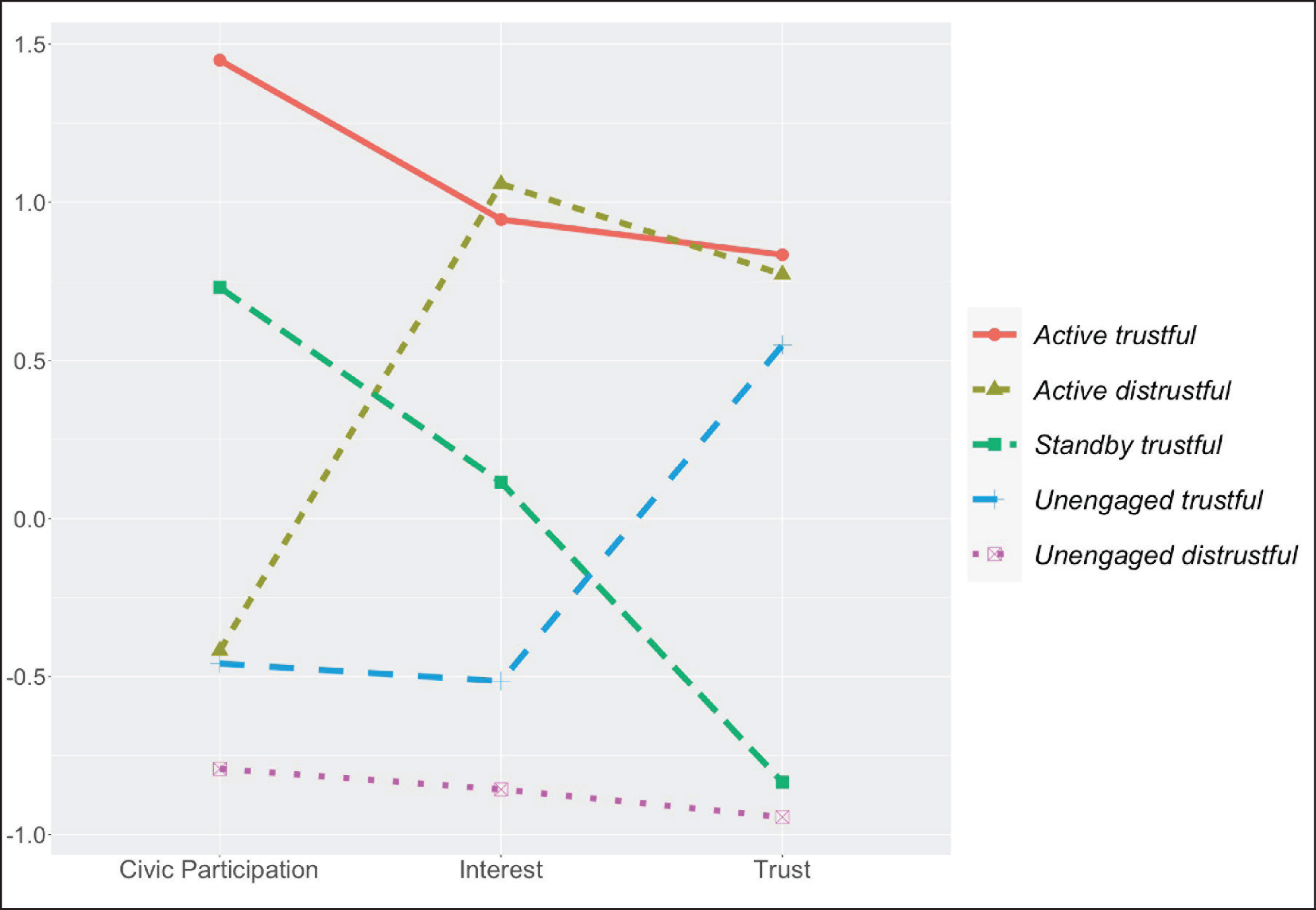
Citizenship Orientations: Civic Participation
The z-scores for civic participation, sociopolitical interest and political trust for the five identified clusters are shown in Figure 4. Two active groups—the active trustful youth (n = 265; 15.4%) scored very high on all three indicators, while the active distrustful group (n = 343; 19.9%) scored high on civic participation, as well as on sociopolitical interest, but very low on political trust. The standby trustful cluster (n = 268; 15.6%) showed high interest and political trust but lower levels of participation. The unengaged trustful group (n = 441; 25.6%), the most numerous, exhibited low participation, low interest and high political trust. Finally, the unengaged distrustful cluster (n = 404; 23.5%) was characterized by the lowest levels on all three indicators.
The Identification of Similar Groups of Profiles Among Each Type of Participation
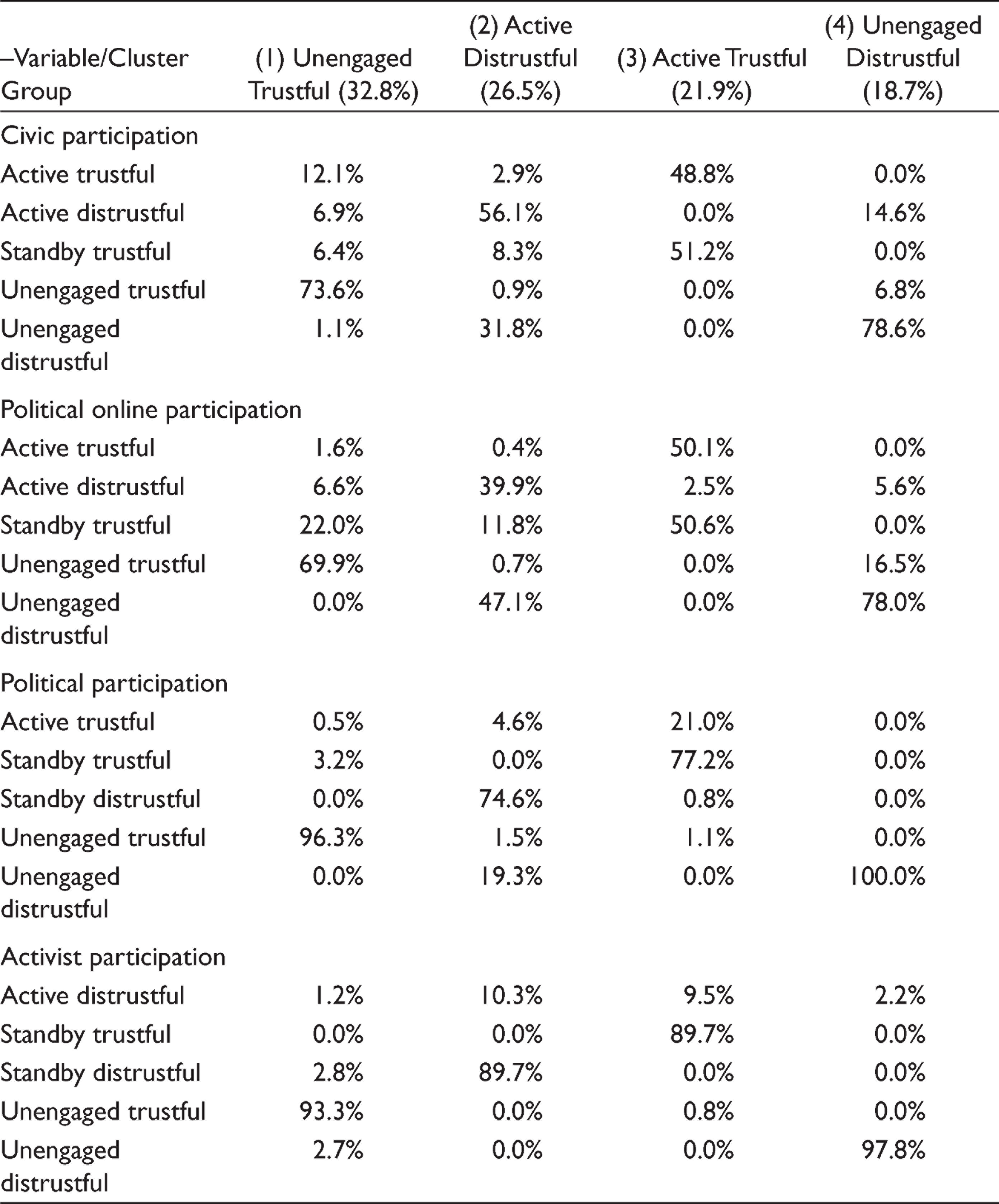
After examining the differences among the solutions for every form of participation, we decided to investigate further the common patterns with which individuals expressed their citizenship orientations across different forms of engagement. To identify similar groups of profiles across the four types of participation, a second cluster analysis was performed on the five clusters that emerged for each form of participation. Using the Bayesian Information Criterion, a four-cluster structure was determined to be the best fit for the data. The average silhouette measure of cluster cohesion and separation was 0.5, indicating a good result. A good result is indicative of either reasonable or strong evidence of cluster structure according to the rating of Kaufman and Rousseeuw (1990). Table 3 describes the clusters. Most participants in cluster 1 (unengaged trustful youth) were unengaged trustful across the four forms of participation. Most participants in cluster 2 (active distrustful youth) were active distrustful in terms of civic participation, Active or unengaged distrustful in terms of political online participation and standby distrustful in terms of conventional political and activist participation. Most participants in cluster 3 (active trustful youth) were Active or standby trustful in terms of political online, as well as civic participation and standby trustful in terms of conventional political and activist participation. Most participants in cluster 4 (unengaged distrustful youth) were unengaged distrustful across the four forms of participation.
Common Profiles Across Forms of Participation: Second-order Cluster Analysis
Although more complex psychological characterization of the emerging typology was beyond the scope of the study, we explored socio-demographic differences among the identified profiles through multivariate logistic regression analyses (available in Appendix, Table A2). Overall, female and older participants were more likely to be in the active trustful group and less likely to be in unengaged groups. National/ethnic minority status was related to membership in the unengaged distrustful group. Finally, participants with higher socio-economic status were more likely to belong to the unengaged trustful and less likely to belong to distrustful groups.
Discussion
We have argued that in order to contribute to the understanding of young people’s variety of positions with respect to democratic citizenship, it is necessary to expand previous investigations of engagement typologies. A novelty of the present study is that we investigated patterns of citizenship orientations by including both manifest and latent expressions of civic and political engagement, as well as orientations towards institutions and the political process. Specifically, we included in our analysis manifest participation along with both political interest and trust. Another novelty of the proposed study is that we explored different forms of participation, including conventional, civic and non-institutionalized informal forms of participation.
Overall, our findings suggest that there are different patterns of citizenship orientations among youth, and that political trust and interest play a key role in their definition. Indeed, if we had considered only manifest participation, we would have concluded that most young people are unengaged. However, our findings depict a more nuanced picture of youth’s relationship with the civic and political sphere. In particular, cluster analysis, based on three indicators (participation, interest and trust), identified six profiles of citizenship orientations among Italian adolescents and young adults across different types of participatory activities: active trustful, active distrustful, standby trustful, standby distrustful, unengaged trustful and unengaged distrustful. We found that a considerable amount of young people in our sample displayed a standby form of engagement, characterized by low manifest activity and high interest in civic and political issues. The evidence provides support for the view that political interest is crucial in order to characterize latent orientations towards civic and political participation, which go beyond the binary distinction between active and passive citizenship (Amnå & Ekman, 2014). However, the results also showed that each group with a different level of engagement—active, standby and unengaged—could be further differentiated between trustful and distrustful based on their attitude towards institutions and the electoral process. Thus, our results lend support to the idea that trust is crucial in the identification of orientations towards civic and political engagement (Geissel, 2008). These findings highlight that for some youth, political distrust may be accompanied by the urge for critical supervision and action in the face of perceived inefficacy of the system (Norris, 1999; Theiss-Morse & Hibbing, 2005). Moreover, a consistent group of youth across all forms of participation displayed inactivity and disinterest in political and social, while being trustful towards institutions. Such an orientation suggests that, contrary to popular opinion, for a substantial part of young people, there may not be alienation from politics, but civic and political participation would still be irrelevant in their everyday lives.
We analysed the patterns of citizenship orientations with different forms of participation, which allowed us to examine possible differences and specificities in the identified groups related to the particular type of involvement. The analysis did not identify a sixth expected group in the conventional political participation, namely the active distrustful citizens (high interest and participation and low political trust). On the contrary, when considering the form of activist participation, the group of active trustful citizens was not found and the group of active distrustful citizens emerged. In line with previous research (DiGrazia, 2014; Hooghe & Marien, 2013), we contend that young people involved in activist participation (e.g., protest) are more likely to have low levels of political trust, while young people willing to participate through conventional political channels are more likely to have higher levels of political trust.
Our results confirm that institutional and protest activities are not common among adolescents and young adults, as the proportion of youth with manifest involvement was very small. Instead, in line with the research on standby citizens and passivity (Amnå & Ekman, 2014), multifaceted inactivity—including latent engagement characterized by interest in political issues—was more diffused. Our findings, however, contribute to delineating this typology of (un)engagement further and show that trustful and distrustful youth can be clearly distinguished within standby and unengaged inactivity when it comes to both conventional and activist forms of participation. We argue that these distinct orientations suggest that young people may employ different logic and have opposing motivations in avoiding political activities. In order to study the factors that facilitate or hinder participation, future research should take into account the plurality of ways in which young people disengage from the political sphere—whether through trusting institutions to do the work, through critical-but-interested observation of inadequacies of the political system or through a distrustful distance, which points to the possible irrelevance of politics-as-usual for plenty of youth. As has been claimed, young people nowadays seem to claim for themselves ‘the ability to do nothing’ as a powerful stance (Farthing, 2010).
On the contrary, when considering civic and political online participation, relatively greater proportions of youth demonstrated manifest engagement, combined with either satisfaction or dissatisfaction with institutions. The results point to the greater opportunities adolescents and young adults have to engage in meaningful activities in local and online spaces. The group of standby distrustful youth (low participation and political trust and high political interest) did not emerge—critically oriented youth were either active or unengaged in political online and civic activities. When young people are in a standby condition with respect to civic and political online participation, they tend to report high political trust and interest, suggesting an affinity to a conventional approach towards politics. It is, however, possible that the diminished distinction in terms of manifest and latent engagement in these forms of activities is related to the choice of measure of political interest, which was general. Recent research has highlighted the relevance of measuring the specific cause-related political interest in explaining extra-representational forms of participation (Soler-i-Martí, 2015). Furthermore, political online participation is a form of engagement that requires fewer efforts in terms of action (due to the widespread use of social media as communicative means and as behavioural manifestation of engagement) and is more suitable to satisfy young people’s lifestyle concerns and personalized political needs (cf. Gotlieb & Thorson, 2017); this may explain why distrustful young people with high political interest were more likely to report some form of participation rather than rely on a standby attitude. Therefore, young people with high political interest are more likely to belong to the group of active distrustful citizens when it comes to political online participation. Low levels of political interest are generally not conducive to political online actions, and young people with low political interest are more likely to belong to the group of the unengaged (either trustful or distrustful).
The results of the second-order cluster analysis revealed that there are four groups of young people who are (a) unengaged and trustful, (b) engaged mainly in civic participation and distrustful, (c) engaged mainly in civic and political online participation and trustful and (d) unengaged and distrustful. Overall, this analysis revealed that currently, civic participation as well as political online participation represent the most common forms of participation among youth who are not unengaged. However, the emerging profiles of engaged youth delineated two distinct orientations, which showed internal coherency in terms of attitudes towards institutions and the political process, that is, trustful and distrustful youth. On the one hand, a group of distrustful youth emerged who seem to have preference for manifest engagement in the civic and political online spheres and for latent engagement in the activist and conventional political spheres. On the other hand, a trustful cluster was characterized by either manifest or latent engagement in civic and political online forms, as well as by latent engagement in activist and conventional political forms. Thus, when it came to the forms of participation that were more frequently put into action, namely, civic and political online forms, youth who were distrustful with institutions opted for manifest engagement, while youth who were trustful were equally likely to be standby or active. The results lend support to the idea that for some young people, dissatisfaction with politics may characterize and motivate participation, particularly in forms of activities that are available and suitable for their lifestyle. Additional analyses showed that lower socio-economic status was associated with the adoption of such a distrustful approach, suggesting that experiencing social inequalities contributes to a critical orientation by youth. A trustful orientation was more likely among older and female participants. This socio-demographic characterization is in line with previous research on political trust (Marien & Hooghe, 2011). However, our findings go beyond previous research, which has generally related political trust with conventional political participation and distrust—with protest and non-institutionalized activities (Hooghe & Marien, 2013; Lee & Schachter, 2018; Rainsford, 2018). While the results confirm these tendencies, they also evidence the existence of more complex relationships between trust and engagement.
It should be noted that the present study was exploratory in nature and was based on a geographically limited cross-sectional dataset in a single national setting. Parts of the data were collected through an online voluntary survey, particularly with reference to the adult participants. Potential limits with this method are the risks of under-coverage and self-selection bias (Bethlehem, 2010; Schonlau et al., 2009). As the population of interest were young people with greater Internet access (Bethlehem, 2010) and in Italy the rate of regular Internet usage is about 90% among those aged 15–24 (ISTAT, 2018b), under-coverage bias should be of less concern in the present study. While the sampling procedure was not aimed at establishing representativity, the socio-demographic characteristics of the participants were similar to the population aged between 15 and 30 years old in Italy (see Noack & Macek, 2017). The employment of representative samples, however, would validate our findings considerably.
Further research, based on longitudinal data, is needed to understand the conditions in which both trustful and distrustful youth transition from one citizenship orientation to another in time, becoming more interested or involved–or less so. Future research could advance our understanding of youth citizenship by exploring the relationships of different orientations with perceptions of effectiveness and corruption of institutions, which can explain citizen dissatisfaction (Maciel & de Sousa, 2018). Moreover, the study has dealt exclusively with the Italian context. A more comparative approach would allow investigating macro-level variations with respect to the prevalence of certain citizenship orientations in different contexts. In this sense, cross-national studies would help articulate our findings in contexts different from Italy. Nevertheless, the overall results represent a valuable insight for future research into existing citizenship orientations among youth.
In conclusion, our research contributes to the comprehension of the ways in which young people are not homogeneous when it comes to their relationship with the civic and political realm. The concurrent examination of manifest and latent engagement in different spheres together with the stance taken towards institutions and the political process may offer a new and stimulating way of understanding the plurality of young people’s citizenship in increasingly complex political contexts.
Footnotes
Acknowledgements
The views and opinions expressed in this publication are the sole responsibility of the author(s) and do not necessarily reflect the views of the European Commission. We would like to kindly thank Peter Noack and Katherina Eckstein for the invaluable input into this research.
Data Availability Statement
The data that support the findings of this study are openly available from AMS Acta Institutional Research Repository, University of Bologna at
This data is made available for open access in compliance with H2020 Program regulation, following the guidelines stipulated by the Data Management Plan adopted by the CATCH-EyoU research project.
Declaration of Conflicting Interests
The authors declared no potential conflicts of interest with respect to the research, authorship and/or publication of this article.
Funding
The research reported in this article was funded by the European Union, Horizon 2020 Programme, Constructing AcTive CitizensHip with European Youth: Policies, Practices, Challenges and Solutions (
Appendix
Table A1 provides further information on the six upper secondary schools within which adolescent participants were approached. The table reports the number of residents in the schools’ municipality, the schools’ track, the number of enrolled students, the number of classes, the average size of a class and information on the evaluation of student performance.
Table A2 displays the results of four multivariate logistic regression analyses on each profile as the dependent variable with socio-demographic factors as independent variables. Compared to their male counterparts, female participants were less likely to be in the unengaged-satisfied group and more likely to be in the active-satisfied group. Higher age was associated with greater probability of being in the active-satisfied group and a lower likelihood of being in the unengaged-dissatisfied and unengaged-satisfied groups. National/ethnic minority status was related to membership in the unengaged-dissatisfied group. Finally, participants with higher socioeconomic status were more likely to belong to the unengaged-satisfied and less likely to belong to the active-dissatisfied and unengaged-dissatisfied groups.