




Abstract
The effects of electronic media communication (EMC) and social media on young people’s health and well-being remain under debate, with no conclusive evidence on the connection between the two. By using data on 1,843 early adolescents aged 12–17 years provided by the Danish Health Behaviour in School-aged Children study and ordinary least squares (OLS) regression models and by measuring the intensity of EMC instead of the time spent on social media, the study finds that early adolescents tend to experience greater feelings of well-being with a higher intensity of EMC. However, this relationship is conditional. A negative perceptual body image acts as a moderator of the relationship between the intensity of EMC and well-being, whereas the positive relationship between EMC disappears under the condition of a negative body image. These findings provide nuance to the debates on the ways in which EMC affects young people.
Introduction
Over the recent decades, social media and other forms of electronic media communication (EMC) have become an integral part of young people’s lives (Burnette et al., 2017; Frost & Rickwood, 2017; Kofoed & Larsen, 2016; Rasmussen et al., 2018). Although the Internet used to be dominated by entertainment and information seeking (Valkenburg & Peter, 2007b), Web 2.0 has caused the merging of production and the consumption of content (‘prosumption’) (Ritzer & Jurgenson, 2010). The creation and consumption of the mediated content occur simultaneously and are performed by the same persons (Berriman & Thomson, 2015; Kaplan & Haenlein, 2010; Zajc, 2015). This process has heavily expanded the social arena of interaction (O’Neill et al., 2011) to make social media and online interaction a complex phenomenon; thus, a growing number of researchers recognize the importance of investigating how this interaction effects young people’s lives (MacIsaac et al., 2018). Scientific research on the effects of the time spent using social media and other forms of communication technologies on the well-being among youth has, however, varied greatly, as studies continue to identify both positive and negative elements for young people (Frost & Rickwood, 2017; Keles et al., 2019; Radovic et al., 2017). Previous research has argued that some of the variations in these findings may differ, depending on the ways in which social media and other forms of electronic communication are being used and, more importantly, how they are measured in the research in question. Although actively engaging in interactions with existing and new friends online may have beneficial effects on well-being, passively scrolling through endless news feeds on different social media sites may have negative effects due to social comparisons, envy, depressive feelings, etc. (Appel et al., 2016). For this reason, it can be argued that measuring the time spent on social media is not a sufficient measure to elaborate on the ambiguous nature of social media, online social spaces and other forms of EMC (Eckersley, 2011; Valkenburg & Peter, 2007a). Self-reported measures of the time spent using social media have also been criticized as being inaccurate because people—especially children and adolescents—have a difficult time accurately assessing their time spent using social media and total screen time (Andrews et al., 2015; Ernala et al., 2020). Furthermore, previous research has shown how young people, particularly adolescents, are more likely to engage with highly visual forms of social media and electronic communication, like Snapchat and Instagram, rather than more text-based platforms (Burnette et al., 2017; Marengo et al., 2018). This is one of the main reasons why scholars have linked social media use to body image concerns among young people (Fardouly & Vartanian, 2016; Liu et al., 2017; Marengo et al., 2018; Richards et al., 2015). Rather than assessing the effects of the time spent on social media, the present study examines the connection between the intensity of EMC use (e.g., via Snapchat) and well-being among early adolescents. Furthermore, given the highly visual nature of early adolescents’ electronic communication forms, this study applies a conditional approach by investigating how this relationship might be conditioned by a negative perceptual body image.
Studies that examine the positive effects of social media, online social spaces and electronic forms of communication on well-being and mental health have predominantly focused on how the social aspects of social media use and electronic communication can lead to increased self-esteem, perceived social support, increased social capital, safe experimentation with identity and increased opportunities for self-disclosure (Best et al., 2014). Peer relationships and the social context are related to a positive sense of identity and psychological well-being. Online peer communication can support adolescents’ sense of belonging and self-disclosure, which supports identity development and well-being (Davis, 2012). Likewise, social support plays an important role in life satisfaction, and social network sites provide supportive social elements, such as a sense of community, a positive affect and perceived social support (Kofoed & Larsen, 2016; Oh et al., 2014). It has also been noted that online interaction creates a greater sense of anonymity and provides more room for self-disclosure and temporarily overlooking specific problems (Richards et al., 2015). In part, these positive elements of social media emphasize the notion that electronic communication is designed to encourage communication with friends and peers, which accordingly maintains and deepens the friendships among adolescents (Valkenburg & Peter, 2011). However, as stated earlier, previous research into the effects of social media on electronic forms of communication has found both positive and negative aspects, with the negative effects being characterized by some of the same elements as the positive effects but with negative outcomes. Although self-exposure can have positive effects, it can also result in harm, social isolation, depression and cyberbullying (Best et al., 2014). In the case of cyberbullying, a greater sense of anonymity can cause young people to be more likely to say things that they would otherwise not say in a face-to-face interaction and can also prevent bullies from seeing the victim’s response. Cyberbullying is linked to depression, anxiety and isolation (Richards et al., 2015). Lonely, depressed and socially isolated individuals can also tend to favour online interaction over face-to-face interaction, which can lead to the problematic use of social media and, ultimately, a decrease in well-being (Caplan, 2003). Concerns have also been raised that the time spent on social media displaces more meaningful interactions with offline friends, which negatively affects young people (Valkenburg & Peter, 2011). Furthermore, compulsive social media usage has been linked to social media fatigue that negatively affects users’ mental and behavioural conditions through the mechanisms of anxiety, depression and the fear of missing out (FOMO) (Dhir et al., 2018; Elhai et al., 2018).
Body image is a multidimensional concept, comprising attitudinal, perceptual and behavioural aspects (Pruzinsky & Cash, 2002; Verplanken & Velsvik, 2008). Research on the connection among social media, body image and well-being has touched on all of these dimensions. Consistent evidence is found for the association between social media use and body image concerns (Richards et al., 2015), particularly when young men and women engage in activities like appearance comparisons to others (Fardouly & Vartanian, 2016; Marengo et al., 2018), as upward social comparisons increase the risk of a decrease in emotional well-being and negative feelings about one’s body (Liu et al., 2017). Furthermore, previous studies have shown that early adolescents are more likely to engage in highly visual forms of electronic communication through social media like Snapchat and Instagram rather than more text-based platforms (Burnette et al., 2017; Marengo et al., 2018). Meanwhile, these digital social spaces tend to be dominated by highly idealized and positive self-presentation, which, along with body image concerns, may be the cause of the association of these platforms with a potentially higher risk of experiencing loneliness, envy, lower self-esteem and decreased well-being (Banjanin et al., 2015; Woods & Scott, 2016).
In general, young girls appear to be more affected by the connection between media usage and body image concerns (Fardouly et al., 2015, 2017; Tiggemann et al., 2013). This is consistent with the research that concludes that the positive elements of social media and EMC tend to favour boys and men (Wood et al., 2016), while women’s use is heavier surveilled and more often socially sanctioned (Dahl et al., 2018; Handyside & Ringrose, 2017; MacIsaac et al., 2018; Ringrose & Harvey, 2015; Ringrose et al., 2013). In a study among college women, Eckler et al. (2017) also found how more time on Facebook was related to, among other things, negative feelings about one’s body. Previous research has also shown that self-presentation on social media varies depending on gender (Tifferet & Vilnai-Yavetz, 2014), and that there is a tendency to reproduce traditional, stereotypical representations of gender (Duschinsky, 2013; Ruckel & Hill, 2017). However, a majority of the previous research presented was conducted on college students, and more research among early adolescents is needed. Early adolescents could be more likely to engage in or be affected by social comparisons online, given their developing identities and their greater use of social media (Appel et al., 2016).
The Present Study
As presented earlier, the growth of media and communication technologies remains the subject of debate, and ‘mass media and social media are among the most distinctive features of modern times: powerful and ubiquitous, employing stunning technologies, dominating young people’s leisure time’ (Eckersley, 2011, p. 634). This study builds on the existing research literature by examining the relationship between social media communication and well-being. In particular, this study investigates the relationship between EMC) and well-being among early adolescents. Furthermore, the study examines the degree to which young people’s body image moderates this relationship, given early adolescents’ preferences for highly visual social media over text-based platforms. The study aims to examine whether a negative perceptual body image interacts with the intensity of EMC and decreases the positive side of communication, in relation to well-being, based on the observation that early adolescents might not enjoy the benefits of online communication because of negative self-evaluations. In taking this approach, this study intends to move away from focusing solely on the positive or negative effects of social media and instead examines the conditions in young people’s lives that influence their experiences with digital interactions. In this way, this study aims to examine the contingent conditions of the relationship between electronic communication and early adolescents’ well-being to, thus, add a more nuanced perspective to the discussion (Sayer, 2000).
Method
Participants
The data were derived from the Danish contribution to the international Health Behaviour in School-aged Children (HBSC) 2018 study. The Danish HBSC is part of an international WHO collaborative study with pupils from the fifth (mean age 12.02 years, SD = 0.15), seventh (mean age 13.34 years, SD = 0.51) and ninth (mean age 15.38 years, SD = 0.52) grades in 45 schools across Denmark. The schools were randomly selected in proportion to the total number of schools in each region in the country. The total participation rate of the selected pupils was 85%, which is consistent with previous rounds of the Danish HBSC. The present study is based on the responses of the seventh- and ninth-grade pupils (n = 1,843, 949 girls and 894 boys). The study followed all of the Danish ethical requirements. There is no Danish agency for the ethical approval of population-based surveys.
Measures
Psychological Well-being
Well-being was assessed by applying the short form of the Warwick–Edinburgh Mental Well-being Scale (WEMWBS). Instead of assessing problematic aspects of mental health (e.g., depression), the WEMWBS is a positive measure that covers aspects of well-being, such as optimism, cheerfulness, relaxation, satisfying interpersonal relationships and positive functioning (Tennant et al., 2007). The validity of both the 14- and 7-item versions of the WEMWBS was shown in several studies, both among the general population (Castellví et al., 2014; Maheswaran et al., 2012; Smith et al., 2017; Stewart-Brown et al., 2009; Tennant et al., 2007) and among adolescents (Clarke et al., 2011). The WEMWBS is scored by summing the seven items (range 0–28), with a higher score indicating a higher level of well-being. When examining the quality of the WEMWBS in the present study, the scale showed excellent reliability (α = 0.87).
Intensity of Electronic Media Communication
The intensity of EMC is a measure that considers the broad definition of social media and other forms of electronic communication by capturing the intensity of actively engaging with others via electronic media (e.g., through direct messaging on Snapchat, Facebook, Instagram and text messages), as opposed to simply measuring the total time spent on media. The intensity of EMC was measured with four items, with the first three items asking about the frequency of EMC with particular groups of friends (‘close friends’, ‘friends from a larger friend group’ and ‘friends who met on the Internet’) and the last item asking about communication with someone other than friends. The intensity of EMC was used in and validated by a previous study concerning children and adolescents (Mascheroni & Ólafsson, 2014). However, one change to this scale was made for the 2018 versions of the HBSC by adding a fourth category of friends to fill the gap between strong- and weak-tie relationships, and one additional answer category was also added to accommodate the higher frequency of EMC among the youth since the last measurement in 2013. The response scale included answers that ranged from ‘Never or almost never’ to ‘Nearly at all times every day’. In between these possible answers was ‘At least every week’, ‘Every day or nearly every day’ and ‘Several times a day’. The intensity of EMC was scored as a continuous measure by calculating the mean of the four variables (range 1–5), with a higher score representing a higher intensity of EMC. The mean score was calculated for all respondents who responded to at least two of the four items. Out of the 1,843 respondents included in the study, 31.7% had one missing item in the intensity of EMC, while 6.24% had two missing items. The intensity of EMC showed good scale reliability (α = 0.70), which means that the intensity of EMC among adolescents tends to be the same throughout different groups of friends.
Negative Body Image
In this study, negative body image is defined by the adolescents’ perceptual body image (Pruzinsky & Cash, 2002; Thompson & van der Berg, 2002). More specifically, negative body image is represented by a categorical question in which the respondents were asked to evaluate their bodies on a Likert scale that ranged from ‘much too fat’ to ‘much too thin’. Negative body image was recoded into a dummy variable, where the respondents who provided an answer of either ‘a bit too thin’ (11.88%) or ‘much too thin’ (1.30%) or ‘a bit too fat’ (29.46%) or ‘much too fat’ (4.50%) were considered to have a negative perceptual body image. This was the case for 47.2% of the sample. The remaining respondents assessed their body weight as being ‘about right’, which was considered for this study to mean that these respondents did not have a negative perceptual body image.
Friendship Support
By using the friends’ subscale of the Multidimensional Scale of Perceived Social Support (MSPSS) as a covariate, this study assessed the degree to which adolescents received support from their friends. The MSPSS is rated on a 7-point Likert scale that ranges from very strongly disagree (=1) to very strongly agree (=7). The total scores for perceived social support from friends ranged from 1 to 7 (Zimet et al., 1988). The MSPSS friend subscale showed excellent scale reliability (α = 0.92), which is consistent with previous findings on the validity of the MSPSS (Dambi et al., 2018).
Preference for Online Social Interaction
The covariate preference for online social interaction (POSI) refers to the extent to which online communication is experienced as more effective than offline communication for self-disclosing intimate information. POSI was assessed by three of the five items from the Perceived Depth of Online Communication subscale (Peter & Valkenburg, 2006). According to the theory of problematic Internet use, POSI acts as an impediment because problematic Internet use, which is understood as, among other aspects, the ways in which psychosocial health is related to a preference for online interaction, ultimately, predicts negative outcomes related to social media use (Caplan, 2003). The POSI total score was obtained by averaging the scores of the three items for the respondents who provided responses to at least two items. In the present study, POSI showed excellent scale reliability (α = 0.92).
Parental Socio-economic Status
To control for socio-economic background, parental socio-economic status—SES (educational qualifications and income) was measured by coding the open questions about respondents’ fathers’ and mothers’ occupations into occupational social class (OSC) groups that ranged from I (high) to V (low). Parents outside the labour market who lived on social welfare income were coded into an additional category (VII); there is also a category for unclassifiable jobs (VI). A single measure of socio-economic background was used by taking the parent with the higher OSC group to determine the SES of the family. Although this approach is limited by some uncertainty, previous studies have shown that children in these particular age groups can provide valid information about their parents’ occupations (Lien et al., 2001; West et al., 2001).
Statistical Analyses
The object of the empirical analysis is to estimate the connection between the intensity of EMC and well-being by using an OLS regression. In the first model, the study estimates the effect of intensity of EMC (X) on well-being (Y) regardless of body image (W), which yields Ŷ=b0 +b1 X + b2 W. This approach corresponds to the ways in which a substantial amount of previous research has aimed to isolate the effects of social media on mental health and well-being. In the second model, however, the study includes the interaction between the intensity of EMC and a negative perceptual body image to examine a possible moderation from body image on the relationship between the intensity of EMC and well-being, that is, the study investigates the contingent conditions of the intensity of EMC. Model 1 estimates the effects of the intensity of EMC controlling for negative body image, whereas Model 2 estimates the effects of EMC as a function of negative body image, Ŷ=b0 + b1 X + b2 W + b3 XW (Hayes & Rockwood, 2017). Although a predominant portion of the existing research laid out in this article aimed either to isolate the effects of the time spent on social media or to assess the mechanisms that link social media to, for example, depressive symptoms, fewer studies have applied a conditional approach to estimate the conditions under which social media has positive or negative effects. This analytical approach takes a different point of departure: (a) by measuring the time spent communicating via electronic media as opposed to the total time spent on social media and (b) by using negative body image as a moderator instead of a mediator. By applying a moderation analysis, this study aims to bring more nuance to the contrasting findings on the ways in which social media affects mental health and well-being by using an analytical strategy to determine the conditions under which social media and other electronic communication are positively related to experienced well-being. To estimate the effect sizes for the regression models, omega-squared (ω2) was found to be preferable for a sample of this size (Olejnik & Algina, 2003). In interpreting the effect sizes from omega-squared, the study applied Field’s (2017) cut-offs for small, medium and large effect sizes. Furthermore, given how data were sampled by schools, multilevel models were tested. The likelihood-ratio tests were insignificant, indicating no significant difference between one-level models and multilevel models. Similarly, no substantial differences were found when applying random intercepts and fixed effects to the models. Finally, both models include age, gender, SES, friend support and preference for online interaction as covariates, as these aspects are relevant factors to consider when examining the relationship between the intensity of EMC and well-being (Mehmetoglu & Jakobsen, 2017). Moreover, consistent evidence was found regarding the link between parents’ SES and children’s mental health (Reiss, 2013). Likewise, experienced friendship support and a preference for online interaction could both potentially influence the relationship between electronic media with friends and well-being. Finally, both age and gender have previously been shown to be connected to the well-being among adolescents (Bor et al., 2014; Michel et al., 2009; Ravens-Sieberer et al., 2009). All statistical analyses were performed with STATA 16.
Results
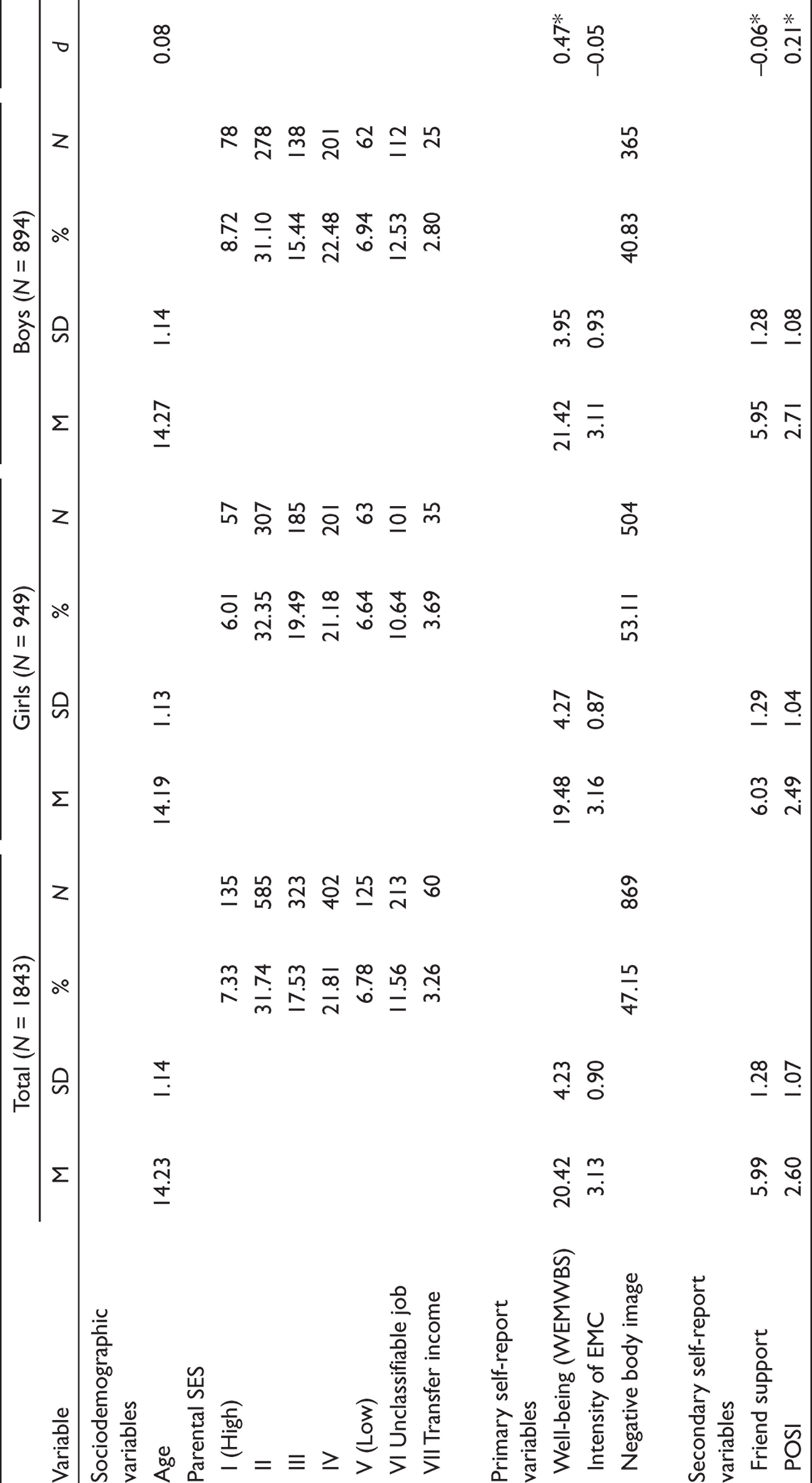
Table 1 presents the descriptive statistics of the Danish HBSC sample included in this study. As seen, boys scored significantly higher than girls on the WEMWBS and POSI. Girls, however, tended to experience slightly higher levels of friendship support and were more often dissatisfied with their body weight. In total, a higher percentage of the girls had a negative body image (53.1% of girls and 40.8% of boys). However, a greater portion of the boys rated their bodies as being too thin (8.2% of girls and 18.5% of boys), while the girls more often perceived their bodies as being too fat (44.9% of girls and 22.4% of boys). By applying Cole and Lobstein’s (2012) measure of age- and sex-specific thinness and overweight/obesity (International Obesity Task Force; IOTF) (Cole & Lobstein, 2012), only 27.2% of the pupils who perceived their weight as being too heavy were, in fact, overweight or obese (23.0% of girls and 35.8% of boys). The same finding was observed regarding thinness. Only 12.6% of the respondents who perceived themselves to be too thin were too thin according to the IOTF (23.7% of girls and 7.1% of boys). Early adolescence is characterized by greater critiques of one’s body, and many normal-weight adolescents evaluate their bodies as being too fat or too thin (Dohnt & Tiggemann, 2006). There were no significant differences in the intensity of EMC between boys and girls, which means that gender does not seem to influence how much time is spent actively communicating via electronic media.
Descriptive Data for the Danish HBSC Sample
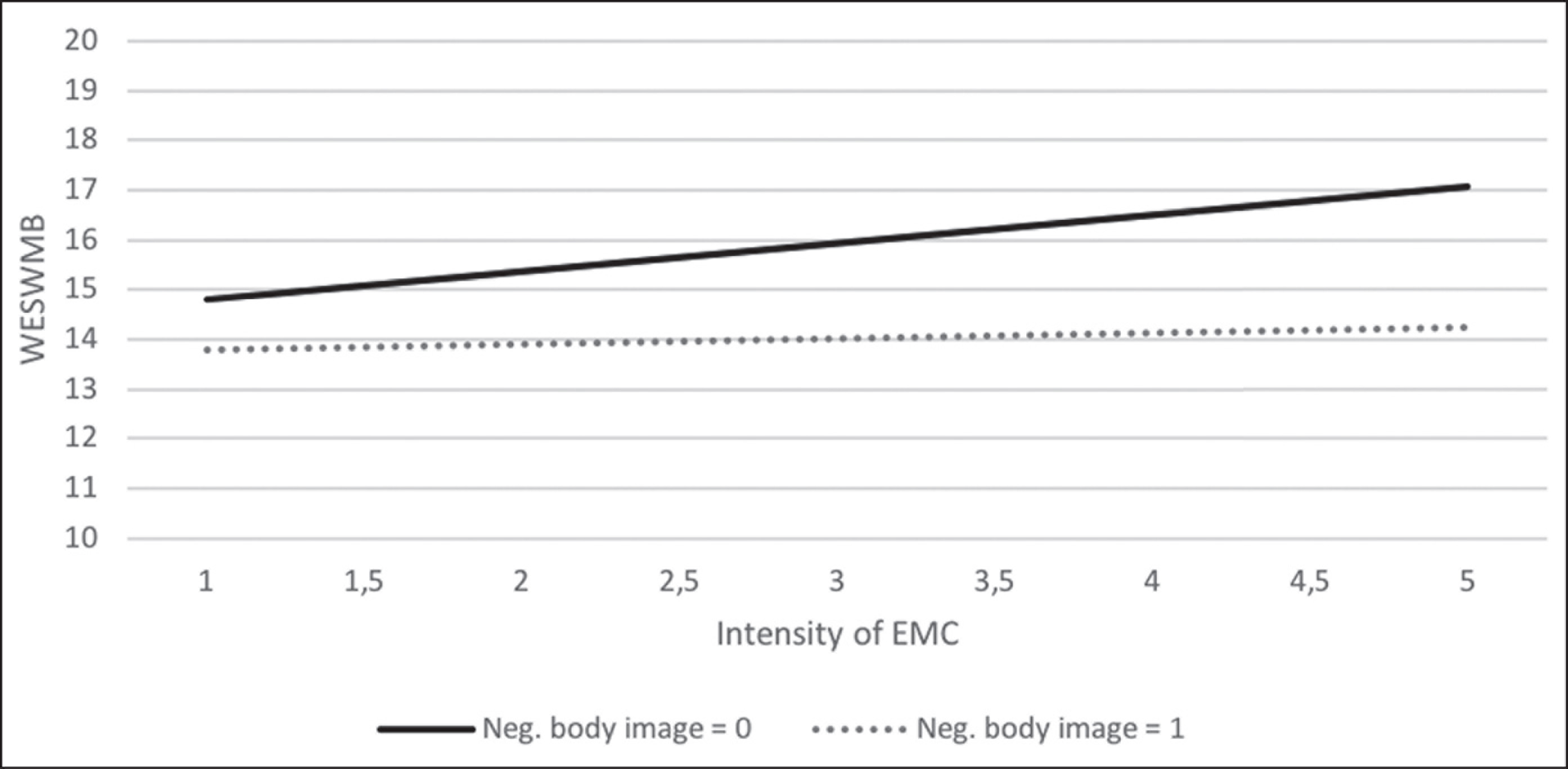
The findings indicate that adolescents who spend more time communicating through electronic media tended to experience higher levels of well-being (Table 2). Model 1 also shows that adolescents who were dissatisfied with their bodies scored an average of 1.483 points lower on the WEMWBS than their satisfied counterparts (ω2 = 0.039). Additionally, young girls tended to experience lower levels of well-being than boys, with a difference of almost two points on the WEMWBS on average (ω2 = 0.068). The total amount of explained variance in well-being was 28.4% in Model 1. A significant interaction was observed for the effects of EMC as a condition of negative body image (Model 2). This finding indicates that the positive relationship between electronic communication and well-being disappears in the presence of a negative body image. That is, only the early adolescents who did not have a negative body image reaped the benefits of communicating via social media and other electronic media, while no such connection was seen for dissatisfied adolescents; this reveals how the relationship is conditional. Although significant, this effect size is small (ω2 = 0.003). These results, however, indicate that the positive aspects of communication with friends through social media and other electronic communication forms, on average, appear to favour the adolescents who do not have a negative perceptual body image, which indicates an uneven distribution of the positive sides of EMC.
Model Coefficients for the Conditional Process Model
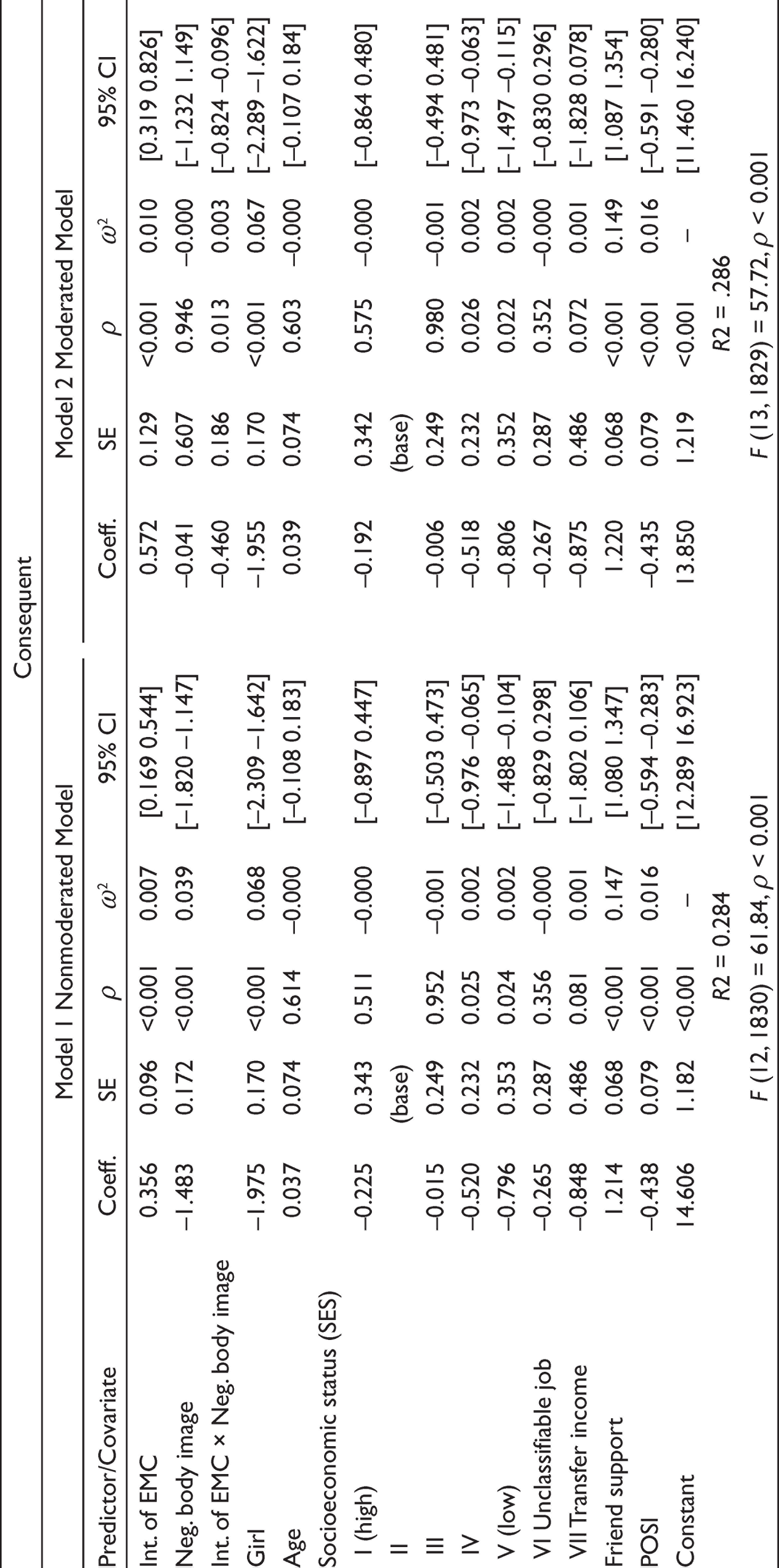
Model 2 explained 28.6% of the variance in well-being. For the covariates, similar findings are observed for both models. A higher POSI was negatively associated with well-being in both models, which indicates that a tendency to favour online interaction over offline interaction might negatively affect adolescents. The patterns of the effects of socio-economic background on well-being tended to favour adolescents from more resourceful backgrounds. Although no differences were found in the OSC groups I and III compared to group II, pupils from the two lowest socio-economic groups tended to experience lower levels of well-being than the pupils in group II. No significant differences were found in comparing the group in which both parents were on transfer income or in the unclassified group with group II. The reasons for this lack of differentiation could be that the unclassified group comprised a mix of different SESs and that the transfer income group comprised only 3% of the sample. Finally, no connection between age and well-being was found in this sample. After controlling for all the above covariates, Figure 1 shows a visual representation of the moderation, as described by Hayes (2018).
Discussion
As discussed earlier, previous research has shown conflicting findings in relation to the effects of EMC, and social media use in general, on the well-being of young people. In the non-conditioned model, this study found a positive connection between the intensity of EMC (e.g., through Snapchat and Instagram) and well-being. As previous studies have shown, this finding may be explained by, among other factors, higher levels of digital communication increasing perceived social support, facilitating self-disclosure (Best et al., 2014), for example, due to anonymity (Richards et al., 2015), creating a sense of community (Oh et al., 2014), promoting identity experimentation (Valkenburg & Peter, 2011) and by the role of peer communication in adolescents’ identity development and well-being (Davis, 2012). The findings support the observation that electronic communication has the ability to stimulate and encourage friendships (Gross, 2004; Valkenburg & Peter, 2011), as this study has shown. This finding emphasizes the importance of how the use of electronic media is measured. By simply measuring the time spent on social media, one can make the mistake of assuming that simply being on social media involves a person ‘being social’ and interacting with others. Actively participating in direct communication, like messaging friends and passively scrolling through social media, can have very different consequences (Appel et al., 2016). Furthermore, the self-reported time spent using social media tends to be inaccurate due to how children and adolescents have a difficult time accurately assessing their time spent using social media (Andrews et al., 2015; Ernala et al., 2020). It can be argued how it might be easier for adolescents to more accurately assess their daily contact with friends (e.g., through ‘streaks’ and ‘scores’ on Snapchat) than their total time spent on social media, online or screen time. The HBSC contains the self-reported time spent using social media on weekdays and during the weekends. However, a further examination of these variables shows weak correlations (Evans, 1996) between the intensity of EMC and the self-reported time spent using social media on weekdays (r = 0.28) and weekends (r = 0.29), which further emphasizes the discrepancy between the active and passive uses of social media and other forms of EMC. This finding further signals the importance for future research to consider the ways in which social media and other forms of electronic communication are being used instead of the total time spent on social media. A limitation of this study is that although arguments can be made about how adolescents might be better at assessing their time spent communicating with friends throughout the day, the intensity of EMC is still self-reported and therefore potentially still inaccurate.
Another implication of this study is how it suggests the importance of examining how EMC interacts with other aspects of young peoples’ lives to better understand the conditions under which EMC affects young people negatively and when it facilitates well-being. As this study shows, the relationship between the intensity of EMC and well-being among adolescents is conditioned by perceptual body image. This finding might be explained by the highly visual nature of the platforms that young people favour (Burnette et al., 2017; Marengo et al., 2018) and by the tendency of upward and negative social comparisons to decrease well-being (Fardouly & Vartanian, 2016; Liu et al., 2017; Richards et al., 2015) and to lead to a potentially higher risk of experiencing envy and lower self-esteem (Banjanin et al., 2015; Woods & Scott, 2016). This characterization may be even more apparent through digital communication due to how digital social places tend to be dominated by a highly idealized nature and positive self-presentation (Banjanin et al., 2015; Woods & Scott, 2016), which prompts young boys and girls to evaluate their bodies based on a wider audience and on a greater scale (Sørensen et al., 2017). In this sense, a highly visual and idealized way of communicating could potentially influence adolescents’ attitudes towards their bodies and remove the positive aspects of communicating with their friends. Moreover, previous empirical and theoretical contributions to youth studies have noted that contemporary youth culture, in general, is categorized by a narrower perception of normality, with perfection at its core (Hummelmose et al., 2017; Juul & Østergaard, 2016; Sørensen et al., 2017). No place may this characterization be more apparent than on social media, which can, in turn, potentially intensify adolescents’ relationships to their body (Banjanin et al., 2015; Gerisch et al., 2019; King et al., 2018; Shilling, 1993; Woods & Scott, 2016) and result in drawbacks in the form of decreases in mental health (Eckersley, 2011; Keddie, 2016; Låftman et al., 2013). Regarding communication through electronic media, due to the increasing involvement of social media in young peoples’ interactions, highly idealized and even unrealistic perceptions of perfection as the new normal may distract adolescents from the most important element of well-being: the quality of their relationships with each other and the world, which, ideally, contribute to a deep and ensuring sense of intrinsic worth and existential certainty (Eckersley, 2011, p. 633).
The argument for narrower perceptions of normality among youth can be further supported by the dominance of stereotypical gender images on social media (Ruckel & Hill, 2017). This point is supported by this study, in which young boys were more likely to rate their bodies as too thin, and girls were more likely to rate their bodies as too fat. This discrepancy between actual and perceived weight was particularly prevalent among young girls. Previous research has linked social media to the blatant sexualization of girls (Ruckel & Hill, 2017), with the female standard of beauty more often than not being a thin body (Benton & Karazsia, 2015; Burnette et al., 2017; Butler, 2004; Sypeck et al., 2004); in addition, research has shown that exposure to thin, idealized images can lead to increased body dissatisfaction among women (Robinson et al., 2017). Negative body image is, however, not only an issue among girls (Mitchison et al., 2014), and this study also shows how negative body image and a discrepancy between actual and perceived weight is also present among boys. However, for boys, the discrepancy is more connected to a traditionally masculine idea of a strong and powerful body (Butler, 2004; Stratton et al., 2015).
As previously stated, body image is, however, a multidimensional concept (Pruzinsky & Cash, 2002; Thompson & van der Berg, 2002; Verplanken & Velsvik, 2008). A limitation and a weakness of this study is how a single-item measurement of perceptual body image is vague and does not fully encapsulate the complexity of the concept. When this study examines body image, it only addresses one aspect of perceptual body image, namely size. Further research should elaborate on the relationships among EMC, well-being and body image by applying measures that better capture the complexity of body image. For instance, this study does not address the behavioural aspects of body image. Furthermore, the models included in this study do not take personality factors into account, like the Big-Five Model (Goldberg, 1993). A limitation to this study is that personality traits, like neuroticism and extraversion, were not taken into account when examining the relationships between EMC, well-being and body image among early adolescents. However, the study addresses the important issue of approaching the aspects of social media and other forms of EMC from a conditional analytical standpoint to better understand the nuances of its ambiguous nature. The implication is that future research should strive to contribute to discussions of the effects of EMC and social media on young people’s well-being by examining how other aspects create contingent conditions for interacting via digital social spaces, including personality traits. A further implication of the study is how a measure of time spent using social media is too vague in capturing the ways in which this technology influences young people.
Conclusion
Overall, this study finds that the intensity of EMC is positively related to well-being among early adolescents. Positive results are found when examining the intensity of communication rather than measuring, for example, the total time spent on social media or screen time. However, this positive relationship is conditioned by perceptual body image, which indicates how the positive relationship is not equally distributed among early adolescents. By applying a moderation analysis, the results suggest that the relationship between social media and well-being is very complex and interacts with other aspects of young people’s lives.
Footnotes
Acknowledgements
I acknowledge Rolf Lyneborg Lund for statistical assistance and Mette Rasmussen, Bjørn Holstein and Mogens Trap Damsgaard for their assistance in data handling.
Declaration of Conflicting Interests
The author declared no potential conflicts of interest with respect to the research, authorship and/or publication of this article.
Funding
The author disclosed receipt of the following financial support for the research, authorship and/or publication of this article: This research has received funding from Innovation Fund Denmark (grant no. 8118-00016B).