



Abstract
The use of fibre-reinforced plastics (FRPs) in sandwich structures increased for various industrial applications thanks to their strength-to-weight ratio which provides designers with advanced options for modern structures. FRP Sandwich Structures (FRPSS) are often used in aerospace, biomedical, defence, and marine products, where their high structural performance is required to sustain complex in-service loads and withstand varying environmental conditions. Progressive degradation of FRPSS under such circumstances has been a subject of interest for researchers owing to safety requirements for products with FRP. This paper reviews the state-of-the-art of the mechanical behaviour of FRPSS subjected to various loading regimes. It highlights the variation in structural performance, viscoelastic properties, damage resistance, and sequence of environmental degradation of FRPSS. Numerical methods and damage algorithms used to predict failures are also presented to provide sufficient knowledge for the design of FRPSS. This review contributes to further research on characterizing the properties of FRPSS under quasi-static and dynamic loading conditions.
Keywords
Introduction
Fibre-reinforced plastics (FRPs) are composite materials containing fibres embedded in a polymer matrix; they are non-homogeneous and anisotropic. The last five decades have witnessed a rapid increase in the exploitation of FRPs in industrial applications, thanks to their superior performance compared to traditional metals and alloys. 1 While offering a high stiffness-to-wight ratio, in service, they retain a significant level of resistance to corrosion and fatigue, which elongates the life span of products made of FRPs. Their properties can also be tailored to meet the requirements of specific applications especially by adapting features of fibres and by changing the volume fraction and orientation of fibres. 2 Recent advances in FRP design are related to sandwich structures made with FRPs laminate face sheets to optimize their weight without compromising the structural performance. Composite sandwich structures consist of multiple layers of materials joined into a single structure to efficiently support the load transfer between the constituent. FRPSS are particularly exploited in cases requiring high bending stiffness at low weight. For instance, it is common to find sandwich structures in applications such as automotive and aerospace applications, wind turbines, naval vessels, boats, refrigeration trailers, rail cars, and bridge construction.3–5 The overall performance of sandwich structures depends on the properties of their components and the quality of joining. The research in6,7 adapted the constituents of sandwich structures to certain engineering applications.
FRP sandwich face sheets primarily resist normal stresses under bending while providing enhanced fatigue and damping properties. FRPSS are usually designed with relatively thin sheets in comparison to the core which is often much thicker to provide sufficient stiffness in compressive, tensile, bending, and buckling loadings.
8
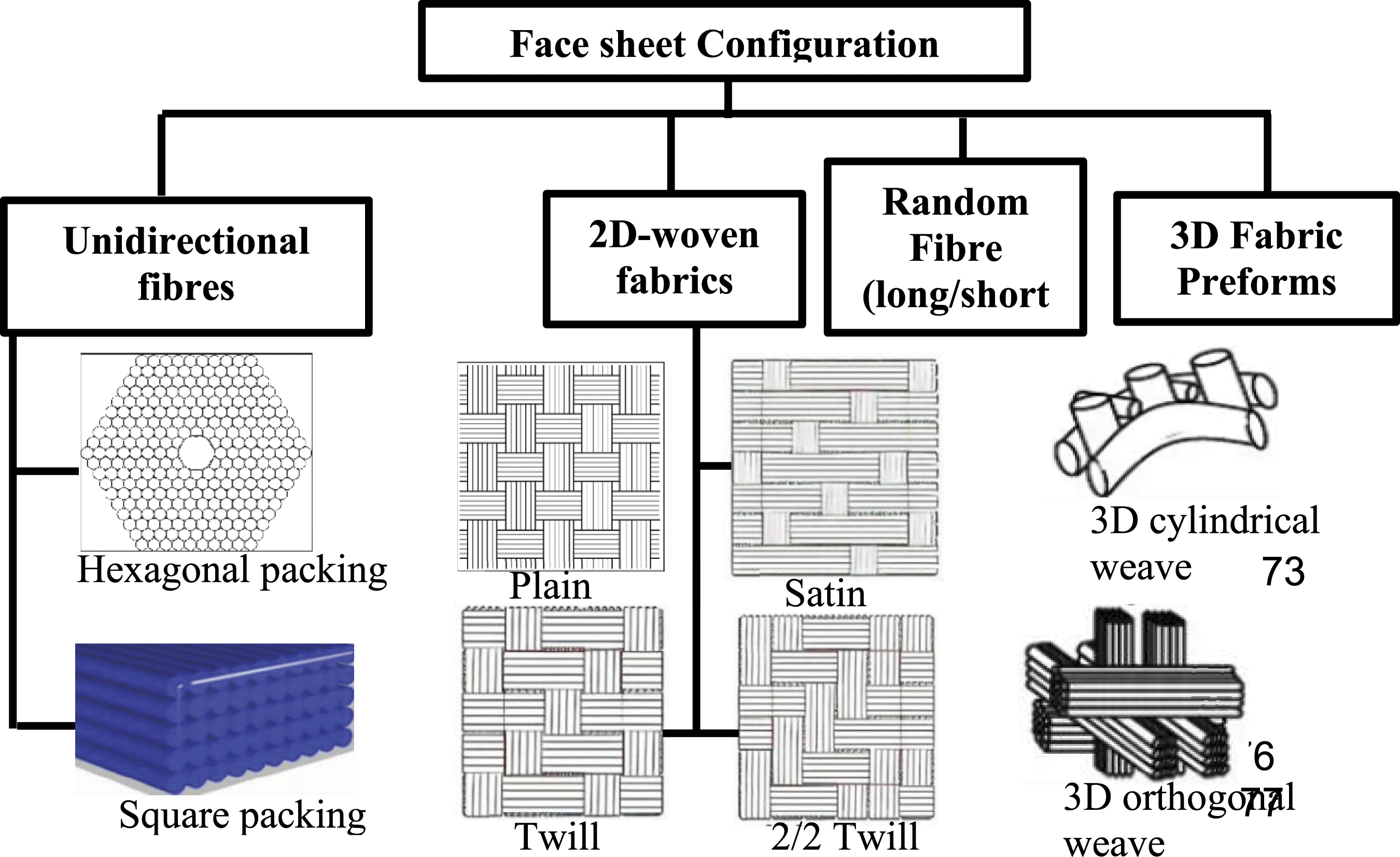
Face sheets of carbon-fibre-reinforced plastics (CFRP) and glass-fibre-reinforced plastics (GFRP) in FRPSS (Figure 1) are often tailored for specific applications. The core of the sandwich provides resistance to shear stresses and extension in the thickness direction.
9
Generally, sandwich structures are made with cores of lower density compared to the face sheets to maximize the stiffness-to-weight ratio. The selection of face sheets and core materials could be guided by several parameters such as application, operational environment, and stiffness requirement. A common selection criterion used in choosing FRP face sheets is Ashby’s
10
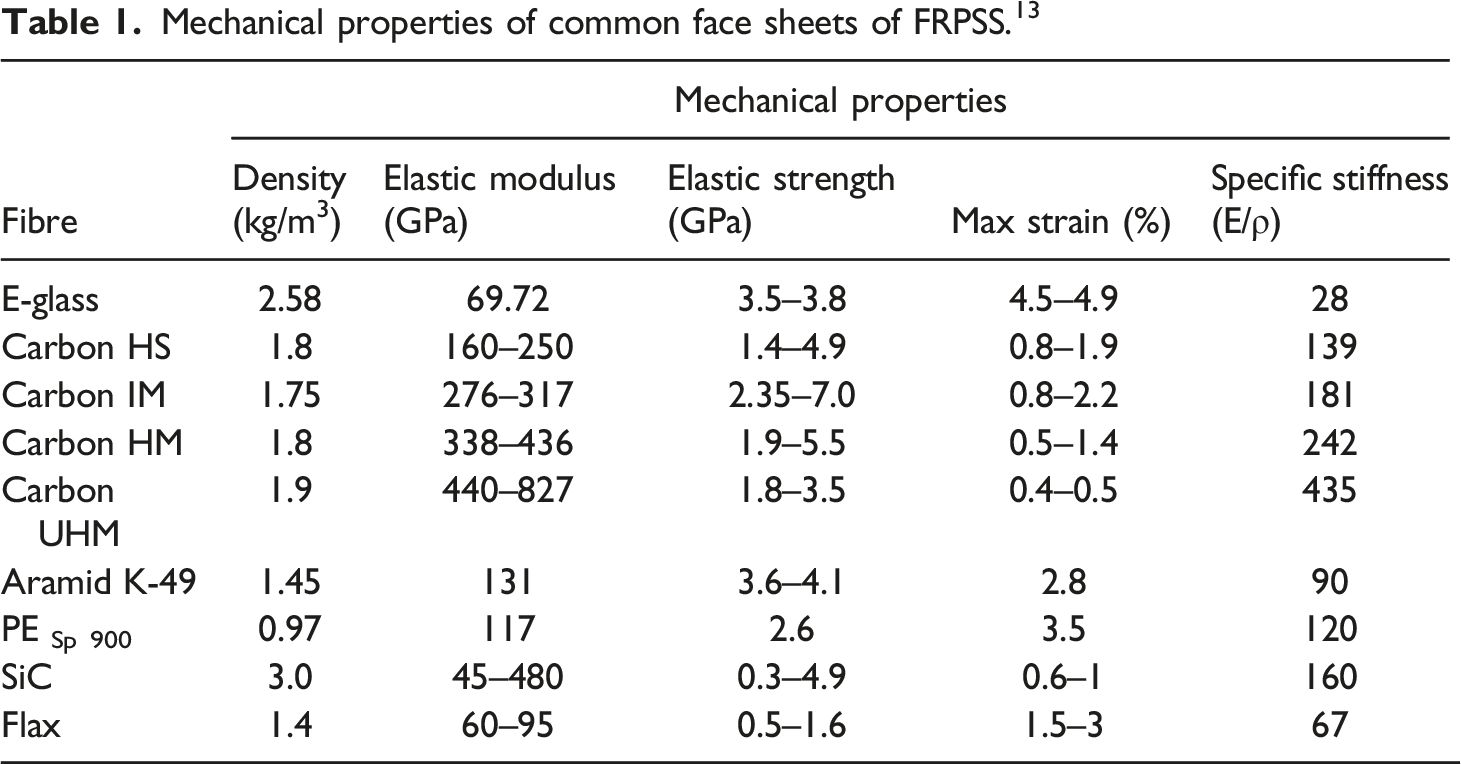
material property guideline. In recent years, there have been advancement in the use of a wide range of fabric designs as face sheets for FRPSS, some of which include the use FRP fabrics kitted in the weft and warp directions. These fabrics have demonstrated significant improvement in the mechanical properties of the modified structures when compared to more traditional constituents.11,12 The mechanical characteristics of materials commonly used as face sheets in FRPSS is given in Table 1 below. Common FRP face sheet geometry. Mechanical properties of common face sheets of FRPSS.
13
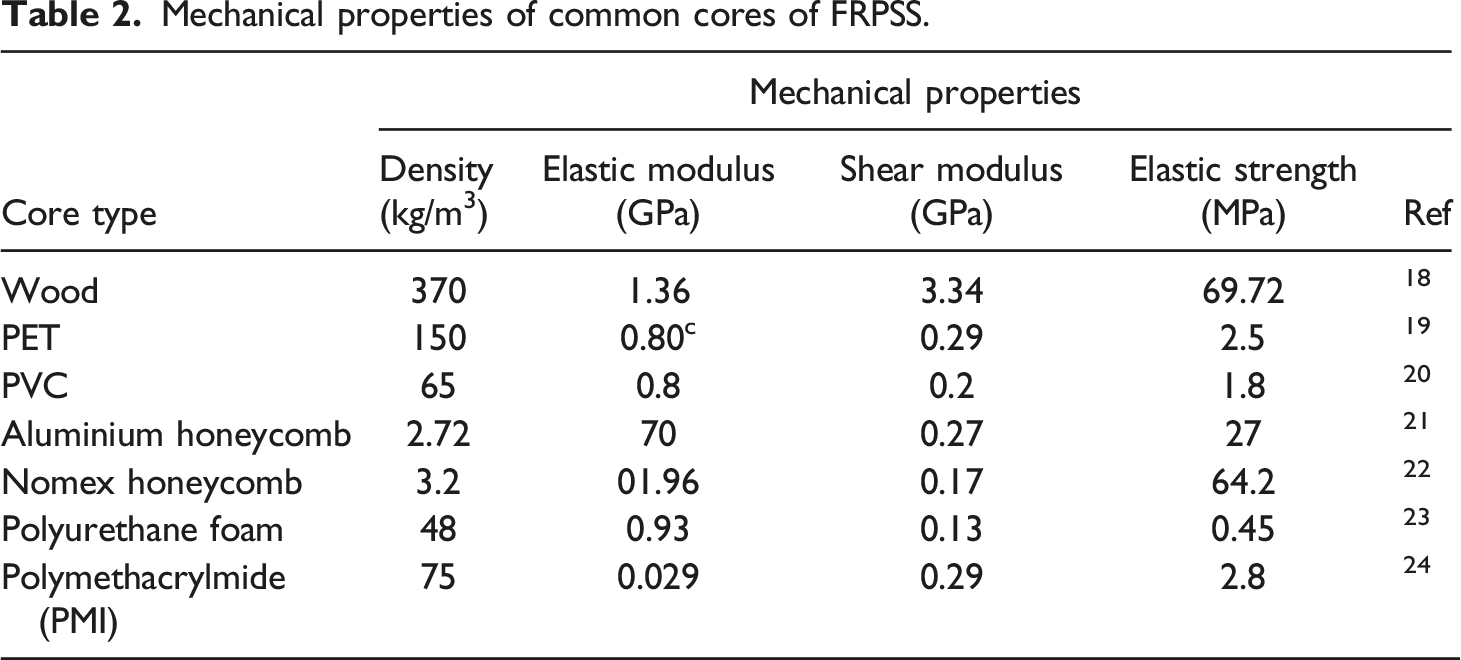
Mechanical properties of common cores of FRPSS.
An example of the typical constituents of an FRPSS is described in Figure 2. A detailed analysis of the calculation of the stiffness and strength of constituents of sandwich structures is given in Carlsson.
25
Constituents of a typical composite sandwich structure.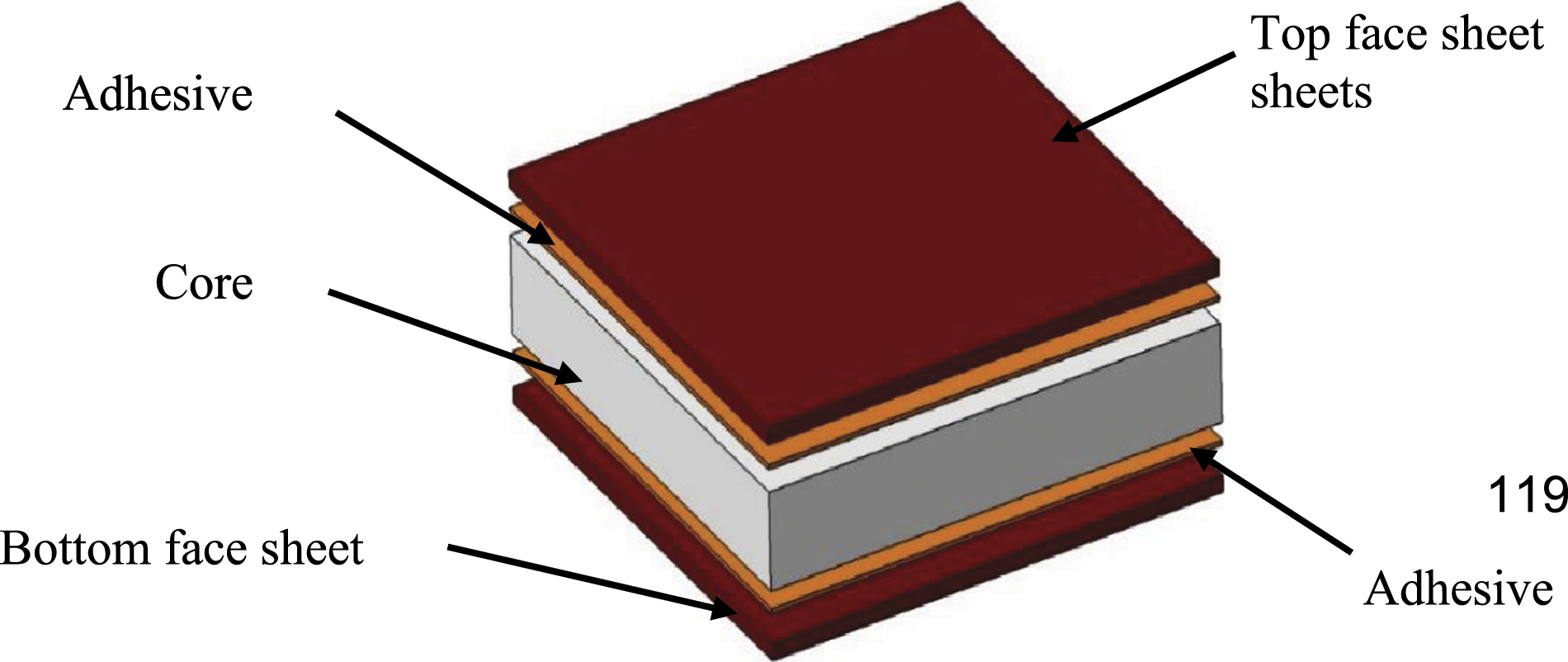
Specific features of FRP necessitated investigations into their performance when subjected to a diverse range of loads and environmental conditions.26–28 Various studies elucidated the effects of manufacturing techniques and the configuration of their constituent parts on the mechanical properties of the structures.29–35 Particularly their behaviour under low-velocity impacts such as bird strikes, hailstones, or lightning strikes as well as common maintenance and manufacturing operations was studied extensively. Under such accidents, the mechanical performance of the FRPSS could be compromised in-service potentially leading to a reduced life. 36 This can be exacerbated by the invisibility of sub-surface progressive damage and adverse environmental conditions. This is often associated with a so-called barely visible damage that can compromise the residual strength of the structure. This led to the investigation of several failure modes including indentation/cracking, face sheet buckling, delamination within the face sheet, and disbonding between the face sheet and the core.37–39 Research conducted in this area can be classified into three main fields; experimental,40,41 numerical, 42 and non-destructive test methods (NDTs).19,43,44
This review presents the findings of recent experimental and numerical studies on the performance of FRPSS subjected to quasi-static and dynamic loading with or without environmental degradation. This paper reviews recent data on the mechanical properties of FRPSS. Selected experimental and numerical studies covering the elastoplastic and viscoelastic behaviours of the constituents of the structure under quasi-static and dynamic loads are discussed. Finally, future directions for the research into FRPSS are outlined. This paper aims to provide an up-to-date understanding of the state-of-the-art of FRPSS to enable researchers rapidly gain insights to support their future research. It also highlights the emerging areas in the literature on the mechanics of FRPSS that may require further research. The selected research highlighted in this article is focused on recent studies in the literature from 2007 to 2022 that highlight the quasi-static and visco-elastic behavior, numerical simulation, and environmental degradation of FRPSS.
Experimental analysis
Experimental investigations of the mechanical properties of FRPSS abound in the literature, especially on their elastic and damage behaviour. Several studies45–48 used different experimental techniques to understand the nature of damage of FRPSS.
Characterization of quasi-static mechanical behaviour
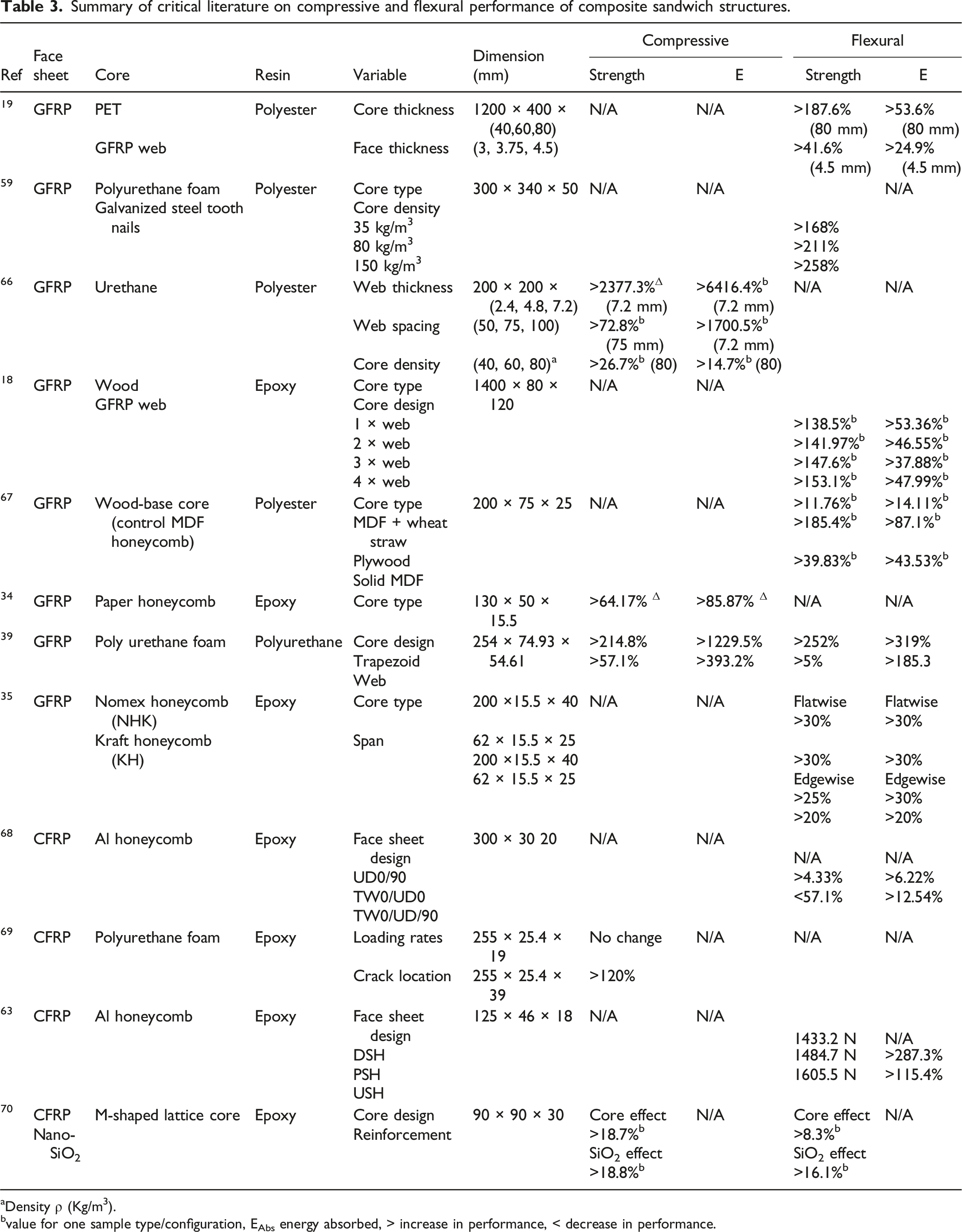
In analysing of mechanical properties of sandwich structures, variations in their parameters such as stacking sequence of face sheets, core density, and interfacial bonding between the core and the face sheet are vital in determining the damage resistance and damage tolerance of the structure.49–58 For instance, Xie et al. 59 investigated the mechanical behaviour of FRPSS with a hybrid core made from polyurethane foam of different densities, impregnated with galvanized metal tooth nails, by subjecting them to three-point bending and double-cantilever-beam tests. The research compared strengthened sandwich samples with galvanized metal tooth nails between the E-glass face sheets and the polyurethane foam core with that without such nails. Results showed that increasing the core density from 35 kg/m3 to 159 kg/m3, increased the peak strength of the samples by 90%. Similarly, an increase in the face sheet and PET foam thickness can significantly enhance the ultimate flexural load of the panels. For instance, an increase in the face sheet thickness from 3 mm to 4.5 mm and core thickness from 40 mm to 80 mm resulted in the rise of the ultimate flexural load by 88.9% and 115.6%, respectively. 19 This enforces the fact that a thicker web core can enhance the bending properties of sandwich panels; however, this could reduce their weight-to-stiffness ratio. Additionally, this research identified the main failure modes of FRP sandwich lattice-web panels as core shear, top face sheet compression, and skin/core local debonding. Similar studies on the flexural properties of FRPSS with different constituents were carried out.18,19,56,60–64 For example, Sayahlatifi et al., 60 investigated the flexural properties of e-glass/epoxy panels with the inclusion of corrugated composites in the balsa-wood core. They revealed an increase in the post-failure regime of the load-displacement response. Furthermore, it was observed that while the hybrid core increased the strength and stiffness of the sandwich structure (by 78.1% and 29%, respectively), it had a minimal effect on the stiffness-to-weight ratio. Interestingly, Xie et al. 19 established that the use of lattice web (the inclusion of layers of reinforcements along the through-thickness direction of the core at designated intervals) and PET foams prevented the complete failure of the structure even after the onset of damage. Also, the increase in the thickness of the face sheets can alter the failure mode of the structure from compression rupture of face sheets to skin/core debonding.
Adigun et al.
65
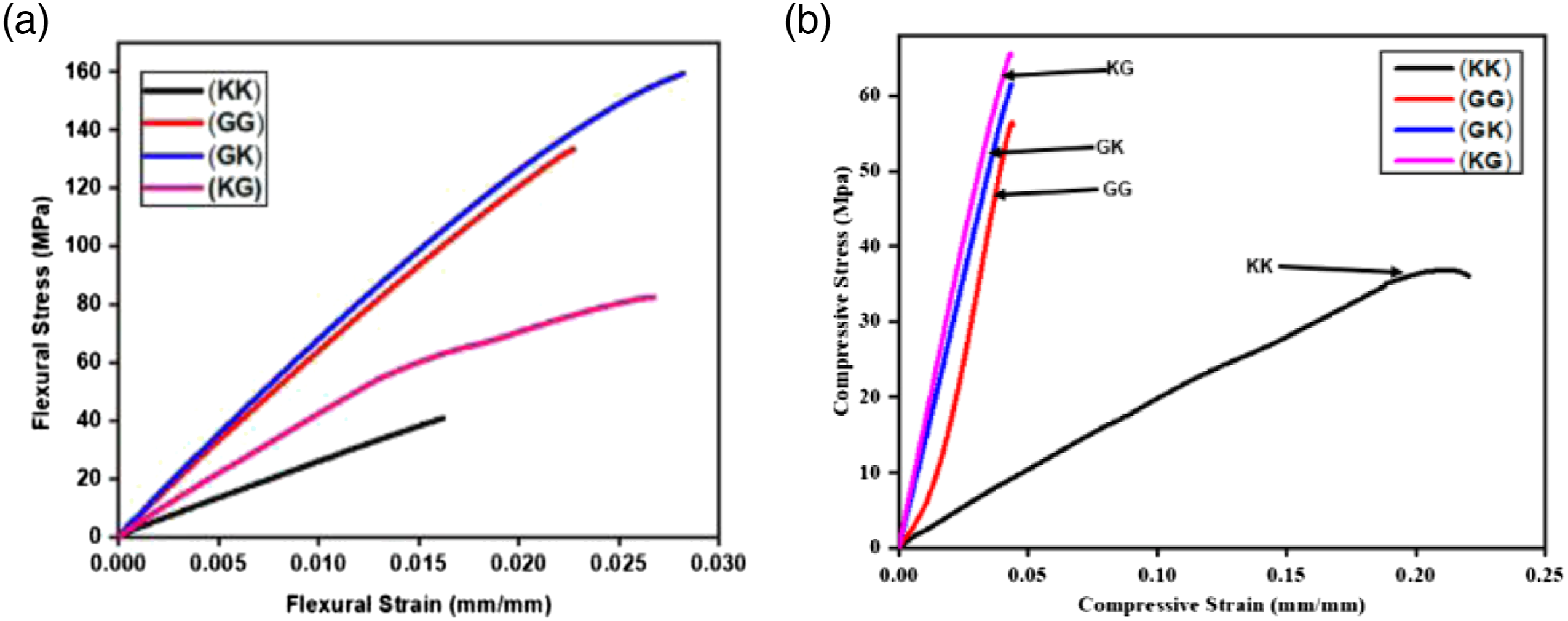
investigated the mechanical performance of FRPSS by comparing the effects of hybrid (natural/synthetic) reinforcements and fully natural or synthetic face sheets. In the study, FRPSS with core made from syntactic foam filled with hollow glass microspheres and kenaf/GFRP/epoxy face sheets were used. The study showed that the specimens with hybrid face sheets (kenaf/glass arrangement) had the highest compressive strength while another hybrid arrangement - glass/kenaf - of face sheets performed better under flexural loading conditions as shown in Figure 3. This was attributed to the contributions of the various constituents and their demonstrated adhesive interaction force. Such enhanced properties could be beneficial for industry-specific applications such as the design of marine and aerospace structures. Stress-strain curves of composites sandwich structures with different face sheets: (a) flexural; (b) compressive. (KK – kenaf/kenaf, GG – glass/glass, GK – glass/kenaf, KG – kenaf/glass).
65
Summary of critical literature on compressive and flexural performance of composite sandwich structures.
aDensity ρ (Kg/m3).
bvalue for one sample type/configuration, EAbs energy absorbed, > increase in performance, < decrease in performance.
Characterization of the visco-elastic performance
Composite sandwich structures like many composites exhibit viscoelastic behaviour under a time-dependent load condition that cause the structure to experience creep or stress relaxation. The dynamic mechanical analysis (DMA) test is often used to assess the viscoelastic properties of composite experiencing such conditions. This test investigates the material response in terms of parameters such as storage modulus, loss modulus, and tan δ of materials and structures within specific temperature and frequency ranges.71,72 The low load capabilities of most measuring equipment have minimized the quantity of data for the frequency range (0 Hz–150 Hz). Redmann et al.
73
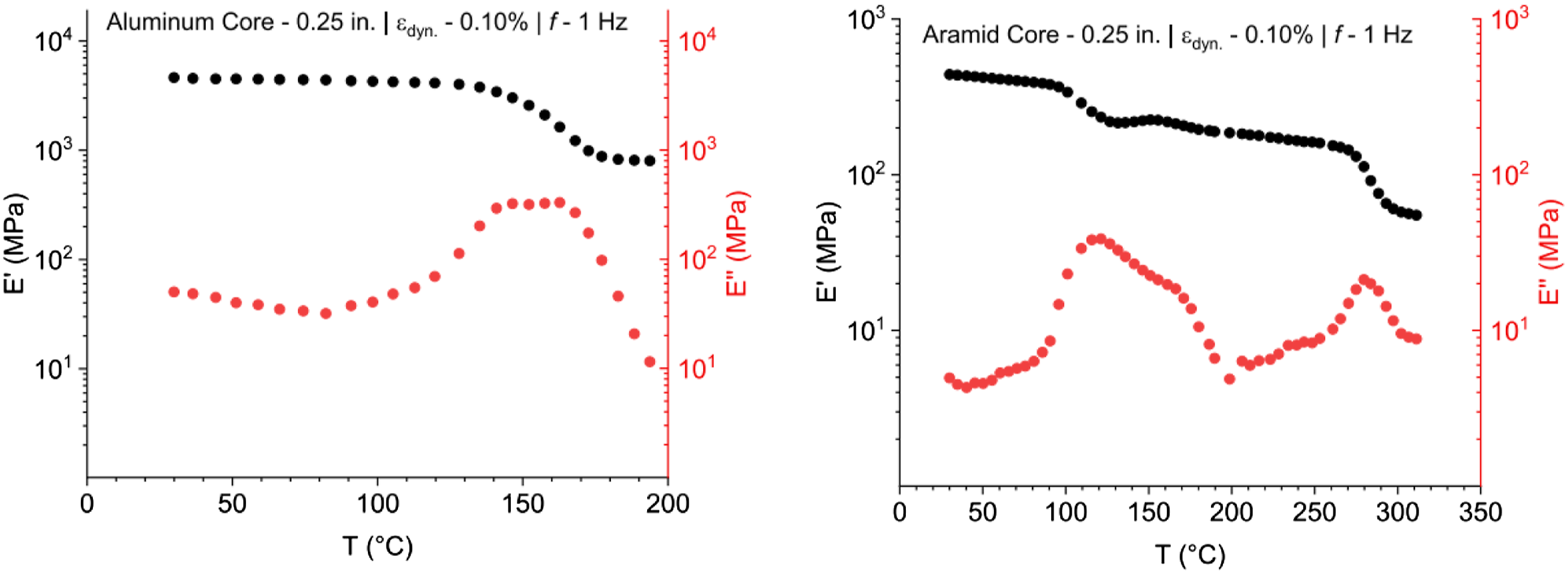
compared the relative stiffness and damping properties of sandwich panels with aluminium and aramid cores within frequency sweeps ranging from 1 to 100 Hz. The analysis was also conducted with a temperature sweep analysis (varying the temperature within the temperature range of 0°–200°C) and it was demonstrated that the damping behaviour of the sandwich panel was dependent on the applied static load and core type. It should be noted that the sandwich structure with aluminium core was post-cured at a higher temperature (90°C) compared to the composite panels with the aramid core (65°C). The effect of this difference in post-cure schedule was demonstrated by the variation in the glass transition temperature Tg of the epoxy used as matrix for the face sheets. As can be seen from Figure 4, the glass transition temperature (denoted by the peak in the loss modulus, E″) was higher (154°C) for the sandwich with aluminium core than that with the aramid core, which was at 119°C. This significant difference in values was in good agreement with the data measured for epoxy laminates with different thermal treatment. Additionally, it can be observed that the peak in the loss modulus (one in the sandwich with aluminium core and the first in the aramid-core specimen) was clearly due to the transition of the epoxy material used in the face sheet fabrication. The second peak was attributed to the phenolic resin used in the coating of the aramid core. Therefore, in this study, the use of DMA techniques provided sufficient information on the viscoelastic properties of the sandwich materials that could be used for optimization of the designs. DMA temperature-sweep analysis for sandwich panels with two core types.
73
Mechanical impact
Over the years, researchers are in agreement that impact can be broadly categorized into two main groups: low-velocity and high-velocity. However, there still exists a lack of consensus on their definitions and what constitutes the transition from one to another. Some researchers have argued that low-velocity impact could be primarily viewed as quasi-static in nature. 74 The dynamic response of the specimen under this arrangement is such the contact duration is long enough for the entire respond thereby absorbing more energy. In terms of speed of the projectiles, most researchers consider the velocity range of low-velocity impact velocities below 100 m/s.27,36,75 Researchers also group impacts according to the test techniques the loads generated by instrumented falling weight impact testing (Charpy, IZOD, drop weights etc.) are considered low velocity impact. On the other hand, high velocity impact is dominated by a fast stress (speed above 100 m/s) wave propagation through the material in which the structure does not have sufficient time to respond. Thus, boundary conditions effects do not play a major role as the impact event is over before the stress wave reaches the edge of the structure. 74 Additionally, a major difference between low-velocity and high velocity the nature of the damage experienced by the structure. Thus, low velocity is characterized by delamination and matrix cracking while in high velocity penetration-induced fibre breakage is most critical. 76
Low-velocity impact
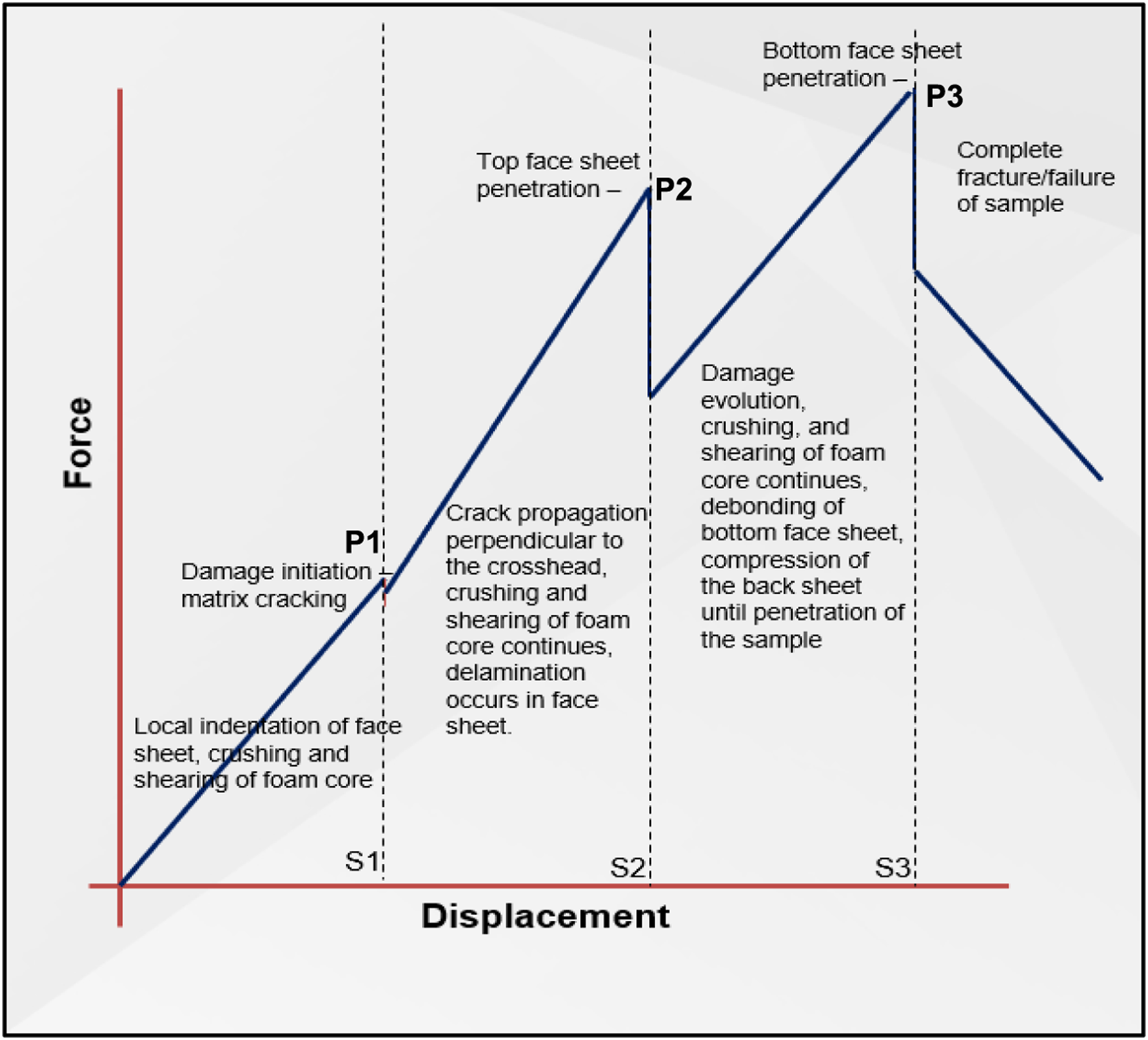
Under low-velocity impact, FRPSSs exhibit two-peak loading regimes attributed to the response of the FRP face sheets (top and bottom). A damage-initiation stage consists of local indentation of the face sheets with matrix cracking, followed by a penetration of the top face sheet as the damage evolves. Thereafter, as crushing and shearing of the core progresses, debonding between the core and the bottom face sheet occurs, after which excessive compression of the back sheet can lead to the eventual damage of the sample under repeated loading up to the material strength. Several researchers examined the response of FRP sandwich panels under such low-velocity impact loads.20,77–80 Low-velocity drop weight tests were performed on the sandwich panels with carbon-fibre face sheets and cores manufactured from linear PVC, crosslinked PVC and PEI foams bounded together. 28 The test demonstrated that the peak load associated with the fracture of the rear skin was higher by nearly three times than that of the top skin. Specifically, the research established that placing the high-density core against the top face sheet can lead to improved impact resistance thanks to the core of the distal surface.
Chen et al. used the drop-weight technique to investigate the perforation of a sandwich panel with CFRP/epoxy face sheets and Nomex honeycomb core.
81
An impactor with a diameter of 12.5 mm at a speed of 2.23 m/s corresponding to initial energy of 22.25 J was used for this analysis. The results obtained were used to validate the quasi-static and dynamic properties of the panels in a numerical model. It was found that the damage characteristics were similar to the available data in the literature for fibre fracture/rupture, matrix crushing/cracking, and delamination as well as the core crushing and debonding. Modifications of the material properties of sandwich panels were made in some studies to mitigate damage in the plates. Ramakrishnan demonstrated that the inclusion of nanoparticles in the resin prevented the damage localization in the impact zone and ensured its spread across the structure.
24
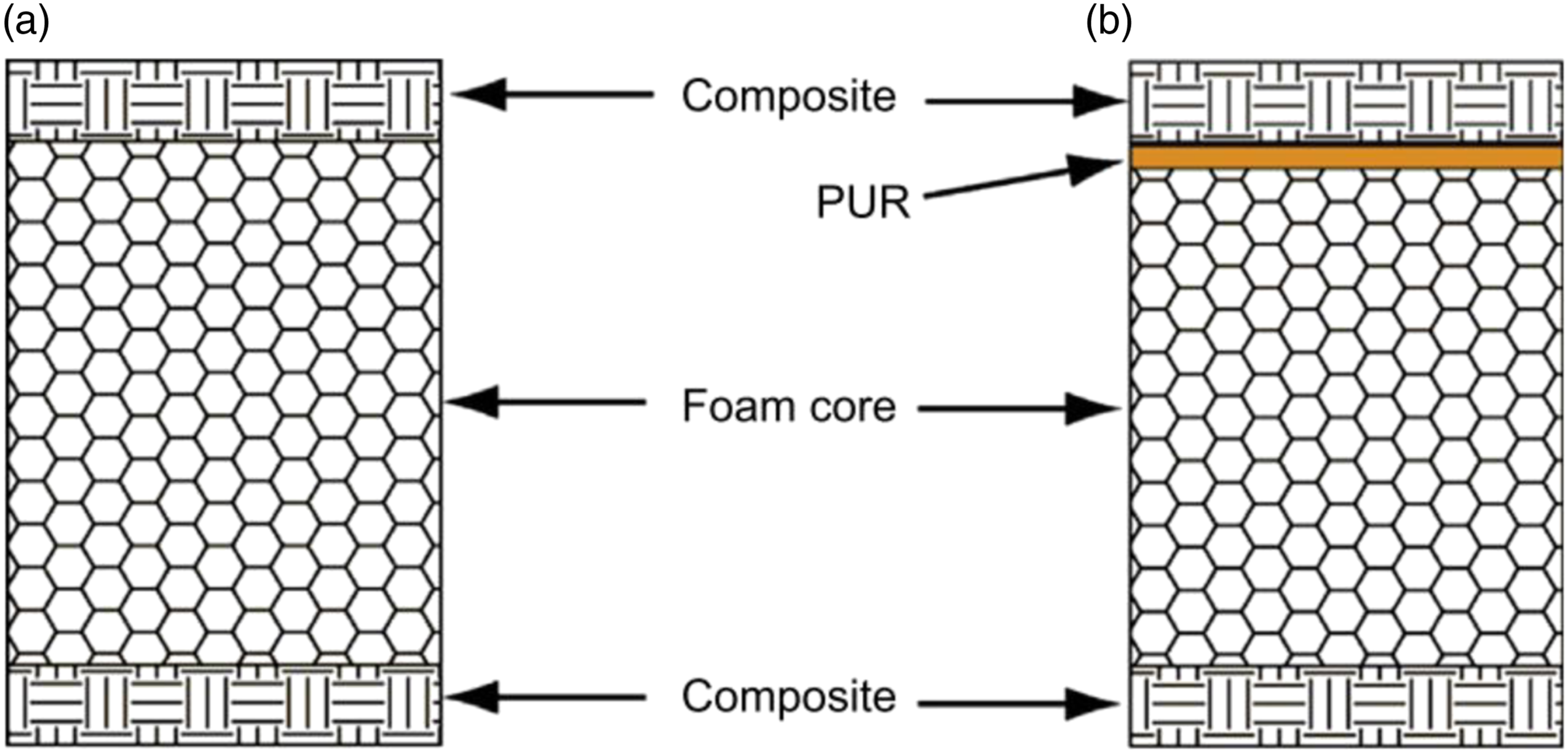
Similarly, the inclusion of a layer of polyurea and polyurethane (PUR) between the face sheets and the core of sandwich structures as shown in Figure 5 demonstrated to improve the impact resistance significantly.
82
The work revealed that for a FRPSS specimen subjected to an impact energy of 67 J, the inclusion of the 1 mm- and 2 mm-thick PUR layer reduced the depth of indentation by 30% and 60%, respectively. The enhanced impact resistance was consistent, irrespective of the manufacturing process (vacuum infusion or hand-layup). Modified sandwich structure: (a) conventional design. (b) modified design with PUR layer.
82
It is also common to use quasi-static indentation (QSI) analysis to identify the failure mechanisms in a low-velocity impact and the sequence of interactions between the constituents of the sandwich structure during such damage.83–89 Owing to the similarities in the damage modes, several studies showed that the quasi-static indentation (QSI) method could give indications of the damage mods in LVI for composites.84,90 Zniker et al.
61
used this method to compare the energy absorption capability of GFRP laminates and PVC-foam sandwich structures under repeated impacts and reduced energies using a modified Charpy test and QSI experiments. Their results revealed that while the indentation energy for the laminates with varying thicknesses was identical, the presence of the foam core significantly improved the damping properties of the sandwich structures. Furthermore, the damaged area of sandwich structures was larger than that in the laminates and predominantly in the form of delamination. Similar studies demonstrated that failure modes of sandwich structures due to QSI were similar to those by QSI, namely, core buckling, core crushing, delamination in face sheets, debonding between the core and face sheets as well as matric cracking and fibre breakage in the face sheets.91–94 A typical force-displacement curve reflecting the initiation and evolution of damage in a sandwich panel under QSI is depicted in Figure 6. Damage evolution of typical sandwich panel under the low-velocity impact (QSI) adapted from.
83
High-velocity impact
FRPSS are also employed in applications that require resistance to blast/high-velocity loading regimes thanks to their considerable energy-dissipation capabilities. Unlike low-velocity loading conditions, panels subjected to ballistic impacts are controlled by stress-wave propagation and are independent of boundary conditions.
95
A typical high-velocity setup is depicted in Figure 7. The core of the structure is beneficial for this application since it allows the structure to undergo large plastic deformation at relatively constant stress, thereby, absorbing a large amount of kinetic energy before fracture. Generally, the study and use of sandwich structures as energy absorbers have increased in recent years.96–101 Ivanez et al.
102
examined the effect of a cork core on the energy absorption properties of FRPSS under high-velocity impact loading, comparing it to corresponding laminates. It was observed that the ballistic limits (per areal density) for intact panels (sandwich and laminates) were similar, while already damaged ones exhibited a variation of about 36%. Thus, the study revealed that under high-velocity loading sandwich panels with cork cores displayed no significant improvement in energy absorption for intact samples except for panels that were previously damaged.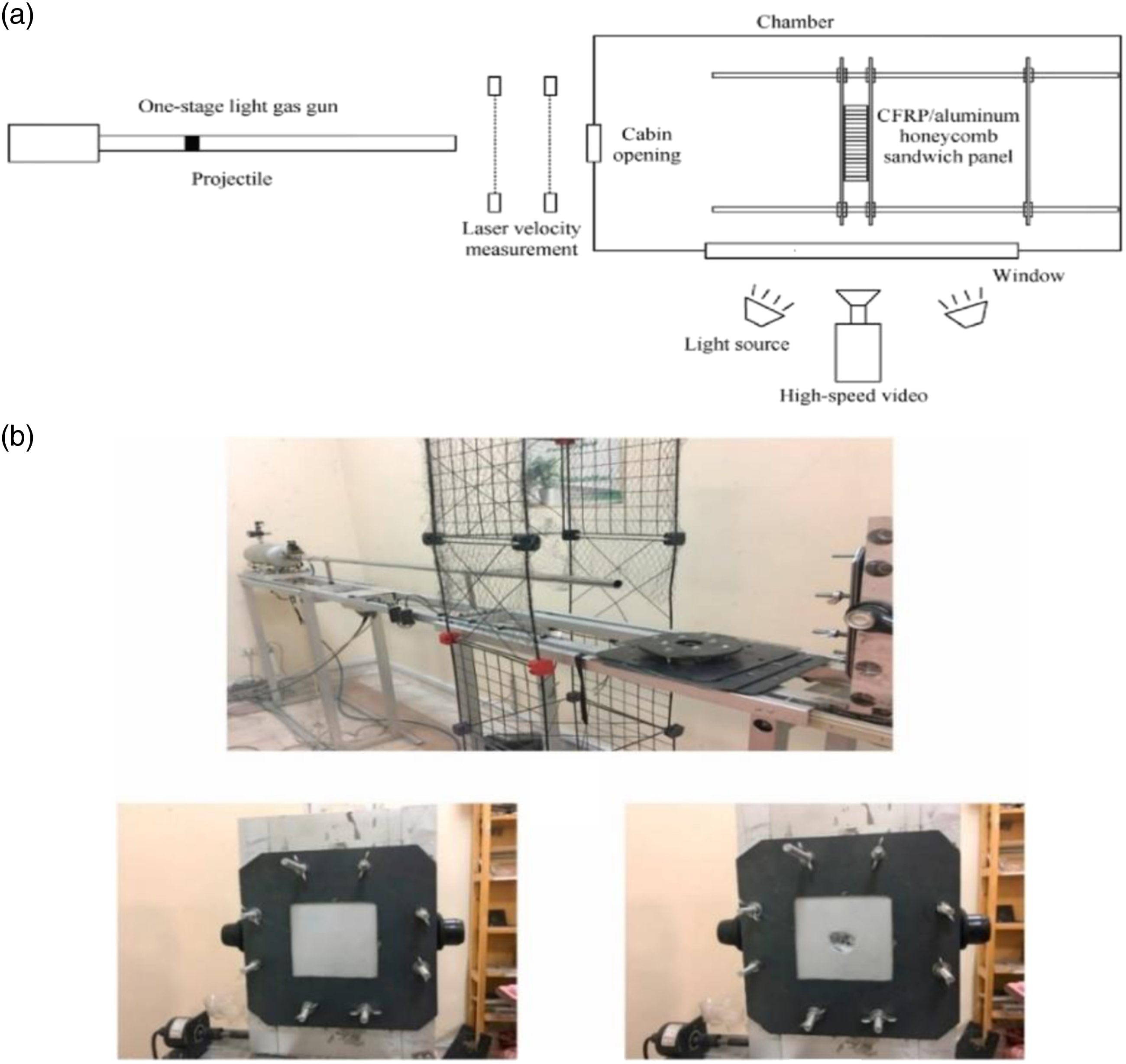
The effects of a high-velocity projectile on the front and back face sheets of the sandwich panels provide useful information for the optimization of the structure for the ballistic application. The assessment of the energy-absorption capabilities of CFRP face sheets with an aluminium-honeycomb core sandwich panel revealed that more than 70% of the kinetic energy was absorbed by the front face sheet. 21
Usta et al.
104
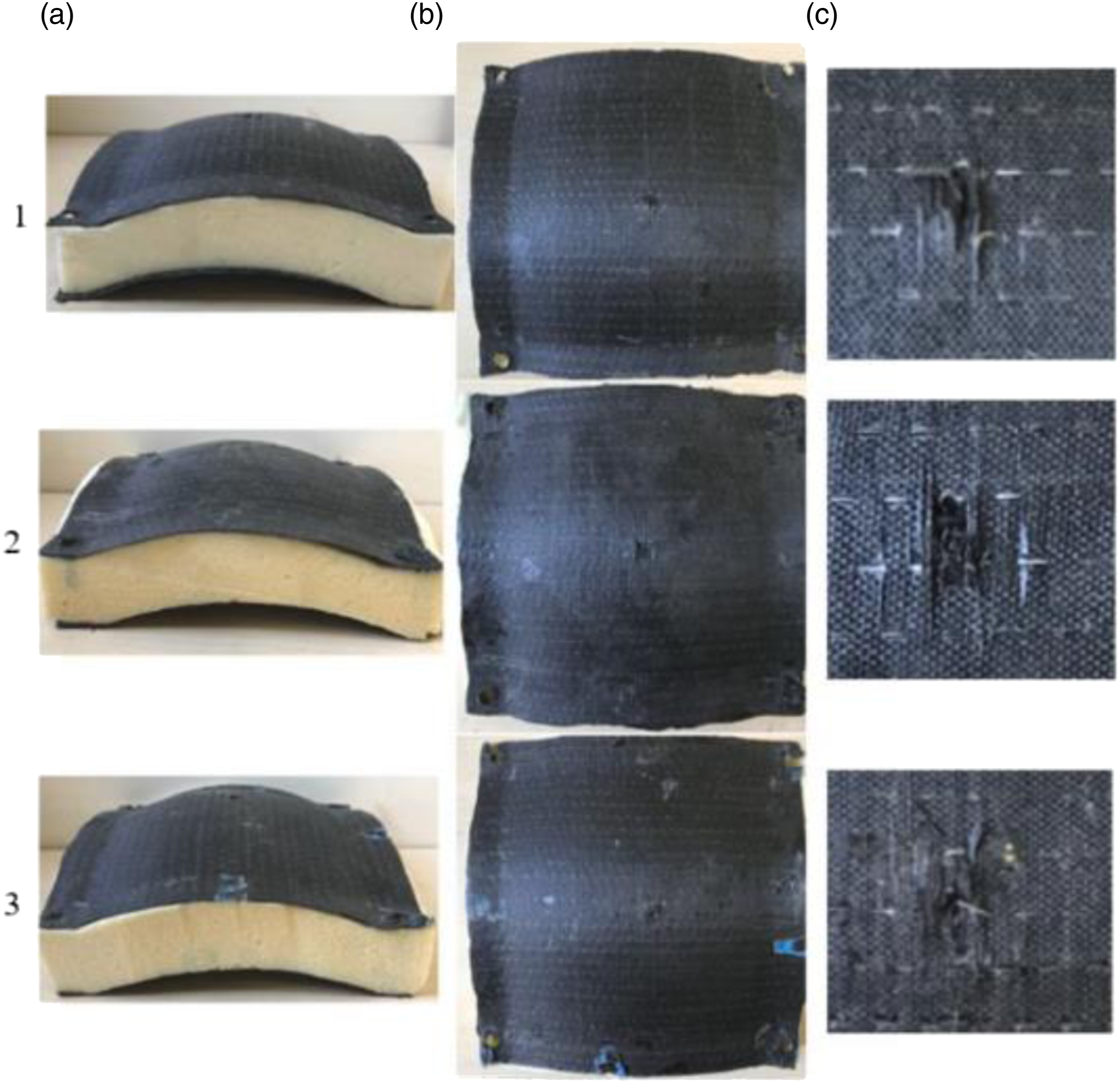
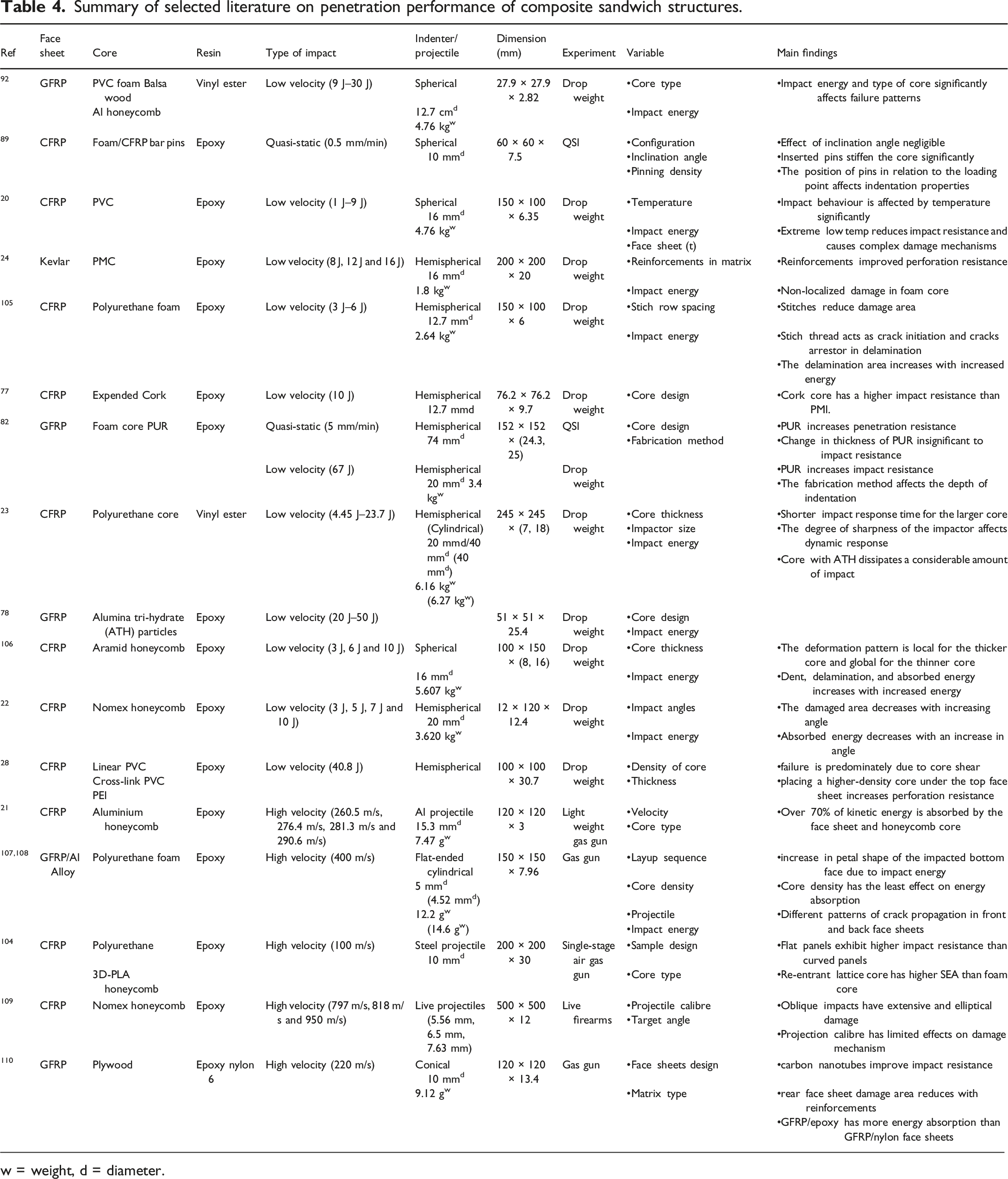
studied the performance of CFRP/epoxy sandwich panels subjected to an impact with a 10 mm impactor at 100 m/s. A response of a doubly curved panel was compared to that of a flat one while different performances of two types of cores (polyurethane foam and 3D printed PLA plastic cellular auxetic honeycombs) were studied. It was revealed that the spherical sandwich panels have lower impact resistance compared to the flat panels for both core designs. Further assessment of the core designs revealed that, the re-entrant configuration had a better specific energy absorption (SEA) capacity than the foam core and thus a better impact resistance under large deformations. The perforations of the entrant and foam core doubly curved specimens is shown in Figures 8 and 9. Details of selected studies on high-velocity impact performance and main corresponding outcomes are presented in Table 4. Damage characterization of a doubly curved sandwich panel with entrant core: (a) cross-section; (b) top view; (c) top view of impact zone.
104
Damage characterization of a doubly curved sandwich panel with foam core: (a) cross-section; (b) top view; (c) top view of impact zone.
104
Summary of selected literature on penetration performance of composite sandwich structures. w = weight, d = diameter.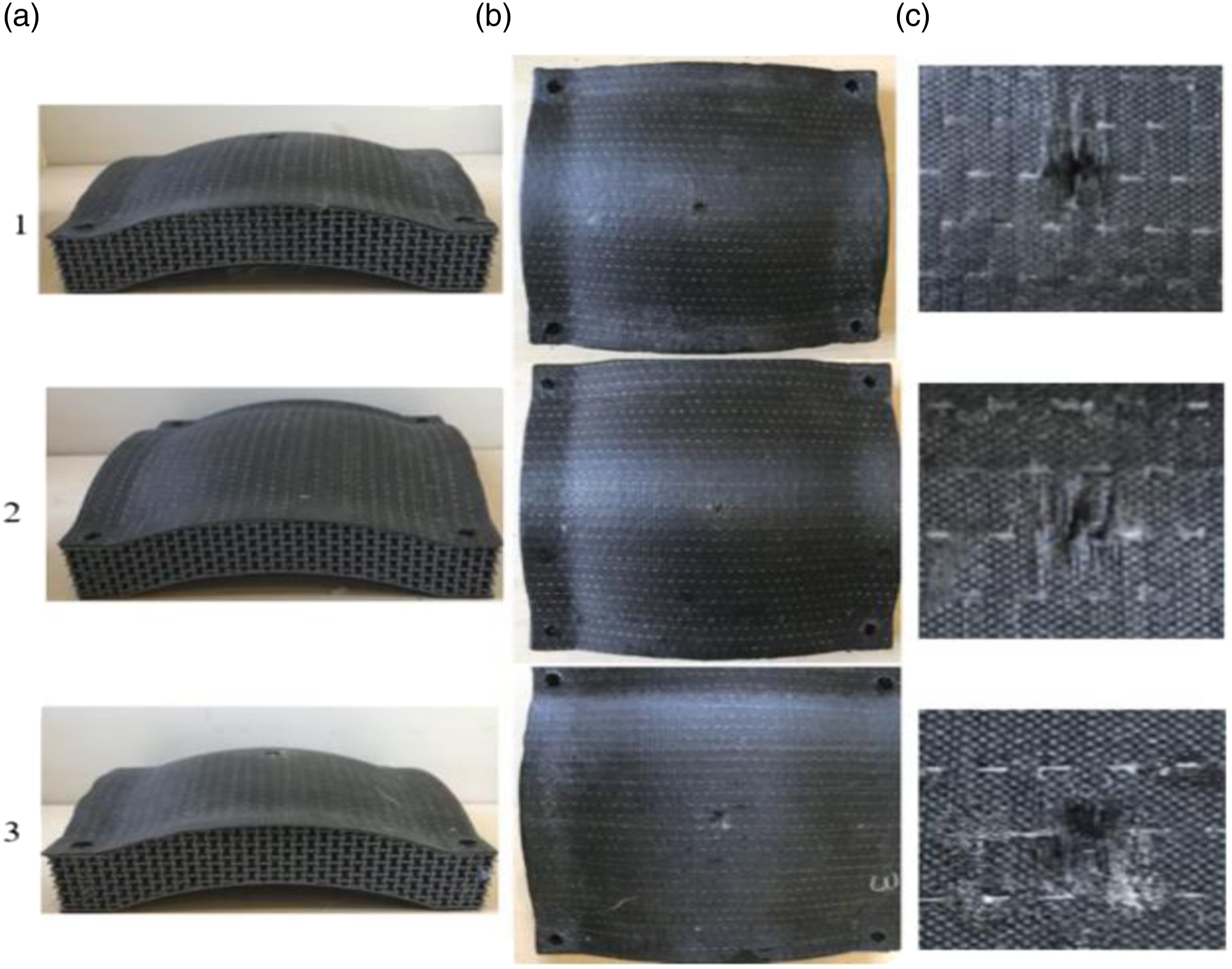
Numerical investigations
Multi-scale simulations
For the meso and macro scales, various researchers developed models to accurately predict and characterize the damage mechanism of FRPSS. However, the precise analysis of the constituents has been a challenge, as most commercial FEA packages require material properties to model the face sheets and cores. This led to the development of subroutines that generate better numerical models for the constituent materials.62,111–117 This section focuses on principles and theories adopted in the development of numerical models related to flexural, single-cantilever, compressive, and impact tests of FRPSS.
Quasi-static numerical models
Several studies were conducted on the development of numerical models that can be used in the validation of the macro- and meso-damage of FRPSS. These studies have investigated the fracture characteristics,118–120 flexural properties,60,121,122 and compression behavior 123 of such structures with two and three-dimensional models. Farshidi et al. 16 developed a 2D FEA model of a disbonded honeycomb-core sandwich structure using the crack surface displacement extrapolation method to investigate the energy release rate and mode-mixity of the panels. The model consisted of CFRP face sheets and Nomex honeycomb core and was benchmarked against the experimental results and closed-form semi-analytical models of the same configuration. The results showed that the energy release rate and the mode-mixity were constant, which also validated the mode-I-dominated damage in the setup. The simulation revealed that the crack length and the thickness of the bonded area had a significant effect on the energy release rate while the Poisson’s ratio, cell size, and thickness had a more significant effect on the mode-mixity value. In a similar work, Zhao et al. 122 utilized an FEA model with multi-layered 4-node general-purpose shell elements for the sandwich structure to accurately predict crack propagation in glue seams and failure of novel pultruded GFRP facesheets with foam cores under flexural loading, which was validated by experimental data. The damage initiation in the GFRP facesheets was assessed based on the Hashin damage criteria and the cracking of the glue seams was predicted by defining the fail stresses obtained from the material properties of the specimen. According to this study, the simplified model was limited in capturing delamination and shear crack failures of these configurations of GFRP sandwich structures used in wind turbine blades.
In another study,
62
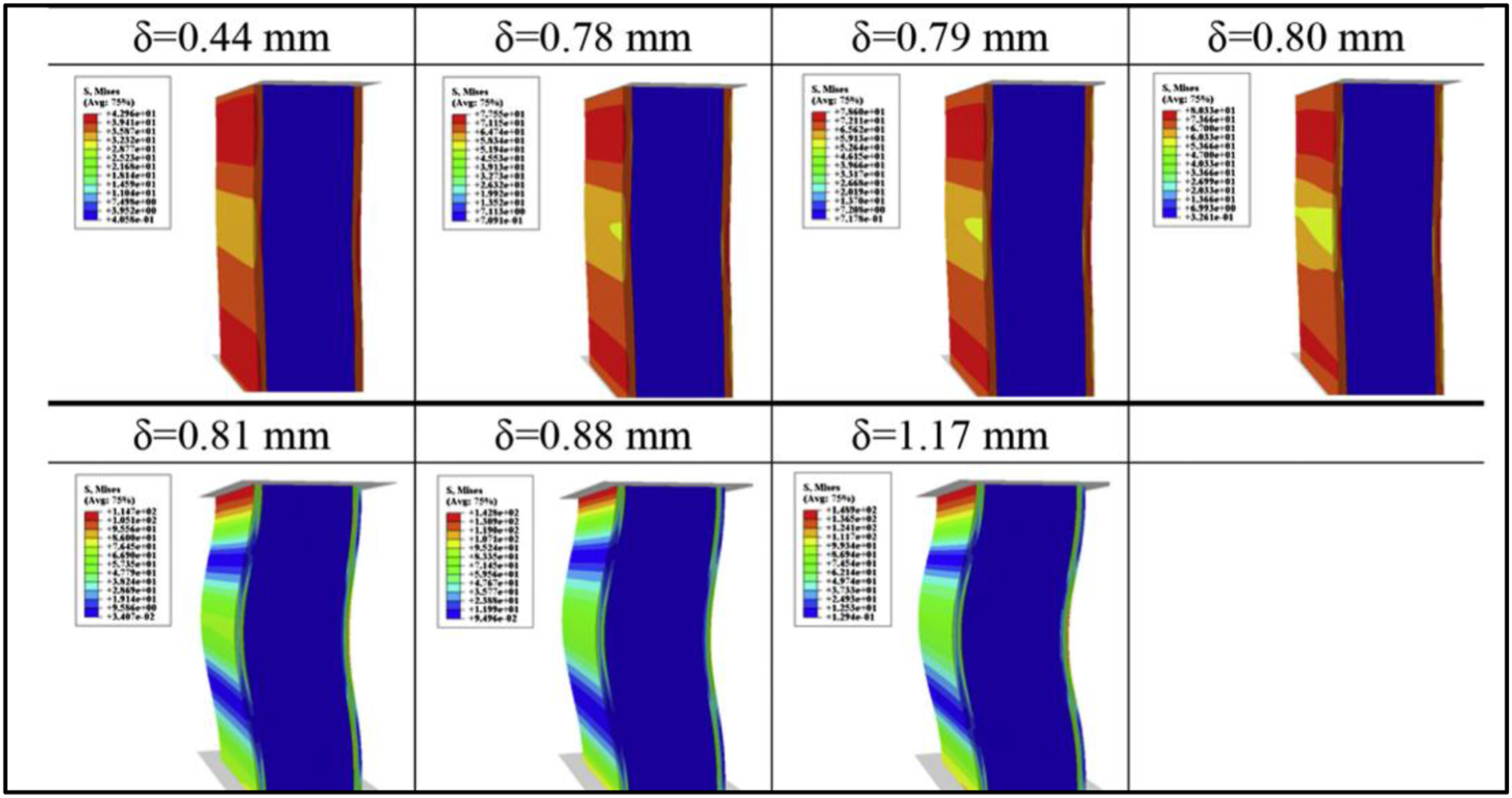
a user-defined subroutine based on the Hashin’s 3D failure criteria was utilized to simulate the crushing behaviour of the foam-filled core sandwich structure with E-glass face sheets with varying slenderness ratios. The results showed that the first and second-order buckling modes played a significant role in the crushing behaviour of the sandwich columns with high slenderness. The failure progression of the sandwich column under edgewise compression loads from initiation to total fracture is described in Figure 10. Failure progression of foam-filled sandwich column under edgewise compression loading.
62
A 3-dimensional numerical model based on continuum damage mechanics (CDM) with a Hashim failure criterion was successfully employed in 19 to understand the failure modes and responses of sandwich structures with GFRP facesheets and a PET foam core subjected to 4-point bending. The model adequately captured the failure modes, load-displacement behaviour, and peak loads of the panel. So, it was used to conduct a parametric study, varying parameters of the lattice web (the arrangement of FRP along the through-thickness direction of the FRPSS at specified intervals) and spacing of the core. The results revealed that the peak load and flexural stiffness increased substantially with increasing lattice web thickness, while the lattice spacing had little effect on the level of stiffness and load-carrying capacity. It is worth noting that the Hashin initiation criterion, determining the onset and propagation of damage, is widely used in the literature to predict the tensile and compressive failure of the fibre-reinforcement and the matrix in most numerical simulations reveiwed.19,124,125
Dynamic numerical models
Various studies developed damage models for sandwich plates subjected to dynamic loads,28,126 with the dynamic behaviour of foam sandwich panels subjected to low, high and ballistic impacts were simulated. Foo et al.
127
suggested a modified energy-balance model to predict the low-velocity impact response for sandwich composites subjected to the QSI loading regiment. The model incorporated the law of conservation of momentum to extend its accuracy beyond the elastic region of the materials as it accounted for damage initiation and propagation. The dynamic response and the progressive damage evolution of composite lattice sandwich panels were investigated numerically using the coupled-Eulerian-Lagrangian method.128–130 The study identified fibre fracture as the most significant damage mode and the need to optimize the structures in naval applications. Furthermore, the model accurately captured the phenomena of matrix cracking and delamination. Chen et al. developed a predictive FEA model that could capture the damage mechanism of composite sandwich structures fabricated from CFRP facesheets and Nomex honeycomb core.
81
The model utilized the CDM approach to characterize the inter and intra-laminar damage as well as the effects of adhesive and strain rate on the structure, which was modelled with ABAQUS/Explicit software.
131
Interestingly, in the constitutive model developed by Gao et al.,
21
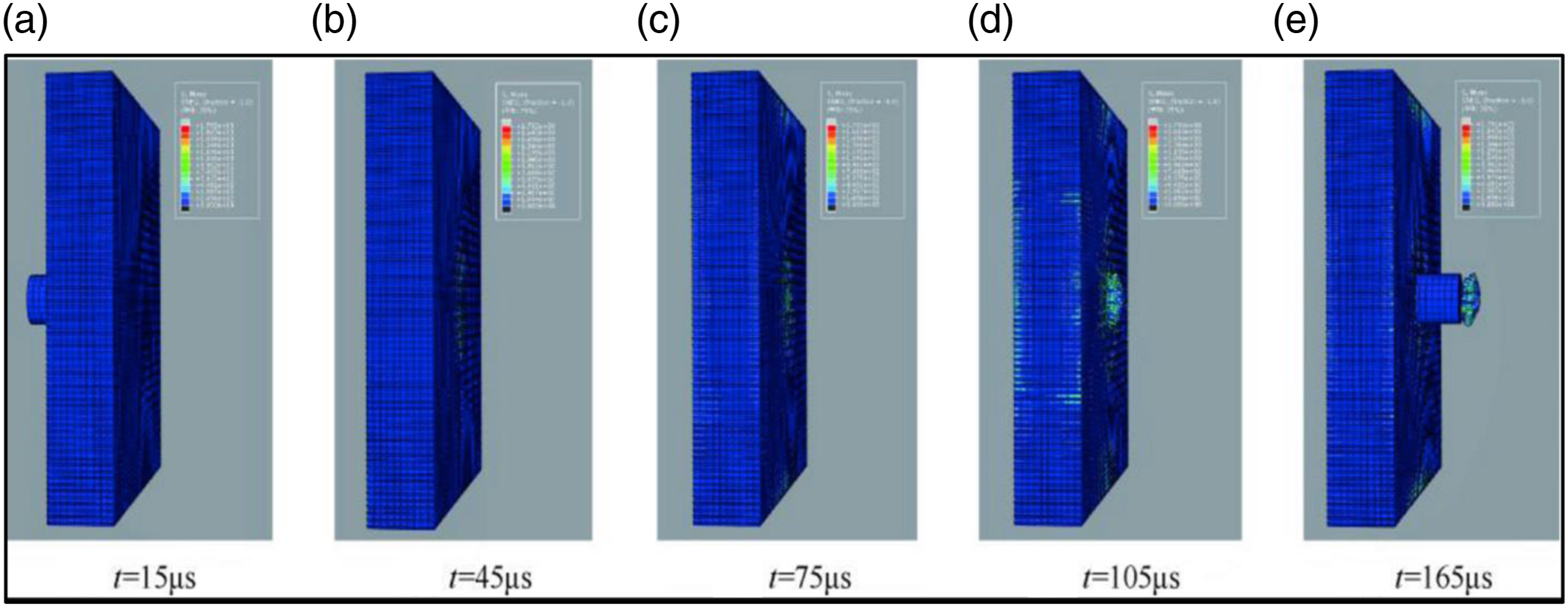
the Hashin failure criterion was used for the laminates, while the Johnson-Cook failure model was employed for the aluminium honeycomb cores. The facesheets and the core were assigned appropriate material properties while the projectile had the material properties of aluminium alloy with 8-node reduced integral solid elements. Universal contact and encastre boundary conditions were used for the model. The simulation adequately described the damage mechanism of the sandwich plate from (Figure 11) at the onset (t = 15 μs) to the perforation (165 μs). It is worth noting that a variety of models available in commercial FEA packages can be used to characterize damage in sandwich structures subjected to dynamic loads; however, it is common to find that, for some simulations, researchers incorporated user-defined material subroutines, developed in a programming language such as FORTRAN or. This situation comes with added computational cost and inherent complexity; therefore, simplified models are commonly employed where applicability permits. Timestamp of stress distribution of projectile striking composite sandwich structures.
21
Environmental degradation
FRPSS are rather versatile in application, especially in harsh environments. They are used in a wide range of marine structures, where environmental degradation could lead to the onset of corrosion. These structures range from boats, yachts, and submarines as well to tidal turbines. It is well known that composite materials experience a significant water uptake132,133 as well as swelling due to the variance in the water absorption nature of fibres and matrix.134,135 This situation inevitably affects the constituent’s interface and thereby leading to premature delamination of the composite.
136
Researchers have assessed the effects of salinity on the degradation of several types of FRPs under seawater conditions, showing that the moisture intake acted as a plasticizer of the polymer network in the structures.
137
With chemical treatment, natural FRP composites subjected to salt-fog degradation were found to exhibit better retention of their flexural properties. The study elucidated the effects of water absorption on the anisotropic mechanical response of epoxy resin reinforced with E-glass fibres. Samples were immersed in distilled water at 50°C for different durations until saturation, after which the samples were redried and also tested to determine the recoverability of the original mechanical properties.
138
The obtained results showed that the maximum moisture uptake was 0.71%, with saturation after 1200 h of exposure. Thereafter, tensile and three-point bending tests results indicated that the tensile strength, shear strength, and elastic modulus reduced by 40.5%, 17.6%, and 55.6%, respectively. The redried samples, however, demonstrated partial recovery of the mechanical properties of the samples. Moisture absorption can be measured in line with139,140 employing the following equation:

Hailin et al. 141 investigated the effects of seawater aging on the static/dynamic mechanical properties of CFRP laminates. The samples were degraded under varying temperatures (30°C–100°C and 27°C–34°C) and salinity conditions (0%, 3.5%, and 5%) for 7 months, after which tensile and DMA tests were performed. It was observed that the moisture absorption was fickian in nature, and the dynamic equilibrium was achieved after 90 days. Thereafter, the absorption was slower and less affected by temperature (non-fickian) until the equilibrium after 7 months was reached. The tensile strength of the samples was reduced by a maximum of 11.5% from 923.60 MPa to 817.83 MPa, revealing an exponential degradation relationship between the tensile strength and the aging time. Furthermore, the tensile strength was reduced by 16% due to temperature variation over the period, while its maximum reduction due to NaCl concentration was found to be 8.2%. Damping (tan δ) was observed to increase exponentially, while the glass transition temperature (Tg) reduced with prolonged seawater aging, a phenomenon attributed to the fibre/matrix interface of the laminates. For FRPSS, several studies were conducted to investigate the mechanical properties of the core which showed promise for its application in a marine environment. For instance, synthetic foams made from the fusion of hollow particles in a matrix exhibited higher specific properties compared to polymeric ones.26–28,142,143 Also, the compressive properties of synthetic foams subjected to hygrothermal conditions at various temperatures were studied by Gupta et al. In this work, synthetic foam cores were subjected to deionized and seawater conditions, and their flexural properties were investigated. It was observed that the deterioration of the Youngs modulus in samples immersed in deionized water was higher than the ones exposed to seawater with salinity of 35% and 30% respectively. This substantial reduction in flexural properties was attributed to the degradation of matrix-particle interfaces due to moisture ingress or the degradation of the particles themselves. 144
Challenges and future direction
The last two decades have witnessed scientific advancement in the field of mechanical performance of composite sandwich structures. However, it must be noted that this field is still evolving as novel FRP sandwich materials are increasingly emerging. While many studies were conducted on the characterization of the mechanical behaviour of FRP sandwich panels using experimental and numerical techniques under quasi-static and impact loading regimes, their viscoelastic properties are still studied insufficiently. Some research was performed for the viscoelastic performance of composite sandwich specimens using the DMA methods and subsequently developing corresponding numerical models for validation. Furthermore, the reviewed articles indicated that substantial work was done on the environmental degradation of composite sandwich panels but the effects of these factors (particularly seawater degradation) on the viscoelastic parameters are still unclear; hence, it is a vital area to explore for understanding the nature of damage of FRPSS. It is necessary, therefore, to aggregate the data in these areas to further unravel the mechanical performance of the panels, especially as the scope of the application of composite sandwich structures for maritime use are ever-increasing. This will allow the optimization of sandwich panels for such applications.
Concluding remarks
This review investigated the latest advances in the characterization of the mechanical properties of FRPSS, analyzing and fabrication methods. Several experimental results from the literature highlighted the elastic-plastic and impact behaviour of composite sandwich structures and proved that the performance of the specific sandwich panels is influenced by several factors. It also provided insight into the environmental effects of moisture absorption (seawater) on mechanical performance. Thus, an in-depth understanding of the mechanical performance of the structures is important for any researcher to ensure optimal design. Several parameters used to develop numerical models were reviewed and it was established that although the Hashin failure criterion is popular, other researchers adopted case-study-specific criteria to characterize the damage in their respective models. The review was able to identify the viscoelastic properties of sandwich panels, especially after environmental degradation as a viable area of research. This should be guided by numerical simulations validated with experimental data.
Generally, this review provided a synopsis of the work done on elucidating the mechanical properties of sandwich structures under quasi-static and dynamic loading using experimental and numerical methods. Additionally, it aims to serve as a basis for investigating the viscoelastic properties under varying environmental conditions of future sandwich materials.
Footnotes
Acknowledgments
The authors acknowledge the support of Loughborough University and the Nigerian Air Force Research and Development Centre.
Declaration of conflicting interests
The author(s) declared no potential conflicts of interest with respect to the research, authorship, and/or publication of this article.
Funding
The author(s) disclosed receipt of the following financial support for the research, authorship, and/or publication of this article: This work was supported by the Nigerian Air Force under grant OPS/1282DTG27145AJUL21.
