



Abstract
Practical relevance:
Physical rehabilitation (physiotherapy) involves restoring a patient’s movement and function following an injury, illness or trauma. It can be used for acute and chronic conditions and, in some cases, the techniques are used as a preventive treatment. Some therapies can also provide pain relief, which can be especially helpful when analgesic drugs are contraindicated in a patient. In recent years, there has been increasing interest in the application of physiotherapy to small animals, and while physical rehabilitation has traditionally been used more commonly for canine than feline patients, as cats can benefit just as much as dogs, this trend is changing. A multidisciplinary team is involved and identifying when a cat is painful and prioritizing therapies accordingly is crucial.
Clinical challenges:
Cats are not accustomed to regular handling or restraint and tend to become uninterested and frustrated quickly, which means they are often perceived as poor candidates for physiotherapy referral. As well as a cat’s temperament, there are physical factors that may limit or exclude particular therapies; for instance, a cat’s level of cardiovascular health. There can also be much variation with the success of different therapies - what works well in one individual might have no effect in another.
Aims:
This article, the second in a two-part series, discusses individual therapies and exercises for physical rehabilitation. This follows on from Part 1, which discusses the most common painful conditions in cats that can benefit from physical rehabilitation, as well as the importance of prioritizing the type of therapy depending on the individual patient.
Keywords
Feline physical rehabilitation treatment therapies and exercises
Manual therapy
Manual therapy is an approach in which skilled, goal-focused, passive or assisted active movement techniques (forces) are applied with (through) the hands (or hand-held instruments, as an adjunct to the hands) to induce structural or functional changes within myofascial, neuromuscular or articular connective tissues. 2 The selection and application of interventions or manual techniques are based on the functional diagnosis. The rehabilitation practitioner utilizes critical thinking, clinical problem-solving and decision-making skills in this practice, based on current evidence and their knowledge, skills and experience, to choose the appropriate therapy(ies). 2 It is especially important to provide a calm environment for the performance of these techniques to increase the cooperation of the cat and consequently have tissues that are relaxed during treatment. 3 Manual techniques can be performed on an anesthetized patient or one that is recovering from anesthesia; the patient does not need to be completely conscious when these techniques are being performed.


Massage
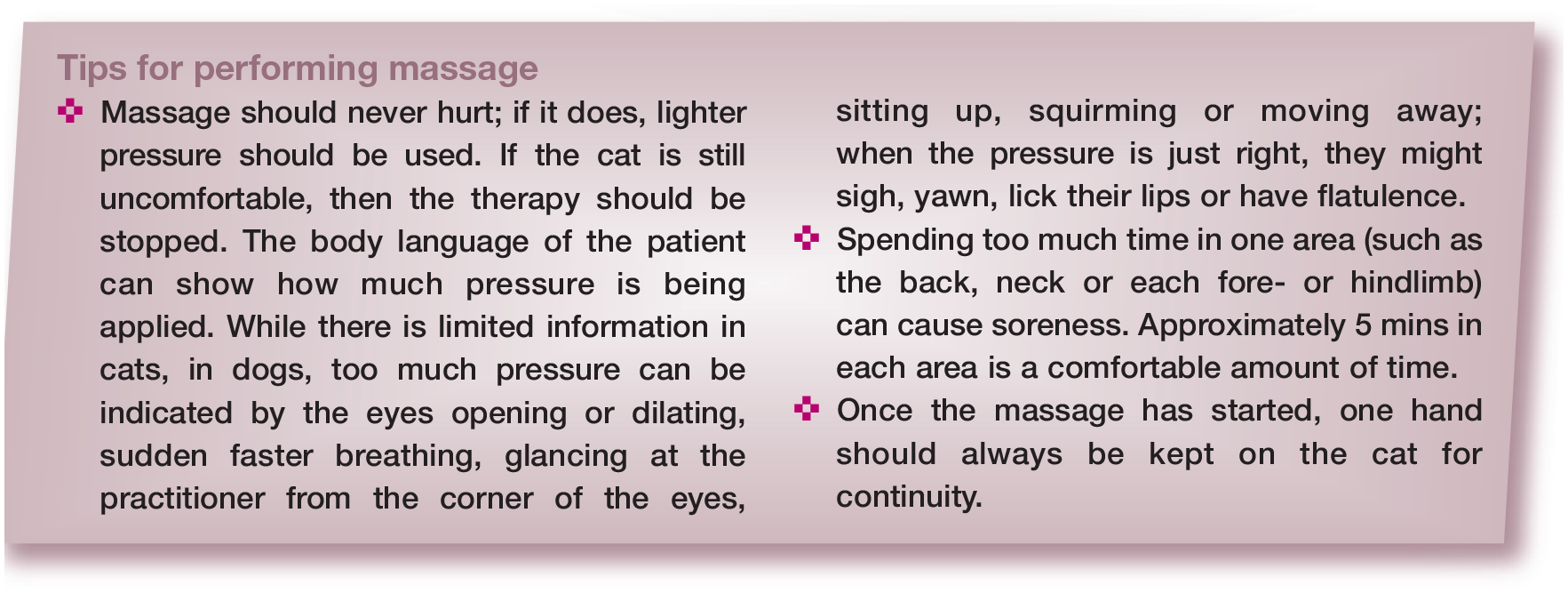
Soft tissue mobilization, or massage, is the systematic application of manual pressure and movement of soft tissues, including skin, tendons, ligaments, fascia and muscle. 6 Massage is defined as the therapeutic manipulation of the soft tissues of the body and has mechanical, physiologic and psychologic effects (see the ‘Benefits of massage’ box). 9 The most prominent massage techniques include Swedish / deep tissue, Chinese (acupressure), Japanese / Shiatsu, sports massage, reflexology and neuromuscular. 11 Each methodology consists of a combination of touch, gliding/effleurage, kneading, friction, percussion and / or joint movements. Some tips for using the massage techniques can be found in the ‘Tips for performing massage’ box.

Strokes/techniques2,11
✜

✜
✜
✜
Passive range of motion (PROM) and active range of motion (ROM)
Passive range of motion
Although primarily used to maintain or restore joint range/muscle length, PROM also aids articular nutrition, stimulates mechanoreceptors and reinforces patterns of movement (see the ‘Benefits of PROM’ box). 12

PROM is the moving of the joint within its available range in a repeating manner. 13 The joint is moved for the patient, meaning there is no muscle contraction or resistance from the patient. PROM exercises are essential to maintain the ROM of joints when patients have reduced mobility or joint immobility. Without PROM exercises, a permanently reduced ROM could result. 14
These movements can be applied to patients on crate rest or with paralysis. 15 Moving the joint into full extension and full flexion is important to maximize benefits. However, joint and tissues must not be stretched beyond what is comfortable, as this can cause injury.
PROM exercises should be performed at a time when the cat is relaxed and quiet. The cat should be lying on the unaffected side and could be placed on the therapist’s lap; alternatively, the cat could be held upright if lying on one side is not tolerated. The manual contact or hand placement involved in performing PROM is critical; as the distal bone is moved on a stabilized proximal bone, one hand needs to stabilize the proximal bony segment and the other needs to support the limb while moving the distal bony segment. The limb is usually supported at the joint just distal to the joint being treated.
Less is more in cats and they should not be forced. The limbs should also not be pulled while performing PROM. If the cat shows any indications of pain (vocalizing, pulling away from the practitioner, breathing heavily, etc), the stretch should be reduced in intensity slightly. The introduction of any manual therapy to a feline patient should be slow and progressive. When cats are given an opportunity to acclimate to a procedure, they make much more willing patients.
PROM exercises can benefit recumbent patients, arthritic patients, patients recovering from spinal injury/surgery and patients recovering from orthopedic surgery, including where the aim is to prevent joint fibrosis. PROM is generally used to maintain range postoperatively when an animal is incapable of moving a joint (eg, following neurologic insult or injury) or when active motion may be deleterious to the patient. 6 Gait patterning is a form of passive movement whereby a limb is moved in a normal walking (bicycling) motion and is particularly useful for neurologic patients. PROM should be performed 2-3 times a day until the animal is more mobile and able to perform exercises that encourage active movement of the joints.
Cats with unstable fractures, joint luxations, recent skin grafts and certain ligamentous and tendinous injuries where treatment could result in further injury should not receive PROM exercises until sufficient healing has occurred. The rehabilitation veterinarian should determine when PROM can be introduced. Discussion about each case prior to rehabilitation sessions is useful for the entire team.
Active ROM
Active ROM exercises use unassisted active muscle contraction to achieve joint motion 16 (see the ‘Benefits of active ROM’ box) and are performed independently by the patient. 17 Activities include using cavaletti rails (ie, a system of rails placed at adjustable heights and widths), walking on a rocker board (Figure 1), climbing stairs, swimming and walking in water, sand or tall grass. 18

Walking on a rocker board aids with balance and proprioception. This therapeutic exercise is being used by this cat that had undergone a femoral head osteotomy procedure. Courtesy of Sandy Gregory

Stretching
Stretches are also passive movements that help to improve or restore full range to a joint or full length to a muscle (see ‘Benefits of stretching’ box). Three muscle-stretching techniques are frequently described in the literature: static, dynamic and pre-contraction stretches. 20 The traditional and most common type is static stretching, where a specific position is held with the muscle in tension to a point of a stretching sensation, with this then being repeated. Static or passive stretching requires the practitioner to hold the stretch position for a prolonged period, with no movement at end range. A dynamic or active stretching technique can be utilized prior to a high intensity activity or therapeutic exercises. In this case, the patient does not require restraint or recumbent positioning as the targeted muscle group is stretched by luring the patient into a position of stretch (Figure 2). Active stretches are less specific than passive stretches as the origin of the muscle is not stabilized; however, they are more functional, incorporating full body movements and active muscle contractions by the patient.

Cat performing an active stretch. Courtesy of Julia Tomlinson
Stretching is generally more effective if preceded by light exercise, massage and/or heat (including therapeutic ultrasound), all of which increase the extensibility of collagen.
Thermotherapy
Thermotherapy consists of the application of heat or cold (cryotherapy) for the purpose of changing the cutaneous, intra-articular and core temperature of soft tissue, which, in turn, is with the intention of improving the clinical signs of certain conditions. 21 Thermotherapy is a cost-effective treatment that allows for minimal handling of the patient. It can be used in rehabilitation facilities, but there are also options that mean it can be easily and safely continued at home.
Heat and cold have opposite effects on tissue metabolism, blood flow, inflammation and connective tissue extensibility (see ‘Benefits of thermotherapy’ box). As mentioned in Part 1, 1 a general rule of thumb for deciding when to apply cold vs heat is the former being used in the first 24-72 h after acute injury when the acute signs of inflammation are present (swelling, redness, heat and pain). 24
Tolerance of the application of cold or heat will be patient-specific, but when planning the use of thermotherapy, always ‘thinking cat’ is important. Placing a cold pack may be difficult as sometimes cats do not lie quietly for more than a few minutes - providing cryotherapy could, for instance, be used while a cat is waking up following a general anaesthetic, as one possible solution. Typically, cats will enjoy heat and will often lay quietly (even on a lap) while hot packs are applied.

Methods of heating
Heat can be applied superficially (1-2 cm) via hot packs and baths/spas or more deeply (up to 5 cm depth) using therapeutic ultrasound. In small animal practice, superficial hot packs are commonly used. These are particularly useful: for subacute and chronic conditions where there is a reduced ROM due to stiffness or contracture; to relieve pain; and as a prelude to passive movements, stretches or exercise by improving collagen extensibility. Hot packs should be used at a comfortable temperature, wrapped in toweling to avoid burns, and should be applied for 10-20 mins. If a cat has undergone surgery, heat therapy is best used after 72 h postoperatively.

Ultrasound therapy23,25
As mentioned earlier, ultrasound therapy provides heat more deeply than other methods of heating. Conditions that benefit from ultrasound therapy (see the ‘Benefits of thermotherapy’ box) include acute soft tissue injuries, fractures and wounds.
Therapeutic ultrasound units generate an ultrasound wave by applying an electric field to an array of piezoelectric crystals located on the transducer surface. This stimulation causes mechanical distortion of the crystals, resulting in vibration and production of sound waves (ie, mechanical energy). 26 The biologic effects of ultrasound differ depending on the mode used. With a continuous mode, the thermal effects are maximized, and this mode is therefore primarily used for tissue heating before stretching. If a pulsed mode is used, the thermal effects are decreased but other effects occur based on the phase of tissue repair, including acceleration of the inflammatory process, increased fibroblast proliferation and increasing tensile strength of healing tissues. 25
Cats typically tolerate therapeutic ultrasound well. Prior to performing ultrasound therapy, the fur needs to be clipped to prevent patient burns. Thermal burns are a major concern and can be avoided by constantly moving the transducer head over the skin, and by using the lowest effective intensity. Elimination of as much air as possible between the skin and the ultrasound transducer head maximizes tissue penetration of the ultrasound energy and a water-soluble coupling gel should be used in order to avoid the ultrasound beam being reflected at air-tissue inter-faces. 23 A small wand head must be used in cats to ensure the plan positioning of the ultrasound head over the treatment area. 25 Caution should be taken when using ultrasound over bony prominences, fracture sites, metal implants, artificial joints, irradiated skin, areas of decreased circulation and areas of decreased pain and/or temperature sensation. Therapeutic ultrasound is contraindicated over the heart in animals with pacemakers, the lower abdomen in pregnant animals, the spinal cord after laminectomy, incisions in the 2 weeks following surgery, open epiphyseal plates, infection, ischemic tissue, hemorrhage, thrombosis, cervical ganglia, malignancy, acute inflammation or the eyes, testes or carotid sinus.
Methods of cooling
Cold penetrates deeper and lasts longer than heat and is most effective when used in the first few days after trauma (injury or surgery). During the acute phase of inflammation it provides analgesia, reduces inflammation and swelling, controls bleeding and reduces muscle spasm. Cold can be applied using cold packs and cold compression units, and treatment should be limited to 10-15-min sessions. Sessions can be repeated every 2 h if necessary (for severe injuries), but for most post-operative/injury applications using cold therapy every 3-4 h is suggested. Superficial tissues show the most rapid cooling and rewarming effects; the deeper intramuscular tissues respond more slowly and may take as long as 60 mins to return to baseline temperature following a 10-min application of a cold pack. 27
Electrotherapy
Electrotherapy and electromagnetic therapy are the application of electric currents, either directly to the body (electrotherapy) or to produce a magnetic field that is then applied to the body (electromagnetic therapy); these are applied in various and specific waveforms and frequencies with the goal of stimulating a tissue response (see ‘Benefits of electrotherapy’ box). 28 Many electrophysical agents can be used on animal patients, including laser, ultrasound, neuromuscular electrical stimulation and transcutaneous electrical nerve stimulation (TENS). These are all non-painful forms of treatment and cats are generally tolerant of their use. 6 However, all these modalities possess specific indications and should only be used by operators who have been trained on proper use. The easiest therapies for use in cats are TENS and pulsed electromagnetic field therapy.
Transcutaneous electrical nerve stimulation 28
TENS can be used in combination with pharmaceuticals in acute pain situations, such as following trauma or surgery, as well as in chronic pain situations associated with degenerative change. Using a home TENS unit is necessary for daily or at least 4-days-a-week therapy. Fur should be clipped and re-clipped as needed to maintain adequate electrode contact. Due to the need to clip hair and the lack of evidence in veterinary patients, many veterinarians prefer to use pulsed electromagnetic field therapy (PEMF). 28

Pulsed electromagnetic field therapy 28
PEMF is a modality that produces low-frequency pulsed electromagnetic fields that result in conduction changes in the tissues they are applied to. 28 These fields can be applied to the whole body (usually via a treatment bed or mat) or to a specifically targeted area (usually via a loop in veterinary medicine). PEMF can be used for acute and chronic injuries to improve cellular repair by increasing the local perfusion to the capillary blood flow.
PEMF is typically well tolerated by feline patients. Delivery is usually via a pad/bed, which is a good option for recumbent, resting or crate-bound cats; alternatively, a PEMF loop (Figures 3 and 4) can be placed anywhere on the patient’s body, and doing this while the cat is resting can work well. PEMF beds are more useful than the loop in patients in which PEMF treatment is indicated for multiple sites; for example, a patient with elbow and hip osteoarthritis, or with thoracic spinal arthritis in addition to lumbosacral intervertebral disc disease. Bed use is not advisable in patients with a history of seizures.
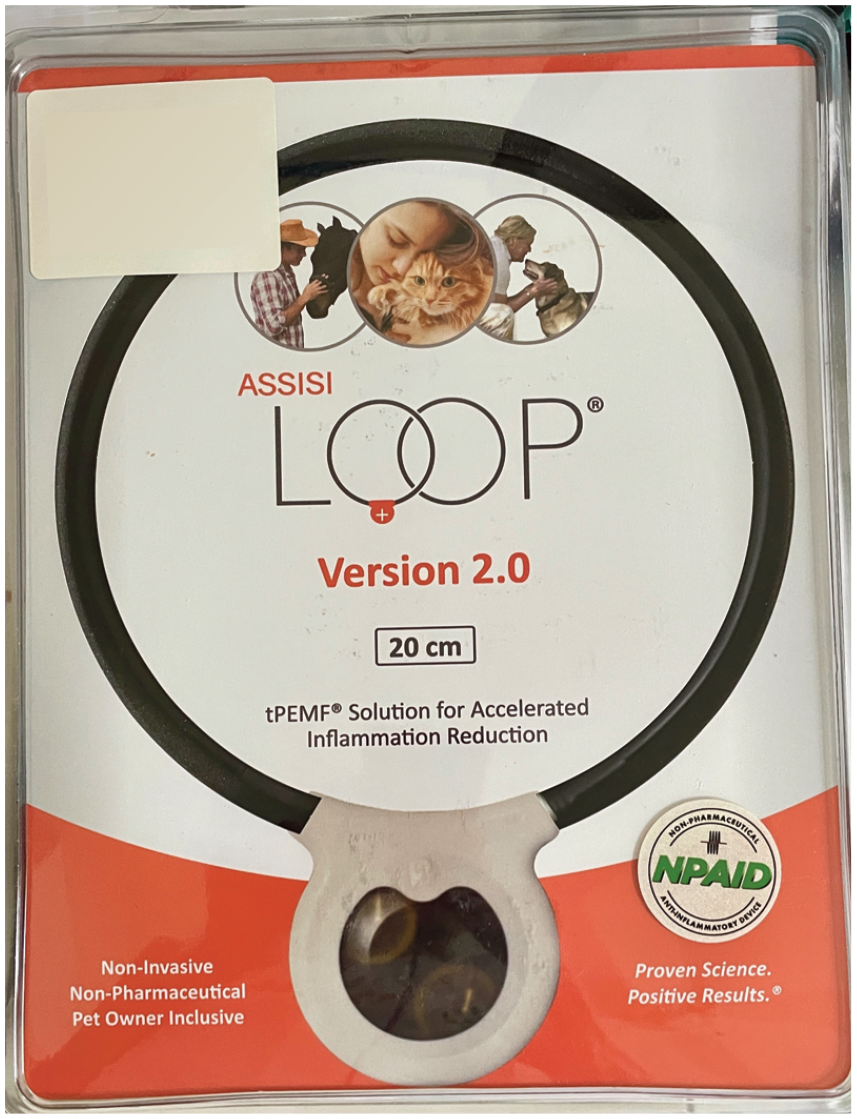
An Assisi Loop. Courtesy of Mary Ellen Goldberg

Cat with an Assisi Loop in place over the hips. Courtesy of Mary Ellen Goldberg
PEMF therapy starts with a minimum of two 15-min treatments per day for acute and chronic or degenerative conditions. The number of sessions can then be reduced over time but should be based on the animal’s progress. When PEMF follows surgery, treatment can begin immediately after the operation and should continue until the surgical site is healed.
There are no known contraindications for usage with other modalities; however, given that PEMF and other treatment modalities, such as laser therapy, have different mechanisms of action, allowing 2 h between treatment modalities is recommended. Ensuring no patient or handler is using an electronic medical device, such as a pacemaker or insulin pump, is essential, as these can be disrupted by the strong electromagnetic fields. 15 Using PEMF over a metal implant or brace will not cause any harm, but it may distract or weaken the signal. To help with this, the PEMF device can be positioned so that it is at a 45° angle from the metallic implant when possible.
Photobiomodulation therapy (PBMT) 29
PBMT (or laser therapy) is the application of light to modify a biologic process. PBMT has been proposed to decrease pain. 15 Conditions where PBMT can be beneficial in feline patients include osteoarthritis, degenerative lumbosacral stenosis, fractures, chronic wounds and stomatitis. When a cat presents for rehabilitation, PBMT is one of the best therapies for relief of initial pain.
Individual therapeutic laser companies provide a training manual and usually send a representative to give instruction for the proper use of their device. The guidance of the manufacturer should be referred to for the correct application technique and recommended protocols. Only practitioners who have been trained to perform PBMT should carry out this treatment, and only using the particular therapeutic laser they have received training for.
While administering a laser treatment, a practitioner must take precautions to protect themselves, the patient and any others in the room. Everyone present in the room should be wearing safety glasses, for instance; all Class IIIb (3B) and IV (4) lasers should come with their own set of safety glasses, which have lens filters that are specific to the wavelength and intensity of the laser. They will have stamping on the corner of the lens indicating which wavelengths are covered and the level of protection/attenuation provided. Some laser companies provide pet safety glasses as well. These may be specifically made for pets, or they may use modified protective eyewear for pets, in which the usual sunglasses-type lens has been replaced with a lens specific to the wavelength of that laser. 29 A ‘Do not disturb; laser in progress’ sign should also be put on the door.
Up to 70-90% of laser energy is absorbed by the fur and the coat should be clipped for application. Dark hair color and skin pigmentation absorb more heat. If the patient has a withdrawal response or unexpected tissue warming is noted, then the distance between the skin and the laser handpiece can be increased or the power can be decreased with a time increase to maintain proper dosage.
Integrating laser therapy into physical rehabilitation can be highly rewarding and often the patient will even enjoy the session. Like other treatments, PBMT can be very successful for some patients, while others may only show mild improvements. If the desired effect is not being achieved in the expected time frame (usually by four to five treatments), this observation should be recorded and the referring veterinarian should be informed at that point rather than waiting until the completion of all of the sessions. The veterinarian will need to rethink their plan for the specific patient, deciding if other therapies should be utilized or more sessions added.
Because PBMT is recognized to enhance neovascularization, irradiation of tumors or wounds that may contain cancer cells has generally been contraindicated. In cases in which there is no other treatment for the tumor and laser therapy could potentially ease pain and/or heal the wounds sometimes developed by tumors, using laser therapy with the informed consent of the caregiver, with them being aware that it could increase the growth rate of the tumor but also may improve the quality of life or prolong the life of the patient, is acceptable.
Acupuncture 30
Acupuncture is the stimulation of a specific point (acupuncture point or acupoint) on the body by the insertion of a needle, resulting in physiological effects and a healing response (see the ‘Benefits of acupuncture’ box). 30 Regular acupuncture only requires the veterinarian’s knowledge, hands and needles, and is a subtle sensation relying on energetic shifts, pulse reading and practitioner intuition. Electroacupuncture (Figure 5), meanwhile, integrates low-voltatage electrical stimulation with needle insertion; this results in the signal or impulses reaching the surrounding nerves faster, and can offer enhanced outcomes for certain conditions, especially those involving pain, inflammation or neurologic deficits.


A cat receiving electroacupuncture. Courtesy of Mary Ellen Goldberg
Acupuncture can be used as a sole agent but is more commonly practised in conjunction with other modes of pain control as part of multimodal therapy. In rehabilitation cases, acupuncture is commonly used after therapeutic exercises or hydrotherapy. Acupuncture is reportedly effective for the treatment of various painful conditions, including cervical, thoracolumbar and lumbosacral hyperpathia, chronic lameness and degenerative joint disease. 30
The most common musculoskeletal disorders treated with acupuncture include osteoarthritis, cranial cruciate ligament rupture, hip and elbow dysplasia, tendinopathies and fractures. Therapy can be instituted pre- or postoperatively and, in many cases, used as part of medical management.
Caution must be used when treating weak, debilitated or obtunded patients. Needling directly into skin lesions, ulcers, scar tissue, umbilicus, tumors or masses is contraindicated. Electroacupuncture wire leads should not be connected through or across a known or suspected tumor or mass, or connected around or across the chests of animals with pacemakers. Electroacupuncture should not be used in patients with a history of seizures. As mentioned in the Part 1 article, 1 in the USA, a veterinarian is the only person who can acquire acupuncture certification; a veterinary technician may only assist the veterinarian.
Therapeutic exercises 32
Therapeutic exercises are the most important part of the rehabilitation process. The therapy program should be designed based on the needs of the individual patient (see the ‘Benefits of therapeutic exercises’ box), ensuring that the exercises can be performed safely without any risk of worsening the clinical signs. The exercises should be selected based on the stage of tissue repair and the rehabilitation veterinarian and therapy team consequently need to understand the underlying pathology, expected recovery progress and any biomechanical considerations.
Land-based exercises
Exercise is the key element in the process of helping a cat achieve optimum function after injury, surgery or disease. If the cat is weak, has a neurologic condition or has limited endurance, then the rehabilitation practitioner may need to assist. This assistance can be provided manually or with the aid of physioballs, slings, harnesses or carts.
Types of exercises
✜
✜


A PhysioBone is being used here to help with this cat’s balance. Courtesy of Sandy Gregory
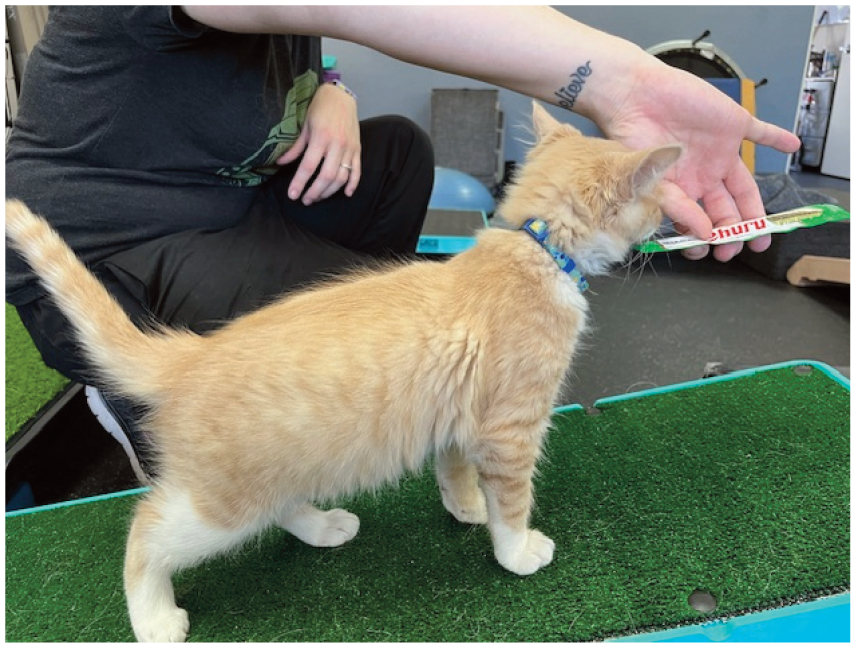
This cat is being encouraged to reach for a food treat in order to aid with improving flexibility. Courtesy of Sandy Gregory
✜

This cat is walking over cavaletti rails, which will help to improve proprioception. Courtesy of Sandy Gregory
✜
Exercises for cats may involve direct contact with a therapist, such as assisted standing, wheelbarrowing or dancing (as described earlier). They may also involve activities such as playing with laser lights (being sure to switch to a toy the cat can physically catch at the end to avoid frustration), toys and treats, crawling under cavaletti poles, jumping in and out of a box or other creative uses of equipment that the cat can navigate independently.
Water-based exercises (hydrotherapy)
Hydrotherapy (eg, swimming or walking on an underwater treadmill) is a very popular form of rehabilitation therapy for dogs and can be used with cats that will tolerate it. Proposing hydrotherapy only for cats likely to be accepting of it is important as cats that are distressed might struggle in the water, leading to further injury. The natural properties of water (eg, buoyancy, resistance) make water-based exercise one of the most useful forms of rehabilitation therapy by reducing the concussive effects of active exercise and helping improve limb mobility, strength and joint range of motion. 33 For example, water-based exercises allow patients to move more comfortably than on land and are also more effective for increasing muscle mass and reversing muscle wastage due to the increased difficulty of moving against the resistance of the water.
Hydrotherapy can be performed in either a pool or on an aquatic treadmill (Figure 9), and which is best will depend on the tolerance of the cat to each, the problem being treated and the consequent goals of the hydrotherapist. 31 A range of conditions in the cat may benefit from hydrotherapy, including some postoperative fractures, neurologic conditions, tendonitis, osteoarthritis, muscle atrophy and obesity. A detailed referral and continuing communication between the referring veterinarian and the rehabilitation practitioner will ensure the best treatment and management of the patient.
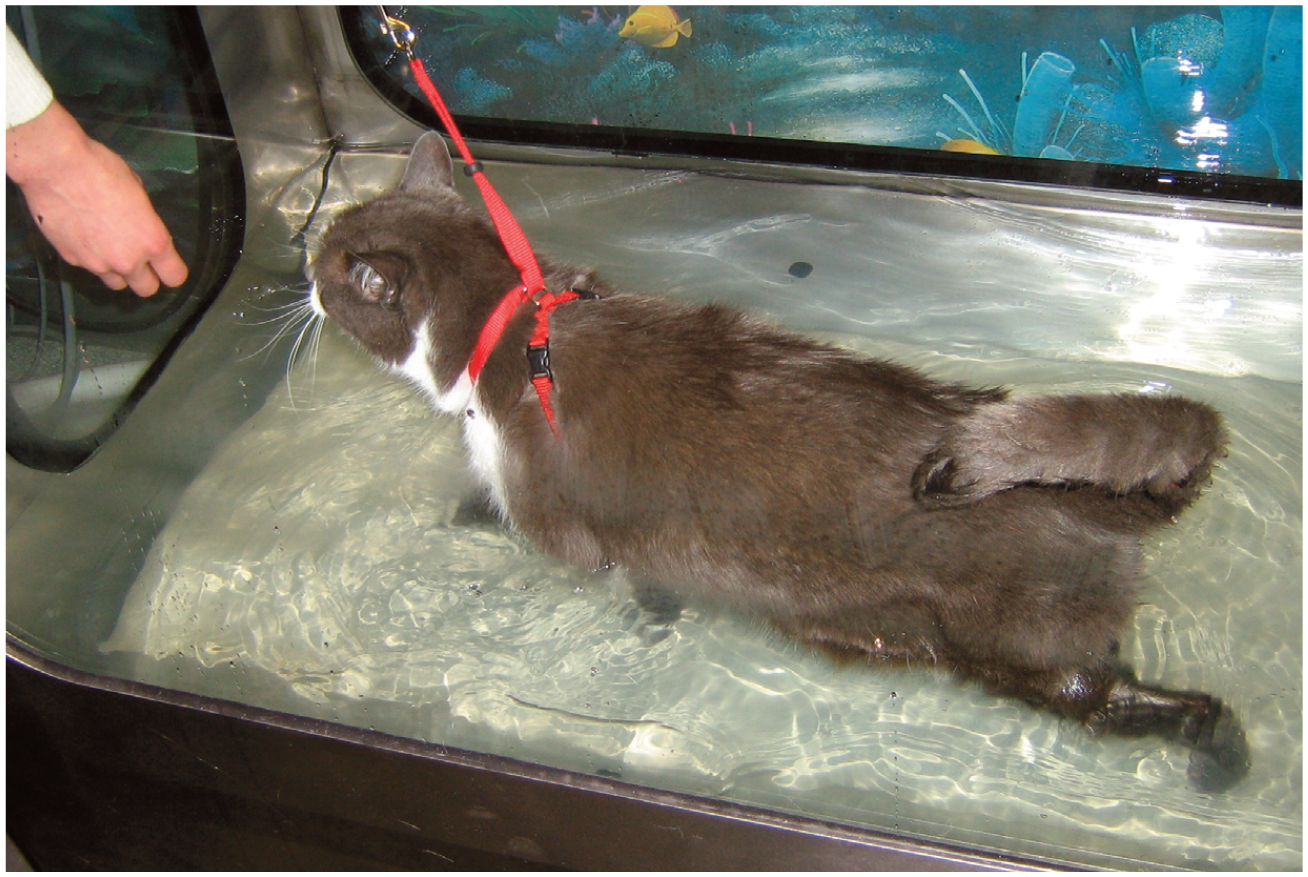
Male castrated domestic longhair cat on the underwater treadmill, receiving physiotherapy for osteoarthritic pain. Courtesy of Robin Downing
Postoperatively, while hydrotherapy may be employed as soon as the surgical incision has established a fibrin seal (generally 48-72 h post-surgery), 6 waiting for sutured or stapled skin to be healed and any staples to be removed prior to hydrotherapy is recommended to minimize the risk of wound breakdown. Water aspiration and drowning are also real risks and so no animal should ever be left unattended during a hydrotherapy session. For the same reason, an appropriately sized lifesaving vest should always be worn by patients when swimming. When walking in water (eg, on an underwater treadmill or in a pond or other body of water), wearing a harness with a leash is appropriate.
Movement in water can put strain on the cardiovascular system and the cardiovascular health of a patient is therefore of significance when considering hydrotherapy and the appropriate modality. Geriatric, and especially obese, cats must have only extremely short sessions to begin with, limited to 1 to 2 mins. A patient with cardiac disease should not engage in strenuous swimming or treadmill activity, 34 although walking for a short period may be acceptable if the heart rate is monitored before exercise, during exercise (in a break) and after exercise to ascertain a return to resting heart rate. 34 For obese individuals, once they begin to lose weight, the sessions can be lengthened; however, it continues to remain important that the cat is not stressed by the sessions in the water. Other contraindications to water-based therapy include open wounds and infection.
Introducing a cat to water 32
Introducing a cat to hydrotherapy may be facilitated with the help of a cat’s caregiver; for example, with their reassuring presence during the hydrotherapy session and/or through accustoming the cat to being in water at home (eg, bathing). In addition, while the rehabilitation practitioner should provide help and reassurance to all patients in hydrotherapy sessions, this is particularly important when a cat is acclimatizing to the water. All initial sessions in the water should be kept short (2-5 mins for a normal weight young adult; and, as mentioned earlier, even briefer [1-2 mins] for obese or geriatric patients or patients with cardiac disease) until it has been determined how the cat reacts to the water, that being in the water has no effect on their breathing and that there is no chance of collapse from the session.
Underwater treadmill
Allowing a cat to walk on the treadmill before the water is introduced can be a good start to introducing them to this therapy (the moving treadmill belt is often what creates stress for the cat rather than the water). A very slow speed should be used to start with (often the slowest speed possible), usually no more than 0.23 m/sec (0.5 mph), depending on the manufacturer settings. Initially, the patient should be encouraged to take only one or two steps forward voluntarily; the belt should be stopped as soon as these are taken or before the cat reaches the back of the exercise chamber. This process may only take 5 or 10 s, but it should be repeated two or three times. Once the cat is walking voluntarily, water can start to be added. Many cats will tolerate only 1- or 2-min intervals for several sessions, regardless of their fitness or mobility levels. Varying the water level can be helpful initially to find the level at which the cat will walk forward voluntarily; the depth can then be increased slowly to reach the desired level to best achieve the therapeutic goals. Many cats will float their hindlimbs or try climbing out of the treadmill at higher water levels. As the patient’s strength improves, lowering the water level will increase the effect of gravity, which can be advantageous for increasing the range of motion or aerobic activity.
Swimming
Swimming is very difficult for any land animal and unfit patients tire quickly. The rehabilitation practitioner should always be in the pool with the cat and, as mentioned earlier, an appropriately sized lifesaving vest should always be worn by patients when swimming; as well as the safety benefits, the vest provides a handle to guide and control the patient. Allowing the patient to swim to a chosen point and then return to a resting spot is typically preferred to swimming in place. The patient’s acceptance of swimming as therapy must also be reviewed by the rehabilitation practitioner. Some cats are accepting of an underwater treadmill but never tolerate swimming. Others take to the water and, with motivation from a favorite toy stored in catnip or a favorite treat, will perform any task. Rehabilitation practitioners should observe individual patients and not push them beyond their comfort zone to where they are stressed or frightened.
Key Points
✜ There is a range of physical rehabilitation therapies and techniques that can be used for cats, each with different actions and benefits.
✜ Cats can respond well to rehabilitation techniques and may enjoy some of them. This will be very individual to each cat, however; for example, one that might be accepting of an underwater treadmill might not tolerate swimming, while for another cat this might be the other way round.
✜ Therapeutic exercises are the most important part of the rehabilitation process, and due to the natural properties of water, water-based exercise is one of the most useful forms of rehabilitation therapy, although it is important to try this only for cats that are likely to be accepting of water.
✜ All therapeutic programs should be designed based on the individual patient, considering, for example, their temperament, the condition that is being treated, their cardiovascular fitness and any pain and comorbidities that may affect treatment.
✜ In the creation of any therapeutic program, ‘thinking cat’ is important to increase the chance of success.
Footnotes
Conflict of interest
The author declared no potential conflicts of interest with respect to the research, authorship, and / or publication of this article.
Funding
The author of this commissioned Clinical Spotlight review received an honorarium; as for all JFMS articles, this Clinical Spotlight article went through peer review.
Ethical approval
This work did not involve the use of animals and therefore ethical approval was not specifically required for publication in JFMS.
Informed consent
This work did not involve the use of animals (including cadavers) and therefore informed consent was not required. For any animals or people identifiable within this publication, additional informed consent for publication was obtained.
