



Abstract
Objectives
This study aimed to evaluate the performance of a protocol in which topical products (DOUXO S3 CALM Shampoo and Mousse; Ceva Santé Animale) containing Ophytrium were applied to cats to help manage feline atopic syndrome (FAS).
Methods
A total of 23 client-owned cats with a history of FAS and presenting irritated skin and pruritus were recruited for this study. The cats were either shampooed or moussed on day 0 (D0) and then moussed every 48–72 h for 3 weeks. On D0, D7 and D21, clinical signs were assessed using the validated scoring system, Scoring Feline Allergic Dermatitis (SCORFAD). Pruritus was graded by the owner using an adapted dual visual analogue scale (Pruritus Visual Analog Scale for Cats [VAScat]). Veterinarians also assessed pruritus intensity and frequency, and provided a subjective assessment of global skin condition and of improvements in each cat’s condition. On D21, all questionnaires were collected from both veterinarians and owners.
Results
Among the 19 cats that completed the study, the SCORFAD and VASmax (maximum value of VAScat, either scratching or licking) scores improved by ⩾50% in 63.2% and 38.9% of animals, respectively. Mean SCORFAD values decreased significantly between D0 and D21 (from 6.2 to 2.8, P <0.05). Similarly, mean VASmax values decreased significantly between D0 and D21 (from 7.4 to 4.3, P <0.05). Overall, veterinarians assessed the improvement as satisfactory, good or excellent in 18/19 (94.7%) cases. The protocol was considered efficient and practical by 18/19 (94.7%) and 19/19 (100%) owners, respectively, and the resulting good condition of skin and coat was emphasised by 15/19 (78.9%) owners.
Conclusions and relevance
This topical protocol with Ophytrium-containing mousse and shampoo was well tolerated. The products were effective in reducing skin irritation and discomfort quickly and significantly in cats with skin irritation and pruritus, yielding high satisfaction levels among both veterinarians and owners.
Introduction
Cats presenting with pruritus and inflammatory signs that are compatible with hypersensitivity dermatitis and not induced by flea bites are frequently encountered in daily practice. 1 This dermatological condition, known as feline non-flea hypersensitivity dermatitis2,3 or feline atopic dermatitis, 4 is not fully understood. It can present with concomitant non-dermatological clinical signs (eg, asthma/respiratory diseases and gastrointestinal disorders). Recently, the International Committee on Allergic Diseases of Animals proposed renaming it feline atopic syndrome (FAS), 5 a term that includes hypersensitivity caused by environmental or food allergens, or a combination of both. Contrary to humans and dogs, the understanding and importance of the skin barrier and percutaneous transmission of aeroallergens in the pathogenesis of this condition in cats remains unclear. 6 Clinically, it is characterised by pruritus and at least one of the following cutaneous reaction patterns: miliary dermatitis; head and neck excoriation; eosinophilic plaque and/or granuloma; and self-induced alopecia.2,3,7
Pruritus reduces the quality of life of cats and their owners;8,9 therefore, controlling the ongoing clinical signs and preventing relapse is important. Management may involve a combination of different approaches, 10 including avoiding triggering allergens and administering allergen-specific immunotherapy,11,12 anti-inflammatory, antipruritic and immunosuppressive drugs. 10 Prednisolone or cyclosporine are often prescribed, but they can be difficult to administer orally. Moreover, these drugs may have adverse consequences and contraindications for patients with certain concomitant diseases (eg, diabetes mellitus and viral infections).13,14 Topical management may be an interesting approach; however, currently, only topical glucocorticoids 15 have been reported as a successful option for cats with atopy.
Antipruritic and rehydrating topical agents are recommended and commonly used in the multimodal management of canine atopic dermatitis.16–19 The most well-known products are shampoos. Other formulations, such as mousses, can be used as complementary options to apply active ingredients to the skin surface and retain them there for longer periods to limit the number of times an animal is shampooed. 19 Among the various active ingredients available, Ophytrium is a specific purified natural extract from Ophiopogon japonicus, also called mondo grass. In vitro, Ophytrium acts on the mechanical, microbiological and immunological barriers of the skin. It increases the contents of tight junctions, filaggrin, natural moisturising factors and ceramides, and it limits transepidermal water loss, thus strengthening the mechanical skin barrier. 20 Ophytrium also limits adhesion and biofilm formation by Staphylococcus aureus and Staphylococcus pseudintermedius, 21 restoring the balance of the protective microbial flora, and decreases the secretion of proinflammatory cytokines, such as thymic stromal lymphopoietin, interleukin (IL)-8 and IL-13, reducing skin irritation. 20
Currently, the scientific literature lacks reports on the use of dermocosmetic products in the management of atopy in cats.
The objectives of the present study were to evaluate the safety and performance of a protocol combining the application of a new formulation shampoo (DOUXO S3 CALM Shampoo; Ceva Santé Animale) and mousse (DOUXO S3 CALM Mousse; Ceva Santé Animale) in managing cats with a history of FAS and ongoing cutaneous signs.
Materials and methods
Study design and cat population
Veterinarians with expertise in feline dermatology in France and Italy conducted this prospective, multicentre, non-controlled study.
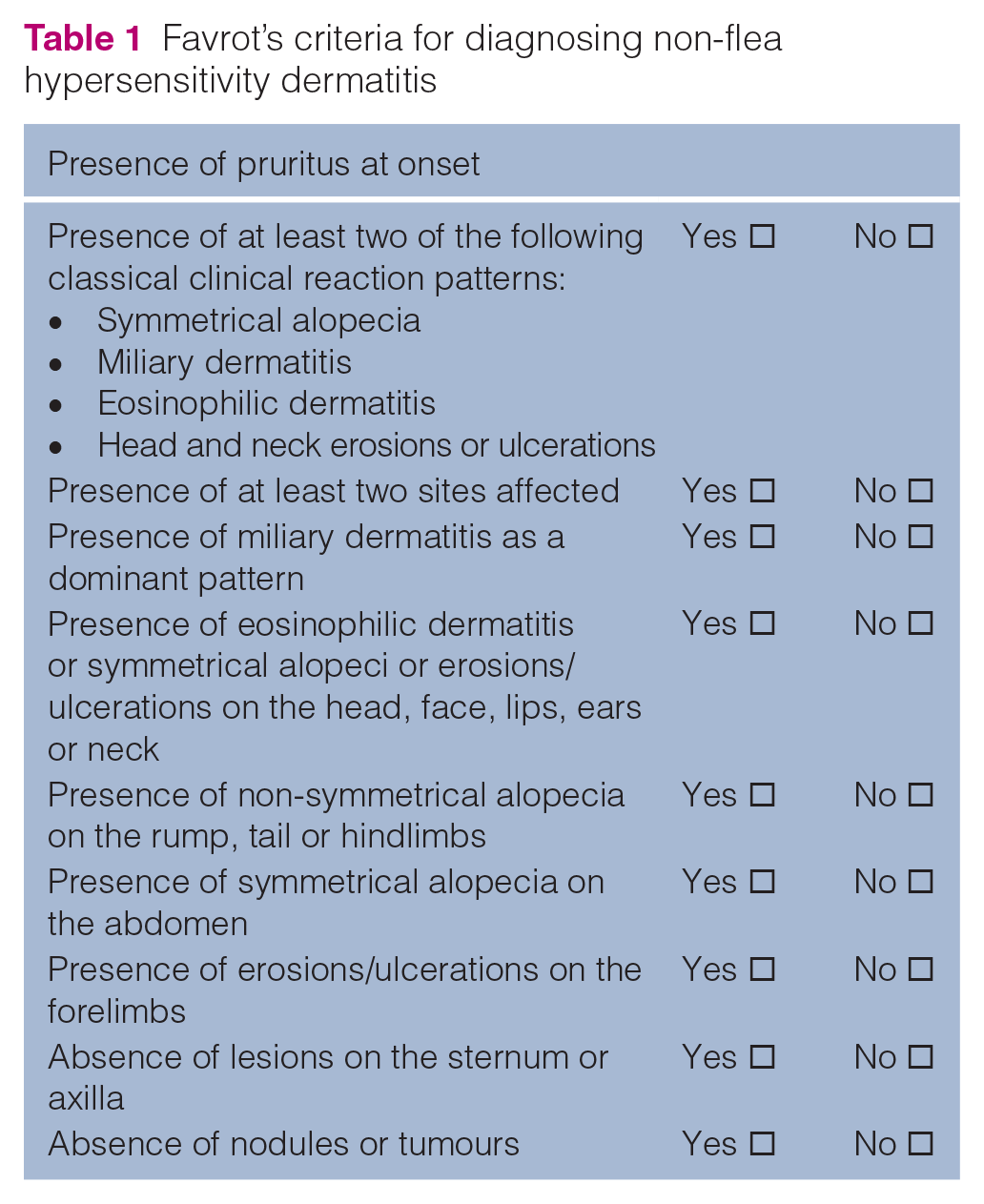
Cats of any breed and of both sexes, intact or neutered, were recruited. All cats were diagnosed with non-flea hypersensitivity dermatitis according to Favrot’s diagnostic criteria2,3 and presented with dermatological manifestations at inclusion. For inclusion, each cat had to meet at least six of the criteria listed in Table 1 on day 0 (D0). Regular ectoparasite control was checked to ensure that the most recent anti-flea treatment was still active and compatible with shampoo application, to exclude signs caused by flea infestation. To evaluate significant improvement, cats were required to have at least a moderate Scoring Feline Allergic Dermatitis (SCORFAD) score and a minimum value on the Pruritus Visual Analog Scale for Cats (VAScat), either scratching or licking, of 4/10.
Favrot’s criteria for diagnosing non-flea hypersensitivity dermatitis
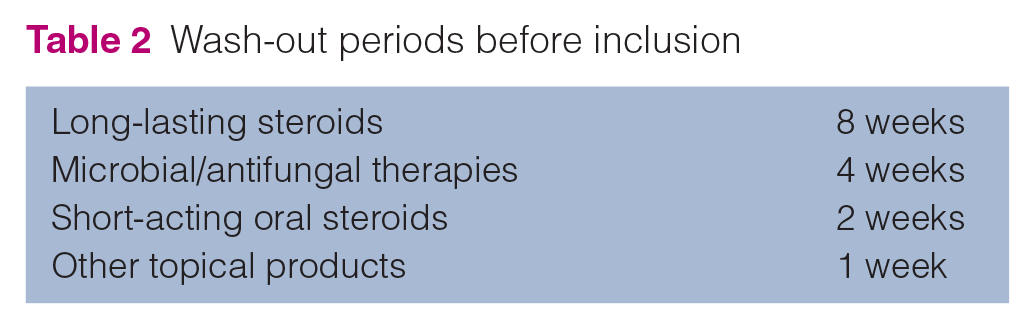
The exclusion criteria were lactation, pregnancy, ongoing dietary restriction-provocation trials and concomitant parasitic or infectious diseases; bacterial and fungal infections were eliminated through cytological examinations. Wood’s lamp examination, microscopic examination of plucked hair and fungal culture were conducted. Wash-out periods for previously administered treatment are listed in Table 2. Cyclosporine treatment was allowed if it was initiated more than 8 weeks before the cat’s inclusion and if no dosage changes were made. Allergen-specific immunotherapy was authorised if it was initiated more than 1 year before inclusion and if no dosage changes were made.
Wash-out periods before inclusion
Written informed consent was obtained from the owner or legal custodian of all cats before inclusion.
Management protocol
On D0, complete clinical and dermatological examinations were conducted. A veterinarian performed hair combing and collected cytological and skin scraping samples, if necessary, to confirm the absence of ectoparasites and infection. The SCORFAD assessment was conducted by a veterinarian, and pruritus was assessed by the owner using the Pruritis VAScat and by the veterinarian. A global assessment of skin condition (normal, mildly affected, moderately affected, severely affected or very severely affected) was subjectively performed by veterinarians based on their own observation. This global assessment of skin condition was not directly linked to the SCORFAD and VAScat values. The veterinarian shampooed the cat with DOUXO S3 CALM Shampoo during the consultation. If a cat was too stressed, the veterinarian applied the mousse (DOUXO S3 CALM Mousse) instead of the shampoo. Both agents were applied to the affected areas only to minimise distress or, in the case of generalised signs, to the whole body. A bottle of mousse and instructions regarding its application at home were provided to the owner; owners were told to separate mousse applications by a minimum interval of 48 h and a maximum of 72 h (Figure 1). A booklet explaining the product application, the study and the required number of pumps per unit area was also given to the owner. At home, the owner recorded in the booklet the days, area(s) of application and quantity of mousse (number of pumps) applied. The booklets were checked by the veterinarian at each visit and returned to them at the end of the study. This allowed the detection of potential deviations from the study protocol.
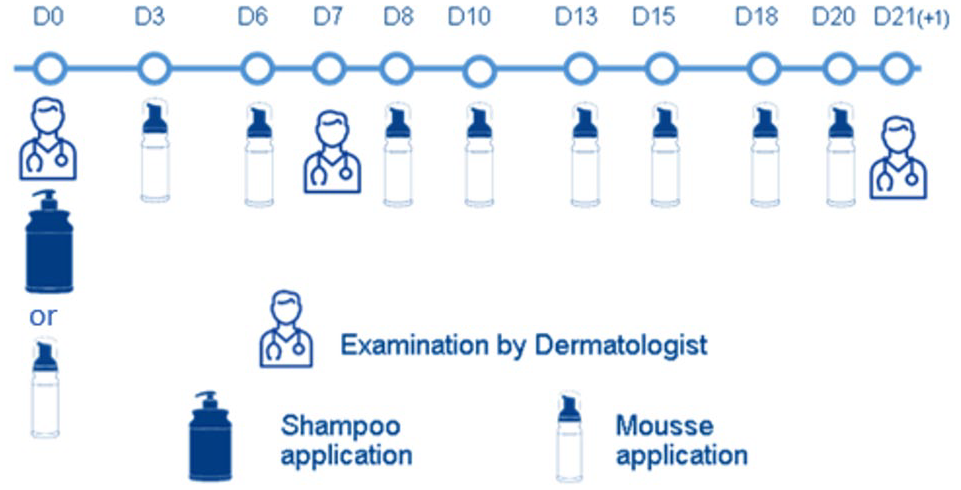
Management protocol
Intermediate (D7) and end of study (D21 or D22) visits were scheduled. The main parameters evaluated were the SCORFAD score, scored by the veterinarian, and pruritus assessed by both the owner (VAScat scale) and veterinarian. The parameters are listed in Table 3. Compliance and the global severity of skin condition were assessed at every visit. Photographs of the cats were captured at each visit to follow this evolution.
Parameters evaluated
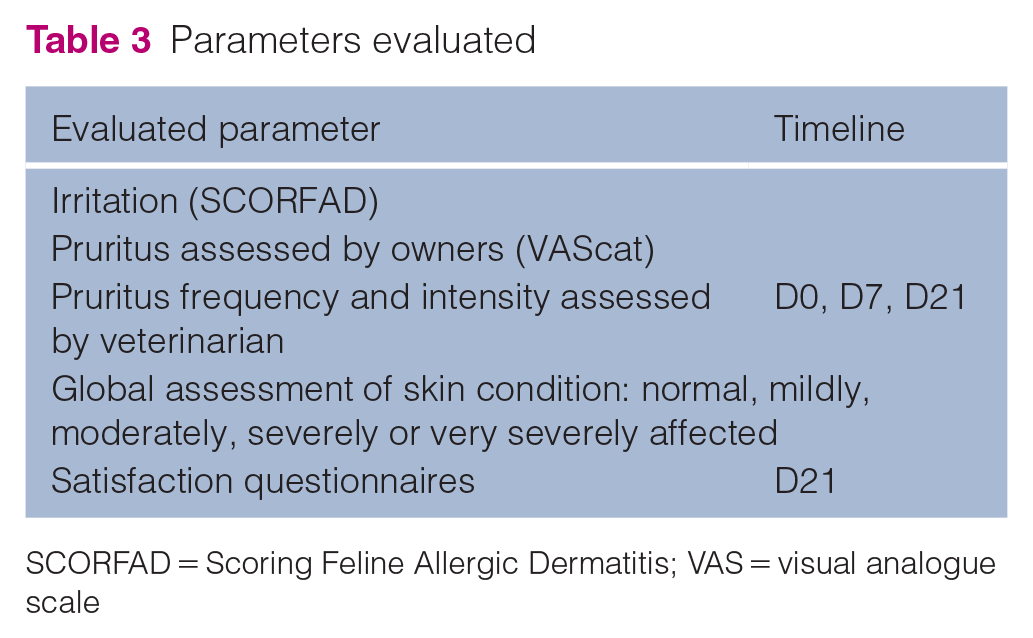
SCORFAD = Scoring Feline Allergic Dermatitis; VAS = visual analogue scale
On D21, the veterinarian confirmed whether the cat required additional products to manage the initial skin condition, either continued application of the tested mousse or prescription of a complementary product. At the end of study, owners were asked a specific set of questions regarding their satisfaction with the products and the protocol tested.
All cats were client-owned and lived with their owners throughout the study period. Environments, such as feeding and housing, were kept as constant as possible during the study period. This was particularly important because environmental factors can influence skin manifestations in cats with atopy. Oral and/or topical parasiticides compatible with the topical protocol were allowed if they were renewed during the study. Cats with known food-induced hypersensitivity were maintained on their elimination diet if it was already ongoing. At the end of the study, the cats remained with their owners and were managed by their owners and veterinarians.
Adverse events and withdrawal
Reasons for withdrawal and adverse effects observed during the study were recorded, regardless of whether they were related to the application of the shampoo and mousse.
Statistical analysis
A cat was used as the statistical unit. Each modality of the qualitative data is presented as numbers and percentages. For quantitative data, means, medians and standard deviations are described. If necessary, the 95% confidence interval is also presented.
The prerequisites for conducting each test were verified. Non-parametric tests were performed, if necessary. P values are presented in summary tables, in association with descriptive statistics when applicable. Missing data were not replaced. All types of missing data (including not applicable, not done, not known) were grouped into one category, namely, missing.
Summary statistics were provided for data for each protocol. Two main analyses were performed: a comparison between the total SCORFAD scores for all body zones grouped at D0 and D21 and the maximum values of the VAScat scores (VASmax).
As a secondary analysis, veterinarian assessment of pruritus, global judgement of the severity of the skin condition, and owner and veterinary satisfaction assessments at the end of follow-up were analysed for each protocol at the timelines listed in Table 3.
The two groups that received shampoo or mousse on D0 were not compared with each other, as performing a non-inferiority test was not possible owing to the small number of cases. In addition to the Wilcoxon test used to compare the median of the SCORFAD score, a model was performed on the absolute SCORFAD change and the first application (shampoo or mousse) was added as a variable in the model; however, this variable did not affect the results.
Results
Cat population
In total, 23 cats were recruited from seven investigational centres (six in France and one in Italy); four cats were withdrawn before D7 because of major deviations from the protocol and excluded from the analysis. Thus, the per protocol population was 19 cats, comprising 13 females and six males; all except one female were neutered. The cats were aged 0.5–13 years and weighed 2.7–10.0 kg. The study population comprised 12 crossbreed cats, five European Shorthairs and two British Shorthairs. The majority (n = 17) had short hair and two had long hair. Twelve cats lived strictly indoors, and seven lived mostly indoors but had access to the outdoors. Two cats (10.5%) had a history of long-term management for hypersensitivity dermatitis and had been treated with cyclosporine once daily (n = 1) or twice weekly (n = 1) for more than 8 weeks.
The mean SCORFAD and VAScat values on D0 are summarised in Table 4.
Values for the main parameters evaluated on day 0
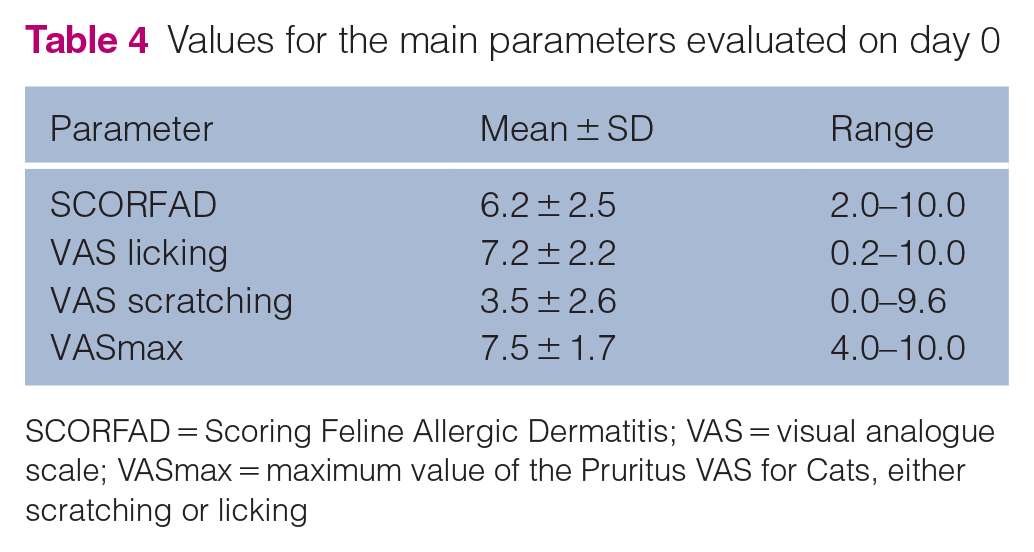
SCORFAD = Scoring Feline Allergic Dermatitis; VAS = visual analogue scale; VASmax = maximum value of the Pruritus VAS for Cats, either scratching or licking
At D0, the most affected areas were the head and neck (excoriations and self-induced alopecia), the abdomen (including eosinophilic plaques and self-induced alopecia) and hindlimbs (including excoriations, eosinophilic plaques and self-induced alopecia). Pruritus was mostly displayed as licking, and no correlation was observed between pruritus displayed as licking or scratching (r = −0.04) (Figure 2).
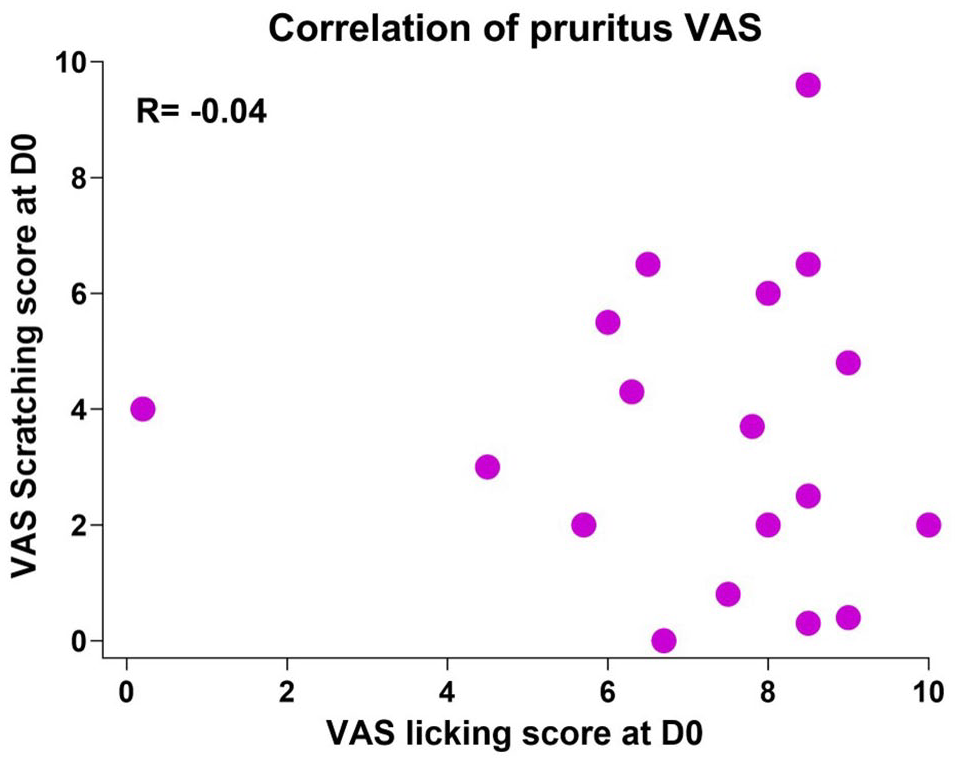
Scatter plot of the distribution of the Pruritus VAS for Cats scores on D0; each dot represents one cat. D0 = day 0; VAS = visual analogue scale
Veterinarians classified most (n = 12, 63.2%) cats as being moderately affected by the condition on D0, whereas three (15.8%) cats were only mildly affected and three (15.8%) were severely affected. One cat was very severely affected and underwent background management.
Protocol
On D0, 13 (68.4%) cats were shampooed and six (31.6%) started the management protocol with a mousse application.
SCORFAD
SCORFAD values were moderate at inclusion (mean 6.2; maximum 16). The test protocol yielded significant improvements in this score (Figure 3; see Table 1 in the supplementary material) as early as D7 (P = 0.0025) and on D21 (P <0.0001), reaching a mean score of 2.8 after only 3 weeks of mousse application. The evolution of the SCORFAD scores from the baseline value on D0 is shown in Figure 3 and an example of the improvement in condition is shown in Figure 4. In comparison with the baseline value on D0, the SCORFAD score on D21 had decreased by at least 30% for 89.5% (n = 17) of cats; more than 50% for 63.2% (n = 12) of cats; and more than 70% for 26.3% (n = 5) of cats.
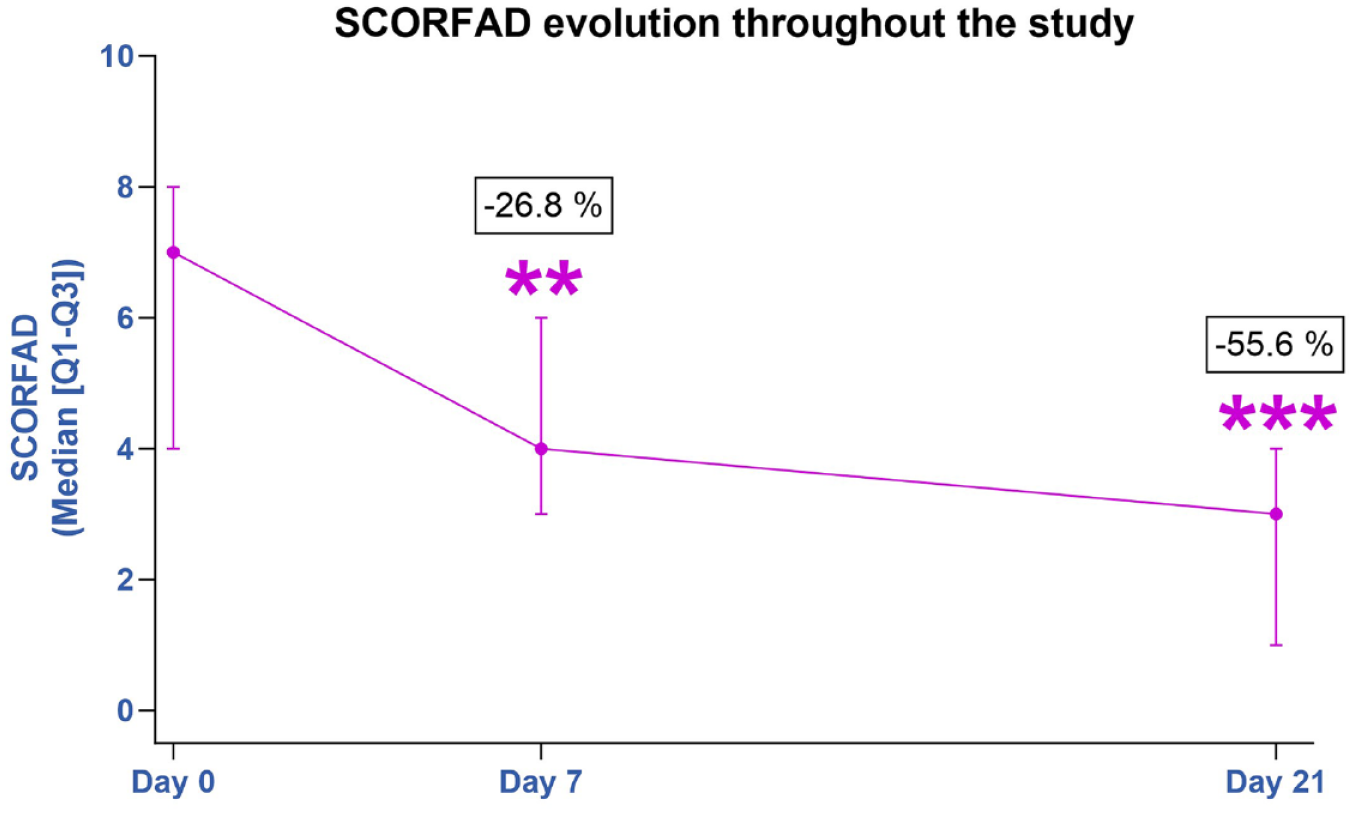
Decrease in SCORFAD scores compared with those recorded on day 0. SCORFAD = Scoring Feline Allergic Dermatitis. **Significant difference of at least P <0.01; ***Significant difference of at least P <0.001
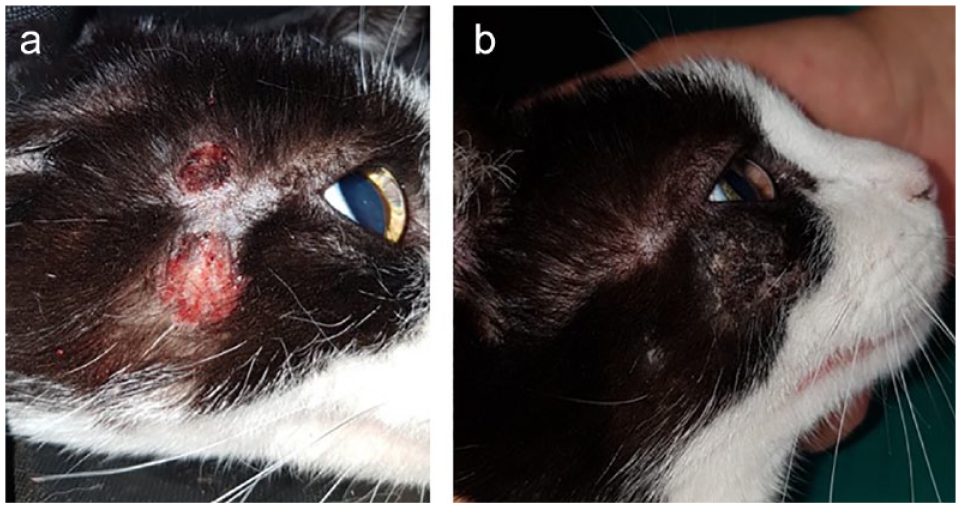
Clinical lesions on (a) day 0 and (b) day 21
VAScat
The VASmax scores of 18 cats were analysed; the data for one cat were missing because the owner did not return the booklet with completed sheets. Analysis was performed on the highest score, between licking and scratching, of this validated feline pruritus scale achieved at each visit. The test protocol significantly decreased licking behaviour (P <0.0001), both on D7 and D21, reaching a mean score of 4.3 after 3 weeks of mousse application, corresponding to an average decrease of 41.2% from baseline (Figure 5; see Table 2 in the supplementary material). The evolution of VASmax from the baseline value on D0 is shown in Figure 5. In comparison with the baseline value on D0, the VAScat scores on D21 showed a decrease of at least 30% for 72.2% (n = 13) of cats; more than 50% for 38.9% (n = 7) of cats; and more than 70% for 22.2% (n = 4) of cats.
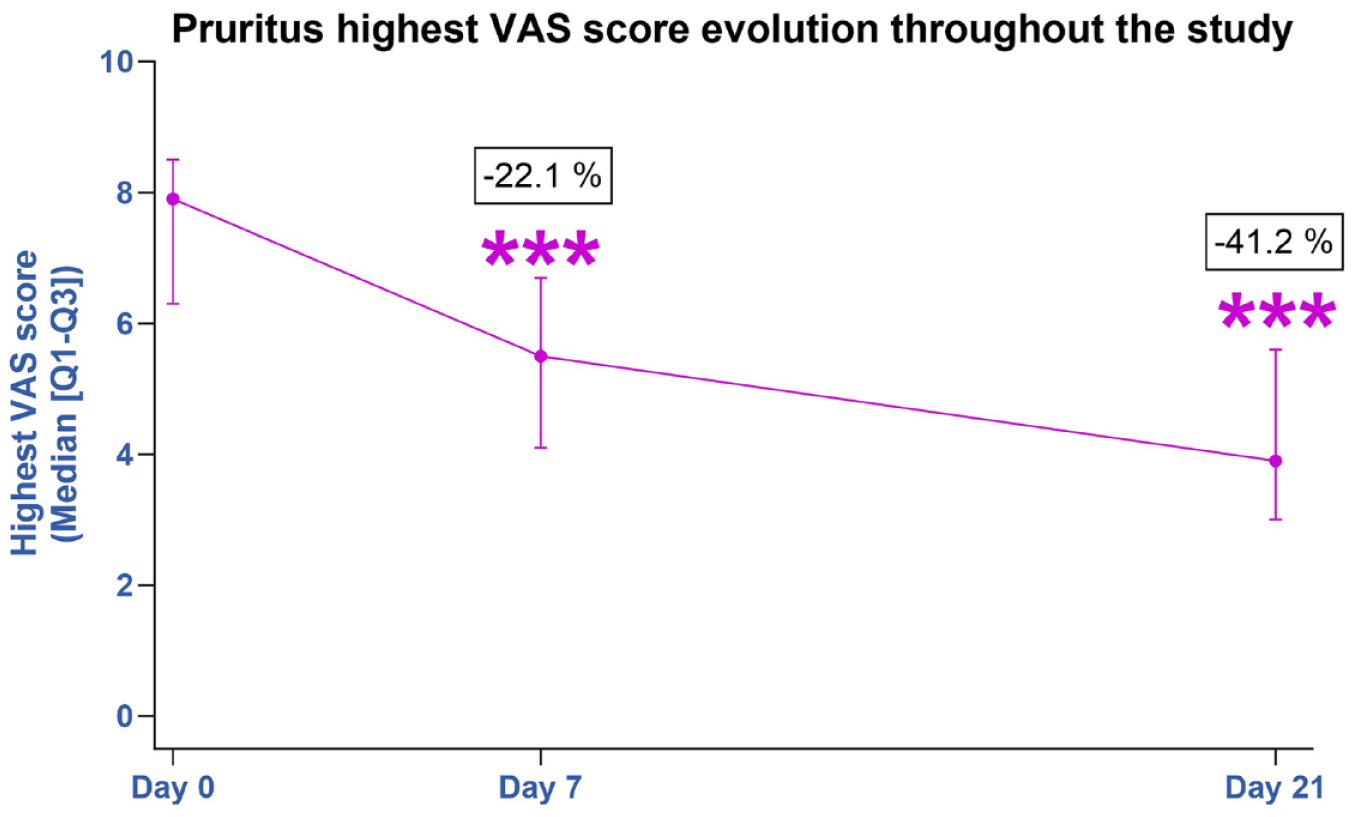
Decrease in maximum value of the Pruritus VAS for Cats, either scratching or licking, vs that on day 0. VAS = visual analogue scale. ***Significant difference of at least P <0.001
Evolution of pruritus as assessed by the veterinarian
In addition to the improvement in pruritus observed by the owners, veterinarians also observed a decrease in pruritus in the cats at the clinic visits, both in terms of frequency and intensity (Figures 5 and 6). Compared with the first visit, where pruritus was frequent or even constant in 84.2% (n = 16) of cats, after only 7 days, it had decreased, and it was only rarely observed in 57.9% (n = 11) of cats or had disappeared in 26.3% (n = 1) of cats after 3 weeks.
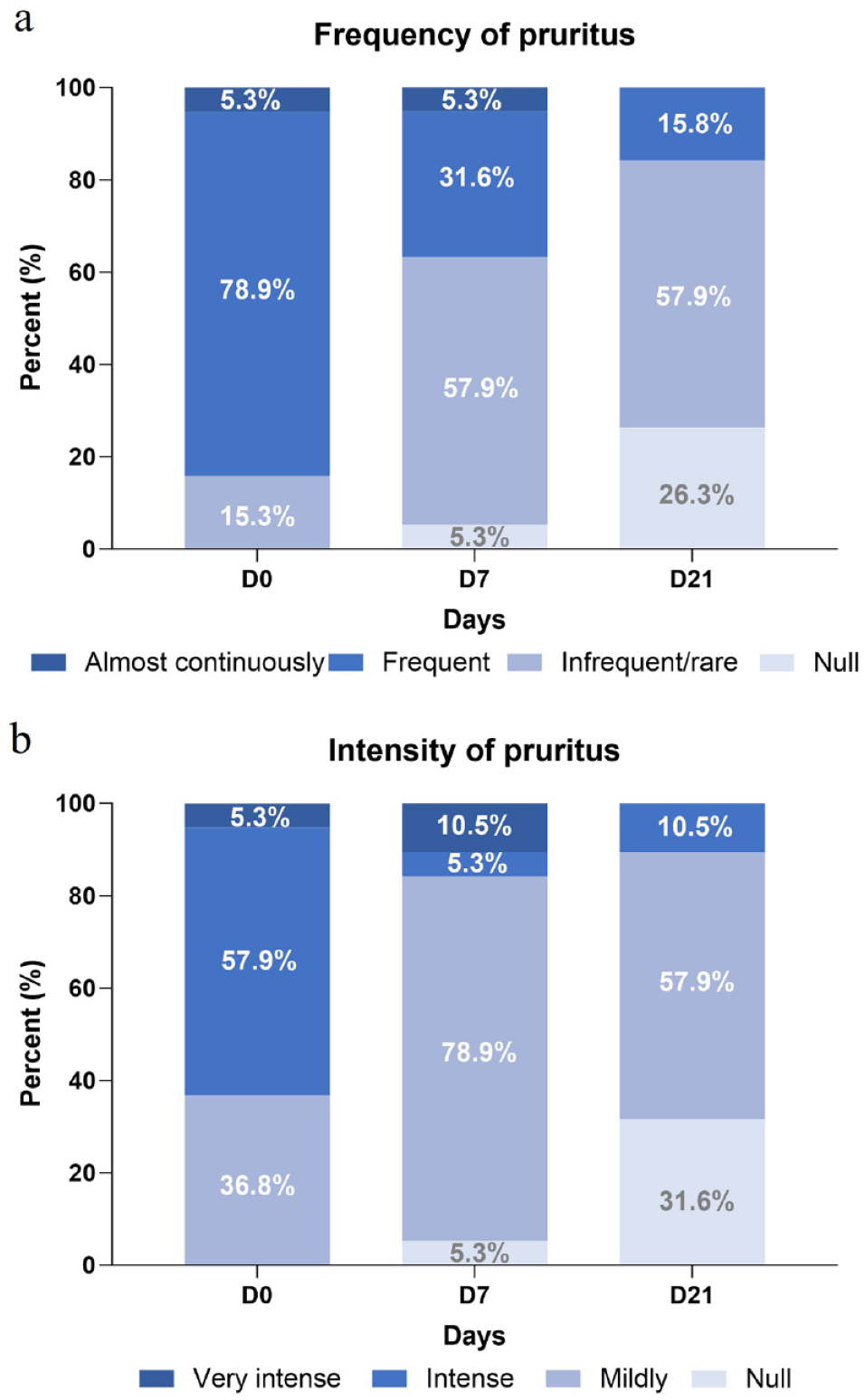
Bar plot showing the distribution of (a) the frequency and (b) intensity of pruritus observed by the veterinarian over time (n = 19)
The intensity of pruritus, assessed as intense or very intense on D0 in 63.2% (n = 12) of cats, reduced to mild or null in 84.2% (n = 16) of cats by D7 and 89.5% (n = 17) of cats by D21.
Evolution of the judgement of global skin condition by the veterinarian
On D0, most (84.2%) cats were classified as moderately to very severely affected. After 7 days, the skin condition improved progressively until D21, when 21.1% (n = 4) of cats were considered to have returned to a normal status and 57.9% (n = 11) were considered only mildly affected. No cat was very severely affected. Only one cat remained severely affected: this cat was moderately affected at D0 and deteriorated from D7 onwards. Of the four cats that returned to normal status, one was severely affected at inclusion, one was moderately affected and two were mildly affected. In total, 15/19 (78.9%) cats showed improvement in their skin status on D21 compared with D0, regardless of their initial status; three remained stable over the 3 weeks, showing neither improvement nor deterioration (two were moderately affected and one was mildly affected).
Judgement by the veterinarian of the global improvement at D21 compared with D0
For all cats except the one that showed deterioration, veterinarians were satisfied with the improvement. The veterinarians considered the improvement in 26.3% (n = 4) cats to be excellent. Using a five-point scale, efficacy was rated between 3 and 5 (satisfactory to excellent) by 89.4% of veterinarians. For 47.3% (n = 9) of cats, no further management was required after the 3-week test protocol. The practitioners recommended that treatment be continued for 10 cats by continuing to apply the DOUXO S3 CALM Mousse for a few more days using the same protocol (n = 4); continuing to apply the DOUXO S3 CALM Mousse but doing so more frequently (n = 1); continuing to use the same protocol with DOUXO S3 CALM Mousse but adding DOUXO S3 CALM Shampoo once a month (n = 1); or initiating another management strategy (n = 4).
Of the four cats in which another management strategy was recommended, one cat tested positive for environmental allergies and allergen-specific immunotherapy was initiated. Two cats underwent corticosteroid treatment for a few days at the end of the follow-up. No options for further management were specified in the remaining cat.
Owners’ satisfaction
All owners completed the questionnaire regarding their overall satisfaction at the end of the follow-up period (Figure 7): 94.7% (n = 18) of owners considered that the test protocol was effective and they all (n = 19) considered the mousse to be practical and easy to use. Four owners (22.2%) considered the response to management to be excellent and 12 (66.6%) rated it as good or fair. All but one owner liked the characteristics of the mousse; this owner somewhat disagreed. All six owners whose cats were shampooed on D0 were satisfied with the product. All but one owner was satisfied with the test protocol. In total, 15 (78.9%) owners were pleased with the hair and/or skin condition after product application.
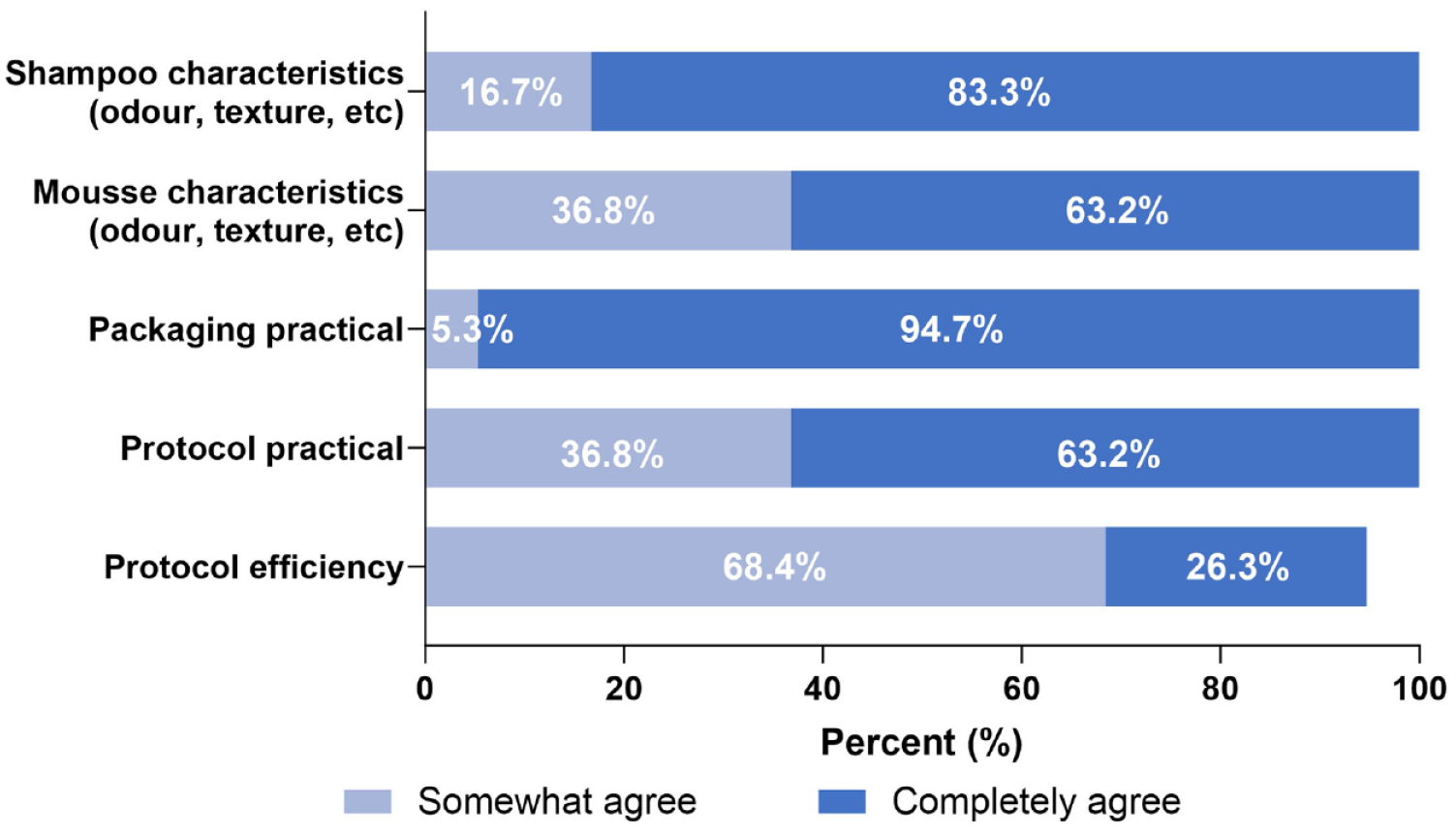
Owners’ overall appreciation of product characteristics, ease of use and efficiency
Tolerance and safety
To evaluate the safety of the topical protocol, the clinical signs and assessments of veterinarians and owners were recorded during the study. No serious adverse events were reported. Veterinarians and owners assessed the local tolerance of the shampoo and mousse applied to the cats as good.
One cat dropped out of the study because of increased pruritus after non-compliance with the protocol and incorrect product application due to the cat’s difficult behaviour. Prohibited concomitant management was prescribed and the cat was excluded from the study.
One cat showed increased self-licking, followed by an increased number of papules 3 days later. This cat was the only one whose clinical status deteriorated during the study period. Two cats tended to lick themselves after product application, with no impact on their scores. Local tolerance of the mousse was good in all cats.
Discussion
The animals served as their own controls: post-application data at each follow-up visit (D7 and D21) were compared with those recorded at baseline (D0). Performing a placebo-controlled, double-blind study would have been optimal, but for ethical reasons was not considered. The test products, the performance of which has already been proven in dogs, 22 were administered to all the cats. Considering the high variability of clinical manifestations of non-flea hypersensitivity dermatitis in cats, and based on the few publications available in which the number of cats varied between 12 and 29 per group,23–25 a target number of 20 cats was considered sufficient to determine the performance and safety of the products tested in the present study.
On D0, some cats were shampooed, whereas others were moussed. Cats receiving mousse on D0 (n = 6) experienced satisfactory (n = 5) or even excellent (n = 1) improvement. Although the sample sizes of the two subpopulations of cats, that is, those with or without initial shampoo, were too small for statistical comparison, the descriptive results support both approaches, as each subpopulation experienced satisfactory or excellent improvement. No group was considered to show clinical failure.
The SCORFAD, which assesses feline allergic dermatitis, was selected to assess skin issues because it is validated. 26 In the present study, the SCORFAD score was moderate at inclusion (mean 6.2, maximum 16), similar to the mean SCORFAD scores identified at baseline visits in other studies performed on cats affected by hypersensitivity dermatitis.23–27 Higher values were associated with infection, which was an exclusion criterion. Despite this moderately low value on D0, the scores improved significantly from D7 of the test protocol, showing great improvement on D21.
In the present study, pruritus was assessed using the VAScat severity scoring system. 28 However, as pruritus assessed by the owner can be influenced by the owner’s feelings (eg, dissatisfaction and impatience), pruritus was also assessed by the veterinarian at each visit to provide additional modulated information by considering both the owner’s records and objective clinical observations. 29
The displays of licking vs scratching behaviours in cats with pruritus varied at inclusion, depending mostly on the location of the skin manifestations and accessibility to licking or scratching, in addition to the cat’s habits and mobility. Some cats only displayed licking behaviour, while others only displayed scratching; some cats expressed both, especially when they had multiple lesions localised in several areas of the body.
Assessing improvement in mildly affected cats can be difficult, especially in a study that is not placebo-controlled and in which owners assess pruritus and administer products. Therefore, for ethical reasons and because concomitant bacterial and/or fungal infections were an exclusion criterion, included cats had to be at least moderately, but not too severely, affected. Veterinarians subjectively conducted a global assessment of the skin condition, categorising it as normal, mildly affected, moderately affected, severely affected or very severely affected based on their personal observations. It is important to note that this global assessment was not directly correlated with SCORFAD and VAS values. For example, on D0, the mean SCORFAD value was 5.5 ± 2.4 and the mean VAS value was 7.1 ± 1.7. These findings align with a previous study by Brame et al. 30
All owners considered the mousse easy to apply and the protocol practical. The light texture of the mousse was associated with a low frequency of cat handling, and the possibility of applying it only where it was needed limited the caregiver’s burden. As cats are a self-grooming species, a transitory increase in licking was expected after each application of mousse. However, only two owners observed and reported this. These results demonstrate that topical treatments are feasible for implementing stress-free strategies in cats and are well tolerated.
Veterinarians noted an improvement in the skin status at D21 compared with D0, irrespective of the initial status, in 78.9% (n = 15) of the cats, suggesting that topical treatments could be considered a new tool for managing cats with FAS. Whenever considered by a veterinarian, the preferred approach should be a multimodal one, as the current protocol as the sole treatment might not be sufficient. The safety of the products used in the present study has been previously assessed, 31 showing perfect local tolerance, an absence of buccal toxicity following self-licking and no systemic toxicity in biochemical and haematological parameters, even in acute situations. Considering the paucity of previous studies evaluating the efficacy of topical agents to treat feline skin diseases, further studies should be performed to evaluate the importance of avoiding steroids and other immunosuppressive drugs.
Conclusions
The results of the present study support the safety and efficacy of managing cats with FAS with a protocol combining one application of DOUXO S3 CALM Shampoo followed by applications of DOUXO S3 CALM Mousse only on the affected areas, every 2–3 days for 3 weeks. Improvement in skin status at D21 compared with D0, irrespective of the initial status, was good. The protocol was considered efficient and practical by the owners, and compliance was excellent. This represents a positive step in the use of topical products to manage cats with irritated skin and pruritus. An alternative protocol of replacing the initial shampoo with a first application of DOUXO S3 CALM Mousse only where it was needed, which was allowed under the study protocol if cats were too stressed, also showed satisfactory or even excellent improvement.
To the best of the authors’ knowledge, this is the first study to address the consideration of topical products as a new tool for helping cats with FAS. Depending on how severely the cat is affected, this protocol can be used alone or in a multimodal approach in combination with drugs. The present study also demonstrated that topical applications are feasible and well tolerated in cats when implementing stress-free strategies. Importantly, these strategies may help reduce the use of oral or injectable immunosuppressant drugs for allergic cats, with the associated benefits of reduced side effects and need for stressful manipulations.
Supplemental Material
Table 1
Additional statistical data for the Scoring Feline Allergic Dermatitis scores
Supplemental Material
Table 2
Additional statistical data for the maximum value of the Pruritus Visual Analog Scale for Cats
Footnotes
Acknowledgements
The authors would like to thank Charly Matard, data manager, Alexandra Beck, clinical study coordinator, and Roxane Kesteman, Léa Lacourty and Charlotte Valade, clinical research associates, for their valuable contributions to this study. The authors would like to thank Editage ( ) for English language editing
Author note
This paper was presented in part at the 2023 British Small Animal Veterinary Association and Groupe d’Etude en Dermatologie des Animaux de Compagnie conferences. The raw data supporting the conclusions of this article will be made available upon request to the corresponding author.
Supplementary material
The following files are available as supplementary material:
Table 1: Additional statistical data for the Scoring Feline Allergic Dermatitis scores
Table 2: Additional statistical data for the maximum value of the Pruritus Visual Analog Scale for Cats
Conflict of interest
AC, MG, CB and XD are employees of Ceva Santé Animale, Libourne, France. The remaining authors received financial support from Ceva Santé Animale for the research, authorship, and publication of this article.
Funding
This study was supported by Ceva Santé Animale, Libourne, France.
Ethical approval
The work described in this manuscript involved the use of non-experimental (owned or unowned) animals. Established internationally recognised high standards (‘best practice’) of veterinary clinical care for the individual patient were always followed and/or this work involved the use of cadavers. Ethical approval from a committee was therefore not specifically required for publication in JFMS. Although not required, where ethical approval was still obtained, it is stated in the manuscript.
Informed consent
Informed consent (verbal or written) was obtained from the owner or legal custodian of all animal(s) described in this work (experimental or non-experimental animals, including cadavers) for all procedure(s) undertaken (prospective or retrospective studies). No animals or people are identifiable within this publication, and therefore additional informed consent for publication was not required.
References
Supplementary Material
Please find the following supplemental material available below.
For Open Access articles published under a Creative Commons License, all supplemental material carries the same license as the article it is associated with.
For non-Open Access articles published, all supplemental material carries a non-exclusive license, and permission requests for re-use of supplemental material or any part of supplemental material shall be sent directly to the copyright owner as specified in the copyright notice associated with the article.
