



Abstract
Social tension or conflict between household cats is common but, because it often manifests as subtle behavioral changes, it can go unnoticed; it is precisely because most signs are subtle and unrecognized that the term ‘tension’ is used. Where associated tension-related chronic fear-anxiety leads to more overt behavioral concerns and stress-associated disease, cats may face relinquishment by caregivers or even euthanasia if the tension is not relieved. The ‘2024 AAFP intercat tension guidelines: recognition, prevention and management’ have been authored by a Task Force of board-certified veterinary and applied behaviorists and clinical experts in feline medicine and behavior convened by the American Association of Feline Practitioners. The aim is to support veterinary professionals in understanding social behavior between cats and, more specifically, in recognizing intercat tension, preventing or minimizing its occurrence and managing the stressors. In developing the Guidelines, the Task Force has modified the five pillars of a healthy feline environment to provide a framework to assist the prevention or management of intercat tension in households with two or more cats. Because feline social behavior is often misunderstood, the Guidelines debunk 10 common myths that have the potential to negatively impact the wellbeing of companion cats. Extensively illustrated with visual examples of intercat tension and an Appendix detailing a number of case studies, the Guidelines also include a comprehensive table of psychotherapeutic medications, and a detailed algorithm that outlines a systematic approach to preventing, recognizing and resolving intercat tension. A step-by-step approach to introducing a new cat into a household with one or more resident cats is included to further support veterinarians, and a range of management tools to promote client education accompany the Guidelines.
Keywords
Introduction
Intercat tension is a common, but often unrecognized, cause of impaired feline health and wellbeing. Globally, surveys indicate that intercat tension affects between 62.2% and 87.7% of multiple-cat (multi-cat) households – that is, households with two or more cats;1,2 25-31% of feline behavior cases in a behavior practice are due to intercat tension or conflict.3-5 Other behavioral concerns and stress-associated disease often occur secondarily to intercat tension. In a recent and large survey of feline relationships, 87.7% of 2492 multi-cat households reported signs of intercat tension. 2 In this survey, 73.3% of respondents noted that signs of tension started with the introduction of a new cat, 23.6% reported gradual changes to a previously positive relationship and 3.1% saw abrupt behavior changes. As the majority of cases of intercat tension begin at initial introduction of a new cat, the Guidelines address best adoption choices, preparation of the home environment, including the availability of safe places for each cat,2,6 and the gradual introduction process necessary to prevent intercat conflict.
Tension in intercat relationships, within the context of these Guidelines, is characterized by poor tolerance of other cats and lack of friendly interactions by at least one cat in the household toward another cat or cats. Cases of intercat tension are often multifactorial, and problem resolution may involve several treatment pathways. Signs can be subtle, such as staring or blocking, and go unrecognized by caregivers, or may be much more overt, with repeated episodes of physical conflict (eg, hissing, wailing, swatting). The Guidelines provide detailed descriptions of various presentations of intercat tension that will become recognizable with experience by both veterinary professionals and caregivers.
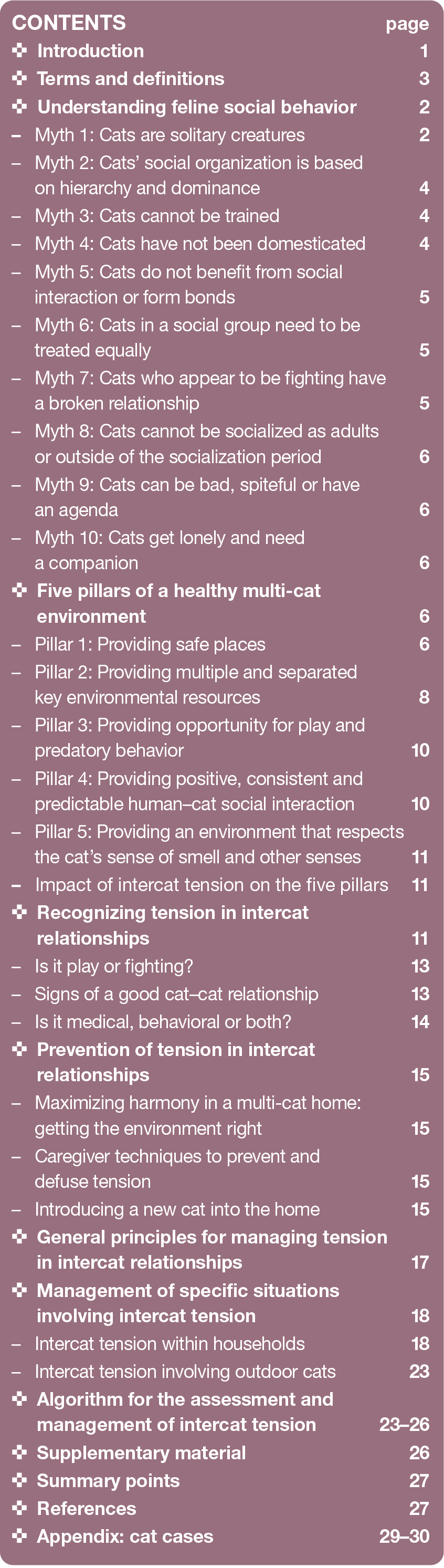

Caregivers who have two or more cats living on the same premises assume an extra burden of responsibility for the wellbeing of their companion animals, and may face demands on their patience, resources and understanding beyond those that single-cat caregivers encounter. 7 For the veterinarian who serves this growing multi-cat care-giver population, regular client education is an especially important component of the veterinarian-client-patient relationship. Veterinary professionals who knowledgeably advise their multi-cat caregivers and set reasonable expectations will help to ensure that relinquishment or rehoming of companion animals is not the default option for resolving intercat tension. By systematically addressing cases of intercat tension using the recommendations outlined by the Guidelines Task Force, veterinary professionals can offer practical advice for improvement or full resolution. Even seemingly intractable intercat conflict can usually be successfully managed or improved, as evidenced by the case studies included in the Appendix. As with any optimum clinical service model, the Guidelines’ recommendations are most effective when they are understood and implemented by the entire veterinary team.
Understanding feline social behavior
Cats are ubiquitous in the lives of humans and yet are still poorly understood. As new research emerges, it is important to address commonly held beliefs that are not well supported by the scientific literature and have the potential to negatively impact feline welfare.
Ten common feline behavior myths are examined and dispelled below. Focusing on the needs of the individual cat, and not on myths and generalities associated with feline behavior, will help to optimize the welfare of cats under our care.
Myth 1: Cats are solitary creatures
Domestic cats have flexible and varied social systems. Social bonds between cats are not necessarily essential, 8 and although cats may form close attachments with other cats, they are not dependent on those relationships to survive (ie, they are ‘socially flexible’ rather than ‘socially obligate’).9,10 The social behavior of cats is influenced by their environment and individual genetics. 16 Additionally, early developmental experiences, ongoing life experiences and learning influence behavioral tendencies. Thus, not only is feline social behavior highly individualized (some cats seek out social interaction more than others, some prefer to live alone, and some as part of a social group), caution should be applied when translating information about the social organization of cats from populations living in different circumstances. 17 Free-ranging (feral or street/community) cats differ from companion cats (living within homes) in several ways. Free-ranging cats are more likely to be unneutered and may have a more unpredictable food supply. Among free-ranging cats, social groups are often made up of related individuals, or other individuals chosen by the cat. Free-ranging cats also have control over whether to leave an undesirable social situation, whereas companion cats (especially indoor-only cats) do not.

Because household groupings of cats are chosen by their caregivers, some multi-cat homes may not contain true social groups of bonded individuals, but rather cohabitees, resulting in more intercat tension. Caregivers may also negatively impact cat behavior by increasing the number of cats in a limited space. However, research indicates that some companion cats may be able to live together at higher densities with relatively little intercat tension, depending on the physical and social environment. 18 ‘Social maps’ help to identify the affiliative and agonistic relationships between cats and the intensity of any tensions (Figure 1). The ‘Questionnaire for multiple-cat households’ (see supplementary material) is also designed to assess affiliative and agonistic behaviors.

A ‘social map’ can help in developing a plan to resolve intercat tension and any concurrent behavioral concerns. This example shows a social map for a four-cat household. Cat A was a 6-year-old spayed female presenting with urine soiling. Examination and diagnostics (urinalysis, urine culture, urinary tract ultrasound, complete blood count and chemistry profile) revealed no physical abnormalities. Review of the caregiver’s completed ‘Questionnaire for multiple-cat households’ (see supplementary material) identified that intercat tension was occurring. Although cat A greatly enjoyed the company of cat B, agonistic behaviors toward cat A by cats C and D occurred. Cat D engaged in frequent staring and blocking behavior toward cat A; often this behavior occurred in hallways and on stairways and prevented cat A from accessing rooms with litter boxes. Cat C intermittently stalked and hissed at or fought with cat A. The veterinarian recommended a safe room be set up with all resources for cat A (which only she could access), and a microchip-activated cat flap that only she could enter. This resolved both the urine soiling and intercat tension. Figure courtesy of Ilona Rodan
Myth 2: Cats’ social organization is based on hierarchy and dominance
Feline social groups are organized based on several factors including familiarity, age and affiliations. Social hierarchies have been described in feral cats and are defined on the basis of who predictably takes precedence over whom, but they are not rigid. They are not the basis of social organization, but a consequence of it. There is often confusion surrounding use of the term ‘dominance’ in cats, with cats labeled as ‘dominant’ often simply being more active, extrovert or inquisitive than those labeled as ‘submissive’. There is no evidence that intercat tension occurs because cats are striving to establish a dominance hierarchy. More typically, intercat tension within a home occurs because there is competition over resources, or stimuli that threaten the social relationships within the group (eg, introduction of a new cat, territorial invasion by an outdoor neighborhood or feral cat, pain or sickness).
Veterinary professionals should educate care-givers not to let cats ‘work it out themselves’ or try to force cats to get along. Instead, caregivers should consider their cats’ environment and whether the current availability and distribution of resources is creating tension (see ‘Five pillars of a healthy multi-cat environment’).
Myth 3: Cats cannot be trained
Learning processes are universal, and cats are no exception. Every cat will learn at their own rate. To facilitate training, caregivers must identify rewards that their cat prefers. Although food is a commonly used training reward, other rewards such as play, petting and praise can also reinforce desired behavior. In a study that examined the preferences of 38 cats, 50% preferred a social reward such as petting or play, while 37% preferred food. 19 Once preferred rewards have been identified, the caregiver should start by conducting brief training sessions with the cat and slowly work up to longer sessions. Ideally, sessions should terminate before the cat loses interest. More information on training is provided in a handout, ‘Behavior modification recommendations for multiple-cat households’, available in the supplementary material.
Myth 4: Cats have not been domesticated
Cats have undergone changes through the domestication process and display a number of adaptations to life with humans. As well as changes in the genome of domestic cats compared with their wild cat ancestors, 20 there are both physical changes (eg, smaller body size and different coat colorations) and behavioral changes (eg, increased docility and affiliative behavior toward humans).
Myth 5: Cats do not benefit from social interaction or form bonds
Social interactions can be enriching for some cats. Many cats prefer human social interaction to other types of potential reward. 19 Cats have the capacity to be highly sociable with humans and other cats,17,21 and can form close bonds concurrently with other cats and humans.8,22 Positive, consistent and predictable human social interaction is important to a cat’s welfare (see ‘Pillar 4: Providing positive, consistent and predictable human-cat social interaction’).
Myth 6: Cats in a social group need to be treated equally
All cats in a social group should have their needs met, but all cats do not have the same needs. Some cats in the home require more care and attention than others. One cat may, for example, have special medical considerations that require more of the care-giver’s time and attention. Additionally, not all cats have the same activity levels or preferences. 19 One cat may prefer playing and another cat may prefer being petted. Caregivers should assess the individual needs and preferences of each cat to ensure good welfare for all.
Myth 7: Cats who appear to be fighting have a broken relationship
‘Rough-and-tumble’ play can look quite serious, but is still play. Cats may also use overt expressions (eg, hiss and non-reciprocated chasing) to end a social encounter without a risk of harm. 23 In addition, it is not unusual for companion cats to occasionally have short episodes of ‘not getting along’. This is normal social behavior and does not mean the bond between them is broken or dysfunctional. If these episodes are accompanied by frequent, intense or prolonged physical conflict and/or hiding by one or more of the cats, an underlying medical problem should be ruled out and behavioral support provided. See Figure 2 and ‘Is it play or fighting?’ for guidance on how to differentiate play from intercat tension.

Recognizing cat-to-cat play in the home environment. Images courtesy of Kristyn Vitale

Myth 8: Cats cannot be socialized as adults or outside of the socialization period
The socialization period of kittens represents the time when they are most sensitive to learning about social behavior and relationships. This occurs around 2-9 weeks of age,24,25 but learning does not stop when this period ends. In one study, 50 kittens aged 3-8 months old participated in a training and socialization class. 8 In total, 86% of the kittens completed the 1-day-a-week, 6-week long program, with many readily learning new behaviors and becoming comfortable in novel environments.
It is important to recognize the potential for successful training and socialization outside of the socialization period and not to subscribe to the myth that cats are socially aloof, with behavioral tendencies fixed from a young age. Additional socialization, when performed correctly, has the potential to improve feline welfare by creating well socialized, less fearful cats with healthy coping behaviors. However, it is important also to recognize that cats who come from a feral or street cat background will have genetic and epigenetic factors that may limit their socialization to people and new situations; so, before recommending a socialization program, there should be careful discussion with the caregiver about the cat’s background. Additionally, if a cat displays continued fear-anxiety during slow and gradual training and socialization sessions, that individual cat may need to be removed from the sessions.
Myth 9: Cats can be bad, spiteful or have an agenda
The brains of cats are adapted to think in the moment, not for forward planning over long time scales. Myriad stressors, both internal (eg, a decrease in sensory capacities in senior cats) and external (eg, changes in the physical or social environment), may cause fear-anxiety or frustration. The resulting behavior is an expression of the emotions that are triggered by the immediate situation, not by the person who has brought the situation about. For example, a caregiver may feel their cat is urinating on the bed out of spite. However, better explanations – not based on anthropomorphism – may be that the cat has a medical condition, or access to a litter box is blocked by another cat, or the litter type or box design is not to the cat’s liking. The ‘AAFP and ISFM Guidelines for Diagnosing and Solving House-Soiling Behavior in Cats’ discuss other causes and identify solutions. 26
Myth 10: Cats get lonely and need a companion
Cats do not necessarily need companionship. Caregivers should carefully consider the pros and cons of acquiring a new cat as a companion for another cat. First, it is not always necessary to replace a cat that has passed away, as companion cats may be mourning the loss of a bonded companion or stressed due to the change in the social environment. 27 Secondly, having more than one cat in the house may or may not enhance the welfare of a cat (see ‘Five pillars of a healthy multi-cat environment’). Caregivers should consider that while some cats may be stressed from living without other cats, more commonly cats living with other cats they are not socially bonded with, and who do not tolerate one another, will experience distress (ie, when the impact of the protective emotions of fear-anxiety and / or pain exceed the cat’s coping ability).
Five pillars of a healthy multi-cat environment
Having more than one cat in the home may or may not enhance the welfare of the cats. The number of resources per cat, including food stations, litter boxes and opportunities for interactive play with caregivers, often decline in multi-cat households when compared with single-cat households, increasing the risk of territorial and social conflict. 28 The original five pillars of a healthy feline environment, introduced in the ‘AAFP and ISFM Feline Environmental Needs Guidelines’, 29 are adapted here for multi-cat households, with and without tension (see Box 1). Supporting the pillars is more challenging in the case of indoor-only cats vs cats with outdoor access, whether part- or full-time.6,30,31 The space limitations inherent in indoor environments are more likely to lead to intercat tension (because of the smaller physical environment). It is important that every effort is made to meet the five pillars of a healthy environment to prevent intercat tension from developing in the first place.

Pillar 1: Providing safe places
A newly introduced cat may encroach on the space of an existing resident cat or cats, necessitating additional safe locations for the newcomer that the resident cat(s) cannot readily access.
✜ Every cat needs safe places – in general, with one safe place per cat plus one additional place – to allow choice and prevent competition. This is important in enhancing a sense of control and security. 29
✜ In a study of 60 pairs of neutered, indoor-only cats, cats spent 48-50% of their time out of each other’s sight. 32
✜ Safe places with high sides allow cats to hide, providing visual barriers from cats not in their social group (Figure 3). Hiding options that allow entry and exit from two different paths prevent blocking by another cat.33-37
✜ Access to vertical places (eg, furniture, cat shelves, cat trees) increases a cat’s control over the environment, and provides opportunities for climbing and perching while monitoring the approach of other cats. The aim should be to offer vertical space at different heights, at the cats’ preferred levels, with some hiding options for less confident cats (Figures 4 and 5). 37
✜ If agonistic behaviors occur, the available safe places with visual separations in the cats’ core territories (which may overlap) should be increased.
✜ Access to safe outdoor space can be provided within escape-proof fenced yards and outdoor cat enclosures, or in some circumstances by walking a cat with a harness and leash, following reward-based training, in a safe and quiet location without unfamiliar cats in the area (Figure 6; see also Video 3 in the supplementary material for advice on training cats to accept a harness). Advise caregivers to follow a routine, regardless of the type of outdoor access. Microchip-activated cat flaps prevent entrance by unfamiliar cats. Schedule safe times to avoid potential conflicts with outdoor neighborhood, stray or feral cats.

Two cats were brought into a household that already had two resident cats. One of the new cats integrated well and one did not. (a) Despite ensuring a gradual introduction, one of the resident cats, a black male, would stare at and block one of the newcomer cats, a tortoiseshell, who would hide from him under the bed. (b) Increasing safe places within the home, including safe hiding places, increased the tortiseshell cat’s confidence to come out from under the bed. From her high-sided cat bed raised up on a window ledge, she can now monitor her environment and has at least two points for exit and entry, allowing escape from the black cat. Images courtesy of Carrie Mesiar
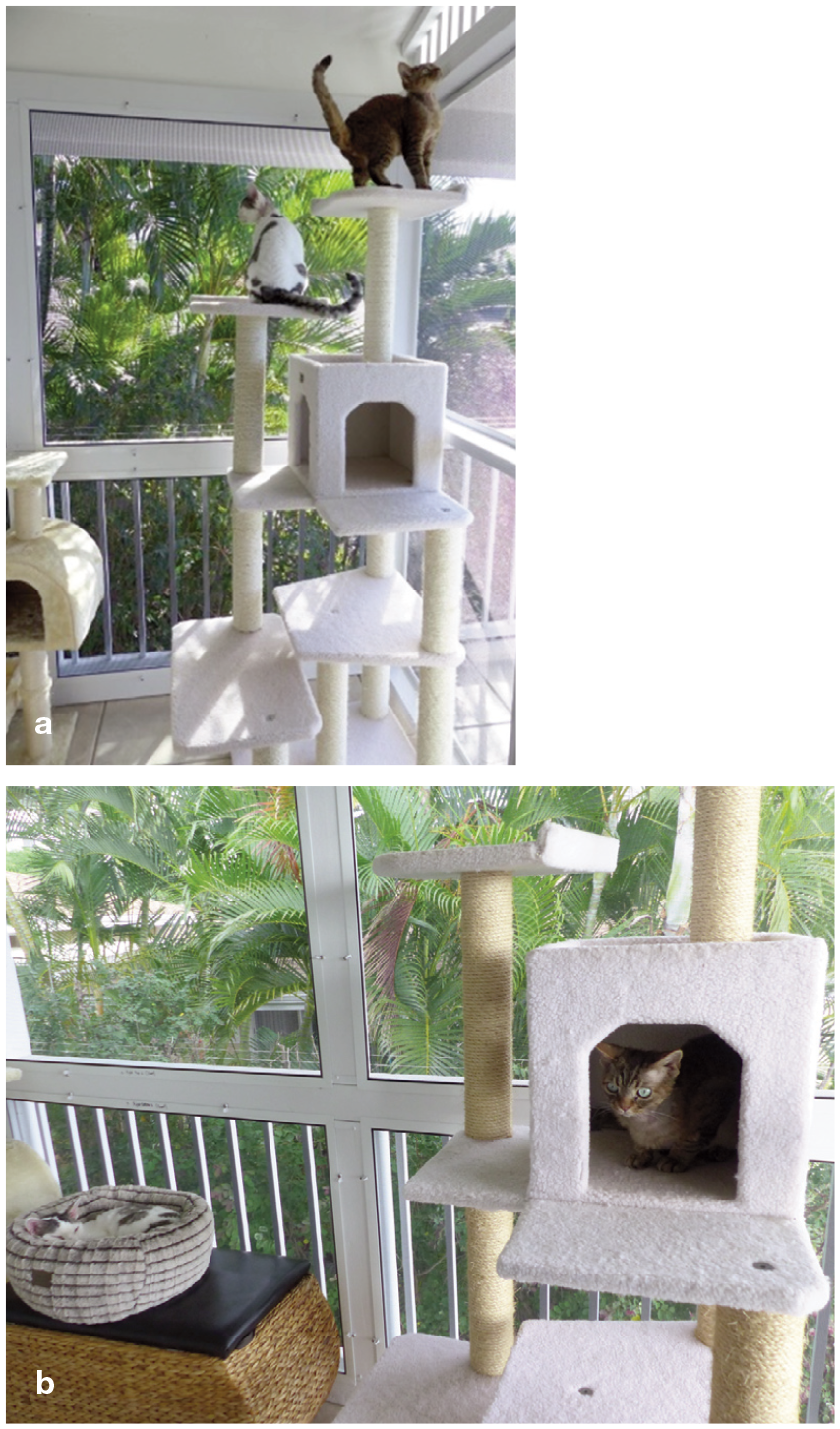
(a,b) This outdoor enclosure has multiple levels for the cats to perch on, as well as offering different hiding options, preventing competition for resources and the risk of agonistic behaviors. Images courtesy of Ilona Rodan

Intercat tension in this multi-cat household occurred because of competition for vertical space. Following a behavior consultation, the client placed perches along the walls of the lower and upper levels of the home, including above the stairs, leading to toleration between the cats. Images courtesy of Rachael Boneck

Safe outdoor options provide additional space to allow a cat to perform normal behaviors while distancing from other household cats. (a,b) A cat being walked with a harness and leash. (c,d) Outdoor enclosures with screened fencing around the space. Images courtesy of Alexandre Daniel (a), Debra Horwitz (b) Ilona Rodan (c) and Daniela Ramos (d)
Pillar 2: Providing multiple and separated key environmental resources
All key resources (safe places, food, water, litter boxes, scratching surfaces) should be distributed throughout the three components of each cat’s physical home environment (home range, territory and core territory for each cat; Figures 7 and 8). More resources are necessary if agonistic behaviors occur (Figure 9).
✜ Safe places, food, water and opportunities for play should be available in each cat’s core territory. Advise clients to separate food and water, and to provide multiple visually separated feeding and water stations (Figure 10).
✜ Litter boxes and scratching surfaces should be in different locations toward the periphery of the territory on each level of the home.
✜ Place visual barriers between resources (whether the same or different resources), and block visibility of outdoor cats.
✜ If there is more than one social group, ensure each social group has its own separate core territory.
✜ Provide safe outdoor space, if possible.
✜ Monitor for urine, fecal and scratch marking; these behaviors can indicate distress and inadequate environmental resources.39,40


The three components of a cat’s physical environment are the home range, territory and core territory. In a multi-cat household, resources for resting, feeding, sleeping and play should be placed in each cat’s core territory. Scratching surfaces and litter boxes should be available in each cat’s territory, the area that cat will defend. The home range is the entire area over which a cat roams, and is much smaller for indoor-only cats vs cats with outdoor access. Adapted from Halls (2016) 38

Diagrammatic representation of a multi-cat household with two resident, non-socially bonded male cats. The configuration of the 690 ft 2 (64 m2) apartment is illustrated in the main diagram, with the cats’ resources shown in the key. Aside from a small balcony, the cats have no access to the outdoors. The home range, territory and core territory of each of the cats are shown in the smaller diagrams. Note that the cats’ environments overlap, with cat 1 using the entire household space and cat 2 restricted to the caregivers’ bedroom and bathroom. Cat 2 is timid and cat 1 is highly territorial, blocking cat 2’s access to the rest of the home. Cat 1 defends a relatively large territory, almost the size of the home range. Compare this with cat 2’s much smaller territory, which only slightly exceeds his core territory. The best locations for each cat’s safe places, food, water and bed are in their respective core territories, with litter boxes and scratching posts in their respective territories (which do not overlap), to avoid competition over these resources. Ideally, a microchip-activated cat flap would be placed in the door to cat 2’s space, preventing cat 1 from imposing on cat 2’s territory, core territory and home range. This would help to increase cat 2’s confidence to venture out of the room, knowing it is possible to safely return without interacting with cat 1. Figure courtesy of Daniela Ramos

Diagrams demonstrating how the relationships between resident cats in two multi-cat households have determined both the distribution and number of key resources provided. For key, see Figure 8. (a) Three affiliated cats live in this apartment, with minimal tension. The resources have been separated among different locations to prevent tension, reflecting their core territories in the home environment. (b) Agonistic behaviors between the two cats living within this household (same household as described in Figure 8) required both repositioning of resources and the addition of several more to minimize tension. Diagrams reproduced from Ramos (2019) 33

Even affiliated cats should be separated during feeding to prevent competition for food. (a) If the home set-up does not permit physical separation, or if cats do not eat if put in separate rooms, a visual barrier is sufficient; this may be as simple as an upturned cardboard box. (b) A microchip-activated feeder is another way to separate feeding of cats. Images courtesy of Ilona Rodan (a) and Debra Horwitz (b)
Pillar 3: Providing opportunity for play and predatory behavior
Other than queens and kittens, who communally eat together, cats are often solitary hunters and feeders. It is normal feline feeding behavior to eat multiple small meals, and so a cat may not eat all the food provided in one feeding. Puzzle feeders can simulate hunting, allowing a more natural feeding behavior.
✜ Distress can occur if cats congregate around food preparation areas (see Figure 11, and Video 4 in the supplementary material) and/or at feeding time. Caregivers rarely recognize the subtle signs of intercat tension at these times.
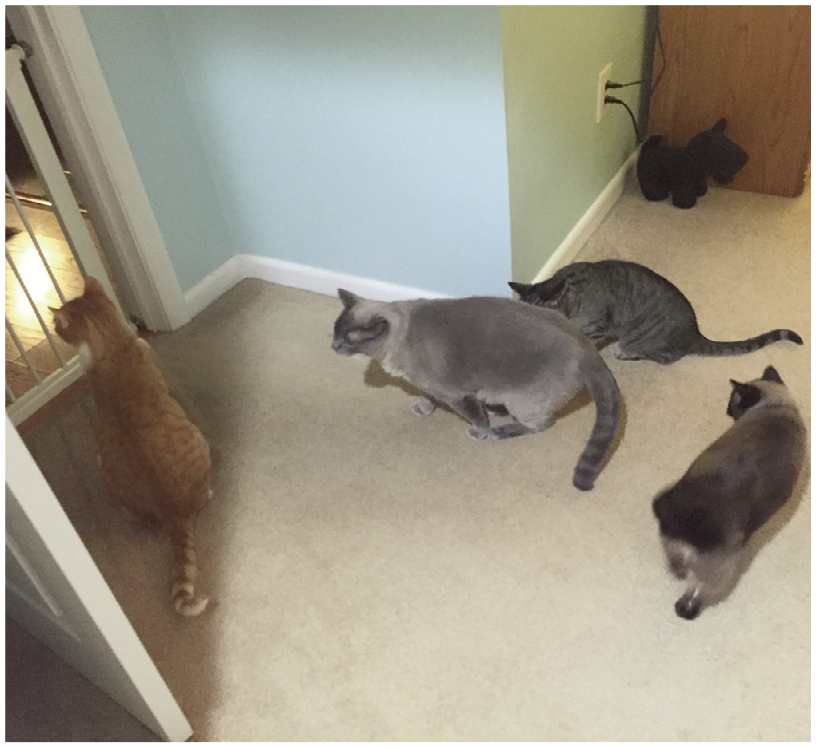
Cats gathering before mealtimes challenges for individuals who would prefer other. Image courtesy of Theresa DePorter
✜ Social play between cats diminishes in adulthood, while object play continues to be important throughout life. Enjoyable play opportunities should be available for all cats.8,24
✜ Laser pointers can cause frustration if the cat cannot ‘catch’ something at the end of play. There is a significant association between the frequency of laser pointer use and abnormal repetitive behaviors in cats. 41
✜ Catnip can arouse some cats, resulting in intercat tension. If this occurs, use of catnip toys should be discontinued.
✜ Introduction of a new cat can result in one cat eating another cat’s food or predatory behaviors by one cat toward another. Care-givers should monitor for predatory (hunting) play among the cats and prevent this behavior with sufficient interactive toy play and opportunities for cat self-directed toy play.
Pillar 4: Providing positive, consistent and predictable human-cat social interaction
Many cats prefer human social interaction over other positive stimuli, including food. 19 The preference tends to be for short and frequent human interactions, though longer if the cat initiates the interaction themselves. 42 Interactions should be enacted in a way that provides choice and control for all cats, and considers individual preferences. The introduction of a new cat can disrupt existing human-cat interactions.
✜ Educate clients about feline preferences, how to perform healthy interactions with cats and how to monitor their body language (see Videos 1 and 2 in the supplementary material).
✜ In terms of social interactions, it is important not to seek to treat all cats equally (see ‘Myth 6’).
✜ Interactive play (eg, using a wand toy) may be with individuals, a social group or the entire group, dependent on the cats’ preferences.
✜ Educate clients to avoid discipline-based training, whether verbal or physical. Actions such as throwing an object at the cat or spraying them with a squirt gun often increase fear-anxiety and risk damaging the human-cat bond. Instead, reward-based training should be used to achieve a long-term desired feline behavior change (see the ‘Behavior modification recommendations for multiple-cat households’ handout in the supplementary material).
✜ Warn clients never to physically interact with cats who display high levels of emotional arousal or distance-increasing behaviors (eg, avoidance such as cowering, or repelling behaviors such as hissing), as injury is likely.
Pillar 5: Providing an environment that respects the cat’s sense of smell and other senses
Novel sensory stimuli, whether associated with the introduction of a new cat or, for example, a cat returning home after a veterinary visit, can be stressful for the resident cat(s).
✜ Provide desirable sensory stimuli and avoid undesirable stimuli (smells, noises or sights) that can cause fear-anxiety or frustration.
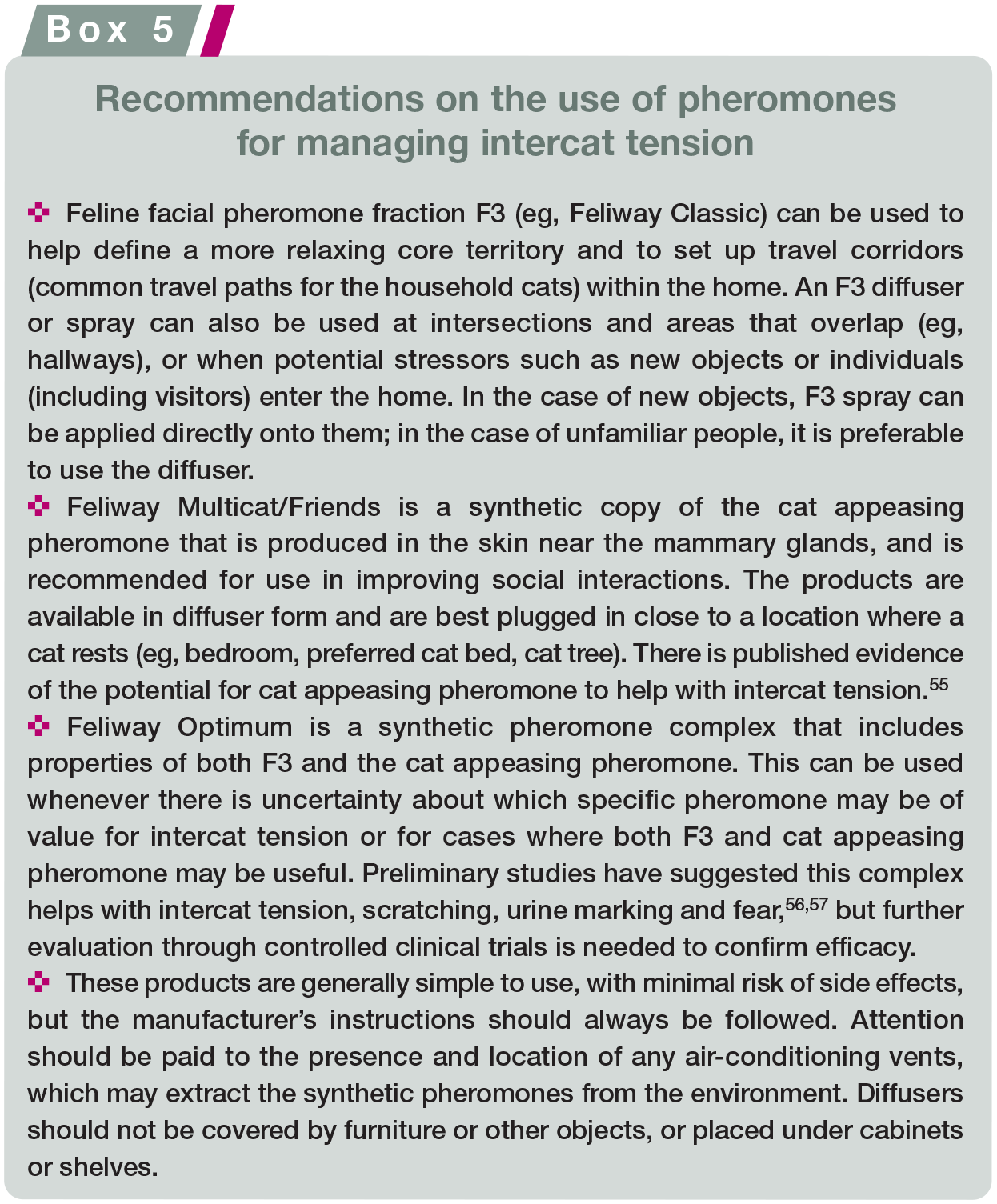
✜ Synthetic feline pheromones (see Box 5) may improve the cats’ emotional state, though signs of improvement may be subtle and can easily be overridden by responses to perceived danger. Where possible, check whether a product that claims to have pheromonal activity actually contains feline pheromone analogs.
Impact of intercat tension on the five pillars
Intercat tension can impact each of the five pillars, and veterinary professionals should be proactive to avoid potentially unfavorable outcomes (see Box 2).

Recognizing tension in intercat relationships
Social tension between cats may manifest as repelling behaviors (eg, hissing, striking), but most commonly cats show inhibition of normal behaviors (eg, inappetence, inactivity, disturbed sleep, lack of elimination) or avoidance (eg, hiding). While growling, swatting, chasing and even direct physical conflict are other very overt signs of social tension, the more subtle signs equally need to be recognized, and include staring, walking away, hiding and blocking. 2 A US survey-based study determined that staring was most frequently displayed (see box ‘Signs of intercat tension’). Displacement behaviors such as overgrooming may also be manifestations of social tension, as may marking behaviors (eg, scratching furniture or carpet, urine marking) and/or changes in toileting habits.
Even when social tension is subtle and difficult to identify, there may still be an important impact on feline emotional health and welfare; cats may suffer from distress (ie, when the impact of the protective emotions – fear-anxiety, and/or pain – exceed the cat’s coping ability) or stress-associated disease, and may face discipline-based training, relinquishment or even euthanasia if the tension is not relieved. Potentially there may be a negative effect on the wellbeing of all cats in the household.
When conflict arises, social species, such as dogs, horses and people, have the skill set to ‘appease’ and ‘reconcile’ to resolve differences. Cats have fewer reconciliation behaviors and do not appear generally to offer gestures to other cats to resolve intercat tension. Thus, cats can become fixated and a stand-off can develop, with neither cat having the skills to resolve the problem. Cats’ primary means of addressing conflict is, as discussed, through inhibition, avoidance or repelling behaviors. It is precisely because cats have such complex interactions and relationships, which are difficult to mend once broken, that identifying signs of tension early is so important.
Encounters that happen once do not necessarily reflect an ongoing problem – cats’ interactions need to be observed over time (see box ‘How tension may be displayed’). Some priorities for assessment and client education are distinguishing between play and fighting behaviors, understanding what a good feline affiliative relationship looks like, and the interplay between behavioral and medical problems. These aspects are discussed below. Various publications on feline behavior recognition are available in the References.2,43-47



Hissing is self-protective and may be accompanied by a fixated gaze, tense body posture and flattened ears. Image courtesy of Theresa DePorter

This cat is displaying an arched back, fixated gaze, tense body and piloerection, and is extending their hindlimbs to appear taller in a ‘halloween pose’. Image courtesy of Theresa DePorter

This cat has dilated pupils, a tense body and fixated stare, with ears flattened and rotated outwards. Image courtesy of Theresa DePorter

A tense emotional state in this < is characterized by a tense body, slight piloerection, oblong-shaped pupils and a crouched posture. Ears are flattened and rotated outwards and legs are tucked into the body. Image courtesy of Ilona Rodan

Intercat tension involving direct conflict between two cats in a multi-cat household. Agonistic behaviors I from the black cat toward the tabby cat were a daily occurrence, though physical conflict was uncommon. (a) The tabby adopts a cowering posture while the black cat leans over him with a fixated stare. (b) The tabby displays repelling (hissing) behavior, with a tense body posture and flattened ears. (c) Direct conflict ensues, with the tabby showing more intense repelling behaviors (swiping and hissing); note the rotated ears of the black cat. (d) In a separate encounter between the cats, the tabby freezes while leaning away tensely with ears rotated sideways; the black cat is staring at him, with ears forward. (e) While still under the watchful eye of the black cat (not shown), the tabby turns and slowly retreats, adopting a crouched position. Images courtesy of Daniela Ramos
Is it play or fighting?
Interpreting feline behaviors with the aim of understanding relationships between household cats can be challenging, particularly when questioning whether cats are mutually rough-and-tumble playing (affiliative behavior) or fighting (agonistic behavior requiring intervention). Behaviors such as chasing, wrestling and mouthing can be present in both scenarios and it is not uncommon for caregivers to seek veterinary advice to differentiate between the two. Requesting pictures and videos from caregivers to review will help in making the distinction.
Question clients about both overt and subtle behaviors to identify affiliative, agonistic and/or toleration behaviors between cats during their other daily interactions. Consider emotions as well as motivations when interpreting if cats are playing or fighting.15,19 A recent study identified an ‘intermediate’ category between social play and agonism, describing it as more closely associated with play and less with agonistic behaviors. 23 If cats are wrestling without vocalizing, they are most likely playing (see Video 7 in the supplementary material). 23 If they are chasing, especially if not mutual, and vocalizing with recurrent bouts of inactivity and less extended direct contact, they are most likely not playing; rather, one cat is treating the other as if they are a play object or something to practice predatory skills on. 23 Cats who fight are unlikely to reliably demonstrate affiliative behaviors between themselves at other times.
Signs of a good cat-cat relationship
Cats who are bonded may often be observed sleeping huddled or intertwined (Figure 17).25,48 Allogrooming, allorubbing and nose-touching are also characteristics of an affilia-tive relationship (see box ‘Affiliative feline behaviors and relaxed emotional state’). The degree to which cats perform these behaviors usually correlates with the solidness of their relationship. It is important to teach caregivers to look for affiliative behaviors, as the absence of such interactions may indicate intercat tension or toleration. Toleration between cats who do not demonstrate affiliative or agonistic behaviors is also an acceptable outcome (see box ‘Tolerance in feline behaviors’; Figures 19 and 20). Often, caregivers will describe their cats as being ‘good friends’, but deeper investigation will reveal the cats do not nose-touch, sleep-touch, groom each other or bunt, suggesting that caregivers have misjudged the cats’ relationship.

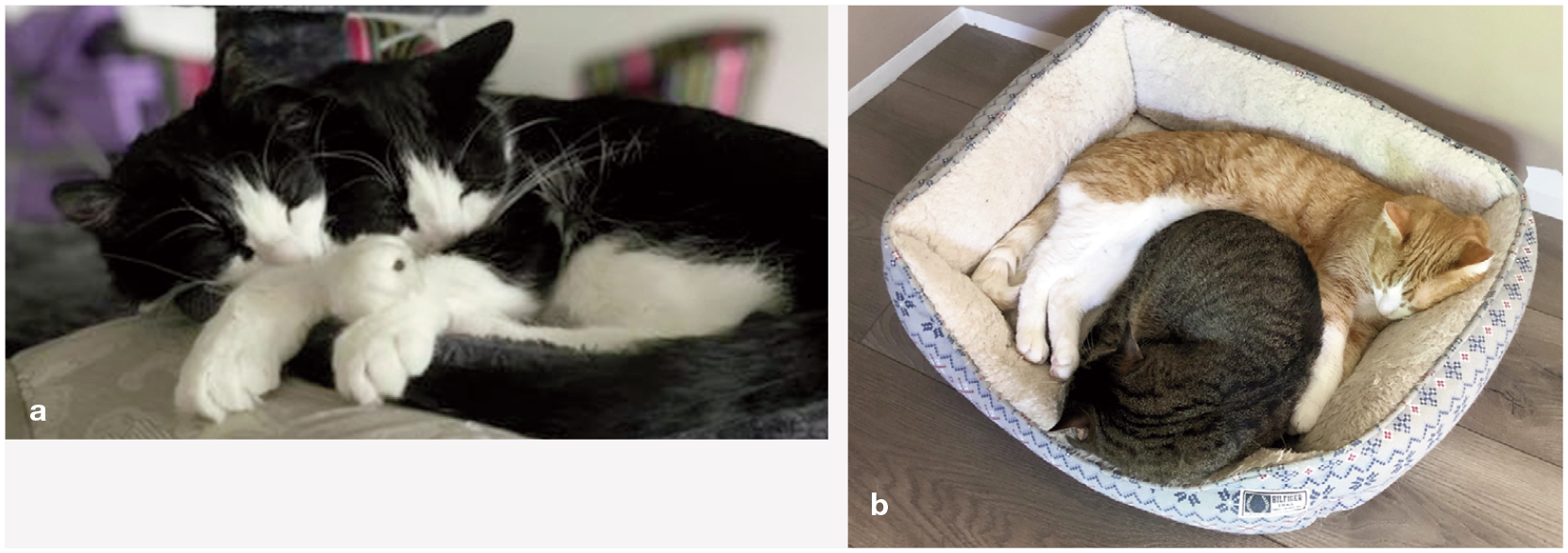
(a,b) Cats who sleep huddled or intertwined are well-bonded affiliative pairs. Images courtesy of Naomi Fleischmann (a) I and Theresa DePorter (b)

More generally, a relaxed emotional state in a cat is characterized by soft muscle tone, ears pointing forward, small pupils or closed eyes. Often cats may slow blink and have their legs extended. Image courtesy of


The cats in the top bed get along well with each other but are not socially bonded with the cat in the lower bed. Image courtesy of Theresa DePorter
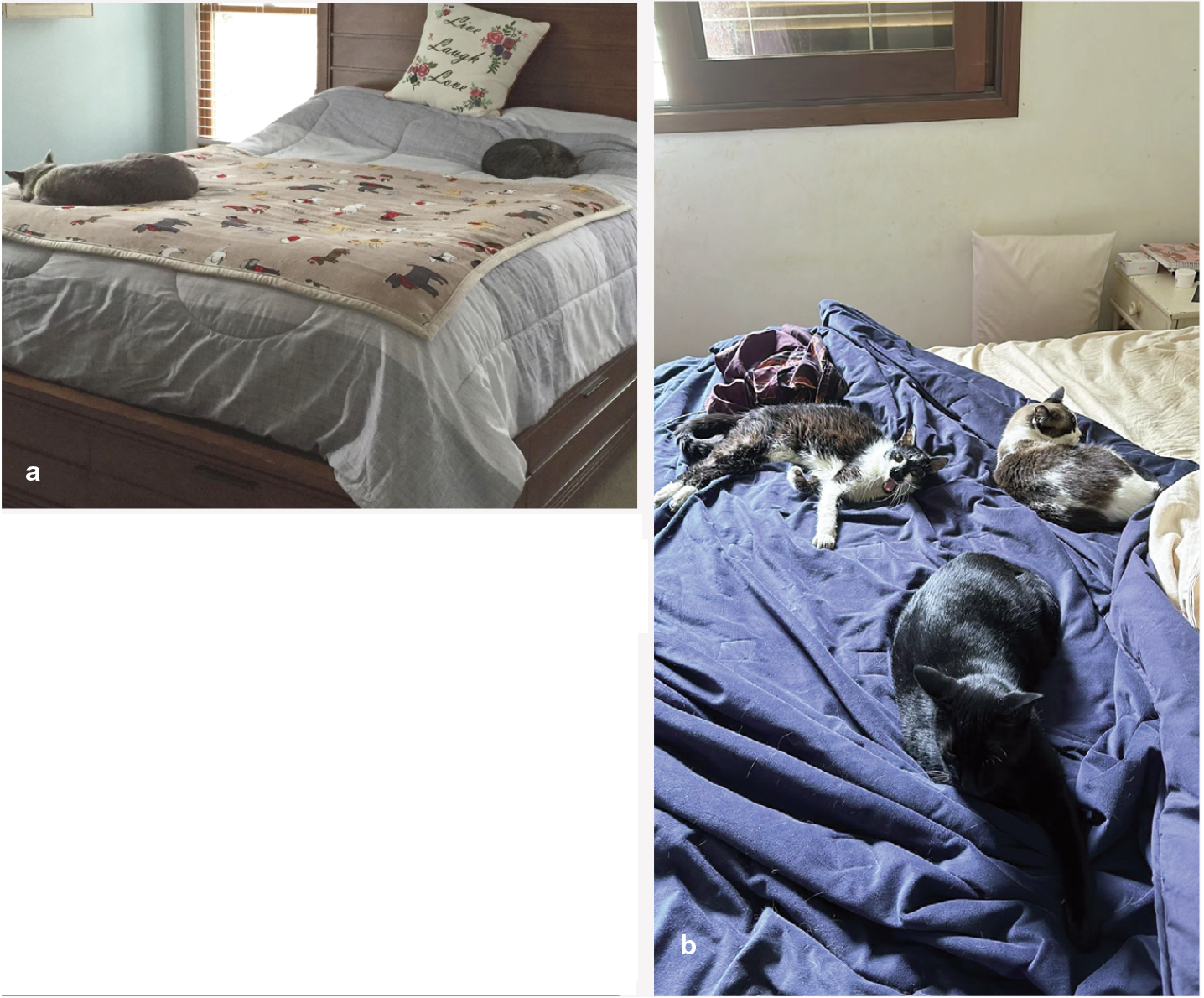
(a,b) Two or more cats in the same household who sleep on the same piece of furniture without touching may or may not be affiliates. In these households, the cats’ preferred resource is the caregivers’ bed, but they choose opposite ends and/or to face away from one another. If this behavior is consistent, the cats do not share a social bond but merely tolerate one another. Images courtesy of Theresa DePorter (a) and Daniela Ramos (b)
Is it medical, behavioral or both?
Any cat showing changes in behavior should be assessed by a veterinarian to rule out medical problems. A change in behavior, such as hiding, not jumping up or new patterns and routines, can be the first sign of a medical problem but can also indicate social tension.
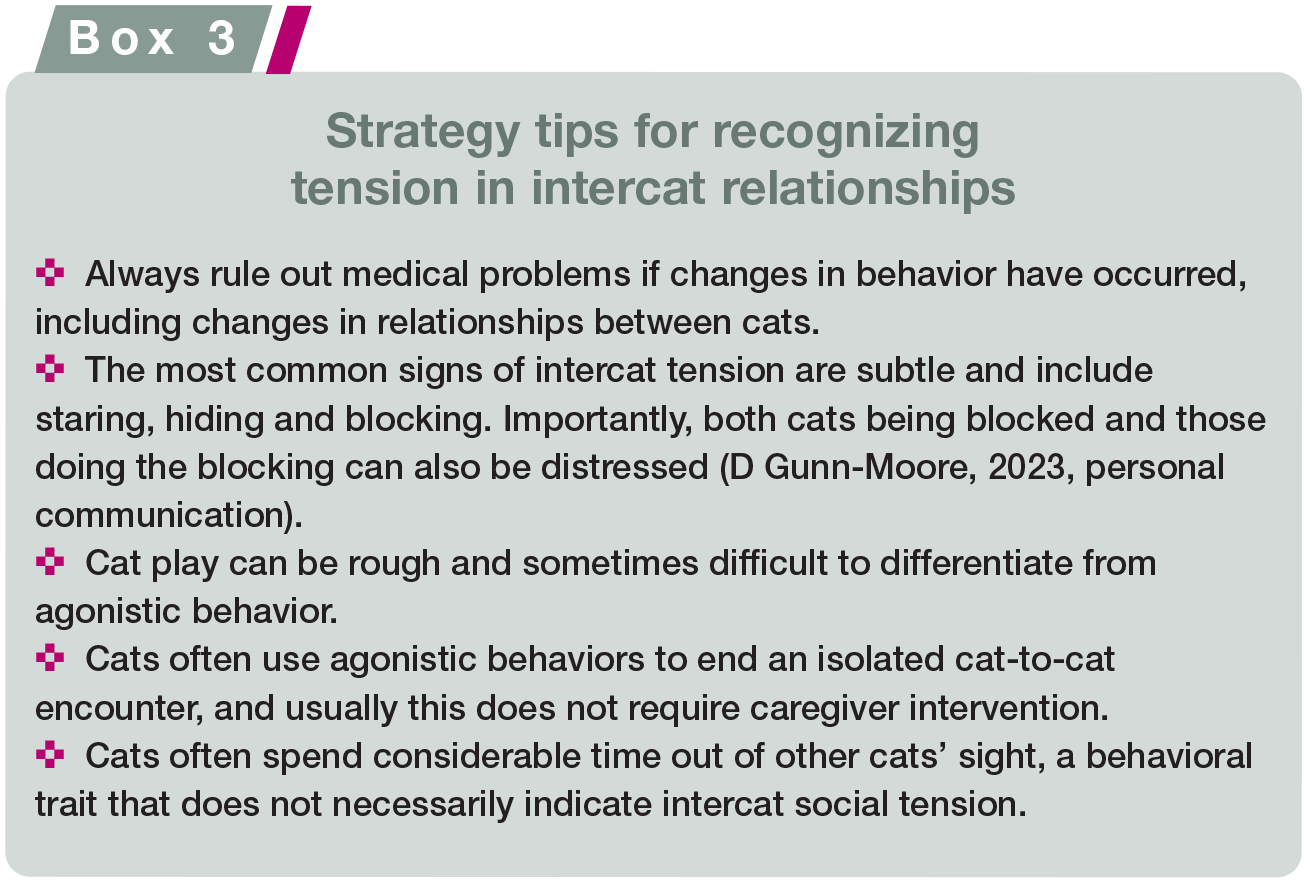
It is important to remind caregivers to be observant of routine day-to-day interactions among cats in their households. This vigilance makes it easier to recognize subtle but important changes in social interactions. Encouraging caregivers to monitor patterns and routines helps to identify changes that warrant closer attention to possible social or medical issues. A change in sleeping locations is something that is often under-recognized. Likewise feeding behaviors may alter – the cats may still be eating, but there may be an increase in swatting or staring behaviors before meals and the cats may gulp their food and leave quickly to avoid tension. Social tension may also result in a cat who is fearful to go to the litter box, giving rise to undesired elimination outside the litter box or urine marking. Strategy tips for recognizing tension in intercat relationships are provided in Box 3.
Degenerative joint disease may lead to compromised mobility, affecting how cats utilize their space. Upper respiratory disease may disrupt olfactory communication. The stress of multiple comorbidities in senior cats may affect their social relationships. More generally, a decrease in the sociability of a cat may be the first sign of the development of significant disease. Therefore, many behavioral or medical complaints that are presented to veterinary professionals may involve ruling out intercat tension as an underlying cause or contributing factor. Some cases may benefit from referral to a board-certified veterinary behaviorist trained in both medical and behavioral feline wellbeing.
Prevention of tension in intercat relationships
An understanding of feline social behavior is key to creating better living arrangements for household cats and thereby helping to prevent intercat tension.
Maximizing harmony in a multi-cat home: getting the environment right
Provision of the essential feline environmental needs, as encapsulated by the five pillars framework, is a critical step to prevent intercat tension in multi-cat homes, with plentiful key resources dispersed throughout the environment with visual barriers between them. The ‘Five pillars of a healthy multi-cat environment’ described in these Guidelines should aways be implemented, and enhanced and modified for the specific household situation, whenever possible.
Caregiver techniques to prevent and defuse tension
✜ Cats with high play drives often bother senior or more timid cats. Two or more caregiver-initiated play sessions daily of 5 mins or longer can channel excess playful energy onto appropriate toys. 49
✜ Fitting the cat demonstrating agonistic behaviors with a cat-safe collar with a tiny bell that emits a low noise will provide an advanced warning system for other cats.
✜ Daily short-term segregation of cats displaying agonistic behaviors may provide restful periods; ensure that all cats always have access to a litter box, food and water, and a resting area.
✜ Caregivers should prevent staring by using a solid piece of furniture as a visual barrier between cats and/or by using vertical space. If this agonistic behavior is noticed between two cats, it is important not to attempt to pick up the cats. Instead defuse the tense situation by placing an inanimate object (eg, pillow, cushion, cardboard or solid laminate sheet) between them to diminish eye contact and distract them; then redirect each of them independently onto another activity (eg, play with a toy) or safely separate them into different locations.
✜ Provide daily play sessions with the entire group and/or with each social group separately, as appropriate. This is a great opportunity to train cats to relax (Figure 18) in the presence of each other and to use available safe places.
Introducing a new cat into the home
Initial adoption decisions
Although cats can form social relationships, some cats are more gregarious than others. Not uncommonly, cats may bond with related and familiar individuals, and ignore or create tension with other cats within the home. Caregivers should prioritize the welfare of each cat when deciding whether to acquire another cat, based on how each will deal with the introduction process and with group living. Spur-of-the-moment decisions should always be avoided. A variety of considerations are outlined below, and further information and discussion is available in the client brochure ‘Are you thinking of getting another cat(s)?’, available in the supplementary material.
✜ Make sure the resident cat(s) and the new cat have received veterinary care recently and are healthy. A number of other aspects that pertain to the selection of the new cat are described in Box 4.

✜ Before deciding to bring a new cat into the household, consider whether each cat’s needs can be met with the provision of additional resources and by having a ‘transition room’ (see ‘Before the new cat is brought home’).
✜ Several factors should be considered, including age, play drive, socialization, adaptability and health, when making adoption decisions.
✜ If the decision to acquire a new cat is made, the question may arise of whether to adopt one cat or two. Research indicates that related individuals are more likely to remain bonded, with lower incidents of intercat tension, 50 and to show increased affiliative behaviors. 51 On occasion, it may be possible to adopt two bonded cats at the same time. However, some caveats apply. For two adult or senior cats, look for cats who are already bonded or related; for kittens, it is best if they are still within the socialization period (2-9 weeks). Another option is looking at shelters with ‘foster to adopt’ options, 52 which allow for the possibility to ‘try out’ the relationship to see if two individuals could be compatible. Once a decision has been made, a carefully managed and gradual introduction process remains key for integration of a new cat.
Steps for creating a smooth transition
While it may be impossible to prevent all problems, certain techniques can facilitate the introduction process. Gradual introductions that do not cause fear-anxiety in any of the cats are essential, but can take time and care-givers need to be patient. The following steps will help create a smooth transition when a new cat is introduced into a household. More information is given in a handout, ‘Step-by-step guide: How to introduce a new cat to other cats in your home’, available in the supplementary material, and strategy tips for the prevention of tension are provided in Box 4.
Before the new cat is brought home
✜
✜
– Place additional resources within the main areas of the home:
• Add more options that allow hiding, as well as safe places, perches/cat trees, litter boxes, feeding and drinking stations, and scratching surfaces.
– Create a transition room for the new cat while they are gradually integrated into the home:
• This must be a secure area with a latched barrier door that closes and locks completely;
• Supply the room with food and water, a litter box, perches at different vertical heights, hiding options, a soft bed, scratching surfaces, toys, etc;
• Remove items of value or those that could be dangerous to the cat (eg, plants, electric cords, strings) or might encourage house-soiling (eg, plush bath mats).
✜
✜
When bringing the new cat home Make sure that steps 1-4 have been completed before bringing the new cat home. Be aware that steps 5-11 may take several weeks, and even months, to work through. Importantly, if intercat tension occurs at any point in the introduction process, go back a step. Continuing to take steps forward if tension presents can result in long-term tension.
✜
✜
✜
✜

Having a toy tied to either end of a piece of string in ‘dumb-bell’ fashion can allow a cat on one side of the door to interact indirectly with a cat on the other side. The principle is illustrated here with a single cat and open door to show the toys on either side. When introducing cats, the door will be closed, with one cat on either side. Image courtesy of Daniel Mills
– Do not allow overt persistent threatening behaviors (eg, hissing/growling at the door). If this occurs, do not discipline the cat showing agonistic behaviors, but instead create a neutral zone; this might involve closing another door or placing a visual barrier between the cats to block a hallway in front of the barrier door (eg, shoji screen, boxes or chairs).
– Keep the play session short (5-20 mins, based on each cat’s responses) and terminate the session before the cats lose interest.
✜
✜
✜
– Never interact with cats who are hissing, growling, tail flicking, urine marking or showing other signs of arousal because cats who cannot access the cat they are directing their agonism toward may readily redirect frustration onto the closest target.
– Always have items (balls, play toys, puzzles, etc) scattered around the environment in which the introduction takes place and treats readily available. These can be used both as distractions and rewards.
With success, periods when the cats are in proximity can gradually increase in duration and human supervision can gradually decrease until the cats can coexist without intercat tension.
General principles for managing tension in intercat relationships
All veterinary professionals should be able to recognize, triage and offer first-line advice for cases involving intercat tension, and to determine when to refer the client to a board-certified veterinary behaviorist. In some circumstances, it may not be possible for the cats to continue living together in the same home, in which case rehoming is the most humane option (see Box 7).
In broad terms, management of any behavior concern should follow the general principle of the ‘three Rs’: Risk management, Restriction of the problem and Resolution of the problem. 53
✜
✜
– Safely separating the cats involved, putting them in separate rooms with doors closed. Prevent human injury by using large towels or blankets or placing a visual barrier such as cardboard or a laminate sheet between the cats.
– Leaving the cats alone (ie, separated and with no physical interaction) after an incident until they have calmed down and returned to their normal routines. This may take anywhere from a few hours to a couple of days.
✜ Resolution of the problem involves measures aimed at long-term management of the issue so that the health and welfare of cats and caregivers is optimized as far as is practically possible. Environmental management (see ‘Five pillars of a healthy multi-cat environment’) is an important component, including the use of feline synthetic phero-mones, to eventually allow individuals to be reintroduced successfully or to coexist without significant intercat tension. Behavior modification techniques, complemented, where relevant, with the use of psychotherapeutic medications with or without nutraceuticals, may also be necessary.
Management of specific situations involving intercat tension
Management approaches for intercat tension depend on the individual household circumstances. There are two main situations to consider: tension within a household, and tension involving resident and outdoor neighborhood, stray or feral cats. In the case of intercat tension within a household, caregivers usually have control of the management of the problem. In cases of intercat tension involving outdoor cats, the caregiver only has limited control over management options.
Intercat tension within households
Problems of intercat tension within a household generally arise either when a new cat is introduced – hence the need for careful adoption choices and an appropriate, gradual and positive process for integrating new additions into the household – or a trigger (sometimes undetermined) disrupts the relationship between long-term cohabiting cats, even those who formerly had good affiliative bonds. The trigger may be external (eg, the threat from an outdoor cat may lead one resident cat to redirect frustration onto another) or internal (eg, pain or disease resulting in increased irritability, or a change in odor or behavior of a cat after a trip to the veterinarian).
Successful resolution depends on realistic caregiver expectations and their ability to effectively implement appropriate recommendations. The required actions are dependent on the individual household circumstances and temperament of the cats, but typically cover the following aspects.
✜
✜
✜
✜
✜

✜
Drugs that may be considered for amelioration of intercat tension

IMPORTANT NOTES FOR VETERINARIANS
✜ This table is intended to be a preliminary guide and not an extensive formulary. Consult formulary for full information on drug effects.
✜ Many of these agents are not approved for feline use but have been used off-label in cats.
✜ Obtain informed client consent before using.
✜ There is currently no good scientific evidence that CBD oil works in feline behavior issues and it should not be used.
✜ All doses are oral. Transdermal dosing is not recommended.
✜ Attempts to give medications hidden in treats (not food) should be thoroughly exhausted, and force pilling avoided to minimize stress and damage to cat-caregiver bond.
✜ In general, with long-term use of psychotherapeutics, taper gradually and never stop abruptly.
Start at the lowest dose and increase gradually if needed. Side effects are more common at higher dosages and usually occur during the first 1–10 days of treatment. The maximum dosage is only needed in rare cases for SSRIs and TCAs
References for dosages: Overall (2013),25 Metz et al (2022),59 Crowell-Davis et al (2019),60 Horwitz and Mills (2018),61 Pflaum and Bennett (2021),62 Plumb (2015),63 Seksel et al (2024)64
BZ = benzodiazepine; CBD = cannabidiol; GABA = gamma-aminobutyric acid; SARI = serotonin 2 antagonist/reuptake inhibitor; SNRI = dual serotonin and norepinephrine reuptake inhibitor; SSRI = selective serotonin reuptake inhibitor; TCA = tricyclic antidepressant
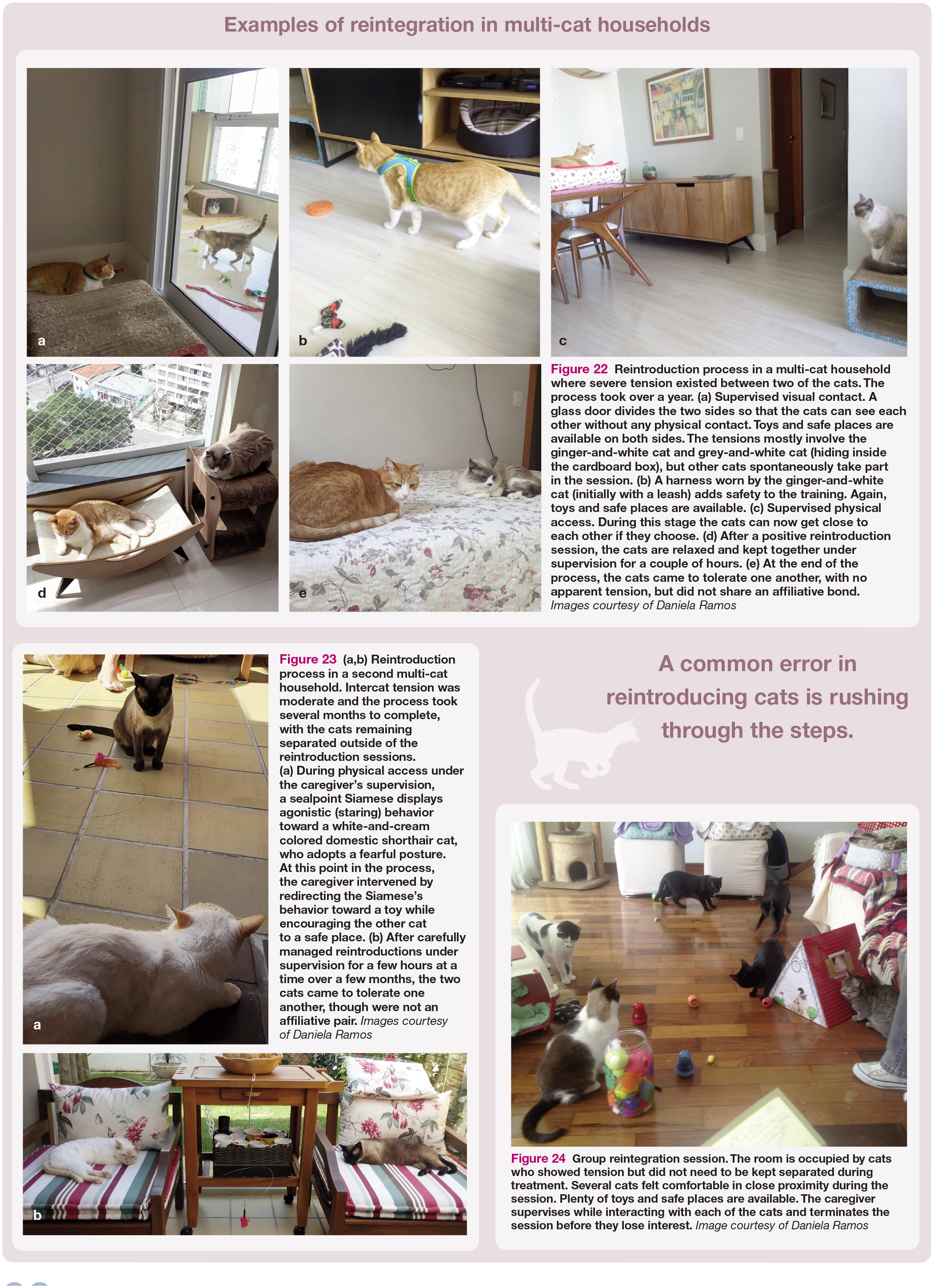

Reintroduction process in a multi-cat household where severe tension existed between two of the cats. The process took over a year, (a) Supervised visual contact. A glass door divides the two sides so that the cats can see each I other without any physical contact. Toys and safe places are available on both sides. The tensions mostly involve the ginger-and-white cat and grey-and-white cat (hiding inside the cardboard box), but other cats spontaneously take part in the session, (b) A harness worn by the ginger-and-white cat (initially with a leash) adds safety to the training. Again, toys and safe places are available, (c) Supervised physical access. During this stage the cats can now get close to each other if they choose, (d) After a positive reintroduction session, the cats are relaxed and kept together under supervision for a couple of hours, (e) At the end of the process, the cats came to tolerate one another, with no apparent tension, but did not share an affiliative bond. Images courtesy of Daniela Ramos

(a,b) Reintroduction I process in a second multi-cat household. Intercat tension was moderate and the process took I several months to complete, I with the cats remaining separated outside of the reintroduction sessions.

Group reintegration session. The room is occupied by cats who showed tension but did not need to be kept separated during treatment. Several cats felt comfortable in close proximity during the session. Plenty of toys and safe places are available. The caregiver supervises while interacting with each of the cats and terminates the session before they lose interest. Image courtesy of Daniela Ramos
The goal of medication should be to improve the wellbeing of cats, optimize their ability to learn and minimize the risks associate d with intercat conflict. However, the use of medication is itself not without risk. In some cases, the process of medicating a cat might also be stressful or even impractical for cats and caregivers (see the ‘2022 AAFP/ ISFM Cat Friendly Veterinary Interaction Guidelines: Approach and Handling Tech-niques’, 11 and the AAFP’s client brochure on ‘Giving Your Cat Medication’, available at catfriendly.com/medication). A risk-benefit analysis should be performed and, if doubts about medication exist, the focus should be on restricting the problem (see box ‘Restricting intercat tension while seeking resolution’) and seeking the help of a board-certified veterinary behaviorist. There are also several pharmacology texts that can be referred to for further information.65,66
✜
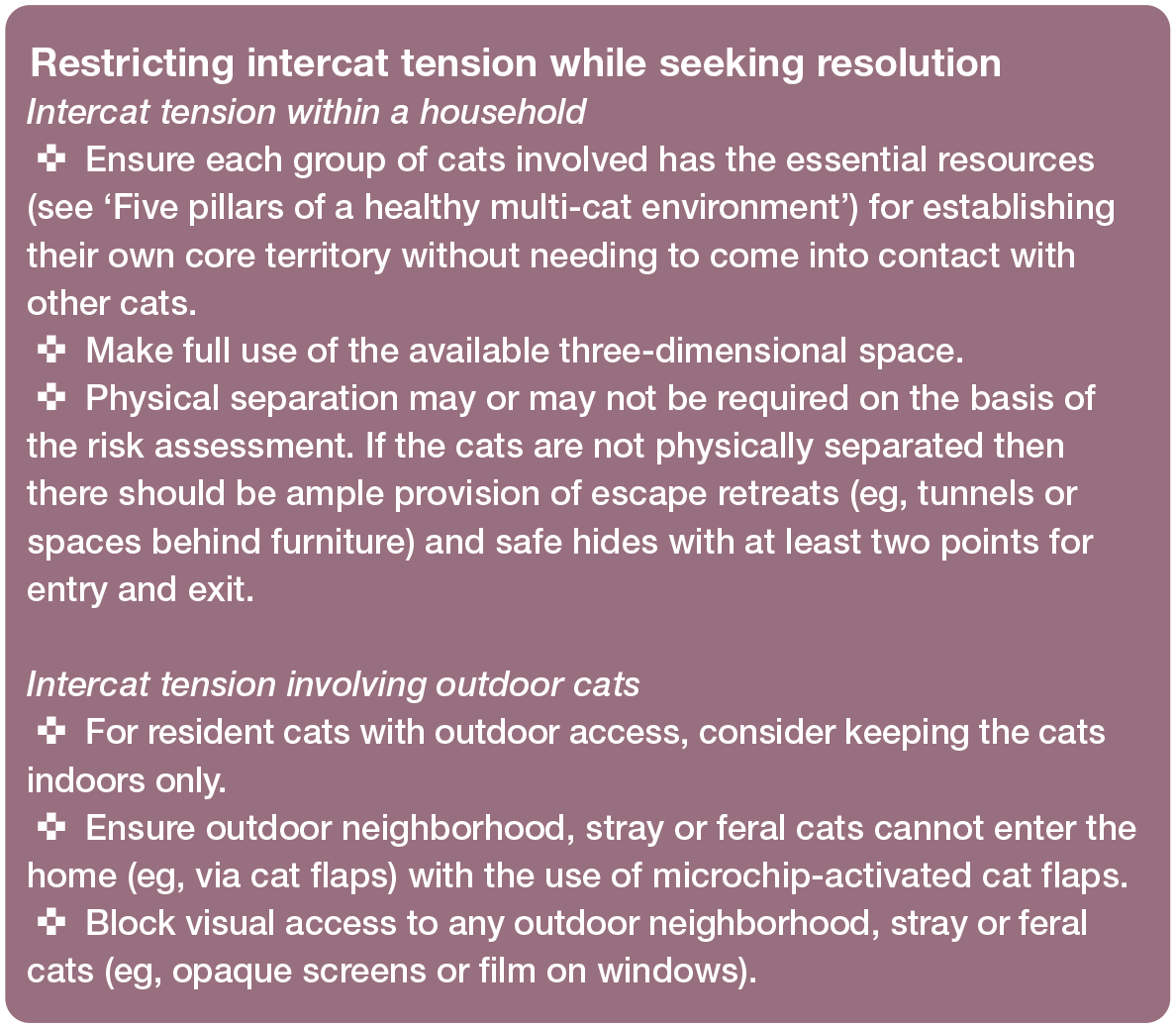
Intercat tension involving outdoor cats
Tension involving resident cats and outdoor neighborhood, stray or feral cats may typically arise when a caregiver moves into a new property and their grounds are already the established territory of another cat, or when a neighbor acquires a new cat who tries to assert themselves in a territory involving the caregiver’s grounds. Beyond the measures outlined in the box ‘Restricting intercat tension while seeking resolution’, there are a few measures caregivers can take to resolve the problem, as outlined below.
✜
✜
✜
Letting the cats ‘work it out’ impairs feline welfare and is not considered an acceptable approach.

‘Catios’ can be a very effective way to allow safe outdoor access and can be constructed with relatively little expense. This 8 ft x 13 ft (2.5 m x 4 m) catio took advantage of a small enclosed space and was a weekend DIY project that cost less than $200 USD in materials. Image courtesy of Daniel Mills
Algorithm for the assessment and management of intercat tension
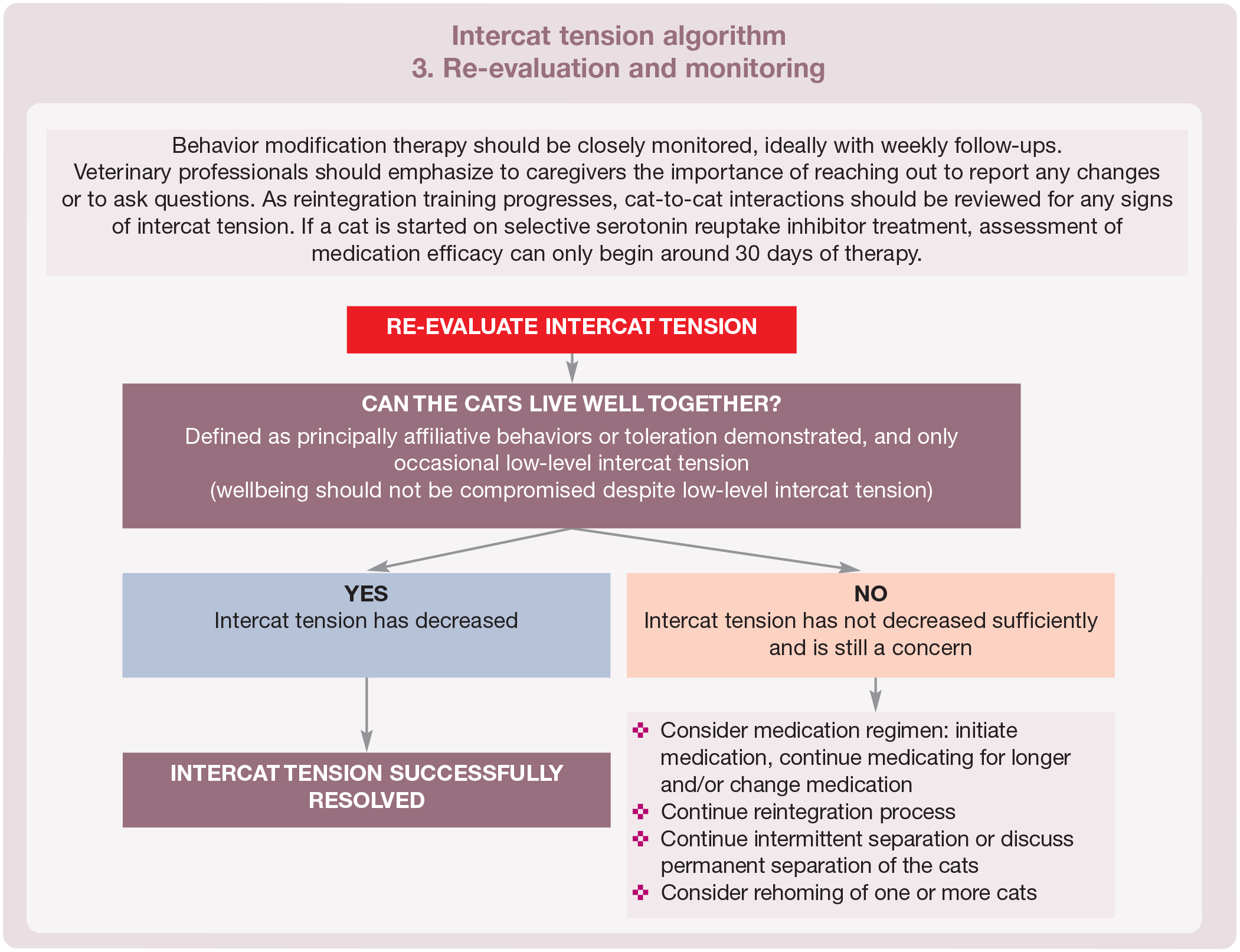
The approach to intercat tension discussed in these Guidelines is summarized in an algorithm presented on pages 24–26 in three parts:
✜ 1. First-line approach – prevention and firstaid measures.
✜ 2. More in-depth behavioral therapy.
✜ 3. Re-evaluation and monitoring.

The algorithm, which contains additional information regarding group sessions as well as a behavioral first aid kit, is designed to help veterinary professionals identify and manage tension within multi-cat households, and to assist appropriate decision-making that will increase the chances of successful resolution.


Summary Points
✜ The ‘Five pillars of a healthy multi-cat environment’ discussed in these Guidelines provide the foundation for compatible social relationships, either affiliative or toleration, among cats. Veterinary professionals should ensure that, as far as possible, caregivers adhere to them.
✜ Effectively managing intercat tension involves the general principle of the ‘three Rs’: Risk management, Restriction of the problem and Resolution of the problem.
✜ Early intervention with positive reward-based training (always avoiding discipline-based training) is critical. For mild intercat tension, where prompt treatment is implemented, the prognosis is generally excellent.
✜ Although not labelled specifically for treating intercat tension, judicious use of psychotherapeutic medications can be useful in some cases, in conjunction with environmental and behavioral modifications, and with careful monitoring. The goal is to improve the wellbeing of cats, optimize their ability to learn and minimize the very real risks associated with intercat tension.
✜ In refractory cases, or if the veterinary professional feels unprepared to manage intercat tension, caregivers should be referred to a board-certified veterinary behaviorist because of the complex interrelationship between medical and behavior concerns.
✜ The ‘Intercat tension algorithm’ included in these Guidelines provides a systematic pathway for evaluation and resolution of this often challenging, but commonplace, problem. The advantages are potentially wide-ranging, benefiting the wellbeing of cats, their caregivers and the veterinary team. Many of the #H principles are illustrated in a series of ‘cat cases’, summarized in an Appendix to the Guidelines.
Supplemental Material
Supplemental Material
Questionnaire for multiple-cat households.
Supplemental Material
Supplemental Material
Behavior modification recommendations for multiple-cat households.
Supplemental Material
Supplemental Material
Step-by-step guide: How to introduce a new cat to other cats in your home.
Supplemental Material
Supplemental Material
AAFP Client brochure – ‘Are you thinking of getting another cat(s)?’
Footnotes
Appendix
Acknowledgements
These Guidelines were supported by educational grants to the AAFP from Ceva Animal Health, Hill’s Pet Nutrition, Inc and Sleepypod. The Task Force gratefully acknowledges the contribution of Edward W Kanara, DVM, DABVP of the Kanara Consulting Group; Mark Dana of Scientific Communications Services; Heather O’Steen, CAE; Margaret Melling; and University of Georgia veterinary student, Jessica Holmes, in the preparation of the Guidelines manuscript.
Supplementary material
The following supplementary material files are available at go.jfms.com/Intercat_tension_GLs_ 2024 and at catvets.com/tension:
✜ Questionnaire for multiple-cat households.
✜ Behavior modification recommendations for multiple-cat households.
✜ Step-by-step guide: How to introduce a new cat to other cats in your home.
✜ Video 1: How to interact with your cat – the Battersea way.
✜ Video 2: Understanding cat body language – the Battersea way.
✜ Video 3: How to train your cat to walk on a harness and leash.
✜ Video 4: Distress and intercat tension occurring during food preparation.
✜ Video 5: Intercat tension between two residents in a multi-cat household, with one cat showing agonistic (staring) behavior, and the other inhibition (freezing) and avoidance (retreating) behavior.
✜ Video 6: Intense manifestations of social tension between two cats (same cats as in Video 5), including repelling behaviors (growling, hissing, swiping) and physical conflict.
✜ Video 7: Play between two affiliated cats in a multi-cat household.
✜ Video 8: Management of intercat tension among four resident cats using a process of reintroduction. The calico cat had previously been separated from the group. The caregivers proactively play, pet and praise the cats during a supervised physical proximity session.
✜ Video 9: During a supervised physical proximity session as part of a process of reintroduction for management of intercat tension in a multi-cat household, a calico cat (same cat as in Video 8) shows repelling (swatting) behaviors. When one caregiver tries to interrupt the interaction by using catfriendly.com/tension his foot, the other caregiver promptly reminds him to use a visual barrier, handing him a cushion to prevent human injury and to defuse the intercat tension.
✜ Video 10: After a very positive supervised physical proximity session performed as part of a process of reintroduction for management of intercat tension in a multi-cat household, the cats (same cats as in Videos 8 and 9) appear very relaxed near each other; thus, the caregivers opt to keep them in the room together after the session.
✜ AAFP Client brochure – ‘Are you thinking of getting another cat(s)?’
Conflict of interest
Members of the Task Force have received financial remuneration for providing educational material, speaking at conferences and/or consultancy work; however, none of these activities cause any direct conflict of interest in relation to these Guidelines. Specifically, Daniel Mills has received grants in the past from Ceva Animal Health, and Daniela Ramos and Theresa DePorter have received speaking fees or consultancies from Ceva Sante Animale.
Funding
The members of the Task Force received no financial support for the research, authorship, and/or publication of this article.
Ethical approval
This work did not involve the use of animals and therefore ethical approval was not specifically required for publication in ]FMS.
Informed consent
This work did not involve the use of animals (including cadavers) and therefore informed consent was not required. For any animals or people individually identifiable within this publication, informed consent (verbal or written) for their use in the publication was obtained from the people involved.
References
Supplementary Material
Please find the following supplemental material available below.
For Open Access articles published under a Creative Commons License, all supplemental material carries the same license as the article it is associated with.
For non-Open Access articles published, all supplemental material carries a non-exclusive license, and permission requests for re-use of supplemental material or any part of supplemental material shall be sent directly to the copyright owner as specified in the copyright notice associated with the article.
