




Abstract
Practical relevance:
Awareness of the strong connection between observed behavior and physical and emotional health is essential for patient welfare. It is often a change in the individual’s normal behavior that informs owners and veterinarians of the possibility of illness, pain and stress/distress. There is ample evidence in the feline literature that medical and behavioral health go hand in hand. In most feline cases, medical and behavioral conditions contribute concurrently to clinical signs.
Clinical challenges:
Our domestic cats do not express change in physiological and emotional states in a way that is easily recognized. Therefore, it can be difficult to diagnose medical and behavioral illnesses and ascertain contributions from each one to the final diagnosis. When various levels of stress are present, especially distress, this compromises behavioral and physical health, and influences treatment outcomes.
Aims:
This review is intended to help veterinarians recognize physical and behavioral changes associated with acute stress through to chronic distress, including stress-associated diseases. An emphasis on thorough history-taking will allow the clinician to ascertain which signs are behavioral and which are medical, with the understanding that they are not mutually exclusive. Equally important is the contribution of pain, chronic disease and poor environmental situations to behavioral changes and the expression of medical disorders.
Evidence base:
There is an increasing amount of evidence that stress and distress have profound effects on feline health, behavior and welfare. The authors have drawn on a substantial body of published veterinary research in producing this review.
Introduction
There is often an interplay between behavioral and medical conditions. As descendants of solitary animals, where hiding illness is important for survival, our domestic cats display minimal behavioral signs of illness, pain and stress/distress. 1 Although our domestic felids can range from solitary to very social, normal feline behaviors often include secluding oneself from others and monitoring from a distance. These signs can make it difficult for owners to recognize behavioral changes that may signal deviations in behavioral and physiological homeostasis. Unfortunately, minor changes in the animal’s affect, or emotional state, due to an underlying stressor including illness frequently go unnoticed until they become more obvious and often more serious. For example, house soiling is a common sequela to numerous medical and behavioral ailments, yet owners tend to notice this clinical sign in isolation, not realizing it may signal potential underlying distress or medical problems.

Understanding the influence of stress, distress and environment on the expression of illness is important both in the home and during the feline consultation. Further, by recognizing the interplay between behavior and physical and emotional health, veterinarians have a great opportunity to provide holistic patient care and owner education.
Stress and distress
Stressors are changes in environment, emotion and health that disrupt the normal functioning of an individual.
2
Stressors are what create stress, and stress is not maladaptive if one is able to return to normal baseline functioning. When faced with a stressor, the animal will usually evaluate the danger and utilize survival mechanisms (eg, freeze [inhibition], flight [avoidance], fidget [displacement behavior], fight or repulsion [active attempts to fight and/or drive the stimulus away]) to help protect itself or to cope better with the situ-ation.2,3 Stressors also lead to negative emotions – fear, anxiety, frustration and pain (see box).2,3,7 (Note that, as discussed in the accompanying articles in this issue on

Stress and distress are individualized responses; what may be stressful or distressing for one cat may cause no response in another. For example, a feral kitten or cat that has no experience with humans or a home environment may have more difficulty transitioning to a shelter and a new home, while others adapt well. Responses to stress and distress are also influenced by genetics, an animal’s overall health, and positive and negative experiences, especially early experiences during the sensitive period of development (2-9 weeks). A kitten that was not handled by humans or had negative handling experiences, especially during this time, is often distressed if placed with humans that are keen to handle and hold it. By contrast, kittens that have positive handling experiences during this period are more resistant to stressors later in life; they also display less fear and can learn some tasks faster than cats that are not exposed to handling during this time.8,9
Causes of acute stress
Stress can be acute or chronic, although it may be difficult to differentiate between acute stress and acute distress (see later). 2 Acute stress responses are a normal protective reaction and often arise during veterinary visits or short-term hospitalization, and at home during situations that are unusual and of short duration (eg, a pot falling and banging on the floor or a visitor coming for dinner). Thereafter the animal is able to return to a normal baseline state.
Causes of chronic distress
Chronic distress is usually the consequence of severe, prolonged or intense stressors. Frequent causes of chronic distress are intercat conflict in multi-cat households, mismatched human-cat relationships (eg, an owner wanting to cuddle and hold an unsocialized cat or a cat that does not like those interactions), changes in the household, an indoor-only environment and/or other essential feline environmental needs not being met, resulting in a cat’s inability to perform normal behaviors.10,11 Chronic distress may also be present during hospitalization, stays at humane societies and homing centers.12,13
Assessing emotional and physical health during the consultation
Patient history and differentials must include all potential sources of compromised physical and emotional health. Pain, illness and distress can all manifest through changes in behavior (Table 1). Although veterinarians can recognize changes in behavior associated with certain physical health concerns (eg, the diabetic cat with extreme polyuria and polydipsia), many behavior changes are not pathognomonic for a particular condition. Often the signs relayed by the owners are non-specific and subtle; for example, inactivity and decreased appetite. Prior to making a definitive diagnosis, patient history, physical examination, diagnostic testing, and pain assessment and scoring are important to differentiate between medical conditions and the contributions of distress. See Table 1 for all too easily missed signs of illness, pain and distress.
Behavior changes that can indicate illness, pain or distress in a cat

FIC = feline idiopathic cystitis; DJD = degenerative joint disease; OA = osteoarthritis
Utilizing a behavioral history
Assessment of distress and behavior is important even when the condition appears to be purely medical because of the interplay between distress, behavior and disease. The examples in the box on page 427 illustrate the importance of taking a detailed history during each appointment to assess overall health and ensure patient welfare.
At every veterinary visit, the owner should be asked about the cat’s reaction to previous veterinary visits, and any potential distress. Questions to help identify overall health are listed on page 426 and include aspects of the patient’s home life and environment that are important touchstones for assessing distress and behavioral health. To maximize the response to these questions, consider: e-mailing the questionnaire in a format that allows electronic responses and asking owners to return the questionnaire either before or at the appointment; asking for the questionnaire to be filled out while the owner is waiting; or getting a technician, nurse or assistant to ask the questions.
Various aspects may need further exploration during the veterinary appointment, as discussed below. Certain responses may allow the clinician to discuss ways to improve the health and wellbeing of the cat(s) in the home, and/or may be useful in the formulation of a treatment plan.
– Ask the owner to identify compatible groups of cats (recognized as cats that groom or have a lot of close physical contact with one another), and those that are not.
– Hiding (eg, spending most of its time under the bed or in a closet, or hiding when another cat is around).
– Hypervigilant – doesn’t rest comfortably; scans the environment.
– Fearful/anxious – a ‘scaredy cat’, startles easily.
– Increased scratching.
– Quieter than normal or increased vocalization.

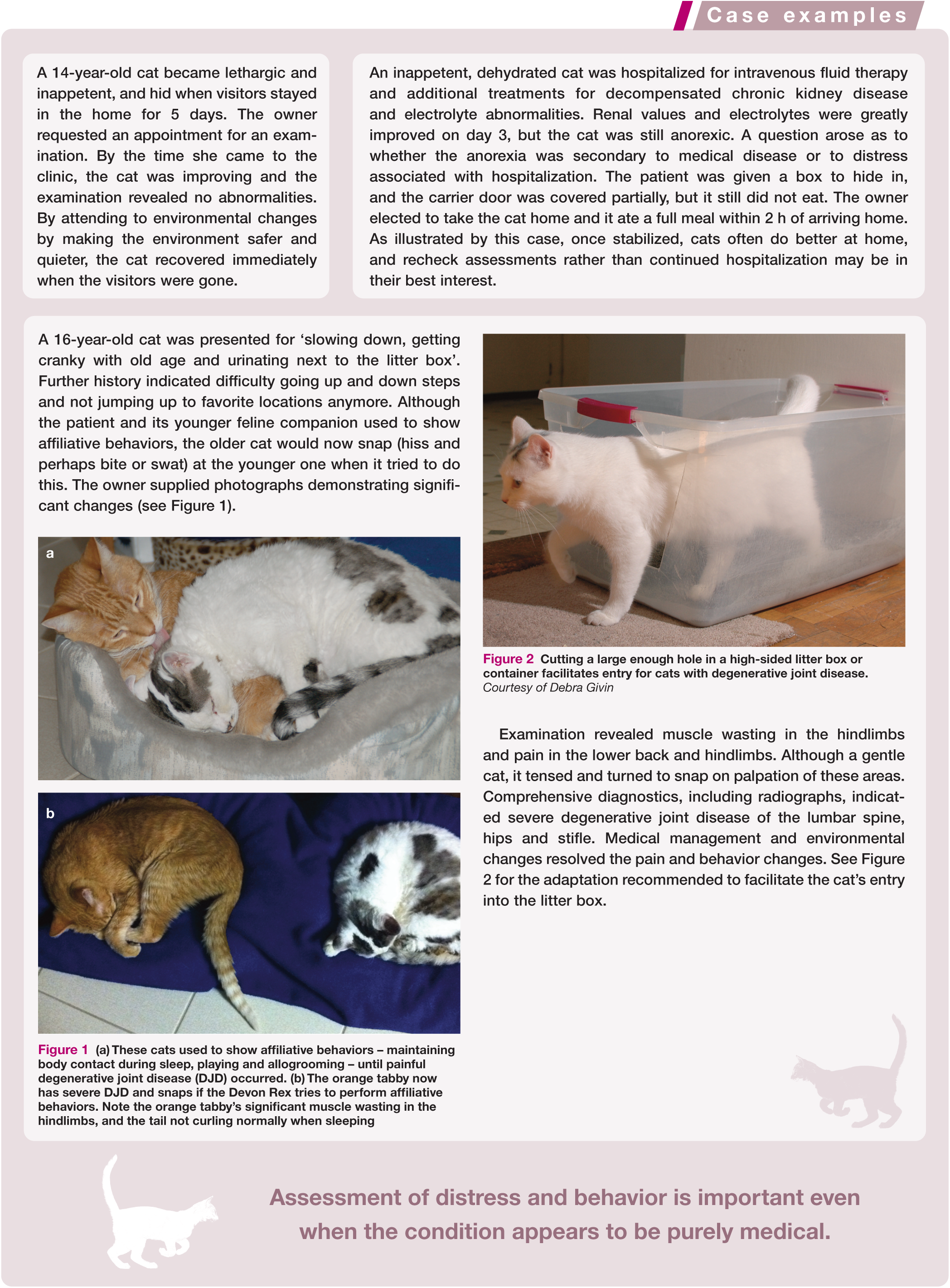

(a) These cats used to show affiliative behaviors – maintaining body contact during sleep, playing and allogrooming – until painful degenerative joint disease (DJD) occurred. (b) The orange tabby now has severe DJD and snaps if the Devon Rex tries to perform affiliative behaviors. Note the orange tabby’s significant muscle wasting in the hindlimbs, and the tail not curling normally when sleeping

Cutting a large enough hole in a high-sided litter box or container facilitates entry for cats with degenerative joint disease. Courtesy of Debra Givin
Acute stress/distress
Acute stress progressing to acute distress is commonly seen in feline patients during veterinary visits. Differentiating between stress and disease is critical to prevent erroneous diagnoses and unnecessary treatments. The differential diagnosis must consider both emotional and physical health. As many physical and diagnostic findings can occur with both physical and emotional conditions, client history, patient body postures and facial expressions must also be considered to differentiate between physical and emotional health.


Handling techniques preventing negative emotions include giving the cat the choice to remain in the carrier, approaching from behind or the side, and petting over the facial glands that produce pheromones. Courtesy of the American Association of Feline Practitioners; cat provided by Morris Animal Refuge
Behavioral signs
Most feline communication occurs in an attempt by the cat to protect itself and stop interactions. Humans can learn to recognize the signs of stress and distress demonstrated through body postures and facial expressions. An understanding of this communication by the veterinary healthcare team also helps recognize when analgesia or sedation are needed. Tips on preparing for and handling feline patients in the veterinary practice to minimize fear are provided in the box on page 428 and continued below. Additional resources to prevent negative emotions can be found in the supplementary material (see also the article on

Body language associated with stress/ distress may be recognized as ‘freezing’, whereby the cat adopts a crouched body position with an arched back and lowered head, tail close to the body, and all four feet planted underneath (Figure 4). Freezing may also be indicated by the cat hiding either under or within bedding, or the cat positioning itself at the back of a carrier or cage (Figures 5-7). Increased muscle tension, body trembling and piloerection may be noted. Fearful cats often feign sleep, appearing to be asleep but remaining awake and vigilant (Figure 7).

This stressed/distressed cat displays ‘freezing’ – crouched, with head pulled in and lowered, and tail wrapped tightly around the body; note also the dilated pupils, splayed whiskers, rotation of the ears and nose-licking

Hiding at the back of the carrier or under the bedding is a sign of fear

This fearful hospitalized cat has disrupted the cage to make a hiding place. Providing a box or bed to hide in reduces the potential for fear
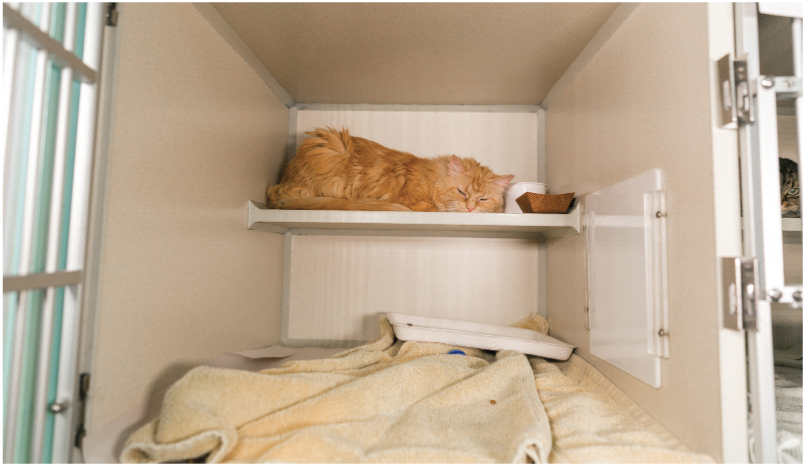
Feigned sleep with hypervigilance is common in caged cats. Despite this excellent cage set-up, this cat would hiss and swat at approaching humans. Courtesy of the American Association of Feline Practitioners
Stressed/distressed cats have altered facial expressions, including dilated or partially dilated pupils, ears rotated to the side or back, and whiskers splayed out or forward (Figures 4 and 8). Nose-licking (Figure 4) or drooling may also occur. Additionally, cats may vocalize by meowing loudly, or hissing, spitting or shrieking. Ignoring these signs and postures, whether subtle or overt, and continuing to approach or interact with a cat, may result in the cat fleeing or becoming aggressive.

Ears are back and whiskers splayed forward in this anxious cat
Differentiating physiological signs of acute stress/distress from disease
Examination
Physiological signs of acute stress can result in abnormal examination findings in an otherwise healthy cat; for example, tachycardia, tachypnea, hyperthermia and pupillary dilation. 15
Cats may hyperventilate, breathing both rapidly and deeply, or pant from either stress or disease, creating difficulty differentiating cardiac or respiratory compromise from stress. Cardiac murmurs occur fairly commonly with distress or as incidental findings (50% of cats have what are considered ‘innocent murmurs’) and must be differentiated from murmurs secondary to physical dis-ease. 16 During the car ride or the examination, extreme acute stress responses may lead to diarrhea, or evacuation of bowel contents and/or anal glands; some cats will also void urine. Blood and/or mucus on the surface of the stool suggests stress colitis, or there may be diarrhea. Tension on palpation secondary to stress may be difficult to differentiate from pain or other physical disorders.
Diagnostic testing
Physiological signs of acute stress may cause abnormalities in healthy cats that are important to consider when interpreting diagnostic test results. Hypertension is an excellent example, with acute stressors causing a temporary physiological response known as ‘white-coat hypertension’. 15 It has been demonstrated to be a particular issue in stray cats, 17 and assumed to be more common in cats that are not well socialized or have had negative experiences earlier in life.
Biochemistry panel abnormalities secondary to acute stress include hyperglycemia and hypokalemia. Stress hyperglycemia is often associated with patient struggling and glucose values can be as high as 1088 mg/dl (60 mmol/l) and remain raised for up to 90-120 mins, with or without glucosuria.18,19 Prior to diagnosing a patient with diabetes mellitus, clinicians should take stress responses into account. Repeating blood glucose tests when the cat is calm or performing fruc-tosamine testing prevents a misdiagnosis that could lead to inappropriate treatment and the risk of a hypoglycemic crisis or to owners considering euthanasia. 20 Stress hypokalemia may occur with distress secondary to epinephrine release. 21
Changes in complete blood count with distress (platelet hypersensitivity, neutrophilia and lymphopenia) are also associated with epinephrine release. 22 An increase in circulating erythrocytes has been documented in conscious healthy cats associated with restraint and blood collection. 23 Elevated urine pH can occur due to respiratory alkalosis associated with the stress of a visit to the veterinary practice. 24
Pain as a confounding factor
Pain is a state of illness that involves both physical and emotional components. 25 In other words it is both the physical pain and the feelings that one associates with pain that cause suffer-ing. 25 Pain is also individualized; cats with the same condition may experience different levels of pain, likely based on their genetics and stressors experienced earlier in life. 2
Interestingly, in terms of brain activity, emotional pain shares similarities with physical pain in how it is processed and experienced.
26
Maintaining the appropriate environmental setting and minimizing exposure to stressors may help cats that experience pain to cope better (see accompanying articles on
Fear and anxiety can exacerbate pain.25,27 Gentle restraint is essential to keep stress, distress and pain to a minimum. During physical examination, a cat with degenerative joint disease (DJD), for example, may be more tense and painful as it guards against the additional pain of handling. The principles of gentle and respectful patient handling that are so central to the ISFM’s and AAFP’s Cat Friendly Clinic/Practice programs, as well as the provision of analgesia if there is either suspicion or assessment of pain, are important elements of prevention and management of pain.28,29
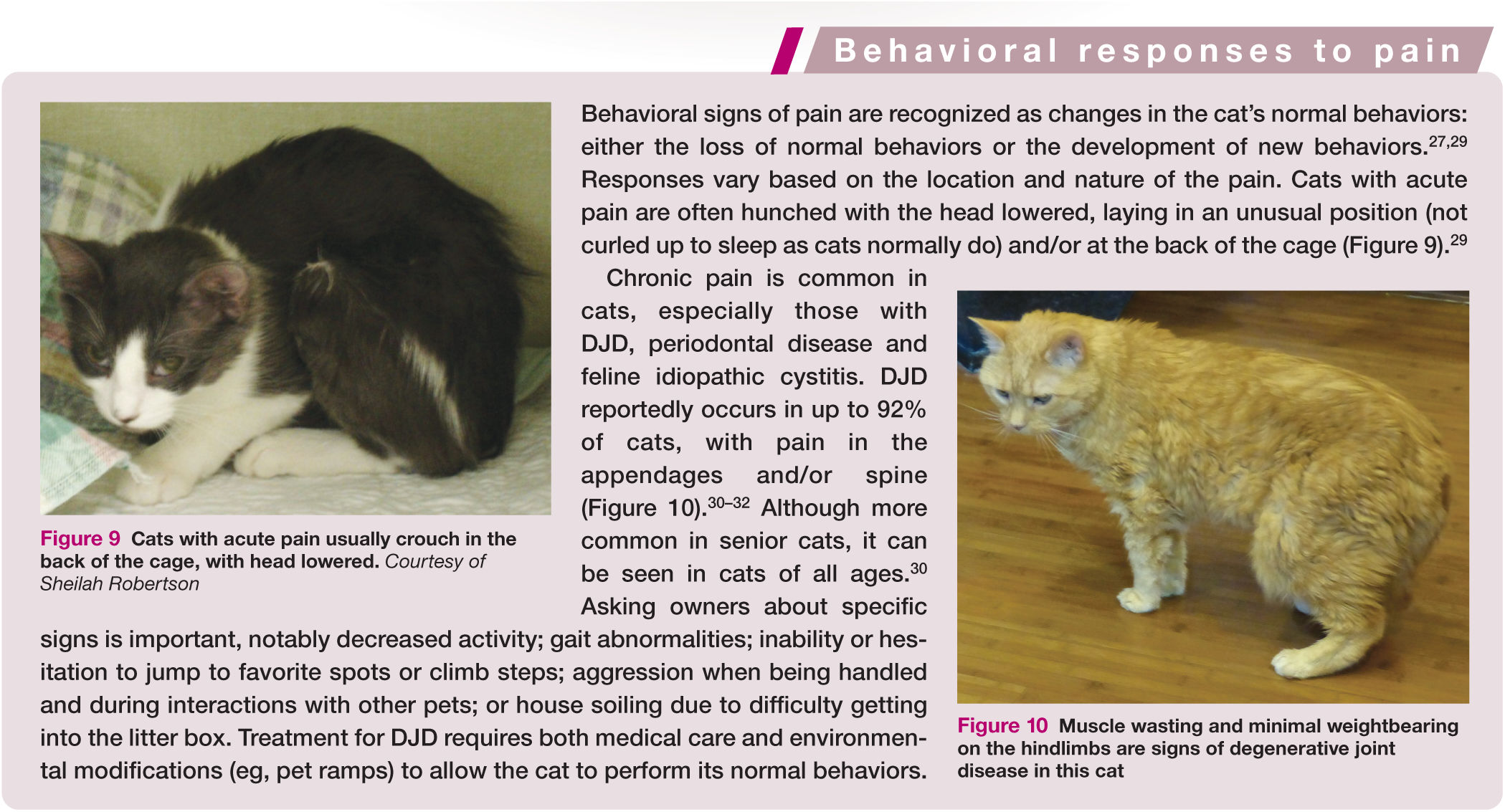

Cats with acute pain usually crouch in the back of the cage, with head lowered. Courtesy of Sheilah Robertson
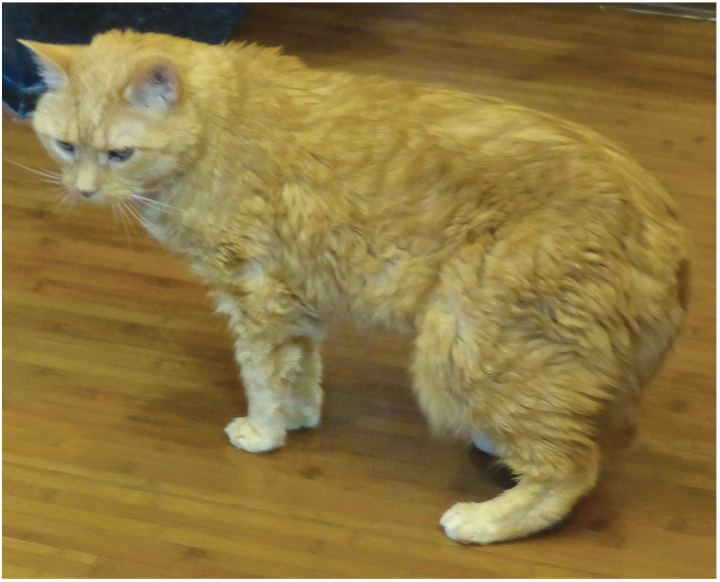
Muscle wasting and minimal weightbearing on the hindlimbs are signs of degenerative joint disease in this cat
Chronic distress
Cats develop chronic distress when they cannot predict or control a situation. 33 A variety of environmental causes of chronic distress were touched on earlier in this article. Medical and painful conditions are also associated with chronic distress (see below).
Behavioral signs
The behavioral signs of chronic distress may vary, but usually include prolonged hiding behavior; living in one location only; hyper-vigilance; not joining in other activities with family members; not using the litter box, including urine spraying; increased scratching; changes in eating, including anorexia, gorging and vomiting; overgrooming; and irritability.14,33,34
Making the link with disease
Stress-associated disease is now well recognized in many species, including humans; for example, human inflammatory bowel disease, 35 respiratory distress36,37 and interstitial cystitis 38 , and bovine respiratory disease. 39 Considerable evidence and increased awareness of the link between chronic feline distress and abnormalities in behavior and physical health exists, and many feline organ systems are affected either individually or concurrent-ly.40-42 Ongoing and future research may elucidate additional links between organ system function and abnormalities in behavior. The strong link between emotional and physical health emphasizes the need for behavioral evaluation of the home and environment for possible stressors that contribute to the medical disorder. There are a number of disorders where a lack of behavioral history may lead to an incorrect or incomplete diagnosis and treatment plan – as discussed below and outlined in Table 2.
Stress-associated diseases in cats

Feline idiopathic cystitis
There is a strong link between the painful condition of feline idiopathic cystitis (FIC) and chronic feline distress.40,41,48 FIC is the most common cause of lower urinary tract disease, with 55-73% of cats with lower urinary tract signs having FIC.10,52 Signs include intermittent or chronic hematuria, stranguria, urine soiling, and possible development of urethral plugs and/or urethral obstruction. 53
Comorbidities can occur with FIC and the recognized concurrent health issues are upper and lower gastrointestinal signs, immune system compromise and dermatologic signs.48,54-57 Ultrasound of the lower urinary tract is necessary to rule out cystoliths that are often not visible on radiographs, including those of struvite origin. 58
Behavioral abnormalities associated with FIC include fear, nervousness, increased startle responses, clinginess, withdrawal, aggression, and intermittent or persistent urination outside the litter box. 40 Assessment of underlying stres-sors in the social and physical environment is needed to develop a therapeutic plan. Treatment includes analgesia, meeting the cat’s environmental needs and alleviation of major stressors.
Gastrointestinal disease
Stressors can exacerbate the clinical signs associated with intestinal parasites, such as Tri-trichomonas foetus, Giardia species and Isospora species.59-61 Increased parasite burden and bouts of diarrhea occur secondarily to distress in otherwise asymptomatic cats with T foetus infection.61,62 Additionally, vomiting, diarrhea, stress colitis, and inappetence unrelated to parasitic disease can occur secondarily to feline distress.3,41 A recent clinical review article drawing on a number of case reports states that competition for food in multi-cat households is a stressor commonly leading to feline regur-gitation. 63 Overgrooming in response to stres-sors often results in hairballs.64,65 Although constipation has been thought to be associated with distress, such as in a cat that does not have easy access to litter boxes, no association was found between stressors and constipation in a recent study involving shelter cats. 66
Stress can alter the mucosal bacteria and integrity of the intestinal barrier, increasing permeability and triggering a local inflammatory reaction.33,67,68 Environmental and social stres-sors such as other cats or pets in the household, a move, boarding and being taken to cat shows were more frequently reported in a study of 73 cats with inflammatory bowel disease (IBD) as compared with cats without IBD. 50 When questioned by one of the authors (IR), several academics have indicated that there is a stress component to feline IBD, although no published placebo-blinded studies support this at this time.
Feline orofacial pain syndrome
Feline orofacial pain syndrome (FOPS) is a neuropathic disorder causing severe oral pain. Dental pain, associated for example with eruption of permanent teeth and periodontal disease, can trigger the condition, resulting in pawing at and mutilation of the mouth, especially the tongue. 69 Environmental factors can exacerbate the condition (eg, social conflict between household cats), and cats with poor coping ability are more vulnerable. 69
Immunosuppression and infection
Suppression of immune responses and subsequent infection is also associated with feline distress, resulting in either a novel infection or reactivation of a previous one. 33 These infections can be viral, bacterial or parasitic (Table 2).
Obesity
Obesity is one of the most prevalent diseases in cats and an ever-growing epidemic. Up to 63% of pet cats in developed countries are overweight or obese. 70 Obesity is associated with metabolic and hormonal changes, predisposing cats to other medical disorders.71-74 These include diabetes mellitus, skin disease, lower urinary tract disease, hepatic lipidosis, intestinal bacterial dysbiosis, neoplasia, DJD and respiratory compromise, as well as increased risks in anesthetic and surgical patients.71,75,76 There is evidence in dogs that obesity is associated with a decrease in quality of life as well as longevity; and that weight loss in overweight dogs leads to increased vitality, less emotional disturbance and decreased suffering from osteoarthritic pain. 77 It is generally assumed that this is the case for cats as well.
Although it may seem obvious that the behavior of overeating causes obesity, there are other risk factors that we can address to prevent and manage feline obesity and its consequences. Neutering of both male and female cats is a predisposing factor. 78 Failing to restrict calories by one-third post-neuter leads to obesity that affects all ages, even kit-tens. 49 Advising owners at the time of neuter surgery to simply reduce calorie-dense diets by one-third is insufficient, however, because it overlooks the important relationship between owner and pet; notably, there is evidence to suggest owners of overweight cats tend to feel happier having a pet cat, humanizing them, and communicating with them through food. 79
Another cause of obesity is lack of owner recognition that the cat is overweight or that this represents a health problem. 80 Owners want information about nutrition and behavior, but if not provided by veterinary professionals, they will seek help from pet stores, friends and breeders. 81

Key Points
Distress occurs when an animal is unable to cope physiologically and return to normal baseline state. Eventually wellbeing is compromised through physiological changes that may result in emotional and physiological damage.
Changes in behavior are often the first sign of a change in health status.
It is important to consider sources of stress and distress when evaluating feline health.
Physiological signs of stress and distress may be the consequence of behavioral issues or medical disease, but often both occur concurrently.
Supplemental Material
Supplementary Material
Additional resources
Supplemental Material
Supplementary Material
Questionnaire
Supplemental Material
Supplementary Material
Special issues on feline behaviour and problem behaviours
Footnotes
Acknowledgements
Figures 2 and  were first published in JFMS in the AAFP/ISFM house soiling guidelines and AAHA/AAFP pain management guidelines, respectively.
Supplementary material
Additional resources for veterinarians.
Owner questionnaire to help assess a cat’s home life and environment.
Conflict of interest
The authors declared no potential conflicts of interest with respect to the research, authorship, and/or publication of this article.
Funding
The authors received no financial support for the research, authorship, and/or publication of this article.
References
Supplementary Material
Please find the following supplemental material available below.
For Open Access articles published under a Creative Commons License, all supplemental material carries the same license as the article it is associated with.
For non-Open Access articles published, all supplemental material carries a non-exclusive license, and permission requests for re-use of supplemental material or any part of supplemental material shall be sent directly to the copyright owner as specified in the copyright notice associated with the article.
