




Abstract
Travel companionship is commonplace across tourism industries, with existing discourse exclusively emphasizing positive downstream outcomes. However, limited studies have provided a potential counterpoint to the positive outcomes embedded in scholarly work associated with travel companionship. This research, building on interdisciplinary insights, aims to create a comprehensive perspective on travel companionship, elucidating the conditions where travel companionship can trigger negative evaluations of shared tourism experiences. Emergent findings from a systematic narrative review identified three core research streams that focused on the characteristics of decision makers, relationships between companion and decision makers, and experience type. Drawing on self-construal theory, impression management theory, and the experience economy paradigm, three theoretically justifiable caveats were developed to illuminate the underlying psychological mechanisms of negative companionship-induced outcomes. An alternative model of travel companionship underpinned by testable research propositions is proposed. Future research should move towards the articulation of a theory of travel companionship.
Keywords
Highlights
This article stimulates constructive discourse to address biased assumptions on travel companionship.
Three core research streams on travel companionship are identified and articulated.
Three theoretically informed caveats for research on travel companionship are developed.
We propose an alternative model of travel companionship, underpinned by testable research propositions.
“Wish YOU weren’t here!” (Heimtun & Jordan, 2011). “Together always better?” (Wenzel & Benkenstein, 2018). “Does a companion always enhance the shopping experience?” (Borges et al., 2010). “Not that into you?” (Hao et al., 2023). “With or without you” (Hart & Dale, 2014). “It’s not where you do it, it’s who you do it with?” (Morey & Kritzberg, 2012).
Introduction
From an evolutionary perspective, humans, as social creatures, interact and cooperate with others in order to ensure the survival and reproduction of the species (Hamilton et al., 2021). As such, companionship fulfills an innate human need, and strongly influences core human functioning (Kong et al., 2022; Zajonc, 1965). As human basic needs evolve beyond material necessities, the hedonic nature of tourism experiences has sparked discourse that travel companionship fosters emotional intimacy and psychological wellbeing (Su, Cheng, Wen, et al., 2022). Traditionally, traveling with companions is often portrayed as an inherently social and collaborative experience that facilitates value co-creation (Kong et al., 2022; Su, Cheng, Wen, et al., 2022); however, companionship-induced outcomes have been found to be largely dependent on the structure element of companionship, with instances arising where travel companionship does not meet expectations, contributing to the co-destruction of shared tourism experiences (Baker & Kim, 2018; Su, Cheng, Wen, et al., 2022). Conceptually related studies have begun this momentum, questioning whether the influence of travel companionship on the evaluation of shared tourism experiences is consistently favorable (Berdychevsky et al., 2016; Choo & Petrick, 2015; Hao et al., 2023). The current understanding of its negative functionality and the underlying psychological processes remains incomplete, warranting further exploration.
In the tourism-related field, emergent academic interest has generated conclusions that travel companionship profoundly shapes the tourism experience as much as the destination or activity itself (Kong et al., 2022; Su, Cheng, & Swanson, 2022; Su et al., 2020; Vada et al., 2022). To holistically consider the essence of travel companionship, Manner-Baldeon et al. (2024) proposed that it is critical to evaluate the context (i.e., companionship type and activity type) and characteristics of the people involved. Although Hao et al. (2023) explicitly noted that not all travel is beneficial to the companion’s relationship, there is a need for more in-depth investigations into how the intricate interactions within contextual factors (e.g., characteristics of a focal tourist, tourist-to-companion relationships, and experience types) and the synergies among diverse theoretical frameworks, influence the valence of companionship-induced outcomes. Addressing these gaps could significantly contribute to the advancement of knowledge in the field of tourism and companionship experiences.
Drawing on the insights gleaned from existing studies (cf. Ma-Kellams & Blascovich, 2012; Su, Cheng, Wen, et al., 2022), this research presents an innovative viewpoint that establishes connections between variations in self-construal of a focal tourist, the strength of tourist-to-companion relationships, and the type of experiences, all of which contribute to the overall travel companionship experience. Explorations of tourist-to-companion interpersonal interactions during traveling, and their resulting impacts on traveling satisfaction, are needed to supplement the theoretical sketch of the contours of travel companionship and implicate the practitioners’ potential means to intervene. This conceptual paper seeks to elucidate how interdisciplinary insights can advance the current discourse on travel companionship. Engagement with such broader theoretical perspectives presents a unique opportunity to redirect the focus of tourism scholars to rethink travel companionship by unveiling the associated mechanisms that trigger negative evaluations of shared tourism experiences. This paper sustains constructive discourse designed to address this biased assumption by redirecting scholars’ attention toward alternative theoretically informed conceptual models. This research evaluates the potential for negative consequences stemming from travel companionship, not only adding to the emerging body of tourism research but also offering theoretically and managerially relevant guidelines for fostering desired tourism experience outcomes.
Literature Review
Travel Companionship
Travel companionship is a rather new stream of research, yet it is ubiquitous across the tourism sector, as destination and experience-based marketing campaigns are explicitly designed to encourage value co-creation (Baker & Kim, 2018). Travel companionship is conceptually broad, depicting the practice of individuals or groups traveling together for mutual company, support, and shared experiences during a journey (Su et al., 2020). When applied specifically, the term “travel companion” has a tendency to be used to describe an individual who travels with a tourist or tourists and may offer various forms of assistance, including emotional support, strengthening of relationships, and/or material aid (Vada et al., 2022). Travel companionship is volatile, leading to its unpredictable nature, even though a trip may be pre-organized in accordance with the preferences and arrangements of the individuals involved (Su et al., 2023; C. Zhang et al., 2020). To understand its complexity, this paper refers to travel companionship as the practice of traveling with an individual or a group of people for the entire or part of the trip (Torres, 2016; Vada et al., 2022).
Research denotes that travel companions play a vital role in shaping overall travel experiences (Su, Cheng, & Swanson, 2022). Travel companions can be friends, family members, romantic partners, or even individuals who meet specifically for the purpose of traveling together (Vada et al., 2022). This diversity underpins the varied facets of travel companionship, spanning from couples going on romantic getaways to friends embarking on an adventure together, or even individuals joining group tours to meet new people and share travel experiences (Hao et al., 2023; Su et al., 2023; C. Zhang et al., 2020). Travel companions often engage in various activities together, such as sightseeing, dining, exploring new destinations, and participating in local cultural experiences (Su et al., 2020). The nature of travel companionship can vary widely, from short-term arrangements for a single trip to long-term travel partnerships where individuals explore the world together over an extended period (White & White, 2009).
The Backfire Effect of Travel Companionship
Parallel with attention on the positive outcomes of travel companionship, research endeavors emerging within conceptual fields in broader social sciences emphasize negative outcomes of companionship (Barasch et al., 2018; Qin et al., 2024; Wenzel & Benkenstein, 2018). For instance, existing studies in social psychology and marketing postulate that companionship has effects that are considerably more complex than merely reinforcing findings of previous studies that examine the positive aspects of group decision-making, within-group competition, or conformity to a group norm (Hamilton et al., 2021). These contributions provide important insights for the positively valenced discourse on travel companionship.
This research explicitly centers on tourist-to-companion interactions while also acknowledging the broader implications of other scholarly inquiries, such as customer-to-customer interactions. In service marketing, the documented negative impacts of customer-to-customer interactions critically inform discourse designed to rethink travel companionship. Researchers demonstrate that the presence of other customers (such as customer-generated service failures, e.g., misbehaviors) has the potential to co-destruct service experiences, resulting in an unfavorable downstream effect on value creation and service quality evaluation (Baker & Kim, 2018; Nicholls & Gad Mohsen, 2019). This presents a counterpoint to the historically dominated discourse associated with value co-creation in service encounters (J. Luo et al., 2019). Despite this, the existing literature on customer-to-customer interactions predominantly focuses on customers’ perceptions of negative customer-to-customer interactions (i.e., demand side; Baker & Kim, 2021; Li et al., 2020), the attribution processes linked to these negative interactions (i.e., how; B. Liu & Li, 2022; Tsang et al., 2016), and strategies for implementing service recovery to alleviate the adverse effects of such interactions (i.e., supply side; Li et al., 2021; Nicholls & Gad Mohsen, 2019). Studies tend to articulate the perspective of key stakeholders, such as employees and customers; however, there is limited research that offers a comprehensive synthesis of the circumstances and mechanisms of negative customer-to-customer interactions. This paper seeks to address this gap by delving into the landscape of tourist-to-companion interactions and articulating when and how negative tourist-to-companion interactions occur.
Despite the transferable insights garnered from customer-to-customer interactions, contextual differences exist in such interactions between service marketing and tourism. A tourism context extends beyond traditional customer-to-customer dynamics, involving immersive and novel experiences that foster enduring interactions among travel companions, thereby impacting wellbeing (Pyke et al., 2016). A travel companion is more than another anonymous peer customer. Customer-to-customer interactions in the delivery of services are characterized by the simultaneous presence of customers, with encounters only for a short period of time (Tsang et al., 2016). In such situations, customers are less likely to have an opportunity for extensive social interaction, with scarce resources used to build interpersonal connections, let alone to forge meaningful experiences (Nicholls & Gad Mohsen, 2019). Crucially, various factors—such as level of involvement, and sense of space and time—vary in customer-to-customer interaction when compared to tourist-to-companion interactions in tourism, necessitating a more nuanced understanding of the phenomenon of travel companionship (B. Liu, Moyle, et al., 2023). Indeed, the valence of companionship-induced outcomes may vary depending on three key sources which act as boundary conditions (see Figure 1).
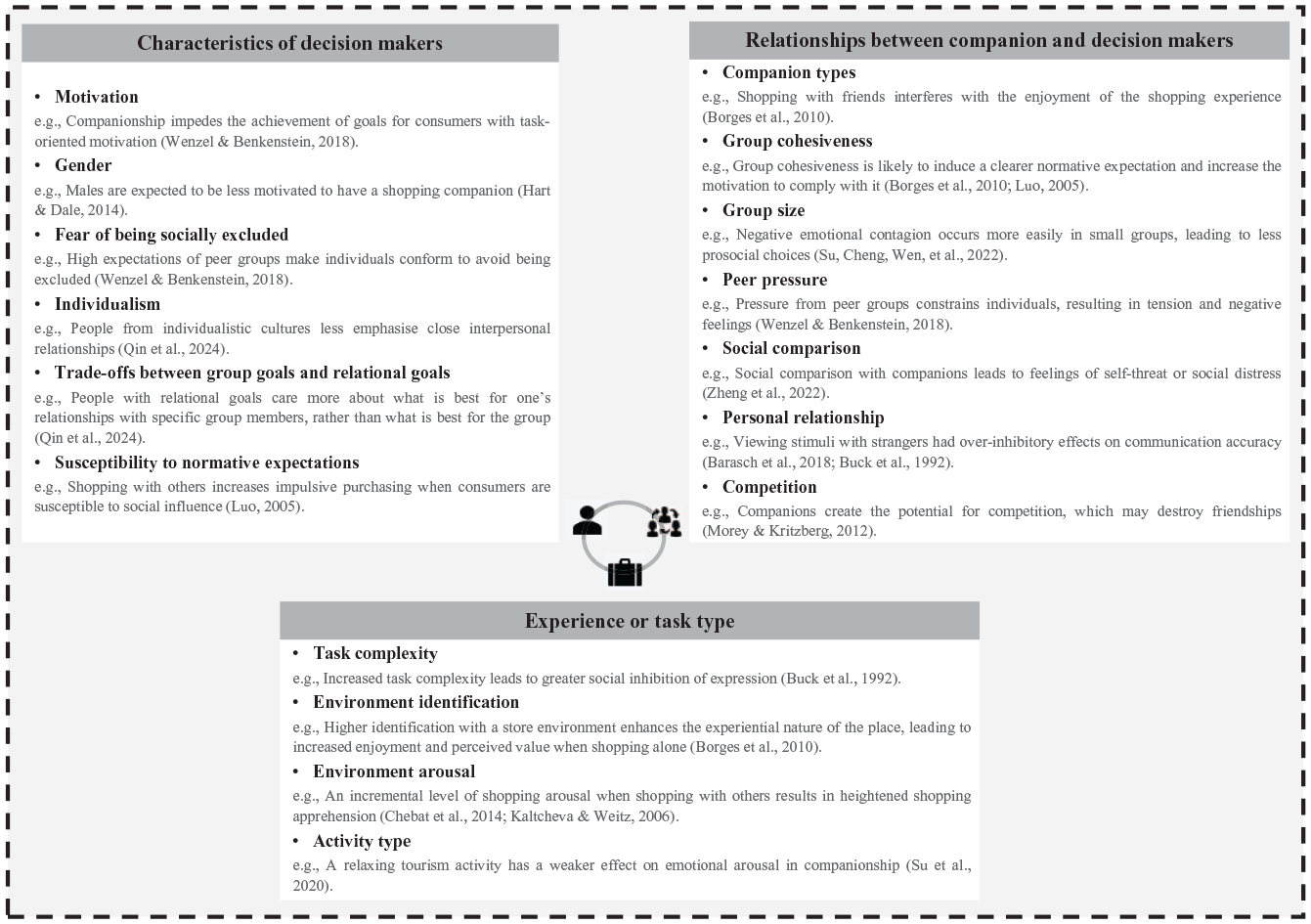
Three Major Sources Underpinning the Backfire Effect of Companionship.
The framework depicted in Figure 1 manifests a broader scholarly trend emphasizing the importance of exploring both positive and negative dimensions of companionship, acknowledging the growing importance of understanding its adverse implications. These three attributes (i.e., the characteristics of decision-makers, relationships between companions and decision-makers, and the experience or task type) were identified due to their prevalence in seminal work on companionship in the psychology and marketing literature (Bond, 1982; Hamilton et al., 2021; Pozharliev et al., 2015). Drawing on these three key conditions that underpin companionship, Figure 1 provides a sound conceptual foundation to examine how travel companionship can potentially generate negative outcomes, offering a nuanced perspective of the multifaceted nature of travel companionship.
Despite recent advances and notable contributions to the positive impacts of travel companionship, limited research in tourism provides an alternative perspective on the outcomes of travel companionship, with notable exceptions. For instance, Heimtun and Jordan (2011) acknowledged that travel often fails to live up to expectations due to conflicts and negotiations between companions. Negative tourist-to-companion interactions appear to have a detrimental impact on the tourists’ experiences while on-site, and also have implications for future travel preferences and patterns; in extreme cases they potentially lead to the breakdown of friendships or companionship (Berdychevsky et al., 2013, 2016). Prior work has articulated that a non-supportive travel companion has a negative impact on tourist resilience, limiting the capacity to cope with challenges during travel (Su et al., 2023). Hao et al. (2023) concur that studies which critically engage with the negative effects of interpersonal interactions between travel companions are limited, introducing the concept of “desynchronicity,” which was reported to reduce satisfaction between romantic partners, with independent personalities less likely to experience lasting effects from negative interactions.
Despite the growing emphasis on travel companionship, studies are predominantly descriptive, with the potential for negative outcomes not explored in adequate depth. Insights from conceptually related studies provide a basic context for this research to delve into how travel companionship can potentially backfire and ultimately lead to negative outcomes. Consequently, this manuscript seeks to provide an inclusive and balanced view of travel companionship through the achievement of three key research objectives (RO):
RO1: To systematically assess tourism literature on travel companionship in order to identify research themes;
RO2: To develop caveats designed to critically illuminate the underlying psychological mechanisms underpinning how travel companionship may negatively influence the evaluation of tourism experiences; and
RO3: To articulate a conceptual model with testable research propositions designed to inform future studies to clarify negative impacts of travel companionship.
Method and Thematic Analysis
Due to the emergent nature of studies on travel companionship in tourism, this study employs a systematic narrative approach as an initial tool to identify the key research themes which can be developed into caveats for future studies, and a conceptual model with testable propositions. A systematic approach ensures that a rigorous, transparent, and reproducible selection of articles is collected for thematic analysis, thus facilitating a nuanced understanding of the development of emergent knowledge domains (Y. Zhang et al., 2023).
Database Search and Article Selection
We followed the Preferred Reporting Items for Systematic Reviews (PRISMA) protocol to systematically search for and identify relevant publications. The approach is widely regarded as a valuable tool for conducting systematic reviews due to its emphasis on transparency, rigor, and standardization (L. Chang et al., 2022; Lu et al., 2023; Moher et al., 2010). Although PRISMA is often criticized for its descriptive and subjective nature, this research complements this by adopting a systematic search that precedes the narrative approach of analyzing the final articles involving multiple coders for triangulation purposes, which offers more in-depth and objective insights than traditional systematic quantitative literature reviews (Y. Zhang et al., 2023).
Figure 2 details the process of literature identification, screening, eligibility, and inclusion. “Travel companionship” was utilized as a search term in five databases, specifically Scopus, Web of Science, Emerald Insight, ScienceDirect, and EBSCOHost (Hospitality & Tourism Complete), an approach adapted from Le et al. (2019). The search was conducted from August 2023, without a specific timeframe being applied, as suggested by Le et al. (2019) and Yang et al. (2017). Only peer-reviewed English journal articles were included due to the linguistic limitation of authors and the consistency of reviewed articles, which is an approach commonly practiced among systematic reviews (Lu et al., 2023). The initial search generated 54 records, which were exported to EndNote (Version 20.5) for further examination. Following the duplicate removal of nine records, the remaining 45 records were screened based on titles, abstracts, and keywords. As a result, 26 records were excluded, with 19 articles remaining for full-text assessment. Google Scholar was used at this stage as a quality control measure, as recommended by Lu et al. (2023), to ensure the inclusion of all pertinent articles. Five additional articles were added for full-text examination.
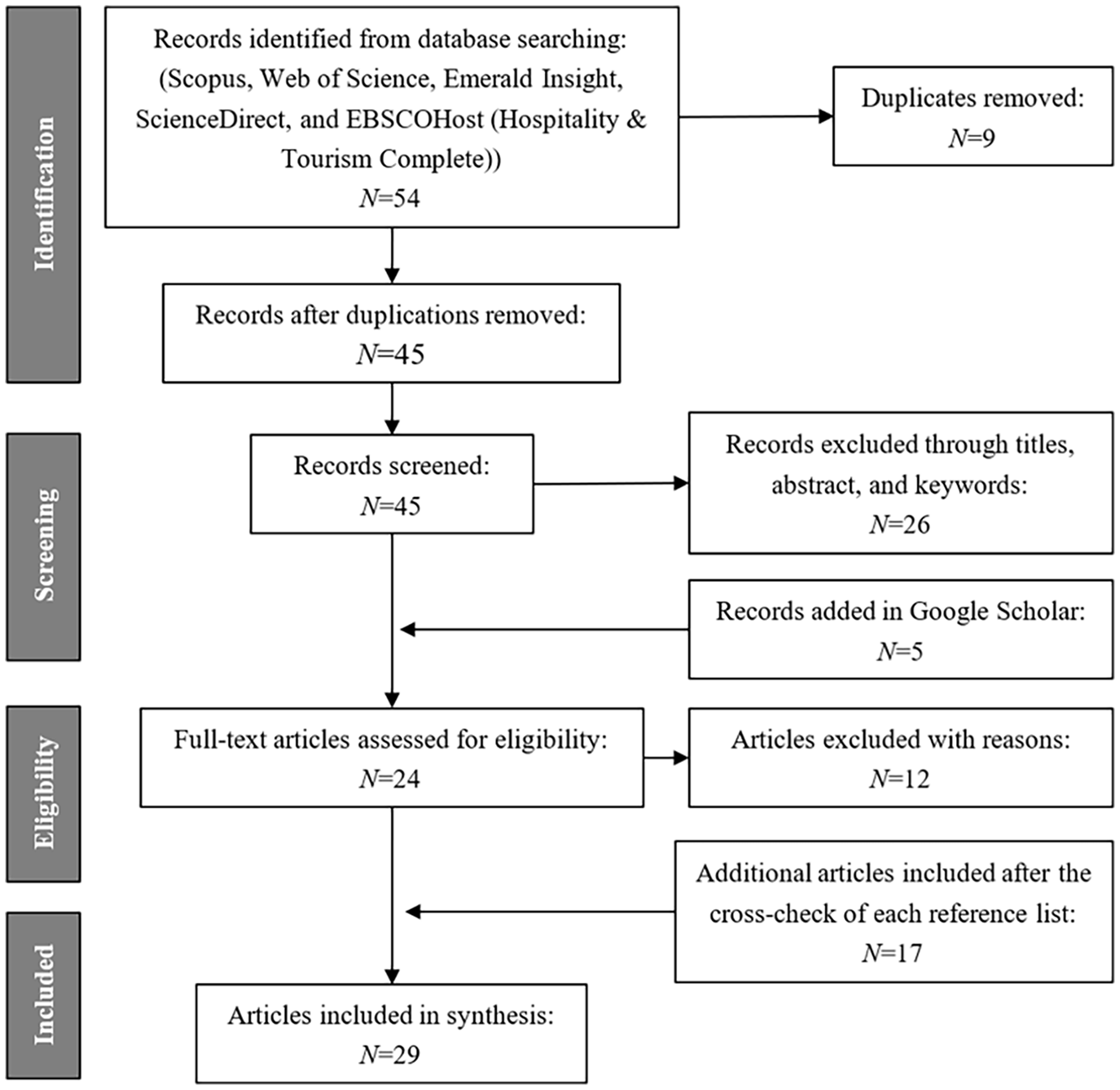
PRISMA Flowchart.
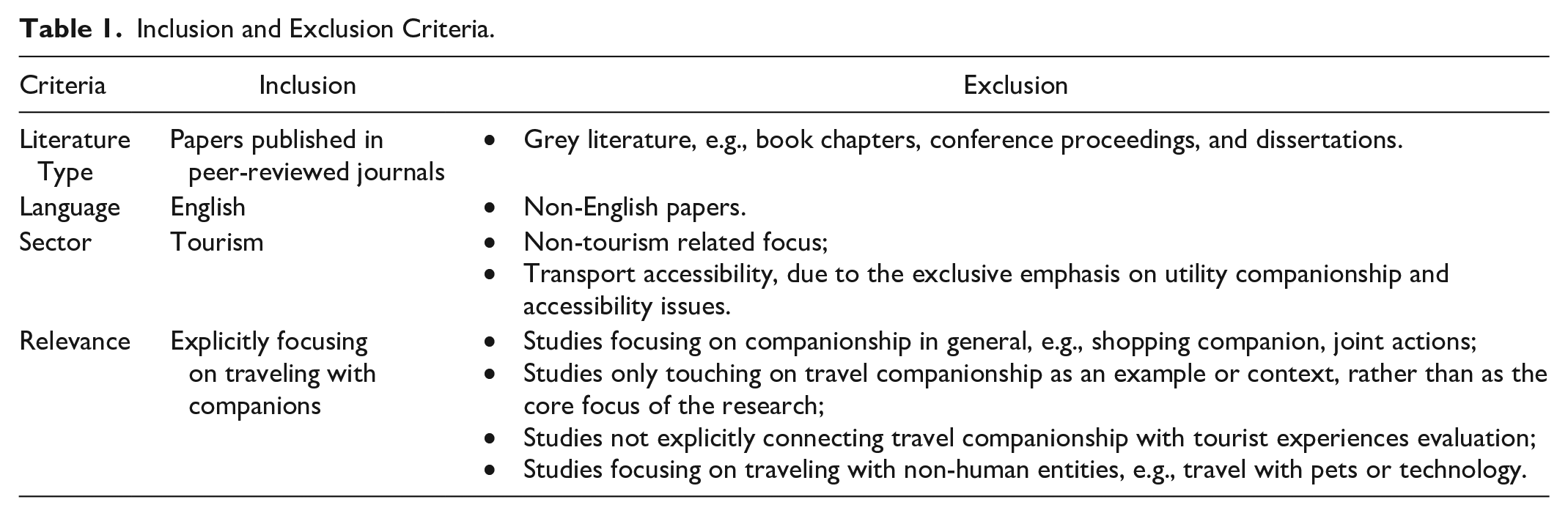
Consequently, 24 eligible articles were accessed in full, and the other 12 articles were excluded. For example, those articles (1) focused on companionship in general (e.g., shopping companion, joint actions); (2) only touched on travel companionship as an example or context, rather than as the core focus of the research; (3) did not explicitly connect travel companionship with tourist experiences evaluation; or (4) focused on traveling with non-human entities (e.g., travel with pets or technology). Table 1 outlines the inclusion and exclusion criteria applied to steer the analysis. Finally, the reference list of 12 articles was cross-checked to ensure the inclusion of all relevant articles, which yielded 29 eligible publications for review.
Inclusion and Exclusion Criteria.
Data Extraction and Analysis
According to Y. Zhang and colleagues’ (2023) approach, we extracted descriptive information, including journal, year published, the location of research, theory, and method, to briefly ascertain the proportion of reviewed studies regarding the categories. Following this, to synthesize the main research streams, thematic analysis was employed to ensure a transparent and explicit connection between the conclusions, themes, and the text of the original studies, which is considered critical to systematic narrative review (L. Chang et al., 2022). According to Lu and colleagues’ (2023) data coding procedures, the first author familiarized with the database, and then systematically coded the content relating to travel companionship across the 29 papers. Following a process by Y. Zhang et al. (2023), second-order codes were further categorized into potential themes as overarching codes, through an analysis of their similarities and distinctions. Emergent themes were cross-checked by an independent researcher to ensure that they were interpreted appropriately, according to the codes and coded extracts. Adapting core principles from studies that apply an intercoder reliability check, disagreements regarding the coding among the authors were negotiated and resolved to reach a consensus in the process (L. Chang et al., 2022). For example, the original overarching code “tourist-to-companion relations” was modified to “relationships between companion and decision makers” to better reflect second-order codes as well as ensure a higher generalizability. Codification identified three first-order themes, which were characterized by 52 second-order subthemes.
Descriptive Overview
From a synthesis of 29 eligible peer-reviewed articles, the literature demonstrated growth in scholarly attention on travel companionship, evidenced by an increase in the volume of publications, with over half of the studies being published after 2018. Existing literature has focused on the Asia-Pacific region, with the disciplines of sociology and positive psychology found to inform research on travel companionship. As travel companionship is an emergent concept, studies were dominated by qualitative approaches, such as interviews. Studies were predominantly atheoretical, which means discourse remains descriptive and still in pursuit of theoretical maturity. A descriptive overview indicates discourse on travel companionship is emerging yet embryonic in the tourism field.
Thematic Categories
The three first-order themes that emerged as the core research streams include studies that focused on the characteristics of decision-makers (cf. Khoo-Lattimore & Prayag, 2016; Tsang et al., 2016), relationships between companion and decision-makers (cf. Hao et al., 2023; Su et al., 2023), and experience type (cf. Nisha & Cheung, 2022; Su et al., 2020).
Characteristics of decision-makers
Characteristics of decision-makers refers to the personal intrinsic attributes of an individual, incorporating the subjective elements that characterize the nature of a focal tourist (Fennell, 2017). Accordingly, studies have focused on critically examining how tourists’ socio-demographics, personal traits, motivations, and resources, either enhance or detract from travel companionship, and how this, in turn, influences tourism experiences (Su et al., 2020; Tsang et al., 2016). Self-disclosure, referred to in studies as a tendency to expose the self to travel companions, has been identified as being critical for the formation of groups, and also for being influential in group dynamics (Lin et al., 2019). Research on the characteristics of decision-makers also explores how focal tourists, as opposed to travel companions, utilize decision-making and conflict negotiation skills to influence the choice of accommodation, activities, and dining options, ultimately shaping the overall travel experience (Khoo-Lattimore & Prayag, 2016).
Relationships between companion and decision-makers
Research on the relationship between focal tourists and companions focuses on the relational antecedents and dynamics that underpin social interaction (Su, Cheng, Wen, et al., 2022). Key findings articulate that the role of the decision-maker may change from a travel companion to a focal tourist, from situation to situation, within one shared travel journey. Tourism research has explored the dynamics of decision-making within travel companionships and how the relationships between companion and decision-makers influence the shared travel experience. J. S. Chen and colleagues’ (2016) study explicitly examined the influence of the different mixes of relationships between travel companions (with small children, with older children, with friends, and with partners), focusing on tourist activity. Strong and positive interpersonal relationships among companion and decision-makers were found to enhance the overall travel experience (C. Zhang et al., 2020). Travelers who possessed pre-existing close bonds or who were skilled at building rapport with each other tended to report higher levels of satisfaction (Lin et al., 2019). Subsequently, group cohesion, fostered by positive relationships and shared decision-making was associated with higher travel satisfaction (Su, Cheng, Wen, et al., 2022). Travelers who felt a sense of belonging and camaraderie with their companions tended to have more enjoyable shared experiences (X. Chen & Mak, 2020).
Experience type
Experience type denotes the context in which focal tourists and travel companions share an experience or interact to complete an activity (Su et al., 2020). For instance, in the context of outback travel experiences, travel companions are likely to bond over shared awe and develop an appreciation of the unique and charismatic culture and heritage (White & White, 2009). Traveling to wellness destinations may encourage relaxation and health-related experiences, fostering a sense of serenity within companionship (J. S. Chen et al., 2016; He, Liu, & Li, 2022; B. Liu, Li, et al., 2022). With adventure tourism emerging (e.g., skydiving and cycling), shared adrenaline rushes can create strong bonding experiences (Su, Cheng, & Swanson, 2022; C. Zhang et al., 2020). Traveling with a partner (e.g., honeymoon) is a unique travel context where the shared romantic experiences and commitment become cherished (Hao et al., 2023). Despite the notable insights, however, few focused on how the type of travel experience sought by individuals within a travel companionship can influence the overall shared experience.
While the functioning of travel companionship varies across the three major sources, a notable research gap persists, casting doubt on the consistency of favorable outcomes induced by companionship and its subsequent impact on wellbeing. Although some studies have initiated the exploration of the drawbacks of travel companionship, highlighting instances of the backfire effect (Hao et al., 2023; Heimtun & Jordan, 2011; Su, Cheng, Wen, et al., 2022), the current knowledge of its negative functionalities and the underlying psychological processes remains insufficient, necessitating further investigation. Drawing on the three key research themes identified through a systematic narrative review of travel companionship, there is an opportunity to reconsider the effect of travel companionship and explore in-depth how travel companionship can lead to negative outcomes through the presentation of three key caveats for future studies to consider. In doing so, this conceptual paper contributes to better reflect the diversity of perspectives found in the reviewed publications and provides a more comprehensive view of the impact of travel companionship on the travel experience.
Three Caveats for Future Studies on Travel Companionship
Delving into theoretical perspectives embedded in broader social sciences (e.g., psychology, marketing, and business) not only provides an opportunity to advance discourse on the backfire effect of travel companionship, but also enhances the explanatory power that extends beyond specific contexts (e.g., tourism). Scholarly work in the related parent disciplines that informs the tourism field advocates for interdisciplinary perspectives that draw on theories such as self-construal theory, impression management theory, and perspectives such as the experience economy, to advance knowledge on the phenomenon of companionship (Ma-Kellams & Blascovich, 2012; Su, Cheng, Wen, et al., 2022). The selection of foundational theoretical frameworks is guided by the identification of critical research gaps from the narrative review analysis, along with insights from broader social sciences, aiming to reshape perspectives on the evolving landscape of tourist-to-companion relationships (Miao, 2021). This approach, as articulated by McCabe (2024), allows for conceptual insights to serve as a cornerstone for theoretical integration and conceptualization in travel companionship.
Specifically, self-construal theory elucidates the fundamental relationship between the self and others, forming a critical part of the characteristics of decision-makers (i.e., the first research stream). The incorporation of impression management theory, inspired by the relationship between companion and decision-makers (i.e., the second research stream), articulates how self-presentation concerns vary based on the strength of tourist-to-companion relationships. The experience economy model offers a robust framework for categorizing different types of experiences (i.e., the third research stream), making it suitable for inclusion in this paper. Despite their considerable explanatory capacity, the role of these three foundational theories in understanding travel companionship remains primarily conceptual, highlighting the need for further research. Accordingly, the ensuing discussion draws on these three interrelated theoretical perspectives to provide an underpinning rationale and substantiate the underlying psychological mechanisms.
Caveat I: Consider the Effect of Tourist Self-Construal
Tourists’ individual characteristics play an essential role in travel companionship. As the hierarchy of needs evolves, an individual’s focus incrementally extends beyond instrumental advantages induced by companionship (e.g., budget, information, and safety), towards the growing need for self-development, encompassing elements like personal experiences and wellbeing (Vada et al., 2022). According to self-construal theory, this tendency largely relies on how individuals perceive and define themselves in relation to others (independent from or interdependent with others). Such self-construal has the potential to engender subsequent dissatisfaction from travel companionship (H. Liu, Xu, et al., 2023). Tourist self-construal remains conceptual in nature, with the understanding of its potential impact on the evaluation of shared tourism experiences still in its infancy.
Self-construal denotes a person’s relationship between the self and others, capturing people’s social motivation toward humanlike entities (A. Fan et al., 2020). In seminal work, Markus and Kitayama’s (1991) self-construal theory identified two construals of the self in relation to others; particularly, the extent to which individuals consider themselves connected with (i.e., interdependent) or separate from (i.e., independent) the social context. Interdependent self-construal emphasizes the self as a component of social relationships, and places value on an individual’s behaviors depending on the perception of others (Jebarajakirthy & Das, 2020). In contrast, independent self-construal originates from “a belief in the wholeness and uniqueness of each person’s configuration of internal attributes” (Markus & Kitayama, 1991, p. 226), thus emphasizing individualism and self-realization processes (Qin et al., 2024). Overall, the structure of self-construal has been demonstrated and validated cross-culturally by social psychologists (Markus & Kitayama, 1991), emerging as a critical intrinsic factor in studies on tourists (A. Fan et al., 2020; Ma & Li, 2023; Peng et al., 2023).
Subsequently, an individual’s self-construal plays an important role in determining subsequent psychological functioning (Wu et al., 2019). The need for social interaction, foreshadowed in Maslow’s (1968) foundational work on the hierarchy of needs, is a significant characteristic of human beings (Wenzel & Benkenstein, 2018). This concept has been further developed in studies that examine social interaction, with Lin et al. (2019) highlighting that interactions between tourists are a critical component that shapes the outcomes of tourism experiences. According to these related theoretical perspectives, people are disposed to develop their social identity and address identity threats regarding the social groups to which they connect and interact (S. Q. Liu & Mattila, 2015). Previous studies have revealed that those with interdependent self-construal are inclined to show a heightened need for social interaction by purchasing products that symbolize group membership, even though such paraphernalia is unappealing to them (S. Q. Liu & Mattila, 2015). In tandem, those who are inclined to form and maintain social attachments, yet lack such connections, are more likely to experience adverse outcomes, including decreased health from isolation and loneliness, personal adjustment, and lower perceived eudaimonic wellbeing (L. Chang et al., 2024; B. Liu, Kralj, et al., 2024; Wenzel & Benkenstein, 2018).
Based on the nature of self-construal, tourists with interdependent self-construal will experience a more pronounced need for social interaction (A. Fan et al., 2020). By contrast, the need for social interaction is less likely to be activated among those with independent selves due to a stronger sense of agency, control, and efficacy (Ma & Li, 2023). Consequently, travel companionship, as a form of building and maintaining social connections and interactions, can generate more favorable outcomes for those tourists with a stronger interdependent self-construal. However, the company of others during a trip could be problematic for counterparts with a stronger independent self-construal, leading to a negative effect on the enjoyment of tourism experiences. Notably, this statement does not contradict the findings of Hao and colleagues’ (2023) research, which indicated that independent travelers are less prone to dissatisfaction from negative companionship experiences. Rather, our research aligns with theirs, diverging in the context of the moderating influence of the timing of negative travel companionship experiences. This distinction arises from the fact that Hao and colleagues’ (2023) study centered on the consequences of negative travel companionship experiences, while our research seeks to explore the antecedents of such experiences.
While the role of companions can be predictably negative from the perspective of tourist individual characteristics, it is important to recognize that the decision-making process to include or exclude companions is not isolated (Nisha & Cheung, 2022). The unpredictable nature of the travel process means that travel companions are unavoidable sometimes, even if a tourist has planned to do solo travel before a trip (C. Zhang et al., 2020). Compounding this, travel companionship has been demonstrated as a reciprocal but individualist relationship among tourists (Heimtun, 2010; Kong et al., 2022). A type of “individualized intimacy” that tourists are reluctant to be suffocated by commitment and over-dependence, even though they acknowledge the benefits of interpersonal involvement, companionship, and group bonding of travel (X. Chen & Mak, 2020; Heimtun & Jordan, 2011).
Traveling is often characterized as an inherently social and cultural experience where tourists, including those who prefer independent travel, often find themselves in situations where they cannot freely choose their companions due to social norms and social desirability bias (White & White, 2009). Nisha and Cheung’s (2022) recent study suggested that solo travel activities of female Muslims offer a form of active resistance against patriarchal gender relations in Iranian society, regardless of their personal preference. Kong et al. (2022) concurred, arguing that Chinese female girlfriend getaways free women from oppressive social expectations and gender norms. As further evidence, extant articles explicitly focus on the social phenomenon that independent tourists travel with good friends (Kong et al., 2022), fellow travelers (Heimtun, 2010), or on group package tours (White & White, 2009).
Caveat II: Consider the Effect of the Strength of Tourist-to-Companion Relations
From the perspective of the relationship between companion and decision-makers, the strength of tourist-to-companion relations is crucial in molding the dynamics of travel companionship (Wang & Uzzi, 2022). While Granovetter (1973) suggested enriching research on social networks through the concept of social tie strengths, scant empirical work has followed up on this insightful conception. The strength of the connection between travel companions is a critical component of social interaction, and forms a representation of the potency of the bond between members of a network (Gafter & Tchetchik, 2017; Wang & Uzzi, 2022). Following such insights, the bond between travel companions can be a pervasive indicator of the strength of a relationship during a trip (K. C. Chang, 2021; Lin et al., 2019). Despite this recognition, its functionality on the shared tourism experience in travel companionship remains unclear.
Travel companionship can take various forms, and travel companions can be friends, family members, group travel booked from travel agencies, and even strangers who meet specifically through online platforms and communities for the purpose of traveling together (C. Zhang et al., 2020). Concerning the strength of ties between companions, marketing scholars concluded in foundational work on consumer behavior that decision-making is affected by the influence and presence of other people, regardless of who they are (Kotler & Levy, 1969). Less scholarly attention has been paid to how differences in the relationships between travel companions can generate both positive and negative outcomes (Lin et al., 2019; Su, Cheng, Wen, et al., 2022). Assessing the strength of the bond between travel companions can be further classified into strong and weak ties (Granovetter, 1973).
Network science is transforming our understanding of the strength of relationship ties, positing it is a latent construct. This implies considering several proxies for assessment, including but not limited to the extent of frequency, duration, closeness, and reciprocity of contact with companions (Gafter & Tchetchik, 2017; Wang & Uzzi, 2022). Companions with strong ties refer to focal tourists who may share a deep level of closeness with companions, including close friends or immediate family members. In contrast, weak ties denote relationships with less closeness, such as casual friends or distant family members (Wang & Uzzi, 2022; Wilcox & Stephen, 2013).
Khoo-Lattimore and Prayag (2016) identified that an important area of research relevant to girlfriend getaways is the role and influence of the self-image, which drives reflections on how focal tourists’ self-presentation concerns affect tourist-to-companion relations in travel companionship. Due to an emphasis on the strength of the bond of companions articulated in impression management theory developed by Goffman (1959), this second caveat focuses on the importance that individuals place on control and managing a desired impression of others, applying a conscious effort to manage impressions during social interactions. Drawing on impression management theory, L. Zhang et al. (2019) noted that mindful and active manipulations to gain social benefits (e.g., others’ positive responses and compliments) are demonstrated to concurrently result in the activation of self-presentation concerns. Self-presentation concerns are an inherently negative state that has the potential to trigger social anxiety and psychological pressure, thus decreasing the level of pleasure derived from companionship during travel experiences. Such concerns are exacerbated by the intensifying usage of social media (e.g., online interaction and online sharing), which indeed permeates the entire process of producing the desired public image conveyed through travel (B. Liu, Moyle, & Kralj, 2022).
The effect of self-presentation concerns is compounded by the strength of the bond between travel companions, eliciting varied consequential and interactive effects (Barasch et al., 2018; Kong et al., 2022). Existing related tourism literature (cf. Kong et al., 2022; Vada et al., 2022) tends to agree that traveling with companions with a strong prior relationship places those travelers in a “safe bubble” where they are less likely to increase their conscious level of self-presentation. For example, Vada and colleagues’ (2022) study demonstrated that the desire to travel with friends and family (i.e., a strong connection as travel companions) is positively related to tourists’ intentions to select a destination. Likewise, Kong et al. (2022) focused on the emotional and social benefits of travel with intimate female friends (i.e., a girlfriend getaway). This is in line with social media literature which has demonstrated that online interaction with people with a strong bond reduces impression management concerns, generating greater user happiness (Jang et al., 2021). Hence, tourists with a close bond are less likely to be sensitive to being judged when traveling together, because there is less uncertainty regarding the expectations of intimate friends (Barasch et al., 2018).
Conversely, self-presentation concerns may be amplified when traveling with companions where a weak relationship exists, which, in turn, may negatively influence tourism experiences (Lin et al., 2019). In such situations, travelers have a stronger motivation to present themselves positively due to a perceived heightened sense of interpersonal uncertainty, and thus tend to invest more effort in self-presentation during their interactions with travel companions, rather than fully enjoy the tourism experience (D. X. Fan & Jia, 2023). Social psychologists have examined the effect of personal relationships on the facilitative or inhibitive effect of the presence of another person (Buck et al., 1992). Studies have demonstrated that the use of emotional expressions is magnified, to present a desirable image to others with a weak relationship to build social capital, breaking down social inhibitions (e.g., reduced expressiveness and communication accuracy; Lin et al., 2019). X. Luo (2005) concluded that there is less likelihood of enacting impulsive purchasing with family members (i.e., strong ties), due to normative influence. Subsequently, according to impression management theory, we can assume that traveling with weak (vs. strong) relationships with companions has the potential to lead to higher levels of self-presentational concerns, potentially undermining the evaluation of shared tourism experiences.
Caveat III: Consider the Effect of Experience Type
The focus on traveling with companions as a form of support and assistance in prior studies is problematic. Indeed, evidence suggests traveling with companions may inevitably be disruptive, leading to time spent waiting for others (Blichfeldt et al., 2017) or the potential to detract attention from enjoying the scenery, or unique culture and heritage experiences in destinations (B. Liu, Moyle, & Kralj, 2022). Empirical work indicates that shopping with a companion can be considered disruptive, particularly if the experience has a high level of psychological engagement (Barasch et al., 2018). In such instances, the presence of a companion can hinder the effectiveness and efficiency of completing a task (e.g., savoring art works or immersing in therapeutic landscapes) by distracting the traveler from immersion in experiences (B. Liu, Moyle, & Kralj, 2022). Subsequently, the evaluation of tourist experiences when traveling with a companion may be quite sensitive to different types of experiences, due to the different levels of psychological involvement required.
Experience types are increasingly complex and diverse, with Pine and Gilmore’s (1998) experience economy paradigm serving as the cornerstone for comprehending better and conceptualizing experience types due to its explanatory capability (Oh et al., 2007). The experience economy has played a critical role in transforming the way of thinking about evolving marketplace landscape, providing generalizable explanation power for understanding business strategy and customer engagement (He et al., 2023). Within the experience economy paradigm, there are four realms of experiences that are differentiated by the level and form of customer involvement (Pine & Gilmore, 1998). Accordingly, to the experience economy, tourists may “absorb” the entertainment and educational offerings embedded in a destination, or “immerse” into the aesthetic or escapist experiences in the destination environment (Oh et al., 2007). Entertainment (e.g., being entertained) and education (e.g., learning something new) are viewed as absorption due to the capacity to imbue tourists with social, hedonic, and functional benefits (He et al., 2023). Critical discourse has termed this a “conspicuous trend toward edutainment” (Oh et al., 2007, p. 121). An experience presents not only the potential to socialize but often a rare opportunity to be alone and escape from the mundane routine of daily life (He et al., 2023). Concomitantly, while diametrically opposite to absorption-oriented experiences, aesthetics (e.g., indulging in elegant ambiance) and escapism (e.g., diverging to a new self) are classified as immersion, as tourists become deeply engrossed in experiences (Oh et al., 2007). Both these experience types require deep engagement, and subsequently, the presence of travel companions may reduce the evaluation of the travel experience (Hwang & Lee, 2019; Morey & Kritzberg, 2012).
Psychological involvement with the experience has been found to vary depending on the level of absorption or immersion (Zatori et al., 2018). Studies contend that the extent of processing of stimuli varies depending on psychological involvement, with scarce mental resources potentially allocated to travel companions instead of immersion in experiences. For instance, when a focal tourist in the immersion-oriented experience allocates scarce “in-situ experience time” to socially interact with companions, fewer psychological resources are thus directed toward the involvement with the in-situ tourism experience (B. Liu, Moyle, & Kralj, 2022). A heightened demand for information processing resources during “multitasking” could have undesired implications for the evaluation of tourism experiences (Ayeh, 2018).
Based on the characteristics articulated in prior studies that adopted an experience economy perspective, immersion-oriented (vs. absorption-oriented) experiences are associated with personal enlightenment and self-related concepts, such as self-development and transcendence (He et al., 2023). Immersion-oriented experiences have been associated with mindful and spiritual benefits, leading to tourist inspiration (He et al., 2023), which means that cognitively processing immersion-oriented experiences often requires a higher level of psychological involvement. As a consequence, traveling with a companion when undertaking immersion-oriented (vs. absorption-oriented) tourism experiences is more likely to decrease the level of psychological involvement in the experience, due to an increased propensity for distraction, which is inevitably displeasing and detracts from the benefits of the tourism experience.
Rethinking Travel Companionship: An Alternative Model
By synthesizing the above three theoretically informed caveats, a conceptual model of travel companionship with theoretical support is proposed for testing and validation in future studies (see Figure 3). This conceptual model is called the SPENTS model, that is, “
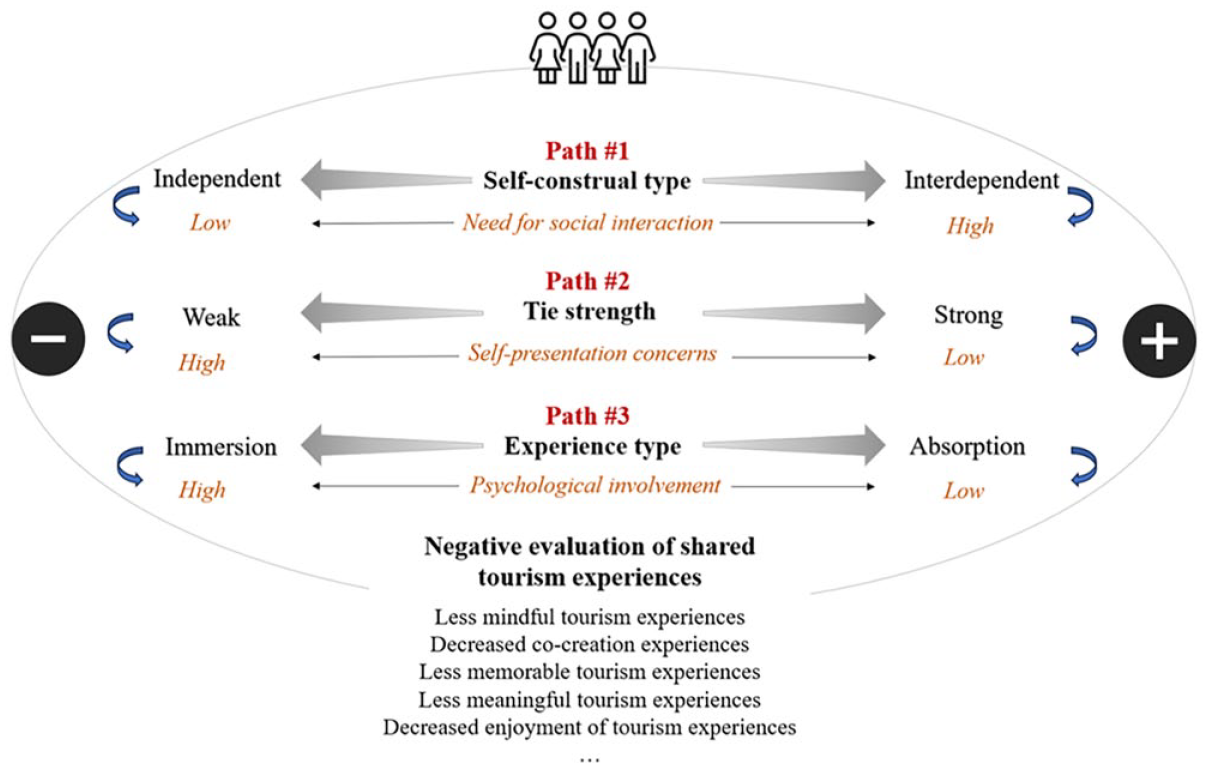
The SPENTS Model of Travel Companionship.
As displayed in Figure 3, three paths are proposed which essentially depict how travel companionship could lead to negative outcomes. Path 1 draws from Markus and Kitayama’s (1991) self-construal theory, assuming that those tourists with a stronger independent self-construal (vs. interdependent self-construal) elicit a less salient need for social interaction, generating negative outcomes from travel with companions. Path 2 is founded on impression management theory (Goffman, 1959), whereby individuals make a conscious effort during social interactions to elicit a desired impression from others, with more pronounced self-presentation concerns triggered by traveling with companions with weak ties (vs. strong ties). Path 3 is informed by Pine and Gilmore’s (1998) experience economy perspective, which articulates that travel companionship could interfere with psychological involvement invested into immersion-oriented (vs. absorption-oriented) experiences, leading to a negative evaluation due to the potential to detract from the goal-oriented purpose of the experience.
Interactions between travel companions can either enhance or detract from tourism experiences (Baker & Kim, 2018; Nicholls & Gad Mohsen, 2019). According to B. Liu, Moyle, & Kralj (2022), exploring the positive and negative aspects of travel companionship presents a foundation to examine an overlooked aspect that underpins the valence of tourism experiences. Positive travel companions are supportive and encouraging, providing emotional support, helping with planning, and offering assistance when needed (Su et al., 2023). Positive travel companions contribute to the group dynamic and work as a team, and can be keys to facilitating memorable/co-creation/meaningful tourism experiences (Torres, 2016). Alternatively, negative relationships between travel companions can often lead to conflicts and tensions during the trip due to divergent preferences, attitudes, or behaviors (Berdychevsky et al., 2016; Hao et al., 2023). In such instances, the presence of travel companions is considered as a distracting factor that diminishes the overall enjoyment of the trip, and leads to less mindful tourism experiences (Kong et al., 2022). Derived from the conceptual model presented in Figure 3, Table 2 presents seven testable research propositions to inform a future research agenda on travel companionship.
Research Agenda for Travel Companionship.
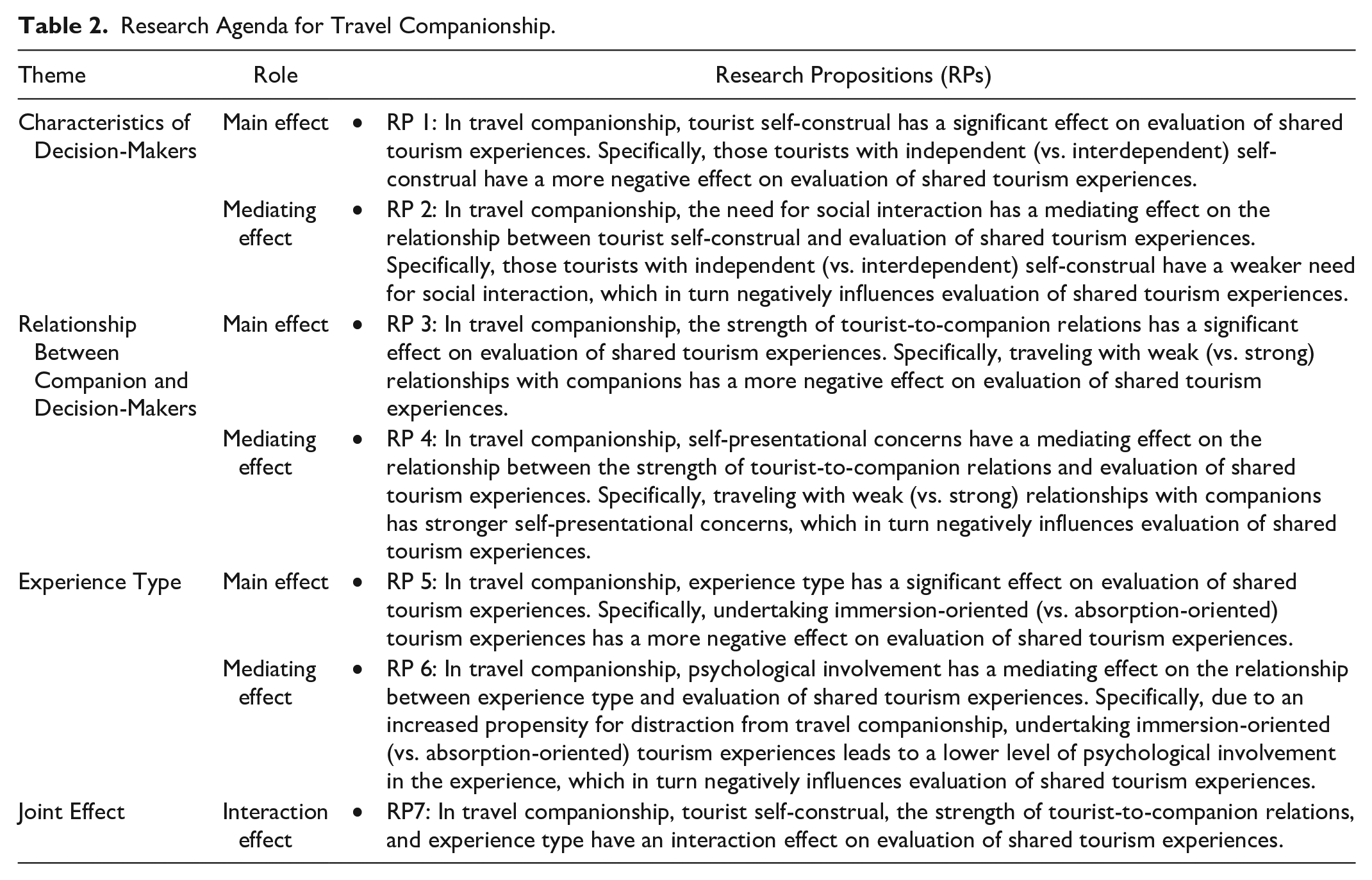
Future focus in studies on travel companionship should consider how the need for social interaction is affected by tourist self-construal (interdependent vs. independent), and how this, in turn, potentially activates undesirable outcomes (RPs 1 and 2). Specific attention should be dedicated to the strength of the relationships between travel companions, with an explicit emphasis on strong and weak ties, and how this generates a negative evaluation of tourism experiences (RPs 3 and 4). In addition, studies should reflect on how the type of experience (absorption vs. immersion) may affect tourists’ capacity for psychological involvement in tourism experiences, which may overturn an otherwise positive evaluation of tourism experiences (RPs 5 and 6). Future studies should incorporate the joint effect of all three major sources on companion-driven outcomes (RP 7). By addressing the future research agenda proposed in the research propositions, tourism scholars can shed light on the complex interplay of psychological, relational, and situational factors that influence who tourists choose to travel with and how such choices impact shared travel experiences, providing a solid conceptual foundation for rigorous exploration and analysis designed to advance discourse on travel companionship.
Conclusion and Implications
Travel companionship is emerging as a critical and contemporary issue in the tourism field. Despite the plethora of literature in the social sciences focusing on companionship, interactions with travel companions specifically in tourism have not been sufficiently explored (Vada et al., 2022). The background to this conceptual piece was a concern that tourism scholarship as it currently stands is divided, and some researchers tend to overemphasize travel companionship as a constructive force with unproblematic pleasure. The proposed interdisciplinary-inspired paradigm can be seen to rectify this imbalance. Understanding the potential risks associated with traveling with companions is crucial for the wellbeing of tourists, as well as for enhancing their satisfaction with their experiences and contributing to the long-term development of destinations. This is particularly critical in post-COVID-19 travel, where enduring interpersonal travel constraints exist due to the habits of social distancing developed during the pandemic, possibly causing people to become more vigilant when traveling with companions (He, Liu, Song, & Li, 2022).
This manuscript provides an inclusive and balanced perspective of travel companionship, initially presenting a systematic narrative approach to synthesize and map the research progress. Utilizing insights from diverse scholarly inquiries, including studies from the customer-to-customer interaction literature, this research facilitated the expansion of the conceptualization of travel companionship, leading to a nuanced understanding of potential negative consequences. Appraisal of relevant literature in the systematic narrative review informed the development of three theoretically based caveats that future studies should consider, specifically the characteristics of decision-makers, the strength of the relationship between travel companions, and experience type. The three theoretically informed caveats were proposed by adopting an interdisciplinary perspective to illuminate the underlying psychological mechanisms which underpin how travel companionship may negatively influence the evaluation of tourism experiences.
Advancing the body of literature on travel companionship is important, as it not only provides valuable insights into the dynamics of tourists’ motivations, attitudes, and behaviors, but also can substantially shape overall travel experiences and tourist wellbeing (Su et al., 2020). Our focus on the negative aspects of travel companionship (i.e., ROs 2 and 3) does not negate the positive findings from previous studies. Instead, it complements existing knowledge by shedding light on less explored dimensions of travel companionship that have important implications for travelers’ experiences. To provide an inclusive and balanced view of travel companionship, it is essential to explicitly articulate situations where positive outcomes arise from travel companionship. First, tourists with a stronger interdependent self-construal (vs. an independent self-construal) experience a more pronounced need for social interaction, resulting in positive outcomes from traveling with companions. Second, traveling with companions who share strong ties (vs. weak ties) diminishes concerns related to self-presentation, contributing to a positive evaluation by fully immersing in the goal-oriented purpose of the experience. Third, psychological involvement in absorption-oriented (rather than immersion-oriented) experiences is less likely to interfere with travel companionship, leading to a positive evaluation due to the inherently social nature of such companionship.
Theoretical Contributions
A key contribution of the manuscript is the development of the SPENTS model of travel companionship, which contributes to existing discourse by synthesizing three theoretical perspectives to advance knowledge on travel companionship. The SPENTS model shifts academic attention away from existing studies predominantly focused on benefits, clarifying the potential negative effects of travel companionship. Strong conceptual grounding related to emergent phenomena such as travel companionship provides a strong basis to develop testable research propositions to guide future empirical work and form a comprehensive theoretically informed future research agenda. The positive–negative dichotomy is instrumental in offering a structured and comprehensive framework for examining the diverse aspects associated with travel companionship (Filep & Laing, 2019; B. Liu, Moyle, & Kralj, 2022; Pritchard et al., 2011). This conceptual paper aligns with common scholarly practices (Eroglu & Michel, 2018; Jia et al., 2021; Nowak et al., 2023; L. Zhang et al., 2021), addresses contemporary trends in tourism research, and contributes to the broader discourse by elucidating the conditions where travel companionship can trigger negative evaluations of shared tourism experiences.
Building upon existing research highlighting the significance of mutual dependence and caregiving in travel companionship (Hao et al., 2023), our study illustrates the “backfire” effect of travel companionship. This aligns with Heimtun and Jordan’s (2011) research that highlights the necessity to question the assumption that vacations are invariably pleasant. This research contributes to contextualizing companionship characteristics and tourists’ decision-making and interactions, comprehensively advancing understanding of the impact of personal, relationship, and contextual features on travel companionship experiences. This research serves as a stepping stone in unveiling the intricate dynamics of companions’ interactions during decision-making processes and inspiring additional efforts in advancing the knowledge of how companions navigate conflicts through the application of various coping strategies, ultimately contributing to the forging of healthy relationships and strengthening wellbeing.
This research introduces a novel perspective that connects differences in self-construal with travel companionship experiences. The paper postulates that shared tourism experience differs among tourists with different extents of independence, highlighting the heterogeneities of tourists’ personalities from a micro-foundation perspective. In tandem, this study highlights that the strength of tourist-to-companion relationships should be given more attention, transforming our understanding of travel companionship through the network science perspective. Lastly, this paper enriches the travel companionship literature by drawing attention to the heterogeneities across different types of tourism experiences, providing a nuanced perspective of critical boundary conditions that either strengthen or weaken the effects of travel companionship.
Practical Implications
The current research also provides several valuable implications for practitioners. While Baker and Kim (2018) suggest the role of companies in partially managing customer-to-customer interactions, it is essential to recognize the potential for tourism enterprises to implement more subtle interventions regarding inner-circle interactions within travel companions and groups. Tourism enterprises can implement several effective strategies, including pre-trip communication among fellow tourists (i.e., demand side) and conflict resolution training for staff (i.e., supply side). Incorporating group-building activities into the travel itinerary can help strengthen bonds and foster positive interactions among travel companions. We remind travel agents and service providers of the importance of creating meticulously detailed travel plans that not only facilitate a seamless journey but also foster and enhance the bond between travel companions. For example, well-designed touring routes that engage travel companions together in joint activities and tasks (e.g., a mission list), coupled with the possibility of receiving rewarding souvenirs, can serve as powerful incentives for adhering to travel plans. Packaging travel itineraries with elements that require collaboration and teamwork plays a crucial role in promoting synchronization between travel companions, fostering a more harmonious and enjoyable journey for all involved (Hao et al., 2023).
By nudging an understanding of the negative functionality of travel companionship and the underlying psychological processes, interventions to improve tourism experiences should be considered in terms of those granular heterogeneities at the micro-foundations level. Our research advocates for a shift from external contingencies towards proactive measures that operate at a more individualized and interpersonal level, tailoring strategies to the specific dynamics and characteristics of each traveler and their companions. To mitigate against the potential for a downstream undesirable response, destination marketing organizations could consider drawing on existing databases to segment tourists based on self-construal. Although self-construal is acknowledged as an individual attribute, it has been demonstrated to be closely associated with cultural environment and gender. For example, H. Liu, Xu, et al. (2023) put forward the notion that Eastern Asian culture fosters a self-construal that is more interdependent rather than independent, compared to Western culture. Similarly, Qin et al. (2024) provided insights into explaining and measuring individualism-collectivism, which is related to individuals’ self-construal, indicating that key marketing messages associated with travel companionship should be tailored to countries with the desired levels of individualism-collectivism (Wu et al., 2019). From a gender perspective, it is commonly believed that men tend to establish and uphold an autonomous self-construal, while women tend to have an interdependent self-construal (H. Liu, Xu, et al., 2023), meaning the effectiveness of tourism advertising could be amplified if taking gender factors into account.
Tourism enterprises need to know more about the dynamic processes that affect travel companionship, especially the underlying causes of negative tourist-to-companion interactions as a basis to inform management decisions designed to optimize tourism experiences. Recognizing the longing for personal space among tourists, and incorporating opportunities for solo exploration into travel packages, can help to alleviate the fatigue that may arise from constant group interaction. This caters to individuals who value independence, even when traveling with companions. Tourists could be strategically enticed to increase interactions with travel companions, building on emergent concepts such as co-design and co-creation to accelerate the transformation from a weak relationship to a strong relationship. Recent advancements in wearable communication and information technologies, such as travel with a virtual companion, can open up opportunities to fulfill tourists’ needs for companionship without involving self-presentation concerns (B. Liu et al., 2024a, 2024b; Strohmann et al., 2023). Destination marketing organizations and associated stakeholder groups should consider the design of touring itineraries that offer immersion-oriented experiences. In tandem, adopting a tourist-centric service approach would benefit from professional development modules for staff with specific tourist-to-companion interaction-specific training embedded, such as how to identify and deal with on-site negative interactions (Nicholls & Gad Mohsen, 2019). The three caveats, when combined with the SPENTS model developed in this paper, serve as managerially relevant guidelines for destination management organizations to recognize how to leverage travel companionship and mitigate the potential for counterproductive effects, optimize the tourist experience, ensure positive word-of-mouth, inspire repeat visitation, and foster destination loyalty.
Limitations and Future Research
We acknowledge that the proposed alternative model of travel companionship with testable research propositions may not encompass the entire scope of future scholarship in this field; however, these research propositions can serve as initial points of departure for further study. Three foundational theories were employed to uncover the mechanisms that lead to negative evaluations of shared tourism experiences. Exploring alternative theoretical perspectives, such as cognitive appraisal theory and the elaboration likelihood model, can further enrich our understanding of the evolving body of knowledge in this field. For example, future research should extend beyond the confines of Pine and Gilmore’s (1998) experience economy paradigm. A more in-depth exploration is needed to investigate how each of the paradigm’s four realms of experience can be effectively applied and adapted to the specific context of travel companionship. In addition, this paper is explicitly aimed to strengthen and develop theoretical knowledge on travel companionship, providing vital conceptual grounding to inform a future research agenda with testable research propositions, which provide the potential to link the conceptual framework with causal evidence (e.g., experimental design). Through a better understanding of the complexity of tourist-to-companion relationships, drawing on the approach developed in this paper, future studies will be able to identify and critically evaluate alternative typologies of travel companions.
Further issues related to the articulation of travel companionship are beyond the scope of this research. While this research has made strides in acknowledging the negative role of travel companionship, we understand that further refinement is required to establish a more comprehensive and independent framework for understanding its diverse impacts on the travel experience. In particular, travel companions have evolved to become multi-purpose providers that meet diverse, complex, and often conflicting tourists needs (Eroglu & Michel, 2018). It is crucial to recognize that there is no singular, universally applicable standard for evaluating how travel companionship influences the overall quality of tourism experiences. For example, numerous factors beyond a tourist’s self-construal play a role in deciding whether to travel with companions or alone, along with the evaluation of shared tourism experiences. Our theoretical analysis highlights a general tendency and should not be construed as a one-size-for-all rule applicable to all independent travelers (He et al., 2021). There is a clear opportunity for future research to contribute to the discourse by exploring moderating variables (e.g., motivations, personality traits, interpersonal tolerance, culture, and gender) that could potentially reverse the relationship proposed in this paper, providing a more nuanced perspective by unveiling the boundary condition underpinning the backfire effect of travel companionship.
While the insights of this research extend beyond the scope of the literature review (McCabe, 2024), one potential limitation of this research lies in the use of a general search term, “travel companionship,” to identify relevant articles. Thus, the scope of the research may not be fully representative of the entire landscape of travel companionship, given its multifaceted nature. It is recommended that future studies either encompass the entire spectrum of travel companionship in its diverse forms or delve into specific subfields or dimensions (e.g., travel friendship) within the overarching theme of travel companionship.
Footnotes
Declaration of Conflicting Interests
The authors declared no potential conflicts of interest with respect to the research, authorship, and/or publication of this article.
Funding
The authors received no financial support for the research, authorship, and/or publication of this article.
