



Abstract
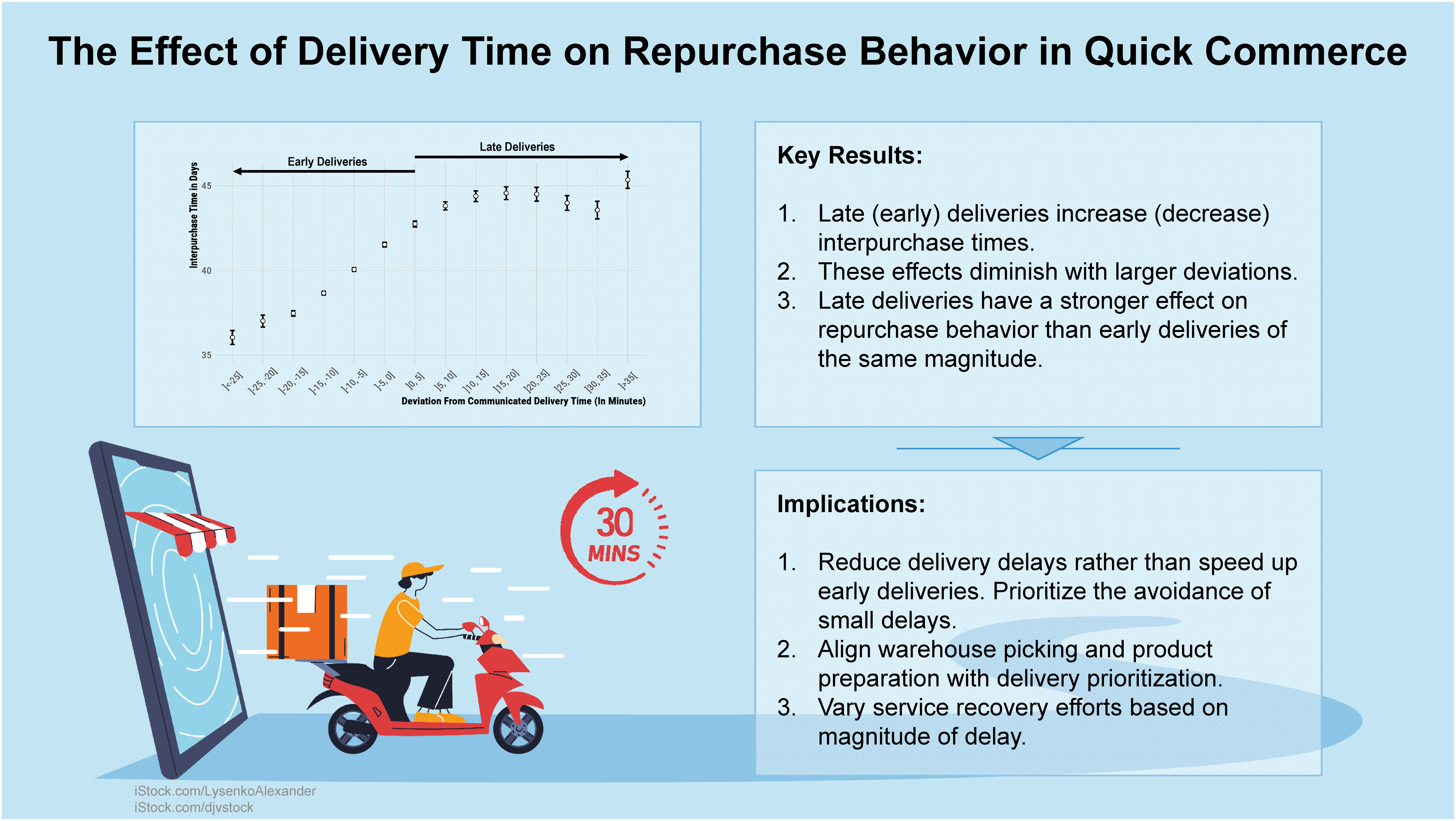
“Quick commerce” refers to meeting consumers’ instant needs by delivering products ordered online within minutes. Although speed is thus inherently important, little is known about how deviations from communicated delivery times (whether late or early) might affect repurchase behavior. The authors study the effects of delivery time deviations on repurchase behavior using a large, customer-level, transaction data set from a Western European food delivery service and a controlled online experiment. The results show that late (early) deliveries increase (decrease) interpurchase times; these effects diminish with larger deviations. The results also show that late deliveries have a stronger effect on repurchase behavior than early deliveries of the same magnitude. The controlled online experiment establishes customer satisfaction as the underlying psychological mechanism that mediates the effect of delivery time deviations on repurchase behavior. These findings advance understanding of delivery time deviations and repurchase behavior by complementing prior research on disconfirmed waiting times and quick commerce. Practitioners can use the results to optimize their delivery algorithms, operations, and service recovery efforts.
Keywords
Introduction
Various surveys indicate that consumers consider delivery times, along with delivery costs and product prices, among the most significant factors influencing their online purchase decisions. 1 These surveys further show that consumers value not only just speed but also accuracy, which refers to the consistency between the promised or estimated delivery time and the actual arrival of the order. 2 Research on delivery timeliness also indicates the importance of accurate deliveries (Heim and Kingshuk 2001; Koufteros et al. 2014; Murfield et al. 2017).
In quick commerce, a new development in online-to-offline commerce, fast delivery times are the key service promise; quick commerce promises to deliver products to consumers within minutes, ensuring the satisfaction of instant needs (Coresight Research 2021). Because instant needs are inherently time-sensitive, the utility of satisfying them varies significantly depending on the speed of the delivery. For example, quick commerce interactions can help consumers buy groceries, satisfy sudden cravings, or get dinner quickly and conveniently. Prompt delivery within minutes is crucial in these situations and results in much higher utility than, for example, delivery within hours or even days. Thus, on-demand delivery services in quick commerce are selling a time-critical service (Taylor 2018).
Companies in quick commerce typically promise order fulfillment in less than 15 or 30 min (Davalos and Levingston 2022; Woo 2022), though a general definition sets the delivery time threshold to 1 hour or less (Bogdanova 2021). These service levels also influence consumer behavior beyond quick commerce: 71% of consumers say that on-demand delivery apps have influenced their expectations of how purchases should be delivered, and 34% expect even faster delivery as a result (project44 2019). Initially seen as a potential niche offering (Dablanc et al. 2017), quick commerce is now worth an estimated $20 billion–$25 billion in the United States alone and accounts for approximately 10–13% of online consumer packaged goods sales (Coresight Research 2021). As such, quick commerce is a persistent phenomenon that is transforming retail, driven in particular by convenience trends and the COVID-19 pandemic (Müller-Sarmiento 2021).
Quick Commerce Versus Traditional E-Commerce.
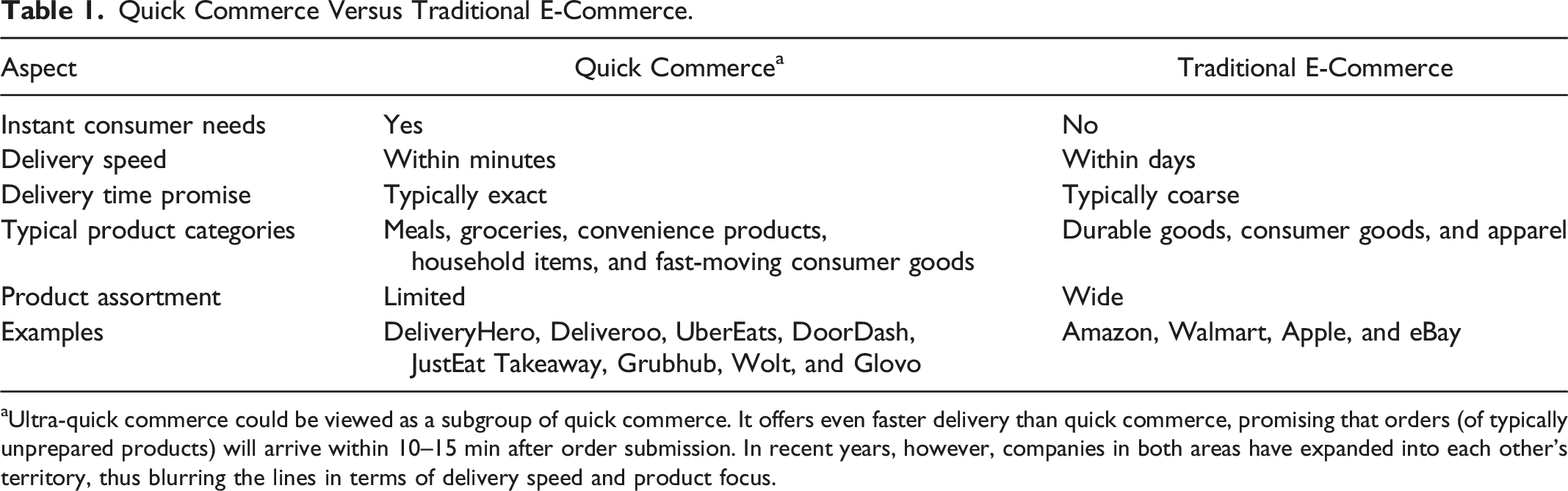
aUltra-quick commerce could be viewed as a subgroup of quick commerce. It offers even faster delivery than quick commerce, promising that orders (of typically unprepared products) will arrive within 10–15 min after order submission. In recent years, however, companies in both areas have expanded into each other’s territory, thus blurring the lines in terms of delivery speed and product focus.
What are the effects of deviations from communicated delivery times on repurchase behavior in quick commerce? We focus particularly on repeat customers, and we measure repurchase behavior as the interpurchase time, or the time between two consecutive orders placed by a customer.
Building on expectation–disconfirmation theory, we make several theoretical predictions about the effects of delivery times in quick commerce and derive hypotheses about how deviations from communicated delivery times affect interpurchase time. We conceptualize early and late deliveries as positive and negative disconfirmations of expectations informed by an external source (i.e., the estimated delivery time communicated by the service provider; Caruelle, Lervik-Olsen, and Gustafsson 2023). We discuss delivery time deviations in terms of their direction (H1), magnitude (H2), and (a)symmetry (H3), and we analyze the resulting hypotheses using customer-level transaction data from a large Western European food delivery service. To shed light on the underlying psychological mechanism and account for unobserved variables, we complement this field study with a clean and controlled online experiment.
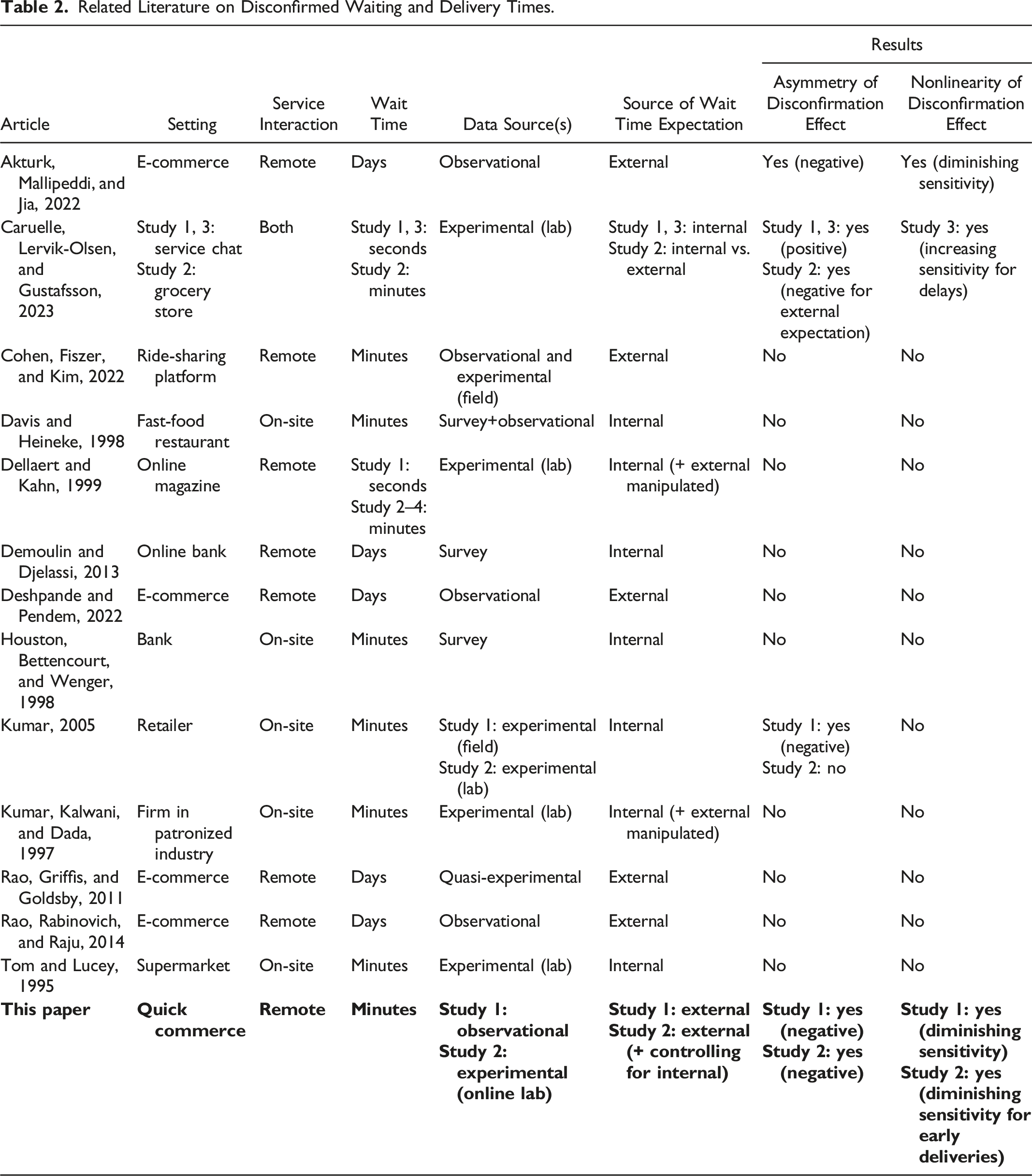
Related Literature on Disconfirmed Waiting and Delivery Times.
The results of our studies show that early deliveries generally improve repurchase behavior, whereas late deliveries harm it, and late deliveries have a stronger effect on repurchase behavior than early deliveries of the same magnitude. Thus, delivery time deviations in quick commerce exhibit a negative asymmetry. In testing whether the marginal effects of delivery time deviations remain constant as their magnitudes increases, we find that the effects of both early and late deliveries on interpurchase times diminish as the magnitude of the deviation increases. We identify customer satisfaction with the delivery time as the psychological mechanism behind these effects and find that our results are robust to varying internal delivery time expectations. This finding suggests that externally provided expectations are the dominant source of information for evaluating delivery time performance in quick commerce.
Firms can benefit from our findings to improve their delivery algorithms, operations, and service recovery policies. Because of the diminishing marginal effects of early (i.e., beneficial) deliveries on interpurchase time and an asymmetrically stronger effect of late (i.e., detrimental) deliveries, algorithms should be designed to reduce delivery delays rather than speed up already early deliveries. Otherwise, valuable resources would be misdirected to early deliveries. In addition, due to the diminishing marginal effects of late deliveries, algorithms should also prioritize the avoidance of small delays, which should yield a higher marginal effect than speeding up considerably late deliveries. These recommendations apply not only to delivery prioritization but also to operational activities such as warehouse picking and product (e.g., meal) preparation. Finally, service providers may also find it beneficial to vary their recovery efforts according to the magnitude of the delay, rather than tying them to a delay threshold.
Theory and Research Hypotheses
Delivery Time Deviations: Late and Early
The success of quick commerce in meeting consumers’ instant needs depends on the speed and accuracy of delivery, which consumers evaluate by assessing two metrics: the communicated delivery time and the actual delivery time. The communicated delivery time is the service provider’s ex ante estimate given by of the number of minutes customers will have to wait for their order to be delivered. Consumers’ waiting time expectations are thus informed by an external source (Caruelle, Lervik-Olsen, and Gustafsson 2023). In contrast, the actual delivery time is determined ex post by actual events; it measures the number of minutes elapsed until the order is delivered to the customer, thus reflecting the absolute delivery performance.
Building on expectation–disconfirmation theory (Oliver 2010), we propose that consumer evaluations of quick commerce services are based on an order’s actual delivery time relative to its communicated delivery time. This comparison results in a measure of relative delivery performance, where longer-than-expected and shorter-than-expected waits represent disconfirmations of expected delivery times. We propose that because the main value proposition of quick commerce firms is providing a time-critical service to satisfy instant needs, longer-than-expected waits represent negative disconfirmations of wait time expectations, while shorter-than-expected waits reflect positive disconfirmations. In line with expectation–disconfirmation theory, these outcomes should differ in terms of customers’ level of satisfaction: Positive disconfirmations result in satisfaction, whereas negative disconfirmations result in dissatisfaction. Thus, satisfaction should influence repurchase intentions and customer loyalty (Koufteros et al. 2014; Murfield et al. 2017).
The notion of a reference-dependent service evaluation is also consistent with prospect theory (Gijsenberg, van Heerde, and Verhoef 2015; Kumar and Krishnamurthy 2008), which argues that consumers evaluate changes in value relative to a reference point rather than absolute values (Kahneman and Tversky 1979). That is, rather than evaluating actual delivery times in isolation, consumers evaluate their wait time relative to a reference point—that is, the communicated delivery time. The resulting gains and losses, in turn, have different utility values for consumers and lead to varying satisfaction levels and repurchase intentions (Mittal, Ross, and Baldasare 1998). Losses (gains) have a negative (positive) effect on repurchase behavior, mediated by satisfaction. Accordingly, customers should take longer (shorter) to make another purchase after a loss (gain). The corresponding time interval is reflected by interpurchase time, which is a valuable metric in customer retention management, especially in light of high customer acquisition costs (Gallo 2014).
We expect that early delivery is generally preferred, especially for quick commerce orders placed to satisfy instant consumer needs. When a hungry consumer places an order, an earlier than communicated delivery of the meal should be appealing because it satisfies the instant need more quickly. In contrast, if a consumer places an order to acquire a forgotten cooking ingredient, a later delivery than communicated is likely aggravating, because the time-sensitive need is delayed beyond externally informed expectations. The need is fulfilled (too) late, and such late deliveries should have a detrimental effect on consumer behavior. Therefore, we hypothesize:
Early deliveries have a positive effect on interpurchase time.
Late deliveries have a negative effect on interpurchase time.
Diminishing Sensitivity with Increasing Magnitude of Delivery Time Deviation
Focusing only on the direction of the delivery time deviation implicitly assumes that the corresponding effects are consistent across all magnitudes of deviation, which might be the case if service providers did not communicate a delivery time estimate. In this case, faster (i.e., earlier) deliveries would always be proportionally better, and slower (i.e., later) deliveries would always be proportionally worse. Yet consumers in quick commerce receive an exact delivery time estimate for their orders. Service providers thus enable reference-dependent performance evaluations, in which the magnitude of the delivery time deviation can have important implications. In this scenario, delivery time deviations may be subject to diminishing marginal effects, such that deviations further from the communicated delivery time may have a smaller marginal effect than deviations closer to the communicated delivery time.
Consumers’ relationship with time may explain why early deliveries would depict such a diminishing sensitivity. Not only do consumers try to manage their time effectively (Rajagopal and Rha 2009), but planning for time, in general, is an important activity (Leclerc, Schmitt, and Dube 1995). As a result, if a delivery arrives considerably earlier than expected, it may interrupt other, previously planned activities. Such interruptions then result in an unsatisfied consumer need for psychological closure (Kupor, Reich, and Shiv 2015), especially when the task at hand is already close to completion (Jhang and Lynch 2015).
Moreover, considerably early deviations can raise quality concerns with consumers, as indicated by research showing that waiting time can act as a quality signal, leading to higher satisfaction and purchase intentions (Giebelhausen Michael et al. 2011; Kremer & Debo 2016). Correspondingly, if an order is delivered much earlier than communicated, consumers may make unfavorable quality inferences or conclude that the time gains came at the expense of quality, such that their order might not have been properly packaged or freshly cooked, for example. For these reasons, we expect that consumers appreciate increasingly earlier deliveries only as long as they do not interfere with or interrupt focal activities or raise quality concerns. These issues may become more likely and more severe the larger the early delivery time deviation. Thus, we predict that diminishing sensitivity marks the relationship between early deliveries and interpurchase time, meaning the benefit of an even earlier delivery is marginally decreasing. Formally:
Early deliveries with larger delivery time deviations result in a smaller marginal impact on interpurchase time than smaller deviations (i.e., diminishing sensitivity). Attribution theory may explain why late deliveries also can exhibit diminishing marginal effects. It suggests that consumers try to make sense of their world by attributing causes to events (Hartmann and Moeller 2014). This need for attribution is particularly pronounced in the case of negative events (Folkes 1984; Gendolla Guido & Koller 2001; Rozin & Royzman 2001). However, the detrimental consequences of such events differ depending on their causal attribution (Weiner 1985): stability of the cause (stable/unstable), controllability of the cause (controllable/uncontrollable), and locus of causality (external/internal). For example, prior research shows that consumer attitudes and behaviors are less negative when the wait is attributed to an uncommon, temporary, or erratic cause (Folkes 1984; Taylor 1994; Tom and Lucey 1995). Similarly, when the delay is deemed outside the service provider’s control, consumer responses are also less negative (Rose, Meuter, and Curran 2005; Taylor 1995; van Riel et al. 2012). Applied to our setting, late deliveries negatively disconfirm consumers’ delivery time expectations and thus represent a negative service event. However, assuming that service providers in quick commerce estimate delivery times to the best of their ability, customers may assume that large delivery time deviations must be caused by an unforeseen or unusual event. By the same reasoning, they would be more likely to perceive the cause of the delay as being beyond the service provider’s control (e.g., traffic and weather). As a result, customers may give the service provider the benefit of the doubt commensurate with the magnitude of the delay, and they may judge delivery experiences with larger delays to be of relatively less diagnostic value. We therefore expect that the negative marginal impact of late deliveries on interpurchase time decreases as the magnitude of the delay increases. Formally:
Late deliveries with larger delivery time deviations result in a smaller marginal impact on interpurchase time than smaller deviations (i.e., diminishing sensitivity). In summary, delivery time deviations can result in early or late deliveries, and we expect them to show diminishing sensitivity in their effect on interpurchase time. Thus, we predict that the functional form between delivery time deviations and interpurchase time is S-shaped: steep in the middle, where the actual delivery time is close to the communicated delivery time, then flat at the extremes, where it is more distant from the expected value and deliveries are particularly early or particularly late.
Negative Asymmetry in Delivery Time Deviations
The preceding two hypotheses posit the direction and magnitude of the effects of delivery time deviations on interpurchase time. However, though we expect that early and late deliveries have opposing effects, these effects need not be symmetrical. Rather, late deliveries may have a stronger effect on interpurchase time than early deliveries of the same magnitude. We can test this conjecture because time is an objective measure, similar to money, weight, or temperature (Rozin and Royzman 2001), such that we can compare equally large positive and negative disconfirmations of delivery time expectations measured in units of time.
Empirical findings from various domains suggest that “bad is stronger than good” (Baumeister et al. 2001, p. 323), meaning that negative experiences elicit stronger responses than equivalent positive experiences. This phenomenon can be attributed to the negativity bias, the most prominent example of which is loss aversion toward money (Kahneman and Tversky 1979). We contend that the negativity bias may also be present in time-based settings, perhaps even to a stronger extent than for money, because time is a scarce and nonfungible resource (Leclerc, Schmitt, and Dube 1995). Time cannot be stored, meaning it cannot be saved for a later time or transferred to a new situation. Therefore, losses of time (as is the case in delayed deliveries) cannot be recouped, which may be particularly dissatisfying in quick commerce, in which the utility of instant need fulfillment depends on its timeliness. In addition, consumers in quick commerce have very high delivery expectations, driven by bold promises and real-time delivery tracking. These expectations might increase the salience of late deliveries in comparison with early ones. Furthermore, delayed deliveries may be perceived as a psychological contract violation (Fullerton and Taylor 2015; Pavlou and Gefen 2005) and result in distinctly aggravating experiences. Therefore, we predict that late deliveries (i.e., negative disconfirmations) have a stronger effect on interpurchase time than equally sized early deliveries (i.e., positive disconfirmations):
Late deliveries have a stronger negative effect on interpurchase time than early deliveries of the same magnitude have a positive effect (i.e., negative asymmetry).
Study 1
Data and Descriptive Statistics
We collaborated with a large Western European food delivery service to test our hypotheses about the effects of delivery time deviations on interpurchase time. The company offers both food delivery services and in-house restaurant services, runs a large number of restaurants across the country, and employs its own delivery workforce using electric bikes. This project partner provided us with customer-level transaction data from January 1, 2019 to March 31, 2021. The unbalanced panel data include information about the store and customer, as well as the date and time of the order, the order value, whether a discount was granted (e.g., because a voucher was redeemed), the start and end time of the delivery trip, and the communicated delivery time. We used these data to construct our independent variables related to delivery time deviations, the dependent variable of interpurchase time, and various control variables.
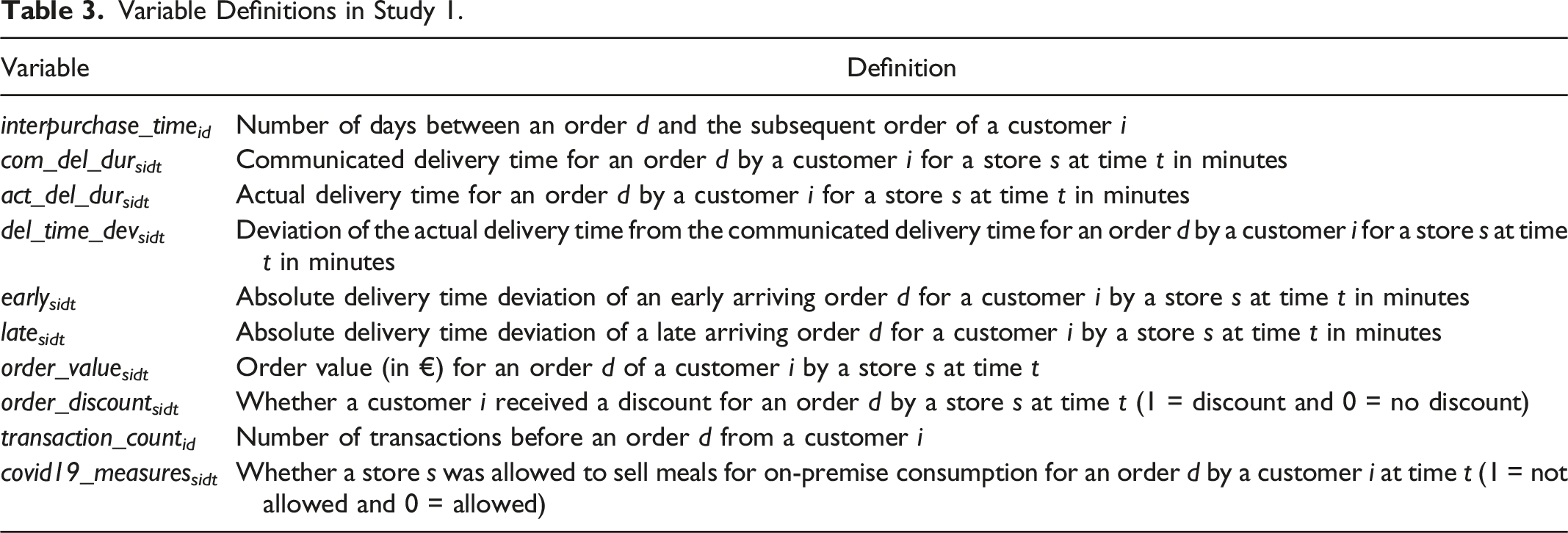
For the independent variables, to account for the separate effects of early and late deliveries, we coded delivery time deviations of an order d by customer i involving store s at time t into two separate variables, early
sidt
and late
sidt
. Doing so allows us to measure both the direction of the effect of each deviation (H1) and their relative effect sizes (H3). We also calculate the squared terms of early
sidt
and late
sidt
to account for diminishing sensitivity (H2). Both early
sidt
and late
sidt
are based on the calculated delivery time deviation (del_time_dev
sidt
), which is the difference between the actual delivery duration
3
(act_del_dur
sidt
) and the communicated delivery duration (com_del_dur
sidt
). If del_time_dev
sidt
is less than or equal to 0, early
sidt
shows the absolute delivery time deviation; otherwise, it is 0. If del_time_dev
sidt
is greater than 0, late
sidt
shows the absolute delivery time deviation, and 0 otherwise. More formally:

A thorough inspection of the data reveals the presence of outliers in the actual delivery duration (i.e., a component of the delivery time deviation calculation). These outliers are located at the upper end of actual delivery duration but not at the lower end, where the 1% level equals 10.38 min. As a result, we winsorized the variable (following Meyvis and van Osselaer 2018) at the 99% level, such that we replaced the top 1% actual delivery durations with the value at the 99th percentile (i.e., a duration of 70.04 min).
Variable Definitions in Study 1.
Descriptive Statistics for Study 1.
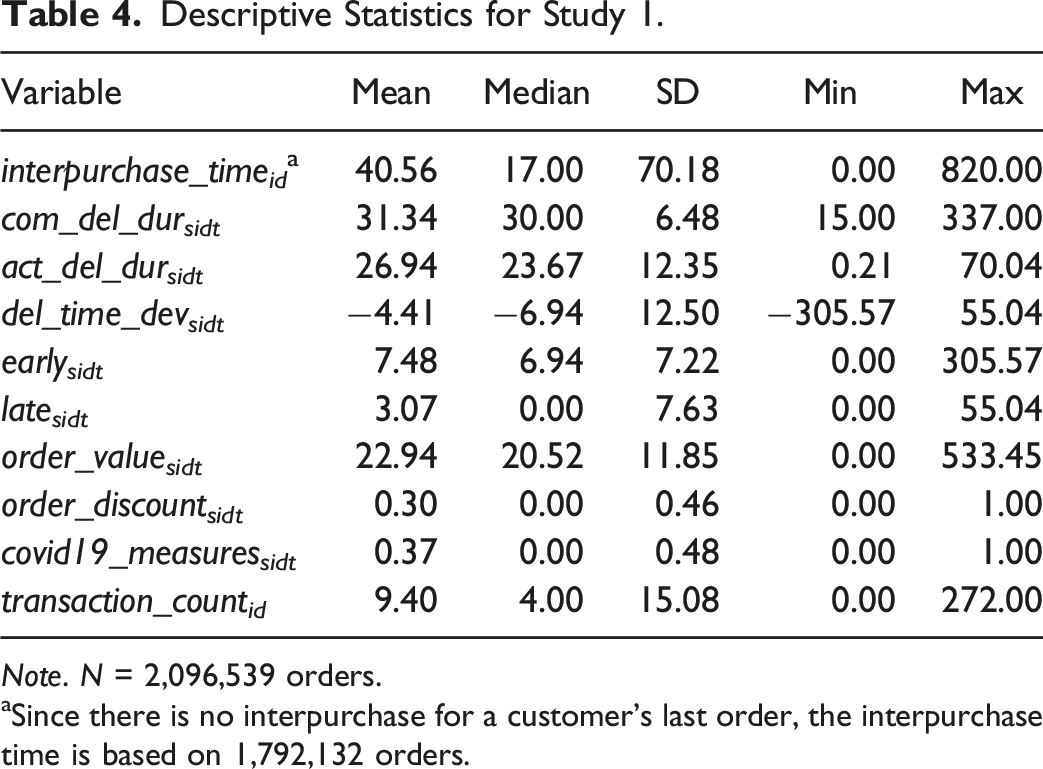
Note. N = 2,096,539 orders.
aSince there is no interpurchase for a customer’s last order, the interpurchase time is based on 1,792,132 orders.
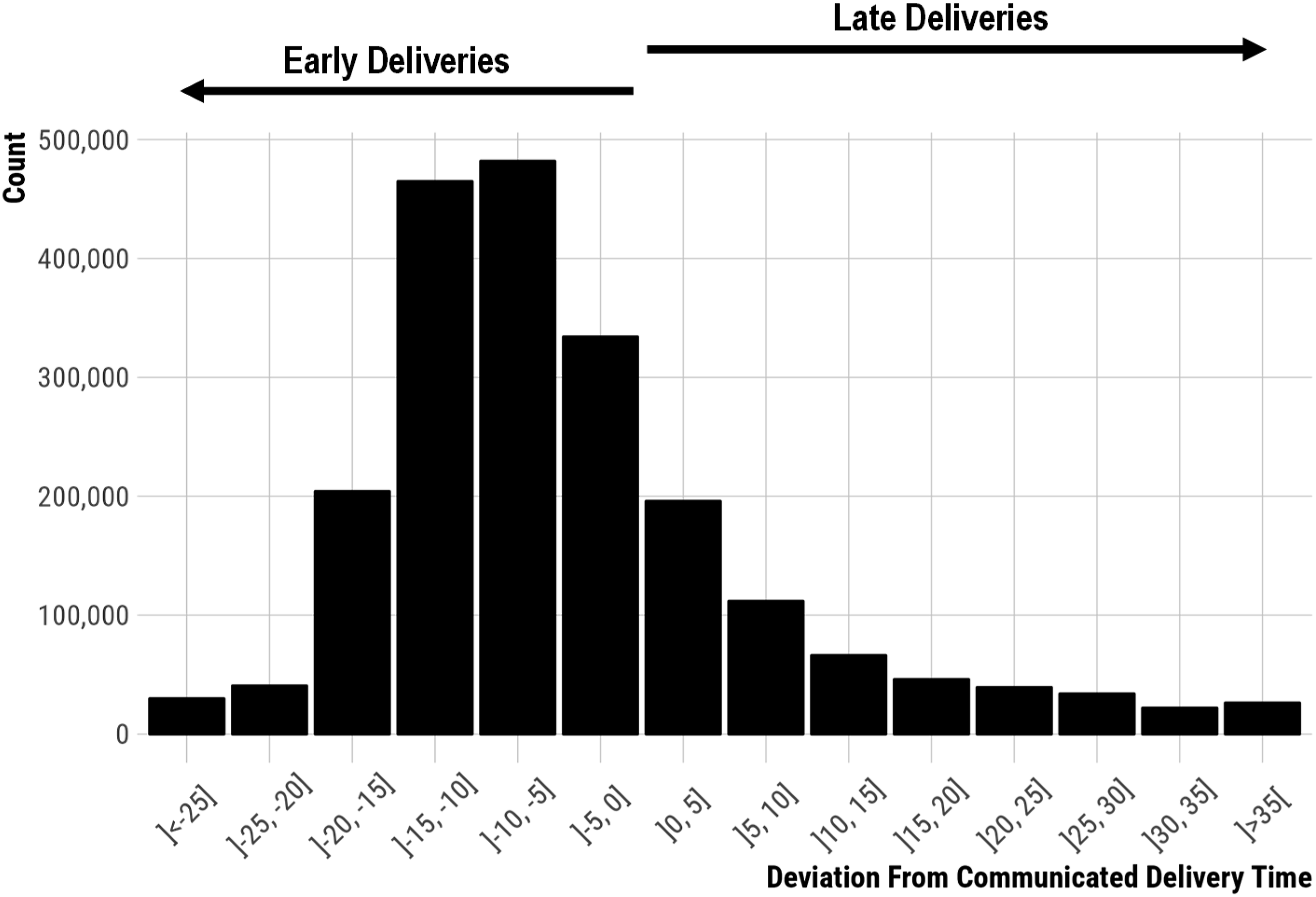
Number of orders per five-minute deviation categories (Study 1).
We find that 74.17% of the orders can be classified as early deliveries, and 25.83% were delivered late. The majority of the deviations, or 75% of the orders, are within a time range of [−15.18; 8.47] minutes (i.e., 12.5th percentile versus 87.5th percentile). The median lies at an early delivery value of −6.94 min.
Model-Free Results
Figure 2 shows the average interpurchase time per 5-minute delivery time deviation category. Consistent with H1, we observe longer interpurchase times for late deliveries than for early deliveries; customers wait longer to place their next order when the delivery takes longer than communicated. The graph also displays greater steepness around the middle, where there are no or only minor deviations from the communicated delivery time. However, with increasing delivery time deviations, the graph flattens. The tails show diminishing returns to scale, consistent with H2. Regarding H3, the graph does not provide a conclusive indication of negative asymmetry. To statistically test our hypotheses, we next performed a hazard model estimation, additionally taking into account various control variables. Interpurchase time per five-minute deviation categories (Study 1).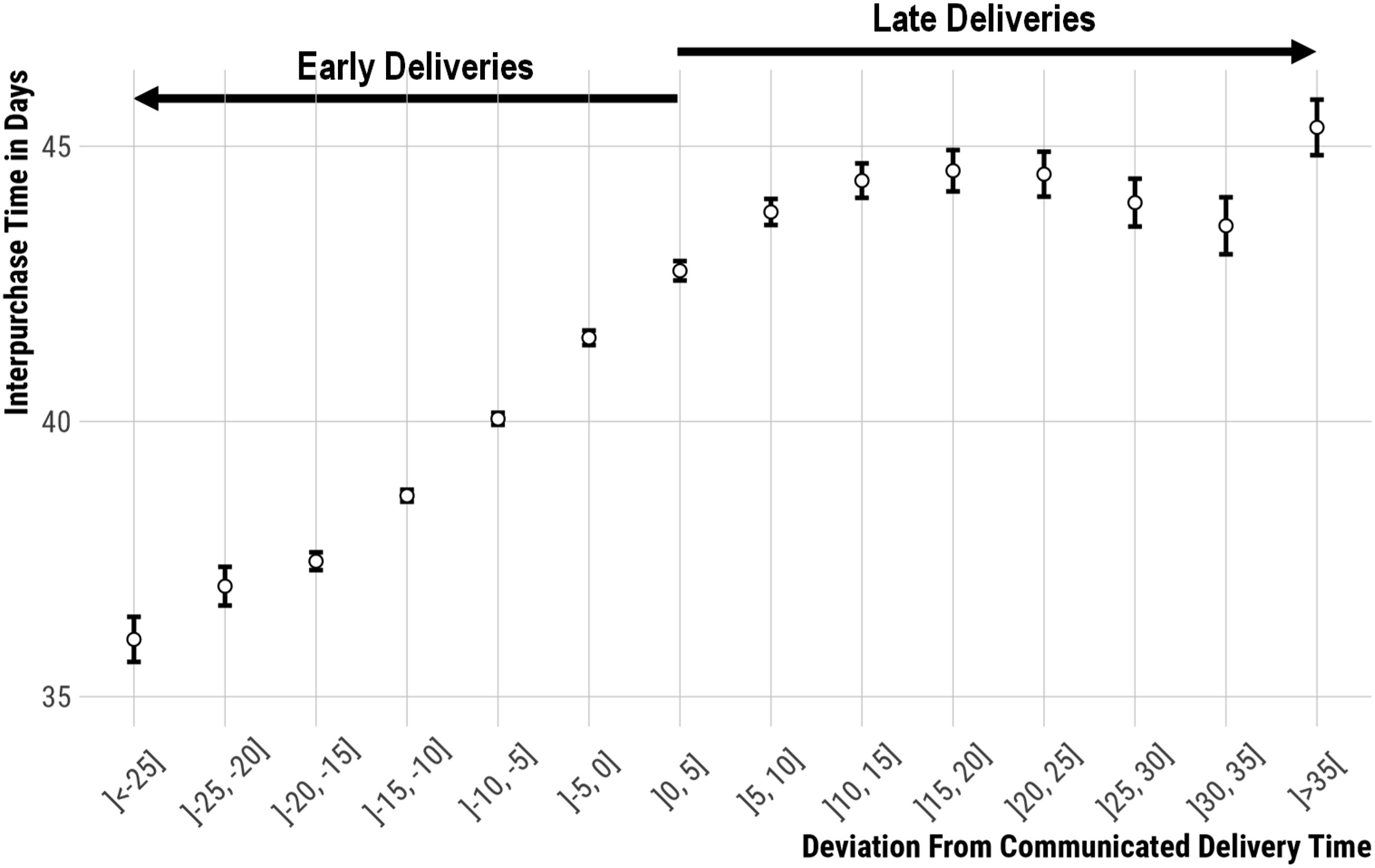
Model Specification
To analyze customers’ interpurchase times, we use a hazard model (Seetharaman and Chintagunta 2003), specifically a frailty model to account for heterogeneity caused by unmeasured covariates (Hanagal 2011; Rondeau, Marzroui, and Gonzalez 2012). The hazard function for customer i making a repeat purchase, conditional on the elapsed time t since the previous order d, is defined as:
Here,
Results
Hazard Model Estimates (Study 1).
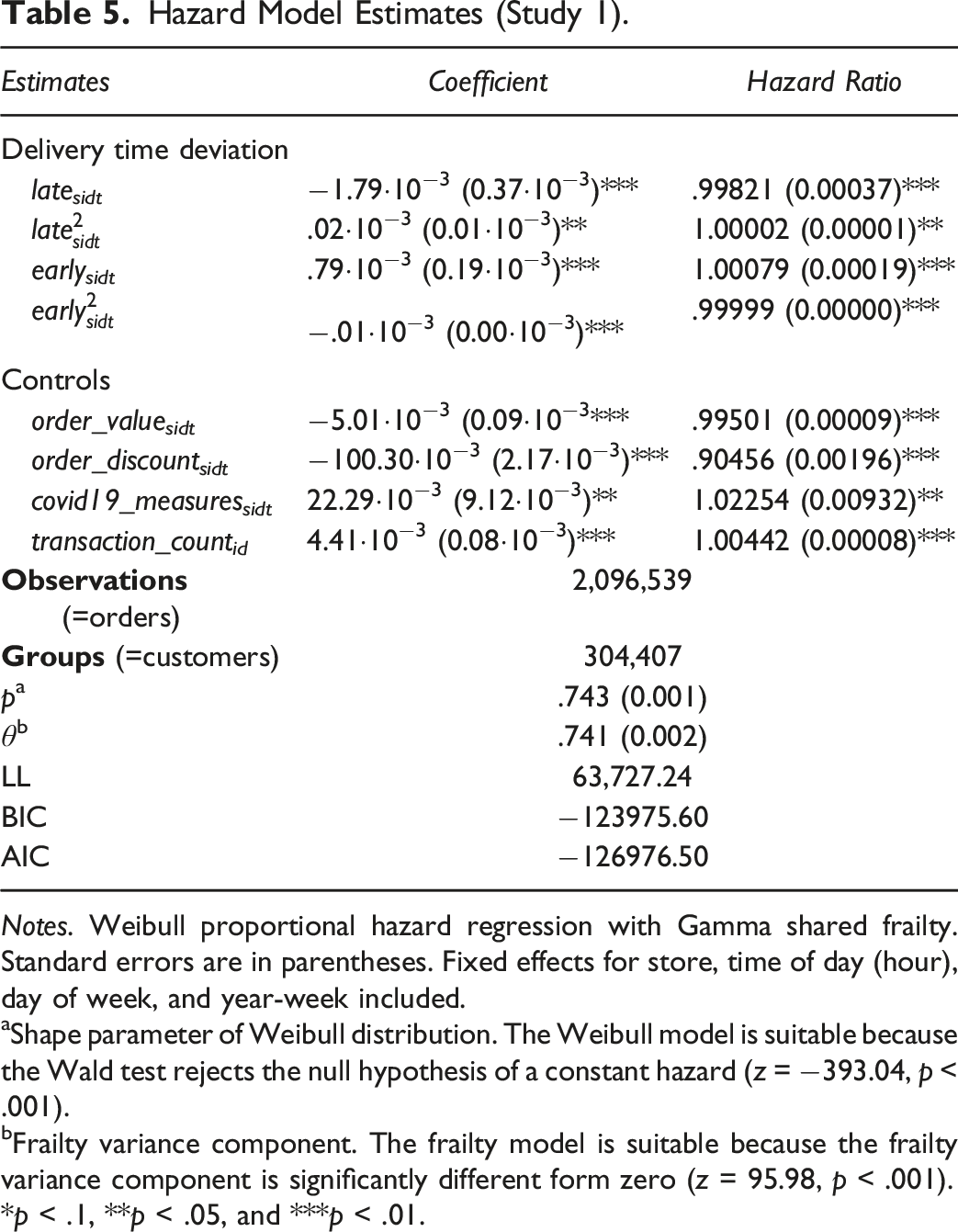
Notes. Weibull proportional hazard regression with Gamma shared frailty. Standard errors are in parentheses. Fixed effects for store, time of day (hour), day of week, and year-week included.
aShape parameter of Weibull distribution. The Weibull model is suitable because the Wald test rejects the null hypothesis of a constant hazard (z = −393.04, p < .001).
bFrailty variance component. The frailty model is suitable because the frailty variance component is significantly different form zero (z = 95.98, p < .001).
*p < .1, **p < .05, and ***p < .01.
Furthermore,
Comparing the hazard ratio of Visualization of nonlinear asymmetric effects (Study 1).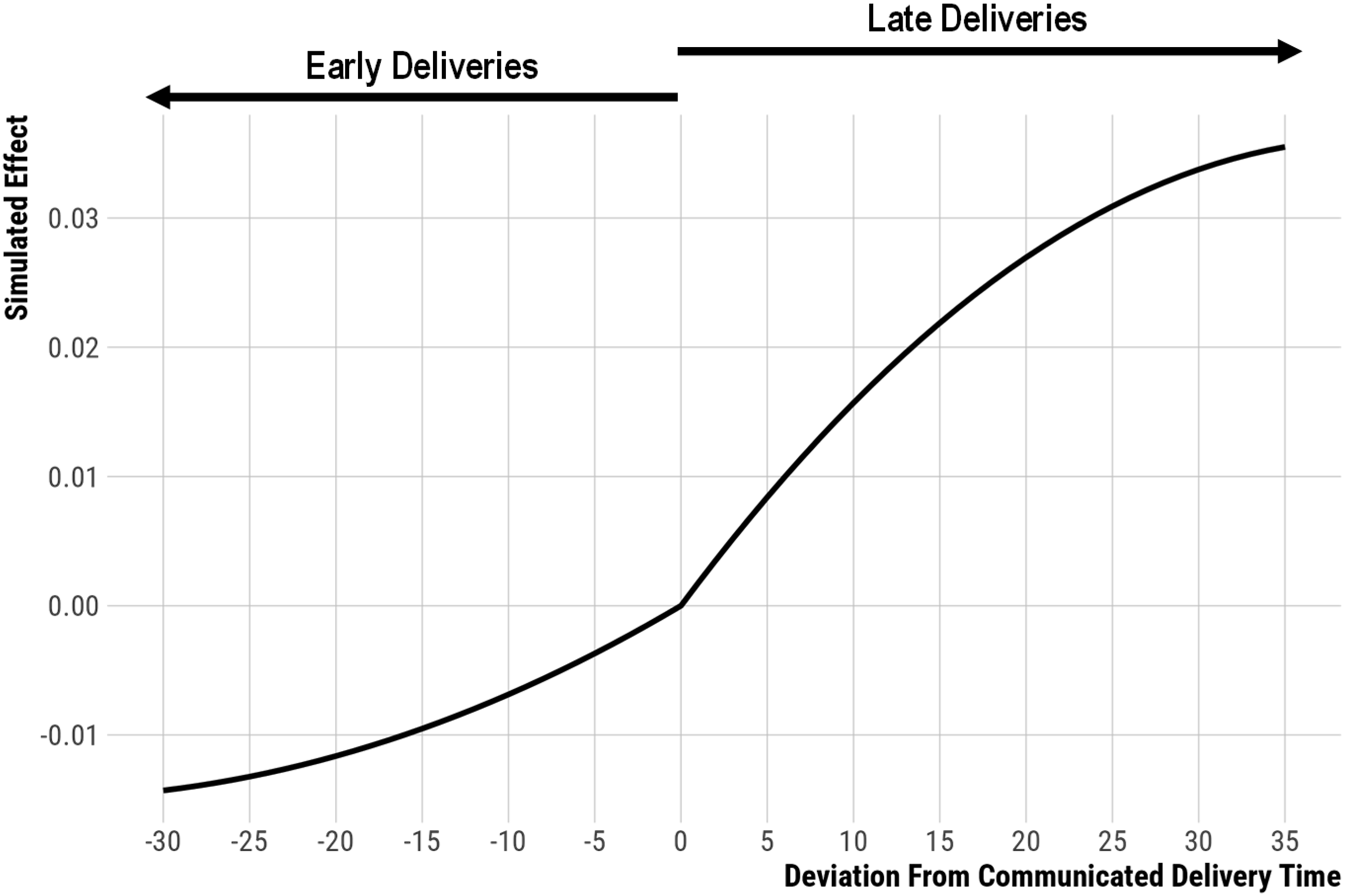
Robustness Tests
We acknowledge two concerns with regard to this analysis, which we address here. First, our main analysis is based on the calculated delivery time deviation (i.e., the difference between the actual delivery duration and the communicated delivery duration). To determine the actual delivery duration, we assumed that the arrival of an order is best reflected by dividing the trip duration of an order by two, meaning an order arrives at 50% of the recorded trip duration. Further analyses show that our findings remain robust to alternative operationalizations of arrival time and thus the actual delivery duration. For example, we obtain the same results when we assume that arrival takes place 10 percentage points faster than the originally assumed 50% of the trip duration. Likewise, the results remain robust for an operationalization of arrival time at 30% of the trip duration. Even more extreme operationalizations, such as an order’s arrival after 10% or 70% of the trip duration, still produce qualitatively similar, yet partially insignificant results. Overall, these analyses show that our results are not sensitive to our assumption of an order’s arrival time.
Second, the geographical distance between the store assigned to an order and the customer’s delivery address for that order could confound the true relationship between delivery time deviation and interpurchase time. A shorter distance may be associated with both faster deliveries and more recent orders. To address this concern, we examine a subsample of observations from January 1, 2021, to February 19, 2021, for which we have information on the exact distance between the customers’ delivery address and the assigned store. Therefore, we can evaluate the relationship between trip duration (as a proxy for distance) and actual distance for this subset of 164,970 repeat customer orders (as opposed to 1,792,132 in the full data set) to examine the suitability of trip duration as a proxy for distance. To this end, we calculate the mean absolute percentage error (MAPE) to measure how well geographical distance predicts trip duration. We regress the log-transformed trip duration on the log-transformed geographical distance. This estimation yields an R-squared of 0.31 and a MAPE of 0.21. In contrast, the MAPE derived by comparing the average trip duration across all orders with the observed trip duration is 0.30. The decrease in MAPE from 0.30 to 0.21 suggests that trip duration is a suitable measure to predict geographical distance. Similarly, assuming that the reported distance is completed with an average delivery speed of 20 km/h, 6 we find a relatively strong positive correlation between the log-transformed trip duration and the log-transformed speed-based trip duration (Pearson correlation: r = 0.55, p < .001). Accordingly, we conclude that trip duration is a suitable proxy for geographical distance and is thus reasonably accounted for in our model. 7
Discussion
Taken together, the findings from Study 1 support our prediction that early and late deliveries have opposing effects on customer interpurchase time: Late deliveries increase interpurchase time, whereas early deliveries decrease it. In addition, the results show that both effects are subject to diminishing sensitivity, meaning the effects in both directions marginally decrease with growing deviation magnitude. Finally, the results are consistent with the hypothesized negative asymmetry between early and late delivery effects: Late deliveries have a significantly stronger effect on interpurchase time than comparably early deliveries.
We acknowledge that the field study has some limitations. First, the nature of the data did not allow us to investigate the psychological mechanism behind the observed effects. In line with expectation–disconfirmation theory (Oliver 2010), we expect customer satisfaction (with delivery time) to be the underlying driver. Second, for the same reason, we could not account for customers’ internal delivery time expectations. However, prior research has shown that both sources of expectations (i.e., internal and external) are important (Caruelle, Lervik-Olsen, and Gustafsson 2023). To provide further (causal) support on these questions, and to deepen our understanding of customer behavior in quick commerce, we conducted an online experiment that allowed us to investigate delivery time deviations in quick commerce in a clean and controlled setting.
Study 2
Method
In Study 2, we conducted a controlled online experiment using a between-subjects, 2 (direction: early vs. late delivery) × 2 (magnitude: 5 vs. 25 minutes) factorial design. The aim of the experiment was twofold. First, we wanted to shed light on the psychological mechanism behind the effects of delivery time deviations on repurchase behavior. Expectation–disconfirmation theory (Oliver 2010) posits that differences between expected and actual performance (e.g., expected and actual delivery time) lead to differences in consumer satisfaction. Similarly, research on delivery timeliness shows that satisfaction is the intermediate outcome that drives repurchase intentions and loyalty (Koufteros et al. 2014; Murfield et al. 2017). Furthermore, research on waiting times demonstrates that satisfaction is an important consumer response to waiting time (Bielen and Demoulin 2007; Durrande-Moreau and Usunier 1999; Pruyn and Smidts 1998). Therefore, we expect that satisfaction (with delivery time) mediates the effect of delivery time deviations on repurchase behavior. Second, while deviations from communicated delivery time are based on an external source of expectation, customers also have personal delivery time expectations based on their prior experiences with the focal and/or other firms (Caruelle, Lervik-Olsen, and Gustafsson 2023). Therefore, Study 2 also takes into account delivery time expectations from an internal source.
Measures in Study 2.
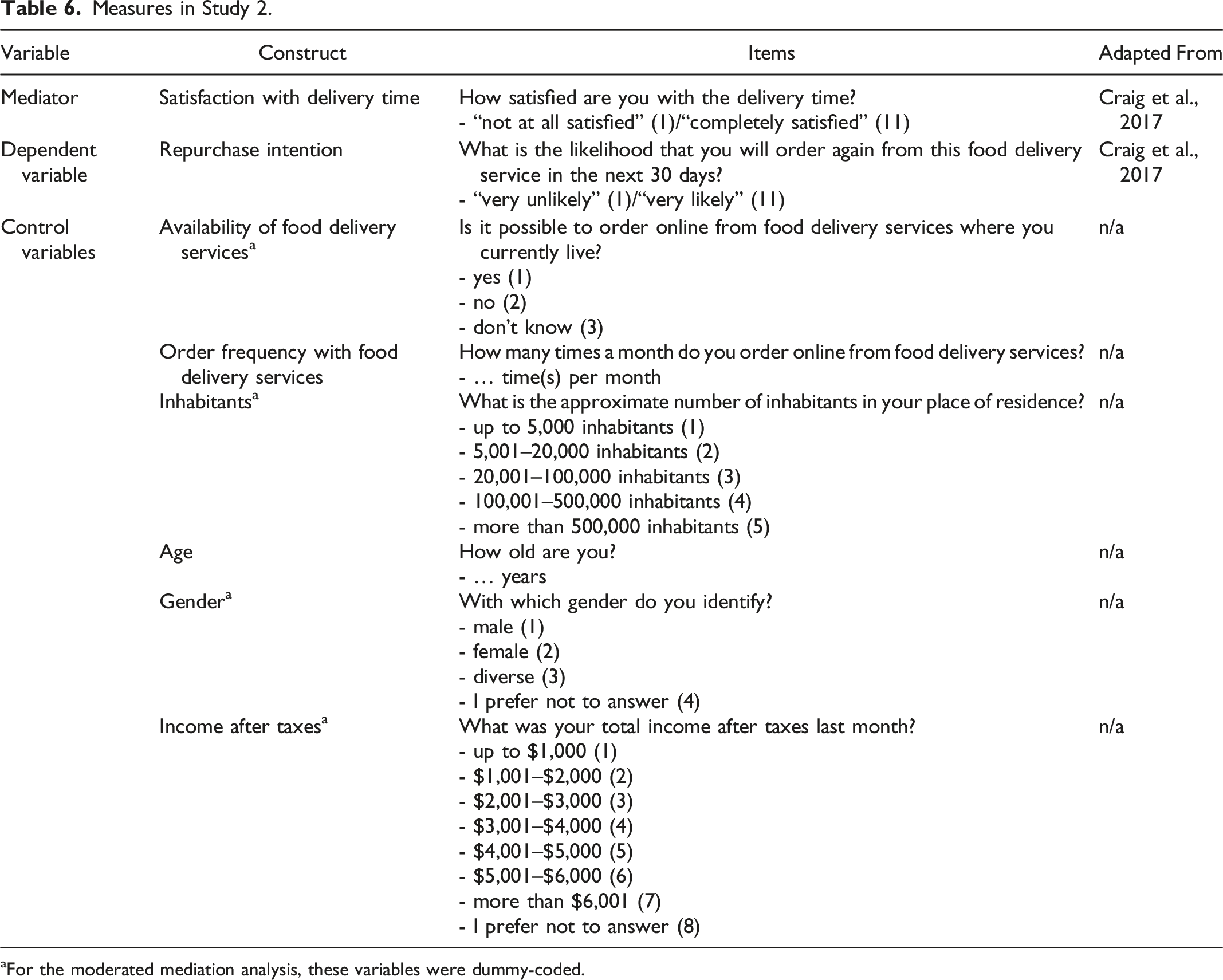
aFor the moderated mediation analysis, these variables were dummy-coded.
Descriptive Statistics for Study 2.
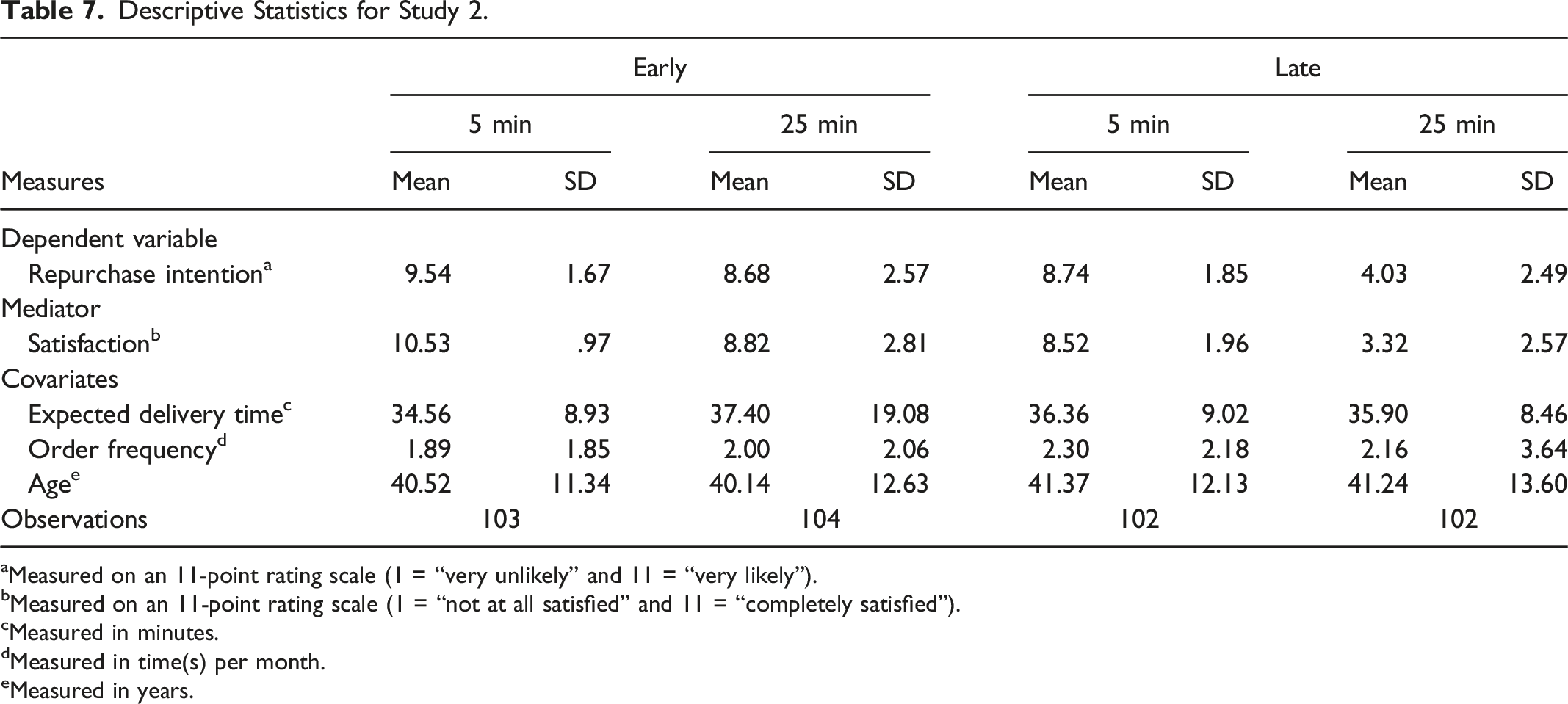
aMeasured on an 11-point rating scale (1 = “very unlikely” and 11 = “very likely”).
bMeasured on an 11-point rating scale (1 = “not at all satisfied” and 11 = “completely satisfied”).
cMeasured in minutes.
dMeasured in time(s) per month.
eMeasured in years.
Analyses and Results
We performed a moderated mediation analysis (PROCESS model 8 with 10,000 bootstrapped samples; Hayes 2022), with the direction of the delivery time deviation as the independent variable, the magnitude of the delivery time deviation as the moderator, satisfaction as the proposed mediator, repurchase intention as the dependent variable, and internal delivery time expectations as a covariate. As shown in Figure 4, the results reveal that late deliveries have a negative effect on satisfaction (a
1
= −2.05, p < .001), as do larger deviations (a
2
= −1.77, p < .001). In addition, the direction × magnitude interaction shows that late deliveries with a larger deviation have a significantly stronger effect on satisfaction than early deliveries with an equivalently large deviation (a
3
= −3.42, p < .001). Satisfaction, in turn, affects repurchase intention (b
1
= 0.67, p < .001). Thus, we find that delivery time deviations have an indirect effect on repurchase intention via satisfaction (index of moderated mediation CI99% [−3.18, −1.51]). Furthermore, we observe that including satisfaction in the model reduces the influence of the main effects on repurchase intention to marginal significance (c'
1
= 0.56, p < .02) and insignificance (c'
2
= 0.31, p < .19). However, the effect of the interaction term remains significant (c'
3
= −1.52, p < .001). Finally, the internal delivery time expectation as a covariate has a marginally significant effect on satisfaction (a
4
= 0.02, p < .05) and an insignificant effect on repurchase intention (c
4
= −0.00, p < .51). Our results remain robust to controlling for the remaining covariates. Moderated mediation model (Study 2).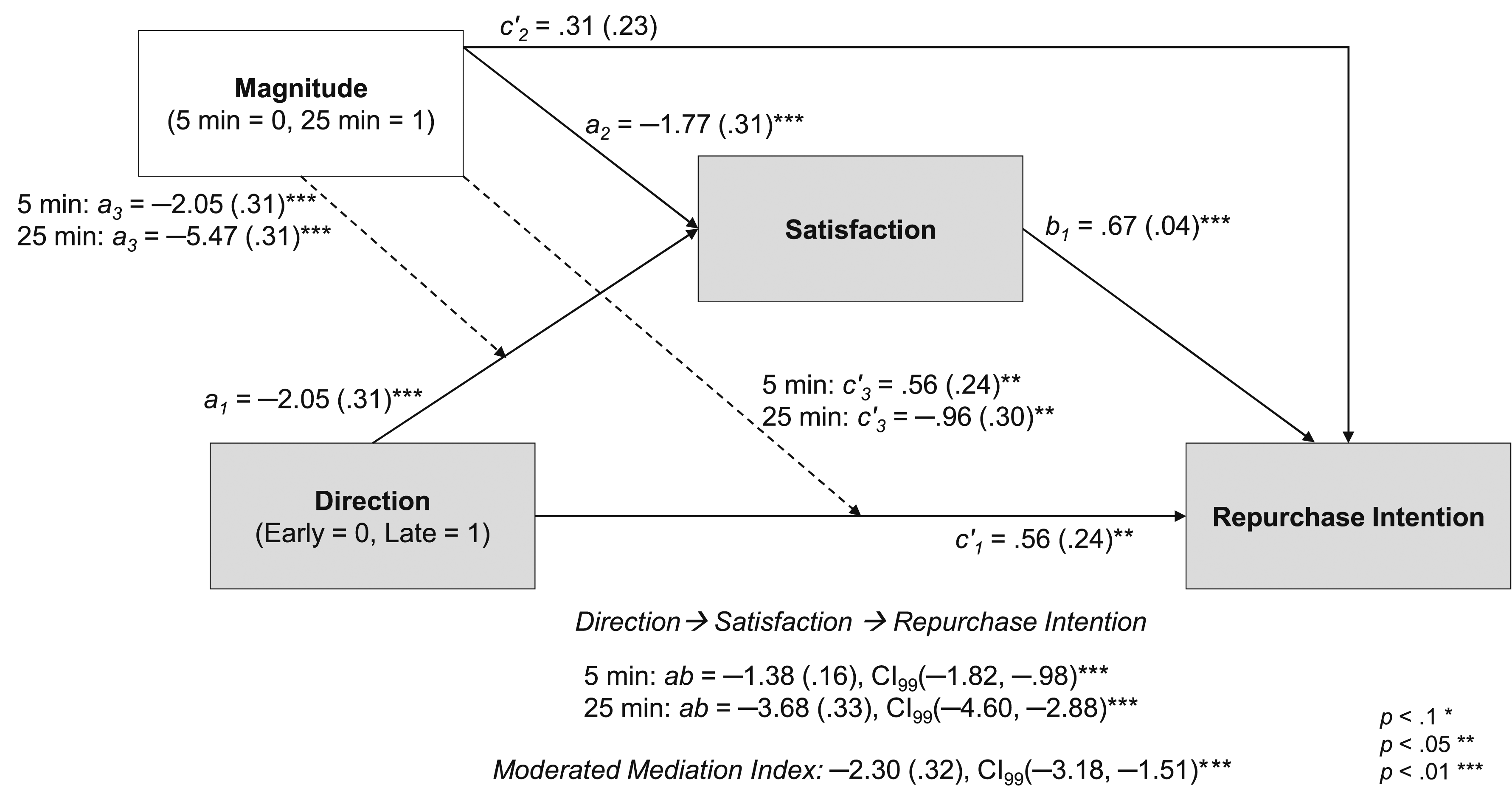
Selected Qualitative Insights in Study 2.
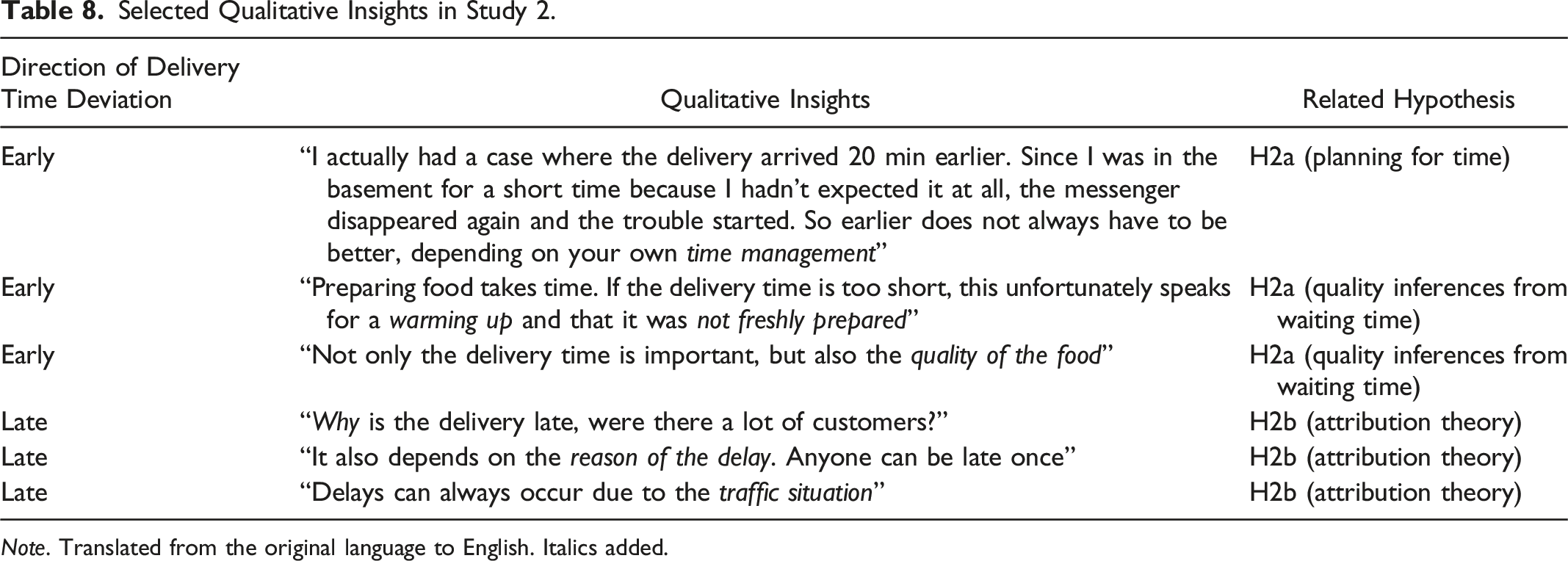
Note. Translated from the original language to English. Italics added.
Discussion
Study 2 sheds light on the psychological mechanism between delivery time deviations and repurchase intentions, controlling for consumers’ internal delivery time expectations. A mediation analysis reveals customer satisfaction (with delivery time) as a key mechanism. In addition, the results suggest that delivery times as communicated by the service provider are the dominant source of expectation for consumers. Internal delivery time expectations have a small and only marginally significant effect on satisfaction and an insignificant effect on repurchase intentions. Furthermore, the significant effect of the direction × magnitude interaction is in line with the negative asymmetry put forward in H3: Late deliveries are comparably more dissatisfying than early deliveries of the same magnitude are satisfying. Moreover, the findings show once again that early deliveries are favorable and result in higher repurchase intentions than late deliveries (H1a and H1b), though the magnitude of the delivery time deviation matters too, and large deviations are worse than small ones. This result suggests that consumers may have an innate preference for punctuality; it also corresponds to the diminishing sensitivity hypothesized for early deliveries (H2a).
General Discussion
This study examines quick commerce, a new development in online-to-offline commerce that gets products to consumers quickly in an effort to satisfy their instant and time-sensitive consumption needs. In this unique context, we seek to understand how delivery time deviations in minutes (late and early) affect repurchase behavior. To this end, we leverage customer-level transaction data from a large Western European food delivery service and link delivery time deviations to interpurchase times. In addition, we conduct an online experiment to shed light on the psychological mechanism between delivery time deviations and repurchase behavior, controlling for additional variables and complementing the results from the field.
The findings show that not only is the direction of a delivery time deviation important but the magnitude of the deviation also yields critical insights. Specifically, delays have an unfavorable effect on repurchase behavior, in that they increase interpurchase times and decrease repurchase intentions. In contrast, early deliveries exert a favorable effect on repurchase behavior, in that they decrease interpurchase times and increase repurchase intentions. Our data show that these effects are driven by satisfaction with delivery time. With regard to the functional form of this relationship, we find that both early and late deliveries are subject to diminishing sensitivity. As such, deviations further from the communicated delivery time have a larger absolute effect on interpurchase time but a decreasing marginal impact. Dissatisfaction with delayed deliveries increases at a decreasing rate, potentially due to the decreasing diagnostic value of rare and extreme events far outside the norm. For example, when a delivery is communicated to arrive within 30 min but is then delivered after 90 min (delay of 60 min), the consumer may conclude that something extraordinary must have happened (e.g., unforeseen roadblocks, heavy rain or storms), given the extreme deviation from the original estimate. Therefore, the experience may carry less diagnostic value for future customer behavior.
Conversely, interpurchase times and satisfaction with early deliveries increase at a decreasing rate, suggesting that faster is better, but decreasingly so. The earlier a delivery is made, the more likely it is to raise quality concerns (e.g., sloppy packaging, premade food) or interrupt previously devised activities, thereby reducing satisfaction. For example, consumers may not be ready or at home if an order arrives much earlier. Anecdotal evidence from industry practice supports our findings: Sebastian McClintock (McClintock 2021), Director of the Global Customer Experience team at Delivery Hero, shared a blog post about the consequences of delivery time deviations, in which he asserted that customers prefer to receive their items on time and not too early, though the threshold for “too early” remains unclear.
We also observe a negative asymmetry in the effects of delivery time deviations. This result is statistically significant in the field study and the online experiment and consistent with our hypothesis that delays have a stronger effect on interpurchase times than equivalent early deliveries because consumers respond more strongly to negative experiences than to positive ones (Baumeister et al. 2001).
Finally, the results of the controlled online experiment allow for another incidental finding: Consumers may have different internal delivery time expectations, but the delivery time communicated by the service provider appears to be the dominant source of expectation for evaluating the delivery time performance of an order. Prior research acknowledges that the source of expectation matters, but these studies examine internal and external sources individually (e.g., Caruelle, Lervik-Olsen, and Gustafsson 2023). In contrast, our study allows for their simultaneous consideration. We find that internal delivery time expectations had only a small and marginally significant effect on satisfaction and an insignificant effect on repurchase intention. In contrast, delivery times as disconfirmed by the service provider’s estimate had a large significant effect on repurchase intention through satisfaction (with delivery time). In addition, the direct effect on repurchase intention was statistically significant, albeit to a lesser extent than the indirect effect.
Theoretical Contribution
We contribute to prior research in several distinct ways. First, we add to literature on disconfirmed waiting times by investigating delivery time deviations in a new setting: quick commerce. Prior research has focused on minutes-long waits in offline retail stores (e.g., Kumar 2005; Kumar, Kalwani, and Dada 1997; Tom and Lucey 1995) or days-long waits in online retail delivery (e.g., Akturk, Mallipeddi, and Jia 2022; Deshpande and Pendem 2022). We extend these results by investigating minutes-long waits in online-to-offline service delivery. In doing so, we identify some fundamental differences between quick commerce and its traditional counterpart, thereby advancing understanding of the implications of delivery time deviations in minutes rather than days.
Second, we contribute to research on disconfirmed waiting times by conceptualizing and analyzing the nature of disconfirmation effects on customer behavior in the novel setting of quick commerce. We go beyond the often implicitly assumed linearity and symmetry of disconfirmation effects (e.g., Dellaert and Kahn 1999; Demoulin and Djelassi 2013; Houston, Bettencourt, and Wenger 1998) and reveal their asymmetric and nonlinear nature in quick commerce. Our results show that the effects of delivery time deviations on repurchase behavior change with increasing magnitude, and late deliveries have a stronger absolute impact than early deliveries of the same magnitude.
Third, we show that disconfirmations matter in both directions, complementing research focusing on delays (e.g., Cohen, Fiszer, and Kim 2022; Rao, Griffis, and Goldsby 2011) and delivery speed (Fisher, Gallino, and Xu 2019; Griffis et al. 2012). Specifically, we reveal that early deliveries have a favorable but diminishing effect on interpurchase time, whereas late deliveries have a detrimental and diminishing effect. In this sense, we challenge the commonly held beliefs that “faster is always better” and “slower is always worse.” Our results provide a more fine-grained understanding of delivery time deviations; it is not only the direction but also the magnitude that matters.
Fourth, combining a field study with an online experiment allows us to identify the underlying psychological mechanism behind the hypothesized effects. In doing so, we add to the literature on wait time satisfaction (Bielen and Demoulin 2007; Durrande-Moreau and Usunier 1999; Pruyn and Smidts 1998). In addition, the online experiment enables us to control for varying internal expectations in the presence of externally provided delivery time expectations. In this way, we enrich research on disconfirmed waiting times, which has thus far focused on the use of single methods and/or on one or the other source of wait time expectations (e.g., Caruelle, Lervik-Olsen, and Gustafsson 2023; Rao, Rabinovich, and Raju 2014). Finally, we contribute to emerging literature on quick commerce services by adding a consumer perspective to the current organizational and operational lens through which these services have been viewed (e.g., Bai et al. 2019; Dablanc et al. 2017; Mao et al. 2022; Taylor 2018).
Managerial Implications
Our results also have important practical implications. First, the relationship between delivery time deviations and repurchase behavior is nonlinear and differs by direction (early or late), so delivery time management should be adapted accordingly. Our results show that late deliveries have an unfavorable effect on repurchase behavior, which is stronger than the favorable effect of early deliveries of the same magnitude. In addition, the benefits of an even faster early delivery decrease with growing magnitude. For these reasons, algorithms should be designed to reduce delivery delays rather than speed up already early deliveries. This approach avoids misdirecting valuable resources to early deliveries.
Second, because the detrimental effect of late deliveries also decreases with growing magnitude, speeding up marginally delayed deliveries should have a greater marginal effect on repurchase behavior than devoting this effort to extremely delayed deliveries. For example, the marginal benefit of decreasing a 10-minute delay to (only) 5 min is greater than the benefit of decreasing a 30-minute delay to (still) 25 min. Accordingly, algorithms should be designed to prioritize deliveries with shorter delays, as doing so would have a higher marginal payoff.
Third, our results indicate that delivery operations could benefit from reconsidering the “first come, first served” principle. Warehouse picking and meal preparation arguably should process the orders that will benefit most from a timelier completion first (i.e., deliveries with short anticipated delays). Consequently, operational activities should match the prioritization of delivery assignments, as established by the respective algorithms.
Fourth, we question whether service recovery measures for delivery delays should be tied to a specific threshold. For example, Pizza Hut provides a £10 voucher for the next delivery every time one of its deliveries is delayed by at least 10 min (Pizza Hut 2023). Similarly, Grubhub offers $5 off the next order if the delivery arrives late (GrubHub 2023). These service providers do not differentiate delay magnitudes; however, our results suggest that smaller delays have a higher marginal impact on repurchase behavior than larger delays. Therefore, we propose that service providers should vary their recovery measures, depending on the extent of the delay and its corresponding impact on repurchase behavior. For example, retailers and restaurants may send appreciation messages (e.g., You et al. 2020) to customers who suffer minor delays, to recognize their importance and possibly alleviate negative consequences in terms of repurchase behavior. But they likely should offer compensation (e.g., credit for future orders) for significantly late deliveries (e.g., Cohen, Fiszer, and Kim 2022).
Limitations and Further Research
We acknowledge some limitations of this study, which suggest avenues for further research. First, we have no additional information about customers in our field sample (e.g., length of customer relationship and customer characteristics). Prior research suggests that affective commitment, for example, mitigates the negative outcomes of delays (Voorhees et al. 2009). Similarly, personality traits in terms of time styles may influence how consumers experience waiting time (Durrande-Moreau and Usunier 1999). Future studies incorporating additional, customer-specific data could explore whether the observed effects in our study are contingent on the length of the relationship or specific customer traits. Second, further research should determine whether the effects of different delivery time deviations on satisfaction and customer behavior are moderated by personal preferences or the order context. Third, researchers should test our hypotheses in different quick commerce settings (i.e., using different product categories) and geographical contexts. For example, unfavorable quality inferences from (too) short delivery times may play a greater role in meal delivery services, a context in which consumers may be concerned about both precooked meals and sloppy packaging, than in grocery delivery services, in which their concerns may relate exclusively to sloppy packaging. Finally, research could empirically test how consumer reactions to delivery time deviations in quick commerce differ from those in traditional e-commerce. For example, it would be worthwhile to examine whether consumers react less strongly to both late and early deliveries in traditional e-commerce than in quick commerce, because consumers’ delivery expectations are not as intense.
Supplemental Material
Supplemental Material - The Effect of Delivery Time on Repurchase Behavior in Quick Commerce
Supplemental Material for The Effect of Delivery Time on Repurchase Behavior in Quick Commerce by Alice Harter, Lucas Stich, and Martin Spann in Journal of Service Research
Supplemental Material
Supplemental Material - The Effect of Delivery Time on Repurchase Behavior in Quick Commerce
Supplemental Material for The Effect of Delivery Time on Repurchase Behavior in Quick Commerce by Alice Harter, Lucas Stich, and Martin Spann in Journal of Service Research
Footnotes
Declaration of Conflicting Interests
The author(s) declared no potential conflicts of interest with respect to the research, authorship, and/or publication of this article.
Funding
The author(s) received no financial support for the research, authorship, and/or publication of this article.

Supplemental Material
Supplemental material for this article is available online.
Notes
Author Biographies
References
Supplementary Material
Please find the following supplemental material available below.
For Open Access articles published under a Creative Commons License, all supplemental material carries the same license as the article it is associated with.
For non-Open Access articles published, all supplemental material carries a non-exclusive license, and permission requests for re-use of supplemental material or any part of supplemental material shall be sent directly to the copyright owner as specified in the copyright notice associated with the article.
