




Abstract
This article presents a review of published articles on Transformative Service Research (TSR), incorporating insights from user-led research to further understand how collaboration within the TSR process can improve wellbeing. Our analysis of 111 articles reveals mixed approaches to the way user collaboration has been documented, with only a small number of articles reporting extensive collaboration across every stage of the TSR process. We posit that this has led to missed opportunities for more effective TSR and make two significant contributions to the development of subsequent TSR. First, by highlighting inconsistencies in the TSR research process, we elucidate the need for the reflexive application of TSR knowledge and open dialogue on embedding collaboration within the research process itself. Second, we propose five avenues for progress to enhance the potential for future TSR to uplift service provision for service users and stakeholders.
Transformative Service Research (TSR) strives for ‘uplifting changes and improvements in the wellbeing of both individuals and communities’ (Anderson 2010, p. 9).
Transformative Service Research has grown as a subfield of Services Marketing, linking Transformative Consumer Research (TCR) with Services Research (Anderson et al. 2013). Transformative Consumer Research emerged as a call to action for those involved in the study of consumption to focus on the alleviation of social problems (Davis, Ozanne, and Hill 2016). Transformative Service Research has developed from TCR to focus on addressing a long-standing bias in services research towards managerial priorities by concentrating on how services can contribute to greater consumer and societal wellbeing (Anderson et al. 2013). Both TCR and TSR represent significant literature bases. For the purpose of this paper, the focus is upon the TSR literature specifically, the limitations of which we return to in the conclusions.
Services are a key component of our lives, and they have the power to deliver positive change. However, they also have the capacity to (re)produce oppressive systems (Beresford 2019). The service user-led (hereafter user-led) discourse has been critical of the ability of mainstream ‘researcher-led’ approaches (i.e. involving academic researcher-led decisions throughout TSR processes) to contribute to meaningful changes to service delivery because they can reproduce power disparities and impede service improvements (Telford and Faulkner 2004). As a consequence, we are seeing growth in user-led research – a methodological position and approach to research processes, predominantly found in the context of health and social care service users, which prioritizes collaboration at all stages of the research process (McLaughlin et al. 2020). User-led research calls for a fundamental shift in power from researchers to service users to ensure that both the process and the purpose of the research are transformative (Carr et al. 2019).
In this paper, we aim to examine and differentiate the collaborative processes reported in published empirical TSR articles. We conducted a systematic literature review (SLR) to enable information to be selected and synthesized in a transparent and replicable manner (Tranfield et al. 2003). Collaborative processes refer to the ways in which the design and implementation of a research project (e.g. setting agendas, designing methods, collecting and analyzing data) are carried out ‘with’ as opposed to ‘on’ those affected by the research. They are part of a relational participatory process which redistributes power by democratically working together to realize shared goals (Given 2008). We refer to research processes as opposed to methodologies to cover all research-related activities and interactions, including agenda setting and dissemination.
Our review findings reveal that despite the promotion of TSR collaboration as a means of improving wellbeing through shared control and participation (Sharma and Conduit 2016), only a small minority of the studies explained in the papers incorporated processes allowing extensive user input. Examples include the inclusion of patients in the ideation and design of services (Patricio et al. 2018). Drawing on insights from user-led literature (McLaughlin et al. 2020), we propose five avenues to encourage greater transformation not only as an end goal of TSR but also through the research process itself. In doing so, we add to the work of Ostrom et al. (2021), both encouraging the consideration of how research processes should be approached when engaging with users experiencing power disparities and asking questions over what should be researched.
TSR as a Vision
Transformative Service Research has been described as a discipline ‘committed to social justice and consumer empowerment’ (Corus and Saatcioglu 2015, p. 426), influenced by differing ideological approaches (Humphries 1996). Collaboration is often advocated as a vehicle for improved wellbeing (Anderson et al. 2013; McColl-Kennedy et al. 2017). A more comprehensive overview of TSR concepts and contexts is beyond the scope of this paper and can be found in the work of Dodds et al. (2023) and Keränen and Olkkonen (2022).
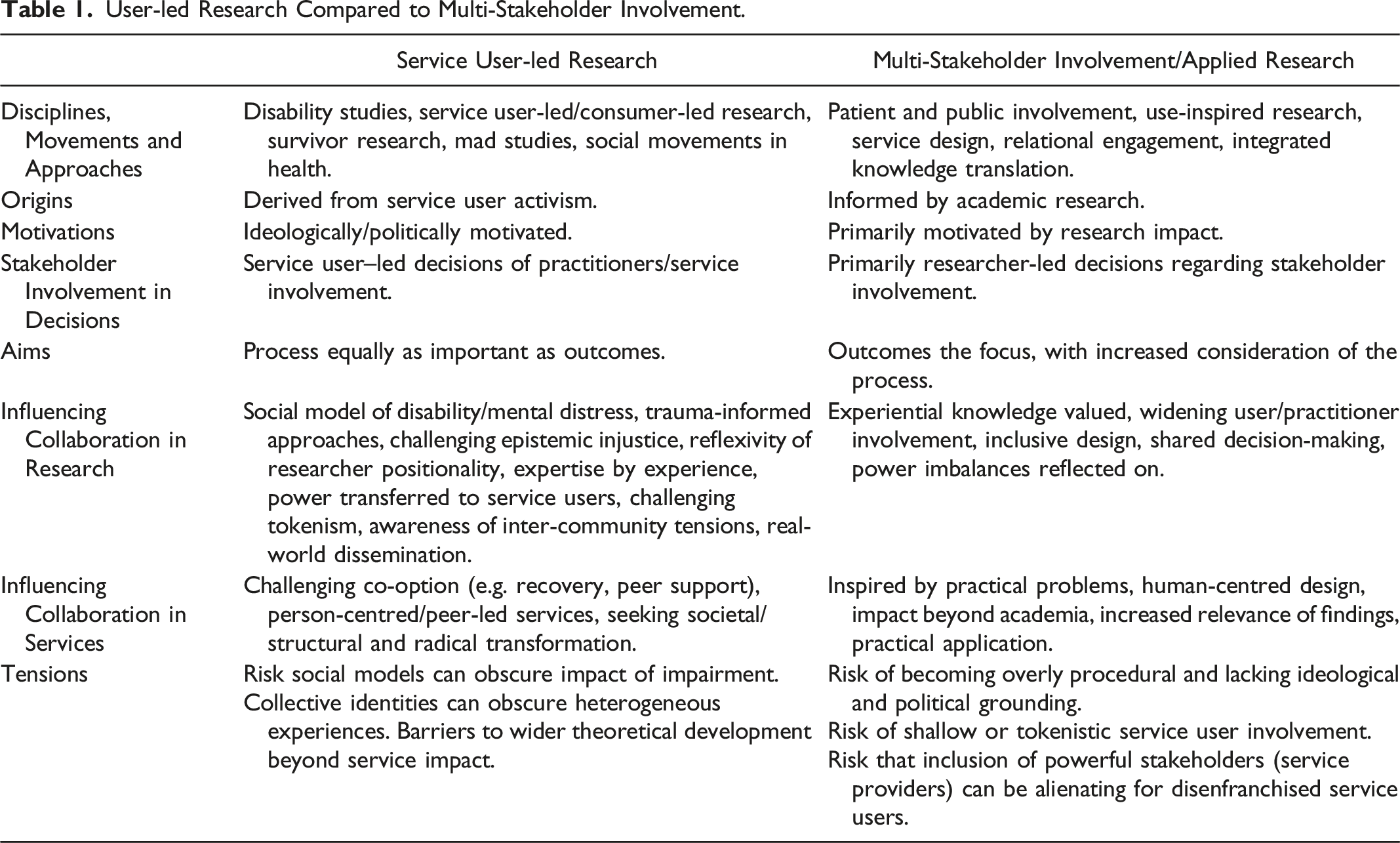
User-led Research Compared to Multi-Stakeholder Involvement.
Service User Collaboration in the TSR Process
Conceptual understandings of collaboration vary across and within relevant fields (Cluley and Radnor 2020). Collaboration in TSR terms is rooted in Service-Dominant Logic (SDL), which refers to a process of service exchange involving the integration of multiple actors’ resources (i.e. knowledge and skills) coordinated through institutions, which result in value being ‘uniquely and phenomenologically determined by the beneficiary’ (Lusch, Vargo, and Gustafsson 2016, p. 2958). Informed by SDL, Skålén, Aal, and Edvardsson (2015, p. 251) take a broad understanding of both services – that is, ‘engaged actors activities and interactions’ and collaboration – arguing that not only market actors but also individuals, communities, and organizations are involved in the exchange process.
Here, we adopt a similarly broad lens by applying the concept of collaboration in the research process as an example of a service exchange. This is in line with Font et al. 2021, who engage with collaboration both theoretically and methodologically. Accordingly, within TSR, we view researchers, service providers, and (service user) research participants as actors engaged in activities and interactions with the potential to collaborate (as opposed to engaging solely in co-creative/co-productive methodological practices), which may result in positive impacts on user wellbeing (e.g. a greater sense of empowerment from increased participation in decision-making and/or opportunities to challenge dominant narratives as well as opportunities to influence service change to better reflect user priorities).
Consequently, we consider how TSR processes (activities and interactions such as agenda setting, data collection, analysis, and dissemination) have included and made the most of the potential input of service users/participants. At the other end of the spectrum of user input and power is user-led research, which we engage with in the next section.
User-led Research
Like TSR, the user-led stream raises concern over managerial biases in existing research. Indeed, Turner and Beresford (2005, 14) – who compiled a report for INVOLVE, an organization promoting public involvement in UK health and social care funded by the Department for Health – called for a move away from mainstream researcher-led approaches. The managerialist/consumerist approach . . . is concerned with including the perspectives and data of service users within existing structures and arrangements of research without signifying any redistribution of power and has a more narrow concern with the service system’s own requirements and imperatives, [so] it may not serve their interests and indeed potentially could conflict with them.
User-led research movements have gained momentum over the past 30 years, transferring the expertise and goals of service user activism (i.e. disability rights, psychiatric survivor movements) into scholarly research (Beresford 2005), epitomized by the disability studies mantra ‘nothing about us, without us’ (Charlton 1998, p. 14). Some users experience power disparities within services such as health or social care, while others may not, and this may vary across their life course (Gallan et al. 2019). To accommodate these varying experiences within our SLR, we acknowledge systemic and structural factors shaping the experience of such services (Sweeney et al. 2009). Often they disproportionately impact those experiencing greater disparities such as racialized groups and reinforce existing power asymmetries (Sweeney et al. 2009).
The term ‘service user’ has been criticized for being reductive, implying a passive role and/or ignoring those who ‘use’ services involuntarily or face barriers (McLaughlin 2009). While acknowledging these limitations, it is important to recognize the power of invoking (often oppressed) shared experiences to call for change (Beresford 2005) (see Table 1). Despite terminological and cultural differences between TSR and user-led research, we suggest that through the adoption of user-led insights, there is potential for TSR to increase (research-based) collaboration by working more extensively with service users. We include here TSR utilizing multi-stakeholder/applied approaches – that is, RE and SD.
Method
As part of our SLR (Tranfield et al. 2003), we examined how service users have been included in empirical TSR processes. We did this by evaluating how published TSR papers had embedded user collaboration across key stages in their research process (see Figure 1). We selected the stages or categories of Pearce et al. (2020) given the definitional clarity they provide in relation to collaboration within the research process, helping to unpick activities and interactions that enable collaboration. Collaborative processes contributing to knowledge. Source: Adapted from Pearce et al. (2020, pg. 11).
As SLRs are conducted with relevant defined parameters, we focused our user-led stream review on health, social, and financial (welfare) services, which are areas of particular interest to TSR (Anderson et al. 2013). In addition, as stated, both TSR and user-led streams share a vision for addressing a bias towards managerial priorities (Anderson et al. 2013; Turner and Beresford 2005). The application of insights from the user-led literature offers the scope to make novel contributions to future TSR.
As the field has become more established over the past 12 years, we searched for the term ‘Transformative Service Research’ within papers published between 2009 [the date of the earliest empirical paper identified as contributing to TSR by Rosenbaum (2009)] and January 2021. We then reviewed the text of the papers. This was necessary because although it was possible to exclude conceptual or theoretical articles by reading the titles and abstracts of the papers, establishing whether there was a direct contribution to TSR or whether there was potential for the service user participants to experience adverse power disparities was not always clear. Through our review of empirical articles, we assessed whether a direct contribution to TSR was cited through phrases such as ‘from a TSR lens’ (Hurley, Trischler, and Dietrich 2018, p. 715) and ‘The findings also contribute directly to the Transformative Service Research agenda’ (Pegg, Karl, and Harpur 2020, p. 1). Articles not explicitly referring to a contribution to TSR were excluded (e.g. if the phrase or acronym only appeared in the reference list of a paper).
The acknowledgement of adverse power disparities in a paper included statements such as ‘street vending practices is laden with power structures and potentially oppressed voices’ (Giraldo, Garcia-Tello, and Rayburn 2020, p. 760) and ‘[collaborative] possibilities are limited because of structural imbalance’ (Kasnakoglu 2016, p. 10). Articles with no mention of power disparities or services involving negligible power disparities were excluded, such as the work of Font et al. 2021, who sampled travel consumers, and Trudeau and Saeed (2016), who researched the experiences of cosmetic consumers. We acknowledge the potential for subjectivity here as a research limitation. We only included papers referring to direct contact with users, such as the longitudinal surveys administered to users receiving debt support (Tang, Guo and Gopinath 2016), given the potential for direct contact to allow for collaboration between service users and researchers.
As shown in Figure 2, 111 articles were included in the final literature base. The service contexts included the following: Healthcare n = 51, Financial services (debt, poverty) n = 14, Disabled consumers n = 8, Online/telephone/ICT support (weight loss, smoking, mental health, alcohol, natural disaster) n = 8, Oppressed groups (refugees, immigrants, precarious/low paid workers, sexual harassment) n = 9, Public and non-profit services n = 8, Young people/adolescents n = 6, Social support for socially excluded groups n = 5, Role of the carer n = 1, and Bereavement n = 1. Flow chart showing the systematic exclusion and inclusion process.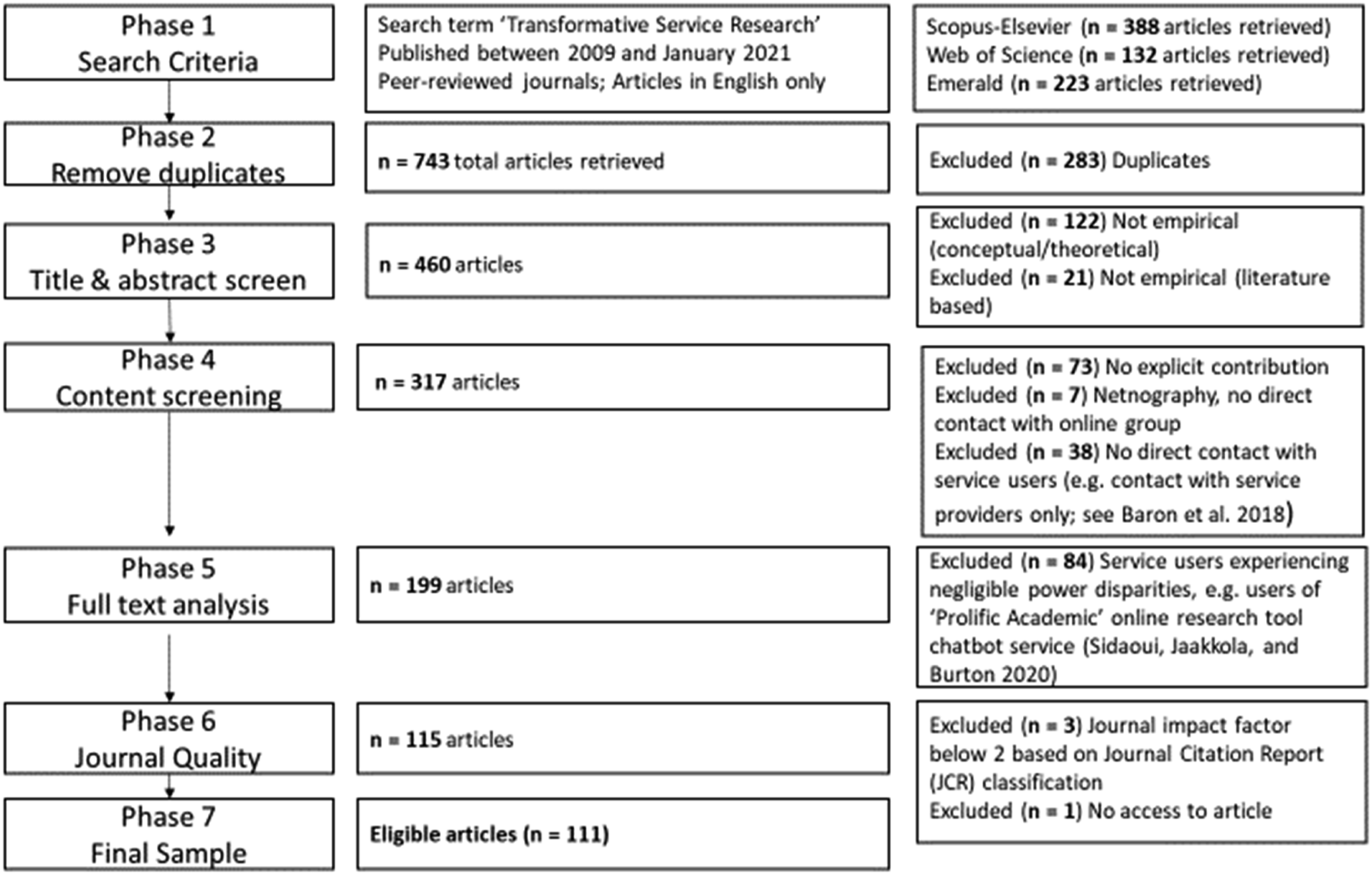
The first step in the analysis of the articles was familiarization (beginning with the assessment of article eligibility). Second, we identified collaborative processes present in the study and divided them across the four collaborative stages defined by Pearce et al. (2020) as shown in Figure 1 using NVivo and Microsoft Excel. The coding decisions were reviewed by each member of the project team. For example, while we coded the member-checking of data analysis and findings as a collaborative process, we excluded the member-checking of interview transcripts because merely confirming or amending transcripts is less likely to involve in-depth collaboration. As we go on to discuss, reflexivity around the influence of researcher(s)’ positionality is key to providing much-needed transparency in decisions relating to data analysis, thus enhancing rigour (Alvesson and Skoldberg 2009). We therefore considered the role of this in influencing the interpretation and identification of both power disparities within the service contexts reviewed and collaboration in the research process. From the four stages of collaborative processes (Figure 1), we were able to construct further categories and identify linkages through shared characteristics, which informed the development of the themes we now present in the findings section.
Finding
Collectively, the insights gained from our SLR reflect a TSR paradigm that celebrates collaboration within service settings, but has not yet reached its full potential by comprehensively embedding collaboration into the research process. This highlights a missed opportunity to disrupt traditional research power dynamics, which we argue is crucial in the case of research involving users experiencing potentially adverse power disparities. Below, we synthesize the findings using the research process categories of Pearce et al. (2020) (see Figure 1). We highlight how user collaboration has rarely been featured explicitly in TSR articles, and where stated, it has seldom been embedded extensively across every stage of the research process.
No Reported User Collaboration
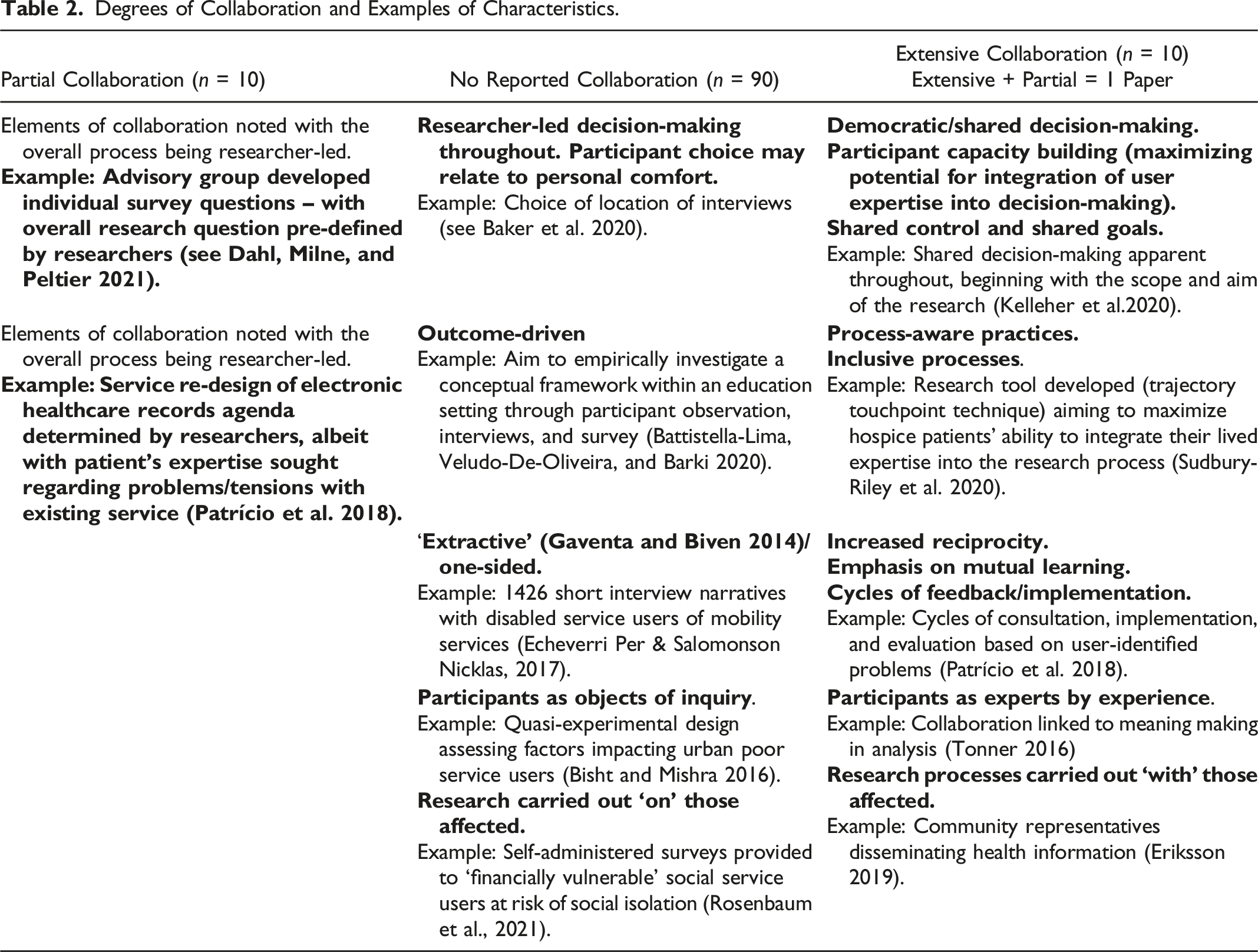
Degrees of Collaboration and Examples of Characteristics.
Degrees of Collaboration
A total of 21 papers (18.9 percent) were identified as including at least one example (or element) of a ‘collaborative process’ (Pearce et al. 2020) (see Web Appendix C for a detailed review). These involved the researcher(s) carrying out activities such as data collection (Eriksson 2019) and SD (Dietrich et al. 2017) ‘with’ as opposed to ‘on’ service users. This included groups such as patients (Hunter-Jones et al. 2020), carers (Kelleher et al. 2020), or first-time mothers (Tonner 2016). Of these 21 papers, 2 were identified as taking an RE approach, with 6 taking an SD approach, demonstrating a low level of adoption of these approaches in TSR overall. Varying degrees of collaboration were stated in these papers, which we categorized as partial [i.e. elements of integration of user expertise (10 papers)] or extensive [i.e. high levels of reciprocity and integration of user expertise (10 papers)]. One paper contained both partial and extensive elements of collaboration (Patrício et al. 2018).
Collaboration across more than two of the research stages was rare. Only one paper (Kelleher et al. 2020), which addressed the experiences of caregivers within service systems, reported collaboration in all stages of the research process. These activities were identified as extensive and included the development of the overall research aims leading to co-created resources and dissemination workshops. Most papers referring to an element of collaboration did so in either one or two of the four stages. This suggests that collaboration has been far from fully embedded across all four stages.
Co-ideation
The collaborative generation of ideas (knowledge) (Pearce et al. 2020) was the process least reported within the papers reviewed (n = 3) (Dahl, Milne, and Peltier 2021; Kelleher et al. 2020; Patrício et al. 2018). These mostly involved partial collaboration, such as the use of an advisory group of patient representatives to democratically develop relevant question items for a survey (Dahl, Milne, and Peltier 2021). However, no user collaboration was reported for decisions around the overall aims of the research to investigate ‘consumers’ health information seeking’ behaviour (Dahl, Milne, and Peltier 2021, p. 840) or the methods used. In contrast, more extensive co-ideation was apparent in the work by Kelleher et al. (2020, p. 214), whereby the research objective ‘to deepen the understanding of the nature, experience, and impact of family caregiving’ was done alongside service user-led organizations.
Co-design
Elements of co-design, collaboratively ‘designing the program or policy and the research methods’ (Pearce et al. 2020), were reported in approximately 50 percent of the papers containing some element of collaboration (n = 12 out of 21). However, across the entire literature base, co-design remained low (n = 12 out of 111). Three of these papers were categorized as entailing partial collaboration (n = 3 out of 12), with the participants involved in sampling decisions but not data collection (Cheung, McColl-Kennedy, and Coote 2017; Henkel et al. 2017; Mende et al. 2017). More extensive collaboration was noted across nine papers within this phase, with collaboration linked to more process-aware practices and human-centred design (Dietrich et al. 2017; Eriksson 2019; Hunter-Jones et al. 2020; Hurley, Trischler, and Dietrich 2018; Kelleher et al. 2020; Patrício et al. 2018; Sudbury-Riley et al. 2020; Tonner 2016; Trischler, Dietrich, and Rundle-Thiele 2019).
Co-implementation
Within the 21 papers containing elements of collaboration, we noted 7 elements of co-implementation, which, according to Pearce et al. (2020, p. 11), involve collaboratively ‘implementing the program or policy (design) according to the agreed research methods’. Whilst some papers, such as that of Eriksson (2019), met this definition, through co-implementation alongside service user ‘representatives’ (i.e. representatives sharing information within community centres/public spaces), which was initially generated via the co-(re)design of a cancer screening program, not all the elements highlighted in this phase were co-implemented based on initially agreed research methods. Nevertheless, these papers were categorized as involving extensive co-implementation given evidence of in-depth collaborative practices such as participant capacity building through workshops (Parsons et al. 2020) and consultative training sessions (Dean and Indrianti 2020). More partial elements of co-implementation were characterized by participants appearing to have a degree of control over how the methods were implemented – for example decisions related to the particular images selected as visual data (Dodds, Bulmer, and Murphy 2018), partially because decisions regarding the implementation of methods were led by the researchers. Interestingly, in research by Engström and Elg (2015, p. 515), a participant appeared able to express ‘disapproval’ and adapted a diary format to ‘make his comments on his own piece of paper, noting experiences, ideas and a comment about the activity . . . Kenneth wrote: ‘We men want straight questions – not flimsy things! Cancer patients are not a homogenous group, just as little as retired people are’. Information regarding the extent to which other participants were encouraged and felt able to adapt the format of data collection would help inform understanding of the level of co-implementation in the research design.
Co-evaluation
We identified 13 papers featuring co-evaluation, defined as the collaborative ‘collection, analysis, and interpretation of data’ (Pearce et al. 2020, p. 11). Eight were categorized as extensive. Shared meaning making alongside participation within the analysis stage of work by Tonner (2016) was an example of extensive collaboration characterized with users viewed as experts by experience. Other papers reporting more extensive collaboration were characterized by higher levels of reciprocity involving cycles of consultation, implementation, and evaluation based on problems identified by the participants (Eriksson 2019; Patrício et al. 2018; Sudbury-Riley et al. 2020; Trischler, Dietrich, and Rundle-Thiele 2019). Some member checks (Guba and Lincoln 1989), which involved user consultation of data analysis and interpretation as a means of improving validity, were categorized as partial collaboration because limited levels of collaboration in the earlier stages of the research reduced the potential for more active co-evaluation (Chandler and Chen 2016; Dodds, Bulmer, and Murphy 2018; Rayburn 2015; Rayburn, Mason, and Volkers 2020; Weaver et al. 2019). This point is examined further in the Discussion section.
Methodologies and Methods
A review of the methodologies used across the ‘no reported user collaboration’ papers found that the use of quantitative (44.4 percent) and qualitative (44.2 percent) methodologies was relatively balanced across the sample papers, with mixed methods accounting for 13.3 percent of this category. Surveys were frequently used with no reported user collaboration (33.3 percent of the papers). Whilst methods such as surveys are arguably more outcome than process driven (Reichardt and Cook 1979), there remains scope for such methods to involve collaborative processes (Rose et al. 2011), which we examine in the Discussion section.
A review of the methodologies used across the papers containing either partial or extensive elements of collaboration (n = 21) found that the majority of studies used qualitative methodologies (71.4 percent), with 38.1 percent using multi-method qualitative designs. Within this group, mixed methods (19.1 percent) and quantitative methodologies (9.5 percent) were less commonly used. Only two papers adopted an RE approach, with SD approaches accounting for six papers. As stated, whilst we promote the wider adoption of these more collaborative approaches already established in TSR, in the Discussion section, we highlight the scope for further progress by drawing on insights from the user-led stream of literature.
Overall, these findings show that a minority of TSR work involving direct contact with service users reported collaborative processes. A small minority of the papers reported the extensive use of collaboration in multiple stages of the research process. Whilst mapping distinct collaborative processes across the papers reviewed was useful in providing a structured overview, the categories of Pearce et al. (2020, p. 1) are based largely on a review of multi-stakeholder/applied approaches (see Table 1) in that they focus on ‘translational models’, which engage equally with practitioners and service users with an emphasis on research impact outcomes. As discussed earlier, this can have shortcomings in terms of addressing key user-led insights (see Table 1). Therefore, the remainder of this paper focuses on ways TSR can realize its potential as a transformative research movement.
Discussion
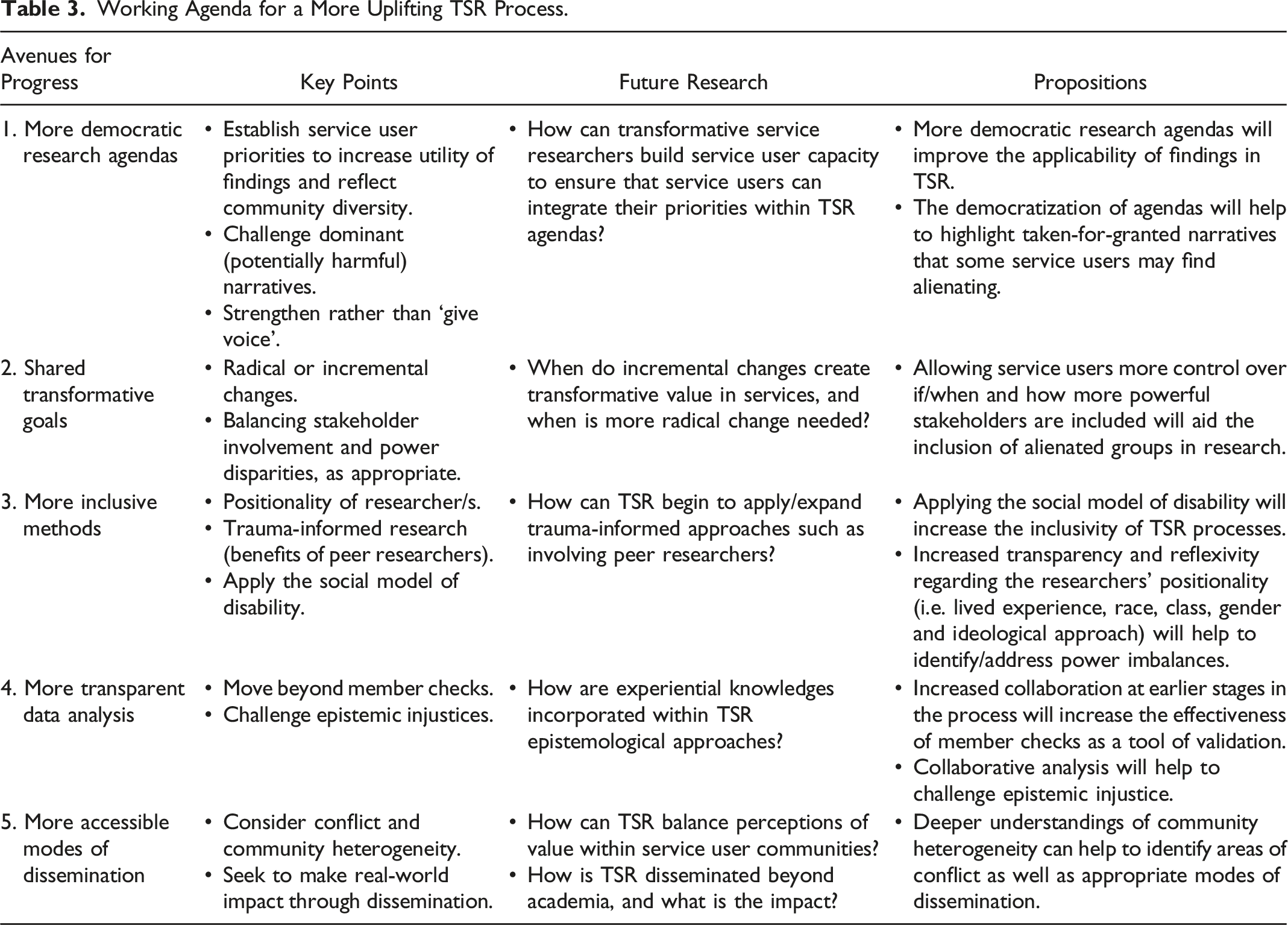
Working Agenda for a More Uplifting TSR Process.
Towards an Agenda for a More Uplifting TSR Process
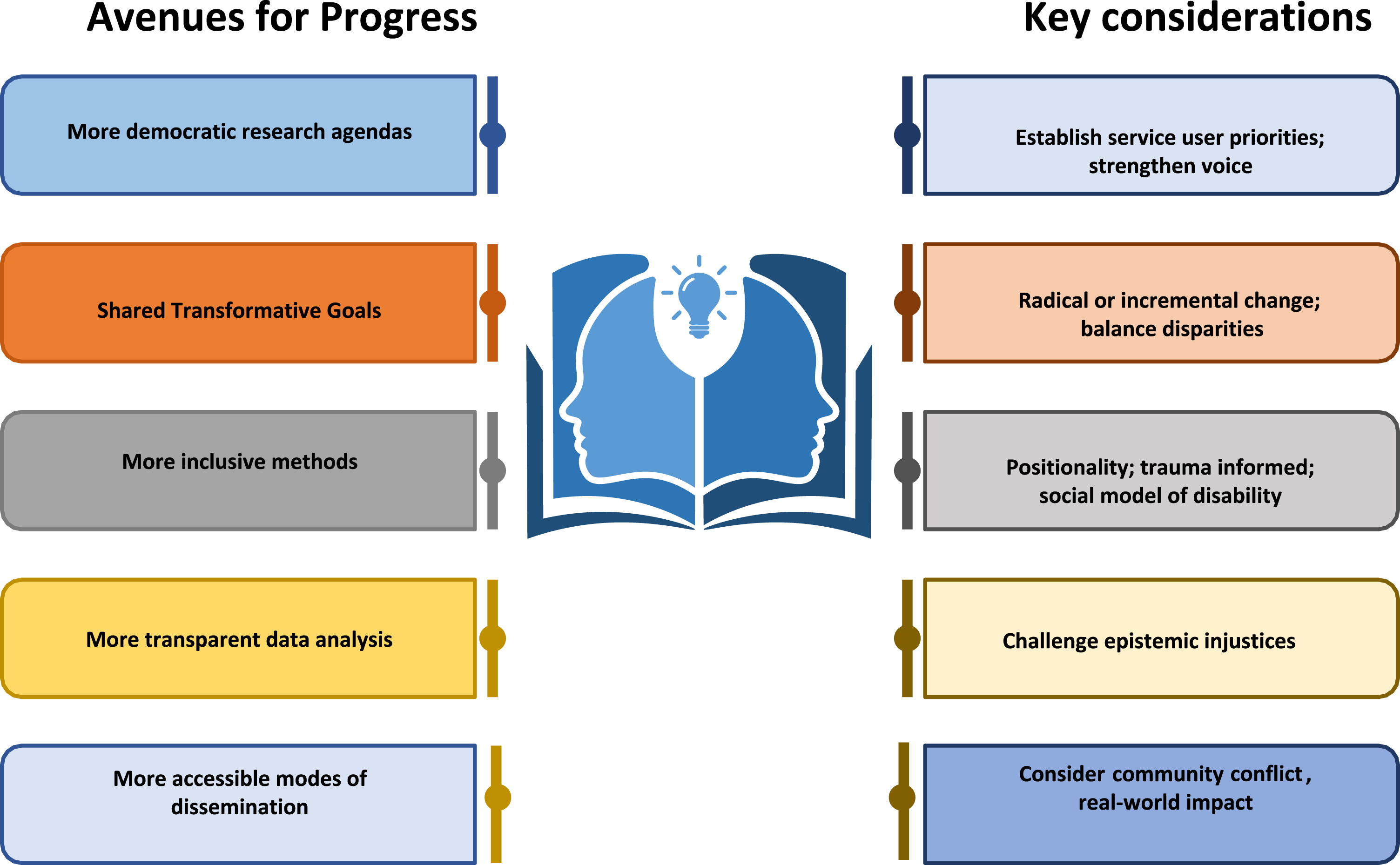
To address these shortcomings in the future, we have drawn on insights from the user-led stream (Table 1), alongside a reflection of the characteristics identified within a spectrum of collaboration (see Table 2), to consider how more extensive, meaningful collaboration can be achieved through the pursuit of five avenues for progress (see Table 3). These avenues provide a guide from which to assess ‘decisions, actions, and policies’ (Banks and Brydon-Miller 2018) in research affecting the lives of service users. We define this as a working agenda with the aim of stimulating dialogue within the TSR community. Rather than adopting a particular methodology, the research community is encouraged to collaboratively develop (ideally alongside service users) these avenues for an uplifting TSR process, with the aim of creating approaches that better engage users experiencing power disparities (adaptable across multiple contexts). We acknowledge that a number of the TSR studies examined through our review may have engaged, to a degree, with some of these avenues without explicitly reporting this. We would encourage greater transparency in future TSR papers and further progress along these five avenues to better achieve the full potential of TSR.
Avenue 1: More Democratic Research Agendas
The first avenue for progress relates to the collaborative setting of research agendas alongside those affected by these agendas. Given the dominance of non-collaborative approaches within the TSR work reviewed, the adoption of this avenue gets to the heart of disrupting traditional power dynamics in research. As stated, reflecting on the democratic nature of research agendas is timely because there appears to be room for more collaboration with service users (Ostrom et al. 2021). Transformative Service Research scholars are therefore encouraged to consider approaches acknowledging the expertise of service users, ensuring that their priorities are fully embedded from the outset in future research (see Holmes et al. 2020).
Enhancing the Utility of Findings: Establishing Service User Priorities and Reflecting Diversity
Within multi-stakeholder/applied research (see Table 1), the integration of end-user priorities through democratic agendas is a crucial way of improving the applicability of research outcomes. Alongside the consideration of applicability, user-led insights also consider how a lack of democracy in research agendas can reproduce power disparities. Work by survivor researcher Faulkner (2004) gives the example of B
Embedding democratic approaches has been a key aim of the user-led stream (see Web Appendixes A and B). Nevertheless, where agendas are suggested by researchers, steps towards greater democracy are possible through collaborative practices to help determine whether such agendas are a priority for those affected. For example, the potential for democratic agenda setting was noted in two-staged studies which explored themes including collaboration within healthcare and education services (Kasnakoglu 2016). However, there was no discussion of service user resource integration through shared decision-making, which suggests missed opportunities in the multi-stage research process of this study.
Challenging Dominant Narratives
The user-led stream reminds us that social research is not removed from society and that, as such, research agendas, including theoretical underpinnings, carry socio-political influence (Faulkner 2004). Research can give the impression of an objective, apolitical agenda, which has implications for the potential for collaboration if, through a lack of dialogue, potentially harmful narratives are adopted (Beresford and Menzies 2014). Survivor and disability activists/researchers have challenged the uncritical application of both contested diagnoses (Barnes and Cotterell 2012) and anti-stigma narratives, which are widely utilized within mainstream mental health research (Doll et al. 2021). Anti-stigma narratives promoting biomedically grounded ‘mental health literacy’, for example, decontextualized the causes of distress (i.e. trauma, abuse and inequalities) and contributed to a sense of othering, which further compounded the stigmas they faced (Angermeyer et al. 2011; Doll et al. 2021). The adoption of such narratives is illustrative of the ways that research is capable of mirroring structural power disparities often inherent in services (Sweeney et al. 2009).
An example of the use of anti-stigma narratives was found in the TSR work of Schuster, Drennan, and Lings (2015), which examined the possibilities of overcoming barriers to service access through mental health services delivered via mobile phones. Though not focused on promoting ‘mental health literacy’, the work appears to ascribe to the narrative that overcoming stigma (through anonymity) is a vital way to improve access to services. However, these narratives risk obscuring more important barriers caused by structural inequalities and oppressive experiences of services (Rose 2018).
Giving Voice Is Not Enough
Much of the TSR work reviewed cited ‘giving voice’ or ‘gaining deeper insights’ as a key aim of the work (Giraldo, Garcia-Tello, and Rayburn 2020; Hunter-Jones et al. 2020; Hurley et al. 2018; Rayburn, Mason, and Volkers 2020; Rai 2018; Weaver et al. 2019). Such goals are sincere in their aim to improve wellbeing in the context of TSR. However, giving voice within the structures of researcher-led work does not go far enough as research agendas may not reflect service user priorities or beliefs (Sweeney et al. 2009). Capacity building is therefore critically important in strengthening the service user’s voice from the outset. Examples of the capacity building of service users and the facilitation of mutual learning were included at later stages of the TSR work by Parsons et al. (2020) and Dean and Indrianti (2020), who used tools such as workshops to strengthen user input into the research process. Similar tools to strengthen voices at the first stage of the process would enable the increased integration of user expertise and so provide a crucial opportunity for collaboration within TSR. The benefits of capacity building through mutual learning over time (Dean and Indrianti 2020) reflect a more ‘relational’ approach to collaboration (Cluley and Radnor 2020). As we will see in relation to Avenue 2, this is critical in building trust in the development of shared goals.
Avenue 2: Shared Transformative Goals
Transformative Service Research differentiates between transformative value and habitual value; the latter refers to the meeting of everyday needs, while the former relates to ‘contesting’ or ‘altering’ a service (Blocker and Barrios 2015). Transformative value, however, is associated with not only radical shifts but also ‘a build-up of small changes that, over time, generate profound, uplifting change’ (Blocker and Barrios 2015, p. 269). Whilst both routes might be valid in different contexts, service user lived expertise needs to be integrated to ensure a shared vision for change. Evidence from the user-led stream suggests that collaborative goal setting avoids alienating those disenfranchised by services, such as service refusers, or those excluded, who consequently want more radical change (Turner and Beresford 2005).
Radical or Incremental Changes
The examples of shared goals as a characteristic of collaboration (Table 2) were often related to smaller-scale service user input, such as collaborative sampling (Cheung, McColl-Kennedy, and Coote 2017; Henkel et al. 2017) or the co-design of worksheets (Mende et al. 2017). The sharing of more fundamental goals such as the decision to aim for ‘radically new ideas’ or to generate ‘incremental’ changes by ‘modifying existing [solutions]’ (Trischler, Dietrich, and Rundle-Thiele 2019) was less common. However, examples of the discussion of such goals were found within SD work (Dietrich et al. 2017; Hurley, Trischler, and Dietrich 2018; Trischler et al. 2019), where researchers and service users combined their knowledge and expertise to redesign alcohol education programs.
Given the dominance of non-collaborative approaches (see Table 2), there were few reports of the integration of service users’ transformative goals overall. Turley and O’Donohoe (2017), for example, offered details of the ethical decision not to recruit bereaved people via medical institutions so as to avoid a sense of obligation. However, there was no discussion of a bereaved participant’s motivations or transformative goals beyond this. The user-led stream suggests that a lack of shared goal making can lead to a breakdown in trust within the research relationship. Barnes and Cotterell (2012) illustrate this with an example whereby disabled service users called for more radical changes in response to the operational adjustments suggested by researchers despite recognition by the researchers of the ongoing challenges faced by the service users.
Balancing Stakeholder Involvement and Power Disparities, as Appropriate
Multi-stakeholder/applied approaches (see Table 1) promote the advantages of collaboration with powerful stakeholders, such as service providers and practitioners, because of a stronger commitment to apply the knowledge produced (Pearce et al. 2020). However, the user-led stream warns of the need to consider the risks of ‘accommodationist’ approaches (Campbell and Murray 2004), which can fail to address entrenched power asymmetries for disempowered groups (Turner and Beresford 2005). Non-collaborative approaches restrict the ability of researchers to examine these issues alongside service users.
There was evidence of strong partnerships with powerful stakeholders allowing for collaboration through findings being implemented in ways that made significant and tangible improvements to wellbeing, such as changes in service provision for hospice patients (Hunter-Jones et al. 2020; Sudbury-Riley et al. 2020). These examples help us to see how collaborating with those embedded within service ecosystems and organizational structures can contribute towards achieving the goal of transforming services.
Avenue 3: More Inclusive Methods
By considering who is best placed to implement research methods to promote inclusivity and prevent barriers to the input of service users, the third avenue for progress builds on democratic agendas and shared transformative goals. This third avenue entails the use of more inclusive methods.
Positionality
The user-led stream emphasizes the need for transparency in researcher positionality (i.e. race, gender, class, insider/outsider status, political position adopted towards the research), including critical reflexivity of how this influences power dynamics and interpretations (Russo 2016). A minority of papers referred to the positionality of the researchers. For example, Zayer, Otnes, and Fischer (2015) mention the researchers’ first-hand experience of infertility, although critical reflection of this insider position was not explored further. Critical reflection of positionality does not appear to be a common practice within the papers, with no reported user collaboration or the ones reporting such collaboration. Transformative Service Research work by Sudbury-Riley et al. (2020), for example, cited theories of attachment in relation to clinical staff as a potential barrier to the input of hospice patients into SD. However, despite the consideration of the impact of the clinical staff’s positionality, in line with the traditions of TSR, the positionality of the researchers implementing the design technique was not reflected upon. This would provide greater transparency over how researcher positionality influences power dynamics throughout the research process.
Trauma-informed Research and Peer Researchers
The extent to which TSR work examining potentially traumatic experiences such as natural disasters (Cheung, McColl-Kennedy, and Coote 2017) and street harassment (Rosenbaum et al. 2020) reflects on the positionality of the researchers is unclear. The user-led stream promotes reflexivity around the positionality of researchers and practitioners as a step towards ‘attachment-informed’ (Bucci et al. 2019) and ‘trauma-informed’ (Sweeney and Taggart 2018) approaches to both research and services (mainstream and grassroots). These approaches acknowledge how trauma and insecure attachment can be factors causing mental distress and are consequently reinforced when power asymmetries (influenced by researcher/practitioner positionality) and inconsistent support (Bucci et al. 2019) are mirrored within the service/research context (Sweeney et al. 2009). In response, techniques such as peer support groups (Longden and Corstens 2019) and the use of peer researchers (Voronka et al. 2014) have been adopted, with the aim of preventing re-traumatization and promoting inclusivity (Sweeney and Taggart 2018). Describing how a reciprocal relationship is crucial to (psychiatric) survivor research, a peer researcher stated, ‘It’s a two-way relation where both sides are giving information . . . The researcher should not be like a doctor figure who never says a thing about themselves. Where it’s appropriate, they will relate to the person in a way that supports their equality with the participant’ (Turner and Beresford 2005, p. 39), thus highlighting how shared experiences allow for the increased integration of service user resources through a more equitable research relationship. Promoting the inclusion of participants through facilitating the training of peer researchers is linked to the social model of disability, which highlights that societal responses to impairment (physical, psychological/trauma-related) create barriers, including exclusionary research designs (Cameron et al. 2019).
Implementing the Social Model of Disability
Despite some references to the social model of disability in the work reviewed (Falchetti et al. 2015; Pegg, Karl, and Harpur 2020), there was also an example of exclusion. Kim (2019, p. 315) details the exclusion of ‘those with severe psychiatric symptoms, including dementia and those unable to communicate’, within a self-survey examining the experiences of hospital patients. The exclusion of those with communication support needs is arguably the result of an overly outcome-driven, researcher-led design, which obscures issues of ‘ethics in practice’ (Guillemin and Gillam 2004), such as the inclusivity of disabled groups. Again, this calls for reflection over how dominant methods, such as surveys, are utilized within TSR and whether more extensive user collaboration is possible, as demonstrated in survey-based user-led work (Rose et al. 2011).
There were examples of the social model of disability being successfully employed in TSR work by Sudbury-Riley et al. (2020) and Hunter-Jones et al. (2020, p. 231). Indeed, they acknowledged that ‘[i]nappropriate design excludes the elderly, the disabled, and the marginalized’ in their effort to co-design a method which was inclusive of hospice patients despite the severity of illness or communication barriers, thus encouraging successful user resource integration.
Avenue 4: More Transparent Data Analysis
The fourth avenue for progress, which promotes transparency (of researcher positioning) within data analysis, reflects on the epistemologies of TSR. This avenue disrupts the ‘theatre of objectivity’ (Lambert and Carr 2018), whereby credibility is attributed to the ‘objective’ analysis undertaken by experts. User-led insights highlight how approaching the analysis collaboratively recognizes the need for transparency around the unavoidable influence of the researcher and their positionality (Lambert and Carr 2018). Most of the work reviewed did not report any collaboration within the analysis stage. An example of collaborative data analysis was found in TSR by Tonner (2016, p. 105), who reflected on her insider position with first-time mothers, positioning the lived experiences as a way to ‘enhance public knowledge’. This highlights the importance of relational factors influencing the ability of service users to integrate their lived expertise (Cluley and Radnor 2020).
Going Beyond Member Checks
Throughout the remainder of the TSR literature reviewed, collaborative data analysis was noted solely through the use of member checks as a validation tool (Chandler and Chen 2016; Dodds, Bulmer, and Murphy 2018; Kelleher et al. 2020; Rayburn 2015; Rayburn, Mason, and Volkers 2020; Weaver et al. 2019). The extent to which member checks are useful in validating meaning depends on the participants’ experience of power at earlier stages of the research process as well as transparency around how the researcher(s) have positioned themselves within the analysis (Russo 2016). For example, we know that member checks by Kelleher et al. (2020) followed extensive collaboration and relationship building within previous stages of the research process. This suggests increased potential for collaboration resulting from equality and capacity building, which strengthens the integration of user expertise.
Epistemic Injustices
Collaborative analysis involving transparency between participants and researchers is central in addressing ‘epistemic injustice’ according to the user-led research literature. This is defined in relation to those who experience ‘psychiatrization’ (Russo 2016), denying their status as ‘legitimate knowers’ (Liegghio 2013). Calling for transparent, collaborative analysis, Russo states, ‘My own experiences of being interpreted instead of heard and responded to in the course of psychiatric treatment . . . are what drives my search for a different approach to our accounts’ (2016, p. 216). This point illustrates the ways that systemic power disparities can be reinforced within research epistemologies and processes.
There was evidence of a hierarchy of ‘knowers’ being applied within TSR by Sharma, Conduit, and Hill (2017, p. 400) as despite referring to service users as ‘knowledgeable agents . . . discussing lived experiences and constructing their own realities’, they state, ‘As the customers may have cognitive impairment because of their mental health issues, it was essential to interview team leaders, support workers, and senior executives to reflect the customers’ viewpoint’. This suggests that the decision to interview staff members was taken to ensure a more legitimate service user response. User-led research would question the assumption of cognitive impairment, call for openness over researcher positionality, and challenge the failure to apply the social model of disability into the design (Cameron et al. 2019). In addition, there is also the potential for power imbalances to influence how service users’ viewpoints are represented by staff, which, if overlooked, could inadvertently apply an overly optimistic view of collaborative activities (Wang et al. 2019).
Avenue 5: More Accessible Modes of Dissemination
The final avenue promotes more accessible modes of dissemination, an element of research often overlooked despite the potential for research process–based collaboration. Research by Kelleher et al. (2020, p. 215) was the only work that included details of collaboration within the dissemination of the findings in the form of a ‘life coaching workshop, two peer support videos . . . and a policy workshop’. As stated, it is possible that collaborative dissemination activities took place after the publication of other articles reviewed or that these details were not included. Nevertheless, accessible forms of dissemination of TSR work with those experiencing power disparities could be adopted more widely.
Inter-community Conflict and Real-World Engagement
The importance of collaborative decisions around dissemination has been highlighted in relation to the potential for ethical issues such as ownership, confidentiality, and inter-community conflict (Banks and Brydon-Miller 2018). This potential for conflict highlights the possibility of opposing perceptions of value within a service ecosystem (McColl-Kennedy, Cheung, and Coote 2020). This is a crucial consideration for TSR work because of the potential for existing tensions to be exacerbated. Researchers and participants, for example, may have to collaboratively consider at the agenda-setting stage whether the potential for community distress/division is worth the transformative potential of the topic chosen and, if so, what the most useful means of dissemination are (Rose, Fleischmann, and Wykes 2004).
Survivor-researchers Rose, Fleischmann, and Wykes (2004) carefully considered the impact of community heterogeneity in the dissemination of their research into consumer views of the use of electro-convulsive therapy (ECT). Two of the authors of the paper by Rose, Fleischmann, and Wykes (2004) had experienced receiving ECT and were sensitive to the diversity of opinion within the survivor/service-user community while being transparent about their own views. The researchers chose to disseminate their work within both clinical academic journals (Rose et al. 2003) and a voluntary sector mental health magazine with an article entitled, ‘Life saver or memory eraser?’ (Fleischmann, Rose, and Wykes 2003, cited in Faulkner 2004). The aim was to encourage a transparent debate through accessible dissemination to those affected as well as clinicians to enhance the potential for collaboration through wider channels of engagement (Faulkner 2004).
Identifying Community Heterogeneity
Across the 111 papers reviewed, there was little discussion of the identification of community heterogeneity, a first step to understanding potential community conflict, and the resulting sensitivities of the research process, including dissemination. A good example would be TSR work by Eriksson (2019) with the identification of differences among the ‘community representatives’ who had settled in the region for longer, with a higher level of language skills, than the immigrant women to whom they acted as a bridge. Although not directly linked to dissemination, recognizing heterogeneity here was important in integrating assumptions and biases into the analysis and implementation of findings. This was illustrated by the community representatives’ suggestion that it was not culturally appropriate to ‘target gender-mixed’ groups (with women’s cancer screening information), which practitioners found not to be the case as many men from the immigrant community were interested in the information (Eriksson 2019).
Conclusions
This paper presents a systematic review of TSR articles incorporating insights from streams of user-led research to further understanding of collaboration in the process of TSR. Shortcomings of the review include inevitable subjectivity in decisions taken around the scope of the work, which included a limited overview focused on TSR rather than TCR, along with the inclusion and exclusion of articles (Figure 2). The common reference points between the TSR and TCR literature position TCR well to offer a valuable opportunity to revisit the applicability of the findings beyond the current TSR reference point.
Focusing upon the TSR literature, we attempted to reflect the TSR article authors’ indications of power disparities when considering inclusion criteria. Nevertheless, some papers in relation to healthcare, for example, were included despite not explicitly referring to power as we attempted to reflect the tendency in TSR to view this as a context in which users lack power (Anderson, Rayburn, and Sierra 2019). In addition, the user-led research field is largely developed in the context of health, social care, and welfare services but is likely to be applicable to similar services with apposite contextualization.
We have embedded suggestions for future research within the avenues for progress (see Table 3). We call for transformative service researchers to engage with the five avenues for progress set out in this paper as part of a working agenda towards an uplifting research process. These five avenues aim to maximize the application of the TSR knowledge base by drawing opportunities for collaboration into TSR processes. They also provide a guide from which to assess ethical engagement with those experiencing significant power disparities in important TSR subject areas such as healthcare, finance, and social services. As a working agenda, we encourage its collaborative development and, in so doing, opening a dialogue which brings service users further into the TSR community.
Supplemental Material
Supplemental Material - Unlocking the Full Potential of Transformative Service Research by Embedding Collaboration Throughout the Research Process
Supplemental Material for Unlocking the Full Potential of Transformative Service Research by Embedding Collaboration throughout the Research Process by Jessica Weaver, Philippa Hunter-Jones, and Rory Donnelly in Journal of Service Research.
Supplemental Material
Supplemental Material - Unlocking the Full Potential of Transformative Service Research by Embedding Collaboration Throughout the Research Process
Supplemental Material for Unlocking the Full Potential of Transformative Service Research by Embedding Collaboration throughout the Research Process by Jessica Weaver, Philippa Hunter-Jones, and Rory Donnelly in Journal of Service Research
Footnotes
Declaration of Conflicting Interests
The author(s) declared no potential conflicts of interest with respect to the research, authorship, and/or publication of this article.
Funding
The author(s) disclosed receipt of the following financial support for the research, authorship, and/or publication of this article: Jessica Weaver is a Graduate Teaching Fellow funded by the University of Liverpool.

Supplemental Material
Supplemental material for this article is available online.
Author Biographies
References
Supplementary Material
Please find the following supplemental material available below.
For Open Access articles published under a Creative Commons License, all supplemental material carries the same license as the article it is associated with.
For non-Open Access articles published, all supplemental material carries a non-exclusive license, and permission requests for re-use of supplemental material or any part of supplemental material shall be sent directly to the copyright owner as specified in the copyright notice associated with the article.
