



Abstract
Challenges with human waste management in protected areas are growing globally as nature-based tourism continues to rise. Protected areas, especially core areas, are often characterized by lack of infrastructure, including toilets. This contributes to a growing issue of accumulating toilet waste, spread of disease, and pollution of local water bodies and soil (in cases of high volume). We examined visitors’ values, beliefs and attitudes concerning toilet waste in nature. We subsequently used these to create different communication strategies to encourage the use of individual bags to pack-out human feces and reduce the amount of toilet waste in line with Leave No Trace (LNT) Principles. Our study was carried out in 2022–23 in Lofotodden National Park in Northern Norway. We applied both passive (signage) and active (personal contact) communication strategies together with free toilet waste bags (i.e., Biffy bags) provided at trailheads. Our study design followed a before after control impact (BACI) design where we, before and after the different treatments counted toilet waste deposits. We also took water samples of streams to assess drinking water quality due to the prevalence of toilet waste along the streams and observations of visitors consuming the water. Our results showed a substantial reduction of toilet waste and a drop in E.coli levels (from 88 to 33 cfu/ml). We conclude with management recommendations, including a coordinated effort among stakeholders to educate incoming visitors in human waste disposal as this norm develops. We acknowledge that reliance of Biffy bags also has environmental impact as it generates waste. We thus urge Norwegian environmental authorities to rethink Nordic nature-based tourism as being dispersed in nature and low impact. Working toward establishing Leave No Trace and related Principles in Norway could alleviate some of these challenges and moreover, provide protected areas with resources for monitoring and managing the impacts of mass nature-based tourism.
Keywords
Introduction
Nature-based tourism (NBT) is a dynamic and swiftly growing industry embedded deeply within the climate crisis, and the debates it raises can be a powerful force for environmental and social change. Nature-based tourism refers to tourism based on the observation and appreciation of nature areas for leisure. In NBT, the individual desire for experience is co-produced from deep-seated human needs (such as connection, stress reduction, and generating positive emotions) and facilitated by industrious marketing and narrative-generation in which imagery is readily “inspired by”—or appropriated from—nature. In Norway, the growth of NBT as a viable economic activity for a country otherwise long dependent on fossil fuel revenues has led to an rampant increase of tourism commercialization and “arctification,” a process that reifies (and packages) northern nature as a space where in which the imaginaries of a remote and “pristine” landscape can be seen up close and in person (Varnajot & Saarinen, 2021; Rantala et al., 2019). Places such as national parks can be important drivers of NBT due to their economic value (a “marketplace” of nature experiences) which has begun to wear on the conservation values of intact ecosystems. While the consequences of arctification have been noted by scholars for over a decade (Kaltenborn & Linnell, 2019; Lundmark et al., 2020), in recent years tensions have emerged due to the growth in absolute number of tourists alongside with an expansion in NBT activities, which have been shown to outpace the capacities of park managers and communities (Fredman & Margaryan, 2021; Haukeland et al., 2023).
This article traces a story of addressing an increasingly unavoidable issue of NBT expansion: human feces in nature. We aimed to frame Leave No Trace (LNT) Principles in a Norwegian context, especially “Plan Ahead and Prepare,” (1) and “Be Considerate of Others” (7), and introduce Waste Alleviation and Gelling (WAG) bags as part of the Principle “Dispose of Waste Properly” (3)—a waste disposal practice that is new to the Nordic context. Pollution from human waste is a problem reported across much of the world’s nature-based tourism areas with increasing numbers of visitors (McLeod et al., 2024). Human waste may contaminate surface waters, impacting natural systems via nutrient-loading (Bridle et al., 2007) and potentially exposing recreationists to pathogenic microorganisms (Scott et al., 2022). Improperly disposed human waste occurs where visitors leave their feces, toilet paper or menstrual products (i.e., toilet waste) in places where the material is on the surface, can be dug up by animals, can become exposed by melting snow, and/or can contaminate the ground, the snow, and surface waterbodies (Apollo, 2017). Subsequent use of surface water for recreation, drinking and cooking can contribute to the spread of bacteria, viruses, and protozoans (Cilimburg et al., 2000) that contribute to reported health problems among visitors, including gastroenteritis (Ewert, 1991; Smart et al., 2022). To tackle these health and contamination problems that arise with mass visitation to, for example, national parks, a common and effective solution is to build toilet facilities suited to the environment and capacities of management. If toilets are not practical or appropriate, the most common guidance is digging appropriate depth “cat-holes” for burying waste far from water sources.
The Leave No Trace Center promotes an important Dispose of Waste Properly Principle (3) which includes the basic tenets of digging 15–18 cm/6–8 in deep catholes at least 60 m/200 ft set back from water sources regarding human solid fecal waste disposal. Principle 3 also states that “as more and more people enjoy parks and protected areas every year, packing out human waste is likely to become a common practice to ensure the long-term sustainability of our shared lands. In some environments. . .land managers may require that all solid human waste be packed out” (Leave No Trace Center, accessed 2025). For many reasons as will be outlined in the sections that follow, the project team and our local stakeholder group determined to test an individual pack-out system using WAG bags in Lofotodden National Park’s most popular destination: Kvalvika beach.
The primary aim of this 2-year study (2022–23) was to apply and measure the effects of passive versus active interpretive LNT communication interventions to encourage visitors to use WAG bags to reduce the amount of human feces and toilet waste left behind at Kvalvika. To achieve this, we developed interpretive educational signs and personal messaging based on results from visitor surveys oriented around the Theory of Planned Behavior, coupled with a before and after controlled intervention (BACI) field design to determine if communication interventions had an differential effect on the amount of human waste deposits in Kvalvika in summer 2023. We expected that both passive and active communication with free bags would lead to waste reduction, but that active communication would be most effective. We also expected that people’s reported norms would correlate strongly with intentions to use a WAG bag in the future.
National Park Governance and Beliefs About Human Waste Disposal in Norway
Most land in Norway is privately owned, but the well-established legal right of allmannsretten (public right to roam) allows access, including camping and harvesting of some materials, on nearly all land including national parks. Research in the Nordic countries has elucidated the increasing frequency of tension points between allmannsretten and conservation of nature: governance of national parks and protected areas in Norway is decentralized and driven by local park boards with very sparse resources that contribute to dissatisfaction in achieving conservation goals (Aasen Lundberg et al., 2021; Engen et al., 2019). Another foundation of environmental governance is friluftsliv (outdoor life): a set of cultural practices of outdoor living, including making campfires, fishing, and “bagging” mountaintops. It is under this cultural construct of friluftsliv that LNT practices are encouraged, though these have some differences from the seven principles common in North America. The “guidelines” are that people should take out what they bring in (the basics in LNT principle 3 Dispose of Waste Properly), that they should tread lightly and dispersed in low use areas (LNT principle 2 Travel on Durable Surfaces) and that the outdoors is a shared common space, which fits into LNT principle 7 Be Considerate of Others. Some major divergences occur in the beliefs around “Leaving What You Find” (Principle 4) and “Minimize Campfire Impacts” (Principle 5). Explicit in allmannsretten is the provision that everyone has a right to freely gather foodstuffs from nature, including fish (in coastal zones and sea), wood material (but not felling multiple trees), other plant material, wildlife material (e.g., antlers), rocks, and water. Regarding Principle 5, fire-building from trees and other material in nature is encouraged and connected to the “feeling of friluftsliv,” but the guidelines for preventing damage are sparse (Den Norske Turistforeningen [DNT], 2024). Tourist and recreation organizations such as the Norwegian Trekking Association (Den Norske Turistforeningen/DNT) is the largest in Norway and is where many Norwegians learn about rules in nature recreation. The DNT even offers “nature leader” courses, where volunteers can learn about friluftsliv concepts, nature recreation and first aid, and learn to lead guided hikes. However, the motto of the DNT is “a trail within 30 m of everyone’s door,” thus, the primary aim of this association is extend accessibility—a worthy and just goal, but one that sometimes clashes with LNT principles. For example, there are no exact guidelines on the disposal of human waste, though there is a predominant assumption that human waste can be left on the surface, sometimes covering with moss or rocks which conflicts with the guidance in LNT Principle 3. In addition, a standard practice of 60 m/200 ft setback from water sources is challenging, since streams, bogs, and mires are dominant features of Norwegian nature recreation areas. However, there is growing interest in alternative practices, with organizations like the Swedish Outdoor Association promoting responsible disposal, such as burying waste in cat holes with a small shovel, through instructional materials and outreach. While these practices are being tested in some areas, they are not yet widely adopted in Norway and not yet adopted in DNT’s “nature leader” programs.
In addition to the challenges around a culture of LNT, there are no consistent, institutionalized funding schemes for visitor monitoring and management. Parks are often managed by a single staff member—the park manager—and there is no staff on site specifically hired for LNT education (such as interpretive rangers). National park budgets are modest, averaging around 1 to 2 million NOK annually (100 k–200 k USD), depending on park size, usage, conservation priorities, and national funding allocations (National Park Board Femundsmarka, 2023). National parks in Norway are established to protect the natural quality of a place and various aspects of the land (e.g., certain species) but given Norway’s increasing reliance on tourism income, they are also increasingly compelled to lure tourists with outstanding recreation opportunities. For this reason, 14 visitor centers have been newly established in Norway connected to the largest national parks. These centers provide information on protected areas nationally and internationally, promoting outdoor recreation and, to varying degrees, LNT principles. Since infrastructure to support tourism can be challenging to establish in Norway due to the mandate of national parks prohibiting all new development, the (promoted) national vision of national parks being wild and untouched, park managers favor interpretation (communication) solutions that involve shifting individual visitors’ practices to encourage adoption of new “desired” practices that lean toward visitors leaving a more conscientious tread in order to ameliorate the detrimental consequences of high use. Finally, the legal framework of allemannsretten strongly discourages fees, restrictions, and direct interventions.
Communication Measures for Encouraging Low Impact Behaviors
One of the most important aspects of visitor management is to encourage environmentally sustainable behavior in parks and protected areas. Two of the most common theories used to unpack the underlying drivers of low impact behaviors are the Theory of planned behavior (TPB, Ajzen, 1991) and Value Belief Norm theory of environmental behavior (VBN, Stern & Dietz, 1994). These theories work to predict behavioral intentions (e.g., LNT behavior), via attitudes, norms and beliefs wherein an individual weighs each of these aspects in a specific time and place for deciding to engage in a specific behavior. Understanding how people weigh different aspects to make decisions also contributes to the design of messaging to encourage people to adopt a desired behavior. Though often used alone (Miller, 2019), we opted to draw from both these theories as TPB is better suited to unpack a specific behavioral intention, whereas VBN is better suited to highlight the underlying values people carry that can be activated in messaging about behavior change or perception (Priskin, 2003).
Management approaches can be considered on a spectrum of direct to indirect actions (Marion et al., 2016; Schwartz et al., 2018). Interpretive communication messaging and individual- centered indirect interventions are commonly used around the world in park or protected area management, but the environmental governance context in Norway especially relies on indirect measures for management. Early research has suggested that most depreciative behaviors are the result of unintentional actions, not of malicious intent, and that such behaviors could be remedied through interpretive communication messaging (Marion et al., 2023).
Common examples are the use of LNT messaging to inform visitor decisions and appeals to ethics as a persuasive technique (Marion et al., 2016; Schwartz et al., 2018). Managers often prefer indirect tactics because they are less conspicuous in the visitor experience, though they are sometimes perceived by managers as less effective than direct tactics and in some cases have been empirically demonstrated to be less effective (Park et al., 2023). Nevertheless, passive communication (e.g., signs) and active communication (e.g., nature interpreter) have been studied extensively in national park settings (Selvaag et al., 2023). Active communication offers more pathways to persuasion due to the incorporation of body language and facial expressions, spontaneous conversation and tailoring of information content that can facilitate personal connection and emotions, and thus deeper engagement with the message (Fang et al., 2021; Huang et al., 2022).
Site Description and Pilot Research
Lofotodden National Park is located on the south-west side of Lofoten, an arctic island archipelago off the coast of Norway, often referred to as yttersida (the outskirts) by locals. The area attracts many visitors, and the most visited area in the national park is Kvalvika beach, which can be reached by hiking a 2 km marked trail from Torsfjorden and Innersanden, where “vanlifers” and other independent and guided tourists park. The beach is a popular overnight camping area for viewing the midnight sun, and camping along a 1 km long stretch of beach along the vegetation line. From May to October 2023, this beach had around 52,000 visitors captured by automatic trail counters (Lofoten Friluftsråd, 2024). From Torsfjorden, the majority of visitors take the route in and out the same way; an average of 280 to 300 visitors per day in July. The visitation density (averaged visitors per hectare) in Lofotodden National Park is 6.5/ha which approaches the density of the larger parks within the US National Park System (National Park Service Visitation Statistics Annual Report and Database, 2023), yet Lofotodden is managed by a single park manager. In a baseline visitor survey conducted in 2019, 81% of visitors to Kvalvika were first-time visitors (Lindøe, 2022) and in following years (2021 & 2022) this proportion of first-time visitors was retained or exceeded in addition to a high proportion (87%) of non-domestic visitors (Keller et al., 2023). Additionally, 32% of respondents were overnight visitors, with up to 37 tents counted on one night by our field team. Overnight visitors tend to stay one night.
Lofotodden National Park is a major tourist attraction, and thus was recently awarded two of the 14 limited visitor centers. The main visitor center (located 30 km away from Kvalvika in Reine, Norway) has an exhibit of the park’s geography, cultural history, plants, and wildlife, but no specific information on LNT principles, including proper human waste disposal. Moreover, the majority of visitors to the park visitor center in Reine are tourists that are on bus tours or independent tours that may never enter the park. The smaller visitor center in Ramberg, Norway is located 15 km away from Kvalvika and has no exhibits about the park but does have a higher frequency of visitors who plan to camp at Kvalvika. Information on parking and access are provided, but no information on proper waste disposal. Waste accumulation is a salient management concern because of the visitor density, but also due to the coastal tundra and dune vegetation as recovery rates and decomposition rates of fecal material and toilet paper are low in Lofotodden’s shallow, sandy, anaerobic soils. This landscape contains a variety of trail environs: patchy dune grass, thick coastal meadow, scree and scarp, and beach. Streams in the area become both areas to relieve one’s thirst for the experience of drinking from steams in wild nature, and relieving oneself - perhaps envisioned, falsely, as natural flush systems and more likely, as depressed areas in the landscape to hide. Due to the climate, soil types, and the fact that human waste (sewage) is primarily deposited on the surface behind large boulders on the beach or within the depressed streambeds, water contamination is a major issue and the breakdown of fecal material is slow, keeping pathogens viable for years (Backcountry Sanitation Manual, 2014). In our pilot research years (2021, mapping; 2022 mapping and visitor survey) we identified zero apparent cat-holes or other attempts at sufficiently burying waste. We did however identify instances of visitors burning toilet paper, wet wipes, and other human waste products in addition to the poorly covered or open fecal deposits. For this reason, we chose not to focus on locating cat-holes for our study in 2023.
VBN and TPB were used to develop a short interview guide in the summer of 2022 to ask visitors their perspectives on appropriate human waste management (including perspectives on toilets in the national park), their interpretations of their personal waste disposal practices, their underlying beliefs about leaving human waste behind in nature, and their perspectives on conservation. We found that even though the majority to Lofotodden were foreign tourists, they shared attitudes about leaving fecal waste behind in nature, and similar norms for waste disposal, namely, covering with rocks or moss. This was also corroborated by our field observations and extensive waste mapping in 2022. These findings were part of our pilot research (results not presented in this study) and were discussed with a local stakeholder reference group composed of local destination management organizations (DMOs), the municipal waste service, local landowners and the local Park Board. The workshops guided the decision about which management solution to test in a BACI design, as well as in the design of interpretive messaging to encourage the use of WAG bags. The choice of testing a WAG bag was determined by extremely high and acute usage of the park’s most popular camping area, environmental features, the park’s sparse management resources, and poor knowledge of waste disposal practices among visitors (gathered from pilot research interviews and visitor surveys in 2022). The reason for this desire was primarily the fact that legally and practically, toilets would be a near impossibility to establish and maintain. Additionally, the cat-holing method was discussed and determined to be impractical due to the sandy, shallow rocky soils, prevalence of grass clumps, limited places to hide combined with high use which had high potential that visitors would be digging up others’ earlier deposits, and the prevalence of water sources in the area that precludes proper 60 m/200 ft setback. Instead, the assumption was that the behavior of visitors can be guided by education about LNT Principle 3, particularly the element of waste disposal in areas without toilets and difficult to set back from water, together with the provision of tools (a WAG bag).
Overnight visitors were our target population, and we designed our interventions to match this group’s flow, placing waste containers at these entry/exit points in cooperation with the local waste authority with the intent that visitors would deposit WAG bags. Finally, our pilot research revealed visitors were concerned with privacy in Lofotodden’s treeless and open landscape. We decided to trial the Biffy Bag which does not require aiming and squatting in the open but can be used inside or directly near a person’s tent. Biffy bags also are designed so that individuals can tie the bag around their waist like a curtain if electing to go to the toilet behind the boulders on the beach and scree areas.
Methods
Mapping Waste
According to environmental management literature, human waste in the backcountry takes four basic forms: sewage (fecal waste, urine, pet waste, and nonorganic contaminated trash), food waste, litter, and fire waste (Backcountry Sanitation Manual, 2014). In our initial project years (2021–2022) we mapped all forms of human waste but chose to focus in 2023 solely on visible surficial sewage deposits (fecal waste, toilet paper, wet wipes, and menstrual products). Two field workers used ArcGIS FieldMaps to survey the beach with known problem camping areas (five hotspots) at Kvalvika (see Figure 1), to determine the amount and distribution of toilet waste. These problem hotspots were identified after two prior years of mapping the entire beach and trail leading to the beach. Although the team used the Fieldmaps application on an iPad, the application alerted if the accuracy was lower than our threshold of 5 m. Additionally, these georeferenced records were cross checked with hand-drawn points on template map of the beach’s hotspots, and the field workers were familiar with the features of each hotspot to accurately identify deposit locations. The surficial waste deposit at each hotspot was systematically documented at the end/start of every new treatment and control period (three rounds total). We counted a positive toilet waste deposit if the following were true: toilet paper, menstrual products, and/or fecal material were found on the surface. We needed to clean up before each subsequent treatment to ensure consistent starting conditions, as the presence of existing human waste may encourage more people to use the site. This could be due to a perception that the area is already degraded or because littering is seen as an accepted social norm, as noted in studies on waste behavior more broadly (e.g., Cingolani et al., 2016). The first treatment period began after we cleaned up the hotspots in June 24–30, 2023, which started the passive treatment phase: July 1–6, with a clean-up day (seventh day). Our second treatment period (July 8–14, with a clean-up day of July 15) tested an active communication intervention. Our final period was a control (July 16–23) with no communication intervention or Biffy bags on site. All interventions and survey delivery occurred at the two most popular trailheads to Kvalvika. Automatic trail counters (TrafX with pyroelectric sensor) were used to measure daily visitors. One counter was placed at each marked trail leading up to Kvalvika from Torsfjorden, and a second one was placed at the confluence of the Ryten/Kvalvika beach trail from the north side of the beach. Trail counters provided daily data, enabling us to estimate the number of overnight individuals using the proportion of overnight visitors in the visitor survey and allowed us to calculate the survey response rate.
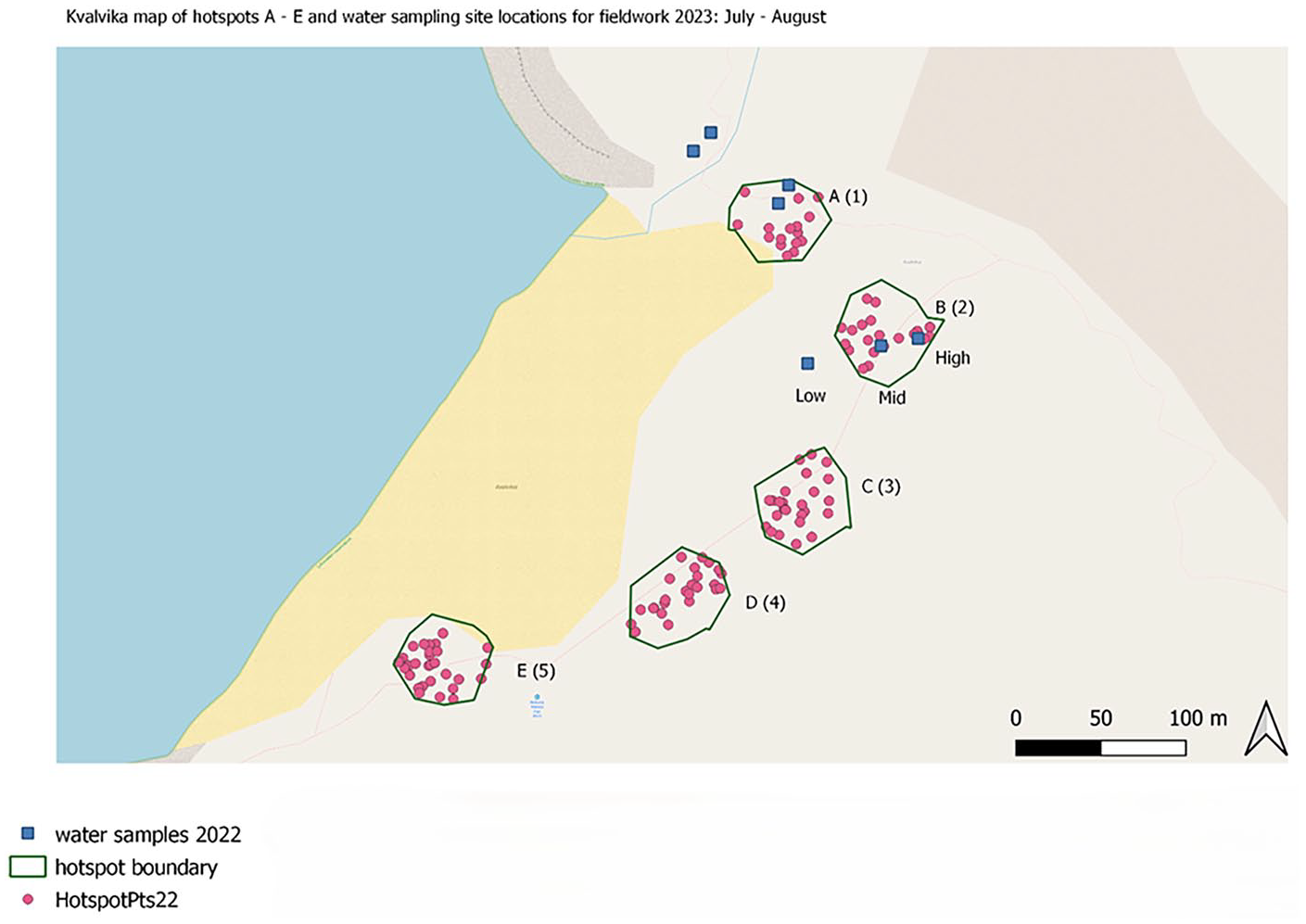
Map of Kvalvika beach with camping hotspots monitored for waste deposits in 2023. A–E refer to camping hotspots. Points within hotspots are toilet waste: fecal, toilet paper, menstrual products.
Communication Intervention Process
We reinforced environmental attitudes by describing the unique and vulnerable coastal tundra landscape and elicited attention to the unnatural amounts of human feces in the beach area by mentioning human health threats (Figure 2). We tested two communication delivery methods, a prominent trailhead interpretive sign (passive treatment), and personal contact with each incoming overnight visitor (active treatment). During the personal contact phase of the study, the researcher intercepting visitors wore a visible National Park jacket. The researcher repeated the same information as was printed on the interpretive sign, though this information could vary due to visitors asking for additional or clarifying information, such as when English or Norwegian was not their first language. Due to the prevalence of foreign visitors, we did not remove the interpretive sign as it became clear it was helpful for referring to figures on the sign while delivering the message in person. For this reason, the active treatment phase was confounded with the passive, creating an “active+sign” intervention. However, most visitors spoke English and Norwegian fluently enough to not need sign assistance. For ease of reading, we describe the confounded active + sign treatment as “active” treatment. Additionally, we eliminated any difficulties in accessibility (with the intention to reduce the perception of difficulty) by providing free Biffy bags to every overnight visitor during passive and active treatment periods.
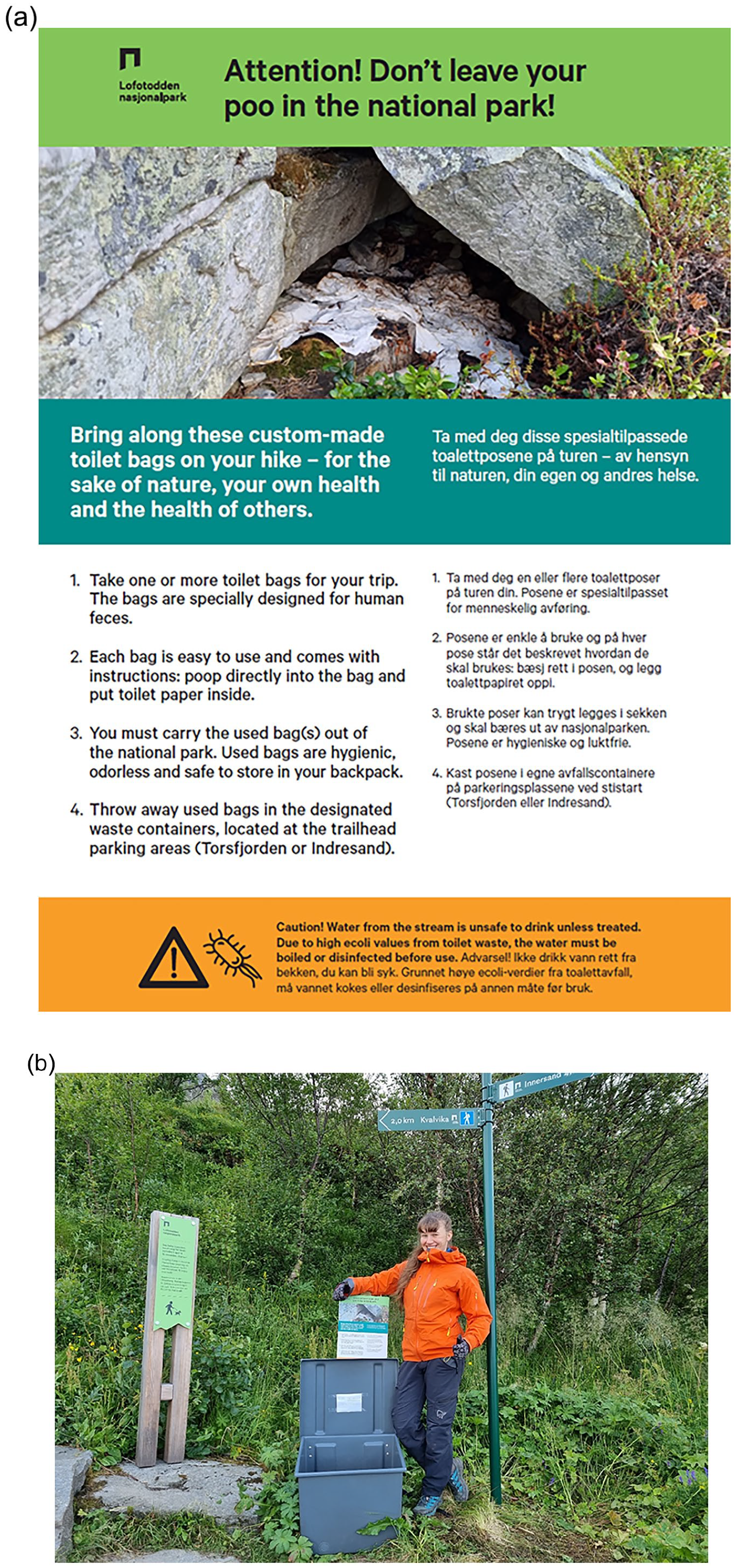
(a) Interpretive sign used in Passive treatment phase together with free Biffy bags in a box under this sign. The sign was also posted when the research team conducted Active treatment, and pointed to the photo if English or Norwegian was not understood. (b) Alternative to (a), or additional. Shows Biffy bag box(open) with researcher, and the interpretive sign behind the box. Photo: Keller (2023). Pictured: MS student Signe Raftevold-Rue.
Visitor Surveys
We designed a visitor survey to check that the characteristics of visitors, such as age, nationality, gender, and first-time visit were similar across treatment and control periods. All survey responses within each treatment or control period were used to test if visitor characteristics were significantly different from period to period by using ANOVA (for continuous data) and Chi-square (for categorical data). It is important to test for significant differences among visitors between each treatment period as these differences could indicate widely different waste disposal practices that would produce unreliable estimates. We piloted and refined the surveys on two groups of students (30 total) from the Norwegian Univ. of Life Sciences (NMBU) and University of Edinburgh. We developed a two-page online and printed survey in both Norwegian and English. This survey targeted visitors’ perceptions of human feces in nature, appropriate behaviors according to their perception and perceptions of difficulty or ease in using the Biffy bags. The survey included assessments of visitors’ knowledge of waste disposal and degree of concern about human waste in nature. The surveys were distributed in-person on site at Torsfjorden, or via QR code on the Biffy bags. Our target sample size was 400 visitors over 3 weeks of sampling. We had a protocol of non-response sampling, that is, with every refusal we asked visitors about general visitor characteristics (first-time visitor, their age, and if they had heard of a WAG bag before their present trip). We also noted in our field log the apparent gender, group size, and language spoken of the non-response visitors. The collected non-response (N = 27 non-response) revealed no significant differences then the visitors who completed a survey. We chose to deliver the survey to both overnight and day hikers because our pilot research in 2022 found no differences in these visitor types in terms of reported waste disposal attitudes, behaviors or norms. We decided to deliver to both visitor types to produce a robust visitor sample to test the TPB based model of WAG bag behavior intention.
ANOVA Model (Waste Per Capita)
To test the effect of different communication interventions compared to control (no communication) we used an analysis of variance (ANOVA) model. The independt variable is Treatment, which refers to passive, active or control period and the outcome variable is overnight visitors’ waste per capita (WPC). WPC was calculated by dividing the total number of deposits we mapped each week by the total number of overnight visitors camping at least one night on Kvalvika within that same week. Overnight visitors were calculated by the trail counter weekly numbers adjusted by the proportion of overnight visitors derived from the visitor survey. This way, WPC refers to the average number of deposits (or rather, partial deposit) per overnight visitor. We were not able to empirically test theory through our BACI design which was intended to measure the average effects of different communication treatments on number of waste deposits.
GLM Logistic Model (Testing TPB)
Theory could be tested through our visitor survey results in a model of WAG bag behavior intention. This modeled behavioral intentions to use WAG bags on future trips in Nordic nature based on visitor LNT attitudes, norms, and perceptions of difficulty. Apart from the binary questions about Biffy bag use in the park, all items were measured using a seven-point Likert scale, where 1 = highly disagree, 4 = neutral, and 7 = highly agree. We also included a willingness to pay item within the model to assess how cost affects intention. We consolidated six LNT Waste Disposal Principle knowledge statements into a variable known as “human waste attitude” (see Table 1) to evaluate the effect on visitors’ intentions to use a Biffy bag on future visits. We created another indexed variable from the five statements about human feces disposal norms - what visitors believe is appropriate behavior. Responses to the two statements, “It is inappropriate if the park encourages visitors to take out their own feces using an appropriate bag” and “I would prefer seeing toilets in the national park instead of being asked to take out my own feces,” were reversed; in these cases, the lowest value indicated a higher inclination toward desired human feces disposal behavior, contrasting with the other three variables. Higher values in the “human waste attitude” variable indicated a weaker knowledge about human feces and negative impacts, whereas higher values in the “human waste norm” variable indicated more knowledge about responsible waste behavior. In our analysis, we computed a control versus treatment average based on all visitors sampled in a particular experimental period.
Visitor Characteristics Including Demographics, Trip Characteristics and Responses to Human Waste Attitudes, Norms, and Perception Items.
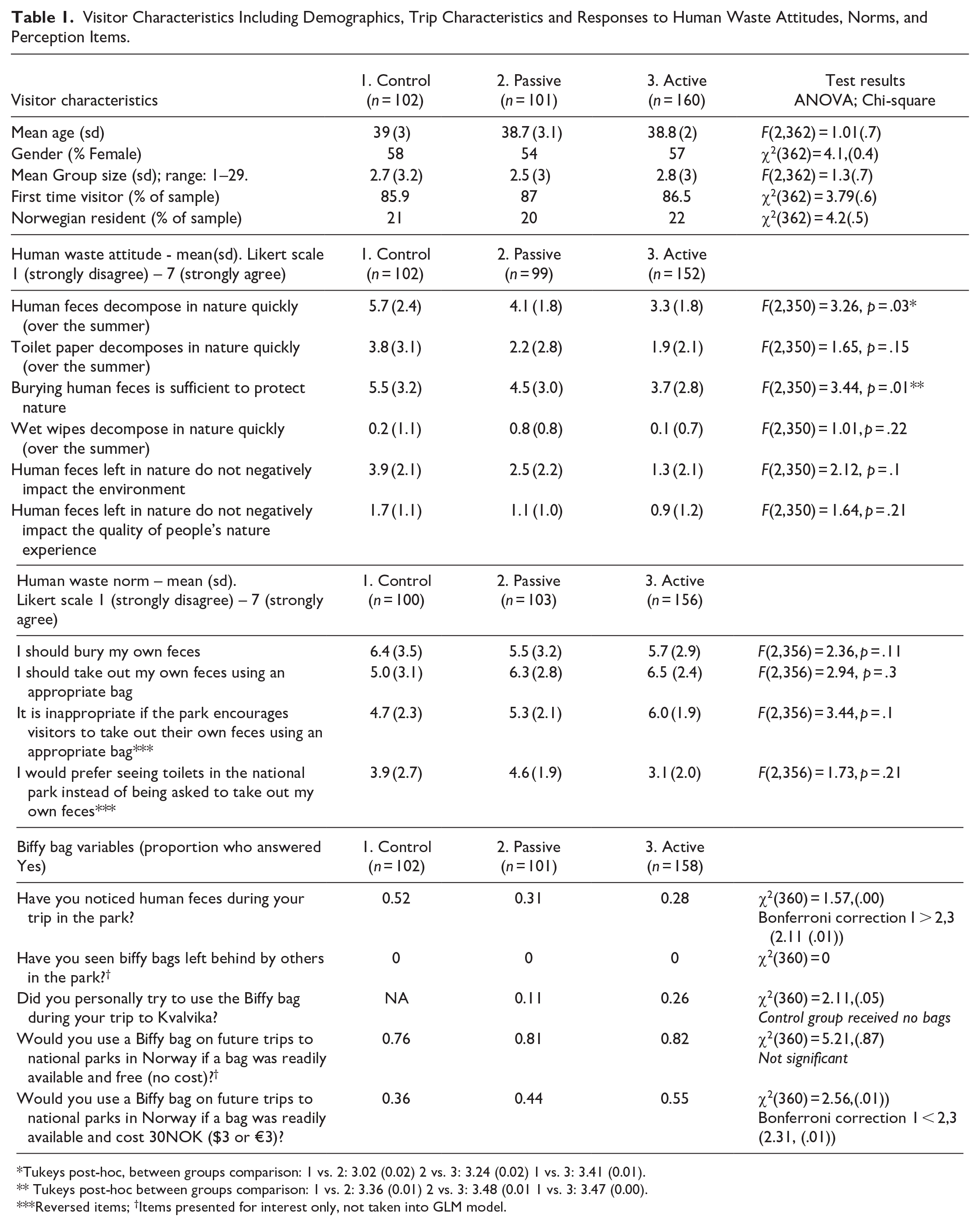
Tukeys post-hoc, between groups comparison: 1 vs. 2: 3.02 (0.02) 2 vs. 3: 3.24 (0.02) 1 vs. 3: 3.41 (0.01).** Tukeys post-hoc between groups comparison: 1 vs. 2: 3.36 (0.01) 2 vs. 3: 3.48 (0.01 1 vs. 3: 3.47 (0.00).
Reversed items; †Items presented for interest only, not taken into GLM model.
To test future intentions for Biffy bag use, we developed a generalized linear (logistic) model to test if visitor characteristics, experience variables and communication interventions affected visitor intentions to use Biffy bags in hypothetical future trips to national parks:
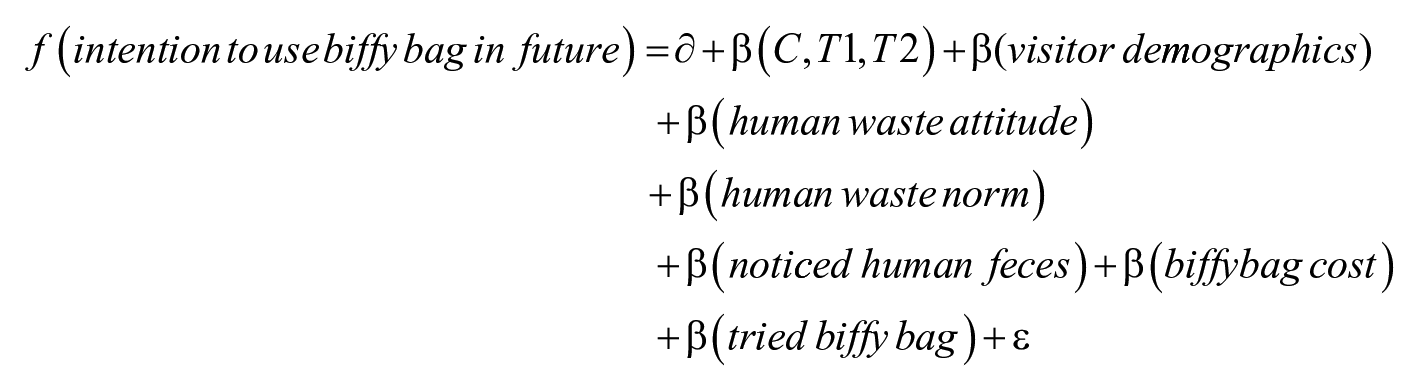
Where
Results
Descriptives
In total, we collected n = 363 visitor surveys with a response rate of 77%. Key visitor characteristics such as age and gender were very similar across the control and treatment periods (see Table 1). The different treatments did not seem to change the reported waste disposal attitudes or norms, apart from attitudes about fecal decomposition and burying waste. These items were measured using a Likert scale where: 1 = highly disagree, 4 = neutral, 7 = highly agree). Regarding fecal decomposition, visitors reported less agreement that feces decompose in nature quickly when they were exposed to active communication compared to passive (mean: 4.1 (passive), 3.3 (active); F = 3.02 (p < .02)), and most significantly compared to the control (mean: 5.7 (control), 3.3. (active); F = 3.41 (p < .01)) where visitors received no messaging about feces in the park and water contamination. Another significant finding was that visitors in the control period reported a much higher agreement that “burying feces is sufficient to protect nature” compared to visitors in the treatment periods, especially compared to the active period. This may appear contradictory, but the interpretive messaging included photos of open defecation in Lofotodden, water contamination information, and the information on how to use a Biffy bag, which could have encouraged people to reconsider both how leaving feces behind at all may impact the environment, or, that their idea of burying waste (e.g., covering) was not sufficient.
Other significant differences that arose in visitor characteristics between treatment periods was if visitors reported seeing feces during their visit into the park and their willingness to use a Biffy bag in the future. Regarding seeing feces in the park, visitors in the proportion of visitors in the control period was higher who reported seeing feces in the park, compared to the treatment periods (52% in control saw feces, 31% in passive, and 28% in active; see Table 1 for post-hoc results). Less visitors in during the active treatment reported seeing feces during their trip into the park, which corroborates our ANOVA findings. There was also a significant difference between visitors who reported using the Biffy bag during their trip into the park between passive and active treatments (control – no bags delivered). The active treatment 26% of visitors reported using a Biffy bag on the trip compared to 11% of passive. Visitors were asked to provide the reason why they did not use a bag if they did not report using it on their trip. The majority reported that “they did not have the need to use one,” (37% of passive treatment visitors, 44% of active treatment visitors), followed by “I did not have one with me on this trip” (30% passive, 22% active), and “I did not want to use a Biffy bag/no-response” (33% passive, 34% active). However, there were no significant differences between the passive and active respondents in the reasons provided for not using the bag during their trip.
Finally, visitors were asked their willingness to use a Biffy bag in the future if it were free and accessible. There were no significant differences between control, passive and active groups, though the willingness was slightly higher in the treatment groups. However, significant differences arose between control and treatment groups when visitors were asked their willingness to use a Biffy bag in the future even if it costs 30NOK/$3 each. A higher proportion of visitors in the active treatment group reported willingness to pay for a Biffy bag on future trips (55% active vs. 44% passive vs. 36% control).
ANOVA Results
Table 2 presents the total number of surficial human waste sites we recorded at the end of each test period together with the total overnight visitors in each period and the estimated WPC. It is the WPC that demonstrates the reduction of average waste deposit (or partial deposit) for every overnight visitor within a treatment period. Although we present the WPC calculated from baseline conditions (0.073), it was only the conditions during the control period (3) that we used in ANOVA and statistical testing. This is due to the fact that baseline conditions were an accumulation of waste for an unknown period prior to the study start.
Efficacy of Measures Designed to Encourage Visitors to Properly Dispose of Their Feces in Kvalvika as Determined by the Total Number of Waste Deposits Within Each Camp Monitoring Site (Hotspot) on Kvalvika. a

Waste mapped in June 2023 was used to estimate baseline and provide context, but due to unknown length of time before study start this was not brought into ANOVA. Only waste deposits mapped in July 2023 was used in ANOVA as our control period.
Estimated from our visitor survey sample: 32% of visitors surveyed were on an overnight trip into the park.
During the active treatment (T2), visitors left behind only 0.029 waste per person, compared to the 0.066 in our control period. The waste per capita may appear insignificant, but with an average daily overnight visitor count of 74 in the month of July the accumulation of human feces over a week is a visible issue. In particular, hotspots 3 and 5 had the largest number of human waste deposits and these did not significantly change between the passive and active communication treatments. One reason for this is these hotspots also correspond to the most popular features to camp near on the beach. Hotspot 3 is nearby Rørholmen, a depressed streambed. Hotspot 5 is located in a dense cluster of large boulders, popular toilet locations.
The results of the ANOVA are presented in Table 3. For our model, we used only the waste per capita generated from the post-treatment control period, as the initial mapping in June was considered a comparative baseline. The statistical analysis showed that both treatments significantly reduced waste accumulation compared with control periods. The largest improvement was between the baseline conditions to T2 period, but also there were significant improvements between the control and treatment periods (Table 4). Evidence supports our hypothesis that communication interventions were effective in reducing human feces accumulation. We cannot say, however, that the intervention with active was a significant improvement over the passive intervention, in part due to the confounding of the active intervention with the interpretive sign. However, 4 out of 5 hotspots had fewer counted waste deposits.
ANOVA Results of Communication Intervention Effectiveness in Reducing Waste Per Capita, With Tukey’s Multiple Comparisons of Mean Effectiveness With 95% Conf. Level.
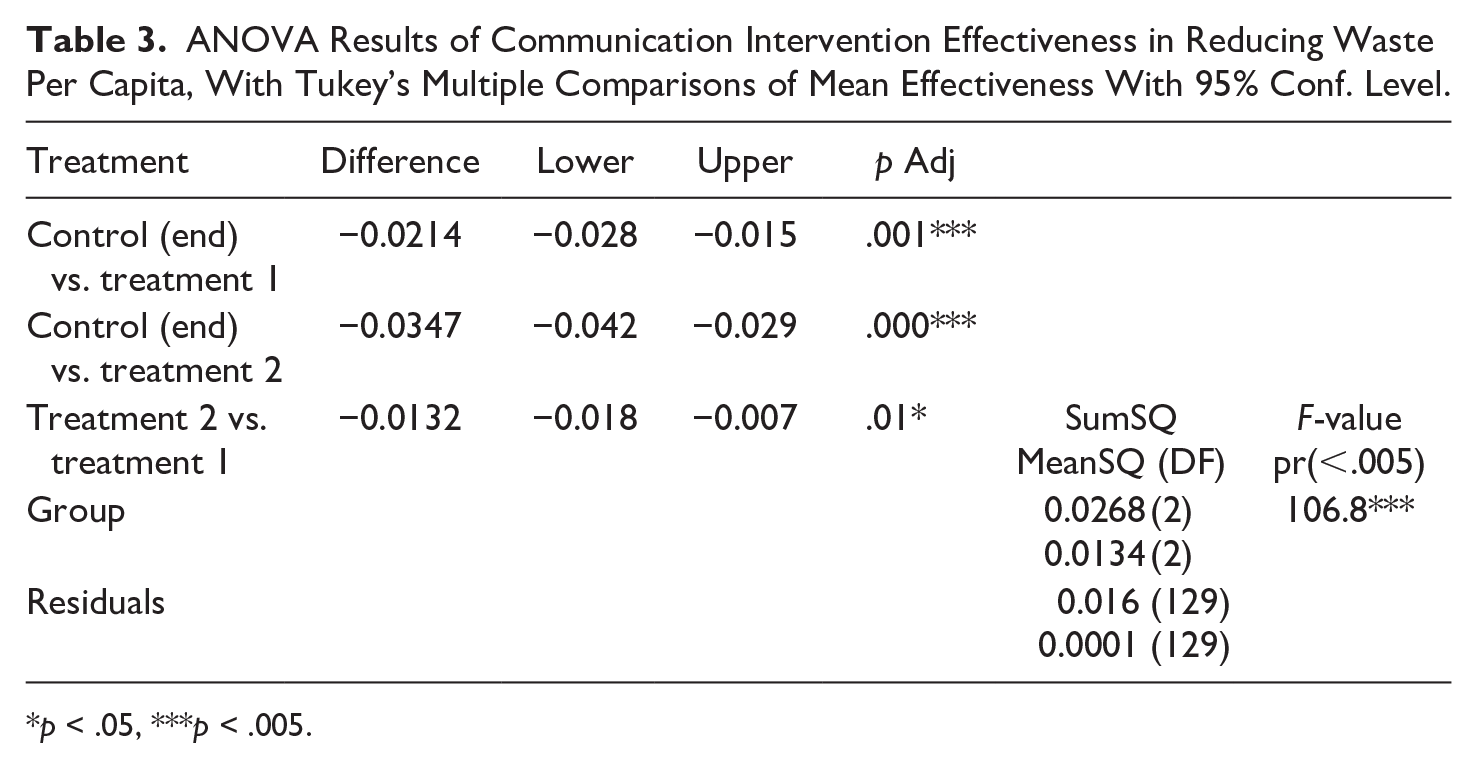
p < .05, ***p < .005.
Water Quality Results Pre-Post Communication Interventions and Free Access to Human Waste Bags (Biffy Bags).
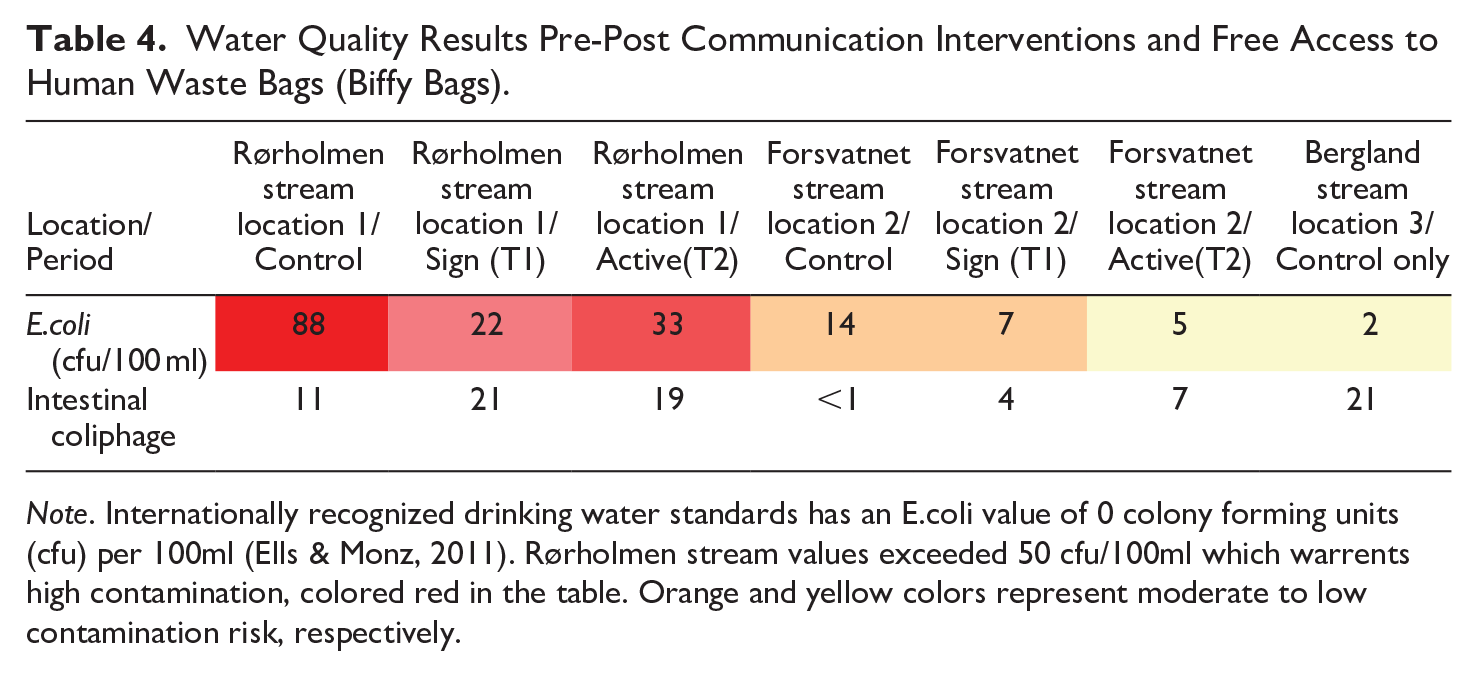
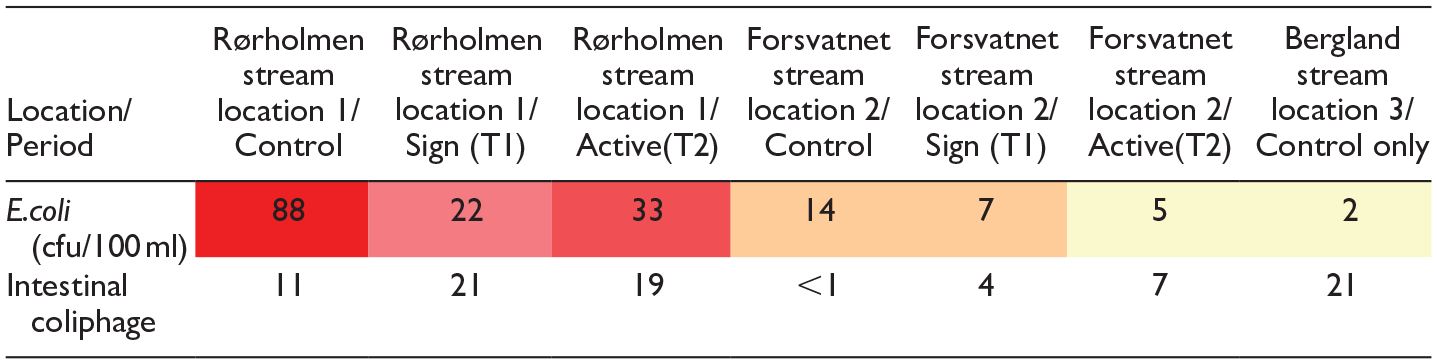
Note. Internationally recognized drinking water standards has an E.coli value of 0 colony forming units (cfu) per 100ml (Ells & Monz, 2011). Rørholmen stream values exceeded 50 cfu/100ml which warrents high contamination, colored red in the table. Orange and yellow colors represent moderate to low contamination risk, respectively.
Regarding water quality, we recorded a substantial improvement in the E.coli levels and intestinal coliphage levels after our communication interventions. In 2022, visitors reported gastroenteritis after ingesting water local streams, corresponding to E.coli levels between 65 cfu to 100 cfu/ml. But in 2023, the relative levels went from 88 cfu/ml (control) to 22 cfu–33 cfu (Table 4) during our communication weeks (Keller et al., 2023; Keller & Engen, 2022). The intestinal coliphage results reflect possible presence of pathogenic viruses in the water, found within the E.coli bacteria, and though nonpathogenic are also an indicator of fecal contamination.
Logistic Results of Behavior Intentions to Use a Biffy Bag in the Future
Results show (Table 5) the strongest predictor of intentions to use Biffy bags in the future is the human waste norm variable. This makes sense as norms are already “usual behaviors,” so if people responded that “I believe I should use a bag,” or that “others expect me to use a bag,” the more likely they would report they would use a Biffy bag in future visits to national parks in Norway. Age was the only significant demographic variable. Older ages corresponded with higher likelihood to use the Biffy bag in the future.
Regression Results From Logistic Model: Biffy Bag Use Intentions Based on Visitors Reporting Attitudes, Norms, and Their Demographic Data.

Note. *p < .01, ***p < .001. Fischer iterations: 7. Adj R2 = .53. AIC = 1,783.17; R code available.
If a visitor noticed human feces, the likelihood of using a bag in the future was higher, however, this was non-significant and not brought into the final model. The different treatment periods were also not significant in affecting the likelihood of a visitor reporting future intentions to use a Biffy bag, that is, between people reading a sign or receiving personal communication. We retained this variable due to the centrality of communication in our project even if the model doesn’t return significant results regarding their effect on intended future Biffy bag use. However, the intercept, the control period where visitors were surveyed but did not receive communication or Biffy bags was significant. This variable was significantly negative, meaning people surveyed during the no- communication period were less likely to report an intention to use a Biffy bag in the future than those who experienced some messaging about Biffy bag use. Additionally, if a person tried the Biffy bag, the likelihood is higher that the person would report intent to use the bag in the future. Importantly, the effect of introducing a cost the visitor must pay to use a biffy bag in the future had a negative effect on the intention to use a biffy bag in the future for those visitors who are sensitive to cost.
Conversely, the human waste attitude corresponded to a negative intention to use the bag. In other words, the more a visitor agreed that feces decompose quickly, and that they do not have a negative impact on the environment, the less likely they intended to use a Biffy bag in the future. However, this variable was insignificant which indicates attitudes in the composite variable we developed do not predict intention and so we did not bring this into the final model. However, this could be a consequence of making the attitude items into a composite variable, instead of testing them individually. For example, one attitude item (belief that feces harm the environment) did have a strong positive correlation between this belief and intention to use a bag (p = .56), which does align with the LNT Waste Disposal Principle. Individual items therefore may have been more informative in the model. If the individual was sensitive to the cost of a Biffy bag (reported disagreement to use when it cost 30NOK), they were also less likely to report using a Biffy bag in the future if free.
Discussion
This research investigated combinations of passive and active communication treatments together with delivery of free personal toilet bags to reduce the accumulation of human feces and associated toilet waste in Lofotodden National Park. As has been suggested in the literature, treatments that incorporate direct measures, like providing visitors with a Biffy bag, in combination with active communication (or active and passive interpretation) tend to be more effective than only relying only on passive communication. In this study, both treatments had a significant effect on toilet waste accumulation on the beach. We were unable to firmly establish that adding active communication was more effective than signs only for communicating a relatively new practice within the LNT Waste Disposal Principle. The effect size for active communication was higher than passive communication only, though the difference was not statistically significant.
In total, we distributed nearly 600 bags over a 2-week period, meaning 15% of visitors in these 2 weeks took a Biffy bag to use if needed (total n visitors in T1 + T2 periods = 4,032). Despite this some areas (hotspots 3, 5) retained the most human waste deposits despite the different treatments. These hotspots correspond with two important features of the beach: hotspot 3 is the nearest to the largest stream and most depressed streambed in the area, whereas hotspot 5 is the furthest away from the trails to the streams and closest to a cluster of boulders that provide more privacy. For management application, prompter signs targeted toward drinking water safety due to human feces deposits could be a direct on-site intervention that is more effective at reducing the accumulation of feces rather than signs posted at trailheads in hotspot 3, 5 camping areas. In addition, it is important to keep the price of Biffy (or other WAG) bags low (or free) to encourage their use. The GLM results suggest that people are highly sensitive to cost for intentions to use a bag, but that visitors will exhibit stronger intentions to change behavior if human waste norms are strong. In other words, if an individual reported strong agreement with “others expect me to pack out my own waste,” “I believe I should pack out my own waste,” the intent to use a Biffy bag in the future is higher compared to individuals with “weaker” human waste norms. Human waste norms could also have been reinforced by the external sanctioning or encouragement of other visitors. Our field team reported a few cases of enthusiastic visitors that were educating others along the trail to the beach, though this has not been explicitly tested in the present study. Finally, in our descriptive results we found that the mean of those who subscribed to the notion that feces decomposed quickly, or reporting seeing feces in the park during their visit became smaller between passive and active treatments compared to the mean during the control week, which may suggest the passive and active treatments were effective in conveying the message and improving compliance. We also found that people had a higher willingness to pay for a Biffy bag on future trips in the active treatment group compared to passive and control. One reason for this could be the dynamic way in which active messaging can convey enthusiasm, interest, care, and engagement—all positive qualities that may influence people’s evaluation weighing the cost of compliance with adopting a WAG bag.
Management Implications
We believe Norwegian national parks can learn from other nature recreation areas that have been collaborative managed by volunteers and in dispersed yet integrative ways. Backcountry sanitation has been long tested considering the growth in visitors along popular national trails in the United States. A number of solutions are put forward depending on context (including WAG bags), but also the effective use and placement of pit and composting toilets (Backcountry Sanitation Manual, 2014), but that it is of utmost importance “. . .to tailor a solution to a particular site, it is necessary to evaluate the site’s capabilities and the impacts of visitors” (p. 23). Toilet facilities (or lack thereof) can have a major influence on whether human waste disposal becomes an issue, but generally the provision of toilet infrastructure is deemed the most effective means to prevent open defecation in protected areas (Stevenson et al., 2020; Scott et al., 2022). However, management in Norway must contend with little oversight of visitors and their impacts, while at the same time protecting often sensitive sites with minimal budgets. The provision of permanent toilets in remote areas such as Lofotodden would require the use of helicopters or boats with pump-out capabilities to remove human waste which generates other impacts such as shipping lines maintenance, coordination of waste removal services, and larger municipal budgets to cover the cost of waste removal and treatment (LAS& Sverdrup, personal communication, 2024). Toilets need to be navigated and planned carefully, with a guaranteed funded maintenance structure in place (Williams, 2016).
Regarding water contamination, the educational task at hand is to expand this knowledge of a 60 m/200 ft setback of human waste disposal (using the cat-holing method) to curb the immediate contaminant issue. In the specific case of Lofotodden, this will be challenging to communicate, as the only depressed areas to hide in the landscape are streambeds, the terrain is a challenge to dig adequate holes for waste burial, and the popular areas to hide behind to bury waste are already highly used as sites of open defecation, perhaps discouraging the effort to dig a hole and signaling to others to leave surface deposits (a main reason we cleaned up sites after each week). Another educational task at hand to communicate the proper way of sanitizing water for consumption (boiling, chemicals, or filter) and to establish appropriate informational signage to alert visitors.
Our findings suggest WAG bags could be effective in the future, given that visitors report high willingness to use bags if they are free (80%–82% of visitors) or at a cost of 30 NOK/$3 (36%–55% of willing to use bag). Visitors during the control period reported a lower willingness to use a WAG bag if it cost 30NOK/$3, suggesting that interpretive messaging was an important influence on visitors’ evaluation of future use. A caveat is around 20% of visitors reported they were not willing to use a WAG bag. In our calculation of total overnight visitors in our 2 week trial period with free bags and the amount taken (all 600 bags we imported were taken), 15% of overnight visitors took a free bag, which is still a quantity that warrants concern around relying on this waste management strategy alone, suggesting that alternative waste mitigation measures should also be encouraged, such as the practice of cat-holing and 60 m/200 ft setback, though the terrain makes this a challenge. Additionally, visitors to Kvalvika follow generally the same pattern: a short hike and one night camp on the beach. This type of visitor flow, together with the rugged and steep fjord landscape, may lend itself to more individual-based solutions as advocated within the Waste Disposal LNT Principle 3.
Our survey results show that visitors generally agreed that leaving behind wet wipes and toilet paper behind in nature can negatively impact the environment in line with LNT Principle 3. This suggests messages should focus on reminders about the norms people already have, for example, “leaving wetwipes behind is harmful: don’t do it!” Visitors also reported a general agreement that burying waste is sufficient for protecting nature, but as mentioned before “burying waste” is also interpreted widely as “covering.” This underscores the importance of conveying a clear message about the desired LNT Principles and elements therein the park ultimately wishes to fully support and target educational messaging. If the park board determines WAG bags are the desired management form, then all other information about waste disposal in Lofotodden needs to align. If we look to the willingness reported in the survey to use free WAG bags and compare this with our limited supply that was readily taken by the visitors, the 15% compliance could have likely been much higher if we had a larger WAG bag supply, implying that LNT practices could be readily adopted if education and tools are in place.
Study Limitations
A major limitation to our study was our sampling did not generate enough observations for a single statistical model that linked communication with individuals’ observed behavior. However, we did measure an effect of the free Biffy bags in reducing human waste deposits, and we also see this reflected in people’s intention to use Biffy bags in the future from the visitor survey. However, more time with interventions is needed to establish a new norm of human waste disposal and to get toilet waste down to acceptable levels for park management; a level not yet determined.
A major limitation was insufficient resources to test bag delivery in different settings, with different groups of visitors, and over longer periods of time. We were able to only test communication interventions for 2 weeks and one control week. Ideally, passive and active/passive combination interventions would be tested multiple times, varying in weeks to be sure we capture a diverse range of visitors and variation in environmental conditions (e.g., weather). For our study, we elected to try and capture the same type of visitor and weather/environmental conditions by limiting the study to July, a time of year that prior years’ visitor surveys show a similarity of visitor types and weather does not substantially vary.
There was also the drawback in our study regarding substantial media attention drawn to the project due to our pilot research in 2022 about this “new poo” problem in Norway. This attention could have increased the compliance of visitors to take the bags for their trip during the passive communication phase, thus minimizing the difference between active and passive communication. Furthermore, this had a consequence in reducing the number of bags available for overnight visitors to Kvalvika, who we assumed had the highest need of the bags. A caveat is we did not purchase enough bags to meet the demand, without running out before our treatment periods were complete. WAG bags are not produced in Europe, and with the tariffs Norwegian customs levies on imported products, we had reached our budget maximum with 600 bags.
These limitations warrant further investigation into longer term and saturation effects. Whether waste norms supporting toilet bag use take hold is a matter of repeated measures, as we are only able to control for such latent effects over time. The sign and the uniformed personal contract appeared to influence the cognition of visitors, and as intended, made them reconsider their toilet-waste behaviors while in the park. Even though we captured relatively few visitors who reported in the survey that they used the bag, a large proportion reported “not having the need,” which suggests visitors reconsidered leaving their feces in the park – they planned to wait rather than use the bag. This could explain the discrepancy between significantly reduced waste on the beach despite a relatively small proportion of visitors reporting they used the bag during their Kvalvika trip (67 visitors who took the survey also personally used the bag). Another reason for the discrepancy is the difficulty we had to get those visitors who took bags to also take the survey. We adjusted our intercept plan to tape survey codes on each delivered bag, but nevertheless our response was lower than expected: 26% (259 (passive and active treatment surveys)/67 visitors reported using the bag on the survey).
Potential for a Leave No Trace Norway
Nowadays, the predominant belief among policy makers within the environmental agency and provincial governments is that there are large areas of untouched nature that could tolerate visitors, and that there is not the quantity of tourists to national parks to require interventions (Lundmark et al., 2020). To tackle the challenges related to extreme rate of growth in visitors in northern Norway, national parks require increased funding. Greater government investment in visitor management could not only help protect the parks but also positively impact the local tourism industry (Vatanen & Kajala, 2020). The culture and institution of Leave No Trace offer another complimentary path, one that brings together varied interests in civil society to mobilize to build a culture of conscientious and caring outdoor recreation: a “sporløs friluftsliv” (traceless outdoor life). Managers should consider institutionalizing a volunteer system of “nature leaders” drawing from the vast member base and experience of DNT. Including members of local DNT chapters can encourage the local recreation community to engage with tourists as nature educators about LNT principles; the DNT has long been a collaborator with national parks and tourism, thus, the potential is ripe for members to adapt the LNT principles to a Nordic context as well as adapt practices in outdoor life (friluftsliv) in Norway to better align with the reality of high and growing pressure in nature areas, including adapting the seven LNT Principles to a Nordic context.
We have had some success with this in Femundsmarka national park, working with the local DNT and transport operators to communicate the guidelines in LNT Principle 5: Minimize Campfire Impacts. This park struggled with extensive damage to the local forest due to increases in guided and independent visitors camping and building fires from local tree material. Through collaborative and extensive LNT messaging, we were able to educate about the use of twig burners via a message of “nature know-how” which through our research we discovered was an important identity marker visitors to Femundsmarka wanted to maintain. This and other similar projects led to our current efforts to institute LNT in a Norwegian Branch, using Arctic Norway as a staging ground (including Lofotodden). Arctic Norway has experienced extreme growth in visitation in the past 5 years and is wrecking massive damage to the tundra due to campfire proliferation, trampling, and human waste. Local municipalities are recognizing the need for scaling or management, but education, or ideas about management or fees, is not agreed upon. Many are concerned about the divergences LNT presents from friluftsliv and allmannsretten – that gathering and access would be limited. However, we look to the examples of LNT International, namely, Ireland and Japan, and how these countries were able to scale local to national, and focus the LNT principles around preserving cultural heritage of places and traditions therein. These countries also provide examples of specific environmental issues an LNT culture would address: dogs (and dog poo) in nature (Leave no Trace Ireland, 2025) and “spotlight programs” such as protecting water resources (Leave no Trace Japan, 2025). We are currently engaged with research and dialog from local tourism businesses and municipal leaders around the issue of northern lights tourism, and hope to develop together a set of LNT Principles that speak to the original seven but resonate most with the already strong outdoor recreation culture of Norway.
Conclusion
The Norwegian Environment Agency’s guide for visitor management in Norwegian protected areas is directed at the management authority for national parks and focuses on creating good experiences for visitors and the greatest possible local value creation, prioritizing implementing measures that increase understanding of protection and how to safeguard protected values. To facilitate local value creation, collaboration is encouraged between the interests of the tourism industry and the management authority, in other words, expand the NBT sector (Lindøe, 2022). Our study involved many local stakeholders, including from the local municipalities, park board, local landowners, and destination management organizations, including leading local workshops to co-create collaborative strategies among varying interests, though there needs to be better integration and representation of nature conservation NGOs, and the nature recreation associations such as local chapters of friluftsliv(outdoor life) organizations such as DNT, and Sàmi leaders in the development of tourism in the Sampi region and other parks where Sami have traditional land and access (Viken, 2022). Perhaps one of the most important steps parks and their boards could take is to determine what effective sustainable tourist infrastructure they should push for nationally, if they determine to follow through with a mandate to grow tourism locally. Education is a powerful tool, but one that needs to be consistent, effective in reaching the audience, and effective in the mode. Another option is to resist this national mandate and instead focus their sparse resources on monitoring the use of the park, perhaps drawing from the local outdoor recreation organizations (Sønstevold, 2022).
Our study findings provide a starting point for a discussion about priorities in nature conservation thrown into stark relief with the growing issue of human feces. Mitigation solutions are successful when tailored to a specific national park context, but similarities can be drawn across parks that adopt LNT educational programs and tools. Encouraging a conservation culture that does not seek broad overarching strategies or plans that focus on solely on “welcome in” (the official motto of Norwegian National Parks) but one where LNT guidance is widely disseminated coupled with specific site strategies and monitoring programs is the way to approach the complex interweavings of issues conservation managers face (Selvaag et al., 2023). Coming up with best practices for particular bundles of social, cultural, policy, and environmental features may be a way forward for tackling the human waste issue at a broader scale (Lawhon et al., 2018). Starting from LNT education at a local scale, mobilizing the membership of DNT for example, is a vital step toward this goal. Lofotodden National Park can be a showcase of effective LNT education delivered through the park’s official channels, volunteers, visitor centers, and tourists, but the support provided must be consistent, sufficient, and adaptive to match the need. LNT education should be nuanced to meet the needs of particular sites but broad enough to be shared and common knowledge for an international community of outdoor enthusiasts, ensuring “proper poo” behavior is practiced by visitors not just in their favorite recreation area, but in all, across the world.
Footnotes
Acknowledgements
The authors would like to thank the masters students involved in this project: Signe Raftevold Rue, Helena Slater, Hennie Lindøe, and Eirik Sønstevold. We also are very grateful for the advice and help from the local steering group, the local visitor center, and our many colleagues.
Authors’ Note
Shari Edelson is the final author in this study, contributing to the conceptualization and writing of the paper.
Ole-Jakob Kvalshaug is now affiliated to County governor of Nordland, Bodø, Norway.
Data Availability

Declaration of Conflicting Interests
The author(s) declared no potential conflicts of interest with respect to the research, authorship, and/or publication of this article.
Funding
The author(s) disclosed receipt of the following financial support for the research, authorship, and/or publication of this article: The project was funded in part by the Norwegian Environmental Agency (Miljødirektoratet) and internal start up grants within the Norwegian Institute for Nature Research (SATS).
Ethical Approval
All years of the project were approved by the Norwegian Data Protection and Privacy, part of the European GDPR standards.
Other Disclosures
Part of this project has been reported in to Norwegian Institute for Nature Research publications: one in Norwegian to the Norwegian Environmental Agency for a final report, and another with an English summary to the Norwegian Environmental Agency. Available here: Keller, R., Engen, S.& Selvaag, S.2024. Sporløs Turisme: Vi testet hvordan vi kan redusere forsøpling og legge til rette for sporløs turisme i Lofotodden nasjonalpark. NINA Temahefte nr 94. Norsk institutt for naturforskning (NINA), Trondheim; Keller, R., Engen, S. & Selvaag, S. (2023). Testing visitor management strategies to reduce human waste in a highly visited national park in Norway. NINA Report 2385.