




Abstract
The Expert Panel for Cosmetic Ingredient Safety (Panel) assessed the safety of 13 alkyl sultaines, which are most frequently reported to function in cosmetics as antistatic agents, surfactants, and skin and hair conditioning agents. The Panel reviewed the available data to determine the safety of these ingredients. The Panel noted gaps in the available safety data for some of the alkyl sultaines in this safety assessment; the available data on some of the ingredients are sufficient, however, and can be read across to support the safety of other members of the group. The Panel concluded that these alkyl sultaines are safe in cosmetics in the present practices of use and concentration described in this safety assessment.
Keywords
Introduction

Definitions, Idealized Structures, and Functions of the Ingredients in This Safety Assessment. CIR Staff, 1
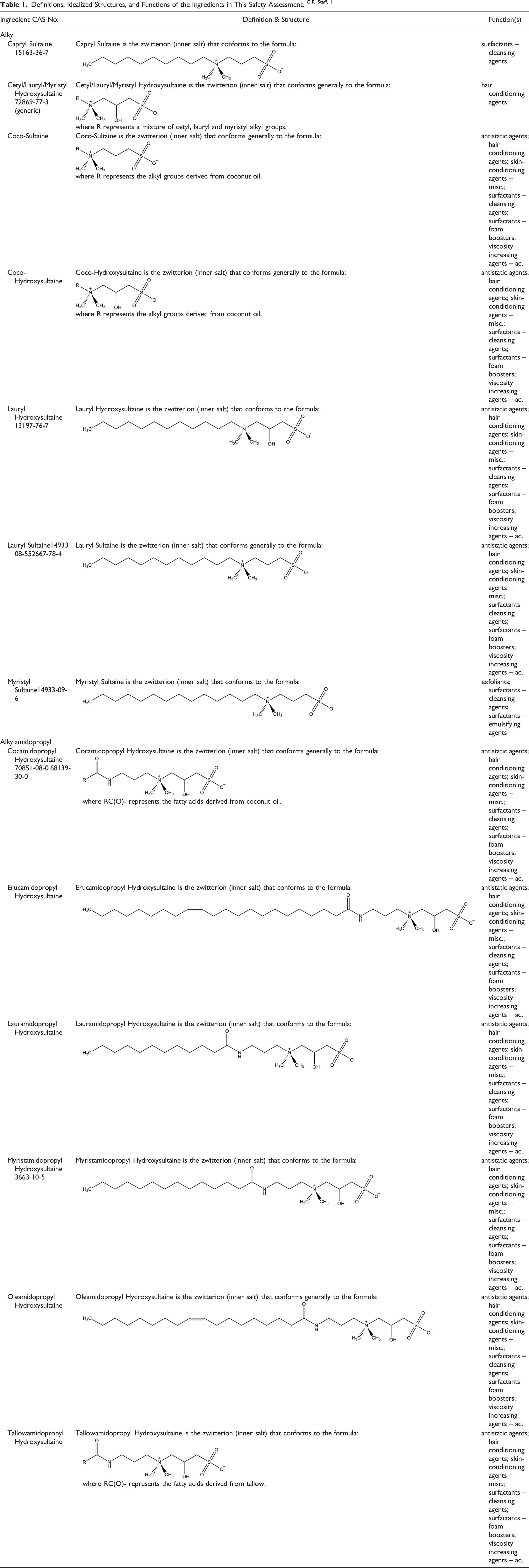
The sultaines are structurally related to betaines and are sometimes referred to as sulfobetaines. Each of the ingredients named in this report is a sulfopropyl quaternary ammonium salt. The structures of the alkyl sultaines are relatively similar, and certain toxicological data for one ingredient may be informative about the toxicity of one or more of the other ingredients in this report. The Panel has previously reviewed the safety of Cocamidopropyl Betaine and related aminopropyl betaines, and concluded that those ingredients are “safe in cosmetics as long as they are formulated to be non-sensitizing, which may be based on a quantitative risk assessment (QRA).” 2 That caveat was included in the conclusion due, in part, to data indicating sensitization potential of the impurity 3,3-dimethylaminopropylamine (DMAPA), which may exist in final formulations. The aminopropyl betaines are zwitterionic and comprise a quaternary ammonium salt, like the sultaines, but differ structurally as carboxymethyl alkylamidopropyl substituted ammoniums. The Panel also has previously reviewed the safety of alkyl betaines, and concluded that those ingredients are “safe in the present practices of use and concentration, when formulated to be non-irritating.” 3 The alkyl betaines are also zwitterionic and comprise ammonium salts, like the sultaines, but differ structurally as carboxymethyl ammonium salts.
This safety assessment includes relevant published and unpublished data that are available for each endpoint that is evaluated. Published data are identified by conducting an exhaustive search of the world’s literature. A listing of the search engines and websites that are used and the sources that are typically explored, as well as the endpoints that the Panel typically evaluates, is provided on the Cosmetic Ingredient Review (CIR) website (https://www.cir-safety.org/supplementaldoc/preliminary-search-engines-and-websites; https://www.cir-safety.org/supplementaldoc/cir-report-format-outline). Unpublished data are provided by the cosmetics industry, as well as by other interested parties.
Some chemical and toxicological data on Cocamidopropyl Hydroxysultaine and Lauramidopropyl Hydroxysultaine included in this safety assessment were obtained from robust summaries of data submitted to the European Chemical Agency (ECHA) by companies as part of the REACH chemical registration process. Additionally, some data on Lauryl Hydroxysultaine was obtained from a hazard assessment by Australia’s National Industrial Chemicals Notification and Assessment Scheme (NICNAS). These data summaries are available on the ECHA and NICNAS websites, respectively, and when deemed appropriate, information from the summaries has been included in this report.4-6
Chemistry
Definition and Structure
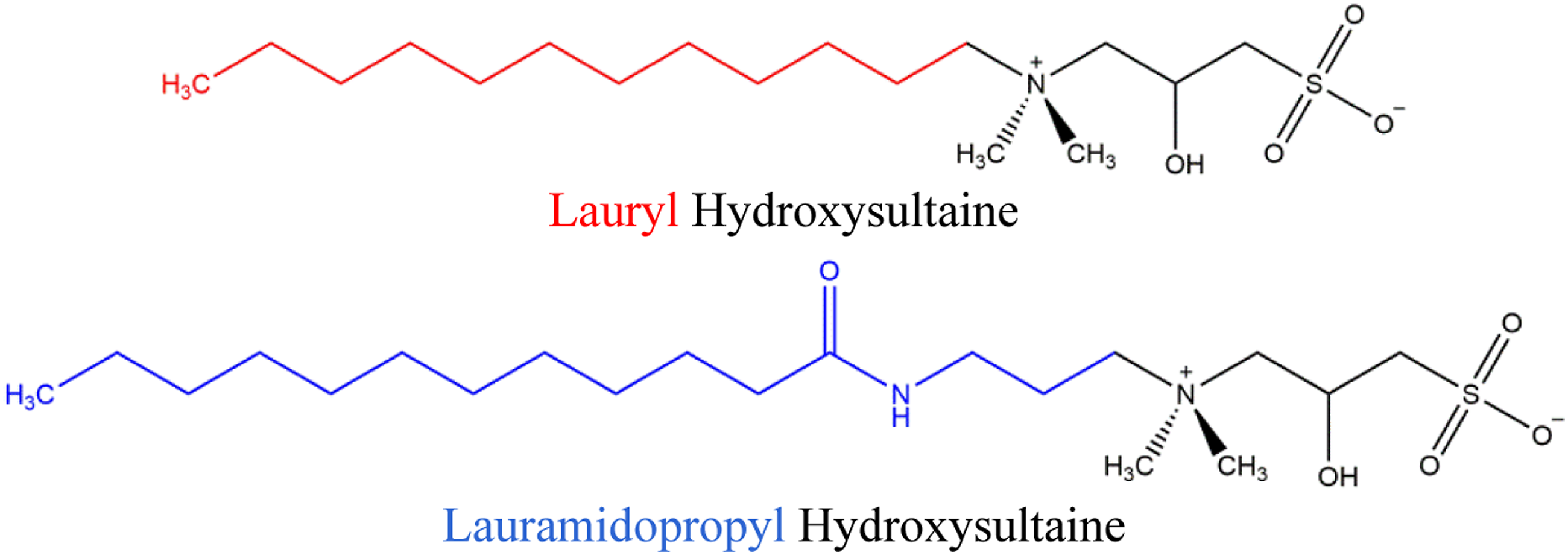
The definition, structures, and functions of the alkyl sultaine ingredients in this safety assessment are provided in Table 1. All of the ingredients in this group comprise a core sultaine structure, as described in Figure 1, and each comprises a sulfopropyl quaternary ammonium salt. Those ingredients with “amidopropyl” in the name vary structurally from the other ingredients in this report at the “R” position. For “amidopropyl” ingredients the R group is alkylamidopropyl, versus simply alkyl for the other ingredients (Figure 2). Sultaines, wherein R is alkyl or alkylamidopropyl, and R’ is hydrogen or hydroxyl group. Examples of alkyl and alkylamidopropyl sultaines.
Physical and Chemical Properties

Method of Manufacturing
Cocamidopropyl Hydroxysultaine
A supplier has reported that Cocamidopropyl Hydroxysultaine is produced by reacting an inorganic salt with chlorinated epoxide followed by reacting the resulting intermediate with amine. 7 The process undergoes at least 3 checks for quality control with final adjustments made to yield the standard product.
In other submissions, suppliers have reported that Cocamidopropyl Hydroxysultaine is produced through the amidation reaction of coconut oil to form cocamidopropyl dimethylamine.8,9 This intermediate is then quaternized with 3-chloro-2-hydroxy-1-propanesulfonate to form Cocamidopropyl Hydroxysultaine.
Another supplier reported that Cocamidopropyl Hydroxysultaine is produced by reacting dimethylaminopropylamine with coconut oil. 10 The resulting intermediate is then reacted with a bisulfite solution, a specific chlorine containing petrochemical compound, and water to yield the alkylamidopropyl sultaine ingredient and sodium chloride.
Lauryl Hydroxysultaine
A supplier has reported that Lauryl Hydroxysultaine is produced by quaternizing lauryl dimethylamine in situ with sodium oxiran-2-ylmethanesulfonate. 11
Composition/Impurities
Nitrosamines/Nitrosamides
Although N-nitroso-derivative content has not been reported, amidopropyl sultaines comprise secondary amides, and potentially can be nitrosated (alkyl sultaines do not have an amide that is susceptible to nitrosation). Of the approximately 209 nitroso-amines/-amides tested, 85% have been shown to produce cancer in laboratory animals. 12 Nitrosation can occur under physiologic conditions. 13 Depending on the nitrosating agent and the substrate, nitrosation can occur under acidic, neutral, or alkaline conditions. Atmospheric NO2 may also participate in nitrosation in aqueous solution. 14 Accordingly, amidopropyl sultaines should be formulated to avoid the formation of nitroso-amines/-amides. Additionally, materials used to manufacture these ingredients may include amines susceptible to N-nitrosation. Thus, manufacturers should continue to use current good manufacturing practices (cGMPs) to limit residual contamination of these ingredients with such N-nitrosatable impurities.
Capryl Sultaine
A manufacturer has reported using a Capryl Sultaine raw material with purity >98% and levels of propane sultone and N,N-dimethyl decylamine that are ≤ 100 ppm and ≤ 1000 ppm, respectively.15,16
Cocamidopropyl Hydroxysultaine
A supplier has reported that Cocamidopropyl Hydroxysultaine (raw material) contains approximately 50% solids and typically has <2 ppm DMAPA. 17 Another supplier has reported that unreacted free DMAPA is typically <10 ppm (<10 μg/g). 18
Lauramidopropyl Hydroxysultaine
A supplier has reported that, as a raw material, Lauramidopropyl Hydroxysultaine contains approximately 50% solids and typically has <3 ppm DMAPA. 17
Lauryl Hydroxysultaine
Lauryl Hydroxysultaine (28% to 32% active ingredient in an aqueous solution) is reported to contain 20 ppm heavy metals (including lead), 2 ppm arsenic, <4% quaternary ammonium salts, <1% free amine, <14% sodium chloride, and 50% to 57% water. 6
Use
Cosmetic
The safety of the cosmetic ingredients included in this assessment is evaluated based on data received from the US Food and Drug Administration (FDA) and the cosmetics industry on the expected use of these ingredients in cosmetics. Use frequencies of individual ingredients in cosmetics are collected from manufacturers and reported by cosmetic product category in the FDA Voluntary Cosmetic Registration Program (VCRP) database. Use concentration data are submitted by the cosmetics industry in response to surveys, conducted by the Personal Care Products Council (Council), of maximum reported use concentrations by product category.

NR = Not reported.
aBecause each ingredient may be used in cosmetics with multiple exposure types, the sum of all exposure types may not equal the sum of total uses.
bIt is possible these products may be sprays, but it is not specified whether the reported uses are sprays.
cNot specified whether a powder or a spray, so this information is captured for both categories of incidental inhalation.
dIt is possible these products may be powders, but it is not specified whether the reported uses are powders.

In some cases, reports of uses were received from the VCRP, but no concentration of use data were provided. For example, Lauryl Sultaine is reported to be used in 2 formulations, but no use concentration data were provided.
Some of the alkyl sultaines may be used in products that can come into contact with mucous membranes. For example, Cocamidopropyl Hydroxysultaine is used in bath soaps and detergents at up to 6.8%. 21 Additionally, some of the alkyl sultaines were reported to be used in hair care products that could possibly be inhaled. For example, Cocamidopropyl Hydroxysultaine was reported to be used in a hair spray at a maximum concentration of .05%. In practice, 95% to 99% of the droplets/particles released from cosmetic sprays have aerodynamic equivalent diameters >10 μm, with propellant sprays yielding a greater fraction of droplets/particles below 10 μm compared with pump sprays.22-25 Therefore, most droplets/particles incidentally inhaled from cosmetic sprays would be deposited in the nasopharyngeal and bronchial regions and would not be respirable (i.e., they would not enter the lungs) to any appreciable amount.22,25
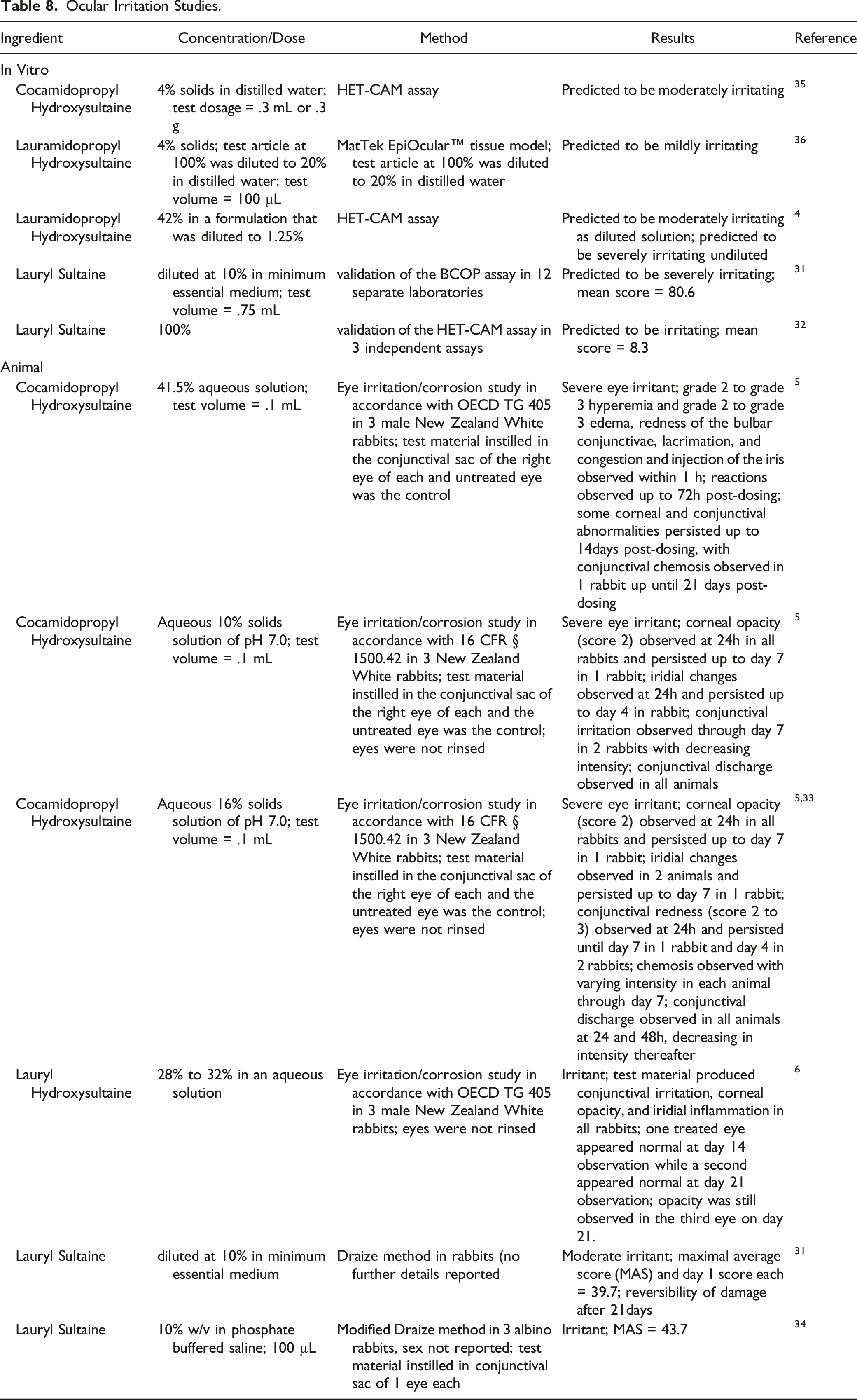
The alkyl sultaine ingredients described in this safety assessment are not restricted from use in any way under the rules governing cosmetic products in the European Union. 26 An assessment on Lauryl Hydroxysultaine produced by NICNAS concluded that this ingredient was a hazard due to its serious eye irritation potential; however, “when used [at concentrations up to 5% in leave on cosmetic products and up to 10% in rinse off cosmetic products and cleaning products], the notified chemical is not considered to pose an unacceptable risk to public health.” 6
Toxicokinetics
No published toxicokinetics studies on alkyl sultaines were discovered and no unpublished data were submitted.
Toxicological Studies
Acute Toxicity Studies
Acute Toxicity Studies.

Short-Term Toxicity Studies
Cocamidopropyl Hydroxysultaine
The short-term toxicity effects of 36.2% Cocamidopropyl Hydroxysultaine in aqueous solution were assessed in accordance with the Organization for Economic Co-operation and Development (OECD) test guideline (TG) 422 (combined repeated dose toxicity study with the reproduction/developmental toxicity screening test) using groups of 10 male and 10 female Sprague-Dawley rats. 5 The test material was administered daily by gavage before mating, during mating, and in females, through day 5 post-partum, at dose levels of 30, 100, or 300 mg/kg/day (exposure duration was 5 weeks in males and 6 to 8 weeks in females). An additional group of 10 males and 10 females received the vehicle control, i.e., drinking water, under the same experimental conditions at a dosing volume of 5 mL/kg/day. The animals were observed daily for clinical signs and mortality. Detailed clinical observations were conducted weekly. Body weights and feed consumption were recorded weekly until mating and then at designated intervals throughout gestation and post-partum. The animals were paired for mating after 2 weeks of treatment and the dams were allowed to litter and care for the pups until day 5 post-partum (see the Developmental and Reproductive Toxicity (Dart) Studies Section for reproductive findings).
Prior to killing, blood samples were taken for analysis of blood biochemistry parameters and hematology. The male rats were killed at the end of the mating period and the dams were killed on day 6 post-partum. Body weights and selected organs weights were recorded and a complete macroscopic post-mortem examination including the reproductive organs was performed. The femur of 5 animals in groups 1 to 4 and all group 5 animals were sampled for bone marrow micronucleus analysis (see Genotoxicity – In Vivo Section). A microscopic examination was also conducted on selected organs from the first five animals in the control groups and the high-dose groups. Microscopic examination was conducted on all macroscopic lesions from all groups. Based upon the microscopic results of the high-dose group, stomach, forestomach, kidneys, lungs and trachea of the first five animals of the low- and mid-dose groups were also examined.
There were no mortalities before the terminal killings in the 0, 30 and 100 mg/kg/day groups. In the 300 mg/kg/day group, one male was found dead on day 34. At necropsy, there was an enlargement of the lungs (with presence of red discoloration) and white discoloration and an irregular surface of the wall of stomach. The cause of death was moderate subacute bronchoalveolar inflammation, most likely secondary to aspiration of the test material after regurgitation at dosing. This mortality was not considered incidental, but attributed to the test item. Clinical signs of toxicity in the 300 mg/kg/day dose group included loud breathing during days 17 to 19 in one male, during all the pregnancy period in one female, and at the end of the lactation period in another female. Hypersalivation, observed in most animals in the 300 mg/kg/day dose group, was considered to be treatment-related but of minor toxicological importance. No treatment-related effects on mean body weight or mean body weight gain were observed in the male rats. No treatment-related effects were observed on hematological or blood biochemistry parameters.
No treatment-related effects were observed with organ weight or macroscopic examinations. In the 300 mg/kg/day dose group, microscopic changes were observed in the stomach, lungs, trachea and kidneys. Squamous cell hyperplasia observed in the forestomach was attributed to the irritant properties of the test item. Pulmonary bronchoalveolar inflammation and tracheal epithelial alteration were thought to be related to aspiration of compound after regurgitation at dosing. Minimal to slight degeneration/hypertrophy of the tubular epithelium was observed in the kidneys of the male rats, while minimal tubular vacuolation was observed in some females. In the 100 mg/kg/day dose group, a minimal epithelial alteration in the trachea in a single male rat was not considered an adverse effect because of the low incidence and magnitude. There were no microscopic findings in the stomach, forestomach, kidneys or lungs in this dose group. The authors concluded that the no-observed-adverse-effect-level (NOAEL) for 36.2% Cocamidopropyl Hydroxysultaine was 100 mg/kg/day based on microscopic findings in the forestomach, lungs, trachea and kidneys of animals given 300 mg/kg/day. 5
Developmental and Reproductive Toxicity (DART) Studies
Cocamidopropyl Hydroxysultaine
The potential DART effects of 36.2% Cocamidopropyl Hydroxysultaine in aqueous solution were assessed in the short-term toxicity test described above (see Toxicological Studies – Short-Term Toxicity Studies Section above), performed in accordance with OECD TG 422. 5 The total litter sizes and numbers of pups of each sex were recorded. The pups were observed daily for clinical signs of toxicity. Pup body weights were recorded on days 1 and 3 post-partum. Pups, including those found dead before study termination, were submitted for a macroscopic post-mortem examination.
No treatment-related effects on mating and fertility or unscheduled mortalities were observed. All animals mated within comparable mean number of days. Treatment-related body weight changes in the female rats included a dose-related decrease in mean body weight gain during the premating period and decreases in mean body weights during the pregnancy and lactation periods, which was associated with a non-statistically significant decrease in mean body weight gain during the lactation period. There were no effects on mean feed consumption in the parental animals during any period of the study. There were no relevant differences between control and treatment groups in the following parameters: mean duration of gestation, mean number of corpora lutea, mean number of implantations, mean number of pups delivered, mean pre-implantation loss and mean post-implantation loss. No treatment-related effects were observed in live births, sex-ratio, viability, or lactation indices. No treatment-related clinical signs of toxicity were observed in the pups. There were no significant effects on mean body weight gains in the pups during the post-partum period. No treatment-related findings were observed at necropsy in pups found dead during the observation period or at study end. The authors of this study of 36.2% Cocamidopropyl Hydroxysultaine concluded that the no-observed-effect-level (NOEL) for the reproductive performance of the parental animals was 300 mg/kg/day, which was also the NOEL for toxic effects on the pups. 5
Genotoxicity
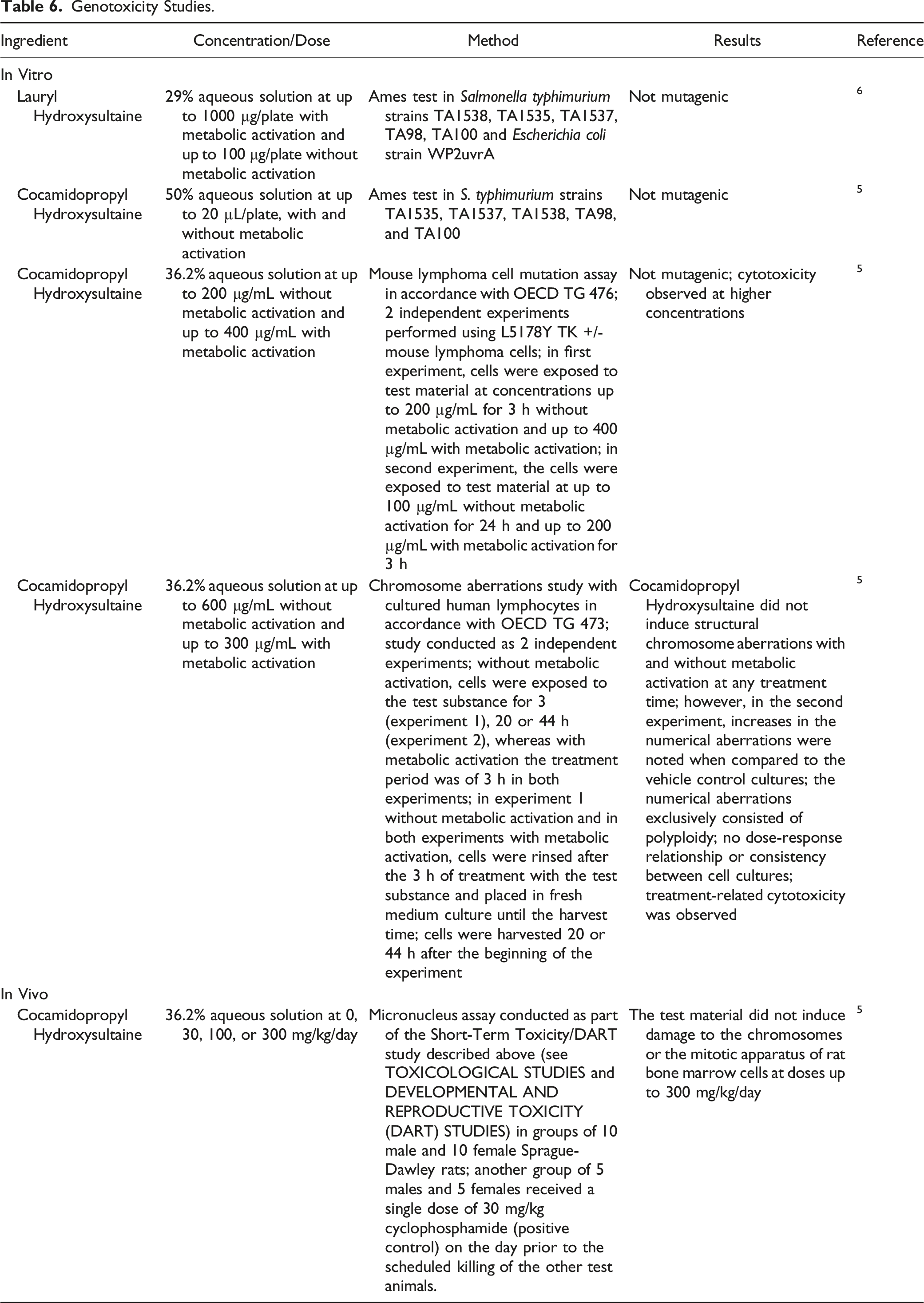
Genotoxicity Studies.
Carcinogenicity
No published carcinogenicity studies on alkyl sultaines were discovered and no unpublished carcinogenicity data were submitted.
Dermal Irritation and Sensitization Studies
Dermal Irritation and Sensitization Studies.

Ocular Irritation Studies
Ocular Irritation Studies.
Clinical Studies
Case Reports
Cocamidopropyl Hydroxysultaine
A 54-year-old man presented with eczema of 2 month duration on the forehead, back of neck, ears, and surrounding areas. 37 He had been using 2 different shampoos that included botanical materials. A similar reaction occurred to a massage product in the past. The patient was patch tested with 40 screening agents and corticosteroids: ++ reactions to formaldehyde (1% aq.), quaternium-15 (1% pet.); DMDM hydantoin (2% aq.), methylisothiazolinone and methylchloroisothiazolinone (.02% aq.), and Cocamidopropyl Hydroxysultaine (1% aq.) were observed. Tests were read at days 2 and 5, and all were positive by the day 2 reading. Five control subjects tested with Cocamidopropyl Hydroxysultaine were negative. Milder reactions (+ and ?+) were also observed in the patient to cobalt chloride (1% pet.), potassium dichromate (.5% pet.), and carba mix (1,3-diphenylguanidine, zinc dibutyldithiocarbamate, and zinc diethyldithiocarbamate). The patient was negative to cocamidopropyl betaine, as well as to 33 other screening allergens, 5 additional preservatives, and 10 topical corticosteroids.
Summary
The sultaines are structurally related to betaines and are sometimes referred to as sulfobetaines. Each of the ingredients named in this report is a sulfopropyl quaternary ammonium salt. The structures of each of the alkyl sultaines are relatively similar, and certain toxicological data for one ingredient may be informative about the toxicity of one or more of the other ingredients in this report. According to the Dictionary, most of the 13 alkyl sultaine ingredients detailed in this report function as antistatic agents, surfactants, and skin and hair conditioning agents in cosmetics.
Cocamidopropyl Hydroxysultaine is reported to be used in 280 formulations; the majority of uses are in shampoos, bath soaps and detergents. Four other sultaines are in use, with 4 or less uses reported in the VCRP. Cocamidopropyl Hydroxysultaine has the highest reported maximum concentration of use; it is used at up to 11.5% in rinse-off products (skin cleansing) and up to 2.5% in leave-on face and neck skin care products. Lauryl Hydroxysultaine is used at up to 5% in rinse-off products (non-coloring shampoos); there were no reported use concentrations in leave-on products reported for this ingredient.
In acute dermal studies performed in rats, 36.2% Cocamidopropyl Hydroxysultaine in solution had an LD50 > 2000 mg active ingredient/kg bw. In acute oral studies, the LD50 for 42% Cocamidopropyl Hydroxysultaine was approximately 3000 mg active ingredient/kg bw in rats and 3150 mg active ingredient/kg bw in mice. The LD50 for 28% to 32% Lauryl Hydroxysultaine was >560–640 mg/kg bw active ingredient in rats.
In a study of 36.2% Cocamidopropyl Hydroxysultaine in rats, the NOAEL for parental toxicity was 100 mg/kg/day based on microscopic findings in the forestomach, lungs, trachea and kidneys of animals given 300 mg/kg/day. This study also evaluated the developmental and reproductive toxicity of this ingredient, and a NOEL of 300 mg/kg/day was determined for both the reproductive performance of the parental animals and for toxic effects on the pups.
Lauryl Hydroxysultaine at 29% was not mutagenic in an Ames test. Cocamidopropyl Hydroxysultaine at up to 50% was not genotoxic in an Ames test, a mouse lymphoma cell mutation assay, or a chromosome aberration study in human lymphocytes. A rat micronucleus test of 36.2% Cocamidopropyl Hydroxysultaine found this ingredient did not induce chromosome damage. No published carcinogenicity studies on alkyl sultaines were identified and no unpublished carcinogenicity data were submitted.
A formulation containing .25% Capryl Sultaine was not a skin irritant in rabbits. No adverse effects such as irritation or pigmentation were observed in a clinical in-use study of a formulation containing .25% Capryl Sultaine in 24 human subjects. Cocamidopropyl Hydroxysultaine at up to 41.5% was not a skin irritant in rabbit studies. Lauryl Hydroxysultaine at concentrations of 28% to 32% was a slight dermal irritant in rabbits. Cocamidopropyl Hydroxysultaine was not a dermal sensitizer in a guinea pig maximization study where the test animals were induced via intradermal injection at 10% Cocamidopropyl Hydroxysultaine in deionized water or in Freund’s adjuvant and via topical application and at challenge at 42% Cocamidopropyl Hydroxysultaine. Cocamidopropyl Hydroxysultaine was not a dermal sensitizer in a HRIPT at 2.5%; however, slight to moderate irritation was observed after repeated induction patches in the HRIPT. No irritation or sensitization was observed in a HRIPT of 12% Lauramidopropyl Hydroxysultaine. Cocamidopropyl Hydroxysultaine (1%) yielded positive patch tests in a patient that experienced eczema following use of 2 shampoos that contained this ingredient.
Cocamidopropyl Hydroxysultaine (4% solids), Lauramidopropyl Hydroxysultaine (1.25% and 4% solids), and Lauryl Sultaine (10% and 100%) were predicted to be ocular irritants in in vitro assays. In animal studies, Cocamidopropyl Hydroxysultaine (at up to 41.5%) and Lauryl Sultaine (10%) were severe and moderate ocular irritants, respectively, in rabbit eyes. Lauryl Hydroxysultaine at 28% to 32% was irritating to rabbit eyes.
Discussion
The sultaines are structurally related to betaines and are sometimes referred to as sulfobetaines. Each of the ingredients named in this report is a sulfopropyl quaternary ammonium salt. The Panel noted gaps in the available safety data for some of the alkyl sultaines in this safety assessment. Because of structural similarities among the ingredients in the report, data on some of the ingredients can be used to support the safety of ingredients for which no data are available.
The Panel noted the lack of carcinogenicity data for these sultaine ingredients. However, the negative results obtained in both in vitro and in vivo genotoxicity studies alleviated any concerns regarding the need for carcinogenicity data.
The Panel expressed concern that 3,3-dimethylaminopropylamine (DMAPA) and analogous amines that may exist as impurities in the amidopropyl hydroxysultaine ingredients could cause sensitization. Dermal sensitization was not observed in animal or human studies of Cocamidopropyl Hydroxysultaine and Lauramidopropyl Hydroxysultaine, and suppliers have reported that DMAPA impurities are at extremely low levels (<3 ppm). The Panel noted that the manufacturing processes for each of the amidopropyl hydroxysultaine ingredients are generally similar and are expected to produce the same types of impurities. In quantitative risk assessments (QRAs) submitted to support the CIR safety assessment of Cocamidopropyl Betaine and related fatty acid amidopropyl betaines, conservative weight-of-evidence (WoE) no expected sensitization induction levels (NESILs) were calculated to be 425 μg/cm2 for DMAPA. Based on (1) this NESIL, (2) the lack of reported sensitization to the amidopropyl hydroxysultaine ingredients in the literature, and (3) the use concentrations of the these ingredients, the amount of DMAPA present would likely be well below doses expected to induce sensitization; however, to ensure that sensitization does not occur in consumers, the Panel urges manufacturers to minimize the content of DMAPA and related sensitizing agents in cosmetic formulations.
The Panel discussed the issue of incidental inhalation exposure in hair sprays. There were no inhalation toxicity data available. These ingredients are reportedly used at concentrations up to .05% in cosmetic products that may be aerosolized. The Panel noted that 95% – 99% of droplets/particles produced in cosmetic aerosols would not be respirable to any appreciable amount. The potential for inhalation toxicity is not limited to respirable droplets/particles deposited in the lungs. In principle, inhaled droplets/particles deposited in the nasopharyngeal and thoracic regions of the respiratory tract may cause toxic effects depending on their chemical and other properties. However, coupled with the small actual exposure in the breathing zone and the concentrations at which the ingredients are used, the available information indicates that incidental inhalation would not be a significant route of exposure that might lead to local respiratory or systemic effects. A detailed discussion and summary of the Panel’s approach to evaluating incidental inhalation exposures to ingredients in cosmetic products is available at https://www.cir-safety.org/cir-findings.
In past ingredient safety assessments, the Panel had expressed concern over N-nitrosation reactions in ingredients containing amine/amide groups. Cocamidopropyl Hydroxysultaine and the other alkylamidopropyl sultaine ingredients in this assessment contain secondary amides that may serves as substrates for N-nitrosation. Additionally, these ingredients may contain secondary/tertiary amine impurities which may serves as substrates for N-nitrosation. Therefore, the Panel recommended that alkylamidopropyl sultaines should not be used in cosmetic products in which N-nitroso compounds can be formed, and manufacturers should continue to use cGMPs to limit N-nitrosatable impurities in both, alkylamidopropyl sultaines and alkyl sultaines.
The Panel also expressed concern regarding pesticide residues, heavy metals, and other plant species that may be present in botanical ingredients. They stressed that the cosmetics industry should continue to use cGMPs to limit impurities.
The Panel considered the risks inherent in using animal-derived ingredients, namely the transmission of infectious agents. Although tallow may be used in the manufacture of Tallowamidopropyl Hydroxysultaine in this safety assessment and is clearly animal derived, the Panel noted that tallow is highly processed, and tallow derivatives even more so. The Panel agreed with determinations by the U.S. FDA that tallow derivatives are not risk material for transmission of infectious agents.
Conclusion
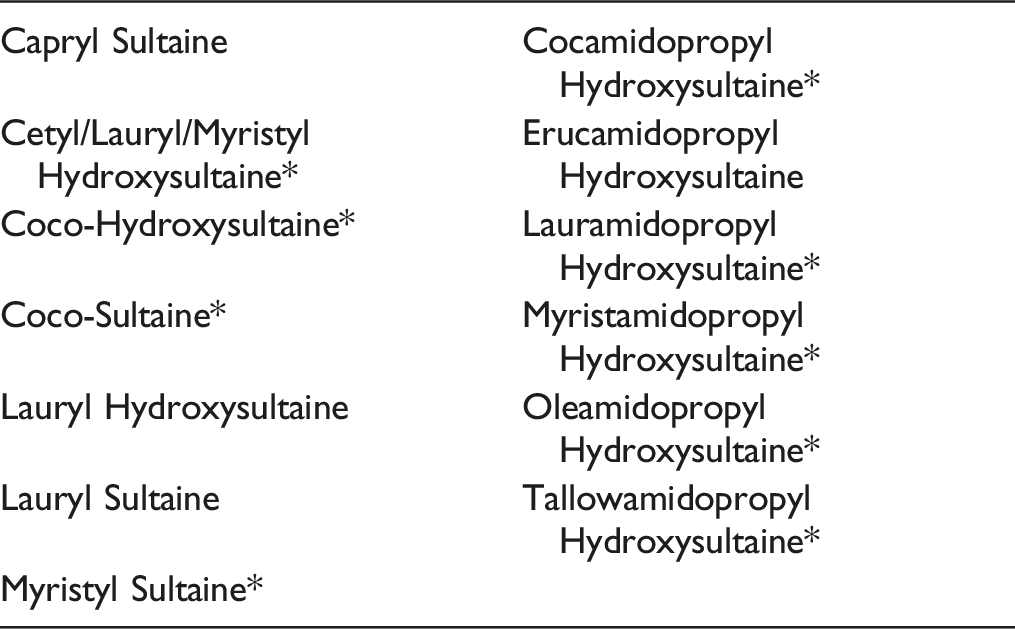
*Not reported to be in current use. Were ingredients in this group not in current use to be used in the future, the expectation is that they would be used in product categories and at concentrations comparable to others in this group.
Footnotes
Author Contributions
The articles in this supplement were sponsored by the Cosmetic Ingredient Review.
Author’s Note
Unpublished sources cited in this report are available from the Director, Cosmetic Ingredient Review, 1620 L Street, NW, Suite 1200, Washington, DC 20036, USA.
Declaration of Conflicting Interests
The author(s) declared the following potential conflicts of interest with respect to the research, authorship, and/or publication of this article: The articles in this supplement were sponsored by the Cosmetic Ingredient Review.
Funding
The author(s) disclosed receipt of the following financial support for the research, authorship, and/or publication of this article: The articles in this supplement were sponsored by the Cosmetic Ingredient Review. The Cosmetic Ingredient Review is financially supported by the Personal Care Products Council.