




Abstract
Anthemis nobilis (Roman chamomile) flower extract, anthemis nobilis flower oil, anthemis nobilis flower powder, and anthemis nobilis flower water are ingredients that function as fragrance ingredients and skin-conditioning agents in cosmetic products. These ingredients are being used at concentrations up to 10% (anthemis nobilis flower water) in cosmetic products. The available data indicate that these 4 ingredients are not irritating or sensitizing. Chemical composition data and the low use concentrations suggest that systemic toxicity would not be likely if percutaneous absorption of constituents were to occur. Formulations may contain more than 1 botanical ingredient; each may contribute to the final concentration of a single component. Manufacturers were cautioned to avoid reaching levels of plant constituents that may cause sensitization or other adverse effects. Industry should continue to use good manufacturing practices to limit impurities in the ingredient before blending into cosmetic formulations. The Expert Panel concluded that these ingredients are safe in the present practices of use and concentration in cosmetics, when formulated to be nonsensitizing.
Introduction
This report presents information relevant to evaluating the safety of the following 4 Roman chamomile 1 or Anthemis nobilis–derived ingredients as used in cosmetics: anthemis nobilis flower extract, anthemis nobilis flower oil, anthemis nobilis flower powder, and anthemis nobilis flower water. The Cosmetic Ingredient Review (CIR) is evaluating 11 Chamomilla recutita (German chamomile)–derived ingredients in a separate report because the CIR Expert Panel thought that these 2 groups of botanical ingredients were substantially different and should not be addressed in the same report. These A nobilis–derived ingredients function as fragrance ingredients and skin-conditioning agents in cosmetic products. Composition data are available on anthemis nobilis flower oil, as well as samples of the whole plant and the flower of A nobilis. The Panel agreed that these data are adequate to support assumptions about the likely compositions of other A nobilis–derived ingredients.
Chemistry
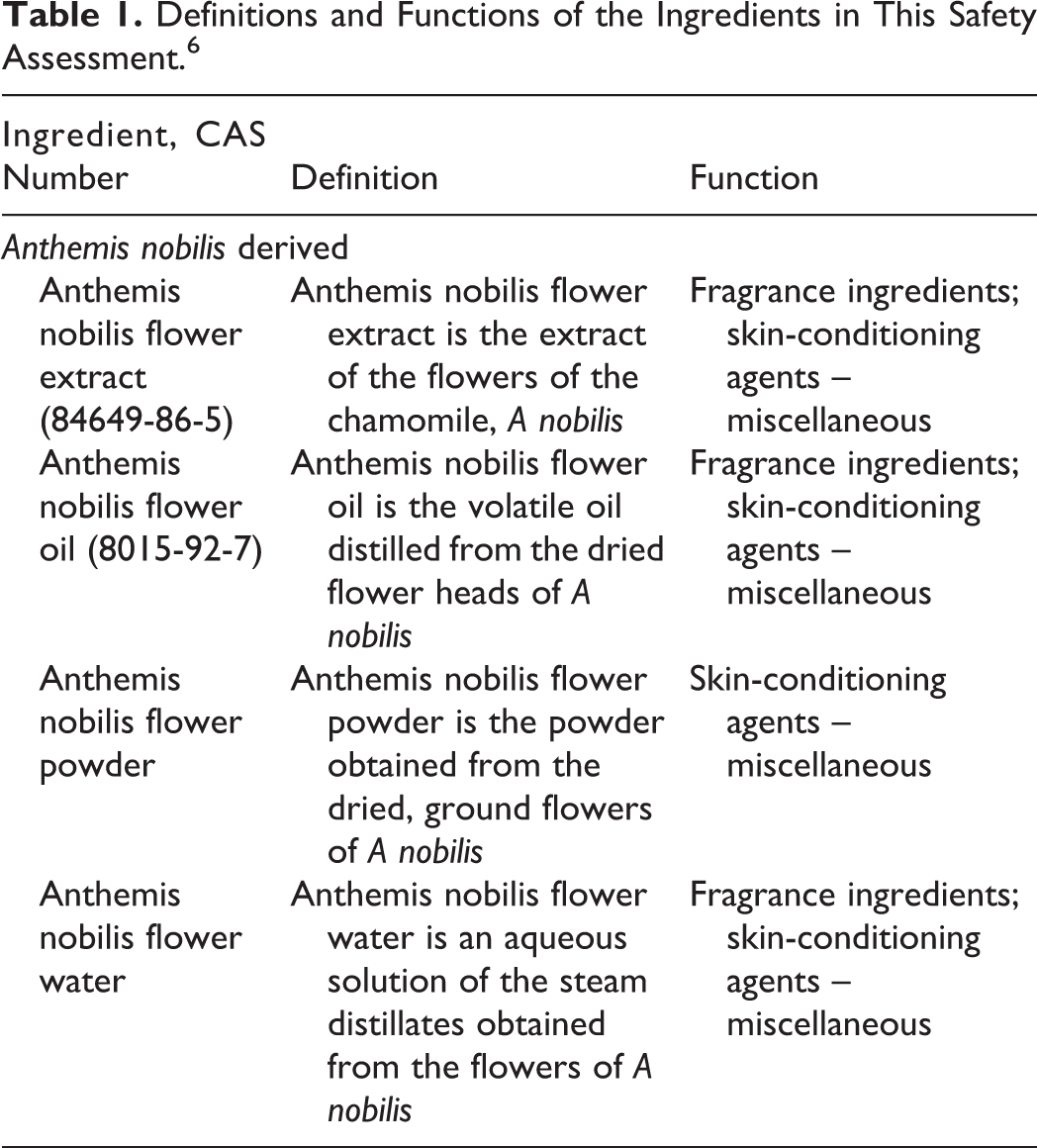
The plant source of the ingredients reviewed in this safety assessment is A nobilis L. (Asteraceae). Compositae family is the previous or historical name for the Asteraceae family. Chamaemelum nobile is a synonym for A nobilis. 1 The definitions of the 4 chamomile ingredients presented in this safety assessment are included in Table 1.
Definitions and Functions of the Ingredients in This Safety Assessment. 6
Physical and Chemical Properties
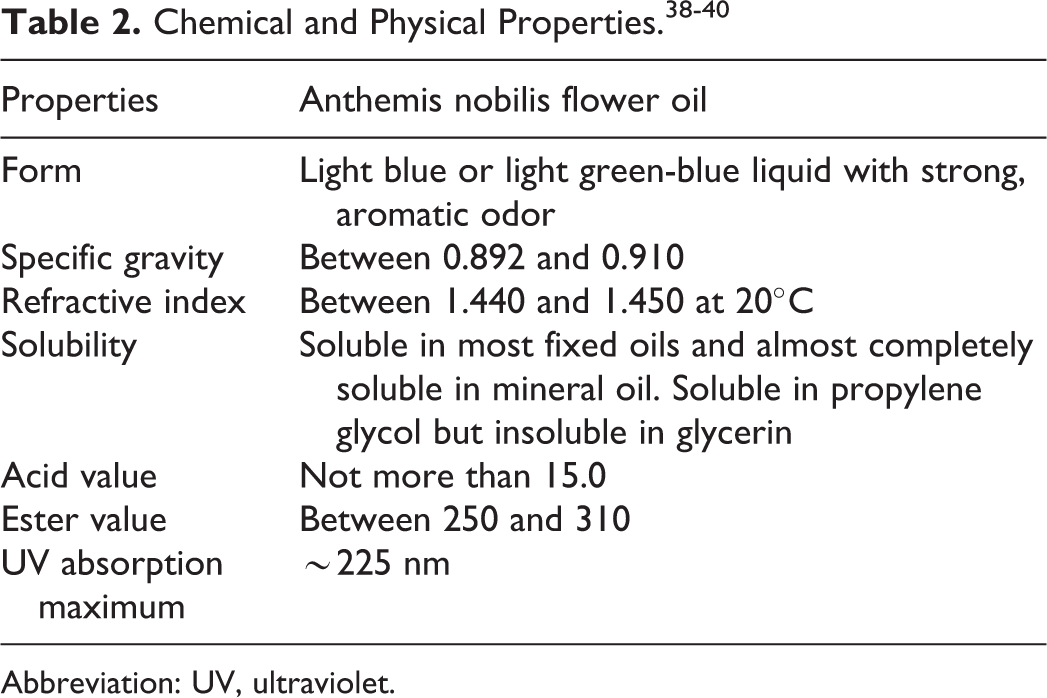
Anthemis nobilis flower oil is a light blue or light blue-green liquid with a specific gravity of between 0.892 and 0.910 (Table 2). Information on the remaining 3 ingredients was not found nor was unpublished information provided.
Abbreviation: UV, ultraviolet.
Method of Manufacture
Anthemis nobilis flower oil
The preparation of anthemis nobilis flower oil involves the steam distillation of the dried flowers of A nobilis as a key step. 2
Composition/Impurities
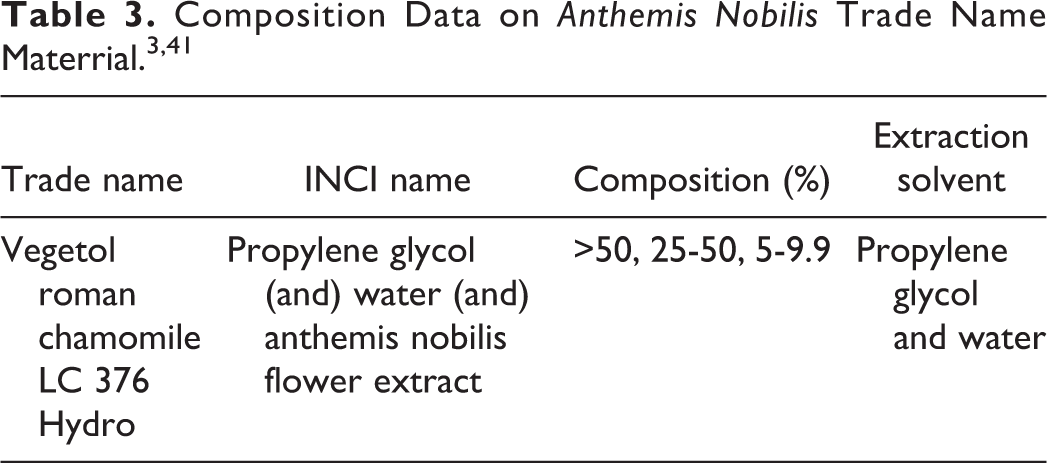
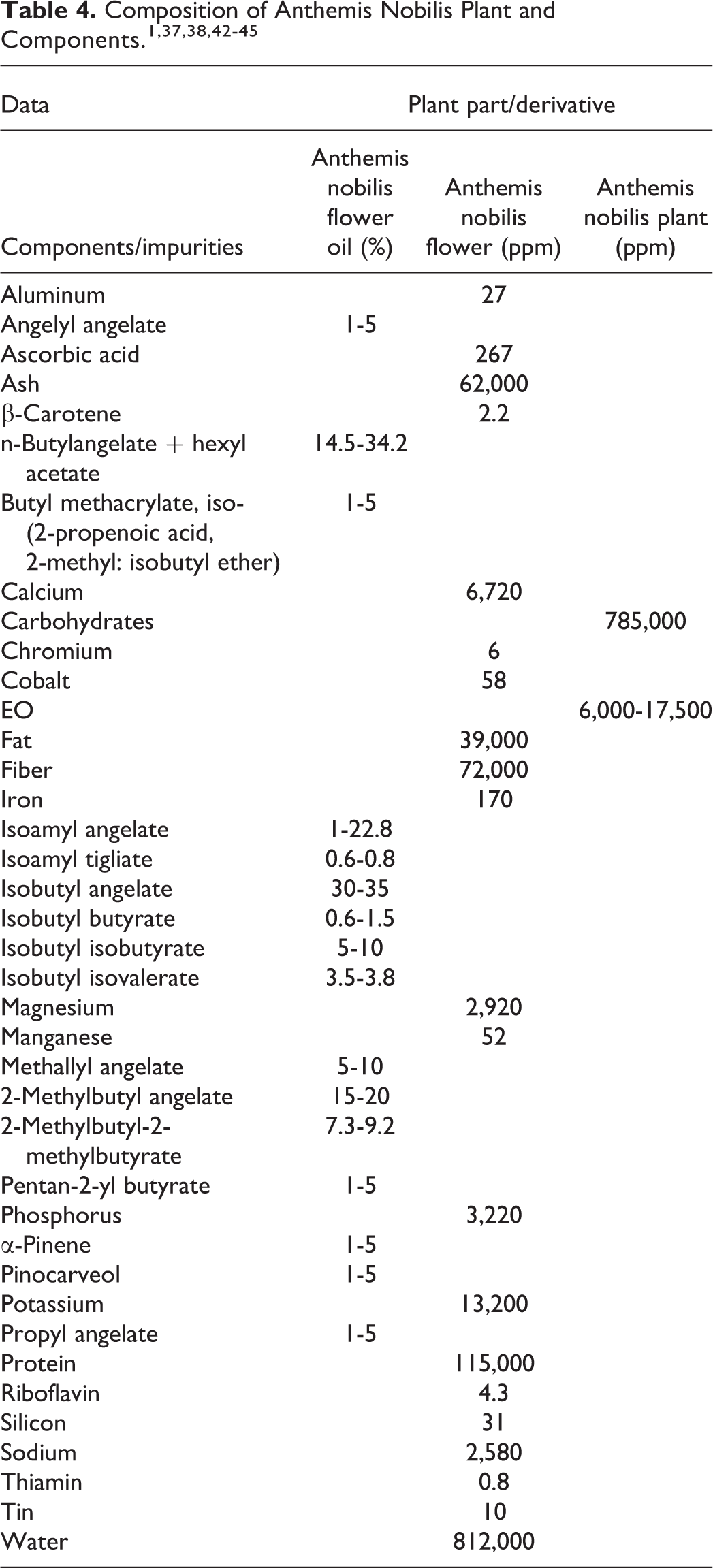
A trade name material containing anthemis nobilis flower extract consists of the flower extract in propylene glycol and water (Table 3). 3 Heavy metals (in A nobilis flower only) and various other components of anthemis nobilis flower oil and the A nobilis plant and its flower are included in Table 4.
Anthemis nobilis flower oil
According to the Personal Care Products Council (Council), the chamomile essential oil tested in the 2 skin irritation and sensitization studies summarized later in this report was derived from A nobilis L. The results of an analysis of this oil, provided by the Research Institute for Fragrance Materials, are included below
4
: isobutyl angelate (30%-35%) 2-methylbutyl angelate (15%-20%) methallyl angelate (5%-10%) isobutyl isobutyrate (5%-10%) pinocarveol (1%-5%) isoamyl angelate (1%-5%) α-pinene (1%-5%) unknown 71/43/100 mw = 170 (1%-5%) pentan-2-yl butyrate (%-5%) butyl methacrylate, iso-(2-propenoic acid, 2-methyl: isobutyl ester) (1%-5%) angelyl angelate (1%-5%) propyl angelate (1%-5%).
Results from the nutritional characterization of A nobilis (whole herb) are stated as follows 5 : Carbohydrates are the most abundant macronutrients, followed by proteins. Ash and fat contents were low, and the energetic contribution was 389.88 kcal/100 g dry weight. The main sugar found in A nobilis was fructose, followed by glucose and sucrose. Trehalose was found in lower amounts. Polyunsaturated fatty acids predominated over saturated fatty acids and monounsaturated fatty acids. The fatty acids determined in higher percentages were linoleic acid (C18:2n6), oleic acid (C18 1n9), α-linolenic acid (C18:3n3), and palmitic acid (C16:0). Regarding tocopherols, only α- and γ-tocopherols were found in A nobilis. β-Carotene and lycopene were also quantified in the sample studied.
Use
Cosmetic
The A nobilis ingredients function as fragrance ingredients and skin-conditioning agents in cosmetic products. 6 Information on uses of these ingredients as a function of product type was supplied to the Food and Drug Administration by industry as part of the Voluntary Cosmetic Registration Program (VCRP) in 2013. 7 The Council conducted a survey of ingredient use concentrations in 2013, indicating use at concentrations up to 10% (anthemis nobilis flower water). 8
As shown in Table 5, both VCRP use data and use concentration data were available for the following 3 ingredients:
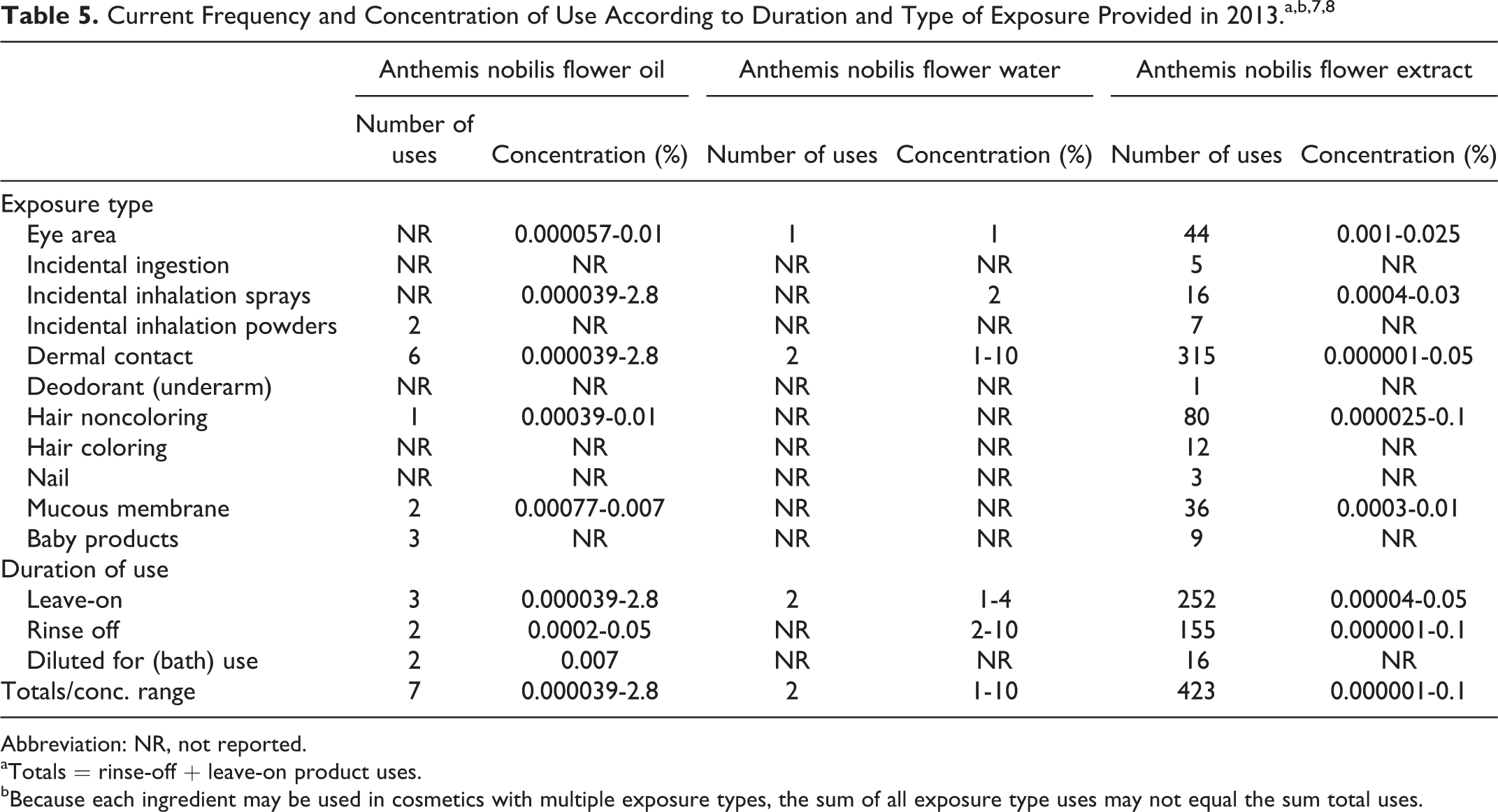
Abbreviation: NR, not reported.
aTotals = rinse-off + leave-on product uses.
bBecause each ingredient may be used in cosmetics with multiple exposure types, the sum of all exposure type uses may not equal the sum total uses.
anthemis nobilis flower extract
anthemis nobilis flower oil
anthemis nobilis flower water
Neither VCRP data nor use concentration data were available for: anthemis nobilis flower powder
Cosmetic products containing A nobilis–derived ingredients may be applied to the skin and hair, or, incidentally, may come in contact with the eyes and mucous membranes. Products containing these ingredients may be applied as frequently as several times per day and may come in contact with the skin or hair for variable periods following application. Daily or occasional use may extend over many years.
The following ingredients are used in products that are sprayed (highest reported maximum use concentration = 2.8% anthemis nobilis flower oil in a potential spray product [perfume]): anthemis nobilis flower extract, anthemis nobilis flower oil, and anthemis nobilis flower water. Because these ingredients are used in products that are sprayed, they could possibly be inhaled. In practice, 95% to 99% of the droplets/particles released from cosmetic sprays have aerodynamic equivalent diameters >10 µm, with propellant sprays yielding a greater fraction of droplets/particles below 10 µm, compared with pump sprays. 9 –12 Therefore, most droplets/particles incidentally inhaled from cosmetic sprays would be deposited in the nasopharyngeal and bronchial regions and would not be respirable (ie, they would not enter the lungs) to any appreciable amount. 9,10
Noncosmetic
Anthemis nobilis (Roman chamomile) is listed among the spices and other natural seasonings and flavorings that are generally recognized as safe (GRAS) for their intended use in food for human consumption. 13 It is also listed among the spices and other natural seasonings and flavorings that are GRAS for their intended use in animal drugs, feeds, and related products. 14
Anthemis nobilis flowers are listed among the essential oils, oleoresins (solvent-free), and natural extractives (including distillates) that are GRAS for their intended use in food for human consumption. 15 They are also listed among the essential oils, oleoresins (solvent-free), and natural extractives (including distillates) that are GRAS for their intended use in animal drugs, feeds, and related products. 16
Food and Drug Administration has determined that the available data are inadequate for establishing general recognition of safety and effectiveness of chamomile flowers (genus and species not stated) as used in digestive aid drug products. 17 The fragrant flowering heads of both German chamomile (C recutita) and Roman chamomile (A nobilis) are collected and dried for use as teas and extracts. 18 Additionally, 2 ointments are marketed in Europe, 1 containing German chamomile (also known as Matricaria recutita or C recutita) and the other containing Roman chamomile (also known as C nobile or A nobilis). 19
Toxicokinetics
Data on the absorption, distribution, metabolism, and excretion of anthemis nobilis flower extract, anthemis nobilis flower oil, anthemis nobilis flower powder, or anthemis nobilis flower water were not found in the published literature nor were unpublished data provided.
Toxicology
Acute Toxicity
Oral
Anthemis nobilis flower oil
The acute oral toxicity of anthemis nobilis flower oil (dose = 5 g/kg) was evaluated using 10 rats (strain not stated). 20 Dosing was followed by a 14-day observation period. None of the animals died, and an LD50 of >5 g/kg was reported.
Ocular irritation
Anthemis nobilis flower extract
One trade name mixture associated with anthemis nobilis flower extract has the INCI name, propylene glycol (and) water (and) anthemis nobilis flower extract, and contains 5% to 9.9% anthemis nobilis flower extract (Table 3). This mixture, also known by another trade name, has the same extraction solvent, propylene glycol, and water. The ocular irritation potential of this trade name mixture was evaluated using 6 New Zealand hybrid albino male rabbits. 21 The mixture (20% [vol/vol] solution in distilled water; volume = 0.1 mL) was instilled into the inferior conjunctival sac of the right eye. Reactions were scored 1 hour postinstillation and then 1, 2, 4, and, possibly, 7 days postinstillation. The diluted mixture was classified as a very slight ocular irritant.
Skin Irritation
Animal
Anthemis nobilis flower extract
One trade name mixtures associated with anthemis nobilis flower extract has the INCI name, propylene glycol (and) water (and) anthemis nobilis flower extract, and contains 5% to 9.9% anthemis nobilis flower extract (Table 3). The skin irritation potential of this mixture (20% [vol/vol] solution in distilled water) was evaluated using 6 New Zealand hybrid albino male rabbits. 21 The trade name mixture was applied to intact and scarified skin sites (on clipped flank) at a dose of 0.5 mL per area per animal. The test material remained in contact with the skin for 24 hours. Reactions were scored approximately 30 minutes after patch removal and 48 hours later. The trade name mixture was classified as a nonirritant.
Anthemis nobilis flower oil
Undiluted anthemis nobilis flower oil was applied to the backs of hairless mice (number and strain not stated). Details relating to the test procedure were not reported. The oil was classified as nonirritating. 2 In another test, undiluted anthemis nobilis flower oil was applied (under occlusion) to intact or abraded skin of rabbits (number and strain not stated) for 24 hours. The oil was classified as moderately irritating. 2
Human
Predictive testing
The skin irritation potential of anthemis nobilis flower oil (4% in petrolatum) was evaluated in a 48-hour closed patch test involving human individuals (number not stated). Skin irritation was not observed. 2
Skin Sensitization
Animal
Anthemis nobilis flower oil
The skin sensitization potential of anthemis nobilis flower oil was evaluated in the open epicutaneous test on 6 guinea pigs (males and females). 22 Using a pipette or syringe, anthemis nobilis flower oil (4% solution, 0.1 mL) was applied epicutaneously to an 8 cm2 area of the clipped flank daily, and the test site remained uncovered for 24 hours. These induction applications were repeated daily for 3 weeks. Reactions were scored either at the end of the application period or at the end of each week. The guinea pigs were challenged with the oil (on contralateral flank) on days 21 and 25. Ten guinea pigs served as controls. The anthemis nobilis flower oil solution was not allergenic in this study.
Human
Predictive testing
The skin sensitization potential of a leave-on skin care lotion containing 3% (0.03% solids) anthemis nobilis flower extract was evaluated in an HRIPT using 104 patients (between 18 and 70 years old). 23 The test substance (0.2 mL, under patch [type not stated]) was applied to the upper back, between the scapulae, for 24 hours on Mondays, Wednesdays, and Fridays. This procedure was repeated for a total of 9 induction applications (same test site). Reactions were scored 24 hours after patch removal on Tuesdays and Thursdays and 48 hours after patch removal on Saturdays. Following a 2-week, nontreatment period, a challenge patch was applied for 24 hours to a previously untreated site on the back. Reactions were scored at the time of patch removal and at 48 and 72 hours. No clinically significant dermal reactions were observed during the study. The authors concluded that the skin care lotion did not demonstrate a potential for eliciting dermal irritation or sensitization.
Anthemis nobilis flower oil
The skin sensitization potential of anthemis nobilis flower oil (4% in petrolatum) was evaluated in the maximization test using 25 healthy volunteers (21-44 years old). 24 The test material (4% in petrolatum) was applied, under occlusion, to the volar forearm of each patient for a total of 5 alternate-day 48-hour periods. The test site was pretreated with 5% sodium lauryl sulfate (24-hour application, under occlusion) prior to application of the test material. A 10-day nontreatment period was observed after the induction phase. Challenge patches were then applied, under occlusion, to new test sites for 48 hours. The application of challenge patches was preceded by a 1-hour application of 10% aqueous sodium lauryl sulfate (under occlusion). Reactions were scored at the time of challenge patch removal and 24 hours later. There was no evidence of contact sensitization in any of the patients tested.
Anthemis nobilis essential oil
In a skin irritation and sensitization study, anthemis nobilis essential oil (concentration not stated) was initially applied to 113 healthy patients (13 men, 100 women; 18-69 years old), 110 of whom completed the study. 25 Three patients withdrew for reasons unrelated to conduct of the study. The oil was applied, under an occlusive patch (volume and area not stated), between the scapulae of the upper back. Patches were applied to the same site on Mondays, Wednesdays, and Fridays for a total of nine 24-hour induction applications. Removal of patches on Tuesdays and Thursdays was followed by a 24-hour nontreatment period. Patch removal on Saturdays was followed by a 48-hour nontreatment period. Reactions were scored during nontreatment periods. The challenge phase was initiated at the end of a 2-week nontreatment period. Challenge patches were applied to new test sites, and reactions were scored at 24, 48, 72, and 96 hours postapplication. At most, mild erythema was observed in 5 patients during the induction phase. During the challenge phase, 1 patient had mild erythema and edema at the 48-hour reading. This reaction had increased to well-defined erythema by the 72-hour reading but had diminished to mild erythema by the 96-hour reading. During rechallenge of this patient (semiocclusive, occlusive, and open patches used), barely perceptible erythema was observed at 24 hours (occlusive patch test only). There were no visible skin reactions at 48 or 72 hours following application of any of the 3 types of patches. It was concluded that the chamomile (A nobilis) essential oil tested did not demonstrate a potential for eliciting dermal irritation or sensitization.
The skin irritation and sensitization potential of anthemis nobilis essential oil (concentration not stated) were evaluated in an RIPT that initially involved 122 healthy patients (90 women, 32 men; 18-68 years old), 104 of whom completed the study. 26 Eighteen patients withdrew for reasons unrelated to conduct of the study, 1 of whom withdrew due to a generalized petechial response on most of the back. The oil (0.2 mL) was applied to a 2 cm × 2 cm semiocclusive patch that was placed on the back (between the scapulae and waist, adjacent to the spinal midline) of each patient. The patches remained in place for 24 hours. Removal of patches on Tuesdays and Thursdays was followed by a 24-hour nontreatment period. Patch removal on Saturdays was followed by a 48-hour nontreatment period. Reactions were scored during nontreatment periods. The test procedure was repeated on Mondays, Wednesdays, and Fridays for a total of 9 induction applications. The challenge phase was initiated at the end of a 2-week nontreatment period. Challenge patches were applied to new test sites, and reactions were scored at 24 and 72 hours postapplication. Transient, barely perceptible erythema was observed in 8 of the 104 patients during induction and/or challenge phases. These reactions were not classified as irritant or allergic in nature. It was concluded that chamomile essential oil did not induce skin irritation or allergenicity.
Provocative testing
Anthemis nobilis extract
The sensitization potential of anthemis nobilis extract in patients sensitive to 5% Compositae mix (also contains anthemis nobilis extract) in petrolatum was evaluated using 76 patients. The extraction solvent was not stated. Anthemis nobilis extract (1% in petrolatum) was applied to the back of each of 29 patients (24 women: mean age = 56, 5 men: mean age = 55) for 2 days using Finn chambers on Scanpor tape. Reactions were scored on days 3 to 5, and possibly, on day 7 according to International Contact Dermatitis Research Group (ICDRG) criteria. There were no positive reactions to anthemis nobilis extract.
Anthemis nobilis
Up to 14 adult patients who had previously tested positive (at least a 2+ reaction) to ether extracts of C recutita (2.5% in petrolatum) and/or Arnica montana (0.5% in petrolatum) were patch tested with A nobilis (1% in petrolatum). 27 A patch (Finn chambers on Scanpor tape) containing either of the test materials was applied to the back for 2 days. Reactions were scored on day 3, and, possibly, day 7 according to ICDRG recommendations. Of the 14 patients patch tested with A nobilis (1% in petrolatum), 6 had reactions that were described as follows: 2 with ++ reactions, 2 with doubtful positive follicular reactions, 1 with a + follicular reaction, and 1 with a doubtful positive reaction.
Case Reports
Chamomile/chamomile extract
Rapid onset of a transient rash, burning, stinging, and itching at the application sites was reported for a 24-year-old woman who had applied a cosmetic skin mask formulation to her face. 28 Components of the skin mask were as follows: whole egg, lecithin, allantoin, aloe gel, Melissa extract, and chamomile extract (extraction solvent not stated). The genus and species of the chamomile extract were not stated. Open testing (ie, without prick, scratch, or chamber) with 1% chamomile extract (in physiologic saline) produced an extensive wheal and flare reaction on intact forearm skin. Open test results were negative for the saline control and 1% chamomile extract in 10 control patients. The authors concluded that the patient appeared to have developed immunologic contact urticaria.
A 20-year-old woman complained of a short-lasting cough and rhinitis after inhaling fragrance from a chamomile-scented toilet paper. 29 The genus and species of the chamomile were not stated. Chamomile allergenicity was evaluated in a prick test and radioallergosorbent test (RAST). Results for the prick test (wheal mean diameter = 12 mm) and RAST (Pharmacia ImmunoCAP system [CAP system]: 12.9 KU/l (non-allergenic = <0.35 KU/I) were positive. Results were also positive when the chamomile-scented toilet paper was evaluated in a prick-by-prick test (mean diameter of wheal = 9 mm [toilet paper] and 5 mm [histamine]). Two atopic patients and 2 healthy patients served as controls for the prick-by-prick test, and results were negative for the chamomile-scented tissue.
Anthemis nobilis flower
Acute eczema on the forearms and hands was observed in a 50-year-old metalworker after using a product for cleaning metallic items. 30 The patient had no personal or family history of atopy but had psoriasis. Treatment of the eczema involved washing and applying compresses (over 2-month period) with C recutita (Matricaria) tea (from flower heads) and, subsequently, with a tea made from C recutita (Matricaria; flower heads), A nobilis (flower heads), and mallow herbs. Patch tests were performed using Finn chambers; neither the area of application nor test concentration was stated. Positive reactions to anthemis nobilis tea (++ on days 2 and 4) were reported. Negative results were reported for 5 control patients tested with anthemis nobilis tea. It should be noted that the fragrant flowering heads of both German chamomile (C recutita) and Roman chamomile (A nobilis) are collected and dried for use as teas and extracts. 18
Anthemis nobilis flower oil
Severe exudative eczema of both nipples and areolae was observed in a 32-year-old woman who had been applying an ointment (containing extracts and oil of A nobilis 10.5%) to treat cracked nipples. 19 It should be noted that 2 ointments marketed under the same trade name are available in Europe, 1 containing German chamomile (also known as M recutita or C recutita) and the other containing Roman chamomile (also known as C nobile or A nobilis). Patch testing of the ointment (Finn chambers on Scanpor tape) identified a 3+ reaction to the ointment at 2 days. A 3+ reaction was also observed after patch testing with 0.1% anthemis nobilis flower oil in petrolatum; results were negative in 10 control patients. Bilateral eczema of the nipples and areolae was also observed in a 38-year-old woman who had used the same ointment. Patch testing also revealed a 3+ reaction to 0.1% anthemis nobilis flower oil in petrolatum at 2 days.
A 34-year-old woman with a history of atopic dermatitis was hospitalized with acute generalized eczema, accentuated on the face. 31 Prior to the onset of symptoms, the patient had applied compresses of chamomile tea to her face and neck. Additionally, she drank chamomile tea regularly. Patch test results were as follows: 25% anthemis nobilis flower oil in olive oil (++ on day 2; +++ on day 3) and 4% anthemis nobilis flower oil in petrolatum (++ on day 2; +++ on day 3).
Anthemis nobilis and anthemis nobilis extract
A 55-year-old male employee of a magnet factory presented with crops of disseminated confluent erythroderma, initially on sun-exposed areas (face, neck, V of neck and acral) and then spreading to the remainder of the skin. 32 The lesions were described as itchy and scaly. The patient experienced exacerbation of these reactions after visiting an area where there were many and varied plants, even though there was no direct contact with the plants. Patch testing with the A nobilis plant as is yielded a +++ reaction on days 2 and 4. The same reactions were reported after patch testing with A nobilis ethyl ether extracts (stem and leaves). Photopatch testing (Finn chambers, ultraviolet A [UVA] exposure) also yielded a +++ reaction to the plant as is and its ethyl ether extracts.
Phototoxicity
Anthemis nobilis flower oil
The phototoxicity of anthemis nobilis flower oil was evaluated using 12 Skh-1: hairless mice and 2 miniature swine. 33 The light source was a 6-kW long-arc xenon high-pressure burner (UVA and UVB proportions approximated those found in mid-latitude summer sun spectrum) or a bank of 4 fluorescent F40BL black light lamps (UVA region, centered over 350 nm). The 12 mice and 2 swine were treated with the nonviscous oil, tested as received. A single application of the oil (20 µL) was made to an area of the back that was approximately 2 cm2. Six mice and 1 swine were then exposed to one of the light sources, and, the remaining 6 mice and 1 swine, to the other light source at 30 minutes postapplication of the oil. The duration of exposure to the fluorescent blacklight source was 1 hour (integrated UVA intensity = 3 W/m2), and 40 minutes (intensity of weighted erythemal energy = 0.1667 W/m2) to the xenon lamp. If application of the oil elicited a response from skin exposure to the blacklight lamp or elicited more than a barely perceptible response to the xenon lamp, the oil was considered phototoxic. The area of skin treated with the oil, but not irradiated, served as the control for primary irritant reactions. One group of control mice was treated with 8-methoxypsoralen (8-MOP; 0.01% in methanol) and another group with appropriate vehicle only. Exposure to the xenon lamp caused barely perceptible erythema in animals pretreated with vehicle only or with anthemis nobilis flower oil. Parallel results were obtained using the blacklight lamp. The 8-MOP was phototoxic.
Reproductive and Developmental Toxicity
Chamomile
A case–control analysis of data from the Quebec pregnancy registry was performed. Data on 3183 pregnant females were collected, and multivariate logistic regression models were used for data analysis. 34 Cases were defined as women who delivered a newborn (<2500 g), and 424 of the 3183 participants were classified as cases. After adjusting for potential confounders, there were no statistically significant associations found between the use of chamomile (A nobilis) tea (alone or in combination with other herbal products) during the last 2 trimesters of pregnancy and the incidence of low birth weight.
An epidemiology study examined the use of herbal products by pregnant women in Italy and pregnancy outcome. 35 The number of individuals (mostly between 31 and 40 years old) interviewed was 392. Of the 392 individuals, 109 reported having taken 1 or more herbal products during pregnancy; the remaining 283 were classified as nonusers. The most frequently used herb was chamomile (48; 44% of the 109 patients), followed by licorice (15; 13.8% of the 109 patients). For the 37 regular users of chamomile and 14 regular users of licorice, there was a higher frequency of threatening miscarriages (21.6% and 35.7%, respectively) and preterm labors (21.6% and 16.7%, respectively) when compared to nonusers. Whether the frequency of threatening miscarriages in users of chamomile versus nonusers was statistically significant was not stated. An unspecified cardiac malformation (thought to have been related to Down syndrome) and an enlarged kidney were diagnosed in 2 neonates, following regular maternal consumption of chamomile. Regarding pregnancy outcome in the study population, no statistically significant differences were evident between users and nonusers, except for a higher incidence of newborns small for gestational age (11.9% vs 5.3%; P = .039). However, after further analysis of the data, it was hypothesized that the regular intake of 2 herbs (chamomile and licorice, taken from the beginning of pregnancy) may have had an influence on threatening miscarriages and preterm labors of low birth weight infants.
Genotoxicity
Anthemis Nobilis Flower Oil
The genotoxicity of anthemis nobilis flower oil was evaluated in the rec-assay using Bacillus subtilis strains PB 1652 and PB 1791 and in the Salmonella/microsome reversion assay using Salmonella typhimurium strains TA98, TA100, TA1535, and TA1537. 36 In the rec-assay, 10 to 30 µL of the oil was applied to a sterile filter paper disk (9-mm diameter), placed on the surface of nutrient agar plates seeded with the tester strains. Following incubation, the diameter of the inhibition zones formed around the disk was measured. Methyl methanesulfonate, mitomycin C, and Adriamycin served as positive controls. Ampicillin and chloramphenicol served as negative controls. Positive DNA damaging activity was assumed if the ratio between the diameter of the inhibition zone of the rec− mutant and that of the parental rec+ strain exceeded a value of 1.2. Anthemis nobilis flower oil did not produce positive DNA damaging activity in either B subtilis strain. All positive controls had positive DNA damaging activity, whereas the 2 negative controls did not. In the Salmonella/microsome reversion assay (with and without metabolic activation), the oil (in Dimethyl Sulfoxide) was evaluated at doses up to 1 µL/plate and was not found to be genotoxic.
Carcinogenicity
Carcinogenicity studies on the A nobilis–derived ingredients reviewed in this safety assessment were not found in the published literature nor were unpublished studies provided.
Biological Activity
Anti-Inflammatory Activity
Anthemis nobilis flower oil
The anti-inflammatory activity of anthemis nobilis flower oil was evaluated using groups of 6 adult male Wistar rats. 37 The oil from 2 varieties of A nobilis that have been cultivated in Italy under the names “white-headed” or “double-flowered roman chamomile” and “yellow-headed roman chamomile” was tested. The oil from each flower type was administered intraperitoneally (IP) at a dose of 350 mg/kg, and the animals were then dosed orally (gavage) with 5 mL water. Of the 2 control groups, 1 was injected IP with normal saline (dose not stated) and the other with indomethacin (14 µmol/kg). The dosing of control animals IP was followed by oral dosing with water. At 30 minutes posttreatment, the right hind paw was injected with 0.1 mL of a 1% suspension of carrageenan in normal saline to induce phlogosis. Each oil caused a considerable anti-inflammatory effect, particularly by 3 hours postinjection. The oils caused 22.8% to 38.7% inhibition of the carrageenan-induced increase in paw volume. Indomethacin caused 73.7% inhibition.
Summary
The safety of Roman chamomile (A nobilis) ingredients is reviewed in this safety assessment. These ingredients function mostly as fragrance ingredients and skin-conditioning agents in cosmetic products. The VCRP and Council survey data combined indicate that the following 3 chamomile ingredients have been used in cosmetic products: anthemis nobilis flower extract, anthemis nobilis flower oil, and anthemis nobilis flower water. Of the 3 ingredients, the highest ingredient use concentration has been reported as 10% for anthemis nobilis flower water in a skin cleansing product.
Anthemis nobilis flower oil is produced by the steam distillation of A nobilis flowers. A UV spectral analysis for this oil indicated an absorption maximum of ∼225 nm.
Anthemis nobilis flower oil did not induce acute toxicity when administered orally to rats. A trade name mixture associated with anthemis nobilis flower extract (propylene glycol [and] water [and] anthemis nobilis flower extract) was classified as a very slight ocular irritant in rabbits. The mixture contained 5% to 9.9% anthemis nobilis flower extract and was tested as a 20% (vol/vol) solution in distilled water.
Anthemis nobilis flower oil was classified as nonirritating to the skin of hairless mice and irritating to the skin of rabbits. A trade name mixture associated with anthemis nobilis flower extract (propylene glycol [and] water [and] anthemis nobilis flower extract) was also nonirritating to the skin of rabbits. The mixture contained 5% to 9.9% anthemis nobilis flower extract and was tested as a 20% (vol/vol) solution in distilled water.
Anthemis nobilis flower oil (4%) did not induce skin sensitization in guinea pigs. In a human predictive patch test, anthemis nobilis flower oil (4%) was not a skin irritant in patients tested or skin sensitizer in a maximization test involving 25 patients. In 2 other human repeated insult patch tests, anthemis nobilis essential oil did not induce skin irritation or sensitization in 110 and 104 patients, respectively. A skin care lotion containing 3% anthemis nobilis flower did not demonstrate a potential for eliciting dermal irritation or sensitization in a predictive HRIPT.
Results were negative in 29 patients patch tested with anthemis nobilis extract (1% in petrolatum). Provocative patch test reactions to A nobilis (plant part(s) not specified; 1% in petrolatum) were described as ++ reactions (2 of 14 patients) and doubtful positive follicular reactions (2 patients). Positive reactions to A nobilis ingredients were also observed in a number of case reports.
Barely perceptible erythema was observed in hairless mice and miniature swine treated with anthemis nobilis flower oil (20 µL/cm2) in a phototoxicity study, and these results were classified as negative.
In a case–control study (424 cases), there were no statistically significant associations found between the use of chamomile tea (alone or in combination with other herbal products) during the last 2 trimesters of pregnancy and the risk of low birth weight. For 37 regular users of chamomile (herbal product, genus and species not stated), both frequency of threatening miscarriages and frequency preterm labors were 21.6% higher when compared to nonusers (group of 283); many of the patients also consumed licorice.
Anthemis nobilis flower oil was not genotoxic in the rec-assay (no positive DNA damaging activity) or Ames test. Carcinogenicity data on chamomile ingredients were not found in the published literature. The anti-inflammatory activity of anthemis nobilis flower oil has been demonstrated in rats dosed IP.
Discussion
Composition data are available on anthemis nobilis flower oil, as well as samples of the whole plant and the flower of A nobilis. The Panel agreed that these data are adequate to support assumptions about the likely compositions of other A nobilis–derived ingredients.
As botanical ingredients, derived from natural plant sources, are complex mixtures, the Panel expressed concern that multiple botanical ingredients may each contribute to the final concentration of a single constituent. Therefore, when formulating products, manufacturers should avoid reaching levels of plant constituents that may cause sensitization or other adverse effects. In particular, the Panel was concerned that cosmetics containing these ingredients may contain potentially sensitizing levels of constituents, such as sesquiterpene lactones. The levels of these constituents can vary widely in cosmetic ingredients, depending on the growing conditions of the plant, the method of manufacturing of the ingredient, and other factors, and the reported results of the sensitization tests may not represent the complete spectrum of likely levels in cosmetic ingredients. Thus, the Panel concluded that cosmetics containing these ingredients should be formulated to be nonsensitizing.
The Panel expressed concern about pesticide residues and heavy metals that may be present in A nobilis–derived ingredients. They stressed that the cosmetics industry should continue to use current good manufacturing practices to limit impurities in the ingredient before blending into cosmetic formulations.
The Panel noted that the highest use concentration reported for A nobilis–derived ingredients reviewed in this safety assessment is 10% anthemis nobilis flower water. Because use at this concentration was reported only for a single skin cleansing product in a survey of ingredient use concentrations, the Panel agreed that use at a concentration of 10% is not representative of typical use concentrations. Thus, the Panel determined that the negative HRIPT data on a product containing 3% anthemis nobilis flower extract are sufficient, together with other skin irritation and sensitization data in this safety assessment, for evaluating the skin irritation and sensitization potential of A nobilis–derived ingredients over the range of reported use concentrations. Although mammalian genotoxicity and carcinogenicity data were not available, the negative bacterial genotoxicity data, the available chemical composition data on these botanical ingredients, and the low use concentrations suggest that systemic toxicity would not be likely if percutaneous absorption of any of the constituents were to occur.
The Panel discussed incidental inhalation exposure from aerosol and pump hair sprays and foot powders and sprays. Inhalation toxicity data were not available. However, the Panel considered pertinent data indicating that incidental inhalation exposures to these ingredients in such cosmetic products would not cause adverse health effects, including data characterizing the potential for these ingredients to cause acute oral toxicity, and ocular or dermal irritation, or sensitization. The Panel noted that 95% to 99% of droplets/particles produced in cosmetic aerosols would not be respirable to any appreciable amount. Coupled with the small actual exposure in the breathing zone and the concentrations at which the ingredients are used, the available information indicates that incidental inhalation would not be a significant route of exposure that might lead to local respiratory or systemic effects. A detailed discussion and summary of the Panel’s approach to evaluating incidental inhalation exposures to ingredients in cosmetic products are available at http://www.cir-safety.org/cir-findings.
Conclusion
The CIR Expert Panel concluded that the following cosmetic ingredients are safe in the present practices of use and concentration in cosmetics, described in this safety assessment, when formulated to be nonsensitizing: anthemis nobilis flower oil anthemis nobilis flower water anthemis nobilis flower extract anthemis nobilis flower powder*
where ingredients in this group not in current use to be used in the future (indicated by *), the expectation is that they would be used in product categories and at concentrations comparable to others in the group.
Footnotes
Authors’ Note
Unpublished sources cited in this report are available from the Director, Cosmetic Ingredient Review, 1620L Street, NW, Suite 1200, Washington, DC 20036, USA.
Declaration of Conflicting Interests
The author(s) declared no potential conflicts of interest with respect to the research, authorship, and/or publication of this article.
Funding
The author(s) disclosed receipt of the following financial support for the research, authorship, and/or publication of this article: The articles in this supplement were sponsored by the Cosmetic Ingredient Review. The Cosmetic Ingredient Review is financially supported by the Personal Care Products Council.