



Abstract
The Expert Panel for Cosmetic Ingredient Safety (Panel) assessed the safety of 44 monoglyceryl monoesters that are structurally constituted as the esterification products of glycerin and carboxylic acids (the majority of which are fatty acids); 36 of these monoesters were previously reviewed by the Panel, and 8 are reviewed herein for the first time. Most of the monoglyceryl monoesters have several reported functions in cosmetics, but the most common function among the ingredients is skin conditioning agent; a few are reported to function only as surfactant–emulsifying agents. The Panel reviewed relevant new data, including frequency and concentration of use and considered the data from previous Cosmetic Ingredient Review reports. The Panel concluded that these ingredients are safe in cosmetics in the present practices of use and concentration described in this safety assessment.
Introduction
In 1982, the Expert Panel for Cosmetic Ingredient Safety (Panel) published the Final Report on the Safety Assessment of Glyceryl Stearate and Glyceryl Stearate SE; based on the data presented in that assessment, that Panel concluded that Glyceryl Stearate and Glyceryl Stearate SE are safe for topical application to humans. 1 In accordance with its Procedures, Panel evaluates the conclusions of previously issued reports every 15 years; therefore, a rereview was initiated.
Numerous additional monoglyceryl monoesters have also been previously reviewed by the Panel. These monoglyceryl monoesters are structurally constituted of the esterification products of glycerin and carboxylic acids, the vast majority of which are fatty acids. Additionally, according to the International Cosmetic Ingredient Dictionary and Handbook (Dictionary), almost all of these ingredients are reported to function as skin conditioning agents.
2
Therefore, because of the structural and functional similarities, the following previously reviewed monoglyceryl monoesters are also included in this safety assessment: Glyceryl Oleate—reviewed in 1986 and found to be safe as a cosmetic ingredient in the present practices of use and concentration
3
; a rereview was conducted in 2004, and the conclusion was reaffirmed.
4
Glyceryl Ricinoleate—first reviewed in 1988, and at that time the Panel concluded, the data were insufficient to determine safety
5
; in 2007, it was reviewed as part of a larger group of ingredients and found safe as a cosmetic ingredient in the practices of use and concentrations.
6
Glyceryl Ricinoleate SE—also reviewed as part of a larger group of ingredients in 2007 and found safe as a cosmetic ingredient in the practices of use and concentrations.
6
Glyceryl Monoesters—in 2004, the following glyceryl monoesters were determined to be safe as cosmetic ingredients in the present practices of use and concentration and are included in this report
7
: Glyceryl Adipate Glyceryl Arachidate Glyceryl Behenate Glyceryl Caprate Glyceryl Caprylate Glyceryl Caprylate/Caprate Glyceryl Citrate/Lactate/Linoleate/Oleate Glyceryl Cocoate Glyceryl Erucate Glyceryl Hydrogenated Rosinate Glyceryl Hydrogenated Soyate Glyceryl Hydroxystearate Glyceryl Isopalmitate Glyceryl Isostearate Glyceryl Isotridecanoate/Stearate/Adipate Glyceryl Lanolate Glyceryl Laurate Glyceryl Laurate SE Glyceryl Laurate/Oleate Glyceryl Linoleate Glyceryl Linolenate Glyceryl Montanate Glyceryl Oleate SE Glyceryl Oleate/Elaidate Glyceryl Palmitate Glyceryl Palmitate/Stearate Glyceryl Palmitoleate Glyceryl Pentadecanoate Glyceryl Rosinate Glyceryl Tallowate Glyceryl Undecylenate
Several ingredients originally included in the 2004 safety assessment of glyceryl monoesters (ie, glyceryl alginate, glyceryl arachidonate, glyceryl collagenate, Glyceryl Isostearate/myristate, Glyceryl Isostearates, glyceryl myristate, glyceryl polyacrylate, glyceryl sesquioleate, glyceryl sorbitol oleate/hydroxystearate, glyceryl stearate/acetate, glyceryl thiodipropionate, and glyceryl stearate/maleate) are not included in this rereview for various reasons. The data were insufficient to support the safety of glyceryl arachidonate, and Panel does not routinely rereview ingredients that had insufficient data; that conclusion has since been reclassified as Use Not Supported. Glyceryl alginate, Glyceryl Isostearate/myristate, and glyceryl myristate are included in other Cosmetic Ingredient Review (CIR) safety assessments and hence not included here. Glyceryl collagenate, Glyceryl Isostearates, glyceryl polyacrylate, glyceryl sesquioleate, glyceryl sorbitol oleate/hydroxystearate, glyceryl stearate/acetate, and glyceryl thioglycolate are not appropriate for inclusion in this group and will be rereviewed at another time. And, glyceryl stearate/maleate is not a cosmetic ingredient but was mistakenly included in the Dictionary at the time of the 2004 assessment, leading to its inclusion in that report.
Furthermore, there are several monoglyceryl monoesters included in the Dictionary that have not yet been reviewed. These 8 ingredients are included in this safety assessment: Glyceryl Acetate Glyceryl Cocoate/Citrate/Lactate Glyceryl Ethylhexanoate Glyceryl Ethylhexanoate/Stearate/Adipate Glyceryl Heptanoate Glyceryl Hydrogenated Rapeseedate Glyceryl Olivate Glyceryl Stearate/Malate
An alphabetical listing of the 44 monoglyceryl monoesters included in this safety assessment is provided in Table 1, and these ingredients are defined in Table 2.
Monoglyceryl Monoesters.
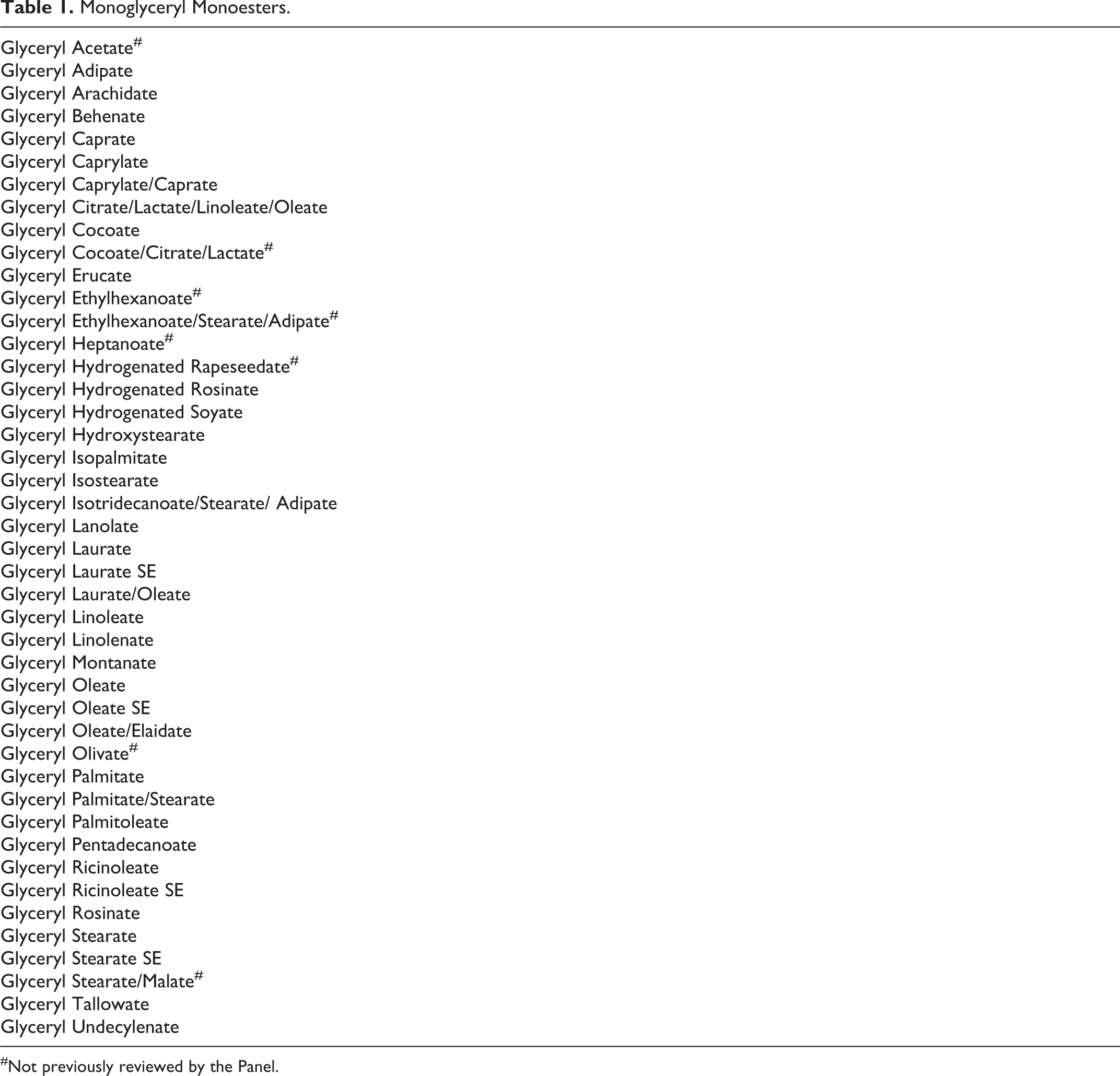
#Not previously reviewed by the Panel.
Definitions, Idealized Structures, and Reported Functions of the Ingredients in this Safety Assessment. (2; CIR Staff )

Excerpts from the summaries of the reports on the previously reviewed monoglyceryl monoesters are disseminated throughout the text of this rereview document, as appropriate. However, this information is not included in the tables or the summary section; only new data are included there.
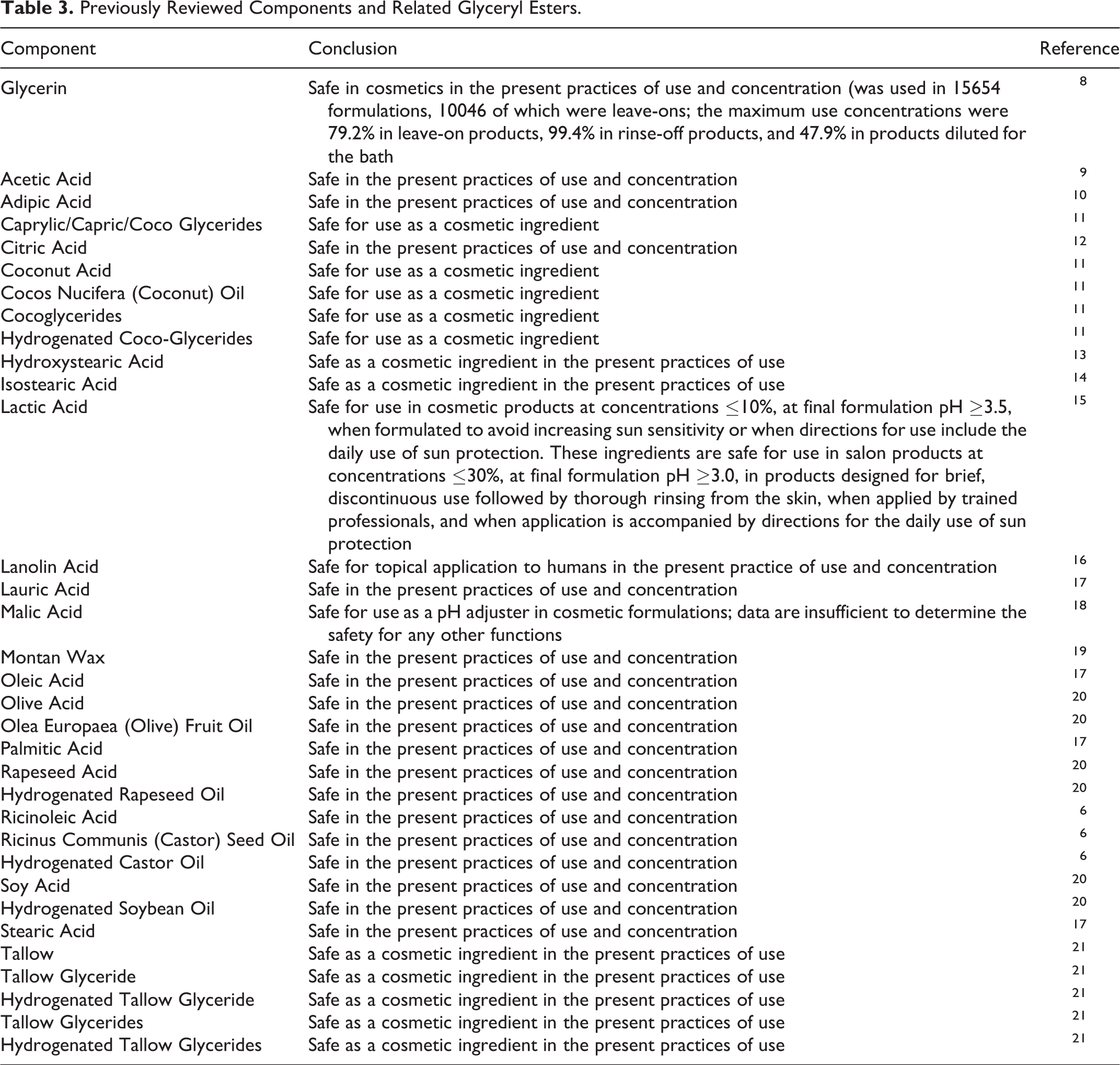
As stated earlier, these monoesters all share a glycerin core. The Panel evaluated the safety of glycerin as used in cosmetics in 2014, concluding that glycerin is safe in cosmetics in the present practices of use and concentration described in the safety assessment. 8 Many of the acid components and related glyceryl esters of these monoesters have also been reviewed by the panel. Listings of those that have been reviewed, and the associated conclusions, are provided in Table 3. (The full reports can be found on the CIR website: https://www.cir-safety.org/ingredients).
Previously Reviewed Components and Related Glyceryl Esters.
Finally, much of the new data included in this safety assessment was found on the European Chemicals Agency (ECHA) website. 22 –25 Please note that the ECHA website provides summaries of information generated by industry, and it is those summary data that are reported in this safety assessment when ECHA is cited.
Chemistry
Definition and Structure
The monoglyceryl monoesters are structurally constituted of the esterification products of one equivalent of glycerin and one equivalent of a carboxylic acid, usually a fatty acid (Figure 1). These ingredients vary only in the identity of those acids (eg, variable length, branching, and unsaturation of those acid residues). The definitions and idealized structures of the monoglyceryl monoesters are provided in Table 2.

Glyceryl Pentadecanoate, a monoglyceryl monoester.
Chemical Properties
Available molecular weights and log P values are provided in Table 4. 7,26 Please refer to the original reports on the previously reviewed monoglyceryl monoesters for additional property information.
Molecular Weights and Log P values.

Method of Manufacture
Glyceryl Oleate SE
In a pharmaceutical application, the self-emulsifying grade of Glyceryl Oleate can be formulated by mixing Glyceryl Oleate with 5% of an anionic surfactant. 27 According to the Dictionary, the cosmetic ingredient Glyceryl Oleate SE is a self-emulsifying grade of Glyceryl Oleate that contains some sodium and/or potassium oleate. 2
Glyceryl Monoesters—general
Industrial monoglycerides can be prepared by the direct esterification of glycerol with a fatty acid, yielding mixtures of mono-, di-, and tri- glycerides, depending on the molar ratio of the reactants. 7
Glyceryl Oleate
Glyceryl Oleate is manufactured by the partial hydrolysis of corresponding tri- and diglycerides, by esterification of glycerol with oleic acid, or by glycerolysis of common fats and oils. 3 The glycerolysis of fats and oils, a transesterification reaction, is a commercial method for the preparation of monoglycerides.
Natural Occurrence
Glyceryl Acetate may be a natural component of tobacco or a product of pyrolysis (in tobacco smoke). 28
Impurities/Constituents
Glyceryl Monoesters—general
According to one source, glyceryl monoesters are not pure monoesters but are mostly mixtures with mono-, di-, and tri-esters in a ratio of approximately 4:4:2, respectively. 7 Another source indicates that the guaranteed purity of commercial and conventional monoglyceride (glyceryl monoester) is a minimum of 90%, meaning that impurities account for a maximum of 10% of the composition. The results of impurities analyses of 14 glyceryl monoesters indicated that only one, glyceryl palmitate/ stearate, contained (mono)glycerol diester at a concentration of 1.2%. 7
Glyceryl Stearate and Glyceryl Stearate SE
Glyceryl Stearate and Glyceryl Stearate SE may contain mono-, di-, and tri-glyceride impurities and fatty acid impurities. 1
Ultraviolet Absorption
Glyceryl Ricinoleate
Glyceryl Ricinoleate absorbs ultraviolet light (UV), with a maximum absorbance at 270 nm. 6
Use
Cosmetic
The safety of the cosmetic ingredients included in this assessment is evaluated on the basis of the expected use in cosmetics in accordance with data received from the US Food and Drug Administration (FDA) and from the cosmetics industry. The data received from the FDA are those collected from manufacturers on the use of individual ingredients in cosmetics by product category in its Voluntary Cosmetic Registration Program (VCRP). Data from the cosmetic industry are submitted in response to a survey of maximum use concentration by product category conducted by the Personal Care Products Council (Council).
Based on information from the VCRP and that received from the Council, 25 of the 44 ingredients included in this safety assessment are currently in use. 29- 31 Of those, Glyceryl Stearate has the highest frequency of use; according to the 2015 VCRP data, Glyceryl Stearate is reported to be used in 5153 formulations, and 4229 of those uses are in leave-on formulations. Glyceryl Stearate SE has the next highest frequency of use, with 1420 reported uses 29 (Table 5).
Current and Historical Frequency and Concentration of Use According to Duration and Exposure.

* Because each ingredient may be used in cosmetics with multiple exposure types, the sum of all exposure types may not equal the sum of total uses.
a Includes products that can be sprays, but it is not known whether the reported uses are sprays.
b Not specified whether this product is a spray or a powder or neither, but it is possible it may be a spray or a powder, so this information is captured for both categories of incidental inhalation.
c Includes products that can be powders, but it is not known whether the reported uses are powders.
NR – no reported use.
N/A – no information is reported in this column because this is the first review of this ingredient.
The results of the concentration of use survey conducted by the Council in 2014 indicate that for the monoglyceryl monoesters in this group, Glyceryl Stearate has the highest maximum use concentration in leave-on formulations (17% in a deodorant), and Glyceryl Ricinoleate has the second highest maximum use concentration in leave-on formulations (15.2% in lipstick). 30,31 Overall, Glyceryl Rosinate is reported to have the greatest maximum reported used concentration, that is, 96% in a depilatory (Table 5).
Most of the in-use ingredients have been reviewed previously by the Panel. For the majority of these ingredients, the frequency of use has increased, but the concentration of use has remained the same or decreased. For example, in 1976 Glyceryl Stearate was reported to be used in 1371 cosmetic formulations at concentrations up to 50% 1 ; currently, it is reported to be used in 5153 formulations at a maximum concentration of 18.9%. Additionally, for those ingredients that now have a higher concentration of use than what was reported historically that increase has been relatively small. However, Glyceryl Rosinate and Glyceryl Hydrogenated Rosinate are exceptions. The maximum concentration of use of Glyceryl Rosinate has increased from 12% in 1999 to 96% in 2014. 7 The primary reason for this increase is that Glyceryl Rosinate is now reported to be used at maximum concentrations of 72% to 96% in depilatories; yet, the next greatest concentration of use of Glyceryl Rosinate is 8% in mascara, which is a decrease from the 12% concentration of use in mascara reported in 1999. Glyceryl Hydrogenated Rosinate was not reported to be used in 1998, but now has 29 uses, with maximum use concentrations of 10% in leave-on products (lipstick) and 76.8% in rinse-off products (depilatories).
The 19 monoglyceryl monoester ingredients not currently reported to be in use, according to the VCRP and industry survey, are listed in Table 6.
Ingredients Currently not Reported to be Used.

Several of the monoglyceryl monoesters are used in products that can be incidentally ingested, used near the eye, or come in contact with mucous membranes. Glyceryl Ricinoleate is used at 11.6% in eyeliner and at 15.2% in lipstick (potential ingestion and mucous membrane exposure). (In the 2007 review of Glyceryl Ricinoleate, the use in lipstick was known, but a concentration of use was not reported. 6 )
Additionally, some of the monoglyceryl monoesters are used in cosmetic sprays and could be incidentally inhaled; for example, Glyceryl Stearate is reported to be used at a maximum concentration of 14% in perfumes. In practice, 95% to 99% of the droplets/particles released from cosmetic sprays have aerodynamic equivalent diameters >10 µm, with propellant sprays yielding a greater fraction of droplets/particles <10 µm compared with pump sprays. 32,33 Therefore, most droplets/particles incidentally inhaled from cosmetic sprays would be deposited in the nasopharyngeal and thoracic regions of the respiratory tract and would not be respirable (ie, they would not enter the lungs) to any appreciable amount. 34,35 Some of the ingredients are used in spray deodorants; for example, glyceryl cocoate is used at a maximum concentration of 2% in a pump spray deodorant formulation. There is some evidence indicating that deodorant spray products can release substantially larger fractions of particulates having aerodynamic equivalent diameters in the range considered to be respirable. 34 However, the information is not sufficient to determine whether significantly greater lung exposures result from the use of deodorant sprays, compared to other cosmetic sprays. All of the monoglyceryl monoesters named in the report are not restricted from use in any way under the rules governing cosmetic products in the European Union. 36
Non-Cosmetic
According to the US FDA, many of the monoglyceryl monoesters are direct food substances affirmed as generally recognized as safe (GRAS) for human and/or animal use, are permitted as direct food additives, or are permitted as indirect food additives. The food additive status of the monoglyceryl monoesters is provided in Table 7.
Food Additive Status.

Glyceryl Acetate
Glyceryl Acetate is used as a gelatinizing agent for explosives, in leather tanning, and as a solvent for basic dyes. 28 It may be an additive for 1 or more types of tobacco products.
Glyceryl Oleate
Glyceryl Oleate has numerous applications in the pharmaceutical field. 27 Examples of these applications include emulsifier, solubilizer, absorption enhancer, oral drug delivery system, and vaginal drug delivery system.
Glyceryl Oleate can be used as a prior-sanctioned food ingredient and as a direct and indirect food additive. The pharmaceutical industry uses Glyceryl Oleate as an inert carrier compound and to enhance intestinal drug absorption.
Glyceryl Ricinoleate
Glyceryl Ricinoleate is listed by the FDA as an inactive ingredient in drug preparations. 5
Glyceryl Stearate
Glyceryl Stearate is widely used in foods as a surfactant, emulsifier, and thickener. Glyceryl Stearate is an antiscalant and dough conditioner in breads and is also used in pharmaceutical bases. Glyceryl Stearate has been granted regulatory status (by the FDA) as GRAS ingredient, an indirect food additive, a direct food additive, and as an over-the-counter substance. 1
Toxicokinetics
Absorption, Distribution, Metabolism, and Excretion
Oral
Glyceryl Rosinate
Four groups of Fischer 344 rats were orally administered glycerol ester of wood rosin; the labeled compound was prepared using 1,3-[14C] glycerol. 25 One group of 8 females was fed a diet containing 14000 ppm unlabeled ester for 18 hours, and 2 groups of 8 males were fed a diet containing 14000 ppm unlabeled ester for 20 hours or 10 days, respectively; 5 rats from each of the 3 groups was administered a single dose of 200 mg/kg bw [14C]-glycerol ester of wood rosin by gavage after completion of dietary administration. The animals were then placed in metabolism cages, and expired carbon dioxide, urine, and feces were collected from each animal at 0 to 12 hours, 12 to 24 hours, and subsequent 24-hour intervals through 120 hours after dosing.
Less than 1% (males) to 2% (females) of the administered radioactivity was recovered in either expired carbon dioxide, urine, or the cage rinses with 120 hours of administration; the majority of the radioactivity was excreted in the feces. Small traces of radioactivity were detectable in the carcasses; this trace material was most likely residual radioactivity in the gastrointestinal tract. No metabolites were specifically identified; however, analysis of fecal extracts following dosing indicate that little hydrolysis occurred, and results were similar with 1-day and 10-day dietary administration.
In the fourth group, jugular vein cannulas were implanted in 9 male rats and the following day, 6 of these rats were also implanted with biliary cannulas. The 6 rats implanted with 2 cannulas were then dosed by gavage with 200 mg/kg bw [14C] glycerol ester of wood rosin. Excreted bile was collected continuously, and samples were obtained at 4, 8, 12, and 24 hours after dosing, and blood samples were obtained from the jugular cannula at the same time intervals. The animals were killed 24 hours after dosing. Low levels of radioactivity were absorbed by the rats following dosing, and the radioactive species excreted in bile appeared to be a hydrolyzed product of the administered test substance; no intact test substance was present. Radioactivity was excreted in bile within 4 hours after dosing and was detectable in all samples collected for 24 hours post dose. The total amount of radioactivity excreted in bile during the 24-hour collection period ranged from 1.6% to 2.9% of the dose. Radioactivity content in the liver only accounted for 0.1% to 0.2% of the administered dose.
Glyceryl Monoesters—general
Lyceryl monoesters (monoglycerides) are metabolized to free fatty acids and glycerol, both of which are available for the resynthesis of triglycerides. 7
Glyceryl Ricinoleate
Upon ingestion, Glyceryl Ricinoleate is digested and absorbed, and following emulsification in the small intestine and hydrolysis of the ester bond, the monoglyceride moieties are absorbed into the intestinal mucosa by passive diffusion. 5
Penetration Enhancement
Monoglyceryl monoesters can act as penetration enhancers. Several studies demonstrating this behavior are summarized in Table 8. 37- 41
Penetration Enhancement.

Glyceryl Laurate
Glyceryl Laurate enhanced the penetration of drugs as shown in animal in vitro models using cadaverous skin and hairless rat skin. 7
Toxicological studies
Single Dose (Acute) Toxicity
Single dose (acute) toxicity studies are summarized in Table 9.
Single Dose (Acute) Toxicity Studies.

Abbreviation: OECD, Organisation for Economic Co-operation and Development.
The dermal median lethal dose (LD50) of Glyceryl Rosinate is >10 g/kg bw in rabbits in a 24-hour patch test. 25 In oral studies, LD50 values were reported to be >2 g/kg Glyceryl Behenate, >2 g/kg Glyceryl Hydrogenated Rosin, >5 g/kg Glyceryl Stearate, and >10 g/kg Glyceryl Rosinate. 22,23,25
Dermal
Glyceryl Citrate/Lactate/Linoleate/Oleate
In an acute dermal toxicity study in rats, 2000 mg/kg Glyceryl Citrate/Lactate/Linoleate/Oleate did not induce toxicity in rats that received a single oral dose of 2000 mg/kg. 7
Oral
Glyceryl Citrate/Lactate/Linoleate/Oleate
Glyceryl Citrate/Lactate/Linoleate/Oleate did not induce toxicity in rats that received a single oral dose of 2000 mg/kg. 7
Glyceryl Isostearate
Glyceryl Isostearate did not induce toxicity in rats that received a single oral dose of 2000 mg/kg. 7
Glyceryl Laurate
An LD50 of >20000 mg/kg was reported for rats dosed orally with Glyceryl Laurate. 7
Glyceryl Oleate
Oral administration of a single 13 mL/kg dose of a sunscreen formulation containing 5% Glyceryl Oleate to rats produced no signs of toxicity and no lethality. 3
Glyceryl Ricinoleate
Acute oral toxicity tests indicated that Glyceryl Ricinoleate has an LD50 greater than 25.0 mL/kg in mice and that products containing 5.6% Glyceryl Ricinoleate were not toxic when ingested. 5
Glyceryl Rosinate
Undiluted, purified ester gum-2-octyldodecyl myristate (contains 50% Glyceryl Rosinate and 50% octyldodecyl myristate) was not toxic (LD50 >5 g/kg) when administered orally to fasted Wistar albino rats (5 males, 5 females). 7
Glyceryl Stearate and Glyceryl Stearate SE
In acute oral toxicity studies in rats, Glyceryl Stearate and Glyceryl Stearate SE were nontoxic or mildly toxic. 1
Repeated Dose Toxicity
Repeated dose toxicity studies are summarized in Table 10.
Repeated Dose Toxicity Studies.
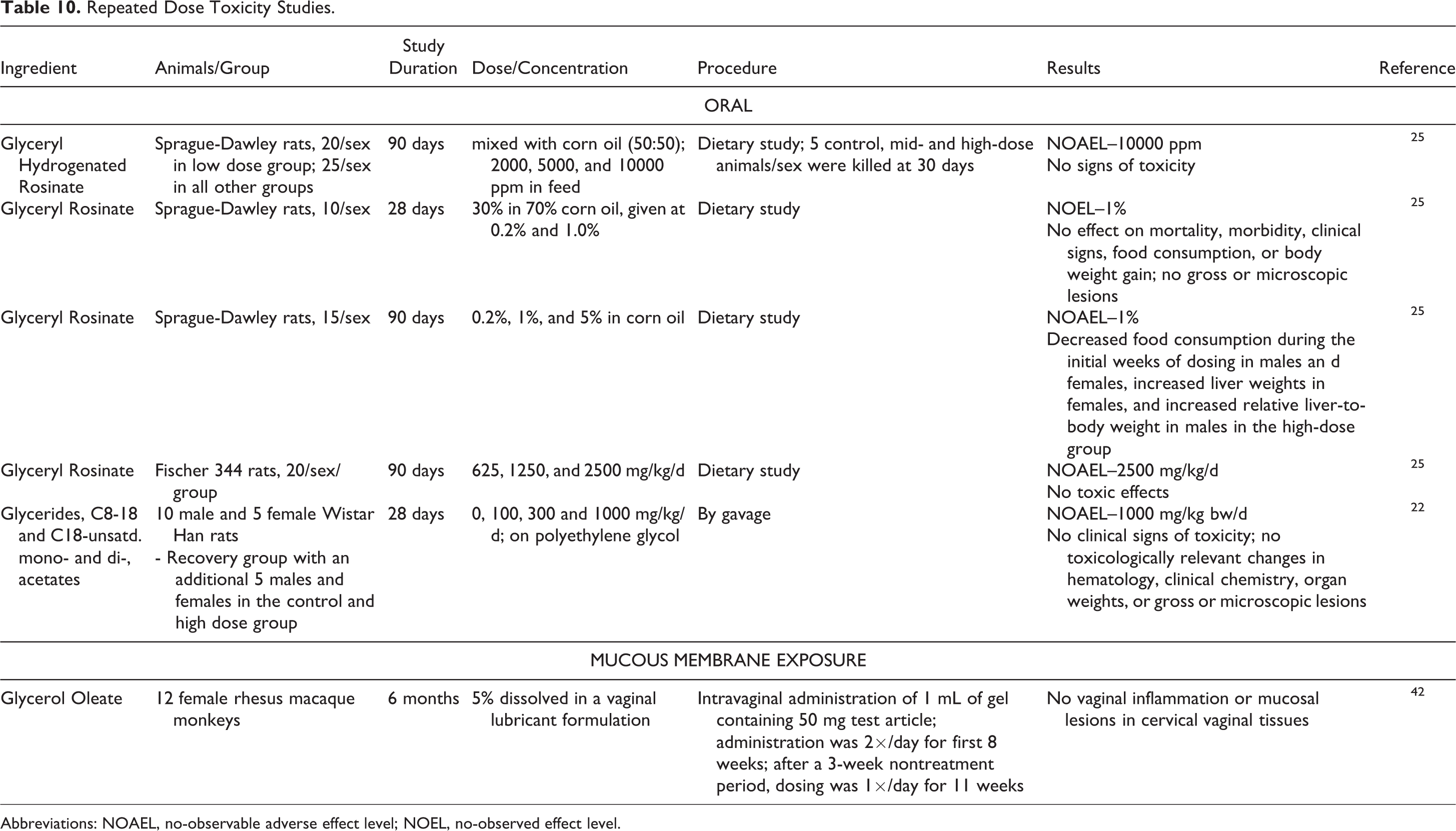
Abbreviations: NOAEL, no-observable adverse effect level; NOEL, no-observed effect level.
In a 90-day dietary study, the no-observable adverse effect level (NOAEL) for Glyceryl Hydrogenated Rosinate in rats was 10000 ppm. For Glyceryl Rosinate, the NOAEL for rats was 10000 ppm in one 90-day dietary study, and 2500 mg/kg bw/d in another. In a 28-day dietary study of glycerides, C8-18 and C18-unsaturated mono- and di-, acetates in rats, and the NOAEL were 1000 mg/kg bw/d. 22,25 Daily intravaginal dosing with 5% Glyceryl Oleate for 6 months in monkeys did not induce vaginal inflammation or mucosal lesions in cervical vaginal tissues. 42
Animal
Dermal
Glyceryl Stearate
In subchronic and chronic dermal toxicity tests, 4% to 5% Glyceryl Stearate was nontoxic to rabbits but did cause moderate irritation (slight to moderate erythema, edema, atonia, desquamation, and/or fissuring). 1
Oral
Glyceryl Laurate
No test substance–related gross or microscopic changes were observed in albino rats fed a mixture of mono-, di-, and tri-glycerides containing 40% to 45% Glyceryl Laurate for 2 days. 7 Neither gross nor microscopic lesions were noted in rats fed 25% Glyceryl Laurate in a 10-week study.
No test substance–related gross or microscopic changes were observed in albino rats fed a mixture of mono-, di-, and tri-glycerides containing 40% to 45% Glyceryl Laurate for 2 years.
Glyceryl Stearate
In chronic studies, 15% to 25% Glyceryl Stearate in the diet of rats for 3 consecutive generations had no adverse effects. 1 Rats fed a diet containing 25% Glyceryl Stearate for 2 years developed renal calcifications.
Inhalation
Glyceryl Laurate
A no-effect level of 280 mg/m3 was reported for Glyceryl Laurate in a 3-week inhalation toxicity study involving rats. 7 Rats were subjected to 14 exposures, 1 hour in duration each.
Reproductive and Developmental Toxicity
Glyceryl Oleate
A reproduction/developmental toxicity screening test was conducted in male and female Sprague-Dawley rats for Glyceryl Oleate. 23 Both males and females were dosed by gavage with 0, 100, 300, or 1000 mg/kg bw/d Glyceryl Oleate in corn oil once daily for 14 days prior to mating; the males were dosed for an additional 28 days, and dosing of the females continued until day 4 of lactation. There were 12 females each in the control and each of 3 test groups, 7 males each in the control and high dose groups, and 12 males each in the low- and mid-dose groups. A satellite group of 5 males and 5 females were dosed for 42 days, with a 14-day post-dosing observation period. The NOAELs for systemic toxicity (males and females), fertility (males and females), and development (F1 generation) were 1000 mg/kg bw/d. No effects related to the administration of the test article were observed in parental animals or offspring.
For Read-Across
In the 28-day oral toxicity study in which rats were dosed with 0, 100, 300, and 1000 mg/kg/d glycerides, C8-18 and C18-unsaturated mono- and di-, acetates in polyethylene glycol (PEG) described in Table 10 (Repeated Dose Toxicity Studies), an additional 10 female Wistar Han rats were included in each group to assess reproduction and developmental toxicity. 22 After a minimum of 14 days of dosing, females of the reproduction study group were cohabitated with a male from the same treatment group. The test females were dosed for a total of 41 to 49 days, that is, during those 2 weeks prior to mating, during mating, during post-coitum, and during at least 4 days of lactation. No treatment-related effects were observed, and the NOAEL for parental fertility was 1000 mg/kg bw/d.
Glyceryl Hydrogenated Rosinate and Glyceryl Rosinate
Following the administration of hexane extracts of Pinus ponderosa needles to mice by stomach tube, increased embryonic resorptions were observed. 7 Glyceryl Rosinate and Glyceryl Hydrogenated Rosinate are esters of glycerin and acids derived from rosin, and rosin is obtained from trees of various species of Pinus.
Genotoxicity
Genotoxicity studies are summarized in Table 11.
Genotoxicity Studies.
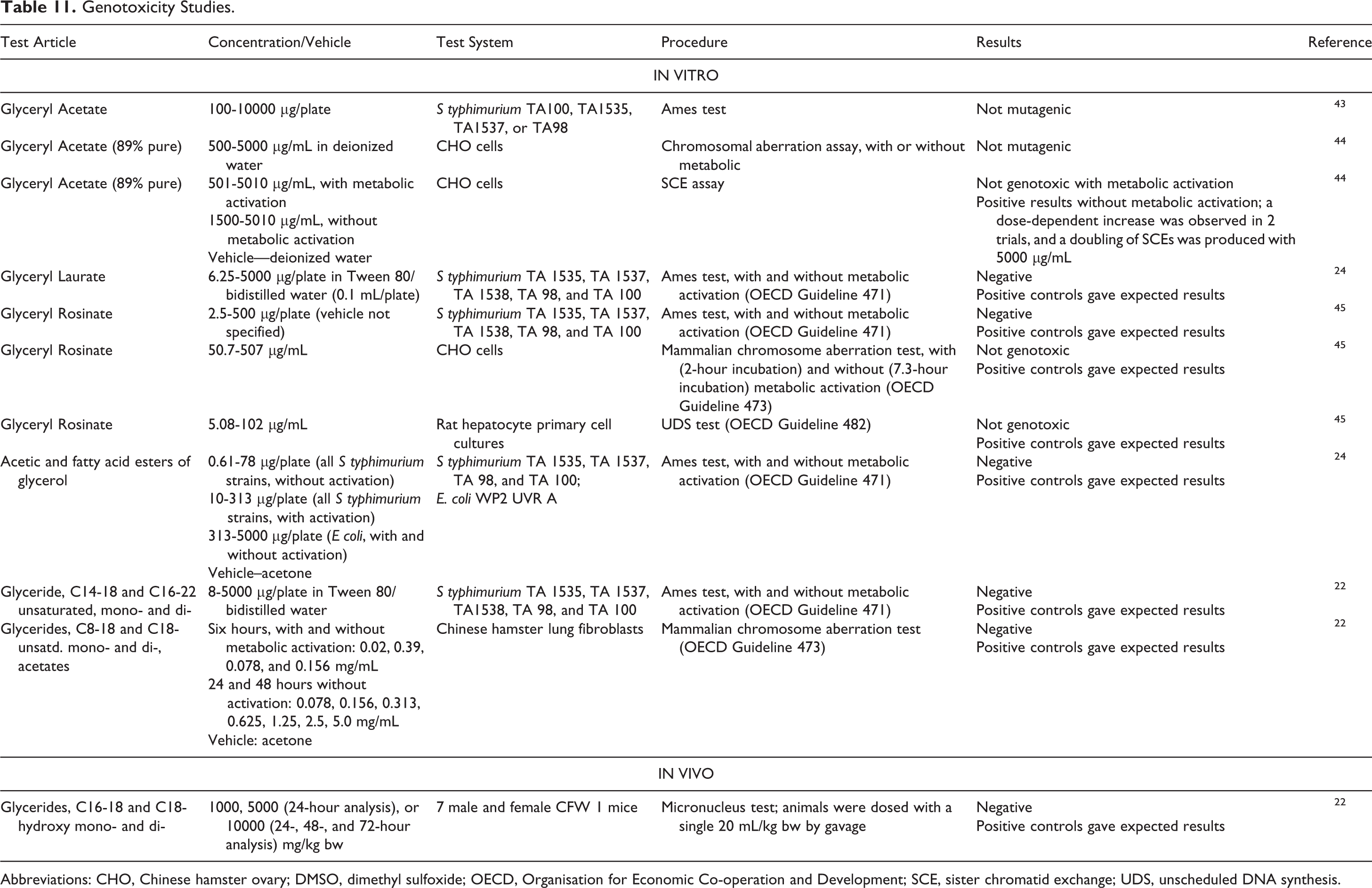
Abbreviations: CHO, Chinese hamster ovary; DMSO, dimethyl sulfoxide; OECD, Organisation for Economic Co-operation and Development; SCE, sister chromatid exchange; UDS, unscheduled DNA synthesis.
Glyceryl Acetate was not mutagenic in an Ames test (≤10000 µg/plate) or chromosomal aberration assay (≤5000 µg/plate) with or without metabolic activation; in a sister chromatid exchange (SCE) assay, it was not genotoxic with metabolic activation, but without activation, a dose-dependent increase was observed in 2 studies, and a doubling of SCEs was produced with 5000 µg/mL. 43,44 Glyceryl Laurate was not mutagenic in an Ames test (≤5000 µg/plate), and Glyceryl Rosinate was not mutagenic in an Ames test (≤500 µg/plate), mammalian chromosome assay (≤507 µg/mL), or unscheduled DNA synthesis test (≤102 µg/mL). 24,45 Glycerides, C16-18 and C18-hydroxy mono- and di- (up to 10000 mg/kg bw), was not genotoxic in a mouse micronucleus test. 22
In Vitro
Glyceryl citrate/lactate/linoleate/oleate
In the Ames plate incorporation and preincubation mutagenicity tests, Glyceryl Citrate/Lactate/Linoleate/Oleate was not mutagenic (with or without metabolic activation) to the following Salmonella typhimurium strains: TA98, TA100, TA1535, and TA1537. 7
Glyceryl hydrogenated rosinate and glyceryl rosinate
In studies on the mutagenicity of resin acids, only neoabietic acid (component of rosin) was mutagenic in the Ames/Salmonella assay. Glyceryl Rosinate and Glyceryl Hydrogenated Rosinate are esters of glycerin and acids derived from rosin, which is composed of diterpene resin acids. 7
Carcinogenicity
Oral and Dermal
Glyceryl Oleate
Glyceryl Oleate administration was associated with development of a few brain tumors (3 tumors in 63 mice) in a 2 generation study in mice of the TM strain whose feed was supplemented with 50 to 100 mg/mouse per day Glyceryl Oleate. 3 Digestive tract tumors were found in TM strain mice fed 200 mg/mouse per day Glyceryl Oleate (feed supplement) for 4 to 7 generations and were considered due to free fatty acid impurities.
Glyceryl ricinoleate
Glyceryl Ricinoleate was not a tumor promoter in a study involving groups of 10 mice. 6 However, the test substance induced slight epidermal hyperplasia in groups of 3 mice following the application of each to a small area of skin in the interscapular region.
Glyceryl stearate
Glyceryl Stearate, fed to mice in doses of 50 to 100 mg/d or 1.5% in the diet until they died, did not induce significant brain or gastric tumor formation, respectively. Five percent Glyceryl Stearate did not promote the carcinogenicity of 9,10 dimethylbenz[a]anthracene in mouse skin. 1
Irritation and Sensitization
Dermal Irritation/Sensitization
Dermal irritation and sensitization studies are summarized in Table 12.
Dermal Irritation and Sensitization.

Abbreviations: FCA, Freund’s Complete Adjuvant; GPMT, guinea pig maximization test; HRIPT, human repeated insult patch test; ME, microemulsion; NZW, New Zealand White; TEWL, transepidermal water loss.
Undiluted Glyceryl Behenate, Glyceryl Hydrogenated Rosinate, and Glyceryl Rosinate were not irritating to rabbit skin. Glyceryl Hydrogenated Rosinate (challenge at up to 50%), Glyceryl Rosinate (challenge at 100%), and glyceride, C16-18 and C18 mono- and dihydroxy (25% at challenge) were not sensitizers in guinea pigs. 22,23,25
In clinical testing, 5% Glyceryl Stearate was not irritating and Glyceryl Behenate (applied neat), Glyceryl Hydrogenated Rosinate, and Glyceryl Rosinate were not sensitizers in human repeated insult patch tests (HRIPTs). 23,25,46
Non-Human
Glyceryl Citrate/Lactate/Linoleate/Oleate
Neither erythema nor edema was observed in rabbits after semiocclusive patches containing heated Glyceryl Citrate/Lactate/Linoleate/Oleate (single application) were applied to intact skin. In another study, Glyceryl Citrate/Lactate/Linoleate/Oleate (single application) induced clearly circumscribed erythema and very mild edema when applied to intact skin of rabbits. 7 All reactions had cleared by day 10 post application.
The sensitization potential of Glyceryl Citrate/Lactate/Linoleate/Oleate in 20 guinea pigs was evaluated using the Buehler method. 7 Following the dermal application of undiluted test substance during induction and challenge phases, no evidence of irritation or sensitization was observed.
Glyceryl Isostearate
Overall, Glyceryl Isostearate was classified as nonirritating to the skin of rabbits in a study in which single, semiocclusive patch applications were made to intact skin. 7 The most severe reaction (moderate irritation) did not clear until day 5 post removal. Glyceryl Isostearate was also classified as nonirritating to the skin of rabbits in another study in which single occlusive patch applications were made to intact and abraded skin sites.
Glyceryl Isostearate was also evaluated in the maximization test. 7 After induction, 10 guinea pigs were challenged with 50% Glyceryl Isostearate in PEG and microcrystalline cellulose. Two additional challenges were also conducted. The first challenge yielded 1 and 2 positive reactions (all slight reactions) at 24 and 48 hours, respectively. These results (allergic contact dermatitis) were confirmed by reactions observed after the third challenge.
Glyceryl Laurate
Undiluted Glyceryl Laurate induced minor erythema and edema when applied (occlusive patches, single application) to intact skin of rabbits. 7 In another study, single occlusive patch applications of 20% Glyceryl Laurate emulsion to abraded and intact skin caused moderate skin irritation in rabbits.
The skin sensitization potential of Glyceryl Laurate was evaluated in the maximization test. 7 Guinea pigs were subjected to 4 sensitizing injections of 2% Glyceryl Laurate and then challenged with intradermal injections of 0.8% Glyceryl Laurate and topical applications of 25% Glyceryl Laurate. No positive reactions were observed. In another maximization test, skin sensitization was induced in 2 of 10 guinea pigs challenged with a 10% dilution of 20% Glyceryl Laurate emulsion. When a second challenge was initiated 7 days after the first, positive reactions were observed in 5 animals. Positive reactions were also observed in 4 animals challenged with a 5% dilution of 20% Glyceryl Laurate emulsion. Because positive reactions were also noted in the control group after the first and second challenge, the results were attributed to skin irritation (but not sensitization) effects of the test substance.
Glyceryl Oleate
Undiluted and 50% concentrations of Glyceryl Oleate in corn oil used in dermal irritation studies in rabbits were found to be minimally irritating. 3 A volume of 0.5 mL of a sunscreen formulation containing 5% Glyceryl Oleate produced erythema and slight edema in rabbits.
Daily applications of 2.0 mL/kg of a 25.0% corn oil solution of a formulation containing Glyceryl Oleate for 20 days produced severe dermal irritation in rabbits. 3 In a 4-week dermal toxicity/phototoxicity study, product formulations containing varying concentrations of 2 sunscreen ingredients (containing 5% Glyceryl Oleate) produced slight, reversible dermal irritation.
Glyceryl Ricinoleate
Glyceryl Ricinoleate, when evaluated by a Draize skin test, was a mild irritant to rabbits. 5 In a primary skin irritation test in rabbits, Glyceryl Ricinoleate was classified as a nonirritant. When rabbits were tested with products containing 5.6% Glyceryl Ricinoleate in a single-insult occlusive patch test, the products had either no (4 of 5 tests) or mild (1 of 5 tests) irritation potentials.
Glyceryl Rosinate
A primary irritation index (PII) of 3.40 (potential for severe irritation-warning label may be considered) was reported in an occlusive patch test evaluating the skin irritation potential of undiluted, purified ester gum-2-octyldodecyl myristate (contains 50% Glyceryl Rosinate and 50% octyldodecyl myristate) in rabbits. 7 Follicular hyperkeratosis (comedone formation) was not observed in another study in which the same undiluted test substance was applied to the ears of rabbits.
The reaction of rosin with glycerol to form 2 esterification products (glyceryl triabietate [GTA] and glycerol esterified tall oil rosin [TORG]) reduced the allergenicity of rosin. 7 The GTA results from the esterification of glycerol with abietic acid, the major component of rosin. 7 The incidence of positive challenge reactions in 15 guinea pigs tested was as follows: 1 (8.3% GTA), 2 (10% TORG), 3 (0.93% and 2.8% GTA), and 9 (20% gum rosin). Glyceryl diabietate and glyceryl monoabietate induced either the same incidence or a higher incidence of sensitization in other experiments (similar test groups) in the same study.
Glyceryl Stearate and Glyceryl Stearate SE
Glyceryl Stearate and Glyceryl Stearate/SE at concentrations of up to 100% were reported to be mildly irritating or nonirritating to the skin of rabbits. 1 In 7 guinea pig sensitization studies, it was concluded that neither 0.1% Glyceryl Stearate nor 0.1% Glyceryl Stearate SE was capable of inducing sensitization.
Human
Glyceryl Caprylate
Glyceryl Caprylate (15%) did not induce skin irritation or sensitization in a repeated insult patch test (RIPT) involving 63 healthy subjects, 58 of whom completed the study. 7
Glyceryl Hydrogenated Rosinate
Neither skin irritation nor sensitization was observed in any of the 51 subjects patch tested (semiocclusive patches) with a material consisting of 20% hydrogenated purified ester gum-2-octyldodecyl myristate and 80% white petrolatum. 7 (Because hydrogenated purified ester gum-2-octyldodecyl myristate is a trade mixture consisting of 50% Glyceryl Hydrogenated Rosinate and 50% octyldodecyl myristate, the effective concentration of Glyceryl Hydrogenated Rosinate in the test material is 10%.) The subjects were challenged at a new test site but not at the original site.
Glyceryl Laurate
Glyceryl Laurate was tested at a concentration of 50% wt/vol, in liquid paraffin, in an RIPT (Finn chambers) involving 91 healthy human subjects. 7 Glyceryl Laurate induced mild, erythematous reactions during induction in most of the subjects and questionable reactions in 7 subjects during the challenge phase. Reactions ranged from mild to moderate erythema (score = 2) during induction and challenge phases.
The skin irritation and sensitization potential of Glyceryl Laurate was evaluated in a second RIPT (Finn chambers) using 107 healthy subjects, 93 of whom completed the study. 7 Glyceryl Laurate was tested at a concentration of 25% in liquid paraffin oil. Glycery1 laurate induced moderate erythema (score = 2) in 8 subjects during induction and in one subject during the challenge phase. Glyceryl Laurate was considered a sensitizer under the conditions of the study.
Glyceryl Linoleate
Glyceryl Laurate was tested at a concentration of 50% wt/vol, in liquid paraffin, in an RIPT (Finn chambers) involving 91 healthy human subjects. 7 Glyceryl Linoleate did not induce skin irritation or sensitization in the 74 subjects who completed the study.
Glyceryl Myristate
The skin irritation and sensitization potential of glyceryl myristate was evaluated in an RIPT (Finn chambers) using 107 healthy subjects, 93 of whom completed the study. 7 It was tested at a concentration of 50% in paraffin oil. Glyceryl myristate did not induce irritation or sensitization.
Glyceryl Oleate
Two aqueous Glyceryl Oleate preparations (15% and 30% concentrations) and a fragrance preparation containing 19.0% Glyceryl Oleate tested negative for cutaneous irritation when applied to human skin using single insult occlusive patch tests. 3
Two sunscreen formulations containing 5% Glyceryl Oleate were considered mild compounds and caused no irritation in a cumulative occlusive patch test using human subjects. 3
No signs of irritation or sensitization were observed in humans after repeated insult patch testing of a 15% aqueous Glyceryl Oleate preparation and a sunscreen formulation containing 5% Glyceryl Oleate. 3 A few subjects involved in simultaneous photoallergy and phototoxicity tests had slight, transient erythematous responses. No positive reactions were observed at any irradiated site during induction and challenge phases of the photoallergy test.
The skin irritation and sensitization potential of glycery1 oleate was evaluated in an RIPT (Finn chambers) using 107 healthy subjects, 93 of whom completed the study. 7 Glyceryl Oleate were tested at a concentration of 50% in paraffin oil. Glyceryl Oleate did not induce irritation or sensitization.
Glyceryl Rosinate
In human single-insult occlusive patch tests, no indication of skin irritation potential was observed in 2 products tested, each containing 5.6% Glyceryl Ricinoleate. 5
Skin irritation was not observed in 12 healthy volunteers patch tested (occlusive patches) with a lipstick containing 1.0% Glyceryl Rosinate. 7 In an RIPT, neither skin irritation nor sensitization was observed in 78 healthy volunteers patch tested (occlusive patches) with the same product.
The contact sensitization potential of 3 product formulations containing Glyceryl Rosinate was evaluated in 3 maximization assays (healthy human subjects). 7 Results were negative for the following 3 study groups: foundation containing 4.0% Glyceryl Rosinate (25 subjects), blush containing 2.0% Glyceryl Rosinate (27 subjects), and lip gloss containing 2.0% Glyceryl Rosinate (27 subjects).
Skin irritation and sensitization were observed in 1 of 49 subjects patch tested (RIPT, semiocclusive patches) with a material consisting of 20% purified ester gum-2-octyldodecyl myristate and 80% white petrolatum. 7 (Because purified ester gum-2-octyldodecyl myristate is a trade mixture consisting of 50% Glyceryl Rosinate and 50% octyldodecyl myristate, the effective concentration of Glyceryl Rosinate in the test material is 10%.) The challenge reaction was observed at the original test site but not at the new site. It was concluded that the positive reaction observed was unique to that individual.
Glyceryl Stearate
When tested in single and RIPT to evaluate its skin irritation and sensitization in humans, Glyceryl Stearate used up to 20% was shown to be non-sensitizing and nonirritating. 1
Allergenicity
Human
Glyceryl Rosinate
Data on 12 patients suspected of having gum rosin allergy indicated that sensitization to Portuguese gum rosin exhibited a dose-response relationship (0.001%-20%). 7 In the same study, the incidence of positive reactions to Portuguese gum rosin in a second group of 12 patients with gum rosin allergy was summarized as follows: 0.001% gum rosin (0-1 patient), 0.01% gum rosin (2-3 patients), 0.1% gum rosin (8 patients), 1% gum rosin (12 patients), and 10% gum rosin (10-12 patients). These data were based on patch tests with serial dilutions of Portuguese gum rosin in petrolatum.
The esterification of rosin with glycerol, in effect, reduced the allergenicity of rosin in dermatitis patients. 7 Five of 8 patients had positive reactions to 10% tall oil rosin in petrolatum, whereas 4 of 8 patients had positive reactions to 20% glycerol-esterified tall oil rosin in petrolatum. Additionally, 7 of 8 patients had positive reactions to 5% Portuguese gum rosin in petrolatum and 3 of 8 patients had positive reactions to 20% glycerol-esterified gum rosin in petrolatum.
Glyceryl-1-monoabietate was identified as a contact allergen in another study evaluating the allergenicity of rosin and its esterification products. 7 Abietic acid (esterified to form glyceryl-1-monoabietate) is a main component of rosin, and furthermore, clinical data indicate that it is easily oxidized to form contact allergens (eg, 15-hydroperoxyabietic acid and its methyl ester). It is also important to note that oxidation products of abietic acid and dehydroabietic acid (also a main component of rosin) that can be formed during storage have been found to be allergenic.
Phototoxicity
Glyceryl Isostearate
No evidence of significant cutaneous reactions, with or without UV irradiation, was found when the phototoxicity and photoallergenicity potential of Glyceryl Isostearate was evaluated using 20 guinea pigs. 7
Glyceryl Rosinate
Phototoxicity was not induced in a group of 10 healthy volunteers tested with a lipstick containing 1.0% Glyceryl Rosinate. Patches were not applied to test sites. 7 Similarly, photoallergenicity was not induced in a group of 26 healthy volunteers patch tested (occlusive patches) with the same product in a repeat insult patch test.
Glyceryl Stearate
Products containing 2% Glyceryl Stearate were non-phototoxic and non-photoallergic. 1
Ocular Irritation
Ocular irritation studies are summarized in Table 13. Undiluted Glyceryl Behenate and Glyceryl Palmitate/Stearate were nonirritating to rabbit eyes, and undiluted Glyceryl Rosinate was slightly irritating. 22,23,25
Ocular Irritation Studies.

Abbreviation: NZW, New Zealand White.
Glyceryl Citrate/Lactate/Linoleate/Oleate
Glyceryl Citrate/Lactate/Linoleate/Oleate was not classified as ocular irritants in rabbits. 7
Glyceryl Isostearate
Glyceryl Isostearate was not classified as ocular irritants in rabbits. 7
Glyceryl Laurate
Glyceryl Laurate was not classified as ocular irritants in rabbits. 7
Glyceryl Oleate
Minimal to moderate eye irritation was produced by undiluted Glyceryl Oleate, 50% Glyceryl Oleate in corn oil, and a fragrance preparation containing 19.0% Glyceryl Oleate when administered to rabbits. 3 A formulation containing 5% Glyceryl Oleate administered at a 0.1 mL dose to rabbit eyes induced slight conjunctivitis.
Glyceryl Ricinoleate
Glyceryl Ricinoleate was nonirritating to rabbit eyes in a primary eye irritation test, and in a Draize test, it was mildly irritating to rabbit eyes from which it was not rinsed but nonirritating to rabbit eyes from which it had been rinsed 2 and 4 seconds after instillation. 5 Various products containing Glyceryl Ricinoleate were tested for irritation potential in rabbit eyes. Of eight tests, 2 products demonstrated no irritation potential, 5 products had a minimal irritation potential, and 1 product had a mild irritation potential.
Glyceryl Rosinate
Undiluted, purified ester gum-2-octyldodecyl myristate (contains 50% Glyceryl Rosinate and 50% octyldodecyl myristate) was not irritating to the eyes of rabbits. 7
Glyceryl Stearate
In primary eye irritation studies, Glyceryl Stearate and Glyceryl Stearate/SE at concentrations up to 100% were mildly irritating or nonirritating when instilled in the eyes of rabbits. 1
Case Reports
Case reports of reactions to use of formulations containing several of the monoglyceryl monoesters are described in Table 14. 47- 51
Case Reports.
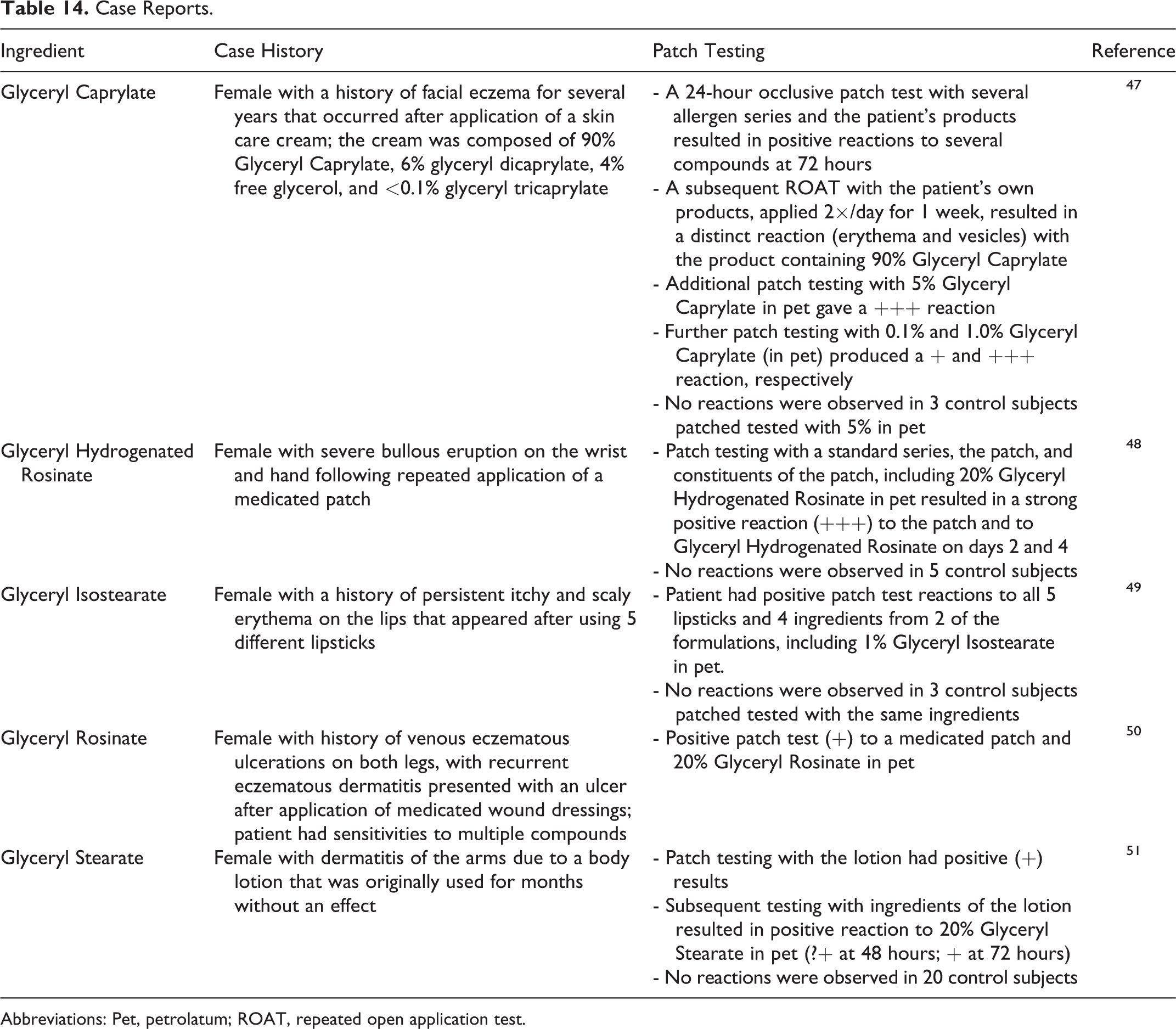
Abbreviations: Pet, petrolatum; ROAT, repeated open application test.
Glyceryl Isostearate
Two case reports indicated skin reactions to 2 cosmetic products containing Glyceryl Isostearate as well as positive patch test reactions to this ingredient. 7
Summary
In 1982, the Panel concluded that Glyceryl Stearate and Glyceryl Stearate SE are safe for topical application to humans. Since that time, the Panel has issued final reports on other monoglyceryl monoesters, finding them all to be safe as used in cosmetic products; an additional 8 monoglyceryl monoesters that have not been reviewed by the Panel have been identified to be used as cosmetic ingredients. In this report, we have compiled the safety data for 44 monoglyceryl monoesters (all of which are all esterification products of glycerin and aliphatic carboxylic acids, primarily fatty acids). Most of the monoglyceryl monoesters included in this safety assessment are reported to be used as skin conditioning agents.
Twenty-five of the 44 ingredients included in this safety assessment are currently used in cosmetic ingredients with Glyceryl Stearate having the highest frequency of use (it is found in 5153 formulations), the highest maximum use concentration in leave-on formulations (17% in a deodorant). Glyceryl Ricinoleate has the second highest maximum use concentration in leave-on formulations (15.2% in lipstick). Glyceryl Rosinate is reported to have the greatest maximum use concentration (96% in a depilatory). Most of the in-use ingredients have been reviewed previously by the Panel; for the majority of these ingredients, the frequency of use has increased but the concentration of use has remained the same or decreased.
According to the US FDA, many of the monoglyceryl monoesters are direct food substances affirmed as GRAS for human and/or animal use, are permitted as direct food additives, or are permitted as indirect food additives. Monoglyceryl monoesters can act as penetration enhancers for topical products.
Pharmacokinetics
In rats fed a diet containing radiolabeled glycerol ester of wood rosin, most of the radioactivity was excreted in the feces, primarily unchanged; results were similar with 1-day and 10-day dietary administration. In rats dosed by gavage, low levels of radioactivity were absorbed by rats following dosing, and the radioactive species excreted in bile appeared to be a hydrolyzed product of the administered test substance; no intact test substance was present in the excretions Radioactivity was excreted in bile within 4 hours after dosing and was detectable in all samples collected 24 hours post dose. The total amount of radioactivity excreted in bile during the 24-hour collection period ranged from 1.6% to 2.9% of the initial dose.
In a 24-hour patch test, the dermal LD50 of Glyceryl Rosinate and of glycerides, C16-18 and C18-hydroxy mono- and di-, were found to be >10 and >2 g/kg bw in rabbits, respectively. In oral studies, LD50 values were reported to be >2 g/kg Glyceryl Behenate, >2 g/kg Glyceryl Hydrogenated Rosin, >5 g/kg Glyceryl Stearate, and >10 g/kg Glyceryl Rosinate. In a 90-day dietary study, NOAEL for Glyceryl Hydrogenated Rosinate in rats was 10000 ppm. For Glyceryl Rosinate, the NOAEL for rats was 10000 ppm in one 90-day study, and 2500 mg/kg bw/d in another. In a 28-day study in rats of glycerides, C8-18 and C18-unsatd. mono- and di-, acetates, the NOAEL was 1000 mg/kg bw/d.
Intravaginal dosing with 5% Glyceryl Oleate for 6 months in monkeys did not induce vaginal inflammation or mucosal lesions in cervical vaginal tissues. Glyceryl Oleate was not a reproductive or developmental toxin in rats. The NOAELs for systemic toxicity (males and females), fertility (males and females), and development (F1 generation) were 1000 mg/kg bw/d. No effects related to the administration of the Glyceryl Oleate were observed in parental animals or offspring. In a reproductive and developmental toxicity study in which rats were dosed with 0, 100, 300, and 1000 mg/kg/d glycerides, C8-18 and C18-unsatd. mono- and di-, acetates in PEG, no treatment-related effects were observed, and the NOAEL for parental fertility was 1000 mg/kg bw/d.
Glyceryl Acetate was not mutagenic in an Ames test (≤10000 µg/plate) or chromosomal aberration assay (≤5000 µg/plate) with or without metabolic activation. In an SCE assay, Glyceryl Acetate was not genotoxic with metabolic activation; in the absence of metabolic activation, a dose-dependent increase in SCEs was observed in 2 separate studies; a doubling of SCEs was produced with 5000 µg/mL Gyceryl Acetate.
Glyceryl Laurate was not mutagenic in an Ames test (≤5000 µg/plate), and Glyceryl Rosinate was not mutagenic in an Ames test (≤500 µg/plate), mammalian chromosome assay (≤507 µg/mL), or unscheduled DNA synthesis test (≤102 µg/mL). Glycerides, C16-18 and C18-hydroxy mono- and di- (up to 10000 mg/kg bw), was not genotoxic in a mouse micronucleus test.
Undiluted Glyceryl Behenate, Glyceryl Hydrogenated Rosinate, and Glyceryl Rosinate were not irritating to rabbit skin. Glyceryl Hydrogenated Rosinate (challenge at up to 50%), Glyceryl Rosinate (challenge at 100%), and glyceride, C16-18 and C18 mono- and di-hydroxy (25% at challenge) were not sensitizers in guinea pigs.
In clinical testing, 5% Glyceryl Stearate was not irritating and Glyceryl Behenate (applied neat), Glyceryl Hydrogenated Rosinate, and Glyceryl Rosinate were not sensitizers in HRIPTs. Case reports of reactions to use of formulations containing several of the monoglyceryl monoesters have been described.
Undiluted Glyceryl Behenate and Glyceryl Palmitate/Stearate were nonirritating to rabbit eyes. Undiluted Glyceryl Rosinate was slightly irritating to rabbit eyes.
Discussion
In 1982, the Panel concluded that Glyceryl Stearate and Glyceryl Stearate SE are safe for topical application to humans. In accordance with its Procedures, the Panel evaluates the conclusions of previously issued reports every 15 years to determine whether the conclusion should be reaffirmed. Because it was determined that the time had elapsed and a rereview of Glyceryl Stearate had not been conducted, one was initiated. The Panel determined it was appropriate to reopen the safety assessment of Glyceryl Stearate and Glyceryl Stearate SE to include 34 previously reviewed monoglyceryl monoesters, and 8 additional cosmetic ingredients that had not yet been reviewed because all of these ingredients are esterification products of glycerin and carboxylic acids, the vast majority of which are fatty acids.
For many of the ingredients included in the report, the frequency of use has increased since the Panel’s original review, but the concentration of use has not. However, there are a few ingredients for which the concentration of use has increased, but these increased concentrations of use did not cause concern for the Panel for several reasons:
The maximum use concentration of Glyceryl Rosinate increased significantly in a rinse-off products whereas its current maximum leave-on concentration is less than that reported at the time of the original review.
Glyceryl Hydrogenated Rosinate which was not reported to be in use when it was originally reviewed by the Panel but now reported to be used at a maximum use concentration of up to 10% in lipstick formulations and 76.8% in rinse-off products. Glyceryl Hydrogenated Rosinate is not an irritant when applied undiluted to rabbit skin and is not a sensitizer when used at a concentration of 50% in guinea pigs.
The maximum leave-on use concentration of Glyceryl Ricinoleate has increased slightly (from 12% to 15.2%), and Glyceryl Ricinoleate SE, which was not in use when reviewed previously, is now reported to be used at up to 6.8% in leave-on formulations. Based on the clinical experience of members of the Panel with the routine use of 20% Glyceryl Ricinoleate in personal care products, absence of adverse effects in dermal screening results for sensitization testing, these reported increased concentrations of use were not of concern to the Panel.
The Panel recognized that some of the monoglyceryl monoesters can act as penetration enhancers. The Panel cautioned that care should be taken in formulating cosmetic products that may contain these ingredients in combination with any ingredients whose safety was based on their lack of dermal absorption data or when dermal absorption was a concern.
The Panel acknowledged that some of the monoglyceryl monoesters may be formed from plant-derived or animal-derived constituents. The Panel thus expressed concern regarding pesticide residues and heavy metals that may be present in botanical ingredients. They stressed that the cosmetics industry should continue to use the necessary procedures to sufficiently limit amounts of such impurities in an ingredient before blending them into cosmetic formulations. Additionally, the Panel considered the risks inherent in using animal-derived ingredients, namely the transmission of infectious agents. Although tallow may be used in the manufacture of glyceryl tallowate and is clearly animal-derived, the Panel notes that tallow is highly processed, and tallow derivatives even more so. The Panel agrees with determinations by the US FDA that tallow derivatives are not risk materials for transmission of infectious agents.
Some of the monoglyceryl monoesters are used in products that could be incidentally inhaled; for example, Glyceryl Stearate is reported to be used at a maximum concentration of 14% in perfumes. However, the Panel did not find concern with the use of these ingredients in formulations that might be inhaled, and a no-effect level of 280 mg/m3 was reported for Glyceryl Laurate in a 3-week inhalation toxicity study in rats subjected to 1-hour exposures. The Panel also noted that in aerosol products, 95% to 99% of droplets/particles would not be respirable to any appreciable amount. Furthermore, droplets/particles deposited in the nasopharyngeal or bronchial regions of the respiratory tract present no toxicological concerns based on the chemical and biological properties of these ingredients. Coupled with the small actual exposure in the breathing zone and the concentrations at which the ingredients are used, the available information indicates that incidental inhalation would not be a significant route of exposure that might lead to local respiratory or systemic effects. A detailed discussion and summary of the Panel’s approach to evaluating incidental inhalation exposures to ingredients in cosmetic products is available at https://www.cir-safety.org/cir-findings.
Conclusion
The Panel concluded that the following ingredients are safe in cosmetics in the present practices of use and concentration described in this safety assessment: Glyceryl Acetate* Glyceryl Adipate* Glyceryl Arachidate* Glyceryl Behenate Glyceryl Caprate Glyceryl Caprylate Glyceryl Caprylate/caprate Glyceryl Citrate/Lactate/Linoleate/Oleate Glyceryl Cocoate Glyceryl Cocoate/Citrate/Lactate* Glyceryl Erucate* Glyceryl Ethylhexanoate* Glyceryl Ethylhexanoate/Stearate/Adipate Glyceryl Heptanoate* Glyceryl Hydrogenated Rapeseedate* Glyceryl Hydrogenated Rosinate Glyceryl Hydrogenated Soyate* Glyceryl Hydroxystearate Glyceryl Isopalmitate* Glyceryl Isostearate Glyceryl Isotridecanoate/Stearate/Adipate Glyceryl Lanolate Glyceryl Laurate Glyceryl Laurate SE* Glyceryl Laurate/oleate* Glyceryl Linoleate Glyceryl Linolenate Glyceryl Montanate* Glyceryl Oleate Glyceryl Oleate SE* Glyceryl Oleate/Elaidate Glyceryl Olivate* Glyceryl Palmitate Glyceryl Palmitate/Stearate* Glyceryl Palmitoleate* Glyceryl Pentadecanoate* Glyceryl Ricinoleate Glyceryl Ricinoleate SE Glyceryl Rosinate Glyceryl Stearate Glyceryl Stearate SE Glyceryl Stearate/Malate Glyceryl Tallowate* Glyceryl Undecylenate
*Not reported to be in current use. Were ingredients in this group not in current use to be used in the future, the expectation is that these ingredients would be used in product categories and at concentrations comparable to others in this group.
Footnotes
Author Contribution
Fiume, M. contributed to conception and design; acquisition, analysis, and interpretation; drafted manuscript; and critically revised manuscript. Heldreth, B. contributed to conception and design; acquisition, analysis, and interpretation; drafted manuscript; and critically revised manuscript. Bergfeld, W., Belsito, D., Hill, R., Klaassen, C., Liebler, D., Marks, J., Shank, R., Slaga, T., and Snyder, P. contributed to conception and design, analysis and interpretation, and critically revised manuscript. All authors gave final approval and agree to be accountable for all aspects of work ensuring integrity and accuracy.
Author’s Note
Unpublished sources cited in this report are available from the Executive Director, Cosmetic Ingredient Review, 1620 L Street, NW, Suite 1200, Washington, DC 20036, USA.
Declaration of Conflicting Interests
The author(s) declared no potential conflicts of interest with respect to the research, authorship, and/or publication of this article.
Funding
The author(s) disclosed receipt of the following financial support for the research, authorship, and/or publication of this article: The articles in this supplement were sponsored by the Cosmetic Ingredient Review. The Cosmetic Ingredient Review is financially supported by the Personal Care Products Council.