



Abstract
Pentaerythrityl tetra-di-t-butyl hydroxyhydrocinnamate functions as an antioxidant in cosmetic products and is used at concentrations up to 0.8%. Given the high molecular weight of this ingredient, skin penetration is not likely. The available toxicity data, together with the low ingredient use concentrations, suggest that systemic toxicity would not be likely if percutaneous absorption were to occur. Additionally, the negative human repeated insult patch test data at a concentration of 0.5% were deemed sufficient for evaluating the skin irritation and sensitization potential of pentaerythrityl tetra-di-t-butyl hydroxyhydrocinnamate over the range of use concentrations in cosmetic products. The Cosmetic Ingredient Review Expert Panel concluded that pentaerythrityl tetra-di-t-butyl hydroxyhydrocinnamate is safe in cosmetics in the present practices of use and concentration described in this safety assessment.
Introduction
This report presents information relevant to evaluating the safety of pentaerythrityl tetra-di-t-butyl hydroxyhydrocinnamate as used in cosmetics. This ingredient functions as an antioxidant in cosmetic products.
Chemistry
Definition and Structure
Pentaerythrityl tetra-di-t-butyl hydroxyhydrocinnamate (CAS No. 6683-19-8) is the cinnamate tetraester of pentaerythritol conforming to the molecular structure shown in Figure 1. 1
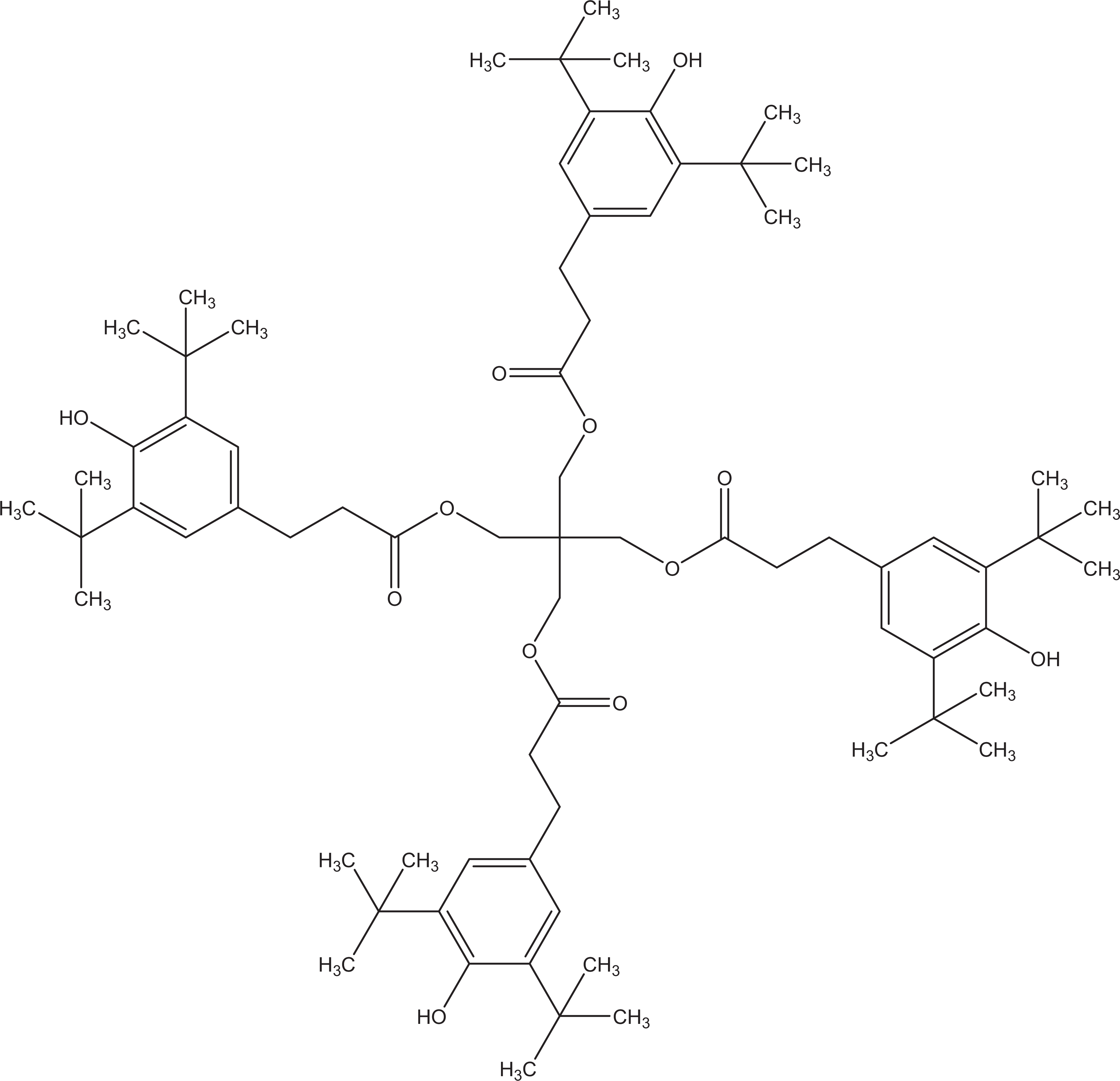
Pentaerythrityl tetra-di-t-butyl hydroxyhydrocinnamate.
Physical and Chemical Properties
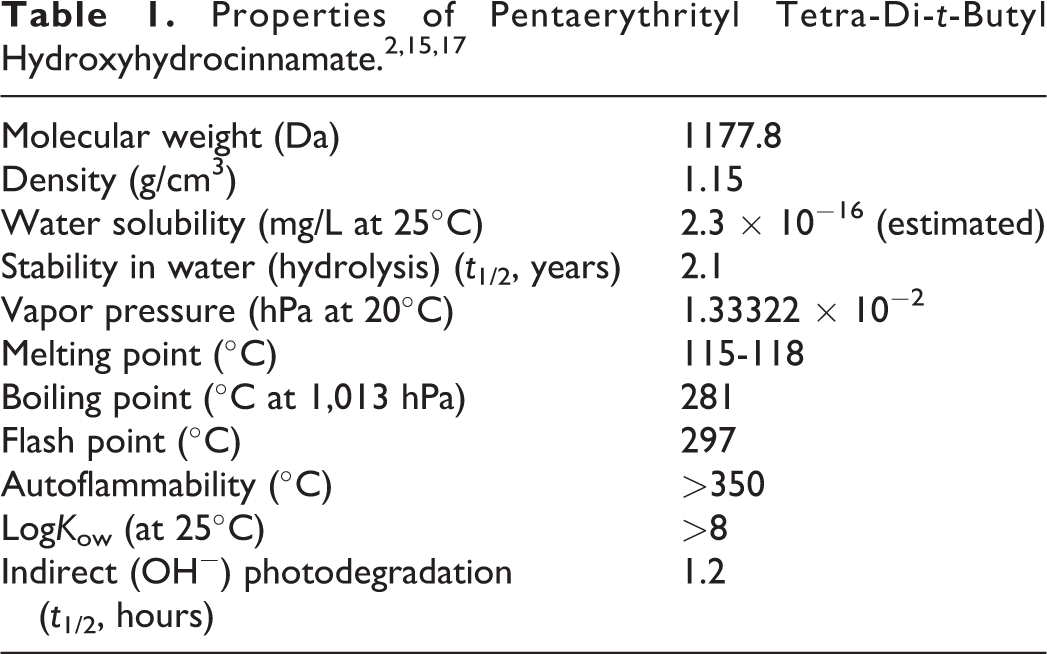
Pentaerythrityl tetra-di-t-butyl hydroxyhydrocinnamate is an amorphous, white solid with a melting point above 100°C, very low aqueous solubility, and a high degree of lipophilicity (Table 1). This substance is hydrolytically quite stable in pure water, with a half-life longer than 2 years at 25°C. 2
Impurities
Methyl 3-(3,5-di-t-butyl-4-hydroxyphenyl) propionate is reported to be an impurity of pentaerythrityl tetra-di-t-butyl hydroxyhydrocinnamate. 3
Use
Cosmetic
Pentaerythrityl tetra-di-t-butyl hydroxyhydrocinnamate is reported to function as an antioxidant in cosmetic products. 1 Information on the use of this ingredient as a function of product type was supplied to The US Food and Drug Administration (FDA) by industry as part of the Voluntary Cosmetic Registration Program (VCRP) in 2014. 4 The Personal Care Products Council (Council) conducted a survey of ingredient use concentrations in 2013, indicating use at concentrations up to 0.8%. 5 Ingredient frequency of use and concentration data are included in Table 2.
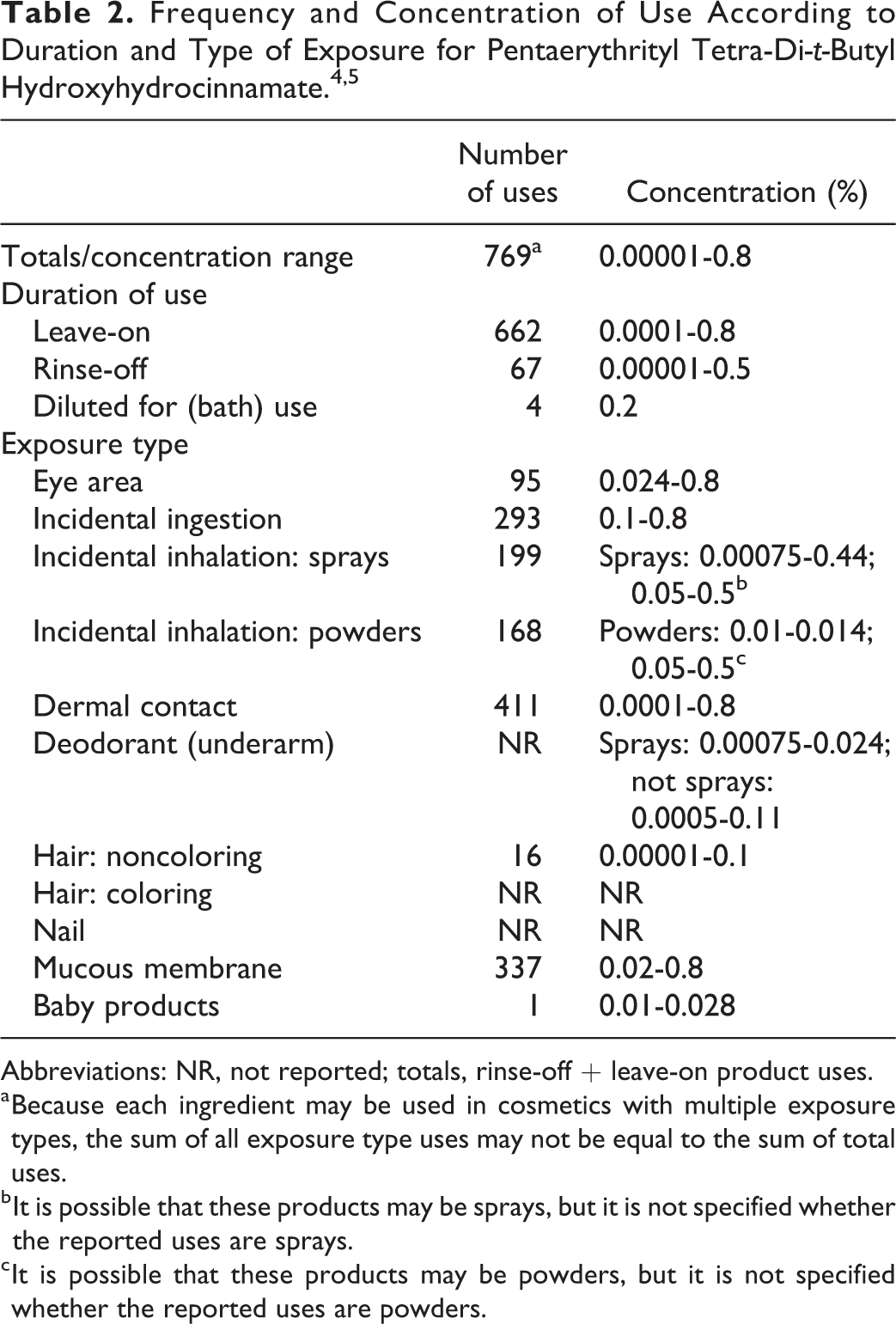
Abbreviations: NR, not reported; totals, rinse-off + leave-on product uses.
a Because each ingredient may be used in cosmetics with multiple exposure types, the sum of all exposure type uses may not be equal to the sum of total uses.
b It is possible that these products may be sprays, but it is not specified whether the reported uses are sprays.
c It is possible that these products may be powders, but it is not specified whether the reported uses are powders.
Cosmetic products containing pentaerythrityl tetra-di-t-butyl hydroxyhydrocinnamate may be applied to the skin (skin of the lip included) and hair and may come in contact with mucous membranes, or, incidentally, these products may come in contact with the eyes. Products containing this ingredient may be applied as frequently as several times per day and may come in contact with the skin or hair for variable periods following application. Daily or occasional use may extend over many years.
Pentaerythrityl tetra-di-t-butyl hydroxyhydrocinnamate is used in products that are sprayed (highest maximum use concentration = 0.44%, in perfumes) and in dusting powders (highest maximum use concentration = 0.014%). Additionally, it is possible that various body and hand skin care products and depilatories containing this ingredient may be in powder form (highest maximum use concentration = 0.5% in depilatories). Because this ingredient is used in products that are sprayed, they could possibly be inhaled. In practice, 95% to 99% of the droplets/particles released from cosmetic sprays have aerodynamic equivalent diameters >10 µm, with propellant sprays yielding a greater fraction of droplets/particles below 10 µm, compared with pump sprays. 6 -9 Therefore, most droplets/particles incidentally inhaled from cosmetic sprays would be deposited in the nasopharyngeal and bronchial regions and would not be respirable (ie, they would not enter the lungs) in any appreciable amount. 6,7
Noncosmetic
Pentaerythrityl tetra-di-t-butyl hydroxyhydrocinnamate (tetrakis-(methylene-(3,5-di-t-butyl-4-hydroxyhydrocinnamate)methane) has been approved by FDA to be used as a component of adhesives that can be safely used in articles intended for use in packaging, transporting, or holding food and as a component of resinous and polymeric coatings for food contact surfaces of such articles. 10,11 According to FDA, this chemical may also be safely used as an antioxidant and/or stabilizer in polymers used in the manufacture of articles that may come in contact with food, with the following restrictions: at levels not to exceed 0.5% by weight of all polymers used as indirect additives in food packaging, except at levels of ≤0.1% by weight of petroleum wax or synthetic petroleum wax, or at levels of ≤1% by weight of petroleum alicyclic hydrocarbon resins or their hydrogenated products, of rosin and rosin derivatives, and of terpene resins. 12 Other FDA restrictions include use as a component (antioxidant) of lubricants with incidental food contact at a level not to exceed 0.5% by weight of the lubricant and use as a component of surface lubricants employed in the manufacture of metallic articles that contact food, at a level not to exceed 0.5% by weight of the finished surface lubricant formulation. 13,14
Toxicokinetics
Data on the absorption, distribution, metabolism, and excretion of pentaerythrityl tetra-di-t-butyl hydroxyhydrocinnamate were neither found in the published literature, nor were unpublished data provided.
Toxicology
Acute Toxicity
Inhalation
In an acute inhalation toxicity study, groups of 20 rats (males and females; strain and ages not stated) were exposed, nose-only, to aerosolized pentaerythrityl tetra-di-t-butyl hydroxyhydrocinnamate for 4 hours. 2 The test material was administered at a concentration of 762 or 1,951 mg/m3 of air, and untreated rats served as controls. The animals were observed at 1, 2, and 4 hours into the exposure period, at 2 hours postexposure, and then daily for 14 days. Gross pathologic examination was performed at the end of the observation period. None of the animals died during the 14-day observation period. Slight dyspnea and ruffled fur were observed in both dose groups, and all animals recovered within 6 days. There were no differences in body weight between the dose groups, and pathological changes were not observed at necropsy.
A group of 20 Wistar rats (10 males and 10 females; ages not stated) was exposed (1-hour whole-body, inhalation dust exposure) to pentaerythrityl tetra-di-t-butyl hydroxyhydrocinnamate at a concentration of 46 mg/L. 3 Exposure was followed by a 14-day observation period. A control group was not included in the study. None of the animals died, and there were no significant signs of toxicity during the 14-day observation period. Additionally, gross abnormalities were not observed. It was concluded that the test material did not induce any significant signs of irritation or death during inhalation exposure or during the 14-day observation period.
Two groups of 20 rats of the TiF:Raif (SPF) strain were exposed (nose-only) to pentaerythrityl tetra-di-t-butyl hydroxyhydrocinnamate aerosol at concentrations of 762 ± 41 mg/m3 air and 1,951 ± 68 mg/m3 air, respectively, for 4 hours according to the Organisation for Economic Co-operation and Development (OECD) Test Guideline (TG) 403. 3 A control group was also included in the study. Information on the particle size distribution indicated that at least 82% of the particles were smaller than 7 µm in diameter. Exposure was followed by a 14-day observation period. None of the animals died. Exophthalmos and slight dyspnea were observed in both exposure groups, and recovery within 6 days was noted. Gross pathological changes were not observed. It was concluded that the lethal concentration required to kill 50% of the population (LC50) was >1,951 mg/m3 and that the test material was practically nontoxic.
Oral
The acute oral toxicty of pentaerythrityl tetra-di-t-butyl hydroxyhydrocinnamate was evaluated using groups of 4 Sprague Dawley rats (2 males and 2 females/group; ages not stated) in a non-good laboratory practices (GLP) study. 2 The test material (25% [wt/vol] suspension in corn oil) was administered by gavage at a dose of 4,556, 6,834, or 10,250 mg/kg body weight. Dosing was followed by a 14-day observation period. None of the animals died during the study, and there was no evidence of significant adverse effects. However, hypoactivity and ruffled fur were observed in all dose groups, and labored breathing and diuresis were observed in the highest dose group. The animals had returned to normal by day 2, and gross pathological alterations were not observed at necropsy. It was concluded that the lethal dose required to kill LD50 was >10,250 mg/kg body weight.
Pentaerythrityl tetra-di-t-butyl hydroxyhydrocinnamate (10% or 30% in propylene glycol and corn oil) was administered by gavage to groups of 5 male Sprague Dawley albino rats at doses up to 1,590 mg/kg body weight and to a group of 10 rats of the same strain at a dose of 5,000 mg/kg body weight. Animal ages were not stated. A control group was not included in the study. Dosing was followed by a 14-day observation period. None of the animals died. Animals of all groups appeared normal throughout the study, and there was no evidence of gross pathology at necropsy. It was concluded that the LD50 was >5,000 mg/kg body weight. 3
Groups of 20 Sprague Dawley rats (10 males and 10 females/group; 67 days old) were dosed by gavage with pentaerythrityl tetra-di-t-butyl hydroxyhydrocinnamate (500 mg/mL in dimethyl sulfoxide [DMSO]/corn oil [50/50] suspension), using the OECD TG 401. The animals were observed for 30 days after dosing. None of the animals died, and all animals appeared normal throughout the study. Gross pathology was not mentioned. It was concluded that the LD50 was >5,000 mg/kg body weight and that the test material was nontoxic. 3
The acute oral toxicity of pentaerythrityl tetra-di-t-butyl hydroxyhydrocinnamate (500 mg/mL in DMSO/corn oil [50/50] suspension, heated to 50°C) was evaluated using groups of 50 young adult mice (25 males and 25 females/group; 96 days old). Control animals were dosed with solvent only. The test material was administered intragastrically, and the animals were observed for 30 days. None of the animals died, and all animals appeared normal throughout the study. Gross pathology was not mentioned. It was concluded that the LD50 was >5,000 mg/kg body weight and that the test material was considered nontoxic. 3
Dermal
In another study, the acute dermal toxicity of a pentaerythrityl tetra-di-t-butyl hydroxyhydrocinnamate trade name material was evaluated using rats (number and strain not stated). 15 Details relating to the test procedure were not included. An acute dermal LD50 of >2,000 mg/kg was reported.
The acute dermal toxicity of pentaerythrityl tetra-di-t-butyl hydroxyhydrocinnamate was studied using groups of 2 rabbits (strain not stated; 1 male and 1 female/group). The study summary did not mention whether or not controls were included in this study. The test material, moistened with corn oil, was applied to abdominal skin using an occlusive binder that remained in place for 24 hours. The groups were exposed to doses of 100, 316, 1,000, and 3,160 mg/kg body weight. Removal of the binder was followed by a 14-day observation period. None of the animals died, all appeared normal throughout the study, and there was no evidence of gross pathology. After the binder was removed, most or all of the test material remained on the abdomen and binders in all dose groups. Also, at the end of the 24-hour exposure period, slight erythema was observed in all animals, which subsided completely between days 2 and 5 of the observation period. For 3 to 7 days during this period, slight desquamation was observed in all dose groups. Signs of dermal irritation were not observed at the end of the study, indicating that the test material was practically nontoxic. It was concluded that the dermal LD50 was >3,160 mg/kg body weight and that there was no evidence of systemic toxicity from percutaneous absorption of the test material. 3
Intraperitoneal
The acute intraperitoneal (IP) toxicity of pentaerythrityl tetra-di-t-butyl hydroxyhydrocinnamate (in arachis oil) was evaluated using 10 albino rats (5 males and 5 females; 7-8 weeks old) of the Tif:RAIf (SPF) strain. Control animals were not included in this study. Dosing with the test material (1,000 mg/kg) was followed by a 14-day observation period. Clinical signs observed included dyspnea and exophthalmos. Gross pathological findings included peritoneal adhesions or pseudomembranes around the spleen in all animals dosed with the test material and adhesions around the kidney in one female rat. The LD50 was >1,000 mg/kg, and it was concluded that the test material had practically no acute toxicity when administered IP. 3
Repeated-Dose Toxicity
In an oral repeated-dose toxicity study, pentaerythrityl tetra-di-t-butyl hydroxyhydrocinnamate was administered (in food) to groups of 12 beagle dogs (males and females; 24-31 weeks old) for 3 months. 2,3 Parasitic infection throughout the animal population was reported. The protocol used was similar to OECD TG 409. Three groups were fed the test material daily at concentrations of 1,000, 3,000, and 10,000 ppm in the diet, respectively. It was noted that feeding at the highest concentration was equivalent to feeding with 343 mg/kg body weight per day. At the end of 3 months, 1 animal per sex per dose was fed the control diet for an additional 4 weeks. None of the animals died, and there was no evidence of clinical signs of systemic toxicity in any of the animals. Food consumption, body weight gain, and mean food conversion were unaffected by treatment. The results of ophthalmic examinations did not indicate any treatment-related changes, and there was no evidence of auditory perception impairment. Urinalyses and hematologic and blood chemistry evaluations were unremarkable. An increase in total bilirubin concentration was noted at weeks 4 and 9, but not at week 13. This observation was considered incidental and of no toxicological significance, because there were no changes in other bilirubin-linked parameters. Organ weights and ratios for treated animals were comparable to control values. No treatment-related macroscopic or microscopic changes were observed. It was concluded that pentaerythrityl tetra-di-t-butyl hydroxyhydrocinnamate caused no treatment-related adverse effects in this study and that the no-observed-effect level was 10,000 ppm.
The chronic oral toxicity of pentaerythrityl tetra-di-t-butyl hydroxyhydrocinnamate was evaluated using groups of 100 (50 males and 50 females; ages not stated) rats of the CFY strain. 3 The test procedure was similar to OECD TG 453. The groups were fed the test material in the diet at concentrations of 1,000, 3,000, and 10,000 ppm continuously for 2 years. The control group was fed diet only. There were no test material-related overt clinical signs, and survival rates among treated animals were comparable to those of the control group. Additionally, there were no test material-related effects in relation to the following: ophthalmoscopic examination, hematology, clinical chemistry, urinalysis, organ weights, gross pathology, histopathology (non-neoplastic), and histopathology (neoplastic). It was noted that histopathological examinations were also performed 10 years after finalization of the study; lymphoid aggregates in the lungs reported in the first histopathology report were no longer reported in the second report. It was concluded that the no-observed-adverse-effect level (NOAEL) was equal to 3,000 ppm, based on minimal effects on body weight gain, food consumption, and thyroid weight.
Ocular Irritation
The ocular irritation potential of undiluted pentaerythrityl tetra-di-t-butyl hydroxyhydrocinnamate was evaluated using 6 New Zealand white rabbits. 3 The test material was instilled (100 mg) into the left eye of each animal in accordance with OECD TG 405. Right eyes served as controls. Reactions were scored up to 72 hours postinstillation according to the Draize scale. Mild, transitory conjunctival irritation was observed, and reactions had cleared by 48 hours postinstillation. It was concluded that the test material was nonirritating to the eyes of rabbits. When the undiluted test material (3 mg) was instilled into the eyes of 6 rabbits (strain not stated) using the same test procedure, ocular irritation was not observed.
Skin Irritation
The skin irritation potential of pentaerythrityl tetra-di-t-butyl hydroxyhydrocinnamate (500 mg in corn oil) was evaluated in the Draize test using 6 New Zealand white rabbits. 3 Control animals were not included in this study. The test material was applied, under a semiocclusive patch, for 24 hours to abraded and intact sites on the back (test area dimensions not stated). Reactions were scored at the time of patch removal and up to 72 hours postapplication. Neither erythema nor edema was observed at intact or abraded sites after patch removal, and the test material was classified as nonirritating (Draize score = 0). When the test material (0.5 g in water) on 1″ × 1″ semiocclusive patches was applied to the backs of 6 rabbits (strain not stated), according to a similar test procedure (OECD TG 404), neither erythema nor edema was observed in any of the animals tested.
Skin Sensitization
Animal
A study evaluating the skin sensitization potential of pentaerythrityl tetra-di-t-butyl hydroxyhydrocinnamate (0.1% in propylene glycol) involved 20 male and female Pirbright albino guinea pigs. 3 The Maurer optimization test, similar to OECD TG 406, was used. Ten intradermal injections of the test material over a 3-week period were followed by dermal application to the right flank and back every second day over a 3-week period. During the challenge phase, the test material (0.1% in propylene glycol) was initially administered to the left flank on day 14 after the last induction application and on day 10 after this challenge application. Challenge application methods included dermal application and intradermal injection. Propylene glycol and 5% propylene glycol in petroleum jelly served as controls during the challenge phase. Positive controls were not included in this study. Challenge sites were evaluated at 24 hours after challenge initiation. At the first reading, positive reactions to the test material and vehicle were observed in 5 of 20 animals. Positive reactions to the test material or vehicle were not observed at rechallenge (ie, 24 hours after challenge initiation). It was concluded that the test material was devoid of skin-sensitizing (contact allergenic) potential in guinea pigs.
An intracutaneous test, similar to OECD TG 406, was used to evaluate the skin sensitization potential of pentaerythrityl tetra-di-t-butyl hydroxyhydrocinnamate (0.1% in DMSO) in 8 female English guinea pigs. 3 Positive controls were not included in this study. Ten induction injections were made to the lower back and flanks as follows: 0.05 mL (first injection) and 0.1 mL (remaining 9 injections). The challenge phase began 2 weeks after administration of the 10th sensitizing injection. The lower back and flanks were injected with 0.05 mL of the test material (dose = 0.05 mg). Reactions after the challenge injection were compared with the results of sensitizing injections. It was concluded that study results did not indicate that the test material was a sensitizer.
Human
The skin sensitization potential of a pentaerythrityl tetra-di-t-butyl hydroxyhydrocinnamate (0.5% [wt/vol] solution in dimethyl phthalate) was evaluated in a human repeated insult patch test (HRIPT) involving 50 human patients. 3 Open patches were used during induction and occlusive patches were used during the challenge phase. A patch containing the test material (0.5 mL) was applied to the arms or back for 24 hours; application was followed by a 24-hour nontreatment period. This procedure was repeated for a series of 15 consecutive exposures. The challenge phase was initiated after a 14-day nontreatment period. All patch applications were made to the same test site during induction and challenge. Reactions were not observed in any patients, and it was concluded that the test material was not a sensitizer.
Hormonal Activity
Groups of 10 ovariectomized female rats of the Alpk:APfSD strain (6-8 weeks old) were dosed with pentaerythrityl tetra-di-t-butyl hydroxyhydrocinnamate (in arachis oil, dose volume = 5 mL/kg body weight) by oral gavage once daily for 3 days. 3 The groups received daily doses of 250, 500, and 1,000 mg/kg body weight. Vehicle and positive control groups were dosed with arachis oil and 17β-estradiol, respectively. There were no test material–related clinical signs, and there was no effect on body weight or body weight gain in either of the 3 dose groups. Additionally, absolute and relative uterine weights were not affected by treatment and there was no evidence of an uterotrophic effect. When compared to the vehicle control group, the positive control caused a statistically significant increase in absolute and relative uterine weight. It was concluded that the test material did not show estrogenic properties in ovariectomized rats evaluated in the uterotrophic assay.
In another study, groups of 12 female Sprague Dawley rats (6 males and 6 females/group; age = postnatal day 22) were dosed with pentaerythrityl tetra-di-t-butyl hydroxyhydrocinnamate (in aqueous 0.5% methylcellulose; dose volume = 5 mL/kg body weight) by oral gavage. 3 The 3 groups received doses of 100, 300, and 1,000 mg/kg body weight daily for 5 days. Vehicle and positive control (17α-ethynylestradiol) groups were included in the study. None of the animals died, and there were no treatment-related clinical signs or findings relating to uterine weight with or without uterine fluid. There were also no treatment-related macroscopic observations. It was concluded that oral administration of the test material to juvenile female rats for 5 days was well tolerated and that the absence of differences in uterine weight (compared to vehicle controls) indicated the absence of estrogenic activity. The positive control groups had significantly higher absolute and relative uterine weights when compared to vehicle controls.
A genetically engineered stable cell line, which expresses the androgen receptor (AR) and an AR-responsive luciferase gene reporter, was used to screen numerous chemicals, including pentaerythrityl tetra-di-t-butyl hydroxyhydrocinnamate, for AR agonist and antagonist activities. 16 Both AR transcriptional activation and in vitro AR binding assays were performed using this cell line. Pentaerythrityl tetra-di-t-butyl hydroxyhydrocinnamate was not an agonist or antagonist in either assay.
Reproductive and Developmental Toxicity
In a reproductive toxicity study, groups of male and female rats of the Crj:CD(SD) strain (6 weeks old; number per group not stated) were fed pentaerythrityl tetra-di-t-butyl hydroxyhydrocinnamate in the diet at concentrations of 1,000, 3,000, and 10,000 ppm, continuously through 2 generations. 2 A fourth group was fed a control diet. The animals were maintained on their respective diets for 10 weeks prior to mating. One male and one female (F0 animals) were paired for mating for a period of 20 days, and vaginal smears were taken daily throughout the mating period. Dams were allowed to rear their young to day 21 postpartum; 24 male and 24 female pups were retained as the F1 generation. Following selection of the F1 generation, a male and a female from each litter were selected for organ weight analysis and preservation of tissues. The remaining animals were killed and examined macroscopically and discarded. F0 females that failed to produce a litter at the first mating were remated for a second 20-day period. Resultant litters were killed on day 8 postpartum. With the exception of the occasional animals that were involved in the remate, F0 parents were killed following weaning of the F1 litters. Organ weight analysis and preservation of tissues were performed on all F0 parents. Animals of the F1 generation were kept on their respective diets after weaning for 12 weeks prior to mating, which was carried out as previously described. Dams were allowed to rear the pups until day 21 postpartum. Analysis of the F2 generation and F1 parents was carried out as described above. Throughout the study, animals were observed for any clinical signs of toxicity. Food consumption, water intake, and body weight gain were also monitored throughout the study.
None of the animals (F0 or F1 parents) died, and there were no consistent effects that were considered treatment related, including no clinical signs of toxicity or changes in mating performance, pregnancy rate, and duration of gestation. There were also no remarkable findings at terminal necropsy. In evaluating toxicity to offspring (F0 or F1), no adverse effects on litters that may have resulted from parental dosing with pentaerythrityl tetra-di-t-butyl hydroxyhydrocinnamate were observed. Particularly, there were no adverse effects on litter size, pup weights, sex ratio, or pup mortality. At terminal necropsy, a slightly faster growth rate was apparent among offspring (both generations) associated with the 10,000 ppm dietary level. This observation appeared to have been independent of litter size and was confirmed by the noticeably higher mean litter weight in this group at termination. An NOAEL of 10,000 ppm pentaerythrityl tetra-di-t-butyl hydroxyhydrocinnamate was reported for parents and their F1 and F2 offspring. 2
The developmental toxicity/teratogenicity potential of pentaerythrityl tetra-di-t-butyl hydroxyhydrocinnamate was evaluated using 3 groups of 25 female Sprague Dawley rats (ages not stated). 2 Females were mated in a ratio of 1 male per 3 females. The 3 groups then received oral doses (gavage) of 150, 500, and 1,000 mg/kg daily on days 6 through 15 of gestation. The dams were necropsied and fetuses were removed by Cesarean delivery on day 21 of pregnancy. At low and intermediate doses, an increase in food consumption was noted during the treatment period. However, there was no apparent effect on body weight gain. The rates of implantation and resorptions were comparable in all groups, and the same was true for the average weights of the fetuses. There were no treatment-related effects on embryonic development. However, phalangeal nuclei of the hind limb and calcanei displayed higher rates of ossification (when compared to control group) in both low- and intermediate-dose groups, but not in the high-dose group. It was stated that this effect on physiological growth may be associated with the increased food consumption noted for dams that received low and intermediate doses. An NOAEL (maternal and fetal) of 1,000 mg/kg body weight was reported. Pentaerythrityl tetra-di-t-butyl hydroxyhydrocinnamate did not induce teratogenic effects or maternal toxicity in this study.
In another study, the developmental toxicity/teratogenicity of pentaerythrityl tetra-di-t-butyl hydroxyhydrocinnamate was evaluated using 3 groups of 30 female NMRI mice (ages not stated). 2 The 3 groups received oral doses of 150, 500, and 1,000 mg/kg body weight in accordance with the protocol in the preceding study. There was no evidence of treatment-related maternal toxicity. Body weight gain and food consumption were comparable for the 3 groups. The rates of implantation and resorptions were also comparable in all groups, and the same was true for the average weights of the fetuses. Skeletal assessment results indicated minor deviations (compared to control; group not defined) in the low- and high-dose groups. In the low-dose group, the incidences of ossification of the phalangeal nuclei of the hind limb and calcanei were significantly different when compared to the control group. An increase in the number of incompletely ossified sternebrae was observed in the highest dose group. Because of the absence of dose relationships and considering that incidences generally displayed great variability, it was noted that no special significance should be associated with these findings. An NOAEL (maternal and fetal) of 1,000 mg/kg body weight was reported. It was concluded that pentaerythrityl tetra-di-t-butyl hydroxyhydrocinnamate was nonteratogenic in this study.
Genotoxicity
In Vitro Assays
The genotoxicity of pentaerythrityl tetra-di-t-butyl hydroxyhydrocinnamate (in DMSO) was evaluated in the Ames test using the following Salmonella typhimurium strains, with and without metabolic activation: TA98, TA100, TA1535, and TA1537. 2 The test substance was evaluated at concentrations up to 250 µg/0.1 mL (without activation) and up to 100 µg/0.1 mL (with activation). The following positive controls were used: N-methyl-N´-nitro-N-nitrosoguanidine (for strain TA1535), 9-aminoacridine hydrochloride monohydrate (for strain TA1537), daunoblastina (for strain TA98), and 4 nitroquinoline-N-oxide (for strain TA100). There was no increase in the number of reverse mutations either with or without metabolic activation, and the test substance was classified as negative for genotoxicity. 2 In another Ames test, pentaerythrityl tetra-di-t-butyl hydroxyhydrocinnamate was evaluated at doses up to 5,000 µg/plate, with and without metabolic activation, using the following S typhimurium strains: TA98, TA100, TA1535, TA1537, and TA1538. Positive controls were not mentioned. Results were negative with and without metabolic activation. 2
In Vivo Assays
A dominant lethal genotoxicity study of pentaerythrityl tetra-di-t-butyl hydroxyhydrocinnamate was performed using groups of 20 male NMRI mice (ages not stated); a limited number of female mice was used for mating (details in following protocol). 2,3 The study was conducted in a manner equivalent to or similar to OECD TG 478. The test substance, in aqueous carboxymethylcellulose (CMC), was administered by gavage to 2 groups of males at single doses of 1,000 and 3,000 mg/kg (dose volume = 0.2 mL/kg body weight), respectively. Negative controls received vehicle only, and a positive control group was not included in the study. After dosing, each male was placed in a cage with 2 untreated females. After 1 week, the 2 females per group were replaced with 2 other females. This protocol was continued for 6 consecutive weeks of mating. In all, 40 female mice were used per dose group for each stage of spermatogenesis that was studied. Pregnant females were necropsied on day 14 of pregnancy. The number of live embryos and embryonic deaths was recorded, and uteri were examined for early embryonic resorptions. There were no differences in the mating ratio, number of implantations, or embryonic deaths between test and control groups. It was concluded that there was no evidence of dominant lethal effects in the study.
Groups of 6 male and female Chinese hamsters (3 males and 3 females; ages not stated) received doses of 500, 1,000, and 2,000 mg/kg pentaerythrityl tetra-di-t-butyl hydroxyhydrocinnamate in 0.5% CMC, by gavage for 2 days. 2,3 The test substance and controls were administered at a dose volume of 20 mL/kg. Cyclophosphamide (in 0.5% CMC, 128 mg/kg) and 0.5% CMC served as positive and vehicle controls, respectively. At 24 hours after the second dose, the animals were killed and bone marrow was removed from the femur. Bone marrow cells (1,000 per animal) were scored for chromosomal abnormalities, and the following anomalies were reported: single Jolly bodies, fragments of nuclei in erythrocytes, micronuclei in erythroblasts, micronuclei in leukopoietic cells, and polyploidy cells. For all dose groups, the percentage of cells with anomalies of the nuclei did not differ significantly when compared to negative controls. It was concluded that the test substance was nonmutagenic.
In another genotoxicity study of pentaerythrityl tetra-di-t-butyl hydroxyhydrocinnamate (chromosomal aberrations assay), male and female hamsters (ages and number of animals not stated) were dosed according to the preceding test protocol. 2 Sodium CMC and cyclophosphamide served as vehicle and positive controls, respectively. Animals were injected with colcemid 2 hours after administration of the second dose and killed 4 hours later. Bone marrow was obtained from the femur. The following aberrations were reported: chromatid-type aberrations, chromosome-type aberrations, chromatid gaps, and chromosome pulverations. Aberrations were not detected in chromosome displays from negative control and intermediate-dose and high-dose groups. In low-dose animals, one metaphase per 400 cells with chromatid-type aberrations (breaks) was detected. However, this incidence was within the frequency observed in historical controls and was considered spontaneous in origin. It was concluded that the test substance was nonmutagenic. 2 Again, using the same protocol, groups of male and female hamsters (2 females and 2 males/group; ages not stated) were dosed (same doses) orally with pentaerythrityl tetra-di-t-butyl hydroxyhydrocinnamate. 3 Bone marrow was obtained from both femurs and 100 metaphase plates/animal were analyzed. Chromatid breaks (≤5/animal) were observed in all test groups, compared to ≤18/animal in the positive control group and 3/animal in the vehicle control group. It was concluded that the test material was negative for genotoxicity.
In the micronucleus assay, a 5,000 mg/kg dose of pentaerythrityl tetra-di-t-butyl hydroxyhydrocinnamate was administered orally to male and female rats (number of animals, ages, and strain not stated) over an exposure period of up to 66 hours. 2 Details relating to the test protocol and study results were not included. There was no evidence of systemic toxicity, and the test substance was classified as negative for genotoxicity.
Carcinogenicity
The chronic oral toxicity of pentaerythrityl tetra-di-t-butyl hydroxyhydrocinnamate was evaluated using groups of 100 (50 males and 50 females; ages not stated) rats of the CFY strain. 2,3 The test procedure was similar to OECD TG 453. The groups were fed the test material in the diet at concentrations of 1,000, 3,000, and 10,000 ppm continuously for 2 years. The control group was fed diet only. There were no test material–related overt clinical signs, and survival rates among treated animals were comparable to those of the control group. Additionally, there were no test material–related effects in relation to the following: ophthalmoscopic examination, hematology, clinical chemistry, urinalysis, organ weights, gross pathology, histopathology (non-neoplastic), and histopathology (neoplastic). It was noted that histopathological examinations were also performed 10 years after finalization of the study; lymphoid aggregates in the lungs reported in the first histopathology report were no longer reported in the second report. It was concluded that the NOAEL was equal to 3,000 ppm, based on minimal effects on body weight gain, food consumption, and thyroid weight.
When compared to the negative control group, there was no statistically significant difference in the incidence of the following tumors in all test groups: pituitary adenomas and pancreatic islet cell adenomas and pituitary adenomas and mammary fibroadenomas. The incidence of pancreatic islet cell adenomas in male rats of the 10,000 ppm group was slightly elevated when compared to the control group; however, this increase was not statistically significant and was considered unlikely to be of biological significance. Both the incidence and distribution of other neoplasms observed in this study were said to have been within the normal tumor profile for laboratory-maintained rats of the CFY strain. Mammary tumors were common in females and pituitary tumors were common in both sexes. 2,3
In another carcinogenicity study, groups of 100 Tif:MAGf, SPF-bred mice (50 males and 50 females/group; 4 weeks old) were fed pentaerythrityl tetra-di-t-butyl hydroxyhydrocinnamate in the diet at concentrations of 100, 300, and 1,000 ppm continuously for 24 months. 2,3 Control mice were fed a diet that did not contain the test material. The test material did not induce clinical signs and had no effect on mortality in this study. Additionally, test material–related effects were not observed at gross examination or histopathological (non-neoplastic or neoplastic) examination. It was concluded that the test material was not carcinogenic in mice when fed at a dietary concentration of 100, 500, or 1,000 ppm for 24 months.
Summary
Pentaerythrityl tetra-di-t-butyl hydroxyhydrocinnamate is reported to function as an antioxidant in cosmetic products. According to information on the use of this ingredient supplied to USFDA by industry as part of the VCRP in 2014, this ingredient was used in 769 products. The Council conducted a survey of ingredient use concentrations in 2013, and the results indicated use of this ingredient at concentrations up to 0.8% (in lipstick and eye area products).
Pentaerythrityl tetra-di-t-butyl hydroxyhydrocinnamate is an FDA-approved indirect food additive, and depending on its use as a component of articles that contact food surfaces, it may be used at concentrations up to 1%. Methyl 3-(3,5-di-t-butyl-4-hydroxyphenyl) propionate has been identified as an impurity of pentaerythrityl tetra-di-t-butyl hydroxyhydrocinnamate.
Toxicokinetic data on pentaerythrityl tetra-di-t-butyl hydroxyhydrocinnamate were not identified in the published literature. However, given the log octanol–water partition, coefficient of this ingredient is greater than 8 and the molecular weight is greater 1,000 Da.
In an acute inhalation toxicity study, rats were exposed (nose-only) to pentaerythrityl tetra-di-t-butyl hydroxyhydrocinnamate at concentrations up to 1,951 mg/m3 of air. Slight, transient dyspnea was reported, and no pathological changes were observed at necropsy. In another study, the acute inhalation toxicity of a pentaerythrityl tetra-di-t-butyl hydroxyhydrocinnamate trade name material was evaluated using rats, and an acute LC50 of >46 mg/L for 1 hour was reported.
An LD50 of > 10,250 mg/kg body weight was reported for pentaerythrityl tetra-di-t-butyl hydroxyhydrocinnamate in an acute oral toxicity study involving rats. There were no gross pathological alterations at necropsy. In other studies involving rats and mice, an LD50 of >5,000 mg/kg was reported.
An LD50 >3,160 mg/kg body weight was reported in an acute dermal toxicity study involving rabbits. There were no gross pathological findings at necropsy. In another study, the acute dermal toxicity of a pentaerythrityl tetra-di-t-butyl hydroxyhydrocinnamate trade name material was evaluated using rats, and an acute dermal LD50 of >2,000 mg/kg was reported. An LD50 of >1,000 mg/kg body weight was reported in an acute IP toxicity study involving rats.
In a repeated-dose toxicity study, no treatment-related macroscopic or microscopic changes were observed in rats that received concentrations up to 10,000 ppm in feed. In a 2-year oral feeding study involving rats, an NOAEL of 3,000 ppm was reported for pentaerythrityl tetra-di-t-butyl hydroxyhydrocinnamate.
Pentaerythrityl tetra-di-t-butyl hydroxyhydrocinnamate was not an ocular irritant when instilled into the eyes of rabbits. Skin irritation was not observed after application of pentaerythrityl tetra-di-t-butyl hydroxyhydrocinnamate (500 mg in corn oil), under semiocclusive patches, to the skin of rabbits.
Skin sensitization was not observed after pentaerythrityl tetra-di-t-butyl hydroxyhydrocinnamate (0.1% in propylene glycol) was injected intradermally or applied dermally to the skin of albino guinea pigs. Pentaerythrityl tetra-di-t-butyl hydroxyhydrocinnamate (0.1% in DMSO) also did not induce sensitization when injected intradermally into guinea pigs.
Pentaerythrityl tetra-di-t-butyl hydroxyhydrocinnamate (0.5% [wt/vol] solution in dimethyl phthalate) was classified as a nonsensitizer in human patients. Also, in an HRIPT, pentaerythrityl tetra-di-t-butyl hydroxyhydrocinnamate (0.5% [wt/vol] in dimethyl phthalate) did not induce sensitization when applied, under occlusive patches, to the skin.
The results of in vivo studies indicated that pentaerythrityl tetra-di-t-butyl hydroxyhydrocinnamate (in arachis oil or aqueous methylcellulose) did not have estrogenic activity (ie, uterotrophic effect) after oral administration to female rats. Additionally, pentaerythrityl tetra-di-t-butyl hydroxyhydrocinnamate was not found to have AR agonist or antagonist activity, in vitro, using a genetically engineered stable cell line, which expresses the AR and an AR-responsive luciferase gene reporter.
An NOAEL of 10,000 ppm pentaerythrityl tetra-di-t-butyl hydroxyhydrocinnamate was reported for parents and their F1 and F2 offspring in an oral reproductive toxicity study involving rats. In oral developmental toxicity/teratogenicity studies involving rats and mice, an NOAEL (maternal and fetal) of 1,000 mg/kg body weight was reported for pentaerythrityl tetra-di-t-butyl hydroxyhydrocinnamate.
In the in vitro Ames test, pentaerythrityl tetra-di-t-butyl hydroxyhydrocinnamate was not genotoxic at doses up to 5,000 µg/plate in S typhimurium strains. In an in vivo dominant lethal genotoxicity study, results were negative for pentaerythrityl tetra-di-t-butyl hydroxyhydrocinnamate in mice at doses up to 3,000 mg/kg body weight. Results for the test substance were also negative for chromosomal aberrations in hamsters that received oral doses up to 2,000 mg/kg body weight and in a micronucleus assay in which rats were dosed orally with 5,000 mg/kg body weight.
There was no indication of tumorigenic potential in 2-year carcinogenicity studies on pentaerythrityl tetra-di-t-butyl hydroxyhydrocinnamate involving rats (oral doses up to 10,000 ppm in feed) and mice (oral doses up to 1,000 ppm in feed). A pentaerythrityl tetra-di-t-butyl hydroxyhydrocinnamate trade name material was administered to rats and mice (doses not stated) in long-term feeding studies. It was concluded that a carcinogenic effect was not observed.
Discussion
The Panel noted that, given the octanol–water partition coefficient and high molecular weight of pentaerythrityl tetra-di-t-butyl hydroxyhydrocinnamate, percutaneous absorption is not expected. Thus, it was agreed that the likely absence of percutaneous absorption and the negative results in oral reproductive and developmental toxicity and 2-year oral carcinogenicity data from animal studies, and in human skin sensitization studies at a concentration of 0.5%, do not present any safety concerns relating to the use of pentaerythrityl tetra-di-t-butyl hydroxyhydrocinnamate as an antioxidant in cosmetic products. Current use concentration data received from the Council indicate that pentaerythrityl tetra-di-t-butyl hydroxyhydrocinnamate is being used in leave-on products at concentrations up to 0.8%, and the Panel agreed that the negative HRIPT data at a concentration of 0.5% are sufficient for evaluating the skin sensitization potential of pentaerythrityl tetra-di-t-butyl hydroxyhydrocinnamate at cosmetic use concentrations.
Pentaerythrityl tetra-di-t-butyl hydroxyhydrocinnamate is used in products that are sprayed (highest maximum use concentration = 0.44%, in perfumes) and in dusting powders (highest maximum use concentration = 0.014%). Additionally, it is possible that various body and hand skin care products and depilatories containing this ingredient may be in powder form (highest maximum use concentration = 0.5% in depilatories). The Panel discussed the issue of incidental inhalation exposure from propellant and pump sprays and face powder and considered pertinent data, indicating that incidental inhalation exposures to this ingredient in such cosmetic products would not cause adverse health effects. The data considered include acute inhalation toxicity data and data characterizing the potential for this ingredient to cause acute- and repeated-dose oral toxicity, acute dermal toxicity, and ocular or dermal irritation or sensitization. The Panel noted that 95% to 99% of droplets/particles produced in cosmetic aerosols would not be respirable to any appreciable amount. Coupled with the small actual exposure in the breathing zone and the concentrations at which the ingredients are used, the available information indicates that incidental inhalation would not be a significant route of exposure that might lead to local respiratory or systemic effects. A detailed discussion and summary of the Panel’s approach to evaluating incidental inhalation exposures to ingredients in cosmetic products is available at http://www.cir-safety.org/cir-findings.
Conclusion
The CIR Expert Panel concluded that pentaerythrityl tetra-di-t-butyl hydroxyhydrocinnamate is safe in cosmetics in the present practices of use and concentration described in this safety assessment.
Footnotes
Authors’ Note
Unpublished sources cited in this report are available from the Executive Director, Cosmetic Ingredient Review, 1620 L Street, NW, Suite 1200, Washington, DC 20036, USA.
Author Contributions
W. Johnson contributed to conception and design, contributed to acquisition, analysis, and interpretation, and drafted the manuscript. B. Heldreth contributed to conception and design, contributed to acquisition, analysis, and interpretation, drafted the manuscript, and critically revised the manuscript. L. Gill, W. Bergfeld, D. Belsito, R. Hill, C. Klaassen, D. Liebler, J. Marks, R. Shank, T. Slaga, and P. Snyder contributed to conception and design, contributed to analysis and interpretation, and critically revised the manuscript. All authors gave final approval and agree to be accountable for all aspects of work ensuring integrity and accuracy.
Declaration of Conflicting Interests
The author(s) declared the following potential conflicts of interest with respect to the research, authorship, and/or publication of this article.
Funding
The author(s) disclosed receipt of the following financial support for the research, authorship, and/or publication of this article: The articles in this supplement were sponsored by the Cosmetic Ingredient Review. The Cosmetic Ingredient Review is financially supported by the Personal Care Products Council.