



Abstract
The Chamomilla recutita-derived ingredients in this assessment are reported to function mostly as fragrance ingredients and skin conditioning agents in cosmetic products. Because final product formulations may contain multiple botanicals, each containing the same constituents of concern, formulators are advised to be aware of these constituents and to avoid reaching levels that may be hazardous to consumers. Additionally, industry should continue to use good manufacturing practices to limit impurities that could be present in botanical ingredients. The Cosmetic Ingredient Review Expert Panel concluded that the Chamomilla recutita-derived ingredients are safe in cosmetics in the present practices of use and concentration described in the safety assessment when formulated to be nonsensitizing.
Keywords
Introduction
This report presents information relevant to evaluating the safety of the following 11 chamomile (German chamomile, Chamomilla recutita [Matricaria])-derived ingredients as used in cosmetics: Chamomilla Recutita (Matricaria) Flower Chamomilla Recutita (Matricaria) Flower Extract Chamomilla Recutita (Matricaria) Flower Powder Chamomilla Recutita (Matricaria) Flower Water Chamomilla Recutita (Matricaria) Flower Oil Chamomilla Recutita (Matricaria) Extract Chamomilla Recutita (Matricaria) Flower/Leaf Extract Chamomilla Recutita (Matricaria) Flower/Leaf/Stem Extract Chamomilla Recutita (Matricaria) Flower/Leaf/Stem Water Chamomilla Recutita (Matricaria) Leaf Extract Chamomilla Recutita (Matricaria) Oil
These ingredients are reported to function mostly as fragrance ingredients and skin conditioning agents in cosmetic products. 1 In addition to being a skin conditioning agent, Chamomilla Recutita (Matricaria) Flower/Leaf/Stem Extract functions as a flavoring agent and an oral care agent. Chamomilla Recutita (Matricaria) Leaf/Stem Extract functions as a cosmetic biocide only. It should be noted that Chamomilla Recutita (Matricaria) Flower Oil is also known as German chamomile oil, a term that is used frequently in the published literature.
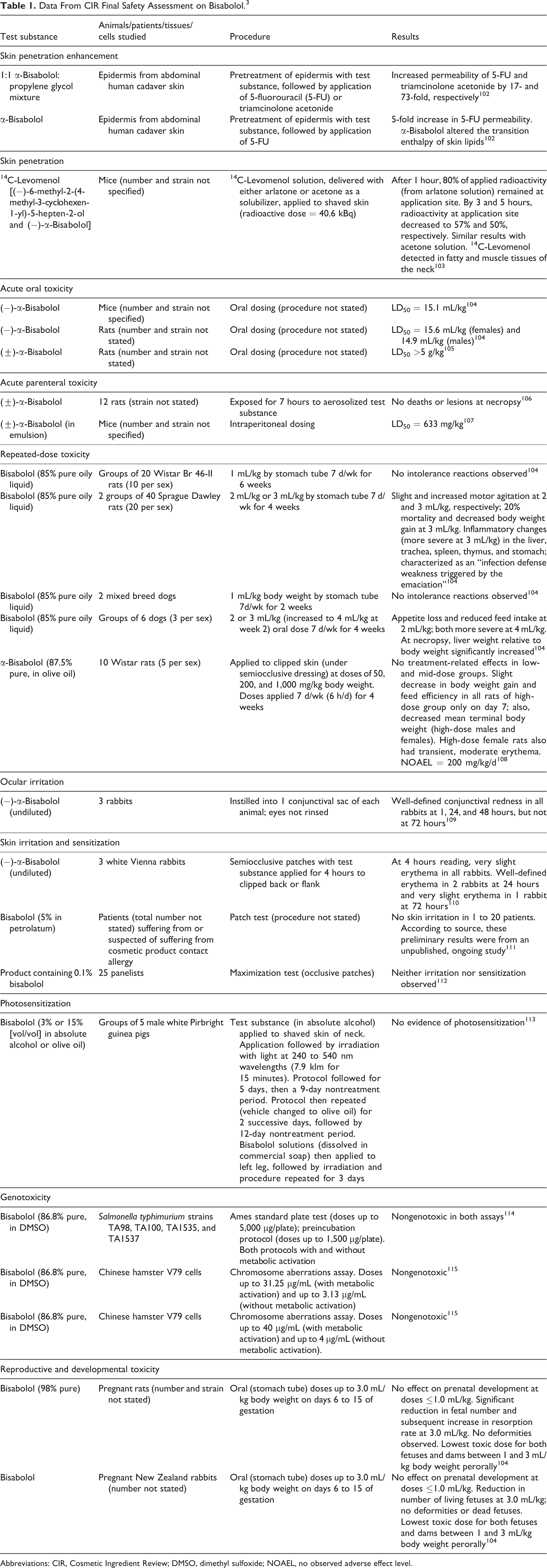
Azulene has been identified as a component of Chamomilla Recutita (Matricaria) Flower Oil. The Cosmetic Ingredient Review (CIR) Expert Panel (Panel) has concluded that the available data are insufficient to support the safety of azulene (not to be confused with guaiazulene) as a cosmetic ingredient, and therefore, its use is not supported. 2 Because Chamomilla Recutita (Matricaria) Flower Oil may contain (−)-α-bisabolol at concentrations as high as 41.45%, safety test data from the 1999 CIR final report on bisabolol are included in Table 1. 3 The Panel concluded, in 1999, that bisabolol is safe as used in cosmetic products; reported maximum use concentrations at that time were up to 1%. In 2015, the Panel reaffirmed their original conclusion that bisabolol is safe as used in cosmetic formulations. 4
Data From CIR Final Safety Assessment on Bisabolol. 3
Abbreviations: CIR, Cosmetic Ingredient Review; DMSO, dimethyl sulfoxide; NOAEL, no observed adverse effect level.
Chemistry
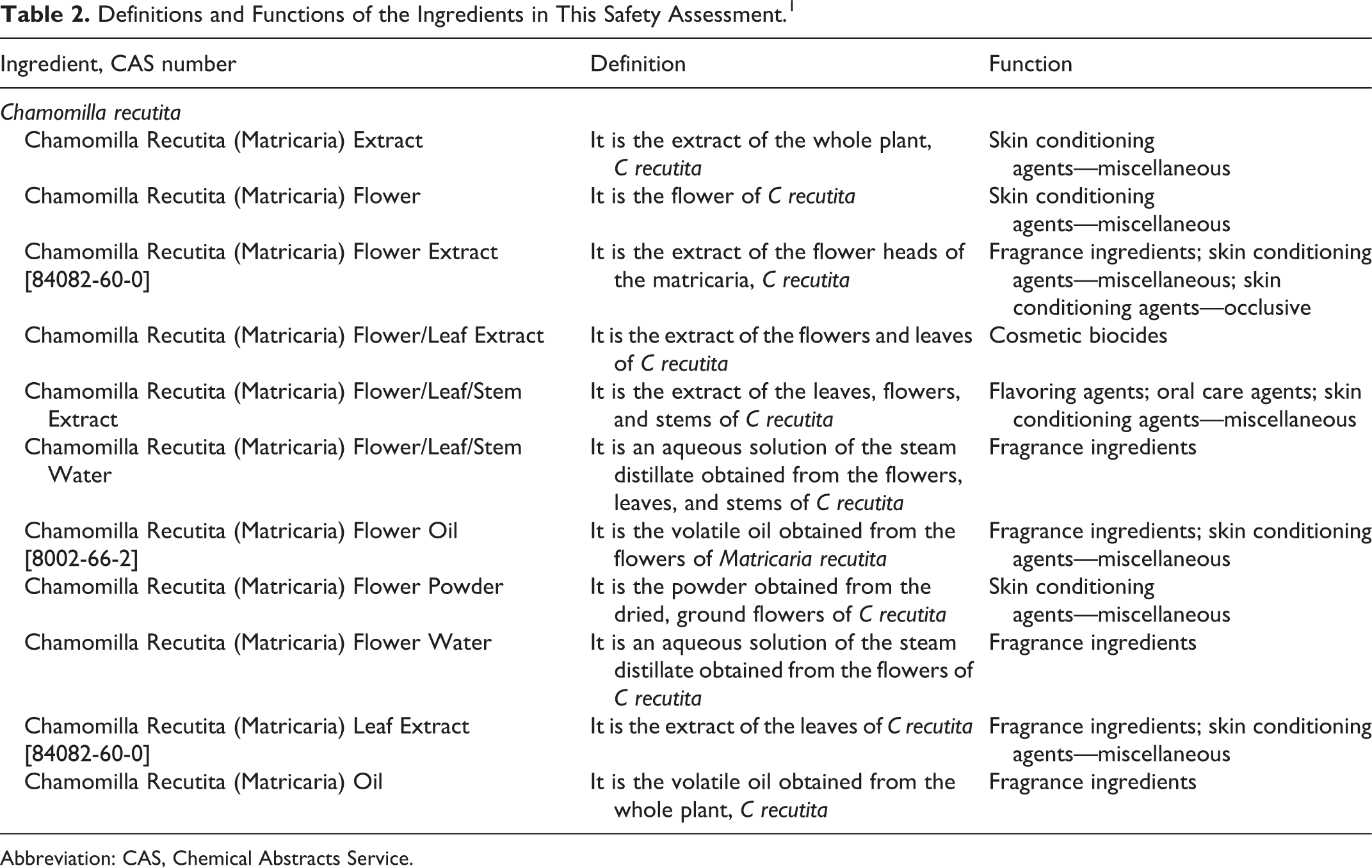
The plant source of the ingredients reviewed in this safety assessment is Matricaria chamomilla L. (Asteraceae). Compositae is the previous or historical name for the Asteraceae family. Chamomilla recutita and Matricaria recutita are synonyms for M chamomilla. 5 The definitions of 11 chamomile ingredients presented in this safety assessment are included in Table 2.
Definitions and Functions of the Ingredients in This Safety Assessment. 1
Abbreviation: CAS, Chemical Abstracts Service.
Physical and Chemical Properties
Chemical and physical properties of Chamomilla Recutita (Matricaria) Flower Oil are included in Table 3. Information on the other 10 ingredients was neither found, nor was unpublished information provided.
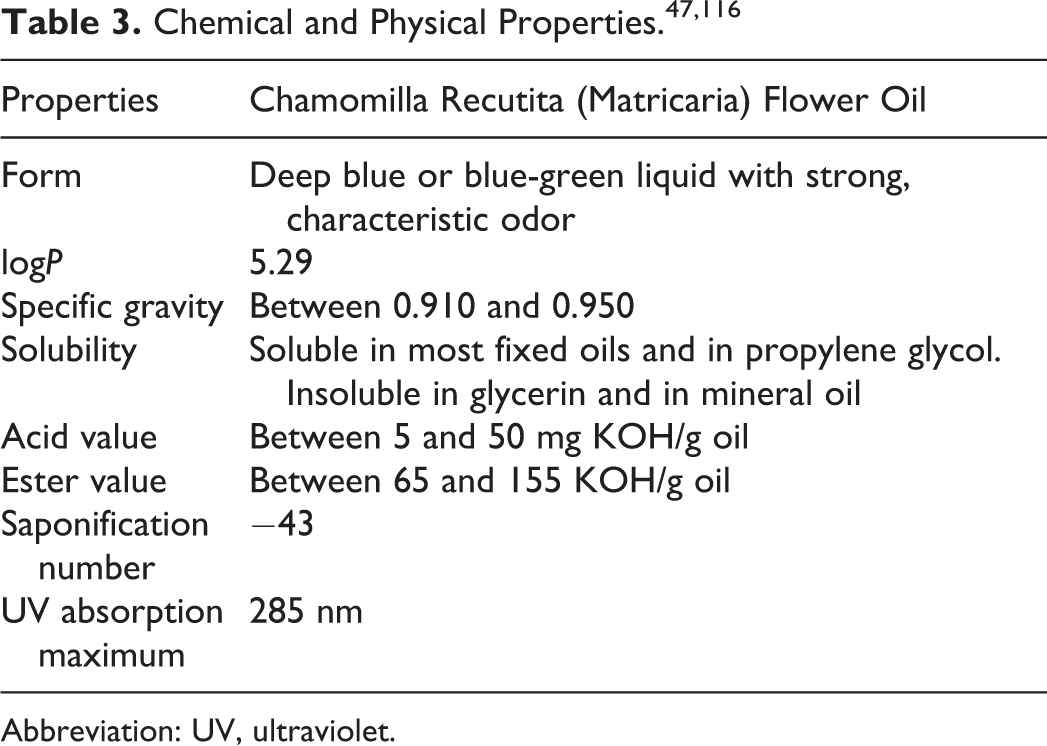
Abbreviation: UV, ultraviolet.
In addition to the data presented in Table 3, both ultraviolet (UV) and infrared (IR) spectral analyses of chamomile (C recutita) aqueous extract—whole plant (including roots) versus the flower extract—are available. Separate UV spectral analyses for the whole plant (including roots) extract and flower extract indicate absorbance in the 200 to 350 nm range, and the spectra appear to be identical. 6 Similarly, the IR spectra for the whole plant aqueous extract (including roots) and the flower extract appear to be identical. 7
Method of Manufacture
Chamomilla Recutita (Matricaria) Flower Oil
Chamomilla Recutita (Matricaria) Flower Oil can be produced via steam distillation of chamomile (C recutita) flowers. 8,9 According to another publication, Chamomilla Recutita (Matricaria) Flower Oil is prepared by steam distillation of the flowers and stalks of C recutita (Matricaria). 10 Exactly how the difference in source material influences the composition of the cosmetic ingredient is unknown.
Chamomilla Recutita (Matricaria) Flower Extract
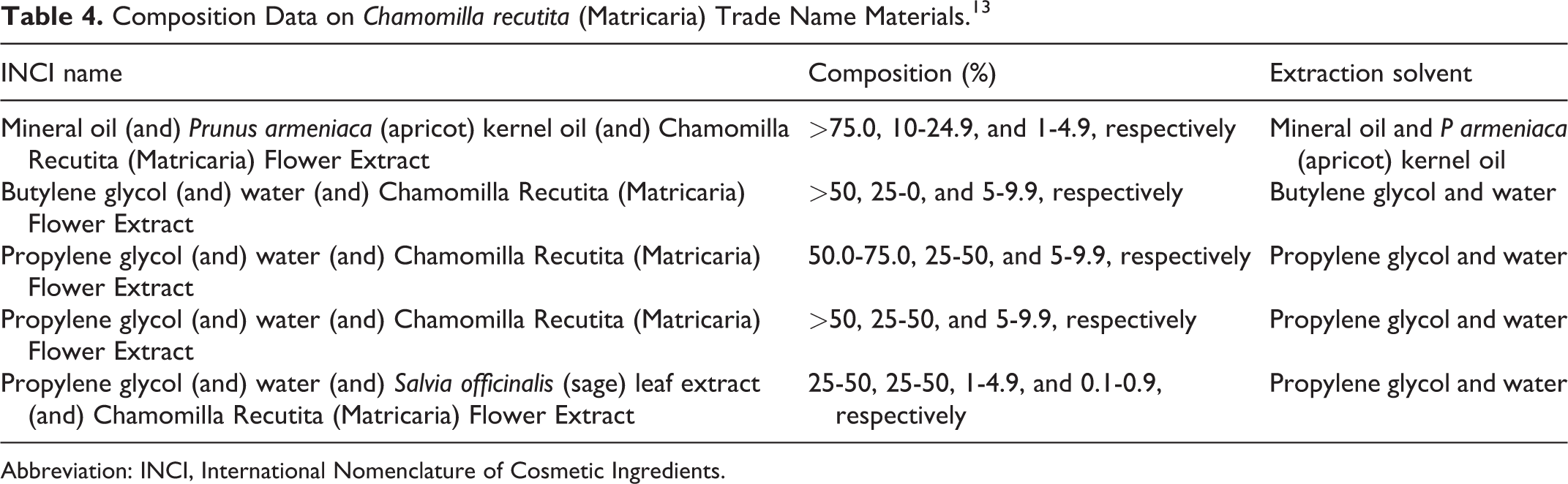
One of the trade name mixtures associated with Chamomilla Recutita (Matricaria) Flower Extract comprises mineral oil, Prunus armeniaca (apricot) kernel oil, and Chamomilla Recutita (Matricaria) Flower Extract (see Table 4). This trade name mixture is manufactured by prolonged maceration of flowers in a mixture of mineral oil and apricot kernel oil. 11 Another trade name mixture associated with Chamomilla Recutita (Matricaria) Flower Extract comprises propylene glycol, water, and Chamomilla Recutita (Matricaria) Flower Extract (see Table 4). This trade name mixture is manufactured by hydroglycolic extraction. 12
Composition Data on Chamomilla recutita (Matricaria) Trade Name Materials. 13
Abbreviation: INCI, International Nomenclature of Cosmetic Ingredients.
Composition/Impurities
Composition data (contents of the mixture, not the plant-derived ingredient) on various trade name mixtures containing Chamomilla recutita (Matricaria) ingredients are summarized in Table 4. 13 Data on the composition (contents of the plant-derived ingredient) of Chamomilla Recutita (Matricaria) Flower Extract, Chamomilla Recutita (Matricaria) Flower Oil, and Chamomilla Recutita (Matricaria) Flower are included in Table 5.
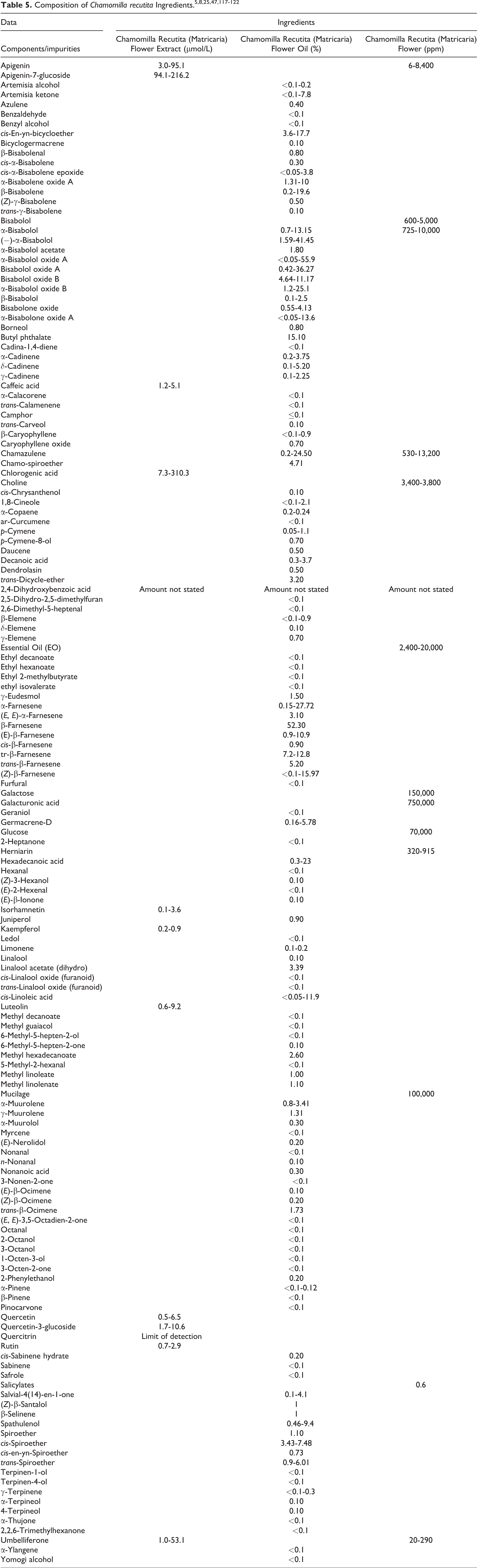
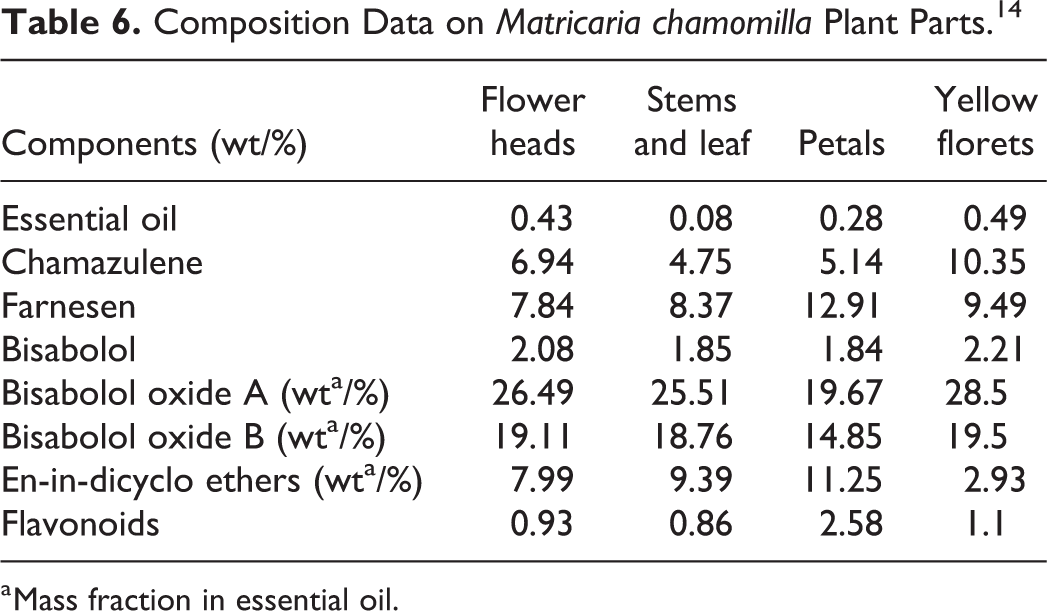
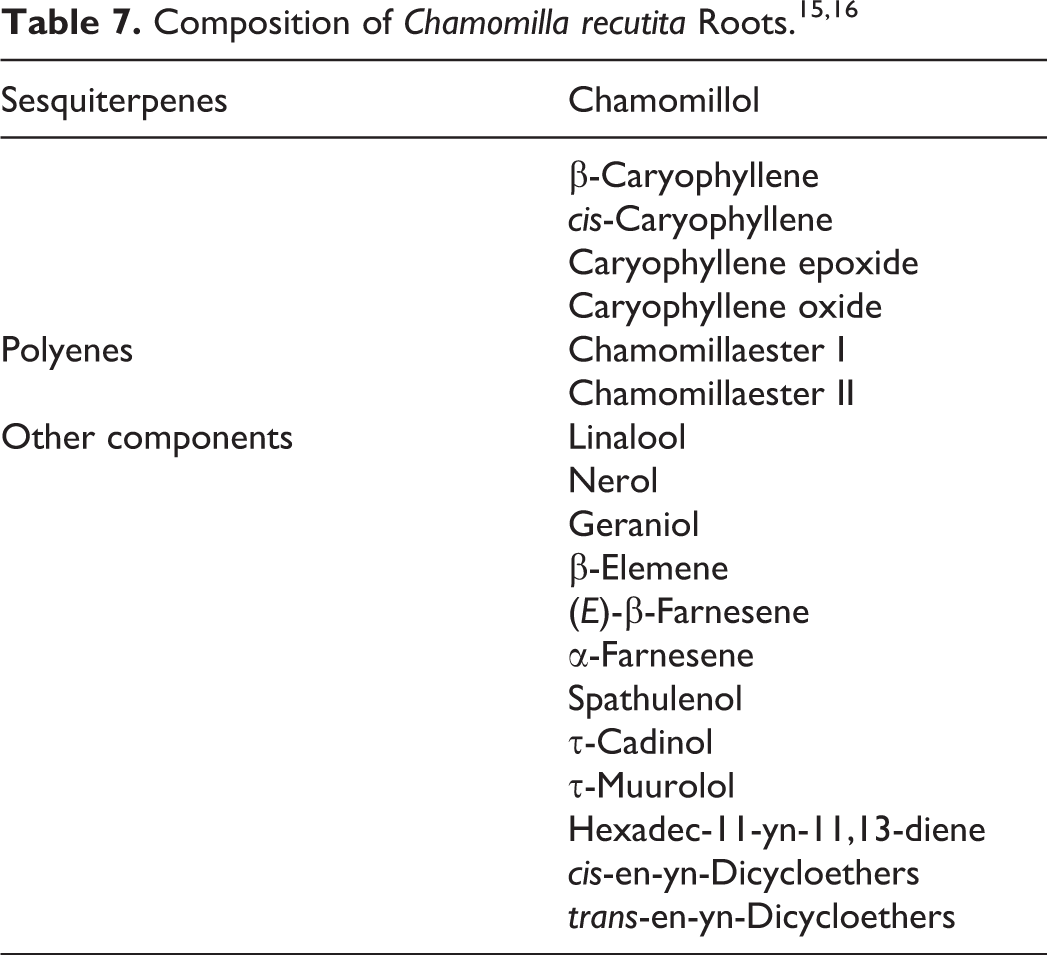
Composition data on the following M chamomilla plant parts (plant samples from Eastern Croatia) are presented in Table 6, including those on flower heads, yellow florets, petals, and stems and leaf. 14 Because some of the data included in this safety assessment are on the extract of the whole plant (C recutita [Matricaria], including the roots), composition data on the essential oil from C recutita roots are presented in Table 7. 15,16 Additional information relating to composition is included subsequently.
Composition Data on Matricaria chamomilla Plant Parts. 14
a Mass fraction in essential oil.
Chamomilla Recutita (Matricaria)
The chamomile species C recutita may be classified into 4 different chemotypes, depending on the main constituent of the essential oil 17 : bisabolol, bisabolol oxide A, bisabolol oxide B, and bisabolone oxide A. A characteristic constituent of chamomile flowers is the essential oil, which contains bisabolol, matricine, or its artifact (chamazulene), trans-farnesene, and cis- as well as trans-en-in-dicycloether as typical components. Other than coumarins, herniarin, and umbelliferone, flavonoids are the main hydrophilic constituents of the flower. Pectin-like polysaccharides with a main chain of α-1 → 4-linked polygalacturonic acid and a highly branched polysaccharide with β-1 → 4-linked xylose are also present.
The occurrence of formaldehyde in intact C recutita (Matricaria) plants was evaluated. Wild C recutita (Matricaria) and 2 varieties of this plant, BK-2 and Degumil, grown in Hungary, were studied. 18 The BK-2 and Degumil varieties were grown in central Hungary, whereas the wild type was grown in southern Hungary. Formaldemethone, a dimedone adduct of formaldehyde, was identified and quantified using automatic overpressured layer chromatography (OPLC). Plant samples were frozen, powdered, and treated with a 0.2% solution of dimedone in methanol. Each plant part (root, shoot, or inflorescence) suspension was then centrifuged and the supernatant was used for OPLC. The inflorescence (∼6.5 µg formaldehyde/g) and root (∼7 µg formaldehyde/g) samples of the intact, soil-grown Degumil variety contained the greatest quantity of formaldehyde, followed by the shoots and inflorescence of the cultivated BK-2 and Degumil varieties. The wild type contained similar amounts of formaldehyde in its inflorescence (∼5 µg formaldehyde/g) and shoots (∼5 µg formaldehyde/g). The amount of formaldehyde bound by the dimedone reagent increased as the concentration of dimedone increased, until a maximum was reached.
A study identified the following impurities in dry chamomile (C recutita) grown in Croatia: lead and cadmium heavy metals and the herbicides linuron, fluazifop-p-butyl, and cycloxydim. 19 Cadmium and all 3 herbicide residues in dried samples of industrially grown dry chamomile were found to be above the suggested and accepted tolerance values.
Influence of plant line
A study was performed to characterize the individual variability of components in 10 selected lines (U2, U5, U7, U10, U14, S7, S10, S17, S22, and S24) that originate from the chamomile (C recutita) plant population. 20 Seedlings were planted in Poland in October 2000 and flower heads were harvested during the following year. For the 10 chamomile lines investigated, the essential oil content ranged from 0.25% to 0.55%. Of the 60 components of essential oil detected using gas chromatography, 19 were identified. The major components were bisabolol oxide B (24.08%-33.75%), bisabolol oxide A (5.75%-10.92%), chamazulene (30.42%), farnesene (3.89%-5.90%), spathulenol (3%-4.90%), and spiroether (12.63%-19.95%). Polyacetylene-spiroether is the component of chamomile essential oil that has anti-inflammatory activity. Concentration ranges for 2 other sesquiterpenes (minor components) were α-bisabolone oxide (2.53%-7.52%) and α-bisabolol (0.12%-0.73%). The monoterpenes sabinene, limonene, and cineol were present in small amounts, and only traces of α-pinene, p-cymene, and γ-terpinene were detected.
Influence of drying process
In the postharvest processing of C recutita, drying is an important process for preserving plant material, because it inhibits enzymatic degradation and limits microbial growth. 21 The phenolic content of C recutita consists of the flavonoids, flavone glycosides (eg, apigenin 7-glucoside), and flavonols (eg, quercetin glycosides and luteolin glucosides). The effect of drying on the total phenol content of aqueous chamomile extracts has been reported. Freshly extracted chamomile flowers had a higher content of phenols (19.7 ± 0.5 mg/g dry weight [dw]) compared to any of the dried samples, except for those that were freeze-dried (P ≤ 0.05). There was no significant difference between the total phenol content in samples that were freeze-dried, air-dried, or oven-dried at 40°C. However, a major decrease in the phenol concentration of chamomile flowers oven-dried at 80°C (13 ± 1 mg/g dw; P ≤ 0.05) was noted. Data showing the effect of drying on content of the flavonoid apigenin 7-glucoside were also presented. Extracts produced from fresh chamomile had an apigenin 7-glucoside content of 3.0 ± 0.4 mg/g dw, which was significantly higher than amounts reported for any of the dried samples (P ≤ 0.05). There were no significant differences in the apigenin 7-glucoside content among the chamomile flowers that were freeze-dried, air-dried, or oven-dried at 40°C (2.0 ± 0.4 mg/g dw). The greatest decrease in apigenin 7 glucoside content (1.0 ± 0.3 mg/g dw) was observed in samples oven-dried at 80°C. 21
Chamomilla Recutita (Matricaria) Flower
Chamomilla recutita (Matricaria) flowers contain a volatile oil (0.24%-2.0%) that is blue in color. 22 The 2 key components (−)-α-bisabolol and chamazulene account for 50% to 65% of the total volatile oil content. Other components of the oil are as follows: (−)-α-bisabolol oxide A and B, (−)-α-bisabolone oxide A, spiroethers (cis- and trans-en-yn-dicycloether), sesquiterpenes (anthecotulide), cadinene, farnesene, furfural, spathulenol, and proazulene (matricarin and matricine). Chamazulene is formed from matricine during steam distillation of the oil.
Chamomilla Recutita (Matricaria) Flower Oil
Chamomilla recutita (Matricaria) flower oil contains anti-inflammatory and spasmolytic sesquiterpene lactones (SLs) such as α-bisabolol, blue chamazulene (weaker anti-inflammatory effect), farnesene, polyenes, and several flavonoids. 23 Reportedly, C recutita imported from Argentina may contain larger amounts of the strongly allergenic SL, anthecotulide. Additionally, these Argentine imports may be contaminated with the morphologically similar dog fennel (Anthemis cotula), which contains up to 7.3% anthecotulide. However, C recutita of European origin is reported to contain only traces of anthecotulide. According to a more recent publication, anthecotulide was not detectable in 34 chamomile (M recutita) preparations. 24 These 34 chamomile preparations included preparations that were on sale in German public pharmacies, a number of herbal infusions from pharmacies and supermarkets, and some consumer products (eg, shampoos) containing chamomile extracts.
The essential oil production of cultivated (BK-2, Degumil) and wild chamomile populations of 4 typical chamomile-rich regions of Hungary was studied. 25 The Hungarian BK-2 contained more chamazulene in its essential oil than the German Degumil type, which is cultivated mainly for α-bisabolol content. Both components are reported to have important anti-inflammatory activities. Wild populations can be easily distinguished from cultivated ones, based on their high content of bisaboloids. This is true particularly for the flower of Szabadkigyós wild type, for which the average content of biologically active (−)-α-bisabolol was 48%.
Chamomilla Recutita (Matricaria) Flower Oiland Chamomilla Recutita (Matricaria) Flower Extract
A trade name material (an alcoholic extract of chamomile [Chamomilla (matricaria) recutita] flowers that contains 150 mg of Chamomilla Recutita (Matricaria) Flower Oil), the hydroalcoholic extract (42% ethanol) of C recutita (Matricaria) flowers, and pure Chamomilla Recutita (Matricaria) Oil (plant part source not stated) were analyzed, using high-performance liquid chromatography, to quantify the coumarin derivatives umbelliferone and herniarin. The trade name material contained 41.8 µg umbelliferone/mL and 93.1 µg herniarin/mL, and the hydroalcoholic extract of C recutita (Matricaria) flowers contained 36.0 µg umbelliferone/mL and 114.0 µg herniarin/mL. Chamomilla Recutita (Matricaria) Oil contained 540 µg herniarin/mL. 26
Further information on content of this trade name material is presented as follows because it is the test article in some of the studies included in this safety assessment. It should be noted that, according to the following statement, the trade name material (defined as an alcoholic extract of chamomile [Chamomilla (matricaria) recutita] flowers that contains 150 mg of Chamomilla Recutita (Matricaria) Flower Oil) may contain Roman chamomile (also known as Chamaemelum nobile or Anthemis nobilis) or German chamomile (also known as M recutita or C recutita): 27 “[i]n Europe, medicinal preparations are made containing either Roman chamomile (Chamaemelum nobile) or German chamomile (Matricaria recutita), both members of the Compositae (Asteraceae) family. On the continent, an ointment marketed under a specific trade name contains German chamomile, while a product with the same name marketed in Britain contains Roman chamomile.” 27
Use
Cosmetic
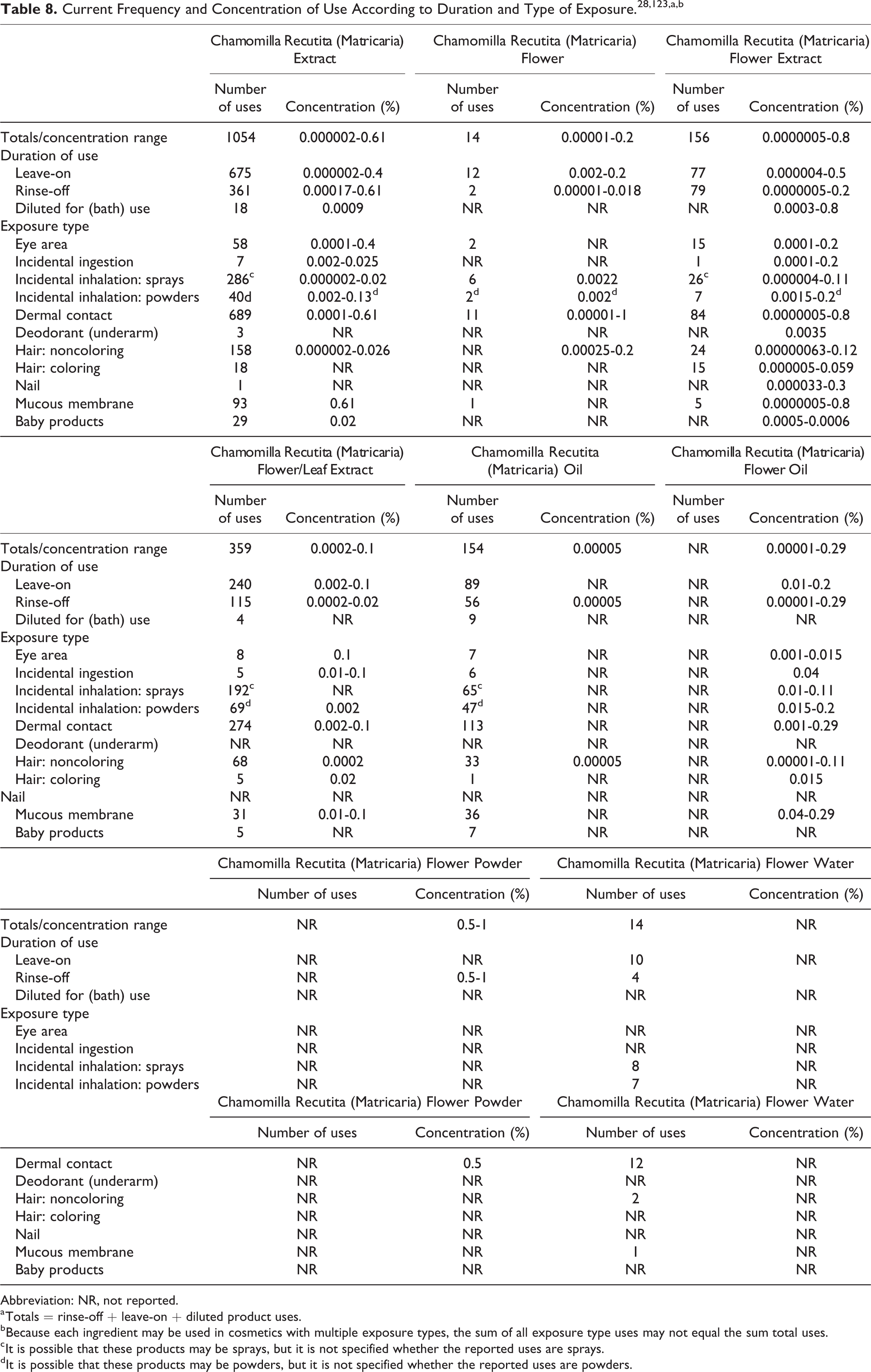
The safety of the C recutita (Matricaria)-derived ingredients included in this safety assessment is evaluated based on data received from the US Food and Drug Administration (FDA) and the cosmetics industry on the expected use of these ingredients in cosmetics. Use frequencies of individual ingredients in cosmetics are collected from manufacturers and reported by cosmetic product category in FDA’s Voluntary Cosmetic Registration Program (VCRP) database. Use concentration data are submitted by Industry in response to surveys, conducted by the Personal Care Products Council (Council), of maximum reported use concentrations by product category. Collectively, the use frequency and use concentration data indicate that 8 of the 11 ingredients in this safety assessment are currently being used in cosmetic products (Table 8). According to these data, Chamomilla Recutita (Matricaria) Flower/Leaf/Stem Extract, Chamomilla Recutita (Matricaria) lower/Leaf/Stem Water, and Chamomilla Recutita (Matricaria) Leaf Extract are not being used in cosmetic products.
Abbreviation: NR, not reported.
a Totals = rinse-off + leave-on + diluted product uses.
b Because each ingredient may be used in cosmetics with multiple exposure types, the sum of all exposure type uses may not equal the sum total uses.
c It is possible that these products may be sprays, but it is not specified whether the reported uses are sprays.
d It is possible that these products may be powders, but it is not specified whether the reported uses are powders.
According to 2016 VCRP data, the greatest reported use frequency is for Chamomilla Recutita (Matricaria) Extract (1,054 product formulations, mostly leave-on products), followed by Chamomilla Recutita (Matricaria) Flower/Leaf Extract (359 product formulations, mostly leave-on products; Table 8). 28 The results of a concentration of use survey provided in 2016 indicate that Chamomilla Recutita (Matricaria) Flower Powder has the highest maximum concentration of use; it is used at concentrations up to 1% in rinse-off products (cleansing skin care preparations; Table 8). The highest reported maximum use concentration of C recutita (Matricaria)-derived ingredients in leave-on products is being reported for Chamomilla Recutita (Matricaria) Flower Extract (0.5% in makeup preparations). 29
Cosmetic products containing C recutita (Matricaria)-derived ingredients may be applied to the skin and hair or, incidentally, may come in contact with the eyes (eg, Chamomilla Recutita [Matricaria] Extract at maximum use concentrations up to 0.4% in eye area cosmetics) and mucous membranes (eg, Chamomilla Recutita [Matricaria] Flower Extract at maximum use concentrations up to 0.8% in bath oils, tablets, and salts). Additionally, some of these ingredients are being used in products that may result in incidental ingestion. For example, Chamomilla Recutita (Matricaria) Extract is being used in dentifrices at maximum use concentrations up to 0.025%, and Chamomilla Recutita (Matricaria) Flower Extract is being used in lipstick at maximum use concentrations up to 0.2%. Products containing these ingredients may be applied as frequently as several times per day and may come in contact with the skin or hair for variable periods following application. Daily or occasional use may extend over many years.
The following ingredients are used in products that are sprayed (highest maximum use concentration = 0.066% Chamomilla Recutita [Matricaria] Flower Oil in body and hand spray): Chamomilla Recutita (Matricaria) Extract (0.0000933% maximum in pump hair spray), Chamomilla Recutita (Matricaria) Flower (0.0022% maximum in pump hair spray), Chamomilla Recutita (Matricaria) Flower Extract (0.011% maximum in pump hair spray), and Chamomilla Recutita (Matricaria) Flower Oil (0.066% maximum in body and hand spray). Additionally, the following 2 ingredients are used in face powders: Chamomilla Recutita (Matricaria) Flower Extract (highest maximum use concentration = 0.0032%) and Chamomilla Recutita (Matricaria) Flower/Leaf Extract (0.002% maximum). Because some of these ingredients are used in spray and loose powder cosmetic products, they could possibly be inhaled. In practice, 95% to 99% of the droplets/particles released from cosmetic sprays have aerodynamic equivalent diameters >10 µm, with propellant sprays yielding a greater fraction of droplets/particles below 10 µm, compared with pump sprays. 30 -32 Therefore, most droplets/particles incidentally inhaled from cosmetic sprays would be deposited in the nasopharyngeal and bronchial regions and would not be respirable (ie, they would not enter the lungs) to any appreciable amount. 30,31 Conservative estimates of inhalation exposures to respirable particles during the use of loose powder cosmetic products are 400-fold to 1,000-fold less than protective regulatory and guidance limits for inert airborne respirable particles in the workplace. 33 -35
Noncosmetic
Chamomilla recutita
The chamomile species used in medicine is C recutita, and hydroalcoholic extracts of chamomile flowers are often used in trade name ointments or creams. Additionally, trade name bath additives and mouth sprays containing chamomile extracts as the active ingredient are offered for topical and oral treatment. 17 The use of chamomile in aroma therapy for the treatment of patients with dementia has also been reported. 36 Regarding use in pharmaceutical products, it should be noted that Matricaria (C recutita) flowers, Matricaria oil (from flowers), and Matricaria liquid extract are listed in the British Pharmacopoeia. 37
Chamomilla recutita (Matricaria; German chamomile) is listed among the spices and other natural seasonings and flavorings that are generally recognized as safe (GRAS) by the US FDA for their intended use in food for human consumption. 38 It is also listed among the spices and other natural seasonings and flavorings that are GRAS for their intended use in animal drugs, feeds, and related products. 39
Chamomilla recutita (Matricaria) flowers are listed among the essential oils, oleoresins (solvent-free), and natural extractives (including distillates) that are GRAS for their intended use in food for human consumption. 40 They are also listed among the essential oils, oleoresins (solvent-free), and natural extractives (including distillates) that are GRAS for their intended use in animal drugs, feeds, and related products. 41
The FDA has determined that the available data are inadequate for establishing general recognition of safety and effectiveness of chamomile (genus and species not stated) flowers as used in digestive aid drug products. 42
The fragrant flowering heads of both German chamomile (C recutita) and Roman chamomile (A nobilis) are collected and dried for use as teas and extracts. 43 Additionally, 2 trade name ointments are available in Europe, one containing German chamomile (also known as M recutita or C recutita) and the other containing Roman chamomile (also known as C nobile or A nobilis). 27
Toxicokinetics
In vivo data on the absorption, distribution, metabolism, and excretion of the C recutita-derived cosmetic ingredients reviewed in this safety assessment were not found in the published literature, nor were unpublished data provided. However, because (−)-α-bisabolol, a constituent of Chamomilla Recutita (Matricaria) Flower Oil, may be present at concentrations as high as 41.45%, the data presented in Table 1 relating to the absorption of and systemic exposure to bisabolol may be considered, including data addressing skin penetration, skin penetration enhancement, and repeated-dose oral and dermal toxicity. In addition to these data, a summary of in vitro data on the transfer of volatile oil components is included below.
Using an in vitro membrane (cellophane membrane) diffusion model, Chamomilla Recutita (Matricaria) Oil was tested to identify components of the oil that are able to pass through membranes under different conditions. 44 The components of Chamomilla Recutita (Matricaria) Oil examined were chamazulene, (−)-α-bisabolol, α-farnesene, β-farnesene, and matricin. In the diffusion model, the buffer solution (pH 1.1) used to represent the stomach was 1 N hydrochloric acid, sodium chloride, and glycine in water. The following buffer solution (pH = 7.5) was used to represent the plasma: sodium phosphite and potassium biphosphate in water. The transfer of Chamomilla Recutita (Matricaria) Oil from aqueous volatile oil to pH = 1.1 (stomach) and then from buffer pH = 1.1 to buffer pH = 7.5 (plasma) was studied. In a membrane diffusion model, Chamomilla Recutita (Matricaria) Oil crossed the membrane more quickly when proceeding from a higher pH cell to a lower pH cell, than vice versa. Regarding transfer from aqueous solution to buffer pH = 1.1, 36.4% of the oil passed through the membrane; a value of 13.7% was reported in the case of transfer from buffer pH =1.1 to buffer pH = 7.5. With the exception of chamazulene, most of the components passed through the membranes.
Toxicology
Acute Toxicity
Oral
Chamomilla recutita (matricaria) flower extract
The acute oral toxicity of a lyophilized water extract of C recutita (Matricaria) flowers was evaluated using 2 groups of 12 female mice of the Swiss-NOS strain. 45 Each group received a single oral dose of 720 or 440 mg/kg and was observed for 24 hours postdosing. None of the animals died, and there was no evidence of acute toxicity.
Chamomilla recutita (matricaria) flower oil
The acute oral toxicity of Chamomilla Recutita (Matricaria) Flower Oil (dose = 5 g/kg) was evaluated using 10 rats (strain not stated). 46 Dosing was followed by a 14-day observation period. None of the animals died, and a median lethal dose (LD50) of > 5 g/kg was reported. Consistent with these findings, acute oral LD50 values of 8,560 and 10,000 mg/kg in rats have also been reported for Chamomilla Recutita (Matricaria) Flower Oil, but details relating to the test protocol and study results were not included. 47
In an acute toxicity study, doses of Chamomilla Recutita (Matricaria) Flower Oil (10, 100, 1,000, 1,600, 2,900, 4,300, and 5,600 mg/kg) were administered orally to groups of male NIH mice (number per group not stated). 48 The essential oil was obtained through a vapor distillation process, from the flowers of M chamomilla. The observation period was not stated. None of the animals died. This study was performed prior to the antigenotoxicity study summarized in the “Genotoxicity” section of this report.
Dermal
Chamomilla Recutita (Matricaria) Flower Oil
The acute dermal toxicity of Chamomilla Recutita (Matricaria) Flower Oil (dose = 5 g/kg) was evaluated using 6 rabbits (strain not stated). 46 Details relating to the test protocol were not included. None of the animals died during the 14-day observation period, and an LD50 of >5 g/kg was reported. The skin reactions observed are reported in the section “Skin Irritation.”
Repeated-Dose Toxicity
Animal
Chamomilla Recutita (Matricaria) Flower Extract
Prior to dosing, the blended flower powder of C recutita (Matricaria) was suspended in deionized water and kept in a water bath at 40°C for 24 hours. The mixture was filtered first with fine muslin cloth and then with filter paper. The clear filtrate was dried in a water bath at 40°C, and the clear paste obtained was used in the study. Sprague Dawley rats of either sex (number not stated; males or females only not specified) received doses (1, 2, 4, and 8 g/kg body weight) of Chamomilla Recutita (Matricaria) Flower Extract (aqueous extract), dissolved in water, for 14 days. 49 Additional details regarding the dosing procedure were not included. Neither signs of toxicity nor mortalities were observed at doses up to 4 g/kg body weight. Information relating to effects of the 8 g/kg dose was not included. All of the animals remained physically active.
Data on repeated-dose toxicity were presented in a study on the effect of chamomile tea on the activity of hepatic phase I and phase II metabolizing enzymes from the rat. 50 Chamomile tea can be made from the dried flower heads of C recutita (Matricaria). Five female Wistar rats (8-9 weeks old) had free access to chamomile tea solution (2% [wt/vol] in water), whereas the control group had access to water. After 4 weeks of treatment, the animals were killed. Ingestion of the tea solution had no significant influence on body weight, and there were no signs of gross pathology of internal organs. Liver weight/body weight ratios of treated rats were not significantly different from control values. Neither induction nor inhibition of phase I or II enzymes were statistically significant.
Human
Chamomilla Recutita (Matricaria) Flower
Fourteen healthy volunteers (7 males, 7 females) were given 200 mL of chamomile tea (from C recutita [Matricaria] flowers) daily for 2 weeks. None of the patients reported adverse effects after ingestion of the tea. 51 An analysis of urine samples collected before dosing, during the dosing period, and after dosing indicated that depletion of creatinine and the elevation of hippurate and glycine were strongly associated with chamomile tea intake.
Genotoxicity
In Vitro
Chamomilla recutita (matricaria) flower extract
According to one supplier, a trade name mixture associated with Chamomilla Recutita (Matricaria) Flower Extract comprises mineral oil, prunus armeniaca (apricot) kernel oil, and Chamomilla Recutita (Matricaria) Extract (see Table 4 for composition). It contains 1% to 4.9% Chamomilla Recutita (Matricaria) Flower Extract, and mineral oil and prunus armeniaca (apricot) kernel oil are the extraction solvents. The genotoxicity of this mixture (in dimethyl sulfoxide [DMSO]) was evaluated in the Ames test using the following bacterial strains with and without metabolic activation: Salmonella typhimurium strains TA98, TA100, TA1535, and TA1537, and Escherichia coli strain WP2 uvrA pKM101. 52 The mixture was tested at doses up to 5,000 µg/plate. The DMSO served as the negative (vehicle) control, and the following positive controls were used: 2-nitrofluorene, sodium azide, 9-aminoacridine, methyl methanesulfonate (MMS), and 2-aminoanthracene. Neither signs of toxicity nor a precipitate were observed over the range of doses tested. When compared to the negative control, the statistically significant increases in the number of revertants observed in strain TA100 without activation or in strain WP2 uvrA pKM101 with activation were slight, and there was no dose relationship associated with these findings. Therefore, these changes were considered biologically insignificant. The authors concluded that the trade name mixture did not induce any biologically relevant increase in the number or revertants in any of the strains, with or without metabolic activation.
In Vivo
Chamomilla Recutita (Matricaria) Flower Oil
The genotoxicity of Chamomile Recutita (Matricaria) Flower Oil was evaluated using 5 groups of 5 male NIH mice. Three groups of mice received oral doses (in corn oil) of 10, 100, and 1,000 mg/kg, respectively. 48 The extract of the essential oil (extraction solvent not stated) was obtained through a vapor distillation process from the flowers of M chamomilla. The negative control group was dosed orally with corn oil and the positive control group was dosed intraperitoneally (IP) with an aqueous solution of MMS (25 mg/kg). Following injection with an aqueous suspension of 5-bromodeoxyuridine and then colchicine, the mice were killed and bone marrow cell suspensions prepared for microscopic examination. At each dose, the incidence of sister chromatid exchanges (SCEs) was comparable to that noted in bone marrow cells from control animals (ie, not more than 1.1). A high incidence of SCEs was observed after dosing with MMS, and the difference between this incidence and that for animals dosed with corn oil was statistically significant (P < 0.05). Additionally, when compared to control values, Chamomile Recutita (Matricaria) Flower Oil produced a nonsignificant cytotoxic effect.
Antigenotoxicity
Chamomilla Recutita (Matricaria) Flower Oil
Chamomilla Recutita (Matricaria) Flower Oil–induced inhibition of genotoxicity produced by daunorubicin (DAU, a mutagen) and the genotoxicity of the oil were evaluated using the following groups of 5 male NIH mice: control group administered corn oil orally (0.1 mL), positive control group treated with corn oil (0.1 mL) and DAU administered by intramuscular injection (10 mg/kg), a group administered Chamomilla Recutita (Matricaria) Flower Oil (500 mg/kg), and 3 groups treated with DAU and Chamomilla Recutita (Matricaria) Flower Oil (5, 50, and 500 mg/kg), respectively. 53 Specifically, the effect of the 3 doses of essential oil on the rate of SCE induced by DAU in spermatogonia was studied. Chamomilla Recutita (Matricaria) Flower Oil was not genotoxic. However, dosing with this essential oil resulted in inhibition of SCE induced by DAU, and percentage inhibition values were as follows for a range of administered doses of the oil: 5 mg/kg (47.5% inhibition), 50 mg/kg (61.9% inhibition), and 500 mg/kg (93.5% inhibition).
Antigenotoxicity studies were performed using groups of 5 male NIH mice. The extract of the essential oil (extraction solvent not stated) obtained through a vapor distillation process from the flowers of M chamomilla was evaluated. When compared to mice dosed orally with corn oil, SCEs induced by DAU were decreased in mice pretreated with crude Chamomilla Recutita (Matricaria) Flower Oil at doses ranging from 5 to 500 mg/kg. 48 Administration of the crude oil to DAU-treated mice caused a statistically significant, dose-dependent reduction in the genotoxic damage (SCEs). The antigenotoxic response corresponded to 25.7%, 63.1%, and 75.5% at doses of 5, 50, and 500 mg/kg, respectively. Similarly, a statistically significant, dose-dependent decrease in genotoxicity (SCEs) was observed in MMS-treated mice after dosing with the crude oil. The 3 doses of crude oil tested (250, 500, and 1,000 mg/kg) induced 24.8%, 45.8%, and 60.6% inhibition of genotoxicity, respectively.
Chamomilla Recutita (Matricaria) Tea Extract
Modification of the in vitro activity of heterocyclic aromatic amines (HAAs; in DMSO) with the hot water extract of C recutita (Matricaria) tea was studied in the Ames plate incorporation test, with and without metabolic activation, using S typhimurium strain TA98. 54 Initially, measured volumes of the tea extract (usually 1, 5, 10, 50, and 100 µL) were plated in triplicate to establish a dose–response curve. Dimethyl sulfoxide served as the negative control, and there were 3 sets of positive controls, 2-amino-3-methylimidazo[4,5-f]quinolone (IQ), 2-amino-3,4-dimethylimidazo[4,5-f]quinolone (MeIQ), and benzo[a]pyrene (B[a]P). Test results were expressed as the induced number of revertants by subtracting the number of spontaneous revertants (20-38 revertants/plate) from the total number obtained on each plate. A sample was considered mutagenic if it produced a dose-related increase in the number of revertants, when compared to the control, and if the number of revertants was at least 2.5 times greater than the spontaneous level. Chamomilla recutita (Matricaria) tea (from flower heads) extract alone was not mutagenic.
Heterocyclic aromatic amines were tested in combination with 2 doses of the tea extract, 10 and 50 mg tea leaves/plate (ie, 10 and 50 mg equivalents). All tests were performed in triplicate. At both doses, C recutita (Matricaria) tea extract caused mild inhibition of the mutagenicity of IQ-type HAA (tested up to 0.5 ng/plate), but caused potentiation of the mutagenicity of 2-amino-3,7,8-trimethylimidazo[4,5-f]quinoxaline (7,8-DiMeIQx, tested at 5 ng/plate) and 4,7,8-TriMeIQx (tested at 10 ng/plate). 54
Carcinogenicity
Carcinogenicity studies on the chamomile ingredients reviewed in this safety assessment were neither found in the published literature nor were unpublished studies provided.
Anticarcinogenicity
Chamomilla Recutita (Matricaria) Flower Extract
The cytotoxic activity of the following Chamomilla Recutita (Matricaria) Flower Extracts against Yoshida ascites sarcoma was evaluated using Wistar Glaxo albino rats: 4.27% Chamomilla Recutita (Matricaria) Flower (petroleum ether extract), 10.04% Chamomilla Recutita (Matricaria) Flower (ethanol extract), and 13.73% Chamomilla Recutita (Matricaria) Flower Extract (distilled water extract). 55 The following procedure was followed prior to determining these 3 extract yields. Following filtration, the aqueous solutions were lyophilized or the organic solvents were removed in vacuo. The crude total extracts were then dissolved in phosphate-buffered solution (PBS; pH 7.2) and sterilized by filtration. Ascites sarcoma cells were transplanted by IP injection into the rats. At 7 to 8 days postinjection, ascitic fluid was drawn from each animal, centrifuged, and the sediment was resuspended in the original volume with PBS. The tumor cells were then washed and resuspended in the same buffer solution to obtain a final concentration of 15 × 105 cells/mL. Cytotoxicity was evaluated using the dye test. Equal volumes (0.2 mL) of serially diluted extracts (50-6.25 mg/mL) and of cell suspensions were mixed and incubated for 60 minutes. Trypan blue solution was then added to the mixture, and the differential count of stained and unstained cells was performed. Cytotoxicity was expressed as the LD50. All 3 extracts were classified as exhibiting a poor cytotoxic effect (LD50 >10 mg/mL).
Chamomilla Recutita (Matricaria) Flower Oil
The anticancer activity of Chamomilla Recutita (Matricaria) Flower Oil against human leukemia HL-60 and NB4 cells was evaluated in vitro at concentrations up to 200 ppm. 56 The cells used were from human promyelocytic cell lines, and the oil was evaluated at concentrations of 25, 50, 75, 100, and 200 ppm in cells cultured for 24 hours. Untreated cells served as controls. At the highest test concentration, the percentage of dead cells was 78.4% for HL-60 cells and 86.03% for NB4 cells.
Irritation and Sensitization Studies
Skin Irritation
Animal
Chamomilla Recutita (Matricaria) Flower Oil
In the acute dermal toxicity study on Chamomilla Recutita (Matricaria) Flower Oil involving 6 rabbits (strain not stated), summarized earlier, the following skin reactions were observed after dosing (time period not stated) with 5 g/kg: slight redness (2 rabbits), moderate redness (4 rabbits), slight edema (2 rabbits), and moderate edema (4 rabbits). 46
Undiluted Chamomilla Recutita (Matricaria) Flower Oil was applied to the backs of hairless mice (number and strain not stated). Details relating to the test procedure were not included. The oil was classified as nonirritating. 10 In another experiment, Chamomilla Recutita (Matricaria) Flower Oil was applied (under occlusion) to intact or abraded skin of rabbits (number and strain not stated) for 24 hours. The oil was classified as moderately irritating.
Chamomilla Recutita (Matricaria) Flower Extract
According to one supplier, a trade name mixture associated with Chamomilla Recutita (Matricaria) Flower Extract comprises mineral oil, prunus armeniaca (apricot) kernel oil, and Chamomilla Recutita (Matricaria) Extract (see Table 4 for composition). It contains 1% to 4.9% Chamomilla Recutita (Matricaria) Extract, and mineral oil and P armeniaca (apricot) kernel oil are the extraction solvents. The skin irritation potential of this trade name mixture was evaluated using 6 male albino New Zealand white rabbits. 57 A 14 cm × 14 cm area on the right flank was clipped free of hair and scarified. Skin of the left flank remained intact. The mixture was applied to the test sites (scarified and intact sites) at a rate of 0.5 mL per area. The test site was then covered with a 2 cm × 2 cm gauze pad, secured with another adhesive patch, for 23 hours. Reactions were scored at 24 and 72 hours after patch application. The trade name mixture was classified as a nonirritant.
Another trade name mixture associated with Chamomilla Recutita (Matricaria) Flower Extract comprises propylene glycol, water, and Chamomilla Recutita (Matricaria) Flower Extract (see Table 4 for composition). It contains 5% to 9.9% Chamomilla Recutita (Matricaria) Flower Extract, and propylene glycol and water are the extraction solvents. The skin irritation potential of this trade name mixture (undiluted) was evaluated in the Draize test using 6 New Zealand rabbits, according to a procedure similar to that in the preceding study. The mixture was classified as a nonirritant. 58
The skin irritation potential of a trade name mixture, comprising propylene glycol, water, salvia officinalis (sage) leaf extract, and Chamomilla Recutita (Matricaria) Flower Extract, was evaluated using 6 male albino New Zealand white rabbits. 59 The trade name mixture contains 0.1% to 0.9% Chamomilla Recutita (Matricaria) Flower Extract, and extraction solvents were propylene glycol and water. The test procedure is stated at the beginning of this section. The mixture was classified as a nonirritant.
Human
Predictive testing
Chamomilla Recutita (Matricaria) Flower Oil
The skin irritation potential of Chamomilla Recutita (Matricaria) Flower Oil (4% in petrolatum) was evaluated in a 48-hour closed patch test involving human patients (number not stated). Skin irritation was not observed. 10
Predictive/provocative testing
Chamomilla Recutita (Matricaria) Flower Extract
The skin irritation potential of a cuticle softener containing 0.3% Chamomilla Recutita (Matricaria) Flower Extract was evaluated in an epicutaneous patch test using 50 patients (19-63 years old; gender not provided) who were classified as follows: 29 normal, healthy patients, 3 with eczema, 1 with an allergy, and 17 with sensitive skin. 60 Chamomilla Recutita (Matricaria) Flower Extract was prepared by supercritical fluid extraction with carbon dioxide and consists of the following components: 8% to 15% essential oil with 10% to 25% bisabolol and 5% to 35% bisabolol oxides, 0.8% to 2.5% matricine (analyzed as chamazulene), cis- and trans-en-in dicycloether, spartulenol, herniarine, waxes, and nonvolatile components. The undiluted product was applied to the back (test area dimensions not stated) for 48 hours using Hayes test chambers (square test chambers). Sodium dodecyl sulfate (1% in water) and water served as positive and negative controls, respectively. Reactions were scored 30 minutes after patch removal and at 72 hours postapplication. The product did not induce skin irritation in any of the patients tested. The positive control caused skin irritation in 15 patients, and there were no reactions to the negative control. The product was classified as harmless relative to its skin irritation potential.
Irritation and Sensitization
Human
Predictive testing
Chamomilla Recutita (Matricaria) Flower Extract
A human repeated insult patch test (HRIPT) on a shave balm containing 0.2% Chamomilla Recutita (Matricaria) Flower Extract was performed using 105 patients (males and females; mean age = 47). 61 Initially, each patient received nine 24-hour induction applications of the test substance (0.2 mL; test area dimensions not stated), using occlusive patches. The induction phase was followed by a 10- to 15-day nontreatment period. A 24-hour, occlusive patch containing the test substance (0.2 mL) was applied to each patient during the challenge phase. No adverse events were reported during the study, and the authors concluded that there was no evidence that the product induced skin sensitization.
The skin sensitization potential of an eye lotion containing 0.4% Chamomilla Recutita (Matricaria) Flower Extract was evaluated in an HRIPT using 107 healthy patients (males and females; between 18 and 70 years old). 62 A semiocclusive patch containing the test substance (volume and application area not stated) was applied to the upper back, between the scapulae, for 24 hours on Mondays, Wednesdays, and Fridays. This procedure was repeated for a total of 9 induction applications (same test site). Reactions were scored 24 hours after patch removal on Tuesdays and Thursdays and 48 hours after patch removal on Saturdays. Following a 2-week, nontreatment period, a challenge patch was applied for 24 hours to a previously untreated site on the back. Reactions were scored at the time of patch removal and at 48 and 72 hours. Dermal reactions were not observed at any time during the study. The authors concluded that the eye lotion did not exhibit a clinically significant potential for eliciting dermal irritation or sensitization.
Chamomilla Recutita (Matricaria) Extract
The skin irritation and sensitization potential of facial cleansing and makeup remover towelettes containing 0.01% Chamomilla Recutita (Matricaria) Extract was evaluated in an HRIPT involving 50 patients (ages not stated). 63 The product was tested, under occlusive conditions, as a mixture of the wipe fabric and the material with which the wipe was impregnated. Patches were applied to the back (same site, area dimensions not stated) for a total of nine 24-hour induction applications. Following a 2-week nontreatment period, challenge patches were applied for 24 hours to the same sites used for induction. Reactions were scored at 24, 48, and 72 hours postapplication. The product did not cause skin irritation or allergic contact dermatitis in any of the patients tested.
A mascara containing 0.01% Chamomilla Recutita (Matricaria) Extract (whole plant aqueous extract) was evaluated in an HRIPT involving 106 healthy patients. 64 A semiocclusive patch containing the product was applied to the upper back for a total of nine 24-hour induction applications. The dose/concentration per area was not stated. Following a 2-week nontreatment period, a challenge patch was applied to a previously untreated site on the back. Reactions were scored at 24, 48, and 72 hours postapplication. The mascara tested did not demonstrate a potential for eliciting dermal irritation or sensitization.
The skin irritation and sensitization potential of an eye lotion containing 0.4% Chamomilla Recutita (Matricaria) Extract (whole plant aqueous extract) was evaluated in an HRIPT using 107 healthy patients according to the procedure in the preceding study. 65 The eye lotion did not demonstrate a clinically significant potential for eliciting dermal irritation or sensitization.
A trade name mixture containing 10% Chamomilla Recutita (Matricaria) Extract (whole plant extract—includes roots; aqueous) was evaluated for skin irritation and sensitization potential in an HRIPT involving 50 healthy patients. 66 The mixture was diluted to a concentration of 5% in distilled water (effective test concentration = 0.5%) prior to testing. An occlusive patch containing 0.2 mL of the test substance was applied to infrascapular regions of the back for a total of nine 24-hour consecutive induction applications. The dose/concentration per cm2 was not stated. After a 10- to 14-day nontreatment period, a challenge patch was applied to a previously untreated site. Reactions were scored at 24 and 48 hours postapplication. There was no evidence of any type of adverse reaction during the study.
Chamomilla Recutita (Matricaria) Flower/Leaf Extract
A hair gel styling mist containing 0.00006% Chamomilla Recutita (Matricaria) Flower/Leaf Extract was evaluated for skin irritation and sensitization potential using 103 patients (ages not stated). 67 The HRIPT procedure was the same as in the preceding study, except that semiocclusive patches were used and challenge sites were scored at 24 and 72 hours postapplication. The volume applied and dimensions of the test area were not stated. The product did not cause skin irritation or allergic contact dermatitis in any of the patients tested.
Chamomilla Recutita (Matricaria) Flower Oil
The skin sensitization potential of Chamomilla Recutita (Matricaria) Flower Oil was evaluated in the maximization test using 25 healthy volunteers (ages 21-42 years). 68 The test material (4% in petrolatum) was applied, under occlusion, to the volar forearm of each patient for a total of 5 alternate-day 48-hour periods. The test site was pretreated with 5% sodium lauryl sulfate (24-hour application, under occlusion) prior to application of the test material. A 10-day nontreatment period was observed after the induction phase. Challenge patches were then applied, under occlusion, to new test sites for 48 hours. The application of challenge patches was preceded by a 1-hour application of 10% aqueous sodium lauryl sulfate (under occlusion). Reactions were scored at the time of challenge patch removal and 24 hours later. There was no evidence of contact sensitization in any of the patients tested.
Provocative Testing
Chamomilla Recutita (Matricaria)
Chamomilla Recutita (Matricaria) Extract
The skin sensitization potential of Chamomilla Recutita (Matricaria) Extract (ether extract) was studied using 24 patients (men and women; age range: 23-82 years) with Compositae allergy. 69 The plant extract (1%) was applied to the back of each patient using Finn chambers on Scanpor. Patch test reactions were scored at 2, 3, or 4 days and, frequently, on days 5 to 7, according to the International Contact Dermatitis Research Group (ICDRG) grading scale. An additional group of 5 patients was also patch tested with the plant extract (2.5% in petrolatum). Of the 24 patients, 18 (ie, 75%) had positive reactions to 1% Chamomilla Recutita (Matricaria) Extract (ether extract). Most of the reactions were ++ (9 patients) and 2 patients had a +++ reaction. Additionally, 7 patients had a + reaction and 3 patients had a doubtful (?+) reaction. Of the 5 patients, 4 had positive reactions (scores not stated) to 2.5% Chamomilla Recutita (Matricaria) Extract (ether extract). The 5 patients were also involved in a standard photopatch test, and the results are included in “Phototoxicity” section.
The frequency of allergic reactions to a Compositae plant mixture containing Chamomilla Recutita (Matricaria) Extract (ether extract) was evaluated using 3,851 patients (ages not stated) patch tested between 1985 and 1990. 70 Other components of the plant mixture included ether extracts of arnica, feverfew, tansy, and yarrow. Eighty-four patients (ages not stated) were patch tested with Chamomilla Recutita (Matricaria) Extract (ether extract; test concentration = 2.5%) during the same period. The ether extract was prepared by cutting the fresh plant material (all above-ground parts) into 20-cm long pieces and extracting them with diethyl ether. Patches (Finn chambers on Scanpor) were secured to the back of each patient, using self-adhesive tape, for 24 hours. Reactions were scored according to ICDRG recommendations. Positive reactions (at least ++) to the Compositae plant mixture were observed in 118 patients (3.1% of 3,851 patients tested). Of the 85 patients tested, there were 48 (56.5%) positive reactions to Chamomilla Recutita (Matricaria) Extract.
Another study to investigate the frequency of Compositae (Asteraceae, daisy family) sensitivity was performed. 71 Thirty adult patients (24 females and 6 males; mean age = 34.7 years) with “extrinsic” atopic dermatitis were patch tested with C recutita (Matricaria, 2.5% in petrolatum), SL mix (01% in petrolatum), and Compositae mix (C mix, 6% in petrolatum). The C mix contained the following ingredients: arnica (Arnica montana) extract, chamomile (C recutita) extract, tansy (Tanacetum vulgare) extract, feverfew (Tanacetum parthenium) extract, and yarrow (Achillea millefolium) extract. Patch testing was performed using Finn chambers on Scanpor and Curatest. Reactions were scored on days 2 and 3 and, where possible, on days 5 through 8 according to a grading scale (− to +++) recommended by the ICDRG. A total of 9 patients reacted to SL mix and/or C mix. Of these 9, 5 had positive reactions to C recutita (Matricaria). All of the patients sensitive to C recutita (Matricaria) were C mix positive.
Danish gardeners and greenhouse workers (19, ages not stated) with Compositae-related symptoms were patch tested with 2.5% C recutita (Matricaria) in petrolatum. 72 The test protocol was not included in this study. Positive reactions were observed in 11 of the 19 patients tested (58% sensitization rate).
From 1991 to 2009, selected patients with known or suspected Compositae allergy were patch tested. Of the 36, 4 patients turned out not to be Compositae sensitive. Of the remaining 32 patients (ages not stated) patch tested with ether extracts of C recutita (Matricaria), 30 (or 94%) had positive patch test reactions. 73 The majority of these reactions (90%) were strongly positive (++ or +++ reactions); the relevance was most frequently recorded as unknown.
Chamomilla Recutita (Matricaria) Extract and Tea
A conjunctival provocation test was performed on 7 hay fever patients who had experienced conjunctivitis after ocular rinsing with C recutita (Matricaria) tea (from flower heads). 74 Chamomilla recutita (Matricaria) tea extract (tea extracted in PBS) was evaluated in the provocation test. Initially, one drop of the tea extract (1:1,000,000 [wt/vol]) was instilled into the conjunctival sac. If a reaction was not observed within 20 minutes, the next concentrations (progressively increased by 10-fold) were instilled into the conjunctival sac of the other eye. The conjunctivitis initially experienced after ocular rinsing with the tea was reproduced via conjunctival provocation. Two of the patients had a positive conjunctival response to very dilute solutions of the extract (1:100,000 [wt/vol] and 1:1,000,000 [wt/vol], respectively). Three and two patients had positive responses to 1:1000 (wt/vol) and 1:100 (w/v), respectively. Additionally, all 7 patients had positive skin prick tests to the tea extract. Only 2 of the 100 control hay fever patients had a positive conjunctival reaction to the tea extract, suggesting to the authors that these were not irritant reactions. It was concluded that ocular rinsing with C recutita (Matricaria) tea can induce allergic conjunctivitis.
The allergenicity of Chamomilla Recutita (Matricaria) Extract was evaluated using 9 patients (7 women, 2 men; mean age = 36 years). 75 These patients had a history of systemic allergic reactions after ingestion of honey and/or after drinking C recutita (Matricaria) tea (from flower heads). To produce the plant extract, M chamomilla was defatted with acetone and macerated in PBS. The mixture was then stirred, centrifuged, and filtered. The extract (3.5 mg/mL) was applied to the volar surface of the forearm and a prick test was performed. Skin sites were examined after 15 minutes, and a positive reaction was defined as a wheal with a diameter >3 mm. Twenty patients (10 atopic and 10 nonatopic) served as controls. A positive reaction to Chamomilla Recutita (Matricaria) Extract was observed in all 9 patients. Results were negative in the 20 control patients. A Pharmacia CAP System (CAP) inhibition assay (ie, inhibition of binding of specific immunoglobulin E [IgE] to Andujar honey) was also performed. Precipitation of food allergy reactions is well known in some patients with pollinosis when they consume natural food, such as honey or chamomile tea. The Pharmacia CAP system (fluorometric assay) used is a system for titration of total and specific IgE. Pooled serum was obtained by mixing equal parts of serum from 5 of the 9 patients with the soluble extract of C recutita (Matricaria) pollen (358 µg protein/mL). Duplicate 100 µL aliquots of serial 2-fold dilutions (in PBS) of the competing fluid-phase antigen were incubated (2-hour incubation period) with an equal volume of serum from the serum pool. Fluorometric assay was performed at the end of the incubation period. Percentage inhibition for each dilution was calculated, and the concentration of the extract that caused 50% inhibition of IgE binding to Andujar honey (C50) was determined. A C50 of 45.72 µg/mL was reported for Chamomilla Recutita (Matricaria) Extract.
In the same study, the 9 patients were subjected to a conjunctival challenge with C recutita (Matricaria) tea (from flower heads). One drop of PBS (negative control) was placed in the conjunctival sac. If a reaction was not observed, the tea (1 drop per dilution, every 15 minutes) was instilled as a series of 10-fold dilutions in PBS. The initial dilution instilled was 1:105 (wt/vol). A positive reaction was defined by congestion of the conjunctival mucosa and itching of the eye. The same 20 patients (10 atopic and 10 nonatopic) served as controls. A positive reaction to C recutita (Matricaria) tea was observed in all 9 patients, at relatively low-level dilutions (1/10 or 1/100). Results were negative in the 20 control patients. 75
Chamomilla Recutita (Matricaria) Extract
The skin sensitization potential of Chamomilla Recutita (Matricaria) Extract was evaluated using 76 patients, all sensitive to 6% C mix (contains Chamomilla Recutita [Matricaria] Extract) in petrolatum. 76 The extraction solvent for each extract was not stated. Chamomilla Recutita (Matricaria) Extract (2.5% in petrolatum) was applied to the back for 2 days using Finn chambers on Scanpor tape. Reactions were scored on days 3 to 5 and possibly on day 7 according to ICDRG criteria. Of the 76 patients, 49 had positive reactions to the extract. In a subsequent test (same procedure), 52 of the 76 patients had positive reactions to the extract.
Chamomilla Recutita (Matricaria)
Chamomilla Recutita (Matricaria) Flower Extract
A skin sensitization study was performed using 35 patients (26 women, 9 men; mean age = 59) sensitive to SL mix and 22 control patients (17 women, 5 men; mean age = 52) who were not sensitive to SL mix. 77 All patients were patch tested with the following: Chamomilla Recutita (Matricaria) Flower Extract (1%, 3%, 10%, 32%, and 100% aqueous extract) and C recutita (Matricaria; 2.5% [wt/wt] in petrolatum). Chamomilla Recutita (Matricaria) Flower Extract was actually an aqueous extract of C recutita tea (from dried flower heads). Each test substance concentration (15 µL) was applied to the back using a Finn chamber (8 mm diameter) on Scanpor tape. Chambers were removed after 2 days. Reactions were scored according to ICDRG recommendations on days 3 and 7. The numbers of patients with positive reactions to Chamomilla Recutita (Matricaria) Flower Extract were as follows: 100% aqueous (30 patients; + to +++ reactions), 32% aqueous (27 patients; + to +++ reactions), 10% aqueous (21 patients; + to +++ reactions), 3% aqueous (14 patients; + to +++ reactions), and 1% aqueous (9 patients; + to +++ reactions). The number of patients with +++ reactions decreased with decreasing aqueous flower extract concentration. Of the 35 patients patch tested with C recutita (Matricaria; 2.5% [wt/wt] in petrolatum), 22 had positive reactions (+ to +++). The following 2 of 22 control patients (not sensitive to SLs mix) had positive reactions to Chamomilla Recutita (Matricaria) Flower Extract: patient 1 (++ reaction to 100% aqueous and patient 2 (++ [100% aqueous], + [32% aqueous], ++ [10% aqueous], + [3% aqueous], and + [1% aqueous]).
Chamomilla Recutita (Matricaria) Flower Extract
The sensitization potential of wild Chamomilla Recutita (Matricaria) Flower Extract (extraction solvent not stated) in 129 patients sensitive to C mix was evaluated. 78 Patches (Finn chambers on Scanpor) containing 2.5% Chamomilla Recutita (Matricaria) Flower Extract in petrolatum remained in place for 2 days. Reactions were scored on days 2 to 4 and, whenever possible, on days 5 to 8 according to ICDRG recommendations. Of the 129 patients, 83 (64%) had positive reactions to the test material. When 74 chrysanthemum-positive patients were patch tested with wild Chamomilla Recutita (Matricaria) Flower Extract (2.5% in petrolatum), 58 (78%) had positive reactions.
The skin sensitization potential of aqueous extracts of C recutita (Matricaria) tea (from flower heads) was evaluated using 20 patients (13 women, 7 men; mean age = 56 years) with known contact allergy to SL mix (containing altolactone, costunolide, and dehydrocostuslactone). 79 Aqueous extracts (1%, 10%, and 100%) of 2 different kinds of C recutita (Matricaria) tea (identified as I and II) were tested. Each solution (15 µL) was applied to the back, using a Finn chamber on Scanpor tape, for 48 hours. Reactions were scored on days 3 and 7 according to ICDRG recommendations. For 9 of the 20 patients, reactions were also scored on day 10. The following positive reactions to C recutita (Matricaria) tea I were reported: 1% aqueous (2 reactions, + and ++), 10% aqueous (4 reactions, + to ++), and100% aqueous (11 reactions, ++ predominated). The following positive reactions to C recutita (Matricaria) tea II were reported: 1% aqueous (1 reaction, ++), 10% aqueous (10 reactions, + to +++; mostly ++), and 100% aqueous (11 reactions, + to +++; mostly ++).
Chamomilla Recutita (Matricaria) Extract
Chamomilla Recutita (Matricaria) Flower Oil
Up to 14 adult patients who had previously tested positive (at least a ++ reaction) to ether extracts of C recutita (2.5% in petrolatum) and/or A montana (0.5% in petrolatum) were patch tested with the following: C recutita (2.5% in petrolatum) and Chamomilla Recutita (Matricaria) Flower Oil (1% and 4% in petrolatum). 80 A patch (Finn chambers on Scanpor tape) containing either of the test materials was applied to the back for 2 days. Reactions were scored on day 3 and, possibly, day 7 according to ICDRG recommendations. Of the 10 patients patch tested with C recutita (2.5% in petrolatum), 9 had positive reactions (+ to +++) and 1 had a doubtful positive follicular reaction. Only 2 of 14 patients had reactions to Chamomilla Recutita (Matricaria) Flower Oil (doubtful positive reaction to 4% [1 patient]; ++ reaction to 4% and 1% [1 patient]).
Chamomilla Recutita (Matricaria) Flower Oil
The skin sensitization potential of Chamomilla Recutita (Matricaria) Flower Oil (2% in yellow, soft paraffin) was evaluated using 74 patients (ages not stated), all negative to balsam of Peru. 81 Of the 74 patients, 3 were positive to Chamomilla Recutita (Matricaria) Flower Oil. Though negative to balsam of Peru, these 3 patients were also positive to 1 or more of the 3 other balsams (colophony, turpentine, and wood tars: oleum betule and oleum fagi). Details relating to the test procedure were not stated.
Of 200 patients patch tested with Chamomilla Recutita (Matricaria) Flower Oil in Poland, 2 positive reactions were reported. 82 Details relating to the patch test procedure were not included.
Eighty-six patients with positive reactions to a perfume mixture containing the following ingredients were tested with Chamomilla Recutita (Matricaria) Flower Oil: eugenol, isoeugenol, cinnamic aldehyde, geraniol, cinnamic alcohol, oakmoss absolute, hydroxycitronellal, and amyl cinnamic alcohol. 83 Neither the test concentration of Chamomilla Recutita (Matricaria) Flower Oil nor details relating to the test protocol were included. Three (or 3.5%) of the 86 patients were sensitive to the oil.
Comedogenicity
Chamomilla Recutita (Matricaria) Extract
The acnegenic/comedogenic potential of a foundation containing 0.01% Chamomilla Recutita (Matricaria) Extract (whole plant aqueous extract) was evaluated in a home use study using 23 healthy female patients. The foundation was used by each patient once daily for 6 weeks. Each patient was then examined by a dermatologist, who identified and counted the number of lesions on the face and forehead and determined an acne score. Any evidence of skin irritation or dryness was reported after initiation of product use. At 3 weeks, skin irritation, dryness, the acne score, and lesion counts were evaluated by a trained technician. Neither skin irritation nor dryness was observed during the study. The mean acne grade was 0 at 3 weeks and 0.04 at 6 weeks. Furthermore, a slight increase in the mean acne grade after 4 weeks of product use was noted, but this finding was not considered clinically significant because the mean value remained below 1. Slight increases in mean open comedone and papule counts and a decrease in closed comedone counts were noted at week 3. A decrease in open and closed comedone counts and a slight increase in papules were observed at week 6. Because the mean values corresponding to these findings remained below 1, they were not considered clinically significant. Based on the results of this study, the foundation tested was considered “nonacnegenic/comedogenic.” 84
Case Reports
Chamomile/Chamomile Extract
Rapid onset of a transient rash, burning, stinging, and itching at the application sites was reported for a 24-year-old woman who had applied a cosmetic skin mask formulation to her face. 85 Components of the skin mask were as follows: whole egg, lecithin, allantoin, aloe gel, melissa extract, and chamomile extract (extraction solvent not stated). The genus and species of the chamomile extract were not stated. Open testing (ie, without prick, scratch, or chamber) with 1% chamomile extract (in physiologic saline) produced an extensive wheal and flare reaction on intact forearm skin. Open test results were negative for the saline control and 1% chamomile extract in 10 control patients. The authors concluded that the patient appeared to have developed immunologic contact urticaria.
A 20-year-old woman complained of a short-lasting cough and rhinitis after inhaling fragrance from a chamomile-scented toilet paper. 86 The genus and species of the chamomile were not stated. Chamomile allergenicity was evaluated in a prick test and radioallergosorbent test (RAST). Results for the prick test (wheal mean diameter = 12 mm) and RAST (Pharmacia ImmunoCAP system [CAP system]: 12.9 KU/L (vn <0.35) were positive. Results were also positive when the chamomile-scented toilet paper was evaluated in a prick-by-prick test (mean diameter of wheal = 9 mm [toilet paper] and 5 mm [histamine]). Two atopic patients and 2 healthy patients served as controls for the prick-by-prick test, and results were negative for the chamomile-scented tissue.
Chamomilla recutita (matricaria) flower
Chamomilla recutita (matricaria) leaf
Occupational dermatitis of the hands was observed in a 27-year-old florist, and patch test results revealed positive reactions to the petals and leaves of M recutita (also C recutita). 87 Details relating to the patch test procedure were not included.
Delayed-type contact dermatitis of the face was observed in a 62-year-old female who worked in a flower stall 1 d/wk. 88 The patient presented with a relapsing dermatitis of the face for 1 year. Relapse of dermatitis was observed within 24 hours of working a single afternoon in the shop. Patch test results indicated positive reactions to the flowers, petals, and stems of M recutita. Details relating to the patch test procedure were not included.
Acute eczema on the forearms and hands was observed in a 50-year-old metalworker after using a product for cleaning metallic items. 89 The patient had no personal or family history of atopy but had psoriasis. Treatment of the eczema involved washing and applying compresses (over 2-month period) with Chamomilla recutita (Matricaria) tea (from flower heads). Patch tests were performed using Finn chambers; neither the area of application nor test concentration was stated. The following reactions were reported: Treatment with C recutita (Matricaria) tea resulted in a + reaction on day 2 and a ++ reaction on day 4. Negative results were reported for 5 control patients tested with the tea.
A 54-year-old female cosmetician complained of sneezing, coughing (with occasional dyspnea), orbital pruritus, dacryorrhea, and rhinitis. 90 Her work involved the preparation and application of herbal beauty masks containing 24% chamomile flower (M chamomilla). Dermatitis of both hands, with intermittent vesiculation, was observed. Open patch testing (immediate reactions read after 30 and 60 minutes) revealed a positive reaction to chamomile flower. The diameter of the wheal was ≈1 cm. A positive prick test reaction (++) to chamomile pollen was also reported. A provocation test was performed using acoustic rhinometry, and the duration of exposure to chamomile flower was 3 minutes. Sneezing, dyspnea, and nasal conchae swelling and hyperemia were reported. The decrease in volume of the nasal cavities was 3× that of the normal volume. Results of the provocation test were classified as strongly positive.
A 22-year-old female with facial eczema had been a frequent drinker of steaming-hot chamomile tea over the past year. 91 At times, the facial eczema was accompanied by lip swelling. Patch testing revealed a + (day 2)/++ (day 4) reaction to 2.5% C recutita in petrolatum. During follow-up at 4 months, the patient reported that she no longer drank chamomile tea and that there had been no further relapses of the eczema. It should be noted that the fragrant flowering heads of both German chamomile (C recutita) and Roman chamomile (A nobilis) are collected and dried for use as teas and extracts. 43
A 41-year-old atopic woman with hand eczema reported that she had not used chamomile tea externally but had used the tea when treating her dog’s inflamed eyes. 73 When patch tested, a +? follicular reaction to C recutita (2.5% in petrolatum) was reported. In a subsequent identical patch test 1 month later, a ++ reaction was reported.
Chamomilla recutita (matricaria) flower extract
An 8-year-old boy with hay fever and bronchial asthma had a severe anaphylactic reaction after ingestion of a M chamomilla tea (from flower heads) infusion for the first time. 92 At 2 weeks after the reaction occurred, the patient was subjected to a skin prick test, beginning with a 1:100,000 (wt/vol) concentration of M chamomilla tea extract (tea extracted in PBS). Skin test sites were read after 15 minutes, and a wheal of at least 3 mm × 3 mm was considered a positive reaction. Ten patients with hay fever and 10 normal patients served as controls. Testing at a concentration of 1:100 (w/v) elicited a 4 mm × 6 mm wheal. None of the control patients reacted to the tea extract. The enzyme-linked immunosorbent assay was used to test the 8-year-old patient’s serum for specific IgE antibodies to antigens contained in the tea extract. The IgE activity toward the tea extract was noted; however, this was not true for serum samples from 22 healthy patients or from 5 patients with hay fever.
A healthy, 35-year-old pregnant woman was given an enema containing glycerol and a trade name material (oily extract of C recutita [Matricaria] flowers). 93 The extraction solvent was not stated. Urticaria, larynx edema, tachycardia, and hypotension followed, indicative of an anaphylactic reaction. In the skin prick test, the trade name material induced a 5 mm × 5 mm wheal reaction.
Eyelid angioedema was observed in a 23-year-old female after applying compresses of chamomile tea (obtained from the dried flower heads of C recutita). 94 She had a history of seasonal rhinitis, conjunctivitis, and exercise-induced asthma. Prick test results were positive (++) for C recutita (Matricaria) flower extract (extraction solvent not stated), and the level of IgE antibody was expressed as 3.37 kUA/L. In a subsequent oral challenge test performed with diluted chamomile tea, generalized pruritus of the face was the only symptom observed. The patient was diagnosed as having immune-mediated contact urticaria.
Work-related rhinoconjunctivitis and asthma were diagnosed in a 43-year-old man 11 years after he began working at a tea-packing plant. 95 The plant processed black tea (Camellia sinensis) as well as various herbal teas, including tea from chamomile flowers (C recutita), lime (Tilia cordata), and dog rose. His symptoms occurred when chamomile tea was packaged. Furthermore, he became symptom-free when the production of herbal teas was transferred to another factory. A skin prick test with chamomile extract at a concentration of 10 mg/mL elicited a 6-mm wheal response. Prick test results were negative for black tea and lime tea extracts.
Phototoxicity
Chamomilla Recutita (Matricaria) Extract
Five patients were initially patch tested (Finn chambers on Scanpor tape) with 2.5% Chamomilla Recutita (Matricaria) Extract (ether extract), and the results were positive in 4 patients. The 5 patients were also evaluated in a standard photopatch test. The first reading (day 1) was followed by UV irradiation and a second reading at day 3. Additional details regarding the test procedure were not included. Photoaggravation (score not provided) was observed in 1 of the 5 patients. 69
Chamomilla Recutita (Matricaria) Flower Oil
Chamomilla (Matricaria) Flower Oil (nonviscous, tested as received) was evaluated for phototoxicity using 12 Skh: hairless 1 mice and 2 miniature swine. 96 The light source was a 6-kW long-arc xenon high-pressure burner (UVA and UVB proportions approximated those found in mid-latitude summer sun spectrum) or a bank of 4 fluorescent F40BL black light lamps (UVA region, centered over 350 nm). A single application of the oil (20 µl) was made to an area of the back that was approximately 2 cm2. Six mice and 1 swine were then exposed to one of the light sources, and the remaining 6 mice and 1 swine to the other light source at 30 minutes postapplication of the oil. The duration of exposure to the fluorescent blacklight source was 1 hour (integrated UVA intensity = 3 W/m2) and 40 minutes (intensity of weighted erythemal energy = 0.1667 W/m2) to the xenon lamp. If application of the oil elicited a response from skin exposure to the blacklight lamp or elicited more than a barely perceptible response to the xenon lamp, the oil was considered phototoxic. The area of skin treated with the oil, but not irradiated, served as the control for primary irritant reactions. One group of control mice was treated with 8-methoxypsoralen (8-MOP; 0.01% in methanol), and another group was treated with an appropriate vehicle only. Exposure to the xenon lamp caused barely perceptible erythema in animals pretreated with vehicle only or with Chamomilla (Matricaria) Flower Oil. Parallel results were obtained using the blacklight lamp. The 8-MOP was phototoxic.
Suppression of Sensory Irritation
Chamomilla Recutita (Matricaria) Flower Oil
Chamomilla Recutita (Matricaria) Flower Oil (German chamomile oil, bisabolol oxide A type) was evaluated for its effect on capsaicin-induced sensory irritation in mice. 97 The intradermal injection of capsaicin into the mouse paw resulted in dose-dependent, paw-licking behavior due to sensory irritation. Coadministration of the oil suppressed this behavior in a dose-dependent manner over the 1% to 5% concentration range. The source of this information is an abstract of a Japanese study.
Ocular Irritation
In vitro
Chamomilla Recutita (Matricaria) Extract
The ocular irritation potential of a mascara containing 0.01% Chamomilla Recutita (Matricaria) Extract (whole plant aqueous extract) was evaluated using the following assays (all alternative methods to the Draize test): neutral red release (NRR) assay, the reconstituted human epithelial culture (REC) assay, and the hen’s egg test on the chorioallantoic membrane (HET-CAM). 98 The results of these 3 assays supported the estimated classification that the mascara tested is slightly irritating to the eye. However, the author noted that, based on experience with the type of product (mascara, a makeup product) that was tested, the mascara is as well tolerated as other test items that belong to this product category. It was also noted that a warning relating to the ocular irritation potential of this product is not considered necessary.
Chamomilla Recutita (Matricaria) Flower Oil
The HET-CAM assay was used to determine the irritation potential of Chamomilla Recutita (Matricaria) Flower Oil. 99 The HET-CAM assays were performed with 6 replicates and repeated 3 times. The oil was applied to the CAM of fresh, fertile eggs that had been incubated for 72 hours. Undiluted Chamomilla Recutita (Matricaria) Flower Oil was not irritating to the hen’s egg CAM.
Animal
Chamomilla Recutita (Matricaria) Flower Extract
One trade name comprises 1% to 4.9% Chamomilla Recutita (Matricaria) Extract, and mineral oil and P armeniaca (apricot) kernel oil as solvents (see Table 4). The ocular irritation potential of this trade name mixture was evaluated using 6 male albino New Zealand white rabbits. 57 The mixture (0.1 mL) was instilled into the conjunctival sac of the right eye in each rabbit, and eyes were not rinsed. Reactions were scored at 1 hour postinstillation and then at 1, 2, 4, and 7 days postinstillation. The trade name mixture was classified as a nonirritant in this study.
Another trade name mixture comprises 5% to 9.9% Chamomilla Recutita (Matricaria) Flower Extract, and propylene glycol and water as solvents. The ocular irritation potential of this trade name mixture (diluted to 15% with sterile water; 0.1 mL instilled) was evaluated using 6 New Zealand rabbits. 58 Reactions were scored at 24, 48, and 72 hours postinstillation. The trade name mixture (diluted to 15%) was classified as a nonirritant.
The ocular irritation potential of a trade name mixture comprising Chamomilla Recutita (Matricaria) Flower Extract, propylene glycol, water, and S officinalis (sage) leaf extract was evaluated using 6 male albino New Zealand white rabbits. 59 The trade name mixture (extraction solvents = propylene glycol and water) contains 0.1% to 0.9% Chamomilla Recutita (Matricaria) Flower Extract. It was tested according to the protocol stated at the beginning of this section. Based on the results in this study, this trade name mixture was classified as a nonirritant.
Epidemiology
Chamomile
An epidemiology study examined the use of herbal products by pregnant women in Italy and pregnancy outcome. 100 The number of patients (mostly between 31 and 40 years old) interviewed was 392. Of the 392 patients, 109 reported having taken one or more herbal products during pregnancy; the remaining 283 were classified as nonusers. The most frequently used herb was chamomile (48; 44% of the 109 patients), followed by licorice (15; 13.8% of the 109 patients). For the 37 regular users of chamomile and 14 regular users of licorice, there was a higher frequency of threatening miscarriages (21.6% and 35.7%, respectively) and preterm labors (21.6% and 16.7%, respectively) when compared to nonusers. Whether or not the frequency of threatening miscarriages in users of chamomile versus nonusers was statistically significant was not stated. An unspecified cardiac malformation (thought to have been related to Down syndrome) and an enlarged kidney were diagnosed in 2 neonates, following regular maternal consumption of chamomile. Regarding pregnancy outcome in the study population, no statistically significant differences were evident between users and nonusers, except for a higher incidence of newborns small for gestational age (11.9% vs 5.3%; P = 0.039). However, after further analysis of the data, it was noted that a possible influence of regular intake of 2 herbs (chamomile and licorice, taken from the beginning of pregnancy) on threatening miscarriages and preterm labors of low birth weight infants could be hypothesized.
A questionnaire-based study was performed to measure the prevalence and predictors of herb use among a group of 120 pregnant women and the possible influence of herbal consumption on pregnancy outcomes. 101 Most of the women (90%) consumed more than 1 herb during pregnancy. The most commonly used herbs were anise (Pimpinella anisum, 61.7%), chamomile (M recutita, 53.3%), sage (S officinalis, 55%), mixture of herbs (33.3%), and thyme (Thymus vulgaris, 29.2%). A group of 180 pregnant women did not use herbs during pregnancy. There were no statistically significant differences in pregnancy outcomes between users and nonusers of herbs during pregnancy. The authors concluded that the infrequent use of herbs during pregnancy seems to be safe and beneficial.
Summary
The safety of C recutita (Matricaria)-derived ingredients is reviewed in this assessment. These ingredients function mostly as fragrance ingredients and skin conditioning agents in cosmetic products. The VCRP and Council survey data indicate that the following 8 chamomile ingredients have been used in cosmetic products: Chamomilla Recutita (Matricaria) Extract, Chamomilla Recutita (Matricaria) Flower, Chamomilla Recutita (Matricaria) Flower Extract, Chamomilla Recutita (Matricaria) Flower/Leaf Extract, Chamomilla Recutita (Matricaria) Flower Oil, Chamomilla Recutita (Matricaria) Flower Powder, Chamomilla Recutita (Matricaria) Flower Water, and Chamomilla Recutita (Matricaria) Oil. Of the ingredients reviewed in this safety assessment, the highest use concentration has been reported for Chamomilla Recutita (Matricaria) Flower Powder (up to 1% in rinse-off products [cleansing skin care preparations]). The highest reported maximum use concentration of C recutita (Matricaria)-derived ingredients in leave-on products is being reported for Chamomilla Recutita (Matricaria) Flower Extract (0.5% in makeup preparations).
Chamomilla Recutita (Matricaria) Flower Oil is produced by the steam distillation of chamomile (C recutita) flowers. One of the trade name mixtures associated with Chamomilla Recutita (Matricaria) Flower Extract, mineral oil (and) P armeniaca (apricot) kernel oil (and) Chamomilla Recutita (Matricaria) Extract, is manufactured by prolonged maceration in a mixture of mineral oil and apricot kernel oil. Another trade name mixture associated with Chamomilla Recutita (Matricaria) Flower Extract propylene glycol (and) water (and) Chamomilla Recutita (Matricaria) Flower Extract, is manufactured by hydroglycolic extraction.
Sesquiterpenes, sesquiterpene alcohols (α-bisabolol, major component), and paraffin hydrocarbons are among the components of Chamomilla Recutita (Matricaria) Flower Oil. The essential oil of the roots of C recutita contains sesquiterpenes and polyenes.
A UV spectral analysis has indicated an absorption maximum of 285 nm for Chamomilla Recutita (Matricaria) Flower Oil. Additionally, a logP value of 5.29 has been reported for this ingredient. Both IR and UV spectral analyses of chamomile (C recutita) aqueous extract—whole plant (including roots) versus the flower extract—were essentially identical.
In vivo data on the absorption, distribution, metabolism, and excretion of the C recutita-derived cosmetic ingredients reviewed in this safety assessment were not found in the published literature. However, data relating to the absorption of and systemic exposure to bisabolol, a major component of Chamomilla Recutita (Matricaria) Flower Oil, were considered. Using an in vitro membrane diffusion model, most of the components of Chamomilla Recutita (Matricaria) Oil, except for chamazulene, passed through the cellophane membrane.
The following data on bisabolol are included in this report to support the safety of C recutita (Matricaria) flower oil in cosmetic products: skin penetration, skin penetration enhancement, acute inhalation toxicity, acute oral and IP toxicity, repeated-dose oral and dermal toxicity, ocular irritation, skin irritation and sensitization, photosensitization, genotoxicity, and reproductive and developmental toxicity data.
The following ingredients did not induce acute toxicity when administered orally to mice or rats: Chamomilla Recutita (Matricaria) Flower (1,440 mg/kg), Chamomilla Recutita (Matricaria) Flower Oil (5,000 mg/kg), and Chamomilla Recutita (Matricaria) Flower Oil (5,600 mg/kg). The same was true for Chamomilla Recutita (Matricaria) Oil (5,000 mg/kg) when administered dermally to rabbits. Chamomile recutita (matricaria) flowers (in the form of herbal tea) did not induce oral toxicity when consumed repeatedly by rats or humans. Chamomilla Recutita (Matricaria) Flower Extract also did not induce oral toxicity in rats when administered repeatedly.
Seven hay fever patients experienced conjunctivitis after ocular rinsing with C recutita (Matricaria) tea (from flowers). The results of a provocation test involving the tea extract confirmed that the tea induced allergic conjunctivitis. Chamomilla Recutita (Matricaria) Flower Oil was not irritating to the hen’s egg chorioallantoic membrane in the HET-CAM in vitro assay for assessing ocular irritation potential. Results from the following in vitro assays suggested that a mascara containing 0.01% Chamomilla Recutita (Matricaria) Extract (whole plant aqueous extract) was slightly irritating to the eye: NRR assay, the REC assay, and the HET-CAM assay. The following trade name mixtures associated with Chamomilla Recutita (Matricaria) Flower Extract were evaluated for ocular irritation in rabbits: mineral oil (and) P armeniaca (apricot) kernel oil (and) Chamomilla Recutita (Matricaria) Extract, propylene glycol (and) water (and) Chamomilla Recutita (Matricaria) Flower Extract, and propylene glycol (and) water S officinalis (sage) leaf extract (and) Chamomilla Recutita (Matricaria) Flower Extract. Each was classified as a nonirritant.
Skin irritation was observed in an acute dermal toxicity study and 24-hour skin irritation test on Chamomilla Recutita (Matricaria) Flower Oil involving rabbits. Undiluted Chamomilla Recutita (Matricaria) Flower Oil was classified as nonirritating to the skin of hairless mice and moderately irritating to the skin of rabbits. Trade name mixtures associated with Chamomilla Recutita (Matricaria) Flower Extract were evaluated for skin irritation in rabbits. Each was classified as a nonirritant.
In a single application, epicutaneous patch test involving 29 normal patients and 21 patients (17 with sensitive skin; 3 with eczema; 1 with allergy), results for a cuticle softener containing 0.3% Chamomilla Recutita (Matricaria) Flower Extract were negative for skin irritation. In human predictive patch tests, Chamomilla Recutita (Matricaria) Flower Oil (4%) was neither a skin irritant in patients tested nor a skin sensitizer in a maximization test involving 25 patients. Other predictive HRIPT results for a shave balm containing 0.2% Chamomilla Recutita (Matricaria) Flower Extract (105 patients), an eye lotion containing 0.4% Chamomilla recutita (Matricaria) flower extract (107 patients), a facial cleansing and makeup remover towelettes containing 0.01% Chamomilla Recutita (Matricaria) Extract (50 patients), and a hair gel styling mist containing 0.00006% Chamomilla Recutita (Matricaria) Flower/Leaf Extract (103 patients) were negative for skin irritation and sensitization. Negative HRIPT results were also reported for the following: a mascara containing 0.01% Chamomilla Recutita (Matricaria) Extract (whole plant aqueous extract; 106 patients), an eye lotion containing 0.4% Chamomilla Recutita (Matricaria) Extract (whole plant aqueous extract; 107 patients), and a trade name mixture containing 10% chamomilla recutita (matricaria) aqueous extract (whole plant extract—includes roots, diluted to 0.5%; 50 patients).
In a home use study, a foundation containing 0.01% Chamomilla Recutita (Matricaria) Extract (whole plant aqueous extract) was neither acnegenic nor comedogenic. Additionally, skin irritation was not observed.
In provocative tests, skin sensitization was observed in 18 of 24 patients patch tested with 1% Chamomilla Recutita (Matricaria) Extract (ether extract) and in 4 of 5 patients and 48 of 85 patients patch tested with 2.5% Chamomilla Recutita (Matricaria) Extract (ether extract) in petrolatum. Of 9 patients with positive patch test reactions to SL mix, 5 also had an allergic reaction to 2.5% C recutita (Matricaria; plant part(s) not specified) in petrolatum. Skin sensitization was also observed in 19 gardeners and greenhouse workers with Compositae-related symptoms who were patch tested with 2.5% C recutita (Matricaria) in petrolatum. Of 36 patients patch tested with ether extracts of C recutita (Matricaria), 30 had positive patch test reactions, most of which were ++ or +++. Similarly, of the 35 patients patch tested with 2.5% C recutita (Matricaria) in petrolatum, 22 had sensitization reactions (+ to +++). The number of patients (group of 35, SLs mix sensitive) with positive reactions to Chamomilla Recutita (Matricaria) Flower Extract (aqueous extract) decreased with decreasing test concentrations (100% [30 patients] to 1% [9 patients]). Of 129 patients (sensitive to C mix) patch tested with 2.5% Chamomilla Recutita (Matricaria) Flower Extract, 83 had sensitization reactions. In the prick test, Chamomilla Recutita (Matricaria) Extract (applied to forearm, 3.5 mg/mL) induced wheal formation in all 9 patients.
Provocative testing also yielded patch test reactions to Chamomilla Recutita (Matricaria) Flower Oil, a doubtful positive reaction in 1 of 14 patients (4% concentration) and a ++ reaction to 4% and 1% in a second patient. Patch testing also resulted in a low incidence of skin sensitization to Chamomilla Recutita (Matricaria) Flower Oil in 3 of 74 patients (2% in yellow soft paraffin), 2 of 200 patients, and 2 of 86 patients. The 86 patients were also sensitive to a perfume mixture. Positive reactions to Chamomilla Recutita (Matricaria) Flower Extract and C recutita plant parts (petals, leaves, flowers, and stems) were also observed in case reports.
Barely perceptible erythema was observed in hairless mice and miniature swine treated with Chamomilla Recutita (Matricaria) Flower Oil in a phototoxicity study, and these results were classified as negative. Photoaggravation was observed in 1 of 5 patients tested with 2.5% Chamomilla Recutita (Matricaria) Extract (ether extract) in a standard photopatch test.
For 37 regular users of chamomile (herbal product, genus, and species not stated), both the frequency of threatening miscarriages and the frequency of preterm labors were 21.6% higher when compared to nonusers (group of 283); many of the patients also consumed licorice. In a questionnaire-based study, there were no statistically significant differences in pregnancy outcomes between users (120 women) and nonusers (180 women) of herbs during pregnancy. The most commonly used herbs were anise (P anisum, 61.7%), chamomile (M recutita, 53.3%), sage (S officinalis, 55%), mixture of herbs (33.3%), and thyme (T vulgaris, 29.2%).
The incidence of SECs in bone marrow from mice dosed orally with Chamomilla Recutita (Matricaria) Flower Extract was comparable to that observed in bone marrow cells from control mice. The genotoxicity of one of the trade name mixtures associated with Chamomilla Recutita (Matricaria) Flower Extract was evaluated using the following bacterial strains: S typhimurium strains TA98, TA100, TA1535, and TA1537 and Escherichia coli strain WP2 uvrA pKM101. Results were negative both with and without metabolic activation. The antigenotoxic activity of C recutita (Matricaria) flower oil and Chamomilla Recutita (Matricaria) Flower Oil was also demonstrated in vitro.
Carcinogenicity data on chamomile ingredients were not found in the published literature. However, Chamomilla Recutita (Matricaria) Flower Extract and Chamomilla Recutita (Matricaria) Flower Oil caused a significant decrease in cell viability in human cancer cell lines.
Discussion
Botanical ingredients, derived from natural plant sources, are complex mixtures. The Panel expressed concern that multiple botanical ingredients may each contribute to the final concentration of a single constituent. Azulene has been identified as a component of Chamomilla Recutita (Matricaria) Flower Oil, and the Panel previously concluded that the available data are insufficient to support the safety of azulene for use in cosmetic products. The Panel also expressed concern over components of Chamomilla Recutita (Matricaria) Flower Extract (ie, quercetin, and quercetin-3-glucoside [isoquercitrin]) that may be genotoxic/carcinogenic and components of Chamomilla Recutita (Matricaria) Flower Oil (ie, β-farnesene, linalool, and linalool acetate) that may be sensitizers (linalool and linalool acetate) and have insecticidal activity (β-farnesene). The Panel concluded that these components are not at levels of toxicologic concern in cosmetics, but also noted that, given the presence of C recutita-derived ingredients in fragrances, plant constituents of toxicologic concern should not exceed any limitations that may have been established by the International Fragrance Association. Thus, when formulating products, manufacturers should avoid reaching levels of plant constituents that may cause sensitization or other adverse effects. The Panel also expressed concern about pesticide residues and heavy metals that may be present in C recutita-derived ingredients. They stressed that the cosmetics industry should continue to use current good manufacturing practices to limit impurities in the ingredient before blending into cosmetic formulations.
The Panel was concerned that cosmetics containing these ingredients be formulated to be nonsensitizing, because the levels of potentially sensitizing constituents in the ingredients (eg, SLs) can be quite variable (depending on plant growth conditions, extraction methods, and other factors), and the data available from sensitization tests may not represent the complete spectrum of concentrations of such constituents in the ingredients as used in cosmetic products. In addition, the Panel was concerned that the concentrations of potentially sensitizing constituents should not exceed levels of concern in formulations containing ingredients from multiple plant species that each can contribute such constituents to the overall formulations.
In response to the Panel’s request for skin irritation and sensitization data on Chamomilla Recutita (Matricaria) Flower Extract, HRIPT data on products containing 0.2%, 0.3%, and 0.4% Chamomilla Recutita (Matricaria) Flower Extract were received. The 3 studies yielded negative results and were considered sufficient, together with other skin sensitization data in the safety assessment, for evaluating the skin irritation and sensitization potential of all 5 C recutita (Matricaria) flower-derived ingredients in cosmetics. Current use concentration data received from the Council indicate that C recutita (Matricaria) flower-derived ingredients are being used in leave-on products at concentrations up to 0.5% (Chamomilla Recutita [Matricaria] Flower Extract), and the Panel agreed that the HRIPT data on products containing Chamomilla Recutita (Matricaria) Flower Extract can be used to evaluate the safety of Chamomilla recutita (Matricaria) flower-derived ingredients over the range of use concentrations reported. The Panel also considered that FDA has listed C recutita flowers as GRAS for their intended use in food for human consumption.
Negative HRIPT results were also reported for the following products: a hair gel styling mist containing 0.00006% Chamomilla Recutita (Matricaria) Flower/Leaf Extract, a mascara containing 0.01% Chamomilla Recutita (Matricaria) Extract (whole plant aqueous extract), an eye lotion containing 0.4% C recutita (Matricaria) extract (whole plant aqueous extract), and a trade name mixture containing 10% Chamomilla Recutita (Matricaria) Extract (whole plant aqueous extract—includes roots, diluted to 0.5%). These data were considered sufficient for evaluating the skin irritation and sensitization potential of ingredients derived from the leaf/stem or whole plant.
Provocative patch testing involves patients with diseased skin. The Panel discussed the relevance of positive provocative test results for Chamomilla Recutita (Matricaria) Extract (ether extracts) at concentrations up to 2.5%, considering that the method of preparation of these extracts is dissimilar to those used to produce commercial C recutita-derived ingredients. The commercial ingredients are produced by steam distillation or using multiple extraction solvents, such as oils, propylene glycol, water, and carbon dioxide, whereas the ether extracts of freshly cut plants would probably contain the maximally concentrated organic constituents. Therefore, the content of the ether extracts prepared specifically for the tests performed may deviate from the content of the commercially supplied ingredients.
Because Chamomilla Recutita (Matricaria) Flower Oil may contain (−)-α-bisabolol at concentrations as high as 41.45%, safety test data from the CIR final report on bisabolol are included in Table 1 of this safety assessment. The Panel has concluded that bisabolol is safe as used in cosmetic formulations; reported use concentrations ranged from 0.001% to 1%. Furthermore, the concentration of bisabolol that would be present in Chamomilla Recutita (Matricaria) Flower Oil at the maximum reported use concentration of the oil used in cosmetics (0.29%) is within the 0.001% to 1% concentration range.
The Panel discussed the issue of incidental inhalation exposure from propellant and pump hair sprays and face powders and sprays. Inhalation toxicity data were not available. However, the Panel considered pertinent data, indicating that incidental inhalation exposures to these ingredients in such cosmetic products would not cause adverse health effects, including acute inhalation toxicity data on bisabolol and data characterizing the potential for these ingredients to cause acute- and repeated-dose oral toxicity and ocular or dermal irritation or sensitization. The Panel noted that droplets/particles from spray and loose powder cosmetic products would not be respirable (ie, would not enter the lungs) to any appreciable extent. Coupled with the small actual exposure in the breathing zone and the concentrations at which the ingredients are used, the available information indicates that incidental inhalation would not be a significant route of exposure that might lead to local respiratory or systemic effects. A detailed discussion and summary of the Panel’s approach to evaluating incidental inhalation exposures to ingredients in cosmetic products is available at http://www.cir-safety.org/cir-findings.
Conclusion
The CIR Expert Panel concluded that the following cosmetic ingredients are safe in cosmetics in the present practices of use and concentration described in this safety assessment when formulated to be nonsensitizing: Chamomilla Recutita (Matricaria) Flower Chamomilla Recutita (Matricaria) Flower Extract Chamomilla Recutita (Matricaria) Flower Powder Chamomilla Recutita (Matricaria) Flower Water Chamomilla Recutita (Matricaria) Flower Oil Chamomilla Recutita (Matricaria) Extract Chamomilla Recutita (Matricaria) Flower/Leaf Extract Chamomilla Recutita (Matricaria) Flower/Leaf/Stem Extract* Chamomilla Recutita (Matricaria) Flower/Leaf/Stem Water* Chamomilla Recutita (Matricaria) Leaf Extract* Chamomilla Recutita (Matricaria) Oil
*Not reported to be in current use. Were ingredients in this group not in current use to be used in the future, the expectation is that they would be used in product categories and at concentrations comparable to others in this group.
Footnotes
Authors’ Note
Unpublished sources cited in this report are available from the Executive Director, Cosmetic Ingredient Review, 1620 L Street, NW, Suite 1200, Washington, DC 20036, USA.
Author Contributions
W. Johnson contributed to conception and design, contributed to acquisition, analysis, and interpretation, drafted the manuscript, and critically revised the manuscript. I. Boyer contributed to conception and design, contributed to acquisition, analysis, and interpretation, and drafted the manuscript. B. Heldreth, W. Bergfeld, D. Belsito, R. Hill, C. Klaassen, D. Liebler, J. Marks, R. Shank, T. Slaga, P. Snyder, and L. Gill contributed to conception and design, contributed to analysis and interpretation, and critically revised the manuscript. All authors gave final approval and agree to be accountable for all aspects of work ensuring integrity and accuracy.
Declaration of Conflicting Interests
The author(s) declared no potential conflicts of interest with respect to the research, authorship, and/or publication of this article.
Funding
The author(s) disclosed receipt of the following financial support for the research, authorship, and/or publication of this article: The articles in this supplement were sponsored by the Cosmetic Ingredient Review. The Cosmetic Ingredient Review is financially supported by the Personal Care Products Council.