



Abstract
The Cosmetic Ingredient Review (CIR) Expert Panel (Panel) reviewed the safety of tromethamine, aminomethyl propanediol, and aminoethyl propanediolas used in cosmetics. All 3 ingredients are reported to function in cosmetics as pH adjusters, and tromethamine and aminomethyl propanediol are also reported to function as fragrance ingredients. The Panel reviewed relevant animal and human data related to these ingredients, along with a previous safety assessment of aminomethyl propanediol. The Panel concluded that tromethamine, aminomethyl propanediol, and aminoethyl propanediol are safe in cosmetics in the practices of use and concentration as given in this safety assessment.
Keywords
Introduction
The Cosmetic Ingredient Review (CIR) Expert Panel (Panel) assessed the safety of tromethamine, aminomethyl propanediol, and aminoethyl propanediol as used in cosmetics. As given in the International Cosmetic Ingredient Dictionary and Handbook (dictionary), tromethamine, aminomethyl propanediol, and aminoethyl propanediol are reported to function as pH adjusters in cosmetics; additionally, tromethamine and aminomethyl propanediol are reported to function as fragrance ingredients. 1 The similarities in molecular structures, physicochemical properties, functions, and uses in cosmetics enable grouping these ingredients and using the available toxicological data to support the safety of the entire group.
In a safety assessment issued in 1990, the Panel concluded that aminomethyl propanediol is safe in the present practices of use and concentration up to 1%. 2 This conclusion was amended in 2009 with a safe as used conclusion. 3 Data from those safety assessments were considered during this review. Please note that this safety assessment does not include all of the information that was provided in those original assessments; however, those assessments are available on the CIR website (http://www.cir-safety.org/ingredients).
Chemistry
Definition and Structure
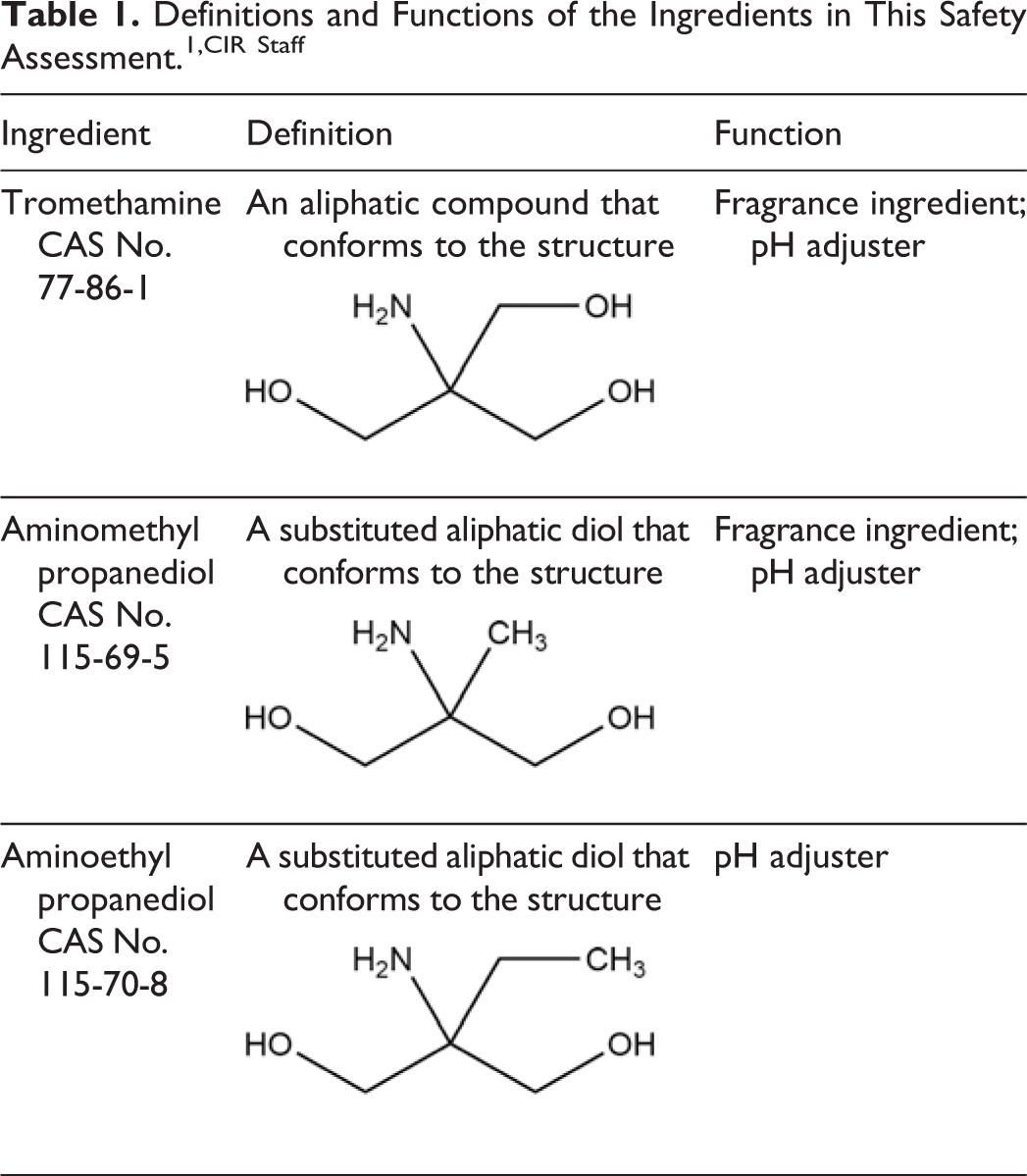
The ingredients in this report are amino aliphatic alcohols that are related by a 2-aminopropane-1,3-diol core structure, with differentiation between the 3 ingredients corresponding to varied substitution at the 2-position (Figure 1). Tromethamine, an organic amine and proton acceptor, is a triol that is substituted at the 2-position (Figure 2). It is used in the synthesis of surface-active agents and as a biological buffer because of the multitude of polar functional groups and alkalinity. Aminomethyl propanediol and aminoethyl propanediol are diols that substituted at the 2-position with a methyl or ethyl group, respectively. Definitions, structures, and functions are provided in Table 1.
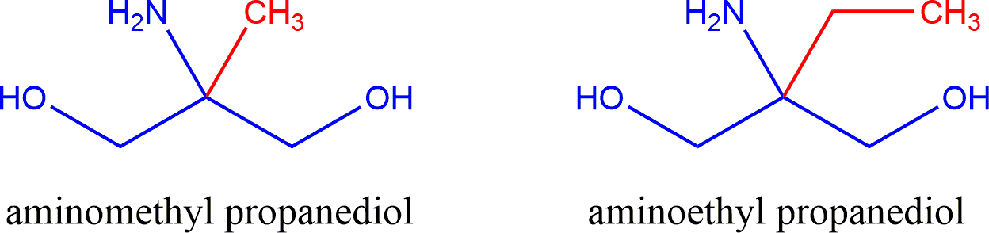
Aminomethyl propanediol and aminoethyl propanediol.
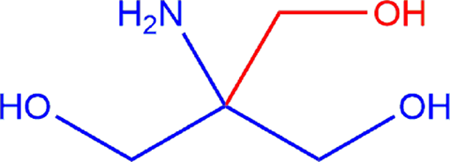
Tromethamine.
Definitions and Functions of the Ingredients in This Safety Assessment. 1,CIR Staff
Physical and Chemical Properties
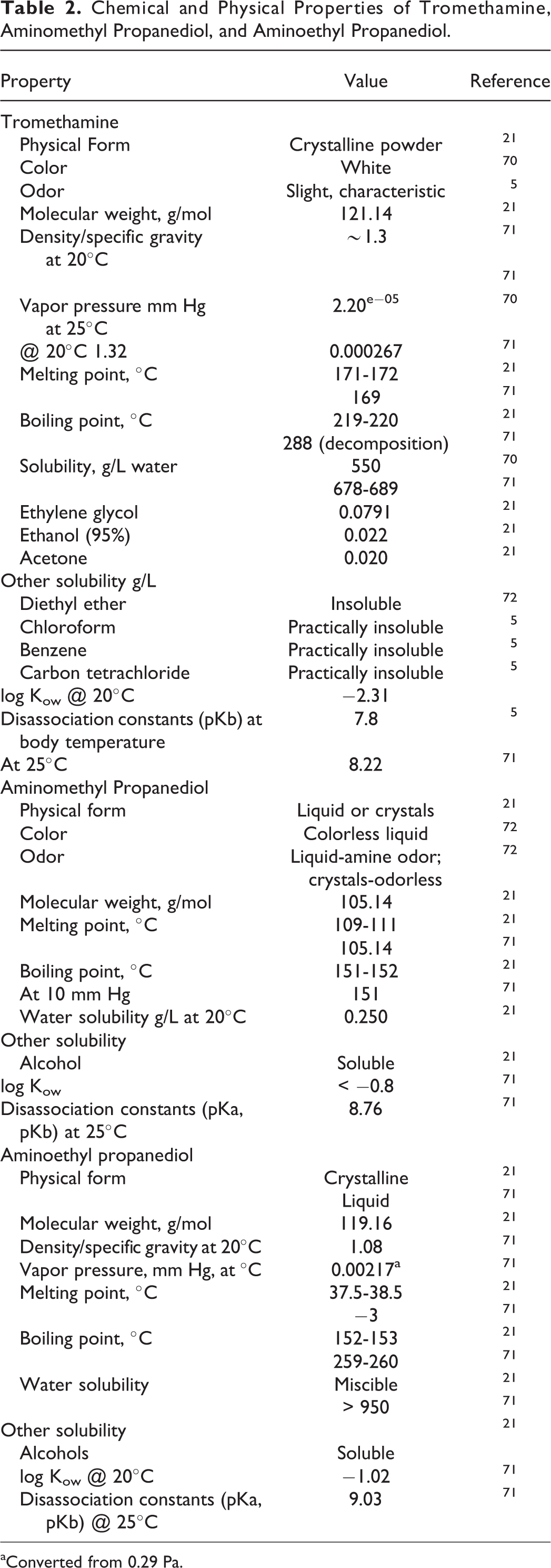
These ingredients are small, polar, crystalline materials with high water solubilities and octanol water partition coefficients (free base) in the range of −1 to −2. Tromethamine is reported to be stable when exposed to light. 4,5 Physical and chemical properties are presented in Table 2.
Chemical and Physical Properties of Tromethamine, Aminomethyl Propanediol, and Aminoethyl Propanediol.
aConverted from 0.29 Pa.
Method of Manufacture
Tromethamine can be prepared by the reduction of tris(hydroxymethyl) nitromethane. 6,7 According to another supplier, tromethamine is also manufactured by additively reacting nitromethane with formaldehyde to yield tris(hydroxymethyl) nitromethane, which is then reduced, via hydrogenation, with the aid of the catalyst, Raney Nickel. 5,8
Impurities
A manufacturer reported that cosmetic grade tromethamine was 99% pure. 9 Secondary amines were present at a maximum of 0.5% wt, nitrosamines were below the levels of detection (50 ppb), and water was present at 0.2% wt Nickel, which may leach from the skeletal catalyst used in the manufacture of tromethamine and was present at <10 ppm; other metals are not expected to be present due to nonuse. Methanol, used as a solvent in the manufacture process, is limited to 3000 ppm; the typical value is <100 ppm.
Use
Cosmetic
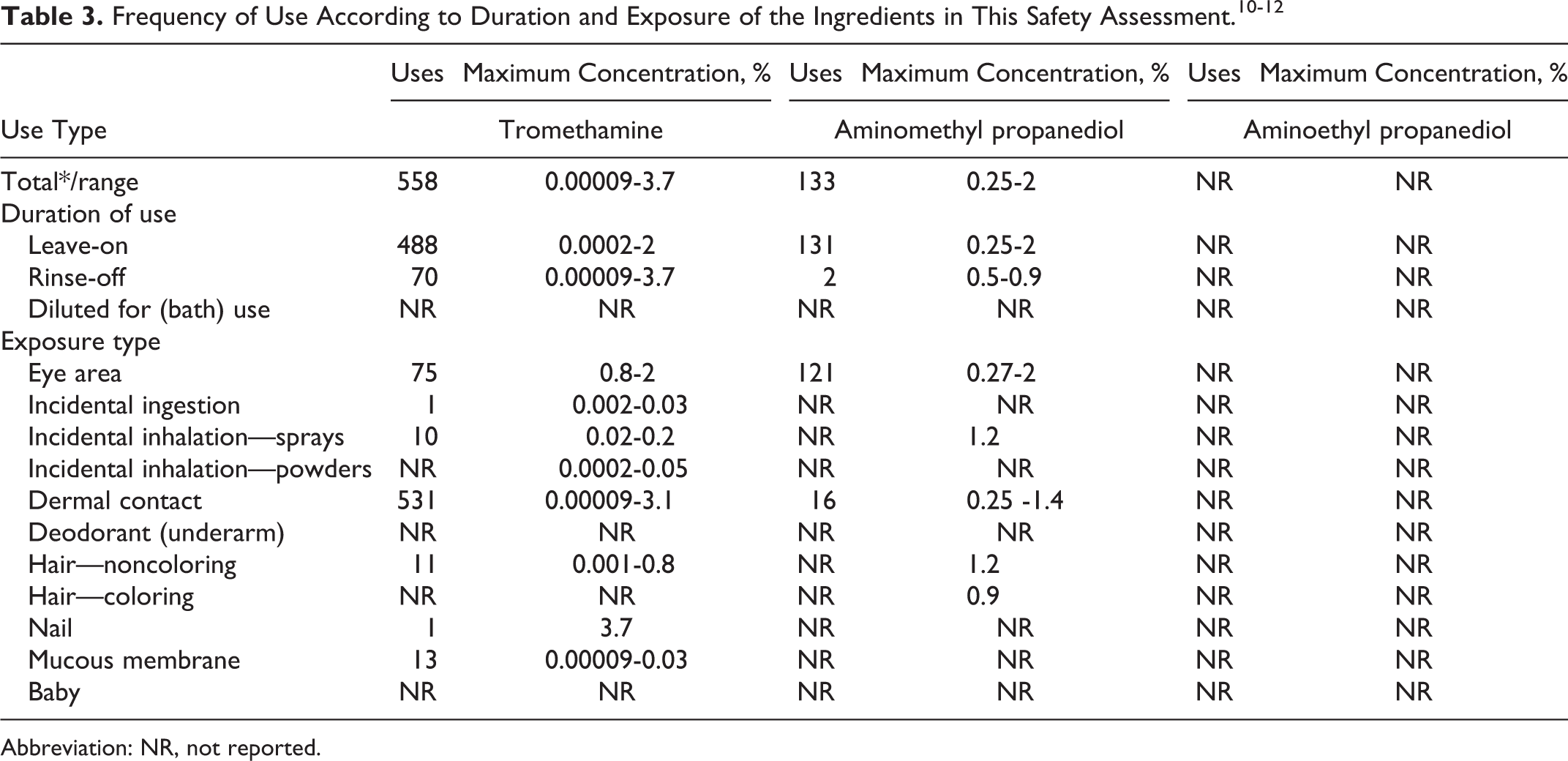
The safety of the cosmetic ingredients addressed in this assessment is evaluated based on data received from the Food and Drug Administration (FDA) and the cosmetics industry on the expected use of these ingredients in cosmetics. Use frequencies of individual ingredients in cosmetics are collected from manufacturers and reported by cosmetic product category in the FDA Voluntary Cosmetic Registration Program (VCRP) database. 10 Use concentration data are submitted by the cosmetic industry in response to a survey, conducted by the Personal Care Products Council (Council), of maximum reported use concentrations by product category.
According to 2013 VCRP data, tromethamine is used in 488 leave-on products and 70 rinse-off products. 10 It was reported to be used at up to 2% in leave-on products, including those used near the eye, according to the Council survey data. 11 Aminomethyl propanediol was reported to be used in 131 leave-on products, including 121 used in the eye area, and in 2 rinse-off formulations. 10 The maximum leave-on use concentration reported was up to 2% in mascara, 12 which is similar to the concentration of use reported in the assessment published in 2007. 3 Aminoethyl propanediol is not reported as being used. (Frequency and concentration of use information are detailed in Table 3.)
Abbreviation: NR, not reported.
The ingredients in this report are used in product formulations that could possibly result in incidental inhalation exposure; for example, aminomethyl propanediol is reported to be used in aerosol hairsprays at a concentration of 1.2%. In practice, 95% to 99% of the droplets/particles released from cosmetic sprays have aerodynamic equivalent diameters >10 µm, with propellant sprays yielding a greater fraction of droplets/particles below 10 µm compared to pump sprays. 13 –16 Therefore, most droplets/particles incidentally inhaled from cosmetic sprays would be deposited in the nasopharyngeal and bronchial regions which would be efficiently cleared by upper tract clearance mechanisms and would not be respirable (ie, they would not enter the lungs) to any appreciable amount. 13,16,17 Tromethamine was reported to be used in face powders and fragrance powders (up to 0.05%). Conservative estimates of inhalation exposures to respirable particles during the use of loose powder cosmetic products are 400-fold to 1000-fold less than protective regulatory and guidance limits for inert airborne respirable particles in the workplace. 18 –20
Noncosmetic
Tromethamine is used in the synthesis of surface-active agents, vulcanization accelerators, and pharmaceuticals. It is also reported to be used as commercial emulsifier and emulsifying agent for mineral oil and paraffin wax emulsions, leather dressings, textile specialties, polishes, cleaning compounds, and so-called soluble oils. 21 It is used as an absorbent for acidic gases and as a biological buffer. 22
Tromethamine has several medical uses. Orally administered tromethamine citrate syrup (1.5-9 mmol/kg) is used to treat renal acidosis, adjusted to maintain urinary pH, and for chemolysis of renal calculi. 23 Intravenously administered tromethamine (15 mmol/kg or 3.5 L of 0.3 mol/L maximum) is used in the treatment of adult and infant respiratory distress syndromes and in the management of increased intracranial pressure after trauma over several days. 24 –26 Intravenously administered tromethamine is used to treat acidosis during pulmonary bypass and cardio surgery that requires hypothermic techniques, 27 –30 and it is used to treat acidosis in burn victims. 31 Tromethamine (∼60% of 0.15 mol/L) administered intraperitoneally has been used for the treatment of intoxication with salicylates, barbiturates, and methyl alcohol (methanol). 25,32,33 Tromethamine, mixed with hydrochloric acid (to a pH of 9.2) or acetate, sodium bicarbonate, and disodium phosphate (to a pH of 8.1), is used for peritoneal dialysis to treat acidemia in humans and will cause alkalization of the plasma. 25
In veterinary medicine, tromethamine is an amine pH buffer prescribed for the prevention and correction of metabolic acidosis, usually as a 0.3 mol/L solution (0.3 mEq/mL) in a 7.5% sodium bicarbonate solution. 34
Toxicokinetic Studies
Dermal/Percutaneous Absorption
Tromethamine
Dermal absorption was <1% when radiolabeled tromethamine hydrochloride (0.1% and 10%; 100 μL; vehicle not provided) was administered to dermatomed, thawed human skin in Franz cells. 35 The receptor fluid was sampled at 2, 4, 6, 8, and 10 hours. After washing, the retention of tromethamine hydrochloride in the dermis and epidermis was 0.13% to 0.14% and 0.69% to 0.22%, respectively. The test material was not retained in the horny layer. The washing waters contained more than 90% of the applied dose.
Absorption, Distribution, Metabolism, and Excretion
Tromethamine is eliminated by the kidneys. Ionized tromethamine is rapidly and preferentially excreted in urine at a rate associated with the infusion rate. Urinary excretion continues over a period of 3 days; 75% or more appears in the urine after 8 hours. Other studies report 50% to 75% of an intravenous (iv) dose was recovered in urine within 24 hours. Recovery of orally administered tromethamine in urine from healthy adults is reported to be 64% and 77% after 2 and 3 days, respectively. 23,36 –38 Excretion of tromethamine is accompanied by osmotic diuresis, since clinical doses of tromethamine considerably add to osmolarity of glomerular filtrate. 5 Tromethamine may accumulate in patients with renal insufficiency and produce an “osmolar gap” with pseudohyponatremia. It is not known whether tromethamine is distributed into human milk. 36
Oral
Tromethamine
Daily administration of tromethamine citrate syrup (3 and 6 mmol/kg) to humans caused urinary alkalization (pH increasing from a range of 5.6-6.8 to 7.2-7.3). 32
Intravenous
Tromethamine
When administered iv in a bolus or over a short-term, tromethamine rapidly distributes into the intracellular spaces and raises the pH of plasma. 24,37 –44 Cells slowly take up the tromethamine; the rate of uptake increases when the pH is more alkaline. However, 1 study suggests that tromethamine permeates very slowly into the intracellular space. A representative set of studies are presented subsequuently.
In rats of different ages (5-240 days old), the renal excretion of tromethamine was studied. 40 In older rats, the renal excretion of tromethamine was slower than in rats of other age-groups. Stimulation of diuresis by intraperitoneal (ip) injection of mannitol, thiazide, or by oral water load resulted in an increase in tromethamine excretion in 5- and in 240-day-old rats. The renal excretion of tromethamine was also increased by repeated administration of tromethamine in all age-groups, except in newborn rats.
When 14 C-tromethamine was administered iv to nephrectomized Sprague-Dawley rats (n = 21-26; with blood stabilized at pH 7.5, 7.4, and 7.2), the authors of that study concluded (1) tromethamine diffuses very slowly into the intracellular spaces of various tissues; (2) the intracellular concentration of tromethamine increased faster with the higher pH; (3) the rate of increase in tromethamine was the same in spleen, heart, skeletal muscle, and brain tissue; (4) tromethamine diffusion into liver cells is rapid, which is not so for spleen, heart, skeletal muscle, and brain tissue; and (5) the intracellular steady state was only reached in the liver. 44
The rats were nephrectomized and catheterized (venous and arterial). After administration of the test material, some of the rats were killed and necropsied at 60, 180, 360, 720, and 1440 minutes. The experiment was repeated (n = 26) with the blood stabilized at pH 7.4. The authors concluded that the mechanism of tromethamine therapy is its elimination of hydronium ions from the extracellular space and the generation of bicarbonate which then penetrates the intracellular compartments. 44
When 14C-tromethamine (5 μci) was administered ip to nephrectomized Wistar rats (n = 6), the half-life in the plasma was 90 minutes. 41 The half-times to equilibrium for tromethamine distributed to heart and skeletal muscle were 2.7 and 5 hours, respectively. Distribution to the brain and cerebrospinal fluid were very slow, and a constant tissue to plasma ratio in the brain was not obtained at 24 hours. The rats were killed and samples of blood, cerebrospinal fluid, skeletal muscle, and cerebral cortex were analyzed at 10, 20, 30, 40, 50, 60, 90, 120, 180, 240, 300, and 360 minutes after the test material was administered.
In a second experiment, when administered ip to rats, the largest amount of 14C-tromethamine was collected in skeletal and heart muscle at 12 and 24 hours. Accumulation was slower in brain tissue and cerebrospinal fluid. 41
Rabbits (strain and number not provided) were iv injected with tromethamine (5-100 mL/kg; 0.3 mol/L at pH 5.5 and 7.4) daily for 1 to 99 days. 43 Tromethamine excreted in the urine reached a maximum at the end of infusion and dropped rapidly after infusion stopped. Only a small quantity of chloride was excreted in the urine in all groups. Rabbits administered tromethamine at pH 5.5 excreted a larger amount of chloride in the urine than those administered tromethamine at pH 7.4. After 7 hours, 44% and 77% of the infused tromethamine was found in the urine of the pH 7.4 and pH 5.5 groups, respectively. Blood sampling showed that the glucose concentrations decreased during the infusions but returned to normal or above normal following the end of the infusions (tromethamine-induced hypoglycemia persisted longer than the tromethamine-neutralized). Both treatments caused transient hypoglycemia. No deleterious effect on erythrocytes (0.3 mol/L) was observed in studies with extracted blood (tromethamine added to blood droplets).
Tromethamine (121 mg/kg; 1 mmol/kg; pH 7.4) was primarily eliminated by the kidneys (82% was recovered in the urine at 24 hours) when administered iv to healthy participants (n = 6) and participants with metabolic acidosis (n = 20). 39 Tromethamine did accumulate in the tissues but equilibrium was slow.
The distribution of 14C-labeled tromethamine was determined between intra- and extracellular space of nephrectomized Sprague-Dawley rats (n = 5) as a function of time at constant plasma pH of 7.4. 45 An equilibrium in the distribution of tromethamine between external and internal cellular spaces was observed at 6 to 12 hours after administration. The authors of that study concluded that tromethamine permeates very slowly into intracellular spaces. This appears to be in contrast to previous conclusions wherein it was determined to quickly diffuse into intracellular spaces to restore normal intracellular pH. The authors concluded that tromethamine passed from extracellular spaces in a multiexponential fashion, indicating that it passes to different body tissues at variable rates and is in ionized form when transferring across cellular membranes.
Toxicological Studies
Acute Toxicity
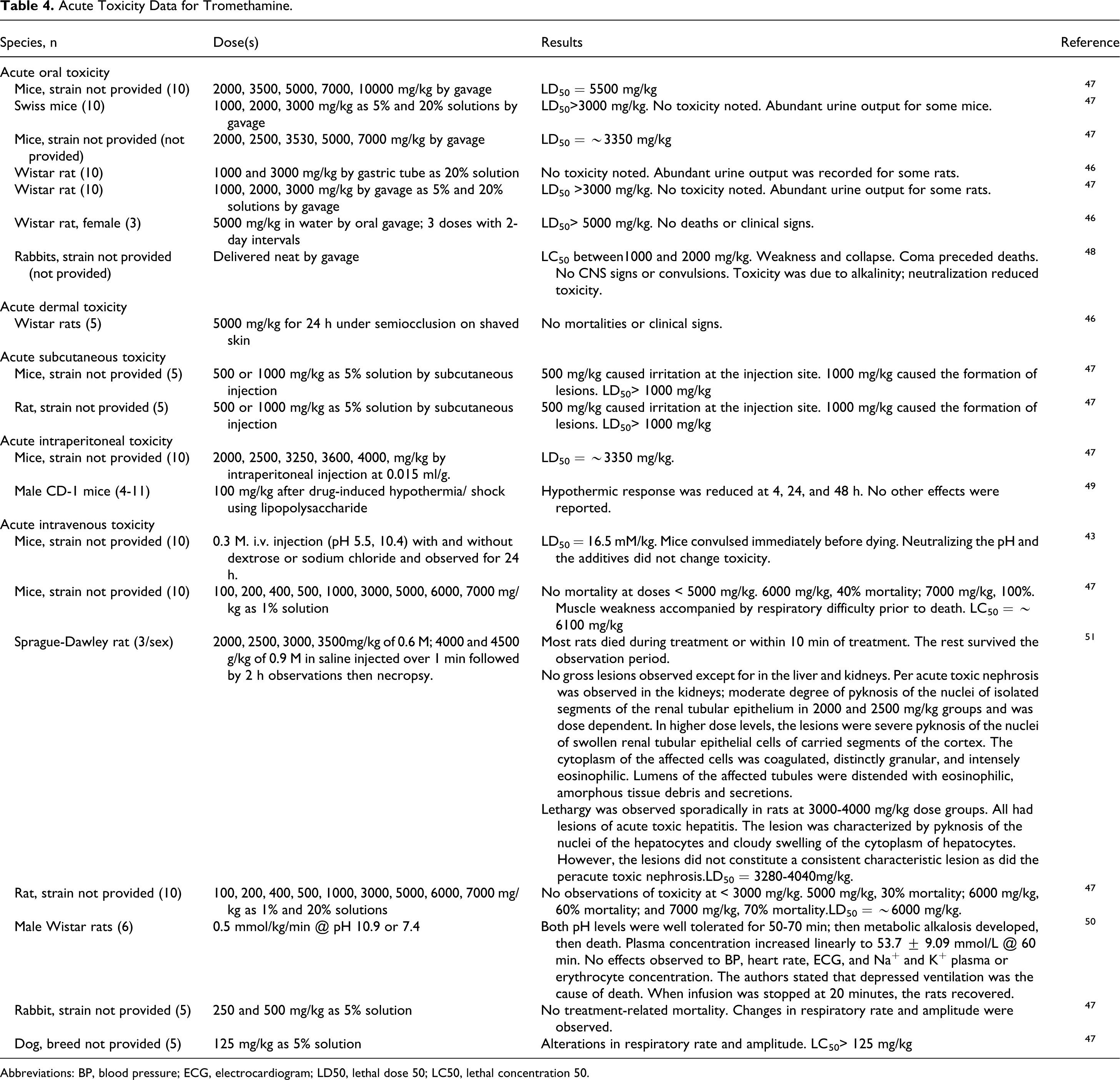
The results of acute toxicity studies of tromethamine summarized here are described in Table 4.
Acute Toxicity Data for Tromethamine.
Abbreviations: BP, blood pressure; ECG, electrocardiogram; LD50, lethal dose 50; LC50, lethal concentration 50.
The oral lethal dose 50 (LD50) for mice was reported to range from 3350 to 5500 mg/kg, and for rats, the LD50 was >3000 mg/kg; in rabbits, the oral LC50was between 1000 and 2000 mg/kg. 46 –48 The dermal LD50 of tromethamine was reported to be >5000 mg/kg inrats. 46
The subcutaneous LD50 of tromethamine was >1000 mg/kg for mice and rats, and the ip LD50 for mice was reported to be ∼3350 mg/kg. 47,49 The iv LD50 of tromethamine for mice was 16.5 mmol/kg. 43,47 There were no mortalities reported in mice with iv doses of <5000 mg/kg. 43,47 The iv LD50 for rats was reported to range between 3280 and 4040 mg/kg and up to ∼6000 mg/kg. 47,50,51 There were no treatment-related mortalities in rabbits administered tromethamine up to 500 mg/kg. 47 In dogs, the iv lethal concentration 50 (LC50) was reported to be >125 mg/kg. 47
Dogs (breed not specified) exhibited profuse diuresis during iv treatment with tromethamine. 37 Dogs (n = 5) were anesthetized and rendered apneic using succinylcholine chloride. Apnea was then induced by barbiturates. Under oxygen saturation, tromethamine (0.3 mol/L; 1.1 mL/kg/min) was administered iv.
Repeated Dose Toxicity
Oral
Tromethamine
The no-observed-adverse-effect-level (NOAEL) for local toxicity was 100 mg/kg/d and for systemic toxicity was ≥1000 mg/kg/d for Crl:CD(D) rats (n = 10) administered tromethamine (100, 300, 1000 mg/kg/d adjusted to pH 9) by gavage in a reproduction study. 46 Males (n = 10) were treated for at least 2 weeks before breeding up to 29 days. Females (n = 12) were treated from 2 weeks prior to breeding, through gestation, and through 4 days of lactation, for a total of up to 54 days. There were no systemic effects, but there was irritation to the forestomach.
When tromethamine (2500 mg/kg) was orally administered to rats (n = 38; strain not provided) for 15 days, there were no mortalities or clinical signs observed. 46 Upon oral administration of tromethamine (250-4000 mg/kg) to male rats (n = 36; strain not provided) for 31 days, there were no mortalities or clinical signs observed except for moderate diarrhea at the highest dose. 46
Dogs (n = 12/dose; strain not specified) orally administered tromethamine (250, 1000, 4000 mg/kg) for 30 days had no mortalities. 46 Dogs in the mid-dose group had occasional loose stools and vomiting, and dogs in the high-dose group had frequent loose stools and vomiting. Urinalysis showed decreased urinary potassium in the mid- and high-dose groups. The authors considered the NOAEL to be 4000 mg/kg because none of the effects were considered permanent.
Dermal
Tromethamine
There were no clinical signs observed in rabbits (strain and number not provided) dermally administered tromethamine (100%) on clipped skin for 4 hours for 5 days. 48
Intravenous
Tromethamine
There were no clinical signs or mortalities observed in mice (strain and number not provided) administered iv tromethamine (10, 50 mL/kg; 0.155 mol/L; pH 5.5, 7.4) for 10 days. 43 Histological examination of the organs did not identify any adverse effects from the treatment.
Other than necrosis at the injection site (ear) and transient body temperature changes, there were no adverse effects in New Zealand White rabbits (n = 4/sex) administered tromethamine (0.5 g/kg; 0.3 mol/L) via iv injection for up to 20 days. 51 Two rabbits/sex were necropsied within 24 hours of the last dose. The remaining rabbits had a 20-day recovery before necropsy. There were no effects on feed and water consumption or body temperature. Body weights fluctuated throughout the study in all animals, including control animals, but not with any treatment-related pattern. Of the treated rabbits, 7 of 8 had inflammatory lesions of the external ear. The lesions varied from swelling and redness to dry gangrene and erosion.
Weekly blood samples were normal for total serum proteins, albumin–globulin (A/G) ratio, serum bilirubin, cephalin flocculation, serum transaminase, red blood cell count, differential counts, hemoglobin, microhematocrit, and platelet counts. White blood cell counts in excess of 13 000 were seen in 5 of 8 rabbits receiving tromethamine. In all cases, increased white blood cell counts coincided with dry gangrene in the external ear. Urinalysis findings were unremarkable.
In the treatment group, 2 of the 4 rabbits necropsied after recovery had grossly visible infarcts in the kidneys; there were none in the control group. No gross lesions were observed in any other organ or tissue. In 7 of 8 test animals with gross lesions of the ear, there were microscopic lesions of chronic cellulitis and necrosis at injection sites in the subcutaneous tissues of the ear. Those with kidney lesions also had chronic interstitial nephritis. Infiltrations of lymphocytes were observed in tissue sections of the liver and kidney of 3 treated rabbits. The infiltrations were observed in animals in the recovery and nonrecovery groups. Peracute toxic nephrosis was observed in 1 rabbit, which also had urolithiasis. 51
Tromethamine (100 mL 0.3 mol/L at pH 5.5 and 7.4) was administered iv to rabbits (strain not provided; n = 2-3) over a 5-hour period, daily, for 19 days. 43 Treatment-related mortalities occurred a few days after study initiation. Other groups were administered tromethamine (5 and100 mL 0.3 mol/kg at pH 5.5 and 7.4) over 5 hours daily for 1 to 99 days. The neutralized tromethamine was less toxic. Observed clinical signs included anorexia, bloody urine, hind leg paralysis, and irregular respiration. Observations at necropsy included abnormally red lungs, necrosis at the point of infusion, bleached liver, darkened spleen, bloated stomach, and lesions on the heart and kidney. Histologic evaluation of the organs was negative.
There were no treatment-related mortality or clinical signs to rabbits (strain not provided; n = 3) administered iv tromethamine (50 and 10 mL/kg 0.155 mol/L; over 30 seconds) once daily for 10 days. 43 Histological evaluation of the organs was negative.
Rabbits (n = 5) administered tromethamine (1500, 3000 mg/kg; 0.2 mL/kg/min in Ringer solution; 0.34 mol/L) by catheter placed in the jugular vein for 21 days had 2 mortalities (days 6 and 12) in the high-dose group. 46 Clinical signs included rapid, shallow breathing during infusion.
Catheterized dogs (n = 5) administered iv tromethamine (1500, 3000 mg/kg/d; 0.34 mol/L in Ringer’s solution; 0.5 mL/kg/min) for 21 days exhibited sporadic convulsions and vomiting. 46 One dog in the high-dose group died during treatment. Three dogs in the low-dose group had increased retention of bromosulfophthalein (BSP). Infarcts (multiple abscesses) of the liver were observed in 3 dogs in the low-dose group. Colonies of bacteria, acute inflammatory exudate, and hypertrophy of the Kupffer cells were observed in the same livers.
The NOAEL for Sprague-Dawley rats (n = 6/sex) administered tromethamine iv (0.5 and 1.5 g/kg; 0.3 mol/L) for 10 and 20 days was reported to be ∼ 500 mg/kg. 51 Rats were allowed 24 hours or 7 days for recovery. There were no mortalities in the 20-day, low-dose group. There was dry gangrene at injection sites in the 10- and 20-day low-dose groups. In the 20-day groups, about half of the rats had mild inflammation of various parts of the visceral peritoneum or fat necrosis and hemorrhage of the serosa of various parts of the stomach, intestine, and peritoneum.
Intraperitoneal
Tromethamine
On day 11 after the iv administration of tromethamine, (1.5 g/kg; 0.3 mol/L), a group of Sprague-Dawley rats (n = 6/sex) was treated with additional tromethamine using ip injection. 51 Microscopic examination of tissues 24 hours after ip injection showed 5 of 6 rats of the 20-day, low-dose group had chronic cellulitis at injection sites and peracute toxic nephrosis of the kidneys but not in animals allowed the 7-day recovery period. In the 20-day, high-dose group, all rats necropsied at 24 hours and 5 of 6 rats in the 7-day recovery group had similar findings.
Tromethamine (30 mL/kg: 0.075 mol/L) administered ip to dogs (n = 3) under anesthesia for 3 days caused no clinical signs during treatment. 46 One dog died on day 3. This dog had heartworms and died under anesthesia; death was attributed to a collapsed lung and pulmonary disease. There were no histopathological signs attributed to the test substance.
Intratracheal
Tromethamine
Tromethamine (in an uncharacterized mixture with 0.9% saline; 2 mL; vehicle control in an experiment) did not decrease survival or average body weight of male Syrian hamsters (n = 28-29) when administered intratracheally over the lifetime of the hamsters, compared to hamsters in the nontreatment group. 52 There were no differences in survival (88 ± 22 vs 78 ± 25 weeks) and mean body weights (116 ± 10 vs 114 ± 6 g) between the vehicle and the nontreatment groups.
Reproductive and Developmental Toxicity
Tromethamine
The NOAEL for reproduction and teratogenicity for tromethamine in rats was ≥1000 mg/kg/d. 46 Female Crl:CD(D) rats (n = 10) were administered tromethamine (100, 300, 1000 mg/kg/d adjusted to pH 9) by gavage. Males (n = 10) were treated for at least 2 weeks before breeding up to 29 days. Females (n = 12) were treated from 2 weeks prior to breeding, through gestation, and through 4 days of lactation for a total of up to 54 days. Tromethamine had no effect on mating performance or conception, and there were no effects on mating index, fertility index, gestation period, deliver index, or number of live pups. No adverse effects were observed in the F1 pups at birth.
Genotoxicity
In Vitro
Tromethamine
Tromethamine (1 mg/mL; pH 7.4) was toxic, but not mutagenic, to Escherichia coli (CHY832) in an RK assay. 53 The E coli were killed at 42°C but not at 30°C.
Aminoethyl propanediol
Several genotoxicity tests were performed with aminoethyl propanediol. 46 In an Ames test, aminoethyl propanediol (156, 313, 625, 1250, 2500, 5000 μg/plate in water) was not mutagenic to Salmonella typhimurium (strains TA98, TA100, TA1535, TA1537) and E coli (strain WP2 uvr A), with or without metabolic activation. It was not genotoxic, with or without metabolic activation, in an in vitro mammalian chromosome aberration test using Chinese hamster lung cells; cells were exposed for 24 and 48 hours. Also, aminoethyl propanediol (12, 38, 119, 337, 1192 μg/mL with metabolic activation; 15, 44, 132, 397, 1192 μg/mL without) was not mutagenic to Chinese hamster ovary (CHO) cells in an in vitro mammalian cell gene mutation test. Aminoethyl propanediol was cytotoxic at 1192 μg/mL; this study was repeated, and the same results were obtained.
Carcinogenicity
Tromethamine
When administered intratracheally as the vehicle control to male Syrian hamsters weekly for their entire life span, tromethamine (in an unknown mixture with 0.9% saline; 2 mL) did not induce tumors. 52
Other Relevant Studies
Cytotoxicity
Tromethamine
In cytotoxicity assays using multiple cell lines, the half maximal inhibitory concentration (IC50) for tromethamine ranged from 129.07 to 37 μg/mL. 54 In the 2,5-diphenyl-3,-(4,5-dimethyl-2-thiazolyl) tetrazolium bromide (MTT) assay, after exposure for 24 hours, the IC50s were ∼330 μg/mL for 3T3 cells, ∼160 μg/mL for 3T6 cells, ∼340 μg/mL for HaCaT cells, ∼180 μg/mL for NCTC 2544 cells, ∼340 μg/mL for HeLa cells, and ∼405 μg/mL for MCF-7 cells. In the neutral red uptake assay, the IC50s were ∼295 μg/mL for 3T3 cells, ∼130 μg/mL for 3T6 cells, ∼160 μg/mL for HaCaT cells, ∼ 190 μg/mL for NCTC 2544 cells, ∼190 μg/mL for HeLa cells, and ∼315 μg/mL for MCF-7 cells.
Physiological Effects
Tromethamine
Because tromethamine is a proton acceptor with a pK of 7.8, it is an effective buffer that can be used to maintain the pH of body fluids. 25 Oral administration of tromethamine (20 g) resulted in alkalization of the body fluids in humans. 55
Tromethamine administered iv caused a decrease in blood glucose levels in rats (5 mmol/kg, pH 7.4), rabbits (0.3 M), dogs (10 mmol/kg, pH 6.1), and humans (1 mmol, 0.3 mol/L, pH 10.9). 42,43,56 –58 Tromethamine lowered the blood sugar of dogs after the removal of the pancreas when given a few hours after pancreatectomy but had little or no effect on the blood sugar of pancreatectomized dogs if insulin was withheld for 18 hours or longer before tromethamine was administered.
Hypoglycemic effect of tromethamine was due to the release of insulin and its activity. 58 Tromethamine-induced hypoglycemia is associated with a transient stimulation of insulin secretion in rats. A bolus injection of neutralized tromethamine (5 mmol/kg; pH 7.4) caused a transient increase in plasma insulin concentration (130 ± 20 μU/mL) but did not change the glucose concentration in male Wistar rats (n = 6). However, a continuous infusion of tromethamine (0.5 mol/kg/min) for 90 minutes decreased the plasma glucose concentration (8.7 ± 0.42 to 5.1 ± 0.33 mmol/L) after 30 min. The plasma insulin concentration was elevated during the first 20 minutes (max ±122 ± 21 μU/mL after l0 minutes). In streptozotocin-diabetic rats (administered 48 hours prior to the experiments), an infusion of tromethamine changed neither glucose nor insulin concentration in plasma.
Dermal Irritation and Sensitization
Irritation
Dermal—animal
Tromethamine
In a Draize test, rabbits (strain and n not provided) were dermally administered tromethamine, both in solution (25%, saturation; pH 10.8) and as a crystalline product, to intact and abraded skin. 59 There was no noticeable irritation produced by any state of the test material on intact skin. There was mild irritation by the crystals at saturated states on abraded skin. All signs of irritation were completely resolved in 48 hours. The author concluded that tromethamine was a mild irritant under these conditions.
Tromethamine (40% in distilled water) was not irritating to rabbits (n = 6) in a Draize test. 60 In a dermal irritation test using New Zealand White rabbits (n = 3 males), tromethamine (0.5 g in enough water to make a paste) was not irritating when administered to shaved skin under semiocclusion for 4 hours. 46 Test sites were observed at 1, 24, 48, and 72 hours.
Intradermal—animal
Tromethamine
Intradermally administered tromethamine (0.1 mL) was severely irritating to rabbits (strain and n not provided) at a pH of 10.4 (0.2, 0.3 mol/L) and at pH 7.4 (0.6, 1 mol/L). 43 The cause of local necrosis around the infusion site was investigated using iv Trypan blue dye. The irritation caused by the solutions was evaluated by observing the amount of extravasated dye. The neutral tromethamine (pH 5.5) had reduced irritation/local necrosis. At pH 7.4, tromethamine was not irritating at lower doses (0.2, 0.3 mol/L).The authors suggested that the pH of the tromethamine is the probable cause of the dermal irritation.
Dermal—human
Tromethamine
A cosmetic product containing tromethamine (3.1%; neat) was not irritating when administered in a patch test (n = 11) for 48 hours. 61
Sensitization
In vitro
Aminoethyl Propanediol
In a peptide reactivity assay for screening contact allergens, it was concluded that aminomethyl propanediol (4 nmol/L) is not expected to cause dermal sensitization. 46 The peptide consisted of 7 amino acids with an acetylated N-terminus (acetylated-asparagine-lysine-lysine-cysteine-aspartic acid-leucine-phenylalanine) and was incubated for 24 hours. The positive control was diethyl maleate; the negative control was the vehicle acetonitrile. The average depletion values for the test substance, the negative control, and positive control were 4.22% ± 1.84%, 4.83% ± 1.66%, and 96.13% ± 0.21%.
Animal
Aminoethyl Propanediol
Aminoethyl propanediol (0.05%-0.5%; 0.5 mL) was not a sensitizer to male Hartley guinea pigs (n = 10) in a Buehler sensitization assay. 46 Some of the guinea pigs showed mild erythema at 0.5% during the first 5 applications of the induction period, so the concentration was reduced to 0.05%for the last 5 applications. Challenge was at 0.5% and 1%. (No further data on the physical or chemical characteristics of the test material were provided.)
In a sensitization assay, aminoethyl propanediol (0.05%-1% in saline; 0.5 mL; 85.34% pure) was not a sensitizer to male Hartley guinea pigs (n = 10) when the induction was administered intradermally. 46 Some of the guinea pigs showed mild erythema at 1% during the initial 5 applications of the induction period, so the concentration was reduced to 0.05% for the last 5 applications. Challenge was at 0.5% and 0.01%. (No further data on the physical or chemical characteristics of the test material were provided.)
Human
Tromethamine
Several human repeated insult patch tests (HRIPTs) with formulations used near the eye were performed. In an HRIPT of a mascara containing tromethamine (1.8%; ∼0.2 g; n = 101), there were no signs of irritation or contact sensitization observed; 62 in 2 additional HRIPTs (mascaras containing 2% tromethamine; n = 102 in both studies), there were no signs of irritation or sensitization observed. 63,64 A water-based eyeliner stick containing tromethamine (2%) was not an irritant or sensitizer in HRIPT (n = 102); the researchers concluded that this product is not contraindicated for usages entailing repeated applications on human skin. 65
The sensitization potential of a fragranced body lotion containing tromethamine (1.8%) was evaluated in an HRIPT (n = 85). 66 There were no indications of dermal irritation or allergic contact sensitization.
Aminoethyl Propanediol
In a patch test of 16 components of metalwork fluids (MWF; n = 160; including current metalworkers exposed to MWF, some with occupational dermatitis), only 1 participant had a positive reaction to aminoethyl propanediol (1% aq.) on day 3 of observation. 67 This participant was not among the participants that were exposed to MWF. The researchers used industrial-grade metalwork chemicals; aminoethyl propanediol was reported to be 85% pure.
In a follow-up study on just metalworkers (n = 144) exposed to MWF, only 1 tested positive for aminoethyl propanediol (2% pet.). 68 Analysis of 17 different MWFs revealed that aminoethyl propanediol was present at 0.06% to 0.39% with a median of 0.09%. 69
Ocular Irritation
Tromethamine
Tromethamine (0.1 g; finely ground) was not an ocular irritant when instilled into the eyes of New Zealand White rabbits (n = 3). 46 The eyes were evaluated at 1, 24, 48, and 72 hours using a hand slit lamp. Fluorescein was used at 24 hours. There was slight/moderate redness and chemosis at 1 hour; the irritation effects cleared by 24 or 72 hours. No damage to the iris or cornea was observed. Tromethamine (100%) was not an ocular irritant when administered to rabbits (no other details were provided). 46
Clinical Use
Case Studies
Tromethamine
A 30-year-old woman developed severe respiratory acidosis following cardiac surgery. 55 After she was administered tromethamine (120 g in water) by gastric tube over 24 hours, the acidosis was resolved but she developed severe diarrhea. She also developed tetany which was controlled with calcium gluconate. Her arterial pH rose from 7.1 to 7.45, and she had no further acidosis. While she died from other complications, there were no adverse effects from the tromethamine treatment observed at autopsy.
A 40-year-old man who had a 9-rib thoracoplasty presented with extensive pneumonia. 55 He was unconscious within 12 hours with slow, gasping respirations. A tracheotomy and 100% oxygen were not helpful. O2 saturation was 97%, CO2 tension was 160 mm Hg, and pH was 6.95. He was administered tromethamine (30 g in water; 10%) over 1 hour. Arterial blood was then at 92% saturation, and CO2 tension was 80 mm Hg with a pH of 7.2. Additional tromethamine (10 g) was administered after 5 hours. O2 saturation was 49%, CO2 tension was 68 mm Hg, and the pH was 7.29. No adverse effects from the tromethamine treatment were reported.
Summary
The ingredients in this report are amino aliphatic alcohols; tromethamine is a triol, while aminomethyl propanediol, and aminoethyl propanediol are diols. All 3 ingredients are reported to function in cosmetics as pH adjusters; tromethamine and aminomethyl propanediol are also reported to function as fragrance ingredients. Aminomethyl propanediol was previously reviewed by the Panel and found to be safe as used.
Tromethamine is used in 488 leave-on cosmetic products at up to 2% and 70 rinse-off products at up to 3.7%. Aminomethyl propanediol was reported to be used in 131 leave-on products, including 121 used in the eye area, and 2 rinse-off products, and the maximum leave-on use concentration reported was up to 2% in mascara. There were no reported uses of aminoethyl propanediol. Tromethamine has several medical uses, including treatment for acidosis under several circumstances.
There was little dermal absorption of tromethamine in human skin. Tromethamine is eliminated by the kidneys in mammals. Tromethamine administered iv caused a fall in blood glucose levels in rats, rabbits, dogs, and humans.
The oral LD50 for mice was reported to range from 3350 to 5500 mg/kg, and for rats, the LD50 was >3000 mg/kg; in rabbits, the oral LC50 was between 1000 and 2000 mg/kg. The dermal LD50 of tromethamine was reported to be >5000 mg/kg in rats. The subcutaneous LD50 of tromethamine was >1000 mg/kg for mice and rats, and the ip LD50 for mice was reported to be ∼3350 mg/kg. The iv LD50 of tromethamine for mice was 16.5 mmol/kg. There were no mortalities reported in mice with iv doses of <5000 mg/kg. The iv LD50 for rats was reported to range between 3280 and 4040 mg/kg and up to ∼6000 mg/kg. There were no treatment related mortalities in rabbits administered tromethamine up to 500 mg/kg. In dogs, the iv LC50 was reported to be >125 mg/kg.
The NOAEL for local toxicity of orally administered tromethamine was 100 mg/kg/d in a reproduction study. Tromethamine at 1000 and 4000 mg/kg caused loose stool and vomiting in dogs. There were no adverse clinical signs in rabbits dermally administered tromethamine at 100% on clipped skin for 4 hours for 5 days.
Intravenous toxicity of tromethamine was minimal at neutral pH. However, at a more alkaline pH range, gangrene at the injection sites, tissue necrosis, inflammatory lesions, visible infarcts in the kidneys, bleached liver, darkened spleen, and lesions on the heart were reported. Anorexia, bloody urine, and paralysis were also observed.
Intratracheal administration of 2 mL tromethamine in an unknown mixture with 0.9% saline did not decrease survival or mean body weights of hamsters when administered over their lifetime. There were no adverse effects on reproduction by tromethamine up to 1000 mg/kg/day to rats.
Tromethamine was toxic, but not mutagenic, to E coli in an RK assay. Aminoethyl propanediol was not mutagenic, with or without metabolic activation, in an Ames test, a chromosome aberration test using Chinese hamster lung cells or a mammalian cell gene mutation test using CHO cells.
Tromethamine at (in an unknown mixture with 0.9% saline; 2 mL) 2 mL did not induce tumors when administered intratracheally to hamsters weekly for their entire life span. Tromethamine was cytotoxic to multiple cell types in the range of 129 to 405 µg/mL.
Tromethamine (as a crystalline product) was a mild irritant when applied to the abraded skin of rabbits. At 40% and as a paste made using neat material and water, tromethamine was not irritating to rabbit skin. A cosmetic product containing 3.1% tromethamine was not irritating in a human patch test with 11 participants, and formulations (including mascara, eyeliner stick, and body lotion) containing tromethamine up to 2% were not irritating or sensitizing in HRIPTs.
Intradermal injections of tromethamine were severely irritating to rabbits at pH 10.4 but were only mildly irritating at pH 7.4. Aminomethyl propanediol was not predicted to be a dermal sensitizer in a peptide reactivity assay. In guinea pigs, aminoethyl propanediol was not a sensitizer at 1%; it was an irritant at 0.5%. In a human patch test using some participants with professional contact of MWFs that contain aminoethyl propanediol, only 1 of 160 had a positive reaction. Undiluted tromethamine was not an ocular irritant to rabbit eyes.
Discussion
Tromethamine, aminomethyl propanediol, and aminoethyl propanediol were grouped for review in this safety assessment because they have similar chemical structures, physicochemical properties, functions, and concentrations of use in cosmetics. These similarities allowed for interpolation of the available toxicological data to support the safety of the entire group.
The Panel discussed the issue of the possibility of incidental inhalation exposure of the ingredients reviewed in this assessment; for example, aminomethyl propanediol is reported to be used in aerosol hairsprays at a concentration of 1.2% and tromethamine is used in face and fragrance powders at up to 0.05%. The acute and chronic inhalation exposure data, available at the initial safety assessment of aminomethyl propanediol published in 2009, suggest little potential for these ingredients to cause respiratory tract effects at relevant doses. 3 Aminomethyl propanediol was not toxic to hamsters and rats in subchronic inhalation studies.
Also, the Panel believes that the sizes of a substantial majority of the particles of these ingredients, as manufactured, are larger than the respirable range and/or aggregate and agglomerate to form much larger particles in formulation. The Panel noted that droplets/particles from cosmetic products would not be respirable to any appreciable amount. Furthermore, these ingredients are not likely to cause any direct toxic effects in the upper respiratory tract, based on data which show that these ingredients are not irritants. Coupled with the small actual exposure in the breathing zone and the concentrations at which the ingredients are used, the available information indicates that incidental inhalation would not be a significant route of exposure that might lead to local respiratory or systemic effects. The Panel considered other data available to characterize the potential for tromethamine, aminomethyl propanediol, and aminoethyl propanediol to cause systemic toxicity, irritation, sensitization, reproductive and developmental toxicity, and genotoxicity. They noted the lack of systemic toxicity at high doses in acute and subchronic oral exposure studies, little or no irritation or sensitization in multiple tests of dermal and ocular exposure, the absence of genotoxicity in multiple tests. A detailed discussion and summary of the Panel’s approach to evaluating incidental inhalation exposures to ingredients in cosmetic products is available at http://www.cir-safety.org/cir-findings
The Panel considered other data available to characterize the potential for these ingredients to cause systemic toxicity, irritation, sensitization, reproductive and developmental toxicity, and genotoxicity. The Panel noted that tromethamine has long been used to treat acidosis-related ailments and as a biological buffer. Tromethamine did not penetrate skin, and toxicity studies including reproductive/developmental toxicity showed that these ingredients were not toxic at levels far greater than those that could result from cosmetic-use exposures. This information along with negative dermal irritation/sensitization assays, including tests of products containing these ingredients, reassured the Panel that there are no safety concerns for these ingredients.
The Panel cautions, however, that products containing these ingredients could form N-nitrosamines, if secondary amine impurities are present.
Conclusion
The CIR Expert Panel concluded that tromethamine, aminomethyl propanediol, and aminoethyl propanediol (note 1) are safe in cosmetics in the present practices of use and concentration in cosmetics as described in this safety assessment.
Footnotes
Author’s Note
Unpublished sources cited in this report are available from the Interim Director, Bart Heldreth, Cosmetic Ingredient Review, 1620L Street, NW, Suite 1200, Washington, DC 20036, USA.
Author Contribution
LB contributed to conception and design, contributed to acquisition, analysis, and interpretation, and drafted the manuscript; BH, LG, WB, DB, RH, CK, DL, JM, RS, TS, and PS contributed to conception and design, contributed to analysis and interpretation, and critically revised the manuscript. All authors gave final approval and agreed to be accountable for all aspects of work ensuring integrity and accuracy
Declaration of Conflicting Interest
The author(s) declared no potential conflicts of interest with respect to the research, authorship, and/or publication of this article.
Funding
The author(s) disclosed receipt of the following financial support for the research, authorship, and/or publication of this article: The author(s) disclosed receipt of the following financial support for the research, authorship, and/or publication of this article: The articles in this supplement were sponsored by the Cosmetic Ingredient Review. The infrastructure of Cosmetic Ingredient Review is financially supported by the Personal Care Products Council.