




Abstract
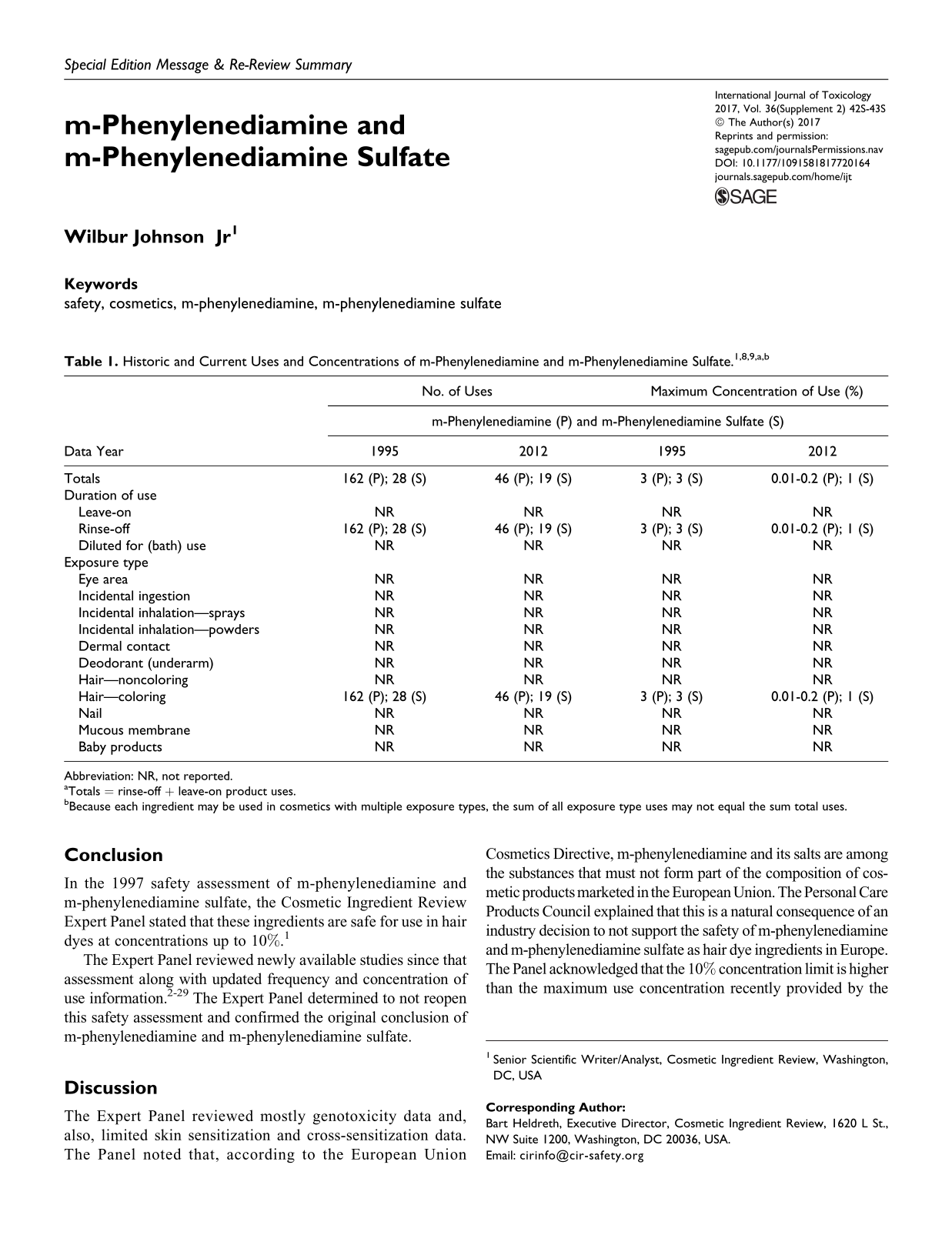
Historic and Current Uses and Concentrations of m-Phenylenediamine and m-Phenylenediamine Sulfate.1,8,9,a,b
Abbreviation: NR, not reported.
aTotals = rinse-off + leave-on product uses.
bBecause each ingredient may be used in cosmetics with multiple exposure types, the sum of all exposure type uses may not equal the sum total uses.
Conclusion
In the 1997 safety assessment of m-phenylenediamine and m-phenylenediamine sulfate, the Cosmetic Ingredient Review Expert Panel stated that these ingredients are safe for use in hair dyes at concentrations up to 10%. 1
The Expert Panel reviewed newly available studies since that assessment along with updated frequency and concentration of use information. 2 –29 The Expert Panel determined to not reopen this safety assessment and confirmed the original conclusion of m-phenylenediamine and m-phenylenediamine sulfate.
Discussion
The Expert Panel reviewed mostly genotoxicity data and, also, limited skin sensitization and cross-sensitization data. The Panel noted that, according to the European Union Cosmetics Directive, m-phenylenediamine and its salts are among the substances that must not form part of the composition of cosmetic products marketed in the European Union. The Personal Care Products Council explained that this is a natural consequence of an industry decision to not support the safety of m-phenylenediamine and m-phenylenediamine sulfate as hair dye ingredients in Europe. The Panel acknowledged that the 10% concentration limit is higher than the maximum use concentration recently provided by the cosmetics industry, from 0.01% to 0.2% for m-phenylenediamine and 1% for m-phenylenediamine sulfate. However, the Expert Panel noted that the 10% limit was based on skin irritation and sensitization test data and does not need to be changed.
Footnotes
Declaration of Conflicting Interests
The author(s) declared no potential conflicts of interest with respect to the research, authorship, and/or publication of this article.
Funding
The author(s) received no financial support for the research, authorship, and/or publication of this article.