




Abstract
Globalization has greatly accelerated the numbers and variety of food and beverage products available worldwide. The exchange among greater numbers of countries, manufacturers, and products in the United States and worldwide has necessitated enhanced quality measures for nutritional products for larger populations increasingly reliant on functionality. These functional foods, those that provide benefit beyond basic nutrition, are increasingly being used for their potential to alleviate food insufficiency while enhancing quality and longevity of life. In the United States alone, a steady import increase of greater than 15% per year or 24 million shipments, over 70% products of which are food related, is regulated under the Food and Drug Administration (FDA). This unparalleled growth has resulted in the need for faster, cheaper, and better safety and efficacy screening methods in the form of harmonized guidelines and recommendations for product standardization. In an effort to meet this need, the in vitro toxicology testing market has similarly grown with an anticipatory 15% increase between 2010 and 2015 of US$1.3 to US$2.7 billion. Although traditionally occupying a small fraction of the market behind pharmaceuticals and cosmetic/household products, the scope of functional food testing, including additives/supplements, ingredients, residues, contact/processing, and contaminants, is potentially expansive. Similarly, as functional food testing has progressed, so has the need to identify potential adverse factors that threaten the safety and quality of these products.
Regulatory Agencies Governing Food Safety
International
Concern for food safety in the United States began in the late 1800s and resulted in the Pure Food and Drug Act in 1906. Since that time regulations have been increasingly adapted, revised, and harmonized with the international community to safeguard the food supply from farm to fork. Currently, the International Organization for Standardization (ISO) has implemented a global food management safety system (ISO 22000; FSSC 22000) used by its member countries to certify quality measures for manufacturing and processing under the original 1995 Hazard Analysis Critical Control Point (HACCP) regulations. In the 50 years since the World Health Organization (WHO) and the Food and Agriculture Organization (FAO) of the United Nations joint Codex Alimentarius Commission began adopting internationally recognized guidelines for food production and safety, 1 many countries have used this standard for their own national food safety legislation. 2 Working together with FAO/WHO, the International Food Safety Authorities Network (INFOSAN) includes a 181 country network conferencing under Pan-American and Pan-European as well as Asian-Pacific regions. International consortia and commissions such as the European Food Safety Authority (EFSA), the Joint FAO/WHO Expert Committee on Food Additives (JECFA), the European Action on Latin America Functional Foods (EULAFF), and others along with the Office of Economic Cooperative and Development (OECD) now coordinate efforts to harmonize global food safety guidelines, particularly for the current standardized safety testing (skin absorption, corrosion, sensitization, penetration, irritation, phototoxicity, genotoxicity, and endocrine disruptors); newer functional food products, considered “any food or food ingredient that may provide a health benefit beyond the traditional nutrients it contains,” 3 including nano-modified and genetically modified food products; and prototypic nutritional, sensory, and safety in vitro procedures.
United States
In the United States, the Food and Drug Administration (FDA) is primarily responsible for food safety; however, the Environmental Protection Agency (EPA) safeguards human health and the natural environment through environmental/antipollution and pesticide regulations, thereby indirectly impacting the food industry. Through the Clean Air Act (CAA), Clean Water Act (CWA), Pollution Prevention Act (PPA), Safe Drinking Water Act (SDWA), and Toxic Substances Control Act (TSCA) and the Office of Pesticides Programs (OPP), the EPA is the primary agency for regulating pesticides and antimicrobial agents and works together with FDA to monitor residues in food. In addition, the Consumer Products Safety Commission and federal departments of agriculture, health and human services, commerce, transportation, and justice work together to coordinate various responsibilities of food protection. Most recently, sweeping legislation in the form of the Food Safety Modernization Act (FSMA, 2011) was implemented to enforce food safety standards by the FDA for manufacturers producing, packaging, and distributing food both within the United States and from other countries. Within the FDA, the Center of Food Safety and Applied Nutrition is responsible for reviewing safety information for food ingredients and food packaging including its Generally Recognized as Safe (GRAS) program and the studies conducted under this label. Under the 1958 amendment to the Federal Food, Drug and Cosmetic Act, any substance expected to become a component of food is subject to premarket approval unless determined as GRAS by scientific experts. The United States’ FDA’s Redbook II (currently under revision) and the OECD for member countries provide standardized guidelines for safety testing of food additives, which are applicable for human as well as pet food.
In addition, individual industry consortia such as the Flavor and Extract Manufacturers Association (FEMA), the International Association of Color Manufacturers (IACM), the American Spice Trade Association, the Renewable Citrus Products Association, and many others in the United States and worldwide work together to assess new products and directions for their respective industry.
Classification of Undesirable Foods and Beverages
In the United States and worldwide, undesirable effects of foods and beverages arise as the result of naturally occurring and/or contamination/adulteration or processing or source changes. Increasingly, within the United States and worldwide, precautions are being taken to screen for these factors and to educate the public as to their existence, prevalence in the market, and possible health effects.
A listing of the more common classes of undesirable food and beverage factors may be considered from the standpoint of (1) safety, such as contaminants, bioterrorism, and allergens; (2) nutritional, such as devitalized foods resulting from processing, storage, and adulteration; and (3) sensory, such as changes resulting from decay via altered colors, aromas, and flavors. In general, the nutritional, safety, and sensory testing used in the characterization of functional foods can be also applied to the identification and determination of altered foods and beverages and can vary between serious health hazards (contamination) and food fraud (economically motivated adulteration [EMA]), oftentimes without health risk. An excellent review of foodborne toxicants is discussed in the study by Kruger et al 4 and Marone and Birkenbach. 5
End Points in Undesirable In Vitro Testing
“In vitro research has demonstrated diverse roles for bioactive compounds in blocking, reversing, or interfering in molecular level processes, which, if left unchecked, could lead to various chronic diseases.” 6 Recognition that the diet has both a causative potential detrimental and palliative role in the health of the consumer has resulted in the efficient search for techniques to assess potential human risks from such exposure. In vitro techniques, now imperative for screening purposes and critical to the assessment of foods and beverages and by extension to undesirable foods, offer the advantage of being rapid, targeted, and relatively cost effective. Although used most often as acute screening, in vitro testing is now being optimized extensively for mechanism-derived information in genotoxicology, carcinogenicity (long-term/continuous cell culture), and developmental and reproductive (stem cell; avian and mammalian embryonic cell/whole embryo culture [WEC]) 7,8 hazard assessment in the extrapolation from in vivo studies. Similarly, through the use of metabolomics to identify specific biomarkers to assess the absorption and bioavailability of individual food components, processes are being refined to model gastrointestinal and blood/brain barriers for efficacy and safety functionality. The study by Eisenbrand et al 9 remains an excellent review of the in vitro methods in toxicology, recounting their strengths in screening for micronutrients and nutrient supplements, usefulness in complex mixture assessment and food processing effects, while conceding an on-going difficulty in maintaining cell culture systems over long periods of time. In vitro genotoxicity testing as a potential predictor of carcinogenicity has long been standardized in the form of OECD guidelines, 10 –15 and newer regulations by FSMA, FDA, and EFSA 16,17 have required their inclusion into food safety testing, particularly for GRAS and New Dietary Ingredient (NDI) notifications, and since recommended Generally Regarded as Efficacious (GRAE) by the Institute of Food Technologists. 18 Similarly, the emergence of nutracosmeceuticals has resulted in newly validated models for skin and eye irritation, sensitivity, corrosion, and phototoxicity. 15,19,20 –34 Newer, physiologically relevant strategies include the use of 3-dimensional (3D) tissue-like constructs, 35,36 mimicking microenvironments for use in safety pharmacology, drug development toxicity, and food testing. Similarly, and most specifically, nano-sized, genetically modified foods and those suspected of endocrine disruption have also incorporated in vitro technologies, and emerging guidelines to assess food safety have been proposed (http://www.ilsi.org/FoodBioTech/Pages/HomePage.aspx). 16,37 –44
Contamination and Impurities
Technically, it is often impossible to produce food ingredients, food additives, novel foods, and GRAS substances that are 100% pure. Potential impurities include residues of and contaminants in the starting materials, residues of intermediates, reaction by-products, degradation products, and residues of processing aids such as reagents, solvents, and catalysts. These impurities are specific to the nature of the food chemicals and production processes, that is, processing impurities. In addition, the presence of hazardous chemical contaminants or undesirable substances in food chemicals is often unavoidable as these substances may occur ubiquitously (eg, dioxins and dioxin-like polychlorinated biphenyls (PCBs) or heavy metals such as lead and cadmium) or are of natural origin (eg, inherent plant constituents such as alkaloids or mycotoxins such as aflatoxins). 45 Another safety issue that often occurs in the food industry is biological hazards, for example, total microorganisms (yeast/mold and standard aerobic plate count), pathogenic bacteria (Enterobacteriaceae, Escherichia coli, Salmonella spp, coliforms, Coagulase-positive Staphylococcus, and Bacillus cereus), viruses, and parasites.
For risk control, these health hazards must be minimized to acceptable levels by setting impurity specifications. In setting such specifications, the first step is to consider what potential impurities might be present, based upon all available information, and the second step is to establish acceptable safe levels. For many food chemicals, monographs and/or product specifications have been developed by some regulatory bodies and/or scientific committees. Food Chemicals Codex (FCC) includes more than 1,000 monographs. The FCC specifications generally represent acceptable levels of quality and purity of food-grade ingredients in the United States (or in other countries in which FCC specifications are recognized). In the European Union (EU), Regulation No. 231/2012 lays down specifications for food additives listed in Annexes II and III to Regulation (EC) No. 1333/2008 New Regulation on specifications which was adopted on March 9, 2012. It covers the specifications for all food additives in Annex II and III to Regulation EC 1333/2008. It will apply from December 1, 2012, repealing Directives 2008/60/EC (purity criteria of sweeteners for foodstuffs), 2008/128/EC (purity criteria for colors in foodstuffs), and 2008/84/EC (purity criteria for food additives other than colors and sweeteners).
Specifications for food additives are also established by the JECFA, which serves as an independent scientific committee which performs risk assessments and provides advice to FAO, WHO, and the member countries of both organizations. In addition, specifications for GRAS substances (in the United States only) and novel foods and ingredients (eg, in the EU) are also publically available (Product specifications are available in the notifications for GRAS substances which is available at FDA at http://www.accessdata.fda.gov/scripts/fcn/fcnNavigation.cfm?rpt=grasListing; product specifications are available in the notifications for novel foods and ingredients at Advisory Committee on Novel Foods and Processes [ACNFP] at http://acnfp.food.gov.uk/assess/.).
Therefore, there is a tendency for many manufacturers to skip the first step, that is, identifying potential impurities based upon all available information, especially the information pertains to the production process, and to just adopt specifications if a monograph exists or product specifications have been established. Monographs are developed based upon how the food ingredient was prepared historically, and specifications established for novel foods, novel food ingredients, and GRAS substances (intended use specific) are tied to the production processes used by petitioners, although both are good references as starting points for setting impurity specifications. A particular manufacturer’s production method may lead to unexpected impurities, due to a different manufacturing process or a change in vendor for cost reasons where the quality of the food chemical may not be the same. Therefore, it is essential to have a detailed knowledge of the preparation of the food ingredients and the controls place upon the starting materials, reaction intermediates, reagents, and solvents. For the unexpected impurities that are unique to the food chemical or manufacturing method, such as unique processing aids that may be carried over to the finished food chemicals, alkaloids, and unsaponifiable chemicals in plant-originated food chemicals, established limits (eg, FCC, EU Regulation No 231/2012 and monographs adopted by a recognized standards-setting body such as the Codex Alimentarius Commission) may not be available for reference. Setting specifications for these unique impurities, different approaches may apply. If a food chemical is not novel and a monograph exists or a product specification has been established, manufacturers can certainly adopt the established specifications including those for impurities. In addition, limits of unique impurities due to a different route of manufacturing process can be established based on safety assessment of the impurities by demonstrating that the estimated daily intakes (EDIs) are below the established acceptable daily intakes (ADIs) of the impurities. The EDI of an impurity can be derived by multiplying the established limit by the EDI of the food chemical that contains the impurity. The estimates of intake of a food chemical require 2 key pieces of information: (1) the concentration of the food chemical in target foods (typical, recommended, or maximum use level; usually the maximum use level is used) and (2) consumer intake of foods that will or might contain the said food chemical (FDA’s Guidance for Industry: Estimating Dietary Intake of Substances in Food. 2006. Available online at http://www.fda.gov/Food/GuidanceComplianceRegulatoryInformation/GuidanceDocuments/FoodIngredientsandPackaging/ucm074725.htm#proc.).
If the said unique impurities are also present in foods or in other food chemicals, accumulative intake of the impurities should be considered and may require an additional safety factor. If the ADIs of the impurities have not been established, manufacture will then need to establish specifications for the unique impurities and support the safety of the food chemical that contains the unique impurities with a battery of toxicity studies following the same procedure as suggested for food additives (A list of FDA’s Guidance for Industry: Food Additives. Available online at http://www.fda.gov/food/foodingredientspackaging/foodadditives/default.htm.). Furthermore, if a food chemical is novel and monographs and specifications are not available for referring, manufacturers should establish specifications including those for impurities for the novel food chemical. The safety of the novel food chemical with the manufacturer-established specifications must be supported by a battery of toxicity studies following the procedure as suggested for food additives.
All food substances must meet applicable regulatory requirements, including criteria for some hazardous chemical and biological contaminants, for safety and quality. The objective is to achieve a high level of public health protection, especially for sensitive subpopulation groups, such as children or people with allergies. Hazardous chemical contaminants include, but are not limited to, residual solvents, mycotoxins, heavy metals, phthalates and other esters, polynuclear aromatic hydrocarbons, PCBs, pesticides, and polychlorinated dibenzodioxins and dibenzofurans (PCDD/F). Biological contaminants include, but are not limited to, total microorganisms (yeast/mold and standard aerobic plate count), pathogenic bacteria (Enterobacteriaceae, E. coli, Salmonella spp, coliforms, coagulase-positive Staphylococcus, and B. cereus), viruses, and parasites, and many of these are detectable through automated detection systems for total viable counts, coliform counts, and toxins specific to the organism. Other potential contaminants include residual antibiotics, veterinary drugs, allergens, and radioactivity. Manufacturers can establish specifications for these contaminants by following guidance provided by regulatory bodies and/or recognized scientific committees. For example, tolerances and exemptions for pesticide chemical residues in food appear in 40 Code of Federal Regulations (CFR) Part 180. For chemical contaminants and pesticides, guidance documents for industry are available at: FDA’s Web site (http://www.fda.gov/Food/GuidanceComplianceRegulatoryInformation/GuidanceDocuments/ChemicalContaminantsandPesticides/default.htm). The EU is setting maximum levels for certain contaminants with a view to reducing their presence in foodstuffs to the lowest levels reasonably achievable by means of good manufacturing or agricultural practices. Similarly, Codex Alimentarius Commission has established maximum residue limits (MRLs) for a veterinary drug, or certain veterinary drugs, in food products (for a species or a tissue). From the same Web site, a user can obtain information on Codex MRLs and Codex extraneous maximum residue limits, both for a pesticide or certain pesticides, in food products (for a commodity or a group of commodities; http://europa.eu/legislation_summaries/food_safety/contamination_environmental_factors/l21290_en.htm; Codex standards are available online at http://www.codexalimentarius.org/standards/en/). Food pathogen detection testing for these organisms is important to food quality for determining overall product hygiene and also as an indication of product spoilage.
Most recently, in an effort to combat the public health threat of antimicrobial resistance, the Center for Veterinary Medicine at FDA issued voluntary guidelines for the use of antibiotics in food animals, until this time used to enhance growth or improve feed efficiency. The guidance (#213) 46 recommends the removal of antimicrobial drugs for production purposes except allowing for disease and, working with the American Veterinary Medical Association, changes their over-the-counter marketability for use with veterinary oversight. This and other guidance pending in recommended practices in food animal supply are further indication of FDA oversight and surveillance in food safety (http://www.fda.gov/AnimalVeterinary/GuidanceComplianceEnforcement/GuidanceforIndustry/ucm042451.htm).
Undesirable Foods
Nutritional, Efficacy, and Quality
Disease prevention
The burgeoning growth of functional foods for their nutritional qualities and in health promotion is mandated by population growth/demand and quality of life. Indeed, food composition has moved from providing nutrients necessary to survival to being integral to the optimization of health by design. Food ingredients are being examined for functional capacity as well as well-being maintenance benefits of antioxidants, antimicrobials, and anti-inflammatories. Because of the general appeal of functional foods for health benefit, undesirable foods in the chain have the potential for large-scale adverse health outcomes, particularly in sensitive populations. To this end, botanicals, herbals (plant sterols, stanols, and phenolics), fruits, vegetables, carotenoids, lutein (citrus and berries), saponins (legumes), lignans (soy), tannins (coffee, wine, and chocolate), prebiotics and probiotics (milk and soy), and fatty acids (fish oil; omega supplements) are only a few of the possible foods examined for their bioactive properties and as objects of potential unfavorable change—natural foods being particularly vulnerable to potential bioterrorism. In an effort to preserve the integrity and quality of these foods, the Institute of Food Technologists (IFT) Expert Panel 18 has identified a 7-step process to address critical aspects of design, development, and marketing applicable to functional foods, including potential undesirables. Once the initial scientific basis for the relationship between a food and a potential health benefit is identified, efficacy and safety at efficacious levels must be demonstrated followed by consumer education and market confirmation. Further, rapid, efficient screening methods continue to be developed to satisfy safety requirements and, along with HACCP of production, that identify check points, establish critical limits, monitor procedures, corrective actions, verification procedures, record keeping, and documentation to systematically survey the practices of food production for this industry (http://www.fda.gov/Food/GuidanceRegulation/HACCP/default.htm) where the introduction of detrimental processes may occur. Although limited in their direct influence on acceptable dietary intake, in vitro techniques are indispensable to initial, rapid, and cost-effective screening, providing the potential for awareness and valued added mechanism-based information.
Compositional analysis
The bioactive properties of a functional food are primarily dependent on the physical and chemical properties compositional to the ingredients. These properties also offer settings for the alteration of foods. For many foods, environmental factors such as soil, water, pesticide (residue), and temperature directly influence the compositional makeup of the components. These factors, in turn, will determine the solubility, stability, and effect of the processing, manufacture, and packaging, which has the ability to influence the aesthetic properties of flavor, color, and aroma. A general review of the more traditional methods of food ingredient characterization and analysis using spectroscopy, chromatography, and other methods is available from Nielsen. 47 Newer techniques in growth (ie, use of genetically modified organisms) and processing (nanomaterial matrices) are playing an increasingly greater role in the efficacy and safety of foods. In addition, absorbability of the functional food may be influenced considerably when other foods are consumed simultaneously, 18 and synergies of ingredients are being used to design and improve bioavailability. 48,49
The compositional analysis of a food product may be the target of intentional manipulation. Aside from the bioterrorism mentioned above, which has the capacity for severe adverse health outcomes, EMA is generally without health risks, but the issue is serious enough for the National Center for Food Protection and Defense (NCFPD) at the University of Minnesota to develop tools to help regulators identify and prevent such practice. The NCFPD estimates that approximately 10% of the food we buy may be adulterated. Through a cataloguing of food fraud since 1980 by NCFPD and the US Pharmacopoeial Convention (USP; http://www.usp.org/food-ingredients/food-fraud-database), identification of food characteristics and adulterants used has been monitored via regulatory surveillance often resulting in evasion (http://discover.umn.edu/news/food-agriculture/preventing-economically-motivated-food-adulteration-or-food-fraud). This database has been used to compositionally analyze and trace the nutritional content of many products, particularly the most commonly adulterated: olive oil, fish, coffee, fruit juices, and more. 50 Inexpensive, in-home testing techniques are also available on numerous Web sites (http://www.webparx.com/living/techniques-for-testing-food-adulteration-at-home/) for apprentice food chemists.
Economically motivated adulteration may have serious health consequences. The wide-spread scandal involving adulteration of pet food and powdered infant formula with melamine is an example of the extreme toxicologic hazards that may arise due to these practices. Melamine combines with cyanuric acid and related compounds to form melamine cyanurate and related crystal structures which have been implicated as contaminants in Chinese protein adulterations. 51 In September 2008, several companies were implicated in a scandal involving milk and infant formula which had been adulterated with melamine, leading to kidney stones and other renal failure, especially among young children. 52
Digestibility/bioavailability
The functionality of foods is strongly dependent upon its chemical properties, and using that as a basis, its efficacy and possible irritation potential can be demonstrated through many and varied in vitro models. Although in vivo usage remains the historic gold standard for efficacy verification and claim substantiation, traditional test tube models have long focused on mimicking the various conditions along the human digestive tract using enzymatic means. 53,54 In these models, chemical conditions of digestion, including pH, salts, mucin, and enzymatic conditions, are reproduced and further adapted for mechanical stresses of satiety and motility to characterize and predict behaviors of functional foods and beverages. More recently, 3D gut cell models derived from untransformed human or pig tissue provide the controlled environment for the determination of molecular and cellular mechanisms of metabolic activity in food toxicology and bioactivity. 55 –57 Specific areas of concentration for in vitro assessment include the release of glucose in determination of the kinetics of starch hydrolysis for glycemic index, 58 fermentation, rheologic measurement and bile acid-binding capacity of dietary fiber, 59 –61 and the antimutagenic and immune enhancement/anticarcinogenic, and cholesterol removal potential of cells in culture with probiotics. 62 Numerous methods, both direct and indirect, exist for the in vitro analysis of micronutrients and phytonutrients. Solubility, dialyzability, and/or Caco-2 cell models have been used to assess the uptake, transport, and absorption of metabolic products of digestion for a number of vitamins, minerals, and phytonutrients. 63 –65
Recommendations by the FAO of the United Nations state that “assessment of the nutritional value of a protein should reflect its ability to satisfy the metabolic needs for individual amino acids and nitrogen.” 66 They have recommended a Digestible Indispensable Amino Acid Score (DIAAS) to replace the traditional Protein Digestibility Corrected Amino Acid Score (PDCAAS), compatible with traditional extraction/fractionation techniques of cell disruption and homogenization, filtration, and chromatography to assess digestibility and bioavailability. 67 Techniques such as pH shift and evaluation of energy content via calorimetry for proteins and lipids are also extensively used. 47,68 In vitro methods are also useful in the assessment of undesirable functionality for proteins (allergenicity 39,69,70 and lipids [immune compromise]). 71 In addition, the determination of antioxidant and free radical scavenging activity of phytonutrients and lipids is reported using various methods of chromatography, spectroscopy, and X-ray fluorescence, 72 –76 and the use of nanotechnology has been reported to increase bioavailability of foods. 77,78
Along with the methods used for the nutrients cited above, characterization of the phase composition and stability of a possible emulsion suspensions, including simulated digestion using phospholipids and complex bile acids, particularly, are also common in lipid analysis. 56,79
In general, the methods available and in use for the assessment of nutrients and efficacy in foods are also applicable to beverages. More recent guidance distinguishes beverages as conventional foods, with their own regulatory and labeling requirements, from liquid dietary supplements. 80 Of particular interest is the recent regulatory review of caffeine-containing stimulants. Fundamentally, a component of coffee, teas, colas, and energy drinks and valued historically for its effective stimulant qualities, caffeine/guarana has become an additive in foods, candies, chewing gum, energy drinks, and many others (Figure 1). The FDA has recently aggressively sought to investigate the safety of this component with the goal of limiting its use in children and sensitive populations. 81,82 The CFR provides that in cola beverages, levels of caffeine are not to exceed 0.02% by volume (about 70 mg caffeine per 12 oz can; most energy drinks contain 70-200 mg), the amount of caffeine considered by the FDA to be GRAS and the level at which a manufacturer may use the ingredient without conducting any safety tests of its own. A level of caffeine at or below that amount is presumed to be safe, but the Code does not limit how much caffeine can be included as a dietary supplement 83,84 or require a manufacturer to precisely divulge the amount in a product. More regulatory guidance followed by analytic recommendations and standards is expected from FDA.
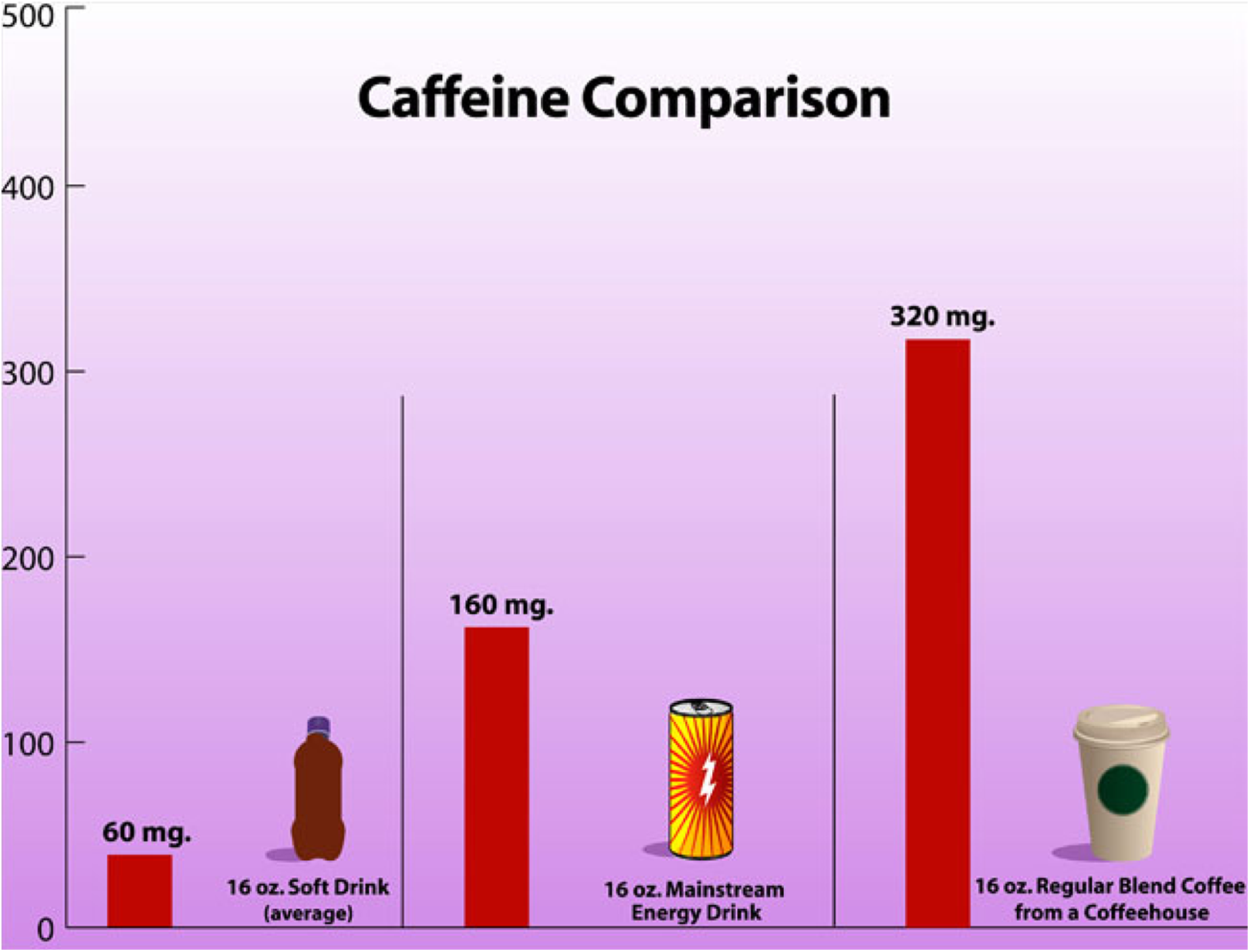
Reproduced with permission courtesy of the American Beverage Association.
Safety Properties
A key component of the regulatory process for bringing functional foods to market is the science-based evaluation of safety. 18 This is particularly important for the identification and evaluation of potential undesirable foods. With the understanding that nutrients often function as regulators of gene transcription to cause a metabolic effect, identification of potential bioactive compounds and their possible health benefits has necessitated the rapidly advancing research area of nutrigenomics, nutritranscriptomics, and nutriproteomics for the determination of the molecular processes involved. These processes comprehensively result in cellular and functional responses unique to and the object of design for the food and nutrient class therein. For undesirable foods, molecular effects can herald adverse health outcomes.
Cellular responses
In similar purpose used for chemicals and pharmaceuticals, application of genomic and transcriptomic methods can be used to analyze the molecular expression effected by functional foods and beverages. 85,86 Classical oligonucleotide sequencing and microarray (nutrigenomics), sodium dodecyl sulfate–polyacylamide gel electrophoresis, as well as matrix-assisted laser desorption/ionization time-of-flight and in vitro human model cell systems (nutriproteomics) methods have been useful in identifying gene expression, tissue markers, and responses, as well as targets for new bioactive candidates. These tests have been particularly useful in cataloguing the effect of probiotics on gut development and flora and in the application of personalized nutrition. 87 Among many others like it, 18 ArrayTrack, a microarray database, data analysis and interpretation tool is maintained and available at: http://www.fda.gov/ScienceResearch/BioinformaticsTools/Arraytrack/. Look for more guidance on the application of genomics to nutrition and its potential ethical/legal implications for the boundaries between food and drugs, obligations for individualized nutrition, and predictors of food allergenicity, sensitization, and irritation.
Other potential areas of utility for in vitro methods lie in the development of toxicologic processes associated with cytotoxicity and biomarker identification and validation. Cytotoxicity screens are available for direct cell contact and growth inhibition. 88 Since 2000, the Interagency Center for the Evaluation of Alternative Toxicological Methods (NICEATM) of the National Toxicology Program has supported the Interagency Coordinating Committee on the Validation of Alternative Methods (ICCVAM) to develop and validate methods which reduce, refine, and replace animal testing, by accepting a number of assays to satisfy regulatory needs for general cellular responses in vitro as well as a number of specific and ex vivo methods for safety evaluation of foods and chemicals (http://www.alttox.org/ttrc/validation-ra/validated-ra-methods.html). In slightly earlier efforts by the EU in 1991, the European Commission has been involved in activities targeted to the validation of alternative approaches to animal testing by the launch of European Centre for the Validation of Alternative Methods (ECVAM), hosted by the Joint Research Centre, Institute for Health and Consumer Protection (IHCP; http://ihcp.jrc.ec.europa.eu/our_labs/eurl-ecvam). 89 Coordinated efforts in Japan have since followed through the institution of the Japanese Center for the Validation of Alternative Methods (JaCVAM) in the National Institute of Health Sciences (NIHS). 90 Similar centers now exist in Korea and China. Although many in vitro methods are continually being developed, only the more prevalent, validated methods are detailed here. Among them are generalized methods with assay kits available for cell viability and apoptosis/necrosis, adhesion and migration, angiogenesis, transformation, and differentiation to name the more common. So prevalent are tests for acute systemic toxicity that ICCVAM has recommended that in vitro cytotoxicity test methods be considered as part of a weight-of-evidence approach before using animals.
Perhaps the most common, easy, and traditional methods of cell viability are those screening techniques that generate a colorimetric or fluorometric response based on a measurement of biomarker activity associated with viable cell number. 91 Specifically, these include the positively charged (3-(4, 5 dimethylthiozol-2-yl)-2, 5-diphenyltetrazolium bromide tetrazolim reduction [MTT]) assay for viable eukaryotic cells. Viable cells convert the pale yellow tetrazolim MTT into a time-dependent purple formazan crystal metabolite visible at 570 nm, undistinguishable as the cells become nonviable. Similarly, assessments of cell death have been explored through microscopical, fluorescence, colorimetric and caspase, and annexin V/propidium iodide activity assays. 92 Fluorescence- and flow cytometry-based assays for cell adhesion and migration offer efficient, accurate, and affordable screening tools with higher sensitivity and the ability of automation. 93 Interactions between cells and their extracellular matrix are measured in a variety of cell types for their bottom substrate-bound (versus top nonbound) capacity with fluorometry specifically devised to allow for the detection of the emitted fluorescence from 2 measurement directions.
Of the more specialized tests for cytotoxicity, safety testing for photosensitivity assesses the potential for foods, particularly herbal-derived botanicals, to produce dermal reactions following sunlight exposure in susceptible individuals. Another approach is a screen for the determination of light absorption in the UV-A/UV-B/visible spectrum, in vitro. Among the most implicated compounds are St. John’s wart, licorice (bergapten), common spices such as saffron and ginger (curcumin), fennel and parsely (psoralen), and quinine. 94 Ingestion of such products may cause dermatologic reactions in the form of redness, brown spots, or burns. In the only approved phototoxicity test, the 3T3 NRU Photoxicity Test, 24 the immortalized mouse fibroblast cell line, BALB/c 3T3, is used to compare the cytotoxicity of a chemical when tested in the presence and in the absence of exposure to a noncytotoxic dose of simulated solar light. Concentration-dependent decreases in the uptake of neutral red dye 24 hours following exposure measured spectrophotometrically between viable and necrotic cells are an easy quantifiable indicator of photocytotoxicity. As with most in vitro tests, limitations of this assay include variability in response and data interpretation.
Among the more important uses of in vitro methodologies is as a screen for the determination and prediction of xenobiotic-induced cell proliferation. Cancer-related end points for the detection of migration/invasion in tumor models, epithelial, and endothelial (angiogenesis) cells include high-imaging cytoskeletal and membrane flow models and identification of markers such as F-actin, β-tubulin, β-catenin, Tau, Akt/PI3k, and integrin. 95 Cell transformation assays (CTAs) such as the Syrian Hamster Embryo (SHE) performed at pH 6.7, SHE CTA performed at pH 7.0, and BALB/c 3T3 assays through the activation of oncogenes or the inactivation of tumor suppressor genes via stepwise morphologic and functional cytologic changes characteristic of departures from regulatory control are now used as an adjunct prescreen to the 2-year rodent carcinogenicity studies and have been extensively reviewed in the OECD 96 Environmental Health and Safety Publications, Series on Testing and Assessment, No. 31. Reinforcing comments received, ECVAM recommends the use of cell line-derived BALB CTA instead of primary cells derived from SHE as they are more in keeping with the reduction, refinement, and replacement goal of good animal welfare. 97 Genotoxicity and in silico assays are the most commonly used in vitro test systems to predict carcinogenicity via direct or indirect chemical changes to the structure or number of genes. 98 Presently, 8 in vitro genotoxicity tests have been validated including the most commonly used of the mutagenicity tests: the bacterial reverse mutation (Ames) test and the Escherichia coli reverse assay and of the clastogenicity tests: the mammalian chromosome aberration, the mammalian cell gene mutation, and the mammalian cell micronucleus tests. The sister chromatid exchange, unscheduled DNA synthesis tests, and Saccharomyces cerevisiae mitotic recombination assay are less common, and the comet assay to date is prevalidated. Based on the ability to correctly identify carcinogens (sensitivity), noncarcinogens (specificity), and the proportion of agreement between the 2 tests (concordance), predictivity was enhanced using a tiered approach of combination genotoxicity studies. The Ames test remains the industry standard for preliminary testing offering the quickest, least expensive screen. Despite its low sensitivity, it has the best concordance to carcinogens (specificity). By utilizing the Ames and mammalian micronucleus tests in combination for the highest sensitivity and concordance, most relevant carcinogens would be detected, 99 and concurrently a tiered approach has been recommended by the EFSA 17 using the in vitro Ames for mutagenicity and the in vitro mammalian micronucleus for clastogenicity, with a confirmatory in vivo mammalian micronucleus upon negativity of the in vitro screens. More recently, in vitro transformation assays, now being considered by regulatory agencies (https://eurl-ecvam.jrc.ec.europa.eu/eurl-ecvam-recommendations), have been used, along with the traditional Ames, micronucleus, and lymphoma in vitro assays, to coordinate an integrated, alternative assessment in high-sensitivity cancer prediction. 100,101
In coordinated efforts, the Toxicology of the 21st Century (Tox21) Program, a federal program composed of the NTP/NIEHS, the EPA Center for Computational Toxicology, the National Human Genome Research Institute/NIH Chemical Genomic Center, and the FDA, is collaborating to integrate the known data for thousands of chemicals, including those in food, to predict the impact on human and environmental health. The effort is designed to move toward a mechanism-based approach to toxicology and away from traditional experimental animal-based testing. 102 The full potential identification of biomarkers used to demonstrate the exposure to and efficacy/adversity of bioactive food compounds has yet to be realized. 18
Functional responses
The identification of molecular biomarkers may herald the development of a clinical toxicologic response. Markers for downstream oxidative stress through reactive oxygen species (superoxide dismutase, glutathione peroxidase, glutathione, catalase, and others) increase in heat shock proteins, stress-activated protein kinases and metallothioneins, changes in phase I and II metabolic enzymes, induction of cell proliferation, and changes in cell membrane permeability, and are all considered early indication of cellular toxicity. 9 Cell culture, high-performance liquid chromatography, fluorescent methods, monoclonal antibody, immunoassay, enzyme-linked immunosorbent assay (ELISA), tissue to blood partition coefficients, and other traditional in vitro techniques have been used to detect the production of toxins, altered regulators, calcium, antibodies, and others specific to the food in question.
Although many biomarkers have been identified for which functional assays exist in the determinant of safety, the most prevalent and/or validated assays are those for reactive oxygen species, immunologic/pyrogenicity, cell proliferation through endocrine disruption, and phototoxicity. Primarily generated as byproducts during mitochondrial electron transport, highly reactive oxygen species are known to cause deleterious effects on gene expression, cell signaling cascades, protein crosslinking, and others. Therefore, the ability to measure these molecules accurately and in an efficient, inexpensive manner is a useful early indicator of toxicity. Available as kits, ongoing improvements in fluorescent technologies include a number of probes, such as the cell permanent reagent (2′,7′-dichlorofluorescin diacetate), a fluorogenic dye, to trap or otherwise react with singlet oxygen, hydroxyl radicals, peroxides, or superoxides from preparations of serum, plasma, urine, cell lysates, or cell culture supernatant fractions for the measure of oxidative stress. The optical or electron spin properties of the resulting products, detectable by fluorescence spectroscopy at a maximum excitation and emission spectra of 495 to 529 nm, can be used as a measure of the presence or quantity of the reactive oxygen species and, which in certain cases, can identify the kinetics and location of their formation. 103 Conversely, some cosmeceutical herbs may be screened for their antioxidant capacity 104 –107 as determined by their ability to reduce aging caused by oxidative stress.
Pyrogenic contaminants for foods are detectable through 5 ESAC (ECVAM Scientific Advisory Committee) validated in vitro methods. Methodology includes the sample being incubated with fresh or cryopreserved human whole blood or monocytoid cell line, and upon the interaction of fever-inducing compounds such as lipoteichoic acid, lipopeptides, and peptideglycans from bacterial endotoxins, exotoxins, viruses, and fungal components and their specific receptors on the monocytoid cells, the proinflammatory cytokine interleukin 1β or interleukin 6β is detected in the culture medium by ELISA. 108,109 Consideration of a sixth in vitro test, the limulus amebocyte lysate test in place of the in vivo rabbit pyrogenicity test has met with criticism methodically and environmentally. 110
Receptor-mediated cell proliferation events acting as endocrine disruptors can be induced by some chemicals and by steroidal hormones present in foods either naturally occurring or as a result of manufacturing processes and/or leaching from packaging. Phytochemicals/phytoestrogens containing flavones apigenin and quercitin, the isoflavones, genistein, biochanin A, and daidzein, and others such as lignans, coumestrol, and ursolic acid potentially included in pesticides, herbicides, cereals, fruits, berries, flaxseeds, alfalfa, and various beans and legumes including soybeans and mung bean as well as plasticizers such as phthalates found in packaging have the capacity to promote effects similar to those of estrogens, androgens, and thyroid hormones. These products have the potential to disrupt reproductive processes and lead to uncontrolled cell proliferation (cancer). A battery of 4 in vitro and 2 ex vivo tests are approved for endocrine activity screening: (1) The aromatase (human recombinant) assay 111 is a screening assay intended to identify steroidal active compounds by inhibiting the catalytic activity of cytochrome P450 recombinant microsomal aromatase, the enzyme responsible for the conversion of androgens to estrogens; (2) the stably transfected transactivation assay uses transfected hERα-HeLa-9903 cell lines as well as the newly accepted BG1Luc ER TA test method for estrogen agonists, and antagonists is dependent on the production of a reporter gene product to determine whether a chemical/food acts as a nuclear endocrine receptor ligand to induce transcriptional activation 43,112,113 ; (3) the H295R steroidogenesis assay using the human adrenocortical carcinoma cell line is intended to identify compounds affecting the steroidogenic pathway beginning with the sequence of reactions occurring after the gonadotropin hormone receptors (follicle stimulating hormone receptor and luteinizing hormone receptor) through the production of testosterone and estradiol/estrone 114 ; (4) and Androgen and Estrogen receptor binding assays in either rat prostate or uterine cytosol to determine the ability of a compound to compete with the tritiated 3H ligand, R-1881 (synthetic androgen) and 17β-estradiol, respectively. 115,116
The greater public awareness of nutritional food choices has resulted in greater markets and expanding global suppliers and distribution systems. The FDA under FSMA is responsible for ensuring the safety of the food supply from third-party providers outside the United States. The burgeoning growth of the fish and seafood industry exemplifies the greatest current challenges at the intersection of safety and regulation. With 86% of its products imported, half of which is wild caught and most uninspected, the seafood industry is particularly sensitive to large-scale adverse outcomes from marine toxins, metals, and residues with the capacity to cause severe neurologic, respiratory, and gastrointestinal effects. 117 Currently, the FDA mandates a program for the research, inspection, compliance, enforcement, outreach, and development of regulations with publication of the Fish and Fisheries Products Hazards and Controls Guidance, which includes policies on the hazards that affect fish and fishery products (http://www.fda.gov/Food/GuidanceRegulation/GuidanceDocumentsRegulatoryInformation/Seafood/default.htm). 118
Organ/tissue models
Advances in molecular and cell biology have led to a number of reliable methods available for acute assessment of target organ toxicity using both in vitro and ex vivo constructs. Briefly, 2 constructs available for in vitro culture are: 2D or 3D primary cell lines which are freshly isolated from a given organ with a finite lifespan with the ability to assess cell-to-cell interactions and immortalized cell lines available from DNA transfection in primary cultures which may provide insight targeting specific cell type in the organ and/or its mode of cellular action. Increasingly complex, ex vivo, or whole organ or tissue slice/explant culture with or without perfused isolates, while moving closer to in vivo architecture offering cell communication and intraorgan interaction, are short term and difficult to control. More recent constructs involve differentiation of stem cells into various organ-like archetypes complete with fluid-flow microenvironments (http://www.alttox.org/spotlight/085.html). 119 –121
Similarly in vitro models bioengineered from human stem cells into 3D constructs have the capacity to replace animal testing with more biologically relevant safety testing for all tissue types than previously. Current regenerative research into therapies for neurologic, metabolic, lung, bone, hematologic diseases, transplantation, and others are being developed. Rapid advances are being made in this area, and the reader is directed to http://www.alttox.org/spotlight/085.html for current updated advances in methodology and applications. Most recently, state-of-the-art advanced techniques such as “cells/organ/body-on-a-chip” and stem cell models are under development in various laboratories. Advances in microtissue engineering and microfluidics interconnection technologies are enabling 3D laboratory-engineered microorgans such as heart, lung, liver, and blood vessels that mimic normal organ functions for the assessment of interactions between drugs and chemicals and their metabolites on organ function. Three-dimensional printer constructs to replicate human cells in hydrogel-based scaffolds (bioprinting) with the goal of predicting metabolism, a critical component of in vitro risk assessment, 122,123 are now being actively created in the EU and at sponsored academic institutions in the United States (http://www.wakehealth.edu/WFIRM/). Reproduction of flat organs is now possible with the more challenging solid organs, not far behind. 124 The most recent, exciting, and potentially controversial advances originate from various human stem cell lines including those induced from adult somatic stem cell lines cells through the introduction of specific transcription factors, and also from embryonic stem cells, to facilitate individual-based therapies. 125,126
Historically, some of the first in vitro organ/tissue testing arose from the field of developmental toxicology. The mouse embryonic stem cell test first developed by Spielmann et al, 127 is one of the 3 ECVAM-validated alternative methods to screen for cell differentiation and embryotoxicity. Using permanent cell line 3T3 fibroblasts to represent adult tissue and embryonic stem cells to represent embryonic tissue, differences in sensitivity are classically used to assess end points of inhibition of differentiation of murine stem cells into beating cardiomyocytes, cytotoxic effects on murine stem cells, and cytotoxic effects on murine 3T3 fibroblasts. The method continues to be refined 8,128 –130 and when combined with other cell-based assays affords enhanced predictive value for differentiation and cytotoxicity. 131,132 Two other validated methods for embryotoxicity include the ex vivo micromass test and the postimplantation rat WEC based on undifferentiated chick limb bud mesenchymal cells to form foci of differentiated chondrocytes 133 and early, 1 to 5 somite, rat embryo culture to progress (48-hour) into organogenesis, 134 respectively. To date, the only other embryotoxicity testing widely used, the 96-hour whole frog embryo teratogenesis Assay: Xenopus, long used in compound screening for determining end points in mortality, growth, and malformation, 135 particularly in aquatic environments, remains unvalidated.
Perhaps, the greatest understanding and the use of in vitro testing in the qualification of safety for foods and chemicals is in the area of dermal toxicology. Uses of dermal screening for food ingestion and sensitivity reactions, handling, preparation, and manufacturing/packaging, as well as treatments in the form of cosmeceuticals all benefit from the validated dermal methods available and, in the case of cosmetics, are a mandated replacement for in vivo testing in the EU. 136 –139 The approved methods for dermal absorption/penetration, skin corrosion, and irritation (skin irritation test [STI]) and phototoxicity mentioned earlier are listed in Table 1 and may provide indication of risk or the need for further evaluation. Inflammation is determined in 3D human skin models in the skin irritation colorimetric thiazolyl blue (MTT) or neutral red assays. 140 Corrosion models are multilayered reconstructed human epidermis from keratinocytes on a collagen matrix. In vitro absorption/penetration models in place of the human patch test and in vivo rabbit STI use any number of human or animal viable or nonviable models (pig, rabbit, and rodent) to assess initial skin penetration, depth of permeation, and vascular resorption into the skin. 141,142 A general online review of the more traditional methods is available at: http://www.alttox.org/ttrc/toxicity-tests/skin-irritation/way-forward/kandarova/, and in a recent review by Basketter et al. 143
Approved In Vitro Methods of Eye and Skin Irritation.a
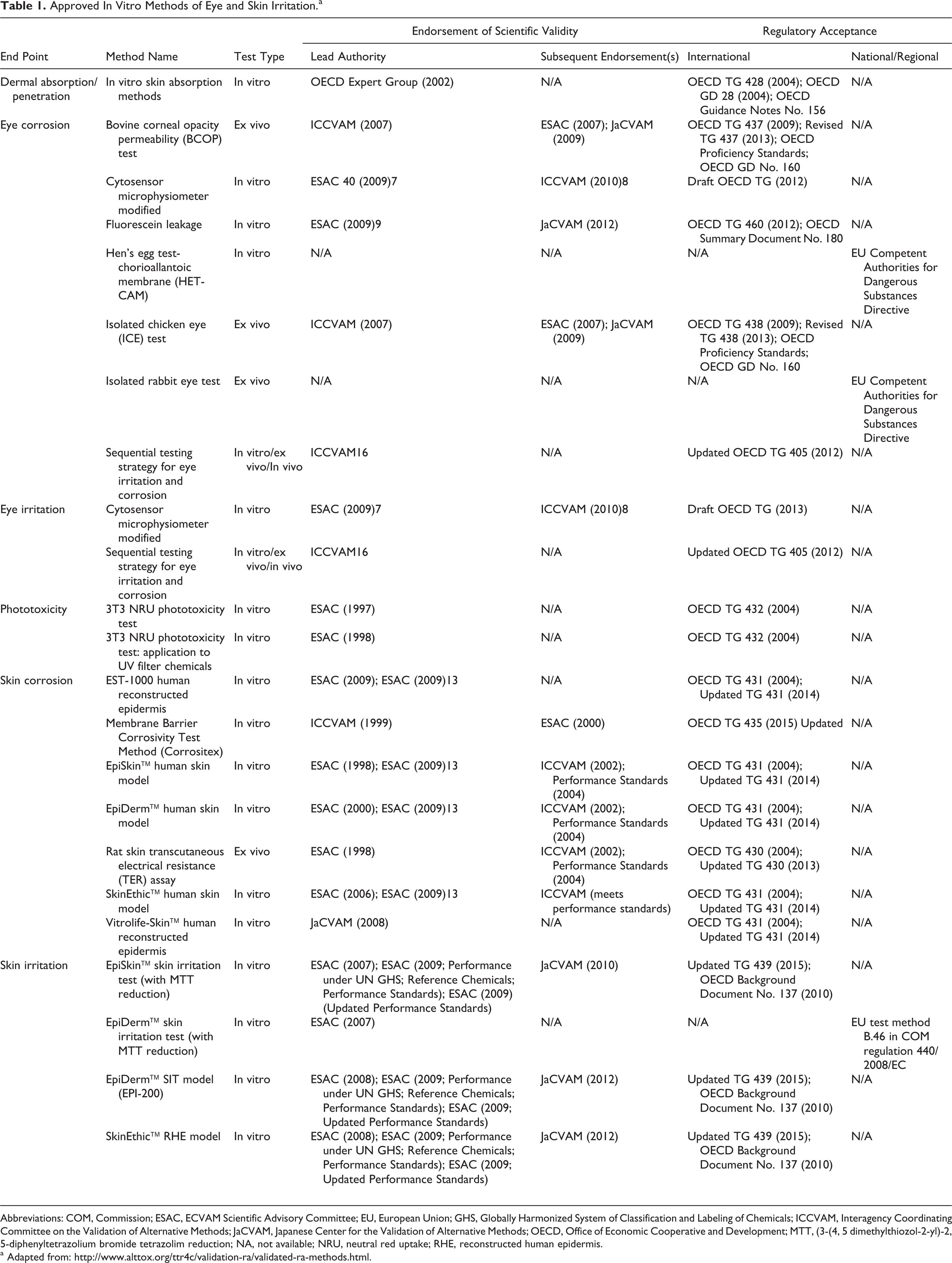
Abbreviations: COM, Commission; ESAC, ECVAM Scientific Advisory Committee; EU, European Union; GHS, Globally Harmonized System of Classification and Labeling of Chemicals; ICCVAM, Interagency Coordinating Committee on the Validation of Alternative Methods; JaCVAM, Japanese Center for the Validation of Alternative Methods; OECD, Office of Economic Cooperative and Development; MTT, (3-(4, 5 dimethylthiozol-2-yl)-2, 5-diphenyltetrazolium bromide tetrazolim reduction; NA, not available; NRU, neutral red uptake; RHE, reconstructed human epidermis.
a Adapted from: http://www.alttox.org/ttr4c/validation-ra/validated-ra-methods.html.
Of the more specialized in vitro tests is the ocular irritation/corrosion battery intended to replace the rabbit Draize test 144 and used extensively in the food, chemical, and cosmetic industries. In a tiered testing strategy, cultures of human corneal epithelial cells or intact Isolated Chick Eye test, Isolated Rabbit Eye test, or bovine corneal opacity and permeability (BCOP) eyes and end points of cytotoxicity, irritation, inflammation and swelling, opacity, and repair are determined. Commonly used tests for irritation include the traditional human corneal model wherein the avascularity of the cornea lends itself to straightforward determination—the greater the irritant, the deeper the injury—and for inflammation using the hen egg chorioallantoic membrane. In this test, a compound is introduced to the membrane of a 10- to 14-day-old chick and monitored periodically afterward for signs of inflammation such as vascular hemorrhage, swelling, and necrosis. A newly adopted test uses a confluent monolayer of Madin-Darby canine kidney cells situated between 2 chambers testing fluorescein (FL) leakage for permeability comparison with control. The concentration of test substance that causes 20% FL (FL20, in mg/mL) is calculated against a predetermined cutoff value. In other tests, sensitive instrumentation such as the silicon cytosensor microphysiometer is capable of measuring the rate of increasing acidification (decreasing pH) of the cell culture (L929 mouse fibroblasts) medium, as measure of cell viability decreases for water soluble compounds. 145,146
Although currently no ICCVAM-approved testing as a replacement for repeated dose, long-term in vivo testing exists, many experimental prototype in vitro models have been reported for various organs, and particularly for liver and kidney, the most common organs for metabolic activity and potential toxicity (see http://www.alttox.org/ttrc/toxicity-tests/repeated-dose/forexcellentreviews). In the liver, both primary and immortalized hepatocytes as well as microsomes have been used, and most recently ex vivo implants with engineered biomaterials, in an effort to mimic the natural state. 147,148 Biomarkers for liver toxicity include many serum clinical chemistry and protein changes, cytokines and interleukins, keratins for cell stress, glutathione depletion, bile acid metabolism, microRNA’s for altered expression patterns, 149 and cytochrome P450 alterations 150,151 among others. For its primary role in transport and urine concentration, human proximal tubular cells are those most often used in in vitro kidney toxicity, 152 and, like other organs, previously mentioned, techniques of primary and immortalized animal cells, subcellular fractions, tissue slices, and perfusion experimental models exist. Preclinical biomarkers for nephrotoxicity include various downstream proteins and metabolites from signaling pathways and DNA response. 153,154 For these as well as other organ systems, in vitro tissue/organ experimental models are continually being refined and developed, and although acute assays are clearly more advanced in their usage, new technologies are beginning to allow the development of longer-term alternative testing for foods and chemicals.
Toxicokinetic modelling and metabolism
In vitro techniques are well suited to the identification and characterization of physiologic processes of absorption, distribution, metabolism, and excretion. These methods consist of physiologically based toxicokinetic models mimicking the in vivo condition and comprise compartmentalization through cell membranes (CACO-2) and tissue–blood partitioning for absorption; identification of metabolites and their biotransformation and microbial effects (gut) for metabolism; clearance (enzymatic activity), kinetic, and saturability (active site models) for distribution and elimination to name just a few. 9 These techniques combined with the nutrigenic and nutriproteomic approaches can enhance the relevance of food hazard identification and increase their predictive power.
Finally, as our knowledge of food and beverage functionality, efficacy, and bioavailability progresses, growing databases have the potential to catalogue and predict accurate quantitative structure–function relationships and quantitative structure–activity relationships for the design and production of safe, quality foods. 155,156
Sensory Properties
Today’s consumers are becoming very discerning and knowledgeable about their food and are more demanding than ever for safe food of good value and high sensory quality. The importance of sensory analysis will often contribute significantly to product success in the market. In vitro assessment of food and drink sensory quality is becoming of greater use where in vivo assessment is not practical and as a complement to information provided by sensory panels. Similarly, altered appearances, textures, colors, flavors, and aromas occurring naturally from inadequate/prolonged storage or as a result of processing and manufacture may cause undesirable effects. An excellent detailed guide to the principles and practices of sensory evaluation and instrumental assessment, beyond the scope of the present review, is provided by Lawless and Heymann 157 and Kilcast 158 exploring the analysis of flavor, texture, viscosity, and appearance of produce, meats, poultry and fish, baked goods, crisp products, dairy products, and beverages (wine, beer, and juices) in human food preferences and consumption.
Physical and Chemical Characteristics
Appearance and texture
Although largely determined in vivo by sensory panels, the appearance of foods, fundamentally tied to the texture of solid foods, can ultimately be determined by and broken down to its cellular structure. The appeal of beverages also depends upon their density and mouth feel. Relating the physical properties of a food or beverage microstructure to its overall acceptability is now being assessed to greater sensitivity (below 100 µm) through microscopy, magnetic resonance imaging, computer vision, porosimetry, infrared spectroscopy, and X-ray tomography/scattering mechanical techniques, principal component analysis, as well as the traditional usages of rheology for food viscosity for a number of food products. 159 –164 This is in keeping with the development of nanomaterials and their increasingly common use in food design and food packaging. 165 –167 It has been clear for some time that a certain and complex relationship exists between food structure and digestibility for carbohydrates, 168,169 determinants for glycemic, moisture, and hydrolytic properties; for proteins 170,171 in the form of secondary amino acid structure and potential determinants of allergenicity; and probiotics/prebiotics 62 for immunity, most prominently. There are much data available on the physical properties of foods, but the relationship to microstructure and overall food appeal is less well known. Furthermore, the physiologic bioavailability of bioactive ingredients in functional foods has the potential to contribute significantly to the health and well-being of the individual. 172
Recent research has focused on the relationship of chewing sounds to crunchiness and crispness of foods. In the new field of neurogastronomy, Charles Spence at the University of Oxford has used audio recording, human psychophysics, functional magnetic resonance imaging, electroencephalography, and transcranial magnetic stimulation to test the influence of sound on consumers’ perceptions of foods in vivo. 173,174 Acoustic energy analyzers with sensitive electronics, filters, and microphones are now being introduced into existing texture analyzers to generate sound profiles for the evaluation of new formulations and processes, packaging, and shelf-life. Tribometers, instruments used to measure the lubricating ability (moisture content) of food materials to reduce friction (against the tongue), are being used to generate an acoustic signal, and acoustic tribology technology is a recent award winner in the Institute of Food Technologists 2013 Food Expo Innovation competition for the Nizo Corporation.
Flavors and colorants
Flavor, either natural or synthetic, remains the single most important factor in consumer food choice and appeal, followed closely by color. In the United States, the Expert Panel of the FEMA evaluates new flavorings for GRAS determination under the authority of the 1958 Federal Food, Drug and Cosmetics Act. 175 –178 Interestingly, like texture and appearance, the structure of the food matrix also has an important role in flavor release. Further, food aroma and the ability to isolate aromas are closely tied to flavor perception and food appeal and marketability. The widespread use of electronic noses and tongues, and gas chromatography-olfactometry often combined with mass spectroscopy are designed to mimic the mammalian nose to integrate and recognize patterns of preference for the design of foodstuffs. 179,180 The sensitivity of these systems may have the ability to reveal the perception of taste from thermal sensors alone (chemesthesis), a quality some sensitive individuals possess. 181 Some flavoring manufacturers have adapted high-throughput screening techniques to identify molecules that interact with and enhance taste cells, often with the goal of developing fresh natural combinations of existing tastes and flavors. Results may include “tricking” the tongue through the use of nearby chemoreceptors by changing the size and shape of salt crystals or triggering capsaicin receptors from spicy pepper flavoring in close proximity, for example. 182
Color in food has traditionally been measured using computer vision digital imaging models. Quantitative capture of the pixels on the surface of food has the advantage of simplicity and low cost, although lighting, angle of observation, and equipment standardization may be disadvantages. 183 More sensitive methods may include the use of spectrophotometers and colorimeters to provide accurate quantitative measures. Color has the added significance to carry with it the potential to impart a preconceived flavor, particularly for beverages: yellow for tart lemon, red/blue for berry, and green for lime. When the 2 are incongruous, flavor identity is often compromised; a brown color is often associated with poor quality food. Further, intensity of color may influence taste perception with strong, deep colors as more appealing than lighter, weak ones. 184,185
Any substance added to impart color to the food is a color additive. Under the Federal Food, Drug, and Cosmetic Act (chapter VII, section 721), color additives, except for coal tar hair dyes, are subject to FDA approval before they may be used in food, drugs, or cosmetics or in medical devices that come in contact with the bodies of people or animals for a significant period of time. Under 21 CFR 70.3(g), a material that otherwise meets the definition of color additive can be exempt from that definition on the basis that it is used or intended to be used solely for a purpose or purposes other than coloring, as long as the material is used in a way that any color imparted is clearly unimportant insofar as the appearance, value, marketability, or consumer acceptability is concerned. Any color additive in food is deemed unsafe unless its use is either permitted by regulation or exempt by regulation. Unlike the definition for food additive, there is no GRAS exemption for color additives. Any food that contains an unsafe color additive is adulterated under section 402(c) of the FFDCA.
Food processing, preservation, and packaging
Processing and packaging of functional food and beverage products have a significant capacity to influence its sensory appeal and, depending on the method and food type, may cause unwelcome changes in taste, aroma, and color by way of changes to its microstructure through leachability. 171 Ideally, food processing and packaging strives to preserve the natural ingredients in raw materials to the greatest extent possible while maintaining an inert barrier. Processing has traditionally included thermal and nonthermal treatments used to prepare, enhance (Maillard reaction), or preserve (sterilize) solid and liquid food products. These treatments often resulted in a loss of ingredient bioactivity. Newer methods of processing technologies, such as microencapsulation, have proven useful in minimizing microstructural modifications. Microencapsulation provides the advantage of protection of core ingredients from degradation or reaction while offering the option of controlled release. 171,186
In 1997, the Food and Drug Administration Modernization Act (FDAMA) amended the Federal Food, Drug and Cosmetic (FD&C) Act to include a notification process for food contact substances (FCSs). A FCS is “any substance intended for use as a component of materials used in manufacturing, packing, packaging, transporting, or holding food if such use is not intended to have a technical effect in such food” (FDA, 1997; http://www.fda.gov/Food/IngredientsPackagingLabeling/PackagingFCS/ucm064161.htm). Examples include polymers (plastic packaging materials), pigments and antioxidants used in polymers, can coatings, adhesives, materials used during the manufacture of paper and paperboard, slimicides and biocides (antimicrobial agents), and sealants for lids and caps. 2
Increasingly, food packaging must meet longer shelf life and adhere to international safety and quality standards. An active barrier, including the addition of antimicrobial coatings in the form of bioactive packaging, will protect against product spoilage (water and water vapor; oil and grease; and oxygen and aroma) and influence visual appeal (clear vs opaque) at the same time, reflecting on brand image. Similarly, synergies in flavors have been used to maximize antimicrobial properties. 186 Most recently, the use of mild heat stress combined with a low concentration of preservatives provides a safe, high quality food. These techniques include nonthermal processing, high-pressure processing, and pulsed electric field active packaging. The growing use of nanotechnology in food packaging has resulted in new safety, environmental and regulatory guidance in the United States and Europe. 16,40,108,187,188
Targeted populations
Food preferences for taste, fortification, and digestibility are specifically targeted to include the sensitive populations of children, medical disorders, and the elderly individuals. Textured (soft) and taste-specific foods are used in weanlings and the elderly population, whereas satiety-enhancing food products are used in obese populations. 189 –192 Further, the use of prebiotics and probiotics and the numerous attempts to mimic the composition in breastmilk in infancy have the capability to imprint the intestinal flora in childhood and later life. 193 In addition, cultural preferences play a role in food selection in all ages 194 as well as special needs populations of women of childbearing age, adolescents, athletes, and military personnel. 18
Cosmeceuticals and nutricosmetics
Growth of the natural skin care industry has progressed as the fastest of the personal care sector for nearly 10 years. The appearance of the skin is influenced by many factors (genetic, environmental, and hormonal) including nutrition. These products are governed and are the potential target of alteration by the same physic-sensory properties, marketing strategies and assessments as traditional functional foods. Herbals may be screened for their antioxidant capacity, 103 –106 whereas traditional in vitro testing for skin irritation, sensitization, dermal photoirritation/sensitization, mutagenicity/genotoxicity, skin penetration/permeation, and phototoxicity testing, most often using epidermal skin models, is generally recommended. 136,138,195
Current and Future Considerations
Numerous in vitro and in silico methods have been developed covering a wide body of safety considerations, some even validated by the National Institute of Environmental Health Sciences, the ECVAM, and several other national validation bodies. Few, however, have been adapted outside screening programs within selected companies. Although regulatory bodies such as the US FDA have been conservative in their approach toward encouraging industry to include such methods as part of a regulatory submission as they become more widely used and scientists are trained in the use of these methods, more of these approaches will begin to be adopted by regulatory bodies around the world.
The inherent and historic variability in the quality of food is and always has been dependent on natural conditions of the environment and compositional ingredients. However, increasingly, our food quality is dependent and even enhanced by controllable factors associated with technological advancements in growth, manufacture, and processing. Continued demand for quality and improvement in storage, transportation, distribution, and traceability of foods falls into this category and is directly related to increased regulatory surveillance and consumer lifestyle and awareness. Large and variable time and temperature storage capacity as well as distribution efficiency remain an ongoing challenge, particularly for fresh foods. One newer trend with important potential in the way nutrients are delivered is the food truck, the fastest growing trend in the dining industry. 196 These mobile restaurants now have the capacity to quickly deliver fresh, economic, creative gourmet meals in an interactive community setting that allow greater accessibility to quality foods for much of the developed and developing world population. Similarly, expanding services such as PeaPod and AmazonFresh, which deliver groceries from same-day online, and subscription ordering have the capacity to influence food production, preference, buying, and quality choices for a growing population for years to come.
The food industry is unique in that among all other industries, it is of primary consumer need, affecting all peoples. Global cooperation of the assessment and quality assurance of the nutritional, sensory, and safety properties of this vital resource is and will always be of paramount importance. Hence, as technology and its sensitivity continues to develop, so too will the need be for oversight, regulation, and testing. Generally speaking, we are only beginning to appreciate not only the effects of various nutrients on health but also the ability to engineer them toward advantageous health.
Footnotes
Author Contributions
P. A. Marone and A. W. Hayes contributed to conception and design and contributed to acquisition, analysis, and interpretation. V. L. Birkenbach contributed to conception and design and contributed to acquisition and analysis. All authors drafted the manuscript, critically revised the manuscript, gave final approval, and agree to be accountable for all aspects of work ensuring integrity and accuracy.
Declaration of Conflicting Interests
The author(s) declared no potential conflicts of interest with respect to the research, authorship, and/or publication of this article.
Funding
The author(s) received no financial support for the research, authorship, and/or publication of this article.