




Abstract
The Cosmetic Ingredient Review Expert Panel (Panel) reviewed the safety of 13 Panax spp root-derived ingredients as used in cosmetics. Panax “spp” indicates that multiple species within the genus are used in cosmetics, but not all species within that genus. Four species are being considered in this safety assessment. These ingredients function mostly as skin-conditioning agents—miscellaneous, fragrance ingredients, skin-conditioning agents—humectant, skin-conditioning agents—emollient, and cosmetic astringents. The Panel reviewed available data related to these ingredients and addressed the issue of pulegone, a constituent of these ingredients and other ingredients, such as peppermint oil. The Panel concluded that these Panax spp root-derived ingredients are safe in the practices of use and concentration as given in this safety assessment.
Introduction
Panax ginseng C. A. Meyer of the Araliaceae family is also called Chinese ginseng, Manchurian ginseng, or Korean ginseng. 1 It is a perennial herb indigenous to the mountainous forests of North China, Manchuria, and Korea. There are 4 other closely related plants of the Araliaceae family: Panax quinquefolium L. (American ginseng), Panax japonicus C. A. Meyer (chikusetsu ninjin or Japanese ginseng), and Panax pseudoginseng Wall (notoginseng, San-ch’i ginseng, and Himalayan ginseng). For the sake of brevity, Panax spp is used to designate the multiple species being considered. Panax “spp” indicates multiple species within the genus are used in cosmetics but not all species within that genus. Also, the convention for naming cosmetic ingredients is for the full genus and species name that is not italicized; therefore, when referring to an actual ingredient, this convention will be followed. when referring to the plants, the biological conventions of italicizing the plant name and abbreviating the genus name after the first mention will be followed.
Several ginseng-derived materials that are used in cosmetics involve root-derived ingredients, as distinct from ingredients derived from other plant parts. This safety assessment focuses on those ginseng ingredients that are derived from the root portion of the plant and does not address ginseng-derived ingredients that are prepared using other plant parts. The ingredients included in this report are: Panax ginseng root extract, hydrolyzed ginseng root, hydrolyzed ginseng root extract, hydrolyzed ginseng saponins, Panax ginseng root, Panax ginseng root powder, Panax ginseng root water, Panax ginseng root oil, Panax ginseng root protoplast, Panax japonicus root extract, Panax notoginseng root, Panax notoginseng root powder, and Panax quinquefolium root extract.
The cosmetic functions of these ingredients include skin-conditioning agents—miscellaneous, fragrance ingredients, skin-conditioning agents—humectant, skin-conditioning agents—emollient, and cosmetic astringents.
There is some confusion as to whether or not P ginseng, P quinquefolius, P japonicus, and P pseudoginseng are used in cosmetics under their own names, all as P ginseng, or interchangeably under the generic name “ginseng.” There is also speculation that there is no real difference among these plants in cosmetic application. 2 Because this is unresolved, each of these ingredients will be referred to specifically in this safety assessment.
To address the difficulty in assessing the properties and biological effects of ginseng, standardized extracts of both P ginseng C.A. Myer (G115) and P quinquefolium (CNT-2000) have been developed. 3 These extracts are standardized by the content of 6 saponins (Rb1, Re, Rc, Rd, Br2, and Rg1) and are used in several of the studies in this report. However, the composition of G115 and CNT-2000 is proprietary information and is not available. 4
Chemistry
Definitions
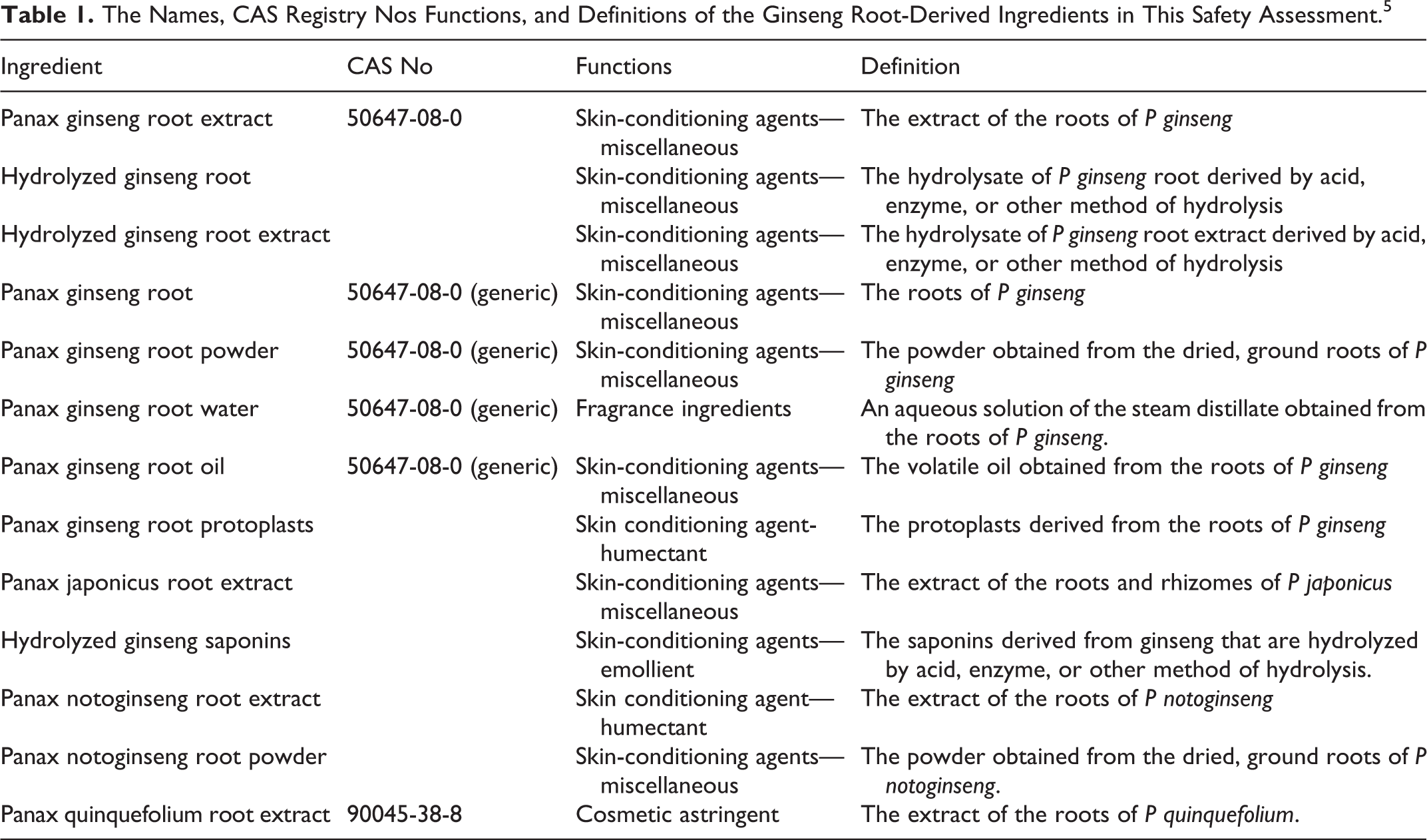
The names, CAS Registry Nos., functions, and definitions of the ingredients in this safety assessment are listed in Table 1. CAS No. 50647-08-0 is generically used for several of the ginseng root ingredients, but several ingredients have no CAS Nos.
The Names, CAS Registry Nos Functions, and Definitions of the Ginseng Root-Derived Ingredients in This Safety Assessment. 5
The International Cosmetic Ingredient Dictionary and Handbook (INCI) defines the terms extract, powder, oil, and water included in the names of these ingredients. 5
Extract
Extracts are identified by the source of the material extracted. Many extracts are supplied with the extracting solvent and/or other diluents. Where evidence of isolation is presented, a botanical ingredient may be named as a chemical entity.
In most cases, the INCI names for plant extracts prepared by solvent extraction are assigned labeling names that identify the name of the plant and the solvent and thus represent the material it is extracted from. However, when the extraction solvent is carbon dioxide, carbon dioxide is not included in the INCI name since it evaporates. Additionally, solvents are not identified in the INCI name in cases where the solvent has been driven off and is not present in the final preparation.
Powder
The term “powder” is applied to the names for botanical materials that have been mechanically ground, irrespective of particle size.
Oil
The term may be used to name nontriglycerides when it applies to ingredients that are commonly recognized (eg, Panax ginseng root oil). Essential oils are prepared by a steam distillation process that yields 2 distinct fractions, a water-insoluble fraction and a water-soluble fraction. The water-insoluble fraction contains the term oil in the name, for example, Panax ginseng root oil.
Water
The term refers to the water-soluble fraction from the steam distilled plant material and is identified by the term “water” in the INCI name. The term water that refers to the instance wherein the water has come in contact with the named material does not apply here, as it is different from an ingredient that is prepared by adding water to a material prepared by solvent extraction, and the ingredient would then be called a mixture, for example, water (and) juniperus communis fruit extract.
Method of Manufacture
In general, ginseng or ginseng root refers to the dried root of the P ginseng, P quinquefolius, P japonicus, and P pseudoginseng plants. The plants may be from wild or cultivated sources. 6 If the root is raw or dried, then it is referred to as “white” ginseng. If it has been steamed and dried before extraction or pulverizing, it is referred to as “red” ginseng because of a change in coloring. 7 If it is steamed and dried 9 times, the coloring darkens more and the product is referred to as “black ginseng.” 8,9
Root extract
The extraction is performed by percolation with aqueous alcohol solution (60%) and then concentration under vacuum to dryness or percolation with propylene glycol followed by concentration under vacuum. 10
The solvent for the root extract may be propylene glycol, propylene glycol + water, propylene glycol dicaprylate/dicaprate, butylene glycol, ethanol, ethanol + water, glycerin + water, caprylic/capric triglyceride, or helianthus annuus (sunflower) seed oil. 11 One supplier reports “aging” the P ginseng root in ethanol and butylene glycol (70% aqueous) for 6 weeks before filtering and evaporating the ethanol. This procedure results in a total of 4.61 ± 0.98 mg/g dry weight ginsenosides (2.75 ± 0.7 triol, 1.86 ± 0.3 diol, 0.73 ± 0.11 mg/g diol/triol).
One manufacturer reported that the extraction process consists of grinding the whole dried red ginseng and placing the ground ginseng root into an extraction solvent of ethanol (70%) for 12 hours at 20°C to 25°C. 12 The solvent is then filtered and evaporated to remove the ethanol to <1%. The product is then centrifuged, dried, and sterilized.
Saponins
Saponin glycosides are extractable from the ginseng roots with hot water or alcohols. 1 Saponins may be extracted from fresh raw P quinquefolium root using methanol (30%-100%) at room temperature, over heat, or under microwave conditions. Each of these processes gives a different ratio of saponins (ie, Re, Fb1, and mRb1) in the extract. 13 Variation in yield and type of yield also depends on sample size, extraction time, sample to solvent ratio, and solvent concentration.
One manufacturer reported the use of ultrahypothermia biotic extraction techniques to selectively yield ginsenosides. 14 However, there is no further explanation about this process. Temperature influences the extraction kinetics, solvent viscosities, extraction efficiencies, and overall recoveries in ultrahigh-pressure extraction. 15 Using 70% aqueous ethanol at 200 MPa, 60ºC, was optimal for saponin yields. Other temperatures led to a decreased yield of saponin compounds.
Analytical Methods
Powdered ginseng may be verified by running it on thin-layer chromatography and comparing with a standard preparation under UV light. 8
Impurities
Analysis of a Panax ginseng root extract concentrate showed lead, cadmium, and mercury were below the detection limits of 0.040, 0.051, and 0.010 mg/kg, respectively. 16 Aflatoxin B1 was measured at <0.3 μg/kg and B2, G1, and G2 at <0.3 μg/kg. Analysis of multiple pesticides showed that most of them were not detected except for Dichlorodiphenyldichloroethylene (DDE) (0.02 mg/kg), total dichlorodiphenyltrichloroethane (DDT) (0.03 mg/kg), total hexachlorocyclohexane (HCH) (0.030 mg/kg), Quintozen (0.020 mg/kg), and Pentachloranilin (0.020 mg/kg). Results of a microbiologic analysis, aerobic bacteria was found at 45 000 CFU/g, fungus at 20 CFU/g, and Escherichia coli at <10 CFU/g. A P quinquefolium root extract was reported to have 20 ppm of heavy metals and 2 pm of arsenic. 12
Ginseng root extract product mixtures may contain low concentrations of preservatives such as 0.5% to 0.7% Bactiphen 2506 G (phenoxyethanol, methylparaben, ethylparaben, propylparaben, and butylparaben). 11 None of 35 fragrance allergens identified by the European Union were detected in Panax ginseng root extract. 14
Physical and Chemical Properties
Physical and chemical properties of ginseng root-derived cosmetic ingredients are provided in Tables 2 and 3. Panax quinquefolium root extract is stable for 2 years in a sealed container. 12 This extract was stable at 1%, 2%, and 3% in ethanol at pH 2 to 10 (time not specified) and at 1%, 3%, and 5% at 40 to 80°C for up to 120 minutes. Saponins form colloidal solutions in water which foam upon shaking (frothing) and have a bitter taste. 1
Physical and Chemical Properties of Ginseng Root Ingredients.

Physical and Chemical Properties of Saponins.

Constituents
According to the Handbook of Phytochemical Constituents of GRAS Herbs and Other Economic Plants and Dr Duke’s Phytochemical and Ethnobotanical Databases, the constituents of ginseng roots include saponins and sapogenins, carbohydrates, organic acids (including amino acids), nonprotein nitrogenous substances, peptides, minerals, and enzymes. 2,17 -20 Known constituents of P ginseng, P quinquefolius, P japonicus, and P pseudoginseng roots, and their concentration in the plant root are listed in Tables 4 -7.
Chemical Constituents of Panax ginseng Root. 17

Abbreviation: essent, essential.
Chemical Constituents of Panax quinquefolius Root. 18

Abbreviation: essent, essential.
Chemical Constituents of Panax japonicus Root (Rhizome). 20

Chemical Constituents of Panax pseudoginseng (notoginseng) Root. 19

In Table 5, pulegone was reported as a constituent of P quinquefolius. Because of the toxicity of pulegone, in an earlier safety assessment of peppermint oil, the safety of the ingredient was assured only when the levels of pulegone were limited to ≤1% in the ingredient. 21
Saponins (or ginsenosides), a sweet–bitter material, usually exist in plants in the form of glycosides known as “saponin glycosides.” 1 Saponin glycosides are macromolecules and are composed of a “sugar” (glycone) and a “nonsugar” (aglycone). The aglycone is also called genin. The aglycones of ginseng are called sapogenins. The chemical structures of some of the prominent saponins in ginseng are shown in Figure 1.

Structure of selected saponins. A, protopanaxadiols (PPD), (B) protopanaxatriols (PT), (C) derivatives of PPD and PT, and (D) saponins. Glc, β-
More than 40 different saponins have been identified and isolated from the root of P ginseng. 22 Each saponin has at least 2 (carbon-3 and -20) or 3 (carbon-3, -6, and -20) hydroxyl groups, which are free or bound to monomeric, dimeric, or trimeric sugars. Saponins also exist as stereoisomers having either of 2 configurations for the position of hydroxyl group on carbon 20. Based on their chemical structures, saponins are generally divided into 2 groups: protopanaxadiols (PPD) and protopanaxatriols (PT). The sugar moieties in the PPD group attach to the 3-position of a dammarane-type triterpene as in Rb1, Rb2, Rc, Rd, Rg3, Rh2, and Rh3 (Figure 1A), whereas the sugar moieties in the PT group attach to 6-position of dammarane-type triterpene as in Re, Rf, Rg1, Rg2, and Rh1 (Figure 1B). The pseudoginsenoside F11 belongs to PT group, although the alkyl chain at the 20-position is replaced by a tetrahydrofuran ring (Figure 1D).
Analysis of commercially available P ginseng root preparations (both powder and liquid) show that these vary widely in the amount of saponins (Rb1, Rb2, Rc, Rd, Re, Rf, and Rg1). 23 Panax ginseng root extract is reported to have a ginsenoside content of 0.2% to 0.3%. 11 The saponins Rg1, Re, Rb1, Rc, Rb2, and Rd makeup >90% of the saponin content of P ginseng root. 24 Fresh roots have yielded higher amounts of panaxatriol (Re +Rf + Rg1 + Rg2 + Rh1; 2.8 mg/g DW) and panaxadiol (Rb1 + Rb2 + Rb3 +Rc +Rd + Rg3; 16 mg/g DW) saponins compared to dried roots and powdered roots. 25
There are several chemical composition differences between P ginseng and P quinquefolium roots. Rf is present in P ginseng but not in P quinquefolium. The opposite is true for pseudoginsenoside F11. 26 Steaming the roots causes chemical degradation and conversion of original saponins to new compounds. Steaming is also associated with a decrease in the polar saponins Rg1, Re, Rb1, Rc, Rb2, Rb3, and Rd and an increase in the less polar Rg2, Rg3, Rg5, Rh2, Rk1, and Rs4. 27 -29
Table 8 shows the content of some of the saponins in both white (dried, unsteamed) and black (the steaming and drying process repeated 9 times) P ginseng. The polyphenol content is greater in black ginseng (approximately 35 mg/g) than in white ginseng (approximately 20 mg/g). 9 Table 9 shows a comparison of saponin content by extraction technique. 11,14
Comparison of Saponin Content Between White (Dried, Unsteamed) and Black (Steamed and Dried 9 Times) Ginseng Extract (Extracted With 80% Ethanol). 9


Abbreviation: NR, not reported.
aDetection limit.
Other Ginseng constituents
Carbohydrates were reported to be obtained in the aqueous extract of ginseng root in small amounts and were present as many different types of sugars or polysaccharides. 30 -33 The most common monosaccharides from ginseng sources were glucose and fructose. Maltose and sucrose were the most common disaccharides. Trisaccharides, tetrasaccharides, and oligosaccharides are also found in ginseng root as well as ginseng pectin, a crude polysaccharide.
Nonamino organic acids are present in alcohol extracts of ginseng roots. The most common organic acids are citric, fumaric, ketoglutaric, maleic, malic, pyruvic, succinic, and tartaric acids and the fatty acids oleic, linoleic, and linolenic acids. 34,35
The free amino acids found in ginseng are arginine, histidine, lysine, leucine, threonine, valine, phenylalanine, alanine, aspartic acid, glutamic acid, glycine, proline, tyrosine, and serine. 36 The amount of free amino acids in raw P ginseng roots decreases when the roots are steamed, more so at 120°C than 100°C. 37 Another nitrogenous substance in ginseng root is choline. 38
Constituents reported for specific ingredients are as follows.
Panax ginseng root
To comply with the Japanese Pharmacopoeia, the dried material of both raw and steamed roots, Panax ginseng root must contain >0.10% ginsenoside Rg1 and >0.20% ginsenoside Rb1. 8
Panax ginseng root powder
To comply with the Japanese Pharmacopoeia, the dried material of Panax ginseng root powder must contain >0.10% ginsenoside Rg1 and >0.20% ginsenoside Rb1. 8 The percentage of ginseng saponins from one sample of freeze-dried red ginseng extract powder was approximately 3.3%. 39 Ginseng saponins present were Rb1 (15.8%), Rb2 (7.8%), Rc (8.1%), Rd (7.6%), Re (3.2%), Rf (4.7%), Rg1 (1.9%), Rg2 (22.2%), Rg3 (24.2%), and Rh1 (4.7%) along with other minor saponins.
The concentration of saponins in ginseng root ingredients varies with the form. Ranges for food additives were found to be 4% to 8% saponins (calculated as Rg1). Actual root samples vary in their total saponin content from 0.5% to 3% (dry weight). 40,41
Panax ginseng root oil
Ginseng oil contains volatile and nonvolatile fractions. The low boiling fraction (boils from 71°C to 110°C) contains the sesquiterpenes panacene and β-elemene (Figure 2). Panacene gives the characteristic fragrance of ginseng. The high boiling fraction (boils from 120°C-150°C) contains panaxynol. 42,43 Panax japonicus root oil yields were reported to be 0.451%, suggesting that one would need 15 pounds of root to produce 1 ounce of oil. 44

A, Panacene and (B) β-elemene.
Use
Cosmetic
Data on the usage of ingredient are provided by the manufacturers to the Food and Drug Administration’s (FDA) Voluntary Cosmetic Registration Program, and a survey conducted by the Personal Care Products Council (Council) collected use concentrations for ingredients in this group (Table 10). 45,46

Abbreviations: NR, none reported; NS, not surveyed.
aThere were no reported uses for hydrolyzed ginseng root, hydrolyzed ginseng root extract, hydrolyzed ginseng saponins, Panax ginseng root, Panax ginseng root water, Panax ginseng root oil, Panax ginseng root protoplast, Panax japonicus root extract, and Panax notoginseng root powder.
bThe VCRP listed Panax ginseng root extract and ginseng extract as separate ingredients. These were combined under Panax ginseng root extract.
cIt is not known if this product is a spray.
d0.3% in a rinse-off noncoloring other hair preparation.
The total number of uses of Panax ginseng root extract was 277 (196 leave-on products, 77 rinse-off products, and 4 diluted products) at maximum concentrations of 0.000002% to 0.5% (maximum of 0.5% in leave-on products, 0.3% in rinse-off products, and 0.0004% in diluted products). This included a maximum of 0.1% in eye, nail, and shaving products and lipsticks; 0.01% in face powders; and 0.3% in hair products. The Council further reported that white Panax ginseng root extract is used up to 0.04% in leave-on, 0.0003% in rinse-off, and 0.00009% in diluted products. Red Panax ginseng root extract was reported to be used up to 0.003% in both leave-on and rinse-off products.
Panax quinquefolium root extract was reported to be used in 430 cosmetic products (286 leave-on, 140 rinse-off, and 4 diluted for bath products) at maximum concentrations of 0.002% in rinse-off products (no concentrations of use were reported for leave-on and diluted products) including 30 eye products, 114 hair products, and 5 lipsticks. Panax quinquefolium root extract is used in 4 fragrance preparations and 5 hair sprays.
Panax ginseng root was reported to be used in 22 cosmetic products (16 leave-on and 6 rinse-off products, 2 underarm deodorants, and 17 dermal contact products), and there were no use concentrations reported for this ingredient. Panax notoginseng root was reported to be used at 0.0004% in dentifrices, and there were no uses reported to the FDA for this ingredient.
Panax ginseng root powder was reported to be used in 1 mud pack, and no concentration of use was reported. There were no uses reported for Panax ginseng root powder, hydrolyzed ginseng root, hydrolyzed ginseng root extract, hydrolyzed ginseng saponins, Panax ginseng water, Panax ginseng root oil, Panax ginseng root protoplasts, Panax japonicus root extract, or Panax notoginseng root powder.
Panax ginseng root extract, Panax ginseng root, and Panax quinquefolium root extract are used in fragrance preparation, hair sprays, and/or deodorants up to 0.1% and could possibly be inhaled. In practice, 95% to 99% of the droplets/particles released from cosmetic sprays have aerodynamic equivalent diameters >10 µm, with propellant sprays yielding a greater fraction of droplets/particles below 10 µm compared with pump sprays. 47 -50 Therefore, most droplets/particles incidentally inhaled from cosmetic sprays would be deposited in the nasopharyngeal and bronchial regions and would not be respirable (ie, they would not enter the lungs) to any appreciable amount. 49,51 There is some evidence indicating that deodorant spray products can release substantially larger fractions of particulates having aerodynamic equivalent diameters in the range considered to be respirable. 52 However, the information is not sufficient to determine whether significantly greater lung exposures result from the use of deodorant sprays, compared to other cosmetic sprays.
Noncosmetic
Ginseng root is widely used as an herbal medicine for its alleged tonic effect and possible curative and restorative effects. 53 -65 Modern therapeutic claims suggest that ginseng has beneficial effects on cognitive function, physical and psychomotor performance, immune-modulation, diabetes mellitus, and herpes simplex type-II infections. 56,60,61,65 -68 However, a systematic review of randomized controlled trials found that the efficacy of ginseng root extract could not be established for any of these effects. 69
When used as a dietary supplement, unless otherwise prescribed, the recommended daily dose (taken in the morning) is dried root 0.5 to 2 g by decoction, and doses of other preparations would be calculated accordingly. 70 Ginseng is often an ingredient in energy drinks.
Toxicokinetics
Absorption, Distribution, Metabolism, and Excretion
In some studies of the effects of ginseng, the metabolite of the saponin Rb1, “Compound K” (20-O-B -
Dermal/percutaneous/inhalation
No data on the dermal/percutaneous or inhalation absorption of ginseng root-derived ingredients were discovered, and no unpublished data were submitted.
Oral/intravenous/intraperitoneal
Panax ginseng root
Panax ginseng root (1 to 2 g in capsules; G115) was orally administered to subjects (n=2) on empty stomachs. 74 Blood and urine were sampled before and periodically for up to 24 hours after administration and were analyzed for saponins. In the plasma, at approximately 0.75 to 3.25 hours, Rh1 was detected; approximately 3.75 to 5.25 hours, hydrated Rh1; approximately 5.25 to 8.25 hours, Rb1; approximately 7.5 to 10.75 hours, compound K; approximately 8 to 11.75 hours, f1/Rh1 (not distinguished between the two); and approximately 8.75 to 10.25 hours, hydrated compound K. In the urine at 0 to 3 hours, Rg1, Rd, Re, Rb2, and Rc were detected. At 3 to 6 hours, Rh1 was detected; 6 to 12 hours, Rb1 and compound k; and at 12 to 24 hours, f1/Rh1 and compound k were detected.
Ginseng saponins
The absolute bioavailability of Panax saponins were reported to range from 0.26% to 64.8% (Table 11). The low bioavailability of saponins may be attributable to their breakdown in the gastrointestinal tract, metabolism by intestinal microflora, and excretion in bile or urine. 75 It is also suggested that low membrane permeability may be an important factor in determining the extent of absorption.
Pharmacokinetic Studies of Selected Saponins in Rats, Dogs, or Human Plasma (after Lu et al). 22

Abbreviations: iv, intravenous administration; ig, intragastric gavage; -, no data/not tested; PPD, protopanaxadiol.
The absolute bioavailability of the saponin 25-OH-PPD is 64.8% ± 14.3% (range 44.1%-75.9%) which is the highest among the reported ginseng compounds. 76 The author suggests that the higher absolute bioavailability found in the rats can be explained by the deglycosylated mother aglycone structure, lower molecular weight, and higher hydrophobility of 25-OH-PPD compared to saponin Rg3.
The National Toxicology Program (NTP) reported that the degradation and metabolism of saponins has been studied in animals and in vitro using acids, enzymes, and intestinal bacteria.
72,77
-80
After oral administration, the protopanaxatriol saponins are hydrolyzed to saponin Rh1 and are hydrated under acidic conditions of gastric fluids. Protopanaxadiol saponins (Rb1) are metabolized to M1 [20-O-B-
The absorption of Rb1 from the intestine of rats was low. 72 In mice, after an oral dose of Rb1 or M1 (2 mg/mouse), the M1 level in the serum gradually increased, peaked at 8 hours after oral administration of Rb1, and decreased with time, and intact Rb1 was not detected in the serum. 83 The level of M1 in the serum reached maximum at 8 hours (8.5 ± 0.4 μg/mL) after Rb1 administration and at 2 hours (10.3 ± 1.0 μg/mL) after M1 administration.
Rg1 was rapidly absorbed (30% after 1 hour) and metabolized by mice after oral administration. Mouse urine and feces contained little unchanged Rg1 but did contain high levels of metabolites including Rh1 and saponin Rg1 (protopanaxatriol). Rg1 showed an extremely short half-life of 27 minutes after intravenous administration to mini-pigs. In contrast, the PPD saponin Rb1 showed a half-life in the β-phase of 16 hours. 84
In several studies using male New Zealand White rabbits, saponins (A1, Rg1, Rd, Re, and Rb2) were administered by oral, intraperitoneal (ip), and intravenous (iv) routes (Table 12). 85 In the oral study, no saponins were observed in the plasma, urine, or feces. The authors suggested that this is due to poor absorption in the gastrointestinal tract, binding within the gastrointestinal tract, microorganism metabolism, or an unreliable animal model. In humans, saponins are present in urine after oral ingestion. 86,87 about 1.2% of the dose (not provided) was recovered in 5 days. Generally, saponins are very poorly absorbed following oral administration in vivo.
Pharmacokinetic Parameters of Saponins Administered to Rabbits. 85

Abbreviations: iv, intravenous administration; t1/2, elimination half-life; t1/2abs, absorption half-life; f, fraction excreted unchanged in the urine; ip, intraperitoneal administration.
Cytotoxicity
Panax ginseng root extract
In an in vitro assay, Panax ginseng root extract (0, 100, 250, 500, and 1000 μg/mL in ethanol) was not cytotoxic to human dermal fibroblast cells. 88
Toxicological Studies
Acute Toxicity
Nonhuman
Panax ginseng root extract
The Lethal Dose, 50% (LD50) values using rodents for the root itself and for various forms and fractions of Panax ginseng root extract administered orally and ip are listed in Table 13.
Acute Toxicity of Various Forms of Ginseng. 164

Abbreviation: LD50, median lethal dose.
Repeated Dose Toxicity
Dermal
Panax ginseng root extract
In a therapeutic efficacy test of red P ginseng root extract concentrate (0.2 mL) and Rg2 (1%; 0.2 mL), the test material was applied to the backs of 5-week-old female C57BL/6 mice after “shav[ing] with hair removal tape” for 14 days. No adverse effects were observed during treatment. 12
Oral: Nonhuman
Panax ginseng root extract and Panax quinquefolius root extract
Male Wistar rats (n = 5) were orally administered P ginseng root water extract, heat-treated P ginseng root water extract, P quinquefolius root water extract, or heat-treated P quinquefolius root water extract (0, 100 mg/kg/d) by gavage for 15 days. 89 The extracts were heat treated by autoclave at 120°C for 3 hours then placed in an oven at 50°C for 3 days. Blood and urine were collected. No clinical signs or decreases in renal or hepatic function parameters of the treated rats were observed.
Panax ginseng root extract in the form of G115 (0, 1.5, 5, or 15 mg/kg/d) was administered in the feed of Beagle dogs (n=4/sex) for 90 days. 90 No consistent, dose–response relationship occurred, and all values (weight gain, hematology, urine chemistry) were within normal physiological ranges for Beagle dogs. Gross and microscopic examinations of major organs revealed no morphological or pathological effects. No evidence of toxicity was observed. The highest dose, 15 mg/kg, is approximately twice the recommended dose for humans.
LACA mice (n=90) were administered Panax ginseng root extract (aqueous extract; 8 mg/kg/d; 40 mg of whole root) in drinking water (1) from 8 weeks of age throughout life, (2) from 52 weeks throughout life, and (3) none. 91 There were no differences in mean weights or survival observed in the mice. Increased behavioral responses to mild stress were observed in the treatment groups.
It was reported in a review that rats (n and strain not provided) were orally administered Panax ginseng root extract (105-210 mg/kg/d) for 25 weeks. 92 No toxic effects were observed. No further details on this study were provided.
Panax ginseng root extract extracted with 80% aqueous ethanol was used in the next 4 studies.
F344/N rats (n=5/sex) were administered 0, 125, 250, 500, 1000, or 2000 mg/kg in 0.5% aqueous methylcellulose) by gavage 5 days/week for 16 days. 93 All rats survived to the end of the study. Mean body weight gain of 2000 mg/kg males was greater than that of the vehicle controls. There were no chemical-related gross or microscopic findings attributed to the administration of ginseng.
B6C3F1 mice (n=5/sex) were administered P ginseng root extract (0, 125, 250, 500, 1000, or 2000 mg/kg in 0.5% aqueous methylcellulose) by gavage 5 days/week for 17 days. 93 All mice survived to the end of the study. The final mean body weight of 1000 mg/kg males was significantly less than that of the vehicle controls, and all other groups were similar to controls. There were no statistically significant chemical-related gross or histopathologic changes in dosed mice.
F344/N rats (n=10/sex) were administered P ginseng root extract (0, 1000, 2000, 3000, 4000, or 5000 mg/kg) in sterile water by gavage 5 days/week for 14 weeks. 93 All rats survived to the end of the study. Mean body weights of all dosed groups were similar to those of the vehicle control groups. No lesions that were observed by gross or histopathologic examination were attributed to the administration of P ginseng root extract.
B6C3F1 mice (n=10/sex) mice were orally administered P ginseng root extract (0, 1000, 2000, 3000, 4000, or 5000 mg/kg) 5 days/week for 14 weeks. 93 All mice survived to the end of the study. Mean body weights of all dosed groups were similar to those of the vehicle control groups. Although sporadic incidences of lesions were observed in the vehicle control and 5000 mg/kg groups, there were no chemical-related gross or microscopic findings in dosed mice.
Inhalation: Nonhuman
No data were discovered on the repeated dose inhalation toxicity of ginseng root-derived ingredients. However, a material safety data sheet stated that Panax quinquefolium root extract may be irritating or toxic if inhaled. 12
Reproductive and Developmental Toxicity
Panax ginseng Root Extract
No adverse effects were reported in 2 oral reproductive/developmental studies of Panax ginseng root extract up to 20 mg/kg using rats (Table 14). In addition, in the NTP 3-month study, rats dosed with up to 5000 mg/kg P ginseng root extract showed no treatment-related effects on reproductive organs, estrous cycling, or sperm parameters. 93
Reproductive and Developmental Studies of Panax ginseng Root Extract (Extracted With Ethanol).

Subcutaneous administration of a ginseng extract (extracted with ethanol; 0.5 mL/g) for 5 days enhanced the mating behavior of male rats. 94 The extract further stimulated spermatogenesis in rat and rabbit testes and increased the motility and survival of rabbit sperm outside the body. 95
Saponins
In screening tests with whole immersion of embryos, the saponins Rb1 (30-50 µg/mL) and Re (50 µg/mL) yielded changes in morphological scores in rat and mice embryos (Table 15). Rc (5, 50 µg/mL) had no effect on the morphological scores of rat embryos.
In Vitro Developmental Studies of Saponins.

Abbreviation: CRL, crown-rump length.
Saponins (6 mg/2 mL injection; composition not provided) injected into male rats (n=10; strain not provided) for 7 consecutive days did not increase testosterone levels in the plasma. 96
Genotoxicity
Panax ginseng Root Extract
Panax ginseng root extract (0-1 mg/mL) produced inhibitory effects on DNA synthesis/mutagenesis, measured by thymidine incorporation into V79 Chinese hamster lung cells. 97 Panax ginseng root extract (0-3333 µg/plate) was not mutagenic to Salmonella typhimurium (strains TA97, TA98, TA100, TA102, TA104, and TA1535) with or without metabolic activation in an Ames test. 93 This test was repeated (up to 10 000 µg/plate) using S typhimurium (strains TA98 and TA100) and E coli (strain WP2 uvrA/pKM101) with the same result.
Ginseng Saponins
In an assay of the effects of saponins on mitosis, Rg1 stimulated mitosis in the bulb and seedling root tip cells of Allium cepa. It was most effective at 0.002 to 0.006 mg/mL. In contrast, saponin Rb1 (0-0.01 mg/mL) inhibited mitosis in the same cell line in a dose-dependent manner. 98 An aqueous and a 1-butanol extract containing saponins from P quinquefolius roots (up to 36 mg/mL) was not mutagenic in S typhimurium (TM677) with or without metabolic activation. 99
Panax ginseng Root Powder
Dried P ginseng root powder dissolved in water (100 mg/mL) was negative in genotoxicity tests using Bacillus subtilis strains H17Rec+ and M45Rec- and in S typhimurium (TA98, TA100) with or without PCB-induced rat liver S9. 100
Panax ginseng Quinquefolius
A water extract of P quinquefolius roots (up to 36 mg/mL) was not mutagenic in S typhimurium (TM677) with or without metabolic activation. 99 An Ames test of Panax quinquefolius root extract (extracted with water/butylene glycol; 30%-70%) using S typhimurium (strains TA98, TA100) did not demonstrate a potential for mutagenicity. 12
Carcinogenicity
Panax ginseng Root Extract
Panax ginseng root extract (solvent not provided; 0, 50, and 75 ppm in feed for 5 weeks) did not increase the number of aberrant crypt foci in rat colons (n=10). 101
F344/N rats (n=50/sex) were administered Panax ginseng root extract (0, 1250, 2500, or 5000 mg/kg) in sterile water by gavage for 5 days/week for 104 to 105 weeks. 93 Survival of 5000 mg/kg females was statistically significantly less than that of the vehicle controls; however, the deaths were not attributed to the administration of ginseng. Mean body weights of high-dose females were less than those of the vehicle controls after week 61 of the study, and mean body weights of other dosed groups of rats were similar to those of the vehicle controls throughout the study. No increases in the incidences of neoplasms or nonneoplastic lesions were attributed to the administration of ginseng. The incidence of mammary gland fibroadenoma was statistically significantly decreased in the high-dose females. There was no evidence of carcinogenicity under these conditions.
B6C3F1 mice (n=50/sex) mice were administered Panax ginseng root extract (0, 1250, 2500, or 5000 mg/kg) 5 days/week for 105 weeks. 93 Survival of dosed groups was similar to that of the vehicle control groups. Mean body weights of dosed mice were similar to those of the vehicle controls. No neoplasms or nonneoplastic lesions were attributed to the administration of ginseng. The incidence of mammary gland fibroadenoma was significantly decreased in the high-dose female group. There was no evidence of carcinogenicity under these conditions.
Cancer Prevention
Panax ginseng root
A number of in vitro and in vivo studies indicate that ginseng root and its extracts or its purified constituents have antitumor properties. 56,64,102 -104 For example, the topical application of either the methanol extract of heat-processed P ginseng or the purified saponin Rg3 to the shaved backs of female ICR mice suppressed 12-O-tetradecanoylphorbol-13-acetate (TPA)-induced skin tumor promotion. 102 P ginseng appears to inhibit tumor development, especially tumor promotion and progression, through anti-inflammatory, antioxidant, and apoptotic mechanisms involving changes in gene expression. 62,103,105 -107 Other pertinent mechanisms under investigation involve the potential for ginseng and its constituents to influence immunosurveillance and neurotransmission. 103 However, the evidence for the antitumor effects of ginseng in humans is not conclusive, and no clinical trials have confirmed the efficacy of ginseng treatments in patients with cancer.
Irritation and Sensitization
Irritation
Dermal: Nonhuman
Ginseng saponins and other constituents
Saponin Rb1 (0.05%) or the metabolite compound K (0.2, 0.05%) was administered to the ears of ICR mice (n=not provided) after sensitization to oxazolone. 108 Then, a total of 20 μL of 1% oxazolone in a mixture of acetone and olive oil (4:1) was applied to both sides of the mouse ear every 3 days starting 7 days after sensitization. Ear thickness was measured. Seventy-two hours after each application of the oxazolone, Rb1 was topically applied in a total volume of 20 μL to both sides of the ear 30 minutes before and 3 hours after each application of oxazolone. There were no irritation effects reported for Rb1 or compound K.
The above-mentioned experiment was repeated with saponin Re (0.01% and 0.05%) and its metabolite Rh1 (0.01% and 0.05%) on 12-O-tetradecanoylphorbol- and oxazolone-induced dermatitis. 109 There were no irritation effects reported for either compound. Additionally, the study was repeated with saponin Rg5 (0.05%) and its metabolite Rh3 (0.02%, 0.05%) on oxazolone-induced dermatitis. 26 There were no irritation effects reported for either compound.
Inclusion of Panax ginseng root extract constituents Rh2 (0.1%) and Rh3 (0.1%) in a dermal test of 2-chloro-1,3,5-trinitrobenzene (TNCB) reduced the appearance of severe erythema/hemorrhage, edema, excoriation/erosion, and scaling/dryness compared to TCNB in vehicle alone using female NC/Nga mice (n = 7). 110
In an ear thickness test, Panax ginseng root extract saponins Rg3 (0.02%, 0.05%), Rf (0.02%, 0.05%), and Rh2 (0.05%) applied to oxazolone-induced dermatitis on female ICR mice did not cause irritation and reduced the effects of the oxazolone. 111
Dermal: Human
Panax ginseng root extract
In a human patch test (n=30) of Panax ginseng root extract (extracted with dichloromethane, then ethanol, dry residue added to water; 0, 1, 10, 20, and 100 mg/mL in petrolatum), the patch was left in place for 48 hours. There were no reactions observed at 1 hour and 24 hours after removal. 88 In another human patch test (n=30) of Panax ginseng root extract (concentration not provided), the patch was left in place for 48 hours. There were no reactions observed at 30 minutes and 24 and 48 hours after removal. 14
In a human therapeutic efficacy test (n=15) of Panax ginseng root extract (extracted with butylene glycol; concentration not provided), there were no adverse effects reported at the time of treatment and at 4 and 8 weeks. 14
Ginseng saponins and other constituents
Falcarinol (0.5 mg in ethanol) strongly aggravated histamine-induced edema, but did not induce edema by itself, in skin prick tests (n=4). 112 The test was repeated on 2 of the subjects 1 week later with the same results.
Sensitization
Panax ginseng root extract
A human repeated insult patch test (HRIPT; n=99) of a cuticle serum containing Panax ginseng root extract (0.1%; 0.2 g) resulted in no dermal irritation or allergic contact sensitization. 113 In an HRIPT (n=219) of a lipstick containing Panax ginseng root extract (1%; 0.2 g), there were no adverse effects or signs of sensitivity. 114 In an HRIPT (n=104) of a night cream product containing Panax ginseng root extract (0.1%; 0.2 g), there was no skin reactivity observed at any point in the study. 115
Panax quinquefolium
In an HRIPT (n=10) of Panax quinquefolium root extract (10% aqueous), there were no signs of irritation or sensitization observed. 12
Sensitization Reduction
Panax ginseng root extract
In a dermal test of TNCB using female NC/Nga mice (n = 7) that included Panax ginseng root extract (red; 0.1%), a reduced appearance of severe erythema/hemorrhage, edema, excoriation/erosion and scaling/dryness compared to TCNB in the vehicle alone was observed. 110
In an ear thickness test, Panax ginseng root extract (water extract of red ginseng; 0.02%) administered to oxazolone-induced dermatitis on female ICR mice did not cause irritation and reduced the irritation effects of the oxazolone. 111
Phototoxicity
Panax ginseng root extract
An ethanol extract of P ginseng (100%; 30 μL) was not phototoxic to Candida albicans exposed to 50 J/cm2 UV-A radiation. Using the same treatment, hemolysis was observed in red blood cells. 116 The HaCaT cells were treated with ginseng root extract (0% or 1%) for 24 hours and then exposed to UV-B radiation (time not provided). At 24 hours after UV-B irradiation, survival was increased in the treatment group compared to controls. 14
Panax ginseng root extract (100%; 10 pg/, 100 ng/mouse) or 3% vitamin C (1.5 mg/mouse) were administered topically to the dorsal region of each male albino hairless HOS: HR-1 mice (n=6) daily for 12 weeks. 117 The mice were exposed to 36 mJ/cm2 UV-B radiation, which was subsequently increased to 54 mJ/cm2 at weeks 1 to 4, 72 mJ/cm2 at weeks 4 to 7, 108 mJ/cm2 at weeks 7 to 10, and finally to 122 mJ/cm2 at weeks 10 to 12. No phototoxic effects observed.
The backs of SKH-1 hairless mice (n=20) were exposed to UV lamps (80% UV-B and 20% UV-A). 39 The mice were exposed to 90 mJ/cm2 3 times/week. The dose was increased by 10%/week until the dose reached 175 mJ/cm2. Treatment stopped at 22 weeks. The experimental groups were (a) untreated control, (b) UV-irradiated control (ip with saline vehicle), (c) red ginseng root extract (25 mg/kg) ip in combination with UV irradiation, (d) UV-irradiated control (topical administration with cream base vehicle), and (e) red ginseng root extract topical (0.2%) administration in combination with UV-irradiation. The ip injections were administered 24 hours prior to each UV irradiation. Topical creams (0.2 mg/cm2) were applied at least 15 minutes before UV irradiation. Topical and ip treatment with red ginseng root extract reduced the incidence of tumors, reduced tumor multiplicity, and delayed the time of first tumor appearance.
Panax ginseng root extract (extracted with ethanol; 0, 0.5%, 2.5%) was administered in the feed of male SKH-1 hairless mice. 118 The backs of the mice were exposed to UV radiation (approximately 30% UVA) 3 times a week for 12 weeks. The amount of irradiation was progressively increased from 100 mJ/cm2 per exposure at week 1 (1 minimal erythematous dose = 100 mJ/cm2) to 400 mJ/cm2 at week 7. The authors reported a reduction in UV-induced wrinkle formation in both groups fed red ginseng extract compared with animals exposed to UV radiation without ginseng in their feed. No adverse effects were reported in the animals administered ginseng alone.
Saponins
Panax ginseng root extract saponin Rb1 (100 fg, 10 pg, and 1 ng/mouse) or 3% vitamin C (1.5 mg/mouse) were applied topically to the dorsal region of male albino hairless HOS: HR-1 mouse (n=6) every day for 12 weeks. 117 The mice were exposed to 36 mJ/cm2 UVB, which was subsequently increased to 54 mJ/cm2 at weeks 1 to 4, 72 mJ/cm2 at weeks 4 to 7, 108 mJ/cm2 at weeks 7 to 10, and finally to 122 mJ/cm2 at weeks 10 to 12. There were no phototoxic effects were observed.
Clinical Use
Oral: Human
In multiple efficacy studies of orally administered Panax ginseng root extract for treatment or prevention of various maladies, the adverse effects attributable to the extract in placebo-controlled (150-11250 mg; Tables 16 and 17), comparative (200 mg; Table 18), and uncontrolled (105-4500 mg; Table 19) studies included flu/cold, headache, gastrointestinal complaints, nausea, diarrhea, and vomiting. 66
Reported Effects in Oral Studies Comparing Ginseng and Placebos (After Coon and Ernst 2002 66 ).

Abbreviations: G115, standardized ginseng extract, 4% saponins (Ginsana, Pharmaton SA, Lugano, Switzerland); AE, adverse event; SAE, serious adverse event.
Placebo-Controlled Oral Trials of Ginseng in Which no Adverse Effects Were Reported (after Coon and Ernst 2002 66 ).

G115, standardized ginseng extract, 4% saponins (Ginsana®, Pharmaton SA, Lugano, Switzerland).
Effects Reported in Comparative Oral Trials Comparing Ginseng to Another Treatment (after Coon & Ernst 66 ).

G115®, standardized ginseng extract, 4% saponins (Ginsana, Pharmaton SA, Lugano, Switzerland); G115s, standardized ginseng extract, 7% saponins (Pharmaton SA, Lugano, Switzerland); n, number of study participants.
Effects Reported in Uncontrolled Trials of Ginseng (after Coon and Ernst 66 ).

Ginseng abuse syndrome
The characteristic signs and symptoms of overexposure to ginseng, “ginseng abuse syndrome,” include morning diarrhea, skin eruptions, sleeplessness, nervousness, and hypertension. 119 In a study of ginseng abuse syndrome, subjects (n=133) using ginseng regularly for at least 1 month were surveyed. 120 It was not possible to differentiate those using P ginseng and subjects using Siberian ginseng (which is a different genus and species from P ginseng). Ginseng doses varied from 8 to 10 g 3 times a day for capsules; 0.5 to 3 g twice a day for roots; 1 to 2 g 3 times a day for ground powders; and 2.5 to 5 mL a day for extracts. Most subjects experienced central nervous system excitation and arousal. Fourteen subjects who ingested P ginseng roots experienced hypertension, nervousness, sleeplessness, skin eruptions, and morning diarrhea; 5 had edema; and 10 became euphoric, restless, agitated, and insomniac. Ten subjects taking high doses (15 g) felt depersonalization and confusion. The average daily dose of ginseng roots was 3 g for persons experiencing ginseng abuse syndrome. One user reported that abrupt withdrawal precipitated hypotension, weakness, and tremor. Ginseng abuse syndrome appeared periodically in the first 12 months of ginseng use but was rarely reported in follow-up examinations at 18 and 24 months. The author suggested that, taken together, these effects mimicked those of corticosteroid poisoning, strongly suggesting a steroidal mechanism of action.
Phytoestrogenic Activity
Summaries of case reports, in vivo, and in vitro studies on phytoestrogenic activity are provided in Table 20. Several anecdotal reports of ginseng-induced estrogenic activity were discovered. None of these reports identified the origin or source quality, or quantity of the ginseng in the products used by the subjects, or provided sufficient information to enable estimates of the total doses of ginseng to which the patients were exposed. Two of the products contained P ginseng, 1 contained Rumanian ginseng (Eleutherococcus senticosus; also known as Siberian ginseng), and the species of ginseng in the remaining products were not specified. Thus, it is not known whether the latter 3 products contained Rumanian/Siberian ginseng or other species. The distinction is important because E. senticosus does not contain ginsenosides. Other noteworthy unknowns from these reports include the diets, the use of other drugs, and the stress condition of the patients. 121 -128
Summaries of Reports/Studies on the Estrogenic Activity of Products Containing Ginseng and Ginseng Saponins, and Various Ginseng Extracts and Saponins.

The available in vivo animal evidence does not support the hypothesis that alcohol extracts of P ginseng or American ginseng have the potential to act as phytoestrogens. There were no signs of estrogenic activity in rats and mice orally administered up to 5000 mg/kg/d for 2 years. 129,130 In the NTP 3-month studies, estrous cycling was explicitly evaluated, and no differences were reported related to treatment with ginseng extract at any dose including the top dose of 5000 mg/kg of an ethanolic extract of P ginseng. 93
In vitro experiments using specific, purified ginsenosides, including Rg1, Rb1, and Rh1, showed that these ginsenosides can stimulate signal transduction pathways and produce estrogen receptor (ER)-mediated effects through direct or indirect interaction with ERα or ERβ in cells that express high levels of ERs. However, the crude extracts appear to be much less potent than some of the purified ginsenosides used in the in vitro studies. The potencies of the crude extracts may greatly depend on the extraction method (ie, methanol, water) used, and, in some cases, their effects may be attributable to naturally occurring, nonginsenoside components or impurities, such as mycotoxins, in the extracts. 129,131 -144
In an earlier CIR safety assessment of polyethylene glycol (PEG) soy sterols, the report stated that available data on phytosterols are relevant independent of the plant source because of the similarity in structure across plant species. 145 Campesterol, stigmasterol, and β-sitosterol are the major phytosterol components, and among those, β-sitosterol predominates. In this safety assessment, data were available on phytosterol repeat-dose toxicity, estrogenic effects, reproductive toxicity, genotoxicity, and cell proliferation. The Panel noted that these phytosterols are poorly absorbed, have little estrogenic activity, and are not reproductive toxicants.
Case Reports
Panax ginseng root extract
A 39-year-old man developed hypertension, dizziness, and inability to concentrate during long-term ingestion of ginseng. He stopped taking ginseng, became normotensive within 5 days, and remained normotensive without treatment, and after 3 months his symptoms resolved. 146
A 28-year-old woman developed a severe headache after ingesting a large quantity of ethanol-extracted ginseng. Cerebral angiograms showed a “beading” appearance in the anterior and posterior cerebral and superior cerebellar arteries, consistent with cerebral arteritis. 147
Summary
Ginseng root-derived cosmetic ingredients include Panax ginseng root extract, hydrolyzed ginseng root, hydrolyzed ginseng root extract, hydrolyzed ginseng saponins, Panax ginseng root, Panax ginseng root powder, Panax ginseng root water, Panax ginseng root oil, Panax ginseng root protoplast, Panax japonicus root extract, Panax notoginseng root, Panax notoginseng root powder, and Panax quinquefolium root extract. The cosmetic functions of these ingredients include skin-conditioning agents—miscellaneous, fragrance ingredients, skin-conditioning agents—miscellaneous, skin-conditioning agent—humectant, skin-conditioning agents—emollient, and cosmetic astringent.
If the root is raw or dried, it is referred to as “white” ginseng. If it has been steamed and dried before extraction or pulverizing, it is referred to as “red” ginseng because of a change in coloring. If it is steamed and dried 9 times, the coloring darkens more and the product is referred to as “black ginseng.” The constituents of ginseng roots include saponins and sapogenins, carbohydrates, organic acids (including amino acids), nonprotein nitrogenous substances, peptides, minerals, and enzymes.
The total number of uses of Panax ginseng root extract was 149 (102 leave-on products, 42 rinse-off products, and 5 diluted products) at maximum concentrations of 0.000002% to 0.5%. Panax ginseng root was reported to be used in 21 cosmetic products (15 leave-on and 6 rinse-off products). Panax notoginseng root was reported to be used at 0.0004% in rinse-off products. Panax quinquefolium root extract was reported to be used in 467 cosmetic products (317 leave-on, 146 rinse-off, and 4 diluted for bath products) at maximum concentrations of 0.002%. There were no uses reported for Panax ginseng root powder, hydrolyzed ginseng root, hydrolyzed ginseng root extract, hydrolyzed ginseng saponins, Panax ginseng root powder, Panax ginseng root water, Panax ginseng root oil, Panax ginseng root protoplasts, Panax japanicus root extract, or Panax notoginseng root powder.
There were no inhalation toxicokinetic data available. The saponins were poorly absorbed when orally administered as root extract or as individual components.
Panax ginseng root extract was not cytotoxic to human dermal fibroblasts up to 1000 μg/mL. The acute oral LD50 for rats was 750 mg/kg and 200 mg/kg for mice for Panax ginseng root. Ginseng root extract had an ip LD50 of 637 mg/kg. Oral administration of P ginseng root extract was nontoxic to rats up to 5000 mg/kg/d for up to 105 weeks, up to 5000 mg/kg for life for mice, and 15 mg/kg/d for 90 days for dogs.
There were no adverse effects reported in an oral reproductive study at 15 mg/kg/d or a developmental study up to 20 mg/kg/d Panax ginseng root extract using rats and no effects on reproductive organs, estrous cycle, or sperm parameters in 3-month studies. In embryo emersion studies using rats and mice, the total morphological scores of embryos exposed to 30 mg/mL of the saponin Rb1 were reduced. The total morphological scores of rat embryos exposed to 30 mg/mL of the saponin Re were reduced. There were no adverse effects to embryos exposed to Rc.
Panax ginseng root extract, up to 75 ppm in feed, did not increase the number of aberrant crypt foci in rat colons. Panax ginseng root extract was not carcinogenic to rats or mice up to 5000 mg/kg for 105 weeks. Panax ginseng root extract, Panax ginseng root powder, and Panax quinquefolius root extract were not mutagenic in Ames tests. Panax ginseng saponins were not mutagenic to S typhimurium up to 36 mg/mL.
P ginseng root extract suppressed TPA-induced skin tumor promotion in mice. Antitumor effects have not been established in humans. There were case reports of phytoestrogenic activity. In vivo tests did not find estrogenic activity in rats and mice up to 5000 mg/kg/d over 2 years. In vitro experiments showed that Rg1, Rb1, and Rh1 can stimulate signal transduction pathways and produce estrogen receptor-mediated effects through direct or indirect interaction with ERα or ERβ in cells that express high levels of ERs. Extracts were less potent.
Panax ginseng root extract was not irritating to mice up to 0.1% or humans up to 100 mg/mL. Falcarinol at 0.5 mg, Rb1 at 0.05%, Re at 0.05%, Rh1 at 0.05%, Rg5 at 0.05%, Rh3 at 0.05%, Rh2 at 0.1%, Rh3 at 0.1%, Rg3 at 0.05%, Rf at 0.05%, and compound K at 0.05% were not dermally irritating to mice. There was no sensitivity detected in HRIPTs of products containing Panax ginseng root extract up to 1%.
Panax ginseng root extract was not phototoxic in C. albicans assays up to 100%. Panax ginseng root extract was not phototoxic to mice when administered dermally up to 0.2 mg/cm2, ip at 25 mg/kg, or orally up to 2.25%. Dermally administered Rb1 was not phototoxic to mice up to 1 ng/mouse.
In multiple studies of orally administered Panax ginseng root extract ranging 105 to 11 250 mg to test for efficacy for treatment or prevention of various maladies, the adverse effects attributable to the extract in humans included flu/cold, headache, gastrointestinal complaints, nausea, diarrhea, and vomiting. The characteristic signs and symptoms of overexposure to ginseng, “ginseng abuse syndrome,” include morning diarrhea, skin eruptions, sleeplessness, nervousness, and hypertension.
Discussion
Although there are data gaps, the similarity in plant sources, constituents, functions, and concentrations in cosmetics allow grouping these ingredients together and interpolating the available dermal toxicological data to support the safety of the entire group.
The Panel expressed concern regarding pesticide residues and heavy metals that may be present in botanical ingredients. They stressed that the cosmetics industry should continue to use the necessary procedures to limit these impurities in the ingredient before blending into cosmetic formulation.
While aflatoxin has been detected in the roots of P ginseng, the Panel believes that aflatoxin should not be present in P ginseng root extract and botanical ingredients that are derived from P ginseng, P quinquefolius, P japonicus, and P pseudoginseng. The Panel expects that the cosmetics industry will use necessary procedures to ensure that ≤15 ppb of aflatoxin can be found in cosmetics as corresponding to “negative” aflatoxin content.
Pulegone is listed as a constituent of P quinquefolius. The Panel recalled that pulegone toxicity was a concern with peppermint oil that required adoption of a concentration limit of ≤1% of pulegone. 21 Since then, NTP has published a report on the toxicology and carcinogenicity of pulegone in rat and mice. 148 Because of the low use levels of ginseng-derived ingredients, including those derived from P quinquefolius, the Panel was confident that a toxic concentration of pulegone could not be reached in cosmetics. Recent data, for example, reported that P quinquefolius was used at a maximum of 0.002%. The Panel did, however, alert the cosmetics industry that should a ginseng root-derived ingredient be used in a cosmetic product with other botanical ingredients that may contain pulegone, specifically peppermint oil, the total amount of pulegone in the product should not exceed 0.03% for rinse-off products or 0.002% for leave-on products.
The Panel noted that not all of the constituents of P japonicus, P notoginseng, P quinquefolium roots were identified as they were for P ginseng. However, the Panel saw no need for concern due to the similar toxicity data, information on the saponins, and low concentrations of use.
The Panel was concerned about reports in the literature of phytoestrogenic effects of ginseng-related products. After further examination of these reports and other studies, the Panel concluded that attribution to Panax spp, root products for phytoestrogenic effects is unlikely. An extensive discussion of the potential estrogenic activity of plant phytosterols had been developed by the Panel for its safety assessment of PEGs soy sterol ingredients. Although no dermal absorption data were available, in the Panel’s experience, plant phytosterols and phytosterol esters are not significantly absorbed. Extensive data show that these constituents are not estrogenic, are not reproductive toxicants, are not genotoxic, and are not carcinogenic.
The Panel discussed the issue of incidental inhalation exposure from deodorants, face powders, foot powders and sprays, and perfumes. There were no inhalation toxicity data available. However, the Panel noted that these ingredients are reportedly used at concentrations up to 0.1% in cosmetic products that may be aerosolized and up to 0.01% in other products that may become airborne, and that 95% to 99% of droplets/particles would not be respirable to any appreciable amount. Coupled with the small actual exposure in the breathing zone and the concentrations at which the ingredients are used, the available information indicates that incidental inhalation would not be a significant route of exposure that might lead to local respiratory or systemic effects. The Panel considered other data available to characterize the potential for ginseng root-derived ingredients to cause systemic toxicity, irritation, sensitization, reproductive and developmental toxicity, genotoxicity, and phototoxicity. They noted the lack of systemic toxicity at high doses in acute and subchronic oral exposure studies and no irritation or sensitization in multiple tests of dermal exposure. There was no genotoxicity in in vitro and in vivo tests and no carcinogenicity in tests using rats and mice. A detailed discussion and summary of the Panel’s approach to evaluating incidental inhalation exposures to ingredients in cosmetic products is available at http://www.cir-safety.org/cir-findings.
Conclusion
The CIR Expert Panel concluded that the following ingredients are safe in the present practices of use and concentration described in this safety assessment: Panax ginseng root extract, hydrolyzed ginseng root*, hydrolyzed ginseng root extract*, hydrolyzed ginseng saponins*, Panax ginseng root*, Panax ginseng root powder, Panax ginseng root water*, Panax ginseng root oil*, Panax ginseng root protoplast*, Panax japonicus root extract*, Panax notoginseng root, Panax notoginseng root powder*, and Panax quinquefolium root extract.
*Not reported to be in use. Were ingredients in this group not to be in current use to be used in the future, the expectation is that they would be used in product categories and at concentrations comparable to others in this group.
Footnotes
Author Contribution
Becker, L. contributed to conception and design, contributed to acquisition, analysis, and interpretation, and drafted manuscript; Gill, L., Andersen, F. Alan, Bergfeld W., Belisto, D., Klaassen, C., Liebler, D., Marks, J. Shank, R., Slaga, T., and Snyder, P. contributed to conception and design, contributed to analysis and interpretation and critically revised manuscript. All authors gave final approval and agree to be accountable for all aspects of work ensuring integrity and accuracy.
Authors’ Note
Unpublished sources cited in this report are available from the Director, Cosmetic Ingredient Review, 1620 L Street, NW, Suite 1200, Washington, DC 20036, USA.
Declaration of Conflicting Interests
The author(s) declared no potential conflicts of interest with respect to the research, authorship, and/or publication of this article.
Funding
The author(s) disclosed receipt of the following financial support for the research, authorship, and/or publication of this article: The articles in this supplement were sponsored by the Cosmetic Ingredient Review. The Cosmetic Ingredient Review is financially supported by the Personal Care Products Council.