




Abstract
Pharmacological and biochemical studies on the Ammi majus seeds L. (family Umbelliferae) grown in Egypt are limited. Furocoumarins are the major constituents in the plant seeds. In the present study, the evaluation of the antihyperlipidemic, anti-inflammatory, analgesic, and antipyretic activities on albino rats and mice was done. After 2 months of administration, both the doses (50 and 100 mg/kg body weight [bwt], respectively) of the alcoholic extract of the A. majus seed result in a significant decrease in the concentrations of cholesterol, triglycerides, and low-density lipoprotein and increase in the concentration of high-density lipoprotein. The extract was found to inhibit the rat paw edema at both the doses, which means that it exerts a significant anti-inflammatory activity compared with control-untreated groups at the intervals of 30 and 60 minutes posttreatment. The antipyretic effect of the extract was quite obvious; it showed that 100 mg/kg bwt was more potent in lowering body temperature starting after 1 hour of treatment than the lower dose (50 mg/kg bwt). It is worth to mention that the A. majus extract with its coumarin contents as well as the tested biological activities of the plant was investigated for the first time in the current study. In conclusion, ethanolic extract of the A. majus seeds had antihyperlipidemic, anti-inflammatory, analgesic, and antipyretic activities that are dose dependant.
Introduction
Local names of Ammi majus are khella shaitani, khellah shitany, rejl el-ghorab, or rijl al-tair. It is indigenous to Egypt (grows freely in the drained areas of delta regions of the Nile; especially, Gharbeia, Sharquia, and Dakhlia governorates), widely distributed in Europe, the Mediterranean region, western Asia, and also cultivated in India. 1 It is a common annual herbaceous plant (0.9-1.5 m high with striated subglaucous stems) that belongs to the family Umbelliferae. It is one of the 2 important species of genus “Ammi,” the other species is Ammi visnaga. Seeds are small, pendulous, and albuminous, while leaves are acutely serrulate, alternate, bipinnate, and lobes oblong. Flowers are bisexual, polygamous, bracteates but fruits are laterally compressed and oblong. Seeds are sown in April, while flowering (harvesting period) is in June, July, and August. 2
Ammi majus seeds are rich in chemical substances called furocoumarins “12 different furocoumarins represent 72.8% of the total seed ingredients that were isolated from the seeds of A. majus L.” 3,4 Coumarins in some clinical trials showed curative effect in vitiligo. 5 A variety of synthetic coumarin derivatives exhibited significant anthelmentic activity. Coumarin also exhibited vasodilator effect. 6 Rosinov 7 reported that intraperitoneal (IP) injection of furocoumarins in mice and rats potentiated the anticonvulsive activity of phenobarbital. It also had a hypothermic activity in rats. Coumarins were found to be a potent anti-inflammatory agent that seems to be attributed to their antioxidant activity, 8 also coumarins possesses antinociceptive, anti-inflammatory, and bronchodilator activities. 9 In addition to anti-inflammatory effect of coumarins, it was found to inhibit lipid peroxidation and to scavenge hydroxyl radical and super oxide anion. 10,11 It was also reported that the coumarins exhibit lipid-lowering effects and a decrease in total cholesterol levels. 12
This study was conducted to investigate antihyperlipidemic, anti-inflammatory, analgesic, and antipyretic activities of the total alcoholic extract of A. majus seeds on albino rats and mice.
Materials and Methods
Materials
Plant material
Ammi majus seeds were provided by Horticulture Department, Ministry of Agriculture, Dokki, Giza, Egypt, in September 2010. The plant was botanically identified and authenticated by Prof L. Boulos at the National Research Centre, Cairo, Egypt. Voucher specimen of each plant was deposited at the herbarium of the National Research Centre. The seeds were crushed, pulverized, and weighed in sequence to prepare extraction.
Preparation of seed ethanolic extract
Ammi majus seeds (1.5 kg) were air-dried in an oven at 40°C for 4 days and then the dry seeds were cut and pulverized. The dried seeds (500 g) were placed in 1000 mL of distilled boiling water and kept at room temperature for 15 minutes to yield dried powder. Then the dried powder was macerated for 7 days using 70% ethanol as a solvent. The solvent was then eliminated by a rotary vacuum evaporator under reduced pressure to obtain total alcoholic extract. The alcoholic extract obtained is lyophilized and represents a yield of 15% of the dry seeds extracted. Evaporation process of the extract was done to dryness to give dried seed total alcoholic extract (150 g) according to the method of Chopra et al. 13 Extracted substance of 150 g was obtained by processing 1.5 kg of raw seeds thereby giving a ratio of 1:10 and the extraction process was taken 1 month from the collection of the plant seeds until seed alcoholic extract was obtained. Two doses were chosen for this study from previous toxicity study of the plant seeds 14 and the doses were as follows.
Extract of 50 mg/kg body weight (bwt) = 5% of the median lethal dose (LD50) of the seed ethanolic extract = 0.5 g/kg bwt of the daily raw seeds intake.
Extract of (100 mg/kg bwt) = 10% of the LD50 of the seed ethanolic extract = 1.0 g/kg bwt of the daily raw seeds intake.
Tests for purity, quality, and stability of the extract
Purity tests (microbiological, pesticide residues, heavy metals, radioactive residues, chemical, foreign organic matter, and sulfated ash) were performed in accordance with the Egyptian accepted protocol requirements and accredited to ISO/IEC 17025 consultation by World Health Organization (WHO) guidelines on the stability and quality control methods for the medicinal plants. 15,16 The extract was stored at −4°C in a tightly sealed container away from the heat and light preventing the loss of extract solvent and entry of water; the extract was dissolved in 1 mL distilled water and given orally to the individual rat just prior to the experiment.
High-performance liquid chromatography (HPLC) analysis
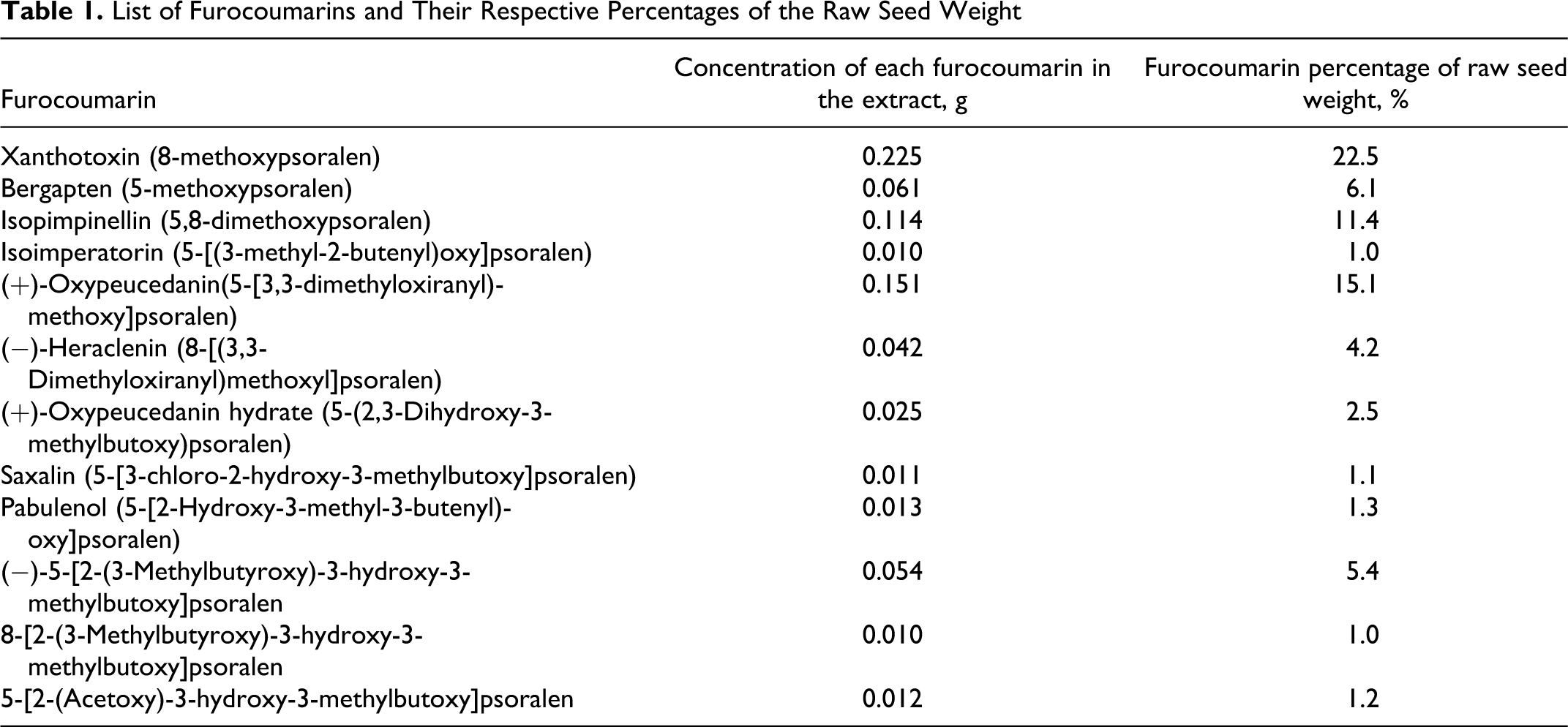
Phytochemical screening of A. majus seed ethanolic extract was analyzed using high-performance liquid chromatography–ultraviolet (HPLC-UV) analysis. An appropriate amount of the sample (10 g of the extract) was dissolved in 70% ethanol (100 mL) to precipitate the polysaccharides and proteins to obtain better analytical results. The sample was filtrated through a 0.45-µm membrane filter. The HPLC analysis was performed on a Shimadzu LC-2010 Series System (Shimadzu Scientific Instruments, Inc., Kyoto, Japan). Chromatographic analysis was performed on a LiChrospher-C18 column (250 × 4.6 mm2 inner diameter; 5 µm). The mobile phase was 0.1% acetic acid (A) and methanol (B). A constant flow rate of 1.0 mL/min was maintained throughout the analysis. The column temperature was set to 25°C. Peaks were detected at 258 nm of UV detection. 17 The furocoumarins obtained were identified and calculated in g/g of the plant seed extract. Accordingly, the extraction ratio in the present study was computed as 10, since 10 g of the extract was dissolved in 100 mL ethanol as diluents, so the dilution factor remains 10. Consequently, the amount of each furocoumarin per gram of the raw seed was calculated by multiplying each furocoumarin in the extract (grams) by 100.
Animals used in the experimental trial
Adult albino rats of Sprague Dawley strain weighing 140 to 150 g and albino mice weighing 25 to 30 g were obtained from animal house colony of National Research Centre, Egypt. They were kept under the hygienic conditions and on a well-balanced diet and water. The experiments were carried out according to the National regulations on animal welfare and Institutional Animal Ethical Committee (IAEC).
Drugs
The standard drugs used as controls were as follows:
Atorvastatin (Atortatin) as a standard antihyperlipidemic drug obtained from Alexandria Pharmaceutical Company, Borg Al-Arab City, Alexandria Governorate, Egypt.
Indomethacin (Indocin) as a standard antiinflammatory agent from El-Kahera Pharmaceutical Industrial Company, 6th October City, Giza Governorate, Egypt.
Carrageenin for induction of acute inflammation in rat paws from Sigma Co, USA (Gamma Trade Co., El-Mohandessen square, Giza Governorate, Egypt).
Paracetamol (Paramol) as standard antipyretic drug obtained from Misr Company for Pharmaceutical Industries, 6th October City, Giza Governorate, Egypt.
Tramadol (Tramol) as a standard analgesic drug from Minapharm Pharmaceutical Company, 6th October City, Giza Governorate, Egypt.
Reagents kit obtained from Biomerieux Company (Gamma Trade Co., El-Mohandessen square, Giza Governorate, Egypt) for measuring serum triglycerides and total cholesterol fractions. Drugs and alcoholic extracts were administered orally by gastric tube.
List of Furocoumarins and Their Respective Percentages of the Raw Seed Weight
Methods
Antihyperlipidemic Activity
Induction of hyperlipidemia is carried out in rats according to Ney et al. 18 The male albino rats of Sprague Dawley strain (140-150 g) were fed for 2 months on high-fat diet. The diet was prepared by mixing equal quantities of a commercial feed diet (obtained from Animal House, National Research Centre, Egypt) and atherogenic constituents (5% cholesterol, 20% sucrose, 20 % hydrogenated vegetable oil, 2% sodium cholate, 20% lactose, 0.4% choline chloride, and 0.15% thiouracil) obtained from faculty of Veterinary Medicine, Cairo University, Egypt, for the induction of hyperlipidemia, which was assessed by measuring triglycerides, 19 total cholesterol, 20 high-density lipoprotein (HDL), and low-density lipoprotein (LDL) fractions 21 using reagents kit.
Animal grouping
Four groups each of 10 hyperlipidemic rats were used in this test. Group 1 was kept as a negative control to which saline was administered orally. Group 2 was treated orally with hypolipidemic drug atorvastatin (positive control) at a dose of 1 mg/kg twice a week. 22,23 Groups 3 and 4 were treated daily with oral doses of 50 and 100 mg/kg bwt of the total alcoholic extract of A. majus for 1 month and 2 months, respectively. The animals of all the 4 groups were fed only with a regular commercial laboratory diet during 60 days. At zero time, 1 month, and 2 months after administration of negative and positive controls as well as the extract, the blood samples were collected from the retro-orbital plexus through the canthus of the anesthetized rats after an overnight fasting and serum was separated by centrifugation. Total serum cholesterol, triglycerides, HDL cholesterol, and LDL cholesterol were determined.
Acute Anti-Inflammatory Activity Test
The acute anti-inflammatory effect of the total alcoholic extract was evaluated by the carrageenin-induced rat hind paw edema test. 24
Animal grouping
A total of 24 adult male albino rats of Sprague Dawley strain divided to 4 groups each of 6 animals were orally treated with 2 doses of the extract, saline as negative control and indomethacin drug (20 mg/kg bwt)
25
as positive control as shown in Table 2; 1 hour after the oral administration of the extract, all the animals were injected with 0.1 mL of 1% carrageenin solution in saline at the subplanter area of the right hind paw. The paw volume of each rat was measured using Plethysmometer, before carrageenin injection and then followed by hourly measurement up to 4 hours postadministration of the plant extracts. The rates for edema or its inhibition on each group were calculated as follows.



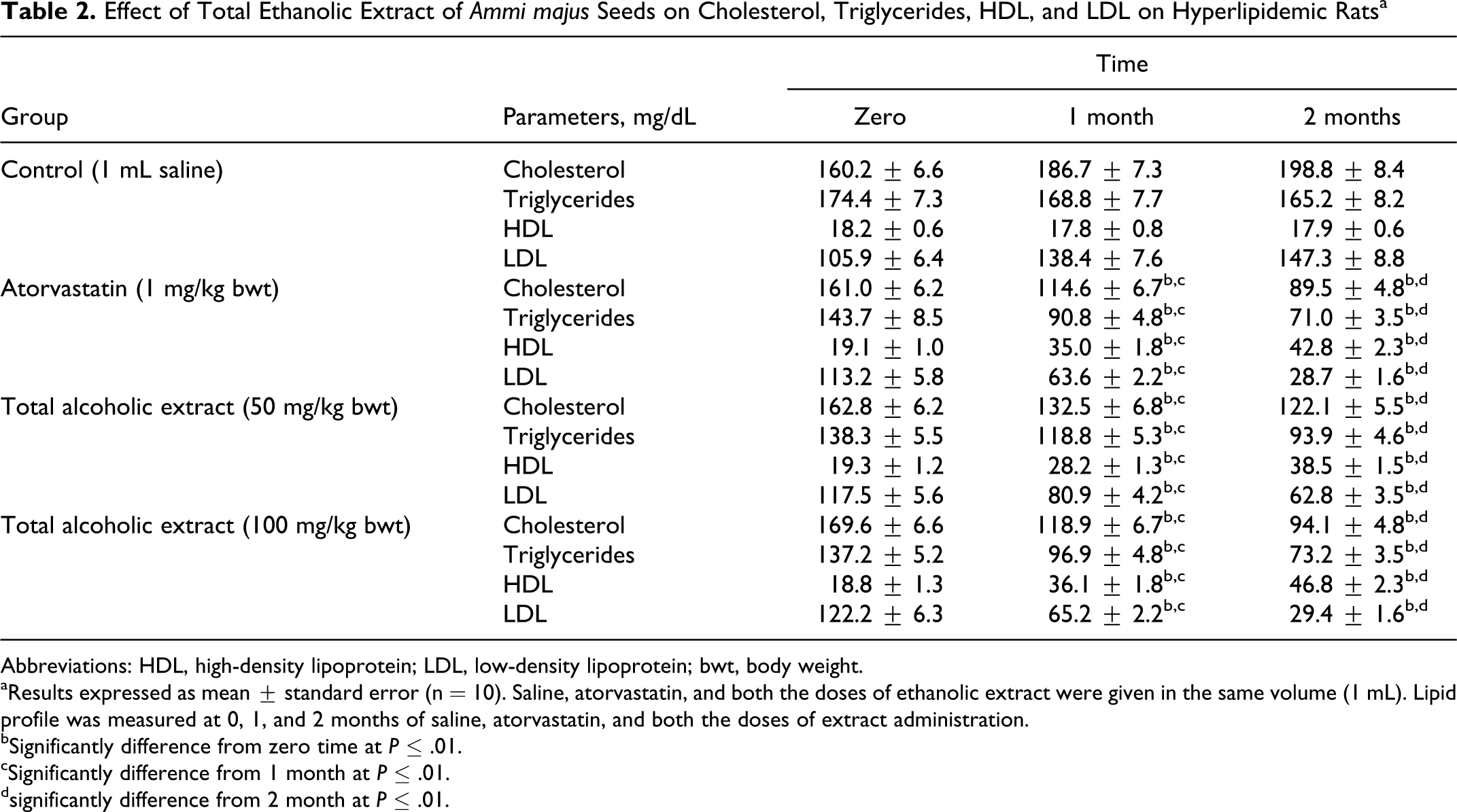
Effect of Total Ethanolic Extract of Ammi majus Seeds on Cholesterol, Triglycerides, HDL, and LDL on Hyperlipidemic Ratsa
Abbreviations: HDL, high-density lipoprotein; LDL, low-density lipoprotein; bwt, body weight.
aResults expressed as mean ± standard error (n = 10). Saline, atorvastatin, and both the doses of ethanolic extract were given in the same volume (1 mL). Lipid profile was measured at 0, 1, and 2 months of saline, atorvastatin, and both the doses of extract administration.
bSignificantly difference from zero time at P ≤ .01.
cSignificantly difference from 1 month at P ≤ .01.
dsignificantly difference from 2 month at P ≤ .01.
Analgesic Activity Test
The analgesic effect of total alcoholic extract was evaluated according to the hot plate method of Woolfe and Mc Donald. 26 For this test, 24 adult male albino mice were divided to 4 groups and were orally treated with tramadol (40 mg/kg bwt) 27 drug. For 3 consecutive days preceding the experiment, mice were adapted on the hot plate by placing them on a plate maintained at room temperature for 15 minutes. Each animal was placed everyday onto 53 ± 0.5°C hot plate to perform the test. Latency to exhibit nociceptive responses, such as licking paws or jumping off the hot plate, was determined 30 and 60 minutes after the administration of the test substances or saline. Reaction time (seconds) for thermal pain was measured prior to the administration of tested extract and standard drug (tramadol; 0 times). To avoid tissue damage of the mice paws, cutoff time for the response to thermal stimulus was set at 60 seconds.
Antipyretic Activity Test
In this experiment, animals were divided into 4 groups, each consisting of 6 male albino rats of Sprague Dawley strain. Body temperature of each animal was measured from the rectum using digital thermometer. The Brewer yeast suspension is known to produce fever in all the rats 28 Each animal was then injected intramuscularly with pyrogenic dose of Brewer yeast (1 mL/100 g bwt of 44% yeast suspension in saline). The rectal temperature measured 18 hours following the yeast injection was considered as the basal line (zero time) of elevated body temperature, to which the antipyretic effect will be compared. A single oral administration of 2 doses of the tested extract, paracetamol (positive control) 29 or saline (negative control) was carried out and the rectal temperature was determined after 1 and 2 hours of intervention.
Statistical Analysis
Statistical analysis was carried out using 1-way analysis of variance and SPSS version (9.0). Data were represented as mean ± standard error at P ≤ .05. 30
Results
Table 1 revealed that 12 furocoumarins were identified in the raw seed weight. These furocoumarins represent 72.8% of the raw seed constituents, where 4 compounds, xanthotoxin (22.5%), oxypeucedanin (15.1%), isopimpinellin (11.4%), and bergapten (6.1%) represent 55.1% of the total chemical constituents of the A. majus raw seed, while the other 8 furocoumarins represent 17.7% of the total chemical constituents of the raw seed weight.
Table 2 showed the effect of 2 dose levels of the total ethanolic extract on the serum levels of cholesterol, triglycerides, HDL, and LDL in induced hyperlipidemic rats. It clearly reveals that there was a significant decrease in the levels of cholesterol, triglycerides, and LDL. On the other hand, the level of HDL concentrations was found to be elevated. These results were dose dependant for the alcoholic extract. Ethanolic extract in a dose of 100 mg/kg bwt exhibited a greater increase in the HDL than that of 50 mg/kg bwt after 2 months of administration. Moreover, the dose of the standard drug atorvastatin (1 mg/kg bwt) was more potent in its lowering effect of hyperlipidemic rats’ levels than both the doses of A. majus extract. No change was recorded in food and water consumption during experimental period of the study.
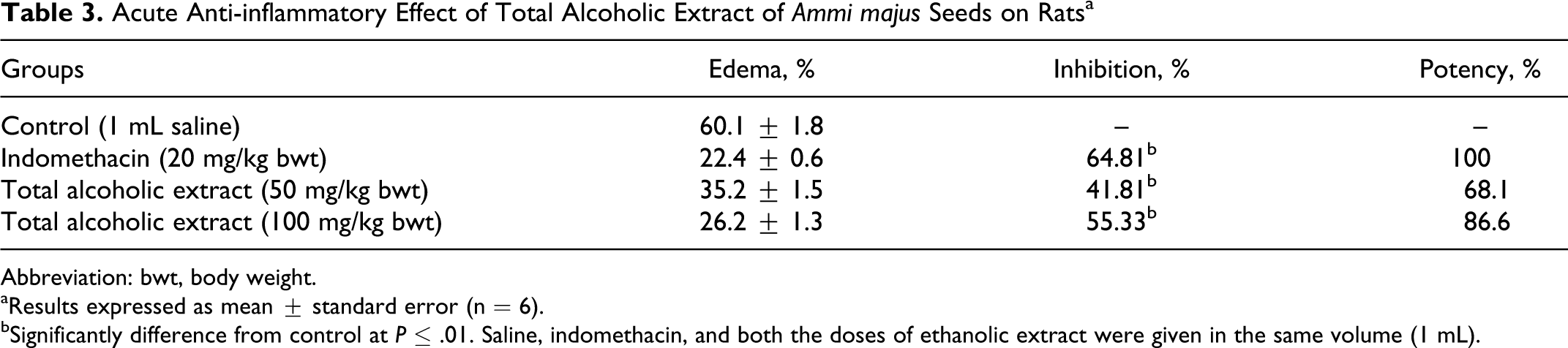
The results on the acute anti-inflammatory activity of the total ethanolic extract of A. majus were displayed in Table 3. A significant anti-inflammatory effect was exhibited by the total alcoholic extract, as evident by a significant inhibition of the rat paw edema weight induced by carrageenin at a dose of 100 mg/kg bwt, which is more potent than the effect exerted at a dose of 50 mg/kg bwt, where it seems to be dose dependant.
Acute Anti-inflammatory Effect of Total Alcoholic Extract of Ammi majus Seeds on Ratsa
Abbreviation: bwt, body weight.
aResults expressed as mean ± standard error (n = 6).
bSignificantly difference from control at P ≤ .01. Saline, indomethacin, and both the doses of ethanolic extract were given in the same volume (1 mL).
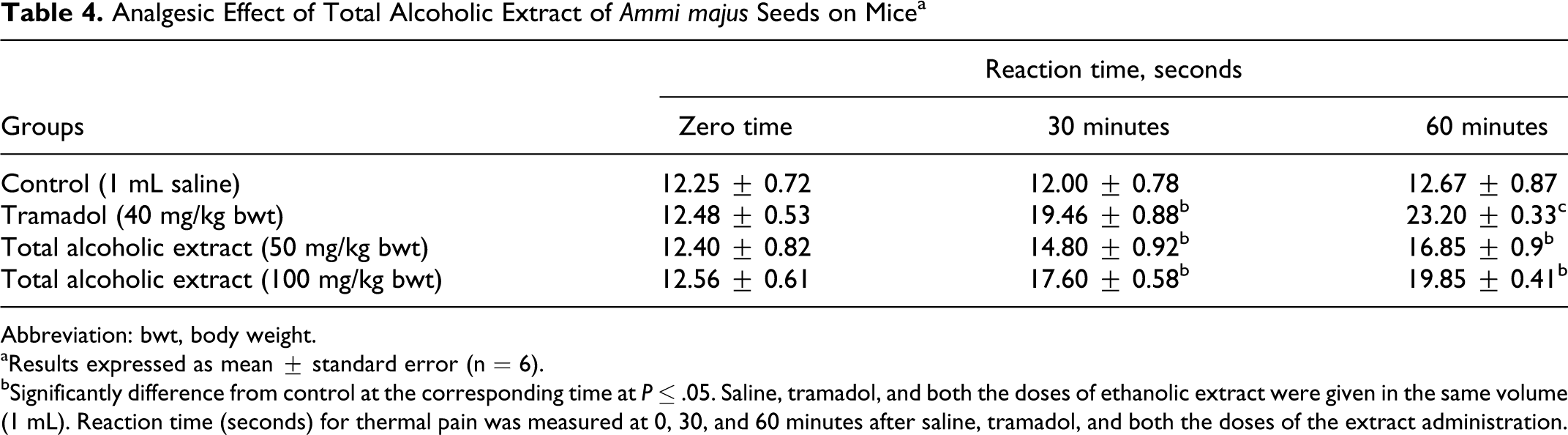
Analgesic activity presented in Table 4 suggested a significant increase in the reaction time between the treated and nontreated control groups, at 30 and 60 minutes posttreatment of the experiment. On the other hand, 0.04 g/kg bwt of tramadol showed increase in the reaction time (pain latency) beginning from 30 minutes and persisted till 60 minutes postadministration in reference to control (untreated group) and its basal value. Again it was dose dependent, as higher dose of 100 mg/kg bwt of the alcoholic extract was more potent than that of 50 mg/kg bwt.
Analgesic Effect of Total Alcoholic Extract of Ammi majus Seeds on Micea
Abbreviation: bwt, body weight.
aResults expressed as mean ± standard error (n = 6).
bSignificantly difference from control at the corresponding time at P ≤ .05. Saline, tramadol, and both the doses of ethanolic extract were given in the same volume (1 mL). Reaction time (seconds) for thermal pain was measured at 0, 30, and 60 minutes after saline, tramadol, and both the doses of the extract administration.
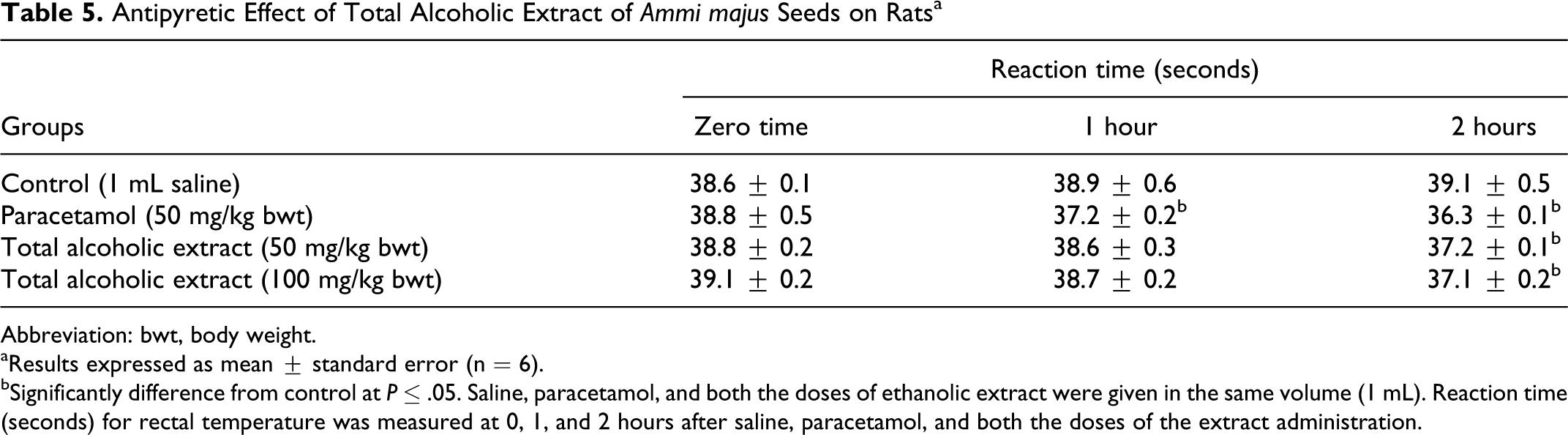
Table 5 represents the antipyretic effect of 2 dose levels of the total alcoholic extract of A. majus seeds. It showed that 100 mg/kg bwt was more potent in lowering the body temperature after 1 and 2 hours than the lower dose of the extract (50 mg/kg bwt). However, the dose of the standard drug paracetamol (50 mg/kg bwt) was more potent in its hypothermic effect than any dose of A. majus extract studied.
Antipyretic Effect of Total Alcoholic Extract of Ammi majus Seeds on Ratsa
Abbreviation: bwt, body weight.
aResults expressed as mean ± standard error (n = 6).
bSignificantly difference from control at P ≤ .05. Saline, paracetamol, and both the doses of ethanolic extract were given in the same volume (1 mL). Reaction time (seconds) for rectal temperature was measured at 0, 1, and 2 hours after saline, paracetamol, and both the doses of the extract administration.
Discussion
Ammi majus species is one of the richest known sources of furocoumarins, where at least 16 furocoumarins (psoralens) had been obtained from the whole plant. 3,31 While the fruits are the source of coumarins, where 8 coumarins and coumarin glucosides were identified, 32,33 the seeds are a rich source of furocoumarins, where 12 furocoumarins were isolated. 3,4
The selection of A. majus seeds for such study is based on its use in folk medicine to treat various ailments particularly in vitiligo, 5 and it is recommended as a healer plant in traditional medicine by Bedouins as well as attention was paid to its bioactive constituents such as coumarin. In this study, evaluation of some pharmacological effects of A. majus seed was done. In the present study, the effect of 2 dose levels of the total alcoholic extract on serum cholesterol, triglycerides, HDL, and LDL levels in induced hyperlipidemic rats was evaluated. The result revealed that there is a significant decrease in the levels of cholesterol, triglycerides, and LDL, with corresponding increase in HDL concentrations after the administration of the extract. The results were found to be dose dependant. Administration of 100 mg/kg bwt of the extract showed better improvement for HDL value, which is considered a beneficiary effect in the treatment of dyslipidemia condition. The HDL mediates the reverse transport of cholesterol from peripheral tissues to the liver for disposal by excretion into bile. This process will disallow the slow accumulation of lipids in artery walls. This effect may be attributed to the coumarins contents of the plant, which was reported to exhibit lipid-lowering effect and significantly decrease total cholesterol level. 12,34
The anti-inflammatory effect shown in the present study may again be due to coumarin contents of the seeds that are known to have anti-inflammatory effect, which seems to be connected with their antioxidant activity. 8 Edema formation due to carrageenan in the rat is a biphasic event: the early phase is related to the production of histamine, serotonin, and possibly cyclooxygenase products and kinin-like substances; while in the second phase, it is due to the release of prostaglandins, free radicals, proteases, and lysosomes. 35 Naturally occurring polyphenols, such as coumarins, might be expected to interfere with the process of synthesis of prostaglandins to produce anti-inflammatory effects. 36,37 The results of the present study indicate that the dose of 100 mg/kg bwt was more potent than that the effect exerted at lower dose of 50 mg/kg of alcoholic extract. It is presumed that this effect may be related to the suppression of rat hind paw edema in the later phase. The effect may be due to the influence on the inflammatory mediators and also on the pathway of prostaglandins synthesis, which may be due to the presence of coumarin compounds in the plant seeds.
The coumarins possess antinociceptive effect 9 that was shown by the analgesic activity of the extract in the present study. The alcohol extract of the plant seed showed analgesic effect probably by inhibiting prostaglandin synthesis by coumarins active ingredients.
In the antipyretic test, the alcoholic extract had markedly decreased elevated body temperature. Yeast-induced fever is called pathogenic fever. Its etiology includes production of prostaglandins (PG), particularly PGE2 appears to be a final pathway responsible for fever production as induced by several pyrogens. 38 Most of the nonsteroidal anti-inflammatory drugs (NSAIDs) show the antipyretic activity by inhibiting the prostaglandin synthesis. It is considerably suggested that the antipyretic effect of alcoholic extract of the plant seeds occurs in a similar fashion as paracetamol; although paracetamol proved more potent in its hypothermic effect than both the doses of A. majus extract. The antipyretic effect of the extract in this study is comparable with that of Rosinov, 7 who reported the IP injection of the furocoumarins for hypothermic activity in the rats.
This study was designed to prove that crude ethanolic extracts of A. majus seed has antihyperlipidemic, anti-inflammatory, analgesic, and antipyretic activities. In the upcoming study, we will isolate the furocoumarins together with the other ingredients from the extract. Biochemical and histopathological studies will be run to conclude whether all these activities related to coumarin or noncoumarin ingredients or there is a synergistic effect among different extract ingredients.
In this study, we tried to find out whether this amounts of furocoumarins in A. majus seed ethanolic extract can do the same action as coumarins; so, we evaluated 2 doses of the plant extract activities compared with active ingredient (coumarins), which occur in seeds ethanolic extract and had been studied previously. 7 –9,12 This experiment concluded that the effect of the 2 doses of the plant extract goes with the same results obtained by these authors worked on coumarins.
Ammi majus seeds are used in Egypt as a house remedy (40 g seeds, twice daily) and people are used to drink it without a known acceptable dose; so we conduct this study with upcoming study to estimate a maximum acceptable dose and this will be available after examination of all active ingredients of the plant seed ethanolic extract.
Conclusion
The study reveals that A. majus seed extract is useful in the treatment of hyperlipidemia, inflammation, and used as analgesic and antipyretic agents in addition to its treatment in vitiligo. Further studies are in progress to isolate and identify the active compounds that are responsible for these activities.
Footnotes
The author(s) declared no conflicts of interest with respect to the research, authorship, and/or publication of this article.
The author(s) received no financial support for the research, authorship, and/or publication of this article.