



Abstract
The paper investigates to what extent Italian regions’ debt after 2007 has been influenced by the criminal behavior of elected politicians and public officials, and by swaps, a neglected aspect in the literature. Elected politicians and public officials have been pressured to provide services, raise spending and ameliorate budget figures; these pressures could have been managed with criminal behaviors or by using swaps that enjoyed substantially reduced accounting transparency and weak monitoring. Panel data results on yearly data of Italian regions from 2007 to 2021 confirm that regions’ debt has been significantly influenced by the criminal behavior of elected politicians and public officials; a greater negative market value of swaps reduced the possibility to raise further debt. The political economy of debt reduction after the pandemic crisis should consolidate the fight against corruption, and provide a clear economic and legal framework for debt-related transactions.
This is a visual representation of the abstract.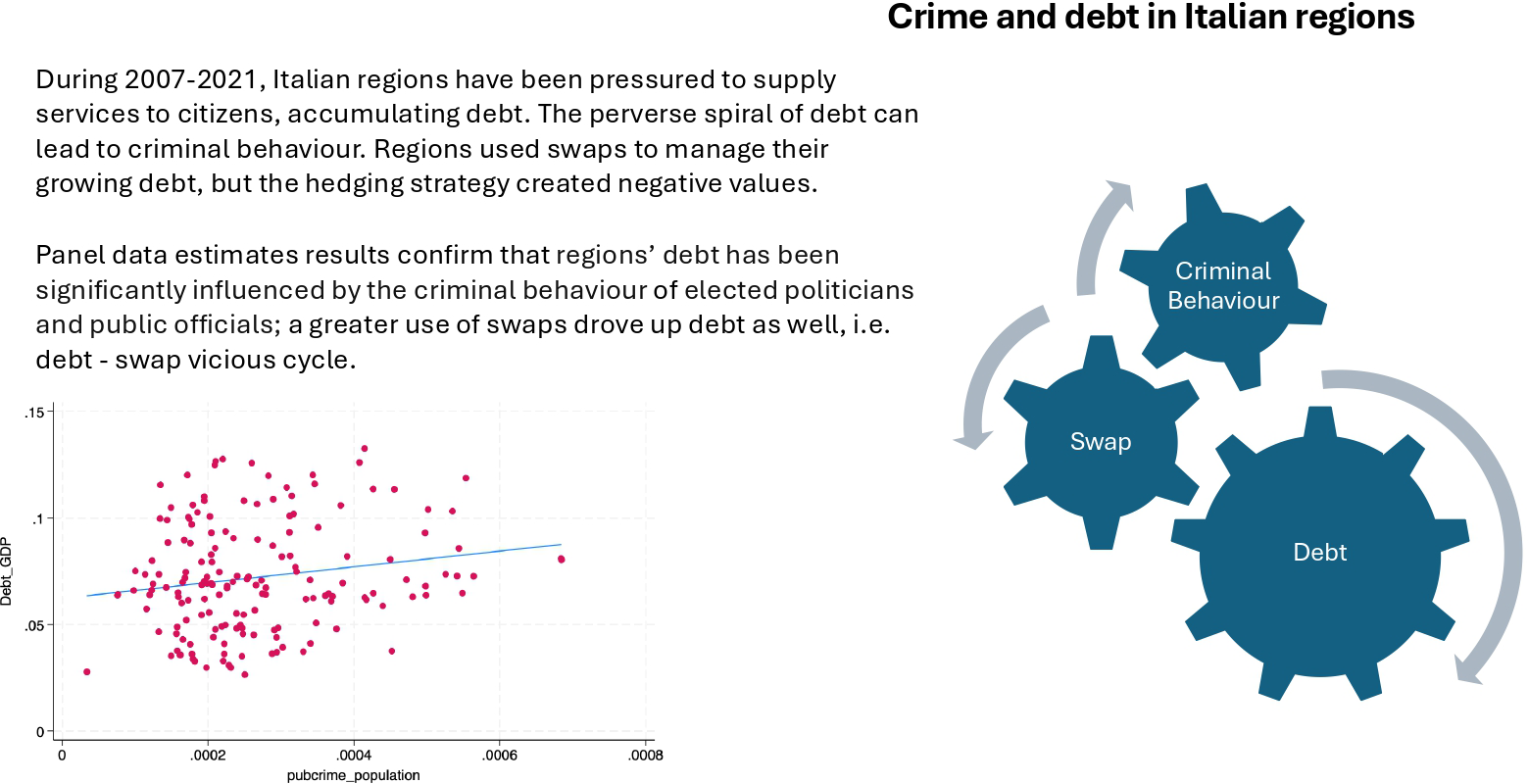
Get full access to this article
View all access options for this article.