




Abstract
This study examines the relationship between fiscal redistribution and human development in 12 Latin American countries over the period 2000–2021. Aiming to evaluate this relationship across the distribution, quantile regression is performed. The results suggest that greater redistribution is associated with higher development, although this relationship's strength decreases during the second half of the distribution. The analysis of taxes’ and government transfers’ redistributive effect is extended to the different dimensions of development—health, education and economy—and obtains significant coefficients at both the beginning and the end of the distribution. Several robustness analyses evaluate the results’ consistency for different specifications and sub-periods. When controlling for socio-economic factors, the intensity of the positive link between redistribution and development decreases. Education is the most affected by redistribution increases. Despite the COVID-19 pandemic's impact, a positive association between redistribution and development is obtained for both the pre-pandemic period and the following years.
Introduction
There is increasing social awareness of income inequality. While a sustained increase in inequality has been observed in the United States and Europe in recent decades (Piketty and Saez 2014), the reverse trend has been apparent in Latin America since the 2000s (Lustig, Lopez-Calva and Ortiz-Juarez 2013). The fundamental reason for this improvement in income distribution can be found in a greater redistributive effort in the region (Goñi, López and Servén 2011). Governments’ main tools to mitigate income inequality are taxes and transfers. The application of fiscal incidence analysis has made it possible to evaluate the impact of different fiscal systems and types of transfers on reducing inequality in some of the main countries in the region (Lustig, Pessino and Scott 2014).
However, while abundant literature has focused on the analysis of the relationship between inequality and economic growth (Castelló-Climent 2010; Forbes 2000) or inequality and financial development (De Haan and Sturm 2017; Escudero 2023), until now, the direct impact of redistributive efforts on development has been overlooked, especially in Latin America. The fundamental reason is the lack of comparable information. This study seeks to fill this gap by focusing on the aggregate impact that redistribution has had on development in the region in the last two decades.
The present work aims to contribute to this literature by taking advantage of the recent availability of historical series on the distribution of income before and after taxes provided by the World Income Database (WID.world) as well as the use of alternative modeling techniques that allow us to explore the link between redistribution and development across quantiles. This study differs from previous research in the following respects. First, since the WID contains data on income before and after taxes, we are able to estimate the impact of public redistributive policies as the difference between market and net Gini coefficients. Therefore, while most studies on redistribution have made use of fiscal incidence analysis, in this work, we apply the “pre-post” approach proposed by Lupu and Pontusson (2011) to estimate the redistributional effect of taxes and transfers.
Second, given that the WID provides historical series on the distribution of income, by using the greatest amount of information available, we constructed a panel with the aim of incorporating a temporal dimension into the analysis, thus differentiating our research from a large number of the existing studies, which have carried out in-depth cross-sectional analyses focused on one country (Arauco et al. 2014; Higgins and Pereira 2014; Jaramillo 2014; Scott 2014).
Third, the study covers economies that have been very little studied until now. The Latin American countries that have previously been mostly the object of study are Argentina, Bolivia, Brazil, Chile, Colombia, Mexico and Peru (Caminada et al. 2019; Engel, Galetovic and Raddatz 2007; Goñi, López and Servén 2011; Lustig 2016). Making use of all internationally comparable information, the present study expands the set of economies analyzed to 12, incorporating countries such as Costa Rica, Cuba, the Dominican Republic, Ecuador and El Salvador, which have been understudied up until now.
Fourth, by means of quantile regression, we assess the effective impact of redistribution on development across different quantiles of the distribution. This approach is particularly suitable due to the lack of a theoretical framework that links the two variables. Additionally, given the complex nexus between these phenomena, different ranges of redistribution may lead to unequal variations of development. In this context, quantile regression is especially appropriate for uncovering relationships between variables in cases in which there is no clear link or only a weak association between their means.
Additionally, several robustness checks are conducted. First, we extend the analysis to different dimensions of human development beyond economic growth—health and education—that have been proved to be channels through which inequality can be reduced (Castells-Quintana, Royuela and Thiel 2019; Easterly 2007; Ferreira, Gisselquist and Tarp 2022; Martínez 2016; Pickett and Wilkinson 2015; Suárez and López 2023). Second, to assess the reliability of the results, we replicate both analyses, incorporating a set of variables to control for socio-economic factors related to development. Finally, to assess the impact of the COVID-19 pandemic on the relationship between redistribution and development, we compare the results for the years prior to the pandemic with those for the subsequent periods.
The rest of the study is structured as follows. The next section reviews the literature. Section 3 describes the data that are used. Section 4 presents the methodology and discusses the results. Finally, Section 5 draws some conclusions.
Literature Review
Inequality in the distribution of income has implications in numerous areas, and society's growing awareness of its potential long-term negative effects is reflected in the large number of studies conducted (Alvaredo, Cruces and Gasparini 2018; Caruso Bloeck, Galiani and Weinschelbaum 2019; Iniguez-Montiel and Kurosaki 2018). In the economic field, the debate has focused fundamentally on the relationship between inequality and development, mostly in the form of economic growth, but the impact of redistributive policies on development has been understudied, primarily due to a lack of available information to estimate the effective impact of taxes and transfers (Granger, Abramovsky and Pudussery 2022).
At the theoretical level, there is a certain consensus regarding the transmission channels between inequality and development (Ferreira, Gisselquist and Tarp 2022; Neves and Silva 2013). Gründler and Scheuermeyer (2018) synthesized the transmission mechanisms between inequality and development into five categories: differential savings rates, credit market imperfections, endogenous fertility, socio-political unrest and endogenous fiscal policy. According to Goñi, López and Servén (2011), high inequality can be a powerful drag on development due to (i) its connection to poverty and its growth-deterring effect (Goñi, López and Servén 2011), (ii) its debilitating impact on the effect of income growth on poverty—the more unequal income distribution is, the faster the rate of growth required to achieve a given reduction in poverty—and (iii) its potential role as a source of social tension, which in turn tends to undermine the legitimacy of policies and institutions as well as their stability and ends up discouraging investment and thereby growth. The combination of these three factors, which are exacerbated by market imperfections and financial constraints, makes poverty self-perpetuating and causes inequality to lie at the core of the vicious circles of stagnation and poverty in which many developing countries appear to be stuck.
From a theoretical point of view, the first attempts to analyze the complex relationship between redistribution and growth were based on the rational choice theory, more specifically on the formal model of taxation by Meltzer and Richard (1981), which postulates that a more unequal income distribution would create a majority in favor of more redistribution. This theoretical framework has been generalized through successive contributions integrating alternative mechanisms. For example, Alesina and Rodrik (1994) and Perotti (1996) extended the model by allowing two separate mechanisms: one from income inequality to redistributive policies (political mechanism), and another from redistribution to economic growth (economic mechanism).
While there is a consensus regarding the existence of a close relationship between inequality and redistribution (Borge and Rattsø 2004; Claveria and Sorić 2024), there is mixed evidence with respect to the prevalence of the political mechanism: some studies have found that redistributive efforts tend to be greater in countries with higher income inequality (Berg et al. 2018; Milanovic 2000), while others have obtained evidence to the contrary (Benabou 2000; de Mello and Tiongson 2006).
Taxes and transfers are governments’ main redistributive tools to alleviate the negative effects of a growing concentration of income among a small fraction of the population. However, as evidenced by Lindert (2004), the resources devoted to the poor have been fewer in the nations in which poverty and inequality have been greater. Focusing on countries from the Organization for Economic Co-operation and Development (OECD), Joumard, Pisu and Bloch (2012) found that taxes and transfers reduced inequality in disposable income relative to market income, although the effect varied notably across the OECD countries. Overall, in a review of the literature examining the link between income inequality and government spending, Anderson et al. (2017) found a moderate negative relationship between government spending and income inequality.
The degree to which greater redistribution ends up being reflected in lower inequality is conditioned by the effectiveness of redistributive policies. Anderson et al. (2017) noted that the redistribution effect tends to be less effective in less developed countries. This is particularly evident in the case of Latin America, where, despite a general increase in redistributive policies, the efficiency in reducing inequality is far from that observed in Europe (Goñi, López and Servén 2011).
According to Lustig (2016), success in fiscal redistribution is driven primarily by redistributive effort—which can be computed as the share of social spending to the monetary value of final goods and services produced in a country—and the extent to which transfers are targeted to the poor and direct taxes targeted to the rich. Using comparative fiscal incidence analysis, Goñi, López and Servén (2011) found that, in most Latin American countries, the redistributive impact of taxes was lower than that of transfers. The reason for this asymmetry lays fundamentally in the fact that, in spite of direct taxes being generally progressive, their redistributive impact was usually small due to their relative low weight as a share of the gross domestic product (GDP) (Lustig, Pessino and Scott 2014).
Higgins and Pereira (2014) showed that, relative to other countries in Latin America, Brazil had high rates of taxation and large social spending. However, the authors found that the indirect taxes paid by the poor often surpassed the direct transfers and indirect subsidy benefits that they received, with the aggravating factor that these transfers in per capita terms were relatively low and were not always directed to the most disadvantaged. Similarly, for Uruguay and Argentina, Bucheli et al. (2014) and Lustig and Pessino (2014) respectively found that direct taxes and cash transfers combined significantly reduced inequality. However, the application of incidence analysis in other countries in the region showed results in the opposite direction. Specifically, Scott (2014) noted that the small share of resources allocated to direct transfers, coupled with an unproductive tax system, significantly reduced redistributive effectiveness in Mexico. For Peru, Jaramillo (2014) obtained similar results, with the exception of the impact of cash transfers in rural areas. Finally, in the case of Bolivia, Arauco et al. (2014) found that the low redistributive impact in spite of increasing social spending was in part due to significant leakages in transfers to the nonpoor and to the small size of per beneficiary transfers.
In general, the evidence found for Latin American countries shows that the greatest relative redistributive impacts tend to occur through in-kind transfers (Goñi, López and Servén 2011), particularly transfers in education and health, as pointed out by Lustig, Pessino and Scott (2014). In this sense, Gasparini and Lustig (2011), Brezzi and de Mello (2016) and Coady and Dizioli (2018) also found significant evidence that education expansion was inequality reducing.
However, at the applied level, the intertwined relationship between redistribution and development, together with its different dimensions and the diversity of ways of approximating both phenomena, means that the direct impact that taxes and transfers exert on development and its different components remains an open question. The main objective of this study is to fill this gap by assessing the redistributive impact of taxes and transfers on human development in Latin America, which ranks amongst the most unequal regions of the world (Brezzi and de Mello 2016; Caminada et al. 2019; Cord et al. 2016). The present work aims to contribute to this debate by taking advantage of alternative modeling techniques that allow an exploration of this nexus throughout the distribution. Given the complex interaction between the two variables, and the lack of a theoretical framework linking them, quantile analysis seems especially appropriate, especially when the heterogeneity between the countries analyzed can give rise to unequal variations in development for different ranges of redistribution.
Data
With the aim of obtaining a homogeneous measure of redistribution, we calculated the difference between inequality in primary or market income (i.e., before taxes and government transfers, except pensions and unemployment insurance among adults) and inequality in disposable income (i.e., after taxes and transfers), both measured through the Gini index, obtained from the WID dataset. See Chancel et al. (2022) for a detailed description of the data. Development was measured using the Human Development Index (HDI), which is a composite indicator of life expectancy, education—expected years of schooling—and gross national income (GNI) per capita. Table 1 presents the average values of both variables during the sample period.
Average HDI and Redistribution (2000–2021).
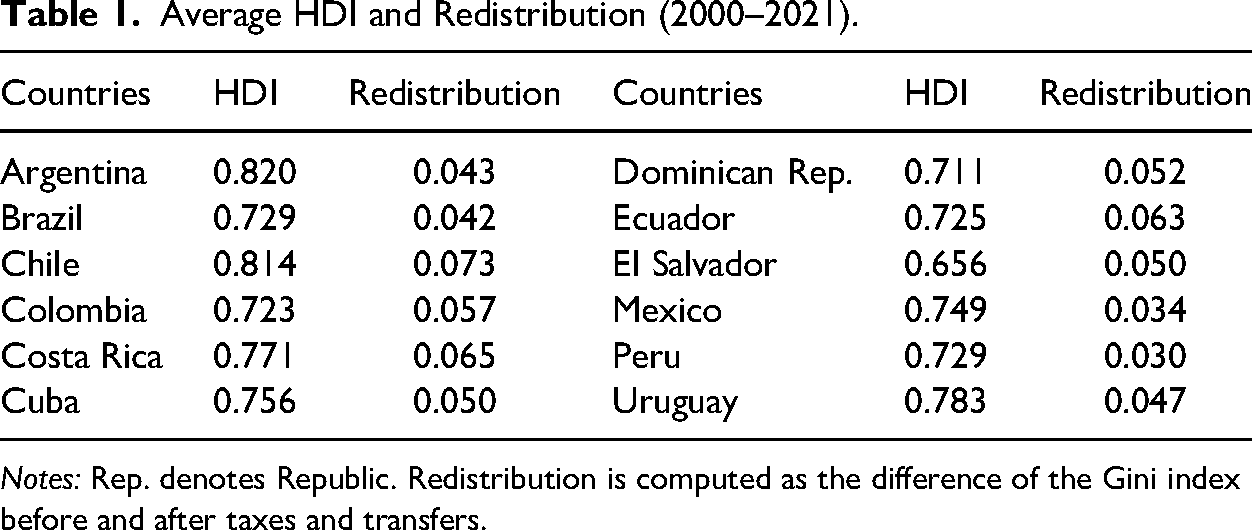
Notes: Rep. denotes Republic. Redistribution is computed as the difference of the Gini index before and after taxes and transfers.
Using time series for the period between 2000 and 2021, we constructed a panel for the 12 Latin American countries for which there was available information. We included five additional control variables: productivity growth—which was computed as the annual growth rate of gross domestic income (GDI) per worker, the inflation rate, the unemployment rate, the average number of children per woman (fertility rate) and openness to trade—which was computed as the sum of exports and imports of goods and services expressed as a percentage of the GDP. Table 2 presents the average values of all the control variables during the sample period.
Average Values of Control Variables (2000–2021).
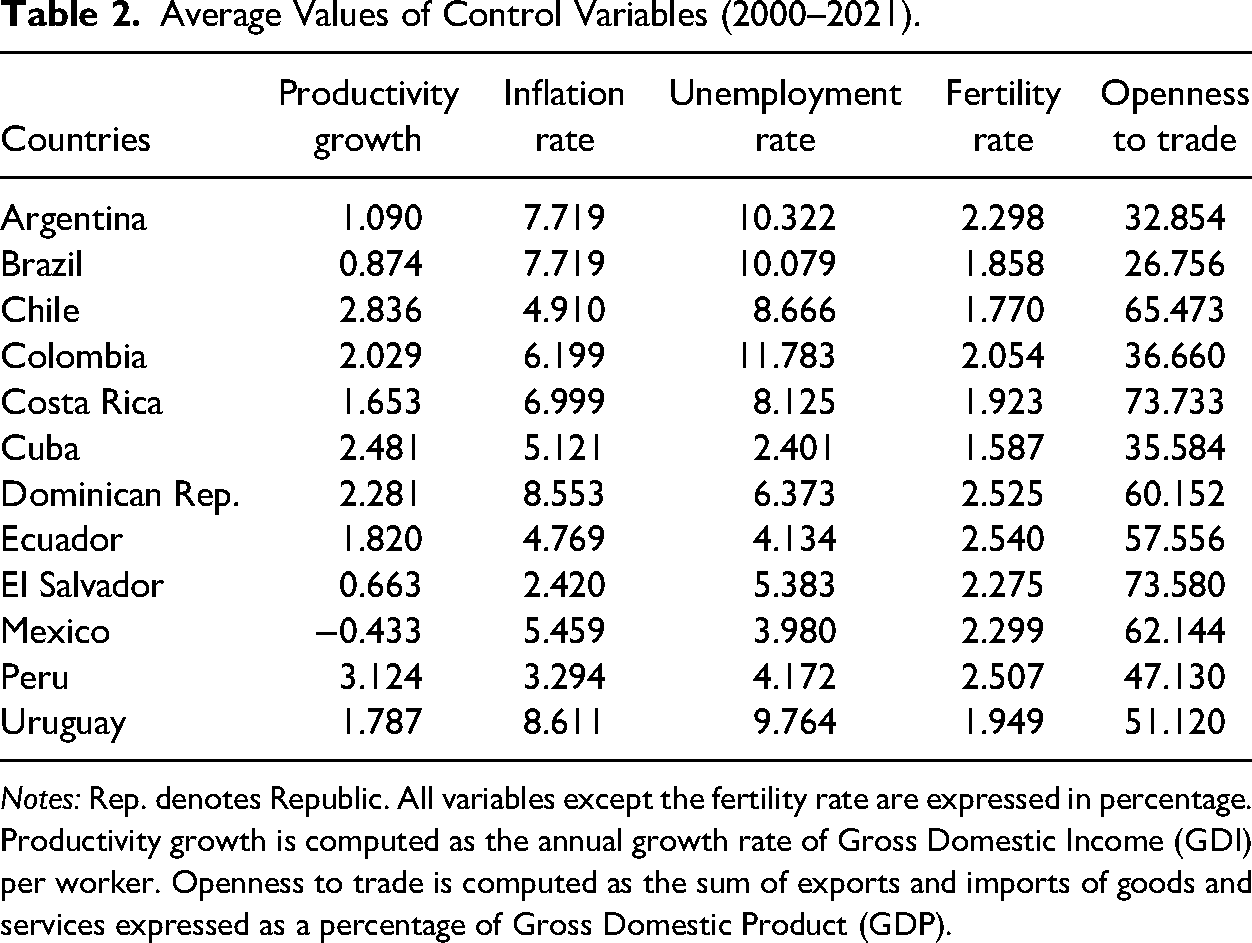
Notes: Rep. denotes Republic. All variables except the fertility rate are expressed in percentage. Productivity growth is computed as the annual growth rate of Gross Domestic Income (GDI) per worker. Openness to trade is computed as the sum of exports and imports of goods and services expressed as a percentage of Gross Domestic Product (GDP).
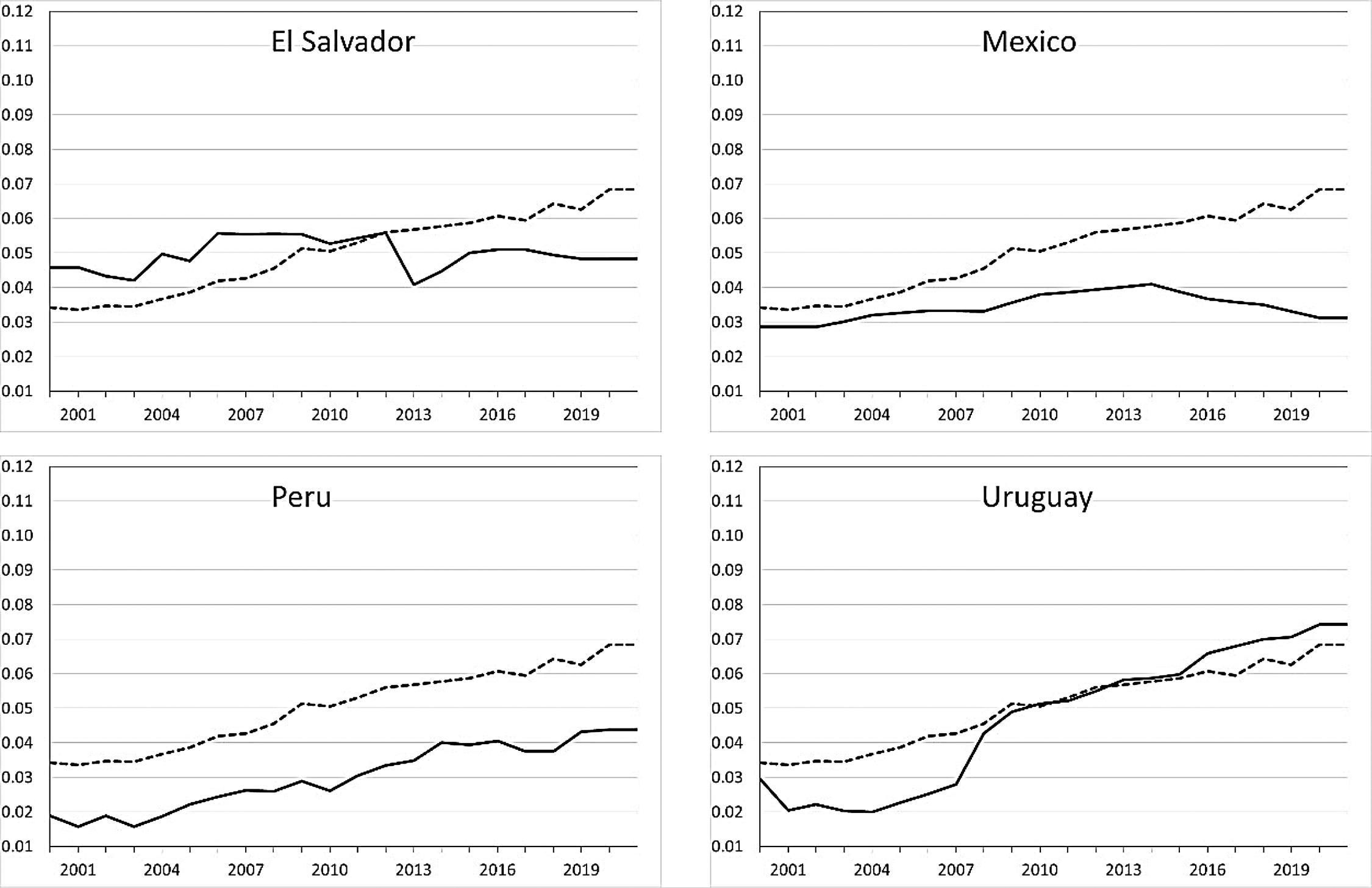
Table 1 shows that Chile, Costa Rica and Ecuador are the countries that present the highest average values of redistribution. On the contrary, Peru and Mexico are the economies with the lowest redistribution mean values. The case of Mexico draws particular attention since not only is it the only country in which redistribution did not increase during the sample period analyzed but also, since 2014, it has shown a decreasing trend, increasing the gap with respect to the aggregate evolution. In this sense, Chancel et al. (2022) noted that Mexico, as opposed to other economies, did not experience a notable reduction in inequality during the twentieth century. See Alvaredo, Cruces and Gasparini (2018) for an assessment of the history of income distribution in Argentina and Parro and Reyes (2017) for an analysis of income inequality in Chile from 1990 to 2011. Ravallion (2014) warned that the general decline between developing countries hides a slow rise in average inequality within these economies, threatening to stall future progress against poverty by attenuating growth prospects.
Regarding human development, Argentina and Chile present the highest average values for the HDI, while El Salvador is the country with the lowest HDI mean value. It is notable that the United Nations defines an HDI score greater than 0.80 as “very high human development,” and only Argentina and Chile fall above this threshold. The box-plots in the first graph of Figure 1 attest to this result. The lower graph indicates that Brazil, the Dominican Republic and Uruguay show the greatest dispersion in terms of redistributive effort, contrasting with countries such as El Salvador and Argentina, with fairly stable levels of redistribution during the period analyzed.
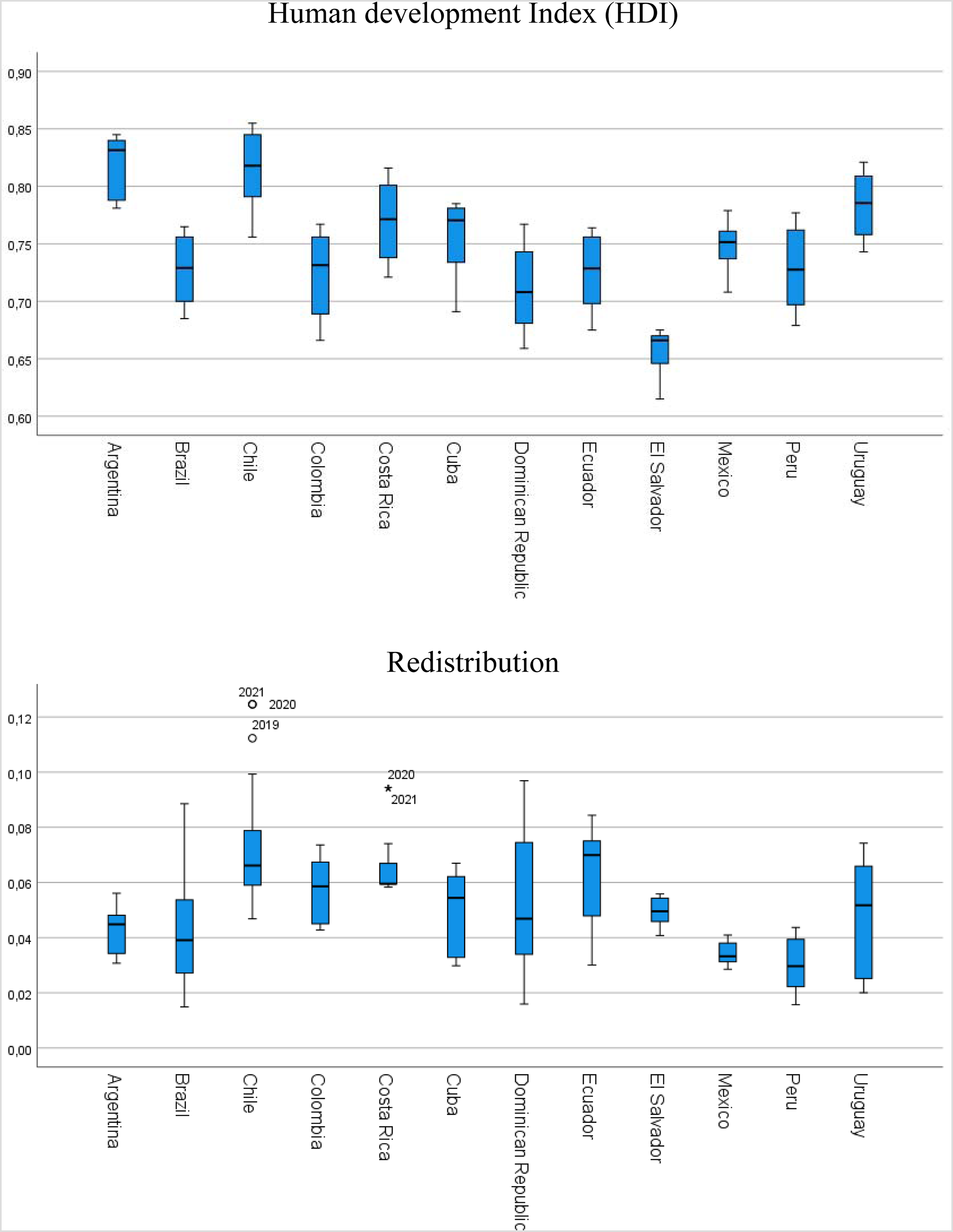
Box-plots – Human development and redistribution (2000–2021).
Figure 1 provides a graphical analysis of the distribution of both variables, while Figure 2 compares the evolution of redistributive efforts at the national level with the average of the countries under study. It is worth highlighting that, from 2019 onward in Argentina and starting in 2017 in Chile, a notable increase in public redistributive efforts can be observed, which coincides in both cases with changes of government.
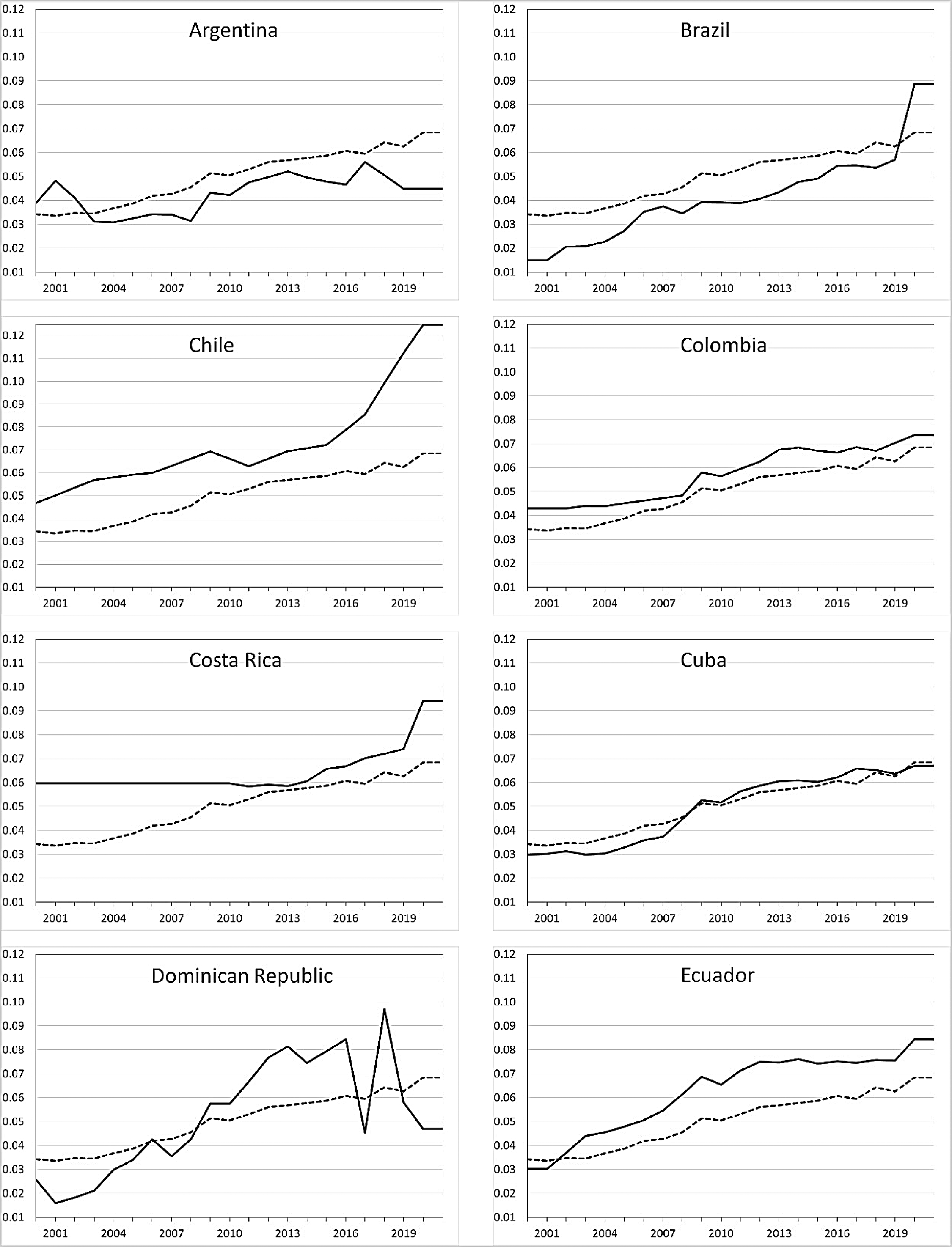
Evolution of redistribution by country (2000–2021).
Finally, to motivate further the quantile analysis undertaken in the next section, in Figure 3, we present the estimated correlation coefficient for each decile of the distribution (D1 to D9). The graph shows how the correlation varies widely between the central range of the distribution and the tails, not only in intensity but also in sign. Specifically, the highest correlations are apparent in the first and last deciles of the distribution, both with a positive sign. On the contrary, in the center of the distribution, the intensity of the association decreases considerably, taking on a negative sign in the three central deciles (D4, D5 and D6).
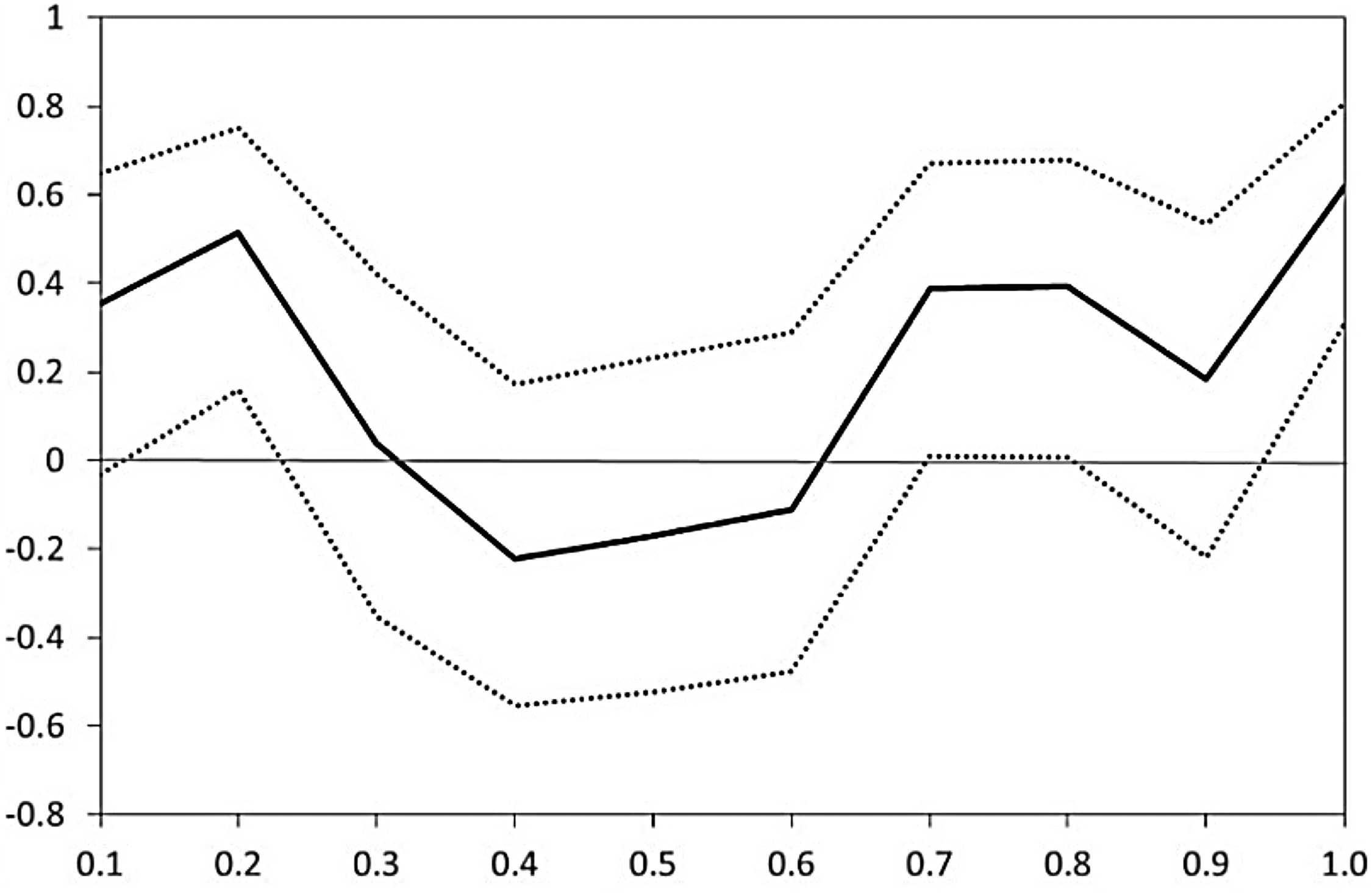
Correlation coefficient by deciles – Redistribution and development.
Empirical Analysis
The relationship between redistribution and human development over time is examined by means of quantile regression. This approach allows us to evaluate the contribution of redistributive measures to development and its components across quantiles. Voitchovsky (2005) stressed the different results observed in the relationship of inequality and growth at the bottom end and the top end of the distribution. Whereas the least squares approach estimates the conditional mean of the response variable across values of the predictor variables, quantile regression estimates the conditional median or other quantiles of the response variable. This approach provides a systematic methodology for examining covariates’ influence on the scale and shape of the entire response distribution.
Another advantage of quantile regression relative to ordinary least squares regression is that quantile regression estimates are more robust to outliers in the response measurements. By focusing on conditional quantile functions, quantile regression can be used to analyze the relationship between variables more comprehensively, helping to uncover links between variables in cases in which there is no clear relationship or only a weak relationship between the means of the variables under study. The complexity of interactions between redistribution and development and its different components may lead to unequal variations of development for different ranges of redistribution. See Yu, Lu and Stander (2003), Koenker (2005) and Angrist and Pischke (2009) for a comprehensive discussion on quantile regression and its applications.
The 



Quantile Regression Results – Redistribution and Development and its Components.
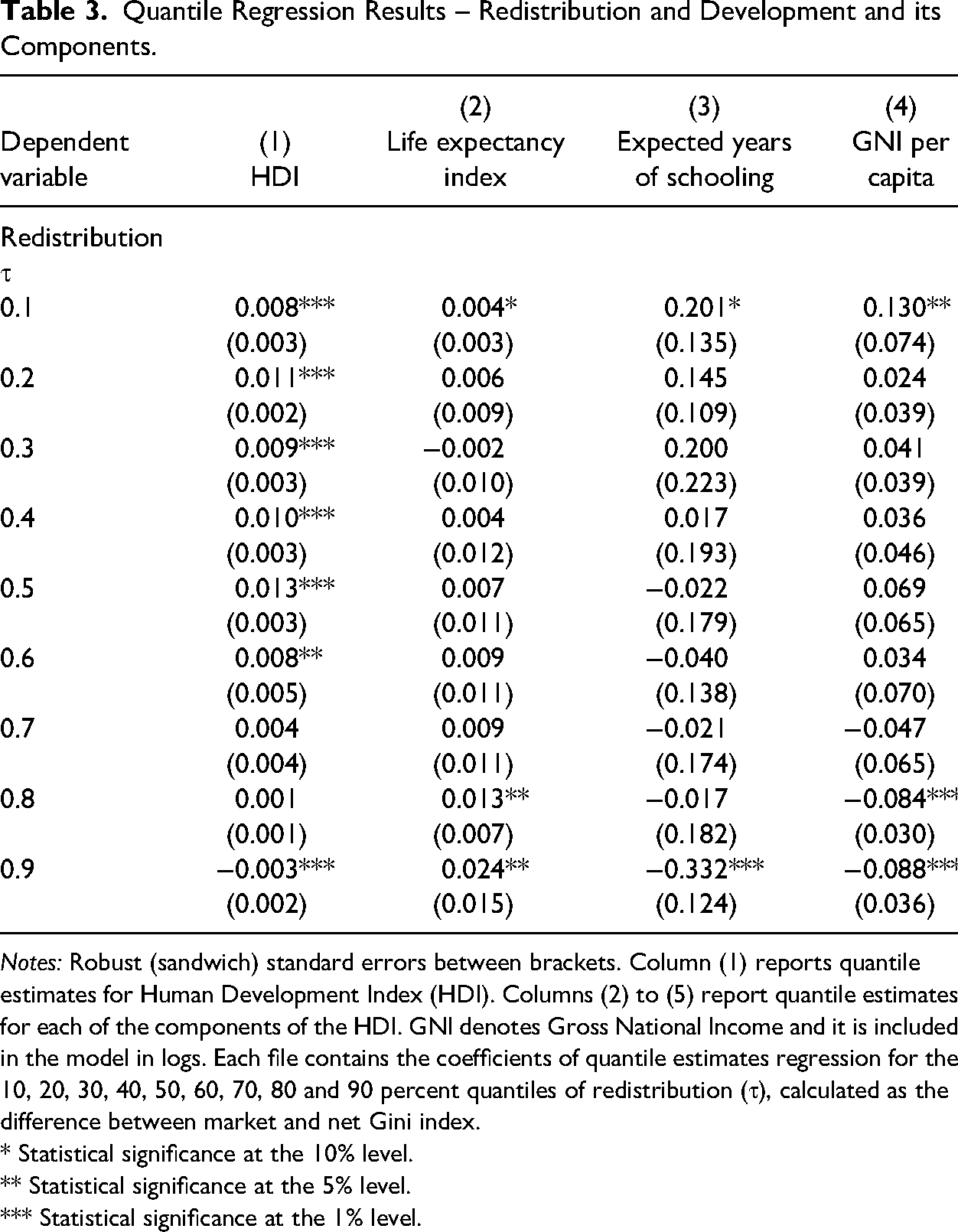
Notes: Robust (sandwich) standard errors between brackets. Column (1) reports quantile estimates for Human Development Index (HDI). Columns (2) to (5) report quantile estimates for each of the components of the HDI. GNI denotes Gross National Income and it is included in the model in logs. Each file contains the coefficients of quantile estimates regression for the 10, 20, 30, 40, 50, 60, 70, 80 and 90 percent quantiles of redistribution (τ), calculated as the difference between market and net Gini index.
* Statistical significance at the 10% level.
** Statistical significance at the 5% level.
*** Statistical significance at the 1% level.
Table 3 reports the results of the quantile estimates. Column (1) shows the estimated coefficients for the specification that considers the HDI as the dependent variable, while columns (2) to (4) respectively report the estimated coefficients for the rest of the components of the HDI: the life expectancy index, which captures the health dimension; the expected years of schooling, which are used as a proxy for the education dimension and human capital; and income per capita.
All four models are estimated by introducing a set of N-1 dummy variables multiplied by their respective regression coefficients to account for unobserved time-invariant country-specific characteristics as well as T-1 dummy variables to account for time fixed effects, allowing us to control for time-varying differences common to all countries (e.g., the 2008 financial crisis). All the models are estimated using heteroskedasticity- and autocorrelation-consistent (HAC) standard errors.
The results in column (1) of Table 3 suggest that increases in redistribution are associated with increases in the level of development. This finding is in line with the results obtained by Claveria (2024) for Europe, and Karakotsios et al. (2020), who presented evidence of the redistributive impact of taxes in a panel of 58 countries. By means of incidence analysis, Goñi, López and Servén (2011) and Lustig, Pessino and Scott (2014) also found evidence regarding the redistributive role of progressive taxes and transfers in Latin America. However, it is important to emphasize that the intensity of the relationship begins to decrease in the fifth decile (τ = 0.5), and this downward trend continues throughout the second part of the distribution, where the coefficient obtained for the last decile takes a negative sign.
When re-estimating the regressions for the different components of the HDI, we also find a positive association for most of the distribution, although the coefficients of redistribution for expected years of schooling and per capita income take negative values in the last deciles. In this regard, Alesina and Rodrik (1994) and Perotti (1996) found a positive association between redistribution and economic growth, while Ostry, Berg and Tsangarides (2014) and Thewissen (2014) obtained a weak effect of redistribution. Regarding the intensity of the relationship, the coefficients are mostly significant at the beginning and at the end of the distribution, as indicated by the evolution of the correlations throughout the distribution graphed in Figure 3. Figure 4 shows the evolution of the coefficients for redistribution across the distribution, both for HDI and for its components.
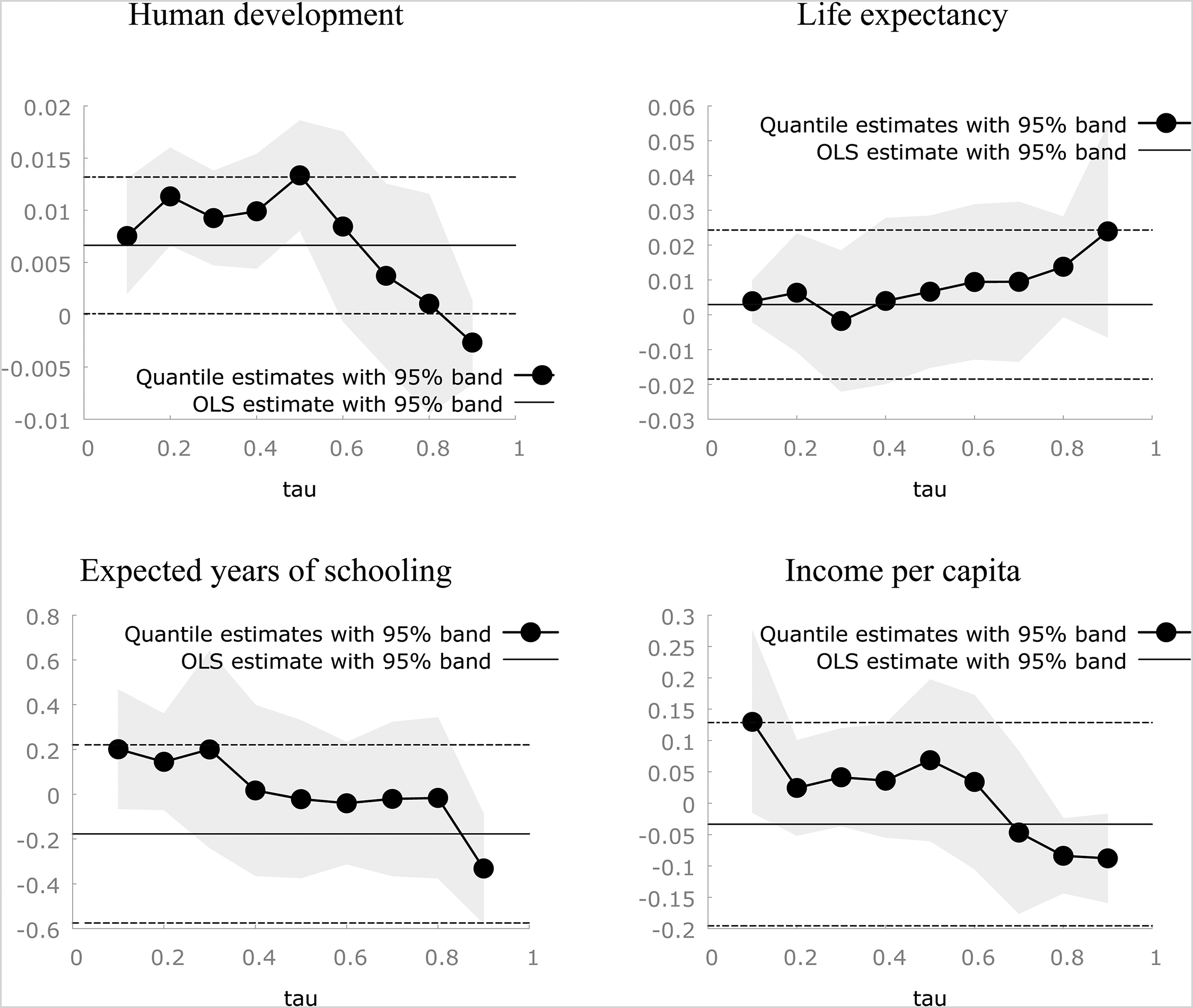
Coefficients of redistribution on human development and on its components across the distribution.
The first graph of Figure 4 shows how the values of the coefficients of redistribution on development increase up to the fifth decile, then the evolution of the coefficients during the second half of the distribution shows a decreasing trend, with the last coefficient, for τ = 0.9, taking a slightly negative value. As for the effect of redistribution on the rest of the components, a clear difference is observed between the increasing evolution throughout the distribution of the value of the coefficients for life expectancy and that observed for the expected years of schooling and per capita income—in which the coefficients tend to decrease despite some fluctuations that record punctual increases between deciles.
With the aim of evaluating the robustness of the results to different specifications, all four models are re-estimated, introducing a set of control variables (productivity growth, inflation, unemployment, the average number of children per woman and openness to trade). As in the baseline models presented in Table 3, all the models account for unobserved time-invariant, country-specific characteristics and control for time-varying differences common to all countries. Again, all the models are estimated using heteroskedasticity- and autocorrelation-consistent (HAC) standard errors. Table 4 contains the obtained results.
Quantile Regression Results with Controls – Redistribution and Development.
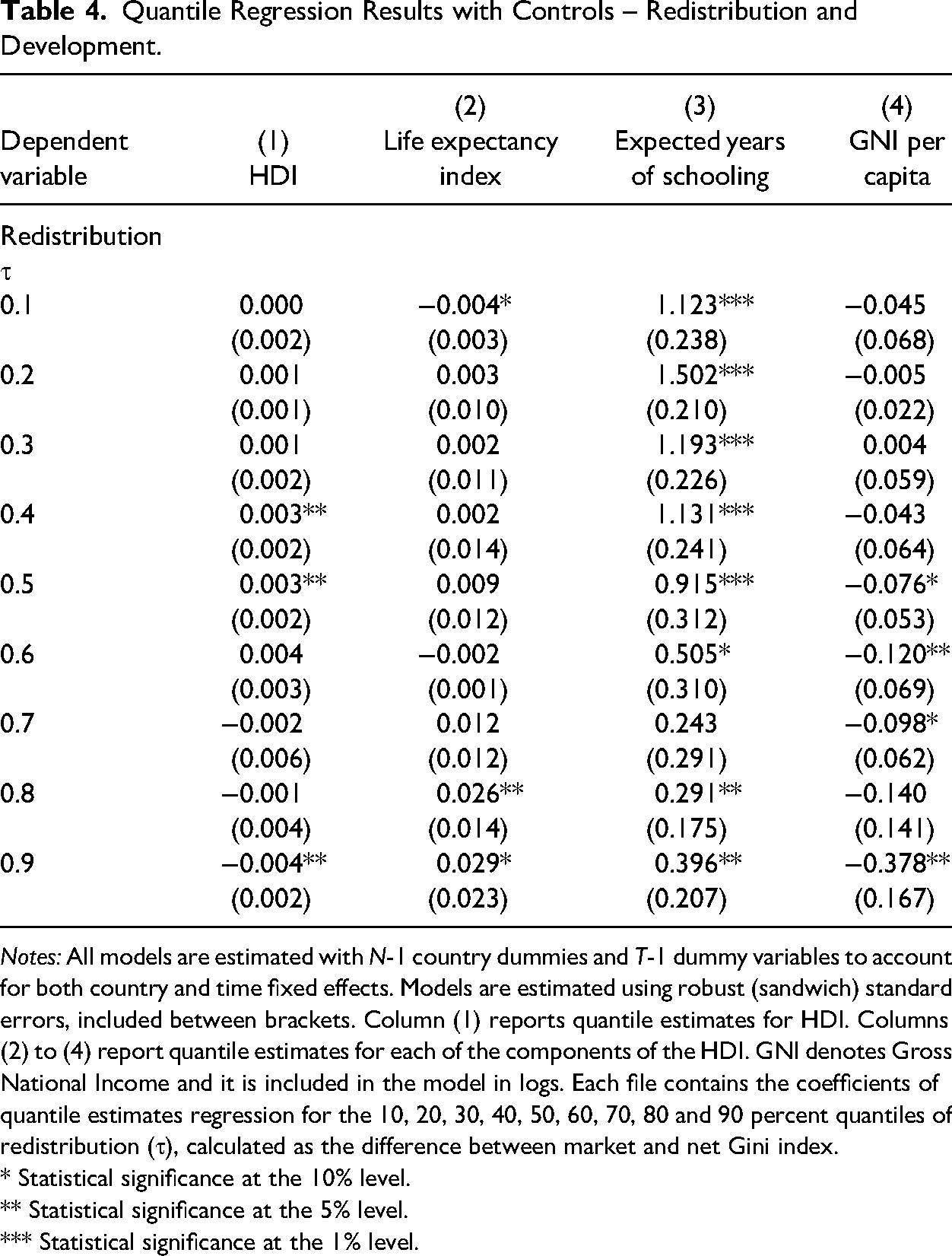
Notes: All models are estimated with N-1 country dummies and T-1 dummy variables to account for both country and time fixed effects. Models are estimated using robust (sandwich) standard errors, included between brackets. Column (1) reports quantile estimates for HDI. Columns (2) to (4) report quantile estimates for each of the components of the HDI. GNI denotes Gross National Income and it is included in the model in logs. Each file contains the coefficients of quantile estimates regression for the 10, 20, 30, 40, 50, 60, 70, 80 and 90 percent quantiles of redistribution (τ), calculated as the difference between market and net Gini index.
* Statistical significance at the 10% level.
** Statistical significance at the 5% level.
*** Statistical significance at the 1% level.
Overall, the results reported in Table 4 are similar to those presented in Table 3. Again, the estimated parameters are mostly positive, with the exception of the coefficients for income per capita. However, now the impact of redistribution on development is mostly significant around the center of the distribution. In the case of life expectancy and income per capita, the intensity of the association seems greater for the highest values of the distribution than for the expected years of schooling, for which the intensity of the association is slightly greater in the first half of the distribution.
When controlling for other socio-economic variables, the strength of the relationship between redistribution and development seems to diminish, while the nexus between redistribution and expected years of schooling—which is the variable capturing the education dimension of development—becomes more intense. In this regard, Székely and Mendoza (2017) found that distributional improvements in income inequality in Latin America were associated with education. Lustig, Pessino and Scott (2014) showed that in-kind transfers in education and health in Latin American countries had a greater role in reducing inequality than cash transfers. Similarly, Coady and Dizioli (2018) found a positive and significant relationship between income inequality and average years of schooling, which indicates that subsidizing education may be inequality reducing.
The coefficients of the dummy variables are mostly significant for all the quantiles in all the specifications, although they are not reported here for clarity. These national differences in the effect of redistribution on development and its components somehow connect with the recent research by Amarante, Galván and Mancero (2016), who found that reductions in inequality in Latin America were mainly explained by reductions within each country in the region, suggesting that the internal dynamics were more relevant than those between countries. Similarly, Baek, Noh and Ahn (2023) showed that regional factors have heterogeneous effects on income inequality fluctuations across countries and that they account more significantly for the future variance of income inequality than for global factors.
The COVID-19 pandemic had a profound economic and social impact globally. Therefore, as a final robustness check, we compare the estimates obtained for different subsamples (pre-pandemic, pandemic and post-pandemic) to verify whether the results remain consistent across sub-periods. The results are presented in Table 5. Despite some minor differences, mainly due to the different sample sizes, the obtained results are consistent across sub-periods in terms of both the sign and the magnitude of the coefficients.
Quantile Regression Results – Redistribution and Development for Different Sub-Periods.
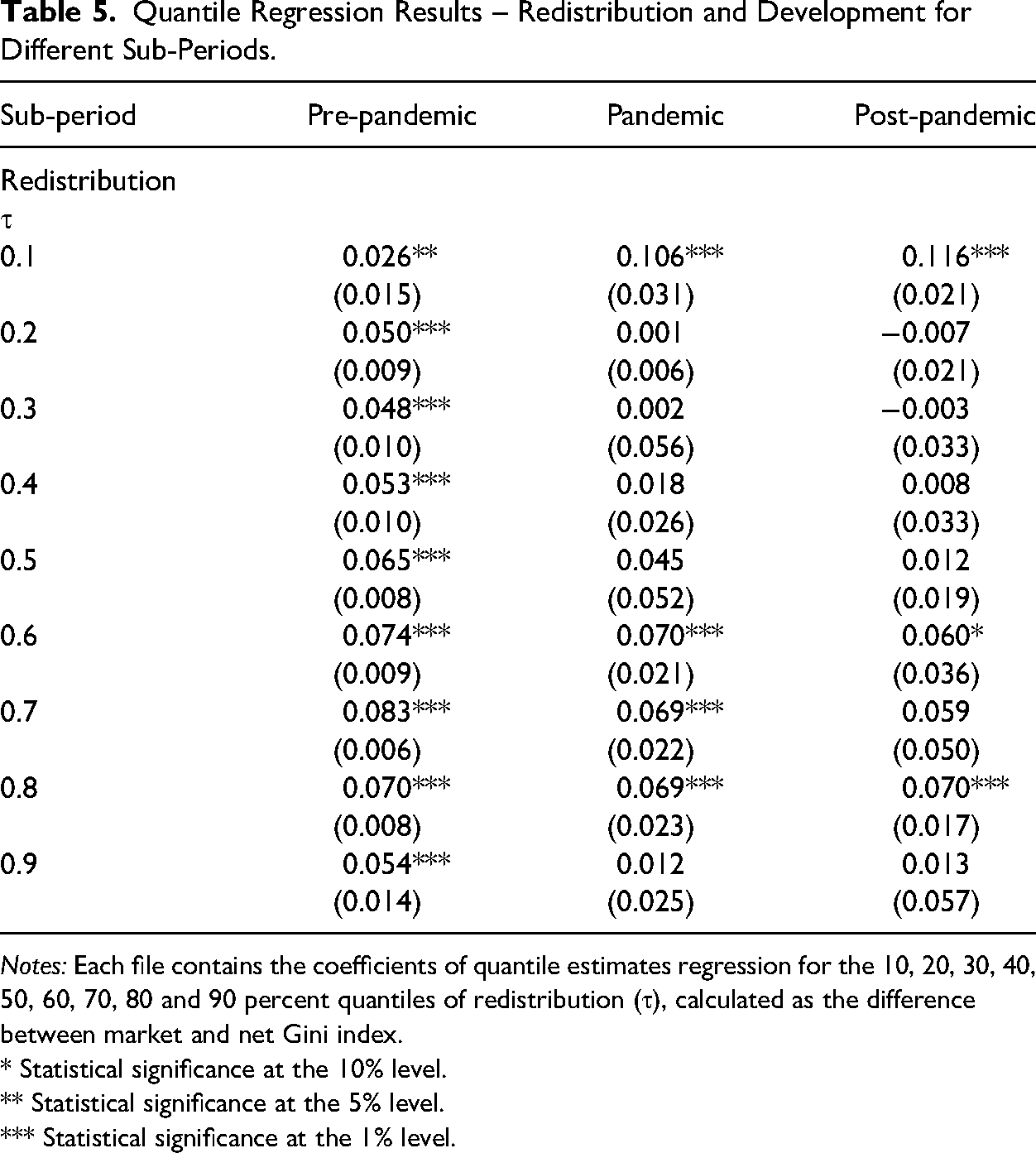
Notes: Each file contains the coefficients of quantile estimates regression for the 10, 20, 30, 40, 50, 60, 70, 80 and 90 percent quantiles of redistribution (τ), calculated as the difference between market and net Gini index.
* Statistical significance at the 10% level.
** Statistical significance at the 5% level.
*** Statistical significance at the 1% level.
Overall, the results obtained reveal the existence of a positive and significant relationship between redistribution and development in Latin America. However, the intensity of this association diminishes when controlling for socio-economic factors. Of the three components of human development analyzed—income, health and education—it is precisely the latter, measured by the expected years of schooling, that is most affected by the redistributive effect of taxes and transfers.
Conclusion
This study evaluates the relationship between redistributive measures and development in Latin American countries during the past two decades. The analysis examines this link across quantiles to shed some light on the evolution of the relationship throughout the distribution. To this end, quantile regression is applied to estimate the impact of taxes and transfers on human development as well as for each of its dimensions—health, education and income.
Overall, it is found that increased redistribution is associated with increased development, although the intensity of this nexus progressively declines in the second half of the distribution. However, when controlling for a set of socio-economic factors (productivity growth, inflation, unemployment, fertility and openness to trade), the impact of redistribution on development diminishes and becomes mostly significant around the center of the distribution. This finding is robust to different sub-samples, obtaining similar estimates for the pre-pandemic, pandemic and post-pandemic periods.
When evaluating the redistributive role of taxes and transfers in the different dimensions of development, a positive association is obtained for life expectancy and the expected years of schooling, although its significance differs across the distribution. The nexus between redistribution and income per capita is found to be mainly negative and significant just for the last deciles. When including socio-economic controls, redistribution shows a positive and significant relationship with the expected years of schooling throughout the distribution.
The results obtained suggest the existence of a positive association between redistribution and development up to a certain threshold of taxes and transfers. This link between increases in government spending and human development is fundamentally manifested in a rise in education. These findings are of special interest for the design of fiscal policies. In this regard, to achieve a greater reflection of redistributive efforts in promoting economic and human development, it is not enough simply to increase the proportion of social spending: it is necessary to ensure the efficiency of these measures, fundamentally by ensuring progressivity in taxes and an adequate selection of transfer recipients.
While the study focuses on the different quantiles of the distribution instead of concentrating on its center, the analysis is subject to some caveats. First, due to the length of the series, the study neglects intertemporal issues. Second, because of the data limitations, the analysis considers the effect of taxes and transfers simultaneously, without differentiating between the two measures of fiscal policy or between cash and in-kind transfers. Finally, we want to note that the results obtained might have been influenced by biases derived both from the measurement of redistribution and from the size of the sample. As time series related to disposable income after taxes become available for additional countries, the objective is to expand the analysis to other regions of the world.
Footnotes
Acknowledgements
The author thanks Prof. Weifeng Jin for his useful comments and suggestions.
Availability of Data and Material
The datasets used and/or analysed during the current study are:
The World Inequality Database (WID.world), which can be freely downloaded at: https://wid.world/ Human Development Index, freely available at the United Nations website: https://hdr.undp.org/data-center/human-development-index#/indicies/HDI Inflation, Unemployment and the Fertility rate, freely available at the World Bank website (World Development Indicators): https://databank.worldbank.org/source/world-development-indicators Productivity and Openness to trade were constructed using variables from the World Bank DataBank (https://databank.worldbank.org/source/world-development-indicators)
CRediT Authorship Contribution Statement
Declaration of Conflicting Interests
The author declared no potential conflicts of interest with respect to the research, authorship, and/or publication of this article.
Funding
The author disclosed receipt of the following financial support for the research, authorship, and/or publication of this article: This research was supported by the project PID2023-146073NB-I00 (‘Sustainable Territories’) from the Spanish Ministry of Science and Innovation (MCIN) / Agencia Estatal de Investigación (AEI).
Submission Declaration Statement
This research is not under consideration elsewhere, and will not be submitted for publication elsewhere without the agreement of the Managing Editor.
