




Abstract
Key Points
Male dancers carried out more lifts than female dancers in both ballet and contemporary performance.
Contemporary dancers carried out more instances of holding their own body weight through the upper body with at least one foot also in contact with the ground, than ballet dancers.
More lifts were carried out below the shoulder than above the shoulder, with those occurring above the shoulder predominantly taking place at eye level, thus training should replicate these biomechanics and considering greater training of the biceps brachii and deltoids to aid this.
Introduction
Dance is a multiplanar, rigorous physical activity 1 that requires performers to deliver an aesthetically pleasing performance. It has been suggested that as per other aesthetic sports, the improvement of select physical fitness parameters could enhance performance. 2 The ability to meet the demands of dance performance require aerobic and anaerobic fitness, muscular strength and endurance, and joint mobility/flexibility. 3 While research has examined the cardiorespiratory demands of dance class, rehearsal and performance,4 -7 and lower body strength and power,8 -10 very little has investigated the demand on the upper body musculature, particularly in relation to lifting and weight bearing movements through the hands and shoulder girdle such as inversions, including handstands and cartwheels.11,12
It has been proposed that ballet requires predominantly use of the lower body and does not significantly engage the upper body musculature 11 although this may relate more closely to female ballet dancers, as male dancers have been shown to carry out 1.94 ± 3.33 lifts and 0.28 ± 0.36 assisted lifts per minute of performance. 13 Contemporary dance requires partner lifts, controlled falls to the floor, and inversions such as handstands, cartwheels, and headstands.11,12 It has been suggested that university modern dance students have similar levels of upper body muscular endurance to non-dancers measured via push-up test (22.2 ± 8.6 dancers, 19.9 ± 8.2 non-dancers), 11 however when compared with other university athletes the dancers’ muscular endurance was markedly less11,12 with cheer squad members performing 32.3 ± 9.75 push ups and women’s lacrosse players performing 47.4 ± 20.7 modified push ups. 12 It should be noted though that these measurements were carried out predominantly on female athletes, but results not separated by sex, and with a mixture of full and modified push-ups which make it difficult to draw comparisons.
To the authors’ knowledge only one paper has investigated upper body strength specifically in dance 14 focused exclusively on male ballet dancers, and one study measuring upper body maximal strength in a small sample of female collegiate dancers. 15 Further studies have explored upper body muscular endurance in collegiate dancers,11,12 but did not measure maximal strength. In the study by Koutedakis et al. 14 the male ballet dancers participated in a strength training intervention which resulted in 15% increase in strength, and anecdotally an ease in lifting their partners post-intervention. 14 The impact of increases in upper body strength on performance demands and aesthetics however have not yet been investigated. Since Koutedakis’ paper, choreography has also developed further, 16 requiring different demands from both male and female dancers. Coogan et al. 12 have begun to establish normative data relating to upper body strength endurance and power in collegiate dancers. Although this provides clinicians and coaches with normative levels of strength endurance and power in dancers, it is currently unknown if these levels are substantive enough for the demands placed on dancers during training, rehearsal, and performance.
Performance analysis has been utilized to ascertain the demands of athletic performance and thereby create training programs to help athletes meet these demands through increased physiological capacity.17,18 To date there are currently only 3 papers that have used time motion and video analysis within a dance context,13,19,20 two of which included the frequency of lifts and assisted lifts in ballet and contemporary dance.
A review of the demands on upper body musculature for the performance of lifts, upper body weight bearing and inversion is therefore required. By assessing the current demands of ballet repertory and contemporary dance, training programs can be designed to help dancers increase physical tolerance to meet these demands. The purpose of this study was to ascertain the frequency of skills that utilize upper body muscular strength and endurance within ballet and contemporary performances and to assess differences in these occurrences between genre. In addition, we also aimed to analyze differences in frequency of these skills between male and female dancers. It was hypothesized that male dancers would carry out a higher frequency of lifts than female dancers, and that more inversions and weight bearing movements would occur in contemporary performances than ballet performances.
Methods
Study Design
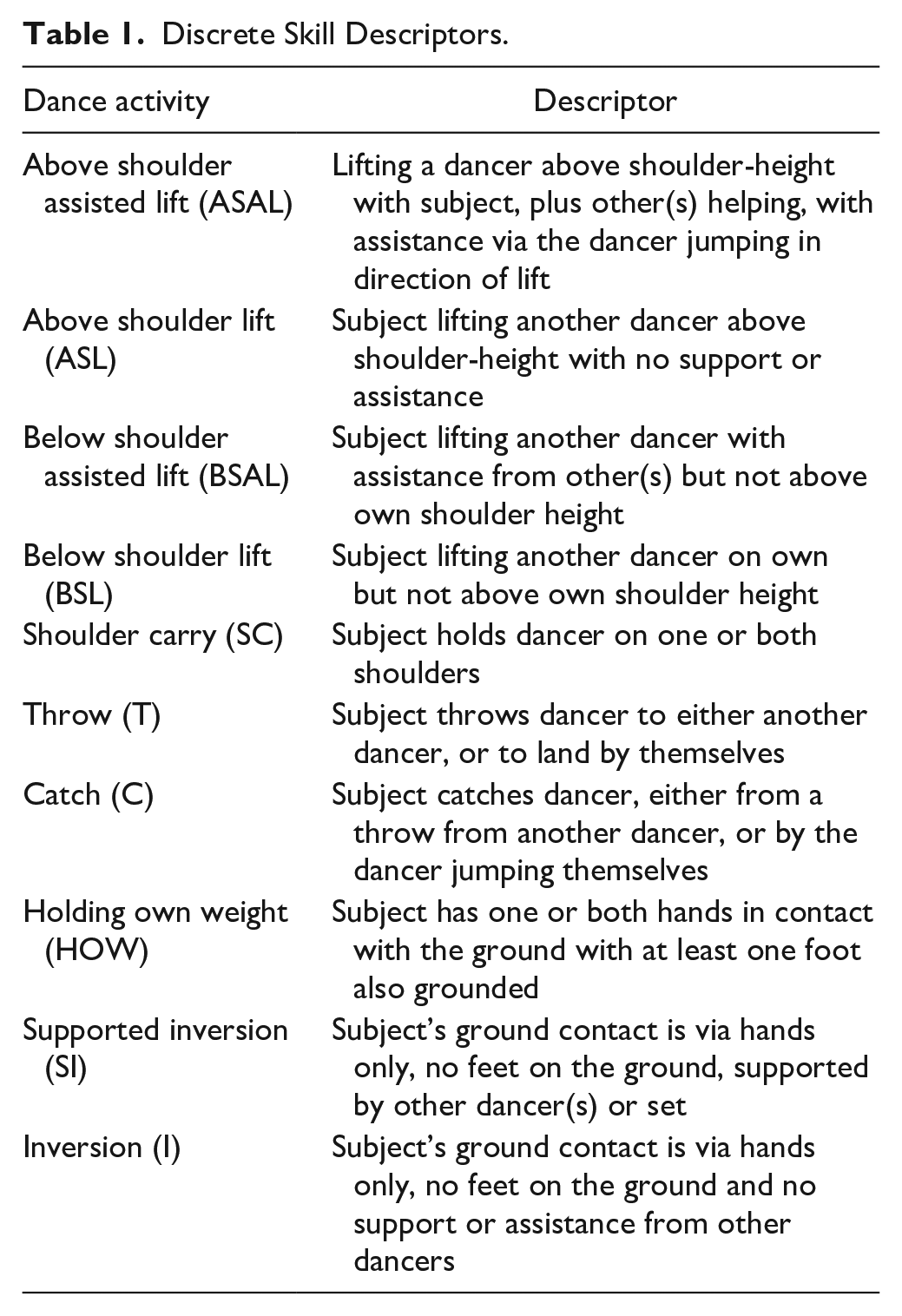
A cross-sectional study design was employed to measure the mean frequency of upper body movements during ballet and contemporary performances. The frequency of these skills was assessed as a function of sex and genre. This built upon the previous studies employing performance analysis in dance13,20 but utilizing more detailed skill descriptors to provide greater insight into the types of movement performed. Analysis focused on frequency of skills relating to upper body strength; namely lifts, assisted lifts, weight bearing movements involving ground contact with the hands, and inversions such as handstands. Full descriptors are listed in Table 1, adapted from Wyon et al. 13 and the lift classifications presented by Lafortune. 21 A greater level of subdivision than prior research is presented here in order to provide a more detailed analysis of the choreography.
Discrete Skill Descriptors.
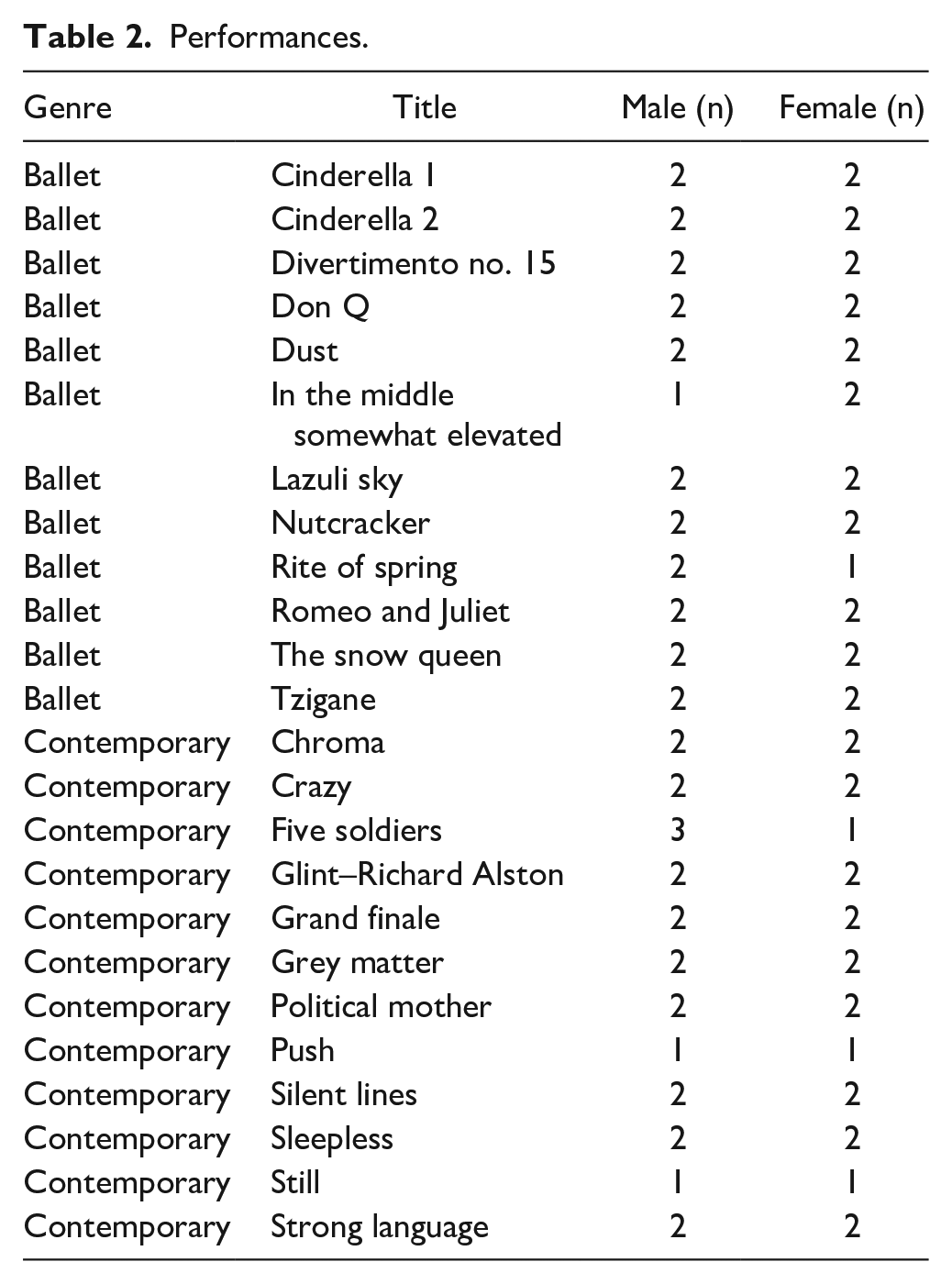
A convenience sample of digital performances of varying lengths from professional UK and international ballet and contemporary dance companies were utilized for the research including The Snow Queen, Dust, In the middle somewhat elevated, 5 soldiers, Chroma and Strong Language. A full list of performances is provided in Table 2. Selected performances were available as either 1 static shot of the stage as archival footage or with a number of camera angles, dependent upon original filming processes. Dance for camera films were excluded from the research due to the selective camera editing which would have inhibited the ability to view all performers. All performances were publicly available online or were provided directly by the dance company from their digital archives and written consent given for research usage.
Performances.
Skill frequency was manually recorded using Dartfish Easytag-Note mobile application (Version 2.2, Dartfish Ltd, Switzerland). The total duration of each performance was also recorded. Performance length was defined as commencing at the first entry of a dancer into the stage space, and concluding when the lights go to blackout or curtain drops on the final movements.
In discussion with Kingston University Ethics, it was concluded that due to the open source nature of the materials used, explicit permission from the dance companies and performers being anonymized in reporting, ethical approval was not deemed necessary for this research.
Manual performance analysis of 24 UK and international digital dance performances (Ballet = 12, Contemporary = 12) was carried out by the lead researcher between December 2020 and March 2022. Where possible 4 dancers (2 = F, 2 = M), 2 principal and 2 corps or equivalent were analyzed per performance totaling 46 individual ballet performances (F = 23, M = 23) and 44 individual contemporary performances (F = 21, M = 23). Dancers selected were the principal dancers and within the corps, those who were easily identifiable on the provided footage, particularly for those filmed on 1 static stage-width shot.
Statistical Analysis
Statistical analysis was carried out using IBM SPSS statistics (Version 29.0.0.0, USA). Independent variables of sex and genre allowed for comparison between groups to ascertain differing demands between male and female dancers and between ballet and contemporary choreography. Each skill was converted to mean number of occurrences per minute of total performance duration and mean frequency per performance by genre and by sex. Intra-tester reliability was calculated via Kappa scores based on two viewings of the same performance 82 days apart.
Shapiro–Wilk was utilized to test for normality. Subsequently, phase 1 analyzed differences in mean frequency between genre via Mann–Whitney U. Phase 2 analyzed differences between sex via Mann–Whitney U. Finally, analysis of differences between sex within dance genre was also carried out via Wilcoxon signed rank test. Significance was accepted at P < .05.
Results
Kappa scores indicated intra-tester reliability as substantial to almost perfect agreement (k = .65-1.00). Non-parametric data (P < .05) was indicated via Shapiro–Wilk tests of normality. Average performance duration was 63.5 ± 44.5 minutes for ballet and 35.7 ± 24.3 minutes for contemporary. Mean frequency of each of the skills per minute of performance and per performance are presented in Table 3 and Figure 1. A significant difference was apparent between ballet and contemporary dance for holding own weight (P < .05) with a greater total mean frequency within contemporary performances of 8.50 ± 9.03 compared to a total mean frequency of 1.51 ± 3.13 within ballet performances. Additionally, there was a significant difference for above shoulder assisted lift (P < .05) when comparing male dancers, with male contemporary dancers carrying out significantly more (9.82 ± 8.56) per performance than male ballet dancers (2.33 ± 4.66).
Mean Frequency of Skills Per Minute and Per Performance.
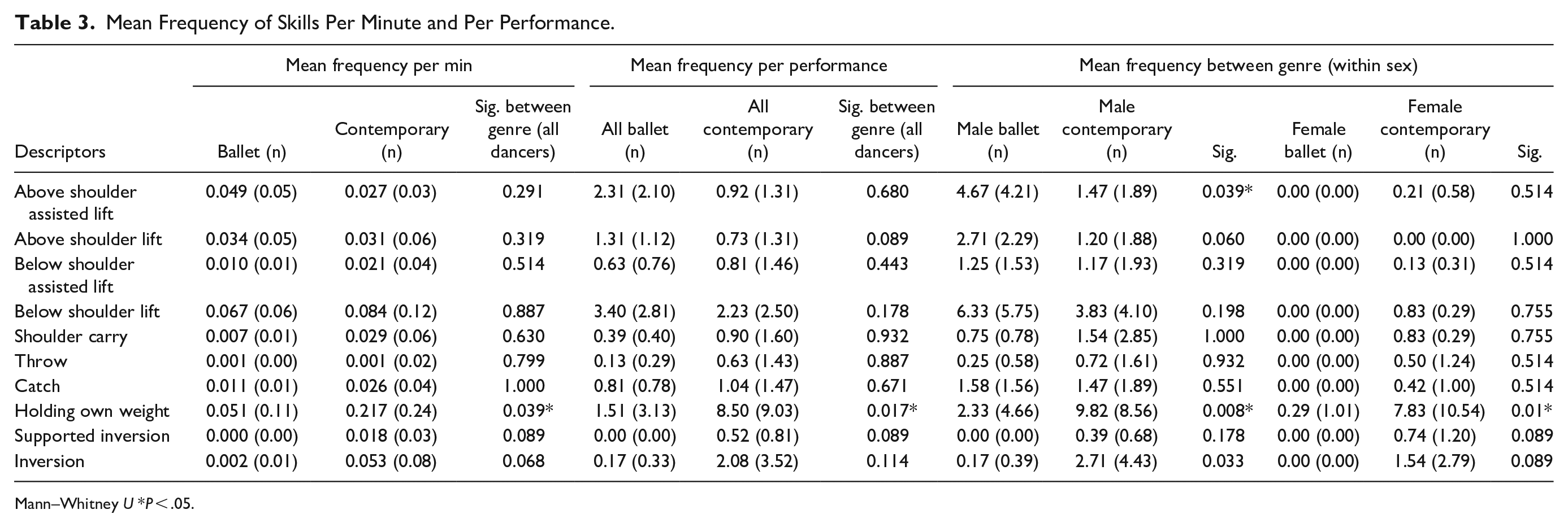
Mann–Whitney U *P < .05.
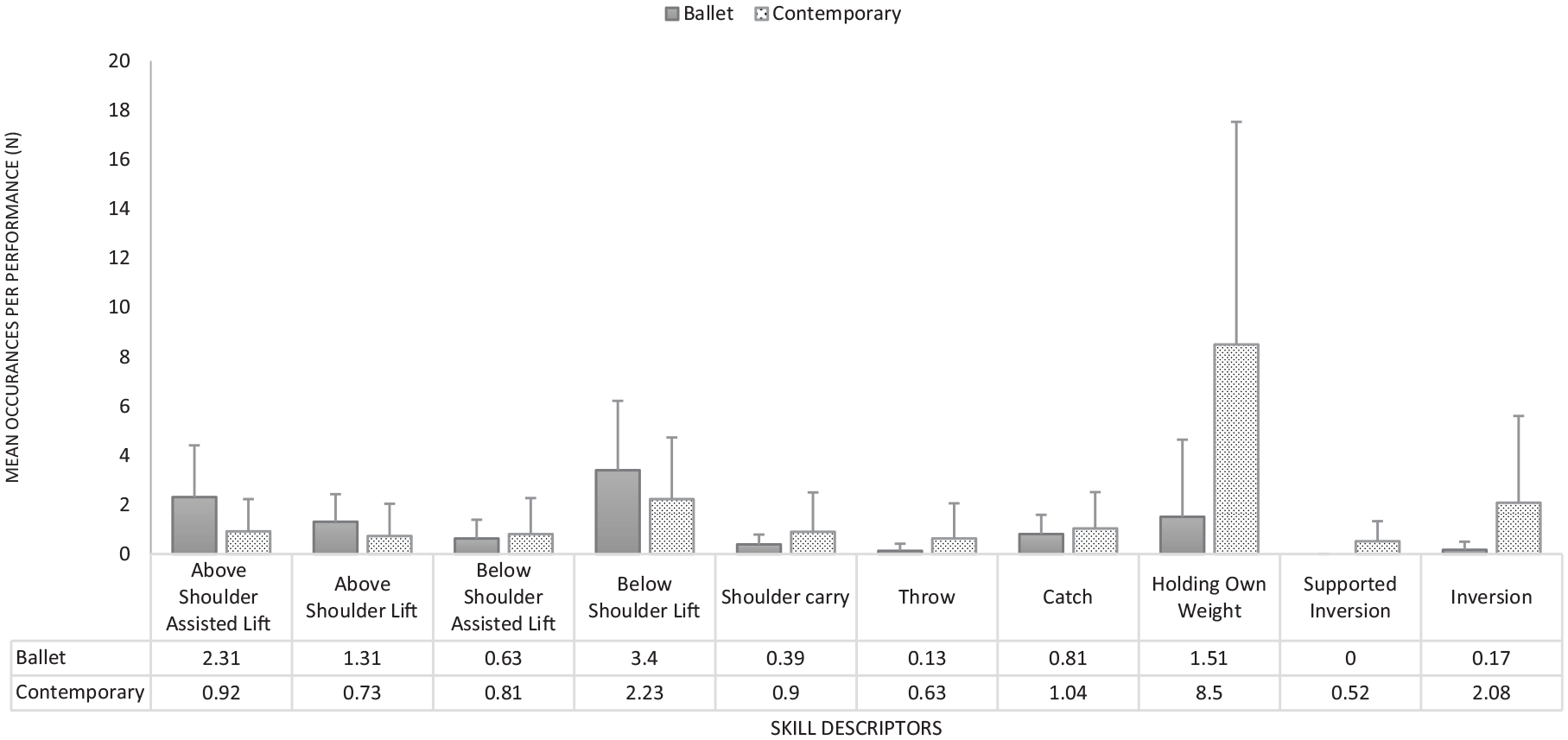
Mean frequency of skills per performance.
Comparisons of mean frequency between sex, within dance genre are presented in Table 4. Female ballet dancers did not carry out any of the listed upper body skills apart from holding own weight (0.29 ± 1.01) resulting in a significant difference (P < .05) between male and female dancers for above shoulder lift, above shoulder assisted lift, below shoulder lift, below shoulder assisted lifts, shoulder carry and catch when comparing mean frequency within ballet performances with male dancers carrying out a higher mean frequency across all these skills. The same was apparent in contemporary dance performances, with males carrying out significantly more (P < .05) instances of above shoulder assisted lift, above shoulder lift, below shoulder lift, shoulder carry and catch.
Mean Frequency of Skills Between Sex (Within Genre).
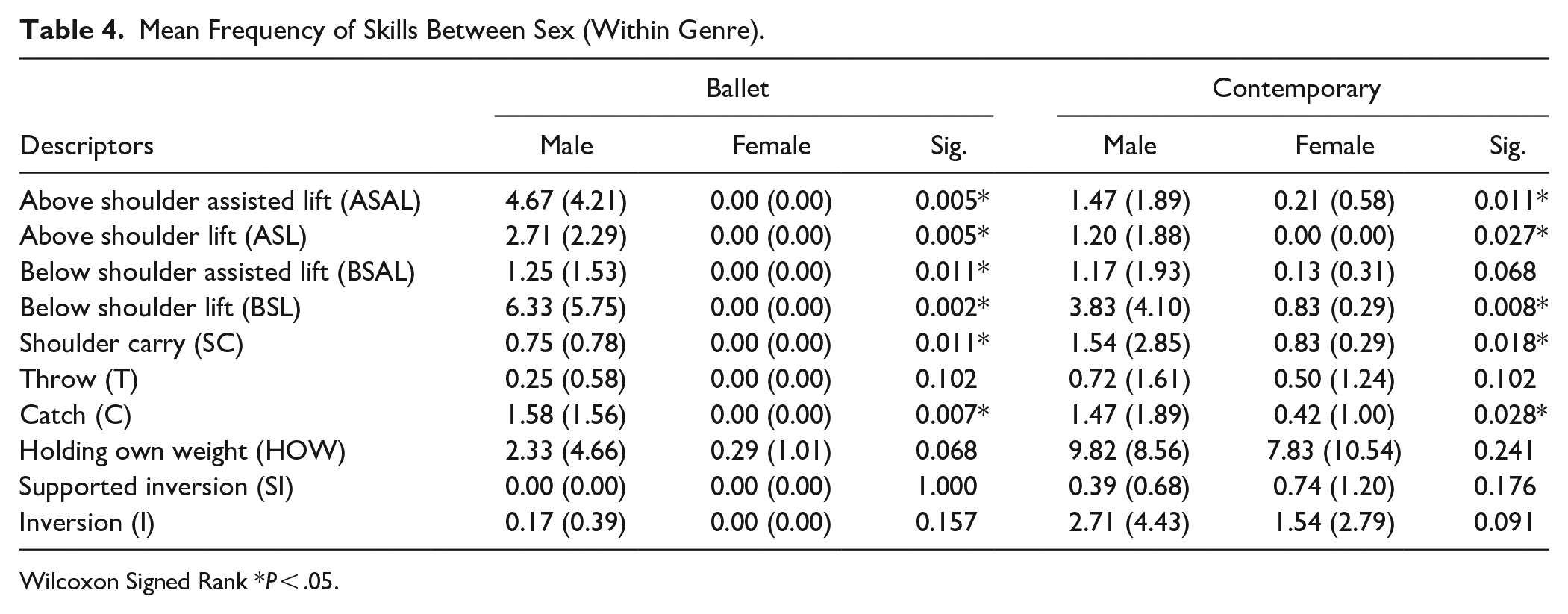
Wilcoxon Signed Rank *P < .05.
Discussion
This performance analysis aimed to build on prior research investigating the frequency of lifts within ballet and contemporary performance and to understand this demand in greater detail through subdivision of upper body requirements into a variety of lifts and upper body weight-bearing movements. Wyon et al. 13 previously reported significantly more lift variations (assisted lifts P < .001; support P < .05; solo lifts P < .05) in ballet than in contemporary dance performance, and significantly more lifts carried out by male dancers than female dancers (assisted lifts P < .001; support P < .05; solo lifts P < .05), however some observed performances were excerpts from longer ballet performances, with lifts calculated at frequency per minute of performance. This causes a potential bias in the selected excerpts which may favor sections of choreography with more upper body demand. Taking into account a full performance length, our study reveals a slightly lower overall frequency of lifts per minute (Ballet 0.148 ± 0.25; contemporary 0.167 ± 0.35). Due to the lower frequency of upper body movements, particularly when sub-divided into more specific movements in this study compared with prior research, mean frequency per performance rather than per minute was selected for this analysis in order to fully interrogate the demand on the upper body.
One of the aims of this study was to allow coaches to plan effective training programs and allow dancers to build physical capacity to meet the demands of the choreography. As such, total mean frequency per performance was deemed to be more impactful in terms of applied practice and allowing dancers and coaches to understand and plan training based on the specific upper body demands of a performance. This will in turn help improve lifting biomechanics and reduce risk of injury due to faulty biomechanics or lack of strength.
Results demonstrated significantly greater (P < .05) instances of movements that required holding their own body weight (with at least 1 foot also in contact with the ground) in contemporary dance performance than ballet performance alongside a significantly greater mean frequency (P < .05) of above shoulder assisted lifts performance by male ballet dancers compared with their contemporary counterparts. As anticipated this demonstrates a higher prevalence of movements that require hand contact with the ground in contemporary choreography than ballet.
With few differences noted between genre, it is important to now consider whether training meets the requirements of the observed skills, particularly as the results revealed a higher prevalence of below shoulder lifts than above shoulder lifts. It was also noted most above shoulder lifts were predominantly held at eye level and that those that took an overhead trajectory were primarily assisted by the lifted dancer jumping into the lift.
The process of lifting a dancer combines muscular strength and endurance but also efficient biomechanics. Lafortune 21 suggested that dancers often learn lifts through a process of trial and error and that difficulties in the lifts were often due to a misunderstanding of biomechanical principles or a lack of strength. It is therefore imperative that strength and conditioning training prepares dancers for the biomechanical difference of a variety of lifts. Lifts that require movement of a mass, or in this case, another dancer, between hip level and eye level requires a different combination of muscle recruitment than for an overhead lift. With a greater propensity of lifts at a lower trajectory as highlighted in this research, training must be reflective of these movement pathways. Incorporating variations of an overhead press (military press, push press) will aid in developing strength in a directly overhead pathway, however it must be noted that the biomechanics of the lifts within a dance context are different and training must be reflective of this. Incorporating military or push presses within training regimes to address overhead lift demands will predominantly work the muscles surrounding the glenohumeral joint and scapular including the deltoids, trapezius, elevator scapular, serratus anterior and triceps, along with stabilization of the trunk via the core musculature. 22 However, lifts at or below eye level require recruitment of the anterior deltoid and biceps brachii in a position similar to a bicep curl. 23 The excitation of the biceps brachii is also dependent on elbow angle and wrist position 23 which will be affected by the type of lift of the dancer for example, under the armpits (pronated or supinated grip) or at the waist (vertical grip), however more research is required in this area.
Due to the higher propensity of below shoulder and eye level lifts, training should also incorporate a strong focus on muscular strength and endurance training of the anterior deltoids and biceps brachii at a range of angles and variety of grips in order to prepare dancers for the biomechanical nuances of lifts employed within current choreography. Furthermore, the lifts observed in dance comprise many nuanced factors and variables alongside strength, timing and weight. 21 It must also be acknowledged that the lifted dancer also plays an important role in the success and ease of the lift, as well as activation of the lower limbs for additional power and core musculature for stabilization.
Contemporary choreography often requires a greater interaction with the floor than is seen in ballet choreography, with inclusion of falls to the floor, inversions 11 and time spent with 3 or more contact points with the floor; an observation also highlighted in this study. Although there were significantly more instances of holding own weight (P < .05) in contemporary dance, these movements did still occur within the ballet repertory. With this higher prevalence of movements wherein the hands are in contact with the ground and the bodyweight supported through the hands and shoulder girdle, it might be suggested that development of strength to carry out these movements is incorporated further into strength and conditioning programs for dancers, as well as in technique classes. Sawczyn et al. 24 suggested that increases in absolute strength, and skill specific strength characteristics can improve the execution of gymnastic skills in young gymnasts, therefore incorporating upper body strength training in different movement planes and skills in dance could improve physical tolerance and preparation for inversions within choreography.
Prior research has recorded equal levels of upper body muscular endurance in collegiate dancers when compared with non-dancers but comparatively lower upper body muscular endurance than other collegiate athletes,11,12 thus there is potential to build physical capacity amongst dancers to withstand these demands and potentially enhance performance.
Limitations
Some digital footage utilized in data collection was recorded for archive purposes wherein the performance was shot from a static camera capturing the entire stage. This meant that identification of dancers was sometimes difficult due to the distance and effect of the lighting in washing out faces. Likewise, in footage that included close-ups of the performance, sometimes the dancer being followed was out of camera shot, and a movement could therefore have been missed in these short moments. Dancers were also sometimes hidden from full view by the lighting state as they moved in and out of pools of light or were obscured by another dancer. In addition, the selection of dancers also relied on the visibility of the dancers in these shots and therefore selection of dancers could not be truly randomized. For future research selection it is recommended that selection take place alongside a full cast list and costumed photographs of the dancers to aid with identification.
Due to the multitude of potential variations of lifts and inversions, there is also a subjective nature to movement analysis and categorization of these movements by the researcher. Although intra-tester reliability was calculated and specific movement descriptors used, there is a potential for subjective interpretation of movements.
A further limitation of the study can be seen in the calculation of rate data. Timing of performance defined as commencing at the first entry of a dancer into the stage space, and concluding when the lights go to blackout or curtain drops on the final movements. This could elongate the performance time over time on stage for the performer(s) being analyzed, therefore altering the lift per minute rate calculation. If reporting frequency per minute of performance, future works should ensure rate data is made relative to time on stage for each performer analyzed. This will offer a more focused understanding of the upper body demands of the performer(s) across their individual performance time.
Future Recommendations
It is recommended that future research begins to investigate the physiological demand of the specific movements observed in this study to understand the training requirements to withstand these forces in greater detail. Research should also consider the differing biomechanical properties of the broad range of lifts utilized within contemporary and ballet choreography in addition to overhead lifts. Through an understanding of the kinetics and kinematics of these lifts, alterations to the training of lifts can be made to reduce the risk of injury due to poor biomechanics.
Practical and Clinical Applications and Implications
Dancers have demonstrated a desire to include strength training within their current schedule,25,26 however to avoid risk of overtraining and burnout, this training needs to be incorporated into their existing training schedule. In order to build physiological capacity ahead of the performance demand, sufficient muscular strength and endurance should be developed well in advance of the requirement to learn and perform the choreography.
Although differences in the mean frequency of lifts are apparent between male and female dancers, the same cannot be stated for inversions and other floor-based movements. Considering the need for specificity in training 27 and building physical tolerance to meet the demands of the dancers’ individual role, parity of access to training equipment and expert guidance from qualified strength and conditioning coaches for all dancers across their training and career is essential. Equal access to weight training facilities and expert dancer specific training should be provided for both male and female dancers to sufficiently prepare them for performance. For all contemporary dancers in particular this includes building muscular strength and endurance in a range of inversions and movements that require weight bearing through the upper body.
Teachers and coaches should consider the demands on the upper body including inversions and lifts in a variety of trajectories and subsequently implement appropriate strength and endurance training to build the capacity for these movements. Consideration should also be given to the biomechanics of each of these movements, as poor biomechanics can not only lead to greater risk of injury, but also reduce the efficiency of the movement.
Conclusion
Understanding of the demands of dance performance on the upper body is essential in order to design effective training programs and build physiological tolerance to meet these choreographic demands. Prior research has focused predominantly on lower body strength, endurance and power.28,29 Although the frequency of upper body movements is much lower than that reported in the lower extremity, 13 this aspect of the dancers training should not be overlooked.
Although at present not all dance companies and independent dancers have access to strength and conditioning professionals or a multidisciplinary support team, dancers’ ability must be viewed in relation to the upcoming choreography. Anticipated physiological demand should be assessed, and appropriate, specific training programs put in place to prepare dancers for this choreography.
Footnotes
Acknowledgements
The authors would like to thank the dance companies who provided access to performances from their digital archives.
Declaration of Conflicting Interests
The author(s) declared no potential conflicts of interest with respect to the research, authorship, and/or publication of this article.
Funding
The author(s) received no financial support for the research, authorship, and/or publication of this article.
