




Abstract
In the United States, there is an acute shortage of health service psychologists of color. In this paper, we examined this shortage in the context of the American Psychological Association’s apology to people of color for psychology’s role in perpetuating racism and human hierarchy. Drawing from literature on the sociohistorical context of race in America, we argue that the treatment meted out to Native Americans (e.g., exploitation and eviction from their homelands), Blacks (e.g., slavery), and other ethnic-racial groups resulted in the development of racist attitudes about human hierarchy and White superiority, and these initial behaviors and attitudes began a vicious cycle of discriminatory behaviors, racist attitudes, and societal inequities that are still affecting society in the present day. We also contend that the shortage of professional psychologists—both health service and applied—cannot be solved at the graduate school level where these individuals are trained. The solution has to start with increasing the numbers of students of color who succeed in elementary and secondary schooling, ultimately matriculating into college and graduate school. Thus, the solution requires interventions aimed at the entire educational trajectory. We conclude with recommendations for actions and advocacy from psychological associations such as the American Psychological Association as well as individual psychologists.
“America never was America to me.” (Hughes, 1999, p. 189)
In the United States and across the globe, education is one of the main avenues of social mobility, with higher levels of education being associated with lower rates of lifetime poverty, fewer health concerns, and a better quality of life (Worrell, Hughes, et al., 2020a). Indeed, educating one’s population is an imperative investment for countries to make for their future success. Although education is typically associated with children in kindergarten to Grade 12 contexts, tertiary education often makes the biggest difference in societal outcomes (e.g., gross domestic product; Organization for Economic Cooperation and Development, 2012). However, in the United States, education has failed to provide the same level of societal benefits for students and families of color as it has for their White counterparts (Worrell, Dixson, et al., 2020). Moreover, professional education and training in psychology occurs at the graduate level (i.e., master’s and doctoral degrees), and the American education system has consistently failed to produce proportionate numbers of graduates of color at the secondary and undergraduate levels (Aud et al., 2010; de Brey et al., 2019; Irwin et al., 2023). As a result, there are a limited number of individuals of color who have the option to complete professional education in psychology.
Unfortunately, the inability of students of color to access a quality education was and is often the result of concerted policies on the part of municipalities, states, and the federal government. The educational policies that resulted in appallingly unequal educational opportunities and outcomes were and are justified on the racist belief that students of color are inferior to Whites (Braveman et al., 2022), and therefore, could not and would not benefit from education. The American Psychological Association (APA) was founded in 1892, and several psychologists who were members and leaders of APA, developed theoretical perspectives and provided “empirical evidence” in support of these racist conclusions (Center for the History of Psychology, 2024). On October 29, 2021, the American Psychological Association’s (APA) Council of Representatives, under the leadership of its 130th president (Jennifer F. Kelly), passed a resolution apologizing to People of Color for the role of organized psychology (and APA specifically) in perpetuating systemic racism and the harms inflicted on people of color (American Psychological Association, 2021). In this piece, we address issues of education and training in professional psychology in the wake of the apology, with a focus on the historical antecedents, behaviors, and consequences that have resulted in current context, and conclude with several recommendations for the field.
Antecedents
It is clear that racist attitudes and beliefs have contributed to the failure of the United States to adequately educate people of color, but where did these ideas come from? To answer this question requires a detour from education and psychology into the sociohistorical context in which United States became a nation. The historical chronology which accompanied the APA Apology (Center for the History of Psychology, 2024) delineated 1850–1900 as the time period when psychology became an established field of study in the United States. However, we argue that racist ideologies began developing many years earlier.
Social psychological research is clear that our identities and self-concepts are derived in part from the social groups that we belong to (e.g., Tajfel & Turner, 1979). Moreover, once we have identified with a group (i.e., an ingroup), we are more likely to adopt our group’s norms, values, and behaviors, and view our group more favorably than members of other groups (i.e., outgroups). This ingroup favoritism has implications for identity and belonging, intergroup conflict, stereotyping, prejudice, and, ultimately, racist ideologies and behaviors (Allport, 1954). Importantly, the ingroup/outgroup divide is not limited to biological differences, but is also salient for socially constructed characteristics, such as ethnicity, race, religion, nationality, and tribal affiliation, to name a few.
But how did this ingroup/outgroup distinction move from a simple association with ethnicity and race to widespread and deep-seated racist beliefs? Theorizing in social psychology also provides insight into this question. First, research has established that racism reflects attitudes that are learned (Katz, 2003). Second, research indicates that behaviors can lead to shifts in attitudes (Crisp & Turner, 2020), with constructs such as cognitive dissonance and justifications playing an important role in cementing these new viewpoints. According to cognitive dissonance theory (Festinger, 1957), individuals try to behave in ways that align with their attitudes. When they behave in ways that do not align with their attitudes, they experience psychological discomfort, which they then try to dispel. If individuals cannot find a compelling rationale for the behavior, they then change their attitudes to align with the behavior. In this case, racist and discriminatory actions against Native Americans, Blacks, and other people of color, which are not in keeping with Christian principles, were justified by concluding that these groups were less than human and that their disenfranchisement was really being done to help them and society.
Thus, social psychology principles provide a cogent explanation for the development of racist attitudes in the United States and the systematic disenfranchisement of Native Americans from the arrival of the first Europeans in the Americas. Upon engaging in discriminatory behaviors such as taking Native Americans’ land and holding slaves, White Americans developed attitudes about human hierarchy and White supremacy to justify their actions, which resulted in more discriminatory behaviors (Smith, 2003a). The inevitable negative outcomes of these discriminatory acts (e.g., poverty and low levels of education) fueled even more discriminatory attitudes and behaviors. This is a cycle that has continued throughout the history of the United States history (see Figure 1), and is still present in some contexts in the present day. A brief review of early treatment of Native Americans and Blacks as the United States was forming highlights some of the behaviors that led to the development of racist attitudes. A self-perpetuating cycle of racism.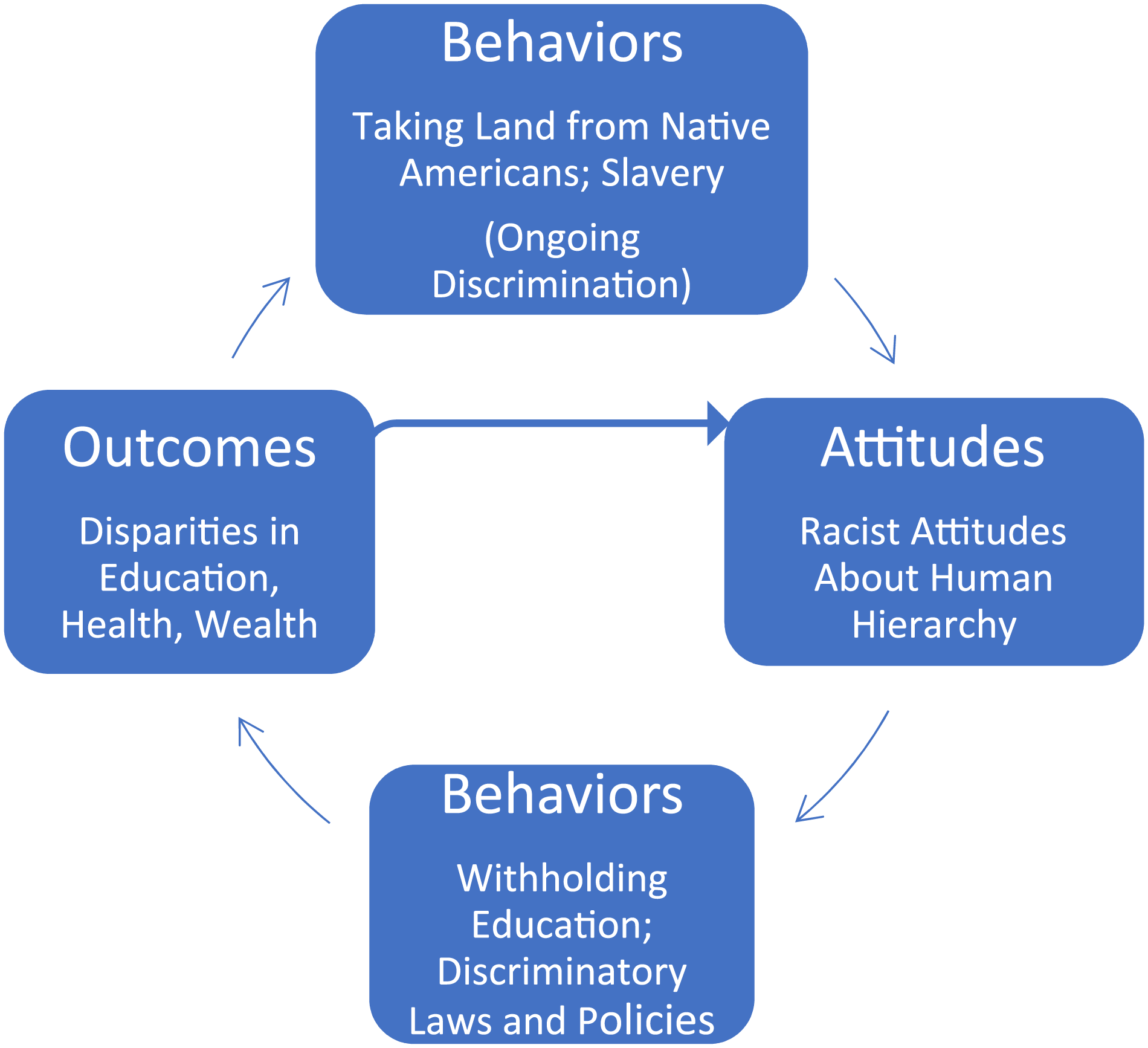
Native Peoples in the United States
When Europeans came to the Americas in 1492, they met the Indigenous peoples who viewed themselves as stewards of the land (Boyd, 2021; Mark, 2023). The debate about the number of people living in what is now called the United States at that time is still not settled (Lord, 1997), but some contemporary scholarship suggests that the population was at least several million (Statistica, 2024). Nonetheless, European settlements could not expand without removing Indigenous populations from the lands that they were stewards of. As a result, beginning in the late 1400s, Europeans pushed Native Americans living in the east westward as colonies were established. Thus, even before the start of the slave trade, the notion of Whites as a superior group began to emerge in the Americas. The notion of Whites as superior to Native Americans continued when the federal government was established, and the Federal government orchestrated the wholesale removal of Native Americans to reservations (Brown, 2024; Office of the Historian, 1830).
Rationalizations for the treatment of Native Americans were (a) Europeans were superior based on more advanced industrial development; (b) the concept of manifest destiny (Heidler & Heidler, 2024), which argued that the United States had a divine right to expand its borders; (c) the superiority of Christians to non-Christians, including Native Americans and later Black populations; and (d) the belief that non-Christians needed to be controlled and brought into the faith. The imperative to bring Christianity to heathens (i.e., Native Americans, and later, Blacks) was in keeping with the biblical edict to spread God’s word, and eventually resulted in the boarding schools run by churches which systematically tried to erase Native American culture and language from Native American children. The concept of manifest destiny was an extension of the concept of the Divine Right of Kings (2006), a political doctrine that supported absolute monarchies in Europe and that was easily reconceptualized as the divine right of Whites in the United States. A contemporary iteration of this belief is the prosperity gospel, which claims that the ability to amass wealth is a sign of God rewarding you for faith and morality (Kimber, 2018). When one considers the differences in wealth across ethnic-racial groups in the United States, the implication is clear that members of some groups are more favored by God than others.
Blacks in the United States
The growth of the plantation system, “an early capitalist venture” that required “cheap labor…to cut production costs and maximize profits” (National Geographic, 2024), provided another impetus for engaging in behaviors that facilitated the development of racist attitudes. The first set of workers on plantations were indentured servants who had to be freed and provided with land or other resources after their indentureship ended (National Geographic, 2024). With the enormous growth of cotton, sugarcane, and tobacco plantations, the need for cheap labor on an ongoing basis far exceeded the supply of indentured servants. Slavery was already a standard practice in many parts of the world in the 1400s and 1500s (Altman, 1997; Meltzer, 1993) and the Spanish had brought Black slaves to Florida in 1565 (Waxman, 2019). Subsequently, Black slaves became the permanent workforce on the plantations in the United States and the rest of the Americas. Moreover, although we associate slavery with the Southern states, the enslavement of Black peoples was written into the laws beginning in the now liberal states in the Northeast: Massachusetts in 1641, Connecticut in 1650, and Rhode Island in 1652. In other words, slavery was an institution that was embraced by individuals across the United States.
How does one justify the decision to treat another group of human beings as property? Again, justifications were easily found. First, Blacks, like Native Americans, were heathens who needed to be brought to Christianity (Fredrickson, 2003), a viewpoint supported by the church (Gerbner, 2022; Swarns, 2021). Second, Blacks were physically different than Whites, highlighting that they were clearly an outgroup. Third, the plantations could not prosper without Black labor, strongly incentivizing the justification that “Blacks were inferior and in need of ‘civilization’” (Altman, 1997, p. 232). These rationalizations provided ample justification for enslaving Blacks, which set the stage for changes in attitudes towards Blacks (e.g., that Blacks were subhuman), which arguably allowed Whites to maintain a positive view of themselves (Crisp & Turner, 2020; Festinger, 1957).
When the 13th Amendment abolished slavery almost 160 years ago in 1865, it had been 300 years since Black slaves were first brought to the United States. Thus, the United States as a society has supported slavery for far longer than it has not. Moreover, although there are multiple reasons for the abolition of slavery, some historians (e.g., Williams, 1964) have argued that capitalism played a role in ending slavery. Williams (1964) contended that the slaves were freed because slave-dependent plantations had ceased to be profitable. In other words, ending slavery was not about acknowledging the inhumanity of slavery or recognizing and accepting the humanity of Black peoples; rather, it was about not needing slave labor anymore, because maintaining slaves was no longer financially viable for the plantation economy. In the next section, we highlight the behaviors that continued to fuel racism and the denial of education and training to Blacks and other people of color.
Behaviors
Individual
When people think of racist behaviors, they often focus on individual behavior, brought to life visually in television shows and movies, and many people of color can recall instances when they experienced discriminatory behaviors from individuals. In a 1996 study, Landrine & Klonoff, 1996 indicated that 98.1% of their sample of 153 African American participants reported experiencing racist discrimination in the past year and the entire sample reported having experienced racist discrimination in their lifetimes. These findings are not limited to Black Americans. For example, in a 2007 study of a representative sample of 1105 African American, Asian American, and Hispanic adults, 92% of African Americans, 85% of Hispanics, and 57% of Asian Americans agreed that their community experienced a lot of discrimination in the United States (New America Media, 2007).
Using data from the Pew Research Center, Lee et al. (2019) found that between 50% and 75% of Asian, Black, and Hispanic adults report experiencing discrimination; they concluded that not only do “non-Whites in the United States experience more discrimination than their White counterparts” (p. 13), but also that these figures are probably an underestimate of discrimination prevalence rates. And in a recent survey, Artiga et al. (2023) found that people of color feel less safe in their homes and neighborhoods and report more discrimination in daily life.
Systemic and Structural
Although the focus on the behaviors of individuals is important, it is critical to recognize that individual racist behaviors take place in the context of systems and structures in which they are sanctioned—that is, supported by both societal conventions and the actions or “behaviors” of governmental entities. Since the 1500s, there have been multiple actions by local, state, and federal governments and by society more generally that have supported discrimination against people of color, and thus supported the perpetuation of the discriminatory behaviors–racist attitudes–more discriminatory behaviors cycle. A brief and necessarily limited overview of a few of these actions will make this point more clearly.
Societal Actions and Native Americans
The Louisiana Purchase in 1803 and the end of the War of 1812 resulted in the United States acquiring hundreds of square miles of land where several tribes of Native Americans lived, and the United States paid veterans of the War of 1812 with land occupied by Indigenous Americans in Arkansas, Illinois, and Michigan (Brown, 2024). The Indian Removal Act of 1830 established a process whereby the [United States] President could grant land west of the Mississippi River to Indian tribes that agreed to give up their homelands (Office of the Historian, 1830). Although the removal of Native Americans was supposed to be voluntary, the “forced removal, which occurred throughout the late 1830s, became known as the Trail of Tears…[and] marked the completion of ethnically cleansing Indigenous peoples from east of the Mississippi River” (Brown, 2024). Treaties that allowed tribes to keep their lands and retain their sovereignty were lost or broken.
Societal Actions and Black Americans
The 13th Amendment abolishing slavery in the United States and its territories was passed in 1865 (Smith, 2003d). However, ending a practice that had been law of the land for 300 years did not end the attitudes that had developed to justify the practice. In the same year that the 13th Amendment was ratified, the Klu Klux Klan was formed in Pulaski, Tennessee (History.com, 2024), and the Black codes and the Jim Crow laws restricting the rights of Blacks followed shortly thereafter. The 14th Amendment, ratified in 1868, included a provision to reduce the representation of states that did not allow all males (except Native Americans) to vote, but this provision was not enforced (Smith, 2003c). The 15th Amendment, ratified in 1870, specifically granted Black men the right to vote (Smith, 2003b), but it is worth noting that Native Americans did not get the right to vote until the passage of the Indian Citizenship Act of 1924, four years after women of other groups got the right to vote in 1920. Despite the passage of the 15th Amendment, Black males continued to be disenfranchised through a variety of actions (e.g., literacy tests; not being allowed to register as a voter; Smith, 2003b). These actions, as well as segregation in hospitals, public parks, phone booths, restaurants, and every other area of living, were the result of local and state laws designed to circumvent the 13th, 14th, and 15th Amendments.
However, many of these discriminatory laws were nationalized in 1896, when Homer Plessy, an African American male challenged the Louisiana law which indicated that he could not ride in the same car as Whites. In a 7–1 decision, the Supreme Court upheld the Louisiana law. The Court indicated that the Louisiana did not violate the 13th Amendment “because the ‘assumption that the enforced separation of the races stamps the colored race with a badge of inferiority’ was false” (Smith, 2003e, p. 260). The Supreme Court also ruled that the Louisiana law did not violate the 14th Amendment’s equal protection clause because “racial segregation was a reasonable exercise of a state’s police powers,” and that the equal protection clause could not have been “intended to abolish distinctions based on color or to enforce social, as distinguished from political equality or a commingling of the two races” (Smith, 2003e, p. 260). Thus, the Supreme Court provided a constitutional right to discriminate against Black Americans.
Societal Actions and Asian Americans
Although the first Asian settlement in the United States was founded in Louisiana by Filipinos who escaped from the Spanish in the 1700s (Aráullo, 2023), Asians began to emigrate to the United States in greater numbers in the mid-1500s when Chinese men arrived to work in the gold mines in California (History.com, 2023). A substantial number of Chinese also worked on the transcontinental railroad, which was finished in 1869. In parallel to the restrictions on Blacks and Native Americans, legal restrictions were imposed on Asians. The Page Act of 1875 restricted bringing in laborers from Asian countries, including China and Japan, and stopped Chinese women from emigrating so that the Chinese men could not start families in the United States (History.com, 2023). A few years later, the Chinese Exclusion Act of 1882 imposed a ban on Chinese workers entering the United States and barred Chinese immigrants from becoming citizens.
There were massacres of Chinese laborers in Wyoming in 1885 and in Oregon in 1887 (History.com, 2023). In 1885, a Chinese family had to go to the California Supreme Court to force the San Francisco school district to allow their daughter to attend school, and in 1895, a mob of people burned Chinatown and forcibly evicted the Chinese from Tacoma, Washington (Wu, 2022). The ban on Chinese becoming citizens enacted in 1882 was renewed every 10 years until 1943, when anti-Asian sentiment began to focus on Japanese Americans during World War II. In 1942, Japanese Americans had to register their families and were sent to internment camps, with only a few days “to settle their affairs” (Editors of the Encyclopaedia Britannica, 2024). The term, Yellow Peril, used in reference to both the Chinese and Japanese, was based on the belief that people from Asia would contaminate and destabilize America.
Societal and Hispanic Americans
The Latine population has also experienced its share of discrimination beginning in the mid-1800s. After Texas won its war of independence from Mexico in 1836, it was annexed into the United States in 1845. After winning the Mexican American War (1845–1848), the United States acquired land which would become the states of Arizona, California, Nevada, New Mexico, Oregon, Texas, Utah, and Washington, as well as portions of Colorado, Kansas, Montana, Oklahoma, and Wyoming. Mexicans who remained in the newly expanded United States became United States’ citizens, resulting in a substantial Mexican American population. As with Black Americans, Mexican Americans were frequently treated as second class individuals who had no rights. In 1931, police officers raided Olvera Street in Los Angeles, where they arrested Mexican Americans for deportation to Mexico “regardless of their citizenship or immigration status” (Blakemore, 2023). In one court case (i.e., Roberto Alvarez v. Lemon Grove, 1931), the judge ruled that a school district’s exclusion of Mexican American children was “a blatant act of segregation”…[However], “beyond the city limits of Lemon Grove, California, the segregation of Mexican children and children of Mexican descent persisted” (Madrid, 2008, p. 18).
Societal Actions and Arab, Middle Eastern, and North African Americans (AMENA)
According to Minority Rights Group (n.d), there were three major waves of migration to the US from Arabic-speaking countries: The first, between 1890 and 1920, brought over 250,000 people from what was then Greater Syria and other regions; these arrivals were mostly Christian peasants seeking economic opportunity. The second wave came after the Second World War and the creation of Israel, when tens of thousands of Palestinians emigrated to the US. After 1965, when prejudicial immigration laws were reformed, there was a third wave of Arab immigrants, numbering about 250,000.
Anti-AMENA sentiment also began relatively recently in historical terms. AMENA Americans have been frequent targets of FBI investigations since the 1970s, and hostilities between the US and Arab countries have yielded upticks in discrimination against members of this community. The Oklahoma City Bombing in 1995 was blamed on Arabs by both media and government sources until the arrests of White nationalists for the crime, and post-September 11, 2001, Arab Americans across the country were subjected to harassment and discrimination both in their communities and at the hands of state agencies including arbitrary detention, racial profiling and aggressive checks and detention for questioning in US airports and border crossings. (Minority Rights Group, n.d).
More recently, then President Donald Trump signed Executive Order 13,769 to protect the nation from foreign terrorists (Federal Register, 2017). This order, dubbed the “Muslim ban,” stopped refugees and travelers from entering the United States from seven Muslim-majority countries. Syrian refugees were banned indefinitely and individuals from Iran, Iraq, Libya, Somalia, Sudan, Syria, and Yemen could not enter the United States for 90 days (Amnesty International, 2020). The ban was ultimately overturned by a U.S. Appeals Court but the former president has indicated that if he is re-elected, he intends to reinstate the Muslim ban (Noury, 2023).
Summary
This very abbreviated history is intended to highlight the point that the racist behaviors of individuals and communities were taking place within a context of racist actions by courts and policy makers, who were indicating that the behaviors were justified. Moreover, government-sanctioned actions that degrade and dehumanize people of color, although far less frequent, are still occurring. For example, in 2023, the Department of Education in Florida concluded that a course on African American studies developed by the College Board “lacks educational value” (Bennett & Conciatori, 2023). In an even more frightening example, three Mexican migrants—a woman and two children—drowned in the Rio Grande while trying to enter the country illegally, because the Governor of Texas “did not allow Border Patrol agents to attempt to rescue the migrants” (Montoya-Galvez, 2024). The pervasive racism and discrimination on both the individual and systemic levels have disadvantaged people of color in the context of obtaining professional degrees (Dixson, 2020; Dixson & Gentzis, 2023; Merrick et al., 2018; Mulligan et al., 2019) in psychology and other fields. They have also limited hope as well as educational and socioeconomic opportunity for people of color, lowered teacher expectations of students of color, and led to models such as cultural ecological theory and stereotype threat. In the next section, we document the contemporary consequences of these behaviors.
Consequences
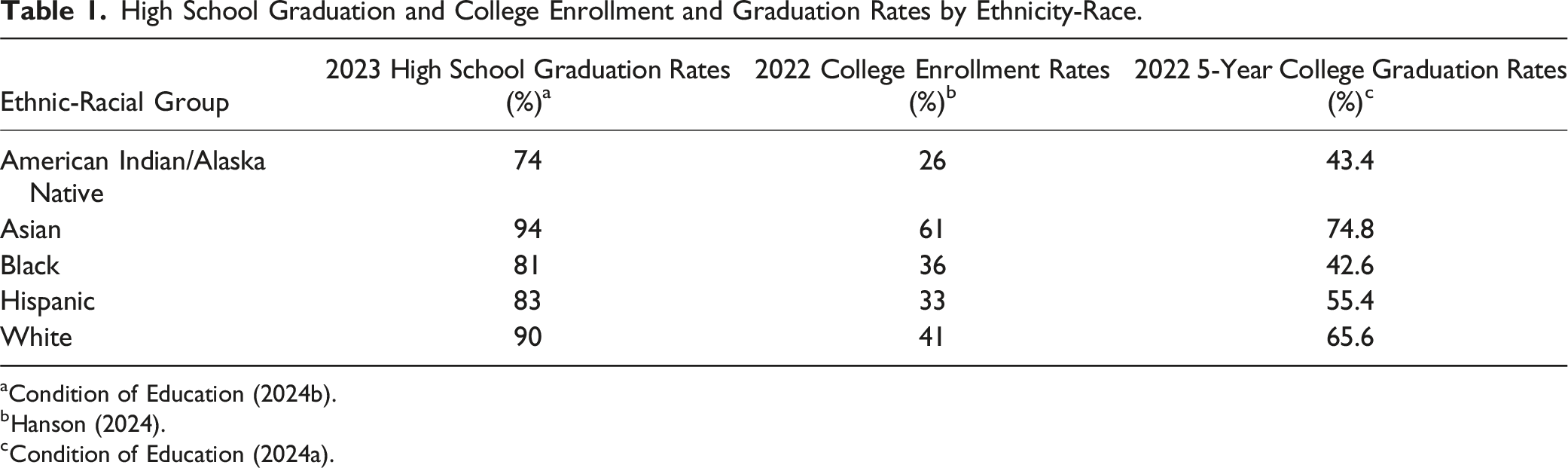
Educational disparities by ethnic-racial group are one of the many consequences of historical discrimination in the United States. The negative consequences start in the womb (e.g., people of color typically receive lower quality prenatal care; Peters, 2022) and are encountered throughout development (e.g., Dixson & Gentzis, 2023). Moreover, in many cases, these disadvantages have a cumulative effect on individuals of color, with each subsequent challenge affecting them more adversely and previous negative experiences shaping future outcomes (Wallace et al., 2016). For example, Lei et al. (2021) found that the more discrimination reported over a 10-year period, the more one reported psychological distress (risk ratio [RR] = 2.03) and poor health (RR = 1.26). Similarly, Wallace and colleagues (2016) found that after being the target of racial discrimination, people of color tended to avoid places where they might encounter future discrimination (b = −2.15, 95% CI: −3.62 to −0.67). In sum, the behaviors outlined in the previous section lead to a complex web of disadvantages and challenges for people of color that affect their ability to pursue and obtain the education and training required for a professional degree.
High School Graduation and College Enrollment and Graduation Rates by Ethnicity-Race.
Effects of Poverty
One of the most impactful consequences of historical racism and discrimination has been the impoverishment of people of color (Baker, 2022). In 2022, 30% of Black children, 29% of American Indian/Alaska Native children and 22% of Hispanic/Latino children lived in poverty compared to 11% of Asian/Pacific Islander children and 10% of White children (The Annie E. Casey Foundation, 2023). This consequence is salient because it affects, both directly and indirectly, a multitude of factors that have ramifications for the education and training of professional students of color, including access to early educational opportunities, exposure to stress, and access to appropriate nutrition and health care.
A host of research directly links childhood poverty to poor cognitive (e.g., Hair et al., 2015; Pizzol et al., 2021), social-emotional (e.g., Lee & Zhang, 2022), and language (e.g., Greenwood et al., 2020) development. Reasons for these negative outcomes are varied, including suppression of grey matter development, brain tissue damage, lower overall brain efficiency, increased lead exposure, and a reduction of meaningful interactions with parents and siblings. Poverty encumbers the educational potential of students of color via delaying vital academic experiences during critical early childhood windows (Peet et al., 2015; Steenbergen-Hu et al., 2016). Children of color are born with similar cognitive abilities as their White student peers but begin to lose ground by the time they are 2 years old (Fryer & Levitt, 2013). Early childhood education is the foundation on which all other educational experiences build (Mulligan et al., 2019). Childhood poverty has an adverse effect on both the quality and quantity of educational experiences that children are exposed to from birth to age 5 (Peters, 2022; Schady et al., 2015). Specifically, childhood poverty is linked to a decrease in exposure to millions of vocabulary words (Gilkerson et al., 2017), a 20% decrease in education center program participation (Magnuson & Waldfogel, 2016), a 24% decrease in preschool participation (The Annie E. Casey Foundation, 2020), and a 92% decrease in access to educational books (Neuman, 2007).
Thus, students of color have a reduced annual academic growth rate (Mulligan et al., 2019) as well as lower overall educational attainment (Reynolds et al., 2018). Similar to its impact on general child development, poverty places many students of color on a less advantageous academic trajectory than their White counterparts (Hair et al., 2015; Mulligan et al., 2019). This disparity in educational outcomes increases the longer the students are in the school system, as the more advantaged students are better positioned to access and build upon academic exposures and opportunities
Poverty also has indirect effects on the education of students of color. For example, childhood poverty is associated with (a) deficits in executive functioning and emotional dysregulation (Obradović & Armstrong-Carter, 2020); (b) about a 500% increase in the odds of developing depression (Merrick et al., 2019); (c) increased rates of schizophrenia, anxiety, and substance abuse (Fell & Hewstone, 2015); and (d) increased exposure to adverse childhood experiences, such as childhood abuse and neglect, domestic violence, and incarcerated relatives (Centers for Disease Control and Prevention, 2021). For people of color, some variation of these challenges has to be overcome, in addition to the typical rigors of schooling, for them to successfully navigate the education system through to post-graduate professional training (Dixson, 2020). Metaphorically, poverty-related stress means that people of color are competing against a well-rested White person immediately after running multiple 100-yard dashes without a break. Although success is not impossible, they are at a significant disadvantage in their pursuit of the limited spaces available for professional training (Woo et al., 2023).
Educational Consequences
Other impactful consequences of historical racism and discrimination are specific to the educational domain. Students of color face a host of racism-related challenges in educational settings that affect their ability to pursue and obtain professional training. These challenges include lower academic expectations, the lack of exposure to culturally relevant curricula and teaching practices, and more severe disciplinary actions.
Lower Academic Expectations
Research indicates that a majority of educators have meaningfully lower academic expectations for students of color compared to White students (Harber et al., 2012, 2019). For example, in a nationally representative sample of over 16,000 students, Cherng (2017) examined how race related to teachers’ perceptions of student ability. After controlling for students' academic performance and socioeconomic status, Cherng found mathematics and English teachers were 12%–42% and 35%–47%, respectively, more likely to perceive academic material as being too difficult for students of color (i.e., Black, Asian, and Latino students) compared to their White counterparts. These lower academic expectations extend beyond the classroom, and students of color are over-identified for special education and under-identified for gifted education (Card & Giuliano, 2016; Morgan, 2020). The circumstances surrounding gifted education are particularly problematic because when more students of color are given the opportunity to display their advanced abilities, their representation within gifted education increases significantly (Card & Giuliano, 2016).
The expectations of school personnel are important for the academic growth and success of all students. They meaningfully shape students’ learning opportunities and academic experiences. Teacher expectations also influence students’ motivation, academic engagement, academic self-concept, and future academic achievement (Hornstra et al., 2018; Szumski & Karwowski, 2019; Tyler & Boelter, 2008). When students of color encounter lower academic expectations frequently, they are less likely to live up to their academic potential (Steenbergen-Hu et al., 2016). Thus, the academic trajectories of students of color are significantly hobbled by pervasive low academic expectations within academic environments.
A related issue is that the majority of educators who teach students of color are White (National Center for Education Statistics [NCES], 2023). Schaeffer (2021) found in a nationally representative sample that in schools where more than half of the students are students of color, White teachers made up 42.7%–79.2% of the teaching staff. This finding has important ramifications for students of color, as they (a) are insufficiently challenged on academic assignments (e.g., Harber et al., 2012, 2019), (b) develop less trust in teachers (e.g., Yeager et al., 2017), (c) are more likely to be placed in detention, suspended, expelled (Lindsay & Hart, 2017), and (d) receive fewer advanced educational opportunities (e.g., Nicholson-Crotty et al., 2016). Indeed, research has indicated that a mismatch between educators and students often leads to low academic outcomes for minoritized children in public prekindergarten classrooms and elementary, middle, and high schools….and that ethnic-racial minority children benefit from having access to teachers and professionals of the same ethnic-racial groups as themselves. (American Psychological Association Board of Educational Affairs Racial Disparities Task Force, 2023)
Although most of these factors, taken individually, are unlikely to completely deter a student’s educational progress, when considered together, they form a formidable barrier that students of color have to overcome to thrive academically.
Lack of Exposure to Culturally Relevant Curricula and Teaching Practices
A third challenge is that in the typical American classroom, from kindergarten through the doctoral degree, the curriculum mirrors mainstream American culture. In a nationally representative sample of teachers, principals, and school district leaders, Sparks and Harwin (2022) found that 68% of K–12 teachers were not implementing “a lot” of culturally responsive instructional strategies. For students of color, a Eurocentric curriculum is unlikely to be reflective of their lived experiences, making the academic content less personally meaningful and interesting to them (Will & Najarro, 2022). Further, being presented an educational curriculum that is not reflective of one’s culture and lived experiences is a subtle indication that one may not belong within the academic domain and that one’s culture and customs are not valued (Banks, 2016).
The importance of culturally relevant educational practices goes beyond merely feeling good about oneself. Byrd (2006) found that culturally relevant teaching practices are positively associated with motivation for education, academic competence, and belonging within the academic domain for students from all ethnic/racial backgrounds. Similarly, López (2016) found that engaging in culturally responsive teaching practices with culturally relevant academic content is associated with as much as a full standard deviation change in academic outcomes (e.g., reading ability) for some students of color. Thus, culturally relevant teaching can increase the academic outcomes of students of color.
Being the Target of Excessive Discipline
A host of research studies have indicated that students of color are disciplined at disproportionally higher rates that their White peers (e.g., Del Toro & Wang, 2021; Wakschlag et al., 2014). For example, Skiba et al. (2011) found that African American and Hispanic American students were much more likely to receive an out of school suspension or an expulsion (i.e., African American: 3.75x, Hispanic: 2.06x) for engaging in minor misbehaviors (e.g., minor inappropriate language use and slight defiance) compared to their White peers. In a series of studies, Okonofua and Eberhardt (2015) found that teachers were not only more troubled (.40 ≤ d ≤ .90) by the infractions of African American students compared to White students, but also believed that the African American students needed to be disciplined more harshly because they felt that the infractions were more indicative of a pattern (d = .40). Unfortunately, this belief persists despite compelling evidence indicating that misbehavior occurs equally across ethnic-racial groups (Skiba & Williams, 2014). Moreover, similar patterns of findings have been reported across different ethnic-racial students of color, schools, levels of education, and socioeconomic statuses (see Rocque & Paternoster, 2011 for a review).
This use of exclusionary discipline strategies results in many students of color missing educational instruction (Losen et al., 2015), and thus exacerbating already existing achievement disparities (Jez & Wassmer, 2015). Wang et al. (2023) found that being suspended was associated with lower test scores (−.16 ≤ r ≤ −.15) and grade point averages (−.29 ≤ r ≤ −.24), and in a meta-analysis of about 40 studies, Noltemeyer et al. (2015) found that suspensions were associated with lower academic achievement (r < −.21) and higher rates of dropping out (r = .28). Altogether, students of color are put at a significant academic disadvantage due to disproportionately being the target of school-based discipline.
Impact of Challenges
All of these challenges likely have additional adverse effects beyond each individual challenge. These additional effects are difficult for scholars and educators to completely understand, measure, and counteract due to the multitude of factors involved in an outcome. However, given (a) several studies have connected the above challenges and poorer academic outcomes (e.g., Byrd, 2006; Wang et al., 2023) and (b) research that indicates that academic disadvantages compound (Dixson, 2020), the cumulative effect of these challenges altogether is likely worse than the sum of the individual challenges. The cumulative adverse effects of these challenges likely contribute to the documented disparities in graduation rates, drop-out rates, and other achievement measures between students of color and their White counterparts (e.g., Robbins et al., 2004). In sum, systemic and structural issues place students of color in the K–12 system on a downward academic trajectory compared to their White peers, contributing to the educational disparities reported above.
Recommendations for Action
In the previous pages, we have argued that the horrific actions of early European settlers (e.g., the massacre and displacement of Indigenous Americans, slavery) started a vicious cycle of dehumanization of people of color, which became self-perpetuating and was institutionalized in American society. Racism and discrimination did not end with slavery nor with the Civil Rights Act of 1964. Racist and discriminatory actions on the part of individuals and institutions, supported by governmental policies are still present in contemporary society. In this section, we offer a few recommendations on ways in which we can help address these concerns.
Recommendations for Actions by Psychology
• • • • • •
Recommendations for Action by School Psychologists
• • • •
Recommendations for Advocacy by Psychology
• • • • • •
Conclusion
In this paper, we were asked to discuss the historical context leading to the lack of people of color in professional psychology. As researchers who also study talent development in the context of gifted education, we are acutely aware that the solution to more health service and applied psychologists cannot start in graduate school, or even at the undergraduate level. The problem is ultimately a societal one and it needs solutions that include the society (Peters, 2022; Worrell, Dixson, et al., 2020; Worrell, Hughes, et al., 2020b). To get to a place where the student bodies in colleges and universities and professional and graduate schools look like the United States requires developing a substantial pipeline of students of color, beginning in the elementary grades and moving through the educational system, so that there are substantial numbers of students who can pursue professional degrees in psychology in graduate school.
The broader reasons why people of color are underrepresented in professional psychology include higher rates of poverty, adverse educational environments, and lower levels of hope, all of which are a direct result of the history of pervasive racism and ongoing discrimination. If these broader circumstances do not change, people of color will remain in inferior positions relative to Whites in the domain of professional training as they will not have the tools that are needed to thrive in the United States’ educational system. Solutions must include (a) high quality educational experiences, alongside resources and academic and socioemotional supports (Dixson, 2020); (b) facilitating a love of learning as well as the belief that education will actually lead to a better life and society (Dixson et al., 2020); and (c) professional connections and mentorship throughout the educational journey (Worrell & Dixson, 2018). To disrupt the current system, radical action is needed. Radical action begins with acknowledging that the United States of America would not be America without the myriad coerced contributions of people of color across the generations.
Footnotes
Declaration of Conflicting Interests
The author(s) declared no potential conflicts of interest with respect to the research, authorship, and/or publication of this article.
Funding
The author(s) received no financial support for the research, authorship, and/or publication of this article.
