




Abstract
In England and Wales, Domestic Homicide Reviews (DHRs) examine domestic abuse (DA)-related deaths. Despite perpetrators being a potentially important albeit difficult source of information, no study has investigated perpetrator involvement in DHRs or that of others like their family. Data is reported from a documentary analysis of 60 DHR reports and a reflective thematic analysis of 29 stakeholder interviews. This paper explores if, why, when, and how perpetrators—directly or by proxy—are involved in DHRs and the potential benefits but also perceived or actual risks and challenges. Practice and policy implications, and areas for future research, are identified.
Keywords
Domestic homicide is a global problem to which one response is Domestic Violence Fatality Review (DVFR). DVFR seeks to learn from domestic abuse (DA)-related deaths—commonly intimate partner homicides (IPH) or adult family homicides (AFH) but sometimes others, for example, deaths by suicide—and identify opportunities for practice, policy or systems change (Dawson, 2021; Websdale, 2020). Whilst differing by country, DVFRs focus on accountability, not blame, and gather information from stakeholders—like crime, health, social care, and DA agencies—to build a picture of events before a death (Dawson, 2017). DVFRs have mainly developed in English, high-income countries (Dawson, 2017), with wider adoption being explored (UNODC, 2023). In England and Wales, a DVFR system—known as “Domestic Homicide Review” (DHR)—has operated since 2011 (Chantler et al., 2020).
One emerging practice area is testimonial network involvement, encompassing a victim’s family, friends, neighbors, and colleagues (Rowlands & Cook, 2022) Testimonial networks can provide knowledge about and/or perspective on a victim’s experiences, addressing a gap as such information might only be partly or not known to agencies. In DHRs, testimonial network involvement is part of the effort to “see the homicide through the eyes of the victim” (Home Office, 2016, p. 17). To date, DHRs have the most developed model for involvement, particularly for a victim’s family (Mullane, 2017; Rowlands & Cook, 2022), with approaches developing elsewhere, for example, Aotearoa New Zealand (Roguski et al., 2022).
However, another way of gathering information is to involve the perpetrator. 1 Perpetrator involvement is potentially significant because understanding their trajectories, actions, and beliefs is vital to preventative efforts, albeit with difficulties in access to and/or the reliability of accounts (Dobash & Dobash, 2015; Evans et al., 2023). Within DVFR, while some agencies may have had contact with a perpetrator, others will have had little or no contact, limiting the information available. Thus, in the same way that the involvement of a victim’s testimonial networks can address an information gap, so too might a perpetrator’s involvement. Yet, to date, this has been little considered: illustratively, in DHRs, “this practice, its extent, and if and how perpetrators contribute, is unknown” (Rowlands & Cook, 2022, p. 564, n.9). Similarly, perpetrator involvement might be achieved by proxy through their testimonial networks, but our knowledge about this is scant (although there is some evidence of the challenges in AFHs where family members are related) (Rowlands & Cook, 2022). More broadly, in the United States, in addition to potentially interviewing perpetrators (Websdale, 2020), their families may also be involved (Websdale, 2012). However, while the involvement of perpetrator and their testimonial networks is generally identified as a DVFR practice (UNODC, 2023), there has been little analysis of it.
Addressing this lacuna, I take DHRs in England and Wales as a case study. I first summarize practice, policy, and research knowledge around perpetrator involvement. I then present my methodology and findings based on stakeholders’ perceptions and experiences of perpetrator involvement and what is recorded in published DHR reports. Finally, I discuss findings, implications, limitations, and future research.
DHRs in England and Wales
DHRs examine killings by a former or current intimate partner, family or household member, and deaths by suicide (Home Office, 2016). After a DA-related death, the local partnership body responsible for community safety should be notified, and if the threshold is met, a DHR should be commissioned. Thereafter, an independent chair is appointed to lead a multi-agency review panel. Testimonial networks, most notably family, may also be involved. Following information sharing and deliberative dialogue, learning and recommendations are identified. These findings are captured in a DHR report and—following approval by a national quality assurance panel (“the QA panel”) convened by the responsible government department (the Home Office)—usually published with an action plan (Rowlands, 2020).
Perpetrator Involvement in DHRs
As noted, in attending to a victim’s subjective experience, DHRs seek victim testimonial network involvement. However, there is also a presumption—albeit little explicated—that perpetrator experiences should be considered. Illustratively, the statutory guidance governing DHRs explains that family involvement can help a review panel “see the homicide through the eyes of the victim and/or perpetrator” (emphasis added) (Home Office, 2016, p. 17). In a DHR, a perpetrator may be involved directly or by proxy, that is, via their testimonial networks.
For direct perpetrator involvement, “where appropriate, [they can] contribute” (Home Office, 2016, p. 14). Yet, the statutory guidance only addresses:
The criminal justice (CJ) process and/or coronial inquest;
Data protection (including access to perpetrator records); 2 and
Anonymity upon publication (Home Office, 2016, pp. 24–27).
These limitations are greater still for involvement by proxy. Focused on a perpetrator’s family, the statutory guidance highlights they “may also have relevant information to offer” but offers little direction bar noting risk assessment (i.e., to or from the victim’s family, particularly in so-called “honor”-based violence cases). The guidance also identifies wider perpetrator testimonial networks like friends, employers, and colleagues, but except for providing an information leaflet, how to do this is unaddressed (Home Office, 2016, p. 19).
Theoretical Framework
In approaching DHRs, I take a feminist perspective, reflecting the salience of gender in the profile and understanding of DA-related deaths (Enander et al., 2021). More specifically, feminist activism and research has played an important role in advocating for the development of such systems as a response to DA-related deaths. A feminist perspective is particularly focused on whose voice is heard. Given the tragic absence of a victim this has, as noted above, led to efforts to center victims by securing testimonial network involvement (Dawson, 2021). In this context, a focus on perpetrator involvement, either directly or by proxy via their family, must be approached with caution. That is because, while better understanding perpetrators is beneficial for the reason already stated, a feminist perspective highlights the challenges and risks of re-centering those (usually men) responsible for violence and abuse (Hearn, 1998). To navigate these issues, I draw on Ahmed (2019) to “think from use” (p. 65). In “What’s the Use? On the Uses of Use,” Ahmed traces the politics of use, including what and how things are (un)used, the choices made about what constitutes appropriate use, and who makes these decisions. Grounded in a feminist perspective, thinking about perpetrator involvement in DHRs in terms of use is a way of exploring if, why, when, and how perpetrator information is or is not used and, critically, what this means for the review of DA-related deaths. Such an analysis adds to the understanding of the operational, discursive, and symbolic aspects of DHRs (Cook et al., 2023).
Methods
Study Design
This paper is derived from a doctoral study based on published DHR reports, a web-based survey, and interviews with DHR stakeholders. Only data from the DHR reports and interviews are reported here.
By way of additional context, first, I have led DHRs as an independent chair. Thus, I am an insider. My practice experience has influenced my research, including enabling access (e.g., by affording credibility) and shaping analysis (e.g., by informing coding decisions). While beneficial, insider status is double-edged, potentially adversely impacting others (e.g., interviewees making assumptions about my knowledge) and/or myself (e.g., what I take for granted). While space precludes further exploration, transparency and providing a rich data description means my methods and findings can be scrutinized.
Second, I am a white British, cisgender, gay man. Given I am researching (primarily) men’s violence, my positionality has personal, practical and methodological implications (Hearn, 1998). Illustratively, I need to consider my orientation to my research (e.g., I am privileged in the gender order, albeit as a pro-feminist, I challenge this order, and, as a gay man, have a complicated relationship with it). These issues are addressed further in Rowlands (2023).
Interviews
Data Collection
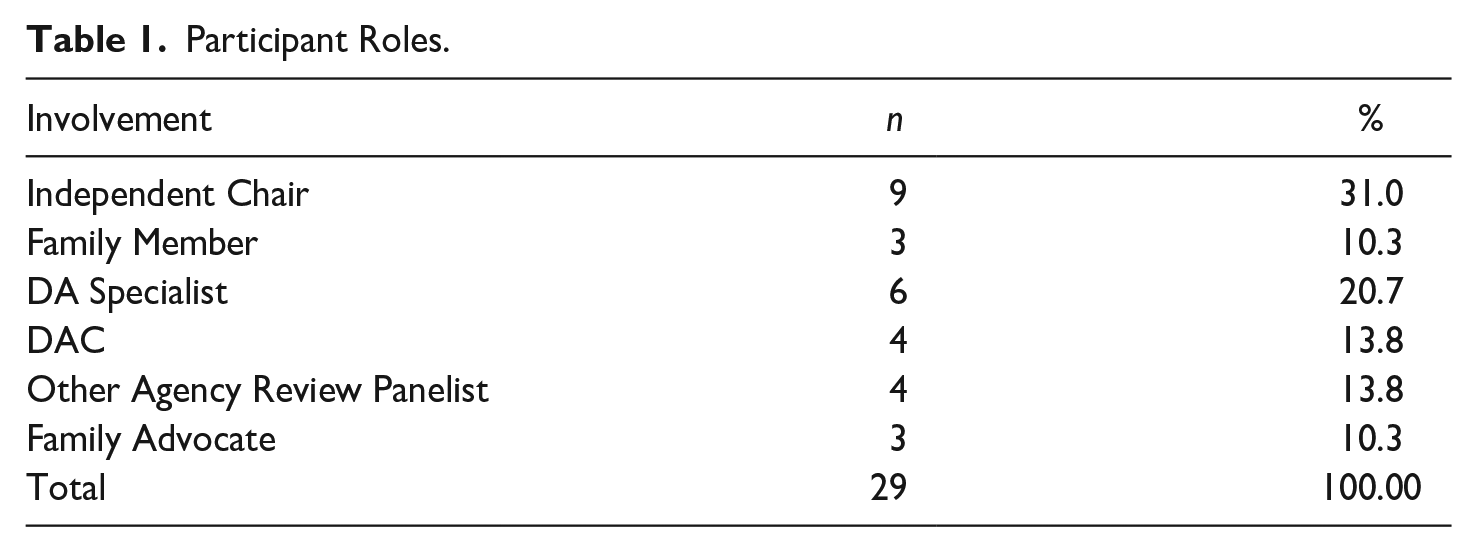
Participants included stakeholders who had participated in a DHR, including independent chairs, review panelists—like DA coordinators (DACs) (who oversee local partnership responses), specialists from DA services, and other agency representatives—and family members and advocates supporting families. Participants were initially recruited for an anonymous online survey using a purposeful and snowballing strategy. Before completing the survey, respondents received information, and informed consent was obtained. A total of 117 survey responses were received. At the end of the survey, respondents were invited to an interview. If respondents agreed, they were asked to provide contact details and then approached, offered further information, and asked to complete a consent form. Forty stakeholders were subsequently interviewed by phone/video conference. Semi-structured interviews explored experiences and perceptions of DHRs. Each interview was audio-recorded, and a transcript produced (if desired, participants could see and comment on this, with “Interviewee Transcript Review” appropriate in sensitive research; see Rowlands, 2021). Pseudonyms protect participant identities, and their role is reported at first reference. See Table 1.
Participant Roles.
Data Analysis
Reflexive thematic analysis was undertaken (Braun & Clarke, 2021). In the doctoral study, one of the themes generated was “practices of review.” Within this theme, the sub-theme “perpetrator involvement” was coded across 29 interviews. These data were extracted, re-analyzed, and re-coded through a close, interpretative reading. Coding drew on my practice experience.
DHR Reports
Data Collection
Assisted by my insider status, I approached the Home Office for information on DHR reports submitted to the QA panel in 2018 and approved for publication. While this information was incomplete, it enabled a targeted search of community safety/other partnership websites. Searches were conducted at the end of 2019 and repeated in 2020, allowing up to 2 years between submission and publication. Exclusions included DHRs I had chaired or where only executive summaries were available. A total of 60 DHR reports were located online: 43 IPHs, 11 AFHs, and six other types of DA-related deaths.
Data Analysis
Document analysis was undertaken (Bowen, 2009). Within the coding schedule/manual, one category was “family, informal network and perpetrator involvement.” Data about the nature of involvement was generated using pre-defined codes based on my practice experience. Coding was usually explicit, although sometimes interpretation was necessary (Rowlands & Bracewell, 2022). Analysis was in Excel with descriptive statistics through SPSS.
Ethics
As a doctoral study, no other researchers were involved. Sussex University provided ethical approval. Considerations included both the ethics of interviewing stakeholders (e.g., well-being during sensitive research) and research with DHR reports (which, although published anonymously, still require ethical engagement, e.g., with the dead and their family) (Cook et al., 2023).
Findings
Themes from the interviews are described first, followed by the DHR report findings, which contextualize the frequency and nature of perpetrator involvement. Four overachieving themes were generated from the interviews: (a) Involving the Perpetrator, (b) Benefits, (c) Challenges and Risks, and (d) Finding the Balance. See Figure 1.
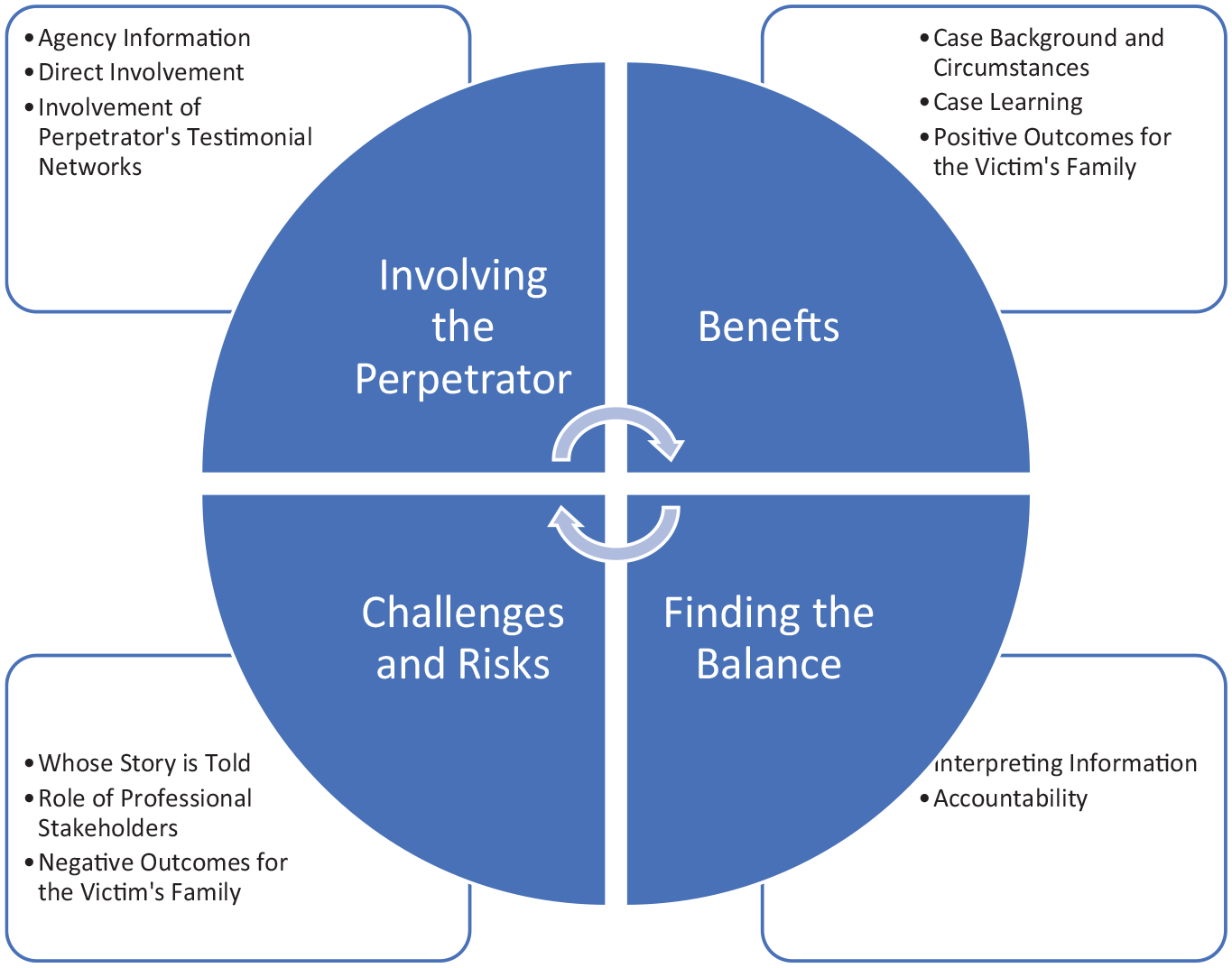
Participant interview themes and sub-themes.
Involving the Perpetrator
Among participants, perpetrator involvement was described as coming about in several ways. Notably, most victim family members were resistant to perpetrator involvement. Thus, Avery (a family member) was critical, stating: “I think I would like to take the perpetrator[’s] side out. I think that once the court show is over, it’s done, you know.” So, too, Isabella (a family member) argued: “It’s wrong, the empathy. There’s too much consideration for the perpetrator.” However, only a few families were involved, while some family advocates shared accounts of family views to the contrary. In contrast, professional participants broadly accepted perpetrator involvement, albeit with varying degrees of concern or support. Three involvement routes were identified.
Agency Information
The doctoral study examined DHR practices, including information gathering from agencies. This was no different for perpetrators and could be important if they had “loads of. . . agency contact” (Caroline, a DA specialist). Examples included contact with CJ and health agencies and also inter-agency work. This reflects the requirement in the statutory guidance for information sharing, including from agencies working with perpetrators (Home Office, 2016, p. 11). Yet, there could be barriers to accessing this information, either generally (because of agency confidence or willingness to participate) or specifically (especially for DA-related suicides, where agencies might feel unable to share information without a CJ outcome, that is, there was not a convicted perpetrator). Given this paper’s focus on perpetrator involvement directly or by proxy, these issues are not further explored.
Direct Perpetrator Involvement
Of the different ways to involve perpetrators, the most discussed was direct involvement, with participants sharing experiences or perceptions of challenges and risks. Illustrating the varying degrees of concern or support for this practice, Lily (a family advocate) explained that involvement was necessary because “it’s part of the guidance.” More purposefully, Margaret identified how, as an independent chair, she tried to “get as much as I can about the perpetrator because. . . [it’s] half the equation.” The responsibility for facilitating perpetrator involvement was identified as mainly falling on independent chairs. Usually, this was facilitated by the police or prison service following conviction, with several independent chairs describing visiting a perpetrator in prison or seeking involvement by letter. While no detailed accounts of seeking or gaining access were provided, Emma (an independent chair) implied that involvement did not always happen, distinguishing between DHRs “where I have talked to the perpetrator.” Supporting the suggestion that perpetrator involvement was not routine, Mia (a DA specialist) referred to participating in a DHR that was “the first one. . . [where] the perpetrator also contributed.” In DA-related deaths by suicide, several participants explained that involvement was often not sought, reflecting concerns about (a) the absence of a conviction, as noted above, or (b) fears of or potential risk to a victim’s family, including harassment by the (alleged) perpetrator or impact on the care of surviving children.
Involvement of Perpetrator’s Family
Other participants discussed involvement by proxy, mainly by the perpetrator’s family and potentially other testimonial network members. Examples included a perpetrator’s sister, who provided information about a perpetrator’s childhood, and members of the community who were “outside of the standard agency contact” (Caroline). However, two issues were of note. First, engagement with a perpetrator’s testimonial networks was not always considered. Bobby (a family advocate) explained, “it’s not consistently that we do interview them, or even contact them to give them an opportunity to contribute.” In Bobby’s view, this inconsistency was because these testimonial networks were seen as compromised because their family member “was. . . a perpetrator of DA.” Second, if involved, this could have—as for a victim’s family, which is discussed below—an adverse impact. Thus, Hudson (an independent chair) shared an example where: The perpetrator’s father was a really nice guy, and he was, you know, very upset about it all, and he didn’t see it coming and blames himself and all of that.
Benefits
The potential benefits of perpetrator involvement—either directly or by proxy—were multi-faceted and contributed to building and learning from a picture of what happened before a death.
Case Background and Circumstances
Leilani (a DAC) summarized this sub-theme, describing the involvement of the perpetrator as about “gaining a better understanding. . . [of] their background.” Background information might be about a perpetrator’s own history and/or relationship(s) (including abusive behavior). Meanwhile, circumstances might include understanding a perpetrator’s help-seeking, including access to and/or contact with agencies, not least “what. . . [agencies] did and didn’t do and [a perpetrator’s] understanding of what was out there to help support them” (Hudson). Several participants emphasized that, without perpetrator involvement, there might be less focus on the individual responsible for the abuse, including their pathway to that behavior, leaving learning less “rounded” (Hazel, a review panelist). Finally, perpetrator involvement might help build a picture of what “led up to it [the death event]” (Harper, a DAC), including the perpetrator’s actions (e.g., a homicide) or the potential impact of their violence and abuse (e.g., a death by suicide).
Case Learning
Perpetrator involvement could enable the learning of lessons because, as Marie (a family advocate) noted, they might “disclose something significant that may have helped prevent the homicide from happening,” which, along with information about case circumstances and background, could help answer the question “why have they done what they did?” (Hazel). Thus, perpetrator involvement could contribute to an improved understanding of the long-term background and/or the events preceding a DA-related death. For example, Owen (a review panelist) described a case which uncovered learning about information sharing between the police and mental health services. More thematically, Hudson explained how learning included “broadening the understanding of what the landscape is out there to support victims and perpetrators” (emphasis added).
Among participants, perpetrator involvement was identified as important for learning vis-a-vis CJ processes. First, if the perpetrator pleaded guilty, there would not be a full criminal trial, so “you never heard the background” (Harper). Consequently, perpetrator involvement could ensure that this background was explored, leading to learning and helping answer a victim’s family’s questions. Second, as DHRs are about learning, while CJ is about culpability, perpetrator involvement could enable an examination of complexities in DA-related deaths. An example several participants provided was where the homicide victim was the perpetrator of DA (and so the homicide offender was the substantive victim). Illustratively, Grace (an independent chair) explained how, in a DHR where a victim of DA had been convicted of manslaughter, by meeting with her, it was possible to “get an understanding of what the relationship had been like” and so contextualize the killing.
Positive Outcomes for Family
As a final sub-theme, although there could be an adverse impact on a victim’s family (discussed below), some participants identified how perpetrator involvement might have positive outcomes and, for some, be welcomed. Several participants highlighted what they felt was an assumption that family might be against perpetrators’ involvement. Yet, although most family members interviewed—like Isabella and Avery (and also some professional participants)—were critical of, or resistant to, perpetrator involvement, this was not always the case. Lily, a family advocate, explained that some families were “keener for that than most chair’s think they would be” and that “by and large they are like, ‘yeh, go and ask him’.” The reason for this was twofold. Perpetrator involvement could be about getting answers “because they [the victim’s family] want to know why, they want to hear from the horse’s mouth as it were, what triggered this or what happened.” Alternatively, a family might be clear about where responsibility lay. Amelia (an independent chair) described one family’s determination that “the focus should be on him and what he did, not their family member”; this then shaped how they engaged in the DHR process.
Challenges and Risks
Despite the potential benefits of perpetrator involvement, there were also perceived or actual challenges and risks, both for the learning generated and the opportunity cost for stakeholders.
Whose Story Is Told
Participants identified how perpetrator involvement could lead to questions about whose story was being told and how (i.e., a DHR’s focus). However, it is essential to note that while these concerns are related to perpetrator involvement, they also bring wider issues with the quality of a DHR’s conduct into scope. Nonetheless, first, regardless of their involvement, participants suggested a DHR could focus on a perpetrator’s story. Thus, Amelia described how a DHR might end up “being his story. Rather than hers [the victims]” because “he’s the one who has had agency contact.” This could be particularly challenging if a victim’s family were not involved. In her example, Amelia was concerned that, as an independent chair, she had not had “enough . . . to be able to articulate any of her story.”
Second, if a perpetrator was involved, participants questioned their intent and/or veracity. As Joshua (an independent chair) noted, in some cases, a perpetrator “denies wholeheartedly any abuse.” More fundamentally, Grace asked: If the perpetrator has lied consistently through a criminal process, why are they suddenly going tell us the truth? And how will we know if they were telling us the truth?
Even if a perpetrator acknowledged their actions, some participants felt that the information provided might be suspect. For example, Victoria (a DAC) suggested a perpetrator might be “minimizing and making excuses. . . [thereby] making him look better than he was. . . and diminishing the experience of the victim.” There was no explicit discussion of perpetrator testimonial networks in this respect; clearly, a similar tension about the veracity of their information could exist. Yet, conversely, a perpetrator’s testimonial networks have different subjective experiences and do not necessarily participate in these tactics: as noted above, Hudson described a perpetrator’s father’s involvement positively.
Participants were concerned not only about perpetrator involvement in its own right but also about what this might mean for a victim who might, consequently, fall from focus. This could include questioning perpetrator involvement per se, given they were responsible for a victim’s death. Illustratively, while Claire’s concerns about the treatment of her loved one reflected wider issues with the DHR process, they also speak to a perpetrator over-focus: I think one of the things for me was she just like another case. There was nothing personalised that she was actually a human being. And I think a lot of it was perpetrator based and not really about my daughter (emphasis added).
Role of Professional Stakeholders
Many participants recognized that perpetrator involvement could be challenging for professional stakeholders, as for families. Significantly, there was an emphasis on the responsibility of the independent chair to manage this process, including usually facilitating perpetrator involvement and ensuring “that only relevant information is used” (Marie). By relevance, Marie meant critically engaging with information gathered from or about the perpetrator. However, in some cases, participants identified how the independent chair lacked the skills, knowledge, or experience to do this, forcing a review panel intervention. Thus, after a perpetrator interview in prison, Victoria described how “I remember us [the review panel] having to say to the chair. . . ‘you need to couch that’. . . rather than put it boldly in the report.” Here, Victoria identified how an independent chair could uncritically take a perpetrator’s view.
Conversely, review panelists might present a challenge to perpetrator involvement. Bobby noted that sometimes professionals might, in effect, be “siding with a perpetrator” (by which she meant accepting their account of events and victim blaming). Alternatively, review panelists might be reluctant about perpetrator involvement. Thus, Emily (an independent chair) described how “members of the panel were very resistant to him having any input at all, because they felt well, ‘where’s her voice?’” This reluctance was such that it could arise even when the offender was the substantive victim. Emma described one case where: I went and visited her in prison. But the Panel were really not interested in what her experience was. . . And she was tricky for them, you know? She was volatile, she was intimidating, she was a lot of things that we are used to perpetrators being. But she was also a victim. A serial victim. And again, that’s hard for Panels to get their heads around.
Negative Outcomes for Family
While there could be benefits for a victim’s family from a perpetrator’s involvement, it could nonetheless be “difficult and upsetting for the [victim’s] family” (Marie). Avery explained that this was because even if the perpetrator’s involvement “will help in the long run. . . it won’t help . . . right now, this day.” Moreover, while families might have different views about perpetrator involvement, as already discussed, Avery also highlighted how impact could vary too. On the one hand, a family might feel that “why [should] that person would get the chance to say something when they have just been convicted of causing the death.” Conversely, “if they decide that they don’t want to say anything [i.e., to be involved], that can be really hurtful again.” Given the potential for such affective harm, Bobby highlighted that a decision might be made not to contact a perpetrator. However, as already noted, perpetrator involvement was also sometimes not pursued because of fears of potential risk to a victim’s family, including physical or other harm. Illustratively, several participants discussed reviews into deaths by suicide where the (alleged) perpetrator was living near a victim’s family and/or had a role in terms of care of the children. In these examples, it was reported that families felt they could not participate, although it was unclear whether the perpetrator had been involved or was aware of the DHR. However, the possibility that a DHR could precipitate tension was clear: in another example, an (alleged) perpetrator tried to resist the commissioning of a DHR. While understanding these decisions, Bobby highlighted that a perpetrator’s absence might limit learning.
Finding the Balance
In summary, perpetrator involvement might bring potential benefits but also perceived or actual challenges and risks. For most participants, perpetrator involvement needed to be managed by finding “the balance” between the victim and the perpetrator (or their family) (Margaret). This balance was necessary because: You know, there is no ifs or buts, he’s the perpetrator, he has been found guilty and he doesn’t get to dodge that bullet. But he may have, potentially, some insight and information that it would be good for us to have (Emily).
Accountability
The first aspect of finding balance was accountability. As Harper highlighted, it is the responsibility of the CJ process to determine culpability, and thus, “actually, having a. . . [DHR]. . . isn’t going to make that difference” in terms of “sanctions.” Yet, for several participants, a CJ outcome provided assurance by establishing the perpetrator’s status and thereby framing their involvement because, as Margaret explained, “the blame. . . remains with the perpetrator” (although, as already noted, this was not usually the case in reviews into deaths by suicide). This assurance shaped perpetrators’ involvement, directly or by proxy. For Iris (an independent chair), perpetrator involvement consequently meant “not colluding, but at the same time being sufficiently sympathetic that they feel able to talk about their experiences with services.” In another example, Amelia reflected on a DHR she had chaired where most agency contact had been with a perpetrator, so she had been—as discussed previously—concerned that it had “ended up being his story.” To address this and ensure accountability, Amelia described “some of the speculation that happened. . . and my musings with the minimal information that we had” to try and re-focus the review, including talking to a former partner whose information about the perpetrator’s abusive behavior “took the spotlight off him a bit.”
Interpreting Information
As a result of concerns about veracity or intent and any potential impact on a victim’s family, participants emphasized that interpreting information gleaned from or about perpetrators was necessary to deliver accountability. Interpretation required contextualization, in particular, an understanding of the dynamics of DA. For example, Hazel emphasized the importance of a perpetrator’s background (including their childhood) to understand their pathway to abuse but, in doing so, ensuring accountability by interpreting this without “making any excuses for what they’d done, but just to see where it all fitted in.” However, this might also mean recognizing that some information could not be used or, if used, was done so in a way that illuminated abusive tactics. In one example, as an independent chair, Hudson met a perpetrator in prison: he described coming away with an understanding of how everything he had said had been to “justify” what they had done. This might mean “putting some boundaries around what information is put in or not” (Bobby).
However, if interpretation was not managed successfully, it could affect both findings and, critically, a victim’s family and their sense of whether a perpetrator was being held accountable. Family member Isabella felt it had been “insensitive” of an independent chair to use information from the perpetrator, who she felt had been seeking to “justify herself, trying to protect herself.” In contrast, another family member—Claire—felt the independent chair had achieved this balance because they “took what he needed to take from us about him, but it was a lot about [my loved one], her feelings and thoughts.”
Two final points are of note. First, interpretation is not solely necessary for information gleaned via perpetrator involvement. Interpretation is sometimes also required regarding what a victim’s family wanted to say about a perpetrator and whether this could be included in any findings. (Although this point has universal application: all information, including from agencies, needs to be interrogated). Illustrating this tension, Bobby gave the specific example of a victim’s family who wanted information included about a perpetrator that “had absolutely no foundation of evidence or. . . you know, we didn’t know if was true.” Second, and echoing earlier discussions, interpretation is necessary to resolve case complexities, including where the offender was the victim of DA.
In summary, participants described how, in different ways, perpetrator involvement could play a part in, indeed be of benefit to, a DHR. Yet, at the same time, perpetrator involvement could be complex because of perceived or actual challenges and risks, not least because of concerns about a perpetrator’s possible motives or truthfulness. However, participant accounts also suggested that perpetrator involvement and/or that of their families is uncommon. To explore the frequency and nature of perpetrator involvement, I turn next to the DHR reports.
DHR Reports
In the DHR reports—despite the potential benefits of perpetrator involvement, and perhaps reflecting the perceived or actual challenges and risks detailed above—perpetrator involvement, directly or by proxy, was uncommon.
Direct Perpetrator Involvement
Attempts were made to engage perpetrators in just over half of the DHR reports (n = 31, 51.7%). However, perpetrators were little involved, with participation only recorded in 5 DHRs (8.3%). In these DHR reports, there was relatively little information on the nature of this involvement, although all five perpetrators appear to have been interviewed once in prison by the independent chair. In two of the DHR reports, specific procedural issues were reported, with one report indicating that consent was sought for access to medical records and agreement of pseudonym(s). In three of the DHR reports, how the perpetrator’s information was used was also reported, including statements about the necessity of verifying any claims or reporting a claim but being clear that the review panel did not accept it.
Otherwise, perpetrators declined to be involved (n = 13, 21.7%), did not respond (n = 11, 18.3%), or were sent the DHR report but did not then respond (n = 2, 3.3%). In 15 DHRs (25%), no approach was made, reflecting concerns about possible risks from or quality of any contribution (n = 8, 13.3%) or because the perpetrator had died by suicide (n = 7, 11.7%). No information was recorded about perpetrator involvement in 14 DHR reports (23.3%). See Table 2.
Direct Perpetrator Involvement.
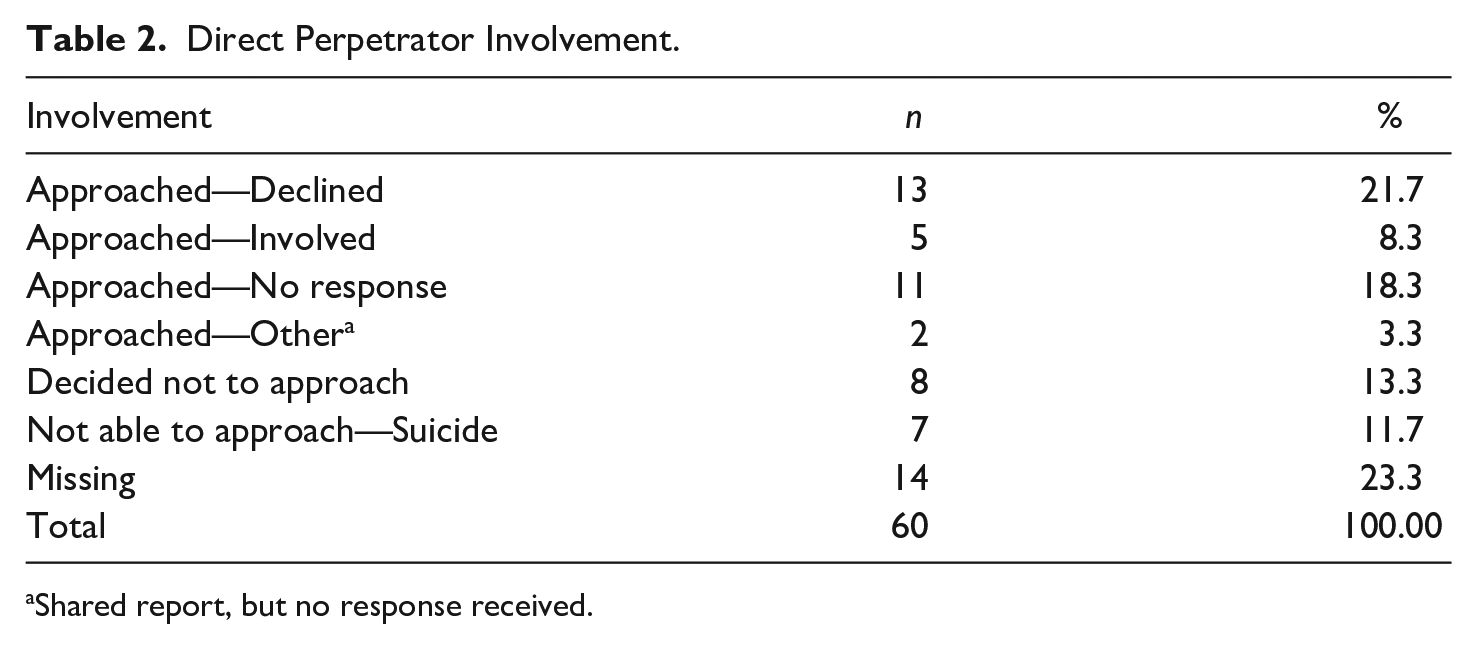
Shared report, but no response received.
Involvement of Perpetrator’s Family
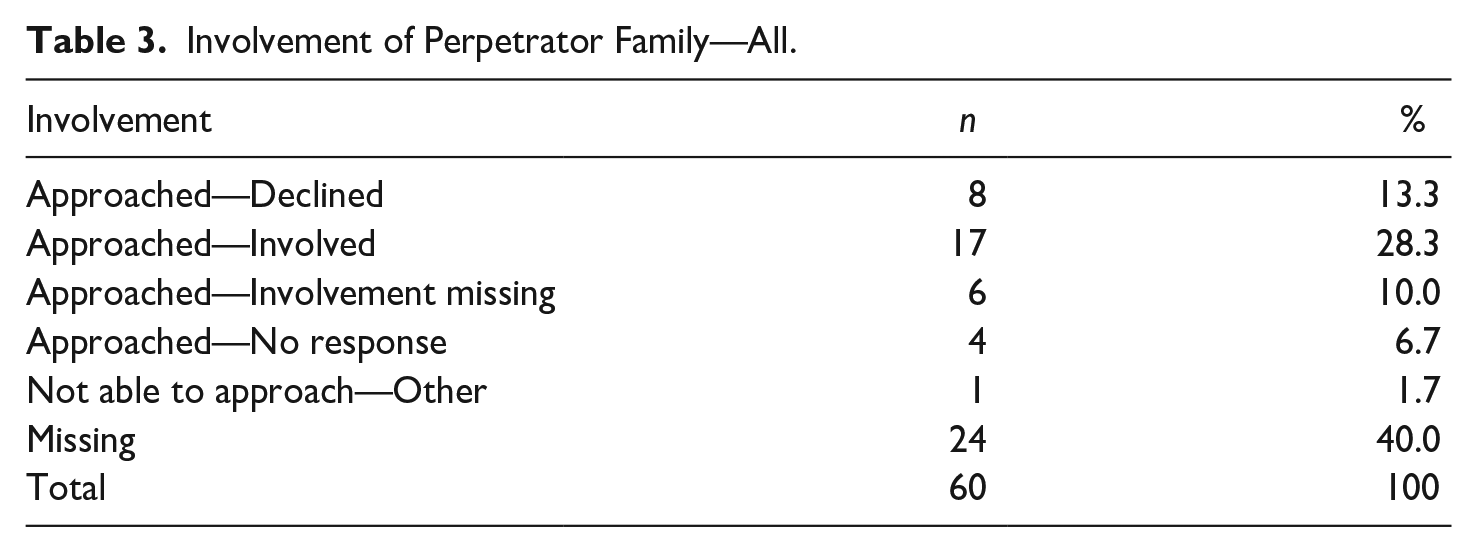
Attempts were made to engage with the perpetrators’ families in over half of the DHR reports (n = 35, 58.3%), with over a third then involved (n = 17, 28.3%, with a further 6 DHRs (10.0%) including no details). Across these DHR reports, family involvement was facilitated by the independent chair, with meetings taking place either in person or sometimes via phone. There were varying levels of detail about the nature of this involvement, including any follow-up (such as sharing a draft report). Notably, family makeup varied, including parents, children, former partners, or other connected people.
Otherwise, families declined to be involved (n = 8, 13.3%) or did not respond (n = 4, 6.7%). In one case, a decision was made not to attempt to engage the family (n = 1, 1.7%). No information about family involvement was recorded in 24 DHR reports (40.0%). See Table 3.
Involvement of Perpetrator Family—All.
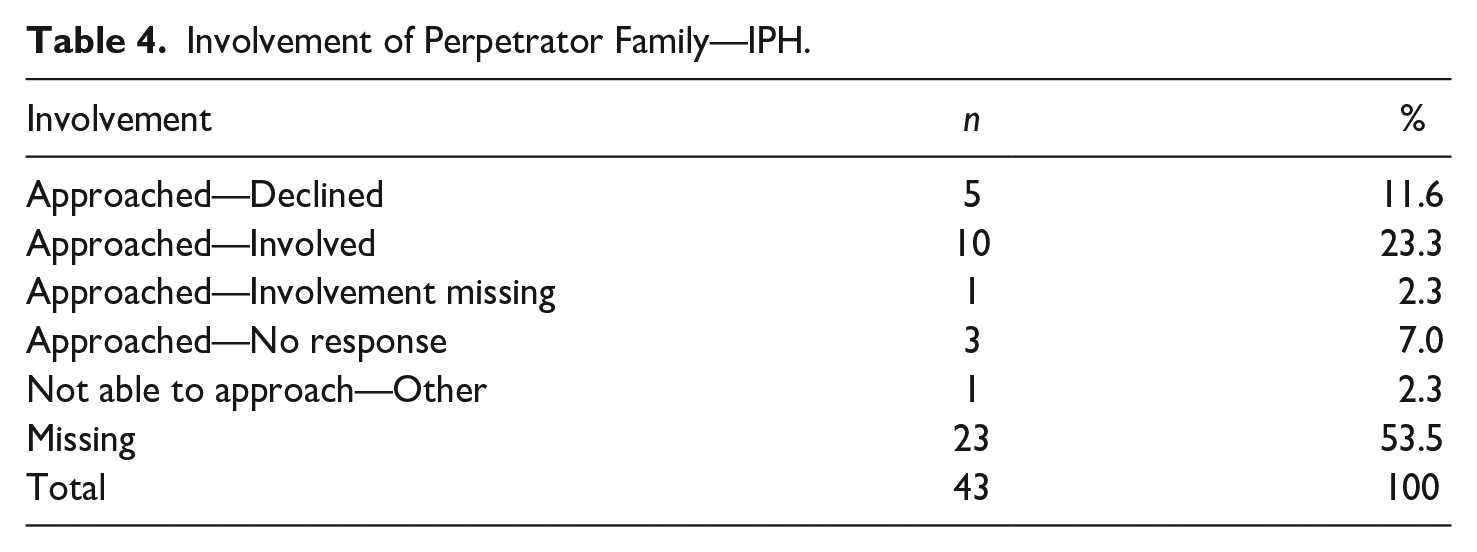
However, there were differences between case types. In IPHs, no information was recorded for just over half of the families (n = 23, 53.5%). Otherwise, just under half of families were approached (n = 19, 44.2%), with just under a third then involved (n = 10, 23.3%. In 1 DHR (2.3%), no details of involvement were recorded). Otherwise, families declined to be involved (n = 5, 11.6%) or did not respond (n = 3, 7.0%). In one case, a decision was made not to attempt to engage with the family (n = 1, 1.7%). See Table 4.
Involvement of Perpetrator Family—IPH.
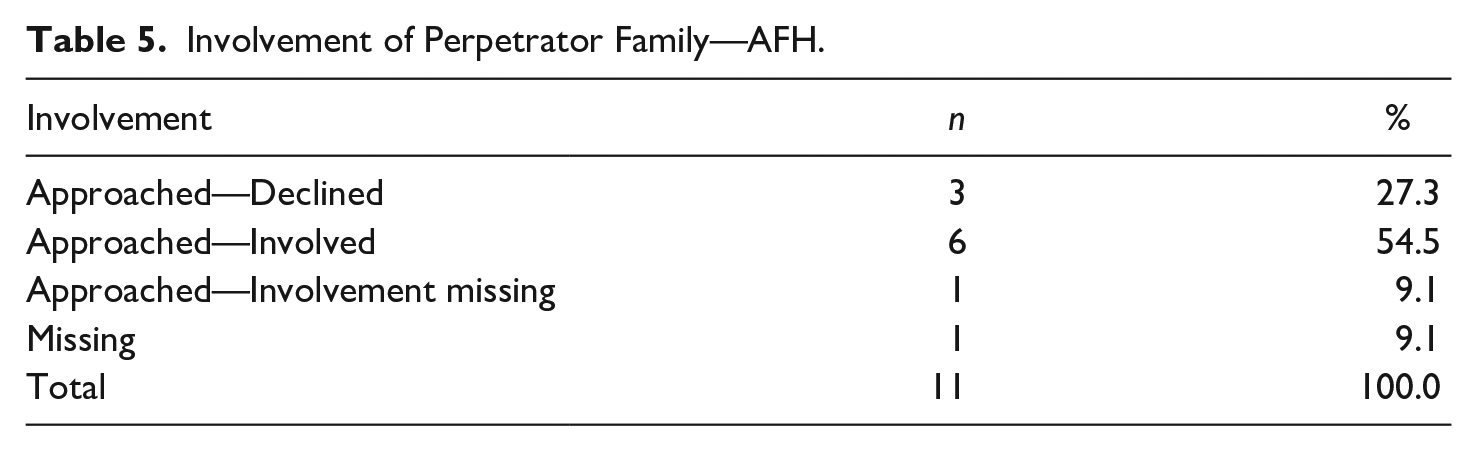
In AFHs, bar one family for whom no information was recorded (9.1%), all families had been approached (n = 10, 90.9%). Almost two-thirds were involved (n = 6, 54.5%, with one family approached but no details recorded, 9.1%), and just under a third declined (n = 3, 27.3%). See Table 5.
Involvement of Perpetrator Family—AFH.
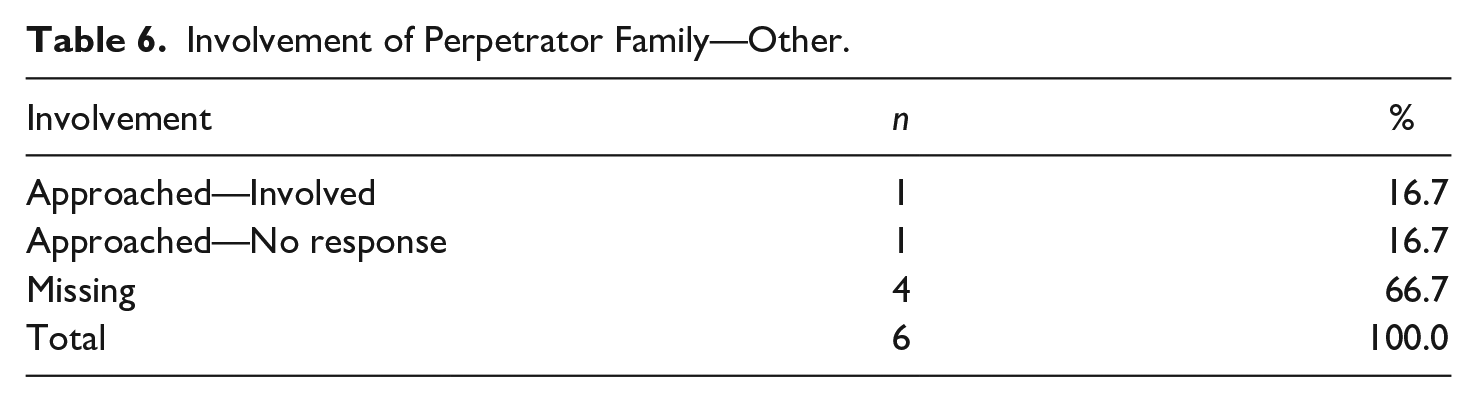
For other case types, no information was recorded for most families (n = 4, 66.7%), with two families being approached and then being involved or not responding (n = 1, 16.7%). See Table 6.
Involvement of Perpetrator Family—Other.
Discussion
As a state-mandated review mechanism, DHRs are complex processes (Haines-Delmont et al., 2022). Presenting original findings, this paper attests to this complexity with respect to perpetrator involvement (directly or by proxy via their family). First, the interview findings demonstrate that perpetrator involvement is riven with tensions arising from potential benefits, challenges, and risks. These tensions, in turn, speak to the complexity of perpetrator involvement (and, more generally, to the conduct of DHRs as a system, with the efficacy of process delivery in any given DHR providing the practice context). Second, the complexity of perpetrator involvement may explain why, as suggested by the DHR reports, it is uncommon. Thus, only 8.3% (n = 5) of DHR reports recorded direct perpetrator involvement, with data missing in almost a quarter of cases (n = 14, 23.3%). This is consistent with my experiences as an independent chair: I have led 20 reviews, with only a handful involving perpetrators.
The involvement of perpetrator families is a more nuanced picture: while a greater number of DHR reports recorded involvement (38.3%, n = 23), data was missing in nearly half (n = 24, 40.0%). While it is impossible to be sure what this missing data means, based on my experience as an independent chair, it is likely that contact was either not attempted or not achieved. However, missing data and lower levels of involvement were a feature of IPH cases (and other case typologies, which usually had missing data). At the same time, DHRs into AFH almost always included data and usually involved families.
Thinking from Use
If perpetrator involvement is complex but uncommon, and there are differences in family involvement between case typologies, what does it mean to “think from use” (Ahmed, 2019, p. 65) about DHRs ? In the following section, I discuss if, why, when, and how perpetrator information is or is not used in DHRs. From a feminist perspective, such involvement can be conceptualized as enacting what Hearn (1998) has described as a “temporary re-centering” of those who use violence and abuse (p. 62). I argue that, while there are potential benefits of this practice, its challenges and risks mean that perpetrator involvement is often seen as (and indeed can be) instrumentally and symbolically dangerous and, as such, has been separated and bounded in practice and policy.
Using Perpetrators as a Source of Information
While a DHR is victim-centric, any information contributing to learning should be considered. Thus, as noted earlier, the subjective experience of the perpetrator is potentially useful. This possibility is evident from questions in the statutory guidance that help determine the scope of a DHR. Covering issues from timeframe through to focus (like immigration status or contact with multi-agency risk management processes), these are framed regarding both the victim and/or the perpetrator (Home Office, 2016, pp. 13–15).
Yet, a perpetrator has committed—or, in a DA-related suicide, is suspected of having a contributory role toward—fatal DA. Given their actions, drawing on Goffman (1963), we can understand a perpetrator’s identity as spoiled and so marked out as discredited, thereby affecting how a perpetrator and/or their family are used as source(s) of information. Thus, stigma may affect if and how perpetrators respond to an invitation to be involved in a DHR. Indeed, as already noted, research has highlighted difficulties in obtaining information from perpetrators, including achieving access and/or a reluctance to discuss their actions (Dobash & Dobash, 2015; Evans et al., 2023). This difficulty was evident in the DHR reports: perpetrators did not participate (n = 26 or 43.3%) more than take part (n = 5, 8.3%). These difficulties may also be exacerbated by timing. DHRs can be a lengthy process (Haines-Delmont et al., 2022). Based on my experience as an independent chair, in most cases, contact attempts occur after the criminal trial and within a year of the victim’s death. However, bar the indication that independent chairs often work through the police or prison service—a route I have used—the data do not clarify how approaches are made or the issues that need to be managed. Yet, considerations include the best approach. Based on the data reported here and my own experience, perpetrator interviews may be time-limited and so focused on the relationship and death event. Yet, gathering the fullest information possible may require more extensive involvement. For example, when Adams (2007) interviewed men who killed their wives, he did so over several sittings. Meanwhile, a life story approach may elicit more learning about a perpetrator’s trajectory (Di Marco & Evans, 2021). Such considerations are not merely an instrumental concern with data collection. The timing of perpetrator involvement may mean there is limited time for their rehabilitation and recovery, including coming to terms with their actions (Adshead et al., 2015), upon which their willingness to be involved may depend. They are also a matter of ethics given, however uncomfortable it may be, the potential for a perpetrator’s own trauma and its implications (Mohamed, 2015).
Furthermore, this spoiled identity is relational. As Dilmon and Timor (2014, p. 1126) describe it, a perpetrator may be a subject from whom we “recoil from and perhaps even hate.” Thus, other actors are also engaged with a perpetrator’s subjectivity. Illustratively, for some participants, the prospect of perpetrator involvement was unjust because their (in)direct actions meant a victim could not. Thus, Emily highlighted how review panelists might resist perpetrator involvement, feeling, “well, where’s [the victim’s voice]?” Such was the potential strength of this feeling that review panelists might even be reluctant to engage with a DA victim who had killed their abuser. Further complicating usefulness is a victim’s family’s feelings: while some families may want involvement, others may not.
This relationality also encompasses the perpetrator’s family, who were involved in 23 DHRs (38.3%). Yet, in contrast, estimates of victims’ families’ involvement suggest about half take part (Rowlands & Cook, 2022). Thus, while potentially able to provide information, these data support Bobby’s suggestion that perpetrators’ families are not consistently approached, perhaps because of their relationship. Drawing again from Goffman, a perpetrator’s family might be perceived as potentially discreditable because they are associated with someone responsible for serious violence. Goffman (1963, p. 30) describes this as “courtesy stigma,” with Condry (2009) offering an account of such vicarious experiences for the families of men convicted of serious violence. This may explain why only a third of DHR reports involved perpetrator families. I recognize this possibility from my practice: I have rarely engaged with a perpetrator’s family. While often a practical decision (e.g., access issues), upon reflection, this is also perhaps because a perpetrator’s family is not prioritized. The exception is in AFH cases, where, in my experience, engagement occurs because of the shared victim-perpetrator relationship. The findings from the DHR reports appear to support this, given almost all families in AFH cases were approached (a higher rate than reported elsewhere; see Rowlands & Cook, 2022). Thus, conceivably, courtesy stigma is, at least partly, neutralized by a familial relationship. Finally, if a perpetrator’s family is invited, they may participate. What is not clear from the data is what barriers may prevent involvement, with these potentially influenced by a family’s experience of courtesy stigma and whether the DHR process—including the information and support available—overcomes this and enables participation. As with perpetrators, further consideration is required around the best approach in terms of when and how such engagement is conducted, as well as ethical implications.
Whether Perpetrator Involvement Is Useful
Compounding the issue of using perpetrators as a source of information was, for participants, whether the information obtained was useful. Many participants accepted that perpetrator involvement could be useful, providing information about a perpetrator’s history, help-seeking, the relationship and/or the death event. However, participants also felt there might be or had experienced challenges and risks. Effectively, a perpetrator has a dual aspect. First, a DHR’s concern with a perpetrator is victim-orientated (e.g., describing and analyzing their behavior and its impact on a victim). However, a DHR’s concern may also turn toward the perpetrator (e.g., considering if and how agencies managed their risk or responded to need). This duality is evident in the data. Moreover, this duality makes explicable the benefit of understanding case background and circumstances—be that about a perpetrator’s abusive behavior or their experience of help-seeking and agency interventions—but also the challenges and risks of overly focusing on their story at a victim’s expense. Specifically, in using perpetrator information, there is a concern about “colluding with the perpetrators’ world view and description of events” (Enander et al., 2021, p. 64). Generally, this concern arises because perpetrator talk can minimize abuse and obscure responsibility (Hearn, 1998). More specifically, perpetrator accounts may reflect how they manage their identity (Evans et al., 2023), ranging from denial to mediated acknowledgement, to degrees of responsibility taking, to acceptance and change (Dobash & Dobash, 2015, pp. 85–91). Moreover, even if a perpetrator does discuss their violence and abuse, a distinction must be drawn between what they disclose, including if and how this minimizes, denies or blames others for their actions—itself, part of the endeavor to manage their spoiled identity—and what might have been a victim’s account and/or an objective assessment of the same (Di Marco & Evans, 2021). In the small number of perpetrator interviews I have conducted, I have often encountered such identity management, with perpetrators often engaging in victim blame and denial, obfuscation, or being unable—whether intentionally or because of disassociation—to recall or provide information. Even so, these narrative distortions can be useful, given a perpetrator might “unwittingly” reveal their attitudes and beliefs (Adams, 2007, p. 9).
Although the data do not speak to this, a similar question needs to be asked about a perpetrator’s family, including their recognition, understanding of, and response to a perpetrator’s violence and abuse. This includes the complexity of a family member’s feelings toward a loved one who is an offender (Condry, 2009).
Taken together, while documenting perpetrator accounts is useful and can inform prevention (Dobash & Dobash, 2015; Evans et al., 2023; Hearn, 1998), if used uncritically within a DHR, the use of this information may affect findings and risk the perpetuation of a forensic narrative that rationalizes a perpetrator’s behavior (Monckton Smith et al., 2014), either by weighting any account to a victim’s detriment (Bracewell et al., 2022) or enabling perpetrator’s to shape and/or distort it (Dangar et al., 2023). As a result, in seeking perpetrator involvement, a DHR may risk both testimonial and hermeneutical injustice (Cook et al., 2023). In my practice, I have sought to manage this concern, as did participants, by finding a balance between victim family involvement and the management of perpetrator information and whose story was told. Importantly, this is not solely an epistemological question: any (re)produced forensic narratives risk adversely affecting victims’ families (Mullane, 2017). However, it is also important to recognize this is not only about perpetrator involvement, as some of the complexity identified in this paper relate as much to the general functioning and conduct of DHRs as to the specific practice of involving perpetrators. Thus, in use, perpetrator information must be critically analyzed and triangulated with other information.
Unused and Unusable
Thus far, I have argued that the prospect of using a perpetrator’s information and whether this is useful is complex because of the tensions between potential benefits, challenges, and risks. Indeed, the involvement of perpetrators directly or by proxy is uncommon and these sources of information are mainly unused or seen as unusable. The essential tension has been articulated by Mullane (2017), who points out that perpetrator involvement is premised on it helping “achieve the twin purposes of preventing DA and homicide,” and yet, “they rarely express remorse and often struggle to accept responsibility” (p. 275). Perpetrator family involvement can also be limited, although perhaps structured by the nature of the relationship (i.e., AFH or IPH).
In this light, as described in the introduction, the limits of the statutory guidance are notable. Indeed, most of the complexity identified here is not addressed. Why is this the case? One possibility is that the difficulty of this practice is a barrier, exacerbated generally by the limits to the framework, leadership, and oversight for DHRs to date (Haines-Delmont et al., 2022; Rowlands, 2023).
However, we might consider perpetrator involvement in terms of how, as a source of information, perpetrators and/or their families are (un)used and how this comes about in terms of the choices made and who makes them. Thus, using perpetrator information in DHRs is not simply an operational matter about whether they or their proxies might be useful. Instead, decisions around use shape what information is or is not available in a DHR and any findings, generating the potential for discursive and symbolic presence or absence. Drawing on Mary Douglas’s work about purity and danger, we might posit that the danger posed by perpetrator involvement means there is a reluctance to engage with them or their proxies (albeit perhaps this is reduced if there is a shared family relationship), with this both a product of and, indeed, producing a boundary. Thus, a perpetrator is dangerous both because of their past (i.e., because of their violence and abuse to the victim 3 ) and in the present (given their spoiled identity, the actual or perceived veracity of any information they provide and potential impact on a DHR in terms of distortion of learning and or toward stakeholders, e.g., a victim’s family). So, not only is perpetrator involvement dangerous instrumentally, but given the “symbolic load” that can be carried by that which is dangerous, the use of perpetrator information also brings with it the risk of a “contagion” (Douglas, 1966, p. 4). Consequently, the lacuna concerning this practice may reflect a desire for separation that arises from a perpetrator’s violence and abuse by which they both challenge the social order and are a danger to it. Thus, the possibilities of perpetrator involvement—and so the use and usefulness of their information, directly or by proxy—are bounded because it is “out of place. . . and so. . . regarded as objectionable and vigorously brushed away” (Douglas, 1966, p. 197)
Implications
In summary, a perpetrator—as stigmatized and dangerous—is monstrous and thus may be kept at a remove (Mohamed, 2015). Therefore, the direct and indirect involvement of a perpetrator in a DHR has practice and policy implications, with these mirroring those facing researchers. These implications including questions of access, participation, understanding the information gathered, and, perhaps most significantly, a “hesitance . . . to engage directly with perpetrators” (Di Marco & Evans, 2021, p. 608). What might be an alternative where we actively seek to use perpetrator information?
First, we must recognize the necessity to—as Renehan (2021, p. 324) puts it for Domestic Violence Perpetrator Programmes—“humanize the traumatizing but traumatized men” with whom professionals are (usually) interacting. While not easy, Iris addressed this point by talking about “not colluding, but at the same time being sufficiently sympathetic.” Yet, any engagement with perpetrators or their families must be undertaken cautiously, including finding a balance—mainly through accountability and the interpretation of information—to avoid a forensic narrative and/or victim blame and to minimize the impact on a victim’s family. At its heart, finding balance does not reflect a blanket dismissal of any potential contribution but is instead derived from well-evidenced concerns about such accounts. Yet this is not exceptionalism: the use of information from perpetrators or their families—as for any party involved (including agencies, but also a victim’s testimonial network)—is one of many different and potentially contested voices that are sought, brought together, and interrogated through the alchemy of deliberative dialogue within a DHR.
Second, this caution is rightly derived from an ethical concern for the memory of the victim and the integrity of review. Yet, ethical practice in this context also encompasses responsibilities to perpetrators and their families in their own right, including how they are approached, informed consent is sought, and engagement (including the nature of involvement, any restrictions, and the management of other issues, for example, if other abuse or possible criminal offending is disclosed).
Third, this also raises the question of support, including for perpetrators as part of managing any risk and needs, but also for their own experience of trauma and prospective rehabilitation. Moreover, for a perpetrator’s family, there should also be access to advocacy support and an understanding of their needs, including any differences with victim’s families and/or based on case type.
Fourth, this is challenging work, so practice must be robust. Since independent chairs are likely to facilitate direct or by-proxy perpetrator involvement, ensuring they have the appropriate skills, experience, and knowledge—something highlighted as a concern more generally (Haines-Delmont et al., 2022)—is essential. Those enabling access, often prison service staff, should also be adequately trained. More broadly, clear expectations are needed for the skills, experience, and knowledge of review panelists, and DA specialists must be available to assist in contextualizing any information.
Fifth, these findings are further evidence of data gaps in DHR reports (Chantler et al., 2020). This gap is perhaps unsurprising, given the lack of clarity around direct or by-proxy perpetrator involvement in the statutory guidance. This also manifests in formal reporting requirements. Thus, a reporting form—which captures demographic, case, and procedural data and which should be completed at submission to the QA panel 4 —only captures data on victim family involvement. These findings also support previous suggestions that there is a lack of clarity about what should or could be recorded in DHR reports and an inadequate feedback loop between research and practice (Rowlands & Bracewell, 2022).
Finally, a robust framework is essential, including expectations of best practices for perpetrator involvement. This is particularly important because some of the concerns identified here generally relate to the DHR system and process functioning. Yet, regrettably, although DHR reform is on the agenda, concerns about the DHR systems are well-documented (Haines-Delmont et al., 2022; Rowlands, 2023).
Considering perpetrator involvement in DHRs is a further reminder that DHRs are a complex, ethically, and emotionally charged process that is not value-free (Cook et al., 2023). Yet, attending to the experience of perpetrators—usually men—is essential to preventative efforts (Dobash & Dobash, 2015; Evans et al., 2023). Indeed, if DHRs (and DVFRs) are to be true to their ethos of learning and accountability (not blame), they must actively seek such involvement. One example of such an attempt can be found in Aotearoa New Zealand. A recent report by the Family Violence Death Review Committee (2020) focused on “the person who presents with a problem and [learning from] the experiences that have led to the problem” (p. 59), that is, on the predominant aggressors in fatal homicides, enabling the identification of opportunities to prevent DA over the life course. As analyzed here, and rooted in a feminist perspective that locates these issues within an individual and societal context, this is the potential of and the driver for perpetrator involvement: not to excuse behavior but to enable (with appropriate mitigations) the widest possible lens for learning.
Limitations and Future Research
This paper is the first to report on the involvement of perpetrators (directly and by proxy via their families) in DHRs in England and Wales. However, given around 1,000 DHRs have been completed by 2022 (Home Office, personal communication, January 10, 2024), the report sample is small. The data also relate only to the nature of involvement (i.e., additional data about how perpetrator information shaped narrative construction was not sought). Meanwhile, the interviews are non-generalizable, and most participants were professionals with only a small number of family members. Future research, particularly with larger samples, could examine if and how approaches are made to perpetrators, their families, and other testimonial networks, as well as any subsequent involvement, its conduct, and outcomes (including how this information is used within the narrative of the DHR report). Further examination of intersections between case types, as well as the experience of professionals (including the independent chair who might facilitate this), and those of family members and other testimonial networks (including views on this practice) would also be merited.
Conclusion
The paper has considered if and why, when, and how perpetrator information is or is not used in DHRs through the involvement of a perpetrator and/or their families. There are potential benefits from such involvement, which might enable a DHR to achieve its aim of building a picture of a death and identifying learning. However, as explicated, there are also real and perceived challenges and risks. Recognizing these tensions will help the practice and conceptualization of, and research into, DHRs. Ultimately, for DHRs to affect change, and hopefully improve responses to DA and prevent future deaths, they must be useful. As argued here, while uncomfortable and difficult, perpetrator involvement has the potential to play a mediated role in this regard.
Footnotes
Acknowledgements
I wish to acknowledge that, in working with domestic homicide reviews, each report is the story of a life taken or lost. With thanks to the study participants for their contribution, and to Wendy Fitzgibbon and Pauline Gulliver, as well as the anonymous reviewers, for their comments.
Declaration of Conflicting Interests
The author declared no potential conflicts of interest with respect to the research, authorship, and/or publication of this article.
Funding
The author disclosed receipt of the following financial support for the research, authorship, and/or publication of this article: This work was supported by the Economic and Social Research Council (Grant Number: ES/P00072X/1).
