




Abstract
Few studies have examined the relationship between attention problems (AP) and observed parenting in families of children with autism spectrum disorder (ASD). Participants were 41 mother–child dyads with ASD recruited from an Applied Behavior Analysis (ABA) U.S. preschool and whose behaviors were observed during parent–child interactions. Children with ASD and elevated AP (n = 19) on the Child Behavior Checklist had significantly lower verbal ability, and mothers reported significantly more stress than children with ASD only (n = 22). Causal modeling was used to examine the directionality of the expected relationship between AP and parenting behavior as partially or wholly mediated by parenting stress. Mothers who exhibited less positive parenting experienced higher parenting stress and their children demonstrated increased AP and decreased engagement during dyadic interactions. The strength of this relationship varied according to child verbal ability. These findings have practical implications for identifying and implementing appropriate intervention.
Parenting stress refers to a complex, aversive psychological process wherein parent well-being and behavior, parent–child relationship quality, child psychosocial adjustment, and parenting demands interact to create negative feelings toward the self and child, measured as the magnitude of stress within the parent–child dyad (Abidin, 2012). Young children with autism spectrum disorder (ASD) display differences in social communication and interaction, restricted or repetitive behaviors or interests, possible sensory sensitivity or preferences, and often, accompanying intellectual deficits (Diagnostic and Statistical Manual of Mental Disorders [5th ed.; DSM-5; American Psychiatric Association (APA)], 2013). This constellation of characteristics has been linked to significantly greater parenting stress, within and across diagnostic presentations (e.g., Hayes & Watson, 2013; Miranda et al., 2019).
Parents of children with attention-deficit/hyperactivity disorder (ADHD) also report significantly higher levels of parenting stress related to child factors, relative to parents of children with learning, internalizing, and developmental disorders, including ASD (Theule et al., 2012). Young children with attention problems (AP) may have difficulty staying on task, playing quietly, and waiting their turn (APA, 2013). Increased parenting stress has been linked to (a) child factors, such as increased symptom levels and settings where symptoms occur; (b) parent factors, including maternal depression and decreased perceived control over child behaviors; and (c) decreased social support and financial resources (e.g., Nasol et al., 2019; Theule et al., 2011).
When children have both ASD and ADHD, parents report clinical levels of parenting stress and poorer quality health and spousal relationships relative to parents of neurotypical children (Miranda et al., 2015; Van Steijn et al., 2014). Parents report significantly more stress related to symptoms of inattention and hyperactivity, compared with ASD alone (Miranda et al., 2015). Emerging evidence suggests that parents of elementary-age children with ASD and comorbid disorders (primarily ADHD) are more likely to engage in observed negative parenting, relative to those of children with only ASD (Donnelly, 2015). The experience of parenting children with co-morbidities deserves close attention from researchers and clinicians alike (Antshel & Russo, 2019) because as many as 40% to 70% of children with ASD have clinically elevated AP (using valid rating scales or comorbid clinical diagnosis). As such, it is important to examine the relationship among parenting behaviors, AP, and parenting stress among young children with ASD to identify appropriate targets for increased support and intervention.
Parenting is assessed in two primary ways: parent self-report and direct observation of behavior during parent–child interactions. While rating scale endorsements are practical, evidence suggests direct observation of parenting provides unique information, as self-reported and directly observed parenting behaviors may differ (Boonen et al., 2015). Studies have investigated observed parenting in families of children with AP. Longitudinal studies suggest that increased positive parenting may predict decreased AP later (e.g., Choenni et al., 2019; Pauli-Pott et al., 2018). Past study findings show child AP are negatively associated with observed positive parenting (Breaux & Harvey, 2019; DuPaul et al., 2001) and positively associated with observed harsh parenting (e.g., DuPaul et al., 2001; Joseph et al., 2021).
A smaller body of literature has examined parenting behavior in families of preschoolers with ASD. In two such studies, increased autism symptom severity was linked to decreased quality of parent–child interactions, including decreased child initiation of interactions, synchronous interactions, and shared attention (Beurkens et al., 2013; Hudry et al., 2013). No published study was found on observed parenting in families of young children with ASD and AP using the Autism Diagnostic Interview–Revised (ADI-R; Rutter et al., 2003) and/or Autism Diagnostic Observation Schedule–Second Edition (ADOS-2; Lord et al., 2012) to examine autism and clinical interviewing or reliable and valid rating scales to evaluate AP. A review of the literature was conducted across databases (EBSCO, ProQuest, MEDLINE, PsycINFO, and PubMed) using the following search terms(*): autis*, ASD, ADHD, inattention, hyperactivity, impulsivity, preschool*, kindergarten*, early childhood, and parent*. This was limited to relevant terms in the abstract where searches exceeded several hundred results. Of 399 abstracts, one study used self-reported parenting and a second was a treatment study of elementary-age children, thus representing a substantial gap in the literature (Solomon et al., 2008; Van Steijn et al., 2013).
Lacking guidance from published literature, the current work was guided by pilot research from our research group (Donnelly, 2015) on observed interactions for parent–child dyads (N = 30, child age 5–12 years), where ASD diagnosis decisions were informed by ADOS-2 and ADI-R results. Thirty percent of participant children (n = 10) also met DSM-5 criteria for one or more comorbid disorders, where all but one met criteria for ADHD (n = 9). Parents of children with comorbid disorders (primarily ADHD) demonstrated significantly more harsh parenting during a structured teaching task relative to children with ASD alone, when child level of cognitive functioning and observed and parent-reported aggression were held constant.
The purpose of the current study is to contribute to a very small body of literature using a carefully evaluated sample of preschoolers with ASD, where 45% had elevated Child Behavior Checklist (CBCL)–rated AP (ASD + AP), by assessing parenting stress and observing parenting behavior across three common parenting tasks: teaching, free play, and cleanup. Building on existing literature, the study examined the following research questions:
RQ1. Do AP influence parenting (partially or fully) through increased parenting stress when tested using causal modeling? AP are known to be heritable (Banaschewski et al., 2010) and therefore may developmentally precede parenting behavior.
RQ2. As intervention studies have demonstrated that AP are ameliorated when parenting behavior is more positive and less harsh, does parenting predict parent-rated AP and observed child engagement, mediated by parenting stress?
RQ3. As verbal ability moderated the quality of parenting in past work by our team (Dakopolos, et al., in preparation) and because verbal skills have been linked to differences in synchrony and shared attention during dyadic interactions (Hudry et al., 2013), is the relationship between parent-rated AP and observed quality of parenting, mediated by parenting stress, moderated by the child’s verbal ability?
RQ4. Are AP, for children with lower communication skills, related to a greater increase in harsh parenting and a greater decrease in positive parenting by way of increased parenting stress, relative to children with higher communication skills?
Method
Procedure
Recruitment of Participants
Participants were parent–child dyads recruited from a full-day, intensive Applied Behavior Analysis (ABA) preschool in a suburb of a large city in the northeastern United States. Children referred to this school by their school district were at risk of or had been diagnosed with ASD. More than 100 parents received recruitment flyers. Ten parents responded and the rest were recruited by telephone and conversations at drop off and pick up.
Selection of Participants
To be included, children had to (a) have an Individualized Education Program (IEP) or an Individualized Family Service Plan (IFSP) for a preschooler with a disability (as the state does not use specific disability classifications until kindergarten), (b) meet criteria for ASD on the ADOS-2, and (c) be ages 30 to 71 months. Mothers were required to speak and read English fluently.
Autism spectrum disorder classification was supported by results of the ADOS-2 (Lord et al., 2012), conducted by PhD students with on-site reliability with a research-reliable PhD-level clinician. The ADOS-2 is a standardized assessment of observed communication, social interaction, and play skills as well as restricted and repetitive or interests. Administration involves one of four modules based on an individual’s level of language and development. In the current study, Modules 1 to 3 were used for children with nonverbal, minimally verbal, and fluent language, respectively. The mother or a familiar teaching team member was present during Modules 1 and 2. The ADOS-2 has good validity and high interrater reliability (agreement in diagnostic classification 92%–98% in Modules 1 through 3; Lord et al., 2012) as well as high internal consistency for the Social Affect (α = .87−.92) and Repetitive Behavior domains (α = .51−.66; McCrimmon & Rostad, 2014). Levels of severity were low (n = 4, 8.9%), moderate (n = 14, 34.1%), and high (n = 22, 53.7%). One participant who moved away after participating in the first portion of the study met criteria for ASD using the 15-item Childhood Autism Rating Scales–Second Edition (CARS-2; Schopler et al., 2010) by a PhD-level clinician with input from the classroom teacher. The CARS-2 shows adequate reliability (α = .79; Garfin et al., 1988), predicts clinical decisions and ADI-R results (Pilowsky et al., 1998), and the CARS-2 correlates highly with the ADOS (r = .79).
The AP scale of the Achenbach System for Empirically Based Assessment (ASEBA) CBCL 1.5-5 (Achenbach & Rescorla, 2001) was used to classify children as having elevated (T-score of 63 or higher) or normal range attention. The five-item AP scale demonstrates high specificity and sensitivity in predicting an ADHD diagnosis (e.g., Chen et al., 1994; Hudziak et al., 2004) and has good test–retest reliability (r = .78, Achenbach, 2009). In this sample, AP were correlated with child engagement during dyadic interactions (r = −.42, p = .01) and the scale had good internal consistency (α = .79).
Participants
Of 49 potential participant dyads, one voluntarily dropped out; two children did not meet criteria for ASD; four dyads had corrupted video files, unusable for analysis of mother–child interactions; and one mother did not complete all CBCL AP items, leaving 41 participating dyads with measures of observed parenting and child AP. Mothers’ ages ranged from 27 to 47 (M = 36.5, SD = 4.08) years. Mothers identified themselves as White (n = 17; 41.5%), Latinx (n = 12; 29.3%), Black (n = 7; 17.1%), or Asian or Pacific Islander (n = 4; 9.8%), and reported being married or in a committed partnership (n = 32, 78.0%). The majority of mothers reported a bachelor’s degree or higher (n = 31; 75.6%), followed by master’s or professional degree (n = 15; 35.6%), some college or associate’s degree (n = 7; 17.1%), or high school/equivalent (n = 2; 4.9%). Reported household income level ranged from “less than US$10,000” to “over US$200,000” and was bimodal: US$75,000 to US$99,999 (n = 10, 24.4%) and above US$200,000 (n = 8, 19.5%). Child age ranged from 30 to 66 (M = 4.12, SD = 0.83) months. Table 1 summarizes demographic, child, and maternal characteristics by symptom presentation: ASD versus ASD + AP (46% of the sample). Children with ASD + AP had significantly lower verbal ability, and their mothers reported significantly more stress than children with ASD.
Descriptive Statistics for Study Variables and Relevant Covariates in ASD Only and ASD Plus Elevated Attention Problems Groups.
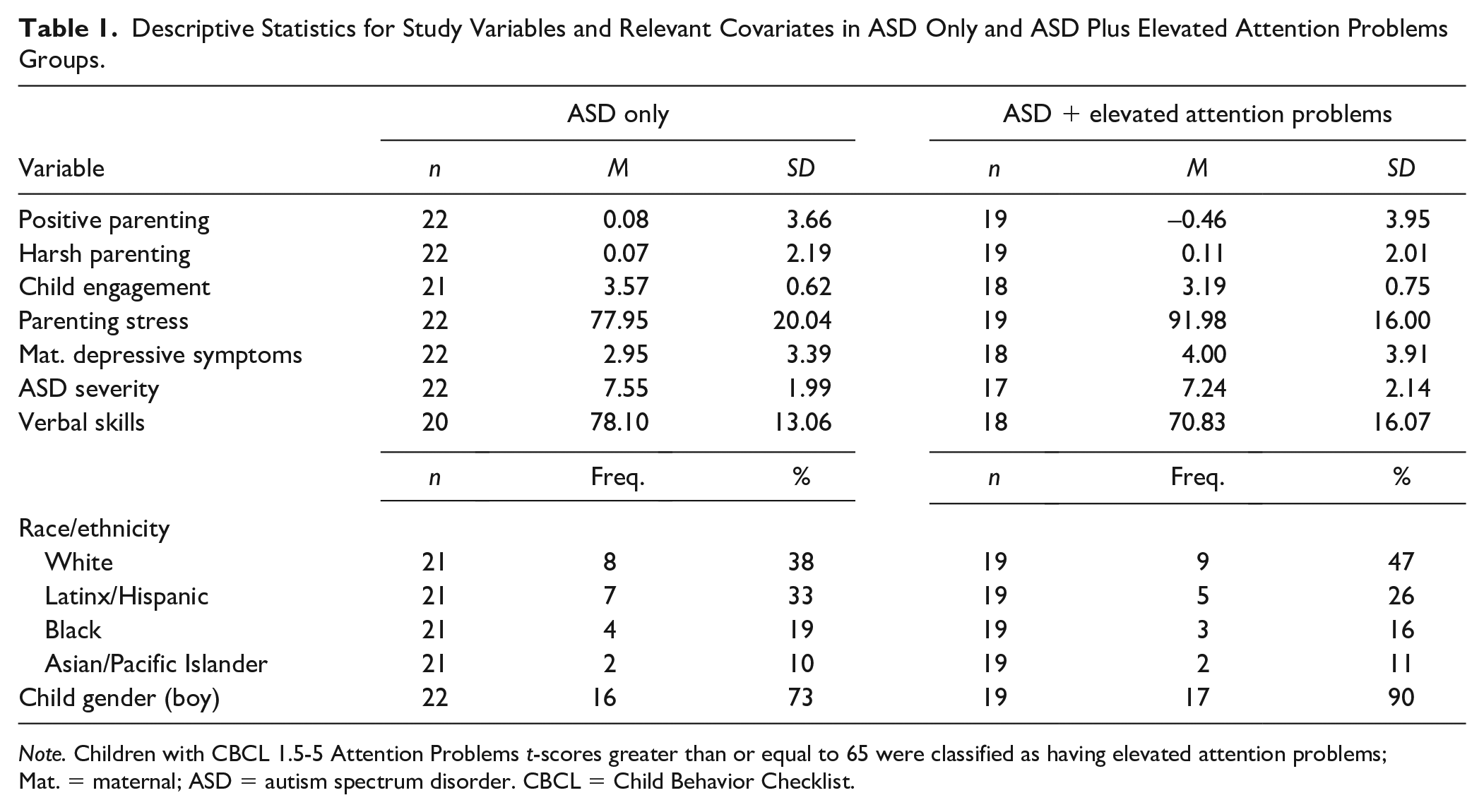
Note. Children with CBCL 1.5-5 Attention Problems t-scores greater than or equal to 65 were classified as having elevated attention problems; Mat. = maternal; ASD = autism spectrum disorder. CBCL = Child Behavior Checklist.
Observation of Mother–Child Interaction
Mothers joined their child in the assessment room, which included a child-size table, chairs, a play mat, and two mounted cameras. The assessment room was familiar to the children, as it was one of the two rooms in which they received speech and occupational therapy 3 to 4 times a week. The experimenter provided instructions for the three core tasks used in this study, namely, teaching task, free play, and cleanup, which totaled 20 min of parent–child interaction.
Mother-Completed Questionnaire
Following the interaction, the child returned to the classroom while the mother completed a questionnaire that included demographics, parenting stress, and ratings of child AP. Mothers were paid US$35 from faculty research funds.
Data Analysis
Videos of parent–child interactions were coded based on observed nonverbal and verbal behavior that reflected the degree of parental emotional support, the quality of parents’ instruction and scaffolding, and the degree to which parents were critical, intrusive, or emotionally unsupportive of their child. Coders used the Psychological Multifactor Care Scale (PMSC), formerly known as the Psychological Maltreatment Rating Scale (PMRS; Brassard et al., 1993), originally developed as an observational measure of emotional maltreatment in a neurotypical sample, that has been modified and validated for use in an ASD sample and adapted for this preschool sample (Psychological Multifactor Care Scale–ASD Adapted Preschool Version; Brassard et al., 2016). Procedural script and descriptions of codes are available upon request from the first author. The measure included positive and harsh behaviors to capture a full range of parenting behaviors validated by the literature (Brassard & Donovan, 2006; Hart et al., 2017). Test–retest reliability was originally established for the PMRS with a sample of middle-class mother–child dyads 2 weeks apart.
Modifications for the ASD adaptation of the PMCS included truncating the range of ratings for most scales from 1 to 5 to 1 to 3 or 4 and modification of scales to fit free play and cleanup tasks (e.g., task-relevant examples were added). This was done because participants with ASD on average had lower verbal skills, made many fewer bids for attention, and were slower to respond to maternal instruction or initiation compared with the neurotypical peers for which codes had been developed. Variables were rated based on Likert-type scales, with ordinal ranges from 3 to 4 points, or by behavior counts. To maintain comparability of measurement across variables, final codes were standardized to z-scores in IBM SPSS Statistics 25. The dependent variables of positive and harsh parenting were computed by averaging the z-score of the totals from all tasks and ranged from 1 to 3. A low score on positive and harsh parenting indicated the absence of positive or harsh parenting behaviors, respectively.
Child level of on-task engagement was coded for each task on a Likert-type scale ranging from 1 to 4, averaged across the three tasks. The overall rating reflected the percentage of time the child remained engaged and participatory in tasks with the mother during the observation. Low scores indicated little or no engagement in the task.
Reliability
The parent–child task was videotaped, transcribed (with 100% verification by a second reviewer), and then coded by trained research assistants who had the transcript and video available for coding decisions. All coders were unaware of current hypotheses and trained until they reached an acceptable level of reliability on each item (80% agreement or greater following procedures established for the ADOS-2; Lord et al., 2012). One research assistant was assigned to code each of the three tasks. Seventeen videos (38.64%) were double-coded by the PhD student to calculate interrater reliability of each task. When there was a disagreement on coded items, differences were discussed by both raters and a consensus score obtained and used in analyses. Disagreements occurred on three or fewer items per scale.
Instruments
The Parenting Stress Index–Fourth Edition, Short Form (PSI-4: SF; Abidin, 2012) is a 36-item measure that assesses parental stress responses on a 5-point Likert-type scale with items such as “I feel trapped by my responsibilities as a parent.” The PSI-4 has excellent internal consistency according to the measure’s authors (α = .95) and in this study (α = .92). Construct validity is based on extensive research as reported in the manual.
The Vineland Adaptive Behavior Scale-Third Edition Teacher Rating Form, Communication Domain (VABS-III; Sparrow et al., 2016) reliably measures receptive, expressive, and written language and was completed by the participating child’s classroom teacher (α = .97 standardization sample; α = .94 present sample). The VABS-II Communication domain is highly correlated with cognitive ability in children with ASD (r = .80; Perry et al., 2009), and it was used as a measure of the child’s verbal ability.
Results
Mothers reported household income and number of adults living in the home were significantly correlated with the dependent variable of quality of parenting. No differences were observed in the quality of parenting based on ethnicity after we controlled for income. Thus, income was included as a covariate in models predicting parenting to avoid error related to homoscedasticity. Child characteristics (age, gender, ADOS-2 severity score, verbal ability, duration of time attending the ABA program) were not significantly correlated with the dependent variables (AP and parenting) and were not used as covariates in the models. Per qualitative observation of scatterplots, child AP and positive and harsh parenting varied across ages, ASD severity, and verbal skill levels. Although the sample (80% boys) reflects the increased prevalence of ASD in boys, visual inspection of scatter and box plots suggests that low variability in gender (especially low variability of AP in girls) may have obscured a potential relationship between gender and AP.
Mothers reported higher levels of stress (mean T-score of 85.57, range = 37–122) compared with normative samples, consistent with the literature on parents of children with ASD (Kiami & Goodgold, 2017). Parental stress was significantly correlated with observed positive parenting (r = −.38, p < .05), but not harsh parenting (r = .26, p = .10). Overall, a relatively high incidence of positive parenting behaviors and low incidence of harsh parenting behaviors were observed in this sample. Eleven of 41 parents (27% of the sample) fell over one standard deviation below the mean on positive parenting. Eleven parents (27%) also fell one standard deviation above the mean on harsh parenting, with intrusiveness as the most common form.
Cohen’s kappa reliability statistics ranged from 45 to 1.0 (median = 0.76) for the eight items that reflected positive parenting. Cohen’s kappa statistics of .40 are considered “moderate” and .60 “good” (Cicchetti et al., 2006). If a Cohen’s kappa could not be calculated due to little to no variability across codes (e.g., mostly scores of 0 on harsh parenting subscales; Hallgren, 2012), 80% or better percentage of agreement between raters was deemed acceptable following procedures established for the ADOS-2 (Lord et al., 2012). This occurred for three items on positive parenting (82.4%–100% agreement, median = 94.1%) and all six harsh parenting items (88.2%–100% agreement, median = 94.1%). Interrater reliability for observed child factors was based on percentage of agreement (free play: 88.2%, teaching: 82.4%, cleanup: 100%).
All hypotheses were tested with IBM’s SPSS statistics software. Moderation and mediation models were evaluated using a conditional process analysis macro called PROCESS (Hayes, 2018). The PROCESS macro includes the use of bootstrapping, which strengthens the power and interpretability of results, particularly when there is non-normality in the sampling distribution (e.g., items that are skewed because most participants have a high score as on positive parenting). The mediation model examining the relationship between AP and positive parenting, controlling for income, yielded significant overall results, F(3, 35) = 5.44, p = .004, R2 = .318 (Hayes Model 4, see Table 2 for Mediation Analysis Summary). The relationship between child AP and observed positive parenting did not appear to be significantly mediated by parenting stress. Nonetheless, both regression models were significant, demonstrating that in this sample, elevated AP were related to increased parenting stress and together, decreased parenting stress and higher income were linked to greater positive parenting. Specifically, when mothers rated their child’s AP one point higher on the CBCL, they reported a 4-point increase in parenting stress on the PSI-4. Increased AP were significantly associated with higher levels of stress, but parenting stress was only marginally related to greater harsh parenting, F(3, 35) = 2.64, p = .06, R2 = .185. Lower income was linked to greater harsh parenting. There was no evidence of a direct or indirect effect of AP on observed harsh parenting.
Mediation Analysis Summary for Child Attention Problems, Parenting Stress, and Observed Quality of Parenting.
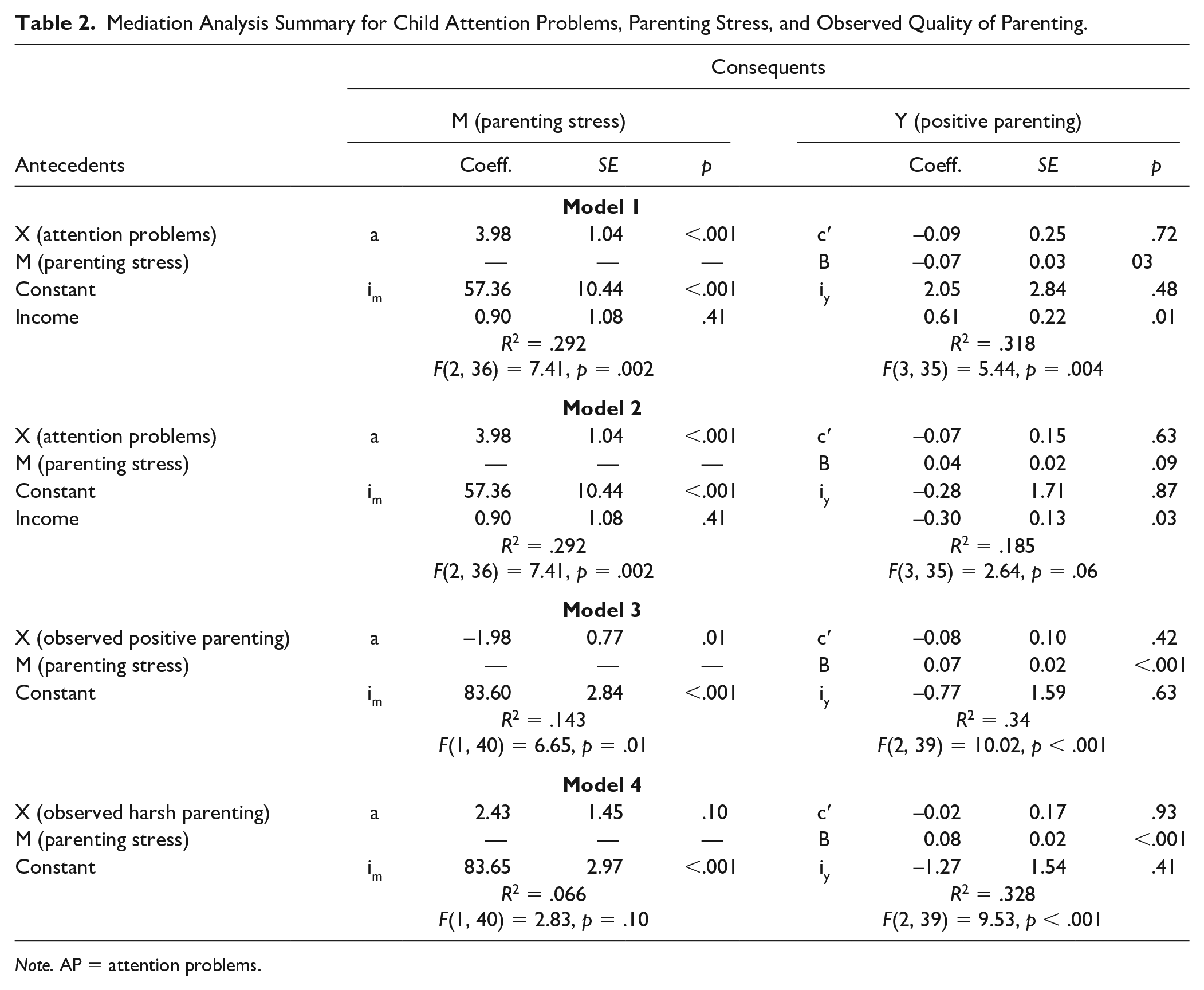
Note. AP = attention problems.
Positive parenting predicted lower levels of parenting stress, and increased stress predicted higher levels of AP in reverse models, F(2, 39) = 10.02, p < .001, R2 = .34. There was no evidence that positive parenting influenced AP independent of its effect on parenting stress. A bootstrap confidence interval for the indirect effect in both regressions reached significance based on 5,000 bootstrap samples. Harsh parenting did not predict stress although increased stress was significantly positively associated with higher levels of AP, F(2, 39) = 9.53, p < .001, R2 = .328. Specifically, as mothers demonstrated increased positive parenting by one z-score, they reported a 2-point decrease in overall parenting stress on the PSI-4. Similarly, as harsh parenting increased by one z-score, mothers reported roughly 2.5 points greater parenting stress.
A moderated mediation model was tested wherein AP predicted parenting stress that predicted quality of parenting, and child verbal ability moderated the relationships between AP and observed parenting or parenting stress and observed parenting (Hayes Model 15). This analysis yielded significant overall results for positive parenting, F(5, 33) = 3.14, p = .02, R2 = .32. Verbal ability moderated the relationship between AP and observed positive parenting (figure available upon request from the first author). Attention problems were unrelated to observed positive parenting for children with low verbal ability (Vineland-3 Standard Score [SS] = 59.60: b = −0.08 [−0.76, 0.59], SE B = .33, t = −0.25, p = .80). Attention problems were significantly negatively associated with observed positive parenting for children with higher verbal ability (Vineland-3 SS = 77: b = −0.68 [−1.23, −0.13], SE B = .27, t = −2.52, p = .02; Vineland-3 SS = 88.6: b = −1.08 [−1.81, −0.35], SE B = .36, t = −3.01, p = .01). This analysis was not significant for harsh parenting behavior, F(5, 33) = 1.09, p = .39, R2 = .14.
Discussion
The current study used parent and teacher-reported measures and direct observation of dyadic interactions to better understand the context for parenting in families of preschool-age children with ASD and AP. Conditional process analyses were conducted contrasting two causal models of the relationship between AP and observed parenting as mediated by parenting stress. First, it was hypothesized that AP would be related to the quality of parenting behaviors and that these relationships would be partially or fully mediated by parent characteristics (parenting stress) and moderated by child verbal ability. This model was compared with one predicting that observed parenting would be significantly related to parent-rated AP and observed child engagement, partially or wholly mediated by parenting stress. The model of observed positive parenting predicting AP, as wholly mediated by parenting stress, fits the data as well as AP predicting positive parenting through parenting stress, when controlling for income. Both models were significant with similar effect sizes (R2 = 31%–32% of the variance). Thus, AP were negatively associated with positive parenting by way of parenting stress, in both directions. Parent-rated AP were unrelated to observed harsh parenting behavior, in contrast to other emerging findings (Donnelly, 2015). Low variability in observed harsh parenting in the current sample may have prevented the detection of associations with this outcome.
The relationship between AP and decreased positive parenting remained significant when ASD severity, verbal ability, and income were held constant. These results corroborate similar findings, where AP have been linked to observations of less positive parenting in preschoolers without ASD (Choenni et al., 2019; DuPaul et al., 2001; Pauli-Pott et al., 2018). Income was also significantly linked to greater positive parenting, holding constant all other variables, demonstrating that greater access to economic resources may allow mothers to engage in more positive parenting regardless of child functioning across these domains.
The sample was categorized into two subgroups by symptom presentation to better understand the parenting context for parents having a child with ASD alone versus ASD + AP. Children with ASD + AP had significantly lower verbal skills, as per teacher ratings on the Vineland-3 Communication scale (SS = 69 vs. 79), falling on average in the very low versus the borderline range. Mothers of children with ASD + AP also reported significantly higher levels of overall parenting stress, relative to ASD alone (T = 96 vs. 79), although both groups experienced high levels of stress on average, lending support to past findings (Peters-Scheffer et al., 2012).
Verbal ability moderated the relationship between AP and observed positive parenting. When verbal ability was higher, parents who reported more AP demonstrated less positive parenting during dyadic interactions. When verbal ability was low, AP were no longer related to observed positive parenting. Parents may demonstrate less frequent or consistent responsiveness to child bids for attention (e.g., verbal behavior, initiation of joint attention) when children with ASD have less developed verbal skills (Poslawsky et al., 2014). Parents may be more attuned to nuanced differences in child behavior for children with higher verbal skills and may be more patient with or less attuned to their children when verbal skills are lower. This present finding, where parent behavior is directly linked to differences in AP, when their children have more developed verbal skills, suggests that educators and providers can support caregivers by helping them become more attuned to their child’s communicative efforts and contingently responsive to child behavior, particularly for parents of children with lower verbal ability. Increased caregiver attunement may be linked to greater consistency in parent responsiveness for such families, with positive impacts on children’s long-term development (Green, 2018).
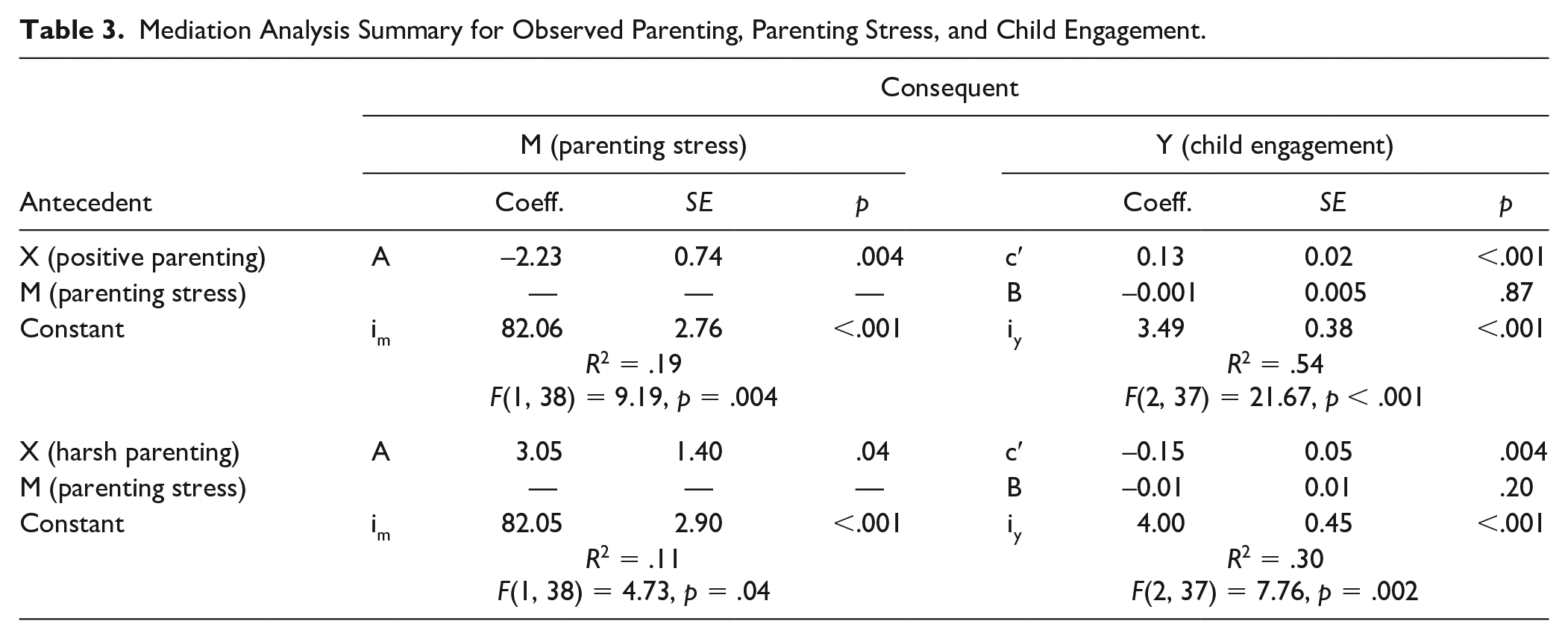
There were concerns related to shared method variance given that the study used two variables based on the endorsements of the same rater (parenting stress, child AP). Thus, models exploring AP as a consequent variable were also examined with observed child engagement as an outcome during post hoc analyses. Child engagement, which measured on-task behavior, was significantly negatively correlated with AP (r = −.42, p = .01). Greater positive parenting was directly linked to increased observed child engagement during interactions, not mediated by parenting stress (see Table 3). The relationship between harsh parenting and observed child engagement was partially mediated by parenting stress. Mothers who demonstrated increased harsh parenting also reported more parenting stress, and their children demonstrated less observed engagement. It is possible that harsh parenting behaviors reflect greater feelings of stress. Alternatively, a mechanism unexamined in the current study (e.g., decreased child compliance, increased child escape) may mediate the relationship between harsh parenting and greater parenting stress. Future studies should further examine possible mediating mechanisms such as child compliance or behavior problems. This is especially important because harsh parenting behavior may exacerbate AP over time.
Mediation Analysis Summary for Observed Parenting, Parenting Stress, and Child Engagement.
The current study contributes to a limited body of research examining observed parent–child interactions in mothers with young children with ASD and AP. The study had several strengths: use of the ADOS-2 to support ASD classification of participant children, multiple sources of information (observations, teacher, parent, and self-report), observations obtained in a setting familiar to the children (a school therapy room they visited 3–4 times a week) that also allowed for experimental control over the setting, inclusion of participants from a full-day intense ABA program controlling for child education and daytime routine, and tests of the validity of parent ratings of AP that were correlated with observed child engagement.
Limitations of the Study and Future Research
Although this study makes an important contribution to an emerging literature, there were a number of limitations, including a small sample, lack of AP only and neurotypical comparison groups, and limited generalizability. Child participants were diagnosed early with ASD and were enrolled in an ABA preschool. As a result, our participants may not have been representative of parents and preschoolers with ASD with differing demographics (e.g., household income, parent level of education, child age of diagnosis). Although the CBCL demonstrates strong psychometric properties, there was no second rater of attention, which may detract from interpretability of findings. It also would have been helpful to assess for the presence of other children with disabilities in the home and for parent psychopathology (e.g., ASD, ADHD), as parent symptoms may relate to parenting in families of children with ASD and/or ADHD (Van Steijn et al., 2013). Finally, the lack of a counter-balanced procedure whereby the order of tasks was manipulated might have elicited bias in mothers’ responses as they progressed from the interaction to the questionnaire and from measure to measure within the questionnaire.
Future studies can extend this research by including larger samples of participants with greater diversity in demographics, diagnostic severity, verbal ability, and level of intervention support. Furthermore, the current study used a cross-sectional, observational design. Experimental research is needed to clarify how increasing the quality of parenting relates to child attention functioning and parental stress in early childhood ASD populations. Second, longitudinal studies can help establish time order, and although this would not establish causality, it can help clarify a likely directionality between variables. Studies that examine parent and child factors across a greater span of time also have the potential to further improve understanding of the complex relationships between parenting and child functioning.
Parent psychopathology may also contribute to differences in parent–child relations in families of young children with neurodevelopmental disorders (Joseph et al., 2019; Van Steijn et al., 2013). Thus, future studies can expand upon current findings by assessing parents’ broad autism phenotype and clinical ASD and ADHD symptoms, ideally through the use of both self-report and clinical assessment. The presence or absence of parent psychopathology is likely to influence child functioning as a result of biological and environmental factors. Parent psychopathology may also influence response to treatment, as many ASD and ADHD interventions involve a parent component. Future studies may also expand upon findings related to parenting stress by assessing other psychosocial or environmental stressors and measuring physiological stress such as cortisol levels. Findings related to verbal ability may also be corroborated and expanded in future research by including direct assessment of language.
Practical Implications
Observed quality of parenting was found to be significantly associated with attention and engagement by way of parenting stress. Therefore, findings suggest that parenting behavior may be a promising target for intervention in families of young children with ASD and AP, as it may be linked to parenting stress and child AP. Substantial literature supports an effect of behavioral parent training (BPT) on decreased attention and behavior problems, and BPT meets criteria as a well-established evidence-based treatment for children with ADHD (for a review, see Comer et al., 2013). While participation in BPT is often interpreted as an effect where more positive parenting and less negative parenting lead to decreased ADHD symptoms, the effect of actual changes in observed parenting behavior on child functioning is often unexamined, particularly in families of children with ASD. Although ADHD is heritable (Banaschewski et al., 2010), it is also generally agreed that gene–environment interactions influence development, course, and presentation of ADHD symptoms (Wermter et al., 2010). Based on a comprehensive review of the existing literature, no published study has yet examined whether differences in observed parenting behaviors predict measured changes in AP for young children with ASD. However, the findings of the current study add support to emerging findings that suggest that this may be the case, corroborated by substantial evidence for an effect of BPT on child AP. In other words, while parents do not necessarily cause their child’s AP, they are likely an essential part of the solution in attenuating symptoms.
Behavioral parent training interventions may prove to be most successful with children with greater verbal development given that the relationship between AP and positive parenting by way of parenting stress was strongest for children with higher communication skills. Parents of children with lower verbal ability may require training to become better attuned to their child’s level of development and to establish and develop child social reinforcers before or while engaging in BPT. One such intervention that targets parent attunement to child development is the The Incredible Years® for Autism and Language Delays (IY-ASLD), a 14-week group-based intervention with video clips and homework, that expands upon the extensively researched Basic Program (Webster-Stratton, 2021). Another effective intervention targeting parental attunement is Green’s (2018) video-feedback intervention for parents of infants at high risk of developing autism. School-based professionals trained to implement these interventions can provide these services to parents of children with ASD in person or via telehealth.
Despite the noted limitations, the findings of this study contribute to the understanding of child attention as it relates to parenting in families of young children with ASD. Specifically, decreased positive and increased harsh parenting were linked to greater parenting stress, increased AP, and decreased child engagement during parent–child interactions. The relationship between parenting stress and observed parenting behavior was moderated by verbal ability, suggesting that intervention appropriateness and effectiveness for young children with ASD may vary according to child verbal ability. These findings offer practical implications for intervention and future research on children with complex behavioral presentations and their families. Findings suggest that parent attunement to child verbal ability and increased positive parenting are likely to be promising targets for intervention, as these may be linked to decreased parenting stress and child AP. Interventions and preventive programs that assess and address parenting stress directly hold the potential to facilitate positive adjustment and enhanced well-being for both children with ASD and their parents.
Footnotes
Acknowledgements
The authors wish to thank the Fred S. Keller Schools, Yonkers and Rockland, NY, especially Dr. Lin Du and Barbara Kimmel, and the preschool students and parents who participated. They also thank their collaborators Dr. Jessica Singer-Dudek and PhD students Zoe Chiel, Andrew Dakopolos, Amarelle Hamo, Michal Johnson, and Katherine Kirkman.
Authors’ Note
This manuscript is based on the first author’s PhD dissertation at Columbia University in the City of New York which was sponsored by the second author. The third and fourth authors were members of the dissertation committee. The second, third, and fourth authors were principal investigators responsible for the design of the larger study from which the dissertation was based.
Declaration of Conflicting Interests
The author(s) declared no potential conflicts of interest with respect to the research, authorship, and/or publication of this article.
Funding
The author(s) received no financial support for the research, authorship, and/or publication of this article.