




Abstract
The circular economy can enable small and medium-sized enterprises (SMEs) to address sustainability challenges and facilitate the transition from the linear economy. Understanding ecosystem strategies and their implications for circular business model implementation is vital for a successful circular economy transition. Therefore, we seek to answer the following research question: How do SMEs’ circular ecosystem strategies influence business model implementation to achieve circularity goals? Drawing on a multiple case study of 31 SMEs from the food processing industry, our research provides insights into four ecosystem strategies: visioner, synergizer, explorer, and amplifier. These circular ecosystem strategies are contingent on the ability of SMEs to adopt an appropriate role in the ecosystem (leader or complementor) and on the state of ecosystem evolution (emerging or established). In addition, we elucidate activities dealing with the design, development, and commercialization of the circular business model that relate to the ecosystem strategies identified.
Keywords
Introduction
The circular economy (CE) has gained increasing attention among scholars and practitioners as an alternative to move from the take-make-dispose logic of the linear economy to a more regenerative system (Ellen MacArthur Foundation, 2013). Despite extensive recognition of the benefits of the CE, transitioning toward the CE is a challenging endeavor for companies across industries and sizes (Geissdoerfer et al., 2020). A key reason for this is that businesses are increasingly required to establish and manage relationships with a wide range of value chains and actors for circularity (Pieroni et al., 2019). Specifically, this results in small and medium-sized enterprises (SMEs) struggling with the implementation of CE principles and the realization of circular value (Ferasso et al., 2023). SMEs are notably constrained by specific limitations in implementing the CE, particularly because of their limited resources, lack of awareness, and access to technologies compared with large corporations (Ferasso et al., 2023). Therefore, in this study, we emphasize the need to focus on the SME perspective and move beyond traditional firm-centric stances to an ecosystem-based approach that captures circular value (Asgari & Asgari, 2021; Kanda et al., 2021; Moggi & Dameri, 2021).
To understand how SMEs engage with ecosystem actors to move toward the CE, we build on the emerging literature on the circular ecosystem (Gomes, Faria, et al., 2023; Trevisan et al., 2022). Unlike business ecosystems, circular ecosystems require a circular value proposition that is characterized by nonhierarchical relationships between multilateral actors (Gomes, Faria, et al., 2023). Circular ecosystems better explain system-level outcomes by adding more value than a single actor can deliver alone while facilitating the scaling of CE principles (Zucchella & Previtali, 2019). We define a circular ecosystem “as a system of interdependent and heterogeneous actors that go beyond industrial boundaries and direct the collective efforts towards a circular value proposition, providing opportunities for economic and environmental sustainability” (Trevisan et al., 2022, p. 296). Circular ecosystems center on the criticality of value co-creation and the possibility of maintaining resources at their highest value (Derks et al., 2024). Engagement with the ecosystem can be challenging for SMEs with limited resources and legitimacy as they lack understanding of the circular flows related to material circulation, feedback loops, and interdependencies among actors (Teerikangas et al., 2020). Considering that the slow uptake of the CE has its roots in the challenges connected to the ecosystem configuration (Gümüsay & Reinecke, 2022; Hopkinson et al., 2018; Zucchella & Previtali, 2019), a deeper understanding of circular ecosystem characteristics would allow SMEs to overcome inertia by developing well-functioning ecosystems and creating collective sustainability outcomes (Galvão et al., 2020; Konietzko et al., 2020). Although SMEs are crucial for the transition to the CE (Bassi & Dias, 2019), and ecosystems have been identified as successful drivers in implementing CE principles in SMEs and circular start-ups (Kanda et al., 2021; Klofsten et al., 2024; Torres-Guevara et al., 2021), SME engagement in circular ecosystems is yet poorly explored in the literature (Howard et al., 2022; Pizzi et al., 2022; Saxena et al., 2023; Zheng et al., 2023). Thus, further investigation is needed to understand SMEs’ role in circular ecosystems and how they can co-create value with ecosystem partners (Asgari & Asgari, 2021).
Circular ecosystems integrate a wide range of business actors, but they diverge in their implementation of CE principles (Saari et al., 2024). Furthermore, SMEs tend to be highly heterogeneous and approach ecosystem collaboration differently (Suchek et al., 2022). Given this wide variation in actors and ecosystems, SMEs can adopt different roles in the ecosystem, and this may even vary over time. Therefore, the first research gap of this study explores how SMEs can develop appropriate ecosystem strategies to manage relationships with diverse actors so that they can collectively target circular value propositions that are not well understood. Insights into appropriate strategies are crucial to define a company’s intentions to engage in the CE. The selected strategies have significant implications for the company’s circular business models (CBMs) and the realization of circularity goals (Reim et al., 2015). In this regard, circular ecosystem strategies become a central concept for successful CBM implementation (Konietzko et al., 2020). The second research gap explores the relationships between circular ecosystems and CBM. Despite the increasing attention given to the role of ecosystems for CBMs (Chirumalla et al., 2024; Gomes, Faria, et al., 2023), there is limited understanding of the mechanisms through which circular ecosystems facilitate the implementation of CE principles within a company’s business model (Reim et al., 2021). In particular, business model issues related to how firms create, deliver, and capture circular values are considered when engaging with circular ecosystem partners. Thus, understanding business model implications for circular ecosystems and its effect on the realization of circular values in terms of environmental and financial gains is an important research agenda. Such a gap has remained unclear in the literature as authors have shown that having a firm-centric lens on CBMs is not enough and multi-actor and ecosystem analysis is needed (Konietzko et al., 2020; Ritala et al., 2023).
Despite the emerging literature on circular ecosystems (Pizzi et al., 2022), we know little about the implications of circular ecosystems and business models for SMEs (Ferasso et al., 2023; Min et al., 2021). Specifically, there is limited understanding on how SMEs can strategically engage with their ecosystems to reach higher levels of circularity (Dey et al., 2022) and what role collaboration and ecosystem development can play in that process (Macchion et al., 2023). To address the untapped potential in research and respond to the need for further advancement in the field, this article aims to advance understanding of how SMEs’ circular ecosystem strategies influence business model implementation to achieve circularity goals.
To address this question, we approach the topic through the lens of the circular ecosystem and the CBM literature (Gomes, Faria, et al., 2023; Kanda et al., 2021; Konietzko et al., 2020). The CE lens is useful in analyzing the CBM innovation processes of SMEs in their transition toward the CE (Kanda et al., 2021). Our analysis is based on a multiple case study of 31 SMEs from the food processing industry in Finland, Sweden, Norway, and Ireland. We contribute to the CE literature by developing a framework of ecosystem strategies on circular business model innovation (CBMI) for SMEs that depend on the role and evolution of the circular ecosystems in which they operate. We identified four ecosystem strategies for CBM development: visioner strategy, synergizer strategy, explorer strategy, and amplifier strategy. This article contends that the choice of strategy carries significant implications for the company’s business model and, thus, the economic and sustainable value that can be generated.
Theoretical Background
An SME Perspective on the CE and Circular Ecosystems
Despite their size limitations, SMEs are a relevant subset of businesses that account for around 99% of all companies in Organisation for Economic Co-operation and Development (OECD) countries, while comprising 99% of all European enterprises (Rittershaus et al., 2023). The literature highlights the business opportunities available to SMEs through the implementation of CE principles, including cost reduction, enhanced reputation, and the creation of niche markets (Suchek et al., 2022). Despite these benefits, fully understanding CE implementation by SMEs requires a deeper insight into how these firms position themselves within broader ecosystems and how they create collaborations (Ferasso et al., 2023; Min et al., 2021). Circular ecosystems integrate a wide range of business actors, including large and SMEs. However, they diverge in their implementation of CE principles (Saari et al., 2024). While large enterprises can leverage resources to create cutting-edge technologies or assume a leading position to orchestrate circular ecosystems (Gomes, Faria, et al., 2023), SMEs have more constrained access to financial and organizational resources (Ormazabal et al., 2018). Thus, SMEs are more prone to focus on aspects such as opportunity recognition (e.g., market limitation, economic attractiveness, and differentiation), CBM implementation, internal factors (e.g., knowledge and skills, culture of sustainability, and leadership), and external factors (e.g., network relationships; Suchek et al., 2022). Compared with what the literature has documented on the integration of circular principles into ecosystems by large corporations, there is a notable research gap with respect to SMEs where the evidentiary basis remains scant (Dey et al., 2022).
In this study, we argue the need for considering SMEs’ perspective and move beyond traditional firm-centric perspectives to adopt an ecosystem-based approach for capturing circular value (Asgari & Asgari, 2021; Kanda et al., 2021; Moggi & Dameri, 2021). In particular, the term “ecosystem” is borrowed from biology and, in the context of management, relates to a network of firms that interact and develop interdependencies based on each other’s activities (Jacobides et al., 2018). The behavior of companies can be compared with that of organisms in an ecosystem (Iansiti & Levien, 2004), in which each member delivers value in an interrelated system rather than companies working individually (Clarysse et al., 2014). Extending this analogy further, circular ecosystems expand on the concept of business ecosystems (Moore, 1993) that apply CE principles to do business (Ferrari et al., 2023). Since the adoption of CE principles implies interaction and collaboration among a wide range of actors (Barquete et al., 2022), a systemic approach is required to determine how multiple actors perform distinctive activities and contribute to creating and capturing circular value (Kanda et al., 2021). Thus, achieving a circular vision falls on a multiplicity of actors who co-create value in implementing circularity strategies (Ranta et al., 2021; Zucchella & Previtali, 2019). In this regard, Gomes, Castillo-Ospina, et al. (2023) consider circular ecosystems as meta-organizations that integrate their own business models and value propositions. Here, the focal firms partially control the circular ecosystem value propositions.
Circular Ecosystems and CBMs
Circular ecosystems integrate a wide range of actors, including companies, suppliers, users, and regulators, and others, who contribute to the delivery of circular value (Ferrari et al., 2023; Parida, Burström, et al., 2019). According to Trevisan et al. (2022), circular ecosystems are composed of five elements: (a) a circular approach to value; (b) an appropriate balance of heterogeneous, interdependent, and reliable actors with aligned interests, defined roles, and orchestration objectives; (c) data, materials, and flow on how resources are used and managed; (d) circular activities and strategies guided by collective purposes to provide economic and environmental gains; and (e) non-hierarchical and collaborative governance structures. According to Asgari and Asgari (2021), essential requirements in implementing a circular ecosystem are (a) the existence of supply chain entities, business entities, and surrounding community entities, (b) creating the circular value chains, and (c) identifying intermediary and facilitator organizations responsible for monitoring, regulating, developing, and educating the ecosystem elements. In this context, the literature indicates that circular ecosystems do more than just focus on circular value creation; they also facilitate the promotion of CE innovations. This is achieved through the dynamic flow of knowledge across fluid and evolving roles, activities, and positions within the ecosystem (Kanda et al., 2021; Trevisan et al., 2022). Finally, Konietzko et al. (2020) explore the concept of “circular ecosystem innovation,” which is based on three principles: collaboration (interactions to innovate toward circularity), experimentation (action-oriented, trial-and-error process for greater circularity), and platformization (online platforms to achieve greater circularity). Although contributive, these studies do not focus on specifically outlining how SMEs develop strategies to engage with the ecosystem and which parameters these strategies depend on as ecosystems significantly vary in how well they are developed and how the actors interact with each other (Peçanha & Ferreira, 2024).
Selected circular strategies have major implications for potential business models that enable circular goals to be reached (Casadesus-Masanell & Ricart, 2010). This is of especial importance for SMEs because they must consciously pick their strategies. This has a major impact on their choice of BM (Parida, Sjödin & Reim, 2019). In circular ecosystems, a variety of actors scale up the CBMs and value propositions through business complementarities (Ritala et al., 2023). CBMs are a subset of the broader concept of sustainable business models (Bocken et al., 2014) that incorporate CE principles by adopting cradle-to-cradle principles, implementing renewable energy systems, or embracing corporate concepts, such as refurbishing, recycling, reusing, repairing, and recycling (Frishammar & Parida, 2019). Firms are urged to innovate their business models by implementing CE strategies to decouple value creation from environmental harm and resource consumption (Bocken et al., 2016). CBMI occurs when companies shift from linear to CBMs by introducing new circular strategies, making changes to existing models, or creating new models based on CE strategies (Guldmann & Huulgaard, 2020; Susur & Engwall, 2023). Despite the growing evidence in the CBM literature, it is still difficult to comprehend how businesses become more circular in their business models (Fraccascia et al., 2019; Kanda et al., 2021). This understanding is even more challenging when the dominant business model literature continues to adopt a firm-centric lens (Evans et al., 2017), which bases innovation on firm-specific value creation, value delivery, and value capture (Ritala et al., 2023).
Although the single-firm view provides a profound comprehension of how firms engage in CE strategies, this lens is limited because CBMs derive support on circular strategies from interorganizational exchanges and value networks. Implementing CE initiatives requires, in most cases, the establishment of new ecosystems to better utilize resource streams despite the industry or the size of the company (Parida, Burström, et al., 2019). By doing so, single CBMs are transformed into a more collaborative and networked business model, becoming embedded within larger ecosystems (Donner & de Vries, 2023). As pointed out by Antikainen and Valkokari (2016), CBMs “are by nature networked: they require collaboration, communication, and coordination within complex networks of interdependent but independent actors/stakeholders” (p. 7). Implementing CE principles invariably requires firms to shift from a firm-centric approach to an ecosystemic one (Pieroni et al., 2019). Given that the CE is inherently systemic, the literature highlights the relevance of ecosystems and the various collaborations needed to achieve CE outcomes (Salmi & Kaipia, 2022). An ecosystemic perspective is, therefore, essential to understand changes in CBMs (Geissdoerfer et al., 2020), making it a critical prerequisite for their success (Kanda et al., 2021; Klofsten et al., 2024).
However, how can we shift our focus to circular ecosystems when the participants are established SMEs rather than those in the start-up, incubation, or acceleration stages? In drawing a comparison with large enterprises, Suchek et al. (2021) contend that incumbents are constricted in moving their ecosystems toward CE principles, arguing that they lack the flexibility of small firms to capture opportunities and develop radical innovations. Although literature emphasizes the need to understand how circular ecosystems are orchestrated and how value is created to expand and scale these systems (Zucchella & Previtali, 2019), this topic remains underexplored from the perspective of SMEs. Consequently, our study aims to address the research gap where there is a lack of understanding of how circular ecosystem strategies influence CBMI development in SMEs—especially, the different roles played by ecosystem members working to implement the CE.
Method
Research Approach
To investigate how the ecosystem influences CBMI for SMEs, we chose to build a qualitative multiple case study design (Eisenhardt & Graebner, 2007). This approach was adopted because it permits us to augment knowledge of real-world phenomena while following a replication logic on building theory (Eisenhardt, 1989). As a relatively new phenomenon, it was considered appropriate to adopt an inductive approach using empirical observations to develop theoretical insights (Corbin & Strauss, 2014). The multiple case study approach permitted us to identify the findings across cases to progress toward a more generalizable understanding of the studied phenomenon (Eisenhardt & Graebner, 2007).
Research Context
Our study focuses on the Northern Periphery and Arctic (NPA) region, a geographical area that encompasses Iceland, Greenland, the Faroe Islands, Finland, Ireland, Norway, and Sweden. The NPA region is of particular relevance to this study because it experiences constraints on commercial food systems while communities face acute levels of food insecurity (Arctic Economic Council, 2022). The lack of a “modern” food system and rough environmental conditions are features that highlight the NPA region’s complexities in shifting toward circular agriculture (Sundin et al., 2021), which requires fundamental changes to the structure of local food systems (Koppelmäki et al., 2021). Although local governments have been establishing ambitious programs to push strategies promoting efficiency in agriculture (Koppelmäki et al., 2021), there is a significantly low rate of innovation in the agri-food industry (Bjerke & Johansson, 2022).
Despite the growing research employing an ecosystemic perspective on CBMs (Brown et al., 2021), little is known in the context of ecosystems in the food industry (Ferrari et al., 2023). Zucchella and Previtali (2019) have been among the few scholars to explore circular ecosystems at the intersection of the CBM literature in the food industry, exploring waste food in restorative ecosystems. The relevance of the ecosystems relies on understanding CBMs as ecosystems, in which the role of ecosystem orchestrators is focal. Similarly, Donner and de Vries (2023) emphasize the role of ecosystems that provide an understanding of CBMs in increasing the resilience of food system actors Moreover, they draw attention to those contributions that analyze ecosystems for the purpose of understanding CBMs that reduce food waste or valorize agricultural by-products.
This background reflects the challenges that SMEs face in developing CBMs, making this research relevant for several reasons. First, empirical evidence of the food industry using the SME lens does not provide adequate coverage. Although the food industry provides a good picture of SME diversity (Kusumowardani et al., 2022), we must recognize that SMEs in sparsely populated areas in Arctic economies have been under-researched (Hildenbrand et al., 2021). Second, for the most part, research has focused on large companies to exemplify strategies employed in CBM initiatives, whereas SMEs in the NPA region have remained underrepresented (Kusumowardani et al., 2022). Finally, a limited number of studies on SMEs have advanced CBM research on topics such as energy management capabilities (Cavicchi et al., 2022), highlighting the difference between circular versus “business as usual” operations (Dagevos & de Lauwere, 2021) or business model operationalization in the bioeconomy sector (D’Amato et al., 2020).
Case Selection
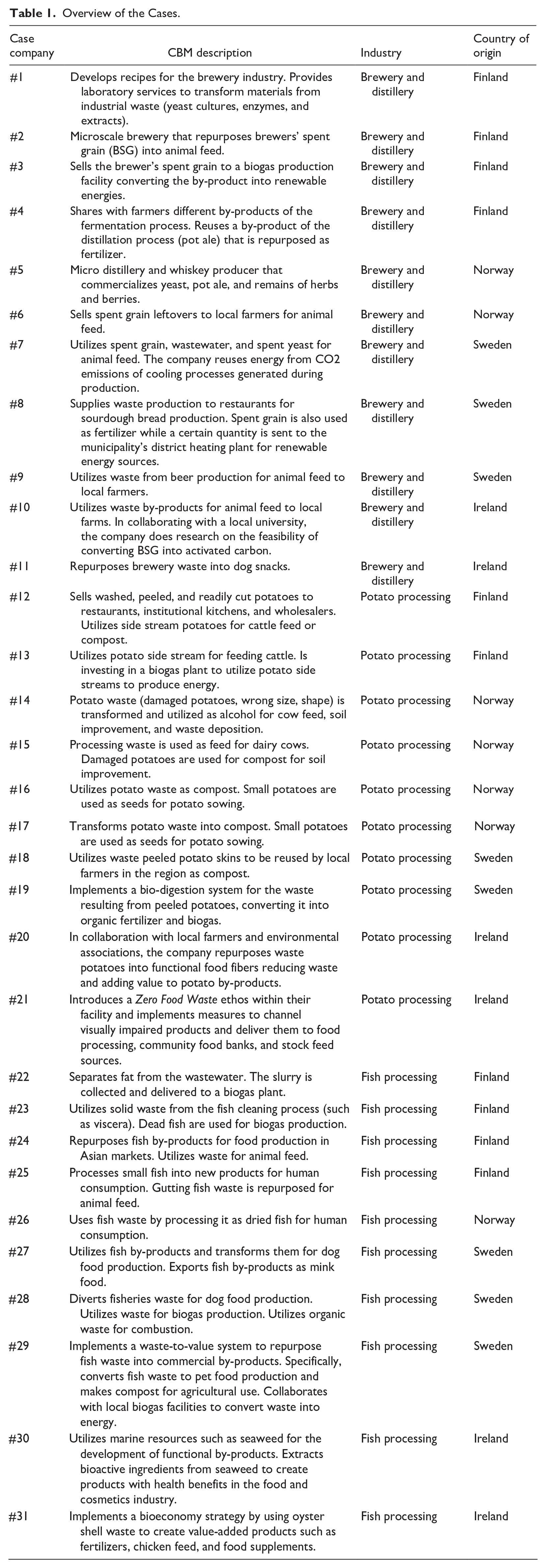
This research focuses on SMEs in the food industry located in the NPA region. Our criterion for sampling was the implementation of CE practices by SME ecosystems in the food industry. SMEs were identified based on the number of employees and turnover according to European Commission guidelines (European Commission, 2020). Micro-enterprises are those with less than 10 employees, small enterprises have between 10 and 49 employees, whereas medium enterprises comprise 50 to 249 employees. Cases were selected based on a theoretical sampling strategy (Patton, 2014). Theoretical sampling techniques enable varying conditions of a concept to be explored based on emerging concepts (Corbin & Strauss, 2014). Consequently, this technique was used to collect a comprehensive sample of SMEs that provided an in-depth understanding of the phenomenon under study while ensuring access to rich information. The sampling was based on choosing SMEs that allowed us to study the real-world phenomenon of “CBMs” embedded in “circular ecosystems” (Patton, 2014). All the SMEs were engaged in an ecosystem of diverse actors pursuing CE outcomes. The CBMs of the participating SMEs are involved in activities where food waste is circulated across ecosystem activities including energy, biofertilizers, and other value-added products. Figure 1 shows an example of a circular ecosystem that we studied, which visualized how rest products from a brewery could be fed to meal worms for other food producers to utilize as feed and fertilizer. The participating SMEs were from four countries in the NPA region, specifically, Finland, Norway, Ireland, and Sweden. Three subsectors were targeted: Breweries and Distilleries, Potato Processing, and Fish Processing. Based on information redundancy conforming to the sample size, saturation was achieved with a rich sample of 31 SMEs (see Table 1). Saturation was aligned with our ambition to maximize data from the phenomenon under study while providing rich information that would facilitate cross-case analysis (Ridder, 2017).
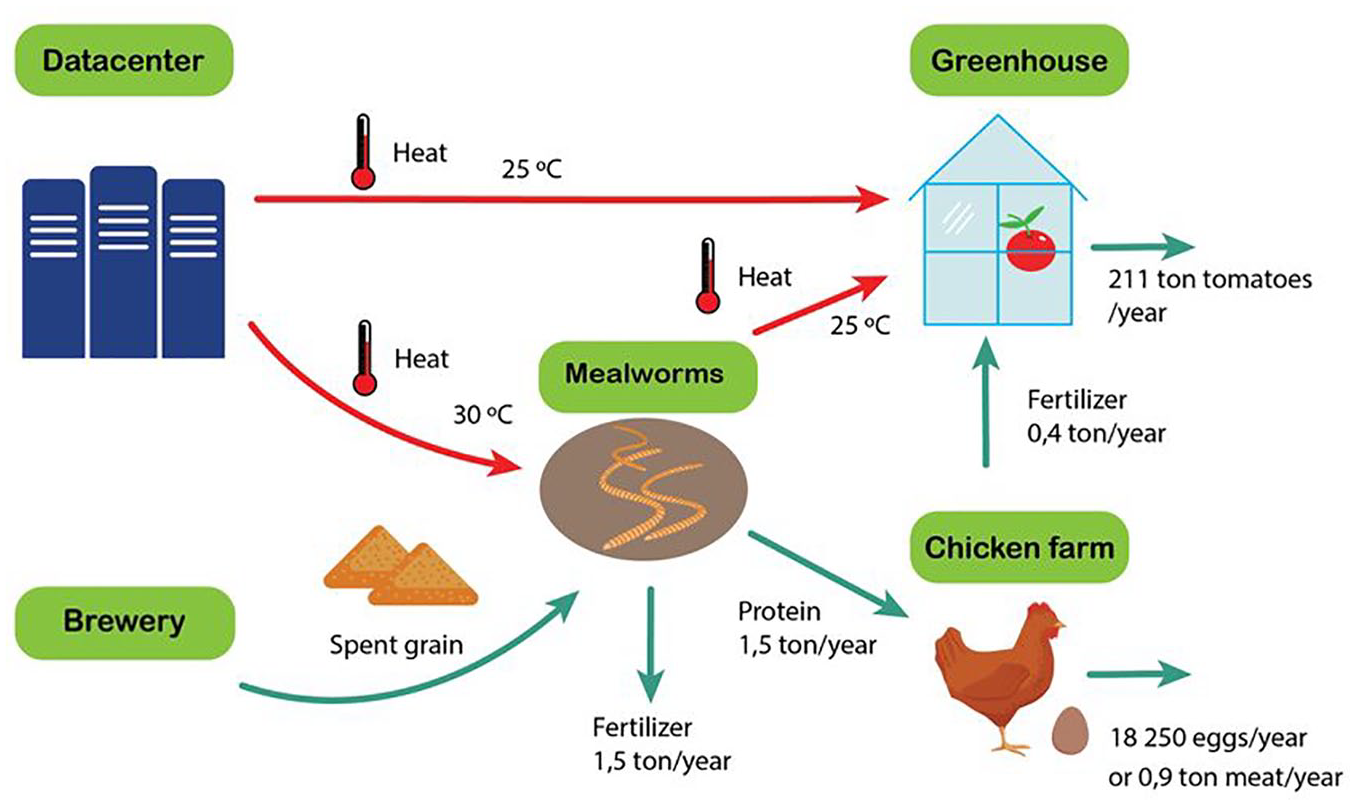
Circular Ecosystem Case Example.
Overview of the Cases.
Data Collection
Data were primarily collected through semi-structured interviews with SME informants because they were the most appropriate sources to better understand CBM insights. The use of semi-structured interviews is a data collection method that ensures transparency and replicability in qualitative research. It is a valuable approach to explore organizational narratives on the “micro-foundations of firms’ strategies” (Foss & Pedersen, 2014). Carrying out interviews allowed us to retrieve rich data on a real-world phenomenon (Eisenhardt, 1989), enhancing data collection flexibility, and ensuring internal validity (Gibbert & Ruigrok, 2010). Thirty-one SMEs were interviewed, with a single representative from each participating organization. Table 2 gives an overview of company informants, and the total time allocated to each interview.
Interviewees.

To gain insights into the analyzed phenomenon, an interview protocol was prepared based on the literature on CBMs (Centobelli et al., 2020; Frishammar & Parida, 2019) and ecosystems for the CE (Jacobides et al., 2018; Kanda et al., 2021; Moore, 1993; Zucchella & Previtali, 2019). The protocol contained broad themes, divided into two sections. The first section covered circular ecosystem related topics (e.g., How do you describe the ecosystem in which your business model is embedded? What CE activities are developed in this ecosystem? How do you describe the role that your company plays in the ecosystem to achieve CE? What are the key actors, partners, alliances, and collaborations participating in the ecosystem in which your company participates to achieve CE?). The second section focused on questions on CBMs (e.g., How do you describe the implementation of CE strategies in your business model? What CE activities do your company implement in the ecosystem? What new activities in your business model are being implemented to achieve CE outcomes? How do ecosystem activities contribute to developing a CBM in your company?).
While we focused primarily on seeking answers to our specific research question, we also encouraged respondents to provide insights from their experience working in an ecosystem and its repercussions for their business model. This format allowed us to investigate the circular ecosystem and CBM areas, which emerged from the general introductory questions explored in greater detail. Since 31 interviews could be deemed a small sample to generate comprehensive results, we ensured that the information obtained during the interviews was rich and wide-ranging. Interviews lasted between 40 and 60 min and were used as the principal basis for data analysis. The interviews were conducted in both Swedish (English translations were made) and English and were carried out in person and virtually (mainly on the Zoom platform). All interviews were conducted by one researcher and recorded. Permission was granted to transcribe the interviews for further analysis. To ensure the anonymity of the SMEs, company names were coded into numbers. Three source types were utilized to follow a triangulation data approach based on interviews, documents, and websites to ensure construct validity and reliability. For secondary data, we had access to social media channels, enterprise websites, webinars, YouTube videos, and business reports. This material was employed to obtain an understanding of the cases before the interviews.
Data Analysis
To analyze the data from the interviews, we used a three-stage coding process that allowed us to build theory from our empirical observations (Gioia et al., 2013). Using the MAXQDA software, the first step consisted of thoroughly reading the interview transcripts and coding them (Corbin & Strauss, 2014). In line with Miles et al. (2013), we followed an iterative data analysis through data reduction, data display, and finally drawing conclusions. The codes were derived from the data provided by SMEs operating in circular ecosystems to support CBMs, which helped to identify relevant themes. To find out about SMEs’ circular ecosystems, we asked for business model insights that companies had acquired from the functioning of their ecosystems. When possible, vivo codes were used to adopt the interviewee’s language and to make concepts (Corbin & Strauss, 2014), then, we grouped those concepts based on similar notions into first-order categories (see Figure 2). We then continued to search for explanations and descriptions of the circular ecosystem phenomenon in the first-order categories. Descriptive codes were grouped into interpretative categories and, thus, patterns and links between first-order categories were identified through an iterative process resulting in eight second-order categories. This step was collectively undertaken by the researchers in a theorizing process that involved inductive and deductive analysis (Corbin & Strauss, 2014). After inductively identifying circular ecosystem particularities, the data structure generated insights into a deductive analytical process. This process was assisted by overarching discussions of the data structure, leading to the subsequent step. Finally, the analysis involved conformation of the overarching dimensions that represented a higher level of abstraction leading to aggregated codes. These aggregates represent the two overarching dimensions around which the findings of this study revolve: (a) circular ecosystem assessment of roles and ecosystem evolution and (b) circular ecosystem strategies. Although data collection was carried out by only one author, the three authors actively discussed and analyzed the data. Involving all the authors in the process of data analysis produced increased confidence in the findings and enhanced creativity (Voss et al., 2002). Figure 2 shows the final data structure of the findings on the SME circular ecosystems of CBMs, which was developed during the process of data analysis.
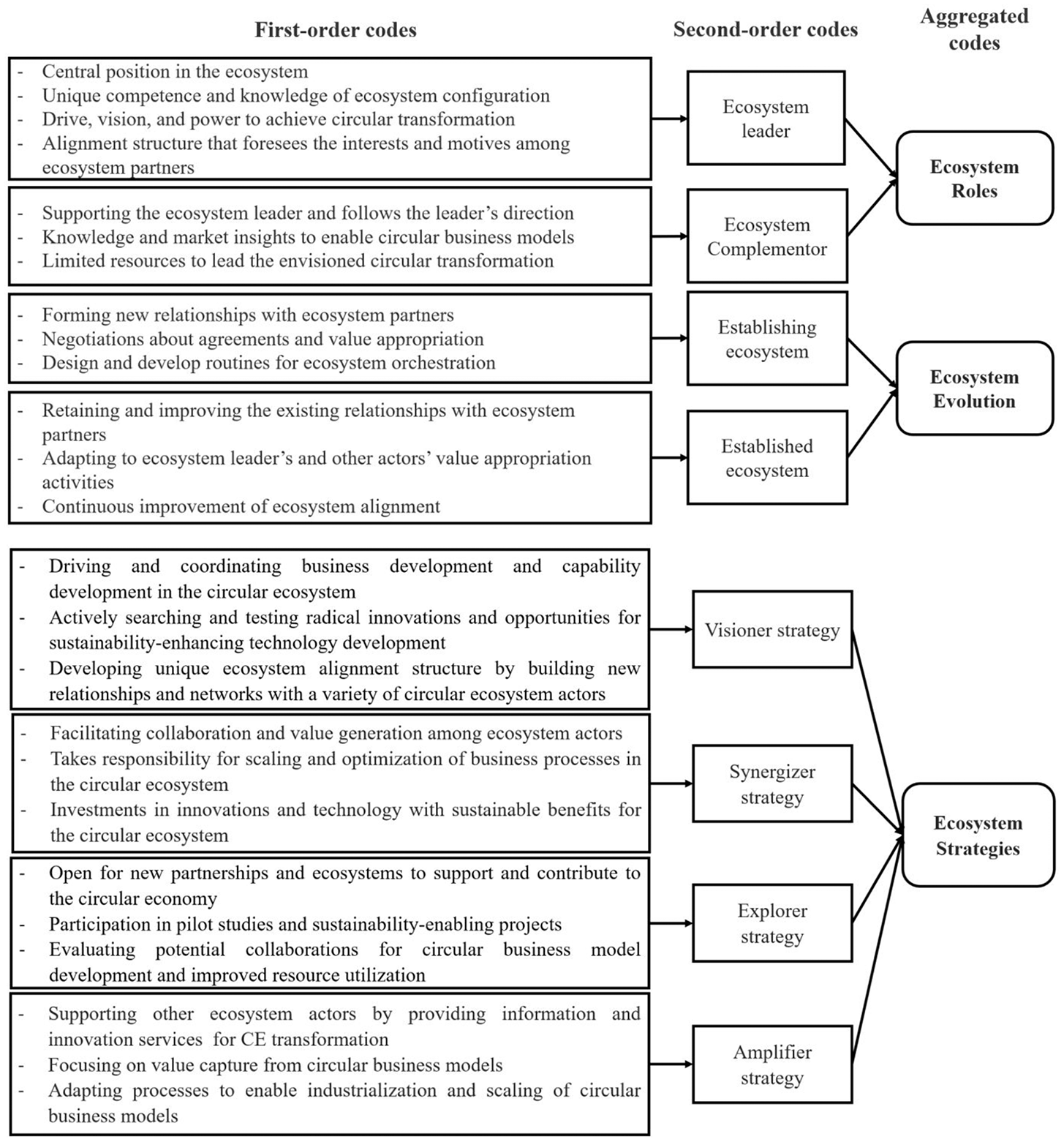
Data Structure and Coding Process.
Findings
The data analysis from the multiple case studies revealed that an ecosystem is essential for the success of CBMI for SMEs. Our results show that the dominant dimensions determining CBMI in ecosystems are shaped by developing a process of ecosystem assessment (based on understanding ecosystem roles and ecosystem evolution). Moreover, our findings show that ecosystems follow four strategies in which CBMI unfolds. In the following section, we describe the elements that must be considered for circular ecosystem assessment and circular ecosystem strategies for CBMI. We present a framework that explains and exemplifies the relationship between dimensions and strategies.
Circular Ecosystem Assessment
The promotion of CBM in a circular ecosystem must be examined by considering the types of roles held by ecosystem members and the stage of ecosystem evolution. To understand how to choose the appropriate strategies, it is crucial to grasp these dimensions. Ecosystem roles can be categorized into ecosystem leaders and ecosystem complementors. These categories show distinct variations in terms of their position within the ecosystem, unique knowledge and capabilities, and growth-oriented vision.
The ecosystem leader, who takes a central position in the ecosystem, coordinates and orchestrates the relationships between all ecosystem members. Notably, ecosystem leaders aim to persuade new participants to consolidate the circular value offer. This is the case of SME #1, whose website publishes the search for collaborators, such as food producers, interested in their ecosystem in implementing AgTech and FoodTech solutions. The leader has unique competence and knowledge of the ecosystem configuration, which is important in designing and developing the ecosystem for circularity. Leaders have an appreciation of different actors’ skills and potential in addition to the interconnectedness between these actors in creating or maintaining a functioning ecosystem: “We foresee the potential network with other breweries and how it can be established” (#1). Similarly, the ecosystem leader has the drive, vision, and power to achieve circular transformation. It is the leader who has the vision and the motivation to drive the functioning of the ecosystem and the pursuit of a common value proposition. An outstanding case of drive, vision, and power was identified in SME #21. This potato SME coordinates the relevant initiatives for the region, such as FoodCloud, a project in which the company collects surplus crops and encourages other farmers to be mindful of waste prevention and sustainability.
Finally, an ecosystem leader proposes an alignment structure that foresees the interests and motives of ecosystem partners. An example was found in the potato processing industry—notably, SME #14 brought together more than 520 local potato farmers in Gjøvik (Norway). This SME has a vision “to create and sell attractive products to the market by industrial processing of the potatoes grown by our owners and, thereby, increase the value of the potatoes” (#14). SME #14’s leading role ranges from its capacity to connect various potato-producing SMEs, incentivizing them to contribute their residual resources and waste to transform them into by-products. Its leadership is also exerted by promoting cooperation among other organizations participating in the food waste transformation process and achieving new product utilization.
The ecosystem complementors support the ecosystem leader and follow the leader’s direction. The complementors consist of various actors with a wide variety of functions whose main target is to enhance the common value proposition that integrates the different CBMs into the ecosystem. Characteristically, complementors take a more short-term view and are driven by efficiency goals in circularity: “Our vision is that we should make optimal use of what we fish now and what we get. That is perhaps the short-term vision in any case” (#28). Ecosystem complementors possess unique knowledge and market insights to enable CBMs. This knowledge can relate to technology, processes, or market access, which is important for the CBM to succeed. To illustrate, SME #27 utilizes fish waste and transforms it into animal food delivered to Asian markets. The SME acts as a complementor given its knowledge of international markets. Because complementors can be very specific about the value added to the ecosystem, they can contribute limited resources to lead the envisioned circular transformation. This means that they would not embark on an ecosystem value proposition on their own or as an ecosystem leader. SME #13, located in Tornio (Finland) and founded in 1873, joined the ecosystem to participate in pilot studies to learn about circularity. Among ecosystem complementarities, the SMEs extend their know-how with local distilleries and actively search for new partnerships to improve resource utilization and develop a better CBM, providing their unique resources and capabilities and supporting the expansion of the ecosystem.
It was noted that not only do actors’ roles determine the ecosystem’s configuration, but ecosystem evolution also plays a decisive role. Ecosystem evolution describes how the state of circular ecosystem formation determines its maturity and keenness to take further steps along the CE path. They can be divided into emerging ecosystems, which are still developing. They find themselves in a burgeoning phase of creating a shared and common value proposition based on the principles of circularity and established ecosystems, which consist of well-functioning sets of actors with clear roles and activities centered on the value proposition. In established ecosystems, only refinements of their formation and structure are needed. The two evolution stages are differentiated from each other because of the nature of relationship-building activities that determine value appropriation mechanisms and the types of routine.
Emerging ecosystems are characterized by three aspects. First, emerging ecosystems form new relationships with ecosystem partners. This is needed because the ecosystem still requires additional actors who can take over certain functions. After its foundation in 2017, SME #12 became the most-awarded microbrewery in the Finnish Best Beer competition and was also recognized at the European level in the European Beer Challenge competition. As stated on its website, SME #12 aims to become “the forerunner in sustainable brewery solutions.” Second, companies carry out negotiations about agreements and value appropriation. These are important activities because the actors do not yet have an established relationship and the collaboration and value capture mechanisms need to be agreed. Thus, through negotiation activities, companies share their core knowledge with other companies to reach a consensus that allows them to maximize value and allow profit creation. To illustrate, SME #15, a potato producer in northern Norway, participates in annual meetings on price negotiation of agricultural products, which are assisted by the Norwegian Ministry of Agriculture and Food. Thus, negotiation becomes an important routine that contributes to the process of ecosystem orchestration. Third, with new actors entering the ecosystem, there is a need to create a balance and integrate actors into the activities and routines of the ecosystem. An illustration of this integration process in emerging ecosystems was found in the Finnish brewery and distillery industry. This ecosystem integrates 21 small breweries. It lacks a deeper understanding of how to utilize waste and side streams. Moreover, it has yet to develop more efficient solutions in terms of logistics and cooperation to deal with the long distances between distilleries.
Established ecosystems build on existing relationships and, therefore, tend to focus on retaining and improving existing relationships with ecosystem partners. Because ecosystems are dynamic over time, all actors must continuously work to maintain their position in the ecosystem, especially during the transformation to circularity. To illustrate, SME #10 carries out medium- and long-term research projects in collaboration with local universities to convert brewers’ spent grain (BSG) from biological waste. By promoting R&D projects in the region, the SME endeavors to improve and maintain ecosystem relationships based on mutual benefits. Continuous improvement of ecosystem alignment is important, especially in cases where actors try to change their positions, functions, and responsibilities. Case #28 showed how the SMEs started as a fish sales association but then moved to production and warehousing activities. It has gained new functions through the evolutionary process, adding restaurant and catering, and a waste supplier to a dog food producer, biogas, and combustible waste.
This strategy focuses on adapting to ecosystem leaders and other actors’ value appropriation activities. Value appropriation changes in the move toward CBMs. Responsibilities, payments, and revenue models change, and the ecosystem needs to adapt to the new situation, which builds on the logic of circularity. Primarily, this is associated with the idea that ecosystems stay aligned through the transformation process. Empirical evidence of such a process can be found in the potato processing industry with SME #16, which has a clear vision of the future development and transformation of its ecosystem to the CE. Since 2017, 12 industry organizations (e.g., the Norwegian Farmers’ Association, the Norwegian Farmers’ and Small Farmers’ Association, and other actors in the domestic food industry) agreed to reduce Norway’s 50% of food waste by 2030. This ecosystem highlights the commitment of suppliers and complementors through an institutionalized network that aims to create greater value from waste and by-products. Ireland’s fish processing industry is another example of an established ecosystem showing signs of stability and relationship improvement. This well-established industry aims to develop new, high added-value products in the “functional foods” sector, which requires the targeting of new products through unique value propositions carried out by the contributions of individual actors. An established ecosystem displays the characteristic of constantly identifying activities and links that can be fixed and better aligned. The identification of more efficient use of resources, for example, allows established ecosystems to develop research and development opportunities with the various stakeholders in the ecosystem.
Circular Ecosystem Strategies
After carrying out a circular ecosystem assessment, it was possible to identify a series of ecosystem strategies that show how SMEs interact with the ecosystem. We distinguished four circular ecosystem strategies adopted by SMEs to achieve different levels of circularity in an ecosystem—namely, the visioner strategy, the explorer strategy, the synergizer strategy, and the amplifier strategy. Although the strategies have certain overlaps and companies over time have been moving in between strategies, the identified strategies provide a valuable conceptualization of potential strategies for SMEs to support their transition to CBMs. Figure 3 summarizes the main dimensions of ecosystem strategies that relate to ecosystem evolution and the roles within it.
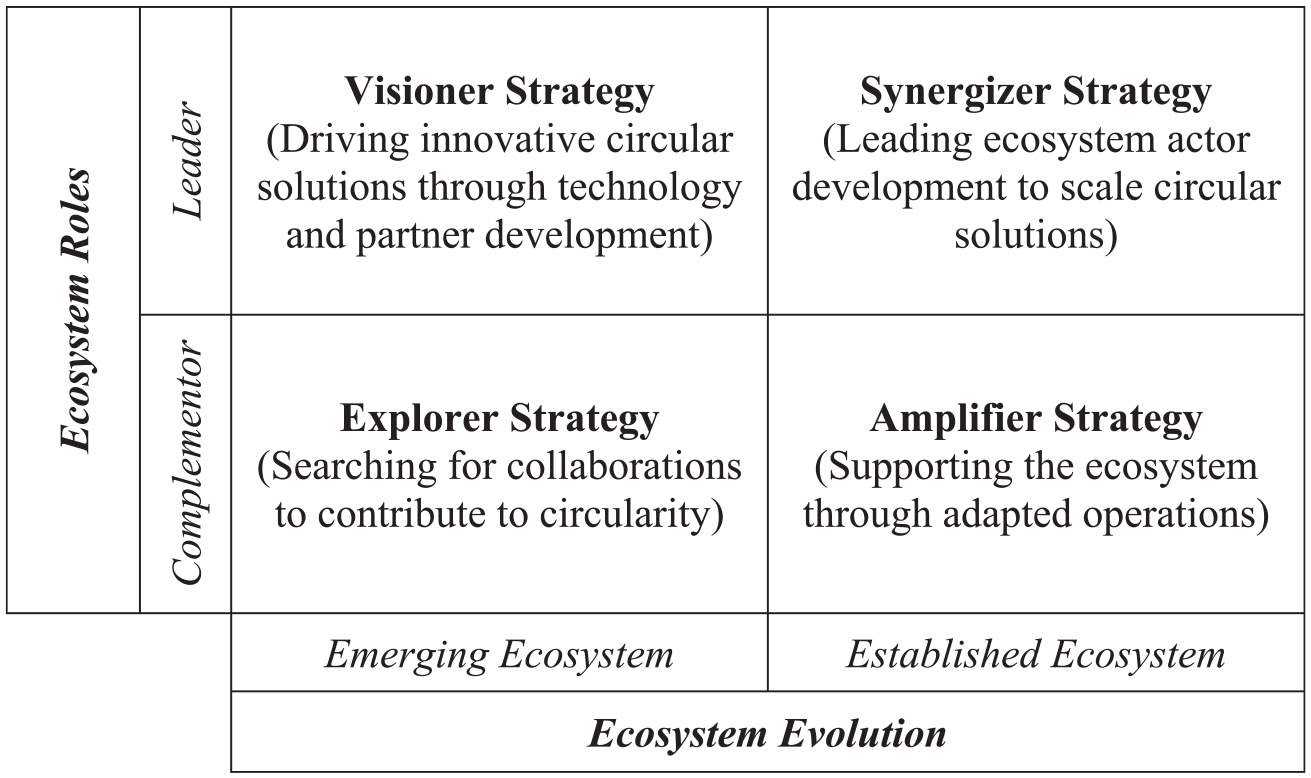
Circular Business Model Innovation Strategies in Circular Ecosystems.
The visioner strategy is characteristic of leading SME actors in emerging ecosystems. Activities within this strategy are related to driving and coordinating business development and capability development. SMEs adopt a visionary and leading role and are, therefore, focused on increasing the circular ecosystem opportunities to expand their market presence. Because the circular ecosystem finds itself in a nascent state, visioners tend to focus on the pursuit of growth opportunities by leading collective efforts to improve internal ecosystem processes. An example of this category is found in a Swedish brewery, established in 2017 (SME #8), that produces organic liquid fertilizers using industrial side streams, such as organic wastewater and CO2 emissions. Through pilot projects with local breweries, the company helped to bring together ecosystem members to develop a circular food production ecosystem that merges brewery, aquaculture, and bioenergy in an indoor hop farm lab. As a visionary leader, this SME identified a growth opportunity for the ecosystem by diversifying a circular value proposition through ecosystem creation.
The second characteristic relates to a process of actively searching and testing innovations and opportunities for sustainability-enhancing technology development. To illustrate, SME #29 in the fish industry participated in a product development project with Blue Food along with RISE Research Institutes of Sweden. The project was called “Freshwater Fish for Sweden” and was concerned with the development of test products made from the roach. Similarly, they developed new capabilities employing the efforts of the ecosystem as a whole and presented their products in eco-packaging. As stated by the company on its social media: “We have been working with a local bag retailer since 2017 and an important aspect is the development of product design and packaging.” This is also the case with SME #8. The company implements state-of-the-art farming biotechnology, the “Varicon Aqua,” to carry out novel circular solutions, such as micro-algae production and biotechnological water purification (e.g., BioFeed, BioAlgae, and HydroHumala solutions). The brewery’s strategy showcases its keystone-leading position by introducing AgTech and FoodTech platforms that enhance the performance of the entire ecosystem: “Some of the collaborators we’ve been working with are [name two local breweries]. These two heroes are eager to become forerunners of sustainable brewery models. We are exploring how we can commercialize these systems together” (#8). Finally, the visioner strategy is characterized by the development of unique ecosystem alignment structures where new relationships and networks are built with a variety of ecosystem actors.
A type of circular ecosystem structure that was highlighted in this study related to the development of collaborative networks, local partnerships, and co-creation alliances. These aspects were seen in SME #21, a company that operates under a Zero Food Waste ethos and develops advocacy work for food waste through prevention activities concerning the use of eco-packaging. This initiative builds on its goals to carry out better business model development by collaborating with a local social enterprise that connects businesses that have surplus food with charities. The business manager of SME #21 starkly stated, From a business point of view, it makes sense to use every resource we have at our disposal. Growing and selling potatoes and vegetables, we are in a high-volume, low-margin business. This means that investment in more efficient production methods and recovery of by-products is crucial and that we must make decisions from a sustainable point of view.
Overall, the visioner strategy is used by companies that see no other way to pursue their CBM ambitions and goals. They have been struggling and experimenting historically but they show that it is possible for SMEs to create circular ecosystems that enable the transition to advanced CBMs.
The synergizer strategy is characterized by ecosystem leaders in established ecosystems. Thus, it possesses the highest potential to contribute to CE benefits even though it often can be challenging for SMEs to take that role due to lack of power and agency. The potential for SMEs to behave as ecosystem leaders lies in their capacity to understand the needs and potential of other actors of the ecosystem, facilitating joint efforts between ecosystem members. In the synergizer strategy, leading SMEs are those that facilitate collaboration and value generation among circular ecosystem members. Therefore, in the synergizer strategy, SMEs in this role aim to align multiple actors’ interests to maximize mutual benefits. An example of this category is found in SME #26, a Swedish fishing company with well-established products in the fish market that has invested in technology to utilize more of the edible fish parts for human consumption. This process works for atypical fish, such as bream, and the residuals from fish fileting. The company actively works to align all necessary actors, such as suppliers and distributors in the ecosystem, and to develop the market for sustainable products. Therefore, synergizers contribute to actors’ alignment by working on improving relationships that contribute to value creation. Synergizers take responsibility for optimizing and scaling business processes in the circular ecosystem. Intending to enhance resource efficiency, SMEs playing the role of synergizer promote collaboration between ecosystem members to minimize waste and resource use by developing operations processes, product execution, and logistics. This strategy focuses on increasing the impact and scope within the ecosystem of increased efforts to develop CE activities. By creating new products from food by-products, SME #31 has become one of the biggest exporters of the Crassostrea Gigas (Pacific Oyster) species, contributing more than 249 regional jobs. By focusing on natural resource-based activities, SME has successfully established business development activities based on the coordination of waste food management.
Furthermore, the actors contribute substantially to the transformation toward circularity through investment in innovations and technology with sustainable benefits for the ecosystem. This strategy integrates the activities of research, development, and investment in green and clean technologies that facilitate circular value creation. SME #30, a marine biorefinery specialist in Ireland, is an exemplary case of this strategy. Founded in 2017 by a group of marine enthusiasts (biochemists, phycologists, and cellular biologists), the SME developed a biotechnology platform employing the clean, zero-waste isolation of marine molecules and algae ingredients for high-value applications in food and beverage, nutraceuticals, nutrition, personal care, and therapeutics. The company employs a marine biorefinery model that utilizes state-of-the-art cosmetic chemistry and clean bioprocessing, ensuring that 100% of the biomass is converted into functional ingredients, known as cascading extraction. The focus on the blue economy and bioeconomy technologies development and investment demonstrates the potential of leading a circular ecosystem based on the creation of novel circular values. The synthesizer strategy has the highest potential for economic and sustainable benefits but also requires SMEs to over time sustain a leading role in a larger ecosystem that in most cases still develops in some way. The SMEs might reevaluate their role from time to time and the circular business might change their organizational belonginess over time. This is a continues process of renewal and reevaluation although it is mostly characterized by a leading role in an established ecosystem.
The explorer strategy is mainly implemented by SMEs that play the role of complementors in emerging ecosystems. This strategy’s focus is to establish new partnerships and collaborations that support and contribute to circular value creation. Because of limited resources, SMEs implementing this circular ecosystem strategy recognize that integrating into the broader ecosystem is a key driver for achieving circularity, and that leveraging strategic partnerships is important in enhancing their impact. SME #2, a Finnish brewery, exemplifies this approach by supplying spent grain—a by-product of its brewing process—to bakeries who transform this waste into bread. The brewery explored opportunities to valorize the side stream in another industry. However, it failed to generate any value-adding activities and has remained dependent on the bakery’s demand for spent grain. To increase circularity, the brewery should further engage in business-model development to capture value from its waste in the future, and it should develop its ecosystem so that larger quantities of the side streams can be utilized.
In this strategy, SMEs participate in pilot studies and sustainability-enabling projects to promote the value proposition of the circular ecosystem. An example of this category is SME #7, a Swedish brewery that collaborates with a data center in a joint pilot project to harvest meal worms. These worms can be used as feed in local chicken farms instead of imported soy. The brewery’s side stream, spent grain, has a wet texture and is used as feed for the meal worms. The heat generated from the data center provides suitable conditions for harvesting the worms. During their growth phase, the meal worms consume most of the spent grain and water. The residuals are a particularly good “dried” fertilizer that is much easier to handle than the wet spent grain. In an established ecosystem with collaborating and collocated actors, this process is scalable, and it is a prime example of how to facilitate greater circularity and sustainability in a high demand, growth industry.
Finally, the explorer strategy is connected to activities of evaluating and exploring potential areas for CBM development and improved resource utilization. SMEs implementing this strategy might engage in exploration processes to convert food waste into new products (e.g., compost, bioenergy, animal feed, and other by-products). Thus, potential areas for CBM development are associated with by-product innovation, enhanced circular supply chains, and novel production practices. Many activities fall within this category—for example, collaborating on spent grain utilization (#6), recycling drinking water for machinery cooling (#2, #7), reusing soil (#18), and experimenting with new by-product utilization (#23), among others. The explorer strategy becomes for most SMEs a starting point to their circular journey. It is about finding opportunities and starting to engage with new ecosystems. Economic and sustainability gains are rather limited in this stage, but also the risks are lower and the learnings from using this strategy can be valuable to be able to choose more advanced strategies in the future.
The amplifier strategy is characteristic of complementor ecosystem partners in established ecosystems. The strategy integrates activities that support other ecosystem actors by providing information and innovation services. Hence, these companies are not the main drivers and actors in the transformation into circularity. Instead, they support and facilitate the transformation of others and use these activities to promote their circularity. By providing services, amplifier strategies are where companies engage in activities that promote CE practices, such as training, consulting, knowledge sharing, and collaborative projects that involve joint R&D efforts. SME #11 is an outstanding case of the amplifier strategy. The company has developed knowledge and collaboration on mushroom cultivation, employing an inoculating technique that uses BSG with mushroom spores.
In addition, amplifiers focus on value capture from CBMs. Here, they play an established role in the ecosystem and, therefore, can work on value capture instead of experimenting with different types of value creation. SME #11 employs outstanding practices in this regard. For instance, it brings numerous beers to the Irish market, and it is a typical example of the consolidation of niche markets on waste streams. The company gained a reputation for implementing circular practices after being awarded a gold medal by the Institute of Brewing and Distilling in London. The company has realized innovative approaches in processing its brewing waste, which requires the conversion of spent grain and nutrient-rich water from the brewing process into a wide range of products including granola bars and dog snacks.
At the same time, amplifiers adapt processes to enable the industrialization and scaling of CBMs. This is important for sustainability in the long run because major positive economic, environmental, and social benefits can only be achieved from the large-scale implementation of CBMs. Consider the example of Case #20, a potato processing SME in Ireland that buys locally harvested potatoes with a certain percentage of soil. Potato processing results in the typical waste of soil, wastewater, and peeled potato skin. The company is not interested in processing this waste further, but it supports its ecosystem by utilizing the waste in the most circular way possible. Scaling is also evident as the company has implemented intelligent processing that upgrades its waste streams into functional vegetable fibers. The functioning of its ecosystem is based on collaboration with the Irish Environmental Protection Agency, the Irish Farmers’ Association, and the CyberColloids, an independent group that specializes in hydrocolloids. Overall, many SMEs will be needed to pursue an amplifier strategy. These companies might be leading in their fields, but in CBMs they will rather be necessary supporting actors that utilize the transition to the CE. In many cases these SMEs have been part of emerging ecosystems as well and their efforts in adapting to circular operations has given them the opportunity to capture both economic and sustainability gains in the long run.
Discussion
Based on the empirical results of our research, we see that circular ecosystem strategies enacted to promote CE principles have implications for CBMI in SMEs. Based on our observations, we propose a framework that showcases CBM implications derived from ecosystem strategies. CBMI is visualized in SMEs when companies implement CE principles across an ecosystem. The framework is built on the themes that emerged from empirical data and the theoretical insights from ecosystems and CBMI. The stages in which our framework unfolds are (a) Design and Development and (b) Commercialization. Each of the four circular ecosystem strategies (visioner, synergizer, explorer, and amplifier) has different implications in CBMI across these two stages. Table 3 summarizes CBMI implications within circular ecosystem strategies. Because BMI depends on the ecosystem strategy employed by an SME in an ecosystem, this framework can be used by SMEs to identify the implications for their business models and their potential for implementing CE principles. The logic of the two stages is explained below.
CBMI Implications for Ecosystem Strategies.

Design and Development Phase
In the design and development phase, SMEs make business model refinements for CE implementation. The design and development phase revolves around the CBM process in which companies carry out value-creation activities. CE strategies are implemented in a revised business model, which unfolds differently across the different circular ecosystem strategies. At the level of the visioner strategy, CBMI is characterized by experimenting with new circular solutions and exploring new partners. Visioners will focus on the development of new business areas and will make proposals while orchestrating new CE solutions (e.g., state-of-the-art solutions on industrial side streams to create new products). In contrast, in the case of the synergizer, leaders are prone to develop the concept of circular value chains employing more radical circular solutions while focusing on alignment strategies between partners with similar visions of sustainability. Because these companies operate in an existing ecosystem, their processes have matured in a way that CBMI can focus on which partners to collaborate with and how. By taking a leading role, these SMEs can actively design and develop their circular ecosystems to achieve overarching CE goals and to orchestrate the circular ecosystem to maximize sustainable benefits. Reaching this state as a SME is not the most common, but the specific characteristics of circular ecosystems create conditions that incentivize SMEs to adopt this role or create a need because other actors are not available.
CBMI in the explorer strategy is prone to search for more circular values by allocating resources and developing feasibility studies. This search is developed by a process of examining partners’ availability to cooperate and testing partners’ willingness to collaborate. Explorers are prone to focus on new value streams (e.g., by exploring how to maximize resource utilization from waste), supporting the transformation of the entire ecosystem toward circularity with their resources and competencies. Showing this openness and willingness to become engaged in circular ecosystems can be a valuable facilitator in the establishment of circular ecosystems. Support from complementors can enable and drive leaders of the ecosystem to initiate activities and motivate them to pursue their ambitions. The existence of this support is crucial especially when a new circular ecosystem emerges. Here, trust-based relationships are highly valued.
In the amplifier strategy, actors strive to map CE opportunities in their business models, while focusing on the creation of agreements with ecosystem partners. CBMI becomes more evident when companies create new circular value by providing adequate circular infrastructures. As a supporting actor that usually has no specific focus on circular operations, these actors are important cornerstones in enabling circular ecosystems, and they can bring valuable competencies and resources to bear. In the design and development phase, it is important for amplifier SMEs to position themselves as available actors who are willing to collaborate on CBMI. The impact on their own BMs may be limited but, given their competencies, they can exert a key influence in a well-functioning circular ecosystem.
Commercialization Phase
The second stage is the commercialization phase, which concerns the implementation and validation of the CBM value proposition to achieve mass markets, bearing in mind the different benefits of the CE. This stage is characterized by a process of validation and implementation of the CBM to realize CE goals with a major focus on value-delivery and value-capture activities. At the level of the visioner strategy, the business model has a greater focus on evaluating the different returns that the CE offers. Although it may be perceived as uncertain returns on investment, SMEs must place greater emphasis on the contracting processes of collaborators, which allows new revenue streams to be captured.
In the case of the synergizer strategy, SMEs are inclined to move toward CBMI using scaling strategies while developing activities for ecosystem orchestration activities. Synergizers concentrate both on scaling business processes and implementing new circular solutions (e.g., a radical circular solution from a pilot project promoting new processes that encourage resource efficiency across different industries).
In the explorer strategy, SME business models are prone to carry out tests and pilots through a deep negotiation process with potential partners. At the business model level, CBMI requires the adaptation of circular production processes for value delivery and the capture of value from side streams. Finally, the amplifier strategy centers on optimizing value flow by maximizing efficiency in the use of resources and supporting the development of trust relationships with partners. CMBI unfolds as companies concentrate on circular value appropriation over the life cycle of a product (e.g., recovering value from waste, residues, and by-products) and standardizing circular practices (e.g., blue economy, cyclical, and cascading methods).
Overall, it is important to stress that SMEs need to carefully consider early in the design and development phase what a future commercialization will look like. In circular ecosystems, the resources available to the CE set certain limits, potentially restricting commercialization and scaling. Broadening the view to encapsulate other actors and industries in the collaboration process may well be crucial in achieving sufficient commercialization potential. However, SMEs, with their flexibility and need-driven approach, may have characteristics that benefit the establishment of circular ecosystems.
Conclusion
This study has sought to deepen our understanding of how circular ecosystem strategies influence CBMI in SMEs. Building on a multiple case study, our findings make three primary contributions at the intersection of the CE, CBMI, and ecosystem literature (Kanda et al., 2021; Zucchella & Previtali, 2019). First, as identified in the literature, most CBMI approaches are grounded in the conventional business model literature, lacking focus on an ecosystem perspective (Kuzma & Sehnem, 2023). Consequently, studies tend to reference an ecosystem perspective that is separate from the business model level of analysis (Castro Oliveira et al., 2022; Konietzko et al., 2020; Ritala et al., 2023). In particular, there is a lack of understanding on how SMEs approach and implement CBMI (Donner et al., 2020; Suchek et al., 2022). Our study aims to fill this gap by recognizing that SMEs’ CBMI may vary depending on the ecosystem strategies employed and the collaborations developed with new and existing partners engaged in CE transformation. Thus, as a central statement, our study emphasizes that SMEs adopt varying roles within their circular ecosystem, and these roles, in turn, influence the strategies to adopt when transforming toward CBMs.
Second, our study contributes to business ecosystems and CE theories (Thakur & Wilson, 2024), by developing a more comprehensive logic to explain how, SMEs configure specific circular ecosystem strategies to manage the implementation of CE principles (Ferrari et al., 2023; Gomes, Castillo-Ospina, et al., 2023; Gomes, Faria, et al., 2023). More specifically, our study shows that, to better comprehend circular ecosystem strategies, an ecosystem assessment of actors’ roles and ecosystems’ evolutive stages is required. Such assessment provides a nuanced understanding of ecosystem roles—most notably, leaders and complementors—and ecosystem evolution, with a focus on emerging and established ecosystems (Adner, 2006; Gomes, Faria, et al., 2023). Specifically, our research contributes to the literature by identifying four circular ecosystem strategies—namely, visioner, synergizer, explorer, and amplifier strategies (see Figure 3), which prompt major changes at the business model level. Despite the identification of these strategies, there is no one-size-fits-all approach to developing circular ecosystem strategies. Thus, we provide a contingency perspective for SMEs to implement CE principles. This is important to move beyond describing a circular utopia and creating a strong circularity grounded in real outcomes (Gümüsay & Reinecke, 2022).
Finally, our study recognizes that CBMI is necessary to implement certain strategic orientations (Reim et al., 2015). In this regard, the link between innovation and strategic intent has been recognized in business model research (Casadesus-Masanell & Ricart, 2010; Teece, 2010). However, it has not been fully developed across the CE and ecosystem literature (Geissdoerfer et al., 2020). Previous studies have highlighted that CBMI requires a transformation process that holds implications for the design and development phases of business models and not just the commercialization phases (Bocken & Geradts, 2020; Frishammar & Parida, 2019). However, a study of that kind has been conducted in large companies and not in the context of the ecosystems in which these companies operate. Our study provides a more nuanced view of this phenomenon and highlights that circular ecosystem strategies hold implications for the micro-level activities of CBMs regarding value creation, value delivery, and value capture. Therefore, we offer a two-phased framework model that explains CBMI strategies for designing, adapting, and carrying out the commercialization of CE initiatives across ecosystem roles and ecosystem evolutionary stages (see Table 3). By configuring an adequate business model to achieve CE outcomes, further insights into CBMI within the context of circular ecosystems will carry implications for business competitiveness (Sergio & Ferrer, 2023).
Practical Implications
Our results hold practical implications for SMEs’ implementation of CBMs. The ecosystem strategies identified can help SMEs develop explicit ecosystem strategies to better refine and transform their business models in relation to the ecosystems in which they operate. In this regard, this study offers four significant insights for practitioners and managers. First, for SMEs seeking to enhance their implementation of CE principles, it is important to critically evaluate the ecosystem in which they operate because this can strongly influence their ability to pursue CE principles in their business models. Assessing the ecosystem gives an idea of their current position and role in the ecosystem and how the business should be addressed to achieve further circularity. Our study has captured both ecosystem roles and ecosystem evolution aspects that determine different types of activities and commitments to achieve successful CE implementation. Besides, SMEs’ limitations in implementing CE principles can become determining factors for companies to become active members of circular ecosystems that support the configuration of their business models. This occurs through a process of leadership and complementing with the resources, knowledge, and infrastructure that SMEs, as part of an ecosystem, possess.
Second, with respect to ecosystem roles, taking a leading position (visioner and synergizer roles) can represent an adequate strategy for SMEs because of the unique competencies and skills that can be brought to bear to shape and configure an ecosystem. SMEs that have the drive, vision, and power to make the CE transformation and that occupy a central position within their ecosystems are expected to discharge orchestrating roles because their resources and skills can be mobilized to effectively align ecosystem interests and generate new values for the process of CBM implementation. Although taking a leader role in the ecosystem may be challenging for most SMEs, prevailing circumstances will require SMEs to adopt that leading role to initiate and drive the circular ecosystems required in today’s business landscape. Our cases show that this is possible for SMEs and that the expected benefits are high.
Third, SMEs are more likely to pursue a complementor strategy when the company has limited resources but, nevertheless, holds specific market knowledge and insights that support CBM development. A complementor strategy is less suitable if SMEs aim to develop their own vision and orchestrate efforts around an ecosystem. In this case, complementors are expected to align with the specific vision of leaders and support them with resources, skills, and technology. When SMEs acknowledge the role they occupy in their ecosystems, it is easier to manage the strategies and variations of CBMI. Hence, companies could focus on refining circular ecosystem strategies for CBMI and business model transformation.
Finally, our study suggests that SME managers should pay special attention to the design and development phase of CBMI because it tends to be a challenging issue for most SMEs undertaking CE transformation. Since the design and development phase relates to value-capturing activities, SMEs are expected to focus on elements of business model refinement through experimentation with new CE solutions while engaging in further exploration of value creation with new partners.
Limitations and Future Research
This study makes an important contribution to the research field, but it also has some limitations. These limitations, however, can serve as a foundation for future research endeavors. Although our focus was on SMEs employing a CBM that relates to a specific ecosystem, our emphasis on sparsely populated areas in the NPA region provides a limited understanding of the phenomenon. In this regard, only 31 cases were examined, all within a relatively similar region. Therefore, the CBM strategies introduced in our study may be most applicable in these specific conditions. More studies, preferably in other regions, should be carried out to validate our findings. Furthermore, our case companies are all connected to the food industry. The food industry has certain unique characteristics, especially when it comes circularity. Therefore, future research should study other industries and delve more deeply into the two stages of design and development, and commercialization to provide comprehensive insights into the CBMI process for organizations outside the food industry. In addition, a missing piece in circular ecosystem research on CBMs is an analysis of how value appropriation methods change through ecosystem evolution and the role that multiple actors play in such a transition. Finally, the ecosystem strategies identified can be enriched in future studies by contrasting the business ecosystem literature with the research on business innovation.
Footnotes
Declaration of Conflicting Interests
The author(s) declared no potential conflicts of interest with respect to the research, authorship, and/or publication of this article.
Funding
The author(s) disclosed receipt of the following financial support for the research, authorship, and/or publication of this article: We gratefully acknowledge the funding support provided by the European Regional Development Fund and the Green Transition North -circular economy (GTN—CE)-project (no. 20359796) as well as Swedish Energy Agency, and The Swedish Governmental Agency for Innovation Systems (Vinnova), which made this research possible.
