




Abstract
Combined use of hot water (HW) treatment and calcium lactate (CL) is a promising postharvest approach to preserve the food value and prolong the shelf life of fruits. The present experiment aims to determine the physiological loss in weight, firmness, respiration rate, ethylene and biochemical attributes of banana fruits treated with hot water (50 °C for 7 min) and aqueous CL dipping (1, 2, and 3% for 2 min). Treated fruits were stored under ambient conditions (22–25°C temperature and 60–65% of relative humidity) for up to 9 days. The study showed that combined use of HW and CL (3%) maintained higher hue angle, peel firmness (4.4 N), reduced decay loss (10.63%), respiration and ethylene evolution rate of stored fruits. Also, CL treatments (3%) with HW proved the best which reduced 6-fold sugar spot and 1.5-fold decay loss over untreated fruits. At the end of storage sensory parameters such as mouthfeel, peel colour and overall acceptability (score 6.9) were recorded higher in HW and CL 3% treated fruits. The findings indicated that pre-storage combined use of HW and CL has a great potential to preserve quality, delay ripening, and reduce sugar spots, and postharvest decay loss in banana fruit without any adverse effect on consumer appeal.
Introduction
Banana (Musa spp.) is an economically important climacteric fruit of the family Musaceae for the domestic and export market world over. It is a mainstay to small farmers, retailers, vendors, laborer's and resource-poor consumers in the developing countries of the tropical and sub-tropical region. It is a rich source of dietary fibre, calcium, potassium, phosphorous and carbohydrate (Mohapatra et al., 2010).
Banana is prone to various diseases which cause huge losses during postharvest handling and storage. One of the major postharvest diseases is anthracnose which is caused by the fungus Colletotrichum musae and could do 30–40% losses in salable fruits (Mirshekari et al., 2012). In addition, crown rot is also reported to be a devastating disease in banana-growing areas which is caused mainly due to the fungus Colletotrichum musae and Fusarium spp (Kamel et al., 2016; Lassois et al., 2010). These problems are principally controlled by the use of postharvest fungicides (Luyckx et al., 2016). Due to the health concern and aversion to the chemical residue, there is sought of alternative methods (Wisniewski et al., 2001). Therefore, the use of non-chemical alternative approaches for maintaining the postharvest quality of fruits and vegetables has become increasingly important and of great interest.
Postharvest heat treatments in the form of hot water, hot air, hot water rinsing, and vapour heat treatment are widely and commercially used for disease control and disinfestations of insects (Lurie and Pedreschi, 2014; Salazar-Salas et al., 2022). Among these methods, HW requires the least instrumentation and skill hence often used for controlling postharvest diseases and alleviating physiological disorders of fruits and vegetables. HW treatment exhibited potential for minimizing postharvest diseases but it needs to be used with utmost care to avoid adverse effects on fruit quality (Marrero and Paull, 1996). Previous studies described the effects of HW application on postharvest decay control, quality retention and shelf-life extension but the combined use of HW with calcium salt remains neglected and that could be more advantageous over the single treatment of HW (Kabelitz et al., 2019; Naser et al., 2018; Rico et al., 2007; Rux et al., 2020).
Among the calcium salts, CL is widely used for controlling different diseases and disorders in horticultural produce. CL is white crystalline salt widely used to maintain cell wall structure by interacting with pectin to form calcium pectate. CL is an excellent alternative to calcium chloride as it avoids the bitterness and off-flavour of fruits. Antibacterial traits of calcium lactate washing solutions have also been reported for the treatment of melons and fresh-cut vegetables (Martin-Diana et al., 2005). Calcium lactate dip of pear and kiwifruits has extended their shelf life up to 12 days (Beirao-da-Costa et al., 2008). Most of the previous studies related to hot water treatments of banana fruits have been conducted either with calcium chloride or calcium nitrate (Ernesto et al., 2017; Lurie, 1998; Matook and Fumio, 2006; Rabiei et al., 2011; Torres et al., 2010) which are now being discouraged due to their undesirable effects (off flavour and bitterness) on produce. Therefore, this study aims to investigate the combined effect of HW dipping and CL treatment on postharvest quality retention and decay loss reduction in banana fruits stored at room temperature.
Materials and methods
Experimental material and treatment
Freshly mature green and uniform size, healthy banana fruits were sourced from the cooperative collection and package-house of Azadpur (Delhi) India. The fruits were washed and divided into five different lots containing thirty bananas in each replication for dipping treatments. The experiment was conducted in the laboratory of Food Science and Postharvest Technology, Indian Agricultural Research Institute, New Delhi (India) (Geocodes 28.639043, 77.161905). For this, fruits were dipped into hot water (50°C) for 7 min and allowed to air dry. Thereafter, fruits were immersed in three aqueous concentrations of CL (1%, 2%, and 3%) for 2 min. Control fruits were dipped in distilled water. Treated fruits were packed in corrugated fiber board(CFB) boxes without adding any artificial ripening agent and stored at room temperature (22–25 °C and 60–65% relative humidity) for 9 days.
Analytical methods
The colour of banana fruit was determined by using the colour TEC PCM machine in L*, a* and b* coordinates. L* indicates the lightness coefficient and ranges from 0 (black) to 100 (white). Positive a* indicates a hue of red-purple whereas negative a* indicates bluish green on the horizontal axis. Similarly, on the vertical axis positive b* indicates yellow and negative b* represents blue. Calibration was done by using black and white tiles before evaluation. Peel colour was measured by taking 2 to 3 random readings from each fruit surface. The hue angle (h°) of fruits was determined by using equations given by (Velickova et al., 2013). Fruit firmness was recorded individually by using a Texture Analyzer (model, TA + Di, Stable microsystems, UK) coupled with a cylindrical probe of 2 mm diameter- under compression test. This probe was advanced at a pretest speed of 2 mm s−1 and a test speed of 0.5 mm s−1. The first peak force (N) in the force deformation curve was taken as the firmness of the sample and the results were expressed in Newton (N) (Jha et al., 2010). Individual banana fruits from each treatment were marked for recording PLW. Thereafter, the fruits were weighted regularly during storage and the cumulative PLW was calculated as the difference between the initial weight of the fruits and the weight of the fruits at the time of measurement and expressed as a percentage. Decay loss was observed and recorded as per the methodology described by (Bazie et al., 2014). The % decay was calculated by using the formula, the number of decayed fruits divided by the total number of fruits and multiplied by 100. Sugar spots in stored banana fruits were visually observed developing on the peel according to a subjective scale (0%, 1–25, 26–50, 51–75, 76–100) as described by (Baez-Sanudo et al., 2009). The respiration rate was determined by the method followed by (Prasad et al., 2016). Autogas analyzer (Model, Checkmate 9900 O2/CO2, Dansensor PBI, Denmark) was used for measuring the respiration rate of various treatments subjected, the results were expressed in ml CO2 kg−1 h−1. To measure ethylene evolution rate, a Hewlett Packard (H.P.) gas chromatograph (Model 5890 series II) equipped with a flame ionization detector (FID), Porapak-N 80/100 mesh packed stainless steel column and an H.P. integrator was used and data were expressed (µl C2H4 kg−1 h−1). The total soluble solids of banana fruit pulp samples were estimated using FISHER Hand Refractometer (range 0 to 32), and expressed in °B (AOAC, 2006). The total phenolics content was measured with the help of a spectrophotometer (Double beam UV-VIS Spectrophotometer, UV 5704SS, ECIL, India), using Folin-Ciocalteu reagent and gallic acid as a standard (Singleton et al., 1999). The amount of total phenolics content was expressed in micrograms as gallic acid equivalents (µg GAE g−1 FW). Titratable acidity was determined by the method described by Ranganna (1999). Ascorbic acid was estimated by the volumetric method using 2, 6-di-chlorophenol-indophenol dye (Ranganna, 1999). The titer value was used for the calculation of ascorbic acid content in the sample and the results were expressed in (mg 100 g−1 FW). Total sugars were determined by the method described by AOAC (2006) by taking a known quantity of fruit pulp, using lead acetate to remove excess lead-free aliquots were examined by titrating against boiling Fehling's solution, which had previously been standardized using methylene blue indicator. The data were expressed in percentages (%). Sensory evaluation of treated fruits was done on the 5th, 7th and 9th day of storage by using the Hedonic scale (1–9) rating which shows 1 for extremely dislike and 9 for extremely like. A total of ten trained panelists rated the samples for mouthfeel, sweetness, colour, aroma and overall acceptability.
Analysis of data
Data from different treatments for various physical, physiological, biochemical and functional parameters were pooled and subjected to analysis of variance using SAS 9.3 software (2) and significant effects (p ≤ 0.05) were noted. Similarly, data for sensory evaluation were analyzed using software WSAP version 2.0 with a minimum of ten replications. A Pearson correlation was also established among physiological and biochemical parameters with the software WSAP version 2.0 for windows.
Results and discussion
Pre-treated mature fruits had shown a hue angle ≈of 110.0 h° which later on exhibited a decreasing trend throughout the storage period (Figure 1). During the storage of 9 days, HW and CL (3%) showed a higher hue angle followed by HW and CL (2%). The least hue angle was observed in the control fruit (76.04). The Peel colour of bananas is the most obvious character that changes during fruit ripening and is the major eating criterion of consumers. The slower yellow colour development in HW and CL treated fruits might be due to suppression of chlorophyll degrading enzyme activities. Our research findings are in agreement with Opio et al. (2017), Hazbavi et al. (2015a, 2015b) and Ummarat et al. (2011) who worked on hot water immersion of lime, date palm and banana.
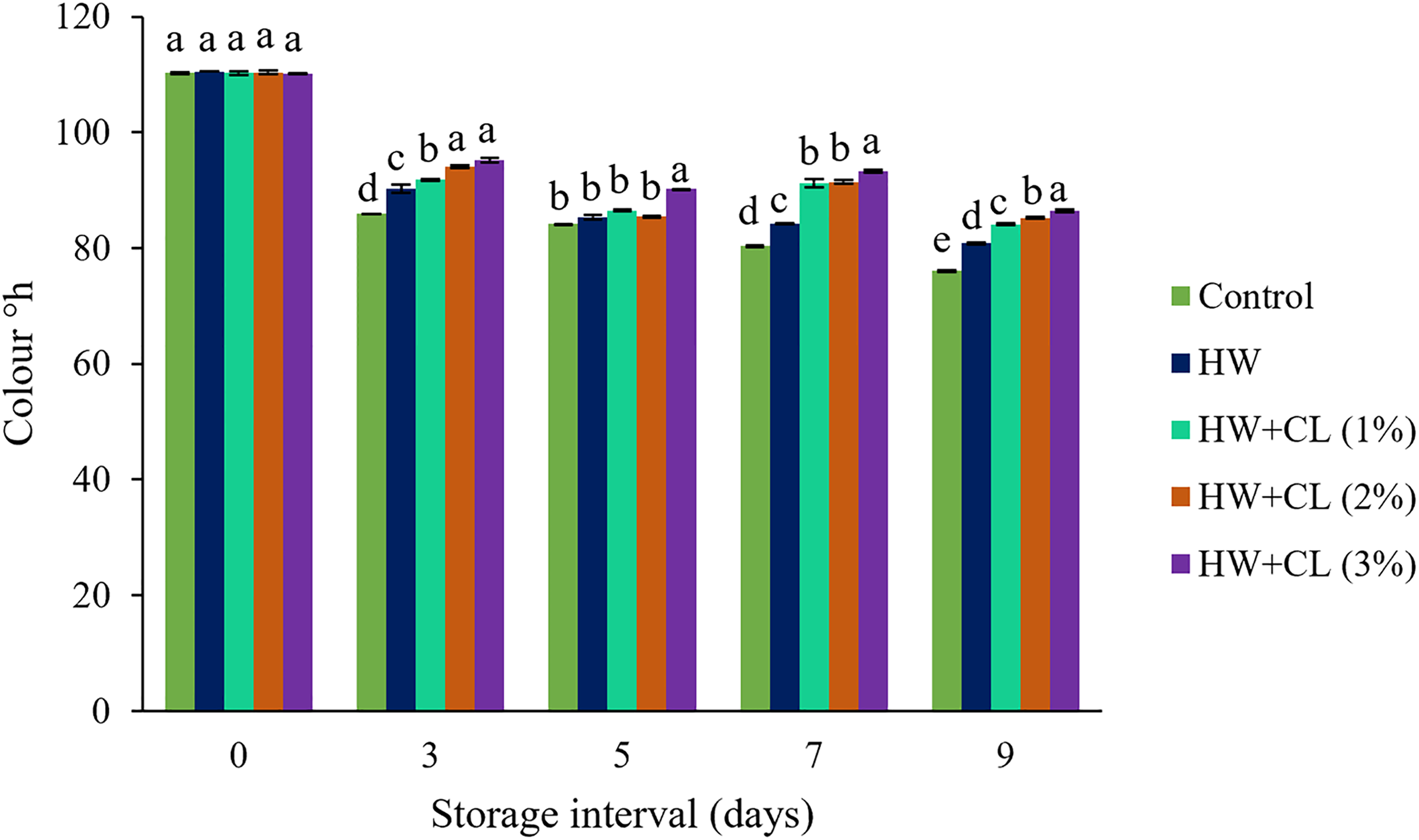
Effect of HW and CL treatments on colour (oh) of banana fruits stored at ambient conditions.
With the progression of the storage period, firmness had declined drastically, but HW and 3% CL treatment significantly (p ≤ 0.05) retained higher firmness over other treatments and control (Table 1). In this study, we noticed a sharp drop in firmness between the 3rd to the 9th day of the storage period. The fruits treated with HW and CL (3%) retained maximum fruit firmness on the 9th day of storage (4.4 N) whereas it was reported to be minimum (1.93N) in control fruits. Fruit firmness is an important parameter during retailing, as it decides the consumer's acceptability of the fruits. There are several causative factors for cell wall degradation and maintenance of fruit firmness. Here, HW and CL could have delayed membrane lipid catabolism through reinforced cell turgor, membrane integrity, and tissue firmness, and in turn that has retained higher fruit firmness. Rico et al. (2007) also reported similar findings with the combined use of HW and CL which preserved the firmness of stored carrots. Ummarat et al. (2011) recorded higher firmness in hot water-treated banana fruits (50 °C for 10 min) compared to untreated fruits stored at 25 °C for 8–10 days.
Effect of HW and CL treatments on fruit firmness and decay loss in banana fruits stored at ambient conditions.
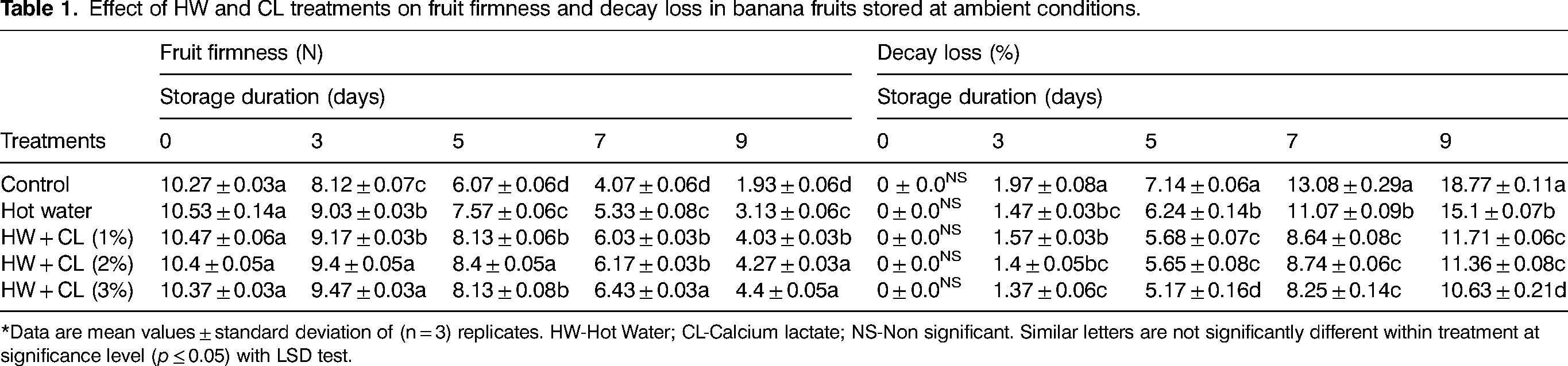
*Data are mean values ± standard deviation of (n = 3) replicates. HW-Hot Water; CL-Calcium lactate; NS-Non significant. Similar letters are not significantly different within treatment at significance level (p ≤ 0.05) with LSD test.
The significant (p ≤ 0.05) changes in PLW were reported in all the treatments during storage (Figure 2). In this study, PLW increased with increasing the storage period from 3rd to 9th day, it was the highest value of PLW in the control fruits and the lowest in HW and CL (3%) treated fruits follow by HW and CL (2%). As can be seen in Figure 2, the fruits treated with HW and CL treatments significantly reduced the PLW but HW + CL 3% proved most effective and minimized 2 times higher PLW over untreated fruits on the 9th day of storage. Usually, a water loss of more than 4–6% results in wilting and wrinkling on the surface of many fruits (Keys, 1991). Ion leakage and cell wall membrane degradation prevention properties of calcium treatment reinforce the strength of cells and tissues (Akhtar et al., 2010). Ionic calcium also delays the ageing process and sustains fruit weight by reducing respiration and transpiration rates (Tuna et al., 2007). The effects of calcium and HW on PLW have also been reported by Tuna et al. (2007) in tomato, Mahajan and Dhatt (2004) in pear and Sohail et al. (2015) in peach. Our studies are also in line with the finding of Naser et al. (2018) who reported that CL-treated persimmon fruits gave the lowest weight loss compared to untreated fruits.
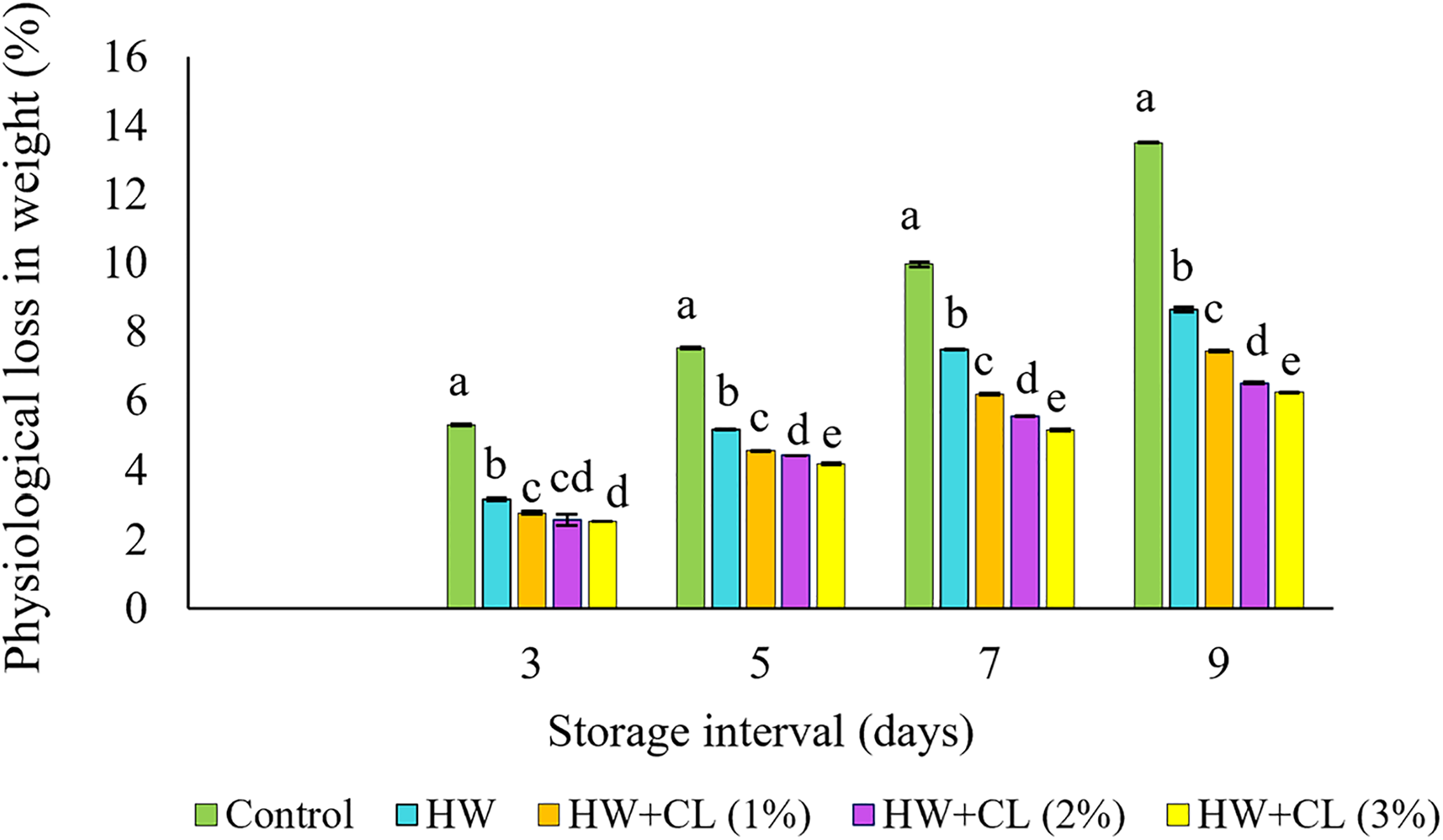
Effect of HW and CL treatments on PLW (%) of banana fruits stored at ambient conditions.
The data placed in Table 1 indicates that the decay loss of fruits was significantly (p ≤ 0.05) affected by different treatment and storage days. The decay loss of fruits had shown an increasing trend up to the 9th day. With respect to hot water combination with calcium lactate treatments, they significantly influenced the decay incidence, being the highest in control and the lowest mean value in HW and calcium lactate (3%). The highest decay loss was found in the control fruit on the 9th day of storage (18.77%) and the lowest in the HW and calcium lactate (3%) followed by HW and calcium lactate (2%). CL coupled hydrothermal treatment significantly reduced fruit decay loss. The least decay in treated fruits might be due to the effect of hot water and calcium which enhances the cell strength, it can reduce postharvest rots by either inactivation of pathogenic fungi or enhancement of host resistance. Similar results have been reported by using hot water and chemicals in banana fruits (Bazie et al., 2014), apple (Di Francesco et al., 2018), guava (Cruz et al., 2015) and papaya (Li et al., 2013).
The changes in the sugar spots of fruits by the different treatments and storage days are presented in Figure 3. The fruit sugar spots started from the 3rd day of storage in control (5.17%) but in the case of calcium lactate treated fruits, it started from the 5th day of storage. All the calcium treatments caused a significant reduction in sugar spot percentage. The highest sugar spots on the fruit peel surface were observed in the control fruit (91.55%) and the least value (6.03%) of sugar spots was found in the HW and calcium lactate (3%) treated fruit. The sugar spots of fruits had shown an increasing trend up to the 9th day of storage and the combination of HW and CL 3% caused significantly more reduction as compared to other treatments. Sugar spot is the major problem in postharvest handling and marketing of ripened banana fruits. The Colour of the ripened banana peel is an indicator of fruit freshness, the higher the peel browning lower the consumer responses. In our studies, we recorded lower sugar spots under the treatments of hot water and calcium lactate (3%). Hydrothermal treatment and calcium salts are known for their anti-browning properties due to their anti-enzymatic activities (polyphenol-oxidase). The higher hue angle and lower phenolics contents in our studies also support this finding related to sugar spots. Beirao-da-Costa et al. (2008), Manganaris et al. (2007) and Hewajulige et al. (2003) also reported lower enzymatic activities and browning index while working on kiwifruit, peach and pineapple.
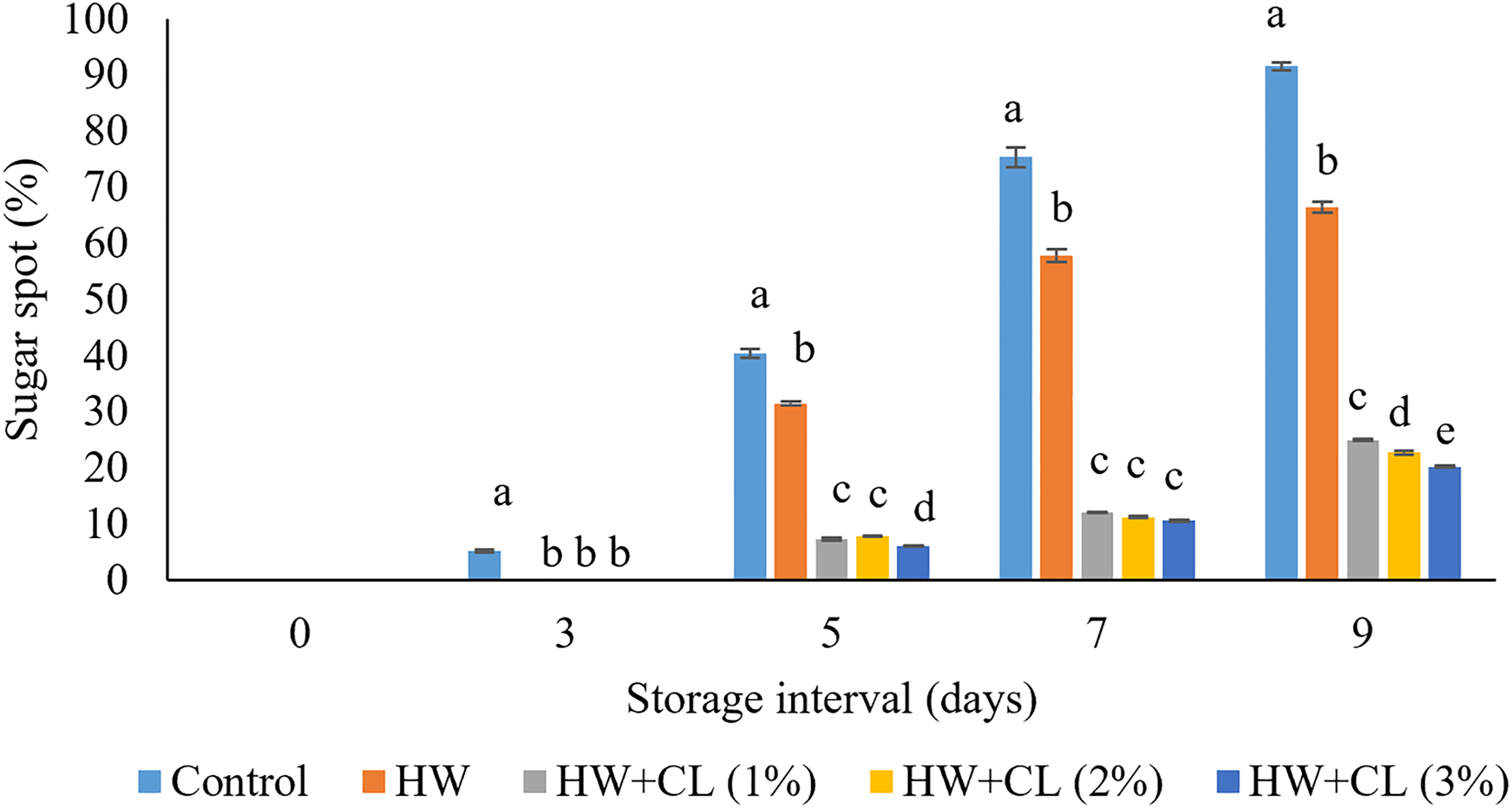
Effect of HW and CL treatments on sugar spot (%) of banana fruits stored at ambient conditions.
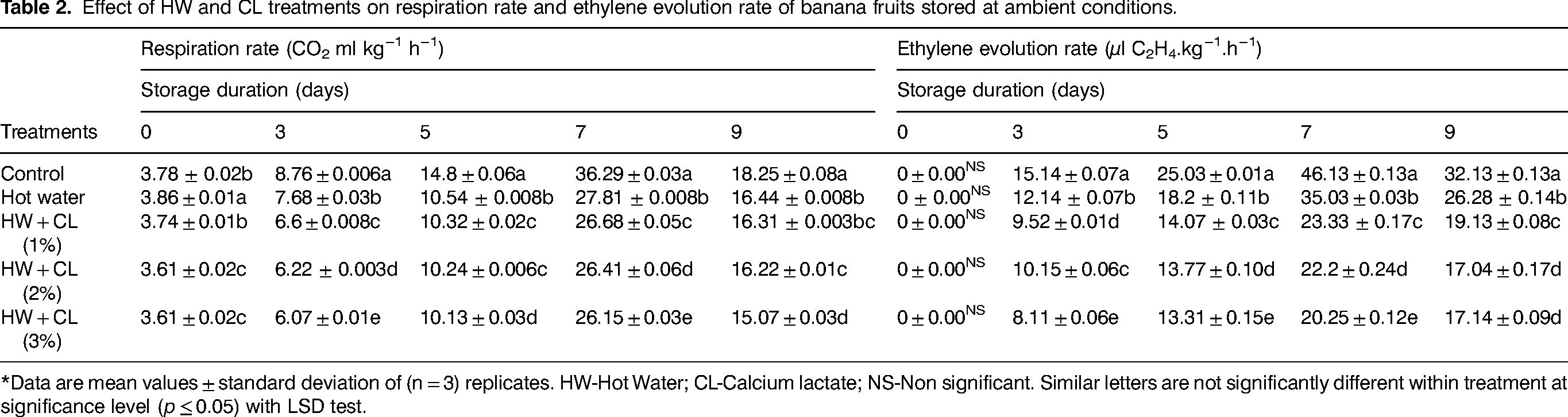
The respiration rate was initially increased up to 7 days and declined afterwards (Table 2). On the 9th day of storage, the highest respiration rate was recorded in the control fruit (18.25 ml CO2 kg−1 h−1) and the lowest mean value of respiration rate was found in the HW and CL 3% (15.07 ml CO2 kg−1 h−1) treated fruits. Metabolic activity in fresh fruits and vegetables continues for a short period after harvest. The energy required to sustain this activity comes from the respiration process (Mannapperuma et al., 1991). Respiration plays an important role in diverse physiological processes till the senescence phase and thereafter postharvest losses. Hot water and calcium lactate (3%) treated fruits showed the least average mean value of respiration rate compared to the control and other treated fruits. It may be due to the hot water-mediated slow ripening process of climacteric fruits. Similar results have been reported by Ummarat et al. (2011) while working on the banana fruit treated with hot water. Calcium lactate-treated citrus and melons have also shown reduced respiration rates during storage (Aguayo et al., 2008; Opio et al., 2017).
Effect of HW and CL treatments on respiration rate and ethylene evolution rate of banana fruits stored at ambient conditions.
*Data are mean values ± standard deviation of (n = 3) replicates. HW-Hot Water; CL-Calcium lactate; NS-Non significant. Similar letters are not significantly different within treatment at significance level (p ≤ 0.05) with LSD test.
The ethylene evolution rate of fruits was significantly (p ≤ 0.05) affected by different treatment and storage days (Table 2). The highest ethylene evolution rate was recorded in the control and the lowest in the HW and CL 3% treated fruit. The ethylene evolution rate of fruit had shown an increasing trend up to the 7th day and continuously decreased up to the 9th day of storage. Further, treatments HW and CL 2% and 3% showed almost nonsignificant results among each other. Ethylene evolution is one of the important events during the ripening of tropical and subtropical fruits. The shelf life of the fruits has a strong relationship with the ethylene evolution during handling and storage. The metabolic processes are driven by enzymes and most of the biochemical processes involve the active participation of enzymes. In our studies, we observed that control fruits evolved a high amount of ethylene compared to the hot water and calcium lactate treated fruits. HW and CL (3%) are the most effective in the reduction of ethylene evolution rate. The obtained results may be due to the effectiveness of hot water treatment in suppressing ethylene production and calcium-preventing senescence (Aguayo et al., 2004). These results got the support of the work of Kaewsuksaeng et al. (2015), Opio et al. (2017) on lime, Luna-Guzmán and Barrett (2000) on cantaloupe and Aguayo et al. (2008) on melons.
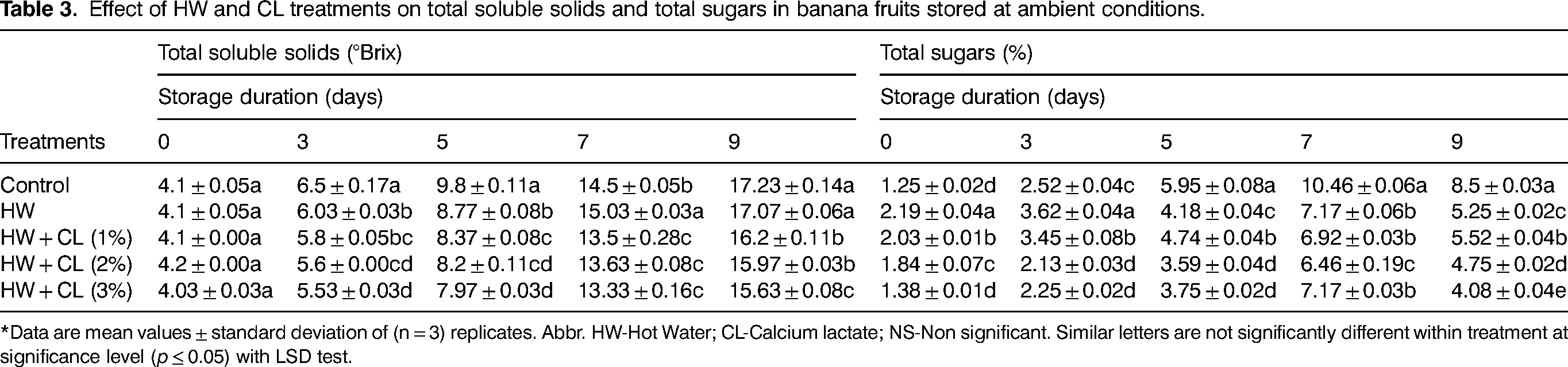
Table 3 shows the changes in the total soluble solids of store fruits which were significantly affected with different treatments and were reported to be in an increasing pattern during storage. Initially, the TSS increased at a slow pace which later on showed a sharp rise after the 5th day of storage. On day 9th, maximum changes in TSS (17.23° Brix) were recorded in control fruits over all other treatments. The minimum changes in the total soluble solids were observed in fruits treated with HW and CL 3%. Total soluble solids in any fruit indicate the content of soluble carbohydrates and other substrates present in the fruit. In general, higher TSS content in fruit is directly related to its sweetness. Higher TSS in control fruit may be due to increased water loss and hydrolysis of starch into simple sugars. Previous studies have shown that hot water treatment is effective in lowering the starch hydrolysis in persimmon (Besada et al., 2008; Khademi et al., 2014) and Thai lime (Kaewsuksaeng et al., 2015). Naser et al. (2018) also found that a combination of hot water and calcium lactate preserves the nutritional quality of persimmon fruits during postharvest storage.
Effect of HW and CL treatments on total soluble solids and total sugars in banana fruits stored at ambient conditions.
*Data are mean values ± standard deviation of (n = 3) replicates. Abbr. HW-Hot Water; CL-Calcium lactate; NS-Non significant. Similar letters are not significantly different within treatment at significance level (p ≤ 0.05) with LSD test.
The content of total sugars in banana fruits was found initially lower which significantly increased over time up to the 7th day followed by declining up to the 9th day (Table 3). The study shows that the application of HW and CL significantly delayed the accumulation of total sugars. On day 9th, the highest total sugar content was found in the control fruits (8.5%) and the lowest in the HW and CL (3%) treated fruits. The obtained trend might be due to the rapid conversion of starch into sugar as well as increased activity of the respiratory enzyme (peroxidase) coupled with ethylene production. Additionally, the activity of amylase and phosphorylase enzymes triggers the conversion of insoluble starch into sugars during ripening and storage. Treatment such as HW and CL reduced the conversion process, thus slowing down the accumulation of sugars in treated fruits. The results are in expected lines and got the support of Javed et al. (2015) while working on guava fruit storage. Hazbavi et al. (2015a, 2015b) also reported a similar finding while working on date palms by using hot water.
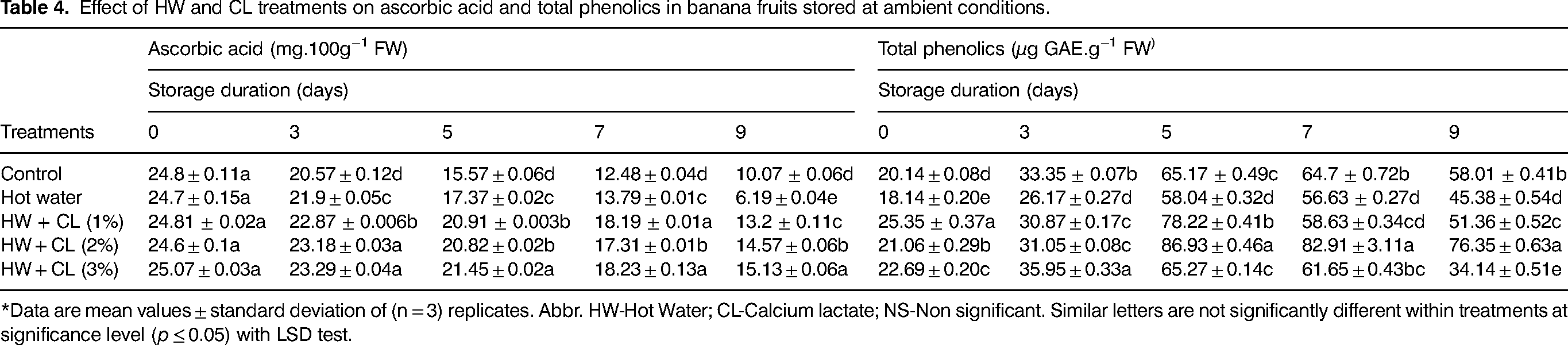
In the present study, the concentration of ascorbic acid was noticed to be decreasing over the storage time (Table 4). On the day 9th, HW + CL 3% treated fruit retained 1.5 fold higher ascorbic acid (15.13 mg 100 g−1) over the control (10.07 mg 100 g−1) and HW (6.19 mg 100 g−1). The obtained results may be due to the synergistic effect of hot water as it facilitates the entry of calcium into the cytosol and thus increased the positive effects of calcium on maintaining ascorbic acid (Zhi et al., 2017). Previous studies conducted by Naser et al., 2018 and Abd-Elhady (2014) also reported the desirable effect of HW and CL on ascorbic acid content while working on persimmon and strawberry fruits respectively.
Effect of HW and CL treatments on ascorbic acid and total phenolics in banana fruits stored at ambient conditions.
*Data are mean values ± standard deviation of (n = 3) replicates. Abbr. HW-Hot Water; CL-Calcium lactate; NS-Non significant. Similar letters are not significantly different within treatments at significance level (p ≤ 0.05) with LSD test.
The result of the total phenols content in stored banana fruits is represented in Table 4. HW and CL 3% significantly reduced the amount of fruit phenolics content (34.14 µg GAE g−1) after the 9th day of storage as compared to other treatments. It was around 1.6-fold lower than the control fruits. It is interesting to note that the higher concentration of calcium lactate combined with hot water did not preserve phenolics content compared to the lower concentration of calcium lactate combined with hot water. The fresh fruit had an average phenolics content of around 21.48 µg GAE g−1, which later on had shown a fluctuating trend throughout the 9 days of storage. In our study, it was observed that total phenolics content was lowest in the HW and CL 3% treated fruits. This could be due to the better preservatory effect of a lower concentration of CL which might have helped in intact the insoluble phenolic compounds. In control fruits, higher phenols content might be due to the rapid action of phenol-related enzymes which help in the conversion of insoluble phenols into soluble phenols. Javed et al. (2015) reported contradictory findings with the calcium lactate (3%) treated guava fruits where they observed the highest average mean value of total phenolics contents compared to the control and other treatments.
The fruit treated with HW and CL 3% retained the highest titratable acidity over all other treatments throughout the storage period (Figure 4). It gradually declined as the storage period advanced and was lowest (0.083%) in untreated fruits on the 9th day of storage. Titratable acidity plays a significant role in quality determination as the TSS acid blend gives a taste to banana fruits. In this study, it was observed that fruits treated with HW and CL 3% retained the highest titratable acidity and the lowest value was recorded in control fruits up to the 9th day of storage. It may be due to the hot water and calcium, delaying ethylene production and lowering organic acids at the end of storage. This phenomenon is related to acid substrate utilization for enhanced fruit metabolic activities. Similar results were obtained by Vilaplana et al. (2017) while working on hot water-treated fruits of yellow pitahaya. Naser et al. (2018) also recorded higher acidity with the combination of HW and CL treated fruits compared to control fruits.
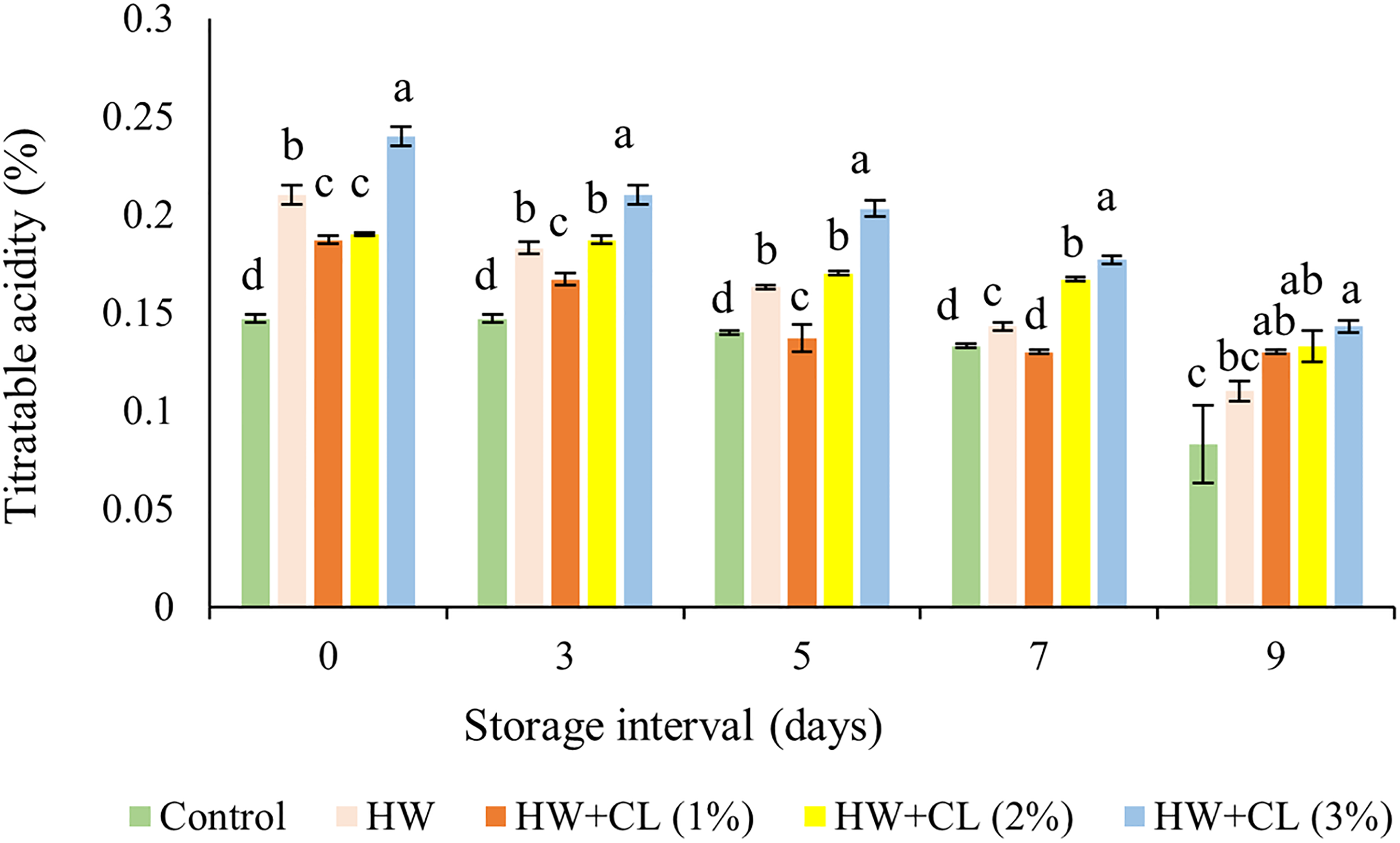
Effect of HW and CL treatments on titratable acidity (%) of banana fruits stored at ambient conditions.
The correlation between the physiological and biochemical parameters was studied (Table 5). The study showed a strong positive correlation (p ≤ 0.05) between ethylene evolution and TSS (r2 = 0.952). The correlation between respiration and ethylene (r2 = 0.870), TSS (r2 = 0.838) and total phenolics (r2 = 0.418) was reported to be non-significant (p ≤ 0.05). The values of titratable acidity and total sugars were negatively correlated. Ascorbic acid content was highly significant and showed a positive correlation with r2 = 0.969. This correlation might be due to the interrelationship of the individual parameters during fruit senescence metabolism. The changes in the variation of measured parameters could be attributed to various catabolic and anabolic processes during storage.
Correlation matrix for physiological and biochemical parameters of banana fruits.
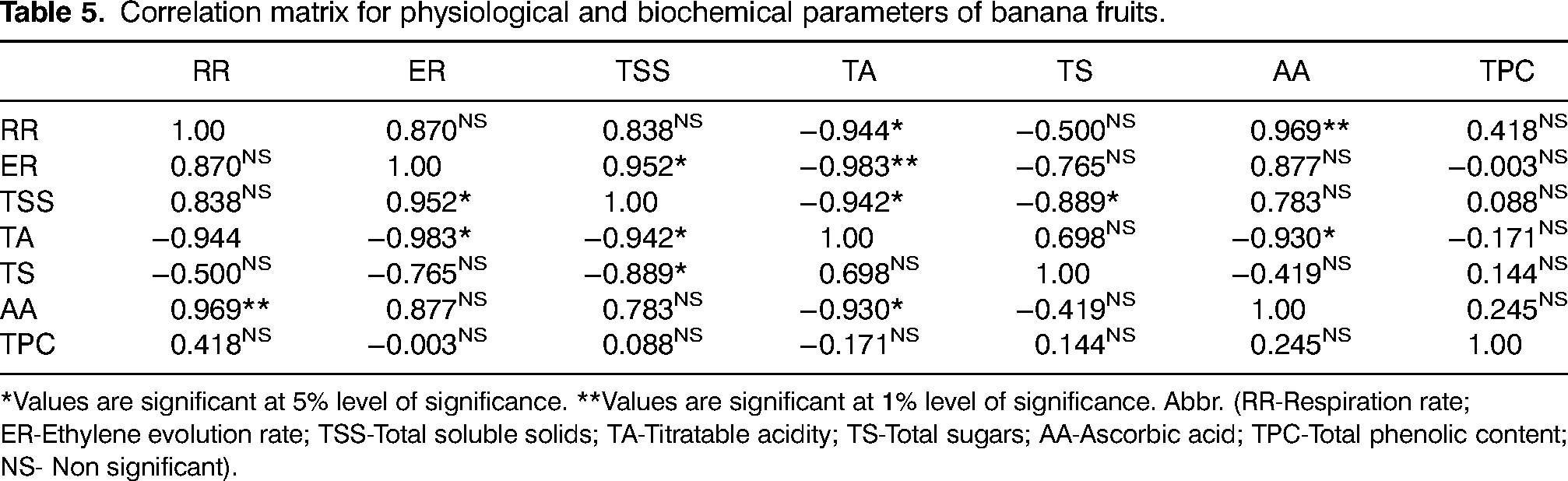
*Values are significant at 5% level of significance. **Values are significant at 1% level of significance. Abbr. (RR-Respiration rate; ER-Ethylene evolution rate; TSS-Total soluble solids; TA-Titratable acidity; TS-Total sugars; AA-Ascorbic acid; TPC-Total phenolic content; NS- Non significant).
The changes in the sensory score during the storage period are presented in Figure 5(a)–(c). The highest score was awarded by the sensory panel on the 7th day and it was rated reduced on the 9th day in all the treatments. On the 5th day of storage, almost all the sensory parameters such as mouthfeel (6.65), aroma (7), colour (7.7), sweetness (7.35) and overall acceptability (7.5) were rated significantly (p ≤ 0.05) higher to control fruits. On the 7th day, a higher score was given to treated fruits as compared to the untreated ones. Fruits treated with HW and CL 3% were more preferred thus rated significantly (p = 0.05) highest among all the treatments. The fruits treated with HW and CL 3% had the maximum score for mouthfeel (6.9), aroma (6.8), colour (6.9) and overall acceptability (6.9) on the 9th day. This variation might be due to the accumulation of sugars, acids, volatiles and catabolism of chlorophylls. Again, the issue of decay and texture loosening in control fruits inclined the panelists to assign a lower rating to control fruits compared to treated ones. The treatments significantly delayed the catabolic processes thus delayed colour, sugars and acids were reported in treated fruits. At the end of storage, control fruits developed poor taste, colour and mouthfeel.
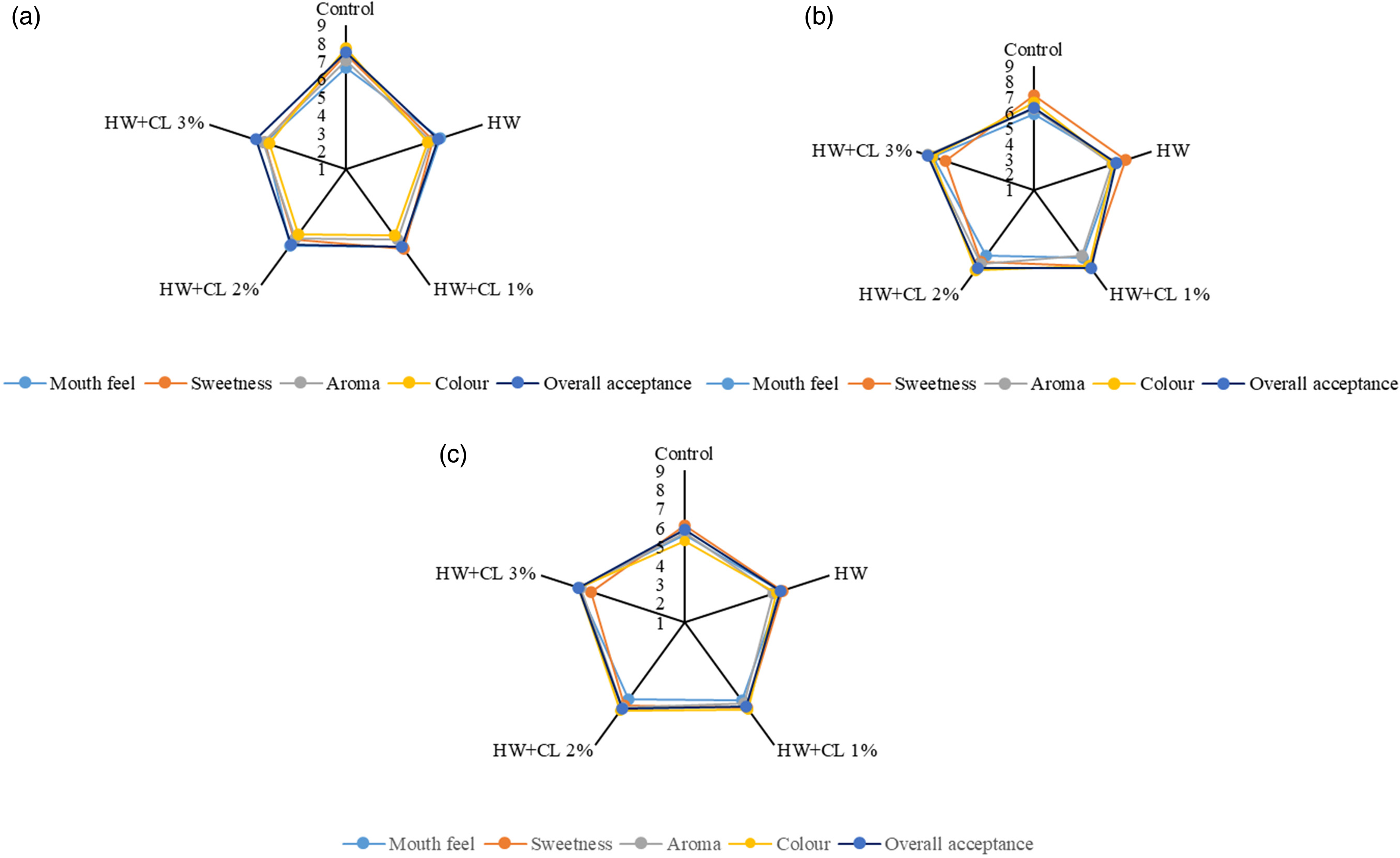
(a) Effect of HW and CL treatments on sensory parameters of banana fruits on 5th day of storage at ambient conditions. (b) Effect of HW and CL treatments on sensory parameters of banana fruits on 7th day of storage at ambient conditions. (c) Effect of HW and CL treatments on sensory parameters of banana fruits on 9th day of storage at ambient conditions.
Conclusion
The results showed that HW and CL 3% successfully preserved sugars, ascorbic acid, and TSS and reduced decay loss over control. HW + CL (3%) has also reduced sugar spot ≈ 6 times, decay incidence 1.5 times as compared to control and retained other desired quality traits of banana fruits during storage. The treatments also preserved the sensorial properties and scored maximum sensorial rating during the storage as compared to control.
Footnotes
ACKNOWLEDGEMENTS
The research and administrative support provided by the ICAR- Indian Agricultural Research Institute (IARI), New Delhi, India and Yezin Agriculture University, Myanmar is duly acknowledged.
DECLARATION OF CONFLICTING INTERESTS
The author(s) declared no potential conflicts of interest with respect to the research, authorship, and/or publication of this article.
FUNDING
The author(s) received no financial support for the research, authorship, and/or publication of this article.
