




Abstract
We describe full neurologic recovery from an out-of-hospital cardiac arrest with a prolonged arrest time (35 min) and prehospital interval (12 h) from the Antarctic continent after the use of standard advanced cardiac life support (ACLS) protocols and thrombolytic therapy. A 61-year-old male had a witnessed collapse in the dining facility at McMurdo Station, Antarctica, resulting in prompt activation of emergency services. The responding firefighter team found the patient in ventricular fibrillation and administered defibrillations. After the defibrillations, the responding team transported the patient to the base clinic. Clinic staff in the resuscitation bay achieved return of spontaneous circulation (ROSC) after successful defibrillation and medication administration. The postarrest electrocardiogram (EKG) showed that an anterior ST-elevation myocardial infarction was the cause of the ventricular fibrillation. Clinic staff administered tenecteplase, and the patient was prepared for transport to New Zealand. The patient was transported aboard an LC-130 aircraft with a transport time of 7 h. The total time from cardiac arrest to arrival at the receiving hospital was 12 h. On arrival to definitive care, the patient underwent percutaneous coronary intervention revealing 100% occlusion of the left anterior descending artery. The vessel was opened and 2 drug-eluting stents were placed. Remarkably, the patient survived the arrest completely neurologically intact. This case highlights the effectiveness of the current ACLS algorithms and chain of survival despite austere locales and long transport times.
Introduction
An ancient world now cloaked in ice, Antarctica contains a trove of vital scientific knowledge about our planet's past and its potential future. The unique environment and year-round below-freezing temperatures make it an ideal location for a multitude of scientific endeavors. Supporting these endeavors is an army of people scattered in bases across the continent. McMurdo Station, the primary base of the US Antarctic Program (USAP), is the largest of these bases and home to as many as 1000 people during the busy summer season. Medical care at the station is provided through a small clinic, staffed year-round by about 6 personnel from the University of Texas Medical Branch (UTMB). These personnel are supported during the summer season by a team of 3 United States Air Force (USAF) medical personnel who assist with patient care and staff medical evacuations (MEDEVACs) outbound from the continent.
This relatively small treatment facility (8 beds and ∼9 staff) must be ready for any eventuality, as the nearest medical treatment facility is over 3900 km away in New Zealand. Although the facility is reasonably well-stocked, it is limited in its ability to care long-term for extremely ill patients. Such patients must be stabilized and transported by air off the continent (Figure 1). To prevent the occurrence of severe illness in Antarctica, individuals interested in working in Antarctica through USAP must pass a thorough qualification physical. Preventive screening reduces the risk of a severe illness developing in this austere locale. We present a case that we believe was the first successful treatment and transfer of a patient in ventricular fibrillation (VF) cardiac arrest from the continent in 35 years, and the first one for the USAP.
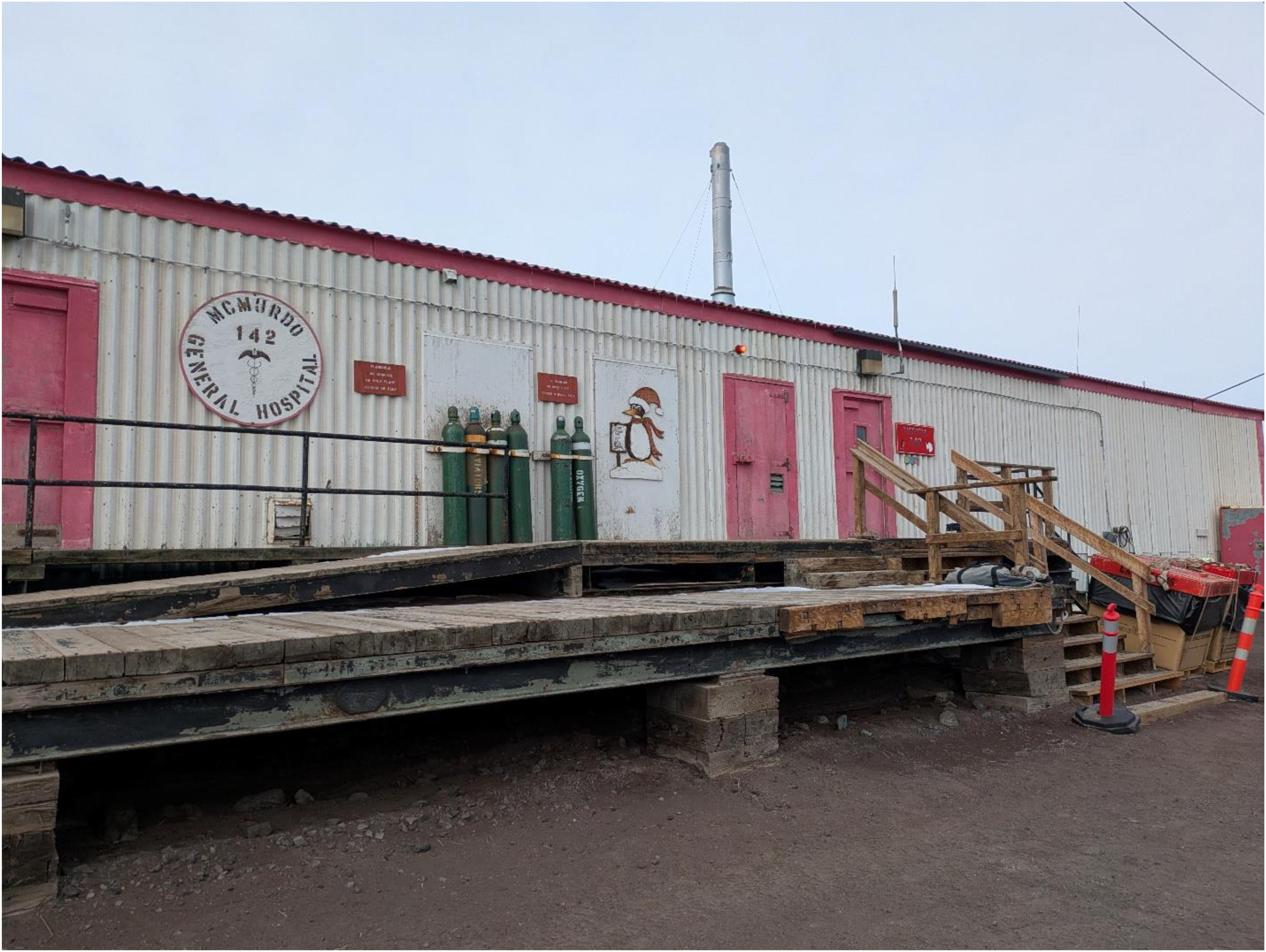
A photograph of the clinic, affectionately named “McMurdo General Hospital.” This facility provides for all of the medical care of personnel stationed at McMurdo and the surrounding area.
Case Report
The patient was a 61-year-old male with a past medical history of gastroesophageal reflux disease (GERD) and premature ventricular contractions (PVCs). He was taking omeprazole (40 mg daily) for the GERD and metoprolol (25 mg twice daily) for the PVCs. He denied any additional medical history during his qualification process and had an otherwise normal qualification physical. He denied any prodrome (such as nausea, chest pain, chest tightness, shortness of breath, dizziness, arm or jaw pain) the morning of the arrest. He also denied any anginal symptoms in the days and weeks leading up to this event.
At approximately 11:00 am, the patient was in the lunch line at the galley when, without warning, he collapsed. Emergency medical services (EMS) were contacted immediately by galley staff. Paramedics from the Fire Department arrived on scene and found the patient to be pulseless. They immediately began cardiopulmonary resuscitation (CPR) and applied a cardiac monitor. After approximately 1 to 2 minutes of CPR, the patient was in VF. The paramedics defibrillated the patient with a 200 J shock, converting the heart to sinus rhythm for about 1 min. A radio call of CPR in progress prompted the clinic to rally all available members and prepare for a code. A member of the clinic staff ran to the galley to ascertain the situation and verified that CPR was in progress. EMS was unable to obtain intravenous access. They also could not obtain intraosseous (IO) access because their IO drill had a dead battery. During the postevent debrief, it turned out that the EMS team had drained the battery by checking the drill too frequently. Since they had no IV or IO access and no medication on scene, the paramedics prepared for rapid transport to the clinic. After a second 200J shock resulted in another short-lived conversion to sinus rhythm, the paramedics transported the patient to the clinic by ambulance (Figure 2). The paramedics continued CPR and defibrillations during loading and during the brief transport to the clinic. Two additional 300J defibrillations each resulted in brief conversions to sinus rhythm that reverted to VF. A final 360J shock was administered during patient offload. The paramedics administered a total of 5 defibrillations, increasing from 200J to 360J. After each defibrillation, the patient was in sinus rhythm before reverting to VF after about a minute. The total time from collapse to arrival at the clinic was 18 min.
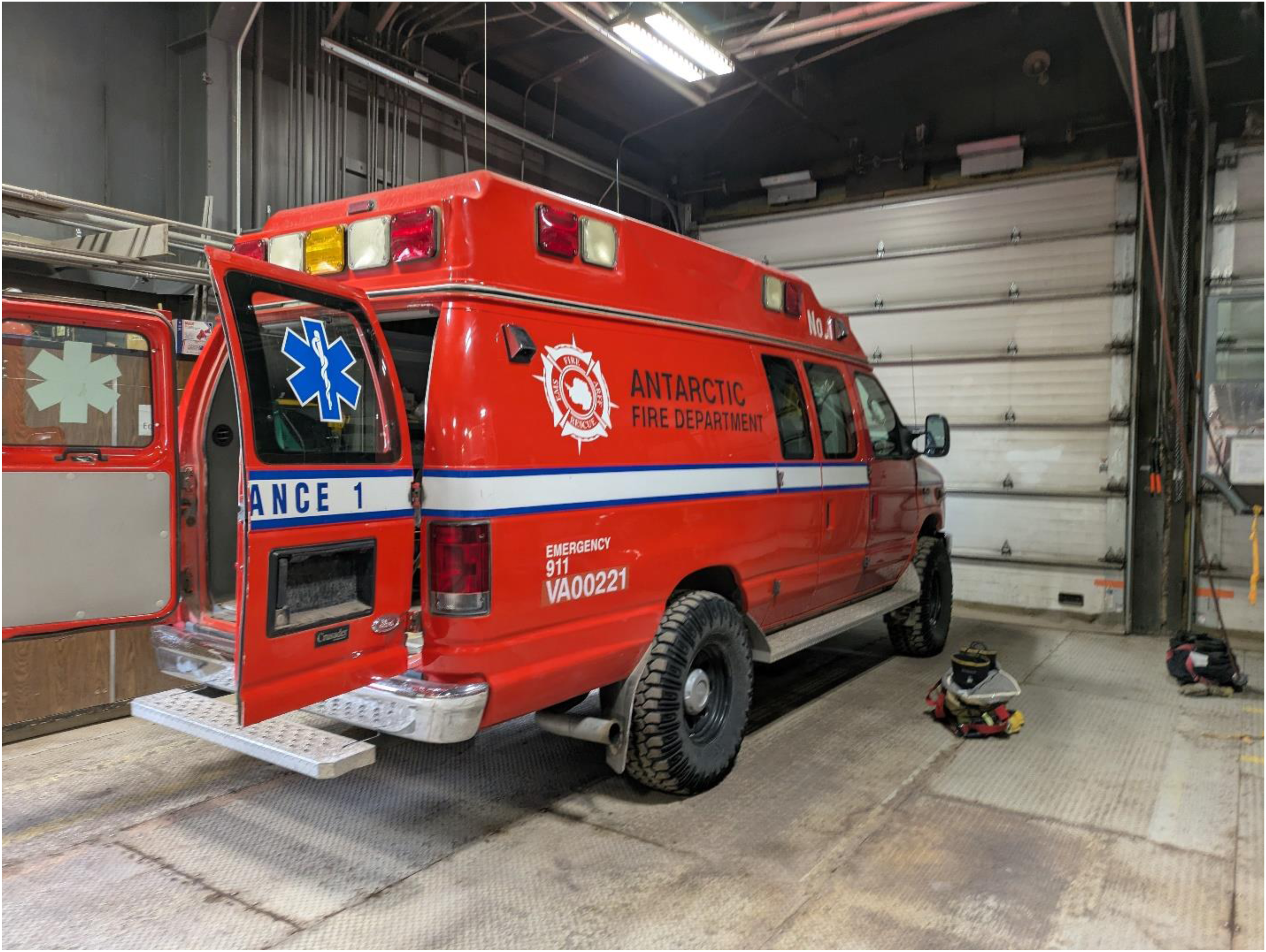
The ruggedized ambulance utilized in ground transportation. This vehicle proved invaluable in transporting the patient comfortably over the icy terrain.
At the clinic, the patient was still in VF. He was then defibrillated again at 360J. The airway was supported by oral and nasopharyngeal devices with a bag valve mask device for ventilation. IO access was obtained in the right humeral bone, through which a dose of 1 mg of epinephrine was immediately administered. CPR was continued via the standard ACLS pathway with firefighters acting as compressors in turns to allow the clinic staff to concentrate on their code roles. The code was complicated by episodic sinus rhythms lasting approximately 30–45 s each after each defibrillation. The patient had spontaneous breathing and possibly purposeful movements (withdrawing from IV access attempts) during each of these episodes. After each episode, the patient again became pulseless and unresponsive. The team leader continuously evaluated the pulse using ultrasound at the femoral artery to monitor compression quality and the return of spontaneous circulation. Point-of-care laboratory testing demonstrated normal findings, except for an initial lactate of 9.4. The initial troponin level was negative. Ultimately, the patient received 3 doses of epinephrine, 2 additional defibrillation events at maximum energy of 360 J, and 300 mg of IV amiodarone. During one rhythm check, there was a question of an episode of torsades des pointes that resolved rapidly. Magnesium 400 mg was administered by IV push to prevent recurrence. Stable ROSC was achieved at 11:35 am, after a total downtime of approximately 40 min.
After ROSC, the patient had adequate protection of the airway. He was able to maintain an SpO2 > 90% with a non-rebreather mask oxygen at 10 L/min. He was eventually transitioned to a nasal cannula at 6 L/min. The post-ROSC EKG showed evidence of an anterior wall ST-elevation myocardial infarction (STEMI). Because of the long transport time to definitive care, the team's 2 physicians discussed whether to administer thrombolytics. Complicating this decision was a bystander report that the patient had hit his head on a countertop during his initial collapse. The 2 team physicians examined the patient and did not find any significant head injury, although no computed tomography (CT) scanner was available to rule out an intracranial bleed definitively. After a discussion with the UTMB cardiology team using the UTMB telemedicine service, the team pushed IV tenecteplase. The dose was 45 mg based on the patient's estimated weight. This was given about 30 min after ROSC. The team started an amiodarone drip but discontinued it after a QTc prolongation of 470 ms was noted on the post-ROSC EKG. Because of concern about the potential recurrence of VF and the anticipated long transport time, the team established femoral central venous line access. The patient exhibited purposeful neurological activity in response to simple commands approximately 15 min post-ROSC. He began to regain consciousness approximately 45 min post-ROSC. His vital signs continued to stabilize, with low mean arterial pressures (MAPs) increasing to the 70s mm Hg and initial tachycardia settling into sinus rhythm with a heart rate in the 90s. Follow-up troponin testing demonstrated a positive result of 0.12 ng/mL (normal <0.05 ng/mL).
The patient was transported emergently to Christchurch, New Zealand, 3900 km away. Christchurch is the preferred destination of patient transport from this region of Antarctica. The patient was packaged for transport while MEDEVAC was coordinated. The aircraft used for the MEDEVAC was a ski-equipped LC-130H operated by the New York National Guard, which was quickly refueled and reconfigured for patient transport (Figure 3). The patient was transported via a ruggedized (off-road capable) ambulance from the base to the airfield. The airfield itself is a nonpermanent installation of scraped ice sitting atop the Ross Ice Shelf. Because the patient noted post-CPR rib pain that was exacerbated by jostling, the ambulance transport was slow to maximize patient comfort. Total ambulance transport time was thus approximately 1 hour. The aircraft took off at 3:45 pm for New Zealand, approximately 4 hours after ROSC. The air transport team consisted of the USAF physician, the UTMB flight nurse, and the USAF medical technician. A follow-up EKG obtained before take-off demonstrated resolution of the patient's ST-segment abnormalities.
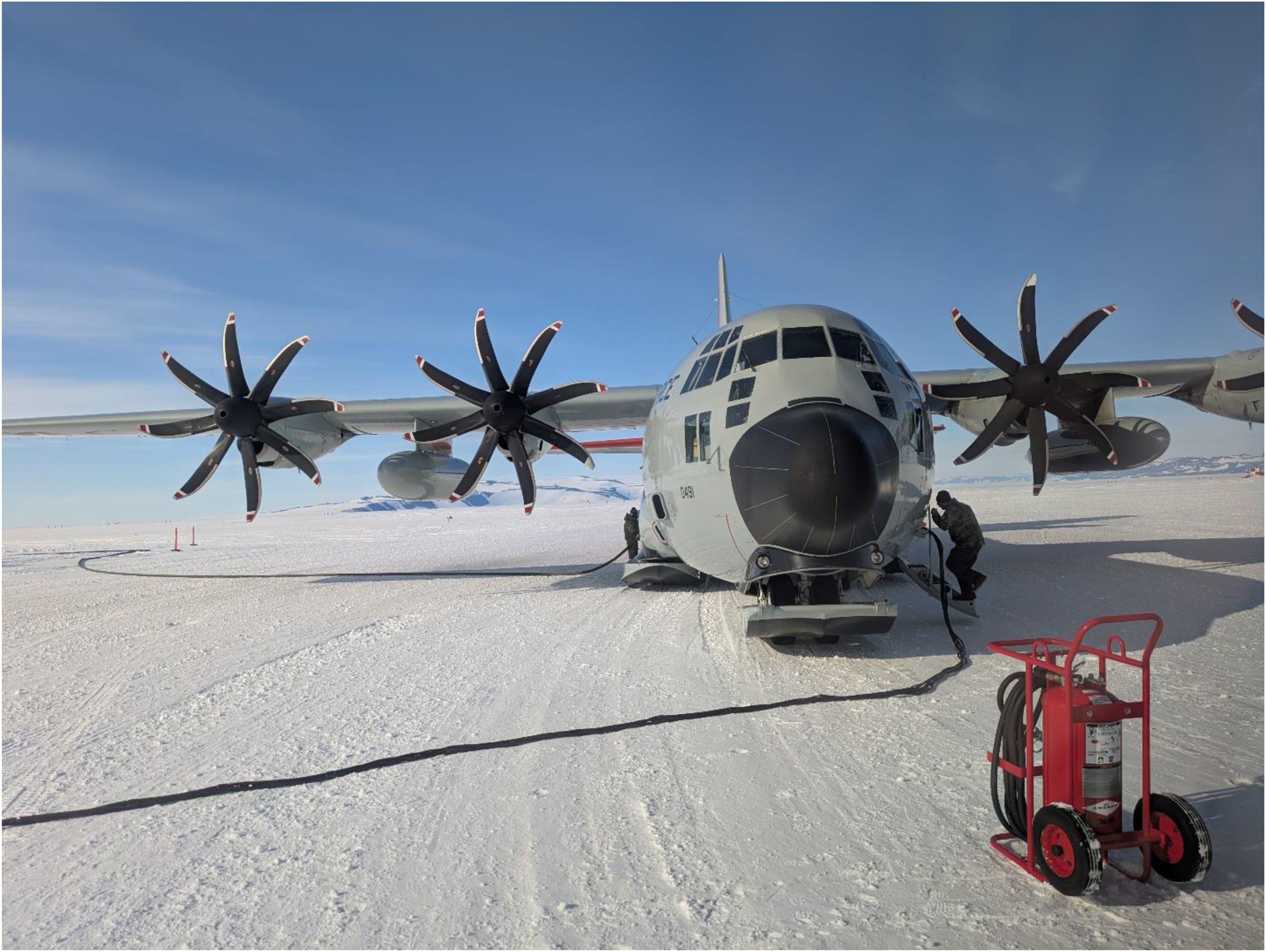
A photograph of an LC-130H Hercules “Ski Bird.” This aircraft was the type utilized for transport of the patient off of the continent to Christchurch.
Fortunately, the 7-h flight proved uneventful, with the patient requiring only minor interventions, including fentanyl for post-CPR pain and lorazepam for anxiety and as a prophylaxis for nausea for potential turbulence (Figure 4). His IO needle was removed in flight for comfort. With a journey of 3900 km, a transport time of 7 h, and a prehospital interval of 12 h, we believe that this case had the longest reported transport distance and time after STEMI treated with TNK with full neurologic recovery.
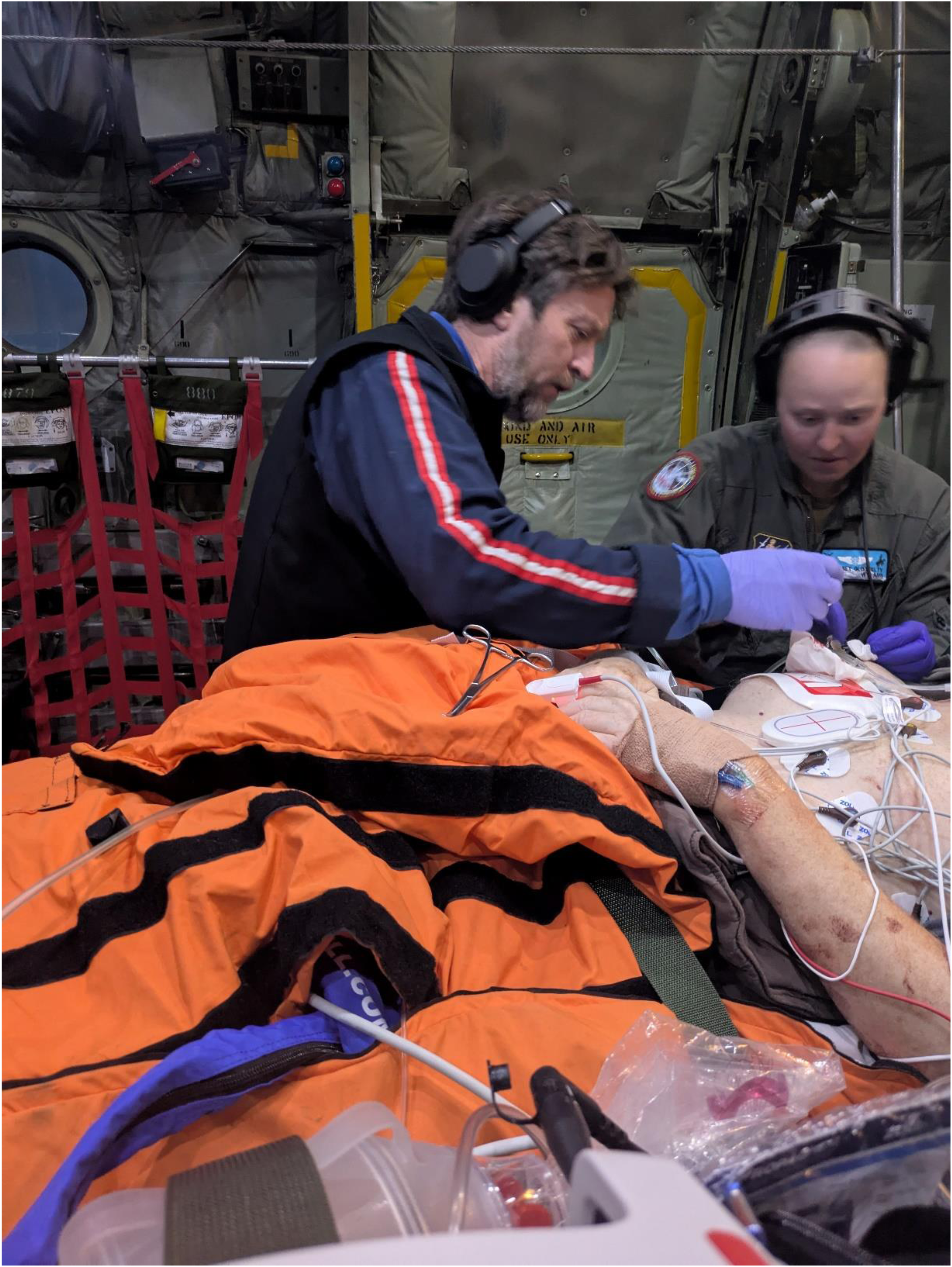
A picture of 2 Members of the MEDEVAC Crew Inflight. Pictured are MSgt Lyndsey Glotfelty and Mr Daniel Baldwin.
After arriving in Christchurch, the patient was admitted to Christchurch Hospital, where they had an uneventful first night. An echocardiogram performed the next morning showed a diminished ejection fraction of ∼30% with myocardial stunning. The patient underwent cardiac catheterization that afternoon. A 100% LAD occlusion was discovered and stented with 2 drug-eluting stents. He was monitored in the hospital for 4 additional days, undergoing cardiac rehabilitation and routine post-catheter care. He was discharged on day 5. Although radiography did not show broken ribs, post-CPR pain was the patient's primary complaint. Six weeks postarrest, he was neurologically intact.
Discussion
This case of a patient surviving VF in Antarctica seems to be 1 of only 2 published cases. 1 It demonstrates that thrombolytics can be useful for treating STEMI when there are prolonged transport times. Adapting the chain of survival to these conditions increases the chance of successful resuscitation with a good neurologic outcome. It is remarkable that the team achieved ROSC and that the patient survived neurologically intact, as fewer than one-third of patients with out-of-hospital cardiac arrest survive to discharge. 2 This case demonstrates the usefulness of thrombolytic medication for STEMIs, especially with extremely long transport times and prehospital intervals. The event reinforces the importance of replicating proven aspects of the chain of survival to increase the chance of resuscitation in austere environments.
The keys to success in this case included preparing the clinic, rapid identification of an unresponsive individual, immediate activation of the prehospital chain of survival, early and rapid transport to a facility dedicated to resuscitation with the necessary equipment, and an experienced medical team. Each of these contributed meaningfully to the successful outcome.
This case is a testament to the importance of early CPR and prompt defibrillation. Individuals who witnessed the patient's collapse rapidly activated the base's emergency response system. This initiated the chain of survival, with qualified paramedics who were able to begin high-quality chest compressions immediately after arriving at the scene. Their early defibrillation also proved key to this scenario, as research has shown a decrease in survival of 10%–12% for each minute of delay to defibrillation. 3 However, due to the EMS's IO drill being out of battery, and the difficulty obtaining IV access at the initial scene, early epinephrine was not administered as would be recommended. This is unfortunate due to the association between epinephrine use and ROSC, but it ultimately did not lower the quality of the outcome in this case. 4 The team credited the rapid IO access in the clinic, which allowed medication administration, to the improvement in rhythm morphology. Although research has demonstrated no significant difference between IO and IV medication administration during codes, there was rapid improvement in the patient's rhythm organization after administration of the medicine through the humoral IO. 5
Resuscitation is best performed in a dedicated resuscitation bay, where the patient is not on the ground, allowing better ergonomics and communications. Transporting this patient to the resuscitation area of the clinic allowed management in a more functional environment with IV/IO access, ACLS medications, and additional team members. Having a dedicated area for resuscitation, especially in a resource-constrained location, can contribute to high-quality resuscitation. 6 This is discussed in guidelines for critical care medicine in resource-limited environments and was further demonstrated in importance here. 7 Although trauma scenarios often dominate the critical care discussion in austere environments, teams should be prepared to manage cardiorespiratory arrest in addition to trauma.
Another factor in the success of this code was the depth and breadth of experience maintained by the code team. Given the isolated nature of the McMurdo Station clinic, USAP preference is to staff it with individuals possessing a high degree of experience who have familiarity with most of the critical scenarios that could be encountered. This VF arrest was one of those “worst-case” scenarios that both clinic and staff had to be prepared for. Teams made up of such individuals are essential in hospital rapid response teams, and we continue to qualify this idea here.8,9 Proper utilization of all assets available is critical for performing such care in a remote environment. An institution looking to staff an austere clinic that may encounter a difficult resuscitation with limited evacuation options should consider staffing it with experienced members or, at a minimum, providing sufficient training to its members to ensure readiness against a potential episode such as this.
Coordination of the clinic staff with base flight operations was invaluable in arranging rapid transport to definitive care. Percutaneous coronary intervention following thrombolytics reduces mortality. 10 Aircraft transportation into and out of Antarctica is a complex process that considers aircraft availability, crew availability, weather, and transport time. An aircraft may have to be dispatched from Australia or New Zealand if a suitable aircraft is not available on the continent. Quick coordination with the various agencies involved ensured the aircraft was fueled and able to launch in a timely manner.
Conclusion
Cardiac arrest is an acutely life-threatening, resource-intensive illness for which timely interventions have a tremendous impact on outcome and for which management is difficult in austere environments. The relative rarity of the condition among a screened, healthy population does not preclude its development, as seen here. We demonstrate the efficacy of the timely application of the ACLS algorithm, the usefulness of thrombolytic medications for STEMIs in remote locales, and the importance of clinical readiness for potentially disastrous pathologies. The practicality of long-distance transport as a prehospital movement was also demonstrated by this event and facilitated the excellent clinical outcome observed.
Footnotes

Author Contribution(s)
Funding
The authors received no financial support for the research, authorship, and/or publication of this article.
Declaration of Conflicting Interests
The authors declared no potential conflicts of interest with respect to the research, authorship, and/or publication of this article.